Suche:death is not the end

Styles
Alle
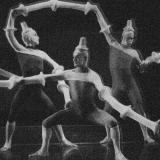
Alwin Nikolais - Electronic Dance Music, 1966-1989 (Tape)
  • 01: Revels: Dance III (1986)
  • 02: Ten Legs: Dance I (1989)
  • 03: Mechanical Organ: Dance II (1980)
  • 04: Mechanical Organ: Dance IV (1980)
  • 05: Frail Demons: Dance I (1984)
  • 06: Tribe: Dance I (1975)
  • 07: Pierrot: Dance II (1986)
  • 08: Blank on Blank: Excerpt I (1987)
  • 09: Pierrot: Dance III (1986)
  • 10: Aviary: Dance I (1978)
  • 11: Aviary: Dance II (1978)
  • 12: Graph: Overture (1984)
  • 13: Chimera: Dance I (1966)
  • 14: Styx: Excerpt (1976)
  • 15: Gallery: Overture (1978)
  • 16: Frail Demons: Dance II (1984)
  • 17: Aviary: Dance III (1978)
  • 18: Graph: Dance III (1984)
  • 19: Contact: Excerpt (85)
  • 20: Blank on Blank: Excerpt II (1987)
  • 21: Crucible: Excerpt (1985)
auch erhältlich

2x12"


Often credited as the father of multi-media theatre, Alwin Nikolais (1910-1993) took complete creative control over his productions - including cutting-edge approaches to lighting and costume that transformed human bodies into shifting sculptural shapes, while also composing wildly innovative electro-acoustic and synth-based audio as accompaniment.

After initially experimenting with musique concrète and tape manipulation (as demonstrated on the 1959 LP Choreosonic Music of the New Dance Theatre of Alwin Nikolais) Nikolais became the first owner of Robert Moog's synthesizer at the Audio Engineering Society convention in New York in late 1964. Relying heavily on the Moog and later the Synclavier synth/sampler, these 21 tracks document Nikolais' highly-prescient compositions across the mid 1960s through to the late 1980s - existing not only as extensions of his other-worldly choreographic productions, but standalone pieces of foundational mid-century American electronic and experimental music.

"Born in Southington, Connecticut in 1910, Nikolais’s early years and early career were in acting, music and puppetry. It was not until the late 1930s that he began his work as dancer/choreographer in Hartford, Connecticut, where he was commissioned by the Avery Memorial Theatre, a part of the Wadsworth Atheneum, to create an evening-length work to the music of Ernst Krenek. Previously his work and study as a pianist-organist found him accompanying silent films. This sort of accompaniment required from the musician not only a playing skill but also a versatility in improvisation, matching movement to sound, and evoking mood to situation.

Nik was drawn initially to dance by his involvement with the percussion scores used by the illustrious early twentieth century German dancer Mary Wigman. In trying to learn more about percussion, he was lured into dance class and thus his career began. His development of music and dance occurred simultaneously. His introduction to the twelve-tone technique opened his mind to the expanding areas of atonal music, and his dealing with music as sound per se. In 1948, after being appointed director of the Henry Street Playhouse in New York, Nikolais formed the Playhouse Dance Company, later known as the Nikolais Dance Theater, and began his aesthetic orientation toward dance as a study of motion. By the 1950s, he had ceased creating literal dances and began his explorations and eventual milieu as an abstractionist.

Sound became an important part of his abstract theatre. For his first dances, which involved his new thinking of dance as both a visual and kinetic art, he used live percussion scores in which he directed his dancers to play instruments of all nature. There was a combination of children’s toy instruments as well as harsh and resonant automobile brake drums, and other pitched auto parts which he also used to accompany classes. Once he installed his own tape recording machines, he quickly used the limited range these instruments provided in a new way, slowing and increasing speed and reversing sound. He also made the sounds adhere to the choreographic structure (not the other way around), thereby giving the dance its independence from the musical phrasing. But the real need remained: the search for new sound. Nik made a sound library, recording noises and percussion and vocal sounds, which the French aptly called musique concrète. Needless to say, he became a master at splicing bits and pieces.

From 1956 to 1962 Nikolais composed eleven major scores for his theatre pieces using such techniques. In 1963, James Seawright, who at the time was assisting Nik in his productions and also working at the Columbia-Princeton Center for Electronic Music, recorded a sound bank for the production Imago (1963). With this material, Nikolais created his first synthesizer score. Imago won the Paris Grand Prix in 1968 and launched the Nikolais Dance Theatre towards its national and primarily international acclaim.

During the same period, Seawright came to Nik and told him of a young man who had invented and constructed a simplified synthesizer and insisted that Nik visit the electronic fair currently being held in New York. Nik did so and met Robert Moog. He was completely taken by the new machine and after making some suggestions to Moog, (which Moog made), Nik bought the inventor’s first machine with the aid of a Guggenheim Fellowship. Moog himself was astonished by what his machine could produce for Nik. This machine was later acquired by the Museum of Musical Instruments at the University of Michigan at Ann Arbor as the first Moog synthesizer. The Synclavier was Nik’s next source of sound and since the mid-1970s remained the major instrument in the Nikolais soundroom.

Alwin Nikolais has been honored and awarded throughout the world. He has received the French Legion of Honor, the Kennedy Center Honors, National Medal of the Arts, two Guggenheim Fellowships, as well as Mellon, Ford, and Rockefeller grants. He has been a recipient of NEA grants since 1966, been awarded five honorary doctorates, all for his remarkable achievements in Dance Theater. His genius has influenced several generations of artists."
—Murray Louis

vorbestellen05.10.2026

erscheint voraussichtlich am 05.10.2026
Various - The Archival Recordings of Constantin Brãiloiu, 1913-1953

An assorted mixtape-style collection of recordings from Constantin Brăiloiu's World Collection of Folk Music archive, originally broadcast on NTS Radio in July 2017, issued as part of DINTE's 10th anniversary series.

Comprising field recordings made by the pioneering Romanian ethnomusicologist of English, Irish, Gaelic, Norwegian, Breton, Japanese, Italian, Swiss, Basque, Fulah, Sardinian, Estonian, Georgian, Greek, Turkish, Judaeo-Spanish, Portuguese, French, Chinese, Russian, Hausa, Tuareg, Indian, Corsican, Ethiopian, Romanian, Walloon, Flemish, German, Kabyle, Bulgarian, Macedonian, Bosnian and Caribou Eskimo folk songs & dances.

vorbestellen05.10.2026

erscheint voraussichtlich am 05.10.2026
Ejay Mass / Jah Massagan Sound - Mass-Studio Dubs! (Tape)
  • A1: A
  • B1: B

A cassette-only collection of scratchy one-away dubplates and 45s from the vaults of Jah Massagan Sound, featuring plates cut at the studios of legendary producers and engineers such as King Tubby, Lee Perry, JoJo Hoo Kim, and Joe Gibbs among others during the peak of the roots sound in the mid 1970s through to the early 1980s.

Beginning in Leyton in 1972, owner-operator Lloyd alongside childhood friend and amp builder Tony Mass were part of a wave of reggae soundsystems formed in London and across the UK immediately after the Windrush generation. Focused on preserving and promoting the authentic Jamaican roots, Jah Massagan has remained a small but steadfast cornerstone in the East London scene more than 50 years later. Eljay Mass, the son of owner Lloyd, takes the reins for this cassette-only document, as the torch is passed on inter-generationally to continue the sound’s work.

Auf Lager

Bei uns am Lager und sofort versandfertig

Last In: vor 13 Tagen
Alwin Nikolais - Electronic Dance Music, 1966-1989 (2x12")

Often credited as the father of multi-media theatre, Alwin Nikolais (1910-1993) took complete creative control over his productions - including cutting-edge approaches to lighting and costume that transformed human bodies into shifting sculptural shapes, while also composing wildly innovative electro-acoustic and synth-based audio as accompaniment.

After initially experimenting with musique concrète and tape manipulation (as demonstrated on the 1959 LP Choreosonic Music of the New Dance Theatre of Alwin Nikolais) Nikolais became the first owner of Robert Moog's synthesizer at the Audio Engineering Society convention in New York in late 1964. Relying heavily on the Moog and later the Synclavier synth/sampler, these 21 tracks document Nikolais' highly-prescient compositions across the mid 1960s through to the late 1980s - existing not only as extensions of his other-worldly choreographic productions, but standalone pieces of foundational mid-century American electronic and experimental music.

"Born in Southington, Connecticut in 1910, Nikolais’s early years and early career were in acting, music and puppetry. It was not until the late 1930s that he began his work as dancer/choreographer in Hartford, Connecticut, where he was commissioned by the Avery Memorial Theatre, a part of the Wadsworth Atheneum, to create an evening-length work to the music of Ernst Krenek. Previously his work and study as a pianist-organist found him accompanying silent films. This sort of accompaniment required from the musician not only a playing skill but also a versatility in improvisation, matching movement to sound, and evoking mood to situation.

Nik was drawn initially to dance by his involvement with the percussion scores used by the illustrious early twentieth century German dancer Mary Wigman. In trying to learn more about percussion, he was lured into dance class and thus his career began. His development of music and dance occurred simultaneously. His introduction to the twelve-tone technique opened his mind to the expanding areas of atonal music, and his dealing with music as sound per se. In 1948, after being appointed director of the Henry Street Playhouse in New York, Nikolais formed the Playhouse Dance Company, later known as the Nikolais Dance Theater, and began his aesthetic orientation toward dance as a study of motion. By the 1950s, he had ceased creating literal dances and began his explorations and eventual milieu as an abstractionist.

Sound became an important part of his abstract theatre. For his first dances, which involved his new thinking of dance as both a visual and kinetic art, he used live percussion scores in which he directed his dancers to play instruments of all nature. There was a combination of children’s toy instruments as well as harsh and resonant automobile brake drums, and other pitched auto parts which he also used to accompany classes. Once he installed his own tape recording machines, he quickly used the limited range these instruments provided in a new way, slowing and increasing speed and reversing sound. He also made the sounds adhere to the choreographic structure (not the other way around), thereby giving the dance its independence from the musical phrasing. But the real need remained: the search for new sound. Nik made a sound library, recording noises and percussion and vocal sounds, which the French aptly called musique concrète. Needless to say, he became a master at splicing bits and pieces.

From 1956 to 1962 Nikolais composed eleven major scores for his theatre pieces using such techniques. In 1963, James Seawright, who at the time was assisting Nik in his productions and also working at the Columbia-Princeton Center for Electronic Music, recorded a sound bank for the production Imago (1963). With this material, Nikolais created his first synthesizer score. Imago won the Paris Grand Prix in 1968 and launched the Nikolais Dance Theatre towards its national and primarily international acclaim.

During the same period, Seawright came to Nik and told him of a young man who had invented and constructed a simplified synthesizer and insisted that Nik visit the electronic fair currently being held in New York. Nik did so and met Robert Moog. He was completely taken by the new machine and after making some suggestions to Moog, (which Moog made), Nik bought the inventor’s first machine with the aid of a Guggenheim Fellowship. Moog himself was astonished by what his machine could produce for Nik. This machine was later acquired by the Museum of Musical Instruments at the University of Michigan at Ann Arbor as the first Moog synthesizer. The Synclavier was Nik’s next source of sound and since the mid-1970s remained the major instrument in the Nikolais soundroom.

Alwin Nikolais has been honored and awarded throughout the world. He has received the French Legion of Honor, the Kennedy Center Honors, National Medal of the Arts, two Guggenheim Fellowships, as well as Mellon, Ford, and Rockefeller grants. He has been a recipient of NEA grants since 1966, been awarded five honorary doctorates, all for his remarkable achievements in Dance Theater. His genius has influenced several generations of artists."
—Murray Louis

Auf Lager

Bei uns am Lager und sofort versandfertig

Last In: vor 33 Tagen
2nd Family - Killaz from the Blackside LP
  • 01: Intro
  • 02: Killaz from the Blackside
  • 03: Who's the Thickest
  • 04: Deadless Thoughts
  • 05: Make a Stang
  • 06: Murderer
  • 07: 4 the Ridaz
  • 08: Playaz Don't Fall
  • 09: Dedication

Initially recorded in 1996 and officially released February 1997, 2nd Family's Killaz from the Blackside tape is one of the most distinctive examples of unpolished, stripped-back & paranoid mid-90s Memphis rap. Recorded by King JC together with 2nd Family MCs Pistol Grip & Killa Chrome in a home-studio set up at the group's base in Southern Hills Apartments in Whitehaven, South Memphis (known locally as Blackhaven or the Blackside, a short trip from Graceland) the sparse, brooding and somewhat introspective production sets the record apart from the more raucous, overdriven precedent of the period. Pressed on vinyl for the first time via Death Is Not The End in an edition of 300 copies.

vorbestellen06.11.2026

erscheint voraussichtlich am 06.11.2026
Death Is Not The End - A Night to Remember: UK Soundsystem Flyers, 1972-1994 (Book)

300 pages, 175 x 129mm paperback book w/ french flaps.

DINTE mint their short run book publishing imprint, The End books, with this vast collection of flyers for dances, clashes and blues parties from across the UK between the early 1970s and mid 1990s. Comes complete with intro by David Katz (People Funny Boy: The Genius of Lee 'Scratch' Perry, Solid Foundation: An Oral History of Reggae) and outro by Kevin Le Gendre (Don't Stop the Carnival: Black British Music, Children of the Ghetto: Black Music in Britain). Colour scans sit alongside scuzzy photocopies amassed over several years with the assistance of multiple archivists. The material presented in A Night to Remember is not just valuable musical history, but the story of a community and a culture that revolutionised sound culture in the UK.

"The flyers collected in A Night To Remember speak to the burgeoning sound system underground that flourished in Britain in the 1970s, 80s and early 90s. There are held events on hallowed ground as well as lesser-known sets. Flyers for house parties remind that shebeens remained an important feature of social life in black communities and the many sound clash and cup clash events emphasise the rivalry and camaraderie that has always been at the heart of the culture, as friends go head-to-head with their dub plates, vying for that definitive crown. Dances featuring guest appearances by name-brand artists such as Sugar Minott, Lone Ranger, Barrington Levy and Admiral Bailey, as well as sound systems such as Jack Ruby, King Jammies, Ray Symbolic, Arrows, Black Scorpio and Metro Media remind how closely the local sound systems remained to their Jamaican roots, even as sounds such as Saxon, Unity, Java and Diamonds carved out a distinctly British niche. All hail the enduring sound systems of Britain – long may they reign!" — David Katz

Auf Lager

Bei uns am Lager und sofort versandfertig

Last In: vor 6 Monaten
Various - Your Kisses Are Like Roses: Fado Recordings, 1914-1936 (TAPE)

The definition of the word 'fado' is technically 'fate', though the Portuguese meaning bound up with this term is more complex. The music itself can be fairly closely compared with that of Greek rebetika - also the American blues or the original working-class tango music of Argentina and Uruguay - and similarly takes it's common subject matter from the various cruel realities of the world. Though perhaps what distinguishes fado in character is it's often poised acceptance of the pains of life rather than protestation or resistance - as writer Paul Vernon says "It speaks with a quiet dignity born of the realisation that any mortal desire or plan is at risk of destruction by powers beyond individual control"

Death Is Not The End compile here a spine-tingling collection of fado recordings, taken from records issued in the mid 1910s through to the 1930s. The fado's Lisbon and Coimbra variants are presented here by some of the music's earliest recorded stars - spanning a time period leading up to the emergence of the fado's all-conquering star, Amália Rodrigues.

Auf Lager

Bei uns am Lager und sofort versandfertig

Last In: vor 7 Monaten
Various - Straight Outta Tenggara: Southeast Asian Hip-Hop, 1990s-2000s MC (TAPE)
  • A | Side A
  • B | Side B

Another DINTE tape curated by cult WFMU show and blogger Bodega Pop; Gary Sullivan's long-running project rooted in a passion for digging for music in bodegas and cell-phone stores across NYC's boroughs. This edition focuses in on late 1990s and early 00s hip-hop & rnb from across Southeastern Asia.

"While on a work trip to Chicago in the mid-2000s, I was craving a bowl of pho. A bit of sleuthing led me to hop on the red line "L" up to Argyle Street, ground zero of Chicago's Little Saigon. In the 1960s, Chicago restaurateur Jimmy Wong invested in property on Argyle Street with a vision to build the city's new Chinatown, a kind of mall with pagodas, trees, and reflecting pools. In 1971, the Hip Sing Association, a labor/criminal organization, established itself in the area, and along with Wong, they bought up 80% of the buildings on a three-block stretch of the street. Wong reportedly broke both hips in an accident, leaving his dream to wither; in 1979, Charlie Soo of the Asian American Small Business Association brought it back to life.

Soo expanded the area into a vibrant mix of Chinese, Vietnamese, and other Southeast Asian businesses, pushing for renovations, including an Argyle station facelift and the Taste of Argyle festival. At the time I exited the station and crossed the street to get a better look at a shop with a poster for A Vertical Ray of the Sun in the window, the area was home to some 37,000 Vietnamese residents.

Opening the door, I was gobsmacked by a cavernous Southeast Asian media store, bigger than any I'd been to in Dallas, Montreal, New York, or Seattle. I spent some time at the bins, pulling out collections by some of my then-favorite singers — Giao Linh, Khánh Ly, Phương Dung — before approaching the register to ask the young woman behind the counter if the they carried any Vietnamese rap. It was a longshot, I knew, but if such a thing existed on physical media and anyone carried it, it would be this place.

'Have you heard Vietnamese rap?' she replied, her tone of voice and facial expression betraying a comically exaggerated level of distaste. I admitted my ignorance but assured her that I had long cultivated a high threshold for cheesy pop music of all kinds and genuinely tended to like hip hop from around the world.

She rolled her eyes and pointed to an area I had missed. I walked toward a far corner of the store and knelt over a small box on the floor sparsely populated with CDs, VCDs, and cassettes. I pulled out half a dozen Vietnamese hip hop compilations and a strange-looking CD with a cavalcade of odd typefaces in a queasy multitude of colors: THAILAND RAP HIT, it boasted, with 泰國 "燒香" 勁歌金曲 below it. The information on the back provided an address in Kuala Lumpur and the titles in Thai and English translation. The first track included three simplified Chinese characters after the English-language version of the title, "The Chinese Association": 自己人.

WTF was going on here? Walking back to the register, I waved the CD, asking "What's up with this one?" She gave me a look. I placed it on the counter so she could bask in the cover's full glory. She shrugged. "I'm guessing it's Thai rap?" She looked disappointed in me when I said I'd take it.

It turned out to be a Malaysian pressing of half-Chinese Thai hip hop artist Joey Boy's third album, Fun Fun Fun from 1996, and it completely changed my sense what the genre could sound like. The rapper's self-assured, effortless, silly-but-cool rapid-fire delivery weaved in and out of the most bizarre, antic beats I'd ever heard. The six Vietnamese hip hop CDs were a mixed bag, mostly "serious" sounding mimicry of US rapping over predictable production, but the highs were very high. When I got home and listened to it all, I made a point to find as much hip hop from this part of the world as I could.

The tracks collected here provide a limited but potent reflection of the two-decade ascendency
and ultimate world-takeover of hip hop, as it displaced rock and its endless variants for millions of listeners. This not a fair and balanced overview of regional production: I've only included tracks from Cambodia, Indonesia, Myanmar, Philippines, Thailand, and Vietnam. Nor is this a biggest or most important artists collection; instead, I've tried to recapture the pure visceral thrill of that first time I heard Joey Boy, choosing bangers that sound like nothing else, from nowhere else."

—Gary Sullivan

Auf Lager

Bei uns am Lager und sofort versandfertig

Last In: vor 7 Monaten
Various Artists - Elders of the Begena (TAPE)

Fantastisches Album mit 12 Liedern der Begena-Musiker Tafese Tesfaye, Admassu Fikre, Seyoum Mengistu und Alemu Aga. ""Die Begena ist eines jener seltenen Musikinstrumente, das seit über 5800 Jahren existiert. Faszinierend an ihr ist nicht nur ihr Alter, sondern auch die Tatsache, dass sich ihre Herstellung und ihr Verwendungszweck über all die Jahre hinweg nicht verändert haben. ... Während des Derg-Regimes, nach dem Sturz von Kaiser Haile Selassie, wurde sie nicht mehr als wichtig erachtet. ... Aber besonders in den letzten 15-16 Jahren hat es eine Renaissance erlebt. Es gibt viele, meist junge Begena-Spieler, von denen ich über 500 Schüler unterrichtet habe. Es gibt auch Begena-Bauer, die das Instrument für neue Schüler bauen. Das Interessante an diesem Instrument ist, dass die Musik, der Klang, der aus diesem Instrument kommt, die besondere Kraft hat, Menschen zur Konzentration, zur Ruhe und zum Nachdenken zu bewegen. Das ist eine besondere Qualität. Man muss kein Äthiopier sein, jeder kann es hören, es wird ihn automatisch zur Ruhe und Konzentration anregen."" – Alemu Aga (aus einem Interview mit Pit Budde für den WDR, Köln, 2008)

Auf Lager

Bei uns am Lager und sofort versandfertig

Last In: vor 8 Monaten
Various - Longing for the Shadow: Ryūkōka Recordings, 1921-1939

Emerging during the early stages of the recording industry in Japan, the ryūkōka style adopted western classical, blues & jazz elements into traditional and classical Japanese music.

This collection of 1920s & 30s ryūkōka recordings follows on from the Kouta Katsutaro tape we put out a couple of years back, and further captures the hauntingly unique sound of a cultural merging that was starting to reflect itself via popular song, ahead of the widespread influence of western pop music during post-war US occupation.

"Death Is Not The End are on a mission to expand the musical archive, with compilations of everything from Jamaican doo wop to pirate radio idents and adverts weaving new threads into the history of music. Longing For The Shadow: Ryūkōka Recordings, 1921-1939 goes back to the beginnings of the recording industry in Japan, and a style merging traditional Japanese forms with western pop and classical. Swooning orchestrations and prominent vocals capture some of the melodrama and bombast found in US and European music of the time, but beds of plucked and strummed instruments give an ordered elegance, tying it firmly to Hogaku tradition. Not much has been written about Ryūkōka, and a 2017 book by Hiromu Nagahara gives some clue as to why, arguing that although popular with the public, it was dismissed by critics both for its adoption of western sounds and its dwelling on Japanese traditional styles. Close to a century later, those are some of the qualities that make this compilation so fascinating." - The Quietus

Auf Lager

Bei uns am Lager und sofort versandfertig

Last In: vor 4 Monaten
Lukid - Underloop

Lukid

Underloop

12inchDEATH105LP
Death Is Not The End
23.12.2025

After following Luke Blair's work for approaching two decades from his 2007 debut as Lukid on Actress' Werk Discs, we're humbled to present a new album on Death Is Not The End. Following relatively hot on the heels of 2023's Tilt (his first in 11 years, not counting his work with Jackson Bailey under the Rezzett guise) Underloop brings Blair's innate knack for building loops and sound structures further to the surface, while allowing his ear for emotional expression to be dialled up a notch. Those fortunate enough to be familiar with Lukid's work as a DJ will be aware of how distinct his ability is to seamlessly disappear into loop-based abstraction and back again seemingly without blinking, and often Underloop feels much like a collection of the sludgey interludes and foggy sketches that underpin his sets. Blending apparently ramshackle melodies and textures and pulling them together into an undeniable whole, Blair's tendency for pairing the simple and the indescribable with an understated vigour is fully on show here.

Written and produced by Luke Blair. Mastered by Giuseppe Ielasi.

Auf Lager

Bei uns am Lager und sofort versandfertig

Last In: vor 9 Monaten
Various - The World Is But a Place of Survival: Ethiopian Begena Songs (TAPE)

The begena is a large ten-stringed lyre which is part of the traditional Amharic heritage of Ethiopia. The Amharas, who have long formed the politically and culturally dominant people of Ethiopia, mainly inhabit the central and northern part of the country. In the majority, they follow the monophysite Orthodox Tewahido Church established in the early fourth century AD.

Music plays a very important part in the life of the church. Most of the liturgy is sung and, contrary to secular music, it is accompanied by percussion instruments only. The begena occupies a special place because it is the one melodic instrument exclusively dedicated to the spiritual repertory. Because of its mythical origin, it is highly respected. Tradition holds that the begena was given to king David by God, and brought to Ethiopia by Menelik I, together with the Ark of the Covenant. It has always been the instrument of kings and nobles. Played by pious men and women of letters, it never became widespread. But it never disappeared either, not even under the Derg regime (1974-1991) which had banned the instrument.

Among Amhara string instruments, the begena is the most carefully crafted, especially with regard to the ornately sculpted crossbar. Its ten gut strings are cleaned and twisted several times. The characteristic buzzing timbre equalled by no other Amhara instrument is due to the enzirotch, that is, small bits of leather placed between each string and the bridge. This plays an important part in the sound production by creating a brief contact between the string and the upper rim of the bridge, thus modifying the vibrating properties of the string. In this manner, the spectrum of the sound is considerably enhanced (up to over 10 kHz).

The begena is a very powerful instrument, it keeps the devil thirty steps away, and its presence in the home wards off malicious spirits. Priests and preachers recommend its presence, especially during Lent (Fassika Tsom) when the Orthodox Amharas ponder their sins and repent. Because of its spiritual import, the begena generates intense emotion. According to some musicians, playing the begena brings them into direct contact with God or the Virgin Mary. The religious role of the begena is underscored by the shape of the instrument, each part symbolises an important element of the faith. The crossbar for instance, which reaches across the entire width of the instrument, represents God who is above all things. The belly which "gives birth" to the sound represents the Virgin Mary, and the ten strings recall the Ten Commandments.

Recorded by Stéphanie Weisser in Addis Ababa, Ethiopia, March 2002-December 2005.

Mastered by Renaud Millet-Lacombe.

Issued under license from VDE-Gallo, Switzerland.

Auf Lager

Bei uns am Lager und sofort versandfertig

Last In: vor 10 Monaten
Death Is Not The End - Soundsystems at Notting Hill Carnival, 1984-1988 (MC)

Death Is Not The End's mixtape-style selection of clips from tapes recorded live at soundsystems playing during London's Notting Hill Carnival between 1984 and 1988, originally broadcast on NTS Radio in August 2018, is the latest to be committed to cassette as part of their 10th anniversary series. Featuring sounds from the likes of Jamdown Rockers, Saxon, Java Nuclear Power, Killerwatt Turbotronic, Stereograph, Sir Coxsone, Volcano Express and more.

Audio sourced with the indefatigable efforts of the Who Cork The Dance crew - big thanks going out to Jayman, Ruff House, Keimo, Omar, Gee Wizz and the one Jah Humble.

Auf Lager

Bei uns am Lager und sofort versandfertig

Last In: vor 10 Monaten
Death Is Not The End - Bristol Pirates MC (TAPE)
 
2
auch erhältlich

Black Vinyl


Cassette edition of Death Is Not The End's contribution to the Blowing Up The Workshop mix series.

"A trip across the frequencies of Bristol's pirate radio stations via cut-ups of broadcasts, taken from the late 1980s to the early 2000s ~ also a love-letter to my childhood, an audio document of the years I spent growing up in the city."

Auf Lager

Bei uns am Lager und sofort versandfertig

Last In: vor 10 Monaten
Various - London Pirate Radio Adverts 1984-1993, Vol. 1 (2025 Re-Print) MC
 
20
auch erhältlich

Vol 1


The first volume in a two-part collection of pirate radio adverts & idents, taken from recordings of London stations between 1984 & 1993.
Many thanks to Wayne Anthony, Simon Reynolds, Stephen Hebditch & The Pirate Radio Archive.

Auf Lager

Bei uns am Lager und sofort versandfertig

Last In: vor 7 Monaten
Shropshire Number Stations - Recordings of Covert Shortwave Radio Stations (Shropshire & Mid-Wales) (MC)

Perhaps you've chanced upon a Number Station, unwittingly as you scour the shortwave bands, and heard a cold, disconnected voice repeating simple commands endlessly into the ether. Or maybe you've scanned past a series of bleeps and pips, or pockets of noise, thinking nothing of them, as you seek a favoured music station. These are messages, to those who know how to receive them, and are able decode them in their various forms and configurations.

Shropshire Number Stations - Recordings of Covert Shortwave Radio Stations charts the covert shortwave radio stations broadcasting silently through the air around us, to aspirant agents in the fields of Shropshire, UK and the counties which surround it. These two continuous sides include recordings of 19 such lay-stations, captured by Eric Loveland Heath at various points over the last few years. The true nature of these amateur networks may never be known, nor might their cyphers ever be revealed. These are recordings of their activities, made conceivably for the sake of posterity alone, offering a glimpse into clandestine worlds otherwise obscured from view.

Auf Lager

Bei uns am Lager und sofort versandfertig

Last In: vor 10 Monaten
Various - The World Is But a Place of Survival: Ethiopian Begena Songs LP 2x12"

The begena is a large ten-stringed lyre which is part of the traditional Amharic heritage of Ethiopia. The Amharas, who have long formed the politically and culturally dominant people of Ethiopia, mainly inhabit the central and northern part of the country. In the majority, they follow the monophysite Orthodox Tewahido Church established in the early fourth century AD.

Music plays a very important part in the life of the church. Most of the liturgy is sung and, contrary to secular music, it is accompanied by percussion instruments only. The begena occupies a special place because it is the one melodic instrument exclusively dedicated to the spiritual repertory. Because of its mythical origin, it is highly respected. Tradition holds that the begena was given to king David by God, and brought to Ethiopia by Menelik I, together with the Ark of the Covenant. It has always been the instrument of kings and nobles. Played by pious men and women of letters, it never became widespread. But it never disappeared either, not even under the Derg regime (1974-1991) which had banned the instrument.

Among Amhara string instruments, the begena is the most carefully crafted, especially with regard to the ornately sculpted crossbar. Its ten gut strings are cleaned and twisted several times. The characteristic buzzing timbre equalled by no other Amhara instrument is due to the enzirotch, that is, small bits of leather placed between each string and the bridge. This plays an important part in the sound production by creating a brief contact between the string and the upper rim of the bridge, thus modifying the vibrating properties of the string. In this manner, the spectrum of the sound is considerably enhanced (up to over 10 kHz).

The begena is a very powerful instrument, it keeps the devil thirty steps away, and its presence in the home wards off malicious spirits. Priests and preachers recommend its presence, especially during Lent (Fassika Tsom) when the Orthodox Amharas ponder their sins and repent. Because of its spiritual import, the begena generates intense emotion. According to some musicians, playing the begena brings them into direct contact with God or the Virgin Mary. The religious role of the begena is underscored by the shape of the instrument, each part symbolises an important element of the faith. The crossbar for instance, which reaches across the entire width of the instrument, represents God who is above all things. The belly which "gives birth" to the sound represents the Virgin Mary, and the ten strings recall the Ten Commandments.

Recorded by Stéphanie Weisser in Addis Ababa, Ethiopia, March 2002-December 2005.

Mastered by Renaud Millet-Lacombe.

Issued under license from VDE-Gallo, Switzerland.

Auf Lager

Bei uns am Lager und sofort versandfertig

Last In: vor 6 Monaten
Various - Pinoy Folk Rock MC (TAPE)

A 90 minute cassette-only mixtape taking in Filipino folk, rock, country & OPM from the 1970s, originally broadcast on NTS Radio back during the early months of the pandemic. One missed out of the collection of DINTE radio shows committed to tape as part of 10 year anniversary celebrations last year.

Auf Lager

Bei uns am Lager und sofort versandfertig

Last In: vor 10 Monaten
Bodega Pop - Love Raid: Arabic Leftfield, Novelty, and Protest 45s 1960-1974

Love Raid is first in a series of cassette-only mixtapes with the cult WFMU show and blog Bodega Pop collecting assorted digs from across New York's bodegas and cell-phone stores. This first edition is focused on leftfield, novelty, and protest 45s from across the Arabic world recorded between 1960 & 1974.

"A series of random discoveries in the mid-1990s led me to abandon American and British pop and focus on non-English-language music, predominantly Arabic, for the next two decades.

Feeding my ears required biking down to Bay Ridge, Brooklyn, or hopping on the subway to Steinway Street in Queens, where I would pop into a handful of the local bodegas and immigrant-run cell-phone stores, some of which offered music from North Africa and the Middle East on cassettes and compact discs.

When CDs spiralled into obsolescence in the mid-2010s, I reluctantly made the switch to vinyl, concentrating on 45s and intentionally filling holes not well represented in the digital era – more artists than not hadn't made the transition from analog in the 1980s. This meant focusing on singles by a lot of artists I'd not heard of, and it quickly became evident just how much of the era – from approximately 1960 to 1974, when 7" records were all but abandoned in Egypt and Lebanon – had been forgotten.

What also became evident was the breadth of popular music issued by even hegemonic titan Sono Cairo. The consensus is that state radio and music publishing ignored traditional folk, shaabi, and other lowbrow pop in favor of the exalted art song we associate with Oum Kalthoum, Abdel Halim Hafez, and Farid al-Atrash.

While this active neglect of the broadest Arabic pop spectrum is mostly true, I accumulated a not inconsequential number of what I can only describe as "novelty" records by mostly one- and two-hit wonders. From catchy gimmicks like the "doktor, ya habibi" of Maha's "Doktor" and the "boom boom boom" of twins Thunai Badr's "Love Raid," to the Monty Python-level silliness of Sayed Mandoline's fake Italian crooning and maniacal laughter in "I Present to You the Mandolin," these were sounds I was genuinely surprised to hear.

Even more remarkable were the songs recorded in English: Karim Shukry's celebratory "Ramadan" and Motyaba & Nada's civil-rights plea "No Black No White" are two of my favorites, and thus included in the present collection.

The tracks compiled here are often as beautiful as they are beguiling, but while the intention was to absolutely put together a solid listen, it was also my hope to slightly expand our understanding of Arabic music of this period beyond not just the usual suspects, but also subjects – and treatment of same."

--Gary Sullivan.

Auf Lager

Bei uns am Lager und sofort versandfertig

Last In: vor 11 Monaten
Various - Japanese Post-Punk, Goth & New Wave, 1980-1991, Pt. I (MC) TAPE
  • A1: 黒色エレジー*– 花粉犯罪
  • A2: Surrealistic Men– "覚醒期
  • A3: Bárbara - Can! Can! Can!
  • A4: Anemone - 鋳物工å 
  • A5: Rap - 空間のあなた
  • A6: Real - Kids
  • A7: Oxz - Fall Into Night
  • A8: Still - Just A Song
  • B1: Allergy - インポテンツ
  • B2: Inu - 305
  • B3: Suicide - Celebration
  • B4: Gara - Karyatide
  • B5: Böhm - Possessed Love
  • B6: 餓鬼道 - 赤いé�
  • B7: Unknown Artist - Unknown Song
  • B8: Desertshore - 栄光製造機
  • B9: Dark Mine Fields - Why
auch erhältlich

PT II


DINTE presents a cassette-only two-part Japanese post-punk, goth & new wave mixtape, the first in a tranche of regionally-focused mixes produced in partnership with Philadelphia's punk archivists World Gone Mad.

Auf Lager

Bei uns am Lager und sofort versandfertig

Last In: vor 17 Monaten
Various - If I Had a Pair of Wings: Jamaican Doo Wop, Vol. I - III (3x12")
 
42

Death Is Not The End together all three LP volumes of the critically acclaimed If I Had a Pair of Wings LP compilation series for a bundled edition.

"...all of the music on this compilation is the result of the forward-thinking artists and producers that realised the worth of local Jamaican artistry during a time when the island's leading political figures had not yet managed to throw off the colonial yolk. These are sounds with a certain innocence and the optimistic promise of better to come, with the influence of American pop ballads and doo-wop looming large, yet already pointing to the innovations of the future. Listen keenly and take in the sounds of the Jamaican music industry at its very beginnings, its singers and players drawing from the popular styles of the island's larger neighbour and already changing those styles into something their own." - David Katz

Lauren Laverne's comp of the week on BBC Radio 6 Music w/c 11th Jan.

Auf Lager

Bei uns am Lager und sofort versandfertig

Last In: vor 3 Monaten
Earle Brown - Music by Earle Brown (Tape)
  • 01: Times Five (1963)
  • 02: Octet I (1953)
  • 03: November 1952
  • 04: Novara (1962)
auch erhältlich

Vinyl


Originally released by CRI in 1974 and now reissued on vinyl for the first time by Death Is Not The End, Music by Earle Brown is a concise overview of the composer's landmark early experiments with graphic notation, open form structures and magnetic tape.

_______________________________

Times Five (1963): Govert Jurriaanse (flute), John Floore (trumpet), Harry Sparnaay (bass clarinet), Jaring Walta (violin), Roelof van Driesten (violin), Gerrit Oldeman (viola), and Harro Ruijsenaars (cello). Ton Hartsuiker acts as piano leader, with Earle Brown conducting the acoustic instruments alongside pre-recorded magnetic tape.

Octet I (1953): Composed, created, and realised entirely by Earle Brown using multi-channel magnetic tape.

December 1952: Composed by Earle Brown, solo piano by David Tudor.

Novara (1962): Govert Jurriaanse (flute), John Floore (trumpet), Harry Sparnaay (bass clarinet), Jaring Walta (violin), Roelof van Driesten (violin), Gerrit Oldeman (viola), Harro Ruijsenaars (cello), and Ton Hartsuiker (piano), with Earle Brown conducting.credits

vorbestellen25.09.2026
erscheint voraussichtlich am 25.09.2026

Earle Brown - Music by Earle Brown LP

Originally released by CRI in 1974 and now reissued on vinyl for the first time by Death Is Not The End, Music by Earle Brown is a concise overview of the composer's landmark early experiments with graphic notation, open form structures and magnetic tape.

_______________________________

Times Five (1963): Govert Jurriaanse (flute), John Floore (trumpet), Harry Sparnaay (bass clarinet), Jaring Walta (violin), Roelof van Driesten (violin), Gerrit Oldeman (viola), and Harro Ruijsenaars (cello). Ton Hartsuiker acts as piano leader, with Earle Brown conducting the acoustic instruments alongside pre-recorded magnetic tape.

Octet I (1953): Composed, created, and realised entirely by Earle Brown using multi-channel magnetic tape.

December 1952: Composed by Earle Brown, solo piano by David Tudor.

Novara (1962): Govert Jurriaanse (flute), John Floore (trumpet), Harry Sparnaay (bass clarinet), Jaring Walta (violin), Roelof van Driesten (violin), Gerrit Oldeman (viola), Harro Ruijsenaars (cello), and Ton Hartsuiker (piano), with Earle Brown conducting.credits

vorbestellen25.09.2026

erscheint voraussichtlich am 25.09.2026

Various - River of Revenge: Brazilian Country Music 1929-1961, Vol. 1

Death Is Not The End present the first volume in a survey of a form of Brazilian country music known as música caipira ("hillbilly music") - a stripped-back forerunner to música sertaneja, the Brazilian equivalent to US country & western which in it's contemporary form has come to dominate the domestic music industry in recent decades. This collection covers some of the earliest recordings made by the pioneering folklorist Cornélio Pires at the end of the 1920s, through to records from the 30s, 40s & 50s and the beginning of the 60s.

Somewhat rooted in Portuguese troubadour folk traditions, música caipira is typically performed by a duo singing in parallel thirds and sixths, drawing upon a Portuguese-Brazilian style known as moda de viola - with the viola being the viola caipira, a Brazilian-style ten-string guitar that is the core instrument of the music. Born out of the "outback"-style region in north-eastern Brazil, these songs tell stories of pain, love, loss & betrayal - often backed by homemade guitars using invented tunings. Away from the polished pop country & western-stylings of the sertaneja, these recordings could be viewed as the Brazilian equivalent to the roots music of the American dustbowl or Appalachia.

vorbestellen21.09.2026

erscheint voraussichtlich am 21.09.2026

Vous Ecoutez La Voix du Peuple - The Kreyol Language Pirate Radio Stations of Flatbush, Brooklyn MC

"Every day, the skies of New York City fill up with unseen clouds of radio signals spreading over immigrant neighborhoods. These culturally charged clouds of radio energy burst with a flow of content that continually shifts and transforms, following the lifecycle and rhythm of the streets.

vorbestellen21.09.2026

erscheint voraussichtlich am 21.09.2026

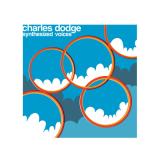
Charles Dodge - Synthesized Voices (Tape)

The compositions recorded here are a product of work with computers in synthetic speech, song and vocal sounds and were created between 1972 and 1975. The music was realized on two different computer music systems and takes advantage of, and attempts to extend and explore their features. The system employed to realize speech songs was created at the Bell Telephone Laboratories for research in synthetic speech and speech communication. Since the system was not designed for musical purposes, its limitations were severe and its musical use a great (and often rewarding) challenge. The system used for In Celebration and The Story of Our Lives was designed with the expressed purpose of creating synthetic musical voices, and was therefore much better suited to the task at hand. As with any high technology project, there was extensive collaboration in the production of the works.

The works on this disk are called computer music because the sounds were created numerically in a computer before reaching magnetic tape and loudspeakers. The computer did not compose the music. However, it was only used as a sound synthesis and analysis medium. In order to hear the sounds which are represented in the computer as successions of numbers it was necessary to attach a digital-to-analogue converter to the computer. The converter transformed the succession of numbers into a fluctuating voltage which was recorded directly on to audio tape.

The technique used to create the synthetic voices is called speech synthesis-by-analysis. For this method of speech synthesis, only those words, phrases and sentences which have been spoken into the computer previously (via an analogue-to-digital converter) may be synthesized. First the digitally-recorded speech is analyzed by programs which extract the attributes (parameters) of the speech for short time segments (.01 sec.). From these parameters the speech may be recreated in a form which resembles the original recording very closely. But for musical purposes the parameters are most often altered before synthesis. It is possible, for example, to change the natural pitch contour of the speech into a melodic line or to change the speech speed without altering the natural pitch level.

The variety of musical patterns which may be created from the analytic parameters is limited only by the composer's imagination. Most of the speech sounds on the recording were created by changing the pitch and duration attributes of the original on resynthesis, but for a few, the resonances (the formants) of the speech were altered as well. The voice of the book in The Story of Our Lives was created by replacing the program which simulates the sound of the human vocal cords with one consisting of 64 sine tones glissandoing at different rates. All the textures in which more than one voice is heard were obtained by mixing the synthetic voices together digitally.

vorbestellen11.09.2026

erscheint voraussichtlich am 11.09.2026

Global Surf & Garage Rock - Death Is Not The End (TAPE)

DINTE present a cassette-only issue of an NTS radio broadcast from back in early 2019; a cross-continental trip through instrumental surf, short-run garage rock, and space-age psych oddities from across the globe, incl. groups from the US, UK, Peru, Angola, Thailand, Japan, Indonesia, India & Singapore among others.

vorbestellen04.09.2026

erscheint voraussichtlich am 04.09.2026

Charles Dodge - Synthesized Voices LP
  • 01: In Celebration
  • 02: Speech Songs I: When I Am with You
  • 03: Speech Songs II: He Destroyed Her Image
  • 04: Speech Songs III: A Man Sitting in the Cafeteria
  • 05: Speech Songs IV: The Days are Ahead
  • 06: The Story of Our Lives I: We Are Reading the Story of Our Lives
  • 07: The Story of Our Lives II: We are Reading the Story of Our Lives
  • 08: The Story of Our Lives III: This Morning I Woke and Believed
  • 09: The Story of Our Lives IV: Before You Woke
  • 10: The Story of Our Lives V: If Only There Were A Perfect Moment in the Book
  • 11: The Story of Our Lives VI: The Day Goes On
  • 12: The Story of Our Lives VII: The Book Will Not Survive
auch erhältlich

Tape


The compositions recorded here are a product of work with computers in synthetic speech, song and vocal sounds and were created between 1972 and 1975. The music was realized on two different computer music systems and takes advantage of, and attempts to extend and explore their features. The system employed to realize speech songs was created at the Bell Telephone Laboratories for research in synthetic speech and speech communication. Since the system was not designed for musical purposes, its limitations were severe and its musical use a great (and often rewarding) challenge. The system used for In Celebration and The Story of Our Lives was designed with the expressed purpose of creating synthetic musical voices, and was therefore much better suited to the task at hand. As with any high technology project, there was extensive collaboration in the production of the works.

The works on this disk are called computer music because the sounds were created numerically in a computer before reaching magnetic tape and loudspeakers. The computer did not compose the music. However, it was only used as a sound synthesis and analysis medium. In order to hear the sounds which are represented in the computer as successions of numbers it was necessary to attach a digital-to-analogue converter to the computer. The converter transformed the succession of numbers into a fluctuating voltage which was recorded directly on to audio tape.

The technique used to create the synthetic voices is called speech synthesis-by-analysis. For this method of speech synthesis, only those words, phrases and sentences which have been spoken into the computer previously (via an analogue-to-digital converter) may be synthesized. First the digitally-recorded speech is analyzed by programs which extract the attributes (parameters) of the speech for short time segments (.01 sec.). From these parameters the speech may be recreated in a form which resembles the original recording very closely. But for musical purposes the parameters are most often altered before synthesis. It is possible, for example, to change the natural pitch contour of the speech into a melodic line or to change the speech speed without altering the natural pitch level.

The variety of musical patterns which may be created from the analytic parameters is limited only by the composer's imagination. Most of the speech sounds on the recording were created by changing the pitch and duration attributes of the original on resynthesis, but for a few, the resonances (the formants) of the speech were altered as well. The voice of the book in The Story of Our Lives was created by replacing the program which simulates the sound of the human vocal cords with one consisting of 64 sine tones glissandoing at different rates. All the textures in which more than one voice is heard were obtained by mixing the synthetic voices together digitally.

vorbestellen28.08.2026

erscheint voraussichtlich am 28.08.2026

Various - The Remains: Short-Run Regional Releases from the Lao People's Democratic Republic (Tape)
  • 1: Side A
  • 2: Side B

Gary Sullivan's Bodega Pop project returns to DINTE with a cassette-only collection of traditional sounds plucked from CDRs found in the night-markets of Savannakhet, Vientiane, and Luang Prabang.

"In Lao PDR, music was seemingly everywhere. Walking through an open field outside Savannakhet to the sound of someone playing a khaen on a distant porch, the bracing rush of electronic molam from of one of Vientiane’s many aging malls, the awkward blending of the blind so u player’s voice with the bustling sounds of Luang Prabang’s night market.

It was in that UNESCO World Heritage Site that I found most of the CDs and CD-Rs from which I’ve ripped the tracks for this compilation. I’m almost certain I picked up a thumb drive at the night market that held many hours of additional music that could have been included, but if so, I’ve misplaced it, lost it for good, or simply misremember purchasing it in the first place. What I do remember is that these discs were literally the last copies in the cafe, museum, bookstore, and night market where I bought them, and not all of them played all the way through without sonic deterioration.

The sounds compiled here play in stark contrast to the more contemporary recordings I found in Laos, most of which featured some form of upbeat digital workstation molam or children’s songs. In addition to the ever-present khaen, this collection includes recordings of the sanai, a single-reed instrument fashioned from a water buffalo horn, the ceremonial khong nyai gong, the pi and similar free-reeds, and at least a dozen more traditional instruments played by Lao and ethnic minority artists. While some of these tracks were laid down in Vientiane or Luang Prabang, most were recorded near where the artists lived, from the legendary Vat Phou in the far south to the former Pathet Lao capital Xam Neua in the northeast.

Unlike Laurent Jeanneau’s more focused Lao collections for Akuphone and Sublime Frequencies, which remain among my favorite albums of all time, the present cassette-only selection is literally all over the PDR map. The sequencing is entirely in response to rhythm and texture and includes recordings from the 1970s, 80s, 90s, and early aughts. This may frustrate those with more of an ethnomusicology bent, but my hope is that the listener experiences something akin to wandering for the first time through this majestic country, encountering the last copies of forgotten recordings one after another, and hearing in these remains fragments of the past and a living musical landscape."

vorbestellen14.08.2026

erscheint voraussichtlich am 14.08.2026

Anvar Kalandarov - Central Asian Synthesizers (Tape)
  • 01: Side A
  • 02: Side B

qorakitobchi aka Anvar Kalandarov is a music archaeologist, musician and producer from Tashkent, Uzbekistan whose work is dedicated to uncovering forgotten sounds from across Central Asia. In recent years he has emerged as a singular voice documenting the region’s musical heritage, co-compiling Synthesizing the Silk Roads for Ostinato Records and curating Digging Central Asia: Musical Archaeology Along the Silk Road split release for Death Is Not The End, alongside presenting his own Maqom Soul imprint.

For this mixtape, Kalandarov turns his attention to the synth-pop, disco and electronic music that flourished across Central Asia during the 1980s and 1990s. Drawn from rare vinyl records & private archives, this selection explores a period when Soviet modernity, regional traditions and emerging synthesiser sounds merged to create a uniquely Central Asian vision of the future. From Uzbek disco and Tajik synth-pop to lesser-known oddities, the mix offers a glimpse into a musical world that remains largely unexplored outside the region.

vorbestellen07.08.2026

erscheint voraussichtlich am 07.08.2026

Wiregrass Sacred Harp Singers - Songs From The B. F. White Sacred Harp (Tape)
  • 01: The Happy Sailor
  • 02: Blooming Youth
  • 03: Weeping Pilgrim
  • 04: There We Our Jesus Shall Adore
  • 05: Bound for Canaan
  • 06: Cuba
  • 07: Firm Foundation
  • 08: Florida
  • 09: Desire For Piety
  • 10: Ragan
  • 11: Struggle On
  • 12: Ninety-Fifth Psalm
  • 13: Fallen by the Way
  • 14: Happy Home
  • 15: Coronation
  • 16: The Dying Boy
  • 17: The Fathers Boundless Love
  • 18: The Christians Flight
  • 19: Give Me Just a Little More Time

Recorded April 17 and 18, 1993, at the Union Grove Baptist Church, Ozark, Alabama.

The Wiregrass Singers' Dewey Williams began learning the shape-note tradition in his childhood. He studied under Judge Jackson, who authored the landmark 1934 hymnbook The Colored Sacred Harp. In 1971, Williams formally organized The Wiregrass Sacred Harp Singers to preserve the music full-time. This unified troupe began touring nationally and leading workshops, which ultimately launched them onto stages at the Smithsonian and Newport folk festivals up until Williams' passing in 1995 when the group disbanded. The African-American Sacred Harp tradition in the Wiregrass region has steeply declined since the start of the 21st century, due to an aging generation of singers, and today it is largely sustained through archival preservation and occasional multi-book singing meetups.

This raw recording, made at the Union Grove Baptist Church, Ozark in mid-April 1993 finds the group singing from B. F. White’s The Sacred Harp (1844), which together with his brother-in-law William Walker’s Southern Harmony (1835) formed the musical backbone of generations of Southern music and Southern musical styles.

"On almost any Sunday between the months of March and October, the season most conducive to travel and outdoor dinner-on-the- grounds, Sacred Harp devotés join with fellow songsters at the County Line Church in Slocomb, or the Mount Sinai Church in Henry County, or the Union Grove Baptist Church in Dale County, or at any one of a dozen or so churches in the southeast Alabama counties of Barbour, Coffee, Dale, Geneva, Houston and Pike, to form the square and sing fa-sol-la. Approximately fifteen African-American Sacred Harp singings occur annually in the Wiregrass region of southeast Alabama. A singing tradition characteristically associated with white culture in the Deep South, southeast Alabama has enjoyed a vibrant African-American Sacred Harp tradition for well over a century.

On a day of a typical African-American Sacred Harp Singing, the participants arrive casually in the late morning, seat themselves in the square according to voice part, and begin to sing. A dinner break occurs in the early afternoon, and the singers enjoy a covered-dish "dinner-on-the-grounds" (or in the church basement) prepared by the women. The most intense and emotional singing typically occurs after the dinner break. Each singer takes a turn leading the song of his choice. He walks to the middle of the square, calls out the song's page number and waits for the designated tuner to key the song. Singers are discouraged by the other singers from repeating a song that has already been sung, or "used." This proscription is often dispensed with, however, if the singer is particularly young, particularly old, or if the song has special significance to the individual song leader (perhaps the favorite song of a recently deceased relative).

Every singer is given an opportunity to lead a song. Often, older or more infirm singers will request younger singers to lead their songs for them. The motions of the song leaders are highly stylistic and often emotional. Young children are taught in singing school to mark time with their right arm while holding the book in their left. Typically, a singer will stand in place at the center of the square while leading the singing of the notes. When he begins to lead the lyrics portion of the song, he will often begin to "walk time," rhythmically pacing from one side of the square to the other, being careful never to turn his back on the tenor section. This "walking time" is unique to the African-American tradition. As a singer grows more confident he develops his own distinctive leading style. During fuguing songs in particular, he may gesture to each section of the square as its part joins in. Skilled song leaders often elicit applause or other emotional responses from the group. Occasionally a singer may fall into a state of spiritual ecstasy and "get happy." The episode might include a personal testimonial followed by a repeat of the last verse or refrain from the previous song. The singings break up around 5 P.M."
—Henry Willett, 1997 credits

vorbestellen07.08.2026

erscheint voraussichtlich am 07.08.2026

Ercília Costa - My Torment (Tape)
  • 01: Meu Tormento (My Torment)
  • 02: Fado do Passado (Fado of the Past)
  • 03: O Meu Filho (Oh My Son)
  • 04: Duas Glórias (Two Glories)
  • 05: Negros Tracos (Black Tracks)
  • 06: Desilusao (Disappointment)
  • 07: Saudades Que Matam (Miss That Kill)
  • 08: Um Desgosto (A Digust)
  • 09: O Filho Ceguinho (The Blind Son)
  • 10: A Minha Vida (My Life)
  • 11: Fado Sem Pernas (Fado Without Legs)
  • 12: Fado Dois Tons (Two Tone Fado)
  • 13: A Desgarrada (The Torn)
  • 14: Fado de Mouraria (Fado of Mouraria)
  • 15: Fado da Alfama (Fado of the Alfama)

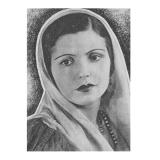
Death Is Not The End issue 15 heartbreaking archival fado recordings from Ercilia Costa - made in Madrid in 1930, accompanied by seminal guitarist Armandinho. One of the early stars of fado, Ercilia Costa was the first to take the music overseas to emigrant Portgugese communities.

vorbestellen31.07.2026

erscheint voraussichtlich am 31.07.2026

Various - I'm on My Journey Home: Sacred Harp Singing, 1928-1934 (Tape)
  • 01: The Denson Quartet - I'm on My Journey Home
  • 02: Denson-Parris Sacred Harp Singers - The Good Old Way
  • 03: Alabama Sacred Harp Singers - Religion Is a Fortune
  • 04: Allison's Sacred Harp Singers - Sweet Prospect
  • 05: Allison's Sacred Harp Singers - Weeping Pilgrim
  • 06: Alabama Sacred Harp Singers - Rocky Road
  • 07: Georgia Sacred Harp Singers - Windham
  • 08: Dye's Sacred Harp Singers - How Firm a Foundation
  • 09: Denson's Sacred Harp Singers of Arley Alabama - Protection
  • 10: Middle Georgia Singing Convention No. 1 - Bells of Love
  • 11: The OKeh Atlanta Sacred Harp Singers - Return Again
  • 12: Huggins & Phillips Sacred Harp Singers - Blooming Youth

LP edition now available!

Death Is Not The End present a collection of recordings of Sacred Harp singing (a traditional sacred choral music with origins in the American South) taken from the late 1920s through to the late 1930s.

vorbestellen03.07.2026

erscheint voraussichtlich am 03.07.2026

The Sterling Jubilee Singers - Jesus Hits Like the Atom Bomb: Gospel Quartet Singing in Jefferson County, Alabama (Tape)
  • 01: Jesus Hits Like the Atom Bomb
  • 02: Devotional
  • 03: Peace in the Valley
  • 04: God Shall Wipe All Tears Away
  • 05: Little Wooden Church on The Hill
  • 06: The Lords Prayer
  • 07: Will He Welcome Me There
  • 08: Job
  • 09: I Never Heard a Man
  • 10: My Jesus Knows
  • 11: Every Time I Try To Do My Best
  • 12: Operator
  • 13: Testimony
  • 14: Benediction
vorbestellen03.07.2026

erscheint voraussichtlich am 03.07.2026

Various - Let Me Perish Without Return LP
  • 1: Let Me Perish Without Return
  • 2: In the Harem
  • 3: You Ask for Songs
  • 4: Conversation Between the Audience and the Gramophone
  • 5: The Horse Drags Along Quietly
  • 6: Unknown Song
  • 7: Tell Me Comrade, How Did You End Up in the Mine
  • 8: No. No. I Don't Want
  • 9: Do You Remember, Comrade Constant?
  • 10: Swan Song
  • 11: In the Midnight Silence
  • 12: Star, Forgive Me, It's Time for Me to Sleep
  • 13: Have Pity
  • 14: Have Pity
  • 15: Nastenka
  • 16: The Song of a Convict
  • 17: Unknown Song 2
  • 18: The Last Five Roubles
  • 19: Our Tormented, Tortured Brother Craftsman
  • 20: The Sun Rises and Sets
auch erhältlich

Tape


vorbestellen26.06.2026

erscheint voraussichtlich am 26.06.2026

Artikel pro Seite:

Language

N/ABPM
Vinyl