
No en stock
Haga su pedido ahora y le encargaremos el artículo en nuestro proveedor.
Ültimo hace: 2 Días
Haga su pedido ahora y le encargaremos el artículo en nuestro proveedor.

debe ser publicado en 26.06.2025

Tip!! Conga Radio, the Canadiana club collab of producers Jex Opolis and Roberto, offers two smooth and jazzy house cuts designed for the heart, mind, foot and soul. The A-side of "Right Beside You" features melodic vocals and smooth chords, while the B-side "Party Smokes" plays out with space, atmosphere and groove. A tag team not to be missed!
Haga su pedido ahora y le encargaremos el artículo en nuestro proveedor.
Suara presents the remix pack of Uncertain's hit 'Conga'. Four new versions from Confidential Recipe, Gene Richards Jr, Mark Broom and Uncertain himself directly focused on the dance floor. The four new versions make up a magnificent work of months of dedication in which one of the most successful tracks of the label is adapted to the current and future techno sound.
Haga su pedido ahora y le encargaremos el artículo en nuestro proveedor.

15 YEARS OF SEX TAGS MANIA! Established in Bergen 2004 and ran by DJ Sotofett & DJ Fett Burger the first 4-5 years as one of Norways only labels consistently releasing House & Techno on vinyl. Since about 2008/09 it's been operated by DJ Sotofett.
Skatebård's "Conga" has turned to be one of the most sought after releases from the Sex Tags Mania catalog with it's sparse pressing of about 2-300 copies – though most of the original stock was given away as the record gained minimal interest in 2005. The original record was cut with excellence by Lawrie Immersion – and pressed in his own plant – the now defunct Curved Pressings. MANIA 30 – the repress of "Conga" has as close to original sound as possible and it also carries a new B-side – the Crystal Bois live version of "Conga" from 2007, featuring Skatebård on male vox!
Haga su pedido ahora y le encargaremos el artículo en nuestro proveedor.

Life is all about rhythms. We don't know what we're dancing to until we're in so deep we can no longer control ourselves. The rhythm controls us.
Right now both Guti and the Martinez Brothers are dancing to the conga rhythm. Guti's third album, they've been dancing to it since the summer, teasing us with a whole slew of percussive new... And they'll continue throughout 2019. Chance are you will, too. Eventually the rhythm will control all of us. It's too infectious not to.
Here's the 411: 'The Year Of The Conga' is Guti's third and most rooted album to date. It came about through a personal request from brothers Chris & Steve Martinez. Both unapologetic Guti fans they wanted the very first album on their Cuttin' Headz label to be his. The result is a total reconnection back to his Argentinian foundations, his club roots and everything that first lured him to the dancefloor...
'I'm back to my roots and found my Latino groove again,' says Guti who wrote the album throughout 2018, starting it whilst bulleting through Japan by train, the majority crafted in the jungle of Dominican Republic, having collected and sampled native percussion instruments, and then finally mixing down on his return to Europe. 'Every song is full of rhythm and created to make you dance...'
He's not messing around; from the writhing snakelike percussion and rousing calls and cries of opener 'Aee' right through to the final mesmerising waves and farewell struts of finale 'Voladora' this an album is born both for and from the dancefloor. No overthinking, no purism, no exclusion; just unabashed physical hypnosis, fuelled for the floor, guided with gut instinct and years of groovecraft. It's the sound of an artist who's disconnected, explored and reconnected. He's older, he's wider and more in tune with his own pace and palette. One of the most diverse and explorative artists to come from Loco Dice's Desolat stable, this is Guti simplifying his passions down to an essence of everything that's magic about his roots and our shared dancefloor culture.
The highlights are in abundance; those hazy-but-persistent New Jersey organs on 'Telling The Truth', that wobbly sub on 'Red Eye', that shimmering sinewy acid line on 'Se Baila', the spicy pianos and wet horns of 'La Orchestra Fantasma', the list goes on. Each cut designed for deep mix pleasure, each cut rolling with a strong organic flavour and alluring percussive dynamics, each cut showing Guti at his most inspired, warmest, playful and ready to wrap you up so deep in a conga you'll soon lose yourself.
Cuttin Headz, cuttin straight to the chase but never cutting it fine... Let us be the first to wish you happy new year with the first ever album on the currently unstoppable label. We'll wish you a happy new conga, too. 2019's going to be a vintage and Guti and the Martinez Brothers are leading the charge.
Haga su pedido ahora y le encargaremos el artículo en nuestro proveedor.

Haga su pedido ahora y le encargaremos el artículo en nuestro proveedor.

Haga su pedido ahora y le encargaremos el artículo en nuestro proveedor.

Tradition futuristic Cumbia travelsound through Caraibs, Africa, Andines, Spain, India, ... Superb open minded compilatio nbringing loads of bloody good tune... and a pure spirit :! ENJOY !
Haga su pedido ahora y le encargaremos el artículo en nuestro proveedor.

DJ Dan has been a pinnacle of the dance music scene in America since the early 90s and has toured around the world with the likes of Carl Cox, DJ Sneak and Pete Tong to name a few. Dan's label imprint InStereo is played by many top DJs around the world and Dan has chosen some of his strongest releases for Vol. 2 of the Slammin Trax series.
Haga su pedido ahora y le encargaremos el artículo en nuestro proveedor.

Gilles Peterson says: "If a Cuban record had come out on Sleeping Bag Records in 1982, I think it would've sounded a bit like this. It's an eccentric middle ground between Latin-styled pop and disco".
Reissued from the Spanish version of this awesome Cuban records with a unique picture cover. Probably one of the best 70's Areito releases, for sure ahead of his times. The entire record minus two tracks of 10 total are all upbeat with afro-latin breaks, dope choral vocal arrangements and chunky bass and conga lines, but don t sleep, the lower bpm songs are great mellow gems. Gilles Peterson says: "If a Cuban record had come out on Sleeping Bag Records in 1982, I think it would ve sounded a bit like this. It s an eccentric middle ground between Latin-styled pop and disco".
Haga su pedido ahora y le encargaremos el artículo en nuestro proveedor.

Haga su pedido ahora y le encargaremos el artículo en nuestro proveedor.

Haga su pedido ahora y le encargaremos el artículo en nuestro proveedor.

Butch returns to Rekids with the ‘Official Bump Call’ EP. Riva Starr steps up with a Warehouse remix.
German DJ/producer Butch returns to Rekids with the ‘Official Bump Call’ EP 22nd May 2026. It marks his first release on the label since 2011’s ‘Raw Beats’ two-tracker, followed by a 2018 appearance remixing Basement Jaxx’s ‘Good Luck’. This time, Snatch! Records boss Riva Starr joins for a remix fresh off the back of his ‘Shine A Light’ EP on Radio Slave’s main imprint.
“‘Bump Call’ and 'Foxtrot Uniform' are messages from old-school players to new-school fools. At a time, when everything revolves around health, discipline, and maximising output – more shows, more structure, more money – this EP is a reminder of where it all came from. From a scene that wasn’t optimised, but lived. From DJs who didn’t just perform – they partied. Yes, times have changed. Even I’m on that fitness wave now, living cleaner and more focused. But this record isn’t about that. It’s a nod to the chaos, the excess, and the raw energy that defined an era. A reminder that it wasn’t always about performance – sometimes it was just about crossing lines” - Butch
Butch’s Official Bump Call' plays with live, loose, and funky drum breaks that ride a swollen bassline. Toms and congas pepper the groove as steamy vocals inject the soul. It's a dusty, heartfelt House sound that balances vintage samples with his signature production prowess, making for a sure-fire summer heater. Riva Starr is an equally influential producer who heads up the Snatch! label and has been turning out essential House sounds for many years. His remix beefs up the drums while keeping the slow-burning vocal heat front and center, creating a devastatingly deep yet driving sound.
'Foxtrot Uniform' is another tasteful jumble of soul, funk, and gospel motifs with a lived-in house groove that's instinctive and real. Emotions bubble up but never boil over as the tension builds, culminating in an utter dance-floor release when the diva's vocal erupts. It's a masterclass in control and release.
Butch has a vast discography spanning labels such as Life And Death, Running Back, Defected, Innervisions, Diynamic, Starr’s Snatch!, and many more, while traversing myriad subgenres. He does it all, from intricate minimal with Ricardo Villalobos to Eastern-inspired psychedelia and pounding, prime-time Techno.
Founded in 2006, Radio Slave’s Rekids expanded with the techno-focused Rekids Special Projects in 2017 and its latest sublabel, REK’D, in 2024. With Matt Edwards as sole A&R, Rekids continues to champion emerging and established artists alike, remaining a trusted home for house and related sounds, with recent releases from DJ Minx, Echonomist, Tal Fussman, and more."
debe ser publicado en 11.06.2026

Ricardo Villalobos runs wild on Mohammad Reza Mortazavi’s Persian tombak hand drum actions, expanding a 4 min kernel of inspiration into 24 minutes of mesmerising polyrhythmic traction. From an original ‘Swamp’’ piece that practically recalls Ricardo’s style of slinky minimal techno sorcery to begin with, the Chilean-German maverick derives a more driving tract of rough hewn rhythmic grit bound to hypnotise ‘floors for the duration. Accentuating the undulating bass and dialling up the volume whilst retaining the frictional grind of the original, Villalobos gets right inside the groove with typically obsessive tekkerz, plucking out additional string
motifs and tempering the flow with signature, taut but sinuous, loosey goosey flex that cross-pollinates cultures and gets right under the skin of the thing.
Ricardo Villalobos (b. 1970, Chile) is a pioneering figure in minimal techno, celebrated for his hypnotic and groovy approach to rhythm. Raised in Germany after his family fled Pinochet’s regime, Villalobos was drawn early to percussion - he began playing congas and bongos at eleven, developing a tactile relationship to rhythm that would later inform his distinctive production style. Immersed in both Latin American folk traditions and the emerging house and techno scenes of late-80s Europe, he began DJing and producing in the early 1990s, quickly achieving cult status within global club culture. Mohammad Reza Mortazavi (b. 1979, Iran) is a virtuoso percussionist known for his groundbreaking work with the tombak and daf, traditional Persian drums that he has radically redefined through new playing techniques. Mortazavi began playing the tombak at the age of six. By nine, he had already outpaced his teacher and won Iran’s national tombak competition - a distinction he would earn six more times. By his early twenties, he was widely regarded as one of the foremost players of the instruments. Since then, his music has continued to evolve, embracing new forms beyond tradition.
debe ser publicado en 12.06.2026

Artificial Go’s new 7” for Carpark Records signals the next chapter in the band’s gentle-but-rapid evolution. The Cincinnati-based rock ‘n’ roll combo dials in to their distinct sound while opening the doors wide to newness. In just two songs, they share joyous expression, frustrated anger, and curious exploration.
The 7” follows two beloved albums and loads of talked-about touring. The excitement is easy to connect with as 7” A-side “Triple Ones” spools out its coiled, bouncy lead guitar with a bass part worth following through the kitchen conga line and into the living room dancefloor. On the flipside, “Jane Ate The Apple Seed” provides a mysterious atmosphere and chorus of unusual trance.
The band’s live configuration is often so: lead vocalist Angie Willcutt, drummer Cole G Patrick, guitarist Ryan Sennett, and bassist Micah Wu. But on record, the members swap instruments and play whatever part necessary. For example, Sennett is drumming on “Jane Ate The Apple Seed,” with Patrick playing guitar, Wu on bass, and Willcutt playing an autoharp with a bow.
While the music is undeniably fun and mesmerizing, lead singer Angie Willcutt’s lyrics center serious matters. The story told in “Triple Ones” refers to a person undercut by those running the show. Willcutt calls it “the most blatantly upset Artificial Go song.” “Explain to me your delusional behavior,” she sings. “The world dealt me the cards of presumption/ I’ll play them right and use it to my advantage.” It might be groovy music, but Willcutt says, “When writing that song, I was just pissed off.”
Three of the bandmates live in the same house in Cincinnati. They practice in the basement, record in the haunted attic, and live in between. “Jane Ate The Apple Seed” started as a jam in that basement. The landlord came over to do maintenance and stayed to watch the jam become a song. Its lyrics tell the hidden story behind a well-known tale: “Jane ate the apple seed/ Johnny nowhere to be seen.”
debe ser publicado en 12.06.2026

As a tribute to Vladimir sivc aka FUNKY DESTINATION who sadly passed away in march last year, SOOPASOUL is releasing this limited edition special updated version of the now classic '' The Inside Man- REMIX '' pt.1 has been completely rebuilt from the ground up , on the flip is pt.3 .. which is previously unreleased and features Paul 'Dewey' haywood on Tenor sax and Tony wright on Congas as well as toasting and additional guitars by Soopasoul.
debe ser publicado en 15.06.2026

Vier Jahre nach ihrem gefeierten Debüt ,International Love Affair" kehrt Tigerbalm (Rose Robinson) mit dem aufregend kaleidoskopischen Album ,Bubblegum Discos" zu Ubiquity Records zurück. Als mutige Weiterentwicklung ihres global geprägten Nu-Disco-Sounds spiegelt das Album ein neu gewonnenes Selbstbewusstsein wider sowie den Wunsch, mit handverlesenen Musikern und Sängern aus aller Welt zusammenzuarbeiten. In lebhaften Klangfarben gehalten, präsentiert ,Bubblegum Discos" Tigerbalms zwei große musikalische Leidenschaften: die brasilianische Musikkultur und Vintage-Dancefloor-Hits vom afrikanischen Kontinent, angereichert mit Anspielungen auf Italo-Disco, Proto-House und Soca. Die erste Hälfte des Albums ist stark von südamerikanischen Einflüssen geprägt. ,Nayar", entstanden in Zusammenarbeit mit Giorgio Lopez aus Neapel, macht den Anfang mit leicht vom Reggaeton inspiriertem Nu-Disco, gefolgt vom brasilianischen Disco-Rausch von ,Diga Me" und dem luftigen Samba-Disco von ,Vera En Paraty". Robinson liefert ihren allerersten Leadgesang auf dem teilweise improvisierten Neo-Boogie-Track ,Coco Makoko". Das Album wendet sich dann Afrika zu, mit herausragenden Beiträgen von Andre Espeut, der in Montreal lebenden haitianischen Sängerin Waahli auf dem hornlastigen ,Do Da Soca" und dem Afrobeats-Sänger Idd Aziz auf dem körperbetonten ,Afro-Disco". Der Abschluss ,Conga" rundet das Ganze mit schweren, afrozentrischen Disco-Rhythmen und tiefem Dub-Bass ab. Actiongeladen und makellos produziert: ,Bubblegum Discos" ist der Sound einer Künstlerin, die ihr frühes Versprechen mehr als nur einhält.
debe ser publicado en 19.06.2026

En el almacen y preparando para el envío

Winter Collection arrives a little late, but it arrives right. Four tracks across two sides, drawing from Chicago, Detroit, Oakland, and Portland, mastered for DMM cut by Lawrie Dunster of Curve Pusher. The vinyl sounds like it means business.
The A-side opens with the Bryan Zentz Remix of Basic Analogue, originally written and produced by Mazi and Joshua Collins. Dunster’s remaster serves the synth work well, keeping the melodic lines clear and the low end present without overcrowding the mix. Zentz built something durable here, and the vinyl pressing confirms it.
Sound Whore by DJ Mes follows, and Mes doesn’t waste any time. The wah-wah guitar arrives early, the trumpet not far behind, and then the Latin percussion and vocal samples start stacking up. It’s a lot, but Mes holds it together with a groove that keeps pulling everything back toward center. You don’t resist it. You just follow.
The B-side belongs to the most requested track in the label’s catalog, and it’s easy to understand why. Mike Huckaby’s remix of Cesar Ramirez’s Congo Fury anchors itself to a conga line and then opens outward, synth lines drifting across the rhythm like smoke. Huckaby had a particular gift for this, the ability to make a moment feel like it could last forever without ever losing tension. Ramirez’s own keyboard solo survives toward the end, a subtle crescendo that feels earned. Dunster captures the whole thing with care.
It’s Time to Jack by Da Outlawz closes the record. 909 drums, cracking snares, chopped vocal fragments. Barebones Chicago house, designed for a sound system that can take the weight. Nothing complicated about it, and that’s the point.
Play it loud.
Track A1 written and produced by Maziar Namvar and Joshua Collins. Remixed by Bryan Zentz.
Track A2 written and produced by Jason Sutton.
Track B1 written and produced by Cesar Ramirez. Remixed by Mike Huckaby.
Track B2 written and produced by Gabriel Palomo & Geto Mark.
Mastered by Lawrie Dunster at Curve Pusher, UK.
Copyright Control
2026 Fresh Meat Records
Shorter Version
Winter Collection arrives a little late, but it arrives right. Four tracks across two sides, drawing from Chicago, Detroit, Oakland, and Portland, mastered for DMM cut by Lawrie Dunster of Curve Pusher. The A-side opens with the Bryan Zentz Remix of Basic Analogue, originally written and produced by Mazi and Joshua Collins. Dunster’s remaster keeps the melodic lines clear and the low end present. Zentz built something durable here, and the vinyl confirms it. Sound Whore by DJ Mes follows. The wah-wah guitar arrives early, the trumpet not far behind, then Latin percussion and vocal samples start stacking up. Mes holds it together with a groove that keeps pulling everything back toward center. You just follow. Mike Huckaby’s remix of Cesar Ramirez’s Congo Fury anchors itself to a conga line and opens outward, synth lines drifting across the rhythm like smoke. Huckaby had a gift for making a moment feel like it could last forever without losing tension. Ramirez’s keyboard solo survives toward the end, a subtle crescendo that feels earned. It’s Time to Jack by Da Outlawz closes the record. 909 drums, cracking snares, chopped vocal fragments. Barebones Chicago house, designed for a sound system that can take the weight. Play it loud.
debe ser publicado en 24.06.2026

Bruno Berle is a singer, songwriter, producer, multi-instrumentalist and figurehead of a contemporary Brazilian music movement. With a quiet mastery of songwriting and an astonishing voice, his music has won hearts around the world. Since the release of his debut album No Reino Dos Afetos (2022), Berle has performed across the UK, Europe, Japan, South Korea, and China, only leaving his home country for the first time in 2023. Shaped by these journeys, Berle’s third studio album, Sem Fronteiras (Without Borders), reflects a utopian vision of a unified world.
Recorded across London, São Paulo, Minas Gerais, Germany, and Maceió, the album–co-produced alongside his longstanding musical partner Batata Boy–is the most expansive canvas Berle has worked on to date. Shot through with the imagery that has always animated his songwriting: open skies, morning light, vivid colours and the magic of human connection, Berle’s carefully crafted poetics and warm, delicate instrumentation drive this vivid body of work.
“I came from nothing”–Berle doesn’t take his rise to global prominence for granted.
Born to a working class family from Brazil’s northeastern Alagoas state, one of Brazil’s most economically deprived, Bruno moved frequently in his youth to follow any job opportunities his parents could find, before eventually settling in the coastal capital of Maceió. “I used to travel to Caruaru, Santa Cruz, Recife, Garanhuns, Arapiraca, which I loved and feel it made me ready to be in this rhythm i’, but at the same time I think not having friends from childhood and being in constant change made me a little numb to the constant upheaval”. On Sem Fronteiras, there is a similar duality at play. The album celebrates the collective joy and human connection that live touring brings, but it also sits with the darker realities of crossing borders. While music moves more freely around the world than ever before, our bodies are not granted the same privilege.
Though he’s never lacked self-belief, Berle recognises that talent alone doesn’t guarantee opportunity. “Before my second album No Reino Dos Afetos 2 everything I had ever recorded was made with the help and kindness of people who believed in my ability”. Determined to pay that kindness forward and help others from the sharp end of Brazil’s desperately unequal society, Berle produced and featured on the recent self-titled albums by his northeast Brazilian compatriots, Nyron Higor and Phylipe Nunes Araújo (both 2025), helping propel both onto the international stage. In turn, following the successes of Nyron & Phylipe’s albums alongside his own, Bruno finds himself at the forefront of a thriving community of artists now based in São Paulo, but primarily originating from northeastern states like Alagoas and Pernambuco.
Much like the famed Clube Da Esquina movement that spawned in 1970’s Minas Gerais, they operate with a free-exchange of ideas, writing songs with and for each other, performing on each other’s albums and on the live circuit together. Lead single ‘Manha’ flows from this ethos. It was written by Berle’s friend and fellow Alagoan João Menezes (writer of ‘Ate Meu Violao’ and ‘Te Amar Eterno’ from Bruno’s previous albums) and Marvin Viera, and originally recorded on their 2018 album Areia e Mar.
Sem Fronteiras opens with ‘Você Já Sabe Que Eu Te Amo’, just six beats of one nylon guitar chord ring out before changing key, paving the way for the gentle strike of fender rhodes and the arresting call & response duet between Berle and Higor. On ‘Amor Inteiro’, the album reaches a celebratory burst of catharsis, with the punch-packing drums of Pedro Lacerda and Nina Maia’s joyous backing vocals encapsulating the live energy that Berle and his band bring to the stage.
With the abundant talents of this musical community at its heart, Sem Fronteiras releases 10th July 2026 via Far Out Recordings, supported by a summer tour across Europe. Bruno Berle will perform in a four-piece band alongside Nyron Higor, Phylipe Nunes, and Batata Boy, culminating in an appearance at Roskilde festival, Berle’s biggest live show to date. He’ll continue to carry a hopeful vision of a world where artists and musicians can move as freely as their music flows.
Tracklist:
A1 “Você Já Sabe Que Eu Te Amo”
(Nyron Higor / Bruno Berle)
Nyron Higor – drums, bass, acoustic guitar, electric piano, synthesizers, vocals
Bruno Berle – piano, vocals
Batata Boy – piano
Jorik Bergman – score preparation and conducting
Klara Gronet – violin
Ségolène de Beaufond – violin
Cristina Ardelean Montelongo – viola
Ilektra Stevi – cello
A2 “Não Posso Viver Sem Você”
(Batata Boy / Bruno Berle)
Batata Boy – electric piano, organ, synthesizer
Bruno Berle – drums, bass, synthesizer, vocals
Jorik Bergman – score preparation and conducting
Klara Gronet – violin
Ségolène de Beaufond – violin
Cristina Ardelean Montelongo – viola
Ilektra Stevi – cello
A3 “A Noite de Estrelas”
(Nyron Higor / Bruno Berle)
Nyron Higor – synthesizers
Bruno Berle – bass, drums, vocals
A4 “Outra Noite”
(Bruno Berle)
Nyron Higor – drums
Bruno Berle – acoustic guitar, bass
Felipe Berle – congas
Lucca Francisco – guitar, vocals
B1 “Amor Inteiro”
(Bruno Berle)
Pedro Lacerda – drums, choir
Nyron Higor – bass, choir
Batata Boy – guitars, organ, electric piano, choir
Nina Maia – choir
Bruno Berle – guitars, acoustic guitar, congas, vocals
B2 “Ideias Mágicas”
(Batata Boy / Bruno Berle)
Heloisa Alvino – trombone
Batata Boy – synthesizers, beats, electric piano, organ, bass
Bruno Berle – synthesizer, vocals
B3 “Vim Dizer”
(Batata Boy / Bruno Berle)
Batata Boy – electric piano, organ, synthesizer
Thomas Stankiewicz – synthesizer
Nyron Higor – synthesizer
Bruno Berle – acoustic guitar, bass, vocals
B4 “Tô Assim”
(Bruno Berle)
Bruno Berle – acoustic guitars
Batata Boy – synthesizer
Nyron Higor – bass, synthesizer
B5 “Manhã”
(João Menezes / Marvin Silva)
Bruno Berle – acoustic guitar, vocals, congas, shaker
Batata Boy – piano, shaker, electric piano, vibraphone, synthesizers
Nyron Higor – drums, bass
B6 “Sem Fronteiras”
(Bruno Berle)
Filipe Mariz – guitar
Bruno Berle – acoustic guitar, vocals, bass
Jennifer Souza – vocals, acoustic guitar
Rudson França – drums
Credits:
Produced by Bruno Berle and Batata Boy
Mixed and mastered by Bruno Berle, Batata Boy and Felipe Berle
Audio engineering:
Nyron Higor (track 1 – production; track 4 with Felipe Berle)
Joe Osborne (tracks 7 and 9)
Victor Gelling (strings on tracks 1 and 2)
Filipe Mariz (track 10)
Photography: Claudio Virgínio
Design: Minchai
Recorded in:
Maceió, Alagoas, Brazil
Tamandaré, Pernambuco, Brazil
Belo Horizonte, Minas Gerais, Brazil
São Paulo, São Paulo, Brazil
London, England
Cologne, Germany
debe ser publicado en 09.07.2026

Gap Mangione's monumentally influential Diana In The Autumn Wind. AKA BEWITH200LP. And, without question, Be With's White Whale.
They said it could never be done. And with good reason.
We've spent the past 12 years trying to license this legendary 1968 recording from Gap and, after much work, it's finally here. Remarkably, this is the first ever vinyl reissue of Gap Mangione's Diana In The Autumn Wind, produced with the full and extensive participation of Gap. An exceedingly rare album, it's been coveted by funk, soul, jazz and hip-hop sample fiends for decades.
It's unarguably *the* most sought after album for J Dilla / Madlib sample collectors. It has also been brilliantly sampled by A Tribe Called Quest, Large Professor, Ghostface Killah, Kendrick Lamar and Talib Kweli.
But this record is so much more than a sample-spotters curio. It's solid gold throughout. Bursting with killer funky-jazz grooves and tracks adorned with warm electric piano, the release is notable for featuring some extremely significant players at the very outset of their careers; Tony Levin, at 21, whose superb playing on both acoustic and electric bass was the harmonic mainstay of the trio and Steve Gadd, at 23, one of the greatest drummers of his generation.
With acceptable copies of this holy grail changing hands for $400, to call this reissue "much-needed" underplays just how vital it is. Gap's story is told in his words alongside rare photos across a sumptuously designed 2-page insert and, to augment this deluxe edition further, its all wrapped up in a beautiful, no-expense-spared luxury tip-on sleeve, as per the original hens-teeth release. And, while we're talking packaging, just take a look at that cover - a work of art in and of itself.
The tracks are short but complex, with that extraordinary rhythm section backing the beautiful piano, organ and electric piano work of Gap. It's like the best ever library funk breaks record you never heard - but all your favourite golden age rap producers were all over it, long ago. It's a stunning blend of the vibrant, driving music of the Gap Mangione Trio coupled with the sensitive composition and superb orchestration of Gap's legendary brother, Chuck Mangione, who helmed an amalgam of seemingly disparate elements – rock, big band jazz, solo improvisation and "classical" music - into a spectacularly cohesive whole that has aged wonderfully well. As Gap himself notes in the liners, "with this group I was able to explore and add new and exciting elements from rock, Brazilian and then-current pop music."
Opener "Boy With Toys" triumphantly swaggers out the gate, all big band horns, flutes and dextrous organ work. The synthesis of everything going on is nothing short of stunning. When one wise YouTube commentator called this tune "old school superhero music", Gap agreed. Rap luminaries did, too, amongst them Talib Kweli, who rapped over DJ Scratch's chopped up intro for "Shock Body" on his Quality album back in 2002.
You've barely recovered from that incredibly affecting opener when you get hit over the head with the exquisite title-track. And now you see how two of the greatest beats of all time emerged from one single track produced nearly 50 years earlier. Unforgettably utilised by Dilla for Slum Village's heartbreakingly good "Fall In Love" and then Madlib for his "Official" beat for Dilla to rap over, on the Jaylib record. Regardless of the records it went on to spawn, this is just a staggering tune in its own right. Be beguiled by the flutes and the flutter tonguing, the counter-melody from the trombones, the soprano sax solo. All of it. Simply beautiful.
The questing organ and horn workout "Long Hair Soulful" deserves a lot more attention, overshadowed somewhat by the opening two monsters but no less fantastic. It swings, it grooves and Gadd and Levin truly cook. Up next, Gap's wonderfully percussive, mellifluously piano-heavy cover of "Yesterday" by some fellas called The Beatles. It's a subtly arresting gem. "The XIth Commandment" is damn fine, with thick, gorgeous electric piano and snappy drum work underpinning chaotic soundtracky horns. To close out the side, "St. Thomas" showcases the "fourth" member of the Gap Mangione Trio, conga drummer Dhui Mandingo. Having performed with the Trio since 1965, Dhui‘s African-based and jazz-latin-influenced style amazed listeners and its way to hear why.
Opening the B-Side, standard "You're Nobody Till Somebody Loves You" breezes along in the late-night jazz club fashion before things get super deep with the outstanding and - up to now - un-sampled "Pond With Swans". It's simply heavenly, and how its moody, melancholic intro has yet to be pilfered is anybody's guess. It oscillates between gentle, sombre movements and bombastic grooves, equally hypnotic and joyous. The rendition of "You Are My Sunshine" is yet another showcase for Gap's virtuoso playing and Gadd's mastery of the pocket. Indeed Gadd's drumming on "Free Again" is nothing short of neck-SNAPPING! Ghostface took it for not one but two "Iron's Theme" tracks across his seminal Supreme Clientele. It's got that Galt MacDermot "Coffee Cold" feel. Suuuuuper cool. The frantic "Dream On Little Dreamer" hurtles along and must've surely had the whole room absolutely swinging from the chandeliers back in Rochester in the late 60s. The album closes with the magnificent Graduate Medley, featuring memorable renditions of "Scarborough Fair", "The Sounds of Silence" and "Mrs. Robinson". The warm electric piano lines of the former were sampled by The Ummah (Dilla again!) for Tribe's "Pad & Pen" from their reappraised final album, The Love Movement, as well as by Large Professor on his much-loved "The LP (For My People)".
Under the watchful eye - and extremely attentive ears - of Gap Mangione himself, the audio for Diana In The Autumn Wind has been carefully remastered by Be With regular Simon Francis, with a few much needed tweaks here and there, according to the artist's wishes. At the prestigious Abbey Road Studios, Cicely Balston's expert skills have made sure nothing is lost in the cut whilst the records have been pressed to the highest possible standard at the always stellar Record Industry in Holland. The artwork restoration has taken place here at Be With HQ and has that drop-dead gorgeous cover artwork popping like new. Buy on sight!
En el almacen y preparando para el envío

Ancient Infinity Orchestra return with their third album, It’s Always About Liberation, a new record that deepens the vision of their acclaimed recent work while moving into darker, more searching emotional territory.
Conceived as a partner to It’s Always About Love, this new body of work shares its predecessor’s generosity and spiritual openness, but carries a different charge. Where the previous album focused on healing and warmth, It’s Always About Liberation is largely animated by struggle, perseverance and the desire for transformation while still offering a path to betterment. It is music made in full awareness of a fractured world, yet unwilling to surrender to it.
Like It’s Always About Love the album title draws inspiration from words spoken by Moor Mother during their 2024 We Out Here festival performance that deeply affected bandleader Ozzy Moysey: “It’s always about love / It’s always about liberation.” Those twin ideas became a framework for the two albums Ancient Infinity Orchestra were creating. If one album explored love as repair, this one explores liberation as movement, continually striving toward freedom, clarity and deeper connection.
The 16-member ensemble is led by double bassist and composer Ozzy, with a distinctive line-up that explains their sound better than any artificial genre divisions: two double basses, harp, saxophones, clarinets, violin, viola, cello, oboe, flutes, mandolin, congas, piano, drum kit, with bells, shakers and other percussion instruments scattered on the floor of live sets and recording sessions, ready for members to use whenever the spirit takes them.
This orchestration, and the overlap between membership and friendship, gives Ancient Infinity Orchestra a sound that is at once expansive and intimate, earthy, and cosmic, constantly shifting yet grounded in shared intention. The attention to intention and the inviting sonic world connects the music to artists ranging from Alabaster dePlume to Gondwana label boss Matthew Halsall.
Gradually, the Orchestra became a grounding force in the emerging jazz scene in Leeds, bringing together individuals from different musical backgrounds co-founding the Café Oto-inspired Limpet Club or co-hosting the monthly Sonic Plunge (‘a platform for adventurous experimentation’) and co-founding the Leeds Improvisers Orchestra. Additionally, the ensemble acted as a bridge between musicians in Brighton and Leeds, after Ozzy spent a stint back on the south coast between 2020 and 2022.
Their debut, River of Light, was a vibrant celebration of togetherness recorded in three days and released on Gondwana in 2023. A Maida Vale session for Jamie Cullum’s BBC Radio 2 show brought them to a broader audience, as did bookings at North Sea Jazz Festival and Gretchen, Berlin. Since then, Ancient Infinity Orchestra has become a by-word for music that could be framed as ‘spiritual jazz’. Whilst Ozzy avoids the phrase when describing his music, he’s crystal clear that his heroes are associated with those words – citing Art Ensemble of Chicago, Pharoah Saunders, Coltrane (Alice and John), and Don Cherry as major influences.
Across trance-like meditations, rising grooves, moments of grief and collective uplift, It’s Always About Liberation speaks to the battle within the mind as much as the inequalities of the wider world. It acknowledges the darkness but lets connection and creativity have the last word Ancient Infinity Orchestra is a gathering of voices, traditions, and energies converging into something timeless. Their music is a journey inward and outward, always reaching toward the universal.
debe ser publicado en 24.07.2026
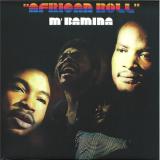
Gatefold Sleeve
M’Bamina – African Roll (1975)
The story of an album born between Africa, Italy, and the nightclub culture of the 1970s
In the heart of 1970s Italy — a country undergoing profound social change and a music scene just beginning to open itself to distant sounds and cultures — an extraordinary, almost improbable story took shape. It is the story of a group of young African musicians who found their way to Europe, of a Turin nightclub that became a crossroads for communities and experimenters, and of an album which, released in small numbers and largely unnoticed at the time, is now considered a rare jewel of Afro-fusion.
The band called themselves M’Bamina — an ensemble of musicians from Congo, Cameroon, and Benin, who arrived in Italy in the early Seventies. Settling between northern Italy and the Pavia area, they began performing in small clubs and community events, bringing with them a vibrant rhythmic heritage: African polyrhythms, call-and-response vocals, funk-infused bass lines, and Caribbean or Afro-Latin colours absorbed along their musical journeys. Their raw, contagious energy on stage quickly drew attention.
Meanwhile, in Turin, another story was unfolding. There was a venue becoming almost legendary: Voom Voom, one of the city’s liveliest nightclubs, run by Ivo Lunardi. The club attracted an eclectic crowd — students, artists, foreigners, night owls — and Lunardi quickly understood that the dancefloor wasn’t just a place for music, but a melting pot for a new kind of cultural energy. Out of this vibrant atmosphere came his idea: to turn the club’s name into a small independent record label, Voom Voom Music, capable of capturing the spirit of those years and giving voice to unconventional projects.
When Lunardi heard M’Bamina, he immediately sensed that this was the sound he had been searching for: fresh, different from anything circulating in Italy at the time, and capable of blending African tradition with funk and European sensibility. He brought them into the studio.
Production was handled by Lunardi along with Christian Carbaza Michel, while the engineering was entrusted to Danilo Pennone, a young sound technician with a sharp, intuitive ear.
The recording sessions — held in Turin in 1975 — produced a remarkably warm and direct sound. The music feels almost live: grooves rooted in African tradition, but open to funk-rock structures and modern arrangements. It is a natural fusion, never forced. Tracks move between tribal rhythms, funk basslines, light electric guitars, congas and Afro-Latin percussion, with call-and-response vocals and melodies that echo both Congolese tradition and the lineage of Latin jazz. Not by chance, one of the album’s most striking tracks, Watchiwara, reinterprets a Latin standard through M’Bamina’s own rhythmic language.
The album was titled African Roll — a name that was already a statement of intention. It is African music that “rolls,” that moves, adapts, transforms within a new geographic and cultural setting. It is not strictly Afrobeat, nor Congolese rumba, nor Western funk: it is a spontaneous, hybrid blend, shaped more by lived experience than by any calculated aesthetic program.
When African Roll was released, the world around it barely noticed. Distribution was limited, and 1970s Italy had yet to develop a cultural framework for receiving such music. The national music press rarely paid attention to African or “world” productions. The album slipped into silence — though the band’s own story did not.
M’Bamina continued performing across Europe and Africa, even sharing a stage in Cameroon with none other than Manu Dibango. By the late Seventies, they moved to Paris, signed with Fiesta/Decca, and recorded a second LP, Experimental (1978). Meanwhile, the peculiar record they had made in Turin began to resurface quietly among vinyl collectors, Afro-funk enthusiasts, and DJs hunting for forgotten grooves.
That is when the album’s fate began to shift.
Over the decades, African Roll emerged as an almost unique document: a snapshot of an intercultural Italy before the word “intercultural” even existed, a fragment of migrant history, a spontaneous experiment in musical fusion born far from major industry circuits but rich in authenticity. Original copies began commanding high prices on the collector’s market, and the album became recognized as one of the hidden classics of European Afro-fusion from the 1970s.
Today, more than fifty years later, this reissue finally restores visibility and dignity to a project that deserves to be heard, studied, and celebrated. It is not simply an album: it is the testimony of a rare cultural encounter, born in an Italy unaware of how fertile such exchanges would one day become.
It is the story of a visionary producer, an extraordinary band, and a fleeting moment in which music, migration, and nightlife came together to create something genuinely new.
African Roll is — now more than ever — the sound of a bridge: between continents, between eras, between cultures. A record that, after rolling far and wide, has finally come home.
En el almacen y preparando para el envío

Introducing the 4th instalment of the Pacific Coast House rebirth. We bring back another much sought-after 12” from The Coastal Commission & Jesse Outlaw. “Bring down the Walls” was a nod to Raze’s “Break for Love”, Robert Owens “Bring Down the Walls” and Ritchie Hawtin’s use of the Roland 606 throughout “Sheet One”. Long out of reach and fetching $100+ on Discogs, Atjazz’s freshly remastered editions are finally available .. “Let it Go” was never mastered & only ever cut to dub-plate. It has now been mastered & available in all it’s glory.
Coastal Commission “Bring Down the Walls” “Bring down the Walls” was a nod to Raze’s “Break for Love”, Robert Owens “Bring Down the Walls” and Ritchie Hawtin’s use of the Roland 606 throughout “Sheet One.” We gave the tune a Californian psychedelic twist with conga laden drums, a moody synth, low pulsing 303 patterns + Benjamin Zephaniahs patois call to “Move the Body Rhythmwize!” The first PCH releases had dropped Worldwide to International acclaim from DJ’s far and wide across the Globe with support in London, Paris & New York. However the local scene here in L.A that preached “Love, inclusion & Unity” was anything but that. L.A at that time was very tribal & divided up into 3 camps. If you weren’t affiliated with any of them (aka independent) then you were pretty much locked out of getting any kind of gig support or the Dj’s from those camps actually playing the music. The local feedback from Dj’s was that what we were making wasn’t “house,” but “Techno” which was absurd to me. “Bring Down the Walls” was a mantra to “move the bod”y and in doing so “bring down the walls” of separation not just in L.A but throughout society in general. Thank goodness for support from people like Terry Francis, Eddie Richards, DJ Deep & Philly Stalwart King Britt. After years of copies going for upward of $100+ on Discogs the now freshly remastered copies by At Jazz’s Martin Iveson are finally hitting the platters this Spring.
Jesse Outlaw “Let it Go” I met Jesse at Beatnonstop Records on Melrose Ave with Miguel Placencia in the late 90’s. Miguel (RIP) was a mainstay in the Underground scene and had always been very supportive of my endeavors. He had had success with a huge release on Yellow Orange and was working with Jesse under the moniker “When Worlds Collide.” I signed “Brighter Days” & “Set you Free” from them and released the tracks on my Seductive imprint. They told me that they were making the tracks on a Sony Playstation “Music Now” program and I was like FFS “What.s more Underground than that!?” Later Jesse gave me some of his solo work. The track “Let it Go” was never mastered & only ever cut to Dub-plate and featured on my 1st PCH mix “Pacific Coast House Sounds.” It has now been mastered by Martin Iveson and is available in all it’s glory. The dreamy vocal “You need to let it go” beckons over the top of driving percussive Latin beats and church organ which is a great compliment to the flip side of “Bring down the Walls.” All in all two West Coast stompers now finally available remastered on PCH in Orange vinyl.
En el almacen y preparando para el envío

System Error is thrilled to welcome the inimitable Ildec. Four cuts of tough, signature sounds from this seriously talented producer. Proper dancefloor pressure. Vinyl only.
All tracks written and produced by Ildefonso Caravaca.
Mastered by Analogcut in Berlin.
Art by S/E-Studio.
System Error MM GmbH, Berlin, Germany, Earth © 2026
Ordena ahora - una vez que hayan recibido suficientes pedidos, el artículo se reimprimirá.

Unearthed from forgotten DAT tapes recorded in ’93–’94, Olivier Abbeloos’ archives capture the pulse of Belgium’s vibrant club years — a scene built on instinct, groove, and pure experimentation.
Melodic, playful, and full of heart, these rediscovered moments reveal a timeless energy that still moves today.
Lovingly restored and brought back to life on HOOT004.
En el almacen y preparando para el envío

A great name. A great cover. And - of course - outstanding library music.
Soul City Orchestra's Meal Ticket houses titanic funk, mellow groove and symphonic disco-soul.
Released in 1977 on Rouge, a subsidiary of the prestigious and long-established British library label Music De Wolfe, Meal Ticket was crafted by the studio band Soul City Orchestra (a pseudonym for the De Wolfe in-house composers Chris Rae & Franck McDonald).
The driving instrumental funk-rock of the A Side is enhanced with strings and no little drama. However, it's undoubtedly the peerless flipside that makes this record an essential part of any collection.
Head straight to highlight "Chamber Maid"; insistent, conga-driven funky rock with lashings of string-heightened drama. It's sophisticated, classical and deeply classy.
The majestic, powerfully emotive "Sore Head" contains an excellent intro drum break and sultry slo-mo disco breaks throughout. It's low-key stunning. With a few melodic switch-ups, it's symphonic soul heaven and is comfortably the best and most beautifully crucial track on Side A.
The breezy, Philly soul-tinged "Short Change", its intense strings reminiscent of the Salsoul Orchestra and TSOP, presents an easy-glide funk that's just irresistible.
The funky, cool and slick AF "Wheeling And Dealing" is laconic flute and string-propelled sophisticated mid-tempo disco soul. It's worth the price of admission alone.
The breezy, mellowed out disco-funk workout "The Jam" is a deliciously slinky and sophisticated soul strut. Try not swaggering into the club with this in your head next time you venture into the murky world of "the night". Just ace.
The crowning glory is the sweeping, sublime symphonic disco breaks of horn-infused "Soul City Drive", an absolute monster of radiant heavy soul-funk à la Barry White with great string & brass arrangement.
Basically, this is essential for all groove-aficionados.
The audio for Meal Ticket has been meticulously remastered by Be With regular Simon Francis, ensuring this release sounds better than ever. Cicely Balston's expert skills have made sure nothing is lost in the cut whilst the records have been pressed to the highest possible standard at Record Industry in Holland. The original, iconic sleeve has been restored here at Be With HQ as the finishing touch to this long overdue re-issue.
En el almacen y preparando para el envío

We’re back on PANORAMA Records with a stone cold cult classic from Danser’s Inferno, lifting “Sombre Guitar” off their elusive 1973 LP Creation One and giving it a fresh run on 7inch. Long treasured by jazz heads and deep-digging DJs, it’s one of those records that has been in the bags of discerning music lovers for years, moving dancers.
Musically, “Sombre Guitar” sits in that sweet spot between Latin jazz and jazz-funk – rolling congas, driving kit, tight horn lines and that drifting, melodic guitar figure that pulls everything together. It’s lively and percussive enough for the dancefloor, but still has that slightly cinematic, reflective feel that rewards proper listening too. A true jazz dance cut that works just as well at home as it does in a warm-up or end-of-night moment.
This PANORAMA edition brings it back into reach, cut loud and clear so it can do what it was always meant to do: move a room.
As ever, PANORAMA Records is about unearthing and reintroducing rare and essential music to new ears. From German jazz and Brazilian fusion to Latin-leaning grooves like this, the focus is on records with real soul and longevity, remastered with care and treated with the respect they deserve.
En el almacen y preparando para el envío

HAVEN are back with their vinyl operation with a fresh plate of grubby Techno heat from Irish heavyweights Faetch & Sunil Sharpe on the Grotteca EP. Featuring 4 original rippers and a remix from Italian legend DJ Plant Texture of upfront club pressure, the NZ-based label are proud to transmit some of the finest in creeping electronics from across the globe.
The A-side kicks off with 'Bleed In' with its tough drum-work and hypnotising atmospheres eventually descending in to an all-out stomp with one of the filthiest synth-lines in the label's history hitting half-way through. This is followed up with 'Test Breaks' - a broken-beat slammer with a ton of gritty synth design and rear-shaking rhythms. The first side is closed with DJ Plant Texture's remix of 'Bleed In', where driving 909 hits combine with the original synth line for a club-ready weapon ready to get those feet moving.
On the B-side 'Vapornation' keeps the energy rolling with its rolling congas, heavy kick, and eerie atmospheres tailor-made for a concrete basement. Finally, 'Shinplant' closes the record with full-steam-ahead drums and squalid synth rhythms to end yet another plate of dance-floor ammunition from the HAVEN camp.
En el almacen y preparando para el envío

Gene Tellem & Gabriel Rei are back as Game Plan with ‘Offset’, the follow up to their debut ‘Club Negotiations’ on Bienvenue Recordings. Three smashing tunes for the floor + a stunning remix from Metrolux head XDB!
All basses covered on this one! The 12” kicks off with the original mix of ‘Crazy For Congas’ providing an infectious House/Tribal groove. As the OG mix ends, the reshape kicks in… XDB strips the original down to build up the perfect Tech/Minimal companion for the AM hours!
The B side comes out swinging with ‘Industry’ in a Dub Techno sound to stoke the movement on the floor. Last but not least, a well rounded record always has a banging B2 & Game Plan would not leave you hanging. Play ‘Offset’ when you need to give the dancers some sweet satisfaction.
En el almacen y preparando para el envío

On “Cold Sweat,” James Brown famously called to “give the drummer some.” In 1974, Philadelphia vibraphonist Khan Jamal called to Give the Vibes Some, with superb results. Pianist and composer Jef Gilson’s PALM label gave Jamal the platform he needed to deliver a thorough exploration of contemporary vibraphone. After launching PALM in 1973, Gilson quickly demonstrated that he would only produce records not found anywhere else. Give the Vibes Some, PALM number 10, was another confirmation of this guiding principle.
Raised and based in Philadelphia, Khan Jamal took up the vibes in 1968, after two years in the army during which he was stationed in France and Germany. Decisively drawn to the instrument by the work of the Modern Jazz Quartet’s Milt Jackson, Jamal studied under Philadelphia vibraphone legend Bill Lewis and soon made his debuts in the local underground.
Early in 1972, Jamal made his first recording, with the Sounds of Liberation. The band attempted an original fusion of conga-heavy grooves with avant-garde jazz soloing. Saxophonist Byard Lancaster, an important figure in Jamal’s development, contributed much of the solo work. Later in 1972, Jamal made his leader debut with Drum Dance to the Motherland, a reverb-drenched, never-to-be-replicated experiment with live sound processing. Both albums appeared on the tiny musician-run Dogtown label.
“We couldn’t get no play from nowhere. No gigs or recording sessions or anything. So I took off for Paris,” Jamal recalled in a Cadence interview with Ken Weiss. “Within a few weeks, I had a few articles and I did a record date. It didn’t make me feel good about America.” That was in 1974, while Byard Lancaster was recording the music gathered on Souffle Continu’s recent The Complete PALM Recordings, 1973-1974.
Jamal’s record date delivered Give the Vibes Some. At its core, it was an exploratory solo vibraphone album, even if two tracks added (through technological resourcefulness?) a très célèbre French drummer very much into Elvin Jones appearing under pseudonym for contractual reasons. Another track, for which Jamal switched to the vibes’s wooden ancestor, the marimba, added young Texan trumpeter Clint Jackson III. The most notable article published on Jamal during this stay in France was a Jazz Magazine interview. Jamal’s last word there were “The Creator has a master plan/drum dance to the motherland.” “Give the vibes some” could be added to this programmatic statement.
En el almacen y preparando para el envío

Dot / Stephan Bazbaz - Split EP Vol. 2 (Depthful002)
Depthful returns with its second release, following the success of the first release by label owner and artist Dotan Bibi aka Dot.
In the second release, Dot returns to collaborate with his close friend and artist Stephan Bazbaz for their second split EP, following the great success of the first one released back in 2017 on Stephan's label, "No waves"
A1. opening With Dot's track 'Hoag’s Object'. is an intriguing fusion of house and dub influences, balancing the pulsating energy of house with the relaxed, spatial vibes of dub. From the start, listeners are greeted with a deep, groovy bassline and lovely acid line, that immediately establishes a rich foundation for the track.The rhythm section and congas is tight and persistent, with the signature rolling beats of Dot's sound laying the perfect backdrop for the track's sonic landscape.
A2. 'Fading Fast' isn't just a track; it's an experience. If Hoag’s Object laid down the groove with subtlety, 'Fading Fast' fully submerges you in its rich, atmospheric depths. From the very beginning, there’s a sense of movement - like something slowly emerging from the mist, with deep, resonating bass frequencies that pull you into the track.The rhythm section feels almost submerged, like you’re hearing it from underwater. The inclusion of short, scattered vocal samples in 'Fading Fast' adds an extra layer of intrigue and emotional depth, without pulling focus from the track's atmospheric core. Rather than traditional, lyrical verses, these vocals appear like fleeting whispers - fragments of a larger story, almost like half remembered phrases.
B1. opening with Stephan's track 'Overload' and it feels like an immediate shift in energy, where the vibe ramps up with pure house power. This track is all about the rhythm, the groove, and, most importantly, that bassline that keeps you locked in.
From the first beat, it’s clear 'Overload' isn’t messing around. The drums hit with a sharp, punchy attack, but it’s the bassline that truly makes this track shine. Deep, low, and relentless, the bassline pulses in a way that feels almost like it’s driving the entire track forward. There’s something about the way the low end sits in this track that makes it feel alive especially with the warmth of the lovely deep pad Holding the whole track underneath.
B2.'Better in Space' is the closing track of the record, it feels like a natural continuation of the vibe that’s been built, but also a final statement that allows the listener to fully sink into the deep, spacious world Stephan is known for. With this track, we’re stepping into a place where dub and deep house collide seamlessly, creating an atmosphere that's both expansive and intimate - taking us out there but also pulling us inward. From the very first moment, 'Better in Space' sets the stage with a warm, enveloping bassline that instantly grounds you.
Mastered By Pheek
Designed By Idan Am-Shalem
En el almacen y preparando para el envío

Next up in our Cuban Classics series, one of the jewels of record label Areito’s extensive and sought-after catalogue. Ricardo Eddy Martinez’s Expreso Ritmico from 1978 is a prized album fusing funk, disco, and orchestrated influences with Afro-Cuban percussion, Latin breaks, and lush vocal harmonies.
Whilst maintaining its distinctive Cuban identity, Expreso Ritmico is one of the more American / Western-influenced Cuban titles of the time drawing inspiration from jazz funk, disco, and library music. The album was directed, written, and orchestrated by keyboardist and drummer Ricardo Eddy Martinez, who was also the mastermind behind the orchestration of the Los Reyes 73 album (that was recently reissued by Mr Bongo). Martinez would later go on to work with international musicians and singers such as Gloria Estefan, José Feliciano, Chick Corea, and many more, whilst also working as a sound engineer in the US.
Produced by Adolfo Pichardo, who worked on much of Areito’s output, Expreso Ritmico is packed with gold. The opening title track carries a loose, breezy Latin-disco-funk vibe that breaks into a brilliant Afro-Cuban workout. ‘Que La Tristeza Se Fue’ was expertly sampled and looped by Jazzanova on their 2008 song ‘Look What You Are Doing To Me, featuring Phonte from the hip hop group Little Brother. Elsewhere, ‘Tambo Iya’ has an Afro-funk, Soul Makossa-esque groove, while tracks such as ‘Te Quedas’, ‘Mi Conga Es La Que Es’ and ‘La 132’ run with a heavy pulsating Latin-funk sound. Head to the sultry psych funk of ‘Este Tumbao’ for a spacey journey that blends and morphs through genres.
El artículo no se ha publicado. Tú puedes reservar ahora el artículo y después de ser pagado se te será enviado.

Bifu is a new curation project by Pirka that translates the concept of a gentle wind into a refined electronic signature.
Marking the label's inaugural release, Barut crafts an atmospheric, airy landscape where floating textures meet dancefloor weight.
By seamlessly weaving mellow synths and emotive vocals over the organic warmth of swooshing congas and groovy basslines, this debut defines a space where deep house feels entirely natural, refreshing, and moving as a gentle wind.
El artículo no se ha publicado. Tú puedes reservar ahora el artículo y después de ser pagado se te será enviado.

Flash Atkins has pulled together a crack team of musicians for Sanza Mibale Ya Bo Pemi.
It is a tribute to the golden age of Afro-Disco, when the sounds of 70's New York found their way to the continent and fused with local musical styles and rhythms.
Felix Ngindu sings in his native Lingala language from the DRC over a locked bass, congas, keys, percussion, rhythm guitar and a brass section from Haggis Horn's Atholl Ransome and Malcolm Strachan.
Funk, disco, soul and jazz all blend for a peak time jam.
The Flash Dub strips things back to the rhythm section for heads down, dubby action and a tracky take that still packs a dance floor punch.
The incomparable Bosq steps up for remix duties and knocks it out of the park. Layered drums and percussion give things a more Latin swing before the beats break, piano enters the fray, and it's a tropical-funk party-starter all the way. The dub does the beat thing, rocking a hard groove for the dancers.
Hands in the air? F**ck yeah!
LTD Edition in individually sprayed sleeves !
En el almacen y preparando para el envío

pictured cover sealed in shrink wrap (first time ever on Samosa)
Samosa Records comes back with a real summer bang in the form of the ‘Afro-Ritmo EP’ – a four-track journey into afro soaked vibes courtesy of Anura & Sr. Lobezno and featuring label boss De Gama!
First up on side A is the EP’s title track, the mesmerising ‘Afro Ritmo’. Anura & Sr. Lobezno announce their arrival on Samosa Records with this spicy West African rhythm bomb. Kakaki trumpet fanfares meld with intricate synth stabs and ethereal Oja flute, whilst the solid tribal beats and rolling bass dictate the dance moves. And dance you must…
Track 2 is the deliciously glitchy, conga bonanza ‘Sungu Sa’. Make no mistake, ‘Sunga Sa’ is out to get you from the very first beat – tempting you to go behind the curtain as the haunting guitar lures you ever closer to its secret door. Dark, uplifting and ritualistic, the chant of ‘Sunga Sa’ will live in your head rent free well after the sun has gone down. Don’t say you weren’t warned.
Over on Side B De Gama takes the title track ‘Afro-Ritmo’ and applies his unique sonic rubs, balms and enhancers to create a pulsating after hours jam full to the brim with Afrotropic sparkle and magic dust. Like an unstoppable chugging train steaming through a savanna, De Gama is the conductor supreme as the raspy synth, bluesy guitar riff and uplifting brass fanfares entwine around that pounding beat.
Finally, Track 4 gives us the seriously powerful Javier Morrilas remix of ‘Afro-Ritmo’. The original is stripped right down and given the Big Beat treatment for this insanely good take – a peak time switcheroo of a track that keeps you guessing as to where it’s taking you. As the flutey breakdowns and broken beat madness get you, you will fall in love with this one instantly.
The ‘Afro Ritmo’ EP is a powerful, masterful four tracker from Anura & Sr. Lobezno which is well at home in the Samosa Records cooking pot. Spread the word, buy the vinyl. You won’t be disappointed.
• Reviewed with love by The Black Light Disco
Written, Produced, Arranged and Mixed by Anura & Sr. Lobezno.
Keyboards & Percussions: Anura.
Trumpet: Jimmy Garcia
Sax & Flute: Carlos Ligero
Trombone: Prudencio Valdivieso
*Remix and Additional Productions by Stefano Gamma aka De Gama for De Gama Rec - Rome.
Jazz Guitar & Acoustic Bass by Pietro Nicosia.
** Remix and Additional Productions by Javier Morillas.
All tracks mastered by Francesco Pierguidi at L’n’P Studio – Rome.
Artwork and computer graphics by Nerina Fernandez.
SMS038
En el almacen y preparando para el envío

When it comes to Latin soul, Bobby Matos And The Combo Conquistadores 'Tema De Alma Latina', has to be up there as one of the heaviest tracks ever recorded. This much-loved Latin workout has been rocking dancefloors for years with its infectious, driving energy and pulsating rhythms. Released in 1968, the 'My Latin Soul' album on Philips Records now receives a welcome reissue on Mr Bongo. It’s a sheer delight throughout and a premier example of the Nu Yorican sound that was thriving in New York in the ‘60s.
From a young age, the Bronx, New York-born Latin jazz percussionist Bobby Matos found inspiration through the conga drum masters Mongo Santamaría and Patato Valdez (who he had informal backstage lessons with) and timbales legends Willie Bobo and Tito Puente. Bobby was drawn into New York's club scene and began playing in the vibrant ‘60s beat / bohemian Greenwich Village cafes, followed by stints in a wide range of different venues. These included Bronx dance halls and after-hours clubs in El Barrio, through to the elegance of Carnegie Hall, Central Park concerts, and off-Broadway theatres.
Later relocating to Los Angeles, Bobby played an important role in spreading Latin music far and wide. He became an inspiration to many on the jazz dance and acid jazz scenes in the ‘80s / '90s where his recordings were picked and played, becoming prized collector items amongst DJs. The track 'Tema De Alma Latina' was immortalised as a classic for many, after being featured on the Gilles Peterson’s Street Sounds Jazz Juice 5 compilation in 1987. A captivating listen from start to finish, the album features other treats such as the dynamic album opener ‘Nadie Baila Como Yo’, the blazing flute led 'Mambo Maxims', and the blistering piano shuffler 'Raices'.
A truly iconic Latin classic whether you’re being reunited with it like an old friend or discovering it as a fresh new find.
En el almacen y preparando para el envío

Toko's in-house all-star Si Brad brings forth three fresh jams for the long running UK institution, ensuring record bags are festival fit and nightclub-ready for party season.
Opening with a glitzy, contemporary disco jam, 'Doublestar' provides wide-screen glitterball action with a dazzling instrumental track, busy with key changes and chord progressions that'd make Patrick Adams blush. Sure to have fellow peers like Another Taste and Perpetual Singers checking their wing mirrors, the track is rich with musical decadence - orchestral strings, punchy synth licks and frenetic live bass all shining through this highly dynamic arrangement.
'Compress' moves swiftly into beefy house territory; Si's patented full fat, cushion soft bottom end providing just the low frequency support for a wide array of warehouse-ready bleeps, vocal snips and rave motifs set to cause a whole manner of chaos and confusion come 2AM in the club. A master of functional intricacy, Brad's multi-layered compositions thread together more elements than other producers would care to consider, manifesting almost effortless and involuntary body movement which belies the complexity of the track and is sure to have the dancefloor in a spin.
Concluding with a beautiful piece of Balearic-boogie-beatdown, and with Attaboy muscling in on proceedings; 'Faro Sunset's dreamy and expansive moods cascade over a loose, conga-laden groove glued to the spot with a rugged b-line. Instantly conjuring memories of grilled calamari and poolside play, and sure to garner repeat plays across the familiar party paradises of the Adriatics and beyond; it finds the crew dialling into a deliciously languid vibe that's in contrast to the immediate urgency of the preceding tracks yet retains, assuredly, the sonic trademarks of the producer's hand.
Another unmissable addition to Toko's storied catalogue!
En el almacen y preparando para el envío

Candido Cameron was a Cuban percussion maestro who had played with luminaries such as Dizzy Gillespie, Buddy Rich and Count Basie throughout his illustrious musical career which started in 1952. Fast forward to 1979 and Candido finds himself caught up in the Disco boom that had engulfed his adopted New York City. Feeling he could add his trademark quick-fire Conga and Bongo playing to Disco's straight 4 x 4 syncopated rhythm he cut some records with legendary NYC label Salsoul. The fruits of this partnership were 2 full length LP's and a handful of 12" singles that changed the face of underground Disco."Jingo" is an all-time classic dance record, sampled, edited, re-configured and coveted by too many names to mention! It's a killer funky Disco version of master Nigerian drummer Olatunji's 1969 percussion suite of the same name, Salsoul style, while over on the flip we have one of the deepest Disco records of all time; "Thousand Finger Man" a testament to Candido's percussion prowess and a spacey, beautiful voyage that has left more than an indelible mark on modern House music, often being cited as a huge influence by artists such as Masters At Work and more. Essential stuff basically, every collection should have a copy!
This 12" has got to be one of the toughest Salsoul records to find. Changing hands for up to £300 a time for a used copy. Now it has been re-mastered, re-pressed and made available again with all original label artwork intact with the permission of Salsoul Records, New York City.
En el almacen y preparando para el envío
