Cerca:computer says

Generi
Tutto
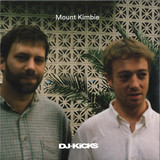
Mount Kimbie - DJ-Kicks

Mount Kimbie

DJ-Kicks

2x12inchK7364LP
!K7 Records
12.06.2020

Mount Kimbie take the reigns of the DJ-Kicks series with a 23 track mix that includes one of their own new exclusives. Due for release on 28th Septem- ber, it's a snapshot of exactly what the UK duo sound like in the club right now and is accompanied by a DJ-kicks tour that takes the pair to DJ and live dates all round the world.

non in magazzino

Ordina ora e ordineremo l'articolo per te presso il nostro fornitore.


Last In: 5 years ago
Sofie Birch & Antonina Nowacka - Hiraeth

There’s no direct English translation for the word “hiraeth”. In the Welsh language, it describes a form of longing for an intangible something, somewhere or someone that no longer exists. Sofie Birch and Antonina Nowacka draw on the concept to guide their second collaborative album, a suite of vulnerable, open-hearted improvisations and reflections that attempt to grasp an image of the past that’s chimeric, dissolving almost as soon as it materializes. The duo’s process follows the same distant beacon; unlike Languoria, their critically acclaimed debut, Hiraeth is, at heart, an acoustic record, informed by in-person improvisations with voices and string instruments that gesture to an era before computers, AI and DAWs. It’s just as lush, but Hiraeth is warmer and more muted than its predecessor.
Nowacka and Birch conceived the album in the wake of a slew of collaborative live concerts, spurred on by serendipitous improvisations and an interest in paring down their setup. Unsound arranged a retreat in Sokołowsko, an idyllic village nestled in the verdant hills of Southern Poland, close to the Czech border. Sokołowsko surrounds a large ruined sanatorium that’s rumored to have inspired Thomas Mann’s 1924 novel The Magic Mountain, and has long been a magnet for artists. The two took the opportunity to rethink their approach completely, arriving with just a guitar, a zither and a portable Nagra reel-to-reel machine. Recording directly to tape, they sketched out ideas with just their voices and instruments, reflecting their surroundings without being distracted or mediated by modern technology.
“We wanted to get away from screens as much as possible,” says Birch, “to bring to the world something vulnerable and honest. Without advance preparation, every day we went out into the open air, finding places to sit, during sunset or the midday sun. We discovered new tunings on our instruments, picked up a melody, and started the machine, playing over
and over till we got a take.” In the autumn, they met again in a Copenhagen studio, sparingly and carefully layering old synths and organs to add more depth without muddying the mix.
Both Nowacka and Birch sing throughout, their voices threading the acoustic instruments and tangling with each other, almost becoming one. But it’s the environment of Sokołowsko, “the birds and the light, even the wind playing against the harps,” that’s woven into the music’s lining. Affected by time spent meditating and in nature, as well as the fact that Birch was pregnant whilst recording, the album feels alive and remarkably present. Even the sound quality of the tape machine gives Hiraeth a tactile, organic quality, as Nowacka puts it, “like being in a warm bath.”

They still have the raw recordings from Sokołowsko on old reels, physical souvenirs of their time spent making music in a “habitat for intuitive songs, a little ecosystem, alive and spirited.” The outmoded gear and remote setting helped the duo disengage from the modern world for a few moments and imagine an existence that’s been lost to time and nominal progress. With digital technology receding into the background, Nowacka and Birch had space to make “intuitive connections with frequencies and people,” as Birch explains. Hiraeth is a testament not to nostalgia, but to the power of kinship.

pre-ordina ora20.04.2026

dovrebbe essere pubblicato su 20.04.2026

Passarani - Analog Fingerprints Vol. 0 (2x12")

Analog Fingerprints Vol. 0 is a compilation bringing together the early 2000s works of Marco Passarani under his Analog Fingerprints alias, collecting key tracks originally released on Rome’s Plasmek and Pigna labels.

For Numbers, the story starts long before the label itself. In their formative years, digging in Glasgow’s Rubadub, Passarani’s records felt like dispatches from a future city. Releases on his own Nature Records and on labels such as Generator and Interr-Ference Communications were mind blowing: rooted in Detroit techno, Chicago house and electro, yet pushing somewhere new. Much like fellow travellers Autechre, who would remix him in 2001, Passarani’s music balanced machine funk with restless experimentation.

Information was scarce, and you would hear these records first on the dancefloor or at listening stations in shops like Rubadub. Print fanzines like Ear and early web outposts such as Forcefield offered only fragments. But there was a palpable axis forming between Detroit techno and a new European wave of record labels including Skam, Rephlex, Clone, Viewlexx and Nature itself. It was the sound that defined Saturday nights at Rubadub’s ‘69’ parties in Paisley, just outside of Glasgow.

Passarani’s records, in particular, were instrumental in bringing together the future Numbers co-founders. Richard had already booked him pre-Numbers; meanwhile Calum (Spencer) and Jack (Jackmaster), then 16/17 year olds working alternate Saturdays in Rubadub, were so enamoured with the Roman sound that they travelled to Rome for the Bitz Festival in 2003 to seek out Passarani and Lory D at their source.

The first Analog Fingerprints release landed as a 12” on Plasmek in 2001, following the fractured, IDM-leaning 6 Katun material. For Passarani, the project marked a recalibration. A DJ first and foremost, he had moved into production via early computer setups, from a Commodore Amiga through primitive PC audio, Cubase and Logic, later experimenting with Ableton. The IDM scene had offered a playground for trial and error, but there was always a tension between abstraction and the dancefloor. Analog Fingerprints became the bridge: still intelligent, but with more dance than distance. After years of broken beats and complex arrangements, he wanted directness without surrendering identity.

Working closely with Francesco de Bellis and Mario Pierro in the Pigneto district, the trio formed Pigna as a vehicle for reclaiming a more accessible dance sound, deliberately steering away from the minimal wave beginning to dominate Europe. Sessions were fast, instinctive, often stretching late into the night with friends dropping by. It was a studio as social space, production as collective energy.

“In that constant search for balance, Analog Fingerprints was my way of expressing something closer to the classic dance floor. The track 'Tribute' - a tribute to my favourite early Detroit techno track of all time, 'First Bass' by Separate Minds - came after I realised I had almost lost my connection with the dance floor. The simplest step was to take inspiration from early Chicago and Detroit and twist it in our Roman ‘Pigna’ way. My goal was to create more accessible dancefloor tracks by mixing my unconscious Italo roots with my teenage love for that early US sound, ensuring the result was as far as possible from the minimal sound that was starting to dominate everywhere.” - Marco Passarani

Technically, the Analog Fingerprints tracks span a transitional era: Roland TR-909, SH-101 and Alpha Juno hardware met early software experiments. A Novation Drumstation rack stood in for the unattainable TR-808, syncing with TB-303 and TR-606. Yet the true secret weapon was Jeskola Buzz, a tracker-style modular environment that allowed step-by-step parameter control and strange melodic constructions, later exported into the audio sequencer. Even the lead on ‘Tribute’ came from an early PPG Wave-style plugin. It was hybrid thinking at a moment when digital tools still felt unstable but full of possibility for technologists like Passarani.

Behind the music sat Finalfrontier, a loose Roman collective orbiting Nature and Plasmek. Distribution and production were intertwined; importing obscure records into Italy built connections with like-minded outsiders across Europe and the US. Expensive phone bills and fax machines forged an “electronix network” that linked Rome to Clone, Viewlexx, Skam, Rephlex, Rubadub and Detroit’s Underground Resistance. There was a shared sense of survival and resistance, of operating against commercial systems.

Passarani recalls “The first time I found a sheet of paper inside an Underground Resistance 12” with info about upcoming releases... and a huge picture of Spock on the back. Imagine that: you love the music, you love Star Trek, and there’s someone on the other side of the ocean sharing those same values and sounds. It was the perfect match. We even gave our original company the suffix ‘Finalfrontier’: that says it all.”

Feedback in that era arrived physically: distributor faxes, conversations with visiting DJs, the experience of playing abroad and meeting kids who had connected with the records. Glasgow became a key node in a scattered outlier network. Passarani personally brought the first two Nature releases to Fat Cat in London, playing them in-store. Shortly after, a fax arrived from Rubadub in Glasgow requesting copies.

“I still remember that phone buzz and the fax paper slowly sliding out, with someone I didn’t know saying they wanted 75 copies of Nature 001. Or like the time we got a fax from the Rephlex crew just saying, “Hello Nature Records, Keep up the good work.” That was how we knew the message was getting through. It was a fantastic feeling; just one piece of thermal fax paper as an analog notification - the mood for the entire week would change.” - Passarani

The connection to Glasgow has since stretched across generations. As Passarani reflects, links often fracture as scenes renew themselves, but in Glasgow something different happened. New and old mixed seamlessly. There was a visible trust in what came before, and a willingness to carry it forward rather than discard it. Observed from Rome, it was deeply encouraging.

Analog Fingerprints Vol. 0 captures that moment of exchange: Rome to Glasgow, Detroit to Europe, experiment to dancefloor. It documents an artist recalibrating his sound and a network of scenes discovering one another in real time, connected by vinyl, faxes and shared intent.

In Stock

Disponibile in Stock e pronto per la spedizione

THE WOODLEIGH RESEARCH FACILITY - Anamchara LP 2x12"

W.R.F. was formed in 2015 by Nina and late studio partner Andrew Weatherall to help wrangle the vast output recorded together beyond his solo releases.
Spotlighting nine tracks from the Apparently Solo series of EPs recorded between 2016- 2019 and released on Bandcamp in 2023, this lustrous time capsule marks the culmination of Walsh and Weatherall’s creative relationship born after they clicked at London’s earliest acid house clubs, becoming partners then managers of their Sabres Of Paradise/Sabrettes labels before taking different paths by the late '90s.
An accomplished musician, Nina had learned the art of studio technology by the time they reunited and started working together in 2012. Created at her Facility 4 Studio situated in the dangerous, gang-ridden no man’s land between Streatham and Mitcham, Anamchara captures the super-prolific creative stretch starting in 2015 that produced Weatherall’s Convenanza and Qualia solo sets, W.R.F.’s The Phoenix Suburb (And Other Stories) plus a whole lot more. According to Nina, Andrew envisioned the spectacular ‘Borderland’ as natural successor to ‘Smokebelch’, his most revered track. When it came to his remix, Nina enlisted renowned viola virtuoso Sarah Sarhandi and composed new harmonies with Pachelbel’s Canon in D Minor in mind.
The set also catches the breakthrough period when, through Nina’s careful coaxing, Andrew started using the computer system she’d set up to better express his musical visions by arranging the elements, grooves and melodies she sent him. Still considered the UK’s greatest DJ-producer, Andrew’s arrangements were inspired by his club-igniting sets. “This allowed me to mix the colours for his palette whilst he was painting the picture,” says Nina. Anamchara straddles the gamut of musical styles explored by W.R.F. at this time, from slower paced psychedelic “drug chug” outings ‘We Two’. ‘Heat To Meat Ratio’, ‘Hidden Watchers Part 1’ to banging acid house and techno sometimes inspired by the violence outside the studio door, including ‘SCHLAP’, ‘Crack-Ed’ and churning acid juggernaut ‘Yacidik’ (“After much dangling of the acid carrot, Andrew took a bite and, after one familiar raised eyebrow, never looked back,” says Nina).
Many tracks fly elements from the enormous sonic library Nina inherited from late partner Erick Legrand that she called The Akashic Library of Sound. Marking Andrew’s 2016 admission into the vault, ‘Rattly Old Puffin’ boasts Erick’s psychedelic guitar and tumbling drum loop Weatherall would run with, including on ‘Borderland’. “Erick was like our third member,” says Nina.
Bringing down the curtain, ‘Alma’’s exquisitely poignant melody that unfolds over thirteen time-stopping minutes was composed by Nina while navigating Erick’s birth and departure date anniversaries to accompany Andrew’s reading from Gordon Burn’s 1991 same-named novel at 2018’s Durham Literary Festival. Burn’s novel imagines early 60s popstrel Alma Cogan, who succumbed to cancer in 1966 surviving to reflect on fame. “Now it just makes me think of Erick. And every time I hear those well-placed cymbal crashes I can only think of the Captain himself.”
A beautiful grand finale for this astonishing selection of pure gold from the vaults.
Kris Needs / 2026

pre-ordina ora29.05.2026

dovrebbe essere pubblicato su 29.05.2026

Magnesii - Vd Jam #1

Magnesii

Vd Jam #1

12inchVD17
VOYAGE DIRECT
22.12.2025

It's rare to hear a debut 12' single that really blows you away. That's hardly a controversial statement; in truth, most producers take time to find their feet, developing a distinct style over a period of years, rather than months.
Magnesii, then, is something special. Currently based in Amsterdam. The previously unheard of producer has delivered a stunning debut 12' for Tom Trago's Voyage
Direct label. R Raw, fuzzy and in turns melancholic, spellbinding and intense, its' three tracks bubble and hiss to the distinct sound of vintage analogue hardware.

You see, the young Dutch producer tends to avoid modern computers. 'I often feel like those screens suck my soul away,' he says. Instead, he jams out tunes on a tasteful selection of analogue gear, sequencing with either the Alesis MMT-8 or the Akai MPC2000 - a favourite toy of many of the Netherlands' best electronic producers - and adding basslines, beats, acid lines and melodies on obscure synths and drumcomputers'. His creations are then bounced down straight to 1/4" tape or cassette.

Some of these resultant jams, as showcased on this impressive debut, are nothing less than inspired. Acid lines rise and fall, machine drums rattle, and distinctive synth
lines weave in and out of the mix. These are raw tracks for the dancefloor blessed with all the colour and warmth associated with vintage hardware.

'RZTB Tantra' sets the tone, layering bubbling acid lines and dreamy chords over a relentlessly nagging bassline and punchy, scattergun drum machine percussion. 'Lava Jam' is decidedly deeper, with woozy, emotive melodies and alien electronics tumbling over a dusty rhythm pattern and tactile acid bass.

Magnesii completes a sterling debut with 'Van Dyke Island Jam', whose squidgy bassline and long, drawn-out M1 chords work in complete harmony with the crispy rhythm track and densely building percussion hits. Like its' predecessor, it too seems to be tinged with sadness, as if Magnesii's machines are shedding a tear for glories past.

Clearly, Magnesii is a name to look out for in future. For the time being, we'll have to make do with one of the most impressive debut 12' singles of 2014 to date.

In Stock

Disponibile in Stock e pronto per la spedizione

Tobias Bernstrup - 27

Tobias Bernstrup

27

12inchDE-169
Dark Entries
24.06.2025

2025 Repress

Tobias Bernstrup is a contemporary musician and video artist born 1970 in Gothenburg, Sweden. He received an MFA from Royal College University of Fine Arts Stockholm in 1998. Using the visual language of pop culture, video games, sci-fi, classicism and gothic noir, he has created a stage persona with notorious live performances. Dressed in elaborate costumes of skin-tight rubber suits and fetish gear, Tobias' external appearance is androgynous. He raises questions about representation of identity, the body and physical space in both virtual and non-virtual realities. Between 1997 and 1998 he self-released two limited CD-R EPs. In 2002 his debut album 'Re-Animate Me' was released by Tonight Records followed by two limited 12' singles for the song 27' and the Italian version Ventisette'.
.
27' is a 5-song EP collecting 4 different mixes of the title track plus one unreleased song from the 'Re-Animate Me' recording sessions. The material on this EP is closely connected with the world of computer games which Bernstrup also inhabits. Bernstrup's music is influenced by 1980s Italo disco and synth pop, reminiscent of Kraftwerk, Depeche Mode and Ken Lazlo. On the A-side is the original mix at 115 bpm followed by the Lazer Mix set to an faster beat and additional arpeggiations and heavier bass drum beats. Lyrically the song tells the story of a good looking 27-year old boy from a small town searching for love with any man who can spoil him. On the B-side are both the vocal and instrumental of Ventisette', the Italian translation of the song 27.' Both versions of Ventisette' are stripped back compared to the A-side but keep the melodies in tact. Also released for the first time ever is the demo Dirty Money' a Pet Shop Boys influenced song about male prostitutes ready for a night out working the streets.

All songs have been remastered for vinyl by George Horn at Fantasy Studios. For the jacket Eloise Leigh transformed the original portrait of Tobias into a Warhol-like painted polaroid with a striking likeness to Liza Minelli with blue eye shadow and red lipstick. Each copy includes a photo postcard with lyrics and notes. I would rather create alternative routes to experiencing and understanding the world, understanding what it means to be human today,' says Bernstrup. We are more artificial than we want to admit.'

In Stock

Disponibile in Stock e pronto per la spedizione

LU:K - UNITITLED

Lu:k

UNITITLED

12inchMMV003
MEMME VAEV
04.06.2025

*all original recordings from mid 90s Estonian released cassettes. Fascinating interpretations of the UK breakbeat and Jungle sounds recorded when the world felt like a much bigger place.

Since hearing the first breakbeats via the Finnish radio nightly shows introducing the burgeoning UK scene, Virko Veskoja, later head figure of Lu:k, was completely swept away by this new technological language that sounded like machines trying to initiate contact with people. The fluttering rhythm patterns, strings and vocal lines haunting the pathways of the infinite network. Like hip hop taken over by Skynet.

Reimagining it all in mid-90’s Estonia, a fresh and dirt-poor republic newly welcomed to the family of sovereign states on the outskirts of Eastern Europe, was challenging, to say the least. Finally, with the help of entry level music programs, custom-made soundcards and self-built computers by the other Lu:k-head Tõnis Valk, Lu:k took the first tentative steps in the history of Estonian jungle.

Eight Lu:k cuts have been compiled into a handy selection, a true sign of the times when uncertainty came with certain hope and optimism – new territories to chart, new frontiers to conquer. A time of innocence captured so sublimely in Lu:k’s music.

The compilation starts with menacing orchestration that sounds like the birth of a civilization, like in „2001: A Space Odyssey“, or the arrival of Godzilla, only to give way to sweeeet strings and the inimitable Minnie Riperton in “Lovin U”, combining all the essential elements of Lu:k in a track that has remained uncorroded by time since its inception in 1994.

The following “Demo 3” is its antithesis – fast and nervous, a harbinger of the darker days of neurofunk and techstep ahead. More in line with the social realities of the time, when something (or someone) could materialise out of thin air and attack you just as violently as those beats here.

“La:v” was Lu:k’s signature track throughout their brief career that went on only for a few years, 1994-1997. Lifted to heaven’s by Petula Clarks’s wonderful vocals, it perfectly captures the pure essence of creation. “I made it in my bedroom. Something like that just came out. Sorry”, says Virko apologetically.

From the themes of love we are led towards darker scenarios again with “Drunk-Drive”, a more vengeful cut reminiscent of early Ram Records’ nocturnal dangers, skylines shaped by basslines. Previously only available on the uber-rare “Raadiomaja valvelauas” CD compilation from 2005.

“In the Limelight” is lifted from their second album “Dreams in Drums” from 1996 (only released on cassette), and if it’s meant to address their new-found underground celebrity status in Estonia, there is surprisingly little elation here – the track rather consists of introspective strings and beats that sound almost melancholic.

Out of the remaining three tracks, “Proov2mix” and “Kadunud leitud” are the result of a treasure hunt amongst the old, obsolete harddrives – little nuggets that were condemned to obscurity until now. Between them, another vocal-led cut “010”, a non-album track only featured on two comps until now, is a strong reminder of Lu:k’s prodigious ability to handle vocal lines and morph them together with their own weaving synthetic melodies, strong pads and commanding beats.

Lu:k’s music has been largely unavailable for the better part of this century, with original tapes and CD’s changing hands for a small fortune. This vinyl release couldn’t come at a better time, bringing a seminal chapter of Estonian dance music’s mythical history to light again, both for the old-school acolytes and new converts.

All music by Virko Veskoja

In Stock

Disponibile in Stock e pronto per la spedizione

Norken - Our Memories Of Winter LP 2x12"

Nearly two decades after it was first released, Norken’s sleek cult classic album ‘Our Memories Of Winter’ is being reissued on vinyl via Hydrogen Dukebox on 6th December 2024.

With its unique sonic blueprint of early 2000s electronica, ‘Our Memories Of Winter’ is a record that is at once both deeply reminiscent of a particular era and place, yet remains a timeless invocation of Norken’s idiosyncratic palette of minimal, techno, house and British IDM.

This vinyl reissue presents all 12 tracks from the original release, with the inclusion of 'Df23' and 'Flirt' making this the first time that ‘Our Memories Of Winter’ is available on vinyl with the complete album tracklisting.

Norken is one of the many pseudonyms of Lee Norris, a producer who is considered by those in the know as one of the unsung heroes of UK electronica. With a slew of releases throughout the years as Man-Q-Neon, Nacht Plank, Norken, Tone Language and Metamatics, this reissue shines a light on his soulful, immersive output under the Norken name.

As Norris explains, “The release of ‘Our Memories Of Winter’ has a nostalgic, warm feeling for me. I made his album in a garden shed with a wood burner, an Atari computer and a few synths in the depths of an English winter. I still had the thought process of making emotional style techno that would warm any soul on a cold day.”

First released in 2005, ‘Our Memories Of Winter’ carries the echoes of electronic luminaries such as the Detroit ambient techno of John Beltran, through to the immersive atmospherics of Biosphere and the innovative IDM of fellow British outfits Autechre and The Black Dog. Yet as Norken, Norris retains a distinctive musical voice that has continued to deepen in stature over the years since the album’s initial release.

Opening with the brief intro cut ‘Fern 2’, the album slides into the dreamlike groove of ‘Memories’, where rich, resonant chords wrap around cool, galactic-sounding synths and a compelling bass undertow.

On ‘It Might Have Been Rain’, that signature bass texture again propels a luxuriant mid-tempo rhythm, while Norken layers in hypnotic washes of string-like synths, gentle electronic pulses and the brief murmur of a vocal, across seven-plus immersive minutes.

Vocal textures, often subtly looped and distorted, also add a distinctive depth and personality to tracks like ‘Eastern Soul’ and ‘Here’. Throughout the album, there’s a feeling of intricate microcosms unfurling, as Norken coaxes a myriad of contemplative moods and emotions from his machines.

Whether shaping the smooth, lulling ambient gauze of ‘Ty Canol’, or letting the kaleidoscopic, dancefloor-leaning drive of ‘Audic Strable’ loose like a coiled spring, ‘Our Memories Of Winter’ presents the singular voice of an artist whose innovative contribution to UK electronic music has only become heightened with the passing of time.

In Stock

Disponibile in Stock e pronto per la spedizione

Vhinz - Belvedere

Vhinz

Belvedere

12inchCLV009LP
Citizen Records
24.07.2023

A new artist on the Citizen Records / Clivage Music roster, Vhinz is a musician based in Brussels. After taking his time to break onto the electronic scene, he’s now ready to share Belvédère, his debut, dreamlike album, confidently intense, sweeping between cinematic songs and soaring, epic electronic sounds.

Vincent Honca is Belgian, with Armenian roots and a love of keyboards: the mini synth he used to play as a child, the classical piano of his years of training at the Académie de Musique, the Yamaha synth of his teenage years... During the noughties of his adolescence, electronic music was omnipresent in his life as he listened to and admired Daft Punk, Moby, Vitalic, Air and The Chemical Brothers. He also went out dancing, a lot, in the nightclubs and parties of Brussels and the vicinity, and soon his love of computers, technology and synthesisers led to him producing his own music. “I wanted to create beautiful textures with synths,” he says. “I wanted to have fun and discover the possibilities. As part of the internet generation, I taught myself everything I know through reading magazines and checking the forums.”

Vincent went on to become a computer programmer and decided to make music in as much of his spare time as possible. His first productions came out in 2015, including “Drastical”, one of three deep house dancefloor-orientated tracks recorded with none other than Kris Menace. “At the time I was really searching for my musical identity,” explains Vincent, and progressively his music started to lean towards another of his passions – films and film music. “I’ve listened to soundtracks a lot since I was a teenager, and they’ve been a big influence, in particular the music for Heat by Elliot Goldenthal, Gladiator (Hans Zimmer), Saving Private Ryan (John Williams), The Last Temptation of Christ (Peter Gabriel), The Virgin Suicides (Air) and Leon (Eric Serra).” Coincidentally, Vincent has already worked on two independent Belgian films by director Christophe Karabache, UltravoKal and Vortex, both collaborations with Michel Duprez.

Now Vincent has chosen the name Vhinz, bringing together his expertise with machines and computers, his passion and enthusiasm for the electronic sounds of his adolescence and his adoration of cinema’s powerful, impactful soundtracks. Vhinz’s first track is thus called “Aether”, a track brimming with character and confidence, with sung-spoken vocals that sweeps the listener up in bewitching synthetic themes and drums like an off- kilter heartbeat. The track perfectly encapsulates the Vhinz sound, and Citizen Records – the only label he sent it to – immediately loved it and were ready to release a 12” with more. “Then Covid and the lockdown happened, and everything came to a complete halt,” remembers Vhinz. During those long two years without anything being released, the project continued its gestation and has now grown in a mini-album of eight coherent, fascinating tracks. “I really wanted a strong concept for everything, and so was born this album that I’ve called Belvédère. I imagined myself on a belvedere with a panoramic view of the world, channelling all the emotions it elicited in me into music.”

Belvédère is a dreamlike debut album, confidently intense, sweeping between cinematic songs and soaring, epic electronic sounds. It’s a place for Vhinz to showcase his dreams, talk, sing and invite others too: Margot Ferro sings on “Le Passage” and “Envole-moi”, and Michael Meers lends his vocals to “Evolution”. “My album tells a story, with the tracks in chronological order. There are both times of hope and darker periods of my life, with sadness and love,” meaning that listeners are invited to experience a suite of different emotions and be swept along by the author’s musical daydreams. Musically, the album falls somewhere between Moby, Vitalic, Air and Serge Gainsbourg, with a density and atmosphere that are completely Vhinz. “With Belvédère I was looking for beauty, but also something darker, dirtier, more organic. The album is the culmination of that.”

In Stock

Disponibile in Stock e pronto per la spedizione

August Greene - August Greene LP 2x12"

August Greene culminates years of mutual respect and friendship, channeling the musicians’ various talents into a cohesive project. The perfect marriage of jazz, hip-hop and soul, it’s music that just is. This is black expression the way God intended: earnest, unfiltered, and harmonious. Throughout August Greene, you feel the abundance of Glasper’s rolling keys, the sheer honesty of Com’s lyrics, and the nuanced subtlety of Riggins’ drum work. It’s a fluid sound that’s sorely needed in today’s landscape, and a teachable moment for the next wave of creators. “I feel like we need to set the bar for this generation of musicians and producers,” Riggins says. “There’s a lot of computer-driven music. This is the opposite of that. We’re showing you can still use your creative muscle on an instrument to generate your own sound.” August Greene is a meditative offering that stands tall against the era of “fake news.” “They body snatching black girls in D.C. / Politics and propaganda on the TV,” Common observes on the opening track. On “Nirvana,” the lyricist uses a stuttering percussive loop and faint piano chords to search his inner being: “Thought I was gonna fly when Obama became the king … when it’s all done, will I have heaven’s dress code, and been able to let God and let go.” As Com puts it, Glasper and Riggins’ soundtrack allowed him to open up in ways he hadn’t done previously. Like on “Fly Away,” for instance, where he riffs on the public relationships he’s had. Other songs, like “Black Kennedy,” feel spacious and scenic. “I got to go new places with the music, and it didn’t have to fit within a genre for me to participate on it,” he says. “This gave me an experience I haven’t had in a long time, so I want people to feel that. I want this to be a cleansing of whatever doesn’t feel good or inspiring.” In the end, August Greene speaks to those pushing through the dark for brighter days. It's a masterpiece from which virtue can shine. “I want people to go on the ride and be open,” Glasper says. “We just created and it became a sound. I want people to approach this with an open mind and without expectations.” —Marcus J. Moore

In Stock

Disponibile in Stock e pronto per la spedizione

Fitlhy Rich - The Kraken

This is the 3rd release on Zimp Recordings, an independent techno label based in Scotland.

Edinburgh based DJ and producer Filthy Rich, label boss at Zimp Recordings, is a deliciously slippery artist with an engorged techno sack who’s always at the ready to spurt his computer generated juicy tit bits all over your proverbial techno flaps.

There’s five techno bangers on this EP that definitely do not disappoint. Kraken, a sullen and atmospheric deep underwater masterpiece, Stinky Funk, does exactly what it says on the tin, a wonky banger. Next up, an oven ready techno commentary on Brexshite from Boris himself with Wiff Waff. 2 tonne bass on the flip side pierces your brain with electro noise which Randolph Glahs remixes with his signature industrial hammer to break your mind open on the final track! It’s no coincidence this titan of techno has landed just in time for the clubs reopening!

In Stock

Disponibile in Stock e pronto per la spedizione

DJ Quik - Rhythm-al-ism 2x12"

DJ Quik

Rhythm-al-ism 2x12"

2x12inchBEWITH098LP
Be With Records
20.02.2026

2026 Repress

DJ Quik is a giant of West Coast hip-hop. With his fourth album Rhythm-Al-Ism he created his masterpiece, a perfect hip-hop album. As Quik explains, “the name Rhythm-Al-Ism alone tells you what I was doing. I was mixing up rhythms. I was meshing R&B with hip-hop and jazz. And a little bit of comedy”. It’s absolutely sensational and as with a lot of mid-90s albums those original vinyl copies are now rare so here’s the Be With re-issue.

A preternaturally gifted producer/rapper, DJ Quik has produced scores of LA gangsta rap classics. He’s released platinum and gold records of his own, as well as helped craft them for the likes of Tupac, Snoop Dogg, and Dr Dre. Quik has always been quirkier and more interesting than his gangsta rap peers, both musically and lyrically. An old-school funk producer at heart, he’s also incredibly nice on the mic. His raps often deal in boasts, jokes and good times but also cover his beefs, his trials and his trauma. Partying and pain, all mixed up. DJing and producing hype beat tapes from age 14, Quik’s tracks blended the languid funk and rubbery synths of Zapp and George Clinton with a gangsta aesthetic, creating a more danceable foil to Compton’s more typical nihilistic hedonism. Ultimately, his records sound custom engineered to drift out over sun-soaked barbecues.

Released in 1998 on Profile, Rhythm-Al-Ism was the closest Quik ever got to making a commercial splash. “You’z A Ganxta” and “Hand in Hand” made radio waves across the country and the less radio-friendly tracks like “Medley For A ‘V’” were bumping out of car stereos. Combining his soulful, jazzy P-Funk/G-Funk beats with his effortlessly smooth flow, Rhythm-Al-Ism was the quintessential West Coast Party. Squelchy synths, bouncy bass, monstrously knocking drums and freaky keys - this is peaking acidic party-rap, straight out the gate. Music for gliding, for skating, for time with your people and your poison. Sunshine. No cares. BBQs. Heavy smoke in the air. Dripping with wit and good humour. A real swing to the vibe.

The album opens with Quik setting out his mission statement with “Rhythm-Al-Ism (Intro)”, telling us what this is all about before the self-explanatory “We Still Party” rocks the spot. It’s definitely all about the party here, complete with Quik’s signature head-nod/body-moving beat. Next up, the undeniable laidback funk and dripping swing of groove-laden “So Many Wayz”. This positively slaps.

Then we get to the three huge singles. The R&B-tinged radio-friendly minor-hit “Hand In Hand” closes the first side only for the flip to get straight into the rolling and scratching of bleepy computer-funk banger “Down, Down, Down” (featuring a particularly nice use of Howard Johnson’s epochal “So Fine”). The effortlessly smooth, flute and guitar-laced “You’z A Ganxta” completes the trio. Next up the fast-paced, vocoder-enhanced, woulda-beena-global-hit “I Useta Know Her”. This coulda (shoulda) been a single too. Head-nod funk workout “No Doubt”, with its ace sample of Prince's “Sexy Dancer”, closes out the second side.

“Speed” races out the gate on the second disc, sampling Edwin Birdsong’s “Rapper Dapper Snapper” in a harder, better, faster, stronger way than those daft Parisian punks. Amphetamine-swift raps over soaring, string-drenched b-boy beats. A total anthem. Up next, the staggering, near 8-minute laconic, lounge-y sax-rap of “Whateva U Do” cools things down and smooths things out with its flute wrapping around a sample of Smokey Robinson’s “So In Love” and some oh-so-classy lounge-piano tinkling. And speaking of smooth, things don’t get much smoother than the blissfully melodic glider-anthem “Thinkin’ ’Bout U” riding that ace flip of SWV’s “Use Your Heart”. Exceptional.

The exquisite funky-flute-slapper “Medley for a ‘V’ (The P***Y Medley)” opens the fourth and final side, with star turns from Snoop Dogg and a typically suave Nate Dogg. It’s followed by the supremely skanked-out “Bombudd II”, a beautifully sweet reggae-fuelled ode to the herb. “Get 2Getha Again” is slick funk. Stunning.

This 2022 Be With double LP re-issue has been mastered for vinyl by Simon Francis, cut by Pete Norman and pressed at Record Industry. Unusual for the time, Rhythm-Al-Ism was originally pressed as a double and we’ve reproduced the original LA vibe picture sleeve and insert to match.

As that original front cover says, this is “over 70 minutes of commercial free music” and it’s absolutely perfect from start to finish. There are no stand-out tracks here. It’s all gold.
: Rhythm-al-ism (2LP)

non in magazzino

Ordina ora e ordineremo l'articolo per te presso il nostro fornitore.


Last In: 13 months ago
Raphael Loher - Hug of Gravity LP 2x12"

»Hug of Gravity« is the second solo album by Raphael Loher and his first for Hallow Ground. The Swiss pianist and composer uses piano preparations, tape machines, and digital means to forge an aesthetic of playful reduction and rhythmic abstraction. The source material for these four sprawling pieces was culled from recordings of the artist performing the album’s predecessor, 2022’s »Keemuun.« Loher used them in a painstaking two-part working process to create an album that is both a product of and an ode to transformation, exploring themes of alternative temporalities and spatialities. »Hug of Gravity« oscillates between experimental electronic music, ambient, and minimal music and calls to mind the work of artists like William Basinski, Linda Catlin Smith, or label mate Andrius Arutiunian.

Loher laid the foundation for »Hug of Gravity« in 2020 with ten solo performances at his studio, during which he presented the pieces from his debut album. For these intimate concerts, he prepared the piano with modelling clay in order to move beyond the well-tempered tuning that dominates most of Western music. He then used a consecutive three-month residency in the Blenio Valley to refine the recordings. »I cut up and rearranged the material, then transferred the results—around 30 pieces—to a varispeed tape machine and then back to the computer. After that was done, I cut them up and rearranged them again,« he laughs. By radically reworking the material, he created an album that eschews traditional notions of time and space.

Loher points out the influence that his surroundings had on him. »The process created the music—and the place was essential to the process.« he says. He wandered through the mountains for up to nine or ten hours a day, which gave him a sense of what he calls expanded temporality. »Time just felt longer, my experiences seemed more diverse and nuanced, and it was as if I perceived my environment more clearly,« he explains. This shift in Loher’s perception of time and space—the latter also expressed in the album’s title—influenced his work with the varispeed tape machine. It allowed him to change the pitch of different recordings while layering them to let interference patterns emerge and emphasise the emotional qualities of the unconventional tunings he had used.

In this way, Loher constructed numerous interlocking narrative arcs throughout »Hug of Gravity,« an album that is ever-changing; an exercise in calm ecstasy that provides its audience with the feeling of being removed from conventional time and space. This approach is also reflected in the artwork for »Hug of Gravity,« which is based on drawings Loher made during his residency at Blenio Valley. Their fine hand-drawn lines run in parallel and let incidental patterns emerge, an effect that is only multiplied when the six different drawings that accompany each vinyl copy of the album are overlapping, forming ever-new visual constellations.

non in magazzino

Ordina ora e ordineremo l'articolo per te presso il nostro fornitore.


Last In: 3 months ago
Donna Regina - Lilac LP

Donna Regina

Lilac LP

12inchKALK139LP
Karaoke Kalk
21.11.2025

»Lilac« is the first Donna Regina album since 2019’s »Transient.« The world has changed considerably since then, which has also left its mark on the Berlin indie pop duo. The songs released as part of the 2021 single »Welt in einer Stadt« (»World in a City«) for Karaoke Kalk had already dealt with the pandemic-induced standstill and its effects on urban space, and also the rest of the album shows that Günther and Regina Janssen have been influenced by recent social and political developments. »In ›Lilac,‹ I imagine good ol’ Earth as a big ol’ bear shaking us off because it can’t stand us anymore,« says Regina Janssen. It has become a serious album, Günther affirms, but he is also adamant that it is not a sad one. Musically, Donna Regina have remained true to the spirit of their early work, recently re-released by Karaoke Kalk: their arrangements are as minimalist as they are emotionally rich.

»The music is always there,« says Regina Janssen about the creation of the tracks on »Lilac.« As always, the two record their music »track by track and without computers,« as Günther notes. Samples play a smaller role this time than on earlier albums, with analogue instruments such as a monophonic synthesiser and, above all, guitars coming to the fore again. This frames lyrics that are being delivered by Regina in German, English, or in both languages. They delve even further into the intricacies of urban life. »Cities are underrated! What a civilisational achievement it is to have so many people living under one sky,« says Regina. »They constantly put you in touch with the unfamiliar. Sometimes they’ll be overwhelming, and they are always alive.« This ambivalence shapes the tone of the album that ponders on the state of the world today.

Starting with the ominous sounds of »Whole World In My Town,« through the dreamscapes of »Autumn In Paris,« to the elegiac conclusion of »No More Roses,« Regina and Günther Janssen move through different timbres and styles with a few select means. Their preference for minimalist electronics becomes evident at times, while elsewhere the pieces open up to balladic arrangements in which the guitar plays a leading role. This turns »Lilac« into a city by itself, the songs forming its soundscape: every neighbourhood looks different, every street has its own character.

non in magazzino

Ordina ora e ordineremo l'articolo per te presso il nostro fornitore.


Last In: 4 months ago
BANJAR TERATAI CAPUNG - TUNGGAK SEMI LP 2x12"

“Tunggak Semi” is the third album from Indonesian musician and producer Bambang Pranoto. Originally released in 2000, it’s an exemplary slice of what has become his signature style, a dream-like meditation on aspects of nature, combining elements of accordion, acoustic guitar, flute and percussion. The compositions cross eastern and western notation to inhabit a world of their own, a world between worlds, where harmonies reflect the beauty and joy of nature.

Bambang had a rather atypical entry into music, and studied electronics and telecommunications, before he took advantage of the wave of computer software like Cubase and Protools in the 1990s that enabled him to set about recording his own compositions and soundscapes. After playing in groups, he developed his own approach to constructing his productions. He invites musicians to record interpretations of his themes, which he then pieces together in Protools like a jigsaw puzzle. “The musicians have never even met!” he chuckled on a Skype call.

“Tunggak Semi” refers to the giant trees that appear all over Bali, and their process of renewal and regeneration. “If you cut the tree, and leave the roots, they will grow again. Everytime we cut, they grow again. It’s limitless. This philosophy means there’s always something new coming, whether an idea or music, anything.” This approach has grown out of Bambang’s studies into meditation, including Indian and Chinese scriptures, also Balinese and Indonesian religions. Music, like meditation, is a daily practice, and acceptance of the music and its ‘unfinishedness’, forms a central part of the process.

“We must not just think, but we must also feel, and we must accept that feeling,” explains Bambang, and that’s a step of opening one’s mind to possibility. It seems in keeping with two of Bambang’s musical inspirations, namely Ryuichi Sakamoto and Peter Gabriel, both known for their love of world folk music, and fusion of musical traditions. That’s mirrored in Bambang’s own collage-like approach, recording elements and piecing them together to make something unimagined. While the acoustic sound palette for “Tunggak Semi” is rooted in live recordings, Bambang is not afraid to put the digital technology to good use.

“We have to use the computer as a tool in the best way we can,” Bambang says. “Sometimes people say music is made by people, not by the computer, but it’s just another piece of equipment. What can we compose from this equipment? It’s technology music!”

Written and produced by Bambang Pranoto at interactive garden studio, Depok, Bogor between September and December 2001. 2025 version remastered by Wouter Brandenburg at Brandenburg Mastering.

pre-ordina ora26.09.2025

dovrebbe essere pubblicato su 26.09.2025

Stimulator Jones - Cool Green Trees (1999-2005) (LP)

"Chasing the funky symphonies that filled my head and my dreams..."

December 25th, 2023 - an Instagram post. Stimulator Jones shared half a dozen FIRE tracks from his beat tape archive. We were immediately drawn to the rough hewn boom bap.

"I'd release that", Rob commented.

Hours of material was shared and the result is this: Cool Green Trees (1999-2005). A collection of beats and loops Stimulator Jones created between the ages of 14-20 at home in his basement, bedroom and computer room in Roanoke, Virginia.

You will not believe the profound soulful genius contained within these naive schoolboy melodies.

December 25th, 1998 - 25 years ago to the day and his much-coveted Yamaha SU10 sampler was finally bestowed upon young Stimmy AKA Sam Lunsford: "I immediately hooked up a CD Walkman to the input jack and looped the beginning two bars of Grover Washington Jr.'s "Mercy Mercy Me". I don't know what exactly was so thrilling about hearing two measures of music repeating over and over but it was so infectious and hypnotizing and enthralling to me. I'll never forget that ecstatic rush of making my first loop - an uncontrollable, gleeful smile plastered all over my face." When you hear the pocket breakbeat symphonies featured here on Cool Green Trees, you'll feel the same sense of frisson.

In the wake of his Stones Throw breakthrough - Exotic Worlds & Master Treasures - Stimulator Jones was pegged by many as a 90s throwback artist. However, he literally IS a 90s artist. He's been recording music most of his life and he's now 40. He created the bulk of Cool Green Trees as a teenager. Everything before 2004 was recorded when Sam was still in school. He was in 8th grade when he made the 1999 tracks - he didn't even have his learner's permit. This album is a snapshot of a young man in a simpler time. Things were still mysterious back then and he was flying blind, relying on his ears and having to figure things out for himself: "I had no road map for becoming a beatmaker. I have been collecting music since I was a kid, I am a lifelong digger and seeker of cool and interesting sounds. I was there in the golden age of Hip Hop, and while I may have been a suburban white kid in Roanoke, Virginia, I was tuned in and I bought so many classic albums when they came out. I was attracted to Hip Hop because of the musical and poetic quality. I was hypnotized by the rhythms, partially because I was a drummer. I didn't brag about collecting my breakbeat records or making beats - it was something I did in isolation. It wasn't something I generally wanted to bring attention to and it didn't really score me any cool points. I certainly wasn't flexing on social media about it."

Hell, he can do that now!

Opener "Pharoah Jones" was inspired by Yesterday's New Quintet and Madlib's ability to capture that classic 70s sound whilst playing all the instruments. Sam created this one stoned afternoon by laying down a 2 bar loop and a shaker loop on his Yamaha SU700 sampler. He hung a microphone from the ceiling and played his Yamaha Stage Custom drum kit over the top before adding ender Rhodes and playing his dad's Selmer tenor sax through an Electro Harmonix Memory Man echo pedal. Yes! Up next, "Ghost Gospel" utilises a dope loop from a gospel record and adds some soul-funk drums overtop, whilst working that filter knob. Says Sam: "The loop reminded me of something Ghostface would rap over. The sample was in 3/4 waltz time but I flipped it for a 4/4 groove, a technique I picked up from RZA. "Ill Feeling" uses sped-up pieces from a dusty old funk record and putting them over a classic NOLA drum loop; gain chopping up a slow, bluesy 3/4 time signature and bending it to a 4/4 groove. Classy shit. "Capital Punishment" features drums tapped in live, inspired by MF Doom's Special Herbs series. "Do Not Adjust" consists loops found on a compilation of 70s French music at Happy's Flea Market, a classic Roanoke digging spot.

The sublime, evocative title track, "Cool Green Trees" was created when Sam was still living at home. He dumped samples off his SU10 into the family desktop and arranged them in a demo version of Pro Tools: "This track was sort of my ode to the DJ Shadow style of sample based production. Super spacey, slow, and moody. The heavily filtered drums were inspired by Alec Empire's 'Low on Ice' album. I later added some scratches and sounds from a Spider Man storybook record." "Chill Scratch" snags the final bit of a bossanova record and pairs it with a drum loop before adding experimental scratching run through an Electro Harmonix Memory Man echo pedal. "Poisonous Fumes" was made using a sampler, mixer and a turntable; a kind of mixtape beat collage with added scratches and sounds from various records. Using dialogue from superhero records was a nod to Madlib. "Welcome Aboard The Starship" is dark, downtempo trip-hop with a spooky bent. Sam paired a slow, hard drum loop with a guitar sample grabbed off a psychedelic rock record. To finish, he added various backwards sounds and weird atmospheric effects and a little scratching. Swoon.

Side B opens with "Keep On Runnin", made on a borrowed Roland SP202 sampler. Having always loved the sound of the Lo-Fi filter on those machines, reminiscent of the Emu SP1200, Sam always imagined Del or another of the Hieroglyphics crew rapping over this beat. You can certainly hear why. "Sounds Impossible" sees Sam experimenting with layering multiple kick samples at different volumes to create patterns similar to those heard by Showbiz and Lord Finesse during their God-level 1995 period. "Painted Faces" was made by chopping up a REDACTED record which he had gotten from Happy's Flea Market and paired it with a REDACTED drum loop. By the time Sam recorded "The Knew Style", he had acquired a shitty old 1960s portable turntable off eBay. It didn't function properly when he bought it but his brother opened it up, cleaned it out and got it working: "I remember he told me that there was a bunch of sand inside of it when he opened it up, as if its previous owner had taken it to the beach. I would take that turntable on my Happy's Flea Market digs so I could preview records...that's how I found this loop."

"Chicken Wing Blues Sauce" loops up a classic blues joint and pairs it with some REDACTED drums. A bit of filtering and arranging et voilà! "Kool Breeze", from 1999, is one of Sam's oldest surviving beats, as is "Sexx Bullets". The Roots sampled the same record, leaving Sam frustrated yet vindicated. "Soul Child" was an early SU10 creation, looping a dusty old Soul Children 45 and pairing it with 70s rock drum loops to great effect. "Take Off Runnin" was another loop found digging with a portable turntable. Paired with some boom bap drums it makes for a hypnotic head-nod groove. "Centurian" was intended to be a little beat interlude a la Pete Rock. The sample is from a sun-dappled soft-psych record and it's paired with a Robin Trower drum loop that just happens to fit perfectly. Sometimes you slap things together kind of haphazardly and magic happens. "Bozack" was the first beat Sam made using Pro Tools, his first foray into using chopped sounds instead of loops, an exciting new world. "Church" is beat interlude using a Phil Upchurch loop with the "Long Red" drums - a favourite break of Dilla et al. Sam was really on a tear in late 2004, probably because he was unemployed and phoneless and able to just make beats all day. He made "Splash One" on a borrowed Yamaha SU700 and again was experimenting with tapping the drums in live with his fingers, instead of using a loop or sequenced pattern. Channeling 9th Wonder, Sam used a water splash sound effect from a Batman record as a percussive element, hence the title (also a 13th Floor Elevators reference). The main loop is a backwards portion of one of his favourite Roy Ayers songs.

"Hank" is another fun little beat interlude thing, created on a borrowed Roland SP202 sampler with the fantastic Lo-Fi effect that resembled the Emu SP1200 at a fraction of the price. "73 goatee", from 99, is another of his oldest surviving beats, created in his bedroom with his Yamaha SU10 and his brother's Vestax MR-300 4-track recorder: "This one will always feel special. I can remember having a feeling all the way back then on the night that I created it that this was a solid beat with a catchy loop. There was something in the Fender Rhodes melody that resonated with me emotionally, and I had never heard a producer sample that portion before. I felt like I had found my own unique sound, my own unique loop. It came from an Ahmad Jamal '73. I actually even recorded myself rapping and scratching over this beat way back then, I still have that version in all its imperfect sloppy glory."

Sam explains just how much these tracks mean to him: "They all have immense historical and sentimental value and I'm proud of them. These beats come from an innocent, simple time when I was just figuring out how to craft these sounds. They're something very personal to me. They are the initial part of a journey that I really was taking *alone*. There was no YouTube. I couldn't Google shit. I didn't even know any other beatmakers, producers or DJs in my town that could teach me anything. It was always just me, alone, in a room with some equipment - chasing the funky symphonies that filled my head and my dreams. What I was doing wasn't cool. Most of my peers thought I was a weirdo and couldn't care less. Creating these sounds was an anti-social endeavour. In a sense, I felt like it was me against the world, and all I had to instruct and assist me were the recordings produced by my heroes - RZA, DJ Premier, Erick Sermon, Beatminerz, Showbiz, Diamond D, Beatnuts, Prince Paul, The Bomb Squad, Pete Rock, Q-Tip, E-Swift, Mista Lawnge, DJ Shadow, Cut Chemist, Peanut Butter Wolf, El-P and so many more...I dedicate this collection to them, and to my older brother Joe who has always been a musical and technical guiding light for me.

This was a time before every kid was a self-described producer and beatmaker, before everyone had a DAW, before Kanye and "chipmunk soul", before Red Bull beat battles, before there was any social media beyond chat rooms and AOL Instant Messenger, before Soundcloud, before SP-404 mania, before lo-fi beats to study to, before Splice, before targeted ads for MIDI chord packs, etc. In 99 when I told people that I had a sampler and made beats I was mostly met with bewildered confusion and indifference. Kids and adults alike would wonder why I got this weird machine for Christmas instead of something worthwhile like a Playstation or a mountain bike or even a guitar for that matter because at least that could be used to make "real music". Back then, sampling was still not widely respected as an art form - it was seen as lazy, talentless and unoriginal at best and outright criminal theft at worst. I had gotten respect for playing drums and guitar and things of that nature but this was a step in the wrong direction in the eyes of many."

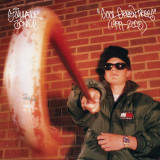
The cover photo is a picture of Sam standing on his back porch in the latter part of 1998, just before he got his first sampler. He was 13 years old, in 8th grade. His dad took the picture with his 35mm film camera: "I actually wanted to be pointing my dad's .22 pistol at the camera lens but he wouldn't let me. He gave me an old walking cane to use instead. The Tommy Hilfiger puffer jacket came from the lost and found at William Fleming High School where my mom worked as a secretary. I was thrilled when she brought it home because we never spent money on expensive name brand clothing like that - we were for the most part strictly a sale rack, bargain bin, thrift store, yard sale, flea market kind of family when it came to clothes. My watch is some cheap off-brand fake gold department store watch." Mastering for this vinyl edition was overseen by Be With regular Simon Francis and it was cut by the esteemed Cicely Balston at Abbey Road Studios to be pressed in the Netherlands by Record Industry.
non in magazzino

Ordina ora e ordineremo l'articolo per te presso il nostro fornitore.


Last In: 9 months ago
NELE DE GUSSEM - THE LOOM OF LONGING

Balancing mystic pop, psychedelic ambiance, and pulsating electronica, her debut LP weaves a divine, harmonic universe


Ghent-based singer-songwriter and composer Nele De Gussem (Uma Chine) has today announced her debut solo album The Loom Of Longing, out February 7 2025 on Viernulvier Records.


De Gussem has delivered a sensational album of mystic pop, psychedelic ambiance and pulsating electronica. To shape her divine harmonic universe, she has a preoccupation with soundscaping that involves using her sensual voice and electronic/analog instruments as a sort of palette of rich textures where she’s the auteur, as opposed to the cog in a bigger machine as she’s been with her band, Uma Chine.


“This album celebrates having found desire as a compass in my life and as a medicine to quell fear, holding back and keeping silent.”

— NELE DE GUSSEM


The cracking first single from the album - ‘Wonder’ comes with an eye-popping music video by Belgian visual artist Victor Verhelst (STROOM). Verhelst crafts a unique collage of 90s computer game-inspired motion graphics, which has an otherworldly appeal and highly symbiotic relationship with the music. Rarely do the marriage of visual and musical arts come together so invitingly.


Of the single’s feel, Nele De Gussem says: “‘Wonder’ is about the paradoxical situation of being at a party and finding stillness within. Introspection amid exuberance; tranquillity amid joy. It’s like being swept away by a rush of light - feeling our head in the clouds - but feeling equal magic in the corporeal self.”

pre-ordina ora07.02.2025

dovrebbe essere pubblicato su 07.02.2025

Prairiewolf - Deep Time LP
  • 1: Peach Blossom Paradise
  • 2: Demon Cicadas In The Night
  • 3: The Cold Curve
  • 4: Saying Yes To Everything
  • 5: Lighthouse
  • 6: Revisionist Mystery
  • 7: The Meander
  • 8: The Wheel Of Persuasion
  • 9: Another Tomorrow
  • 10: Common Exotic

Prairiewolf make easy listening music for an age of fracture. They almost do it in spite of themselves. No one can seriously question the head music bona fides of the members of this Colorado-based trio.

Guitarist Stefan Beck has already assembled a formidable discography of jewel-toned guitar zone-outs under his Golden Brown moniker. And keyboardist and guitarist Jeremy Erwin and bassist Tyler Wilcox have both made their reputations as chroniclers of the vast world of out-music. Erwin helms the indispensable Heat Warps blog, a performance-by-performance archive of Miles Davis’s labyrinthine electric period. And Wilcox has been covering the ragged edges of psychedelia and experimental rock at Aquarium Drunkard and other publications, not to mention his own virtual basement for heads, the great bootleg blog Doom and Gloom from the Tomb.

These guys come by it honestly. And yet, given their backgrounds, Prairiewolf’s self-titled debut last spring was remarkably free of face-melters, brown acid blowouts, and ascendant spiritual jazz odysseys. Instead, they dropped a record of beautiful, elegant, low-key cosmic groovers that sounded like the piped-in background music to a resort hotel on Jupiter. It was an unlikely psychedelia, brocaded with mid-twentieth century sonic threading from the hi-fi era: vintage synthesizers, smears of spaghetti western, luxe tropical details, the faint schmaltz of space age pop. Imagine something like a Harmonia residency in the airport lounge. And yet somehow it all worked brilliantly. Prairiewolf became last summer’s cool-down standard. After a year woodshedding around Colorado’s Front Range region, the Prairiewolf boys have fired up their trusty Korg SR-120 drum machine for another outstanding collection of suborbital exotica. The appropriately titled Deep Time operates in its own chronology, unspooling at its unhurried pace. All its incongruous period and stylistic references—the new age pulses, Hawaiian steel, shaggy hippie rambles, lysergic guitar spirals, and orchestral synthesizer flourishes—float atop the album’s own singular temporality. Deep Time makes its own time.

From the moment Beck folds his slide guitar, origami-like, into a sound resembling the call of gulls on the tranquil album opener, “Peach Blossom Paradise,” there is a sense of departure from everyday life. The shimmering “Lighthouse” has a similar sunbaked nonchalance, like an afternoon passed day-drinking in a seaside bar. That they named their lush, kaleidoscopic downtempo track “The Meander” pretty much says it all. The ranging, propulsive “Saying Yes to Everything” seems like a nod in the direction of Rose City Band’s brand of wookie krautrock. And the motorik noir of “Demon Cicadas in the Night” also goes hard. Beck and Erwin’s intertwined guitar jam on the eerie album standout “The Cold Curve” evolves into something that sounds like primitive computer music. A genteel bassline from Wilcox on another album highlight, “Revisionist Mystery,” sets the stage for a loopy space jazz turn from guest clarinettist Matt Loewen of Rayonism. The title of post-rock cowboy tune “Another Tomorrow” might refer to the alternative future that so many critics heard in the music of Prairiewolf’s first album. Or it might simply refer to the persistence of time, however deep. Either way,

I’m thankful for the way Prairiewolf make each of their tunes a little oasis or sanctuary, each subsisting according to its own crystalline little logic for a few minutes. It is no simple task to filter out the omnipresent anger and anxiety of everyday life these days. But Prairiewolf are out here making it seem easy.

Brent S. Sirota

pre-ordina ora06.12.2024

dovrebbe essere pubblicato su 06.12.2024

Luke Wyland - Kuma Cove

Luke Wyland

Kuma Cove

12inchBALMAT13
Balmat
22.11.2024

“Music is my forever cove,” writes Portland, Oregon’s Luke Wyland of the ideas that give shape to Kuma Cove, his latest album under his own name. Though named after a real place on the Oregon coast, Kuma Cove casts its gaze far beyond the sightseer’s line of vision. Recorded live in the studio and blurring obvious lines between computer-based composition and electro-acoustic instrumentation, it is an album about flow, borders, transitory states, and shelter. Composed of discontinuous ripples and repetitions (“I’m forever searching for a better descriptor than looping, which feels too simple and flattened by overuse,” Wyland says), shaped into richly emotive arcs, and informed by his experience as a person who stutters, it is also an album about identity, self-expression, and the energies that sluice through and across what we perceive as linear time—like floodwaters seeking an exit, like streams running into the sea.

Artist’s Statement:
I made this record while spending significant time in the woods by the Sandy River in Corbett, Oregon,
where I've had my studio for the last five years. It is a diary of spontaneous live recordings edited to highlight the moments of clarity that emerge from long-form improvisations. These compositions express a slowing internal rhythm. An unwinding. A somatic recalibration as I enter middle age. A newly empowered vulnerability.

Here are the internalized cadences of my stutter, flowing freely from my fingers. The musicality of my disfluency is revealed in its frictions, elongations, and foreshortenings. Disruptions in linear time, where the bubbling cadences of my stutter find unexpected pathways, reveal the elasticity of the present moment. This is my idiosyncratic language, shaped and inspired by my disability. Subliminally mirroring internal processes, neural firings, cognitive entanglements...

The title, Kuma Cove, refers to a beloved cove on the coast of Oregon my wife and I return to yearly. There has always been something so magnetic about coves. The way they cradle one from the overwhelming enormity of the ocean beyond, muting a primordial fear. I experience these improvisations as ecosystems I'm able to inhabit for stretches of time, embodying the particular rhythms and sensorial textures within each. Music is my forever cove. Everything you hear is created live in Ableton on a setup I've been honing for 15 years. I celebrate MIDI and computer music as an extension of self and strive to make it as expressive as any analog instrument. I was a visual artist for the first half of my life and quickly adapted those skills to composing and producing on a computer. The transition felt natural within the landscape of DAW's interfaces, especially as a synesthete. Ableton and its community of Max creators continue to surprise me with its expansiveness.

I'm forever searching for a better descriptor than looping, which feels too simple and flattened by overuse. I envision sonic loops as tangled masses of time, three-dimensional knots spinning on tilted axes, or overlapping wreaths refracting out a myriad of colors. My practice is continually refocusing my ear to what is revealed in the repetitions, searching for the fingerprint of each. I find it incredible how technology lets us manipulate time like this. Nothing on this record is quantized or locked to a universal bpm. Experiencing numerous tempos at once feels important. Recordings as mirrors. Freedom from expected (conversational) flow as we hold time for each other.
-Luke Wyland, August 2024

Artist Bio:
Luke Wyland is an interdisciplinary artist, composer, and performer based in Portland, OR (USA). Wyland has been releasing critically acclaimed records for the past 20 years in the groups AU and Methods Body, as LWW, and under his own name, working with such labels as New Amsterdam, Beacon Sound, Balmat, The Leaf Label, and Aagoo Records. As a person who stutters, Wyland’s approach to music is informed by his idiosyncratic relationship with language. Wyland believes deeply in the cathartic power of live performance as a means for collective healing. Through an interdisciplinary art practice that focuses on improvisation, somatic embodiment, bespoke tuning systems, the cadences of disfluent speech, and time manipulation technologies, he’s collaborated with choreographers, high-school choirs, filmmakers, sound designers, and renowned musicians such as John Niekrasz, Holland Andrews, Colin Stetson, and Abraham Gomez-Delgado. He’s also the co-creator of the “It’s A Fucking Miracle” dance class with Tahni Holt.
Wyland has toured nationally and internationally and performed at the Whitney Museum, Ecstatic Music Festival, Issue Project Room, PICA’s Time-Based Arts Festival, End of the Road Festival, and Les Nuits Botanique, among others.

non in magazzino

Ordina ora e ordineremo l'articolo per te presso il nostro fornitore.


Last In: 14 months ago
MASTER BOOT RECORD - Hardwarez LP

Hardwarez, the third LP by Master Boot Record (aka MBR) on Metal Blade, sees multi-instrumentalist mastermind Vittorio D'Amore (aka Victor Love) aurally exploring the duality of technology and humanity in 9 intense and incandescent tracks. The LP, which follows 2022’s Personal Computer and 2020’s Floppy Disk Overdrive, comes from the expansive mind of Love, an Italian producer who emerged from the underground as an anonymous project in 2016 to create the soundtrack for the cyberpunk point-and-click adventure game VirtuaVerse. The project seamlessly evolved into a standalone entity, releasing over 14 albums in just a few years.
To create Hardwarez, the technologist worked by live streaming his desktop on YouTube while composing new music. Everything is programmed via MIDI. “The very first song I wrote is actually also the first single, “CPU,” he says. “Even though the other songs on the album have a quite different style, the type of riffing and the different melodic section of this track worked as a base to upgrade the sound before moving forward.” “CPU” is also where Love decided to test the real guitar overdubs and was inspired by the results.
“With every album I’ve upgraded bits of the sounds, adding new layers,” he says. “In Hardwarez the core sounds for synth guitars, leads and pads are still those that constitute the trademark MBR sound, but what makes this album very different is the addition of guitar overdubs that play along synth guitars for both the rhythmic and solo sections.”
Intensive touring augmented with live musicians helped Love to make the decision to include real guitars to achieve a massive sound and boost the enhanced frequency spectrum of the instrument. “On this record there are a lot of heavy riffs with palm muting and my lead guitarist Shreddy recorded most of those leads and solos as well playing in unison with synth leads and adding extra energy to them.”

pre-ordina ora11.10.2024

dovrebbe essere pubblicato su 11.10.2024

MASTER BOOT RECORD - Hardwarez LP

Master Boot Record

Hardwarez LP

12inch03984161157
Metal Blade
11.10.2024

Hardwarez, the third LP by Master Boot Record (aka MBR) on Metal Blade, sees multi-instrumentalist mastermind Vittorio D'Amore (aka Victor Love) aurally exploring the duality of technology and humanity in 9 intense and incandescent tracks. The LP, which follows 2022’s Personal Computer and 2020’s Floppy Disk Overdrive, comes from the expansive mind of Love, an Italian producer who emerged from the underground as an anonymous project in 2016 to create the soundtrack for the cyberpunk point-and-click adventure game VirtuaVerse. The project seamlessly evolved into a standalone entity, releasing over 14 albums in just a few years.
To create Hardwarez, the technologist worked by live streaming his desktop on YouTube while composing new music. Everything is programmed via MIDI. “The very first song I wrote is actually also the first single, “CPU,” he says. “Even though the other songs on the album have a quite different style, the type of riffing and the different melodic section of this track worked as a base to upgrade the sound before moving forward.” “CPU” is also where Love decided to test the real guitar overdubs and was inspired by the results.
“With every album I’ve upgraded bits of the sounds, adding new layers,” he says. “In Hardwarez the core sounds for synth guitars, leads and pads are still those that constitute the trademark MBR sound, but what makes this album very different is the addition of guitar overdubs that play along synth guitars for both the rhythmic and solo sections.”
Intensive touring augmented with live musicians helped Love to make the decision to include real guitars to achieve a massive sound and boost the enhanced frequency spectrum of the instrument. “On this record there are a lot of heavy riffs with palm muting and my lead guitarist Shreddy recorded most of those leads and solos as well playing in unison with synth leads and adding extra energy to them.”

pre-ordina ora11.10.2024

dovrebbe essere pubblicato su 11.10.2024

JOZEF VAN WISSEM - THE NIGHT DWELLS IN THE DAY LP

Dutch lute player and composer Jozef Van Wissem's new album The Night Dwells in the Day out 19th January 2024. “It's like a part of my body,” says Jozef Van Wissem of the relationship he has to his chosen instrument, the lute. “The complexity of it is what keeps me going because you can always find something new.” The ability to constantly extract something different and explore fresh terrain is evident throughout Van Wissem’s sprawling back catalogue and up to his latest album, ‘The Night Dwells in the Day’. Over the years he’s released countless solo albums stretching into double figures, there’s been collaborations with Jim Jarmusch and Tilda Swinton, award-winning computer game soundtracks, along with award-winning film soundtracks, from Jarmusch’s Only Lovers Left Alive to Pierre Creton’s 2023 film A Prince. Since studying the lute in New York with Patrick O'Brien in the 1990s, Van Wissem has gone on to create works equally as rooted in classical Renaissance and Baroque forms of lute music, as contemporary sounds spanning drones, electronics and field recordings. Throw in some of his formative influences from the no wave and industrial scenes, alongside a dedicated approach to minimalism and this has resulted in Van Wissem producing distinct and singular work whose sound is often a marriage of opposites; meditative and intense, forward thinking but with a sense of the arcane. The Quietus has called him “probably the most famous lutenist in the world”. The genesis for his latest album began during lockdown in Warsaw, where Van Wissem splits his time between Rotterdam. “The Call of the Deathbird” was the first song he wrote from the album and is the first to be shared, along with an accompanying video today. Over a hypnotic yet beautifully fluid and plucked melody - captures scenes of deserted streets, death and the intense isolation that gripped us all. One of the relatively rare tracks that Van Wissem sings on - along with some stirring and enveloping guest vocals from Hilary Woods (who will tour with Van Wissem later this year – details below) - his towering voice circles above the music much like the swooping deathbird he sings of. Normally Van Wissem writes all the music for one album within a confined period but this one song from a few years ago stuck around and took on a new lease of life and so joined a bunch of freshly written songs for the album. While one song written during, and about, the pandemic came to be the album’s centerpiece, the rest of the album grapples with the world as it moved on and all the dualism and dichotomies that followed. “It has to do with darkness and light,” Van Wissem says of the album. “The title can mean different things to people but sometimes people say that if I play a happy piece of music that it still sounds sad. So this is why I came up with that title.”

pre-ordina ora19.01.2024

dovrebbe essere pubblicato su 19.01.2024

Various - Studio Pigalle LP 2x12"

Various

Studio Pigalle LP 2x12"

2x12inchKOS021LP
Komos
10.11.2023

Five groups, one mythical studio - documenting the emergence of a generation!

The initial postulate was simple: five groups, one emblematic studio and 24 hours for each to imagine and record two unreleased tracks with one objective - the will to document a French jazz scene in the midst of renewal.

In these last few years, several innovative currents have shaken up the world of jazz and attracted new fans. They have bubbled up from Los Angeles, impregnated with hip-hop culture (Kamasi Washington, Terrace Martin, Thundercat), or from London, tinged with African rhythms (Nubya Garcia, Kokoroko, Ezra Collective). Meanwhile, in France, a new scene is emerging, carrying with it more of a dancefloor-oriented sound influenced by electronic music - an obvious kinship with the French Touch explosion of the late 90s.

Historically, every movement has been assimilated to a certain neighbourhood, to specific clubs where late at night, young guns stayed up to imagine the jazz of tomorrow - the Cotton Club for the jazz of the 20s, Minton’s Playhouse in Harlem for Be-Bop, the Black Hawk in San Francisco for West Coast jazz, Birdland in New York for Hard-Bop or a lot more recently, the Total Refreshment Centre which has been the playing field for the new London scene.

In Paris too, this new sound is associated with actual venues, places which have allowed these groups to form, create a repertoire and forge an aesthetic - Le Baiser Salé for Monsieur Mâlâ, La Gare/Le Gore for Photon, La Pêche in Montreuil for Ishkero, La Petite Halle for Underground Canopy and also le Duc des Lombards and le 38 Riv’ for Alex Monfort; it’s in a live context that this music will always continue to evolve.

Keeping this “live” spirit, with all its spontaneity, was actually the guiding line for the elaboration of this Studio Pigalle compilation. Each take was recorded in the most organic way possible, bringing all the musicians together in the same room to limit post-production alterations before the final cut was assembled, in just one day, by studio in-house sound engineer, Felix Rémy.

A feeling of urgency permeates a record guided by an artistic production taking care to crystalise the essence of this artistically free-range generation whose childhoods were rocked just as much by Bill Evans and Roy Hargrove as by J Dilla and Jeff Mills. One of the two tracks recorded is geared towards the dancefloor, and the other, more cosmic/ambient gives freer rein to individual interpretation.

There were therefore many possible ways of interpreting these guidelines for the five formations which number among the most distinctive on the current French musical landscape, and the occasion, for some, to rummage through their archives! With Transe (Mbappé) and Da Verdere (Vella), Monsieur

Mâlâ present us with two unreleased tracks issued from the very first rehearsals of the quintet reworked especially for this compilation. “Seen the aesthetic range of this group, it all worked out very naturally in the studio”, recounts keyboardist Nicholas Vella “Recording like they did in the sixties with all the channels live and working with small imperfections was a very interesting task, even when it came to the mix, we had to make do with the takes we had... “

“Our group is very recent, and with this session, in just two tracks, we had the opportunity to present the entirety of our musical universe,” says Photons pianist Gauthier Toux. “All too often, we assimilate this fusion between jazz and dance music to computers and post-production modifications. For “Dessine”, we kept the first take, and we must have recorded just three or four for the other track with more of a techno bent. In one day, we understood that we could play our entire repertoire live, from A to Z”.

“When the Komos label offered me this project, it immediately spoke to me”, remembers Alex Monfort “Straight away, I thought of “Since I Met You”, a track with a nine/four time signature which really is reminiscent of a new- soul groove, but with this extra cosmic vibe! I wrote the words to the chorus and Nina Tonji placed her voice on the track, adding her own verses. For “Tonight”, the up-tempo track, I wanted to head off in more of a hybrid direction inspired by Kaytranada or the Black Radio series by Robert Glasper. A cross-over between jazz and hip-hop which really does represent my world, and I also tried to place vocals centre stage (Emcee Agora)”.

“We truly resonated with the way Antoine Rajon imagined this compilation and the recording session”, confide Warren Dongué and Jérémy Tallon from Underground Canopy. “When arriving in this studio we felt as if we had gone backtothe70s! Inkeepingwiththespiritofthisera,heknewhowtoletus keep our spontaneity, without recording in too many takes, and that’s how we like to work”.

“We managed to adhere to the themes of the compilation without changing our instrumentation, we wanted to remain faithful to the sound of Ishkero on these new compositions and take them somewhere else” – says drummer TaoEhrlich -“Withoutaddinganyelectronics.Thesessionwassupervisedin a truly subtle and benevolent manner. From a human perspective, it was also a wonderful experience”.

Whether turned towards hip-hop, ethnic or electronic music, the artists featured on this Studio Pigalle compilation represent the eclecticism of a new generation in the process of writing the first chapters of its history. Open to experimentation, these artists continue to hold high an immutable love for improvisation and creation in the moment... another definition of the word Jazz!

pre-ordina ora10.11.2023

dovrebbe essere pubblicato su 10.11.2023

BLACK TO COMM - AT ZEENATH PARALLEL HEAVENS

Over the course of 20 years, German artist Black To Comm (Marc Richter) has pushed the limits of / and merged the aesthetics of art, conceptual installations, and music, coming in a wave of innovation alongside his peers Pita, Fennesz, and later Sarah Davachi to name a few. Through it all Richter as Black to Comm has challenged assumptions, explored identity, and confronted the concept of authorship itself. At Zeenath Parallel Heavens finds Black to Comm contemplating the hybridity within each and every one of us, be it sexual, racial, cultural, or linguistic. Richter mirrors personal dualities musically with a combination of sounds he created and manipulated samples, blurring their boundaries. "I always try to blur the line between sampling and my own recordings, also between "real" instruments,MIDI, electronics, editing, between authenticity and theatrics/artificiality," says Richter. When recording he became aware of how AI text programs processing resembles his own methods. "I had the realization recently that the way I compose is not too dissimilar to what AI software is doing nowadays - especially when the AI is hallucinating (this is the term used when the AI is overloaded/overcharged/inundated and comes up with made-up results)." Human behavior reflected in a computer facsimile of human intelligence appealed to the ethos of Black to Comm, whose titles and concepts are often oblique and tongue-in-cheek.

pre-ordina ora20.10.2023

dovrebbe essere pubblicato su 20.10.2023

BLACK TO COMM - AT ZEENATH PARALLEL HEAVENS

Over the course of 20 years, German artist Black To Comm (Marc Richter) has pushed the limits of / and merged the aesthetics of art, conceptual installations, and music, coming in a wave of innovation alongside his peers Pita, Fennesz, and later Sarah Davachi to name a few. Through it all Richter as Black to Comm has challenged assumptions, explored identity, and confronted the concept of authorship itself. At Zeenath Parallel Heavens finds Black to Comm contemplating the hybridity within each and every one of us, be it sexual, racial, cultural, or linguistic. Richter mirrors personal dualities musically with a combination of sounds he created and manipulated samples, blurring their boundaries. "I always try to blur the line between sampling and my own recordings, also between "real" instruments,MIDI, electronics, editing, between authenticity and theatrics/artificiality," says Richter. When recording he became aware of how AI text programs processing resembles his own methods. "I had the realization recently that the way I compose is not too dissimilar to what AI software is doing nowadays - especially when the AI is hallucinating (this is the term used when the AI is overloaded/overcharged/inundated and comes up with made-up results)." Human behavior reflected in a computer facsimile of human intelligence appealed to the ethos of Black to Comm, whose titles and concepts are often oblique and tongue-in-cheek.

pre-ordina ora20.10.2023

dovrebbe essere pubblicato su 20.10.2023

Walter Etc. - When The Band Breaks Up Again LP

Named after the fictional character created by James Thurber-- popularized by Ben Stiller in 2013's The Secret Life Of Walter Mitty--Hayes has always channeled his thoughts and emotions through that character, rather than write about himself directly. "I really related to the character of Walter Mitty," says Hayes. "He's known for daydreaming too much and being lost in his head, which has been accurate to the Walter in my songs.

But really it's all just a cover up because back in those days we were still on family computers and I didn't want anybody to see songs by Dustin Hayes on iTunes." The band released a number of EPs and albums before going on something of a hiatus in 2015. But the creative itch was something Hayes couldn't stop scratching, and in 2016 he reformed the band as Walter Etc., the idea being to allow members to come and go as they please, weaving in and out
of records as life and schedules allowed.

Now, though, Walter Etc. have returned with When The Band Breaks Up Again, a new album made by the original three members with a very telling title. "The three of us got into music together via Green Day and more '90s pop-punk and skate punk stuff," explains Hayes.

pre-ordina ora22.09.2023

dovrebbe essere pubblicato su 22.09.2023

Natalie Rose LeBrecht - Holy Prana Open Game
  • 1: Home
  • 2: Prana 10:9
  • 3: Holy 0:58
  • 4: Amok
  • 5: Open
  • 6: Game Over

When I first heard Natalie Rose LeBrecht's time-suspending, air-ionizing music, more than twenty years ago, I thought "this kid is on to something." She's been proving that thought right ever since. Her recordings, from the teenage 4-track tapes she made as Greenpot Bluepot to the recent albums under her own name, have been fascinating dispatches from her progressively deeper dives into her gorgeous, weird, wildly idiomatic aesthetic. Holy Prana Open Game is a jewel of intensely personal cosmic music, created through a remarkable process of openness, craftiness, addition and subtraction. It belongs to a tradition of albums that document a rich, meditative sound as it rises up to join the world outside its creators' minds: Alice Coltrane's Universal Consciousness, Harmonia's Musik von Harmonia, Philip Glass's North Star, Talk Talk's Laughing Stock.

"Meditative" is specifically the idea here: Holy Prana Open Game had its origins in the fourteen days LeBrecht spent silently meditating in her home's small music room in the summer of 2019. "I came out of that bursting with the will to create new music," she says, and she created it sound-first. LeBrecht taught herself to program an analog synthesizer's timbres from scratch, and built a new set of glacial, heady compositions out of them, eventually singing to accompany the keyboard parts she was playing.

Then she closed her eyes at her computer, "let my mind be clear and open, imagined light pouring down through me, and began auto-writing to my memory of the music playing through my mind. Most of the lyrics emerged this way, and then I used my conscious mind to refine them a bit at the end." One other song came along with LeBrecht's new pieces, a cover that seems wildly unlikely from the outside and makes total sense in its context: it's a version of Atoms for Peace's "Amok" (which had been created by improvisation and editing, too), mutated into her own idiolect.

In early March of 2020, LeBrecht recorded Holy Prana Open Game's analog synth parts with Martin Bisi at his studio in Brooklyn--and then the world shut down. As you may have gathered, LeBrecht is very much a spiritual, head-in-the-stars type. She is also extremely hardcore, and if making the art she wants to make means doing things the hard way, she cracks her knuckles and gets down to it. Within weeks, she had taught herself how to record, mix and edit with a digital audio workstation. She recorded her vocal parts (sometimes multi-tracked into a radiant choir) at home, assembled a rough mix of the album, and sent it off to her collaborators.

LeBrecht spent some years studying with and assisting La Monte Young and Marian Zazeela at their legendary sound-and-light installation, the Dream House. As with their work, her singular, precisely focused vision is shored up by its openness to artistic voices beyond her own. For Holy Prana Open Game, she worked with the Australian guitarist Mick Turner and drummer Jim White (both of Dirty Three, the Tren Brothers and innumerable other projects), as well as woodwind player David Lackner, a longtime presence on her recordings.

Turner and White have been playing together in one context or another since 1985; in the summer of 2020, they were only blocks from each other in Melbourne, Australia, whose strict lockdown meant they couldn't meet up to record together. So both of them, as well as Lackner, recorded their improvisational additions to LeBrecht's rough mixes individually, often without hearing each other's contributions. "I had asked them to play as much as they could on each track," she says, "and told them that I would edit it all down in post, so I had a lot of source material of theirs to work with."

LeBrecht arranged and edited the recordings from all four of their homes to flow together like breath across the duration of her suite. Prana, one of the album's central conceits, is in fact the Sanskrit word for breath, with the connotation of the breath of life. Like LeBrecht's music, prana flows at its own pace, and demands stillness to take in fully--but it's also subtly playful and surprising, a force that can be as light as air or as immersive as the atmosphere itself.

pre-ordina ora23.06.2023

dovrebbe essere pubblicato su 23.06.2023

Lewis Taylor - Stoned Part I 2x12"

Stoned Part I was the first self-released album from lost soul phenomenon Lewis Taylor. His third album proper, it was initially released on his own label Slow Reality in 2002 and it's been licensed to Be With for this long-awaited double LP release, its first ever vinyl edition. The songs are varied, hook filled and outstanding. Beloved by his legions of diehard fans, it's nothing short of a masterpiece.

After parting ways with Island, and without a label deal, Lewis went back to his home studio and began to record Stoned Part I in 2001. Co-written and co-produced with longtime collaborator Sabina Smyth, Lewis sings and plays all the instruments on this beautiful, emotional and very human album. It represents Lewis at his most accessible and finds him in the middle ground between his two Island releases. In some ways, Stoned Part I distills the best of his musical sensibilities. The flawless production is dense, layered and very early-2000s slick. The bottom end is thick, funky and sexy.

The complex, proggy-soul of title track "Stoned" opens the album and instantly captivates. Deep swinging funk with truly sweet soulful vocals, complemented by wah-wah guitar and swelling acidic synths. As Lewis himself told us, the ad libs at the end of the track were a nod to Paul McCartney at the end of "Hey Jude". Fan favourite "Positively Beautiful" has shades of Curtis and Marvin; its richly layered harmonies propelled by a simple, metronomic click-track that gives way to a more fully fleshed beat for the magnificent coda.

The slow, sweeping majesty of "Lewis IV" is all moody atmosphere, featuring dense, richly textured music and heavenly multi-tracked harmonies. The stop-you-in-your-tracks incredible "Send Me An Angel" could have been a huge AM radio hit, beautifully crafted sophisticated soul-pop songwriting in the vein of the very best Sade records. Yep! *That good* The smooth, psychedelia-lite "Til The Morning Light" is a gorgeous, sun-dappled love song, layered with Lewis' distinctive honey drenched vocals and, again, the type of record you could've easily heard all over the radio at the time of initial release.

The remarkable, wide-eyed "Shame" packs so many shifting styles into one song, it has to be heard to be believed. Opening in a laconic, breezy style, not unlike a Dallas Austin or Rodney Jerkins produced R&B hit of the day, it morphs into a heavy psych-soul Soulaquarians wig-out (the solo bearing an uncanny resemblance to Carlos Santana’s on "She’s Not There") before elegantly sliding into string-assisted symphonic soul and then back around again. And again. Sheer brilliance. The sublime, gentle head-nod funk-soul of "When Will I Ever Learn" (Part 1) is a strikingly well-turned-out tune, a neat, sweet bass-driven guitar-soul jam that ensures our jaw won't be leaving the floor anytime soon. "Lovin’ U More" sounds like a classic turn-of-the-century Neptunes production, the likes of which they'd lay on for JT BITD. A Latin-tinged groover with more than a little Nile Rodgers-driven slick funk stylings, it's yet another instant Lewis bomb with those gorgeous harmonies and chart-friendly irresistible key-changes to boot. Another indisputable (non-)HIT!

The funky seductive swagger of "From The Day We Met - Part II" opens the final side of wax, giving way to the gigantic buzzing synth-funk beast "Lovelight", a track so insouciantly mighty it should have been a massive hit for someone. Wait, what's that? Robbie Williams covered it? Ah, OK, well, I guess that says something about the effortless pop genius contained within. Containing a seemingly unnoticed nod to Kraftwerk’s "Computer World", it's Lewis's favourite song on the album. It's easy to hear why: "Sabina’s production totally nails it. I love the restraint and the subtlety, and that mixture of warmth and sweetness from the singing against the slightly cold, yet beautiful airy-ness of the backing track." To close this phenomenal album, the twisted electronic soul of "Sheneverdid" marries Lewis's beautiful falsetto to his virtuoso playing and an easy-cum-ominous musical backdrop. Stunning.

Simon Francis’s vinyl mastering, approved by Lewis himself, presents the eleven tracks over a double LP so, as ever, it sounds sensational. The records have been cut by Cicely Balston at Air Studios and pressed at Record Industry. Allow Lewis Taylor to get you Stoned.
non in magazzino

Ordina ora e ordineremo l'articolo per te presso il nostro fornitore.


Last In: 2 years ago
Greg - Odyssey (Original Amiga Demoscene Soundtrack)

WRWTFWW Records is thrilled to announce the first ever release of the soundtrack for the sci-fi Amiga demoscene wonder Odyssey by the Alcatraz group, with music from Greg - and what is possibly the first ever vinyl release for an Amiga demoscene soundtrack, if not the first ever vinyl release for a demoscene soundtrack whatsoever!

The special limited edition vinyl features the complete soundtrack of the demo sourced from the original masters as well as printed innersleeves, a 24x24 inch double-sided poster with extensive liner notes on the fascinating history of the Amiga demoscene on one side and a floppy disk print on the other, and a WRWTFWW sticker sheet. Odyssey is also available in digital format.

Wikipedia says: The demoscene is an international computer art subculture focused on producing demos: self-contained, sometimes extremely small, computer programs that produce audiovisual presentations. The purpose of a demo is to show off programming, visual art, and musical skills. Demos and other demoscene productions (graphics, music, videos, games) are shared at festivals known as demoparties, voted on by those who attend and released online.

In the demoscene galaxy, one era was particularly exciting: the Amiga years during which the demos were created for the Commodore Amiga home computer - a time of intense rivalry between programmers, graphics artists, and computer musicians, testing the limits of the (fixed) Amiga hardware.

The Odyssey demo was one of the largest productions ever released by an Amiga group, a real sci-fi movie on five floppy disks made with 3D sequences. It was presented at a demoscene party in 1991 and won the competition, setting a new standard for Amiga demo possibilities.

One of the highlights of the demo was the funky cosmic music from Swiss composer Greg, a true space opera, the 90s galactic soundscape you didn’t know was missing from your life! And so here it is, available for the first time, 10 tracks of pure video game music joy, adventurous computer pop, pixelated techno-trance, Star Wars gone floppy disk, and interstellar beats for days.

non in magazzino

Ordina ora e ordineremo l'articolo per te presso il nostro fornitore.


Last In: 3 years ago
Molly - Picturesque

Molly

Picturesque

12inchSCR255LP
SONIC CATHEDRAL
26.01.2023

The album’s seemingly brief tracklisting belies a work of great beauty and depth, and one which turned into a one-man crusade for singer/guitarist Lars Andersson, intertwining deeply personal stories with his love for the era of Romanticism. “Every time I go to a museum and I’m about to pass through the era of Romanticism I stop in awe,” says Lars of the enduring appeal of the 18th century artistic movement. “Whatever it is – stories, paintings, music – it triggers something deep within me, something profoundly human. It really hits a nerve, and it utterly immerses me to a point where I can’t move.” The album replicates this feeling; a gloriously over-the-top blend of Slowdive and Sigur Rós, mixed with the single-mindedness of Daniel Johnston and the noisiness of Nirvana, it’s as bold and beautiful and every bit as ornate as the art that inspired it. Unlike their acclaimed debut, 2019’s All That Ever Could Have Been, which gradually came into focus with a 15-minute opening track, Picturesque hits home from the very first note of the short and sweet opener, ‘Ballerina’. That’s not to say there aren’t epics here – ‘Metamorphosis’ is essentially a 12-minute suite of three movements; blistering closer ‘The Lot’ is 11 minutes of Swans-inspired heaviness – but everything is much more direct and focused. This isn’t an album to lose yourself in, it’s one to get swept away by. “‘More is more’ was definitely the credo when making this record,” agrees Lars. “A big inspiration were bands like Pond and the way they manage to fill their songs up with stuff to the absolute maximum. While I definitely tried to give the listener some room to breathe at certain points and while, in good old post-rock fashion, it still builds up and breaks down, it relies much more on simple melody and harmony as opposed to noisy experimentation to transport feeling.” Never more so than on the first single, ‘The Golden Age’, which is the album’s centrepiece; a soaring slice of über-shoegaze that is so stunning you can’t take your eyes or ears off it. Like all the songs on the album, it’s based around a fairy-tale from the Romantic era. In this case, it’s Heinrich von Ofterdingen by the German poet, author and philosopher Novalis (other influences are: The Steadfast Tin Soldier by Hans Christian Andersen; The Seven Ravens and Hans in Luck by the Brothers Grimm; Undine by Friedrich de la Motte Fouqué and The Golden Pot by E.T.A. Hoffmann), with Lars drawing parallels between the titular character’s mystical and romantic searchings and his own personal quest. This is apt as the album has been an overriding obsession for Lars for the past two-and-a-half years; as well as writing and recording the songs (bandmate Phillip Dornauer played drums), he also mixed and mastered them at his Alpine Audio studio and Picturesque is very much his Brian Wilson or Kevin Shields moment. MOLLY were in the middle of their European tour when Covid hit in early 2020, forcing Lars to retreat back to his home outside Innsbruck and giving him time and space to think about every detail of the record. “Well, I was on a quest I guess,” he admits. “Like everyone, I was stranded at home and at some point I just said to myself, ‘If not now, then when?’ It was an intense process. I’ve worked on music from other bands and artists before but producing and mixing your own music is an utterly different animal. It was probably the most intense thing I’ve ever done, but it was also incredibly rewarding and the feeling of it all coming together piece by piece is incomparable.” The artwork is just as effective. “I think of Radiohead’s OK Computer – what you hear on the record is what you see on the cover,” explains Lars. “We were inspired by what we call ‘wimmelbilder’ hidden pictures in German, a very specific style in art where there are a lot of little things happening. When you see it from further away, it looks organic like a lost painting from the area of Romanticism, but the closer you look the more digital it gets. It’s a nice analogy.” He’s right, it perfectly sums up the conflict between Romanticism and 21st century life. “Romanticism was basically an answer to the Industrial Revolution as well as the social and political norms of the Age Of Enlightenment,” concludes Lars. “Now, we all live in a much more industrialised, materialistic, individualistic and sterile society than any early Romanticist could have ever possibly imagined. Over 200 years later the Romanticists have lost the battle.” With the divine and downright pulchritudinous Picturesque, MOLLY begin the fightback.1.Ballerina 2.Metamorphosis 3.The Golden Age 4.Sunday Kid 5.So To Speak 6.The Lot

non in magazzino

Ordina ora e ordineremo l'articolo per te presso il nostro fornitore.


Last In: 3 years ago
Felix Laband - The Soft White Hand LP (2x12")

Felix Laband’s The Soft White Hand is the masterwork of an artist who expresses himself through musical and artistic collage acting together to reinterpret his sources and to express significant elements of his own personal story.

Released by Munich-based Compost Records, the 14-track album is Laband’s first full-length offering since the critically acclaimed Deaf Safari in 2015. It is heralded by the single “Derek and Me”, and is being pressed on vinyl for distribution globally.

In The Soft White Hand Laband works with source materials that will be familiar to those who know his previous four records – Thin Shoes in June (2001), 4/4 Down the Stairs (2002), Dark Days Exit (2005) and especially Deaf Safari which reached deep into the South Africa scene and its political culture to inspire its vocal and music sampling. However, the disengagement he felt from his homeland during his latest album’s creation – an abiding sense of untethered-ness to place and space, exquisitely rendered in tracks like “Death of a Migrant” – is perceptible in Laband’s desire to illuminate instead aspects of his own life.

“For this album, my source material became almost autobiographical as opposed to African statements I’ve worked with previously,” says the artist. “I have sampled a lot from documentaries from the 80s crack epidemic in impoverished African American communities and believe my work speaks unapologetically for the lost and marginalised, for those who are the forgotten casualties of the war on drugs. In the past, I have had my issues with substance abuse, and I know first-hand about the nightmares and fears, what it feels like to be isolated and abandoned.”

Few artists have managed to air these intimate aspects of their life so luminously as Laband does in tracks like “5 Seconds Ago”, “They Call Me Shorty” and in the strange and meditative “Dreams of Loneliness”. “I’ve been building this weird, autobiographical story using other people talking. It’s kind of humorous but it is also sad and beautiful,” says Laband.

Yet, as in all of Laband’s recorded output, the delineations between emotions are never starkly drawn and The Soft White Hand is also shot through with beauty. Nature appears in recordings made in his garden in the intimate early morning hours, whether as in the calls of the Hadada Ibis and other birdsong in “Prelude” or of the vertical-tail-cocking bird in “Derek and Me”. The last is a wonderful track with Derek Gripper, the South African experimental classical guitarist of international renown, whose 2020 song “Fanta and Felix” imagines a meeting between Fanta Sacko and Laband.

Laband’s eloquence in reinterpreting classical composers such as Beethoven in “We Know Major Tom’s a Junkie” is another thrilling aspect of the new record. “I’ve been properly exploring classical music on this album,” explains Laband, “taking melodies from classical compositions and reinterpreting them”. A fresh quality comes to his work through this sonic adventuring: the tender manipulation of the mundaneness of the computer’s AI voice to reimagine and reinvent iconic lyrics and melodies in strange and unexpected configurations.

The Soft White Hand is Laband’s most cohesive body of work to date. Yet it remains, in its sheer artistic scope, impossible to describe fully. Darkness abuts the gossamer light. A song that summons the sunrise and all the hope of a new day could also be about the final dipping down of the sun that portends a troubled night ahead. Interludes are invitations to expand outwards or shift inwards. Mistakes and “weird fuckups” in the sound are cherished as convincing statements against what Laband calls the “grossness” of perfect sound in modern music.

For this world-leading electronic artist, the boundaries are unfixed. He is inspired by the German Dada artist, Hannah Höch, who memorably declared: “I wish to blur the firm boundaries which we self-certain people tend to delineate around all we can achieve.” His music consequently reflects a primal artistic impulse that is also visible in Laband’s considerable visual art output as seen recently in several solo exhibitions such as that held in the No End Gallery in Johannesburg in 2019 and in the works he produced during his 2018 Nirox Foundation Artists Residency. “My music is always about collage, as is my art,’’ he affirms. “Everything I do is collage. It is a medium I find very interesting because you are taking history and distorting it and changing its meaning and turning it upside down and back to front.” In her book Recollections of My Non-Existence, Rebecca Solnit calls collage “literally a border art”; it is “an art of what happens when two things confront each other or spill onto each other”.

With The Soft White Hand, Laband is confirming his singular ability to achieve this in both art and music, melting the divisions between the two creative disciplines until they become one. He is also affirming his belief that an album of music should be more than a collection of unrelated tracks, but should unfold a fully integrated, cohesive story as in the song cycles of the great classical composers. In doing so, he claims his position as one of the most significant artists working today.

Artist Statement – Felix Laband – August 2022

When the Khmer Rouge took their captives for processing, they identified their class enemies by looking at their hands. If they were sunburned, rough and calloused, they were those of a peasant, a proletarian to be spared. But if they were soft and white, then they were those of a city-dweller, an intellectual or bourgeois, an adversary to be liquidated.

In calling this album The Soft White Hand, I was reflecting on the Cambodian genocide and how it resonates in contemporary South Africa. The apartheid era is over, and gone with it is white political domination. Yet economic and social privilege is still held in soft white hands. But those who grasp it know just how tenuous is their hold, how it singles them out, and my music reflects their subconscious fears, the stress and guilt of clinging on to what others envy and desire.

The soft white hand of the title suggests to me a further image, one that relates to all of postcolonial Africa. In my mind’s eye, I see the soft, duplicitous handshake of the smooth representatives of the superpowers making deals and promising gifts that benefit only them, and not their African dupes.
Yet, soaring above the wailing of sirens sampled from the first day of the invasion of Ukraine, my music is also about love gained and passion lost. It is about the tender caress of a soft white hand that conducts you into a place of dreams to be enfolded by nocturnal melodies.

non in magazzino

Ordina ora e ordineremo l'articolo per te presso il nostro fornitore.


Last In: 2 years ago
XAM Duo - XAM Duo RMX

Xam Duo

XAM Duo RMX

10inchSCR224
SONIC CATHEDRAL
31.10.2022

XAM Duo – the Yorkshire-based pairing of Matthew Benn and Christopher Duffin – follow-up their The A-side features a reworking of the album’s closing track, ‘Cold Stones’, by legendary electronic artist and DJ, James Holden. In one of his first remixes for a number of years, he has taken the original’s calming, comedown energy and transformed it into an epic, 11-and-a-half-minute journey, which somewhere around the five-minute mark comes right back up. “It didn't turn out quite how I expected, but as they say the sculpture is already in the stone, we just have to find it,” says Holden. “It's like the most rave thing I’ve done for ages and also not rave at all, like a blurry dream about a rave?” Whatever it is, it’s incredible, as are the two further reworkings on the B-side. The Early Years resurface after another lengthy hiatus and reframe ‘LGOC’ as a divine astral jazz / krautrock crossover, while Richard Pike (of PVT and Deep Learning, among others) turns ‘Blue Comet’ into a glitchy and discordant soundtrack to the best 1980s computer game you never played. “It’s lovely to hear three different interpretations of songs that we already tend to keep quite loose and elastic,“ says Matthew Benn. “These remixes feel like a natural extension of the music on the album, like they're from the same world, but perhaps in a different language.” Praise for XAM Duo II: “Thirty minutes of top-quality retro techno ambience and high-tech jazz” – MOJO “An elegant swirl of MIDI exotica, digital wind chimes and health-spa tones... threading saxophone through Boards Of Canada-style funk” – Uncut “Simultaneously more eclectic and more concise, the album expands, refines and folds down the twosome’s electro-organic explorations” – Concrete Islands “XAM Duo’s layered electronics pivot between the meditative and the assertive” – Clash “Made up of sweet synths, precise beats and some piano and sax, they create an atmosphere that feels as if it’s designed to accompany times of concentration and calm” – Loud And Quiet A1 - Cold Stones (James Holden Remix) B1 - LGOC (The Early Years Remix)
B2 - Blue Comet (Richard Pike Remix)

pre-ordina ora31.10.2022

dovrebbe essere pubblicato su 31.10.2022

Marsen Jules - Herbstlaub

Marsen Jules

Herbstlaub

12inchKEPLARREV08LP
Keplar
20.09.2022

»Herbstlaub,« the third album by Marsen Jules, was both introspective and visionary, modest and ground-breaking. Blending elements of classical music with electronic textures, the German artist created six pieces that draw on the power of repetition, yet are full of internal tensions and sweeping dynamics. Now, Keplar makes it available again on vinyl for the first time since its original release in 2005. This version, remastered by Stephan Mathieu and with a new artwork by Umor Rex’s Daniel Castrejón, shines a new light on a record that paved the way not only for the artist’s later work, but also further developments in electronic and ambient music more broadly.

»The noughties were a special time,« says Marsen Jules today. »It felt like there was a new tool made available practically every day that allowed you to create new musical worlds on your computer.« Hence, this prolific phase saw the emergence of a plentitude of genres and styles that can be traced back to individual records—»precious gems that opened up new possibilities and anticipated a lot of what later would be picked up on,« as he describes them. »Herbstlaub« surely falls into this category, having paved the way for a distinct approach to combining elements from classical and electronic music.

While Wolfgang Voigt was focusing on the marriage of romanticism and techno with his Gas project at the same time, the six pieces on »Herbstlaub« follow a very different concept. Through repetition and reduction, Marsen Jules threw any sense of time out of joint while also inserting an emotional component into the music. »What would remain if you abstract musical contents to this degree, how much of your personality would still resonate in it,« he sums up the questions that shaped his approach. »When will reduction result in monotony, and how could unique, magical moments created through repetition?«

More than one and a half decades later, »Herbstlaub« seems both melancholic and brimming with excitement. This is the sound of an artist experimenting freely with the sounds and structures of two supposedly irreconcilable musical traditions with new and exciting tools, creating something previously unheard of in the process.

All tracks composed and recorded by Martin Juhls.
Originally released on CCO in 2005.
Remaster by Stephan Mathieu. Vinyl cut by LUPO.
Cover art by Daniel Castrejón based on the original by Alphazebra.
Text by Kristoffer Cornils.

non in magazzino

Ordina ora e ordineremo l'articolo per te presso il nostro fornitore.


Last In: 51 days ago
Ghia - At The Hilton 7"

Ghia

At The Hilton 7"

7"-VinylTAC-012
The Outer Edge
08.09.2022

The Outer Edge (formerly known as The Artless Cuckoo) is proud to present a second vinyl release by Ghia. The first single is sold out for a while and already became a collectible item. Now, we present a piece from Ghia's past - a very limited 7" with two unreleased recordings from 1985: "Down At The Hilton" on side A and the equally fantastic tune "Curacao Blue" on the flip side. This is just the beginning of a series of more unissued songs by the band. Two albums are currently in the works - and there will be more material to follow.

For now, here is what label founder Günter Stöppel a.k.a. John Raincoatman says about the project: "For the past three years I've been asking Ghia about further recordings. Lutz Boberg and Frank Simon, the two original band members who later joined with Lisa Ohm as a singer, always were communicative, friendly and interested in releasing more music. But at the same time nothing really happened. Accept for a bunch of newer demo tracks they offered on their Bandcamp page for a while, I never was able to hear anything more. Anyway, a few month ago, I suprisingly received a picture by email. A photo showing a box of 11 demo tapes by Ghia with basically all tracks they ever recorded. I couldn't believe my eyes! After a few complications the package with the cassettes arrived in Berlin. I didn't really know what to expect. Everything was taped chronologically, the first cassette included early recordings from 1984 and 1985. I put it in my tape deck and I couldn't believe what I heard. It started with a minimal electro funk track, the next song was '80s funk with rap vocals, and then came a track entitled "Down At The Hilton". This was EASILY the best Balearic jazz funk track I had ever heard. The warm sound, the melodies, the drum computer beats, the solos - everything was almost too unreal to believe. I really didn't understand why Boberg and Simon never considered that some of their early works could be of interest to other people. But they simply thought of it as some sort of learning curve remnants or simply forgot that the music existed."

The story goes on - but we are going to end it here for now. The vinyl single "At The Hilton" is now available. Once you hear the songs we are sure that you'll agree that the music by Ghia needs to be heard and shared with the world.

non in magazzino

Ordina ora e ordineremo l'articolo per te presso il nostro fornitore.


Last In: 3 years ago
oso oso - sore thumb

Nothing goes quite like you plan it, and the same could be said for oso oso’s fourth full-length, sore thumb. The album is an unexpected and unintentional return-to-form; a capsule of early 2021 when oso’s Jade Lilitri (he/him; vocals/guitar/bass/drums) and his late cousin Tavish Maloney (he/him) holed themselves up at producer Billy Mannino’s (Bigger Better Sun) Two Worlds Recordings. For a solid month, the three of them practically lived at the studio, crafting this entire album together in between nerf gun fights and psychedelic trips. The idea was to spend that month writing and demoing, then take a month off to decide where and who to work with to bring it to life––but everything happens for a reason. Less than a month later, when Tavish suddenly passed away, Jade knew immediately that he was not going to be touching these songs. Almost nothing has changed since; aside from a brilliant mix by Mike Sappone, sore thumb was nearly complete the day the two cousins left the studio. Every quirk, and every conceptual song born out of a month spent stoned with your cousin recording whatever came to mind; sore thumb exists as a living memorial for Maloney. It's a celebration of life and chaos and art, a glimpse into a moment that will never happen again. One month in Long Island, preserved for eternity.

pre-ordina ora19.08.2022

dovrebbe essere pubblicato su 19.08.2022

Naomi Alligator - Double Knot

Naomi Alligator is fed up. She’s sick of trying to make relationships work that have already run their course, and tired of sitting in a wintry apartment waiting for her life to kick into gear. On »Double Knot«, the modern folk singer/songwriter from Virginia attempts to unwind her life from all that is holding her back. In a way, it’s a coming-of-age record about shedding what no longer serves you and, ultimately, finding something like deliverance.

On the opening track, “Seasick,” Naomi Alligator is already in the midst of a sort of awakening. Right off the bat, she sings, “I don’t know what’s happened to me / It’s like I turned 16 / It’s like I grew to be 6-feet tall.” This is the announcement of a wide-eyed artist coming out of hibernation and into their own. Still, Naomi’s vocals ache with guilt and longing, belying the track’s playful catchiness. Longing for what? Maybe attention from a crush, but mostly a sunnier place to call home.

Naomi Alligator began writing Double Knot while living in Philadelphia during the height of the pandemic and the deterioration of a longterm romance. “I scream: How’d the hell I end up here? / I’m 1-inch tall, it’s crystal clear,” she chants on “Neighborhood Freak,” returning to height and size as an emotional barometer. When asked though, Naomi rejects the notion that Double Knot is a breakup album, or autobiographical at all. Moreso, she says, it’s a personal reckoning in which, “the minute before you make a big decision, you tally up the reasons why you don’t want to do what you’re doing anymore.”

That desire to turn the page expands to the production of the album as well. Naomi Alligator generally houses her narratives in beds of minimal, home-tracked instrumentation—influenced by the stripped-down poeticism of Joan Baez and Liz Phair’s Girly-Sound tapes. Double Knot finds Naomi continuing to hone the winning combination of guitar and banjo she established on 2021’s Concession Stand Girl EP. For Double Knot though, Naomi wanted a fuller, more dynamic sound: more instruments, more harmonies, more layering, more, more, more. Inspired by the impressionistic melodies of Animal Collective and MGMT, Naomi peppers in computer-generated synths throughout the album, most notably on the song “Burn Out.” These electronic flourishes augment the more grounding string instruments, arriving somewhere more ethereal than Naomi’s earlier work while still maintaining her warm songwriting.

If anything, Double Knot is a reminder that you can always pack up your bags, try something new, and change your life. As for Naomi Alligator herself? She moved west, to California.

pre-ordina ora08.07.2022

dovrebbe essere pubblicato su 08.07.2022

Greta - Forever We'll Be Dancing

Clear Vinyl

Music became an escape for Greta during lockdown, and her new songs tell us about the feelings of love and longing that became an essential part of the pandemic for the German, Copenhagen based singer-songwriter. The songs follow last year’s successful debut album ‘Ardent Spring’ and together they make up her new album ‘Forever We’ll Be Dancing’, which will be released on February 4th 2022

Like so many of us, Greta spent most of last year trapped inside her apartment. While some have been making puzzles or knitting sweaters Greta has been writing songs about love, euphoria and longing; longing for the clubs of Berlin, longing for social contact and trying to find a way out of an emotional darkness.

During the Corona lockdown, Greta found herself in a romantic symbiosis with her husband and though the isolation brought them closer, it was also a challenging time where Greta’s husband struggled with depression.

»Music became my escape and if I needed to take a break and connect with myself, I could disappear into my computer and write a lot of songs. That was a good thing. Difficult, but good. It’s extremely hard to be close to someone who’s in pain when you have to carry them because they’re not able to carry themselves. In that sense, lockdown has been a good thing. My husband needed me and because of the lockdown I didn’t have to worry about missing out on anything. I feel that I’ve reached a deeper understanding of his feelings because we’ve had time to talk about them«, Greta says.

»Zwei Herzen«
The bubble of love and depression became a source of strength and personal growth, but it also caused Greta to miss the world outside and her family in the small German town Husum. Because of this, Greta wanted to fulfill a wish she had kept for a long time – she wanted to write songs in her native tongue, German. This is why multiple of her songs carry titles such as ‘Nicht Allein’, ‘Genug’ and ‘Drei’.

»I’ve been crazy homesick and that has definitely inspired the album. I have not written in German before, so for me this was a way of connecting with my roots. I can listen to German with Danish ears now, because I’ve lived here for so long now, and it allowed me to use the language differently and more rhythmically«.

pre-ordina ora10.06.2022

dovrebbe essere pubblicato su 10.06.2022

THE KYOTO CONNECTION - THE FLOWER, THE BIRD AND THE MOUNTAIN LP

180g vinyl pressing.

During the late 2010s, music lovers around the world began obsessively listening to increasingly esoteric albums on Youtube. More often than not, they’d leave the browser on autoplay. This was how Facundo Arena, the composer and producer behind The Kyoto Connection, discovered the technonaturalistic pleasures of Kankyō Ongaku (environmental music), a distinctly Japanese interpretation of European, British and American minimalist composition and ambient music. “It was a kind of algorithmic magic,” he says.

Upload by upload, the utopian music of Hiroshi Yoshimura and his 80s Japanese contemporaries transported Facundo back to his childhood. When he was five, his father placed him in karate lessons and began watching martial arts movies with him. From those early experiences, Facundo became fascinated Japanese history, tradition, and culture, particularly that of Kyoto - the cultural capital of Japan. Kankyō Ongaku reminded him of hearing the sounds of Japanese folkloric instruments as a young boy, and suddenly, the way the influence of Japan had manifested in his music made sense. “I had the sensation that for many years, I’d been doing something similar to the style,” he explains.

Inspired, Facundo used an iPad and an old Akai cassette deck to record Postcards, his homage to Japanese minimalism and Kankyō Ongaku. By this stage, he was twelve years deep with The Kyoto Connection, the musical project he launched in 2005 in his hometown of Buenos Aires, Argentina. Over that late 2000s and 2010s, Facundo, later on joined by collaborators Rodrigo Trado (drums), Jesica Rubino (violin) and Marian Benitez (vocals, now his wife), released numerous D.I.Y albums. Project by project, they followed the threads between 80s synth-pop, ambient, new age, house, techno and acoustic composition.

Postcards introduced The Kyoto Connection to listeners around the world and brought Facundo into our orbit. During Argentina’s covid lockdown, Facundo received a set of soundscapes recorded in Kyoto by the Japanese musician and sound designer Masafumi Komatsu. Over several insular months, he decorated them with synthesisers, samples and subtle rhythms, creating The Kyoto Connection’s next album, The Flower, The Bird and the Mountain to be released via Isle Of Jura offshoot Temples Of Jura.

Ostensibly made up of twelve distinct tracks, listening to The Flower, The Bird and the Mountain feels more akin to spending calm, meditative time in twelve specific environments. Although the foundations they rest on are recordings made in geographic locations around Kyoto, Facundo has yet to visit Japan. As a result, the landscapes he paints sit somewhere between fiction and fact, richly pictorial sonic imagination juxtaposed with echoes of reality. Regardless, as his bubbling melodies and glistening synthesisers glide against Masafumi Komatsu's recordings, Facundo guides us into a blissful zone of tranquillity well worth spending time within.

non in magazzino

Ordina ora e ordineremo l'articolo per te presso il nostro fornitore.


Last In: 14 days ago
Awe Kid - Body Logic (2LP)

Awe Kid

Body Logic (2LP)

2x12inchATMV093
ATOMNATION
20.05.2022

Awe Kid explores ideas of trans-humanism, evolution and digital immortality on Body Logic, a fantastically lush new album for Atomnation. The immersive 10 track record plays with organic, breathing textures punctuated by moments of digital unrealness to result in an album permeated with a dream-like quality. This contrast is mirrored by the artwork from Portugal's acclaimed The Royal Studio.

Awe Kid is an alias of Sine Language Records co-founder Rick Parsons. It is the product of years spent exploring a multitude of different music. From early days in post-hardcore groups and on to a love of 90s Warp, electronic jazz and more experimental niches, the multi-instrumentalist has now settled on his own unique fusion of breaks, ambient and left-field dance music. This deft studio wizard mixes up melodic nostalgia with forward-thinking sound design using whatever he can get his hands on, from analog and modular hardware, to samplers, field recordings to digital techniques.

Says Parsons, “I love working with digital processes because you get these unexpected moments where you dial something in, that somehow takes on a tangible, organic form in the real world. Searching for these sweet spots was the motivation for the album, contrasting natural textures against synthetic elements, and finding ways to create something that feels like it exists outside of the computer.”

While the album pays homage to dance music traditions, such as the broken beat of title track 'Body Logic', and full-throttle breaks of 'Zenith', these are assimilated and repurposed to create something that defies genre categorization. The listener's journey is perfectly paced, with broody but uplifting cuts of electronica giving way to shimmering, celestial melodies, and dusty breakbeats emerging from dense layers of atmosphere, only for the mood to be reset with soothing, suspenseful synths and haunting vocal samples. Elsewhere, devastatingly emotional ambient is followed by punchy grooves and propulsive melodies to make for a real ride.

non in magazzino

Ordina ora e ordineremo l'articolo per te presso il nostro fornitore.


Last In: 4 months ago
DJ Stingray 313 - F.T.N.W.O. LP 2x12"

DJ Stingray 313's highly-praised FTNWO LP returns to heed its sonic warnings and powerful messages on his own label, Micron Audio. Originally released on WeMe Records in 2012, FTNWO displays the high-tempo, ever forward production DJ Stingray 313 is known world around for. DJ Stingray 313 says "FTNWO was conceptually centered on conspiracy theory, science, prepper doomsday preparation / survivalism and social commentary," and the foreboding introduction of "Evil Agenda" sonically explains just what lies ahead for the listener. The stark warning leads into DJ Stingray 313's stomping "Dark Arts", beginning the FTNWO experience. "Room Clearance" gets straight to business with raw, gritty and true-to-the-art Detroit electro sounds, along with a heavy, quivering lead to piece the track together.

FTNWO's cyber-explorations continue with "Denial Of Service". "I NEED a computer!" shouts a destitute voice throughout the track, as a hypnotic siren lead weaves through pounding 808s. The uptempo onslaught continues with "Interest Rate" - pads that give a feeling of falling accompany samples lamenting the realities of debt in modern society. These statements in the samples permeating the aptly titled track eerily foretell many present-day situations in 2022, as well as prove testament to DJ Stingray 313's ahead-of-the-curve production techniques. "No Knock" also carries on with arpeggiated square waves and dissonant FM stabs laced intricately over thundering drums. "Outsourced" has a call and response feel, with lush, bright tiny synths talking with each other over a thundering rhythm akin to a drum & bass arrangement.

DJ Stingray 313's sound also stretches to more melodic planes, as "Reverse Engineering" displays. Brooding pads and icy percussion engage in a sonic dance. In the same on "Image Search", cold drums and riffs intertwine the warmer layering pads and leads. Both create two powerful compositions on FTNWO that move unlike any other. "Remote Viewing" only moves lower in tempo compared to the rest of FTNWO, DJ Stingray 313's keen ear to melody still burning brightly. F.T.N.W.O. remains an ageless album - an ominous piece from a near-distant past, back again as part of the Micron Audio catalog to soundtrack the new and uncertain times we live in.

non in magazzino

Ordina ora e ordineremo l'articolo per te presso il nostro fornitore.


Last In: 23 months ago
Articoli per pagina:
N/ABPM
Vinyl