Search:chicco

Styles
All
  • 1
CHICCO - I NEED SOME MONEY / WE CAN DANCE

Soweto-born Sello Twala emerged as a key figure in South Africa’s bubblegum scene, initially cutting his teeth in the early 80s as part of groups Umoja, Harari and Image, who in 1985 released the track that would give him his nickname: ‘Chicco’. Teaming up with co-producer Attie van Wyk, later that year he released his first single as a solo artist, ‘We Can Dance’. It was followed in 1986 by ‘I Need Some Money’. Both tracks add accessible English lyrics and catchy call-and-response vocals to infectious Shangaan-rooted dance rhythms, appealing to a wide audience that defied apartheid categories and established Chicco as a charismatic solo star, as well as a talented producer, both in SA and across the continent. Based on the success of these breakthrough singles, Chicco would go on to release politically charged pop albums We Miss You Manelow (1987), Thina Sizwe Esimnyama (1989), Soldier (1989) and Papa Stop the War (1990) and Nomari (1991).

out of Stock

Order now and we will order the item for you at our supplier.


Last In: 4 years ago
Various - Jazzprint

Various

Jazzprint

12inchBTV004
Beat’s Tailors
12.03.2026

Jazzprint is a curated compilation by Italian label and collec tive Beat’s Tailors featuring 20 instrumental tracks by 23 producers from around the world, connected by a shared approach to jazz-influenced beatmaking.
Blending jazz elements with hip hop, chillhop and instrumental beats, the record offers a smooth and cohesive listening experience across both sides, showcasing a wide range of moods and contemporary production styles.

In Stock

On Stock and ready to ship

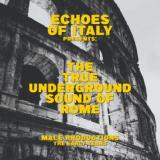
THE TRUE UNDERGROUND SOUND OF ROME - THE TRUE UNDERGROUND SOUND OF ROME

Double 12" release

The Story — From the Streets of Rome to the Male Productions Label
In the early 1990s, Rome lived in a kind of suspended moment. The city was still tied to its historic clubs, yet in the outskirts—inside abandoned warehouses, quarries along the coastline, and the wooded parks north of the capital—something new was beginning to stir. A nocturnal, constantly shifting movement fuelled by a hunger for freedom and a sonic curiosity that reached far beyond the mainstream.

Moving through this ferment was Francesco “Chicco” Furlotti. First an organizer of unconventional parties and underground nights, he soon became one of the driving forces behind Rome’s itinerant rave scene. Furlotti sensed that a wave of change was about to sweep across the city. It wasn’t just about parties: it was the rise of a culture, a new way of thinking about music, community, and belonging.

It was within those nights—later held with official permits, properly built sound systems, and an ever-growing crowd—that Furlotti recognized the existence of a distinctly Roman sound, and the need to capture it, preserve it, and give it tangible form.
So, in 1991, he decided to take a bolder step: to found an independent record label—small, determined, and far removed from the commercial logic that dominated at the time.
That was the birth of Male Productions.

Male was not a label like any other: it was a workshop, a gathering point, a creative hub where DJs, producers, friends, and wanderers converged. Within that environment, an artistic core took shape—Stefano Di Carlo, Leo Young, and Mauro Tannino, along with other collaborators orbiting around Furlotti. From their synergy emerged a project whose very name declared its mission:

The True Underground Sound of Rome.

The collective did not simply aim to release music; it sought to tell a story of Rome through sounds that defied categorization: house, techno, ambient, electronic mysticism, psychedelic visions… a unique blend, instantly recognizable, emotional, and experimental. The sessions unfolded using essential yet razor-sharp gear: Roland drum machines, analogue synthesizers, Akai samplers, stripped-down mixers. Few tools, endless imagination.
The first result of this work was the 12” Secret Doctrine, released in 1991 in an extremely limited run—around 500 promotional copies, according to accounts. The record captured something that until then had floated only in the air of Roman raves: enveloping atmospheres, deep rhythms, melodies built to make the mind travel far beyond the dancefloor. A sound that did not imitate what was happening in Detroit, London, or Berlin, but absorbed those influences and re-sculpted them with a distinctly Roman sensibility.
Yet, precisely because it was independent and detached from commercial circuits, Male’s output remained sparse: few EPs, few copies, irregular distribution. Over time, those records became rare artifacts—almost mythical objects within the Italian electronic scene. The legacy of Male Productions seemed destined to survive only in the memories of those early years, in the stories told after raves, and in the private archives of a handful of collectors.
Many years later, thanks to the almost accidental rediscovery of a few original copies of the first two releases issued by Male Productions, it became possible to undertake a meticulous process of recovery and restoration of the audio etched into those grooves, with the aim of preserving as fully as possible the quality and character of that unrepeatable sound.

We are therefore able today to present — at last in a complete and faithful form — the first two mixes created for Male Productions, now released on a double vinyl that brings back into the present the exact moment when it all began: the nomadic nights of the raves, Furlotti’s vision, the creativity of Di Carlo, Young and Tannino, and the sonic identity of a Rome in the midst of transformation.

This is not merely a reissue.
It is a historical document.
A fragment of a culture that changed the city.
The authentic sound of the Roman underground, finally returned to the world.

pre-order now01.05.2026

expected to be published on 01.05.2026


Last In: 2026 years ago
JE MOVEMENT - MA DEA LUV

JE MOVEMENT

MA DEA LUV

12inchAFS057
Afrosynth
27.06.2025

J.E. Movement's groundbreaking ‘Ma Dea Luv’,

Toward the end of the 1980s South Africa's recording industry was booming. Searching for a sound that could cross over to all in the country's segregated society while also eyeing international success, a new duo emerged that quickly rendered its 'bubblegum' predecessors obsolete. Drawing on international trends and crafting lyrics for local ears, J.E. MOVEMENT — a duo made up of James Nyingwa and Elliot Faku — exploded onto the local scene with their debut album, 'Ma Dea Luv'. The future had arrived.

A talented bassist and composer, Nyingwa was at the time employed as an in-house producer at TRS Studios in Plein Street in downtown Johannesburg, run by two Greek immigrants, George Vardas and Chris Ghelakis. Together they formed a close bond as friends and musical partners at what would become CSR Records, recording original hits with acts like the NEW AGE KIDS and SIDNEY, while also cashing in on cover versions as BLACK BOX.

The six tracks on J.E. Movement’s 1988 debut give firm nods to UK Street Soul, New Jack Swing and Stock Aitken Waterman's 'Hit Factory' sound and infuse them with an African rhythmic flair and homegrown lyrical sentiment. Though not expressly political, the title track was received by many as a play on words referencing then-jailed and banned Nelson Mandela (coming after the similarly styled 'I'm Winning My Dear Love' by Yvonne Chaka Chaka in 1986 and 'We Miss You Manelow' by Chicco in 1987), giving it an added potency for those in the know. 'Jack I'm Sorry' was an underground hit in the townships, while 'Marco', 'Friends', 'Funkytown' and the eponymous closer are similarly bass and drum-driven, with hiphop-styled vocals.

In Stock

On Stock and ready to ship

Narciss & Gerd Janson - No Maze Like Heaven

Running Back is delighted to introduce RB Studio Sessions, a new sub-imprint of music envisioned, recorded and fully realised at Running Back’s in-house studio.
Built on the promise of unfettered creative freedom and aided by agreeable local autobahn connections in the Hesse region, the RB Studio Sessions project is christened with the work of Running Back’s founder, chief dreamer, and Geschäftsführer, Gerd Janson.
For this debut edition, he is joined for a momentous jam by the new-school hero of the house, good friend and kindred spirit, Narciss.
Just as Running Back’s earliest releases dropped a stylus to preserve timeless ideals of club culture, the four tracks on ‘No Maze Like Heaven’ further this continuum by turning back the sonic clock just a decade or so. Picture, if you will, a nascent Narciss, youthfully club
hopping and deeply inspired by the selections of Gerd himself, alongside a selection of DJs coaxing the Panorama Bar blinds open with exquisite, mid-tempo precision.
As such, new light immediately floods in for ‘Chicco’s Chips’, which captures many of those irresistible elements—Italo-tinted synths, hooky vocals, and perfect percussion— regenerated with the wide-eyed, high energy of Narciss’s own solo productions. ‘Elka,
meanwhile, is a richer, deeper dish, masterfully interlocking multiple heavenly melodies under layers of optimistic analogue fuzz.
Narciss and Gerd then look to the Netherlands for further collaboration with one of electronic music’s best-loved vocalists and another fine producer, Coloray, who fills ‘Look For You’ with a yearning performance in the vulnerable, synth-pop tradition. Finally, ‘No
Maze Like Heaven’ builds on this mood and melody for a finale that hits the sweet spot between machine power and oh-so-human emotion.
Featuring labyrinthian artwork from the mighty Gasius., via a sleeve that appears to blend M.C. Escher with MC Hammer, ‘No Maze Like Heaven’ proves to be a divine foundation of RB Studio Sessions. For Narciss, “a memory they will cherish forever.”
For Gerd, a taxdeductible working lunch. For DJs and dancers? Four ebullient hits-in-waiting, sounding great and meaning more.

In Stock

On Stock and ready to ship

Unity - Erude Jambo

Unity

Erude Jambo

12inchVOOM003
Voom Voom Records
18.06.2024

1981. A new South African band is making waves. Produced by the team “Van Blerk/Roos & Greg Cutler", it includes succulent voices and melodies, psychedelic Moog, Fender Rhodes surrounded by some Afro-folky guitars. This album is definitely a winner.

Between 1972 and 1973 Poy-Poy Makhubela appeared on 4 singles with The Young Movers produced by David Thekwane.
In 1975, as a lead guitarist, he decided to bring together four musicians to form the band Unity. Jeff Radine (Fender Rhodes, Moog), George Legobye (bass), Edward Modiselle (percussion) and Robert Moema (drum). The members were all from the group The Sound Jaws, except Jeff Radine who was with Rugare and played with Harari, Chicco, The Black Five or Prince Nico.
In 1978, after hearing Unity playing in a club, Mike Tswai joined the band as a manager.
Poy-Poy has gone on to have a long career, touring the world and playing with some of the South African’s greats including Brenda Fassie, Don Laka, Blondie & Pappa, Dorothy Masuka as well as Kwaito bands like Alaska, Boom Shaka or Trompies.

In Stock

On Stock and ready to ship

JOE ALLOTTA - TRANSITION

JOE ALLOTTA

TRANSITION

12inchSGH00020
Irma Records
13.02.2026
 
5

Joe Allotta's solo project (drummer, composer, and singer) was born from his need for freedom of expression after numerous experiences
as a session musician for artists such as Davide Shorty, Johnny Marsiglia, Funk Shui Project, Mario Biondi, Leburn Maddox, Giles Robson,
Amy True, and Imaani (Incognito).
His compositions embody the desire to make jazz, in its various forms and influences, accessible to the widest possible audience without sacrificing the impact of an engaging and captivating live performance.
Joe Allotta blends hip hop, funk, and drum 'n' bass with contemporary jazz, perfectly blending vocals with his performances. He combines
his rhythmic exploration with a sweet and surprising voice, capable of lending further emotional depth to his music.
"Transition" is a musical journey that reflects a life in constant motion, where everything seems fleeting, fast, and fleeting, immersed in the
frenetic rhythms that surround us every day. The title also encompasses a more intimate dimension: the growth of his artistic identity. Joe is
no longer just a drummer and composer, but also a singer. His intense and surprising voice intertwines with his drumming in a continuous
dialogue, opening up new expressive possibilities and adding further depth to his musical language.
The album was produced in the studios of the Sghetto Club in Bologna, where Joe, together with his producer Jacopo Trapani, spent weeks
researching and experimenting: rehearsing, playing, processing and synthesizing sounds, developing and arranging ideas, thanks also to
the collaboration of extraordinary musicians. The result is a work that blends instinct and research, intimacy and openness, movement and
transformation: exactly what Transition aims to convey.
CREDITS
Giuseppe "Joe" Allotta: Compositions, Vocals, Drums, Bass, Keyboards
Jacopo Trapani: Compositions, Recording, Mixing
Chicco Allotta: Piano (Track 1)
Giovanni Galdo: Bass (Track 1)
Riccardo Dalle Vedove: Trombone (Track 1)
Piergiorgio Perrella: Guitar (Tracks 2, 5, 8, 9)
Elijah Lee Last Jacinto: Piano (Track 6)
Matteo Diego Scarcella: Sax (Track 6) Francesco Brini: Master

pre-order now13.02.2026

expected to be published on 13.02.2026


Last In: 2026 years ago
AROOP ROY VS OPOLOPO - SHIGO DISGO

Aroop Royvs.Opolopo

SHIGO DISGO

12inchCNPY016
CANOPY
23.01.2026

"Aroop Roy Vs Opolopo - Shigo Disgo" sees the two producers going head to head on another Canopy release, serving up club focused re-interpretations of two different Afro cuts : Chicco - Shigomase, a 1990s synth house bomb from South Africa and Spirit Konekson - Disco Party, a funky piece of 1970s Nigerian disco.

First up Aroop Roy takes on Chicco's proto house beast "Shigomase", dialling up the low end throb before bringing proceedings to a synthed out, hands in the air, euphoric crescendo.

Following on he takes his scalpel & bass guitar, chopping & flipping the Moog led funk of "Disco Party" into a restless Afro-boogie workout.

On the alternate side Opolopo channels extra sleaze into Shigomase, adding dirty dancefloor gristle and a raunchy back end, taking the vibe straight to the basement.

Rounding out proceedings Opolopo transports "Disco Party" into the present day with muscular drums and crunchy synth solos complimenting the loose limbed swing of the original

out of Stock

Order now and we will order the item for you at our supplier.


Last In: 61 days ago
Johannes Enders - Micro Organisms LP

All three protagonists are deeply rooted in the jazz tradition but wide open to nfluences of different colors. After his years of teaching at Berklee College in Boston and New York Renato Chicco is now one of the most sought-after soloists and most experienced accompanists. He played with jazz legends like Lionel Hampton, Jon Hendricks, Freddie Hubbard, Woody Shaw and Jerry Bergonzi to name just a few. Johannes Enders collaboration with such different musicians as Micha and Markus Acher (The Notwist, Tied & Tickled Trio) Nils Petter Molvaer, Gunther Baby Sommer, Karl Ratzer and Billy Hart as well as his own group EndersRoom make him one the open- minded and versatile experimental musicians of the European scene. The trio is completed by the Spanish master drummer Jorge Rossy, best known for his long- standing membership in the egendary Brad Mehldau Trio.

pre-order now16.02.2024

expected to be published on 16.02.2024


Last In: 2026 years ago
HOT SOUL SINGERS - GAME OF LOVE

Thembisa’s Hot Soul Singers were formed in 1975 by promoter and producer Sam “Jiza Jiza” Mthembu. In the early years the trio was called the Thembisa Happy Queens and consisted of sisters Ntombifuthi and Nombuso Mabaso and Lindiwe Ndlovu. The trio would start out playing Jive, Zulu Disco and other popular sounds of the 70s . In 1979 they became the Hot Soul Singers and would begin a career in the emerging Disco scene which their group name was now more fitting for.

Their first single under the new name was a tribute to their producer Sam, and their first album “Together” would come 2 years later in 1981. It contained their Lamont Dozier rip off from a year earlier, and biggest hit to date “ Give Me My Love Back” which was playing in jukeboxes across the country. At this time the Hot Soul Singers were also gaining popularity due to their demand as an opening act for American groups. Sam’s ongoing pursuit to be a successful promoter also helped to ensure they were always in the headlines and playing shows. It would be in 1983 that the group would temporarily step away from a major label and go onto record their first Maxi single with the independent Raintree Records new Lyncell Imprint.

Like most places in the world the early 80s was a fast changing time in music for South Africa. Although the Maxi had a disco standard for years in other parts of the world it had only recently been popularized in South Africa. Thanks to the Brenda and the Big Dudes smash, Weekend Special, the maxi took over as the preferred format for pop music, replacing the cheaper but time restricting 7” single. Singles were being pushed to the limits in the early 80’s with running times of 4+ minutes a sides by some labels. The Maxi allowed for groups to extend their grooves onto a full side and later album art containing smiling musicians infant of cheesy backdrops became the norm. Synthesizers had been used in pop music for years already but the DX7 wouldn’t land in the country for another year. Drum machines were being used but had yet to fully replace live drummers like would happen in the years to come. The recording of this new single would require a full band resulting in it being one of the gems of the crossover period before the complete midi takeover. Durban’s Graham Handley was recording some of the best upcoming Disco sounds for labels like Heads Music and groups like Kabasa and Masike Mohapi and was tasked as engineer. Other known musicians in the session would be Jimmy Mgwandi from the group Image, who’s signature bass playing can be heard on both songs. A young Daniel Phakoe aka “sox” was also present and took care of the male parts of the vocal line. Both musicians have writing credits along with lead singer Nombuso. Other possibilities of musicians would be Thami Mduli aka Professor Rhythm who had been with the group since their early days as well as a young Chicco who was best friends with Jimmy at the time.

The single, which was packaged in a customized but simple company disco sleeve, went on to do quite well. Less than a year later they would feature on a track with Sunset which would lead to them singing with Sounds of Soweto records label. The group would enjoy the growing fame when tragedy struck in 1984. On their way to a show in Mpumalanga they were involved in a car accident which took the life of Nombuso and left her husband Sam with a leg injury he limps with to this day. Upon recovering Sam would organize a tribute concert at Soweto’s Jabulani Amphitheatre. Even though the tragedy left the group broken and without a member the band went back to work to record their second full length album. They worked with Mac Mathunjwa who had written Nombuso’s favourite song “Going Crazy”. This album would be released with two different names and covers. One took the former singer’s favourite song as the album name and used a photo consisting of all three girls where the other released under the name “ A Tribute” and would only have the remaining members on the cover.

Although the tragedy never halted the group, moving forward the trio of singers would see a few members change. Lindiwe would leave to join Freeway and then become Linda “Babe” Majika so by the time they were ready to record in1986, now with Teal records, the only original member was Ntombifuthi. She would also shortly leave the group and provide backing vocals to other artists including her old band mate Linda. The Hot Soul Singers would be kept alive by Jiza Jiza and go on to record 5 more albums before calling it quits in 1990 after a successful 15 year career. Today the only core member left is Sam Mthembu who still lives in Thembisa and is occasionally promoting live events. Even though he did produce a handful of artists back in the 70s, his most significant additions to the music industry were the Hot Soul Singers and his event promotions, which is what he is best known for and will most likely be the legacy of his career.

out of Stock

Order now and we will order the item for you at our supplier.


Last In: 5 years ago
  • 1
Items per Page:
N/ABPM
Vinyl