Buscar:chicago afrobeat project

Estilos
Todo
  • 1
Chicago Afrobeat Project feat. Tony Allen - No Bad News (Maga Bo Remix) / Cut The Infection (Sol Power All-Stars Remix)

Taken from “What Goes Up Remixed” LP from 2019, licensed exclusively from Future Rootz in Chicago, Dinked Records are pleased to commit two of the standout remixes to 45 with Cut The Infection edited down to fit our favourite format. Guaranteed to rock your dancefloors this festive season – if these bangers don’t get your head nodding then nothing will!

Disponible

En el almacen y preparando para el envío

London Odense Ensemble - Jaiyede Sessions vol.2

The second instalment from London Odense Ensemble digs deeper into the group's vision of what modern psychedelic jazz should sound like. Cut from the same sessions as Jaiyede Sessions vol. 1, released last summer, vol. 2 presents a more nuanced approach to the material. On this set the ensemble focuses on shorter, layered pieces - travelling from deep spiritual jazz grooves to gorgeous free-flowing minimalism to full-on acid jazz. There's echo-drenched flutes being absorbed into layers of analog synth pads and guitars, bossa beats and double bass sequences merging with electronics. It’s an intoxicating mélange of sounds and styles, spanning wide temporal and geographical distances. London Odense Ensemble came together when two of the finest exponents of London's flourishing jazz scene, flautist and saxofonist Tamar Osborn and keyboard specialist Al MacSween, came over to Denmark to explore new sounds with Causa Sui's Jakob Skøtt and Jonas Munk, as well as local bass player Martin Rude. For two days the group laid down grooves and ideas and experimented in the studio, and later the best segments were edited and mixed by Jonas Munk, who took a somewhat liberal approach to the mixing process, often dyeing the material with external effects and synthesizers. Jaiyede Sessions are the kinds of records that defy genre-terms, yet have its own instantly recognizable fingerprint. It carries a unique shared vision between the players of what modern psychedelic jazz sounds like. bios: Tamar Osborn: Saxophonist, composer and multi-wind instrumentalist is the creative force behind modal jazz ensemble Collocutor (On The Corner Records). She is a member of the Dele Sosimi Afrobeat Orchestra, performs and collaborates regularly with Sarathy Korwar, Jessica Lauren, Emanative, Ill Considered and DJ Khalab. Al MacSween: Keyboard player & founding member of Kefaya. Collaborations include American jazz legend Gary Bartz, Syrian qanun master Maya Youseff, London Community Gospel Choir, Palestinian jazz singer Reem Kelani & kora player Kadialy Kouyate. Martin Rude: Multi-string instrumentalist & lead singer in Sun River & Edena Gardens with members of Papir & Causa Sui. Jakob Skøtt: Drummer in Causa Sui with a slew of side projects on El Paraiso, including Chicago Odense Ensemble, as well as being responsible for the label’s visuals. Jonas Munk: Guitarist in Causa Sui & studio wizard on most releases on El Paraiso. Also works with a wide palette of electronic music.

Disponible

En el almacen y preparando para el envío

TLF Trio - New Songs & Variations

"Following the resonating success of their initial collaboration, the TLF Trio—comprising Danish cellist Cæcilie Trier (CTM), pianist Jakob Littauer, and guitarist Mads Kristian Frøslev—reunites on Latency with electronic music legend Moritz von Oswald for the follow-up to their debut album, 'Sweet Harmony.'

TLF Trio, along with Moritz von Oswald, once again delves into the realm of chamber music, this time with two new songs further exploring the intricate acoustic dynamics of their instruments with electronics. As the second instalment in this musical journey, 'New Songs & Variations' builds upon the minimalistic, sculptural, and narrative qualities of its predecessor, weaving a tapestry of expressive and plural voices.

Moritz von Oswald, a central figure in the electronic music scene since the early '90s, brings his wealth of experience to the project, reinterpreting two of TLF Trio's previous works. From his early days as a classical percussionist to groundbreaking collaborations in the techno sphere, von Oswald's influence has left an indelible mark. His role in co-founding Basic Channel/Rhythm & Sound and contributions to the Berlin-Detroit-Chicago axis have defined various strains of modern music.

'New Songs & Variations' not only captures the rich history and influence of Moritz von Oswald but also showcases his ongoing exploration into classical, experimental, and improvisational contexts. From recomposing Ravel and Mussorgsky’s music for Deutsche Grammophon to acclaimed collaborations with jazz trumpeter Nils Petter Molvær, composer Laurel Halo, or Afrobeat pioneer Tony Allen, von Oswald's versatility continues to evolve.

TLF Trio and Moritz von Oswald invite listeners to embark on a sonic journey that bridges the past and the present, mirroring the transformative essence of Louise Lawler's distorted image, which graces its cover—a testament to the delicate fluidity and shape-shifting nature of the music contained within.

Compossed by Moritz von Oswald, Cæcilie Trier, Claus Haxholm (beat on Chrome), Jakob Littauer and Mads Kristian Frøslev.
Mastered by Kassian Troyer at Dubplates & Mastering.
Artwork by Louise Lawler. Formica (adjusted to fit, distorted for the times, slippery slope 2), 2011/2012/2015/2017. Courtesy the artist and Sprüth Magers. As adjusted for Latency.

No en stock

Haga su pedido ahora y le encargaremos el artículo en nuestro proveedor.


Ültimo hace: 19 Meses
Rahaan - We Are The Ones / Fire / Forever
 
3
También disponible

LP


In the debut EP 'We Are The Ones/Fire/Forever', Chicago DJ legend Rahaan collaborates with an incredibly talented group of musicians, including Marcus J. Austin on lead vocals, Nancy Clayton on backing vocals, Carnell C. Newbill (also known as Spike Rebel) on keyboards and backing vocals, Todd Swope on guitar, and Lou Terry on bass. Together, they create a 3-track EP that perfectly showcases Rahaan's production skills and the musical talents of the entire group. Rahaan's experience and expertise as a DJ and producer are evident in each track, with grooves that are sure to keep the dancefloor moving. The title track, 'We Are The Ones', is a story of adventure and return, with a twist. Created by Rahaan and The Ones while under the influence, the track was lost for years as it was unnamed on his computer. However, Rahaan's determination to find it paid off, and with the help of Ohio Players' Kenny Anderson on the horns, he built upon the elusive skeleton track. With Marcus J. Austin on lead vocals and Nancy Clayton on backing vocals, 'We Are The Ones' delivers a soulful, 4-to-the-floor anthem that showcases the vocal talents of the group. And in 'Fire', Todd Swope's guitar skills shine through, creating an epic production that draws spiritual inspiration from traditional AfroBeat rhythms. It's worth noting that The Ones features some truly talented musicians, including Carnell C. Newbill (Spike Rebel) on keyboards and backing vocals. Spike Rebel is a well-known producer and musician in his own right. With his soulful vocals taking center stage, Carnell Newbill leads the charge on "Forever," he also superbly delivers on bass, keys, percussion, and guitar. Expertly mixed by Rahaan, this track is sure to become a dance floor anthem. In summary, 'The Ones' EP is an impressive collaboration between some of the most talented musicians in the Chicago underground House and Disco scene. With Rahaan at the helm, this project is sure to be a hit with anyone who loves to dance. Mastered with Love by the Grammy nominated The Carvery Studios, this is one for any worthwhile DJ’s record bag.

No en stock

Haga su pedido ahora y le encargaremos el artículo en nuestro proveedor.


Ültimo hace: 2 Años
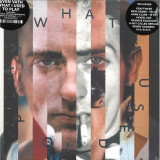
Sven Väth - What I Used To Play (12x12" boxset)
 
36

For this uniquely personal retrospective spread over twelve vinyl discs, Sven Väth takes us back to the early days of his DJ career. On What I Used To Play we meet great pioneers of electronic music, gifted percussionists, obscure wave bands, and innovative producers of a bygone 'new electronic' era. Rough beats and irresistible grooves from the identification stage of house, techno, and acid remind us not just how far electronic music has evolved over the past four decades, but how great it was to dance to EBM, techno, and house for the very first time.

If there is one protagonist of the electronic music scene who has remained curious, innovative and at the very cutting edge of music for over four decades, it's Sven Väth. His multi-layered artist albums and Sound of the Season mix compilations have been defining the genre for over two decades, and even today, he is constantly on the lookout for the next top tune to add to the highlights of his next set. At least, that's the case when he's not producing them himself as an artist or remixer. "Actually, it's always been part of my DNA to think ahead," and nothing had been further from his mind than looking back at his past, but when in spring of 2020 the international DJ circuit had to be scaled down to virtually zero, the 'restless traveler' suddenly had time. Time to stop and reflect on "how it actually was back then, at the very beginning of my career..."

"It was a great trip and with every track, beautiful memories came flooding back".
In the London apartment, he had just moved into, Sven has set up a "little music room", where he cocooned himself for several days, "to look way back for the first time and review my musical journey through the eighties, so to speak."

The interim result was six thematically oriented playlists with a grand total of 120 tracks from 'early 80s' to 'Balearic late 80s', together with excursions into afrobeat, European new wave, and EBM sounds and a few epochal techno/house tracks from the USA in between. From these 'Best of Sven Väth's favorites', the project What I Used To Play crystallized. Sven remembers how the Cocoon team reacted to his proposal: "They found the idea of making a compilation out of it MEGA from the beginning and everyone said 'Sven, go for it', but then, of course, the work really started, namely, to clear the rights and to get clean sounding masters of the up to 40-year-old tracks. There was also disappointment, of course. We couldn't clear certain titles because the rights holders in the USA had fallen out with each other or simply disappeared from the scene. In short, it wasn't easy, but now I can safely say we got the most important tracks."

Finally, after two years of research, curation, design, and administrative fine-tuning, the "little retrospective" from 1981 to 1990 is available. The exquisitely packaged, and three-kilo heavy box set is not only physically impressive, WIUTP is also the definitive record of Sven Väth's musical development. On each of the twenty-four sides of vinyl, you can trace track by track, what influenced him during which phase, and how he took off as a DJ from his parents' Queen's Pub straight into the spotlight at Dorian Gray. There and at Vogue (later OMEN), Sven became the style-defining player in the DJ booth that he still is today.


1981 - 1990: Future Sounds of Now

In the early eighties, the crowd in clubs like Vogue and Dorian Gray danced to what nowadays we call 'dance classics' - mainly disco, funk, soul, and chart pop. It was up to a new generation of DJs, including Sven Väth, the youngest protagonist in the Rhine-Main area at the time, to create their own club-ready music mix. Good new tracks and potential floor-fillers were rarities that had to be sought out and found, in order to prove oneself worthy.
Without MP3s, internet streaming, or other digital download possibilities, music didn't just gravitate to the DJ, instead, it had to be tracked down. In well-stocked record stores in Frankfurt and Wiesbaden or even in Amsterdam, London, or New York, Sven and friends sourced the material for countless magical nights. On WIUTP we can follow Sven's very personal journey through this wild, innovative era in which synth-pop, funk, hip-hop, and disco were successively replaced as 'club music' by house, techno, acid, and breakbeat. By the end of the decade, it was clear to see that these once exotic 'fringe' phenomena would soon become 'mass' phenomena.


Early 80s

Dirty Talk by the Italian-American duo Klein & M.B.O. represents the most innovative phase of the Italo-disco genre in the early eighties like no other track. Mario Boncaldo (I) and Tony Carrasco relied entirely on the original synthetic drum and percussion sounds of the Roland TR-808, coupled with the raunchy vocals of Rossana Casale and guitar accents of Davide Piatto. Of course, other tracks from this period were also influential in style, most notably Unit by Logic System, which worked as the perfect soundtrack to the laser lighting system at the legendary Dorian Gray club. With stomping beats and robotic rap interludes, Bostich by Yello also belongs on Sven's eternal playlist - after all, it caught the attention of Afrikaa Bambaataa, who invited the Swiss duo to perform at the Roxy in New York in 1983.


EBM Wave - Mid 80s

From today's point of view, the almost ten-minute-long, downtempo track Giant by Matt Johnson's band project The The, would probably not be considered an obvious club classic. However, a closer (re)listen reveals the rhythmic intricacies of the percussion overdubs by JG Thirlwell (aka Foetus) on Johnson's composition, and it becomes clear why this exceptional piece of music is one of Sven's absolute favorites. Other classics from this phase include Kaw-Liga by the mysterious The Residents, the hypnotic-synthetic Our Darkness by Anne Clark (and David Harrow), and last but not least, the somber, monotonous anthem Where Are You? by 16Bit, one of Sven Väth's projects together with Michael Münzing, Luca Anzilotti from 1986.


US House - Late 80s

You certainly can't talk about Chicago house without mentioning Frankie Knuckles. The resident DJ at the Warehouse not only gave the name to an entire genre, but also produced epochal floor fillers on the Trax label like the timeless Your Love, sung (and moaned) by Jamie Principle. Acid house protagonists Phuture also hail from Chicago, and on We Are Phuture (also released on Trax) we hear the chirping acid sounds of the legendary Roland TB-303 in full effect. Another featured classic is No UFO's by Detroit's Model 500 aka Juan Atkins, who is rightly considered the 'Godfather of Techno' even if the genre-defining track from 1985 still breathes with the spirit of hip-hop and electro from the first breakdance era.


Afrobeat

Le Serpent, by Algerian-born Abdelmadjid Guemguem, is a track that sounds completely different from everything else on WIUTP. Made in 1978, it's a monumental, rousing groove created without bass or synths, just with five congas! Even though Guem sadly passed away in 2021, his immortal, acoustic beats are understood all over the world and will continue to enrich many thousands of DJ sets for years to come. Another classic that not only Sven appreciates beyond measure is Hugh Masekela's Don't Go Lose it, Baby. In addition to being one of the most important jazz pioneers, the trumpeter and freedom fighter from Johannesburg was very experimental, integrating electronic sounds into his music in later years, in a similar vein to Miles Davis and Herbie Hancock. Dutch jazz pianist Jasper van't Hof's afrobeat project Pili Pili has also aged well. The trance-like, almost sixteen-minute-long track of the same name, manages to fill a whole side on the seventh of twelve vinyl discs in the WIUTP box.


UK-US-Euro - Late 80s

Time for a change of scene, in the truest sense of the word, and from a musical perspective, this section is like landing on another planet. First up is Andrew Weatherall's classic remix of Primal Scream's Loaded, featuring the iconic Peter Fonda sample (lifted from the 1966 biker film Wild Angels) that came to personify the mood triggered by the British Second Summer of Love in the late eighties: "We wanna be free to do what we wanna do, and we wanna get loaded...". This period also saw the emergence of M/A/R/R/S whose only single, 1987's Pump Up The Volume, became a club classic with support from DJ legend CJ Mackintosh. In this most eclectic of sections, we also encounter New York house and reggae producer Bobby Konders and his seminal Nervous Acid.


Balearic - Late 80s

Those who know him, know that Sven had already lost his heart to the 'magic island' of Ibiza as a teenager, so with that in mind, the WIUTP project couldn't end without a Balearic chapter. Inspired by Manuel Göttsching's E2-E4, the immortal, eponymously titled Sueño Latino belongs in there without question. Equally popular on the island was, and still is Break 4 Love by Raze, which thinking about it, would also fit perfectly into the house chapter. Last, but not least, there's an overdue reunion with Sven Väth himself, in his role as frontman of the successful Frankfurt trio OFF. Together with Michael Münzing and Luca Anzilotti (later of Snap!) this 'Organization For Fun' created the off-the-wall club hit Electric Salsa in 1986 which incidentally turned into an international chart smash, putting Sven in the enviable position of having to decide between pop stardom and a DJ career. Well, we all know how that decision turned out and the rest, as they say, is history. A not insignificant part of his story is What I Used To Play. Enjoy!

No en stock

Haga su pedido ahora y le encargaremos el artículo en nuestro proveedor.


Ültimo hace: 8 Meses
LONDON ODENSE ENSEMBLE - JAIYEDE SESSIONS VOL. 2

The second instalment from London Odense Ensemble digs deeper into the group's vision of what modern psychedelic jazz should sound like. Cut from the same sessions as Jaiyede Sessions vol. 1, released last summer, vol. 2 presents a more nuanced approach to the material. On this set the ensemble focuses on shorter, layered pieces - travelling from deep spiritual jazz grooves to gorgeous free-flowing minimalism to full-on acid jazz. There's echo-drenched flutes being absorbed into layers of analog synth pads and guitars, bossa beats and double bass sequences merging with electronics. It's an intoxicating mélange of sounds and styles, spanning wide temporal and geographical distances. London Odense Ensemble came together when two of the finest exponents of London's flourishing jazz scene, flautist and saxofonist Tamar Osborn and keyboard specialist Al MacSween, came over to Denmark to explore new sounds with Causa Sui's Jakob Skott and Jonas Munk, as well as local bass player Martin Rude. For two days the group laid down grooves and ideas and experimented in the studio, and later the best segments were edited and mixed by Jonas Munk, who took a somewhat liberal approach to the mixing process, often dyeing the material with external effects and synthesizers. Jaiyede Sessions are the kinds of records that defy genre-terms, yet have its own instantly recognizable fingerprint. It carries a unique shared vision between the players of what modern psychedelic jazz sounds like. bios: Tamar Osborn: Saxophonist, composer and multi-wind instrumentalist is the creative force behind modal jazz ensemble Collocutor (On The Corner Records). She is a member of the Dele Sosimi Afrobeat Orchestra, performs and collaborates regularly with Sarathy Korwar, Jessica Lauren, Emanative, Ill Considered and DJ Khalab. Al MacSween: Keyboard player & founding member of Kefaya. Collaborations include American jazz legend Gary Bartz, Syrian qanun master Maya Youseff, London Community Gospel Choir, Palestinian jazz singer Reem Kelani & kora player Kadialy Kouyate. Martin Rude: Multi-string instrumentalist & lead singer in Sun River & Edena Gardens with members of Papir & Causa Sui. Jakob Skott: Drummer in Causa Sui with a slew of side projects on El Paraiso, including Chicago Odense Ensemble, Jonas Munk: Guitarist in Causa Sui & studio wizard on most releases on El Paraiso.

Reservar03.02.2023

debe ser publicado en 03.02.2023


Ültimo hace: 2026 Años
Ron Trent Presents WARM - What Do The Stars Say To You LP

In 1990 Ronald Lee Trent Jr. was the teenage creator of Altered States – a raw, futuristic techno-not-techno anthem, which in retrospect was something of a stylistic anomaly for the young artist. Across subsequent years, with time spent in Chicago, New York and Detroit, came the development of his signature sound, and renown as a world class purveyor of deep, soul infused house/garage. This story has already been told, and on casual inspection, the well-worn platitude ‘house music legend’ is an old shoe that still fits. However, in fact, he’s actually so much more, and has been for quite a while. A genuine musician, songwriter, and ‘producer’ in the proper, old-school sense, the artist today has more in common with Quincy Jones than he does your average journeyman DJ track-hack.

To those in the know, these broader skills haven’t gone unnoticed, which is why on the highly collaborative, career-topping new LP ‘What Do The Stars Say To You’, it took little persuasion to recruit serious star power. Brazilian royalty Ivan Conti and Alex Malheriros from Azymuth, violin maestro Jean Luc Ponty, ambient hero Gigi Masin, hype band Khruangbin and more performed, whilst NY cornerstone François K provided mastering duties. At various points Ron himself played drums, percussion, keys, synths, piano, guitar and electronics.

Harking back to the 70s and 80s boom in adventurous, luxurious albums, WDTSSTY is a love letter to the longplayer, where rich musicality and a liquid smooth, silky flow make seemingly odd genre bedfellows acquiesce harmoniously. Each song its own high-fidelity odyssey, Trent incorporated a broad range of live instruments and electronics into a sophisticated, euphonic whole. Described by him as being “designed for harmonising with spirit, urban life and nature”, this is aural soul food, gently easing you into balmy nights, where everything is alright.

Originally wanting to be an architect, Trent’s views his approach to collaboration and music in general as having the same principles. A firm believer in the nourishing qualities of sound, he sees direct parallels between the two disciplines, being as the purpose of good architecture is to improve quality of life. “With WARM, through sound design, I built frameworks for the musicians, who furnished and occupied these structures beautifully, which was a big compliment for me”, he comments.

The conditions required for a good collab are more than simply structural though, as Trent expounds, “I’m a huge fan of everyone on the record, especially Jean Luc and Azymuth, who’re part of my DNA. Each track was made with that guest in mind – for example, when I started writing ‘Sphere’, I immediately thought ‘this IS Ponty’. I played the keys in his style, and did a guide violin solo using a synth, which he then re-did, amazingly. ‘Cool Water’ is based around Azymuth themes, so when I sent it to Ivan, he could immediately see himself in the piece; He got what I was going for straight away. For ‘Melt Into You’ I hit up Alex on Instagram, sent him the track, he liked it, and within 24 hours he’d sent back six different bass passes!”
“Conversely, Admira began with a sketch sent by Gigi and became something combining Jon Hassell-esque chords and the feel of ‘Aquamarine’ by Carlos Santana, which links back to Masin’s recurrent nautical theme”, he adds.

With community, history and the need for racial equality never far from Ron’s mind, ‘Flos Potentia’ translates from Spanish as flower power, but rather than promoting some hippy idyll, instead it refers to plants which drove the slave trade: tobacco, sugar and cotton. Joined by Khruangbin, together they propel Dinosaur L, Hi-Tension and afrobeat into an ethereal, clear-skyed stratosphere.
Aside from these esteemed guests, other key influences cited by Trent include ‘Gigolos Get Lonely Too’ by Prince, ‘Beyond’ by Herb Alpert, David Mancuso, Jan Hammer, Tangerine Dream, The Cars, Trevor Horn, Alan Parsons Project and pre-Kraftwerk incarnation Organization. A multitude of others are audible too, including George Bension, Vangelis, Loose Ends, Maze, Flora Purim, Weather Report, Atmosphere, Grace Jones, James Mason and Brass Construction.

On the subject of influences, although opposed to the fences erected by genre tags, to understand where Ron is coming from, and where he’s at, it’s important to acknowledge just how big the palette is from which he paints. Traversing jazz funk, quiet storm, sophisti-pop, new age, new wave, kosmische, Balearic, samba, afrobeat, Latin rock, soft rock and yacht rock, his deeply entrenched digger’s knowledge pays off in dividends.

No en stock

Haga su pedido ahora y le encargaremos el artículo en nuestro proveedor.


Ültimo hace: 51 Días
Ron Trent Presents WARM - What Do The Stars Say To You LP

In 1990 Ronald Lee Trent Jr. was the teenage creator of Altered States – a raw, futuristic techno-not-techno anthem, which in retrospect was something of a stylistic anomaly for the young artist. Across subsequent years, with time spent in Chicago, New York and Detroit, came the development of his signature sound, and renown as a world class purveyor of deep, soul infused house/garage. This story has already been told, and on casual inspection, the well-worn platitude ‘house music legend’ is an old shoe that still fits. However, in fact, he’s actually so much more, and has been for quite a while. A genuine musician, songwriter, and ‘producer’ in the proper, old-school sense, the artist today has more in common with Quincy Jones than he does your average journeyman DJ track-hack.

To those in the know, these broader skills haven’t gone unnoticed, which is why on the highly collaborative, career-topping new LP ‘What Do The Stars Say To You’, it took little persuasion to recruit serious star power. Brazilian royalty Ivan Conti and Alex Malheriros from Azymuth, violin maestro Jean Luc Ponty, ambient hero Gigi Masin, hype band Khruangbin and more performed, whilst NY cornerstone François K provided mastering duties. At various points Ron himself played drums, percussion, keys, synths, piano, guitar and electronics.

Harking back to the 70s and 80s boom in adventurous, luxurious albums, WDTSSTY is a love letter to the longplayer, where rich musicality and a liquid smooth, silky flow make seemingly odd genre bedfellows acquiesce harmoniously. Each song its own high-fidelity odyssey, Trent incorporated a broad range of live instruments and electronics into a sophisticated, euphonic whole. Described by him as being “designed for harmonising with spirit, urban life and nature”, this is aural soul food, gently easing you into balmy nights, where everything is alright.

Originally wanting to be an architect, Trent’s views his approach to collaboration and music in general as having the same principles. A firm believer in the nourishing qualities of sound, he sees direct parallels between the two disciplines, being as the purpose of good architecture is to improve quality of life. “With WARM, through sound design, I built frameworks for the musicians, who furnished and occupied these structures beautifully, which was a big compliment for me”, he comments.

The conditions required for a good collab are more than simply structural though, as Trent expounds, “I’m a huge fan of everyone on the record, especially Jean Luc and Azymuth, who’re part of my DNA. Each track was made with that guest in mind – for example, when I started writing ‘Sphere’, I immediately thought ‘this IS Ponty’. I played the keys in his style, and did a guide violin solo using a synth, which he then re-did, amazingly. ‘Cool Water’ is based around Azymuth themes, so when I sent it to Ivan, he could immediately see himself in the piece; He got what I was going for straight away. For ‘Melt Into You’ I hit up Alex on Instagram, sent him the track, he liked it, and within 24 hours he’d sent back six different bass passes!”
“Conversely, Admira began with a sketch sent by Gigi and became something combining Jon Hassell-esque chords and the feel of ‘Aquamarine’ by Carlos Santana, which links back to Masin’s recurrent nautical theme”, he adds.

With community, history and the need for racial equality never far from Ron’s mind, ‘Flos Potentia’ translates from Spanish as flower power, but rather than promoting some hippy idyll, instead it refers to plants which drove the slave trade: tobacco, sugar and cotton. Joined by Khruangbin, together they propel Dinosaur L, Hi-Tension and afrobeat into an ethereal, clear-skyed stratosphere.
Aside from these esteemed guests, other key influences cited by Trent include ‘Gigolos Get Lonely Too’ by Prince, ‘Beyond’ by Herb Alpert, David Mancuso, Jan Hammer, Tangerine Dream, The Cars, Trevor Horn, Alan Parsons Project and pre-Kraftwerk incarnation Organization. A multitude of others are audible too, including George Bension, Vangelis, Loose Ends, Maze, Flora Purim, Weather Report, Atmosphere, Grace Jones, James Mason and Brass Construction.

On the subject of influences, although opposed to the fences erected by genre tags, to understand where Ron is coming from, and where he’s at, it’s important to acknowledge just how big the palette is from which he paints. Traversing jazz funk, quiet storm, sophisti-pop, new age, new wave, kosmische, Balearic, samba, afrobeat, Latin rock, soft rock and yacht rock, his deeply entrenched digger’s knowledge pays off in dividends.

No en stock

Haga su pedido ahora y le encargaremos el artículo en nuestro proveedor.


Ültimo hace: 3 Años
Rocket Juice & The Moon - Lp

Up and away / To your journey to the sun / Drink your rocket juice / Fly away (Hey, Shooter).
High up in the skies, amongst the clouds, Rocket Juice & The Moon was born. Literally. It happened back in 2008, when Damon Albarn, Flea and Tony Allen convened on the same Lagos flight, to play and exchange musical ideas in that city as part of the Africa Express collective. Relishing a shared enthusiasm for one another's work, and bonding immediately, there and then the triumvirate laid down the blueprint for Rocket Juice.
Still, more than a year passed before conditions were set for three weeks together at Albarn's West London studio, recording and refining two-dozen startlingly out and deeply funky instrumental grooves. The next stage was to invite onboard some extremely talented friends, with further sessions in Dallas, New York, Chicago and Paris... Erykah Badu, no less, queen of contemporary soul. Three companions from Africa Express: Malian singer Fatoumata Diawara, whose debut album has topped World Music charts since its release last Autumn; her multi-talented compatriot Cheick Tidiane Seck, whose prodigious keyboardism has lit up releases by artists ranging from Youssou N'Dour to Hank Jones; the young, Ghanaian rapper M.anifest, quizzically existential, switching seamlessly between Twi and English. And the Hypnotic Brass Ensemble, long-time stalwarts in the Honest Jon's set-up — since one of the team discovered them busking near the shop in Portobello Road, on his lunchbreak — with a second album for the label due in May... Finally, the tracks were dispatched for mixing to Berlin, to be meticulously honed, polished and envenomed by Mark Ernestus, one half of the legendary Basic Channel and Rhythm & Sound partnerships.
The result is Rocket Juice & The Moon — out March 26, 2012, on Honest Jon's Records — a triumphant exploration and proliferation of kinetic Afro-funk rhythms: organic, exuberant, communal music-making, evidenced by the project's live debut on stage as part of the Honest Jon's Chop Up in late 2011, which hit London, Marseille, Dublin, and Cork to such great acclaim (witness the flurry of smart-phone film-clips uploaded in the days thereafter).
From the inaugural bars — that absurdly funky slice of instructional timekeeping, 1-2-3-4-5-6 — the liquid pulse of Fela Kuti's classic recordings drives the action through a suite of 18 shape-shifting compositions. The greatest drummer in the world has never sounded so good as he does here. His intricate cross-patterns jostle and lock with Flea's nimble, rumbling bass riffs. Joined by Seck on There and Extinguished — 'when you dispose of something burning, be sure it's out' — Albarn's keyboards spray synth fusillades up top, over, and under... splicing into the mess of wires running between the freaked Afro-disco of William Onyeabor and the space-jazz-moog of Sun Ra. The HBE brings extra intensity and drama to Leave-Taking — likewise Flea's trumpet to Rotary Connection — teasing out the haunting melody coiled in the mix.
Where the best of vintage Afrobeat sides sustained their concentrated energies over the course of sprawling, marathon jams, RJ & TM manages something altogether different: the group bottles the idiom into capsules of funk... and real songs. Beautifully buoyed by Erykah Badu's unmistakable vocals, Hey, Shooter brilliantly traverses metaphysical spaceways sans any semblance of noodling. Lolo and Follow-Fashion — featuring the open-hearted sensuality of Diawara's singing, M.anifest's quick, brawny science, and more brass blasts — play like its musical cousins or codas. Indeed, the album's shrewd sequencing creates the composite effect of tracks working both individually or within the context of an extended song-cycle.
The lovely ballad, Poison, is bittersweet and ruminative: 'If you're looking for love, beware the signs / They will paralyze you one by one / Poison, it will only break your heart.' Down-tempo and dubby, Check Out and Worries amplify the range of styles and moods. And by the time of Fatherless — a chugging Afro blues that evokes John Lee Hooker lost in Lagos, one gets the sneaking suspicion there's very little outside the reach of this collective's inventive musical grasp.
There is, in fact, a palpable openness pervading Rocket Juice & The Moon — the sense of a limber willingness to follow creative impulse — right down to how the group acquired its name. When Ogunajo Ademola — the Lagotian commissioned to do the album's cover artwork — dubbed his submission 'Rocket Juice & The Moon', it quickly morphed into the formal name of the project, like trying to hold onto mercury.
Surely, the stars above also approved.

No en stock

Haga su pedido ahora y le encargaremos el artículo en nuestro proveedor.


Ültimo hace: 4 Años
  • 1
Artículos por página
N/ABPM
Vinyl