
нет на складе
Закажите сейчас, и мы закажем товар для вас у нашего поставщика.
Последний логин: 17 мес. назад
Закажите сейчас, и мы закажем товар для вас у нашего поставщика.

Celestial Echo Records presents Nathaniel Best – Set Your House In Order, an incredible gospel soul LP from 1986, finally back in circulation.
Originally released on Spirit Records of Nevada, the album is very much of its time in the best way — gospel music with drum machines, warm synths and basslines that push it right into modern soul and boogie territory. Nathaniel Best’s voice carries the whole record with real conviction, joined by group vocals and arrangements that give the album that rich, uplifting 80s gospel soul sound.
For us, the standouts are clear. “Call Him” is the boogie dancer — bright, driving and full of movement, the kind of gospel cut that sits perfectly in a modern soul or boogie set. The title track, “Set Your House In Order”, is something else entirely: a beautiful downtempo soul glider, deep and heartfelt, with that slow-burning quality that makes the whole LP feel so special.
Those two tracks tell the story, but the magic runs through the whole record. Scattered across the album are these amazing slower gospel soul moments, balanced with enough groove and lift to keep it moving. It’s not just a one-tracker, it’s a proper LP with feeling, range and a sound that collectors have been chasing for years.
Best’s musical story runs deep. He grew up around gospel, recorded from a young age, played piano in church, sang with the Love Center Choir under Bishop Walter Hawkins, and later worked with names including The O’Jays and The Fairfield Four.
Original copies have always been hard to come by, and the album has built a serious reputation with gospel, soul and boogie collectors over the years.
Buy or Cry.
он должен быть опубликован на 06.11.2026

Celestial Echo Records presents Nathaniel Best – Set Your House In Order, an incredible gospel soul LP from 1986, finally back in circulation.
Originally released on Spirit Records of Nevada, the album is very much of its time in the best way — gospel music with drum machines, warm synths and basslines that push it right into modern soul and boogie territory. Nathaniel Best’s voice carries the whole record with real conviction, joined by group vocals and arrangements that give the album that rich, uplifting 80s gospel soul sound.
For us, the standouts are clear. “Call Him” is the boogie dancer — bright, driving and full of movement, the kind of gospel cut that sits perfectly in a modern soul or boogie set. The title track, “Set Your House In Order”, is something else entirely: a beautiful downtempo soul glider, deep and heartfelt, with that slow-burning quality that makes the whole LP feel so special.
Those two tracks tell the story, but the magic runs through the whole record. Scattered across the album are these amazing slower gospel soul moments, balanced with enough groove and lift to keep it moving. It’s not just a one-tracker, it’s a proper LP with feeling, range and a sound that collectors have been chasing for years.
Best’s musical story runs deep. He grew up around gospel, recorded from a young age, played piano in church, sang with the Love Center Choir under Bishop Walter Hawkins, and later worked with names including The O’Jays and The Fairfield Four.
Original copies have always been hard to come by, and the album has built a serious reputation with gospel, soul and boogie collectors over the years.
Buy or Cry.
он должен быть опубликован на 06.11.2026

Lucy Duncombe and Feronia Wennborg compose a modern symphony for virtual choir on 'Joy, Oh I Missed You', muddling sound poetry with Nuno Canavarro and ‘Systemische'-style machine-damaged surrealism. Like a mashup of Lee Gamble's 'Models', Akira Rabelais' 'Spellewauerynsherde' and Robert Ashley's timeless 'Automatic Writing’ screwed to perfection.
Duncombe and Wennborg have been chewing over ‘Joy, Oh I Missed You’ for four long years, working their process until they were "queasily intimate" with their arsenal of artificial voice tools. Tracing the history of the technology, from voice synthesisers and chatbots to AI voice analysis tools, the duo experiment relentlessly to develop a digital-age response to IRL extended vocal technique - think François Dufrêne, Yoko Ono or Phew. Less interested in replicating human sounds exactly, they instead test how various tools might cough up their own idiosyncratic tics as they stretch and stutter through attempts to mimic their "fleshware" counterparts.
Duncombe's got prior form here, most recently re-synthesising her voice on the brilliantly oily 'Sunset, She Exclaims' 45 for Modern Love, following a stunner for 12th Isle in 2021. Wennborg brings along experience from her tenure as one half of microsound duo soft tissue, whose 2022 LP 'hi leaves' (Students of Decay) was a haptic treasure. These approaches mesh remarkably well on their first collaborative full-length, with Duncombe's eerie bio-electronic incantations providing the ideal foil for Wennborg's carbonated hardware processes. It's not completely clear where the human voice ends and the zeroes and ones begin on 'Your Lips, Covering Your Teeth', as rolling cyborg syllables tumble over OS-startup womps and surprisingly svelte outcroppings of glassy, synthetic glitches. The music is surprisingly mannered, a sonic reflection of the cover, where a mouth is pixellated until only colour swatches remain. Duncombe and Wennborg trace the gradual erosion of their voices, leaning into the chaos as their various tools veer off into unique patterns of failure.
What sounds like a far-off, ghosted folk rendition (we're reminded of the Icelandic laments that Rabelais chewed up on 'Spellewauerynsherde') is offset by gnarled, bitcrushed machine faults and pneumatic lip smacks on the brilliant 'Residue', and on 'Brushed My Hair', the duo massage the voice until it sounds like a flute. Assembling stutters and barks and sighs into a celestial chorus alongside time-stretched moans, they create a levitational atmosphere on 'Smell It', freezing the energy from bizarre pitch steps to configure a zonked vocal ensemble.
'Joy, Oh I Missed You’ is an album that, like its source material, constantly morphs, testing the boundaries of its concept repeatedly without bubbling over into conceptual goo. In fact, it's remarkably euphonious, even at its most theoretically abrasive; Duncombe and Wennborg wring out uniquely angelic formations through a process of trial and error that packs a surprising, hefty emotional punch.
Есть у нас в наличии и готов к отправке

One of Europe's most popular alternative / dark wave bands. Lebanon Hanover have over one million monthly listeners on Spotify. Following their first US tour in over a decade, Lebanon Hanover returns with a soul-stirring double A-side single release, marking their first new material since the captivating 2020 album, 'Sci-Fi Sky.' Now, the enigmatic duo of William Maybelline and Larissa Iceglass beckons listeners into unventured sonic domains, intricately weaving folk-driven acoustic dream pop with the vulnerable essence of post-punk in a contemplative exploration of life's ephemeral yet profound nature. Embarking on a Cure-like sonic voyage reminiscent of the 'Head on the Door' and the 'Kiss Me’ era, title track 'Better Than Going Under' manifests as a romantic, sombre daydream. William Maybelline's brooding baritone intertwines with sighing back vocals, narrating an ode to life's fleeting yet boundless vistas. The acoustic strums initiate a folk-driven narrative which, when coupled with a celestial choir, crafts a contemplative soundscape of cautious optimism, reminiscent of Echo and the Bunnymen or The Church.. KYIV: Bearing the name of Ukraine's capital, 'KYIV,' voiced by Larissa Iceglass, delves into a narrative reflective of the sorrow and despair entwined within war-torn regions like Ukraine and beyond. The acoustic guitar and drum machine create a Cocteau Twins' 'Treasure'-esque soundscape, evoking a melancholic yet beautiful auditory journey. Iceglass's voice, transitioning from her husky baritone to a more resigned lament, embodies a poignant reflection on the harsh realities faced by those embroiled in conflict-ridden landscapes.
Есть у нас в наличии и готов к отправке

The album’s title deftly gestures to the sheer vastness of astronomical dimensions, while simultaneously capturing the musical breadth within, where the eight planets are imagined as the eight notes of an octave. The work draws inspiration not only from earlier compositions —most notably Gustav Holst’s The Planets—but also from the rich astronomical and cultural contexts surrounding these celestial bodies. Here, the focus transcends direct citation of melodic motifs, instead embracing an intriguing conceptual approach on a meta level, unfolding in a series of vividly contrasting soundscapes. These contrasts shape a sweeping sonic journey, one that fully embraces the album format with both arms, inviting the listener to venture into realms both strange and wondrous, feeling the immensity of the interstellar space that lies between them. Contrast, after all, is the brushstroke that enriches our world.
Embarking on an auditory voyage, "Astral Guide" establishes the sonic framework that propels us into the boundless expanses of the cosmos. Its ethereal tones evoke the vastness of space, crafting a mood ripe for exploration within the realms of sci-fi. The subsequent tracks unfold like constellations, weaving a rich tapestry of sound that seamlessly marries cinematic soundscapes with pulsating, club-oriented rhythms. This album invites listeners to traverse its immersive landscapes, whether nestled in the comfort of home or dancing under the starlit sky, each note a guide through the transcendent experience of a nocturnal journey.
"Solar Flares" draws its inspiration from the awe-inspiring expanse of solar phenomena, capturing the majestic power of the sun as it reaches into the cosmos. This track resonates with the idea that energy, while vital, can also be a force of destruction when unleashed with overwhelming intensity. The composition beautifully mirrors the sun’s duality, where brilliance and devastation coexist, inviting listeners to reflect on the delicate balance between creation and annihilation. Through its rich textures and dynamic shifts, "Solar Flares" serves as both a homage to the celestial and a poignant reminder of nature's formidable power.
"Mercury – The Winged Messenger" embodies a meticulously crafted soundscape where artistry meets astronomy. The tempo of 173.6 BPM, derived from precise astronomical data, propels the composition into a vibrant realm that resonates with cosmic energy. Synthwave sound design intertwines seamlessly with the fluid rhythms of Drum’n’Bass, imbuing the piece with an uplifting dynamism that evokes the ethereal grace of Mercury itself. In this sonic exploration, listeners are invited to ascend on wings of sound, navigating the celestial tapestry of the universe with each invigorating beat.
"Venus, The Bringer of Peace" strikes a decidedly cozy note, presenting a poignant contrast to the more tempestuous themes often found in cosmic narratives. This composition evokes a nostalgic vision of an optimistic era, one in which humanity transcended borders and embraced the infinite possibilities of space exploration, where no destination felt too distant. The dense, languid atmosphere envelops the listener, creating a tangible sense of serenity that unfolds gradually, allowing for a meditative journey through sound. Each note serves as an invitation to linger in this tranquil embrace, reflecting on the harmonious potential of our collective aspirations and the beauty of connection in a vast universe.
The central theme of „Gaia, The Bringer of Life“ —originally not part of the planetary cycle— is the profound enabler of life on Earth. The arrangement delicately mirrors the slow, tentative unfolding of this potential, marked by an initially sparse orchestration that gradually builds in momentum. This progression crescendos, embodying the explosive dynamism of the Cambrian burst of life, ultimately culminating in a euphoric fanfare—a triumphant, celebratory flourish echoing life’s victorious emergence.
"Blue Moon" unfolds as a contemplative reverie on the tranquil clarity of a night sky, now seldom glimpsed in its natural purity, unclouded by the relentless haze of urban light. The listener is drawn into the vast embrace of the star-strewn firmament, a journey that sways between euphoric awe at nature’s sublime beauty and a profound melancholy for its fragile and imperiled state. Musically, this duality finds expression in the delicate interplay of modal mixtures, while an ever-shifting triplet groove, poised at the intersection of Outrun and melodic house, lends a pulse that is both nostalgic and forward-looking—echoing the beauty and transience of a world on the brink.
Rather than replicating the original composition of „Mars, The Bringer of War“, this interpretation seeks to evoke its profound, foreboding atmosphere. Cyberpunk emerges here as an ideal genre, channeling the dark, relentless march synonymous with Mars, the ancient god of war. The piece reverberates with intensity, as distorted vocalizations rise, embodying the anguish and visceral torment that shadow war’s violent crescendo. This auditory descent into conflict captures the relentless pulse of warfare, where sound itself becomes an embodiment of suffering and fury.
Majestically, "Jupiter, the Bringer of Jollity" emerges on the celestial stage, sweeping away the somber tones with its radiant vigor. Drawing inspiration from the triumphant strains of the original, and borrowing a melodic motif in the refrain, the piece expresses joy and buoyancy through a shift to a major key and the lilting sway of a danceable 12/8 meter. Spirited and exuberant, it leaps boldly from major to minor and back again, playfully shifting time signatures to capture a mood of unbridled festivity and jollity.
Here, a more conciliatory concept is chosen than in the original inspiration. „Saturn“ aligns with the number six, being the sixth planet from the Sun and bearing the iconic hexagonal pattern at its northern pole. What, then, could be more fitting than to render this piece in a 6/8 time signature? The arrangement unfolds with a multifaceted richness, mirroring the countless stones and ice fragments that form the foundations of Saturn’s majestic rings.
„Uranus“ adopts the theme of a light-footed, dancing instrumentation, giving the impression of perpetual motion, never quite settling. This musical choice harmonizes with the planet’s own orbit, as it spins with breathtaking velocity, teetering and swaying, seemingly unable to attain rest or stability.
The chill and vastness of the cosmos find expression in „Neptune, The Mystic“. At its core, an electronic soundscape envelops a classical arrangement, its unreachability intensified by an ethereal, otherworldly choir. Hovering at the outermost boundaries of the solar system, where warmth is but a distant memory, the composition lingers in a slow, contemplative tempo, evoking a realm where space for speculation stretches wide and silence reigns supreme.
Though Pluto may have lost its planetary status, and its companion Charon never achieved one, this shift in classification subtly aligns with the cosmic scale invoked here—one that mirrors the musical tradition of an eight-note sequence. Fittingly, the album closes with „Kuiper Belt“, a composition emblematic of the turbulence and vitality of countless smaller
celestial bodies that, though diminutive, find their rightful place within the vast architecture of the solar system.
They say nature is the greatest composer, shaping the universe with a symphony of chaos and order, beauty and danger. It is this duality that fuels the artistic vision of Edictum—a producer who, armed with a doctorate in chemistry, delves as deeply into the mysteries of molecules as he does into the depths of sound. In the tension between the vastness of the cosmos and the microscopic processes that dictate life’s rhythm, Edictum creates sonic landscapes that dissolve the boundaries between science and art.
His music is a story of contrasts—a sonic tale where the raw forces of nature clash with the intricate structures of human culture. Opposites intertwine to form a harmonious whole: the primal rhythms of the earth meet the celestial melodies of the cosmos, the rigid laws of physics blend with the boundless freedom of art. Edictum explores these polarities with meticulous devotion, each composition an expedition into uncharted soundscapes—a quest to give voice to the unfathomable.
With over 20 years immersed in the realms of electronic music, Edictum has honed a keen sense for rhythm and movement. His driving beats compel both body and mind into a hypnotic flow. Yet beyond the pulse of dance lies a complex framework of conceptual thought. Today, his creative focus revolves around holistic album projects—self-contained worlds with overarching narratives that embrace contrast and complexity. Each track stands alone as a fragment of the whole, but together, they weave a cohesive tapestry, much like the chapters of a novel that guide the listener on an emotional and sonic journey.
Edictum’s distinctive musical signature has earned him international recognition. With over 150 releases, many on prestigious platforms like the iconic *NewRetroWave* label, and collaborations with artists such as Jan Johnston, Azumi Inoue, Powernerd, and Turbo Knight, he has solidified his place in the global electronic music scene. His latest work, *A Cosmic Scale*, marks his seventh vinyl album and is released under his own label, *Echoes of Expanse*. The label’s name is no coincidence—it captures the essence of his art: echoes of infinity, the vibrations of the universe distilled into a singular sonic experience that carries the listener ever further into the boundless expanse of sound and space.
Есть у нас в наличии и готов к отправке

Making her return to the stage after 44 years, with tour dates across the US, Australia and Europe, as well as iconic performances at Glastonbury and We Out Here, Asha Puthli’s lifelong career as an inspirational trailblazer has taken on a magical new chapter. We can’t think of many artists that have had as distinctive and diverse a journey as Asha, nor who have been involved in as many different genres of music as her. A musical pioneer who forged a path through ‘60s psych, free-jazz, pop, rock, disco, and more. To mark this golden hour in her stellar career we have repressed her legendary album, ‘The Devil Is Loose', on gold vinyl. Maybe her most well-known record, the 1976 LP features the psychedelic disco-funk-classic 'Space Talk’, where Asha's soaring vocals take listeners on a journey that mirrors her eclectic career. Championed by a wide range of musical scenes and movements, over space and time it has been commandeered as their own. Casting a unique spell on its listeners, each track on the album showcases Asha’s majestic, celestial style and sumptuous vocal range. Backed by breathtaking orchestral-infused, disco-enhanced instrumentation, it’s cinematic and captivating throughout. From the infectious funk of ‘Flying Fish’, to the cosmic transcendence of ‘The Devil Is Loose’ and the choir-channeling ‘Say Yes’, this album is a true masterpiece. At Mr Bongo we are thrilled to be releasing records by such an iconic, musical maverick as Asha. She has blazed a trail so that others could follow. Whether you are buying this album as a replacement for your worn-out original copy or it's the first time you've heard of Asha Puthli and you're just intrigued and drawn in by the cover, we hope you enjoy this quintessential slice of Asha's world.
Есть у нас в наличии и готов к отправке

'Devotional music and its devotees all do a bit of "buying in"; that while one's on the ground reality may appear anything but celestial, through this music, one can reach ecstatic space, ecstatic peace. However, devotional music is not solely concerned with a skyward glance - what does it look like to raise up the rust, look upon fractured branches, gaze at the density of a low fog across a field? Instead of us looking up at the land, what if the land was looking back at us? Old Saw brings together a brigade of New England silt sifters to raise up the land not as excavators, but as preparators. Tending and caring for the simple mess that our world discards. Throughout Country Tropics four pieces, the crew stretches and bends chords to their resting place before setting forth towards a new one. Fiddle drone, wistful tape loops of pedal steel, pipe organ hums, and clattering bells call us to scenes of observation, a water tower, a mechanical bull rental agency, a back porch, a taxidermy shop, a local church choir, a garden with singing vines, voltage hum of the electric fence on Pulp mill bridge road.
'The funny thing about devotion is the absence of sight, of source. We place trust in the guide or guides to bring us to a place of seeing, feeling, and hearing. The music on Country Tropics calls out to those in search of such places, but also doesn't demand we conjure some fantastical, celestial vision of understanding. Rather, Old Saw points our gaze downward towards the terrafirma unconsidered, and guides our hands into the dirt.'
Закажите сейчас, и мы закажем товар для вас у нашего поставщика.

With the grace of an ancient oracle speaking through a veil of mist, the album unfurls in movements both haunting and divine, carrying the listener into a realm where sorrow and splendor waltz as one. Orchestrated with exquisite precision and opulent depth, the ensemble breathes life into every measure. Strings sweep like celestial tides, choirs rise like prayers from cloistered ruins, and woodwinds whisper secrets from lost mythologies. The multimember orchestra does not merely accompany the compositions, it becomes the very vessel through which Autumn Tears channels their clairvoyant vision.
Rooted in the neoclassical tradition yet unbound by its walls, the album weaves baroque intricacies with cinematic grandeur, crafting soundscapes that feel both sacred and boundless. Every track is a portal: to forgotten dreams, to veiled futures, to the silent poetry that lingers in the spaces between. Crown of the Clairvoyant will be available as a digital download,a limited Leather CD Box, a limited CD jewel case package with a CD exclusive bonus track as well as a limited vinyl package with a 12 page illustrated lyric book and vinyl exclusive bonus track.
он должен быть опубликован на 28.11.2025
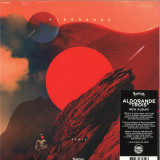
ALDORANDE is a band of five groove adventurers, led by their founder and captain Virgile Raffaëlli, who are pushing the boundaries of music with boundless passion and unparalleled instrumental mastery. After two critically acclaimed albums, the group returns with Trois, the final chapter of their cosmic trilogy, recorded on tape at a prestigious Parisian studio.
Trois is an epic album, driven by bold instrumental explorations and waves of celestial choirs. Drawing inspiration from the 70s fusion movement, it honors the genre’s masters while adding a unique, contemporary twist. The galactic textures and sophisticated arrangements transport the listener on an unforgettable astral journey.
Once again, Favorite Recordings has poured its heart and soul into this album. Every note, every arrangement has been meticulously crafted to capture the essence of that era, with a relentless drive to ensure that every step of production and recording stays as true as possible to the genre’s iconic references.
On drums, Mathieu Edouard lays down a killer groove that leaves no one indifferent. Florian Pellissier, on keyboards, unfolds an interstellar sound palette with a spectacular collection of instruments: Fender Rhodes, Yamaha CP-70B, Moog Minimoog Model D, Sequential Prophet 5, ARP Solina String Ensemble, Roland Juno 106, Roland Jupiter 8, and Oberheim OB-8. On percussion, Erwan Loeffel scatters a jungle of intoxicating rhythms. Laurent Guillet, on guitar, fires off hypnotic, irresistible riffs, while Virgile Raffaëlli, on bass, anchors the entire experience with deep, melodic bass lines that give the band a captivating and unique dimension.
Get ready to take off with ALDORANDE and their album Trois, which promises to take you beyond the stars.
Закажите сейчас, и мы закажем товар для вас у нашего поставщика.

Corrosiv, the sophomore album from Orchestroll, reveals the duo at their most mature and vulnerable. Originally conceived as a reflection on hybridity and bastardization, the album deploys New Age and ambient compositional tropes as a launchpad, exposing their trite sanctity to the realities of corrosion. Having come of age in the 1970s and 1980s, the New Age movement perdures today as a domain of contradictions; its promise of transcendence riddled with the very commercialized dogma from which its adherents claim to flee. Healing modalities such as reiki, crystal therapy, and sound baths are simultaneously pathways to solace and sites of exploitation; their sonic counterparts—ethereal synth pads, shimmering textures, celestial drones—claim to facilitate meditation and enlightenment while devolving into empty signifiers of vitality. With Corrosiv, Orchestroll displays neither reverence nor disdain toward New Age: they exhume it instead, revealing the saccharine effervescence and commodified murk undergirding its aesthetics. The result is intoxicating—disquieting.
Born from a two-week residency at EMS Studios and expanded through a performance at MUTEK Montreal’s 25th anniversary, Corrosiv has since outgrown its original conceptual nucleus, taking on a broader scope. Its inquiry into New Age ideology’s voided rhetoric and aesthetic mysticism now informs a broader interrogation of cultural mediocrity, anti-authoritarianism, gatekeeping, music industry toxicity, and the crumbling edifice of late capitalism and techno-feudalism—all the mechanisms by which meaning is stripped from ceremony, and once-potent forms of knowledge are subsumed into the machinery of economic extraction, severed from their original essence, and transformed into hollow simulacra. Corrosiv distills these themes through a loose narrative: a soul, fixated on wellness as dictated by cosmetic economism, becomes ensnared in an endless afterlife, unable to transcend and shed its dilapidated consciousness.
Framed as an act of audio dissolution, the album thus engages in an alchemical process, whereby complex waveshaping, morphing synthesis, and distortion enact a ritual of fragmentation. There is also friction: between the rigid, mechanical imposition of systematized order and the untamed, chaotic force of organic metamorphosis. Here corrosion and confinement are not solely conceptual motifs; they are enacted in real time, sculpting the album’s terrain. Scraping, tarnishing, degradation—the languid wear of form and substance—become instruments in their own right: buffing as abrasion, entrapment as transformation, corrosion as a means of reconfiguration. The ‘protagonist,’ if there must be one, is the listener, caught within the throes of structural determinism and the potential for emancipation, unable to pass into something greater as the specters of collapsed futures accumulate in the margins.
Corrosiv extends its reach through collaborations with familiar voices: Heith (PAN), VISIO (Haunter), Femminielli (Drowned by Locals), Habib Bardi (Interzone), and Jiyoung Wi (Enmossed, Psychic Liberation, Doyenne) each leave their imprint on its sprawling landscape. At 1h16m, it is a procession, dense with earworms that burrow into the listener’s unconscious.
Misshapen, broken-down metals leach copper into blood, acid reflux burning through the core. Psyche disaggregates into cosmic turmoil, drifting between planes—tongue on rustline, gullet laced with solvent hymns, molars unlatching, bitcrushed to marrowspill. A spasm of brine, ferrous scripture, venomtext blooming in leaden rivulets, cartilage smoldering in phosphor decomposition, synapses drowning in a quicksilver choir. Crest of bile, churning ore, breath clotting into arsenic mist, vein-thread cinched, a corrosive gospel, limb by limb, oxidized to silence.
Ultimately, as the music exhales its final breath, its residue refuses to dissipate—and stillness alone remains. There are no conclusions here—no resolution, no collapse—only the slow drift outward of a vessel unmoored, lost in the sea of symbolic souring. Corrosiv sings the song of a world barren of prophecy, littered with aesthetic detritus. Whether this magic has been transfigured or simply worn away is unclear: the last breath dissipates, but the oxidation does not stop. The silence, too, will decay.
Conceptualized, composed, performed, recorded, mixed, engineered and produced by Jesse Osborne-Lanthier, and Asaël Richard-Robitaille in 2023 and 2024 at Elektron Musik Studion (EMS) - Stockholm, Sweden and Landsc8pe Studio - Montréal, QC, Canada.
Artwork by Jesse Osborne-Lanthier.
Mastered by Stephan Mathieu @ Schwebung Mastering.
он должен быть опубликован на 02.06.2025

CINEMATIC VOYAGE THROUGH COSMIC RITUAL AND ETERNAL SOUND - a work that exists outside time—equally at home in the temples of antiquity and the neon-lit voids of speculative futures, merging ceremonial percussion, interstellar synthwaves, and wordless incantations into a 31-minute ritual for the infinite. Born from a three-year metamorphosis between studio and stage and rooted in a Takhmira (a Zar ritual poem), Ninety Nine Eyes channels the archetypal quest—a search for the “land where light is seated.” Its soundscapes evoke the grandeur of forgotten civilizations and the hum of celestial machinery: droning mizmar lines and drowning tombak and duff rhythms dissolve into maximalist synth storms; choirs of phantom voices rise like starlight through the static of ages. - Sound: Structured like a Sufi Hadra, the LP’s undulating peaks pull at old ways of communing with the divine - Part I builds tension, a breath before the storm, while Part II erupts into unfettered synth-drenched trance, gates flung open - only the listener can close the circle through their own interpretation.- For fans of Vangelis’ Blade Runner, Jon Hassell’s Fourth World, Alice Coltrane’s spiritual jazz, Autechre’s glitch rituals, and Pauline Oliveros’ deep listening.- Production: Mixed by VII, mastered by Heba Kadry (Björk, Ryuichi Sakamoto).- Artwork: Features a portrait of Yunis by Cairo underground photographer Kafrawy and hand-sewn costume design by Alaa Eideh, with graphic design by Giovanni Murolo (Countersubject). EU Tour spring 25
Закажите сейчас, и мы закажем товар для вас у нашего поставщика.

Vintage house and disco don Dave Lee knows a thing or two about serving up irresistible and timeless cuts and that's what he does here with the 24th instalment of the long-running Attack The Dancefloor series on his own Z Records. The man himself kicks off with Maurissa Rose on the loosely chugging, deep and soulful 'Open Me Up' (a first taste of the upcoming album together). He then slips into US garage style with his popular remix of The Trammps' 'I've Gotta Stand Up' that harks back to the glory days of 90s Soulful House. Felix Buxton's Celestial Being & Citizens Of The World Choir's 'Raise The Vibration' gets a gloriously sunny and positive Crackazat club mix before Lee closes the release with squelching synth in the form of his Boogified mix of Soul Dhamma's classic 'Flower.'
Закажите сейчас, и мы закажем товар для вас у нашего поставщика.

One of Europe's most popular alternative / dark wave bands. Lebanon Hanover have over one million monthly listeners on Spotify. Following their first US tour in over a decade, Lebanon Hanover returns with a soul-stirring double A-side single release, marking their first new material since the captivating 2020 album, 'Sci-Fi Sky.' Now, the enigmatic duo of William Maybelline and Larissa Iceglass beckons listeners into unventured sonic domains, intricately weaving folk-driven acoustic dream pop with the vulnerable essence of post-punk in a contemplative exploration of life's ephemeral yet profound nature. Embarking on a Cure-like sonic voyage reminiscent of the 'Head on the Door' and the 'Kiss Me' era, title track 'Better Than Going Under' manifests as a romantic, sombre daydream. William Maybelline's brooding baritone intertwines with sighing back vocals, narrating an ode to life's fleeting yet boundless vistas. The acoustic strums initiate a folk-driven narrative which, when coupled with a celestial choir, crafts a contemplative soundscape of cautious optimism, reminiscent of Echo and the Bunnymen or The Church.. KYIV: Bearing the name of Ukraine's capital, 'KYIV,' voiced by Larissa Iceglass, delves into a narrative reflective of the sorrow and despair entwined within war-torn regions like Ukraine and beyond. The acoustic guitar and drum machine create a Cocteau Twins' 'Treasure'-esque soundscape, evoking a melancholic yet beautiful auditory journey. Iceglass's voice, transitioning from her husky baritone to a more resigned lament, embodies a poignant reflection on the harsh realities faced by those embroiled in conflict-ridden landscap
он должен быть опубликован на 09.02.2024

Martha and Jessica Kilpatrick (aka Waterbaby) had a creative upbringing in South London – spending their days singing in Southwark Cathedral Choir or experimenting with recording ideas onto cassette tapes, such as trying to make their out-of-tune family piano and a flute sound like an electric guitar. Eventually settling together in an attic flat in Peckham, the sisters became quiet, mystical forces in the underground London scene, emerging in and out of the sanctuary of their studio to perform their hypnotic live show with artists as varied as Kedr Livansky, James K, TAAHLIAH, and Dorian Electra. The sisters’ insular and feminine sonic world showcases inventive song structures backed by dizzying layers of production – all crafted on their stash of lost & found analogue gear in their South East London studio, squashed between Hyperdub’s headquarters and a mechanic’s garage. In a world where the analogue and the digital seem to be in constant headlock, Waterbaby effortlessly solve the equation – operating in a space where Cocteau Twins-esque anachronism meets the sharper edge of contemporary experimental electronica. Press: “The 10-track album is a window into the duo’s alternate reality, where folklore and mysticism blend together to create a kaleidoscopic dreamworld of experimental electronica." – Dazed “The sisters often go to magical places with their celestial compositions … Across the album’s 10 tracks, there’s a great deal of artistic ambition within the arrangements.” - Loud & Quiet "Like a distorted transmission from somewhere out of time, Waterbaby serve as our conduits, lightning rods for pop music and art of a more mystical variety." - Fact Mag "Their long-awaited debut 22° Halo' locates their sound somewhere between the nebulous chamber pop of Cocteau Twins, the meticulous synths of Air, and the speculative electronics of Arca or Oneohtrix Point Never
он должен быть опубликован на 27.11.2023

The music heard on this album was originally the result of a commission to score the second half of the film Nico/Nico Crying made by Andy Warhol in 1966. The commission was made by Art Cinema OFFoff in collaboration with B.A.A.D.M for a screening of the film together with a live presentation of the score in September 2021 at Ancienne Belgique in Brussels. The recording presented here was made in the last week of that year and mixed soon after in January 2022. These recordings are essentially live-recordings performed by the composers together in the same room and recorded in a manner reminiscent of the record making process as it was in the late 1960s. The instrumentation used to make the sounds on this album consists of modular synthesis, zither, voice, contaminated field recordings and metal percussion.
Mats Erlandsson is a composer and musician part of the vibrantly re-emerging field of drone music in Stockholm, Sweden, and is associated with practices characterized by the extensive use of sustained sound. Erlandsson presents his work both as a solo artist and in collaborations, most notably together with Yair Elazar Glotman and Maria W Horn. Recent releases include Gyttjans Topografi on XKatedral, Minnesmärke on Hallow Ground and the collaboration Emanate made with Yair Elazar Glotman on the label 13070. In addition to his own artistic practice Erlandsson holds a position as studio technician and was temporarily, from October 2022 to September 2023, the acting studio director at Elektronmusikstudion in Stockholm.
The compositions of Maria W Horn implement synthetic sound, electroacoustic and acoustic instruments and audiovisual components, often devicing generative and algorithmic processes to control timbre, tuning and texture. She employs a varied instrumentation ranging from analog synthesizers to choir, string instruments, pipe organ and various chamber music formats. Acoustic instruments are often paired with digital synthesis techniques, in order to extend the instruments timbral capacities. Often based on minimalist structures, her music explores the inherent spectral properties of sound and their ability to transcend time and space, reality and dream.
Закажите сейчас, и мы закажем товар для вас у нашего поставщика.

After an exceptionally long year full of personal change and near manic levels of creative activity, Canadian musician Devin Townsend releases his follow up to 2019’s acclaimed ‘Empath’ album. Assembled from a barrage of material written during the pandemic ‘Lightwork’ represents a new level,and has ended up being one of the most accessible, yet ambitious releases of his storied career. A project that has been on Devin’s mind since he was a teen, (and flirted with throughout his career) is a more melodic and direct album with a great producer to help guide the work. Enter Garth Richardson: A Vancouver based producer with a long resume and a friend of Devin’s for many years. And the goal? To provide something beautiful, cathartic, powerful and clear. A sense of optimism and power through what can be commonly known as a ‘depressing period’. Its about strength, love, acceptance, fear, and overcoming together. Guests on the record include friends and stalwarts from his past (Anneke Van Giersbergen, Ché Aimee Dorval, Morgan Agren, Mike Keneally, Steve Vai, Elektra Women’s Choir) as well as some newer friends and faces (Darby Todd, Diego Tejeida, Nathan Navarro, Federico Paulovich, Jonas Hellborg). Available as Ltd Deluxe Orange 3LP+2CD+Blu-ray, Ltd Deluxe 2CD+Blu-ray Artbook & Ltd 2CD Digipak – all including the companion album ‘Nightwork’. Also available as standalone Gatefold 2LP+CD, Standard CD Jewelcase & Digital Album.
он должен быть опубликован на 28.10.2022

After an exceptionally long year full of personal change and near manic levels of creative activity, Canadian musician Devin Townsend releases his follow up to 2019’s acclaimed ‘Empath’ album. Assembled from a barrage of material written during the pandemic ‘Lightwork’ represents a new level,and has ended up being one of the most accessible, yet ambitious releases of his storied career. A project that has been on Devin’s mind since he was a teen, (and flirted with throughout his career) is a more melodic and direct album with a great producer to help guide the work. Enter Garth Richardson: A Vancouver based producer with a long resume and a friend of Devin’s for many years. And the goal? To provide something beautiful, cathartic, powerful and clear. A sense of optimism and power through what can be commonly known as a ‘depressing period’. Its about strength, love, acceptance, fear, and overcoming together. Guests on the record include friends and stalwarts from his past (Anneke Van Giersbergen, Ché Aimee Dorval, Morgan Agren, Mike Keneally, Steve Vai, Elektra Women’s Choir) as well as some newer friends and faces (Darby Todd, Diego Tejeida, Nathan Navarro, Federico Paulovich, Jonas Hellborg). Available as Ltd Deluxe Orange 3LP+2CD+Blu-ray, Ltd Deluxe 2CD+Blu-ray Artbook & Ltd 2CD Digipak – all including the companion album ‘Nightwork’. Also available as standalone Gatefold 2LP+CD, Standard CD Jewelcase & Digital Album.
он должен быть опубликован на 28.10.2022

Having initially met more than a decade ago at a local community radio station, sometimes doing guest slots on each other’s live, improvised noise shows, Cormac Culkeen and Dave Grenon knew they had a mutual interest in working with sonic textures. They listened to each other’s bands for a handful of years, and in 2017, “made good on a threat” that they’d been making for quite a long time: to start a band. At Cormac’s gentle but clear urging—declaring that they’d gone ahead and booked a space in which to record a video—the two wrote their first song, “Sebaldus,” an ambitious 12-minute trip, which also serves as the fireworks finale to their self-titled debut album. With surges of pathos that smooth out into something more soothing in turn, Cormac goes: “The hunter, you’ve seen him / The archer, his arrows are strong / And hunger, you’ve known her / I know the winter is long.” The track is as much about enduring a Canadian winter as it is about the eponymous 8th century hermit, shot through with sublimated desire. As Cormac put it, Joyful Joyful’s songs are “a little bit outside of time.” But while the lyrics beg close, oblique reading unto themselves, there’s also a distinct sense that they’re only one of many more ways that the duo shapes sound. Cormac, whose voice is like a sea with irregular tides, lights up about an idea in traditional sean-nós Irish music that songs already exist and are out there; it’s up to the singer to become the conduit. This belief in music as something to be channelled, and something more than sound, resonates with the singer’s fundamentalist religious past. To paraphrase: lots of group singing, harmonies, no instrumentation, totally unmediated, no priest, congregational—not choral, not a performance, not about talent, the spirit moves through people. “Of course that informs how I think about singing,” Cormac says. So, when they were exiled from the church because of their queerness, they took the music with them, dislocating it from its dogmatic bounds but not from its transcendent potential. This record might be thought of, then, as a kind of queering of sacred, devotional traditions—or at the very least, a space where all of these things can be held at once. Perhaps perceivable by some as contradictions, these intersecting influences create the conditions for an incredibly singular sound. Dave is steady and exploratory in his handling of this multiplicity, arranging sounds as they’re revealed, corralling them, coaxing them into form. “Because Dave is there,” Cormac says, “I get to sing three times higher, and three times lower, and faster, and backwards, and all of these sounds! That are there. They’re all there.” When asked about early musical memories, Cormac recalled an immediate fascination with harmony: from demanding that the first person they ever heard singing it explain what they were doing, to always (still, to this day) singing in harmony with their twin sister around the house, to being part of a children’s choir that sang soprano in Handel’s Messiah—not realizing until they entered the room with all the other ranges that their learned melody was but one part of the whole. Just as tellingly, Dave reflects on his early attraction to “abstraction and becoming abstract,” describing childhood afternoons messing with microphone and speaker feedback loops, producing long, enduring sounds with almost undetectable variations. In a way unique to the coalescing of these two listeners, notions of harmony are central to their output. Dave samples field recordings, old keyboards and synths, and vocal drones, running the live singing through four or five parallel effects chains, sampling and treating everything again in the moment. “Another way to put it is that Cormac’s voice comes into the board and then comes back out shifted, delayed, and shattered; Cormac and I hear it, live with it, and respond,” Dave says. This work is contingent not only on a deep intuition (neither of them read sheet music) of polyphony and due proportion (something St Thomas Aquinas famously listed as an attribute of beauty) but also on their connection to each other and ability to read subtle cues. Dave says they’d hold each other’s hands while performing if it was more convenient to do so, riffing on something else Cormac mentioned about traditional Irish singing: that someone would always hold the singer’s hand, for fear that without a tether to the ground they might find themselves utterly lost, unsure how to return. Joyful Joyful doesn’t shy away from offering such experiences of departure; they’re willing to unsettle their audiences because they themselves are unsettled. Their shared penchant for spooky, heavy music, and self-described “omnivorous” listening practices equip them with an array of sonic concepts that support this effort; Diamanda Galás, The Rankin Family, Pan Sonic, Pauline Oliveros, Keith Fullerton Whitman, Yma Sumac, and Catholic hymnody were just a few that came up. Observing their audience gives them insight about the effect of each song—something they considered while arranging the album. Its arc is marked by soft, sometimes sudden oscillations between cacophony and euphony, day and night (listen for insects), and from sexual, visceral entanglements to more ephemeral, celestial ones. Front to back, it arouses expansion, unraveling. Of lightning, Vicki Kirby writes: “quite curious initiation rites precede these electrical encounters. An intriguing communication, a sort of stuttering chatter between the ground and the sky, appears to anticipate the actual stroke.” By all accounts, something similar seems to happen at Joyful Joyful shows, between those on the stage and those off it, between what’s earthly and what’s beyond. “A lightning bolt is not a straightforward resolution of the buildup of a charge difference between the earth and a cloud … there is, as it were, some kind of nonlocal communication effected between the two,” writes Karen Barad, extrapolating on Kirby’s thought. Cormac acknowledges that while they and Dave play a role in this mysterious charge that comes about, they’re not solely responsible. However ineffable it may be, it’s undoubtedly a form of communion—and a sensuously shocking one at that
он должен быть опубликован на 10.06.2022

After more than a year of strengthening our bodies through workout, our poetic endeavors via the discovery of our inner worlds, and also the life of plants and mushrooms, insects, arachnids, birds and wild mammals, after a year and a half that saw us in lockdown, shattered around the planet, after one a and a half year in which we deepened our production skills and also the meaningfulness of our work, Cómeme returns to a new planet with new music.
The beginning is this unique collaboration between Medellín based musician and DJ Julianna, and Matias Aguayo aka “The Don” himself.
In this deep therapeutical exploration of rhythm and sound, these artists established a magical dialogue on distance, leading up to this EP called “Que si el mundo”, roughly translated: “What if the world”.
Between soulful industrial expressions, emotional breakdowns but also discoveries free of any grids and algorithms, Julianna and Aguayo have created a beautiful piece of work, intense as the movements that we had to experience mentally and economically. “Que si el mundo” is state of the art electronic music of today, a work that is both introspective but also extremely open to the outside world and the universe. Compositions reminiscent of Coil, Angelo Badalamenti, Closer Musik, Steve Pointdexter or Mark Broom, shaped this EP that can be considered a short album in its conceptual layout and narrative. Let’s dive into it...
A1. Hiedra
One of the more danceable tunes, ideal for both a sensual warmup or the very late night to the rising sun sensitivity, is polyrhythmical melancholy and hypnotic inevitability, slow dance, deep trance.
A2. Primer Paso
A fat, slick and modern synth sequence, accompanied by heavy drumming and celestial drops that seem to fall onto the body of the listener or dancer, this post EBM stomper is a manifestation of elegant minimalism and reason. As if Liaisons Dangereuses reincarnated in a cloudy forest, to then pause towards the end of the track, with sentimental and gloomy synth chords that open the view towards the horizon.
B1. Que Si El Mundo
The title track keeps up the more melodic approach - somewhere between ambient, avant- garde and late night jazz. Morphing melodies that are both disturbing and soothing at a time encounter smooth free jazz drumming with drums that seem to have travelled from the sixties to today’s world.
B2. Bajo Tierra
This track continues the deep drumming experience that this record means, between laid back rides and intense taikoesque drumming. Distorted dark pads and subterranean choirs build up to a heavy sadness and intensity. Again, a therapeutical track to send those demons fly.
B3. Micelio
A more hopeful conclusion of the EP is “Micelio”. Open chords, soothing and melancholic, spread over profound drum grooves of champed and house. Nothing seems as it was before. A new life has begun.
Закажите сейчас, и мы закажем товар для вас у нашего поставщика.

"First Noel is a Christmas album including 25 of the greatest classics as well as three exclusive new tracks I composed especially for the very first Christmas of my son, and in honor of my grandma Odette's last one, past year. The Christmas memories I have are full of wonderful moments, so I insisted on recording this album staying true to the magic of these instants.
First thing, I surrounded myself with 3 great friends of mine and long-time collaborators: François Delporte (guitar), Frank Woeste (piano) and Sofi Jeannin (choirmaster). Sofi has selected 8 singers with celestial, sublime voices. We recorded in two magical places: the studio of my friend Armand Amar - where I had the chance to work on my first albums (Babel Studios in Montreuil) - and the Church of Saint-Julien-le-Pauvre. The latter being the most ancient church in Paris - only a few meters away from the Notre-Dame Cathedral - has always been at the center of significant moments in our family history in France. My father was a sacristan there in the '60s. It is in the sacristy that he elaborated and worked on his trumpeter career. My aunt Hind - whom I loved - also a pianist, and my beloved grandmother, Odette, both had their funeral in this church. It is also in this same church that I got engaged and married… So many milestones.
After recording many albums, I felt it was the right time for me to share my versions of those great Christmas classics, by giving them a much less childish dimension and a more musical, also spiritual one, but still preserving their subtle and necessary fragility, specific of children's music or of those great classics renowned and sang all over the world. I was hoping that First Noel would not be yet "another" Christmas album, with Frank Sinatra-like crooners and Hollywood-style arrangements. Instead, a simple, humble, instrumental album, in the original meaning, without lyrics, allowing the melody to be at the center of it all. Soothing music to dream, to reunite us, regardless of our mother tongue, our age, our culture and more importantly regardless of our religion.
That is how Odette viewed things, and this is also the way I wish Nael and Lily, my children, would listen to the world."
он должен быть опубликован на 12.11.2021

A1 is that classic Nebraska “This Is The Way” vibe; warm, atmospheric, sample-heavy 21st century disco with a truly euphoric build and release. A2 revises that first tune in a more tripped-out excursion. Both B-side tracks feature a French spoken-word vocal from BeBelle. “Fuis” is a blissed-out slow jam, whilst “Espace Fuis” picks the tempo back up again, adding a celestial choir and a fritzed-out arpeggiator solo.
Закажите сейчас, и мы закажем товар для вас у нашего поставщика.
