Buscar:casio love

Estilos
Todo
UNDO & CASIOWAVES - CHEMICAL EYES EP

UNDO & CASIOWAVES

CHEMICAL EYES EP

12inchMELOD022
Melodize
03.07.2026

Undo & Casiowaves join forces to bend minds on their new EP “Chemical Eyes”. The Catalonian pairing, collaborators for the past five years, have built a body of work that’s conceptually rich and sonically sophisticated. The “Chemical Eyes” EP is a love letter to analog synths, taking us on a psychedelic trip through past and present, nostalgic but never mimetic.

Reality begins to warp the moment “Chemical Eyes” kicks in. The title track opens in post-punk territory, leaning into nostalgia both lyrically and sonically and with synth outro that lingers like a memory.

Parisian producer Chloé’s remix takes us firmly into the 21st century, chopping up the title track until it mutates into something more minimal and syncopated. This electronic take still retains the track’s post-punk mood, with contemplative loops and reverb-drenched guitar as we begin to move from the concert venue into the club.

B side “Trumpsky Beats” picks up the pace with neon-soaked synthwave that references the 80s synthpop icons in more than just name. Crisp, shimmering synths dance through warped bass lines and new wave drum patterns, creating a lush contrapuntal soundscape that thrives as much on nostalgic memory as it does on contemporary creativity.

Italo Brutalo’s remix amps up the intensity further with infectious snares and acid twangs. The German producer and synth enthusiast adds a tasteful complexity that pulls the EP fully onto the dancefloor.

Reservar03.07.2026

debe ser publicado en 03.07.2026

LEE TRACY & ISAAC MANNING - IS IT WHAT YOU WANT?

The rarest and best genuinely outsider soul 45 to come out of America (I know that's a controversial shout), Lee Tracy's super rare single outing from the outskirts of Nashville is a dream of something bigger that never came in time for him. A beautiful, haunting song cut to cassette with help from his friend Isaac Manning (on the Casio). Flipped with an almost unrecognizable version of Whitney Houston's hit "Saving All My Love For You" which stands all tall as what was the original B-Side. Beyond essential cut of outside soul.

Disponible

En el almacen y preparando para el envío

José Cabrera - Le Bateleur LP 2x12"

Accomplished Spanish artist José Cabrera enters a fresh creative chapter with the new album Le Bateleur. The storytelling and hugely personal record arrives on his own A Harmless Deed label and is a deep dive into the house music he has always loved.

Over the last two decades and under several aliases, Madrid- born Cabrera established himself as a leading techno producer. He has released on influential labels like Fred P's Soul People Music, Tresor, Deeply Rooted and Ron Moreli`s' L.I.E.S. records and co-runs A Harmless Deed with friend Damian Schwartz. As a DJ he has toured Europe, Asia, North and South America and proven himself to be an experimental DJ with a long-standing residency at Tresor in Berlin.

When the pandemic hit in 2020, Cabrera felt detached from the techno world so used his time at home to explore new sounds. He has always had a love of house so set work on making a proper house record in the mold of greats who went before. He worked with other musicians and vocalists, made use of an array of Roland drum machines, Juno synths and Casio keys to cook up a raw and authentic sound and drew from a wide range of the back music that has soundtracked his life. The resulting album is packed with life and energy, skits from friends and timeless grooves.

The album opens up with cosmic synths radiating warmth and jazzy melodies then 'Endless Dream' is a steamy house thumper with aching r&b vocal fragments next to swirling pads. It's a passionate house cut followed by 'Live Your Life' feat Jae. This one brings classic piano energy and another gorgeous female vocal that explores dancers to cut loose and live. Following a dusty downbeat skit that features spoken word encouragement from former collaborator Fred P, 'Track For Clau' is hyper-speed future house with bumping kicks and busy synth arps bringing the light.

A prog rock guitar rings out in the cosmos during 'K-Brain Tribute' feat. NBlue and Damian Schwartz, and 'I Thought You Were the One' feat. Jae & Persa layers up booming kicks and claps with a spine tingling vocal and fat bassline. 'RL Stadium 92' taps into classic Chicago house and 'Halftime Report (For Little José)' gets down and dirty with a menacing bassline and dusty 909 sounds. Another US house heavyweight in DJ Qu features on the atmospheric ''Friends and Family Skit' alongside some of Jose associates and 'For Princess L (I Love You)' feat Jae is an exquisite deep house cut with crisp snares and a heart swelling that is loved up and blissed out. Another skit leads into the outro which is a melancholic ambient synth excursion that sends you off feeling utterly calm.

Le Bateleur is another captivating entry into the ever-evolving discography of José Cabrera.

Disponible

En el almacen y preparando para el envío

FUTURE CHROMA - FUTURE CHROMA 2x12"

Ambient and cosmic synthesizer music duo Future Chroma sets out their debut full length album. In late 2019 Stiletti-Ana and Casio G Url were jamming out at their secret hide out studio in the middle of Southern Finland forests. Their arpeggiated and sequenced instruments were sounding so good that they could not resist capturing the moment and recording an album. Finalizing a timeless piece of synthesizer music took longer than they expected and finally the album sees the daylight. Lovely melodies and heavenly arpeggios topped with piano and percussions is a recipe for the record’s musical texture that you can keep on looping in your stereo.

Disponible

En el almacen y preparando para el envío

Christian Love Forum - Naked Light

Featuring music from a lost tape of devotional keyboard jams, field recordings of migrating birds, mysterious bells, meditative noise and crooked new beat/EBM, made god-knows-when and subsequently discovered in a Thessaloniki charity shop years later. It now somehow finds its way to vinyl, newly mastered by Rashad Becker, and sounding like a lost Hype Williams x Muslimgauze madness.

Originally discovered in a musty charity shop by Live Adult Entertainment, and issued in minuscule numbers on CD in ’21, Christian Love Forum’s raverential debut ‘Naked Light’ documents the fraternal post-church jams of siblings, Scott, Kiro and N•X, plus their mate Steve, who would regularly channel the light and pain of Sunday mass sermons into their ecclesiastic crud.

As previously heard on their blink ’n miss ‘Unconditional Love’ tape, the trio express their higher purpose thru ribboning microtonal keyboard jams that sound like Gurdjieff with a Casio and a knackered drum machine after too much sacramental wine. They hit the strangest, most affective seam of religious cinematic epic soundtracks, gnarled noise and clandestine Belgian new beat that seriously pushes our buttons, sounding quite unlike anything in the contemporary sphere, but eerily also echoing sentiments explored on record by James Leyland Kirby or Bryn Jones.

Now reshuffled and clad in custom artwork, ‘Naked Light’ is unveiled to believers and skeptics as a definitive article of faith. The lord works in mysterious ways within, manifest in stages of sun-bleached post-church field recordings, whirligig melodies, blown-out bouzouki and choral tape howls and a Béla Tarr soundtrack-like campanology on the A-side, before letting their passions flow in ‘Wicked City (Parts I-IV)’; a spellbinding side-long collage of slurred synths, neo-noir hardbeat rhythms and speaking-in-tongues vox recalling V/Vm’s new beat apocrypha as much as bits from Hype Williams’ hypnagogic ‘One Nation’, thee dustiest gooches of Dirk Desaever’s archive, or even aspects of Rat Heart at his cruddiest.

‘Naked Light’ rarely fails to induce uncontrolled eye movement in susceptible skulls, destined to become an occult hit with lapsed churchgoers, new beat fiends and anyone missing the enigma and ineffable flavour of ‘00s underground noise tapes in this auspicious year of AD2023.

Disponible

En el almacen y preparando para el envío

Julien Gasc - Re Eff LP

Julien Gasc

Re Eff LP

12inchCD002
Corps Double
16.09.2022

Originally Re Eff (pronounced Ri Èf) was a bunch of texts. One hundred and fifty pages that Julien Gasc wrote by trying his hand at the art of cut-up: a literary and political act of counter-fiction based on William Burroughs’s method. It was also Julien Gasc’s response to the isolation of 2020, while he was seeking refuge in the Southwest of France, with time as far as the eye could see, and a piano.

For a long while, it hadn’t been about songs, but about expressing the indescribable by cutting randomly from books and his own notes, attempting to fleetingly strike a balance, find a beauty, a happy accident. Incidentally, it was almost by accident, while recycling a piece that he’d composed for steel guitar pedal, that Julien Gasc sketched the first draft of “Ce soir les bouteilles dansent” (“Tonight the Bottles Are Dancing”). This was combined with a version of “Rosario Bléfari”, recorded on an inexpensive Casio synthesizer. These were Re Eff’s baby steps.

While everything was at a standstill, in stasis, Julien Gasc wanted to send a group message to some friends, to his family, a message from a confinee to those who weren’t answering, friend or foe, imaginary or otherwise. It was this collective recipient that he nicknamed Re Eff. The name comes from “re” (re-) and “effacer” (erase), words found during a cut-up and transformed into ri èf for added euphony, like a facetious grief (grievance, reproach in French) without the “g”.

Like its title, a kind of serious joke, the album is one long interplay between humour and gravitas, sense and nonsense, shadow and light, aiming to fully describe feelings in terms of their ambiguous and contradictory elements.

Through a return to regular piano practice, calm recovered at a holiday resort town, and literary experimentations, to which he added transcribed dreams, as in “La scie de la vision modern” (“The Saw of Modern Vision”), Julien Gasc composed ten demos on his computer. These demos were then rerecorded at Syd Kemp’s Haha Sound studio in London, in December 2021. The mix was completed there again, in February 2022, by Syd and Julian.

Play to play and write to write, those are the keywords of Re Eff, in which memories are freely combined (“À travers le regard de l’indienne” / “Through the Amazon’s Eyes”), the theme of enclosure and passion (“Amour velours” / “Velvet Love”), melodrama ("Délivrance"), and romantic novella (“Tout ne peut pas nécessairement donner quelque chose” / “Not Everything Leads to Something”). Music resolutely oriented towards the piano, towards bold and filmic harmonic movements that make a successful form of lyrical poetry possible. Because all in all, by singing about current events – his own and those of the world – in an elegiac tone, like bards, Julien Gasc was gradually transformed from pop singer into poet.

Disponible

En el almacen y preparando para el envío

Wesenyeleh Mebreku - Resonance of Time

'Electronic lullabies and folk songs from Ethiopia! A landmark recording from Ethiopia’s vibrant cassette era of the 1980s, Resonance of Time features pioneering composer Wesenyeleh Mebreku reimagining Ethiopian folk melodies through the humble circuitry of an early Casiotone keyboard.
'Historically, the works featured on Resonance of Time (የጊዜ ቃና Yegizie Kana) stand as quiet documents of Ethiopian musical memory. Many of the original songs included in this release emerged during important moments in Ethiopian history when music carried the collective emotion of the nation - love, loss, resistance, dignity, and hope. By arranging these pieces from Ethiopia’s musical heritage instrumentally, Wesenyeleh Mebreku aimed to preserve their essence while protecting them from being confined to a single era or performance style. In doing so, his preservation of Ethiopia’s musical heritage became a contribution to his country’s musical legacy itself, as Resonance of Time serves as an important musical milestone of this composer’s innovative recordings and musical developments in the prolific era of Ethiopia’s 1980s cassette tape culture.
'On Resonance of Time, Wesenyeleh made use of the first Casio electronic keyboard - the Casiotone CT-201 - to arrange and perform Ethiopian folk songs in his own unique style. Implementing the soulful, lo-fi character of the keyboard, Wesenyeleh’s interpretations of these works take on a life of their own. Charming analog tones interpret swirling sounds of organ and piano in kignit modality to the beat of a nostalgic rhythm machine while twinkling synthesizer sounds carry the melodies drifting out of time. The recordings reflect a watershed moment in Ethiopian musical history - when traditional melodies started being interpreted on electronic keyboards, and the advent of cassette tape recording allowed for music to be transmitted more accessibly than centuries-old oral traditions. During this time, Ethiopian musical modes were syncretized with new technology and budding musical experimentation, and Wesenyeleh’s interpretations on Resonance of Time are a landmark recording of this era, following in the tradition of reflecting upon and re-interpreting historical Ethiopian music for a new generation.
'Featured on the release are timeless Amharic folk songs and lullabies, Tigrinya love songs, Gurage and Oromifa popular songs, and even works closely associated with performers from Ethiopia’s 1970s popular music era such as Tiz Alegne Yetintu (ትዝ አለኝ የጥንቱ) which was famously performed by Tilahun Gessesse. Each piece, thoughtfully chosen by Wesenyeleh, is beautifully transformed into instrumental music of his own style - allowing these worlds of song to echo into the future while they are synthesized with the electronic innovations of the 1980s and Wesenyeleh’s own musical history.
'Wesenyeleh says this about his musical approach - ”Instrumental music, for me, is a space of reflection. Without words, the listener is invited to remember, imagine, and feel freely. In Resonance of Time, I hear my own musical philosophy: respect for Ethiopian kignit, careful dialogue with Western harmony, and a deep trust in melody as a storyteller.”
'Each piece performed on Resonance of Time speaks to a time when Ethiopian music was shaped by oral transmission through live performance and communal listening. In today’s fast-moving musical environment, revisiting these works is an act of cultural responsibility. These works remind us that melody once traveled slowly, settling deeply in the listener’s heart. The instrumental format allows these works to cross linguistic and generational boundaries, making them accessible to audiences who may not know the original lyrics but can still feel their spirit.
'Resonance of Time also reflects a broader historical dialogue: the meeting of tradition and adaptation. Ethiopian music has always evolved while holding onto its core identity. These arrangements affirm that evolution does not mean abandonment. Instead, it can be a form of safeguarding - ensuring that the musical wisdom of the past continues to resonate in the present and inspire the future.
'In this sense, the album is both personal and collective. It carries Wesenyeleh Mebreku’s own musical fingerprint, shaped by decades of practice, but it ultimately belongs to a wider cultural continuum. It is the artist’s contribution to keeping time audible so that memory, history, and sound may continue to speak to one another.'

Reservar30.05.2026

debe ser publicado en 30.05.2026

Lebanon Hanover - Besides The Abyss

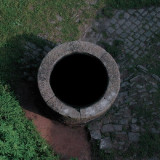
The album opens with the ominous guitar-driven Hollow Sky, accompanied by its haunting music video's verdant vistas. The song, with Iceglass ghostly vocals, shimmers with that sounds like an Omnichord flittering like sonic firefly lights and brooding bass. This perfectly scores the less traveled wanderings through the dark wooden path of Dante's perdition, leading to the titular well that graces the album cover. The Crater opens with an unsettling riff and bass, with low, repetitive frequencies on the synth create a sense of unease. Here, Iceglass recounts a fatalistic requiem for the king of romance that is cataclysmic and leaves a scar upon the earth. With Fall Industrial Wall, once again, Iceglass channels a silky and Nico-like emotive deadpan; against a dirgelike melody backed by minimal synth, bass, and drum. Almost medieval and plaintive, with its folk droning horns, deep and shallow in their resonance. This song is anachronistic, setting the scene of ruins centuries-old with crumbling edifices strewn about like memories lost in time. With the poetic lyrics of The Chamber do we find the eponymous abyss. Here, dualities are laid bare; besides love, there is heartbreak, and without this sorrow, what meaning would there be to love if one knows not what it is to lose? This song encapsulates the idea that love is heartbreak, and love lost is reaching the deepest chamber of the heart. This is carried through a sombre horn, minimalist drum machine, and deliberate bassline overlaid with Iceglass german and english lyrics. The Well is led in with a softly distorted bassline overlaid with eerie banshee howls give way to Iceglass otherworld vocal refrain, echoing through time as if emanating from a hole in the ground, and encircling that hole is a garden of woe and despair. The sinfully seductive song The Moor features a captivating SAX SOLO courtesy of Perseas; a welcome shift in tone, juxtaposed well with the intensity of Iceglass tenebrous vocal purr. This hitherto unexplored foray into dark sensuality takes the song into sordid mid 80s territory, bringing to mind a dusky drive along a serpentine road, with equally haunting instrumentations straddling time with icy fire. Broken Characters is an acoustic folk interlude featuring Selofan's Dimitris Pavlidis on guitar. Here we find a more gentle approach with its earnest and romantic lyrics. The song's melodic hook is a soft caress along with the forlorn horn elements highlighting Iceglass at her most Nico-sounding vocal yet, singing the sorrowful truth that most artists are indeed broken characters. Chimerical opens with dirgelike synth organs. The chill of winter has befallen the lamentations sung by Iceglass carried by haunting chord progressions and minimal percussion, plaintively beseeching the song's subject to remain elusive, idealistic, and a dreamer. After an album highlighting more Jill than Jack, our male protagonist finally makes his ascent in the sonorous and breathtaking Dark Hill, a masterful march of sweeping synth horns, and trepidatious drum machine with William Maybelline's bellowing voice cracking like thunder, rattling the atmosphere like his heart against his ribs. Spirals swirls in a cautionary knell of cathedral-esque droning synth dirge, with Icarian lyrics shining like a sombre ray of hope; like the sun's rays creeping into the darkest of places. The song, minimalist in its tight percussion, echoes with the solace of Larissa Iceglass vocal litany; invoking elements of the supernatural, almost like a Casio preset sequenced to the beating of an angel's wings.

Reservar03.04.2026

debe ser publicado en 03.04.2026

PSYCHOTROPIC - ONLY FOR THE HEADSTRONG

*includes insert

Timely reissue of Only for the Headstrong, the seminal 12” from UK duo Psychotropic, arriving this November. Originally released in 1990 at the height of the Acid House explosion, the track quickly became a defining moment in UK dance music—melding house, breakbeat, and psychedelic pop influences into something utterly timeless. Revered by DJs, collectors, and ravers alike, Headstrong is a euphoric, genre-blurring anthem that retains a raw innocence and hypnotic pull even 35 years on.

Psychotropic was formed by Gavin Mills, a rising DJ with a deep love of house and hip-hop, and Nick Nicely, a seasoned psych-pop experimentalist whose history included cult releases with Arista and EMI. The pair met during the fever pitch of late '80s rave culture—bonding over illegal warehouse parties, makeshift home studios, and a shared impulse to explore new sounds and styles. Crafted using an Akai S900 sampler, a Fostex 8-track, and a Casio CZ-101, Only for the Headstrong emerged from Nicely’s South London home studio in a single inspired session, its unforgettable loops and soaring keys capturing both the chaos and euphoria of the era.

The track, and the Prince-style groove of B-side Out of Your Head, became underground hits, reaching the top of London’s independent record store charts and cementing Psychotropic’s reputation for marrying psychedelic sonic textures with club-ready grooves. Their sound stood out—rooted in DIY experimentation but elevated by emotional depth and melodic flair. Mills and Nicely’s unique chemistry would spawn further club classics like Hypnosis, Psychosis, and Feel Surreal, before diverging into solo paths in the mid-90s. Despite parting ways creatively, the duo has remained close friends, occasionally reuniting for remixes and digital reissues.
Now, in 2025, Only for the Headstrong returns to vinyl in its full analog glory—remastered and recontextualized for a new generation. With freshly penned liner notes by Nic Nicely, this nostalgic reissue captures the raw, open-minded energy of a pivotal moment in UK dance music and reconnects us with the heady, DIY spirit of early rave culture.

No en stock

Haga su pedido ahora y le encargaremos el artículo en nuestro proveedor.


Ültimo hace: 3 Meses
STEF KAMIL CARLENS - BO WHO YOU WANNA BE LP

STEF KAMIL CARLENS

BO WHO YOU WANNA BE LP

12inchSMR449
STARMAN Records
12.09.2025

The song sets the tone of this album. A simple structure, over which a web of rhythm is woven using an instrumentation of old drum machines in dialogue with live drums and percussion. Lots of sax, tenor and baritone! A pumping bass. A frisky pizzicato violin. And some classic keyboards: the Fender Rhodes, the Hohner Clavinette D6, the L-100 Hammond organ. And lots of analogue synthesisers: a rippling Juno-106 marks the path to follow, which is crossed with phrases from other museum pieces: Crumar's Stratus, Farfisa's Synthorchestra, Sequential's Prophet-10. Or still the Casio Club M-100, which is basically a toy, but has been subtly colouring SKC's songs for years!

SKC has often dived deep into the repertoire of artists he holds in high esteem, looking for pearls, forgotten or not, to work on. Likewise on this album with versions of songs by Prince, Dez Mona, Alain Bashung…

Reservar12.09.2025

debe ser publicado en 12.09.2025

Yeyo Perez - King Inna Di Ring / Burning In Flames

Cool Up Records is excited to launch its latest 12" Maxi single with Spanish singer Yeyo Perez, featuring two tracks that each come in two versions. This Digital Reggae vinyl, titled "King inna di Ring/Burning in Flames," exemplifies authentic deejay style on the mic, infused with a rich homage to foundational Jamaican MCs.

On the A-side, "King inna di Ring" delivers a dynamic song powered by a powerful bassline and sharp lyrics. Yeyo Perez demonstrates his vocal talent and strong presence, with vocals that pay homage to the style of traditional reggae music clashes. The track’s music mainly comes from the old-school Casio MT-40 keyboard, providing that signature Digital Reggae rhythm produced by Cool Up.

The B-side features "Burning in Flames," where Coronel Brown joins with his smooth voice on the chorus, creating a powerful lovers rock song that blends well with Yeyo Perez's tougher style. Musicians Pedro Caballero on saxophone and Javibi Martin Boix on guitar contribute to a rich riddim with their impressive playing.

This release is well-crafted, with a dub and riddim version on the A-side and a sax and riddim version on the B-side, showing off Cool Up’s clever production skills. The cover art, designed by Mr. John Vanilla, keeps the style of previous singles and highlights his outstanding artwork.

This is the seventh 12-inch record from Cool Up Records, a must-have for Reggae fans, with more exciting records coming soon.

No en stock

Haga su pedido ahora y le encargaremos el artículo en nuestro proveedor.


Ültimo hace: 12 Meses
Yuching Huang - The Crystal Hum

The Crystal Hum is the debut vinyl release by Taiwan-based artist Yuching Huang and her first release for Night School.
A beguiling dreamscape of crackles, spluttering, love-struck Casios presided over by the the spectral vocal and guitar work of Huang, Yuching sings love songs at the end of this world and the beginning of the next. Recorded during a hiatus from her group Aemong (a duo with artist Henrique Uba) in Berlin, these songs elevate Huang’s unique vocal style and grasp of atmospherics. The Crystal Hum deconstructs balladry, Garage, guitar music and reforms it into a
unified ghostly otherworld version of these languages.

The Crystal Hum thrums with buried desire, trails of nocturnal reverb seeping out of apartment windows, diaristic vocal performances and deeply emotive, evocative Western-style strings. Formulated by Yuching Huang after periods of frustration and experimentation, the album is an exercise in minimalism and paring back, with some tracks like JohnJohn featuring little else than an elastic bass, spring reverb trails, an interjecting vocal and swelling, dislocated synths. The effect is spellbinding, the soundtrack to getting lost in the labyrinthine, closed streets of Venice, Taipei, Hong Kong, or mirror versions of them in the imagination.

On opener Fly! Little Black Thing, a subterranean funk bassline roots Huang’s singing, a rudimentary, unreliable beat floundering in whimsy underneath. Demure, dream Dance music, Huang references classic lo fi experimenters Suicide and Arthur Russell as well as Night School label mates The Space Lady and Ela Orleans. In fact, after the release of Aemong’s third album Crimson, Huang credits the direction of The Crystal Hum to being enchanted by The Space Lady’s Greatest Hits,
the landmark lo-fi recording made by Susan Dietrich Schneider in 1990. The new, minimalist approach to her sound world reveals and shrouds in equal measure. On the heart-melter Love, a sultry mid-tempo Casio + bass backing drops into the ether with Huang’s vocal swimming in preternatural void before emerging anew, in awe at the world. Every chord change heralds new perspectives, every guitar flurry swells and drips emotion, nothing is wasted and space billows out from between the grooves.
Huang never reveals more than necessary, making this an in-between love album: the right amount of mystery and darkened mirror shines wanely on The Crystal Hum while remaining fragile and vulnerable in the sweet spots. Turning over in pillowing smoke and night in the dark corners, Huang sings in both Mandarin and English. The songs speak of earthly matters seemingly at the edge of dissipating into nothing. Distorted, beguiling Sambas warble like sweating dancehalls in an imagined Lynchian 60s, as on Thoughts. Closer You, An Illusion warps a classic 60s Girlgroup bassline beloved of the likes of Les Rallizes

Denudes into a slight ballad on the edge of the void, held back by the teary-eyed, wistful and enveloping vocal cooed by Huang. Each song feels like a love song dedicated to the bits between worlds, between beats, the negative space between people where desires, feelings and loss hangs in the air, resolute and unresolved.

No en stock

Haga su pedido ahora y le encargaremos el artículo en nuestro proveedor.


Ültimo hace: 2 Años
THE STROPPIES - THE STROPPIES
  • Gravity Is Stern
  • Go Ahead
  • No Joke
  • Under Your Sweater
  • Courtesy Calls
  • Celebration Day
  • All The Lines

MLP - Repress, 300 copies on frosted clear vinyl. Starting out as a recording project between Angus Lord, Claudia Serfaty and Stephanie Hughes, the germ of what would eventually become the Stroppies was formed around a kitchen table in Melbourne in early 2016. The initial idea was to create open ended music, collaged quickly and haphazardly together on a Tascam 4 track Portastudio that drew on stream of consciousness creativity and a DIY attitude. The desire to move beyond the pre programmed drum patterns available on their Casio Keyboard led to the addition of Rory Heane on drums and a more conventional band dynamic. In Late 2016, Alex Macfarlane recorded the band in their lounge room direct to 4 track, capturing 7 songs that would become their 2017 self titled cassette tape debut. The songs were bounced back and forth from tape machine to computer to tape machine to computer again. In keeping with the bands initial aesthetic, dubs were laid over a 4 month period incrementally on different devices. They make modest, idiosyncratic pop songs that reward with repeated listening.

Reservar14.03.2025

debe ser publicado en 14.03.2025

Oracle Sisters - Divinations
  • Riverside
  • Marseille
  • Alouette
  • Blue Left Hand
  • Velveteen
  • Shotguns
  • Rodeo
  • Moon On The Water
  • Talk Is Cheap
  • Banshee
  • Divinations

2023 was a whirlwind year for Oracle Sisters. The trio—Julia Johansen, Chris Willatt, and Lewis Lazar—followed the release of their debut album Hydranism with a globe-spanning tour that captivated fans and critics alike. From the highways between Knoxville and Nashville to sold-out clubs in rain-soaked Seattle, and festival stages across the UK, they logged countless hours on the road. Their journey was a tapestry of exhaustion and exhilaration, falling apart, brawls and disputes, love and acceptance. By the year’s end, just two days before Christmas, they found themselves in Tokyo, reflecting on the fleeting nature of time and the fragments of inspiration gathered along the way. It was there the seeds for their next album, Divinations, began to sprout. Composing as a true trio for the first time, Oracle Sisters pieced together sketches formed during stolen moments on tour. These fragments coalesced into Divinations, an album shaped by the band’s nomadic existence. The recording sessions spanned cozy Parisian studios, a barn in northern France, and the storied Valentine Studios in Los Angeles. Their creative process embraced experimentation—swapping primary instruments, playing with toy drum machines, and crafting melodies on quirky tools like the OP-1 and a baby Casio keyboard. This spirit of discovery lent the album a sense of spontaneity and wonder. At its core, Divinations channels mysticism and timeless storytelling. The band’s songwriting draws on diverse influences, from the surrealist poetry of Baudelaire and Rimbaud to the introspective philosophies of Carl Jung. Musically, echoes of Talking Heads, Air, and Leonard Cohen resonate throughout the album and tracks like “Riverside” delve into existential questions— “How far are you going? Is it more than money can buy?” Elsewhere on the album “Marseille,” born in the city that gave the song its name, kicks off as a trance with lyrics that play between the sincere and desperate self-help affirmations, we give ourselves while trying to find a bridge between our individual lives and a universal feeling. Lead-single “Alouette” is Oracle Sisters at their most direct; propelled by a driving bassline and exuberant strings, the track summons the sound of 80’s, 90’s, and early 2000’s rock n roll as they sing about “getting out of dodge, finding a pirate ship and sailing home.” Inspired by the book Caliban and the Witch, “Blue Left Hand” is a lyrical tapestry weaving together history, philosophy, and cultural critique. The lyrics, “It’s in the harbor of every page / It’s in the corner of the playwright’s stage / And every player and every fake / And every witch that we burned at the stake,” reflect on the forces that shaped the capitalist society we know today. Across Divinations’ 11 tracks it’s not only geographic boundaries that were crossed but also the boundaries of time and circumstance. While their work may not consciously reflect specific worldly events, they seek to embrace the universal and offer a space for healing. “Good music would make sense to a farmer in 17th century France as it would to a pastry chef in Slovenia in the 21st century,” shares Lazar. “It’s not written for any temporal powers that be. It’s about expressing our common humanity and taking it from there.” This intuitive approach fuels Oracle Sisters creative process - whether composing in a frozen French farmhouse or performing live with an ever-expanding lineup of collaborators, the band remains committed to exploring the unknown. Through Divinations, they hope to leave listeners feeling transcendent, levitating on waves of intuition and discovery.

Reservar14.02.2025

debe ser publicado en 14.02.2025

The Space Lady - The Space Lady's Greatest Hits LP

The Space Lady began her odyssey on the streets of San Francisco in the late 70s, playing versions of contemporary pop music an accordion and dressed flamboyantly, transmitting messages of peace and harmony.
Following the theft of her accordion, The Space Lady invested in a then-new Casio keyboard, birthing an otherworldly new dimension to popular song that has captured the imaginations of the underground and its lead exponents ever since, with the likes of John Maus, Erol Alkan and Kutmah being devotees.

Of her early street sets, only one recording was made, self-released originally on cassette and then transferred to a home-made CD. "The Space Lady's Greatest Hits"(LSSN021) features the best of these recordings - mostly covers but with some originals - pressed on vinyl for the first time and features archival photographs and liner notes from The Space Lady herself. 'Greatest Hits' contains The Space Lady's personal favourites; her haunting take on The Electric Prunes' 'I Had Too Much To Dream (Last Night),' a frantic 'Ballroom Blitz' amidst other reconstructed pop music. Included are also 4 originals that easily match for the Pop canon. Following the release of this archive, The Space Lady will be issuing new material and travelling the world to present her message outside the United States for the first time.

In the mid 90s The Space Lady packed away her Casio synth and silenced her distinctive voice, retiring from the streets of San Francisco. Now, more than 30 years after her initial forays on Haight Ashbury, she has surfaced with the first ever official release of her timeless, startling music and, even more remarkably, has re-started her live career. Now in Colorado, The Space Lady continues to spread her message of peace, harmony and love.

VINYL LP: Edition of 500, black Vinyl. Gatfold Poster and printed insert with Download Card.

No en stock

Haga su pedido ahora y le encargaremos el artículo en nuestro proveedor.


Ültimo hace: 10 Años
The Space Lady - The Space Lady’s Other Hits

Clear Vinyl

Since her re-discovery in 2013 via cult favourite The Space Lady’s Greatest Hits, The Space Lady’s mission of galactic peace and celestial harmony has grown into a world-wide underground phenomenon. Recorded in 1990, The Space Lady’s original repertoire is a parallel universe greatest hits: songs familiar are transmogrified into shimmering bliss while new compositions amplify the message. The Space Lady’s Other Hits, released on April 20th for Record Store Day 2024, constitutes the songs recorded by Susan “The Space Lady” Dietrich Schneider as part of that repertoire that never made the original Greatest Hits, save for a limited bonus CD on the first CD pressing. Remastered by Mikey Love for vinyl, The Space Lady’s Other Hits completes the picture.

The Space Lady began her odyssey on the streets of Boston in the late 70s, then San Francisco ten years later, playing versions of contemporary pop music with an accordion and dressed flamboyantly. Following the theft and destruction of her accordion , The Space Lady invested in a then-new Casio keyboard, complete with a phase shifter, delay pedal and headset mic, birthing an otherworldly new dimension to popular song that has captured the imaginations of the underground and its leading exponents ever since.

The Space Lady’s Other Hits were recorded as they were played on the street, live, one-take, with Schneider playing, singing and simultaneously manipulating the various effects. Beginning with Elvis Presley’s iconic All Shook Up, the walking bassline underpinning the vocal, phasing in and out of this dimension, providing a fragile, extraterrestrial shadow to Presley’s original lust-driven performance. Slapback Boomerang is an original composition, written by Schneider’s then-husband Joel Dunsany a Rock ’n’ Roll pounder that could have been performed by The Cramps, its tale of relationship turmoil changed into a meditation on the nature of echo and feedback. There are moments where Schneider performs vocal caesuras, swimming in delay and phase for the pleasure of it, a pantomime drama performance that rings out. Closing Side B, Puttin’ On The Ritz is Irving Berlin’s 20s smash hit manipulated into a sombre ballad with its latent class struggle narrative brought to the fore.

A staple of The Space Lady’s performances to this day, Golden Earring’s 70s global hit Radar Love retains something of the original’s driving gallop but in The Space Lady’s telling it is shorn of the tight-trousered, taut machismo. The Space Lady coos and reaches up into the heavens away from the road, the phaser waves drenching the composition with transcendence.
Schneider’s falsetto performances in the choruses do nothing but lift the spirits ever-arching upwards. Next, The Space Lady emasculated Jim Morrison’s performance in The Doors’ 20th Century Fox. Faithfully playing Ray Manzarek’s keyboard parts on her Casio, Schneider disintegrates Morrison’s lust into waves of echo and delay, creating a Dubbed out version of the song, sounding eroded and decayed in all its ghostly glory. Pioneering Rock ’n’ Roll outfit Pete & The Pirates’ 1960 hot Shakin’ All Over, something of a response to Elvis’ All Shook Up, is blown out in warm fuzz and the celestial hug of The Space Lady’s
spirit.

Reservar20.04.2024

debe ser publicado en 20.04.2024

Stef Kamil Carlens - Be Who You Wanna Be LP

A playful, funky album, born from the desire to be live again; a playful and funky band that will tour extensively in Belgium and the Netherlands from April. First single 'Walk On Red, Stop On Green' sets the tone of this new album. A simple structure, over which a web of
rhythm is woven using instruments from old drum machines: the Roland CR-78, in dialogue with live drums and percussion. Lots of sax, tenor and baritone! A pumping bass. A frisky pizzicato violin. Vocals based on the 'Boy Scout Trail' principle; the leader sings and the others repeat. And then of course the classic keyboards: the Fender Rhodes, the Hohner Clavinette D6, the L-100 Hammond organ. And many analogue synthesizers: a rippling Juno-106 draws the path to be followed, which is crossed with phrases from other museum
pieces: Crumar's Stratus, Farfisa's Synthorchestra, Sequential's Prophet-10. Or the Casio Club M-100, which is actually a toy, but has been subtly coloring SKC's songs for years! In addition to his own work, also covers of Prince (The Future), Dez Mona and Alain Bashung.

Reservar12.04.2024

debe ser publicado en 12.04.2024

ADVANCE BASE - ANIMAL COMPANIONSHIP LP

Owen Ashworth's albums have always been about the human condition, and his latest is no exception. That may sound strange, given that it's called Animal Companionship, but it's as human as anything he's done before. After hearing problems forced the end of his electronic pop project Casiotone for the Painfully Alone in 2010, Ashworth started making quieter music as Advance Base, releasing A Shut-In's Prayer in 2012, Nephew In The Wild in 2015 and a slew of tapes and 7" EPs in between. Taken as a whole, Animal Companionship is not just a step forward for Advance Base_it's the culmination of everything Ashworth has been building for the past two decades. It's a record that's gentle in approach and endearing in practice, the kind of thing that only Ashworth could create.

Reservar16.02.2024

debe ser publicado en 16.02.2024

SATOSHI SUZUKI - DISTANT TRAVEL COMPANION LP

Satoshi Suzuki (鈴木慧) described his musical practice perfectly on the OBI strip of his 1987 privately pressed LP - Tokyo Contemporary! consisting of 40% Jazz, 30% Soul, 20% Brazil, and 10% Kayokyoku - a musical mixture not too far off from what is now referred to as City Pop.

However, this archival compilation of Satoshi Suzuki's works presents a perspective of the City Pop sound not from affluent 1980s Japanese bubble economy-era studios and highly paid studio musicians, but from a one-person band making the most of the instruments in their home studio, inspired by musical traditions from around the world.

With notes of city pop, AOR, jazz, soul, bossa, and kayōkyoku - Satoshi Suzuki's intimately recorded pop songs are charming and full of wit, with a seasonal and poetic approach to these musical forms using only a drum machine and an array of digital synthesizers. Sounding a little like Pacific Breeze played on a Casio keyboard and drum machine, Uku Kuut soundtracking a SEGA video game, or the wonderful lo-fi works of Suzuki’s lo-fi homemade pop & jazz contemporaries Ronald Langestraat, Lewis, and Joe Tossini — though most of all, SUZUKI's works show a new and singular perspective of the bubble-era city pop of the Showa period.

Distant Travel Companion (​遠​い​旅​の​同​行​者​) introduces Suzuki's musical works to a wide audience for the first time, featuring remastered songs originally released over three privately pressed LPs from the 1980s, as well as a previously unheard CD from 1993. The original works were released in an impossibly limited edition of 100 copies each - printed and assembled on printing equipment at Suzuki’s company office and scarcely distributed, recording these songs at his home studio in his free time. The compilation's design and accompanying OBI and liner notes are a direct homage to the original releases.

Satoshi SUZUKI is a Japanese keyboardist, singer, songwriter, and music arranger. He is also an author of literature and winner of the "Shin-nihon-bungaku" (New Japanese Literature) Award. He was born in 1958 in Tokyo, Japan.

No en stock

Haga su pedido ahora y le encargaremos el artículo en nuestro proveedor.


Ültimo hace: 2 Años
Schlammpeitziger - Freundlichbaracudamelodieliedgut

Michael Mayer’s IMARA imprint is proud to announce a reissue of German electronica maestro Schlammpeitziger’s second album, Freundlichbaracudamelodieliedgut. Originally released in 1996 by Köln’s A-Musik label, it was the first Schlammpeitziger release to signal to a much wider audience that there was something very special going on in the music of Jo Zimmermann, the mastermind behind Schlammpeitziger. And while he’s subsequently gone on to release a further eight albums for labels like Sonig, Pingipung, and Bureau B, Freundlichbaracudamelodieliedgut is where it really all started for this most singular musician, illustrator and performance artist. Named after the ‘Schlammpeitzger’ or Weather Loach, a fish that breathes through its intestines, moves through substrate, and is surprisingly sensitive to changes in barometric pressure – hence its name – Schlammpeitziger is a similarly remarkable, singular creature.

Like all Schlammpeitziger’s music, Freundlichbaracudamelodieliedgut is overflowing with melody. Using the simplest of set-ups – much of his early music was made with Casio keyboards – Zimmermann magics entire worlds of joy and melancholy. The nine songs here are both rich tributes to the joys of the everyday, and surreal fantasias. “Cosmic Fick” sails out to sea on clouds of taffy and spindrift; “Winterschlafsüßbärentraum” slips and slides around a dream aviary of the mind; the closing “Mango und Papaja auf Tobago” is a diorama spun from springs and Slinkys. Sometimes there are echoes of more peaceable Kosmische music – think Cluster circa Sowiesoso – and both the pacing and the amorphous, tactile textures sometimes recall Chris & Cosey. But Zimmermann’s unique signature is everywhere on Freundlichbaracudamelodieliedgut – simply put, no one else makes music quite as lovely and incandescent as this.

The album’s initial release coincided with an explosion of interest in the music coming out of Köln. This was a unique moment – one where pop, techno, house, ambience, avant-gardism, musique concrete, heavy DSP, and all kinds of other creative phenomena got muddied up in the ‘general jelly’ of Köln’s fast-moving, spirited musical communities. Zimmermann was closely aligned with the music coming out of the A-Musik and Sonig labels – a tightly-knit collection of artists centred around the A-Musik record store, making all kinds of weird and wonderful music, from the electronica of Mouse On Mars to the compositions of Marcus Schmickler, from the electro-acoustics of C-Schulz and Hajsch to the digitalia of FX Randomiz. Zimmermann himself would collaborate with the latter on an album under the name Holosud; friends such as Mouse On Mars and Kompakt’s Reinhard Voigt turned up on Freundlichbaracudamelodieliedgut’s remix EP.

Here, then, is one of the loveliest albums of its era, a pop-electronics album of serious play, one as moistly melancholy as it is melodically riveting. Freundlichbaracudamelodieliedgut is rare beauty indeed.

Michael Mayers Label IMARA ist stolz darauf, eine Neuauflage des zweiten Albums des deutschen Electronica-Maestros Schlammpeitziger, “Freundlichbaracudamelodieliedgut”, bekannt zu geben. Ursprünglich 1996 vom Kölner Label A-Musik veröffentlicht, war es die erste Veröffentlichung von Schlammpeitziger, die einem viel breiteren Publikum signalisierte, dass in der Musik von Jo Zimmermann, dem Mastermind hinter Schlammpeitziger, etwas ganz Besonderes vor sich ging. Obwohl er seitdem weitere acht Alben für Labels wie Sonig, Pingipung und Bureau B veröffentlicht hat, ist “Freundlichbaracudamelodieliedgut” der Ort, an dem alles für diesen einzigartigen Musiker, Illustrator und Performance-Künstler begann. Schlammpeitziger, benannt nach dem “Schlammpeitzger” oder Wetterbarsch, einem Fisch, der durch seine Därme atmet, sich durch den Untergrund bewegt und erstaunlich empfindlich auf Veränderungen im Luftdruck reagiert – daher der Name – ist ebenfalls eine bemerkenswerte, einzigartige Kreatur.

Wie alle Musik von Schlammpeitziger ist auch “Freundlichbaracudamelodieliedgut” voller Melodien. Mit einfachsten Mitteln – ein Großteil seiner frühen Musik wurde mit Casio-Keyboards gemacht – zaubert Zimmermann ganze Welten voller Freude und Melancholie. Die neun Songs hier sind sowohl reiche Hommagen an die Freuden des Alltags als auch surreale Fantasien. “Cosmic Fick” segelt auf Wolken aus Karamell und Gischt hinaus aufs Meer; “Winterschlafsüßbärentraum” schlittert und gleitet durch einen Traum-Vogelkäfig im Geist; das abschließende “Mango und Papaja auf Tobago” ist ein Diorama aus Federn und Slinkys. Manchmal gibt es Echos von friedlicherer Kosmischer Musik – denke an Cluster circa “Sowiesoso” – und sowohl das Tempo als auch die amorphen, taktilen Texturen erinnern manchmal an Chris & Cosey. Aber Zimmermanns einzigartige Signatur ist überall auf “Freundlichbaracudamelodieliedgut” zu hören – ganz einfach, niemand sonst macht Musik so lieblich und leuchtend wie er.

Die ursprüngliche Veröffentlichung des Albums fiel mit einem Aufschwung des Interesses an der Musik aus Köln zusammen. Dies war ein einzigartiger Moment – einer, in dem Pop, Techno, House, Ambient, Avantgardismus, Musique Concrete, Heavy DSP und allerlei andere kreative Phänomene sich in der “Allgemeinen Gelee” der schnelllebigen, lebendigen musikalischen Gemeinschaften von Köln vermischten. Zimmermann stand in enger Verbindung mit der Musik der Labels A-Musik und Sonig – eine eng verbundene Gruppe von Künstlern rund um das A-Musik-Plattengeschäft, die alle möglichen seltsamen und wundervollen Musikrichtungen produzierten, von der Electronica von Mouse On Mars bis zu den Kompositionen von Marcus Schmickler, von der Elektroakustik von C-Schulz und Hajsch bis zur Digitalia von FX Randomiz. Zimmermann selbst würde mit letzterem an einem Album unter dem Namen Holosud zusammenarbeiten; Freunde wie Mouse On Mars und Reinhard Voigt von Kompakt tauchten in der Remix-EP von “Freundlichbaracudamelodieliedgut” auf.

Hier also eines der schönsten Alben seiner Zeit, ein Pop-Electronics-Album voller ernsthaftem Spiel, so feucht melancholisch wie melodisch fesselnd. “Freundlichbaracudamelodieliedgut” ist wahrlich eine seltene Schönheit.

No en stock

Haga su pedido ahora y le encargaremos el artículo en nuestro proveedor.


Ültimo hace: 2 Años
KHOTIN - RELEASE SPIRIT LP

Pink Vinyl
Canadian producer Dylan Khotin-Foote has kept his Khotin alias going for the better part of a decade; the impressionistic electronic project shifts with the movements in his life. Sometimes it leads, like when the club-friendly grooves of 2014's Hello World immersed him in the heart of Vancouver's underground dance scene, and sometimes it follows, like 2018's Beautiful You, a downtempo salve for DJ fatigue His melodic sensibility and playful ear for atmosphere remain the rippling core of the project's fingerprint; whether beat-driven or ambient, a foggy smear or a dusted and pristine print, a Khotin track has a distinct and instantly recognizable swirl. During and after the 2020 release of Finds You Well, his second LP on Ghostly International, Khotin-Foote settled back into a slower vibe in his hometown of Ed- monton. Even before the pandemic, his pivots to softer production, and away from DJing, left him with fewer opportunities in Vancouver and club bookings overall, and as a self-identifying introvert, he was fine with that. But the change of pace did open space for Khotin-Foote to grapple with concepts of adulthood and career. At his lowest, he almost walked off this musical path altogether; instead, he doubled down on the craft _ the tone, pacing, and dynamism of new material _ arriving at a definitive full-length. With Release Spirit, Khotin releases himself from the pressure of expectation, fusing and refining everything we know about his music. The warmth and familiarity of Khotin's dreamy, dulcet style meet new ideas and frameworks, a natural progression, a modest revelation; Khotin confirms it is okay to move slowly and he's never sounded better doing it. The album title borrows from the "release spirit" mechanic in the video game World of Warcraft. When players die, they are prompted to release their spirit and return as ghosts to find their corpses and come back to life. Khotin sees it as a worthy metaphor for the impending change his return home presented and the resulting process of purging artistic expectations to find his creative self again. On this go- around, he is freer, more playful, and more intentional within his palette of warped synth, breakbeats, and piano sounds _ including the classic Casio SK-1 presets he's used since the start _ mingling with wistful samples, field recordings, and other abstract snippets. For the first time, he enlisted Nik Kozub to do the mix and assist with sequencing. Khotin-Foote has long worked with the Edmonton-based musician and engineer in the mastering phase, as well as their days co-running the label Normals Welcome, and this time was able to involve his ears earlier given their newfound proximity. "I think it's my best sounding record to date." We begin on "HV Road" or Happy Valley Road, where Khotin-Foote spent time during a family vacation in British Columbia's Okanagan Lake. His plans to record crickets at night are quickly foiled by his younger siblings; the cute exchange orients the listener to a core memory of sorts, setting the tone of universally understood warmth and wonder that has defined some of Khotin's most transportive tracks. Hazy percussion takes hold, and we are swept further into the wisp of "Lovely," a grooving, melodic standout built on the interplay between the beat and human voice-like hums. Khotin knows this zone well; equally suited for a reverie or a club warm-up. The bubbling atmosphere and absurdity of "3 pz" offer a cosmic/comic interlude and also speak to reflections on his family's move to Canada two generations ago, and the audio tutorials they used to learn English. "I can only imagine my grandpar- ents repeating some of the bizarre phrases." "Fountain, Growth" finds Khotin in collaboration with Montreal's Tess Roby (Dawn to Dawn) for the project's first-ever vocal track. Roby's soft cadence echoes atop spiraling air pockets of rhythmic production, lending a breezy, almost shoegaze pop feel. Throughout the single and the album, wind gusts between the compositional layers, akin to the roaming spirits of its namesake, curving around the birdsong of "Life Mask" and seamlessly reaching "Unlimited <3." The latter bumps in slow motion; disembodied whirrs from his Casio collide with 808 drums and sub-bass for a vibe that teeters on trap and instrumental hip-hop. Release Spirit rests in a dream sequence. Oscillating synth lines dance around the heartbeat of "Techno Creep," a hyperactive REM state before the digitized ambient sprawl of "My Same Size." In the final pass, Khotin imagines transcontinental travel from the glow of his screen. He recorded "Sound Gathering Trip" to soundtrack a genre of YouTube videos he's taken to that follows train routes through Europe and Japan. The scene is serene and moving; piano keys warble as static-filled sound design shimmers off the rails, from cityscapes to the countryside, an introspective ride through a world beyond his bedroom. It doubles as an apt parting image for Khotin's project as a whole: dreaming big but happiest when riffing on the details, shaping environments from the inside out. Over the last decade, he has stretched from his core in Edmonton, leaving a trace in Vancouver and beyond; but when all signs point home, he loops back to see it all from a different vantage, revitalized, refined, and free.

No en stock

Haga su pedido ahora y le encargaremos el artículo en nuestro proveedor.


Ültimo hace: 3 Años
KHOTIN - RELEASE SPIRIT

Canadian producer Dylan Khotin-Foote has kept his Khotin alias going for the better part of a decade; the impressionistic electronic project shifts with the movements in his life. Sometimes it leads, like when the club-friendly grooves of 2014's Hello World immersed him in the heart of Vancouver's underground dance scene, and sometimes it follows, like 2018's Beautiful You, a downtempo salve for DJ fatigue. His melodic sensibility and playful ear for atmosphere remain the rippling core of the project's fingerprint; whether beat-driven or ambient, a foggy smear or a dusted and pristine print, a Khotin track has a distinct and instantly recognizable swirl. During and after the 2020 release of Finds You Well, his second LP on Ghostly International, Khotin-Foote settled back into a slower vibe in his hometown of Ed- monton. Even before the pandemic, his pivots to softer production, and away from DJing, left him with fewer opportunities in Vancouver and club bookings overall, and as a self-identifying introvert, he was fine with that. But the change of pace did open space for Khotin-Foote to grapple with concepts of adulthood and career. At his lowest, he almost walked off this musical path altogether; instead, he doubled down on the craft _ the tone, pacing, and dynamism of new material _ arriving at a definitive full-length. With Release Spirit, Khotin releases himself from the pressure of expectation, fusing and refining everything we know about his music. The warmth and familiarity of Khotin's dreamy, dulcet style meet new ideas and frameworks, a natural progression, a modest revelation; Khotin confirms it is okay to move slowly and he's never sounded better doing it. The album title borrows from the "release spirit" mechanic in the video game World of Warcraft. When players die, they are prompted to release their spirit and return as ghosts to find their corpses and come back to life. Khotin sees it as a worthy metaphor for the impending change his return home presented and the resulting process of purging artistic expectations to find his creative self again. On this go- around, he is freer, more playful, and more intentional within his palette of warped synth, breakbeats, and piano sounds _ including the classic Casio SK-1 presets he's used since the start _ mingling with wistful samples, field recordings, and other abstract snippets. For the first time, he enlisted Nik Kozub to do the mix and assist with sequencing. Khotin-Foote has long worked with the Edmonton-based musician and engineer in the mastering phase, as well as their days co-running the label Normals Welcome, and this time was able to involve his ears earlier given their newfound proximity. "I think it's my best sounding record to date." We begin on "HV Road" or Happy Valley Road, where Khotin-Foote spent time during a family vacation in British Columbia's Okanagan Lake. His plans to record crickets at night are quickly foiled by his younger siblings; the cute exchange orients the listener to a core memory of sorts, setting the tone of universally understood warmth and wonder that has defined some of Khotin's most transportive tracks. Hazy percussion takes hold, and we are swept further into the wisp of "Lovely," a grooving, melodic standout built on the interplay between the beat and human voice-like hums. Khotin knows this zone well; equally suited for a reverie or a club warm-up. The bubbling atmosphere and absurdity of "3 pz" offer a cosmic/comic interlude and also speak to reflections on his family's move to Canada two generations ago, and the audio tutorials they used to learn English. "I can only imagine my grandpar- ents repeating some of the bizarre phrases." "Fountain, Growth" finds Khotin in collaboration with Montreal's Tess Roby (Dawn to Dawn) for the project's first-ever vocal track. Roby's soft cadence echoes atop spiraling air pockets of rhythmic production, lending a breezy, almost shoegaze pop feel. Throughout the single and the album, wind gusts between the compositional layers, akin to the roaming spirits of its namesake, curving around the birdsong of "Life Mask" and seamlessly reaching "Unlimited <3." The latter bumps in slow motion; disembodied whirrs from his Casio collide with 808 drums and sub-bass for a vibe that teeters on trap and instrumental hip-hop. Release Spirit rests in a dream sequence. Oscillating synth lines dance around the heartbeat of "Techno Creep," a hyperactive REM state before the digitized ambient sprawl of "My Same Size." In the final pass, Khotin imagines transcontinental travel from the glow of his screen. He recorded "Sound Gathering Trip" to soundtrack a genre of YouTube videos he's taken to that follows train routes through Europe and Japan. The scene is serene and moving; piano keys warble as static-filled sound design shimmers off the rails, from cityscapes to the countryside, an introspective ride through a world beyond his bedroom. It doubles as an apt parting image for Khotin's project as a whole: dreaming big but happiest when riffing on the details, shaping environments from the inside out. Over the last decade, he has stretched from his core in Edmonton, leaving a trace in Vancouver and beyond; but when all signs point home, he loops back to see it all from a different vantage, revitalized, refined, and free.

No en stock

Haga su pedido ahora y le encargaremos el artículo en nuestro proveedor.


Ültimo hace: 7 Meses
A Blaze Colour - Against The Dark Trees Beyond

The Belgian minimal synth band's three releases – a cassette and two vinyl EPs – were all titled »Against The Dark Trees Beyond«. This compilation collects the songs from these records.

"They were interesting times, the early eighties. Against a backdrop of cold war and economic crises, the DIY attitude of the earlier punk movement had spawned near countless new genres where artists and bands broke the three-chord guitar mould and experimented with new content matter, singular song structures and – in many cases – new instruments. Synthesizers became affordable and were no longer the sole privilege of rock millionaires. All around the globe, musical creativity boomed as never before, and Belgium was no exception: Digital Dance, Snowy Red, The Names, Pseudocode, Marine, 1000 Ohm, De Kommeniste, M.Bryo & D.M.T., De Brassers, Struggler, Siglo XX are but a few legendary names of bands and artists who started making a name for themselves.

In Leuven, things were happening as well. Until then, the music scene in this rather provincial town had been dominated by straightforward rock and blues acts. Not for much longer, though: in places like Arno'z and (later) The Gladhouse, where young budding artists met with kindred spirits, bands were often formed on the spot and, more importantly, started to make ripples.

Ludo Camberlin and Karel 'Bam' Saelemaekers already had a certain track record in Leuven's burgeoning music microcosm. But what they shared would become the cornerstone of A Blaze Colour (Against The Dark Trees Beyond): a fascination for new forms and instruments, a penchant for sonic adventure and a profound love for gripping songs. The full band name, by the way, was inspired by a phrase from the Irish-American novelist J.P. Donleavy, a writer who belongs in the definitely-worth-checking-out section.

After appearing on the first No Big Business LP (1981) with the instrumental 'Fisk', A Blaze Colour's first proper release, as was so often the case in those days, was a self-produced cassette. The music – which would later be dubbed 'minimal' – was characterized by the use of basic rhythm machines (Boss Dr. 55, mainly) and analog synthesizers (for the synth geeks: Korg Delta and MS20, Roland SH-2 and Jupiter IV, and the infamous Casio VL-1). Camberlin’s vocals, meanwhile, displayed an aloofness totally in sync with the zeitgeist. Equally important, though: all five tracks on this cassette were bona fide songs with a clear sense of structure, aided by a sonic mastery that demonstrated a high level of experience: 'Means To An End' started out as a proto-industrial track before bursting out into a moroderesque finale. The remix of 'Fisk' was as sprightly as the next river salmon, while 'Or Lie Again' proved the perfect soundtrack to a nightly walk through wet deserted streets. On the other hand, 'Through With Life', rife with disturbing sound effects countered by a slow portamento, could have been a prize track on a post punk 'Lamb Lies Down On Broadway'. And in true dramatic fashion, 'Follow The Signs' was the perfect ending of this five-song cycle: a driving sequencer and gripping chord progression coupled with a simple but powerful vocal line. Considering the limited technical means the duo was working with, this was no less than a triumph.

A few months later, the band released a seven-inch single on its own ABLACO label. 'Dark Trees Beyond', a quirky pop song, was coupled with 'Addict Of Time', a dark and brooding spoken word piece. Not the kind of single to storm hit parades, but it didn't go unnoticed. The Minny Pops' Wally van Middendorp, who had founded the Plurex label in 1978, invited A Blaze Colour to his studio in the Netherlands, to record an EP. It would prove to be a massive step forward: recording in a semi-professional studio offered great possibilities, the recently acquired TR-808 drum machine allowed for a broader rhythm palette, and the three new tracks (next to the re-recording of 'Through With Life') showed a band on the top of their game: 'The New Ones' was a wry and haunting song built around a live drum loop and an ominous bass pattern, while 'Nowhere Else' was a near-pop track with very un-minimal vocal harmonies. And it's a mystery why 'Altitude' – another instrumental – was never used in a stylized, high-profile detective soundtrack.

Another song from these sessions, the revved-up 'Cold As Ever' turned up on the high-profile Plurex "Hours" compilation, where it shone brightly, next to songs of a.o. X-Mal Deutschland, Nasmak, Minny Pops and Section XXV.

Meanwhile, Camberlin had already carved out a bit of a reputation for himself as a producer, while Saelemaekers was a respected graphic designer. It remains uncertain if this played a big part in the end of A Blaze Colour, but the fact remains: as studio recordings go, 'The Ultimate Fight' on the "No Big Business 2" compilation, was to be their swan song. What a way to go, though: maybe their best song ever, this was a synthetic bastard funk groove, complete with shout-out chorus and punch-drunk middle-eight. It shut a door, for sure, but it did so with a resounding bang.

So there it is and there it was. Short, sweet, visionary, pioneering and highly influential. And as anybody listening to this first ever compilation will be able to assess probably one of the most colourful electronic acts of its time.

On a more a personal note, A Blaze Colour proved to be instrumental in my own coming of age as a lyric writer, when Ludo and Bam graciously adopted some of my earlier writings, warts and all. To hear them translated into songs was no less than magic, and it certainly gave me the confidence to start our own band a bit later. And the magic continued when Ludo became our producer and Bam designed our record sleeves. But that’s another story, obviously. Because this is the place and the time to dive back into the wondrous world of A Blaze Colour!"

Bart Azijn (Aimless Device)

No en stock

Haga su pedido ahora y le encargaremos el artículo en nuestro proveedor.


Ültimo hace: 3 Años
Lee Tracy & Isaac Manning - Is it What You Want

As the sun sets on a quaint East Nashville house, a young man bares a piece of his soul. Facing the camera, sporting a silky suit jacket/shirt/slacks/fingerless gloves ensemble that announces "singer" before he's even opened his mouth, Lee Tracy Johnson settles onto his stage, the front yard. He sways to the dirge-like drum machine pulse of a synth-soaked slow jam, extends his arms as if gaining his balance, and croons in affecting, fragile earnest, "I need your love… oh baby…"

Dogs in the yard next door begin barking. A mysterious cardboard robot figure, beamed in from galaxies unknown and affixed to a tree, is less vocal. Lee doesn't acknowledge either's presence. He's busy feeling it, arms and hands gesticulating. His voice rises in falsetto over the now-quiet dogs, over the ambient noise from the street that seeps into the handheld camcorder's microphone, over the recording of his own voice played back from a boombox off-camera. After six minutes the single, continuous shot ends. In this intimate creative universe there are no re-takes. There are many more music videos to shoot, and as Lee later puts it, "The first time you do it is actually the best. Because you can never get that again. You expressing yourself from within."

"I Need Your Love" dates from a lost heyday. From some time in the '80s or early '90s, when Lee Tracy (as he was known in performance) and his music partner/producer/manager Isaac Manning committed hours upon hours of their sonic and visual ideas to tape. Embracing drum machines and synthesizers – electronics that made their personal futurism palpable – they recorded exclusively at home, live in a room into a simple cassette deck. Soul, funk, electro and new wave informed their songs, yet Lee and Isaac eschewed the confinement of conventional categories and genres, preferring to let experimentation guide them.

"Anytime somebody put out a new record they had the same instruments or the same sound," explains Isaac. "So I basically wanted to find something that's really gonna stand out away from all of the rest of 'em." Their ethos meant that every idea they came up with was at least worth trying: echoed out half-rapped exhortations over frantic techno-style beats, gospel synth soul, modal electro-funk, oddball pop reinterpretations, emo AOR balladry, nods to Prince and the Fat Boys, or arrangements that might collapse mid-song into a mess of arcade game-ish blips before rallying to reach the finish line. All of it conjoined by consistent tape hiss, and most vitally, Lee's chameleonic voice, which managed to wildly shape shift and still evoke something sincere – whether toggling between falsetto and tenor exalting Jesus's return, or punctuating a melismatic romantic adlib with a succinct, "We all know how it feels to be alone."

"People think we went to a studio," says Isaac derisively. "We never went to no studio. We didn't have the money to go to no studio! We did this stuff at home. I shot videos in my front yard with whatever we could to get things together." Sometimes Isaac would just put on an instrumental record, be it "Planet Rock" or "Don't Cry For Me Argentina" (from Evita), press "record," and let Lee improvise over it, yielding peculiar love songs, would-be patriotic anthems, or Elvis Presley or Marilyn Monroe tributes. Technical limitations and a lack of professional polish never dissuaded them. They believed they were onto something.

"That struggle," Isaac says, "made that sound sound good to me."

In the parlance of modern music criticism Lee and Isaac's dizzying DIY efforts would inevitably be described as "outsider." But "outsider" carries the burden of untold additional layers of meaning if you're Black and from the South, creating on a budget, and trying to get someone, anyone within the country music capital of the world to take your vision seriously. "What category should we put it in?" Isaac asks rhetorically. "I don't know. All I know is feeling. I ain't gonna name it nothing. It's music. If it grabs your soul and touch your heart that's what it basically is supposed to do."

=

Born in 1963, the baby boy of nine siblings, Lee Tracy spent his earliest years living amidst the shotgun houses on Nashville's south side. "We was poor, man!" he says, recalling the outhouse his family used for a bathroom and the blocks of ice they kept in the kitchen to chill perishables. "But I actually don't think I really realized I was in poverty until I got grown and started thinking about it." Lee's mom worked at the Holiday Inn; his dad did whatever he had to do, from selling fruit from a horse drawn cart to bootlegging. "We didn't have much," Lee continues, "but my mother and my father got us the things we needed, the clothes on our back." By the end of the decade with the city's urban renewal programs razing entire neighborhoods to accommodate construction of the Interstate, the family moved to Edgehill Projects. Lee remembers music and art as a constant source of inspiration for he and his brothers and sisters – especially after seeing the Jackson 5 perform on Ed Sullivan. "As a small child I just knew that was what I wanted to do."

His older brother Don began musically mentoring him, introducing Lee to a variety of instruments and sounds. "He would never play one particular type of music, like R&B," says Lee. "I was surrounded by jazz, hard rock and roll, easy listening, gospel, reggae, country music; I mean I was a sponge absorbing all of that." Lee taught himself to play drums by beating on cardboard boxes, gaining a rep around the way for his timekeeping, and his singing voice. Emulating his favorites, Earth Wind & Fire and Cameo, he formed groups with other kids with era-evocative band names like Concept and TNT Connection, and emerged as the leader of disciplined rehearsals. "I made them practice," says Lee. "We practiced and practiced and practiced. Because I wanted that perfection." By high school the most accomplished of these bands would take top prize in a prominent local talent show. It was a big moment for Lee, and he felt ready to take things to the next level. But his band-mates had other ideas.

"I don't know what happened," he says, still miffed at the memory. "It must have blew they mind after we won and people started showing notice, because it's like everybody quit! I was like, where the hell did everybody go?" Lee had always made a point of interrogating prospective musicians about their intentions before joining his groups: were they really serious or just looking for a way to pick up girls? Now he understood even more the importance of finding a collaborator just as committed to the music as he was.

=

Isaac Manning had spent much of his life immersed in music and the arts – singing in the church choir with his family on Nashville's north side, writing, painting, dancing, and working various gigs within the entertainment industry. After serving in the armed forces, in the early '70s he ran The Teenage Place, a music and performance venue that catered to the local youth. But he was forced out of town when word of one of his recreational routines created a stir beyond the safe haven of his bohemian circles.

"I was growing marijuana," Isaac explains. "It wasn't no business, I was smoking it myself… I would put marijuana in scrambled eggs, cornbread and stuff." His weed use originated as a form of self-medication to combat severe tooth pain. But when he began sharing it with some of the other young people he hung out with, some of who just so happened to be the kids of Nashville politicians, the cops came calling. "When I got busted," he remembers, "they were talking about how they were gonna get rid of me because they didn't want me saying nothing about they children because of the politics and stuff. So I got my family, took two raggedy cars, and left Nashville and went to Vegas."

Out in the desert, Isaac happened to meet Chubby Checker of "The Twist" fame while the singer was gigging at The Flamingo. Impressed by Isaac's zeal, Checker invited him to go on the road with him as his tour manager/roadie/valet. The experience gave Isaac a window into a part of the entertainment world he'd never encountered – a glimpse of what a true pop act's audience looked like. "Chubby Checker, none of his shows were played for Black folks," he remembers. "All his gigs were done at high-class white people areas." Returning home after a few years with Chubby, Isaac was properly motivated to make it in Music City. He began writing songs and scouting around Nashville for local talent anywhere he could find it with an expressed goal: "Find someone who can deliver your songs the way you want 'em delivered and make people feel what you want them to feel."

One day while walking through Edgehill Projects Isaac heard someone playing the drums in a way that made him stop and take notice. "The music was so tight, just the drums made me feel like, oh I'm-a find this person," he recalls. "So I circled through the projects until I found who it was.

"That's how I met him – Lee Tracy. When I found him and he started singing and stuff, I said, ohhh, this is somebody different."

=

Theirs was a true complementary partnership: young Lee possessed the raw talent, the older Isaac the belief. "He's really the only one besides my brother and my family that really seen the potential in me," says Lee. "He made me see that I could do it."

Isaac long being a night owl, his house also made for a fertile collaborative environment – a space where there always seemed to be a new piece of his visual art on display: paintings, illustrations, and dolls and figures (including an enigmatic cardboard robot). Lee and Issac would hang out together and talk, listen to music, conjure ideas, and smoke the herb Isaac had resumed growing in his yard. "It got to where I could trust him, he could trust me," Isaac says of their bond. They also worked together for hours on drawings, spreading larges rolls of paper on the walls and sketching faces with abstract patterns and imagery: alien-like beings, tri-horned horse heads, inverted Janus-like characters where one visage blurred into the other.

Soon it became apparent that they didn't need other collaborators; self-sufficiency was the natural way forward. At Isaac's behest Lee, already fed up with dealing with band musicians, began playing around with a poly-sonic Yamaha keyboard at the local music store. "It had everything on it – trumpet, bass, drums, organ," remembers Lee. "And that's when I started recording my own stuff."

The technology afforded Lee the flexibility and independence he craved, setting him on a path other bedroom musicians and producers around the world were simultaneously following through the '80s into the early '90s. Saving up money from day jobs, he eventually supplemented the Yamaha Isaac had gotten him with Roland and Casio drum machines and a Moog. Lee was living in an apartment in Hillside at that point caring for his dad, who'd been partially paralyzed since early in life. In the evenings up in his second floor room, the music put him in a zone where he could tune out everything and lose himself in his ideas.

"Oh I loved it," he recalls. "I would really experiment with the instruments and use a lot of different sound effects. I was looking for something nobody else had. I wanted something totally different. And once I found the sound I was looking for, I would just smoke me a good joint and just let it go, hit the record button." More potent a creative stimulant than even Isaac's weed was the holistic flow and spontaneity of recording. Between sessions at Isaac's place and Lee's apartment, their volume of output quickly ballooned.

"We was always recording," says Lee. "That's why we have so much music. Even when I went to Isaac's and we start creating, I get home, my mind is racing, I gotta start creating, creating, creating. I remember there were times when I took a 90-minute tape from front to back and just filled it up."

"We never practiced," says Isaac. "See, that was just so odd about the whole thing. I could relate to him, and tell him about the songs I had ideas for and everything and stuff. And then he would bring it back or whatever, and we'd get together and put it down." Once the taskmaster hell bent on rehearsing, Lee had flipped a full 180. Perfection was no longer an aspiration, but the enemy of inspiration.

"I seen where practicing and practicing got me," says Lee. "A lot of musicians you get to playing and they gotta stop, they have to analyze the music. But while you analyzing you losing a lot of the greatness of what you creating. Stop analyzing what you play, just play! And it'll all take shape."

=

"I hope you understood the beginning of the record because this was invented from a dream I had today… (You tell me, I'll tell you, we'll figure it out together)" – Lee Tracy and Isaac Manning, "Hope You Understand"

Lee lets loose a maniacal cackle when he acknowledges that the material that he and Isaac recorded was by anyone's estimation pretty out there. It's the same laugh that commences "Hope You Understand" – a chaotic transmission that encapsulates the duality at the heart of their music: a stated desire to reach people and a compulsion to go as leftfield as they saw fit.

"We just did it," says Lee. "We cut the music on and cut loose. I don't sit around and write. I do it by listening, get a feeling, play the music, and the lyrics and stuff just come out of me."

The approach proved adaptable to interpreting other artists' material. While recording a cover of Whitney Houston's pop ballad "Saving All My Love For You," Lee played Whitney's version in his headphones as he laid down his own vocals – partially following the lyrics, partially using them as a departure point. The end result is barely recognizable compared with the original, Lee and Isaac having switched up the time signature and reinvented the melody along the way towards morphing a slick mainstream radio standard into something that sounds solely their own.

"I really used that song to get me started," says Lee. "Then I said, well I need something else, something is missing. Something just came over me. That's when I came up with 'Is It What You Want.'"

The song would become the centerpiece of Lee and Isaac's repertoire. Pushed along by a percolating metronomic Rhythm King style beat somewhere between a military march and a samba, "Is It What You Want" finds Lee pleading the sincerity of his commitment to a potential love interest embellished by vocal tics and hiccups subtlely reminiscent of his childhood hero MJ. Absent chord changes, only synth riffs gliding in and out like apparitions, the song achieves a lingering lo-fi power that leaves you feeling like it's still playing, somewhere, even after the fade out.

"I don't know, it's like a real spiritual song," Lee reflects. "But it's not just spiritual. To me the more I listen to it it's like about everything that you do in your everyday life, period. Is it what you want? Do you want a car or you don't want a car? Do you want Jesus or do you want the Devil? It's basically asking you the question. Can't nobody answer the question but you yourself."

In 1989 Lee won a lawsuit stemming from injuries sustained from a fight he'd gotten into. He took part of the settlement money and with Isaac pressed up "Saving All My Love For You" b/w "Is It What You Want" as a 45 single. Isaac christened the label One Chance Records. "Because that's all we wanted," he says with a laugh, "one chance."

Isaac sent the record out to radio stations and major labels, hoping for it to make enough noise to get picked up nationally. But the response he and Lee were hoping for never materialized. According to Isaac the closest the single got to getting played on the radio is when a disk jock from a local station made a highly unusual announcement on air: "The dude said on the radio, 107.5 – 'We are not gonna play 'Is It What You Want.' We cracked up! Wow, that's deep.

"It was a whole racist thing that was going on," he reflects. "So we just looked over and kept on going. That was it. That was about the way it goes… If you were Black and you were living in Nashville and stuff, that's the way you got treated." Isaac already knew as much from all the times he'd brought he and Lee's tapes (even their cache of country music tunes) over to Music Row to try to drum up interest to no avail.

"Isaac, he really worked his ass off," says Lee. "He probably been to every record place down on Music Row." Nashville's famed recording and music business corridor wasn't but a few blocks from where Lee grew up. Close enough, he remembers, for him to ride his bike along its back alleys and stumble upon the occasional random treasure, like a discarded box of harmonicas. Getting in through the front door, however, still felt a world away.

"I just don't think at the time our music fell into a category for them," he concedes. "It was before its time."

=

Lee stopped making music some time in the latter part of the '90s, around the time his mom passed away and life became increasingly tough to manage. "When my mother died I had a nervous breakdown," he says, "So I shut down for a long time. I was in such a sadness frame of mind. That's why nobody seen me. I had just disappeared off the map." He fell out of touch with Isaac, and in an indication of just how bad things had gotten for him, lost track of all the recordings they'd made together. Music became a distant memory.

Fortunately, Isaac kept the faith. In a self-published collection of his poetry – paeans to some of his favorite entertainment and public figures entitled Friends and Dick Clark – he'd written that he believed "music has a life of its own." But his prescience and presence of mind were truly manifested in the fact that he kept an archive of he and Lee's work. As perfectly imperfect as "Is It What You Want" now sounds in a post-Personal Space world, Lee and Isaac's lone official release was in fact just a taste. The bulk of the Is It What You Want album is culled from the pair's essentially unheard home recordings – complete songs, half-realized experiments, Isaac's blue monologues and pronouncements et al – compiled, mixed and programmed in the loose and impulsive creative spirit of their regular get-togethers from decades ago. The rest of us, it seems, may have finally caught up to them.

On the prospect of at long last reaching a wider audience, Isaac says simply, "I been trying for a long time, it feels good." Ever the survivor, he adds, "The only way I know how to make it to the top is to keep climbing. If one leg break on the ladder, hey, you gotta fix it and keep on going… That's where I be at. I'll kill death to make it out there."

For Lee it all feels akin to a personal resurrection: "It's like I was in a tomb and the tomb was opened and I'm back… Man, it feels so great. I feel like I'm gonna jump out of my skin." Success at this stage of his life, he realizes, probably means something different than what it did back when he was singing and dancing in Isaac's front yard. "What I really mean by 'making it,'" he explains isn't just the music being heard but, "the story being told."

Occasionally Lee will pull up "Is It What You Want" on YouTube on his phone, put on his headphones, and listen. He remembers the first time he heard his recorded voice. How surreal it was, how he thought to himself, "Is that really me?" What would he say to that younger version of himself now?

"I would probably tell myself, hang in there, don't give up. Keep striving for the goal. And everything will work out."

Despite what's printed on the record label, sometimes you do get more than one chance.

No en stock

Haga su pedido ahora y le encargaremos el artículo en nuestro proveedor.


Ültimo hace: 3 Años
Joe Tossini and Friends - Lady of Mine

2022 Repress

LP+MP3 - Carefully ReEdited, 100% Original

Lady of Mine is the 1989 debut LP by self-made Italian-American Joe Tossini. An astoundingly honest, passionate record of cosmopolitan lounge music, he willed this charming suburban oddity into existence without any formal musical training.
Special remarks : LP with digital download card

Lady of Mine is the 1989 debut LP by self-made Italian-American Joe Tossini. An astoundingly honest, passionate record of cosmopolitan lounge music, he willed this charming suburban oddity into existence without any formal musical training.

Sicilian by birth, Tossini drifted around the world between Italy, Germany and Canada, before finally settling in New Jersey. After the passing of his mother and the breakdown of a second marriage, an anxious and depressed Tossini took to songwriting as a form of therapy, crafting disarmingly candid lyrics from his extraordinary life and loves. Whatever industry savvy or musical virtuosity he lacked was made up for by unflinching resourcefulness and infectious charisma. Befriending bandleader Peppino Lattanzi at local club The Rickshaw Inn, he was encouraged to animate his singular songs with an ambitious cast of 9 players and 5 backing vocalists, sincerely credited as his Friends.

The Atlantic City basement sessions are a low budget, high romance testament to Tossini's character and the power of positive thinking. From the defiant, Casiotone samba of If I Should Fall In Love, to Wild Dream's dizzying escapism and the native tongue croons of Sulla Luna and Sincerita, Lady Of Mine hums with the inimitable magic of a true original. Piercing the heart with an effectively sparse combination of humming keys, CompuRhythm drums, horn flourishes and backing divas, ample room was left for Tossini to frankly deliver his much-needed life lessons.

Underperforming commercially at the hands of short lived label IEA Records, Lady Of Mine has since earned a place in the outsider music canon. Recently peaking interest as a cornerstone of the Sky Girl compilation, the private press trades for inordinate sums, typically with no financial benefit to its creator. Lady Of Mine is now finally reissued on the artist's own terms via Joe Tossini Music, in partnership with Efficient Space, restored from original master tapes with unseen photos, extensive liner notes and Tossini's trademark wisdom.

Devoutly independent, Tossini has previously self-released the 2015 instrumental album When You Love Someone as well as two books - a new fiction novel The Devil In White and his autobiography The Account of My Life.

No en stock

Haga su pedido ahora y le encargaremos el artículo en nuestro proveedor.


Ültimo hace: 3 Años
Lee Tracy & Isaac Manning - Is it What You Want LP

As the sun sets on a quaint East Nashville house, a young man bares a piece of his soul. Facing the camera, sporting a silky suit jacket/shirt/slacks/fingerless gloves ensemble that announces "singer" before he's even opened his mouth, Lee Tracy Johnson settles onto his stage, the front yard. He sways to the dirge-like drum machine pulse of a synth-soaked slow jam, extends his arms as if gaining his balance, and croons in affecting, fragile earnest, "I need your love… oh baby…"

Dogs in the yard next door begin barking. A mysterious cardboard robot figure, beamed in from galaxies unknown and affixed to a tree, is less vocal. Lee doesn't acknowledge either's presence. He's busy feeling it, arms and hands gesticulating. His voice rises in falsetto over the now-quiet dogs, over the ambient noise from the street that seeps into the handheld camcorder's microphone, over the recording of his own voice played back from a boombox off-camera. After six minutes the single, continuous shot ends. In this intimate creative universe there are no re-takes. There are many more music videos to shoot, and as Lee later puts it, "The first time you do it is actually the best. Because you can never get that again. You expressing yourself from within."

"I Need Your Love" dates from a lost heyday. From some time in the '80s or early '90s, when Lee Tracy (as he was known in performance) and his music partner/producer/manager Isaac Manning committed hours upon hours of their sonic and visual ideas to tape. Embracing drum machines and synthesizers – electronics that made their personal futurism palpable – they recorded exclusively at home, live in a room into a simple cassette deck. Soul, funk, electro and new wave informed their songs, yet Lee and Isaac eschewed the confinement of conventional categories and genres, preferring to let experimentation guide them.

"Anytime somebody put out a new record they had the same instruments or the same sound," explains Isaac. "So I basically wanted to find something that's really gonna stand out away from all of the rest of 'em." Their ethos meant that every idea they came up with was at least worth trying: echoed out half-rapped exhortations over frantic techno-style beats, gospel synth soul, modal electro-funk, oddball pop reinterpretations, emo AOR balladry, nods to Prince and the Fat Boys, or arrangements that might collapse mid-song into a mess of arcade game-ish blips before rallying to reach the finish line. All of it conjoined by consistent tape hiss, and most vitally, Lee's chameleonic voice, which managed to wildly shape shift and still evoke something sincere – whether toggling between falsetto and tenor exalting Jesus's return, or punctuating a melismatic romantic adlib with a succinct, "We all know how it feels to be alone."

"People think we went to a studio," says Isaac derisively. "We never went to no studio. We didn't have the money to go to no studio! We did this stuff at home. I shot videos in my front yard with whatever we could to get things together." Sometimes Isaac would just put on an instrumental record, be it "Planet Rock" or "Don't Cry For Me Argentina" (from Evita), press "record," and let Lee improvise over it, yielding peculiar love songs, would-be patriotic anthems, or Elvis Presley or Marilyn Monroe tributes. Technical limitations and a lack of professional polish never dissuaded them. They believed they were onto something.

"That struggle," Isaac says, "made that sound sound good to me."

In the parlance of modern music criticism Lee and Isaac's dizzying DIY efforts would inevitably be described as "outsider." But "outsider" carries the burden of untold additional layers of meaning if you're Black and from the South, creating on a budget, and trying to get someone, anyone within the country music capital of the world to take your vision seriously. "What category should we put it in?" Isaac asks rhetorically. "I don't know. All I know is feeling. I ain't gonna name it nothing. It's music. If it grabs your soul and touch your heart that's what it basically is supposed to do."

=

Born in 1963, the baby boy of nine siblings, Lee Tracy spent his earliest years living amidst the shotgun houses on Nashville's south side. "We was poor, man!" he says, recalling the outhouse his family used for a bathroom and the blocks of ice they kept in the kitchen to chill perishables. "But I actually don't think I really realized I was in poverty until I got grown and started thinking about it." Lee's mom worked at the Holiday Inn; his dad did whatever he had to do, from selling fruit from a horse drawn cart to bootlegging. "We didn't have much," Lee continues, "but my mother and my father got us the things we needed, the clothes on our back." By the end of the decade with the city's urban renewal programs razing entire neighborhoods to accommodate construction of the Interstate, the family moved to Edgehill Projects. Lee remembers music and art as a constant source of inspiration for he and his brothers and sisters – especially after seeing the Jackson 5 perform on Ed Sullivan. "As a small child I just knew that was what I wanted to do."

His older brother Don began musically mentoring him, introducing Lee to a variety of instruments and sounds. "He would never play one particular type of music, like R&B," says Lee. "I was surrounded by jazz, hard rock and roll, easy listening, gospel, reggae, country music; I mean I was a sponge absorbing all of that." Lee taught himself to play drums by beating on cardboard boxes, gaining a rep around the way for his timekeeping, and his singing voice. Emulating his favorites, Earth Wind & Fire and Cameo, he formed groups with other kids with era-evocative band names like Concept and TNT Connection, and emerged as the leader of disciplined rehearsals. "I made them practice," says Lee. "We practiced and practiced and practiced. Because I wanted that perfection." By high school the most accomplished of these bands would take top prize in a prominent local talent show. It was a big moment for Lee, and he felt ready to take things to the next level. But his band-mates had other ideas.

"I don't know what happened," he says, still miffed at the memory. "It must have blew they mind after we won and people started showing notice, because it's like everybody quit! I was like, where the hell did everybody go?" Lee had always made a point of interrogating prospective musicians about their intentions before joining his groups: were they really serious or just looking for a way to pick up girls? Now he understood even more the importance of finding a collaborator just as committed to the music as he was.

=

Isaac Manning had spent much of his life immersed in music and the arts – singing in the church choir with his family on Nashville's north side, writing, painting, dancing, and working various gigs within the entertainment industry. After serving in the armed forces, in the early '70s he ran The Teenage Place, a music and performance venue that catered to the local youth. But he was forced out of town when word of one of his recreational routines created a stir beyond the safe haven of his bohemian circles.

"I was growing marijuana," Isaac explains. "It wasn't no business, I was smoking it myself… I would put marijuana in scrambled eggs, cornbread and stuff." His weed use originated as a form of self-medication to combat severe tooth pain. But when he began sharing it with some of the other young people he hung out with, some of who just so happened to be the kids of Nashville politicians, the cops came calling. "When I got busted," he remembers, "they were talking about how they were gonna get rid of me because they didn't want me saying nothing about they children because of the politics and stuff. So I got my family, took two raggedy cars, and left Nashville and went to Vegas."

Out in the desert, Isaac happened to meet Chubby Checker of "The Twist" fame while the singer was gigging at The Flamingo. Impressed by Isaac's zeal, Checker invited him to go on the road with him as his tour manager/roadie/valet. The experience gave Isaac a window into a part of the entertainment world he'd never encountered – a glimpse of what a true pop act's audience looked like. "Chubby Checker, none of his shows were played for Black folks," he remembers. "All his gigs were done at high-class white people areas." Returning home after a few years with Chubby, Isaac was properly motivated to make it in Music City. He began writing songs and scouting around Nashville for local talent anywhere he could find it with an expressed goal: "Find someone who can deliver your songs the way you want 'em delivered and make people feel what you want them to feel."

One day while walking through Edgehill Projects Isaac heard someone playing the drums in a way that made him stop and take notice. "The music was so tight, just the drums made me feel like, oh I'm-a find this person," he recalls. "So I circled through the projects until I found who it was.

"That's how I met him – Lee Tracy. When I found him and he started singing and stuff, I said, ohhh, this is somebody different."

=

Theirs was a true complementary partnership: young Lee possessed the raw talent, the older Isaac the belief. "He's really the only one besides my brother and my family that really seen the potential in me," says Lee. "He made me see that I could do it."

Isaac long being a night owl, his house also made for a fertile collaborative environment – a space where there always seemed to be a new piece of his visual art on display: paintings, illustrations, and dolls and figures (including an enigmatic cardboard robot). Lee and Issac would hang out together and talk, listen to music, conjure ideas, and smoke the herb Isaac had resumed growing in his yard. "It got to where I could trust him, he could trust me," Isaac says of their bond. They also worked together for hours on drawings, spreading larges rolls of paper on the walls and sketching faces with abstract patterns and imagery: alien-like beings, tri-horned horse heads, inverted Janus-like characters where one visage blurred into the other.

Soon it became apparent that they didn't need other collaborators; self-sufficiency was the natural way forward. At Isaac's behest Lee, already fed up with dealing with band musicians, began playing around with a poly-sonic Yamaha keyboard at the local music store. "It had everything on it – trumpet, bass, drums, organ," remembers Lee. "And that's when I started recording my own stuff."

The technology afforded Lee the flexibility and independence he craved, setting him on a path other bedroom musicians and producers around the world were simultaneously following through the '80s into the early '90s. Saving up money from day jobs, he eventually supplemented the Yamaha Isaac had gotten him with Roland and Casio drum machines and a Moog. Lee was living in an apartment in Hillside at that point caring for his dad, who'd been partially paralyzed since early in life. In the evenings up in his second floor room, the music put him in a zone where he could tune out everything and lose himself in his ideas.

"Oh I loved it," he recalls. "I would really experiment with the instruments and use a lot of different sound effects. I was looking for something nobody else had. I wanted something totally different. And once I found the sound I was looking for, I would just smoke me a good joint and just let it go, hit the record button." More potent a creative stimulant than even Isaac's weed was the holistic flow and spontaneity of recording. Between sessions at Isaac's place and Lee's apartment, their volume of output quickly ballooned.

"We was always recording," says Lee. "That's why we have so much music. Even when I went to Isaac's and we start creating, I get home, my mind is racing, I gotta start creating, creating, creating. I remember there were times when I took a 90-minute tape from front to back and just filled it up."

"We never practiced," says Isaac. "See, that was just so odd about the whole thing. I could relate to him, and tell him about the songs I had ideas for and everything and stuff. And then he would bring it back or whatever, and we'd get together and put it down." Once the taskmaster hell bent on rehearsing, Lee had flipped a full 180. Perfection was no longer an aspiration, but the enemy of inspiration.

"I seen where practicing and practicing got me," says Lee. "A lot of musicians you get to playing and they gotta stop, they have to analyze the music. But while you analyzing you losing a lot of the greatness of what you creating. Stop analyzing what you play, just play! And it'll all take shape."

=

"I hope you understood the beginning of the record because this was invented from a dream I had today… (You tell me, I'll tell you, we'll figure it out together)" – Lee Tracy and Isaac Manning, "Hope You Understand"

Lee lets loose a maniacal cackle when he acknowledges that the material that he and Isaac recorded was by anyone's estimation pretty out there. It's the same laugh that commences "Hope You Understand" – a chaotic transmission that encapsulates the duality at the heart of their music: a stated desire to reach people and a compulsion to go as leftfield as they saw fit.

"We just did it," says Lee. "We cut the music on and cut loose. I don't sit around and write. I do it by listening, get a feeling, play the music, and the lyrics and stuff just come out of me."

The approach proved adaptable to interpreting other artists' material. While recording a cover of Whitney Houston's pop ballad "Saving All My Love For You," Lee played Whitney's version in his headphones as he laid down his own vocals – partially following the lyrics, partially using them as a departure point. The end result is barely recognizable compared with the original, Lee and Isaac having switched up the time signature and reinvented the melody along the way towards morphing a slick mainstream radio standard into something that sounds solely their own.

"I really used that song to get me started," says Lee. "Then I said, well I need something else, something is missing. Something just came over me. That's when I came up with 'Is It What You Want.'"

The song would become the centerpiece of Lee and Isaac's repertoire. Pushed along by a percolating metronomic Rhythm King style beat somewhere between a military march and a samba, "Is It What You Want" finds Lee pleading the sincerity of his commitment to a potential love interest embellished by vocal tics and hiccups subtlely reminiscent of his childhood hero MJ. Absent chord changes, only synth riffs gliding in and out like apparitions, the song achieves a lingering lo-fi power that leaves you feeling like it's still playing, somewhere, even after the fade out.

"I don't know, it's like a real spiritual song," Lee reflects. "But it's not just spiritual. To me the more I listen to it it's like about everything that you do in your everyday life, period. Is it what you want? Do you want a car or you don't want a car? Do you want Jesus or do you want the Devil? It's basically asking you the question. Can't nobody answer the question but you yourself."

In 1989 Lee won a lawsuit stemming from injuries sustained from a fight he'd gotten into. He took part of the settlement money and with Isaac pressed up "Saving All My Love For You" b/w "Is It What You Want" as a 45 single. Isaac christened the label One Chance Records. "Because that's all we wanted," he says with a laugh, "one chance."

Isaac sent the record out to radio stations and major labels, hoping for it to make enough noise to get picked up nationally. But the response he and Lee were hoping for never materialized. According to Isaac the closest the single got to getting played on the radio is when a disk jock from a local station made a highly unusual announcement on air: "The dude said on the radio, 107.5 – 'We are not gonna play 'Is It What You Want.' We cracked up! Wow, that's deep.

"It was a whole racist thing that was going on," he reflects. "So we just looked over and kept on going. That was it. That was about the way it goes… If you were Black and you were living in Nashville and stuff, that's the way you got treated." Isaac already knew as much from all the times he'd brought he and Lee's tapes (even their cache of country music tunes) over to Music Row to try to drum up interest to no avail.

"Isaac, he really worked his ass off," says Lee. "He probably been to every record place down on Music Row." Nashville's famed recording and music business corridor wasn't but a few blocks from where Lee grew up. Close enough, he remembers, for him to ride his bike along its back alleys and stumble upon the occasional random treasure, like a discarded box of harmonicas. Getting in through the front door, however, still felt a world away.

"I just don't think at the time our music fell into a category for them," he concedes. "It was before its time."

=

Lee stopped making music some time in the latter part of the '90s, around the time his mom passed away and life became increasingly tough to manage. "When my mother died I had a nervous breakdown," he says, "So I shut down for a long time. I was in such a sadness frame of mind. That's why nobody seen me. I had just disappeared off the map." He fell out of touch with Isaac, and in an indication of just how bad things had gotten for him, lost track of all the recordings they'd made together. Music became a distant memory.

Fortunately, Isaac kept the faith. In a self-published collection of his poetry – paeans to some of his favorite entertainment and public figures entitled Friends and Dick Clark – he'd written that he believed "music has a life of its own." But his prescience and presence of mind were truly manifested in the fact that he kept an archive of he and Lee's work. As perfectly imperfect as "Is It What You Want" now sounds in a post-Personal Space world, Lee and Isaac's lone official release was in fact just a taste. The bulk of the Is It What You Want album is culled from the pair's essentially unheard home recordings – complete songs, half-realized experiments, Isaac's blue monologues and pronouncements et al – compiled, mixed and programmed in the loose and impulsive creative spirit of their regular get-togethers from decades ago. The rest of us, it seems, may have finally caught up to them.

On the prospect of at long last reaching a wider audience, Isaac says simply, "I been trying for a long time, it feels good." Ever the survivor, he adds, "The only way I know how to make it to the top is to keep climbing. If one leg break on the ladder, hey, you gotta fix it and keep on going… That's where I be at. I'll kill death to make it out there."

For Lee it all feels akin to a personal resurrection: "It's like I was in a tomb and the tomb was opened and I'm back… Man, it feels so great. I feel like I'm gonna jump out of my skin." Success at this stage of his life, he realizes, probably means something different than what it did back when he was singing and dancing in Isaac's front yard. "What I really mean by 'making it,'" he explains isn't just the music being heard but, "the story being told."

Occasionally Lee will pull up "Is It What You Want" on YouTube on his phone, put on his headphones, and listen. He remembers the first time he heard his recorded voice. How surreal it was, how he thought to himself, "Is that really me?" What would he say to that younger version of himself now?

"I would probably tell myself, hang in there, don't give up. Keep striving for the goal. And everything will work out."

Despite what's printed on the record label, sometimes you do get more than one chance.

No en stock

Haga su pedido ahora y le encargaremos el artículo en nuestro proveedor.


Ültimo hace: 3 Años
STEVE BATES - ALL THE THINGS THAT HAPPEN LP

Musician and sound/video installation artist Steve Batespresents a solo ambient/noise album ofmelodic smear, radiostatic blur, panoramic noise clouds and dissolving tones. Made primarilyunder the self-imposed 'limitation' of a Casio SK-1, this is his first entirely solo full-length albumin almost a decade. All The Things That Happen showcases the more deliberate, intensive, noise-clustered side of Bates' wide-ranging sonic sensibilities and practices. An isolation record (like so many), itcombines an ineffable melancholy with claustrophobictension and simmering political rage.Powerfully composed from layers of glistening distortion-drenched melody, pulsing and droningoscillation, bursts of blown-out chords, sweeps of static and sheets of crackling hiss, Bates hasmade an impressively dynamic, ardent and iridescent noise album of real depth and underlyingdevastation."This was supposed to be an ambient record; quiet, minimal and sad. These tracks all startedoff that way but I kept reaching for more texture and noise. Somehow the noisier the record got,the less sad it was also. I was listening to, and loving, a lot of music by Andrew Chalk and I hadfinished a year-long run of listening to Eno's 1 and 4. I preferOn LandtoMusic for Airportsalthough I love both.On Landjust has a darkness and uncertainty that appeals to me. Addingmore noise also got me excited about ways this material could be played live even though italso felt like that could never happen again.In 2022, I opened for Godspeed You! BlackEmperor in Saskatoon to give it a try and waspleasantly pleased to hear it all live and loud."A fixture of Winnipeg's burgeoning punk and social justice community in the 80s-90s, Batesplayed in hardcore and indie rock bands (Pull My Daisy, Bulletproof Nothing) prior to foundingthe Send + Receivefestival in 1998. A crucial development in putting Winnipeg on the map foravant music and sound art, Bates helmed Send + Receive for seven years, then moved toTiohti:áke/Montréal, became Sound Coordinator at Hexagram (Concordia University), releasedsolowork on Oral and two albums with his Black Seas Ensemble on Dim Coast, and pursuedmyriad other ongoing audio research, installation and collaborative projects. Relocating toTreaty 6/Saskatoon the year before pandemic,All The Things That Happenis Bates' mostrecent purposive and purely 'recorded' work.Thanks for listening.

Reservar23.09.2022

debe ser publicado en 23.09.2022

Ibibio Sound Machine - Electricity LP

Even in trying times, “there is no love without electricity.” Electricity is the fourth and most progressive album from Ibibio Sound Machine, and like all good Afrofuturist stories, it begins with an existential crisis. “It’s darker than anything we’ve done previously,” says Eno Williams, the group’s singer. “That’s because it grew out of the turbulence of the past year. It inhabits an edgier world.”

Electricity was produced by the Grammy Award and Mercury Prize nominated British synthpop group Hot Chip, a collaboration born out of mutual admiration watching each other on festival stages, as well as a shared love of Francis Bebey and Giorgio Moroder. The fruits of their labor reveal a gleaming, supercharged, Afrofuturist blinder. Electricity is the first album Ibibio Sound Machine have made with external producers since the group’s formation in London in 2013 by Williams and saxophonist Max Grunhard. True, 2017’s Uyai featured mixdown guests including Dan Leavers, aka Danalogue, the keyboard jedi in future-jazz trio The Comet Is Coming, but Hot Chip and Ibibio Sound Machine worked together more deeply throughout the process, collaborating fully. Along the way, the team conjured a kaleidoscope of delights that include resonances of Jonzun Crew, Grace Jones, William Onyeabor, Tom Tom Club, Kae Tempest, Keith LeBlanc, The J.B.’s, Jon Hassell’s “Fourth World,” and Bootsy Collins.

The hook of opener “Protection From Evil” has Williams wielding a massive synth line from Hot Chip’s Al Doyle like a spiritual shield against unspecified, malign forces unspecified because Williams is speaking in tongues. Her lyrics are onomatopoeic: their meaning is defined in her energetic delivery. As Electricity takes off, so do Williams’ words towards a brighter future, alternating between English and Ibibio, sometimes within verses, and propelled by Joseph Amoako’s unabating afrobeat. She digs into this sentiment further on single “All That You Want,” coolly assuring her romantic interest while also requesting reciprocity. Meanwhile, Scott Baylis’ playful Juno synth guides the listener’s feet along the dancefloor.

Electricity is a deep and seamless realization of Williams’ and Grunhard’s ambitious founding manifesto to combine the singularly rhythmic character of the Ibibio language which Williams spoke growing up in Nigeria with a range of traditional West African music and more modern electronic sounds. While the band enjoys veering further into electronic territory with the help of mutuals like Hot Chip, Grunhard emphasizes, “For us, it’s not just a matter of embracing new technology. What’s key is to keep the music grounded in African roots.” Ibibio Sound Machine best exemplify this on Electricity’s “Freedom.” That track was inspired by the water-drumming rhythms of Cameroon’s Baka women, which in turn fueled its lyrics, which in turn prompted Hot Chip and Ibibio Sound Machine to layer joyfully kinetic electronic counterparts on top in the studio. As the track culminates with the mantra of “rage, hope, cope, soul,” it’s clear that Ibibio Sound Machine have channelled, harnessed, and distilled these words as guiding principles, both for the album and for the turbulent world that awaits it.

No en stock

Haga su pedido ahora y le encargaremos el artículo en nuestro proveedor.


Ültimo hace: 3 Años
Special Costello - Life Matter Love Thought

If one always looks at the sky, he will end up with wings, a wise French man once declared. Halifax, Nova Scotia based musician Jeremy Costello had wings, long before he looked up. Wings of imagination. Brandishing in his head, transforming deep-rooted emotions into poetry and sound. Since 2012 the Canadian self-releases music as Special Costello, a moniker under which he records solo or with local friends like Saxophone player Nick Dourado or guitarist Dave Burns. His lyrics are sincerely woven poetic enunciations that balance between introspective emotions and existential philosophical demands. Lyrics from a spirit that is in love without an object, unconditional, mirroring his very own subconscious inner being. The music reflects his tempers in many colours. Glimpses of Synth-Pop, psychedelic rock nuances, traces of new romantic utopia, infantile Casio minimalism, Shoegaze haze, drama wave: Special Costello blends many styles, uniting all in his very own musing grandeur of pop music.

After an array of digital releases, Berlin based label Marmo Music now publishes the Special Costello touch for the first time physically fabricated on vinyl. Seven songs featuring the longing voice of Jeremy Costello, sometimes in correlation with spoken words and dialogues by noted artists, poets, and scientists. All creations have been recorded by himself between Spring 2017 and winter 2020, using the extrasomatic help of instruments and machines like Farfisa Combo Compact transistor organ, Roland JX3P polyphonic analog synthesizer, Roland D50 linear synthesizer, Roland Rhythm Composer TR-08, Arturia Microbrute monophonic analog synthesizer or a Gibson Thunderbird IV bass guitar. In communication with his sensitive inner blues, they created an atmospheric voyage into the heart of Special Costello, that fulfils Arthur Russel’s sapient declaration: being sad is not a crime! Seven musical paintings full of intimate, vibrant feelings and existential thoughts, veiled in an antidepressant neo new romantic glam. An epic tune like “The Next Day”, in which Costello’s singing links with thought-provoking spoken word samples, sounds like Robert Ashley is meeting Hans-Joachim Roedelius in a psychic séance with Brian Ferry. In comparison, a song like “If Not Depression, Then What?” grooves with a pulsating wave bass figure and an overall gently floating electronic majesty, while Costello’s voice takes deep listeners to an unknown higher ground. On the other hand, a composition like “Unsetting” offers a nonchalant graceful funk drift with reverberant hand claps, minimal guitar strains and a chromatic synth pop grace. Above all the music Costello’s voice cries, screams, whispers, and weeps with a compelling introspective elegancy, that invites to associate intensely with the nonpareil Special Costello touch.

Written, composed, and recorded by Jeremy Costello between 2016 to 2020 in Halifax, Scotch Village and Toronto (Canada).

Instruments used by the artist: Farfisa Combo Compact transistor organ, Roland JX3P Programmable Preset Polyphonic Synthesizer, Roland D50 linear synthesizer, Yamaha DX7 Frequency Modulation/Programmable Algorithm Synthesizer and TX7 FM Expander, Roland Computer Controlled Rhythm Composer TR-08, Arturia Microbrute Analog Synthesizer, Gibson Thunderbird IV bass guitar, MicroKorg Synthesizer/Vocoder, Electro Harmonix Small Stone Phaser, Memory Boy Analog Delay, Alesis Quadraverb, and finally, their voice was recorded using Shure Beta57A and AKG D 330 BT dynamic microphones.

Reservar29.10.2021

debe ser publicado en 29.10.2021

Kojaque - Town’s Dead

Kojaque

Town’s Dead

2x12inchDIF477LPS
Different Records
25.06.2021

Kojaque follows his critically acclaimed cult concept record, ‘Deli Daydreams’, with an
expansive, urgent debut album. In this landmark debut, Kojaque mines both his
emotional interior as an artist, and the external forces of a love triangle barrelling
towards chaos. ‘Town’s Dead’ is a mind-bending, explosive and expansive trip,
documenting a tumultuous love triangle that unfolds across New Year’s Eve in a
place where gentrification poses as much a threat as the violence of street dealers.
Sonically, the record smashes any previous expectations, stretching an aural palate
that leaps from rage to solace, from clattering musical combustions to tender
ruminations. The tremendous scope and scale of ‘Town’s Dead’ demonstrates an
artist utterly untethered to assumptions about what a particular voice or genre should
be, and instead explores radical musical territory. Dark corners of parks, bedrooms,
clubs, streets and psyches are excavated and pouring over the rubble is an artist
who refuses to conform, unafraid of the vulnerabilities that are exposed when the
voice rings true, because there’s just no point in being anything else.
Kojaque is part of a new wave of Irish artists flooding the world with blistering and
sophisticated literature, film and music - ideas and work that emerged from a social
revolution stonewalled by late-stage capitalism. Welcome to that state of mind, where
the path less travelled is the only one worth taking.
On the announcement of his debut album Kojaque has said: “‘Town’s Dead’ comes
from the potential that I see in Dublin and in the people I’m surrounded by day in and
day out. There’s nothing but talent and ambition among young people, I’m constantly
reminded of that through the art and music that I see being made but I think so often
the city grinds you down, it takes your hope and your ambition. I know that it can
change because so many of my friends express the exact same wants, desires and
frustrations with living in Ireland. If so many of us are on the same page then I know
that things can change, there just needs to be some sort of catalyst to kick start that
change and for me that’s always been art and music. Time and time again, amazing
art continues to be made in spite of the struggles and setbacks that are presented
when living here. The title track and the album is a fight against what can sometimes
feel inevitable, it’s a rejection of what people tell you is your destiny as a young
person in the city, Town’s NOT dead it’s just Dormant.”
CD housed in digisleeve containing 12-page lyric and photo booklet.
Black double vinyl housed in 5mm wide spine single sleeve with 12-page lyric and
photo booklet.
“Hints of Odd Future and its offspring... Kojaque is not your average rapper” - i-D
“Dublin’s hip-hop community are making waves right now... an intimate introduction
to the world this bold artist inhabits” - Clash
“Social realist rhymes set to silky hip-hop” - NME
“Likeable and funny” - Trench
“The Dublin MC forcing us to face real life; both the gory and the glory” - Wonderland
“Ireland’s freshest hip-hop hope, Kojaque, serves ‘soft hip hop’ with a side order of
poetry and performance art” - Notion

Reservar25.06.2021

debe ser publicado en 25.06.2021

Departure Lounge - Transmeridian

Transmeridian is the first album from Departure Lounge (ex-Bella Union) in 19 years. It features all four original members plus a guest appearance from legendary REM guitarist, Peter Buck, one of many long-standing admirers of a band that embodied a lost age of reflective, experimental pop music coming to the fore at the turn of the Millennium alongside The Beta Band, Tunng, Boards Of Canada and Gorky’s Zygotic Mynci.

The surprise new album, named after the defunct ‘golden age of aviation’ cargo airline for which singer/guitarist Tim Keegan’s dad was chief pilot, is released on Violette Records (formed by Michael Head (Shack, The Pale Fountains) and Matt Lockett ) on digital and vinyl formats on Fri 26 March 2021.
Originally scooped up by Simon Raymonde’s Bella Union label (labelmates with John Grant’s Czars) following the self-funded release of their debut album Out Of Here (1999), Departure Lounge’s sophomore outing, Too Late To Die Young (2002) was equally acclaimed and was honoured as the first ever Album Of The Week on the emergent BBC 6 Music. The band toured extensively in the UK, Europe and the US, including outings with The Go-Betweens, Morcheeba, Paul Heaton and Robyn Hitchcock, peers whose stylistic contrasts reflect the eclectic nature of Departure Lounge themselves.

Calling a halt in late 2002, citing family and geographical reasons (drummer Lindsay lives in Nashville, where their second album Jetlag Dreams (2001) was recorded), the four members remained firm friends and occasional collaborators, before reuniting in late 2019 for shows at The Green Door Store, Brighton and The Lexington, London, ostensibly to support the digital reissues of their first three cult-classic albums. With no plans other than to make some new music, the next day they set off for Middle Farm Studios, Devon.
Tim Keegan (vocals/guitar), Chris Anderson (lead guitars/keyboards/bass), Lindsay Jamieson(drums/keyboards) and Jake Kyle (bass/guitar/drums) channelled their evident joy at being back together into a complete 13-track album, largely conceived and recorded in just one 24-hour session in the company of studio owner and co-producer, Peter Miles. Ranging from soulful Americana to piano and mellotron-fuelled melancholia via pastoral musings on the nature of post-youth and eerie Spaghetti Western-tinged instrumentals, the next leg on the Departure Lounge journey is a multi-mood expression of pure artistic freedom.
The ‘leak’ of instrumental track Al Aire Libre (remixed by Parisian groovemeister Kid Loco) in October 2020 gave little away as to what fans could expect from a new Departure Lounge record, the track going gracefully everywhere and nowhere on a whistled Latino breeze. First single proper, Mercury In Retrograde, covered in the twinkling lights of a music box Casio CZ101 melody, turned the clock back - this was an old live favourite that never got past the studio door. Unfinished business brought to a happy conclusion, the single returned Keegan’s honest and distinctive lyrical voice back to British music at just the time listeners needed it.
It was an emotional thread, rather than one musical style, which gave the first three Departure Lounge albums their coherence. The songs told the story of the band. Transmeridian has the same sense of deeply connected musical energy. The purring, campfire acoustica of Timber and So Long bear no obvious resemblance to the ethereal, end-of-the-evening, piano-led interlude Paging Marco Polo, whilst the quasi-glam stomp of Mr Friendly would normally have no business sharing space with the strange, spacey Gurnard Pines (named after an abandoned holiday camp on the Isle Of Wight). Yet the journey’s ebb and flow, accelerations and pauses make for compelling, grown-up listening. Australia, showcasing the chiming Rickenbacker 12-string of Athens, GA’s finest guitar slinger, leaves no doubt that Departure Lounge’s pop sensibilities also remain solidly intact.
These four friends from different musical backgrounds came together originally with the stated aim of ‘creating music to soothe the troubled soul’. Citing their love of (and placing on record their debt to) influences including Robert Wyatt, Nick Drake, Talk Talk, Lou Reed, Arvo Pärt and Cocteau Twins, the band’s diversity of taste is reflected in the music they create.
Transmeridian is only the second full-length LP released by Violette Records, formed by Michael Head (Shack, The Pale Fountains) and Matt Lockett as a platform for Head’s work and developing into a respected independent label as well as multi-disciplinary event organiser, drawing in outsiders working in music, literature, art and design. The label continues to host live events whenever possible and recently initiated an ELP (halfway between and EP and an LP) vinyl series, putting out acclaimed releases by The Pistachio Kid and Studio Electrophonique.

No en stock

Haga su pedido ahora y le encargaremos el artículo en nuestro proveedor.


Ültimo hace: 4 Años
Buffet Lunch - The Power Of Rocks

LIMITED 180GM OPAQUE ORANGE VINYL.

BUFFET LUNCH are a Scottish group who make it their mission to craft satisfyingly imperfect pop songs filled with imagery and humour.The group’s elementary parts are Perry O’Bray (Vocals/Keys/Guitar), Neil Robinson (Bass), John Muir (Lead Guitar) & Luke Moran (Drums), united by a shared love of music on the ABBA-to-Beefheart axis.

These four ricochet between Glasgow and Edinburgh, creating music that bristles with DIY spirit and upbeat wonkiness. Their tracks are vigorous excursions, meandering into clattersome terrain as often as hiking up into the breezy, melodious foothills.The desire to lead the listener along a curious tale helps tie things together, showcasing a lyrical playfulness that pins down their puzzle of sound.

Having been an active band for a few years, playing regularly north of the border with like-minds such as Irma Vep, Robert Sotelo and Kaputt, Buffet Lunch spent early 2020 working on the follow-up to their two EPs on Permanent Slump.The fruits from such labour bore out as the band’s debut album ‘ThePower of Rocks’, out may 7th on UpsetTheRhythm.

‘ThePower of Rocks’ was recorded in a Crofters cottage/studio on the banks of Upper Loch Fyne in Argyll, over four nights and five days at the beginning of March 2020, before Covid-19 made itself such an ongoing concern. Back then four people could occupy the same space and make music, lunch and dinner together. Days fell into a pattern of long sessions and long meals.The album came together as a luminous mix of Buffet Lunch’s live chestnuts, some sparky recent songs and some new material entirely written and recorded in situ. All tracks were recorded by Neil Robinson acting as the in-house engineer.

As the seriousness of the virus and talk of national lockdowns developed - there was a feeling of anticipation more than fear in the air, but being holed up in cottage in a wild corner of Scotland surrounded by snowy mountains still took on an apocalyptic feel, albeit an apocalypse where the band were safe and overdubbing vocals. After leaving the cottage, reality (as it must) set in and finishing the album became a more remote task.

Over the following months, an extended period of listening awarded the recordings a deeper realisation, as they bounced between band members computers. Perry also started writing on his Casio keyboard and collaborated on a couple of songs (‘Ten Times’ & ‘Ashley’s New Haircut’) with Jayne Dent (of electronic music project Me Lost Me), drawing on her ethereal singing voice as a counterpoint to his own more ‘spoken’ vocals on the album. These gauzy, dreamlike tracks were then sent to other members of Buffet Lunch to add their respective parts, creating evocative new dimensions to close each half ofthealbum with.

The Power of Rocks’ rattles along like a short-story collection, exploring a variety of narratives. When it comes to the music itself, Perry describes their approach as “see what happens” but admits to a preference for simple synth melodies, plenty of percussion, and prickly guitar-parts. ‘Red Apple’ opens the album with a dizzy swagger, guitars and keyboard notes swirling in forays whilst its lyric tackles notions of social bravado. ‘Orange Peel’ follows equally serpentine with its blattering tune and jagged, yet jolly melodic twists.The themes across the album are wide-ranging and personal, from irritation with out of touch politicians (‘Pebbledash’), to love letters to seaside living (‘Bladderwrack’), to even the frailty and confusion of old age (‘Said Bernie’, ‘It Helps to Know’). Title track ‘ThePower of Rocks’ is an ode to the power of nature sunk within a rolling wave of cheery jangle. “Do you believe in the power of rocks when the sun is too hot on your face?” sings Perry as the song zigzags with consequence. ‘He Wore Two Hats’ sports similarly bop-worthy riffs and addictive nods as it deals with its story of savvy man who’d bitten off more than he could chew.

Buffet Lunch’s debut album accomplishes a lot in its brief 38 minutes. It stuns and startles, intrigues and entwines, drawing the listener further into its characterful world. When asked about any intent posed with this debut record Perry confides that “we hope people can hear the joy the band had making the album and the curiosity and frustration that went into the writing. There was no process or design, but there is detail, and deliberateness in our wish to explore and create.” It’s this attentive focus alongside a keen sense of humour that really sets Buffet Lunch apart, with ideas darting wilfully to and from the poignant truths at hand.

Reservar07.05.2021

debe ser publicado en 07.05.2021

THE SPACE LADY - THE SPACE LADY'S GREATEST HITS

*** REPRESS VINYL *** Edition of 500 Clear Vinyl ***

The Space Lady began her odyssey on the streets of San Francisco in the late 70's, playing versions of contemporary pop music an accordion and dressed flamboyantly, transmitting messages of peace and harmony. Following the theft of her accordion, The Space Lady invested in a then-new Casio keyboard, birthing an otherworldly new dimension to popular song that has captured the imaginations of the underground and its lead exponents ever since, with the likes of John Maus, Erol Alkan and Kutmah being devotees.

Of her early street sets, only one recording was made, self-released originally on cassette and then transferred to a home-made CD. "The Space Lady’s Greatest Hits"(LSSN020) features the best of these recordings - mostly covers but with some originals - pressed on vinyl for the first time and features archival photographs and liner notes from The Space Lady herself. “Greatest Hits” contains The Space Lady’s personal favourites; her haunting take on The Electric Prunes’ “I Had Too Much To Dream (Last Night),” a frantic “Ballroom Blitz” amidst other reconstructed pop music. Included are also 4 originals that easily match for the Pop canon. Following the release of this archive, The Space Lady will be issuing new material and travelling the world to present her message outside the United States for the first time.

In the mid 90's The Space Lady packed away her Casio synth and silenced her distinctive voice, retiring from the streets of San Francisco. Now, more than 30 years after her initial forays on Haight Ashbury, she has surfaced with the first ever official release of her timeless, startling music and, even more remarkably, has re-started her live career. Now in Colorado, The Space Lady continues to spread her message of peace, harmony and love.

No en stock

Haga su pedido ahora y le encargaremos el artículo en nuestro proveedor.


Ültimo hace: 5 Años
Imre Kiss - Oimachi EP

Imre Kiss

Oimachi EP

12inchDD009
Dalmata Daniel
27.03.2020

Two years after the drop of his latest solo effort, 'Strangers', Budapest cross-dimensional vibes trader Imre Kiss clocks in on Dalmata Daniel with the eagerly awaited followup to his widescreen, sci-fi ready sonic adventures. Here again, the Hungarian producer - who's made a name for himself through discerning blends of kosmische-infused nostalgia and uplifting emotional apexes, takes us off to a world of sense-awakening wonders and hidden alien treasures, well supported in his quest by Den Haag's legend Intergalactic Gary, up on the flip with a heat-seeking belter of a remix.

Written during a tour across Japan, the title-track 'Oimachi' breaks things in on a punchy yet immersively emotional note, flexing out the blunt Casio arpeggios and muscular bass leads for what results in a soul-whelming, wildly enjoyable trip away from the gridlocked 4/4 paradigm. The further jagged and wonky 'Whipromance' extrudes a weirdo-friendly piece of stretchin' electronics from its squelchy gangue of acid subs and straightforward drumwork, all set against a refreshingly contemplative dawn of pastel-brushed pads and ample beat-free sequences that shall leave weary dancers in a daze.

Flip sides and here comes 'Soft Obsession' - a fine-tuned assembly of organic envelopes, plurally sourced sample library and that idiosyncratic sense of otherworldliness the name of Imre Kiss has become synonymous with. Opening the sunroof onto a luxuriantly arranged and incredibly deep forest of rhythmic folds and textures, this is the very kind of track to send you off to the zone on a one-way trip. Rounding off the journey in true Moebius-esque fashion, Intergalactic Gary lets his unmatched jockey know-how do the talk through a mind-expanding finisher that'll be sure to please both the lovers of stadium-sized epics and all-night-long chock-a-block sweatbox action.
/Baptiste Girou/

No en stock

Haga su pedido ahora y le encargaremos el artículo en nuestro proveedor.


Ültimo hace: 5 Años
Bizz O.D. - House Of Domination E.P.

Bizz O.D. “House Of Domination” is her second 4 track e.p. on Temple Traxx.
Bizz O.D.’s trademark ruff Chicago acid stomps are ear bleeding love songs to a hedonistic lifestyle she is celebrating to this day.
Unique live and DJ sets make her one of New York greatest Wild Pitch producers.
Using only Casio RZ-1, Roland TB303 & TR808 and the legendary Emulator SP1200 drum-sampler prove that inspiration is what matters and love is what counts. A bit of rubber and domination does never hurt though. Bizz is in the House!

No en stock

Haga su pedido ahora y le encargaremos el artículo en nuestro proveedor.


Ültimo hace: 15 Meses
J.McFarlane’s Reality Guest - Ta-Da

“Ta Da” is the debut full length from J. McFarlane Reality Guest, the collective name for the trio headed by the eponymous McFarlane. As a member of the group Twerps, McFarlane has traversed guitar-centric, melodic pop music for some years while honing a highly unique, personal musical language. Ta Da is the first recorded unveiling of McFarlane’s affecting, oblique songwriting panache. Originally released in her native Australia on Hobbies Galore, Ta Da will be released worldwide by Night School in June 2019.

Wheezing into view with a troubled reed instrument set against a s of whoozy synth lines, Human Tissue Act is a foggy curtain the listener is invited to peel back. The dissonant notes are left to dance entwined, with clarinet heralding a Harry Partch-esque mallet percussion interlude. It’s a mood. With no resolution in sight, an audience dragged closer into uncertainty is suddenly drenched with the light of inter-weaving wah wah synth and saxophone. I Am A Toy introduces us to McFarlane’s vocal, an effortless and matter-of-fact, accented statement that quietly takes the reins. While McFarlane’s previous work in Twerps might reference 80s UK and antipodean guitar pop, Ta Da showcases a different influences immersed in psychedelic music and synths. It’s a brilliant, deft concoction swimming in Young Marble Giants-type minimalism washed with bare pop and harmony similar to Kevin Ayers making sense of a Melbourne suburb full of faces half-recognised in the blanching sun.

What Has He Bought begins with a Casio-keyboard rhythm pattern, palm-muted guitars and immaculately enunciated vocal give way to a burnt melodica part that elevates the spirits. Simple patterns repeated, like a well-tempered pop song that does what it needs to do and no more, build into the sound of summer leaking orange juice. They’re moments of joy, layered on top of each other like a melting cake. Do You Like What I’m Sayin’ recalls Marine Girls covering a classic ‘66 Garage nugget, organ lines fighting funk with guitar chords played just behind the percussion. “In a talking world, meanings are the same. Words want to hold on to the people they contain. Do you like what I’m sayin’?” We’re in a Beckett play perhaps, obtuse absurdities rendered pretty. Alien Ceremony is a heart-melter, given a melancholic timbre by bowed double bass it’s a tragi-comic piece that almost reeks of Robert Wyatt at his mid-whimsical twisting a fugue completely out of shape. Beneath the layers of harmony and twinkling instrumentation you sense there’s a genuine sadness somewhere even if it remains veiled.

Through out Ta Da, McFarlane plays with counterpoint and contrast to sometimes delirious effect. On Your Torturer, a simple, upbeat chord progression is hard panned, underpinning a flute solo which seems out of place, hence making it completely in place on this warmly surreal album. My Enemy is a slowly swinging eulogy to a failed relationship punctuated by analogue synth burbles, with our protagonist simply asking, in the aftermath, “can we be nice?” Here McFarlane’s vocal is straight forward, lyrically conversational but still not completely in focus, a surreal kitchen sink drama filtered through a dream where everything is in the wrong place. It’s a fine precursor to Heartburn, which similarly borrows BBC Radiophonic Workshop-style noise synths and the use of space to carve up the simple “You Will Make My Heart Burn” line. At this point, the listener has been in such close proximity to McFarlane’s show, the reality guest in a performance where they’re the sole audience member, that when Where Are You My Love rises on the horizon as a sleepy, psychedelic send off it’s uplifting. The vocal drifts away into the sunset, simple and direct. It leaves the listener slightly confused, perhaps, but grateful for the gentle surprise.

Reservar14.06.2019

debe ser publicado en 14.06.2019

Mode / IQ - Mind / Soul

Mode/Iq

Mind / Soul

12inchPLA035
Platform 23
06.06.2019

"A manner or style, a frame of mind, thought or existence" (Mode).
"Intelligence quotient, the use of perception or awareness." (IQ).

Mode I/Q, the self-proclaimed unknown band, was a richly textured, bold project starting life in 1979 out the embers of punk and new wave resulting in a hypnotic convergence of love, the future, life and art.

Lucian and Nicolas, two creative spirits who viewed the world through their own prism, augmented by a moving cast of friends and acolytes, were together compelled to make great music. This was a concept from the heart, with transformativelive performances, channelling spaces into art "Mode" events orchestrated to bring about a full integration of site and sound.

Psychedelic, punk overtones. A funky electronic hybrid, mixing Kraftwerk with black music. Guitars delayed and twisted through echo boxes and micro synths. Casio and Commodores delivering the machine funk. CBGBs, Max's Kansas City and Danceteria - Mode I/Q played and much, much more.

Just 3 releases deep, 1984's mini LP Mind/Soul captures the band at their best. 6 songs to immerse, dance and shake the mind.

No en stock

Haga su pedido ahora y le encargaremos el artículo en nuestro proveedor.


Ültimo hace: 6 Años
Florian Hollerith - Perlas

Florian Hollerith

Perlas

12inchCOR12163
Cocoon Records
03.06.2019

As a winemaker hailing from the Palatinate, Florian Hollerith understands a thing or two about vintage. It's something that also comes through when you sample his music - rich, full bodied with just the right level of acidity. 2018 was already a good year with Ohrenzirkus featuring on both Sven Väth's Sound of the 19th Season mix CD as well as this year's Dots and Pearls vol. 5 compilation. Florian certainly announced his arrival on the scene in style, so it's only fair that he gets the chance to demonstrate his full range of skills on his very own Cocoon Recordings release. 2019 however, has a darker, more complex flavour...

Florian certainly knows a hookline when he finds one. On the EP's title track Perlas, he's working from the inside out with complex layers creating a vortex of sound. This dense sonic mesh is playful yet dangerous, with ethereal voices and jagged chants adding to the disorientation of the opening exchanges until the congas and skipping bassline give us something to hold onto. The dance floor melts under our feet as a raw, tripped out groove takes hold before the bass suddenly morphs into a brassy acid line that spreads its wings and soars. It's music for the headstrong, a celebration of the timeless tribal ceremonies that have come to define us.

Love Summer adds a contemporary twist to the melodic joys that drenched the early nineties in pure ecstasy. The soulful vocals soothe the mind as horn stabs punctuate the sensual groove, generating power and passion in equal measures. It's a straightforward approach, revolving around a familiar yet eminently seductive riff that just keeps on rolling, propelled forward by the force of its own momentum. There's no need to fuss when you hit on a winning formula like this.

More retro futurism abounds on Electro Indianer as arpeggiated bleeps usher in another vast, sprawling soundscape designed to induce a collective trance on the dance floor. Whistling, circular effects wash back and forth increasing the tension notch by notch as we're led deeper into the wormhole. Finally, the track deconstructs slightly, creating enough space for classic Casio-style bleeps and percussion to embellish a beautiful blissed out ending that trails off into the sun rise, as ancient Native American pipes pick out a haunting melody in the distance.

No en stock

Haga su pedido ahora y le encargaremos el artículo en nuestro proveedor.


Ültimo hace: 3 Años
The Misz - The Lonely Crowd

The Misz

The Lonely Crowd

2x12inchMW069
Minimal Wave
22.05.2019

An LP of tracks, taken from various cassette releases, by Belgian synthwave luminaries The Misz (Jan Van den Broeke and Dries Dekocker)! 600 copies on 180 grams vinyl.

The Misz formed in Gent in 1983 by Jan Van den Broeke and Dries Dekocker at a time when they had both just relocated from the country. They lived on the same street and collaborated freely with the limited equipment they had, which always centered around the Fostex 250 4-track tape recorder. They used an unknown monophonic synthesizer, casio synths, roland drum machines, hand drums and guitars through effects pedals, improvising with their voices and often and included friends for additional voices and sounds. They captured these sonic experiments and sometimes released them on cassette in editions of 100-200. They were also included on numerous cassette compilations throughout the 1980s on labels like Mad In Belgium, The Cassette Factory, 3RIO Tapes, Minimart production, Fraction Studio, Cauchy Productions, Home Product, R.R. products, ZNS Tapes, and Body Records. They described themselves as young, immature and bit strange yet totally bold and fearless. They sang about what surrounded them from world politics and environmental catastrophes to love and lust. The songs on The Lonely Crowd span from various cassette releases and have been remastered from their original reel to reel tapes.

No en stock

Haga su pedido ahora y le encargaremos el artículo en nuestro proveedor.


Ültimo hace: 7 Años
ISAN - Beautronics

Isan

Beautronics

2x12inchMORR122-DLP
Morr Music
29.04.2019

Special Record Store Day 2013 release! LP version includes free download! One explanation for the 90s-fascination with Casio, Korg and other analogue synthesizers is quickly at hand: The 1st video-game generation was coming of age and were happy to hear that their dearly loved “Space Invaders“-soundtrack was suddenly popping up in electronic music. It takes slightly longer to explain why one record from that time - “Beautronics“, the debut by UK-synth-duo ISAN first released in 1998 - kept its appeal until today. “Beautronics“ does not grab you immediately. You don’t hum these tunes after a few listens, in fact you might not even hum them after dozens of spins. It’s not about humming. It’s about soft cushions and a cosy duvet made of sounds, it’s about aural sheets floating around like warm humidity during a hot bath. Occasionally it’s even about IDM, but in a very late-night kind of way. Antony Ryan and Robin Saville, the two English lads behind ISAN, are very open about their goals. They separate the longer tracks with short, often abstract pieces they called “Tints“. So it’s as much about tonal colour, as it is about melodies. The “Tints“ form an interesting contrast between ambient sounds and the more focused tunes. But even their most bass-dominated songs such as “Skeek“ are not exactly four to the floor. There’s no more than one to the floor, while the rest is sailing somewhere above in a haze of beautiful sounds and melodies. The album’s sleeve and title are straightforward about this: it’s all about the human beauty in electronica. Just like your mom’s heartbeat that set the tone for the first nine months of your life, “Beautronics“ produces sounds that radiate a warmth and naturalness that make them feel familiar upon first listen. The 15 years since its initial release don’t change a thing about this. That’s why it’s certain, that “Beautronics“ will win a new generation of listeners with this re-issue.

No en stock

Haga su pedido ahora y le encargaremos el artículo en nuestro proveedor.


Ültimo hace: 7 Años
Artículos por página
N/ABPM
Vinyl