Search:carlos sh

Styles
All
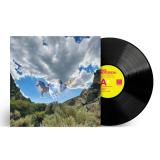
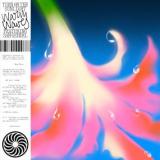
MILES SPILSBURY - LIGHT MANOEUVRES LP

Debut album from UK jazz saxophonist and composer Miles Spilsbury, featuring Carlos Niño. Produced by Slugabed.

Light Manoeuvres is about warmth, generosity and openness. The music which would become Light Manoeuvres was sketched in fragments, but began to take shape in earnest during a period of living under the Marseille haze in the South of France.

The specific character and opacity of the light in Marseille inspired the album title which imagines the movement of light passing over different subjects and spaces in intricate motion. Sand blows over from the Sahara on the Sirocco wind and is whipped up by the Mistral, the Marseille sky becomes golden and vapoured, then intermittently pastel blue. That image stuck while shaping this body of work, and became integral to the function of the compositions - which act as jumping off points for the players and myself, vehicles for improvisation and gateways to something else entirely.

Miles Spilsbury is a saxophonist, composer and multi-instrumentalist. Light Manoeuvres may be Spilsbury’s first full-length as bandleader, but the Brighton-based artist brings more than a decade of experience to bear on this record. In addition to a list of collaborators which includes Carlos Niño, Iglooghost, Nate Mercereau, Surya Botofasina and Yasei Collective, Spilsbury has been a permanent member of celebrated avant-rock experimentalists The Physics House Band since 2018. He has performed at prestigious UK venues such as the Southbank Centre and the London Jazz Festival, and has toured extensively throughout North America, Europe and Japan.

In time between other musical projects, Spilsbury spent several years sketching fragments of solo material. The music which would become Light Manoeuvres began to take shape in earnest during a period of living in Marseille. The specific character and opacity of the light there inspired the album title, which imagines the movement of light passing over different subjects and spaces in intricate motion.

In Stock

On Stock and ready to ship

Maga Bo - Amor (É Revolução) LP 2x12"
 
19

"Speaker-bangin' before all else" (XLR8R) with "some of the smartest ears in the game" (Chicago Reader), "few can make a room explode like Maga Bo" (Flavorpill). A purveyor of "international sonic weaponry and rhythm knowledge" (Rough Trade), the Rio de Janeiro-based DJ/producer is a veteran pioneer of global bass music, with 20+ years of dedicated experience searching out unheralded music bumping from speaker-boxes in the world's grittiest corners, from Addis Ababa to Zanzibar.

Simultaneously, Amor (É Revolução), the new album from Maga Bo, is statement of hope through change, a call to arms, a lament, a proclamation of resistance, a shout of resilience, an exuberant yell and a deep therapeutic groove all at once. The result of a multi-decade search for rhythmic common denominators with an Afro-Brazilian-centric focus. It joins raw, natural, acoustic timbres and textures with the grit, weight and power of modern electronic production. It is where heavy dub bass pulsations sync with rhythms coaxed from drums heated over an open flame and ancestral voices rise and fall in call and response.

Recorded in Rio de Janeiro, Salvador, Recife, Arcoverde and Porto Alegre, the album counts amongst many illustrious talents from the Brazlian music scene, long time collaborators, Russo Passapusso and Roberto Barreto of Baianasystem, the legendary singer, BNegão and São Paulo based, Rosângela Macedo. Grupo Bongar and Samba de Coco Raízes de Arcoverde provide backing percussion and vocals. It also brings newer collaborators, from Recife, the amazing voice of Isaar, the fabulous guitarist, Felipe Cordeiro, as well as long-time friends, ex-Digitaldubs, Jeru Banto and Jota 3, the Mestre of Tambors de Olokun, Alexandre Garnizé, on percussion, fellow nomadic electronic roots explorer, Teleseen and the rock solid percussionist from Salvador, Icaro Sá.

In Stock

On Stock and ready to ship

Neuronium & Vangelis - In London (Platinum Edition)

It was in the year 1981 when Belgian electronic musician Michel Huygen and his Spanish colleague Carlos Guirao, both better known as Neuronium, met with Evngelos Odyss as Papathanassou, better known as Vangelis, to record a joint session in London.

Michel Huygen remembers: "The music we played together starting from my score, was flowing, flowing so fast and smoothly between the 3 of us, that I can now, many years after, say: We recorded all the music's parts in one single "shot", since the result was absolutely what we all wanted and Vangelis told us: "Don't touch what we have recorded, it is lovely " and so we did."Now, after some rather unofficial releases, the opus "In London" is finally released for the first time in its entire length, titled "In London - The Platinum Edition", fondly reworked, remastered and sonic refined to perfection exactly 45 years after Neuronium released their first album on the famous Harvest label.

Michel Huygen had intended to celebrate this anniversary with Vangelis in Paris. But fate had other intentions, on May 17, 2022, Vangelis died as a result of a Covid-19 disease.
Huygen: "I feel honored to have been able to meet him, to play music with him and to have him as a funny friend too. And mainly to have been able to meet a huge musician, a classical composer for the forthcoming generations, without doubt. R.I.P, dear Vangelis."

In Stock

On Stock and ready to ship

Joyce with Mauricio Maestro - Natureza LP

(Produced, Arranged and Conducted by Claus Ogerman)

Not long after the dawn of her career, as a teenager in Rio de Janeiro, Joyce was declared “one of the greatest singers” by Antonio Carlos Jobim. Yet despite reputable accolades and the fact that she has since recorded over thirty acclaimed albums, Joyce never quite achieved the international recognition of the likes of Jobim, João Gilberto and Sergio Mendes, all of whom became global stars after releasing with major labels in the US.

There was a moment when it seemed she might be on the cusp of an international breakthrough. While living in New York, Joyce was approached by the great German producer Claus Ogerman. Ogerman had already played a pivotal role in the development and popularisation of Brazilian music in the 1960s, recording with some of the all-time greats like Jobim and João Gilberto, as well as North American idols like Frank Sinatra, Billie Holiday and Bill Evans.

"I met him in New York City, in 1977”, recalls Joyce. “I was living and playing there, and João Palma, Brazilian drummer who used to play with Jobim, introduced me to Claus. We had an audition, he liked what we were doing and decided to produce an album with us.”

Featuring fellow Brazilian musicians Mauricio Maestro (who wrote/co-wrote four of the songs), Nana Vasconcelos and Tutty Moreno, and some of the most in-demand stateside players including Michael Brecker, Joe Farrell and Buster Williams, the recordings for Natureza took place at Columbia Studios and Ogerman produced the album, provided the arrangements and conducted the orchestra.

But mysteriously, Natureza was never released, and what should have been Joyce’s big moment never happened. As Joyce remembers, “I returned home, but Claus and I remained in contact, by letters and phone calls. He was very enthusiastic about the album and tried to hook me up with Michael Franks. He wanted me to go back to NYC in order to re-record the vocals in English with new lyrics, which I actually wasn’t too happy about. But then I got pregnant with my third child and could not leave Brazil. And little by little our contact became rare, until I lost track of him completely. And that was it. I never heard from him again."

While Claus was known to be something of an elusive character, the album’s disappearance might also have been a result of timing. The Brazilian craze was coming to an end, making way for disco and new wave at the end of the seventies, and Ogerman struggled to find a major label interested in a new Brazilian sensation. Additionally, as Joyce mentions, it wasn’t quite finished. Ogerman wanted to add finishing touches to the mix and to record alternative English lyrics for the US and international markets - a critical artistic difference between Joyce and Ogerman.

As the military dictatorship’s grip on Brazil began to subside in the 1980s, Joyce had a handful of hits in her home county, including a tribute to her daughters ‘Clareana’, and the iconic ‘Feminina’ - an intergenerational conversation between mother and daughter about what it means to be a woman. But already a feminist pioneer, these successes were hard fought. Joyce had caused controversy as a nineteen-year-old when she became the first in Brazil to sing from the first-person feminine perspective, and the institutional sexism she faced was worsened by the dictatorship who would often censor her music. Even once the Junta was out of the way, Joyce found herself up against the male-dominated major record companies in Brazil, who sought to dictate her career and sexualise her image, before dropping her for refusing to play along.

A few years after the success of her albums Feminina and Agua E Luz in Brazil, Joyce’s music began to find its way to the UK, Europe and Japan, and “Feminina” and “Aldeia de Ogum” became classics on the underground jazz-dance scenes of the mid to late-eighties and early-nineties.

The full-length version of “Feminina” from the Natureza sessions was first heard on a Brazilian Jazz compilation in 1999 and “Descompassadamente” was licensed for a CD compiling the work of Claus Ogerman in 2002. Following these, word began to get out about an unreleased Joyce album with Claus Ogerman and the legend of Natureza grew.

Forty-five years since it was recorded, Natureza finally sees the light of day, as Joyce intended: with her own Portuguese lyrics and vocals. Featuring the fabled 11-minute version of ‘Feminina’, as well as the never before heard ‘Coração Sonhador’ composed and performed by Mauricio Maestro, Natureza’s release is a landmark in Brazilian music history and represents a triumphant, if overdue victory for Joyce as an outspoken female artist who has consistently refused to bow to patriarchal pressure.

***Disclaimer! While “Feminina” and “Descompassadamente'' were mixed by legendary engineer Al Schmitt and mastered from the original master tapes, the remaining five tracks are unmixed. Due to significant deterioration of the master-tapes, the best audio source for these tracks was an unmixed tape copy Joyce had kept of the recordings. The best care has been taken in the restoration and mastering of this release, but the sound quality may differ from other releases on Far Out Recordings. We advise listening to sound clips before buying where possible.

In Stock

On Stock and ready to ship

Djebali - TRMNL003

Djebali

TRMNL003

12inchTRMNL003
TRMNL
21.09.2022

Birimingham’s TRMNL Records returns with its third release this September, coming courtesy of Paris, France’s Djebali.

Djebali has been releasing his twist on House and Techno since 2008 via the the likes of Fuse London's label and sub-label Infuse, Burnski’s Aesthetic, Chez Damier’s Balance Music, REda daRE Records and of course his own self-titled Djebali label which has been the predominant home for his output over the past decade.

Here though we see Djebali join the roster of the fledgling TRMNL Records, launched by the Birmingham club night of the same name so far the imprint has unveiled two EP’s by East End Dubs and Samu.l to date and here the story continues.

Title-cut ‘Rave Vision’ leads with a squelchy acid bassline and robust drums running alongside gritty stabs, spacey atmospheric pads and choppy vocal samples. ‘Line 56’ follows, shifting focus to dubby stab sequences, heavily swung drums and a bumpy bass groove all flowing with a subtly nuanced feel throughout.

The Hypnotic floaty sounds of ‘Cotton Candy’ then round out the release, diving deeper via an amalgamation of airy synth flutters, resonant synth licks and snaking subs atop a shuffled drum groove.


DJ Support:

Marco Carola
Chris Stussy
Rich Nxt
Davide Squillace
Mahony
Ilario Alicante
Jorge Savoretti
Silvie Loto
Hermanez
Tobi Neumann


DJ Feedback:

Rich Nxt - Top groove!

Salvo Borrelli - una bomba !!!!

Carlos Valdes - dope!

Alejo Galvez - lovely grooves!

Hermanez - Loving the grooves.

Tobi Neumann - Decent grooving & sounding tracks..

Karlos Sense - Wow!!!.Amazing EP. bro!!!

Mirko - super ep!

Mancini - Great EP as usual from Djebali!!

Sasa - Solid EP

Adrian Barr - Solid release, cool club rollers

Jade - Brilliant !

Lis Sarroca - all nice!

Juliche Hernandez - MASTER Djebali!! Amazing!!

Ocean Lam - Lovely summer vibes! Rave Version is my fav,

Chris Davis - rave vision is amazing!

Jorge Savoretti - Love Line 56, Djebali groover all the way

Lele Sacchi - cool deep acid driver, reminiscent of early 00's brit electronic deep, yess.

In Stock

On Stock and ready to ship

Anané - Get On The Funk Train (Remix Edits)

Anané Electrifies With New Version of Dancefloor Classic “Get On The Funk Train”

Known worldwide as one of the New York City’s most vibrant, charismatic and talented producer / DJs, Anané is uniquely positioned to bring light to the 1977 Number 1 Disco Hit “Get On The Funk Train,” originally released by the Munich Machine and produced by the renowned Giorgio Moroder

In addition to being a singer Anané is also DJ with residencies in New York, Ibiza and Naples. She knows how to move the dancefloor and how to elevate the mood of the room from first creating the vibe to getting the crowd into a groove; ultimately taking the dancefloor into full fledged party mode. Her strong and distinctive character can be traced to her experiences growing up in Cabo Verde’s capital city of Praia located on the island of Santiago during a time of extreme political strife, and to her many years of working hard to establish herself in the always competitive music industry. It takes a lot to tackle a classic and make it uniquely your own, but that’s exactly what Anané has accomplished with this fresh and vibrant new version of “Get On The Funk Train.”

With her wealth of talent as a performer, Anané is also highly accomplished as a record label owner. Her Nulu and Nulu Electric imprints over many years have been the source of some of the most played and sought after club bombs in the Afro House genre that is currently in vogue with DJs around the world. Her Nulu Movement line of merchandise represents the stylish, cutting edge fashion vibe of her NYC residency at Le Bain in the Standard Hotel, with designs created by Anané herself.

As befitting an artist so well respected and admired in the community, the producer and remixer team behind this project consists of several of the most legendary and successful producers in the industry. The recording was originally produced by Grammy Award winning producer / artist Louie Vega, one of the world’s premier producers who has the rare distinctive of attaining massive success in multiple genres including House, Freestyle, R&B and just recently he has been focusing on revitalizing the great musical genre known as Disco. The production includes live strings arranged by two of the most highly accomplished members of NYC’s storied musical history Patrick Adams & Leroy Burgess, and electric guitar by Carlos Alomar, formerly David Bowie’s music director. Remixes were supplied by Todd Terry, a man who is known as one of the original New York City based producers who help create the House Music genre that we know today, and by the recently formed production team of Michael Gray and Mark Knight, two of England’s most respected and successful producer / DJs. These two stars of the industry have generated a uniquely groove focused remixer style that has had DJ’s worldwide eagerly waiting each new production.

In Stock

On Stock and ready to ship

Various - Moensterfriends + Downloadcode

Every record includes a downloadcode to get the whole digital release for free via Facebook !!

Moenstrous teamplay EP on Moensterbox. The family in form of Moenster and Rene Onze gets joined
by newcomer Tasaka and Dan Caster & Toby Montana (Stil Vor Talent, Shaker Plates).

Played & supported by Monika Kruse, Hanne & Lore, Patrick Kunkel, Gunjah, Arts & Leni, Paco Osuna, Carlos Sanchez and many more.

In Stock

On Stock and ready to ship

Sascha Kloeber - Schickimicki Scheisse Ep

After a long development with several releases for Labels like Microtonal and Inclusion Records
Sascha finally decided to set up his own playground to release music with heart and emotions.
The debut EP is pretty much showing his large variety of producing unique music.

Played & supported by Laurent Garnier, Toni Rios, Max Cooper, Slam (Soma), Alexi Delano, Paco Osuna (Plus 8),
Anderson Noise, Alex Flatner (Cocoon, Poker Flat), Patrick Kunkel (Cocoon), Tim Xavier (Clink),
Kolombo (Kompakt, Systematic), Carlos Sanchez (8bit Supernature), Patrick Lindsey, Franco Bianco (Argentina),
Hanne and Lore, Microtrauma (Traum), Alec Troniq (Ipoly), Beatamines, Summer - Brendon Collins (Manual Music),
Fine Cut Bodies (Chi Recordings, Resopal), Turm 3 (Seenplatte), Laurent N. (France) and more

In Stock

On Stock and ready to ship

Antony Genn, Martin Slattery - Peaky Blinders: The Immortal Man (Soundtrack from the Netflix Film) (LP 2x12")
  • 1-: Opening Scene/ The Currency - Antony Genn, Carlos O’connell And Martin Slattery
  • 2-: The Immortal Man - Antony Genn,Carlos O’connell And Martin Slattery
  • 3-: Ruby’s Scarf - Antony Genn, Martin Slattery And Grian Chatten
  • 4-: Nobody’s Son - Amy Taylor,Tom Coll, Antony Genn And Martin Slattery
  • 5-: No Heaven No Hell For Duke Shelby - Antony Genn And Martin Slattery
  • 6: People Person - Andrew Falkous, Jack Egglestone, Damien Sayell
  • 7-: Duke And Beckett Strike A Deal - Antony Genn And Martin Slattery
  • 8-: An Intruder In The House - Antony Genn And Martin Slattery
  • 9-: Ada And Duke - Antony Genn And Martin Slattery
  • 10-: Opium Dreams - Antony Genn, Martin Slattery And Grian Chatten
  • 11: Tommy, Kaulo And Zelda - Antony Genn And Martin Slattery
  • 12-: Black Dahlia - Grian Chatten, Antony Genn And Martin Slattery
  • 13-: Beckett Tests Duke - Antony Genn And Martin Slattery
  • 14-: Close The Door - Antony Genn And Martin Slattery
  • 15-: Dukes Descent - Antony Genn And Martin Slattery
  • 16-: A Hero’s Death - Grian Chatten, Carlos O’connell, Conor Curley, Conor Deegan Iii, Tom Coll
  • 17-: Pig Pen - Antony Genn And Martin Slattery
  • 18-: Puppet - Grian Chatten, Antony Genn And Martin Slattery
  • 19-: A Gun Is No Good - Antony Genn And Martin Slattery
  • 20-: Tommy Vs Duke - Antony Genn And Martin Slattery
  • 21-: St Elizabeth’s Mortuary - Antony Genn And Martin Slattery
  • 23-: Stable Shootout - Antony Genn And Martin Slattery
  • 24-: Red Right Hand (Immortal) - Nick Cave, Mick Harvey And Thomas Wydler
  • 25-: The Bullet - Antony Genn And Martin Slattery
  • 26-: The Coin - Antony Genn And Martin Slattery
  • 27-: Teardrop - Girl In The Year Above
  • 28-: Romance - Grian Chatten, Carlos O’connell, Tom Coll, Conor Curley, Conor Deegan (Iii)
  • 29-: The Map - Antony Genn And Martin Slattery
  • 30-: Angel - Grian Chatten, Antony Genn And Martin Slattery
  • 31-: The Tunnel - Antony Genn, Martin Slattery And Grian Chatten
  • 32-: Medusa - Grian Chatten, Antony Genn And Martin Slattery
  • 33-: Tommy Vs Beckett - Carlos O’connell, Antony Genn And Martin Slattery
  • 34: Father And Son - Antony Genn And Martin Slattery
  • 35-: Hunting The Wren (The Immortal Man Version) - Lankum With Grian Chatten
  • 36-: Ellipsis - Grian Chatten, Antony Genn And Martin Slattery
pre-order now15.05.2026

expected to be published on 15.05.2026

Carlos Dafé - Pra Que Vou Recordar LP

Carlos Dafé (born October 25, 1947) is a singer and songwriter from Rio de Janeiro, recognised as one of the iconic voices of the Brazilian samba-soul era. Born into a family of musicians and trained at the conservatory, he rose to prominence in the 1970s alongside Tim Maia, Cassiano, and Hyldon, shaping the sound of Rio Noir with his warm baritone voice and soulful phrasing. His 1977 album, Pra Que Vou Recordar, became a cult classic among collectors and DJs worldwide, earning him the title of "Prince of Brazilian Soul." Still active today, Carlos Dafé remains an essential reference for artists exploring the boundaries between samba, soul, and MPB (Brazilian Popular Music). Released in 1977, Pra Que Vou Recordar reveals Carlos Dafé at the peak of his art, blending samba-soul, MPB, and the warm groove of the 1970s Rio de Janeiro scene. Surrounded by some of the city's finest musicians, Dafé showcases his baritone voice in deeply melodic arrangements and a series of songs that have become fan favourites. An album imbued with soul and elegance. The sound of BrazilianBlack music at its most sincere and timeless.

out of Stock

Order now and we will order the item for you at our supplier.


Last In: 12 days ago
Various - ANTONIO CARLOS & JOCAFI JID026

Various

ANTONIO CARLOS & JOCAFI JID026

12inchJIDLPC126
Jazz Is Dead
13.05.2026

Antônio Carlos & Jocafi, das legendäre Duo aus Bahia, dessen Musik seit über fünf Jahrzehnten den Soul Brasiliens verkörpert, kehrt mit einer kühnen neuen Zusammenarbeit zurück: Jazz Is Dead 026. Beto Barreto von Baiana System stellte Adrian Younge und Ali Shaheed Muhammad vor, und die Begegnung war sofort von Magie geprägt. ,Als wir uns zum ersten Mal trafen, war es wie bei einer Familie", erinnern sie sich. Diese Verbundenheit veranlasste Younge und Muhammad, das Duo nach Los Angeles einzuladen, wo sie eine Handvoll Ideen mitbrachten und vor Ort neue Songs schufen - ein intuitiver, improvisatorischer Prozess, der die Philosophie von Jazz Is Dead ausmacht. Mit dieser Veröffentlichung bekräftigen Antônio Carlos & Jocafi ihre kreative Vitalität und bringen gleichzeitig einer neuen Generation ihren zeitlosen bahianischen Geist näher. ,Adrians Liebe zu Brasilien ist größer als die vieler Brasilianer", sagen sie und betonen, wie aufmerksam er zuhört, studiert und die Rhythmen, Geschichten und Gefühle ihrer Kultur vermittelt. Das Ergebnis ist ein Album, das eine Brücke zwischen dem Mercado Modelo in Salvador und der globalen Bühne schlägt und die folkloristischen Traditionen Bahias mit der analogen Seele von Jazz Is Dead verwebt.

out of Stock

Order now and we will order the item for you at our supplier.


Last In: 12 days ago
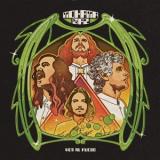
MOHAMA SAZ - VEN AL FUEGO

MOHAMA SAZ

VEN AL FUEGO

12inchYAI4
YAI YAI
08.05.2026
  • 1: Quemar Las Naves
  • 2: Avisenawino
  • 3: Ursus
  • 4: More Irán
  • 5: Yorum 91
  • 1: Yai Yai
  • 2: Baris
  • 3: Stereorrata
  • 4: Arbolito
  • 5: Oro Cíngaro

Double live album out by one of the most exciting live bands in earth, Mohama Saz! "Ven al fuego" captures their unstoppable stage energy in its purest form. "Ven al fuego" is the perfect compilation and representative of the powerful unstoppable force from the band on stage. Play this album, play it loud and you will be enjoying one of the most memorable live shows that explores musical horizons emancipated from British rock tradition. Mohama Saz from Madrid, Spain are one of the most exciting live bands in the world today, a mind -blowing manifestation of pure psychedelic exotica. Within minutes of taking the stage they have the audience completely under their spell, dancing in wide-eyed bliss to their uniquely intoxicating music. With an electrified Baglama Saz as their lead instrument they fuse elements of Turkish and Armenian folk music, Mediterranean psychedelia and mesmerizing Middle Eastern-flavored ragas with galvanizing go- go discotheque grooves. Mike Stax (Ugly Things Magazine / The Loons) Experiencing Mohama Saz live is a meditative ritual of excitement and pure emotion. One of the best live shows I can think of today, they are truly something special! Jake García (The Black Angels) Album Credits: Recorded live in February 2025 in Madrid (Sala Copérnico, February 22, 2025) and Reus (Lo Submarino, February 15, 2025) by Tommaso Galati. Mixed by Tommaso Galati and Mohama Saz. Mastered by Carlos Díaz. Artwork: Mario Feal

pre-order now08.05.2026

expected to be published on 08.05.2026

Bebel Gilberto - Tudo LP

Bebel Gilberto

Tudo LP

12inchMOVLP3656
Music On Vinyl
08.05.2026
  • A1: Somewhere Else
  • A2: Nada Não
  • A3: Tom De Voz
  • A4: Novas Idéias
  • A5: Harvest Moon
  • A6: Tudo
  • B1: Saudade Vem Correndo
  • B2: Areia
  • B3: Tout Est Bleu
  • B4: Lonely In My Heart
  • B5: Vivo Sonhando
  • B6: Inspiração

Tudo is an album by world renowned Grammy-nominated singer/songwriter Bebel Gilberto, originally released in 2014.

Gilberto, daughter of bossa nova immortal João Gilberto, is one of the most internationally famous and beloved of Brazilian musicians. Tudo, which means "everything" in English, showcases Bebel's ethereal vocals and wistful, dreamy song writing in each of the 12 tracks.
Bebel reunites with Mario Caldato Jr., who produced her first landmark album Tanto Tempo.

With Bebel singing in French, English, and Portuguese, Tudo is a shimmering, sweet summery collection that includes original songs along with songs by João Gilberto, Antonio Carlos Jobim and Neil Young, as well as soulful duet with Seu Jorge.

The gorgeous melodies are shaped by touches of electronica and Bebel's intimate vocals hint at a fantastical Rio de Janeiro, a style that has earned her a devoted fanbase worldwide.

Tudo is available on black vinyl and includes a 4-page booklet with pictures and lyrics.

pre-order now08.05.2026

expected to be published on 08.05.2026

YOH-YO - MAIN ATTRACTION EP

Some tracks don’t age, they just wait for the right dancefloor to hit again.

Originally released in 1985, Main Attraction by Toronto-based duo Yoh-Yo is one of those high-energy sleepers that quietly tore through clubs while never fully crossing into the mainstream canon. Produced by maestro Allan Coelho (Tapps, Click) and driven by the instantly recognizable vocal of Carlos Borges, it’s a pure shot of mid-80s Hi-NRG euphoria. Tight, glossy, and unapologetically emotional.

Fast forward to now, and Vintage Pleasure Boutique digs deep into the archives of Boulevard Records to deliver the ultimate collector’s package, bringing together all six officially released versions from the original 1985–86 pressings across Europe, Canada and Mexico. But this isn’t just a reissue, it’s a full-spectrum reconstruction of a club weapon.

From the Original Version, still hitting with that raw, uplifting drive, to the Sandy St. Alban Version, adding a slightly different vocal flavor for the heads who know, each cut reveals another angle of this underground anthem. The Instrumental and Hi-NRG Dub Version strip things down into pure mixing tools: extended grooves, pulsating basslines and synth hooks that lock dancers into a trance. The Remix pushes things further into peak-time territory, while the real gem for DJs lands on the B-side: the long-sought Hot Tracks Extended Edit by Gregg Denewith — originally exclusive to the US market and finally resurfacing in proper, playable quality. A true secret weapon for selectors who like their sets with a touch of authentic 80s heat.

This release is a love letter to Hi-NRG, to analog excess, and to the global club network that kept these records alive long before algorithms caught up. For fans of neon-lit nostalgia, sweaty dancefloors and that unmistakable Italo-adjacent pulse. Main Attraction is exactly what the name promises. Pure energy. No compromise.

stock from27.05.2026


Last In: 21 days ago
PUPILLO - PUPILLO

PUPILLO

PUPILLO

12inchAIS005
AMOR IN SOUND
05.05.2026

Tip on sleeve.

Latin Grammy-Winning Producer Pupillo Unites Global
Artists on his new album

Co-produced by Mario Caldato Jr. (Beastie Boys), featuring collaborations with Rodrigo
Amarante, Carminho, Adrian Younge, Gaslamp Killer, Cut Chemist, Hervé Salters, and more
Drummer, percussionist and producer Pupillo, one of the most influential figures in Brazilian
music and a four-time Latin Grammy winner, releases his first original album through the Los
Angeles–based label Amor in Sound. The record brings together an impressive and diverse
group of collaborators from Brazil and abroad. Amor in Sound is run by Samantha Caldato,
the project’s executive producer and creative director, and Mario Caldato Jr. (Beastie Boys),
who co-produced the album alongside Pupillo. The project was developed in a free,
experimental environment, allowing the artist to explore the many rhythmic and sonic
territories that have shaped his career — from Northeastern Brazilian traditions to jazz, hip
hop, and cinematic soundscapes. Listen here.

The album features special appearances by Brazilian artists such as Céu, Rodrigo Amarante,
Agnes Nunes, Amaro Freitas, Davi Moraes, Alberto Continentino and Pedro Martins,
alongside a strong roster of international collaborators, including Carminho, Gaslamp Killer,
Loren Oden, Adrian Younge, Cut Chemist and Hervé Salters (known for his work with
General Elektriks). The album’s 12 tracks were further enriched by contributions from
Jeremy Gustin, Roberto Schilling, and other musicians who make Amor in Sound Studios in
Los Angeles a place of creative exchange.

Beyond his work as the drummer of Nação Zumbi, Pupillo has built a prolific career as a
producer and collaborator with some of the most important names in Brazilian music,
including Gal Costa, Nando Reis, Erasmo Carlos, Céu, and Otto, helping to shape the sound
of multiple generations. This trajectory has earned him four Latin Grammy Awards.
From Pernambuco, Pupillo is also an acclaimed composer for cinema, having written
soundtracks for films such as Arido Movie and Blue Blood (directed by Lirio Ferreira), The
Assailant (directed by João Daniel Tikhomiroff), among others. This cinematic sensibility
permeates the album, which unfolds like a film, moving through richly textured soundscapes
that cross continents and musical traditions.

out of Stock

Order now and we will order the item for you at our supplier.


Last In: 20 days ago
G Version III - Chapter II

On a class debut for Biscuit’s choice Good Morning Tapes label, Kyoto’s dub specialist G Version III runs signature fusions of digidub steppers, drill, and holographic, minor-key FM synths.

One up on her 12” for Riddim Chango last year (plus the »Scenery From Double Glazing« tape for Digital Sting in ’24), G Version III’s »Chapter II« most finely chisels her lucidly rugged definition of the late ’80s / early ’90s mystic steppers sound. The OG Caribbean spirit is heard filtered through UK dances and shored up in Japan, where G tessellates its salient points with a palette of glassy Japanese synth tones and chamber music to exquisite effect. If Wendy Carlos was a soundgyal?

Across six cuts she builds the dance around digidub x drill waltz »Livin 4« and a haunted dancehall special in the harpsichord/horn riff of »An Idyll«, impressing her prowess in the fusion of subcontinental scales with a drill-tipped skip in »Queen G Theme Chapter II«, and tucking right into an aerodynamic, flying steppers mode, shades away from Element, in »Motherearth Guidance«. At a slower, wider stride her »Higher Grade« goes eyes-down on massive subs, and »Voice of Mystique Warriyah« adapts the classic-schooled sound like TNT Roots in Tokyo.

pre-order now01.05.2026

expected to be published on 01.05.2026

Various - ANTONIO CARLOS & JOCAFI JID026

Antônio Carlos & Jocafi, das legendäre Duo aus Bahia, dessen Musik seit über fünf Jahrzehnten den Soul Brasiliens verkörpert, kehrt mit einer kühnen neuen Zusammenarbeit zurück: Jazz Is Dead 026. Beto Barreto von Baiana System stellte Adrian Younge und Ali Shaheed Muhammad vor, und die Begegnung war sofort von Magie geprägt. ,Als wir uns zum ersten Mal trafen, war es wie bei einer Familie", erinnern sie sich. Diese Verbundenheit veranlasste Younge und Muhammad, das Duo nach Los Angeles einzuladen, wo sie eine Handvoll Ideen mitbrachten und vor Ort neue Songs schufen - ein intuitiver, improvisatorischer Prozess, der die Philosophie von Jazz Is Dead ausmacht. Mit dieser Veröffentlichung bekräftigen Antônio Carlos & Jocafi ihre kreative Vitalität und bringen gleichzeitig einer neuen Generation ihren zeitlosen bahianischen Geist näher. ,Adrians Liebe zu Brasilien ist größer als die vieler Brasilianer", sagen sie und betonen, wie aufmerksam er zuhört, studiert und die Rhythmen, Geschichten und Gefühle ihrer Kultur vermittelt. Das Ergebnis ist ein Album, das eine Brücke zwischen dem Mercado Modelo in Salvador und der globalen Bühne schlägt und die folkloristischen Traditionen Bahias mit der analogen Seele von Jazz Is Dead verwebt.

out of Stock

Order now and we will order the item for you at our supplier.


Last In: 26 days ago
Kiran Leonard - Real Home LP
  • 1: Pass Between Houses
  • 2: Theatre For Change
  • 3: Real Home
  • 4: Treat Me A Stranger
  • 5: Utopia Of Bog
  • 6: Void Attentive
  • 7: My Love, Let's Take The Stage Tonight
  • 8: The Kiss
  • 9: He Had Always Led

Cathartic avant-rock, literate DIY folk & experimental composition exploring displacement, love, climate change, belonging & the places we call home - RIYL Jim O’Rourke, Richard Youngs, This Heat, Richard Dawson, Flying Nun. ‘Real Home’ is the new album by the Manchester-born, London-based artist Kiran Leonard. His sixth album proper (not including innumerable tour-only CD-Rs and short-run cassettes), since his precocious debut in 2013, ‘Real Home’ finds Leonard invigorated by inspiration and experience, making passionate, literate, and mercurial music that explores displacement, love, memory, climate change, connections to home and more. Encompassing songs recorded after moving to South London, ‘Real Home’ reflects on ideas of belonging and domesticity through folkloric, stream-of-consciousness songwriting. Across nine tracks, Leonard traces lived impressions of the household and the city, expressing sentiments of dislocation, alienation and stasis, but contentment too. Infusing the avant-rock effervescence, terraced dynamics and visionary lyricism of his music with what he defines as a greater sense of openness, Leonard is as versatile, fervent and imaginative as ever on ‘Real Home’, yet his music is somehow more intimate, affecting, and acutely expressive. Shaped by dual considerations of simplicity and formalism, ‘Real Home’ is by turns beautiful, allusive, and ruminative, an album on which Leonard considers what his songs have resembled in the past and what they mean now. In recent years, Leonard has crafted eloquent chamber music inspired by the likes of James Joyce and Clarice Lispector (‘Derevaun Seraun’), responded to contemporary politics and communication breakdown in the digital age (‘Western Culture’), and compiled solo works and ensemble recordings for a longform ode to Jonas Mekas and to one of Leonard’s enduring themes; home (‘Trespass On Foot’). On ‘Real Home’, Leonard reiterates this abiding thematic focus yet ascends to new, different heights, in music of cathartic delicacy and dissonance where all the myriad dimensions of his work to date seem to crystallize. There are sinuous songs about struggle and defying the pace of city life through drift and diversion (‘Pass Between Houses’), stirring songs of intense feeling and crescendo, described as a form of speculative detective fiction (‘Theatre for Change’). There are touching solo piano ballads (the title track), symbolic contentions with carbon capture and climate change (‘Utopia of Bog’), modes of experimental minimalism (‘Void Attentive’), and other profuse feats of compositional range, embroidered with wild tendrils of narrative and lyrical depth. A record to pore over, and get lost in. Exemplifying the vast aesthetic scope of Leonard’s music, lead single ‘My Love, Let’s Take The Stage Tonight’ is inspired by country lodestar Hank Williams, Russian poetry and a late period love poem by William Carlos Williams. Yet for Leonard, the song signals a sense of accessible materiality, and is the product of a more linear approach to writing songs: “My imitation of the great Hank Williams, in spirit if not in substance…This is one of the best efforts on Real Home at a song-as-object. Looking at it now I realise I was trying to write a song that made itself known as a song to the listener, and I wonder whether that’s crucial if you want a song to transcend its context. And that this is either accomplished through a total openness – by being inviting, by laying the tricks of the song out plain to see, as Williams and his many ghostwriters did so well – or by adopting a knowing aloofness, positioning oneself against the listener but letting it be known that that’s what it’s doing. In this song I try both, but mostly the former: as in, I wanted to write a song where every line follows on from the next.” Imbuing the endlessly elaborate and inventive qualities of his music with a newfound streak of candid, clear-cut melodicism, Leonard has reached a special place in his artistry, on a record that feels familial, and expresses closeness. Assembled with affiliates including Lauren Auder, Otto Willberg, Jasper Llewellyn (caroline), Tom Hardwick-Allan (Shovel Dance Collective), Magda McLean (caroline, The Umlauts), Alex Mckenzie (caroline, Shovel Dance Collective), Isabelle Thorn (Dear Laika) & more, the recording process had a significant influence on the subject matter of ‘Real Home’, in sessions defined by close-knit camaraderie and artistic eccentricity: “The theme of the home obviously recurs throughout the record; the album was mostly recorded in domestic spaces with friends, and the name of the album is Real Home. I like the qualifier ‘real’, like you’re getting past the cloak of the word and towards the thing-itself…also nearly all the percussion in this record was recorded on items from my dad’s shed (jam jars, sandpaper, blocks of wood, etc). Real home record!” ‘Real Home’, like anything by Kiran Leonard, is a record of dazzling multiplicity. Yet it’s a companionable prospect with a central premise; a collection of songs where listeners old and new can find a home. An album led by a scene; of Leonard standing at the threshold, ready to welcome you inside. “Exceptional songs that linger” - The Guardian // “An autodidact of amazing talent & energy” – Pitchfork // “A ridiculous amount of talent…confrontational, celebratory, provocative or perverse – he manages all of these emotions & more” - The Quietus /

pre-order now24.04.2026

expected to be published on 24.04.2026

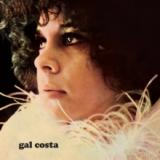
GAL COSTA - Gal Costa (1969) LP
  • A1: Não Identificado (Caetano Veloso)
  • A2: Sebastiana (Rosil Cavalcanti)
  • A3: Lost In The Paradise (Caetano Veloso)
  • A4: Namorinho De Portão (Tom Zé)
  • A5: Saudosismo (Caetano Veloso)
  • A6: Se Você Pensa (Roberto Carlos-Erasmo Carlos)
  • B1: Vou Recomeçar (Roberto Carlos-Erasmo Carlos)
  • B2: Divino, Maravilhoso (Caetano Veloso-Gilberto Gil)
  • B3: Que Pena (Êle Já Não Gosta De Mim) (Jorge Ben)
  • B4: Baby (Caetano Veloso)
  • B5: A Coisa Mais Linda Que Existe (Gilberto Gil-Torquato Neto)
  • B6: Deus É O Amor (Jorge Ben)

Gal Costa’s 1969 self-titled album stands as one of the
boldest statements of the Tropicália movement. Blending
psychedelic rock, experimental arrangements, and Brazilian
popular music with fearless originality, the album showcases
Costa’s powerful, expressive voice at its most adventurous.
Featuring contributions from major Tropicália figures such as
Caetano Veloso and Gilberto Gil, its mix of sweetness and
sonic daring helped redefine contemporary Brazilian music,
cementing Gal Costa as a groundbreaking and influential artist.

out of Stock

Order now and we will order the item for you at our supplier.


Last In: 33 days ago
Various - Tchic Tchic: French Bossa Nova 1963-1974  Colored Edition LP 2x12"
  • A1: Les Masques - Il Faut Tenir (1969)
  • A2: Isabelle Aubret - Casa Forte (1971)
  • A3: Christianne Legrand - Hlm Et Ciné Roman (1972)
  • A4: Jean Constantin - Pas Tant D'chichi Ponpon (1972)
  • A5: Billy Nencioli & Baden Powell - Si Rien Ne Va (1969)
  • B1-: Marpessa Dawn - Le Petit Cuica (1963)
  • B2: Jean-Pierre Sabar - Vai Vai (1974)
  • B3: Sophia Loren - De Jour En Jour (1963)
  • B4: Isabelle - Jusqu’à La Tombée Du Jour (1969)
  • B5: Sylvia Fels - Corto Maltesse (1974)
  • C1: Frank Gérard - Comme Une Samba (1972)
  • C2: Ann Sorel - La Poupée Des Favellas (1971)
  • C3: Charles Level - Un Enfant Café Au Lait (1971)
  • C4: Andrea Parisy - Les Mains Qui Font Du Bien (1970)
  • C5: Audrey Arno - Quand Jean-Paul Rentrera (1969)
  • C6: Aldo Frank - T’as Vu Ce Printemps (1970)
  • D1: Christianne Legrand - Cent Mille Poissons Dans Ton Filet (1972)
  • D2: Clarinha - Lemenja (1970)
  • D3: Hit Parade Des Enfants - Aquarela (1976)
  • D4: Jean-Pierre Lang - Tendresse (1965)
  • D5: Magalie Noël - Une Énorme Samba (1970)
  • D6: Françoise Legrand - La Lune

Ever since the late 1950s bossa-nova revolution, Brazil’s influence on French music has been undeniable. Pierre Barouh, Georges Moustaki and a vast array of lesser known artists, all made the Musica Popular Brasileira (MPB) an axis of promotion at the service of a cool and metaphysical, modern and mixed Brazilian lifestyle. Some were seduced by the poetic languors of the bossa, some were looking for fun, and others just loved the American hybridization of jazz-bossa, jazz-samba.


What is bossa nova? One of its creators, Joao Gilberto said: "Its style, cadence, everything is samba. At the very start, we didn't call it bossa nova, we sang a little samba made up of a single note - Samba de uma nota so .... The discussion around the origins of bossa nova is therefore useless”. It is nevertheless useful to remember that these magnificent Brazilian songs, which the guitarist describes as samba, were shifted and balanced around improbable chords. "I like things that lean, the in-betweens that limp with grace," said Pierre Barrouh, quoting Jean Cocteau.


With emotion, arrangements for violin and supple guitar licks, bossa nova rapidly changed. A transformation that can be heard in the Tchic, tchic, French Bossa Nova 1963-1974 compilation, the result of a cultural reappropriation, which traveled through the United States and supplemented itself in France.

A musical revolution that has remained significant, bossa nova was born in Rio. From 1956 to 1961, Brazil lived through its golden years. In five years, the country had invented its modernist style. Elected president in 1956, Juscelino Kubitschek de Oliveira, an elegant man with a broad forehead, brandished a promising slogan: "Fifty years of progress in five years". He quickly got to work. Not worried about increasing debt, he launched the project for a new federal capital, Brasilia, designed by the communist architect Oscar Niemeyer. Volkswagen opened state-of-the-art factories and created the “fusquinha”, the Beetle. In Rio, the Vespa made its first appearance. The Arpoador Surf Club crew run into the “girl” from Ipanema, Helô Pinheiro - the tanned garota ("chick"), between a flower and mermaid, who at 17 walked by the Veloso bar, where the fiery author and composer, Tom Jobim and Vinicius de Moraes, were getting drunk on whiskey. From then on, bossa symbolized cool.

In 1958, Joao Gilberto recorded Chega de Saudade, which the directors of Philips denied, calling it "music for fagots". The marketing director, who believed in it, secretly pressed 3000 78-inch vinyls and distributed them at schools around Rio, creating a tidal wave.

American jazzmen then took over. In particular, trumpeter Dizzy Gillespie and guitarist Charlie Byrd. In November 1962, the Brazilian Ministry of Foreign Affairs funded a "Bossa-Nova" concert at Carnegie Hall in New York, inviting the genre’s pioneers. Unprepared, the show soon turned to disaster. But the troupe was invited to the White House by Jackie Kennedy. The first lady loved "the new beat" and in particular Maria Ninguem, a song by Carlos Lyra, later covered by Brigitte Bardot.

In Brazil, the 1964 military coup quickly ended this euphoria. The destructive atmosphere that ensued pushed many Brazilian musicians to leave, if not to exile. Thus, Tom Jobim, Sergio Mendes and Joao Gilberto arrived to the United States. In New York, Joao Gilberto met saxophonist Stan Getz. At the time, he was married to the Bahianese Astrud Weinert Gilberto, who had a German father. She had never sung before, but she knew how to speak English. Getz therefore asked her to replace her husband on The Girl From Ipanema. The Getz/Gilberto record with Tom Jobim on piano, was released in March 1964. Phil Ramone, the "pope of pop" was in charge of sound.

Bossa nova arrived in Paris through the classic “guitar-voice” channel (Pierre Barouh, Baden Powell, Moustaki…) But France loved jazz and Paris had already welcomed its American contributors. All these good people were to pass through Saint-Germain-des-Prés. The cabaret l'Escale became the Mecca of Latin American sound where one could find Pierre Barrouh and his friends, such as the Camara Trio, samba-jazz aces, whose only record was published by the Saravah label. With a band strangely called Les Masques (a band that included Nicole Croisille and Pierre Vassiliu, among others), the Camara Trio recorded an interesting Brazilian Sound, including the track Il faut tenir which is present on this tasty compilation of rarities.

Other enlightened musicians can also be found on the compilation, such as Jean-Pierre Sabar (songwriter for Hardy, Auffray, Leforestier ...) and the French pop rock organist Balthazar. In 1975, Sabar recorded Aurinkoinen Musiikkimatka on a Finnish label, which featured the crazy Vai, Vai, included on this record. We are now following the footsteps of Brazilian electronic musicians such as Sergio Mendes, Eumir Deodato or Marcos Valle who created funk and disco sounds on their keyboards and synthesizers. A style that influenced Véronique Sanson when she wrote Jusqu’à la Tombée de la nuit in 1969 for Isabelle de Funès, the niece of Louis and a great friend of Michel Berger - Sanson did end up singing this track on her 1992 Sans Regret record.


The pinnacle of exoticism and travel, Sylvia Fels’ Corto Maltese includes bongos, sea mist and ocean sounds. The title was taken from Jacky Chalard’s concept album written in 1974, Je suis vivant, mais j’ai peur (I am alive, but I am scared), based on Gilbert Deflez’s science fiction novel.


However, bossa nova extended the scope of popularity. "In the 1970s, I was a fan of Sergio Mendes, Getz / Gilberto. I fell in love with this music that I knew because I had been an orchestral singer, " explained Isabelle Aubret, who in 1971 delivered a composite record of covers by the very funky Jorge Ben, Orfeu Negro, Tom Jobim, Vinicius de Morais and Jean Ferrat. "I recorded this album for Meys Records in Paris, far from Brazil, with wonderful musicians, François Raubert, Roland Vincent, Alain Goraguer...". The latter wrote the arrangements for Casa Forte, a very percussive title borrowed from Edu Lobo, one of the initiators of the bossa who spent time in California. "Jazz and bossa came together and produced very rhythmic music. I love singing, it allows me to dream, to have fun, to feel a high on stage, and these songs brought me joy, made me swing, my singing felt like a dance.”


The world tours of French singers and their desire for the tropics, often brought them to Rio with its hills, forests, caipirinhas and tanned bodies. There are surprises though, like this Iemenja (Iemenja is the goddess of the sea in the Afro-Brazilian candomblé religion). Not unlike the composer and musician Jean-Pierre Lang, based in Sao Paulo, Claire Chevalier taught Brazil to Brazil. In 1970, the singer and painter published a 45-inch vinyl, Mon mari et mes amants (My husband and my lovers), under the improbable pseudonym of Clarinha (little Claire). She was then living in Rio, with her husband, Joël Leibovitz, who founded a band called Azimuth, and who owned a record label specialized in "sambas enredos" songs for samba school parades.


For its B side, she asked Pierre Perret to come up with lyrics for a song composed by Carlos Imperial: "Oh goddess of the sea, o goddess Iemenja, I bring a white rose to adorn your long hair ..." . "Perret came to see us, and we had fun, remembers Joël Leibovitz. We wrote Lemenja for fun, we recorded it at the Havaí studio, behind the Central do Brasil the central station. Erlon Chaves, the arranger who worked with Elis Regina, joined us" adding his share of Afro-Brazilian percussions and funky brass to the mix.

There is a common misunderstanding in Franco-Brazilian history: that bossa, admittedly hedonistic, is perceived as funny, even though the poets who wrote the texts are often philosophizing on the human condition. Its French interpreters pull it towards a carnival inspired universe, far removed from its fundamental essence. Thus, Jean Constantin covered the famous Samba da minha terra, an ode to the art of samba written by the classic Bahian composer Dorival Caymmi, renaming it with the enticing title of Pas tant de tchi tchi pompon: "On your pier there is no tchi tchi / when you arch your back, you know everything is alright ”(lyrics by Gérard Calvi). This expedited bossa aims for the absurd, but retains a certain elegance.

Indeed, Jean Constantin was not an idiot, the rather large man had a huge mustache and liked fantasy, (Les pantoufles à papa, Le pacha, inspired by cha-cha-cha-cha, salsa and jazz) but he was also the lyricist of Mon manège à moi interpreted by Edith Piaf, the composer of Mon Truc en plume by Zizi Jeanmaire and the soundtrack of François Truffaut’s 400 Blows. Le Poulpe, published in 1970, from which this bossa is extract, was arranged by Jean-Claude Vannier, an accomplice of Serge Gainsbourg’s Melody Nelson. In short: "There is enough of samba / By looking at the parasol / Because my poor cabeza / Is going to die in the sun".

Even the American actress Marpessa Down, who was at the heart of the bossa nova revolution with her role as Euridyce in Marcel Camus’ film Orfeu Negro, winner of the 1959 Cannes Palme d'or, fed the clichée with Je voudrais parler au petit cuica - "Tell me how you manage to always make people want to dance / It's true, I must admit that I cannot resist your magic" - in consequence, once can hear the cuica, a little drum inherited from the Bantu.


But bossa nova had many angles. Societal, of course, pushing actresses who were symbols of women's liberation like Brigitte Bardot, Jeanne Moreau, or Sophia Loren to engage in the exercise of accelerated bossa. In February of 1963, Sophia Loren made a record in French in Rome, Je ne t'aime plus, featuring the song De jour en jour, a bossa written by two Italians, Armando Trovajoli and Tino Fornai, which was released a little later by Barclay. Bossa accompanied the 1960s, a decade of moral liberation. Ann Sorel, who interpreted La Poupée des favellas, caused a sensation with L’amour à plusieurs, a provocative song written by Frédéric Bottom and Jean-Claude Vannier. As for the actress Andrea Parisy, she displayed her bourgeois cheekiness in Marcel Carné's Les Tricheurs before interpreting Les mains qui font du bien. And Magalie Noël, the friend of Boris Vian, who sung Johnny fais-moi mal, was hired to sing Une énorme Samba, composed by Alain Goraguer (arranger to Gainsbourg, Bobby Lapointe and Jean Ferrat) with lyrics by Frédéric Botton.

But in the end, of what wood is bossa nova made of? The answer is given by Christianne Legrand, daughter of Raymond the conductor, and sister to Michel the composer: "With me, with jà" - jà means "immediately" in Portuguese. In 1972, the singer, an expert in vocal jazz and a member of the Double Six, published Le Brésil de Christianne Legrand. Two songs included on the Tchic Tchic compilation that demonstrate how bossa, jazz, funk, rock, etc. work like a swiss army knife: the music is used to denounce broken systems, or miracles, HLM et ciné roman, Cent mille poissons dans ton filet, two songs from the O Cafona soundtrack, a successful telenovela broadcast, at the time in black and white, on TV Globo. The first was adapted in French by the fighter and friend of the Legrand tribe, Agnès Varda. The second is content with a play on words, jostling them into a summer fun.


Véronique Mortaigne

pre-order now17.04.2026

expected to be published on 17.04.2026

Disco Pogo - Issue 9 Wax Cover (BOOK)

The new issue of Disco Pogo features 20 pages on Prince’s influence on electronic music marking 10 years since his passing.

Our other two cover stars are Warp’s Nightmares on Wax, who is celebrating 30 years since his classic album ‘Smokers Delight’ having just sold out The Royal Albert Hall, and TOMORA who are a new duo made up of Tom from The Chemical Brothers and Scandi pop star Aurora.

Plus features on The Durutti Column, Wendy Carlos’ ‘Clockwork Orange’ soundtrack, Burial, Lorraine James, DJ Hell, DJ Shadow, Hot Chip’s Alexis Taylor, Speedy J, Tiga and much more!
194 pages of quality music journalism by the world’s best music writers plus beautiful photography and design in a quality print magazine.

out of Stock

Order now and we will order the item for you at our supplier.


Last In: 41 days ago
Disco Pogo - Issue 9 Prince Cover (BOOK)

The new issue of Disco Pogo features 20 pages on Prince’s influence on electronic music marking 10 years since his passing.

Our other two cover stars are Warp’s Nightmares on Wax, who is celebrating 30 years since his classic album ‘Smokers Delight’, and TOMORA who are a new duo made up of Tom from The Chemical Brothers and Scandi pop star Aurora.

Plus features on The Durutti Column, Wendy Carlos’ ‘Clockwork Orange’ soundtrack, Burial, Lorraine James, DJ Hell, DJ Shadow, Hot Chip’s Alexis Taylor, Speedy J, Tiga and much more!
194 pages of quality music journalism by the world’s best music writers plus beautiful photography and design in a quality print magazine.

out of Stock

Order now and we will order the item for you at our supplier.


Last In: 41 days ago
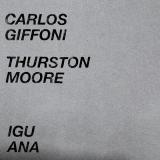
Carlos Giffoni & Thurston Moore - IGUANA (TAPE)

Carlos Giffoni reconnects with Thurston Moore for two sides of loose-limbed axe noise, oscillator worship and hard-phased, Spacemen 3-style feedback.

Giffoni’s been on a roll recently. Since the No Fun founder returned to the scene with »Vain¡, a genius set of synth mutations that appeared in iDEAL back in 2018, he’s been slowly ramping up the activity, dropping the celestial »Dream Walker« on Stephen O’Malley’s Ideologic Organ in 2024 and following it with »Pendulum«, a bumper compendium of collaborations, just a few weeks back. For those who remember Giffoni’s first trip round the block, he was always able to hold his own chopping it up in person, not just by mail.

Just scrub through his early catalog and you’ll see collabs with Nels Cline and Chris Corsano, Merzbow, Jim O’Rourke and Lasse Marhaug, and of course, Thurston Moore. The two rekindle their thing on »IGUANA’« picking up where 2001’s fabled »4 Guitars Live« performance left off. Here, Giffoni straddles a tabletop synth and FX while Moore attacks his signature Jazzmaster with a drumstick and a screwdriver – vibes fully intact.

Moore is on blistering form, sounding as if he’s taken a step back to refresh his approach since the early ‘00s when he could be spotted moonlighting on any number of basement-adjacent noise sides. Sawing at his strings and turning the guitar into a shrieking resonator, he leaves only faint vapours of the classic Sonic Youth sound as opiating accents on his animalistic wails and rumbles. On the opening half, his whammy – assisted shreds are balanced out by Giffoni’s off-world whirrs and airlocked vibrations, building a dense wall of noise towards an unexpectedly elegiac conclusion. At some point, Giffoni’s rasping churr transforms into a simmering shudder and Moore’s into hymnal drones – squint a bit and you could almost call it pretty.

Of course, they ramp things up on the flip, dissolving the melancholia with smokey white noise and twangy, post-Derek Bailey chimes that Giffoni accompanies with aggy oscillations. Like every great taped noise set, the recording quality is crucial - »IGUANA« was captured from the pit by Guillermo Hernandez Avendano, the dad of Lia Miranda who provides the cover photo. It’s that kinda show.

pre-order now10.04.2026

expected to be published on 10.04.2026

Guilty Razors - Complete Recordings 1977 - 1978

UILTY RAZORS, BONA FIDE PUNKS.


Writings on the topic that go off in all directions, mind-numbing lectures given by academics, and testimonies, most of them heavily doctored, from those who “lived through that era”: so many people today fantasize about the early days of punk in our country… This blessed moment when no one had yet thought of flaunting a ridiculous green mohawk, taking Sid Vicious as a hero, or – even worse – making the so-called alternative scene both festive and boorish. There was no such thing in 1976 or 1977, when it wasn’t easy to get hold of the first 45s by the Pistols or the Clash. Few people were aware of what was happening on the fringes of the fringes at the time. Malcolm McLaren was virtually unknown, and having short hair made you seem strange. Who knew then that rock music, which had taken a very bad turn since the early 1970s, would once again become an essential element of liberation? That, thanks to short and fast songs, it would once again rediscover that primitive, social side that was so hated by older generations? Who knew that, besides a few loners who read the music press (it was even better if they read it in English) and frequented the right record stores? Many of these formed bands, because it was impossible to do otherwise. We quickly went from listening to the Velvet Underground to trying to play the Stooges’ intros. It’s a somewhat collective story, even though there weren’t many people to start it.
The Guilty Razors were among those who took part in this initial upheaval in Paris. They were far from being the worst. They had something special and even released a single that was well above the national average. They also had enough songs to fill an album, the one you’re holding. In everyone’s opinion, they were definitely not among the punk impostors that followed in their wake. They were, at least, genuine and credible.

Guilty Razors, Parisian punk band (1975-1978). To understand something about their somewhat linear but very energetic sound, we might need to talk about the context in which it was born and, more broadly, recall the boredom (a theme that would become capital in punk songs) coupled with the desire to blow everything off, which were the basis for the formation of bands playing a rejuvenated rock music ; about the passion for a few records by the Kinks or the early Who, by the Stooges, by the Velvet mostly, which set you apart from the crowd.
And of course, we should remember this new wave, which was promoted by a few articles in the specialized press and some cutting-edge record stores, coming from New York or London, whose small but powerful influence could be felt in Paris and in a handful of isolated places in the provinces, lulled to sleep by so many appalling things, from Tangerine Dream to President Giscard d’Estaing...
In 1975-76, French music was, as almost always, in a sorry state ; it was still dominated by Johnny Hallyday and Sylvie Vartan. Local rock music was also rather bleak, apart from Bijou and Little Bob who tried to revive this small scene with poorly sound-engineered gigs played to almost no one.
In the working class suburbs at the time, it was mainly hard rock music played to 11 that helped people forget about their gruelling shifts at the factory. Here and there, on the outskirts of major cities, you still could find a few rockers with sideburns wearing black armbands since the death of Gene Vincent, but it wasn’t a proper mass movement, just a source of real danger to anyone they came across who wasn't like them. In August 1976, a festival unlike any other took place in Mont-de-Marsan – the First European Punk Festival as the poster said – with almost as many people on stage as in the audience. Yet, on that day, a quasi historical event happened, when, under the blazing afternoon sun, a band of unknowns called The Damned made an unprecedented noise in the arena, reminiscent of the chaotic Stooges in their early adolescence. They were the first genuine punk band to perform in our country: from then on, anything was possible, almost anything seemed permissible.

It makes sense that the four+1 members of Guilty Razors, who initially amplified acoustic guitars with crappy tape recorder microphones, would adopt punk music (pronounced paink in French) naturally and instinctively, since it combines liberating noise with speed of execution and – crucially – a very healthy sense of rebellion (the protesters of May 1968 proclaimed, and it was even a slogan, that they weren’t against old people, but against what had made them grow old. In the mid-1970s, it seemed normal and obvious that old people should now ALSO be targeted!!!).
At the time, the desire to fight back, and break down authority and apathy, was either red or black, often taking the form of leafleting, tumultuous general assemblies in the schoolyard, and massive or shabby demonstrations, most of the time overflowing with an exciting vitality that sometimes turned into fights with the riot police. Indeed, soon after the end of the Vietnam War and following Pinochet’s coup in Chile, all over France, Trotskyist and anarcho-libertarian fervour was firmly entrenched among parts of the educated youth population, who were equally rebellious and troublemakers whenever they had the chance. It should also be noted that when the single "Anarchy in the UK" was first heard, even though not many of us had access to it, both the title and its explosive sound immediately resonated with some of those troublemakers crying out for ANARCHY!!! Meanwhile, the left-wing majority still equated punks with reckless young neo-Nazis. Of course, the widely circulated photos in the mainstream press of Siouxsie Sioux with her swastikas didn’t necessarily help to win over the theorists of the Great Revolution. It took Joe Strummer to introduce The Clash as an anti-racist, anti-fascist and anti-ignorance band for the rejection of old-school revolutionaries to fade a little.

The Lycée Jean-Baptiste Say at Porte d’Auteuil, despite being located in the very posh and very exclusive 16th arrondissement of Paris, didn’t escape these "committed" upheavals, which doubled as the perfect outlet for the less timid members of this generation.
“Back then, politics were fun,” says Tristam Nada, who studied there and went on to become Guilty Razors’ frontman. “Jean-Baptiste was the leftist high-school in the neighbourhood. When the far right guys from the GUD came down there, the Communist League guys from elsewhere helped us fight them off.”
Anything that could challenge authority was fair game and of course, strikes for just about any reason would lead to increasingly frequent truancy (with a definitive farewell to education that would soon follow). Tristam Nada spent his 10th and 11th unfinished grades with José Perez, who had come from Spain, where his father, a janitor, had been sentenced to death by Franco. “José steered my tastes towards solid acts such as The Who. Like most teenagers, I had previously absorbed just about everything that came my way, from Yes to Led Zeppelin to Genesis. I was exploring… And then one day, he told me that he and his brother Carlos wanted to start a rock band.” The Perez brothers already played guitar. “Of course, they were Spanish!”, jokes their singer. “Then, somewhat reluctantly, José took up the bass and we were soon joined by Jano – who called himself Jano Homicid – who took up the rhythm guitar.” Several drummers would later join this core of not easily intimidated young guys who didn’t let adversity get the better of them.

The first rehearsals of the newly named Guilty Razors took place in the bedroom of a Perez aunt. There, the three rookies tried to cover a few standards, songs that often were an integral part of their lives. During a first, short gig, in front of a bewildered audience of tough old-school rockers, they launched into a clunky version of the Velvet Underground's “Heroin”. Challenge or recklessness? A bit of both, probably… And then, step by step, their limited repertoire expanded as they decided to write their own songs, sung in a not always very accurate or academic English, but who cared about proper grammar or the right vocabulary, since what truly mattered was to make the words sound as good as possible while playing very, very fast music? And spitting out those words in a language that left no doubt as to what it conveyed mattered as well.
Trying their hand a the kind of rock music disliked by most of the neighbourhood, making noise, being fiercely provocative: they still belonged to a tiny clique who, at this very moment, had chosen to impose this difference. And there were very few places in France or elsewhere, where one could witness the first stirrings of something that wasn’t a trend yet, let alone a movement.

In the provinces, in late 1976 or early 1977, there couldn’t be more than thirty record stores that were a bit more discerning than average, where you could hear this new kind of short-haired rock music called “punk”. The old clientele, who previously had no problem coming in to buy the latest McCartney or Aerosmith LP, now felt a little less comfortable there…
In Paris, these enlightened places were quite rare and often located nex to what would become the Forum des Halles, a big shopping mall. Between three aging sex workers, a couple of second-hand clothes shops, sellers of hippie paraphernalia and small fashion designers, the good word was loudly spread in two pioneering places – propagators of what was still only a new underground movement. Historically, the first one was the Open Market, a kind of poorly, but tastefully stocked cave. Speakers blasted out the sound of sixties garage bands from the Nuggets compilation (a crucial reference for José Perez) or the badly dressed English kids of Eddie and the Hot Rods. This black-painted den was opened a few years earlier by Marc Zermati, a character who wasn’t always in a sunny disposition, but always quite radical in his (good) choices and his opinions. He founded the independent label Skydog and was one of the promoters of the Mont-de-Marsan punk festivals. Not far from there was Harry Cover, another store more in tune with the new New York scene, which was amply covered in the house fanzine, Rock News (even though it was in it that the photos of the Sex Pistols were first published in France).
It was a favorite hang-out of the Perez brothers and Tristam Nada, as the latter explained. “It’s at Harry Cover’s that we first heard the Pistols and Clash’s 45s, and after that, we decided to start writing our first songs. If they could do it, so could we!”
The sonic shocks that were “Anarchy in the UK”, “White Riot” or the Buzzcocks’s EP, “Spiral Scratch” – which Guilty Razors' sound is reminiscent of – were soon to be amplified by an unparalleled visual shock. In April 1977, right after the release of their first LP, The Clash performed at the Palais des Glaces in Paris, during a punk night organised by Marc Zermati. For many who were there, it was the gig of a lifetime…
Of course, Guilty Razors and Tristam were in the audience: “That concert was fabulous… We Parisian punks were almost all dressed in black and white, with white shirts, skinny leather ties, bikers jackets or light jackets, etc. The Clash, on the other hand, wore colourful clothes. Well, the next day, at the Gibus, you’d spot everyone who had been at this concert, but they weren’t wearing anything black, they were all wearing colours.”

It makes sense to mention the Gibus club, as Guilty Razors often played there (sometimes in front of a hostile audience). It was also the only place in Paris that regularly scheduled new Parisian or Anglo-Saxon acts, such as Generation X, Siouxsie and the Banshees, the Slits, and Johnny Thunders who would become a kind of messed-up mascot for the venue. A little later, in 1978, the Rose Bonbon – formerly the Nashville – also attracted nightly owls in search of electric thrills… In 1977, the iconic but not necessarily excellent Asphalt Jungle often played at the Gibus, sometimes sharing the bill with Metal Urbain, the only band whose aura would later transcend the French borders (“I saw them as the French Sex Pistols,” said Geoff Travis, head of their British label Rough Trade). Already established in this small scene, Metal Urbain helped the young and restless Guilty Razors who had just arrived. Guitarist for Metal Urbain Hermann Schwartz remembers it: “They were younger than us, we were a bit like their mentors even if it’s too strong a word… At least they were credible. We thought they were good, and they had good songs which reminded of the Buzzcocks that I liked a lot. But at some point, they started hanging out with the Hells Angels. That’s when we stopped following them.”

The break-up was mutual, since, Guilty Razors, for their part, were shocked when they saw a fringe element of the audience at Metal Urbain concerts who repeatedly shouted “Sieg Heil” and gave Nazi salutes. These provocations, even still minor (the bulk of the skinhead crowd would later make their presence felt during concerts), weren’t really to the liking of the Perez brothers, whose anti-fascist convictions were firmly rooted. Some things are non-negotiable.
A few months earlier (in July 1978), Guilty Razors had nevertheless opened very successfully for Metal Urbain at the Bus Palladium, a more traditonally old-school rock night-club. But, as was sometimes the case back then, the night turned into a mass brawl when suburban rockers came to “beat up punks”.

Back then, Parisian nights weren’t always sweet and serene.

So, after opening as best as they could for The Jam (their sound having been ruined by the PA system), our local heroes were – once again – met outside by a horde of greasers out to get them. “Thankfully,” says Tristam, “we were with our roadies, motorless bikers who acted as a protective barrier. We were chased in the neighbouring streets and the whole thing ended in front of a bar, with the owner coming out with a rifle…”
Although Tristam and the Perez brothers narrowly escaped various, potentially bloody, incidents, they weren’t completely innocent of wrongdoing either. They still find amusing their mugging of two strangers in the street for example (“We were broke and we simply wanted to buy tickets for the Heartbreakers concert that night,” says Tristam). It so happened that their victims were two key figures in the rock business at the time: radio presenter Alain Manneval and music publisher Philippe Constantin. They filed a complaint and sought monetary compensation, but somehow the band’s manager, the skilful but very controversial Alexis, managed to get the complaint withdrawn and Guilty Razors ended up signing with Constantin with a substantial advance.

They also signed with Polydor and the label released in 1978 their only three-track 45, featuring “I Don't Wanna be A Rich”, “Hurts and Noises” and “Provocate” (songs that exuded perpetual rebellion and an unquenchable desire for “class” confrontation). It was a very good record, but due to a lack of promotion (radio stations didn’t play French artists singing in English), it didn’t sell very well. Only 800 copies were allegedly sold and the rest of the stock was pulped… Initially, the three tracks were to be included on a LP that never came to be, since they were dropped by Polydor (“Let’s say we sometimes caused a ruckus in their offices!” laughs Tristam.) In order to perfect the long-awaited LP, the band recorded demos of other tracks. There was a cover of Pink Floyd's “Lucifer Sam” from the Syd Barrett era – proof of an enduring love for the sixties’ greats –, “Wake Up” a hangover tale and “Bad Heart” about the Baader-Meinhof gang, whose actions had a profound impact on the era and on a generation seeking extreme dissent... On the album you’re now discovering, you can also hear five previously unreleased tracks recorded a bit later during an extended and freezing stay in Madrid, in a makeshift studio with the invaluable help of a drummer also acting as sound engineer. He was both an enthusiastic old hippie and a proper whizz at sound engineering. Here too, certain influences from the fifties and sixties (Link Wray, the Troggs) are more than obvious in the band’s music.

Shortly after a final stormy and rather barbaric (on the audience’s side) “Punk night” at the Olympia in June 1978, Tristam left the band ; his bandmates continued without him for a short while.

But like most pioneering punk bands of the era, Guilty Razors eventually split up for good after three years (besides once in Spain, they’d only played in Paris). The reason for ceasing business activities were more or less the same for everyone: there were no venues outside one’s small circuit to play this kind of rock music, which was still frightening, unknown, or of little interest to most people. The chances of recording an LP were virtually null, since major labels were only signing unoriginal but reassuring sub-Téléphone clones, and the smaller ones were only interested in progressive rock or French chanson for youth clubs. And what about self-production? No one in our small safety-pinned world had thought about it yet. There wasn’t enough money to embark on that sort of venture anyway.

So yes, the early days of punk in France were truly No Future!

out of Stock

Order now and we will order the item for you at our supplier.


Last In: 45 days ago
VARIOUS - [QR]V.093.STTP!.26

Various

[QR]V.093.STTP!.26

12inch[QR]V093STTP!26
COD3 QR
03.04.2026

From his roots in House, Alex Finkin is a renowned producer and creative director. Working in his Paris studio he has developed numerous projects, notably his own (Roseaux), as well as commissions for radio and television. Meanwhile, with 30 years of production and DJing under his belt, Rocco Rodamaal belongs to the elite circle of House innovators who continue to influence the scene. He's played alongside some of the best in the industry showcasing his versatility and deep understanding of the genre, and remixed artists including Marshall Jefferson, Kerri Chandler, Louie Vega & Moodymann, Todd Terry, Barbara Tucker and Robert Owens to name just a few. Alex Finkin befriended Rocco Rodamaal, who he met via the soulful Parisian club Djoon, where Alex was resident from 2006 to 2014. They have since collaborated on a number of projects together, including "In Da Hood" released on COD3 QR in 2023. Kenny Dope's "O'Gutta" remixes are a series of house and club-focused reworks characterized by raw, gritty and often stripped-back percussion, which he now brings to "In Da Hood".

Ross McMillan, known professionally as Carlos Nilmmns, is a Scottish electronic music producer, DJ and composer originally from Glasgow. Over the years he has collaborated with a range of notable artists, including Grammy-nominated and Grammy-winning figures, including Kenny Dope, Carl Craig, Kevin Saunderson and Davina Bussey, plus respected artists like Niko Marks, Rolando, Laurent Garnier, Santiago Salazar, Hardrock Striker, Karl The Voice, Zadig, Ben Sims, Andrés (who worked with Jay Dilla and Moodymann), and YouANDme. His music has been released on Planet E, Trax, Cocoon, Ornaments, Circus, Virgin, Skylax/Universal Music France and more. His style draws from house, techno and jazz influences, often combining analogue and digital production methods. A returning regular and COD3 QR favourite, he's back with another stunner in "Latin Quarter".

K' Alexi Shelby is a prominent figure in electronic music and with a career spanning decades, he's established a significant influence on House and Techno. Throughout his career he's worked with many well-known artists and remixed tracks that are now key pieces. The cultivation of his massive musical catalogue has overflowed into albums and the three labels he heads. It's also led to legendary collaborations with artists such as The Pet Shop Boys, Robert Owens, Kenny Dixon, Roy Davis Jr., Maurice Joshua, Terry Hunter, Joe Smooth, Steve Silke Hurley, Tyree Cooper, Ron Trent, Glenn Underground, Larry Heard, DJ Pierre, Carl Craig, Felix da Housecat, Marshall Jefferson, Will Smith and countless others. Already respected around the world as a true underground House legend, he delivered "Flame" in 2025 for COD3 QR. Now he's back with "When I", another deep and sexy cut.

Benny Rodrigues a.k.a. ROD unveiled his new moniker, The Lost Souldancer when he dropped "No More Voices" for COD3 QR last year. In his own words, Benny says: "The Lost Souldancer is about coping with the loss of what once was. Finding comfort in the invisible rather than what can be seen. Disconnect to connect in order to be loved rather than liked." He continues this ethos with the delicate and melodic closing track "Life and Death".

out of Stock

Order now and we will order the item for you at our supplier.


Last In: 26 days ago
Disco Pogo - Issue 9 TOMORA cover (BOOK)

The new issue of Disco Pogo features 20 pages on Prince’s influence on electronic music marking 10 years since his passing.

Our other two cover stars are Warp’s Nightmares on Wax, who is celebrating 30 years since his classic album ‘Smokers Delight’ having just sold out The Royal Albert Hall, and TOMORA who are a new duo made up of Tom from The Chemical Brothers and Scandi pop star Aurora.

Plus features on The Durutti Column, Wendy Carlos’ ‘Clockwork Orange’ soundtrack, Burial, Lorraine James, DJ Hell, DJ
Shadow, Hot Chip’s Alexis Taylor, Speedy J, Tiga and much more!

194 pages of quality music journalism by the world’s best music writers plus beautiful photography and design in a quality print magazine.

pre-order now27.03.2026

expected to be published on 27.03.2026

Razor - Shotgun Justice LP
  • 1: Miami
  • 2: United By Hatred
  • 3: Violence Condoned
  • 4: Electric Torture
  • 5: Meaning Of Pain
  • 6: Stabbed In The Back
  • 7: Shotgun Justice
  • 8: Parricide
  • 9: American Luck
  • 10: Brass Knuckles
  • 11: Burning The Bridges
  • 12: Concussion
  • 13: Cranial Stomp
  • 14: The Pugilis
also available

Splatter Vinyl


Razor, a thrash metal legend! The most valuable Canadian export since the Toronto Maple Leafs. When Dave Carlo and his band took to the stage at the legendary Headbangers Open Air Festival a few years ago, the crowds went completely wild. This enthusiastic reaction suggests that Razor may have more fans today than they did in their heyday in the mid-1980s. So the re-release of “Shotgun Justice” on vinyl comes just at the right time. The album comprises 14 tracks and features immortal classics such as “United by Hatred,” “Stabbed in the Back,” and “Brass Knuckles.” Shotgun Justice was originally released in 1990 on CD only on Dave Carlos' own label, Fist Fight Records (distributed in North America by Fringe Records). It was the first Razor album with Bob Reid on vocals (who had replaced Stace McLaren, aka Sheepdog).

pre-order now27.03.2026

expected to be published on 27.03.2026

CARLOS NIÑO & FRIENDS - BUBBLE BATHS FOR GIANTS

Opaque Pink Version

Bubble Bath for Giants is an ode, a Tribute, a reverence for Oceans, for the Mighty Magnificent Power of Fairies, to the energy that we are all everything, whole, well, but in different sized and shaped vessels at times . . . It is a Celebration of Gentleness and of incredible Force, and Charge . . . These, I sea as the same. The Yang Springs from the Yin and together they ever reflect, dance, and express themselves . . .

Many Bells, Bowls, Ceramics, Chimes, Cymbals, Drums (Bass, Sakara, Surdo, Tom, and many more,) Gongs (Chao, Cup, Indonesian, Sun, and Symphonic,) Keyboards (Metal, Synthesizer, and Wooden,) Percussion, Plant Leaf Bundles and Fronds (Bamboo, Eucalyptus, and Palm,) Ratlles, Shakers, Voice, Whistles, and Sound Design by Carlos Niño.

Featuring:
Luis ​Pérez Ixoneztli, Bernard Xolotl, ​Aaron ​Shaw, Surya ​Botofasina, Nate Mercereau, Laraaji, Darius ​Jones, Sheila Govindarajan, ​Idris Ackamoor, Deantoni ​Parks, André 3000, ​Marshall Allen, Sam ​Gendel, Sibusile ​Xaba, Mia ​Doi Todd, ​Anisia Uzeyman, Saul Williams, Jojo Abot, Jowee ​Omicil, Aztlan ​Unearthed

///

Cover Photo by Carlos, from in the Maui Waters
Art Direction, Design and Original Art by Nep Sidhu
Layout Production by Jonny O'Hara

Recorded by Carlos Niño in Topanga, California, and by some of the Artists named above, from their Homes . . .

Mastered by David Allen

///

pre-order now20.03.2026

expected to be published on 20.03.2026

T.S.O. - Gluttony EP

T.S.O.

Gluttony EP

12inchSKSS001
SPECIAL K.
17.03.2026

7SINS SERIES is a collection of seven EPs, each associated with one of the seven deadly sins. Curated by Pau Pérez, the series is released on the SpecialK Records label, driven by Carlos Caballer, and brings together seven producers, each responsible for shaping a distinct release.

LUTTONY is the first EP in the 7SINS SERIES. This release is driven by a clear mission: constant, no-compromise groove. Each track is built around catchy basslines that set the pulse from the very first bar, wrapping the listener in a hypnotic sound that never lets up. Inspired by part of the current Valencia sound, the project focuses on energy, rhythm, and club-oriented atmospheres. No detours, no filler—music made straight for the dance floor.

out of Stock

Order now and we will order the item for you at our supplier.


Last In: 69 days ago
John Lee Hooker - The Big Soul Of John Lee Hooker LP
  • San Francisco
  • Take A Look At Yourself
  • Send Me Your Pillow
  • She Shot Me Down
  • I Love Her
  • Old Time Shimmy
  • What Do You Say
  • Let's Make It
  • You Know I Love You
  • Big Soul
  • Good Rocking Mama
  • Onions
  • No One Told Me
  • Boom Boom
  • Thelma
  • Process

John Lee Hooker is widely recognised as one of the true giants of the blues, along with Muddy Waters, B.B. King, and Howlin' Wolf. Hooker is often called the "King of the Boogie" and his driving, rhythmic approach to guitar playing has become an integral part of the blues' sound and style that perpetuated the UK's rhythm and blues scene of the '60s. Presented here is one of John Lee Hooker' s finest album, The Big Soul of John Lee Hooker, recorded in Chicago in 1962.

In a career that spanned some forty odd years, a pivotal point of success came with his 1989 album The Healer, which featured collaborations with Carlos Sanatana, Bonnie Raitt, Charlie Musselwhite, and Los Lobas. The album expanded his audience beyond the blues idiom, earning him his highest Billboard album chart success (#62) his first Grammy Award; all of this at the grand-old-age of 73. For those not familiar with Hooker's earlier work, the Big Soul of John Lee Hooker is an excellent starting point.

pre-order now06.03.2026

expected to be published on 06.03.2026

Various Artists - Brazil Greastest Hits LP 2x12"
  • Joao Gilberto - Bim Bom
  • Elizete Cardoso - Outra Vez
  • Luiz Bonfa - Copacabana
  • Antônio Carlos Jobim & Roberto Paiva - Eu E O Meu Amor
  • Joao Donato - Tim-Dom-Dom
  • Carlos Lyra - Você E Eu (You And Me)
  • Baden Powell - Improviso Em Bossa Nova
  • Salinas - Tenha Fé, Pois Amanha Um Lindo Dia Vai Nascer
  • Stan Getz & Charlie Byrd - Desafinado
  • Sérgio Mendes - Oba-La-La
  • Pery Ribeiro - Garota De Ipanema
  • Orlandivo - Onde Anda O Meu Amor
  • Shorty Rogers & His Giants - Chega De Saudade (No More
  • Sylvia Telles - Corcovado
  • Grant Green - Brazil
  • Maysa - Agua De Beber
  • Quincy Jones & His Orchestra - Soul Bossa Nova
  • Trio Mocoto - Nao Adianta
  • David K (Feat. Rolando Faria) - Mas Que Nada (David K R
  • Tom & Joy - Para Bailar
  • Seu Jorge - Carolina
  • Salome De Bahia - Outro Lugar (Edit)
  • Carlinhos Brown - Brasil Brasil (Ole Ole)
  • Caetano Veloso - Hino Da Bahia
  • Suba (Feat. Cibelle) - Felicidade
  • Marcelinho Da Lua (Feat. Seu Jorge) - Cotidiano (Buzzin
  • Bebel Gilberto - August Day Song
  • Negrocan - Cada Vez (Grant Nelson Vocal Mix Edit)

Mit Brazil Greatest Hits veröffentlicht Wagram eine musikalische Reise durch die farbenfrohe Welt Brasiliens - von zeitlosen Bossa-Nova-Klassikern bis zu modernen Latin-Grooves. Auf zwei sorgfältig zusammengestellten Vinyl-LPs versammeln sich legendäre Aufnahmen und internationale Club-Favorites, die den Spirit von Rio, die Leichtigkeit des Samba und den warmen Sound des Tropenlands einfangen. Die erste LP präsentiert ikonische Stimmen und Instrumentalstücke der goldenen Bossa-Nova-Ära - voller Eleganz, Rhythmus und Melodie. Auf LP 2 geht es moderner und tanzbarer weiter: brasilianische Funk-Einflüsse, Remix-Perlen und energiegeladene Tracks zeigen, wie lebendig und vielfältig die Musikszene Brasiliens bis heute ist.

pre-order now27.02.2026

expected to be published on 27.02.2026

FABIANO DO NASCIMENTO & VITTOR SANTOS ORCHESTRA - VILA

Hidden away amidst the bustle of Rio de Janeiro’s Catete neighbourhood is a small alleyway behind a cast iron gate. At its end is Bairro Saavedra, the courtyard surrounded by Neo-colonial houses where Brazilian guitar virtuoso Fabiano do Nascimento spent much of his childhood. Built in 1928, this secluded neighbourhood with its wooden shutters, tiled floors and tranquil benches, provides the inspiration for the title of Do Nascimento’s new album VILA, a collaborative project with a sixteen piece orchestra led by trombonist and arranger Vittor Santos.

Recorded between Rio de Janeiro and Los Angeles, VILA is grand, tender, warm, playful and nostalgic. On this stunningly ambitious work, the delicate compositions led by Nascimento's guitar, which sits central in the mix, are surrounded by Santos’ breathtaking orchestral arrangements which swirl in all directions: complimenting, questioning, responding; in constant conversation.

Like the eclecticism of the architecture Do Nascimento grew up surrounded by, his music straddles many worlds at once. He is known as a Brazilian acoustic guitar master and as such has collaborated with Arthur Verocai, Airto Moreira and Itibere Zwarg. But equally at home in Los Angeles's jazz and experimental music scenes, Do Nascimento is also known for his work with artists like Sam Gendel and Carlos Nino.

Vittor Santos is an arranger and Trombonist who has worked extensively with many of the greats of Brazilian music, including João Donato, Marcos Valle, Toninho Horta, and Elza Soares.

=====================================
Credits:

Fabiano do Nascimento – 6, 7 and soprano guitars.
All orchestral arrangements and production by Vitor Santos.
Recorded at Electro-Sound studio, Los Angeles and Estúdio Fibra, Rio de Janeiro
Engineered by Jason Hiller and Garbiel Lucchini
Mastered by Mike Bozzi

Oboe – Francisco Gonçalves
Contrabaixo – Rodrigo Villa
Drums – Márcio Bahia
Violino - Ricardo Amado
Violino – Thiago Teixeira
Violin – Daniel Albuquerque
Violin – Márcio Sanches
Viola – Ivan Zandonade
Viola – Dhyan Toffolo
Cello - Hugo Pilger
Cello – Janaína Salles
Double Bass – Rômulo Gomes
Clarinet – José Batista
French Horn – Philip Doyle
Trombones - Vittor Santos
Violin – Daniel Guedes

out of Stock

Order now and we will order the item for you at our supplier.


Last In: 31 days ago
SHAKE STEW - TEN TWO LP 2x12"

SHAKE STEW

TEN TWO LP 2x12"

2x12inch47391
Traumton
13.02.2026
  • Wood
  • Ascendance
  • Garage
  • Bakunawa
  • Searching
  • Tristan Junk (Feat. Jj Whitefield)
  • Café San Marco
  • Cherry Pie
  • The Green Beauty Of The Broken World
  • Cabanes/Castellon
  • Ibdiss
  • Free Your Eyes
  • King Of Thieves
  • Tiger
  • Sergio St. Carlos

Shake Stew ist mehr als eine Band - sie ist ein Ereignis. Seit ihrer Gründung durch Bassist und Komponist Lukas Kranzelbinder umweht die Formation ein Hauch von Magie und Energie, der sich live in eine hypnotische Kraft verwandelt. Zwei Schlagzeuge, zwei Bässe und drei Bläser erzeugen einen Sound, der zwischen tranceartigen Basslinien, eruptiven Grooves und fragilen Klanggebilden oszilliert. Die Jury des Preises der deutschen Schallplattenkritik sprach von "etwas Kultischem", das den Jazz bereichert, während MOJO begeistert: "Shake Stew twists, blisters and burns like a fevered dream!" Ob im Club oder im Wiener Konzerthaus - die Band zieht alle in ihren Bann. Mit dem Jubiläumsprojekt TEN ONE TWO öffnet sich Shake Stew noch weiter: neue Klangfarben, freie Improvisationen, Kooperationen und eine Besetzung, die mit Yvonne Moriel eine aufregende Stimme integriert. Nach zehn Jahren, zahllosen Konzerten und internationalen Auszeichnungen ist klar: Shake Stew definiert Jazz als lebendige Kunstform - kompromisslos, visionär und voller Dynamit.

pre-order now13.02.2026

expected to be published on 13.02.2026

Carwyn Ellis & Rio 18 - Haf LP

Carwyn Ellis & Rio 18

Haf LP

12inchBWR084V
Bubblewrap
06.02.2026
  • Como Yo Amo
  • Tonnau Ar Tonnau
  • Whistling Sands
  • Bella Estrella
  • Shades Of Red
  • Haf
  • Gwenyn Y Owanwyn
  • Lâgrimas Frias
  • Keep On Smiling
  • Nos Da

Haf is the third album from Carwyn Ellis & Rio 18 in little over a year, no mean feat in and of itself but especially considering Carwyn’s work with other artists (including Edwyn Collins and the North Mississippi Allstars) this year too.

The album picks up where their last (Fontana Rosa) left off, with around half the album being recorded analog to tape at Gizzard Studios in London, with one last tune remaining from their sessions at the legendary (but now closed) Toerag Studios.

There are echoes here of their first album, Joia! - the recordings were once again instigated by the great Brazilian producer and multi-instrumentalist who happened to be visiting London earlier in the year. He suggested doing something.... so they did. And there is a return to more definite Brazilian influences too - Tonnau Ar Tonnau is an homage to ‘Onda’ by Cassiano, Keep On Smiling has a distinct samba / chorro feel. Gwenyn y Gwanwyn (about helping a bee out if you see it struggling) is very much a nod to the psychedelic samba funk of Antonio Carlos e Jocafi. But other Latin styles still loom large: on the sultry salsa of Bella Estrella or the melancholic Andean ballad, Lagrimas Frias.

Anglo-Brazilian singer Nina Miranda features on the Lalo Schifrin goes samba Shades of Red, while new addition to the Rio 18 family (at least on record), Miriam Isaac adds a real RnB edge to the record, along with some beautiful duets: the Salsoul banger Como Te Amo and the gorgeous Whistling Sands (about a beach in North Wales) are standouts.

In reverse to how Carwyn made the first two Rio 18 albums, Haf was recorded in London
and Wales and mixed over five hectic days in Rio. Three days later, it was mastered and at
the pressing plant. Time doesn’t wait for Carwyn Ellis & Rio 18!!

Finally, the song ‘Haf’ and the album itself are dedicated to Haf Morris, Carwyn’s late music teacher - he says, “her focus, guidance and patience shaped me like no other. I hope she’s enjoyed my musical journey, from wherever she’s watching. Diolch, Haf”.

pre-order now06.02.2026

expected to be published on 06.02.2026

Various - Infinite Brain

A1 | Carlos Native – Be Yourself
Andalusian producer Carlos Native unfolds an almost cinematic sensibility: a slow, introspective piece where a hypnotic bassline and wide, horizontal backgrounds build an inner journey rather than a track aimed at immediate impact.

A2 | Slit Observers – Synthmek
The Galician duo present a hard, high-energy work. Industrial-driven drums demand movement, while an aggressive, sharp arpeggiated bass defines a sonic identity with no concessions.

A3 | Negocius Man – 8N8
The Madrid-based veteran constructs 8N8 with modular precision: each sound falls into place with an almost architectural logic. The result is a synthetic, measured and structured piece shaped by years of experience.

B1 | Allumynd – Chestcollider
Making their debut on the electro scene, Allumynd delivers an original and daring track. An otherworldly snare and a woven vocal structure turn this piece into a clear example of new-generation electro: atmospheric and bold.

B2 | Komatssu – Non Servian
The Asturian producer, under his Komatssu alias, opts for continuous evolution without a kick drum as support. The track works like an organism that grows and transforms as it progresses, generating a hypnotic and mature effect.

B3 | Irrational Language feat. Lucky – We Are Comming Back
Irrational Language dives into braindance with meticulous technical production: drums filled with micro-artifacts, luminous synthesizers, and Lucky’s vocals processed and spatialized to reinforce a narrative of rebirth and emerging from darkness.

out of Stock

Order now and we will order the item for you at our supplier.


Last In: 3 months ago
Various - Wizzz! French Psychorama Volume 5 (67-75)

The journey through French-speaking pop archives continues with this fifth volume, packed with fuzz, gimmicks, and dissent. Far from the charts, the selected tracks display a great creative freedom, often backed by corrosive humor. Welcome to the surprising, kaleidoscopic, and colorful world of the late sixties and early seventies, Wizzz!
Born in Montauban, Robert Pico stumbled into music by chance when he met René Vaneste, then artistic director at Pathé-Marconi. René brought him to Paris to record his first 45 RPM EP in 1964. A year later, Pierre Perret introduced him to Vogue, where he recorded his second album with Claude Nougaro’s orchestra. Sylvie Vartan then introduced him to RCA, where he recorded four singles, including the astonishing "Chien Fidèle," a track backed by a hair-rising fuzz guitar. Alongside his solo career, he also composed for other artists like Alain Delon (the song was recorded but remains unreleased), Magali Noël, Bourvil, and Georges Guétary. In the Paris of the sixties, he mingled with Mireille Darc, Elsa Martinelli, Marie Laforêt, France Gall, Françoise Hardy, Petula Clark, Régine, Dani, Serge Gainsbourg, Joe Dassin, Franck Fernandel, Charles Level, and Roland Vincent. Despite his efforts and winning a Grand Prix Sacem for his final record, Robert Pico didn’t achieve the expected success in show business and decided to leave Paris and return to the Southwest, where he devoted himself to writing. He is the author of 23 books (including Delon et Compagnie, Jean-Marc Savary Editions 2025, a memoir about his youth and his many encounters). Today, he is relieved to never have become a celebrity and devotes himself to his work with passion.
In 1969, the Franco-Italian movie Erotissimo was released, directed by Gérard Pirès (who later directed Taxi in 1998, written and produced by Luc Besson). This pop comedy features Annie Girardot, Jean Yanne, Francis Blanche, Serge Gainsbourg, Nicole Croisille, Jacques Martin, and Patrick Topaloff. The soundtrack was written by Michel Polnareff and William Sheller, with lyrics by Jean-Lou Dabadie. "La Femme Faux-cils," performed by Annie Girardot. It recounts the feelings of a rich CEO's wife who seeks to develop her sex appeal under the influence of advertisement and magazines. Groovy, sparkling and light, this track, with ITS lush arrangements humorously critiques consumer society and feminine beauty standards.
“Je suis l’Etat” (1967) is the flagship track of the first EP by singer-songwriter Spauv Georges, aka Georges Larriaga, better known as Jim Larriaga (1941-2022). Born into a family of bakers, the young man was initially planning to become a hairdresser when he discovered English-speaking music through Elvis Presley and the Beatles. After this revelation, he decided he would become a songwriter and gave himself five years to succeed. He recorded his first two EP’s independently for RCA under the pseudonym Spauv Georges; meaning “that poor George”, a nickname given to him by the mother of her friend Jean-Pierre Prévotat (future drummer of the Players, Triangle, or Johnny Hallyday). Portraying a depressed and eccentric young man, Spauv Georges created corrosive and amusing songs that didn’t reach a wide audience, despite a TV appearance with Jean-Christophe Averty.
Supported by his loyal friend and fellow songwriter Jean-Max Rivière, Georges Larriaga met the future singer Carlos in the early '70s, then Sylvie Vartan’s assistant. He wrote songs for Carlos, including the popular "La vie est belle," "Y’a des indiens partout," and "La cantine", which went onto become a huge hit in 1972. He also composed for Claude François (“Anne-Marie”, 1971), Charlotte Julian (“Fleur de province”, 1972), helped launch child singer Roméo (who sold 4 million records), and later wrote the hit "Pas besoin d’éducation sexuelle" (1975) for the young Julie Bataille. In 1971, Jim recorded an album for Disc'Az: “L’univers étrange et fou de Jim Larriaga”, which featured pop gems like “La maison de mon père”.
The story of the song "Zoé" began when Pierre Dorsay, artistic director at Vogue Records, asked Swiss singer and musician Pierre Alain to write a song for a new female singer. The inspiration came when he realized that Zoé (the artist's name) was also the name of France's first atomic battery, created in 1948, which consisted of uranium oxide immersed in heavy water! The lyrics reflect a bubbling energy that must be handled with caution, while the instrumentation echoes this atomic theme, notably with the use of a theremin.
Zoé’s career lasted only as long as a single 45 RPM, but it seems Christine Fontane was the vocalist behind this pseudonym, who is known for several EPs, a good "popcorn" album in 1964, and a handful of children’s singles in the '70s. Regardless, the photograph on the cover is of a different girl entirely.
Later, Pierre Alain continued his career, writing songs for himself, Marie Laforêt, Danièle Licari, Alice Dona, Arlette Zola (3rd place in Eurovision 1982), and achieving multiple gold and platinum records in Canada. Also an inventor with several patents, president of the Romande Academy, and head of the French Alliance in Geneva, he now composes atonal music, books, and poetry. Moreover, he is also the host of "Les Mardis de Pierre Alain" at "Le P'tit Music'Hohl" in Geneva.
Filled with oriental choruses and fuzz guitar, "Fou" is from Jacques Da Sylva's only EP released by Vogue in 1967. Despite the quality of this recording, all traces of this singer disappear after this first effort.
Valentin is a baroque pop singer born in Belgium. He is the songwriter and composer of most of the tracks on his three singles released in the late 60s in Canada. A legend says that he reincarnated himself as Jacky Valentin during the 1970s for a rock'n'roll revival career in Belgium, but his older brother sadly debunked this story. Valentin's first two singles were arranged by Claude Rogen, a Parisian session pianist who had come to Canada to promote the song “Mister A Gogo”, a cover of David Bowie’s “Laughing Gnome”, adapted by singer Delphine, his wife at the time. Far from his usual network, Claude Rogen arranged music for Polydor, including the arrangements for “Je suis un vagabond” in 1969, a jerk tune with string arrangements and a furious optimism.
Jacques Malia wrote, composed, and recorded his only 45 EP for Festival in 1966. “Histoire de gitan” is an incredible beat track with bohemian scat that tells the story of a gypsy musician who came to Paris to make it in the Music-Hall, to no avail. The hero of the song and its author probably shared a similar fate, as Jacques Malia faded into anonymity after this remarkable attempt.
Bernard Jamet recorded two EPs for Barclay in the late sixties and co-wrote several songs with Christine Pilzer, Pascal Danel, and prolific songwriters Michel Delancray and Mya Simile. The track “Raison Légale” (1968), his masterpiece, immerses the listener in a courtroom right when a murderer is being judged, with jerk rhythm and free arrangements. A unique, paranoid, judicial, and psychedelic oddity.
Jean-Pierre Lebrot-Millers started his career in show business in 1967 as a singer and songwriter for the Philips label. After three singles, he wrote several songs of a new kind with his friend Pierre Halioche, in the midst of the sexual liberation movement and the democratization of drugs. With provocative lyrics, “Les filles du hasard” and “Barbara au Chapeau Rose” were released on a Philips singles in 1968. The character of Barbara was inspired by a queen of Parisian nightlife during the psychedelic years: model Charlotte Martin, who dated Eric Clapton from 1965 to 1968, then Jimmy Page from 1970 to 1983. Jean-Claude Petit’s arrangements, with a table-filled intro, soul brass, and Hendrixian guitar, emphasize the flamboyance of a hedonistic and sexy character, whose dog is named Junkie because “Junkie est un nom exquis”! The track was recorded live in three takes with a full orchestra.
Upon its release, the record was censored by Europe 1 and RTL due to its references to drug use. Jean-Pierre Lebrot was then banned from the airwaves and later dismissed by his record label. He changed his artist name to Jean-Pierre Millers, while his companion Pierre Halioche became D. Dolby for a new dreamy composition, “Chilla”, which Jean-Pierre produced himself with arrangements by Jean Musy. Once again, the song was immediately censored everywhere. After this setback, he decided to stop singing and started taking on odd jobs to support his Swedish wife and their son until the day he met Jean-Pierre Martin, then production manager at Decca, who had worked with Manu Dibango. Martin offered Jean-Pierre Lebrot-Millers, then employed at Rank Xerox, the position of artistic director at Decca. He accepted and became, a year later, promotion director (radio, press, TV). He worked on Julio Iglesias’s first album for Decca, which became a massive hit and allowed him to meet Claude Carrère. The latter asked him to write new songs and find their performers, much like a “talent scout.” It’s through him that Jean-Pierre discovered Julie Pietri and Corinne Hermès. He composed “Ma Pompadour” for Ringo, Sheila’s husband, and took the microphone again for the syncope hit “Rendez-Vous” in 1982.
That same year, Jean-Pierre Lebrot-Millers tried to release a track for which he had heavily gone into debt: “Si la vie est un cadeau”. Having recorded it in London, he presented it to numerous professionals, all of whom refused to get involved. The same thing happened with Antenne 2 and the Sacem when he proposed the song as France’s entry for Eurovision. He then met Haïm Saban, who was producing cartoon soundtracks and had just launched the Goldorak theme song. Saban, having listened to the song, declared it had the potential to become a hit. He sent Jean-Pierre and Corinne Hermès to meet the CEO of the Luxembourg radio and television network. The latter received them, asked to hear a verse and chorus a cappella in his office, and immediately hired them to represent Luxembourg at Eurovision 1983. They reworked the arrangements and recorded a new version with Haïm Saban as co-producer. The song ended up winning Eurovision 1983, a great comeback for our hero. He continued producing and hung out with the band Nacash in Belgium when a couple came to introduce their daughter for an impromptu audition in a hotel room. The girl sang “Les démons de minuit” while dancing to a radio cassette. Impressed, he had her take singing lessons for a year and composed a song for her (for which he had the melody and title, but no lyrics). This required him to go on the hunt for a lyricist, who ended up being Guy Carlier. They recorded the song, which was initially a ballad, at Bernard Estardy’s CBE studio, and gave the singer a new name: Melody. They showed the song around their industry network without success. Later, Estardy called Jean-Pierre to suggest changing the rhythm and making it pop-rock. Orlando, Dalida’s brother, liked the result and decided to co-produce the track. “Y’a pas que les grands qui rêvent » became a classic hit. The song has since been covered by Juliette Armanet (as a ballad, like the original) and Valentina.

Born into an aristocratic Breton family, Hervé Mettais-Cartier worked as a DJ at Queen Kiss, a nightclub in Poitiers, where he formed the band Les Concentrés with Michel (an actor) and Christian (a radio technician). Together, they created a repertoire of whimsical songs (“Ma bique est morte”, “J’suis un salaud”, “Fils de dégénéré”...) that they performed on stage dressed in white (in homage to “concentrated milk”). They performed at Bliboquet and Olympia in 1968 for the 10th edition of the “Relais de la chanson Française” organized by L’Humanité-Dimanche and Nous les Garçons et les Filles, sponsored by Pepsi Cola. Winners in the author-composer category, alongside Danish singer Dorte, their visibility allowed them to record a 45, and appear on television in Jean-Christophe Averty’s show. The A-side of the disc features Bruno le ravageur, a casatchok dedicated to Bruno Caquatrix, the director of Olympia, nicknamed in the song “Coq Atroce” or “croque-actrices”. The B-side is dedicated to “Fils de dégénéré”, a quirky tribute to Hervé's aristocratic roots, mixing absurdity with sophisticated vocal harmonies.
After Les Concentrés, Hervé Mettais-Cartier formed the duo La Paire et sa Bêtise with his friend Olivier Robert. They performed in Parisian cabarets and toured with Pierre Vassiliu. In the late 1970s, Hervé began a solo career. He recorded two albums for the Motors label in 1978 and 1979, which did not achieve their anticipated success due to lack of promotion. In 1980, he met Bernadette, with whom he started a family and created a “Chansons à voir” (songs to see) show that he performed until his death at the end of 2024.

Publicité comes from the final EP by the Missiles (Ducretet Thomson, 1966), a disc that also includes “La (nouvelle) guerre de cent ans”, featured on Volume 4 of our Wizzz! series. Please refer to the booklet for the story of the band.

“He’s 1.82 meters tall, 28 years old, weighs 135 kg, is black and Belgian”: this is the description of singer Hegesippe on the back of his sole single (Decca, 1967). He appears on the album cover wearing a Greek toga, like a hippie gag – we are at the end of the year 1967. In “Le crédo d’Hegesippe”, this former bodyguard of Antoine and the Charlots plays the delightful card of the thick brute converted to Flower-Power and non-violence, with arrangements by Jean-Daniel Mercier, aka Paul Mille.
“Ethéro-disco” was released on a promotional record for clients of the Maréchal company (Liège, Belgium) for the New Year 1979. Over a funky rhythm, celebrity impersonations (Brigitte Bardot, Jacques Dutronc, Fernandel…) deliver an enigmatic text about pharmaceutical products like ether, bismuth, and aspartate. The track was composed by Dan Sarravah (responsible for Joanna's “Hold-up inusité” featured on Wizzz! Volume 3) and Tony Talado, who was also a singer (one 45 in 1967), songwriter (with over a dozen credits between 1964 and 1985 in various styles from surf music to disco), author (Devenez Végétarien, Dricot Editions, 1985), ad designer, and psychologist.

Décollez-les is on the A-side of Mamlouk's only single, a pseudonym for Marsel Hurten, who is known for his work on several EPs in the late sixties, as well as composing music for Hervé Vilard’s “Capri, c’est fini”, Claude Channes' “La Haine”, Annie Philippe’s “On m’a toujours dit”, and Nancy Holloway’s “Panne de Cœur”.
This strange song, with Afrobeat horns and absurd dialogues between a chef and his kitchen staff, is the result of a collaboration between Marsel Hurten and one of his neighbors, a photographer from Pavillon-sous-Bois (93), where the musician settled after returning from the Algerian War. A music video was shot to promote the record.
Marsel Hurten was born in Tourcoing (59) into a musical family. At a young age, he joined the brass band founded by his grandfather, playing the piston before studying trumpet at the conservatory, as well as teaching himself how to play the guitar. As an orchestra musician, he toured in France, Belgium, Germany, and England. He released a series of solo 45’s between 1965 and 1968 for the DMF and Az labels before stopping recording to focus on working for other artists (Gilles Olivier, Noëlle Cordier…).
“L’amour nu” (Vogue, 1971) is the work of the short-lived Belgian band Mozaïque. The track, written by singer Jacques Albin, closely resembles another of his compositions, “Carré Blanc”, which he recorded in 1969 for Disc’AZ.
Represented by the Lumi Son micro-label based in Marignane (Côte d'Azur), Jean-Marc Garrigues released two 45 RPMs in the late sixties, defending the French jerk sound. The song “Je dis Non” is a short, joyful ode to youth, pop music, and rebellion.
Songwriter and performer Jacques Penuel released three singles. The first one, “Astronef 328” (Fontana, 1969), features a dizzying series of chords punctuated by sound effects, a sci-fi story, and arrangements by Jean-Claude Vannier.

We would like to sincerely thank Pierre Alain, Moon Blaha, Marsel Hurten, Bastien Larriaga, Jean-Pierre Lebrot-Millers, Bernadette Mettais-Cartier, Robert Pico, Olivier Robert, Claude Rogen, Micky Segura.


out of Stock

Order now and we will order the item for you at our supplier.


Last In: 3 months ago
JAGGED CITY - THERE ARE MORE OF US, ALWAYS EP
  • (Don't Dream Its Over)
  • Imaginary Lines
  • Rain And Sirens
  • Ocean East, Ocean West
  • Hairspring
  • Minus Power
  • (Deluge In A Paper Cup)
also available

GREEN VINYL


Jagged City unveils their debut instrumental EP, `There Are More of Us, Always`, a bold collection that moves between spacious, melodic guitar passages and raucous, swelling climbs. With heartfelt, melodious songwriting, a diverse range of eclectic touches buried within, and eruptions of dense, layered sound, this record delivers wonderfully balanced compositions through raw and personal production. The project began as a cross-continental art experiment between Jake Woodruff (Defeater) and Carlos Torres (former touring member of Explosions In The Sky). What started as a simple exchange of ideas quickly found real shape through collaborative composition and thoughtful arrangement. Early sessions with David Haik helped refine the songs' structures and drum frameworks, setting the groundwork for what would become Jagged City's striking debut. "We wrote with pure instinct, just tried to add something new to a genre that we love. As we traded ideas, we took some left turns and incorporated elements that may be unexpected." (Woodruff) The result feels immediate, deviously rough at the edges, and charged with a punk-minded intensity that keeps the momentum taut and the sound intimate. RIYL Mogwai, Do Make Say Think, Godspeed, Mono, Defeater, Explosions In The Sky

pre-order now30.01.2026

expected to be published on 30.01.2026

JAGGED CITY - THERE ARE MORE OF US, ALWAYS EP

Jagged City unveils their debut instrumental EP, `There Are More of Us, Always`, a bold collection that moves between spacious, melodic guitar passages and raucous, swelling climbs. With heartfelt, melodious songwriting, a diverse range of eclectic touches buried within, and eruptions of dense, layered sound, this record delivers wonderfully balanced compositions through raw and personal production. The project began as a cross-continental art experiment between Jake Woodruff (Defeater) and Carlos Torres (former touring member of Explosions In The Sky). What started as a simple exchange of ideas quickly found real shape through collaborative composition and thoughtful arrangement. Early sessions with David Haik helped refine the songs' structures and drum frameworks, setting the groundwork for what would become Jagged City's striking debut. "We wrote with pure instinct, just tried to add something new to a genre that we love. As we traded ideas, we took some left turns and incorporated elements that may be unexpected." (Woodruff) The result feels immediate, deviously rough at the edges, and charged with a punk-minded intensity that keeps the momentum taut and the sound intimate. RIYL Mogwai, Do Make Say Think, Godspeed, Mono, Defeater, Explosions In The Sky

pre-order now30.01.2026

expected to be published on 30.01.2026

JOHN ROSEBORO & MEI SEMONES - Waters Of March / How To Cope
  • A.waters Of March
  • B.how To Cope

May Simones has been garnering attention for her solid Berklee-trained technique, musicality spanning J-pop, jazz, indie, and bossa nova, and bilingual
English-Japanese lyrics. Following her 2025 Fuji Rock Festival appearance, she has already confirmed her first Japan tour, starting in January 2026.
She is one of the most talked-about singer-songwriters today. Meanwhile, John Roseboro is a Haitian-American singer-songwriter who blends elements of indie
folk, bedroom pop, and jazz with bossa nova rhythms. Unconstrained by typical idioms, his unconventional songwriting and arrangements have led him to
proclaim himself "post-bossa nova," garnering attention among some listeners in Japan.

The duo's cover of Antonio Carlos Jobim's classic "Waters of March" was a hit that quickly raised their profile. The intimate atmosphere created by May's soft
vocals and John's guitar is a testament to the two's friendship. This outstanding cover could set a new standard for English-language bossa nova.

pre-order now19.12.2025

expected to be published on 19.12.2025

SHAY HAZAN - WHEN IT RAIN IT POURS
  • Kolot (Feat. Abate Berihun)
  • Carlos
  • Slowly
  • Embrace
  • Trip To The Sahara
  • Move On
  • 4-8:
  • Lpb
  • When It Rains
  • It Pours
  • Haziza Has Got The Juice

Bassist, composer and producer Shay Hazan returns with his third solo album, "When It Rains It Pours", on Batov Records. Following the critical success of "Reclusive Ritual" and "Wusul" Hazan takes a bold step forward, shifting from the guimbri-led sound that established his reputation to a broader palette of bass, guitar, and synth-driven compositions.

pre-order now05.12.2025

expected to be published on 05.12.2025

Items per Page:
N/ABPM
Vinyl