Поиск:carlo

Стили
Все
Disco Pogo - Issue 9 Prince Cover (BOOK)

The new issue of Disco Pogo features 20 pages on Prince’s influence on electronic music marking 10 years since his passing.

Our other two cover stars are Warp’s Nightmares on Wax, who is celebrating 30 years since his classic album ‘Smokers Delight’, and TOMORA who are a new duo made up of Tom from The Chemical Brothers and Scandi pop star Aurora.

Plus features on The Durutti Column, Wendy Carlos’ ‘Clockwork Orange’ soundtrack, Burial, Lorraine James, DJ Hell, DJ Shadow, Hot Chip’s Alexis Taylor, Speedy J, Tiga and much more!
194 pages of quality music journalism by the world’s best music writers plus beautiful photography and design in a quality print magazine.

нет на складе

Закажите сейчас, и мы закажем товар для вас у нашего поставщика.


Последний логин: 39 дн. назад
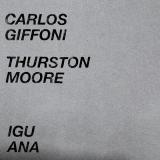
Carlos Giffoni & Thurston Moore - IGUANA (TAPE)

Carlos Giffoni reconnects with Thurston Moore for two sides of loose-limbed axe noise, oscillator worship and hard-phased, Spacemen 3-style feedback.

Giffoni’s been on a roll recently. Since the No Fun founder returned to the scene with »Vain¡, a genius set of synth mutations that appeared in iDEAL back in 2018, he’s been slowly ramping up the activity, dropping the celestial »Dream Walker« on Stephen O’Malley’s Ideologic Organ in 2024 and following it with »Pendulum«, a bumper compendium of collaborations, just a few weeks back. For those who remember Giffoni’s first trip round the block, he was always able to hold his own chopping it up in person, not just by mail.

Just scrub through his early catalog and you’ll see collabs with Nels Cline and Chris Corsano, Merzbow, Jim O’Rourke and Lasse Marhaug, and of course, Thurston Moore. The two rekindle their thing on »IGUANA’« picking up where 2001’s fabled »4 Guitars Live« performance left off. Here, Giffoni straddles a tabletop synth and FX while Moore attacks his signature Jazzmaster with a drumstick and a screwdriver – vibes fully intact.

Moore is on blistering form, sounding as if he’s taken a step back to refresh his approach since the early ‘00s when he could be spotted moonlighting on any number of basement-adjacent noise sides. Sawing at his strings and turning the guitar into a shrieking resonator, he leaves only faint vapours of the classic Sonic Youth sound as opiating accents on his animalistic wails and rumbles. On the opening half, his whammy – assisted shreds are balanced out by Giffoni’s off-world whirrs and airlocked vibrations, building a dense wall of noise towards an unexpectedly elegiac conclusion. At some point, Giffoni’s rasping churr transforms into a simmering shudder and Moore’s into hymnal drones – squint a bit and you could almost call it pretty.

Of course, they ramp things up on the flip, dissolving the melancholia with smokey white noise and twangy, post-Derek Bailey chimes that Giffoni accompanies with aggy oscillations. Like every great taped noise set, the recording quality is crucial - »IGUANA« was captured from the pit by Guillermo Hernandez Avendano, the dad of Lia Miranda who provides the cover photo. It’s that kinda show.

Сделать предзаказ10.04.2026

он должен быть опубликован на 10.04.2026

Guilty Razors - Complete Recordings 1977 - 1978

UILTY RAZORS, BONA FIDE PUNKS.


Writings on the topic that go off in all directions, mind-numbing lectures given by academics, and testimonies, most of them heavily doctored, from those who “lived through that era”: so many people today fantasize about the early days of punk in our country… This blessed moment when no one had yet thought of flaunting a ridiculous green mohawk, taking Sid Vicious as a hero, or – even worse – making the so-called alternative scene both festive and boorish. There was no such thing in 1976 or 1977, when it wasn’t easy to get hold of the first 45s by the Pistols or the Clash. Few people were aware of what was happening on the fringes of the fringes at the time. Malcolm McLaren was virtually unknown, and having short hair made you seem strange. Who knew then that rock music, which had taken a very bad turn since the early 1970s, would once again become an essential element of liberation? That, thanks to short and fast songs, it would once again rediscover that primitive, social side that was so hated by older generations? Who knew that, besides a few loners who read the music press (it was even better if they read it in English) and frequented the right record stores? Many of these formed bands, because it was impossible to do otherwise. We quickly went from listening to the Velvet Underground to trying to play the Stooges’ intros. It’s a somewhat collective story, even though there weren’t many people to start it.
The Guilty Razors were among those who took part in this initial upheaval in Paris. They were far from being the worst. They had something special and even released a single that was well above the national average. They also had enough songs to fill an album, the one you’re holding. In everyone’s opinion, they were definitely not among the punk impostors that followed in their wake. They were, at least, genuine and credible.

Guilty Razors, Parisian punk band (1975-1978). To understand something about their somewhat linear but very energetic sound, we might need to talk about the context in which it was born and, more broadly, recall the boredom (a theme that would become capital in punk songs) coupled with the desire to blow everything off, which were the basis for the formation of bands playing a rejuvenated rock music ; about the passion for a few records by the Kinks or the early Who, by the Stooges, by the Velvet mostly, which set you apart from the crowd.
And of course, we should remember this new wave, which was promoted by a few articles in the specialized press and some cutting-edge record stores, coming from New York or London, whose small but powerful influence could be felt in Paris and in a handful of isolated places in the provinces, lulled to sleep by so many appalling things, from Tangerine Dream to President Giscard d’Estaing...
In 1975-76, French music was, as almost always, in a sorry state ; it was still dominated by Johnny Hallyday and Sylvie Vartan. Local rock music was also rather bleak, apart from Bijou and Little Bob who tried to revive this small scene with poorly sound-engineered gigs played to almost no one.
In the working class suburbs at the time, it was mainly hard rock music played to 11 that helped people forget about their gruelling shifts at the factory. Here and there, on the outskirts of major cities, you still could find a few rockers with sideburns wearing black armbands since the death of Gene Vincent, but it wasn’t a proper mass movement, just a source of real danger to anyone they came across who wasn't like them. In August 1976, a festival unlike any other took place in Mont-de-Marsan – the First European Punk Festival as the poster said – with almost as many people on stage as in the audience. Yet, on that day, a quasi historical event happened, when, under the blazing afternoon sun, a band of unknowns called The Damned made an unprecedented noise in the arena, reminiscent of the chaotic Stooges in their early adolescence. They were the first genuine punk band to perform in our country: from then on, anything was possible, almost anything seemed permissible.

It makes sense that the four+1 members of Guilty Razors, who initially amplified acoustic guitars with crappy tape recorder microphones, would adopt punk music (pronounced paink in French) naturally and instinctively, since it combines liberating noise with speed of execution and – crucially – a very healthy sense of rebellion (the protesters of May 1968 proclaimed, and it was even a slogan, that they weren’t against old people, but against what had made them grow old. In the mid-1970s, it seemed normal and obvious that old people should now ALSO be targeted!!!).
At the time, the desire to fight back, and break down authority and apathy, was either red or black, often taking the form of leafleting, tumultuous general assemblies in the schoolyard, and massive or shabby demonstrations, most of the time overflowing with an exciting vitality that sometimes turned into fights with the riot police. Indeed, soon after the end of the Vietnam War and following Pinochet’s coup in Chile, all over France, Trotskyist and anarcho-libertarian fervour was firmly entrenched among parts of the educated youth population, who were equally rebellious and troublemakers whenever they had the chance. It should also be noted that when the single "Anarchy in the UK" was first heard, even though not many of us had access to it, both the title and its explosive sound immediately resonated with some of those troublemakers crying out for ANARCHY!!! Meanwhile, the left-wing majority still equated punks with reckless young neo-Nazis. Of course, the widely circulated photos in the mainstream press of Siouxsie Sioux with her swastikas didn’t necessarily help to win over the theorists of the Great Revolution. It took Joe Strummer to introduce The Clash as an anti-racist, anti-fascist and anti-ignorance band for the rejection of old-school revolutionaries to fade a little.

The Lycée Jean-Baptiste Say at Porte d’Auteuil, despite being located in the very posh and very exclusive 16th arrondissement of Paris, didn’t escape these "committed" upheavals, which doubled as the perfect outlet for the less timid members of this generation.
“Back then, politics were fun,” says Tristam Nada, who studied there and went on to become Guilty Razors’ frontman. “Jean-Baptiste was the leftist high-school in the neighbourhood. When the far right guys from the GUD came down there, the Communist League guys from elsewhere helped us fight them off.”
Anything that could challenge authority was fair game and of course, strikes for just about any reason would lead to increasingly frequent truancy (with a definitive farewell to education that would soon follow). Tristam Nada spent his 10th and 11th unfinished grades with José Perez, who had come from Spain, where his father, a janitor, had been sentenced to death by Franco. “José steered my tastes towards solid acts such as The Who. Like most teenagers, I had previously absorbed just about everything that came my way, from Yes to Led Zeppelin to Genesis. I was exploring… And then one day, he told me that he and his brother Carlos wanted to start a rock band.” The Perez brothers already played guitar. “Of course, they were Spanish!”, jokes their singer. “Then, somewhat reluctantly, José took up the bass and we were soon joined by Jano – who called himself Jano Homicid – who took up the rhythm guitar.” Several drummers would later join this core of not easily intimidated young guys who didn’t let adversity get the better of them.

The first rehearsals of the newly named Guilty Razors took place in the bedroom of a Perez aunt. There, the three rookies tried to cover a few standards, songs that often were an integral part of their lives. During a first, short gig, in front of a bewildered audience of tough old-school rockers, they launched into a clunky version of the Velvet Underground's “Heroin”. Challenge or recklessness? A bit of both, probably… And then, step by step, their limited repertoire expanded as they decided to write their own songs, sung in a not always very accurate or academic English, but who cared about proper grammar or the right vocabulary, since what truly mattered was to make the words sound as good as possible while playing very, very fast music? And spitting out those words in a language that left no doubt as to what it conveyed mattered as well.
Trying their hand a the kind of rock music disliked by most of the neighbourhood, making noise, being fiercely provocative: they still belonged to a tiny clique who, at this very moment, had chosen to impose this difference. And there were very few places in France or elsewhere, where one could witness the first stirrings of something that wasn’t a trend yet, let alone a movement.

In the provinces, in late 1976 or early 1977, there couldn’t be more than thirty record stores that were a bit more discerning than average, where you could hear this new kind of short-haired rock music called “punk”. The old clientele, who previously had no problem coming in to buy the latest McCartney or Aerosmith LP, now felt a little less comfortable there…
In Paris, these enlightened places were quite rare and often located nex to what would become the Forum des Halles, a big shopping mall. Between three aging sex workers, a couple of second-hand clothes shops, sellers of hippie paraphernalia and small fashion designers, the good word was loudly spread in two pioneering places – propagators of what was still only a new underground movement. Historically, the first one was the Open Market, a kind of poorly, but tastefully stocked cave. Speakers blasted out the sound of sixties garage bands from the Nuggets compilation (a crucial reference for José Perez) or the badly dressed English kids of Eddie and the Hot Rods. This black-painted den was opened a few years earlier by Marc Zermati, a character who wasn’t always in a sunny disposition, but always quite radical in his (good) choices and his opinions. He founded the independent label Skydog and was one of the promoters of the Mont-de-Marsan punk festivals. Not far from there was Harry Cover, another store more in tune with the new New York scene, which was amply covered in the house fanzine, Rock News (even though it was in it that the photos of the Sex Pistols were first published in France).
It was a favorite hang-out of the Perez brothers and Tristam Nada, as the latter explained. “It’s at Harry Cover’s that we first heard the Pistols and Clash’s 45s, and after that, we decided to start writing our first songs. If they could do it, so could we!”
The sonic shocks that were “Anarchy in the UK”, “White Riot” or the Buzzcocks’s EP, “Spiral Scratch” – which Guilty Razors' sound is reminiscent of – were soon to be amplified by an unparalleled visual shock. In April 1977, right after the release of their first LP, The Clash performed at the Palais des Glaces in Paris, during a punk night organised by Marc Zermati. For many who were there, it was the gig of a lifetime…
Of course, Guilty Razors and Tristam were in the audience: “That concert was fabulous… We Parisian punks were almost all dressed in black and white, with white shirts, skinny leather ties, bikers jackets or light jackets, etc. The Clash, on the other hand, wore colourful clothes. Well, the next day, at the Gibus, you’d spot everyone who had been at this concert, but they weren’t wearing anything black, they were all wearing colours.”

It makes sense to mention the Gibus club, as Guilty Razors often played there (sometimes in front of a hostile audience). It was also the only place in Paris that regularly scheduled new Parisian or Anglo-Saxon acts, such as Generation X, Siouxsie and the Banshees, the Slits, and Johnny Thunders who would become a kind of messed-up mascot for the venue. A little later, in 1978, the Rose Bonbon – formerly the Nashville – also attracted nightly owls in search of electric thrills… In 1977, the iconic but not necessarily excellent Asphalt Jungle often played at the Gibus, sometimes sharing the bill with Metal Urbain, the only band whose aura would later transcend the French borders (“I saw them as the French Sex Pistols,” said Geoff Travis, head of their British label Rough Trade). Already established in this small scene, Metal Urbain helped the young and restless Guilty Razors who had just arrived. Guitarist for Metal Urbain Hermann Schwartz remembers it: “They were younger than us, we were a bit like their mentors even if it’s too strong a word… At least they were credible. We thought they were good, and they had good songs which reminded of the Buzzcocks that I liked a lot. But at some point, they started hanging out with the Hells Angels. That’s when we stopped following them.”

The break-up was mutual, since, Guilty Razors, for their part, were shocked when they saw a fringe element of the audience at Metal Urbain concerts who repeatedly shouted “Sieg Heil” and gave Nazi salutes. These provocations, even still minor (the bulk of the skinhead crowd would later make their presence felt during concerts), weren’t really to the liking of the Perez brothers, whose anti-fascist convictions were firmly rooted. Some things are non-negotiable.
A few months earlier (in July 1978), Guilty Razors had nevertheless opened very successfully for Metal Urbain at the Bus Palladium, a more traditonally old-school rock night-club. But, as was sometimes the case back then, the night turned into a mass brawl when suburban rockers came to “beat up punks”.

Back then, Parisian nights weren’t always sweet and serene.

So, after opening as best as they could for The Jam (their sound having been ruined by the PA system), our local heroes were – once again – met outside by a horde of greasers out to get them. “Thankfully,” says Tristam, “we were with our roadies, motorless bikers who acted as a protective barrier. We were chased in the neighbouring streets and the whole thing ended in front of a bar, with the owner coming out with a rifle…”
Although Tristam and the Perez brothers narrowly escaped various, potentially bloody, incidents, they weren’t completely innocent of wrongdoing either. They still find amusing their mugging of two strangers in the street for example (“We were broke and we simply wanted to buy tickets for the Heartbreakers concert that night,” says Tristam). It so happened that their victims were two key figures in the rock business at the time: radio presenter Alain Manneval and music publisher Philippe Constantin. They filed a complaint and sought monetary compensation, but somehow the band’s manager, the skilful but very controversial Alexis, managed to get the complaint withdrawn and Guilty Razors ended up signing with Constantin with a substantial advance.

They also signed with Polydor and the label released in 1978 their only three-track 45, featuring “I Don't Wanna be A Rich”, “Hurts and Noises” and “Provocate” (songs that exuded perpetual rebellion and an unquenchable desire for “class” confrontation). It was a very good record, but due to a lack of promotion (radio stations didn’t play French artists singing in English), it didn’t sell very well. Only 800 copies were allegedly sold and the rest of the stock was pulped… Initially, the three tracks were to be included on a LP that never came to be, since they were dropped by Polydor (“Let’s say we sometimes caused a ruckus in their offices!” laughs Tristam.) In order to perfect the long-awaited LP, the band recorded demos of other tracks. There was a cover of Pink Floyd's “Lucifer Sam” from the Syd Barrett era – proof of an enduring love for the sixties’ greats –, “Wake Up” a hangover tale and “Bad Heart” about the Baader-Meinhof gang, whose actions had a profound impact on the era and on a generation seeking extreme dissent... On the album you’re now discovering, you can also hear five previously unreleased tracks recorded a bit later during an extended and freezing stay in Madrid, in a makeshift studio with the invaluable help of a drummer also acting as sound engineer. He was both an enthusiastic old hippie and a proper whizz at sound engineering. Here too, certain influences from the fifties and sixties (Link Wray, the Troggs) are more than obvious in the band’s music.

Shortly after a final stormy and rather barbaric (on the audience’s side) “Punk night” at the Olympia in June 1978, Tristam left the band ; his bandmates continued without him for a short while.

But like most pioneering punk bands of the era, Guilty Razors eventually split up for good after three years (besides once in Spain, they’d only played in Paris). The reason for ceasing business activities were more or less the same for everyone: there were no venues outside one’s small circuit to play this kind of rock music, which was still frightening, unknown, or of little interest to most people. The chances of recording an LP were virtually null, since major labels were only signing unoriginal but reassuring sub-Téléphone clones, and the smaller ones were only interested in progressive rock or French chanson for youth clubs. And what about self-production? No one in our small safety-pinned world had thought about it yet. There wasn’t enough money to embark on that sort of venture anyway.

So yes, the early days of punk in France were truly No Future!
нет на складе

Закажите сейчас, и мы закажем товар для вас у нашего поставщика.


Последний логин: 43 дн. назад
VARIOUS - [QR]V.093.STTP!.26

Various

[QR]V.093.STTP!.26

12inch[QR]V093STTP!26
COD3 QR
03.04.2026

From his roots in House, Alex Finkin is a renowned producer and creative director. Working in his Paris studio he has developed numerous projects, notably his own (Roseaux), as well as commissions for radio and television. Meanwhile, with 30 years of production and DJing under his belt, Rocco Rodamaal belongs to the elite circle of House innovators who continue to influence the scene. He's played alongside some of the best in the industry showcasing his versatility and deep understanding of the genre, and remixed artists including Marshall Jefferson, Kerri Chandler, Louie Vega & Moodymann, Todd Terry, Barbara Tucker and Robert Owens to name just a few. Alex Finkin befriended Rocco Rodamaal, who he met via the soulful Parisian club Djoon, where Alex was resident from 2006 to 2014. They have since collaborated on a number of projects together, including "In Da Hood" released on COD3 QR in 2023. Kenny Dope's "O'Gutta" remixes are a series of house and club-focused reworks characterized by raw, gritty and often stripped-back percussion, which he now brings to "In Da Hood".

Ross McMillan, known professionally as Carlos Nilmmns, is a Scottish electronic music producer, DJ and composer originally from Glasgow. Over the years he has collaborated with a range of notable artists, including Grammy-nominated and Grammy-winning figures, including Kenny Dope, Carl Craig, Kevin Saunderson and Davina Bussey, plus respected artists like Niko Marks, Rolando, Laurent Garnier, Santiago Salazar, Hardrock Striker, Karl The Voice, Zadig, Ben Sims, Andrés (who worked with Jay Dilla and Moodymann), and YouANDme. His music has been released on Planet E, Trax, Cocoon, Ornaments, Circus, Virgin, Skylax/Universal Music France and more. His style draws from house, techno and jazz influences, often combining analogue and digital production methods. A returning regular and COD3 QR favourite, he's back with another stunner in "Latin Quarter".

K' Alexi Shelby is a prominent figure in electronic music and with a career spanning decades, he's established a significant influence on House and Techno. Throughout his career he's worked with many well-known artists and remixed tracks that are now key pieces. The cultivation of his massive musical catalogue has overflowed into albums and the three labels he heads. It's also led to legendary collaborations with artists such as The Pet Shop Boys, Robert Owens, Kenny Dixon, Roy Davis Jr., Maurice Joshua, Terry Hunter, Joe Smooth, Steve Silke Hurley, Tyree Cooper, Ron Trent, Glenn Underground, Larry Heard, DJ Pierre, Carl Craig, Felix da Housecat, Marshall Jefferson, Will Smith and countless others. Already respected around the world as a true underground House legend, he delivered "Flame" in 2025 for COD3 QR. Now he's back with "When I", another deep and sexy cut.

Benny Rodrigues a.k.a. ROD unveiled his new moniker, The Lost Souldancer when he dropped "No More Voices" for COD3 QR last year. In his own words, Benny says: "The Lost Souldancer is about coping with the loss of what once was. Finding comfort in the invisible rather than what can be seen. Disconnect to connect in order to be loved rather than liked." He continues this ethos with the delicate and melodic closing track "Life and Death".

нет на складе

Закажите сейчас, и мы закажем товар для вас у нашего поставщика.


Последний логин: 24 дн. назад
VARIOUS - BOSSA NOVA - VINTAGE SOUNDS
  • 1: Joao Gilberto - Chega De Saudade
  • 2: Stan Getz - Bim Bom
  • 3: Carlos Lyra - Ciúme
  • 4: Baden Powell - Improviso Em Bossa Nova
  • 5: Silvia Telles - Se É Tarde Me Perdoa
  • 6: Quincy Jones - Soul Bossa Nova
  • 7: Antônio Carlos Jobim - A Felicidade
  • 8: Charlie Byrd - Meditacao
  • 9: Ella Fitzgerald - Desafinado
  • 10: Joao Donato E Seu Trio - Muito A Vontade
  • 11: Maysa - O Barquinho
  • 12: Pery Ribeiro - Garota De Ipanema
  • 13: Orlandivo - Onde Anda O Meu Amor
  • 14: Grant Green - Brazil
  • 15: Laura Villa - Corcovado
  • 16: Luiz Bonfa - Luzes Do Rio

Mit der neuen Ausgabe der Vintage Sounds Vinyl Collection kehrt ein echter musikalischer Schatz zurück - diesmal ganz im Zeichen der Bossa Nova. Diese liebevoll kuratierte Zusammenstellung präsentiert 16 zeitlose Klassiker, die den unverwechselbaren Klang Brasiliens geprägt haben und bis heute weltweit für entspannten Groove und federleichte Eleganz stehen. Auf dem Album versammeln sich die wichtigsten Künstler einer Ära, die Musikgeschichte geschrieben hat: Joao Gilberto, Baden Powell, Silvia Telles, Quincy Jones und natürlich Antônio Carlos Jobim, dessen Kompositionen bis heute als Herzstück des Genres gelten. Freuen Sie sich auf unvergängliche Perlen wie "Chega De Saudade", "Garota De Ipanema", "Desafinado", "Corcovado", "A Felicidade", "Soul Bossa Nova", "O Barquinho" oder "Meditaçao" - alle sorgfältig ausgewählt und auf hochwertigem Vinyl neu erlebbar gemacht.

Сделать предзаказ27.03.2026

он должен быть опубликован на 27.03.2026

Stan Getz, Luiz Bonfá - Jazz Samba Encore!

Stan Getz‘ Albumklassiker “Jazz Samba“ war ein derartiger Welterfolg, dass 1963 mit ”Jazz Samba Encore!” eine Fortsetzung folgte, allerdings diesmal nicht mit Gitarrist Charlie Byrd sondern dem legendären
Luiz Bonfá. Als Gäste glänzen hier Antônio Carlos Jobim und die Sängerin Maria Toledo, zu hören sind nicht
nur Titel aus Bonfás Feder, sondern auch drei Jobim-Klassiker, darunter ”Só Danço Samba” und ”Insensatez”. Die Wiederveröffentlichung dieser Latin-Jazz-Perle innerhalb der audiophilen Acoustic Sounds Serie
von Verve lässt den Hörer die musikalischen und aufnahmetechnischen Finessen des Albums perfekt erleben.

Сделать предзаказ27.03.2026

он должен быть опубликован на 27.03.2026

Disco Pogo - Issue 9 TOMORA cover (BOOK)

The new issue of Disco Pogo features 20 pages on Prince’s influence on electronic music marking 10 years since his passing.

Our other two cover stars are Warp’s Nightmares on Wax, who is celebrating 30 years since his classic album ‘Smokers Delight’ having just sold out The Royal Albert Hall, and TOMORA who are a new duo made up of Tom from The Chemical Brothers and Scandi pop star Aurora.

Plus features on The Durutti Column, Wendy Carlos’ ‘Clockwork Orange’ soundtrack, Burial, Lorraine James, DJ Hell, DJ
Shadow, Hot Chip’s Alexis Taylor, Speedy J, Tiga and much more!

194 pages of quality music journalism by the world’s best music writers plus beautiful photography and design in a quality print magazine.

Сделать предзаказ27.03.2026

он должен быть опубликован на 27.03.2026

Razor - Shotgun Justice LP
  • 1: Miami
  • 2: United By Hatred
  • 3: Violence Condoned
  • 4: Electric Torture
  • 5: Meaning Of Pain
  • 6: Stabbed In The Back
  • 7: Shotgun Justice
  • 8: Parricide
  • 9: American Luck
  • 10: Brass Knuckles
  • 11: Burning The Bridges
  • 12: Concussion
  • 13: Cranial Stomp
  • 14: The Pugilis
также имеющийся в продаже

Splatter Vinyl


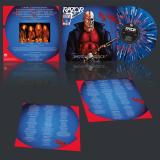
Razor, a thrash metal legend! The most valuable Canadian export since the Toronto Maple Leafs. When Dave Carlo and his band took to the stage at the legendary Headbangers Open Air Festival a few years ago, the crowds went completely wild. This enthusiastic reaction suggests that Razor may have more fans today than they did in their heyday in the mid-1980s. So the re-release of “Shotgun Justice” on vinyl comes just at the right time. The album comprises 14 tracks and features immortal classics such as “United by Hatred,” “Stabbed in the Back,” and “Brass Knuckles.” Shotgun Justice was originally released in 1990 on CD only on Dave Carlos' own label, Fist Fight Records (distributed in North America by Fringe Records). It was the first Razor album with Bob Reid on vocals (who had replaced Stace McLaren, aka Sheepdog).

Сделать предзаказ27.03.2026

он должен быть опубликован на 27.03.2026

CARLOS NIÑO & FRIENDS - BUBBLE BATHS FOR GIANTS

Opaque Pink Version

Bubble Bath for Giants is an ode, a Tribute, a reverence for Oceans, for the Mighty Magnificent Power of Fairies, to the energy that we are all everything, whole, well, but in different sized and shaped vessels at times . . . It is a Celebration of Gentleness and of incredible Force, and Charge . . . These, I sea as the same. The Yang Springs from the Yin and together they ever reflect, dance, and express themselves . . .

Many Bells, Bowls, Ceramics, Chimes, Cymbals, Drums (Bass, Sakara, Surdo, Tom, and many more,) Gongs (Chao, Cup, Indonesian, Sun, and Symphonic,) Keyboards (Metal, Synthesizer, and Wooden,) Percussion, Plant Leaf Bundles and Fronds (Bamboo, Eucalyptus, and Palm,) Ratlles, Shakers, Voice, Whistles, and Sound Design by Carlos Niño.

Featuring:
Luis ​Pérez Ixoneztli, Bernard Xolotl, ​Aaron ​Shaw, Surya ​Botofasina, Nate Mercereau, Laraaji, Darius ​Jones, Sheila Govindarajan, ​Idris Ackamoor, Deantoni ​Parks, André 3000, ​Marshall Allen, Sam ​Gendel, Sibusile ​Xaba, Mia ​Doi Todd, ​Anisia Uzeyman, Saul Williams, Jojo Abot, Jowee ​Omicil, Aztlan ​Unearthed

///

Cover Photo by Carlos, from in the Maui Waters
Art Direction, Design and Original Art by Nep Sidhu
Layout Production by Jonny O'Hara

Recorded by Carlos Niño in Topanga, California, and by some of the Artists named above, from their Homes . . .

Mastered by David Allen

///

Сделать предзаказ20.03.2026

он должен быть опубликован на 20.03.2026

T.S.O. - Gluttony EP

T.S.O.

Gluttony EP

12inchSKSS001
SPECIAL K.
17.03.2026

7SINS SERIES is a collection of seven EPs, each associated with one of the seven deadly sins. Curated by Pau Pérez, the series is released on the SpecialK Records label, driven by Carlos Caballer, and brings together seven producers, each responsible for shaping a distinct release.

LUTTONY is the first EP in the 7SINS SERIES. This release is driven by a clear mission: constant, no-compromise groove. Each track is built around catchy basslines that set the pulse from the very first bar, wrapping the listener in a hypnotic sound that never lets up. Inspired by part of the current Valencia sound, the project focuses on energy, rhythm, and club-oriented atmospheres. No detours, no filler—music made straight for the dance floor.

нет на складе

Закажите сейчас, и мы закажем товар для вас у нашего поставщика.


Последний логин: 67 дн. назад
Demetrio Castellucci & Massimo Pupillo - Sleep Technique LP
  • 1: Skull Chamber
  • 2: The Venus And The Sorcerer
  • 3: Panel Of The Lions
  • 4: Hillaire Chamber
  • 5: Candle Gallery
  • 6: Chamber Of The Bear Hollows (North)
  • 7: Chamber Of The Bear Hollows (South) & Brunel Chamber
  • 8: Entrance Chamber

Demetrio Castellucci and Massimo Pupillo present the music of Sleep Technique, a performance by Dewey Dell inspired by the Chauvet cave and its ancient cave paintings.
The music comes to life anew on record, an immersion into the depths of sonic particles, moist electroacoustic rhythms, the repeated forms of speleothems, and the electric bass that scrapes the walls, shaping them into concave or convex surfaces. A voice that moves incredibly slowly, yet is in constant motion, like the millennia-old, unceasing erosion of water.
The album’s journey follows the geography of the cave in reverse, moving from its deepest chamber back to the entrance.

Demetrio Castellucci is a composer and sound designer who has been involved in theater productions, choreography, and film since 2004. Around the same time, he began performing as a DJ, favoring an omnitemporal approach geared toward dance that transcends musical genres. Since 2006, he has been a member of the dance company Dewey Dell, and since 2007, he has been active as Black Fanfare, a maximalist electroacoustic project. He has collaborated on performances by Andreco and Enrico Ticconi/Ginevra Panzetti, as well as on films by Ahmed Ben Nessib, Beatrice Pucci, and Ilaria di Carlo. After living in London and Berlin, he settled in Vilnius, where in 2018 he founded Unarcheology, a digital platform that publishes music and radio programs. He is also active as Airport Gad, an ambient project which, together with Unarcheology, launched its own “Airline Company”: concerts in a flight simulator built from cardboard, where the pilots are also the musicians.

Massimo Pupillo is best known as a founding member of the band Zu, with whom he has released 18 albums and performed over 2,000 live shows worldwide. He has maintained a highly open and multidisciplinary approach that has led him to work with some of the most acclaimed figures in the contemporary art world: South African photographer Roger Ballen, actors Malcolm McDowell and Marton Csokas, Romeo Castellucci and Chiara Guidi of Societas Raffaello Sanzio, American choreographer Meg Stuart, poet Anne Waldman, and Italian poet Gabriele Tinti, among others. He has collaborated live and in the studio with avant-garde musicians and composers such as Alvin Curran, piano duo Katia & Marielle Labèque, and classical virtuosos like Viktoria Mullova and Giovanni Sollima. He has also worked with some of the most influential names in the international rock scene, including Mike Patton, Thurston Moore, Jim O’Rourke (Sonic Youth), Guy Picciotto & Joe Lally (Fugazi), Buzz Osborne (Melvins), and Damo Suzuki (CAN).

In the field of improvised music, he has collaborated with Peter Brötzmann, Toshinori Kondo, Mats Gustafsson, Ken Vandermark, and Tony Buck, among others. Within the experimental music scene, his collaborations include Oren Ambarchi, David Tibet (Current 93), Thighpaulsandra (Coil), Stephen O’Malley (Sunn O))), Abul Mogard, Mick Harris (Scorn), Gordon Sharp (This Mortal Coil), FM Einheit (Einstürzende Neubauten), and many more. In cinema, he composed the score for Kirill Serebrennikov’s film LIMONOV, presented at Festival de Cannes in 2024.

Сделать предзаказ13.03.2026

он должен быть опубликован на 13.03.2026

John Lee Hooker - The Big Soul Of John Lee Hooker LP
  • San Francisco
  • Take A Look At Yourself
  • Send Me Your Pillow
  • She Shot Me Down
  • I Love Her
  • Old Time Shimmy
  • What Do You Say
  • Let's Make It
  • You Know I Love You
  • Big Soul
  • Good Rocking Mama
  • Onions
  • No One Told Me
  • Boom Boom
  • Thelma
  • Process

John Lee Hooker is widely recognised as one of the true giants of the blues, along with Muddy Waters, B.B. King, and Howlin' Wolf. Hooker is often called the "King of the Boogie" and his driving, rhythmic approach to guitar playing has become an integral part of the blues' sound and style that perpetuated the UK's rhythm and blues scene of the '60s. Presented here is one of John Lee Hooker' s finest album, The Big Soul of John Lee Hooker, recorded in Chicago in 1962.

In a career that spanned some forty odd years, a pivotal point of success came with his 1989 album The Healer, which featured collaborations with Carlos Sanatana, Bonnie Raitt, Charlie Musselwhite, and Los Lobas. The album expanded his audience beyond the blues idiom, earning him his highest Billboard album chart success (#62) his first Grammy Award; all of this at the grand-old-age of 73. For those not familiar with Hooker's earlier work, the Big Soul of John Lee Hooker is an excellent starting point.

Сделать предзаказ06.03.2026

он должен быть опубликован на 06.03.2026

Various Artists - Brazil Greastest Hits LP 2x12"
  • Joao Gilberto - Bim Bom
  • Elizete Cardoso - Outra Vez
  • Luiz Bonfa - Copacabana
  • Antônio Carlos Jobim & Roberto Paiva - Eu E O Meu Amor
  • Joao Donato - Tim-Dom-Dom
  • Carlos Lyra - Você E Eu (You And Me)
  • Baden Powell - Improviso Em Bossa Nova
  • Salinas - Tenha Fé, Pois Amanha Um Lindo Dia Vai Nascer
  • Stan Getz & Charlie Byrd - Desafinado
  • Sérgio Mendes - Oba-La-La
  • Pery Ribeiro - Garota De Ipanema
  • Orlandivo - Onde Anda O Meu Amor
  • Shorty Rogers & His Giants - Chega De Saudade (No More
  • Sylvia Telles - Corcovado
  • Grant Green - Brazil
  • Maysa - Agua De Beber
  • Quincy Jones & His Orchestra - Soul Bossa Nova
  • Trio Mocoto - Nao Adianta
  • David K (Feat. Rolando Faria) - Mas Que Nada (David K R
  • Tom & Joy - Para Bailar
  • Seu Jorge - Carolina
  • Salome De Bahia - Outro Lugar (Edit)
  • Carlinhos Brown - Brasil Brasil (Ole Ole)
  • Caetano Veloso - Hino Da Bahia
  • Suba (Feat. Cibelle) - Felicidade
  • Marcelinho Da Lua (Feat. Seu Jorge) - Cotidiano (Buzzin
  • Bebel Gilberto - August Day Song
  • Negrocan - Cada Vez (Grant Nelson Vocal Mix Edit)

Mit Brazil Greatest Hits veröffentlicht Wagram eine musikalische Reise durch die farbenfrohe Welt Brasiliens - von zeitlosen Bossa-Nova-Klassikern bis zu modernen Latin-Grooves. Auf zwei sorgfältig zusammengestellten Vinyl-LPs versammeln sich legendäre Aufnahmen und internationale Club-Favorites, die den Spirit von Rio, die Leichtigkeit des Samba und den warmen Sound des Tropenlands einfangen. Die erste LP präsentiert ikonische Stimmen und Instrumentalstücke der goldenen Bossa-Nova-Ära - voller Eleganz, Rhythmus und Melodie. Auf LP 2 geht es moderner und tanzbarer weiter: brasilianische Funk-Einflüsse, Remix-Perlen und energiegeladene Tracks zeigen, wie lebendig und vielfältig die Musikszene Brasiliens bis heute ist.

Сделать предзаказ27.02.2026

он должен быть опубликован на 27.02.2026

Charly Garcia - La Hija de la Lagrima (2x12")
  • B1: Calle
  • A1: Overture
  • A2: Víctima
  • A3: Jaco Y Chofi
  • A4: Atlantis
  • A5: La Sal No Sala
  • A6: Chipi-Chipi
  • B2: Love Is Love
  • B3: Tema De Amor
  • B4: Fax U
  • B5: Lament
  • B6: Interludio De La Lágrima
  • C1: Workin' In The Morning
  • C2: Waitin
  • C3: Kurosawa
  • C4: Chiquilin
  • C5: Andan (Excerpt)
  • C6: James Brown
  • D1: Intraterreno
  • D2: No Sugar
  • D3: Atlantis (Parte Ii)
  • D4: Locomotion
  • D5: Andan (Complete)

Carlos Alberto García Moreno, better known by his stage name Charly García, is an Argentine singer-songwriter, multi-instrumentalist, composer and record producer, considered one of the most important rock musicians in Argentine and Latin American music.
Named "the father of rock nacional", he is known for the complexity of his compositions covering genres like folk rock, progressive rock, symphonic rock, jazz, new wave and many others.

a conceptual rock opera featuring experimental passages and two big hits, "Chipi Chipi" and "La Sal No Sala".

La Hija De La Lágrima is available as a limited edition of 1000 individually numbered copies on silver coloured vinyl.


g B1. Calle Taxi


[g] B1. Calle [Taxi]


[g] B1. Calle [Taxi]

Сделать предзаказ27.02.2026

он должен быть опубликован на 27.02.2026

FABIANO DO NASCIMENTO & VITTOR SANTOS ORCHESTRA - VILA

Hidden away amidst the bustle of Rio de Janeiro’s Catete neighbourhood is a small alleyway behind a cast iron gate. At its end is Bairro Saavedra, the courtyard surrounded by Neo-colonial houses where Brazilian guitar virtuoso Fabiano do Nascimento spent much of his childhood. Built in 1928, this secluded neighbourhood with its wooden shutters, tiled floors and tranquil benches, provides the inspiration for the title of Do Nascimento’s new album VILA, a collaborative project with a sixteen piece orchestra led by trombonist and arranger Vittor Santos.

Recorded between Rio de Janeiro and Los Angeles, VILA is grand, tender, warm, playful and nostalgic. On this stunningly ambitious work, the delicate compositions led by Nascimento's guitar, which sits central in the mix, are surrounded by Santos’ breathtaking orchestral arrangements which swirl in all directions: complimenting, questioning, responding; in constant conversation.

Like the eclecticism of the architecture Do Nascimento grew up surrounded by, his music straddles many worlds at once. He is known as a Brazilian acoustic guitar master and as such has collaborated with Arthur Verocai, Airto Moreira and Itibere Zwarg. But equally at home in Los Angeles's jazz and experimental music scenes, Do Nascimento is also known for his work with artists like Sam Gendel and Carlos Nino.

Vittor Santos is an arranger and Trombonist who has worked extensively with many of the greats of Brazilian music, including João Donato, Marcos Valle, Toninho Horta, and Elza Soares.

=====================================
Credits:

Fabiano do Nascimento – 6, 7 and soprano guitars.
All orchestral arrangements and production by Vitor Santos.
Recorded at Electro-Sound studio, Los Angeles and Estúdio Fibra, Rio de Janeiro
Engineered by Jason Hiller and Garbiel Lucchini
Mastered by Mike Bozzi

Oboe – Francisco Gonçalves
Contrabaixo – Rodrigo Villa
Drums – Márcio Bahia
Violino - Ricardo Amado
Violino – Thiago Teixeira
Violin – Daniel Albuquerque
Violin – Márcio Sanches
Viola – Ivan Zandonade
Viola – Dhyan Toffolo
Cello - Hugo Pilger
Cello – Janaína Salles
Double Bass – Rômulo Gomes
Clarinet – José Batista
French Horn – Philip Doyle
Trombones - Vittor Santos
Violin – Daniel Guedes

нет на складе

Закажите сейчас, и мы закажем товар для вас у нашего поставщика.


Последний логин: 29 дн. назад
ROBERTO Y SU NUEVO MONTUNO - EL NUEVO MONTUNO LLEGÓ LP
  • A1: El Nuevo Montuno Llego
  • A2: Llamé A Chango
  • A3: Monina Y Ramon 4:00
  • A4: Balanceate 6:50
  • B1: Triste Arrabal
  • B2: Me Queda Un Guaguanco
  • B3: Dichoso 3:30
  • B4: Oye Tu Son Borinquen

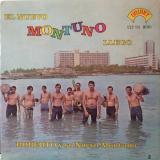
Roberto y su Nuevo Montuno recorded their first album, “El Nuevo Montuno Llegó” (1970), when Roberto Berríos was just 22 years old. This was also the debut release on Haddock’s own Uniart label. Berríos remembers that they did the recording in two sessions, splitting it up into four tracks per visit. The engineer was the famed Pedro “Pedrito” Henríquez, who recorded El Gran Combo, Roberto Roena and many others. The band had a mix of tasty, powerful originals, from Tony Cintrón’s title track that announced the band had arrived, ‘El Nuevo Montuno Llegó,’ to Quique Dávila’s mournful ‘Triste Arrabal.’ Then there was the hit Santería themed tune, ‘Llamé a Changó,’ which was a song that Quique Dávila brought to the band, but had been originally composed by Carlos Pinto, though Quique was given the credit. Dávila also composed ‘Me Queda Un Guaguancó,’ which is Roberto’s favorite song on the record (as well as a fan favorite), with Papo sounding like his friend Héctor Lavoe, and Quique Dávila’s proud manifesto declaring that Puerto Rico now had its own son montuno, ‘Oye Tu Son, Borinquen,’ featuring the pianist’s tasty but brief solo. The cover versions came from the group’s earliest period when most of their repertoire consisted of renditions of beloved but lesser known tunes, and include Louie Ramírez’s ‘Balancéate’ (a favorite of Roberto’s from Ray Barretto’s songbook), Bobby Valentín’s ‘Monina y Ramón’ (recorded during his stint with Willie Rosario), and a bolero indelibly sung by Cheo Feliciano when he was with the Joe Cuba Sextet, ‘Dichoso,’ written by Joe Cuba’s talented pianist, Nick Jiménez. Some of the arranging was done by Cintrón and some by Dávila, though Quique had some help from his old friend from El Combo Moderno, Freddie Miranda, who at that time was with Roberto Roena’s Apollo Sound. Roberto says that the arrangements of the cover tunes were made specifically to be different and more contemporary sounding than the originals. “El Nuevo Montuno Llegó” has become a legendary salsa dura classic from Puerto Rico and we are thrilled to present this first legitimately licensed and remastered vinyl reissue. It includes detailed liner notes that reveal the untold story of the band and their debut album, and rare photos.

Сделать предзаказ27.02.2026

он должен быть опубликован на 27.02.2026

SHAKE STEW - TEN TWO LP 2x12"

SHAKE STEW

TEN TWO LP 2x12"

2x12inch47391
Traumton
13.02.2026
  • Wood
  • Ascendance
  • Garage
  • Bakunawa
  • Searching
  • Tristan Junk (Feat. Jj Whitefield)
  • Café San Marco
  • Cherry Pie
  • The Green Beauty Of The Broken World
  • Cabanes/Castellon
  • Ibdiss
  • Free Your Eyes
  • King Of Thieves
  • Tiger
  • Sergio St. Carlos

Shake Stew ist mehr als eine Band - sie ist ein Ereignis. Seit ihrer Gründung durch Bassist und Komponist Lukas Kranzelbinder umweht die Formation ein Hauch von Magie und Energie, der sich live in eine hypnotische Kraft verwandelt. Zwei Schlagzeuge, zwei Bässe und drei Bläser erzeugen einen Sound, der zwischen tranceartigen Basslinien, eruptiven Grooves und fragilen Klanggebilden oszilliert. Die Jury des Preises der deutschen Schallplattenkritik sprach von "etwas Kultischem", das den Jazz bereichert, während MOJO begeistert: "Shake Stew twists, blisters and burns like a fevered dream!" Ob im Club oder im Wiener Konzerthaus - die Band zieht alle in ihren Bann. Mit dem Jubiläumsprojekt TEN ONE TWO öffnet sich Shake Stew noch weiter: neue Klangfarben, freie Improvisationen, Kooperationen und eine Besetzung, die mit Yvonne Moriel eine aufregende Stimme integriert. Nach zehn Jahren, zahllosen Konzerten und internationalen Auszeichnungen ist klar: Shake Stew definiert Jazz als lebendige Kunstform - kompromisslos, visionär und voller Dynamit.

Сделать предзаказ13.02.2026

он должен быть опубликован на 13.02.2026

Carwyn Ellis & Rio 18 - Haf LP

Carwyn Ellis & Rio 18

Haf LP

12inchBWR084V
Bubblewrap
06.02.2026
  • Como Yo Amo
  • Tonnau Ar Tonnau
  • Whistling Sands
  • Bella Estrella
  • Shades Of Red
  • Haf
  • Gwenyn Y Owanwyn
  • Lâgrimas Frias
  • Keep On Smiling
  • Nos Da

Haf is the third album from Carwyn Ellis & Rio 18 in little over a year, no mean feat in and of itself but especially considering Carwyn’s work with other artists (including Edwyn Collins and the North Mississippi Allstars) this year too.

The album picks up where their last (Fontana Rosa) left off, with around half the album being recorded analog to tape at Gizzard Studios in London, with one last tune remaining from their sessions at the legendary (but now closed) Toerag Studios.

There are echoes here of their first album, Joia! - the recordings were once again instigated by the great Brazilian producer and multi-instrumentalist who happened to be visiting London earlier in the year. He suggested doing something.... so they did. And there is a return to more definite Brazilian influences too - Tonnau Ar Tonnau is an homage to ‘Onda’ by Cassiano, Keep On Smiling has a distinct samba / chorro feel. Gwenyn y Gwanwyn (about helping a bee out if you see it struggling) is very much a nod to the psychedelic samba funk of Antonio Carlos e Jocafi. But other Latin styles still loom large: on the sultry salsa of Bella Estrella or the melancholic Andean ballad, Lagrimas Frias.

Anglo-Brazilian singer Nina Miranda features on the Lalo Schifrin goes samba Shades of Red, while new addition to the Rio 18 family (at least on record), Miriam Isaac adds a real RnB edge to the record, along with some beautiful duets: the Salsoul banger Como Te Amo and the gorgeous Whistling Sands (about a beach in North Wales) are standouts.

In reverse to how Carwyn made the first two Rio 18 albums, Haf was recorded in London
and Wales and mixed over five hectic days in Rio. Three days later, it was mastered and at
the pressing plant. Time doesn’t wait for Carwyn Ellis & Rio 18!!

Finally, the song ‘Haf’ and the album itself are dedicated to Haf Morris, Carwyn’s late music teacher - he says, “her focus, guidance and patience shaped me like no other. I hope she’s enjoyed my musical journey, from wherever she’s watching. Diolch, Haf”.

Сделать предзаказ06.02.2026

он должен быть опубликован на 06.02.2026

Various Artists - Buddha Bar 2X12

Various Artists

Buddha Bar 2X12

2x12inch3482566
Wagram
04.02.2026
  • A1: Chris Madem - Island
  • A2: Nato - Macondo
  • A3: Sahalé - Kaaleen
  • A4: José Solano - Corazon De Verano
  • B1: Larss / Papa - Mayan - Feat Jo Paciello
  • B2: Sorä / Munaylayt / Zeina Aftimos - Ya Helli
  • B3: D-Compost - Sunrise
  • B4: Ablozé - Feel
  • C1: Dole / Kom - Mind Up
  • C2: Carlos Campos / Ravin - Danse Pour Moi
  • C3: Marsey / Blue Eyes - Gone
  • C4: Paul Losev - Milkyway - - (Edit)
  • D1: Deni / Boterita - Paloma Blanca
  • D2: Satori - Believer - Feat Vieux Farka Touré
  • D3: Devs - Singere - - (Extended Mix)
  • D4: Betrieb - Sonsuz - - (Sinan Kaya's Eastern Remix)
нет на складе

Закажите сейчас, и мы закажем товар для вас у нашего поставщика.


Последний логин: 3 мес. назад
Various - Infinite Brain

A1 | Carlos Native – Be Yourself
Andalusian producer Carlos Native unfolds an almost cinematic sensibility: a slow, introspective piece where a hypnotic bassline and wide, horizontal backgrounds build an inner journey rather than a track aimed at immediate impact.

A2 | Slit Observers – Synthmek
The Galician duo present a hard, high-energy work. Industrial-driven drums demand movement, while an aggressive, sharp arpeggiated bass defines a sonic identity with no concessions.

A3 | Negocius Man – 8N8
The Madrid-based veteran constructs 8N8 with modular precision: each sound falls into place with an almost architectural logic. The result is a synthetic, measured and structured piece shaped by years of experience.

B1 | Allumynd – Chestcollider
Making their debut on the electro scene, Allumynd delivers an original and daring track. An otherworldly snare and a woven vocal structure turn this piece into a clear example of new-generation electro: atmospheric and bold.

B2 | Komatssu – Non Servian
The Asturian producer, under his Komatssu alias, opts for continuous evolution without a kick drum as support. The track works like an organism that grows and transforms as it progresses, generating a hypnotic and mature effect.

B3 | Irrational Language feat. Lucky – We Are Comming Back
Irrational Language dives into braindance with meticulous technical production: drums filled with micro-artifacts, luminous synthesizers, and Lucky’s vocals processed and spatialized to reinforce a narrative of rebirth and emerging from darkness.

нет на складе

Закажите сейчас, и мы закажем товар для вас у нашего поставщика.


Последний логин: 3 мес. назад
Various - Hot Creations Sampler I

Hot Creations new Vinyl Sampler featuring four of the Hottest recent release on Hot Creations.

The A Side features Kolter’s superb slice of old school House, ‘Red Alert’ a stomping powerhouse of a trackk, delivering relentless grooves and serious intensity. The A Side also features and Jamie Jones’s hugely popular rework of ‘XTC by HoneyLuv & Mason Maynard, a head bobbing hypnotic groover an exemplary, underground dubby take on the Original, intertwining layered effects and hypnotic atmospherics for the ultimate dancefloor weapon.

On the flip we have Lauren Lane’s monstrous Ryde Or Die Anthem, a inspired rework of DMX - Ruff Ryder's Anthem, a robust house cut that weaves hypnotic guitar strums, driving beats, and a mix of rolling low-ends and rapped vocals, coming together for a tripped-out ride with a deep bass and playful groove. Finally, we have Carloh’s ‘Quisiera Tenerte’ is a magnetic dancefloor filler, pulsing with a lively Latin groove and dripped in resonant basslines groove-led percussion, and hooky as hell vocal’s.

На складе от26.05.2026


Последний логин: 25 дн. назад
Various - Wizzz! French Psychorama Volume 5 (67-75)

The journey through French-speaking pop archives continues with this fifth volume, packed with fuzz, gimmicks, and dissent. Far from the charts, the selected tracks display a great creative freedom, often backed by corrosive humor. Welcome to the surprising, kaleidoscopic, and colorful world of the late sixties and early seventies, Wizzz!
Born in Montauban, Robert Pico stumbled into music by chance when he met René Vaneste, then artistic director at Pathé-Marconi. René brought him to Paris to record his first 45 RPM EP in 1964. A year later, Pierre Perret introduced him to Vogue, where he recorded his second album with Claude Nougaro’s orchestra. Sylvie Vartan then introduced him to RCA, where he recorded four singles, including the astonishing "Chien Fidèle," a track backed by a hair-rising fuzz guitar. Alongside his solo career, he also composed for other artists like Alain Delon (the song was recorded but remains unreleased), Magali Noël, Bourvil, and Georges Guétary. In the Paris of the sixties, he mingled with Mireille Darc, Elsa Martinelli, Marie Laforêt, France Gall, Françoise Hardy, Petula Clark, Régine, Dani, Serge Gainsbourg, Joe Dassin, Franck Fernandel, Charles Level, and Roland Vincent. Despite his efforts and winning a Grand Prix Sacem for his final record, Robert Pico didn’t achieve the expected success in show business and decided to leave Paris and return to the Southwest, where he devoted himself to writing. He is the author of 23 books (including Delon et Compagnie, Jean-Marc Savary Editions 2025, a memoir about his youth and his many encounters). Today, he is relieved to never have become a celebrity and devotes himself to his work with passion.
In 1969, the Franco-Italian movie Erotissimo was released, directed by Gérard Pirès (who later directed Taxi in 1998, written and produced by Luc Besson). This pop comedy features Annie Girardot, Jean Yanne, Francis Blanche, Serge Gainsbourg, Nicole Croisille, Jacques Martin, and Patrick Topaloff. The soundtrack was written by Michel Polnareff and William Sheller, with lyrics by Jean-Lou Dabadie. "La Femme Faux-cils," performed by Annie Girardot. It recounts the feelings of a rich CEO's wife who seeks to develop her sex appeal under the influence of advertisement and magazines. Groovy, sparkling and light, this track, with ITS lush arrangements humorously critiques consumer society and feminine beauty standards.
“Je suis l’Etat” (1967) is the flagship track of the first EP by singer-songwriter Spauv Georges, aka Georges Larriaga, better known as Jim Larriaga (1941-2022). Born into a family of bakers, the young man was initially planning to become a hairdresser when he discovered English-speaking music through Elvis Presley and the Beatles. After this revelation, he decided he would become a songwriter and gave himself five years to succeed. He recorded his first two EP’s independently for RCA under the pseudonym Spauv Georges; meaning “that poor George”, a nickname given to him by the mother of her friend Jean-Pierre Prévotat (future drummer of the Players, Triangle, or Johnny Hallyday). Portraying a depressed and eccentric young man, Spauv Georges created corrosive and amusing songs that didn’t reach a wide audience, despite a TV appearance with Jean-Christophe Averty.
Supported by his loyal friend and fellow songwriter Jean-Max Rivière, Georges Larriaga met the future singer Carlos in the early '70s, then Sylvie Vartan’s assistant. He wrote songs for Carlos, including the popular "La vie est belle," "Y’a des indiens partout," and "La cantine", which went onto become a huge hit in 1972. He also composed for Claude François (“Anne-Marie”, 1971), Charlotte Julian (“Fleur de province”, 1972), helped launch child singer Roméo (who sold 4 million records), and later wrote the hit "Pas besoin d’éducation sexuelle" (1975) for the young Julie Bataille. In 1971, Jim recorded an album for Disc'Az: “L’univers étrange et fou de Jim Larriaga”, which featured pop gems like “La maison de mon père”.
The story of the song "Zoé" began when Pierre Dorsay, artistic director at Vogue Records, asked Swiss singer and musician Pierre Alain to write a song for a new female singer. The inspiration came when he realized that Zoé (the artist's name) was also the name of France's first atomic battery, created in 1948, which consisted of uranium oxide immersed in heavy water! The lyrics reflect a bubbling energy that must be handled with caution, while the instrumentation echoes this atomic theme, notably with the use of a theremin.
Zoé’s career lasted only as long as a single 45 RPM, but it seems Christine Fontane was the vocalist behind this pseudonym, who is known for several EPs, a good "popcorn" album in 1964, and a handful of children’s singles in the '70s. Regardless, the photograph on the cover is of a different girl entirely.
Later, Pierre Alain continued his career, writing songs for himself, Marie Laforêt, Danièle Licari, Alice Dona, Arlette Zola (3rd place in Eurovision 1982), and achieving multiple gold and platinum records in Canada. Also an inventor with several patents, president of the Romande Academy, and head of the French Alliance in Geneva, he now composes atonal music, books, and poetry. Moreover, he is also the host of "Les Mardis de Pierre Alain" at "Le P'tit Music'Hohl" in Geneva.
Filled with oriental choruses and fuzz guitar, "Fou" is from Jacques Da Sylva's only EP released by Vogue in 1967. Despite the quality of this recording, all traces of this singer disappear after this first effort.
Valentin is a baroque pop singer born in Belgium. He is the songwriter and composer of most of the tracks on his three singles released in the late 60s in Canada. A legend says that he reincarnated himself as Jacky Valentin during the 1970s for a rock'n'roll revival career in Belgium, but his older brother sadly debunked this story. Valentin's first two singles were arranged by Claude Rogen, a Parisian session pianist who had come to Canada to promote the song “Mister A Gogo”, a cover of David Bowie’s “Laughing Gnome”, adapted by singer Delphine, his wife at the time. Far from his usual network, Claude Rogen arranged music for Polydor, including the arrangements for “Je suis un vagabond” in 1969, a jerk tune with string arrangements and a furious optimism.
Jacques Malia wrote, composed, and recorded his only 45 EP for Festival in 1966. “Histoire de gitan” is an incredible beat track with bohemian scat that tells the story of a gypsy musician who came to Paris to make it in the Music-Hall, to no avail. The hero of the song and its author probably shared a similar fate, as Jacques Malia faded into anonymity after this remarkable attempt.
Bernard Jamet recorded two EPs for Barclay in the late sixties and co-wrote several songs with Christine Pilzer, Pascal Danel, and prolific songwriters Michel Delancray and Mya Simile. The track “Raison Légale” (1968), his masterpiece, immerses the listener in a courtroom right when a murderer is being judged, with jerk rhythm and free arrangements. A unique, paranoid, judicial, and psychedelic oddity.
Jean-Pierre Lebrot-Millers started his career in show business in 1967 as a singer and songwriter for the Philips label. After three singles, he wrote several songs of a new kind with his friend Pierre Halioche, in the midst of the sexual liberation movement and the democratization of drugs. With provocative lyrics, “Les filles du hasard” and “Barbara au Chapeau Rose” were released on a Philips singles in 1968. The character of Barbara was inspired by a queen of Parisian nightlife during the psychedelic years: model Charlotte Martin, who dated Eric Clapton from 1965 to 1968, then Jimmy Page from 1970 to 1983. Jean-Claude Petit’s arrangements, with a table-filled intro, soul brass, and Hendrixian guitar, emphasize the flamboyance of a hedonistic and sexy character, whose dog is named Junkie because “Junkie est un nom exquis”! The track was recorded live in three takes with a full orchestra.
Upon its release, the record was censored by Europe 1 and RTL due to its references to drug use. Jean-Pierre Lebrot was then banned from the airwaves and later dismissed by his record label. He changed his artist name to Jean-Pierre Millers, while his companion Pierre Halioche became D. Dolby for a new dreamy composition, “Chilla”, which Jean-Pierre produced himself with arrangements by Jean Musy. Once again, the song was immediately censored everywhere. After this setback, he decided to stop singing and started taking on odd jobs to support his Swedish wife and their son until the day he met Jean-Pierre Martin, then production manager at Decca, who had worked with Manu Dibango. Martin offered Jean-Pierre Lebrot-Millers, then employed at Rank Xerox, the position of artistic director at Decca. He accepted and became, a year later, promotion director (radio, press, TV). He worked on Julio Iglesias’s first album for Decca, which became a massive hit and allowed him to meet Claude Carrère. The latter asked him to write new songs and find their performers, much like a “talent scout.” It’s through him that Jean-Pierre discovered Julie Pietri and Corinne Hermès. He composed “Ma Pompadour” for Ringo, Sheila’s husband, and took the microphone again for the syncope hit “Rendez-Vous” in 1982.
That same year, Jean-Pierre Lebrot-Millers tried to release a track for which he had heavily gone into debt: “Si la vie est un cadeau”. Having recorded it in London, he presented it to numerous professionals, all of whom refused to get involved. The same thing happened with Antenne 2 and the Sacem when he proposed the song as France’s entry for Eurovision. He then met Haïm Saban, who was producing cartoon soundtracks and had just launched the Goldorak theme song. Saban, having listened to the song, declared it had the potential to become a hit. He sent Jean-Pierre and Corinne Hermès to meet the CEO of the Luxembourg radio and television network. The latter received them, asked to hear a verse and chorus a cappella in his office, and immediately hired them to represent Luxembourg at Eurovision 1983. They reworked the arrangements and recorded a new version with Haïm Saban as co-producer. The song ended up winning Eurovision 1983, a great comeback for our hero. He continued producing and hung out with the band Nacash in Belgium when a couple came to introduce their daughter for an impromptu audition in a hotel room. The girl sang “Les démons de minuit” while dancing to a radio cassette. Impressed, he had her take singing lessons for a year and composed a song for her (for which he had the melody and title, but no lyrics). This required him to go on the hunt for a lyricist, who ended up being Guy Carlier. They recorded the song, which was initially a ballad, at Bernard Estardy’s CBE studio, and gave the singer a new name: Melody. They showed the song around their industry network without success. Later, Estardy called Jean-Pierre to suggest changing the rhythm and making it pop-rock. Orlando, Dalida’s brother, liked the result and decided to co-produce the track. “Y’a pas que les grands qui rêvent » became a classic hit. The song has since been covered by Juliette Armanet (as a ballad, like the original) and Valentina.

Born into an aristocratic Breton family, Hervé Mettais-Cartier worked as a DJ at Queen Kiss, a nightclub in Poitiers, where he formed the band Les Concentrés with Michel (an actor) and Christian (a radio technician). Together, they created a repertoire of whimsical songs (“Ma bique est morte”, “J’suis un salaud”, “Fils de dégénéré”...) that they performed on stage dressed in white (in homage to “concentrated milk”). They performed at Bliboquet and Olympia in 1968 for the 10th edition of the “Relais de la chanson Française” organized by L’Humanité-Dimanche and Nous les Garçons et les Filles, sponsored by Pepsi Cola. Winners in the author-composer category, alongside Danish singer Dorte, their visibility allowed them to record a 45, and appear on television in Jean-Christophe Averty’s show. The A-side of the disc features Bruno le ravageur, a casatchok dedicated to Bruno Caquatrix, the director of Olympia, nicknamed in the song “Coq Atroce” or “croque-actrices”. The B-side is dedicated to “Fils de dégénéré”, a quirky tribute to Hervé's aristocratic roots, mixing absurdity with sophisticated vocal harmonies.
After Les Concentrés, Hervé Mettais-Cartier formed the duo La Paire et sa Bêtise with his friend Olivier Robert. They performed in Parisian cabarets and toured with Pierre Vassiliu. In the late 1970s, Hervé began a solo career. He recorded two albums for the Motors label in 1978 and 1979, which did not achieve their anticipated success due to lack of promotion. In 1980, he met Bernadette, with whom he started a family and created a “Chansons à voir” (songs to see) show that he performed until his death at the end of 2024.

Publicité comes from the final EP by the Missiles (Ducretet Thomson, 1966), a disc that also includes “La (nouvelle) guerre de cent ans”, featured on Volume 4 of our Wizzz! series. Please refer to the booklet for the story of the band.

“He’s 1.82 meters tall, 28 years old, weighs 135 kg, is black and Belgian”: this is the description of singer Hegesippe on the back of his sole single (Decca, 1967). He appears on the album cover wearing a Greek toga, like a hippie gag – we are at the end of the year 1967. In “Le crédo d’Hegesippe”, this former bodyguard of Antoine and the Charlots plays the delightful card of the thick brute converted to Flower-Power and non-violence, with arrangements by Jean-Daniel Mercier, aka Paul Mille.
“Ethéro-disco” was released on a promotional record for clients of the Maréchal company (Liège, Belgium) for the New Year 1979. Over a funky rhythm, celebrity impersonations (Brigitte Bardot, Jacques Dutronc, Fernandel…) deliver an enigmatic text about pharmaceutical products like ether, bismuth, and aspartate. The track was composed by Dan Sarravah (responsible for Joanna's “Hold-up inusité” featured on Wizzz! Volume 3) and Tony Talado, who was also a singer (one 45 in 1967), songwriter (with over a dozen credits between 1964 and 1985 in various styles from surf music to disco), author (Devenez Végétarien, Dricot Editions, 1985), ad designer, and psychologist.

Décollez-les is on the A-side of Mamlouk's only single, a pseudonym for Marsel Hurten, who is known for his work on several EPs in the late sixties, as well as composing music for Hervé Vilard’s “Capri, c’est fini”, Claude Channes' “La Haine”, Annie Philippe’s “On m’a toujours dit”, and Nancy Holloway’s “Panne de Cœur”.
This strange song, with Afrobeat horns and absurd dialogues between a chef and his kitchen staff, is the result of a collaboration between Marsel Hurten and one of his neighbors, a photographer from Pavillon-sous-Bois (93), where the musician settled after returning from the Algerian War. A music video was shot to promote the record.
Marsel Hurten was born in Tourcoing (59) into a musical family. At a young age, he joined the brass band founded by his grandfather, playing the piston before studying trumpet at the conservatory, as well as teaching himself how to play the guitar. As an orchestra musician, he toured in France, Belgium, Germany, and England. He released a series of solo 45’s between 1965 and 1968 for the DMF and Az labels before stopping recording to focus on working for other artists (Gilles Olivier, Noëlle Cordier…).
“L’amour nu” (Vogue, 1971) is the work of the short-lived Belgian band Mozaïque. The track, written by singer Jacques Albin, closely resembles another of his compositions, “Carré Blanc”, which he recorded in 1969 for Disc’AZ.
Represented by the Lumi Son micro-label based in Marignane (Côte d'Azur), Jean-Marc Garrigues released two 45 RPMs in the late sixties, defending the French jerk sound. The song “Je dis Non” is a short, joyful ode to youth, pop music, and rebellion.
Songwriter and performer Jacques Penuel released three singles. The first one, “Astronef 328” (Fontana, 1969), features a dizzying series of chords punctuated by sound effects, a sci-fi story, and arrangements by Jean-Claude Vannier.

We would like to sincerely thank Pierre Alain, Moon Blaha, Marsel Hurten, Bastien Larriaga, Jean-Pierre Lebrot-Millers, Bernadette Mettais-Cartier, Robert Pico, Olivier Robert, Claude Rogen, Micky Segura.

нет на складе

Закажите сейчас, и мы закажем товар для вас у нашего поставщика.


Последний логин: 3 мес. назад
Wiener Philharmoniker & Yannick Nézet-Séguin - Neujahrskonzert 2026 / New Year's Concert 2026 / Concert du Nouvel An 2026 (LP 3x12")

Erstmals steht Yannick Nézet-Séguin beim Neujahrskonzert am Pult der Wiener Philharmoniker. Der Kanadier, schon seit Langem dem Orchester verbunden, ist Chef der Metropolitan Opera in New York und des Philadelphia Orchestra. Er bringt im Goldenen Saal des Wiener Musikvereins neben populären Titeln wie "Rosen aus dem Süden" oder der "Fledermaus-Quadrille" fünf Novitäten, die dort erstmals erklingen - darunter auch Kompositionen der US-Amerikanerin Florence Price (1887-1953) und von Josephine Weinlich (1848-1887), die das erste europäische Damenorchester gegründet hatte. Das Neujahrskonzert ist eines der größten Events der klassischen Musik; es wird in über 150 Länder übertragen und hat über 150 Millionen Zuschauerinnen und Zuschauer.

Das jährliche Neujahrskonzert in Wien ist seit mehr als acht Jahrzehnten, seit 1939, ein großes Ereignis, das im Fernsehen und im Radio übertragen wird und Millionen von Zuschauern in über 90 Ländern der Welt erreicht. Das Konzert wurde bisher von weltberühmten Dirigenten wie Herbert von Karajan, Lorin Maazel, Claudio Abbado, Carlos Kleiber, Zubin Mehta, Riccardo Muti, Nikolaus Harnoncourt, Seiji Ozawa, Mariss Jansons, Franz Welser-Möst, Gustavo Dudamel und anderen geleitet. Als musikalische Botschafter Österreichs senden die Wiener Philharmoniker den Menschen in aller Welt einen Neujahrsgruß im Geiste der Hoffnung, der Freundschaft und des Friedens mit beschwingter und unbeschwerter und zugleich nostalgischer und tiefgründiger Musik aus dem großen Repertoire der Familie von Johann Strauß und seiner Zeitgenossen.

Сделать предзаказ30.01.2026

он должен быть опубликован на 30.01.2026

JAGGED CITY - THERE ARE MORE OF US, ALWAYS EP
  • (Don't Dream Its Over)
  • Imaginary Lines
  • Rain And Sirens
  • Ocean East, Ocean West
  • Hairspring
  • Minus Power
  • (Deluge In A Paper Cup)
также имеющийся в продаже

GREEN VINYL


Jagged City unveils their debut instrumental EP, `There Are More of Us, Always`, a bold collection that moves between spacious, melodic guitar passages and raucous, swelling climbs. With heartfelt, melodious songwriting, a diverse range of eclectic touches buried within, and eruptions of dense, layered sound, this record delivers wonderfully balanced compositions through raw and personal production. The project began as a cross-continental art experiment between Jake Woodruff (Defeater) and Carlos Torres (former touring member of Explosions In The Sky). What started as a simple exchange of ideas quickly found real shape through collaborative composition and thoughtful arrangement. Early sessions with David Haik helped refine the songs' structures and drum frameworks, setting the groundwork for what would become Jagged City's striking debut. "We wrote with pure instinct, just tried to add something new to a genre that we love. As we traded ideas, we took some left turns and incorporated elements that may be unexpected." (Woodruff) The result feels immediate, deviously rough at the edges, and charged with a punk-minded intensity that keeps the momentum taut and the sound intimate. RIYL Mogwai, Do Make Say Think, Godspeed, Mono, Defeater, Explosions In The Sky

Сделать предзаказ30.01.2026

он должен быть опубликован на 30.01.2026

JAGGED CITY - THERE ARE MORE OF US, ALWAYS EP

Jagged City unveils their debut instrumental EP, `There Are More of Us, Always`, a bold collection that moves between spacious, melodic guitar passages and raucous, swelling climbs. With heartfelt, melodious songwriting, a diverse range of eclectic touches buried within, and eruptions of dense, layered sound, this record delivers wonderfully balanced compositions through raw and personal production. The project began as a cross-continental art experiment between Jake Woodruff (Defeater) and Carlos Torres (former touring member of Explosions In The Sky). What started as a simple exchange of ideas quickly found real shape through collaborative composition and thoughtful arrangement. Early sessions with David Haik helped refine the songs' structures and drum frameworks, setting the groundwork for what would become Jagged City's striking debut. "We wrote with pure instinct, just tried to add something new to a genre that we love. As we traded ideas, we took some left turns and incorporated elements that may be unexpected." (Woodruff) The result feels immediate, deviously rough at the edges, and charged with a punk-minded intensity that keeps the momentum taut and the sound intimate. RIYL Mogwai, Do Make Say Think, Godspeed, Mono, Defeater, Explosions In The Sky

Сделать предзаказ30.01.2026

он должен быть опубликован на 30.01.2026

JOHN ROSEBORO & MEI SEMONES - Waters Of March / How To Cope
  • A.waters Of March
  • B.how To Cope

May Simones has been garnering attention for her solid Berklee-trained technique, musicality spanning J-pop, jazz, indie, and bossa nova, and bilingual
English-Japanese lyrics. Following her 2025 Fuji Rock Festival appearance, she has already confirmed her first Japan tour, starting in January 2026.
She is one of the most talked-about singer-songwriters today. Meanwhile, John Roseboro is a Haitian-American singer-songwriter who blends elements of indie
folk, bedroom pop, and jazz with bossa nova rhythms. Unconstrained by typical idioms, his unconventional songwriting and arrangements have led him to
proclaim himself "post-bossa nova," garnering attention among some listeners in Japan.

The duo's cover of Antonio Carlos Jobim's classic "Waters of March" was a hit that quickly raised their profile. The intimate atmosphere created by May's soft
vocals and John's guitar is a testament to the two's friendship. This outstanding cover could set a new standard for English-language bossa nova.

Сделать предзаказ19.12.2025

он должен быть опубликован на 19.12.2025

Detraex Corp - Live at Pompeii

Detraex Corp

Live at Pompeii

12inchSGM010
Sagome
11.12.2025

“Detraex Corp arrives on Sagome to deliver a heady journey through experimental rhythm and dub-informed weight and release with their new album Live at Pompeii. The album, much like its Carlo Gabriele Tribbioli created artwork, represents a journey, a collection of sounds and emotions, sequenced to share with us, the listener, a variety of experience, and of memory, which are at once familiar and other.
"Live at Pompeii sets things off with the tone-setting Tykes of, where frazzled, shuffling drums meet sub bass weight and ketamine oud, sounding something like Wordsound’s Scarab leaving the 90s and entering the future. Tombaroli invites the head nods, clearly communicating the album’s intentions and inviting us to that party under that out-of-town bridge with its insistent percussion and pulsing weight.
"Other tracks, such as Bullet Holes, carry us further into a psychedelic alternative, with its lysergic fever-dream soundtrack to an unnamed mediterranean plaza, and No Minus’s sounding like a nascent, primitive distant cousin to Jeru’s Premier-produced Come Clean.
"Channel 83 firmly returns us to the club, weaving mystical soundsystem magic with its stunted horns and swirl of voice, driven forward with the most chest-rattling of stomps, before the album enters its finale, where the grimey judder of Expect Excerpt slides to a bleary-eyed half-speed, evoking the club which won’t let you leave.
"Mount Point eventually provides that release, an early morning sunrise of a track, with rich, slow trudge and post-club shimmer, before Landings Dub signals the end of the journey, a metallic elegy to what has preceded, and a contemplation of your upcoming repeat listen, and re-entry, to the world of Detraex Corp.”

Words by Daniel Magee
Music by Detraex Corp
Mastered by Giuseppe Ielasi
Artwork and Layout by Carlo Gabriele Tribbioli

нет на складе

Закажите сейчас, и мы закажем товар для вас у нашего поставщика.


Последний логин: 3 мес. назад
SHAY HAZAN - WHEN IT RAIN IT POURS
  • Kolot (Feat. Abate Berihun)
  • Carlos
  • Slowly
  • Embrace
  • Trip To The Sahara
  • Move On
  • 4-8:
  • Lpb
  • When It Rains
  • It Pours
  • Haziza Has Got The Juice

Bassist, composer and producer Shay Hazan returns with his third solo album, "When It Rains It Pours", on Batov Records. Following the critical success of "Reclusive Ritual" and "Wusul" Hazan takes a bold step forward, shifting from the guimbri-led sound that established his reputation to a broader palette of bass, guitar, and synth-driven compositions.

Сделать предзаказ05.12.2025

он должен быть опубликован на 05.12.2025

Everlast - Eat at Whitey's (25th Anniversary) (2x12")

Following the success of 1998's Whitey Ford Sings the Blue, Eat at Whitey's finds him beefing up his sound as well as bringing in big names, such as N'dea Davenport (who adds her vocals on the sexy, R&B- flavored "Love for Real"), Goodie Mob's Cee- Lo, Cypress Hill's B Real, and Carlos Santana, for whom Everlast penned the Grammywinning "Put Your Lights On." Everlast is still fixated on redemption and regret, but his intensity and passion make up for the narrow focus, as, guitar in hand, he conjures up a nocturnal, sultry world populated with saints, sinners, and homeboys.

Сделать предзаказ05.12.2025

он должен быть опубликован на 05.12.2025

WHITE ROSE TRANSMISSION - 700 MILES OF DESERT
  • Summer Road
  • Hallucinating You
  • Snakebitten
  • Desert Bones
  • Valentine
  • Heart Of Machine
  • The Swimmer
  • Four Lonely Hours Away
  • Digging For Water
  • Wild Rain
  • Walking In The Opposite Direction
  • Inbetween Dreams
  • Breath
  • Dead Guitars
  • Desert Bones (Early Mix)

"700 Miles of Desert" is the second album by White Rose Transmission, the project of Adrian Borland and Carlo van Putten. The record weaves dark, poetic rock with atmospheric melodies and introspective lyrics, capturing a haunting beauty that became a poignant farewell to Borland's musical journey.

Сделать предзаказ05.12.2025

он должен быть опубликован на 05.12.2025

Carlos Viola - Blasphemous: The Original Game Soundtrack LP 4x12"

Dieses spezielle Vinyl-Boxset enthält den kompletten Original-Soundtrack des Spiels sowie die DLC-Musik für Stir of Dawn und Wounds of Eventide. Der 4LP-Schuber in limitierter Auflage ist mit einem maßgeschneiderten Coverartwork von Diego Minguez sowie bedruckten Innenhüllen mit Artwork von Jesús Campos „Nerkin“ verziert.

Blasphemous präsentiert eine alptraumhafte Variante des mystischen Katholizismus und der gotischen Architektur der Heimatstadt von The Game Kitchen, Sevilla. Das angesehene Metroidvania-Spiel ist voll von verdrehter religiöser Ikonografie und esoterischer Symbolik. Die eindringliche Musik des Komponisten Carlos Viola ist untrennbar mit der einzigartigen Atmosphäre des Spiels verbunden. Er übersetzt Themen wie Leid, Schuld und Einsamkeit in eine tief emotionale Musik, die von der Tragödie zur Transzendenz drängt.

Der Soundtrack beschwört ein spezifisches Gefühl von Ort und Zeit herauf und schöpft aus den Traditionen der spanischen Folkgitarre, mittelalterlichen Chorälen und orchestralen Verzierungen, um eine Art okkulte Kammermusik zu schaffen. Geschmeidige Streicher und schwebender Gesang kreuzen Wellen kolossaler Drones, bevor sie wieder im Morast versinken. Hypnagogische Passagen pulsieren mit übernatürlicher Kraft, während klagende, beunruhigende Klavierstücke für Momente des Alleinseins inmitten des Gemetzels sorgen. Violas prächtige Kompositionen werden durch Beiträge der Instrumentalisten Sergio Carmona (Bass) und Manuel Soto "Noly" (Gitarre) sowie durch die mitreißenden Gesangseinlagen von Nadia Torres und Dolores Berg unterstützt.

Wie das Spiel selbst ist auch die Musik von Blasphemous beunruhigend und von Leid durchdrungen, aber dennoch seltsam schön und fesselnd. Schnappen Sie sich Ihr Schwert und Ihren Rosenkranz, bevor Sie eintauchen - Sie werden beides gebrauchen können.

Сделать предзаказ28.11.2025

он должен быть опубликован на 28.11.2025

Carlos Viola - Blasphemous 4x12
  • 1: Dame Tu Tormento
  • 2: La Muerte De Los Relinchos
  • 3: Tierras De Azafrán
  • 4: Que Las Campanas Me Doblen
  • 5: Una Senda De Pasos Blancos
  • 6: Gélida Expiración
  • 7: Entregarás Tu Rostro A La Señora
  • 8: Vuestra Faz Denegrida
  • 9: Cantes De Confesión
  • 1: Ten Piedad
  • 2: Arpegios En Ocre
  • 3: El Quejío
  • 4: Taranto A La Hermana Mía
  • 5: El Temple De Los Abanicos
  • 6: Coplas De Incienso
  • 7: Entre Bordados
  • 8: Prohibidos Y Cubiertos De Polvo
  • 9: Lágrimas De Grana Y Oro
  • 1: Al Compás De Tus Contornos
  • 2: Y Yo Fuego Te Daré
  • 3: Para Un Mártir Del Compás
  • 4: Saetas De Altos Balcones
  • 5: Su Beso De Plata
  • 6: Peldaños Hacia La Santidad
  • 7: Mirada De Culpa
  • 8: Que En Procesión Marchen
  • 9: Por La Vía De Las Procesiones Antiguas
  • 1: Baile De Violetas - Guitar Version
  • 2: Cinco Miradas Tiene La Aurora
  • 3: La Herida Del Ocaso
  • 4: Donde La Culpa Obtuvo Su Nacimiento
  • 5: Cante De Los Muertos
  • 6: Hermana Mía
  • 7: Luto Y Estrago
  • 8: Manto De Escamas Blancas
  • 9: Su Beso De Plata - Redux
  • 10: La Marcha Del Retorcido
Сделать предзаказ28.11.2025

он должен быть опубликован на 28.11.2025

RAVIN/BUDDHA BAR PRESENTS - WINTER SESSIONS IN COURCHEVEL
  • Fyordh - Malabar
  • Gotama - Shanti
  • Eastern Wizard - El Sueno Santo
  • Trabbart, Sahraaoui - Memories
  • Rameff - Cosmic Bindi
  • Majnoon, Zeynel - Pinarbasi
  • Fausto Messina - Pekmez
  • Raw Main - Above The Hil
  • Tamer Elderini - Monaya
  • Bluepaper, Okassus - Exertion
  • Carlos Campos, Ravin - Mysterio
  • Dj Phellix & Idin Gorji - Aman (Original Mix)
  • Vs Prjct - Pianissimo
  • Ephlum & Stephane Salerno - Upendo
  • Omary - Motherland
  • Nora B & Determind - Nho Nguoi Yeu (Original Mix)

Winter Sessions in Courchevel - compiled by DJ Ravin Bereit für den Winter? Mit Winter Sessions in Courchevel präsentiert der legendäre DJ Ravin eine exklusive Doppel-Compilation, die den Soundtrack für stilvolle Höhenflüge liefert - von glamourösen Nächten in den Alpen bis zu entspannten Après-Ski-Momenten. Die Auswahl vereint feinste World Lounge, Electro-Chill und festliche Deep Vibes - perfekt abgestimmt auf die Atmosphäre des Luxus-Skiorts Courchevel. Mit dabei sind renommierte Buddha-Bar-Künstler wie Majnoon, VS Prjct, DJ Phellix, Souhail Artwork, Omary, Carlos Campos und viele mehr. Ob auf exklusiven Partys oder in ruhigen Stunden am Kamin - diese Musik schafft Räume für Emotion, Eleganz und Eskapismus. Jeder Track ist ein Fenster in eine Welt zwischen Tradition und Moderne, zwischen globaler Klangästhetik und alpinem Chic.

Сделать предзаказ21.11.2025

он должен быть опубликован на 21.11.2025

Mauricio Einhorn - Mauricio and Horns LP 2x12"

'Mauricio and Horns' by Bossa Nova legend and harmonica master Mauricio
Einhorn is produced by Jacques Muyal, with the Idriss Boudrioua Orechestra
arranged by Rafael Rocha and with guest artists Paquito D'Rivera and Lula
Galvao
In jazz, we all know the harmonica master, Mr. "Baron" Toots Thielemans, but we are
equaly fortunate to have our "Prince", Mauricio Einhorn. His early contributions in the
1950s to the birth of the Samba Jazz movement in Brazil played a pivotal role in the
creation of Bossa Nova, a genre that quickly became an integral part of the jazz world.
The influence of jazz on Brazilian music - exemplified by the great Carlos Lyra in
"Influencia Do Jazz" - was so profound that local musicians embraced it to forge a
new musical identity. Many of Einhorn's compositions have become timeless
standards performed worldwide since the early 1950s and '60s.
Together with another giant of the scene, alto saxophonist Idriss Boudrioua,
Mauricio's music gets an even grander presentation than ever before. This time, he
teamed up with an exceptionally talented young musician: a big band arranger and
trombonist named Rafael Rocha, who wrote all the arrangements and conducted the
recordings. Rafael's arrangements are nothing short of magical. They are never
overdone, always respecting the beauty of the original harmonies while infusing them
with his deep passion for jazz. His trombone solos recall the phrasing of Frank
Rosolino, and he modulates the pieces with swirling harmonies that evoke the very
roots of Brazilian jazz. In every track, Rafael enhances Mauricio's elegant and
expressive phrases without ever overpowering the artist, creating a "wall of sound"
that gracefully floats alongside Mauricio.

Сделать предзаказ21.11.2025

он должен быть опубликован на 21.11.2025

VARIOUS - [QR]V.297.TBFKB.25

Various

[QR]V.297.TBFKB.25

12inchQRV297TBFKB25
COD3 QR
12.11.2025

Early support from Dave Clarke, Joseph Capriati, Marco Bailey, Kölsch, SLAM, Jonathan Kaspar, Trecci, Nicolas Masseyeff, Dimitri Kneppers, Costello, Luciano Esse, Âme, and more. Laurent Garnier's COD3 QR doubles up this October with accompanying vinyl and digital releases featuring two tracks apiece from Skatman, Costello, Lois (FR), Carlos Nilmmns, Jay Robinson and DCLVIII OFC… it's The Big Fat Kahuna Burger!

нет на складе

Закажите сейчас, и мы закажем товар для вас у нашего поставщика.


Последний логин: 5 мес. назад
ASTRUD GILBERTO - The Astrud Gilberto Album (Limited Edition)

The debut studio album by singer Astrud Gilberto, featuring Antônio Carlos Jobim on guitar and arrangements by Marty Paich, The Astrud Gilberto Album was released by Verve Records in 1965. It peaked at number 41 on the Billboard 200 chart and, in 2017, National Public Radio placed it at number 73 on the "150 Greatest Albums Made by Women" list. The album received a ****½ rating on AllMusic, with reviewer John Bush stating that "her voice was yet more sweet than had been heard previously, and as before, the record featured two strong leaders. As long as intelligent musicians were playing to her strengths (as they do here), the results were splendid."

Сделать предзаказ10.11.2025

он должен быть опубликован на 10.11.2025

Forever Pavot - Melchior Volume.1
  • A1: Waiting For The Sign (Feat Lispector)
  • A2: Patch 1985
  • A3: Count To 10 (Feat Domotic)
  • A4: Godbot
  • A5: Skyway
  • A6: Le Robot Gentilhomme
  • B1: Ufo (Feat Lispector)
  • B2: Cosmic Battle
  • B3: Olympus
  • B4: Shoppers On The Run
  • B5: Postcard (Feat Kumisolo)
  • B6: Melchiator

Emile Sornin has a robot in his life. It's not love, but it's not friendship either, and Forever Pavot is releasing an album documenting the affair on Born Bad. After a bunch of bold pop studio albums and a small stack of soundtracks, Emile needed a break. To put an end to it, he embarked with handyman extraordinaire Jonas Euvremer on the manufacture of an automaton destined to make his musician’s life easier. Melchior, who gave his name to the record, has the face of a ventriloquist's dummy, two plastic left hands, preppy clothes and a primitive logic circuit. This goodie two-shoes cousin of Bender’s is supposed to be doing the interviews and deal with socials for Emile. The plan worked admirably : Melchior is a perfect cover-boy, and his very existence has put our man back to work.


They set a path for phat electronic ventures (and by the way, mostly english-speaking). Sub- continental bass & massive drums, heavy-footed and unabashed : as much appreciated as unexpected. The half-android shares songwriting credits and vocal parts vocoded to perfection. Not a jealous lad, Melchior makes way for a guest of choice on “UFO” and “Waiting for the sign” : Lispector. Julie Margat sings and collaborated on the lyrics for these two bangers that provide a lot of context (robot angst is real). Kumisolo, our favorite Japanese « it » girl in Paris, also sent her “Postcard”, more vapour than song, unreal musical cotton candy of arrangements.


Domotic, who mixes and co-produces, gives a nice spin to “Count to 10”, a hip-hop/kraut crossover with a BEAK> flavour. The Forever Pavot, once a big-band, will be touring as a bass/ drums/keys & vocals trio, with Melchior as guest.


Record after record, Emile Sornin has become an increasingly literate musical illiterate. When needed, his music can still become a thicket of ancient and modern finds. « Le robot gentilhomme », a skillful pastiche of baroque composer Jean-Baptiste Lully, would stand a few rounds against Wendy Carlos. His love for oldies also shines through “Skyway”, a nod to the late Pierre Arvay, France’s Colonel Sanders of library music nuggets.


Forever Pavot may have gone wild, but remains indebted vis-à-vis the golden age of film music. Forebears deluxe Ennio Morricone & François de Roubaix make Hitchcock-style cameos: discreet appearances that you’ll watch out for (those syncopated cascades of syllables at the end of « UFO », and I guess we can indulge with some clavichord/ondioline Victoria sponge). His new flirt is all but a toxic relationship. « Melchior, Vol. 1 »: the robo-bromance is not over yet.

Сделать предзаказ07.11.2025

он должен быть опубликован на 07.11.2025

Продуктов на странице:
N/ABPM
Vinyl