Search:buy now

Styles
All
Lee Renacre - Phat Girl EP

Lee Renacre’s Phat Girl EP was originally released in 1996, boasting four seriously groovy techno cuts emblematic of those times. It is Lee’s first solo release and it came out on his own Format Records, which was started the same year. While back then you could probably buy it as a white label from the back of his car, you can now finally get it as a reissue.

Physical Education is Baldo’s new label, coming in strong with this as the first release, and one of the many upcoming must have tech house/techno classics.

In Stock

On Stock and ready to ship

Various - A Decade Ilian Tape

Various

A Decade Ilian Tape

3x12inchITLP03
Ilian Tape
22.02.2017

When we started Ilian Tape 10 years ago in 2007, we were both basically kids at the ages of 23 (Dario) and 18 (Marco). There was no plan behind it, no concept, no promotion campaign or any budget, but just an early vision of where it could go. We wanted to build something that lasts. After a few years of playing at parties and producing music, it was the next logical step to start a label. You can clearly see us growing up through the label in terms of artwork, compiling the records and handling things. We made some mistakes along the way and there are surely things we could have done better, but looking back after 10 years now it all makes sense as it was a natural and human development with all its ups and downs.It was always a very personal project, never about making money, but about creating a platform for music we believe in and building relationships with artists in a transparent and fair way. We really appreciate that we were able to work with so many great artists, who shared the same vision and trusted in us, over all the years. A while ago we moved away from the ordinary release info write ups, because in general writing about music is tricky and who isn't tired of the typical, full of praise for every detail of a record, release textsBut this might be starting to get boring for you too, so just buy this lovely triple vinyl package including a poster and download code, light one up and turn up the volume!One last thing though - we want to deeply thank our parents for teaching us to live our dreams and find out who we really are, our friends for the vibes and honesty, all the artists releasing on the label, all the supporters & fans for buying vinyl and files, all the DJ's playing out the stuff, all the diggers selling the stuff overpriced on Discogs, all the dancers working out on the dancefloors & all the clubs doing label nights over all the years.

In Stock

On Stock and ready to ship

Guilty Razors - Complete Recordings 1977 - 1978

UILTY RAZORS, BONA FIDE PUNKS.


Writings on the topic that go off in all directions, mind-numbing lectures given by academics, and testimonies, most of them heavily doctored, from those who “lived through that era”: so many people today fantasize about the early days of punk in our country… This blessed moment when no one had yet thought of flaunting a ridiculous green mohawk, taking Sid Vicious as a hero, or – even worse – making the so-called alternative scene both festive and boorish. There was no such thing in 1976 or 1977, when it wasn’t easy to get hold of the first 45s by the Pistols or the Clash. Few people were aware of what was happening on the fringes of the fringes at the time. Malcolm McLaren was virtually unknown, and having short hair made you seem strange. Who knew then that rock music, which had taken a very bad turn since the early 1970s, would once again become an essential element of liberation? That, thanks to short and fast songs, it would once again rediscover that primitive, social side that was so hated by older generations? Who knew that, besides a few loners who read the music press (it was even better if they read it in English) and frequented the right record stores? Many of these formed bands, because it was impossible to do otherwise. We quickly went from listening to the Velvet Underground to trying to play the Stooges’ intros. It’s a somewhat collective story, even though there weren’t many people to start it.
The Guilty Razors were among those who took part in this initial upheaval in Paris. They were far from being the worst. They had something special and even released a single that was well above the national average. They also had enough songs to fill an album, the one you’re holding. In everyone’s opinion, they were definitely not among the punk impostors that followed in their wake. They were, at least, genuine and credible.

Guilty Razors, Parisian punk band (1975-1978). To understand something about their somewhat linear but very energetic sound, we might need to talk about the context in which it was born and, more broadly, recall the boredom (a theme that would become capital in punk songs) coupled with the desire to blow everything off, which were the basis for the formation of bands playing a rejuvenated rock music ; about the passion for a few records by the Kinks or the early Who, by the Stooges, by the Velvet mostly, which set you apart from the crowd.
And of course, we should remember this new wave, which was promoted by a few articles in the specialized press and some cutting-edge record stores, coming from New York or London, whose small but powerful influence could be felt in Paris and in a handful of isolated places in the provinces, lulled to sleep by so many appalling things, from Tangerine Dream to President Giscard d’Estaing...
In 1975-76, French music was, as almost always, in a sorry state ; it was still dominated by Johnny Hallyday and Sylvie Vartan. Local rock music was also rather bleak, apart from Bijou and Little Bob who tried to revive this small scene with poorly sound-engineered gigs played to almost no one.
In the working class suburbs at the time, it was mainly hard rock music played to 11 that helped people forget about their gruelling shifts at the factory. Here and there, on the outskirts of major cities, you still could find a few rockers with sideburns wearing black armbands since the death of Gene Vincent, but it wasn’t a proper mass movement, just a source of real danger to anyone they came across who wasn't like them. In August 1976, a festival unlike any other took place in Mont-de-Marsan – the First European Punk Festival as the poster said – with almost as many people on stage as in the audience. Yet, on that day, a quasi historical event happened, when, under the blazing afternoon sun, a band of unknowns called The Damned made an unprecedented noise in the arena, reminiscent of the chaotic Stooges in their early adolescence. They were the first genuine punk band to perform in our country: from then on, anything was possible, almost anything seemed permissible.

It makes sense that the four+1 members of Guilty Razors, who initially amplified acoustic guitars with crappy tape recorder microphones, would adopt punk music (pronounced paink in French) naturally and instinctively, since it combines liberating noise with speed of execution and – crucially – a very healthy sense of rebellion (the protesters of May 1968 proclaimed, and it was even a slogan, that they weren’t against old people, but against what had made them grow old. In the mid-1970s, it seemed normal and obvious that old people should now ALSO be targeted!!!).
At the time, the desire to fight back, and break down authority and apathy, was either red or black, often taking the form of leafleting, tumultuous general assemblies in the schoolyard, and massive or shabby demonstrations, most of the time overflowing with an exciting vitality that sometimes turned into fights with the riot police. Indeed, soon after the end of the Vietnam War and following Pinochet’s coup in Chile, all over France, Trotskyist and anarcho-libertarian fervour was firmly entrenched among parts of the educated youth population, who were equally rebellious and troublemakers whenever they had the chance. It should also be noted that when the single "Anarchy in the UK" was first heard, even though not many of us had access to it, both the title and its explosive sound immediately resonated with some of those troublemakers crying out for ANARCHY!!! Meanwhile, the left-wing majority still equated punks with reckless young neo-Nazis. Of course, the widely circulated photos in the mainstream press of Siouxsie Sioux with her swastikas didn’t necessarily help to win over the theorists of the Great Revolution. It took Joe Strummer to introduce The Clash as an anti-racist, anti-fascist and anti-ignorance band for the rejection of old-school revolutionaries to fade a little.

The Lycée Jean-Baptiste Say at Porte d’Auteuil, despite being located in the very posh and very exclusive 16th arrondissement of Paris, didn’t escape these "committed" upheavals, which doubled as the perfect outlet for the less timid members of this generation.
“Back then, politics were fun,” says Tristam Nada, who studied there and went on to become Guilty Razors’ frontman. “Jean-Baptiste was the leftist high-school in the neighbourhood. When the far right guys from the GUD came down there, the Communist League guys from elsewhere helped us fight them off.”
Anything that could challenge authority was fair game and of course, strikes for just about any reason would lead to increasingly frequent truancy (with a definitive farewell to education that would soon follow). Tristam Nada spent his 10th and 11th unfinished grades with José Perez, who had come from Spain, where his father, a janitor, had been sentenced to death by Franco. “José steered my tastes towards solid acts such as The Who. Like most teenagers, I had previously absorbed just about everything that came my way, from Yes to Led Zeppelin to Genesis. I was exploring… And then one day, he told me that he and his brother Carlos wanted to start a rock band.” The Perez brothers already played guitar. “Of course, they were Spanish!”, jokes their singer. “Then, somewhat reluctantly, José took up the bass and we were soon joined by Jano – who called himself Jano Homicid – who took up the rhythm guitar.” Several drummers would later join this core of not easily intimidated young guys who didn’t let adversity get the better of them.

The first rehearsals of the newly named Guilty Razors took place in the bedroom of a Perez aunt. There, the three rookies tried to cover a few standards, songs that often were an integral part of their lives. During a first, short gig, in front of a bewildered audience of tough old-school rockers, they launched into a clunky version of the Velvet Underground's “Heroin”. Challenge or recklessness? A bit of both, probably… And then, step by step, their limited repertoire expanded as they decided to write their own songs, sung in a not always very accurate or academic English, but who cared about proper grammar or the right vocabulary, since what truly mattered was to make the words sound as good as possible while playing very, very fast music? And spitting out those words in a language that left no doubt as to what it conveyed mattered as well.
Trying their hand a the kind of rock music disliked by most of the neighbourhood, making noise, being fiercely provocative: they still belonged to a tiny clique who, at this very moment, had chosen to impose this difference. And there were very few places in France or elsewhere, where one could witness the first stirrings of something that wasn’t a trend yet, let alone a movement.

In the provinces, in late 1976 or early 1977, there couldn’t be more than thirty record stores that were a bit more discerning than average, where you could hear this new kind of short-haired rock music called “punk”. The old clientele, who previously had no problem coming in to buy the latest McCartney or Aerosmith LP, now felt a little less comfortable there…
In Paris, these enlightened places were quite rare and often located nex to what would become the Forum des Halles, a big shopping mall. Between three aging sex workers, a couple of second-hand clothes shops, sellers of hippie paraphernalia and small fashion designers, the good word was loudly spread in two pioneering places – propagators of what was still only a new underground movement. Historically, the first one was the Open Market, a kind of poorly, but tastefully stocked cave. Speakers blasted out the sound of sixties garage bands from the Nuggets compilation (a crucial reference for José Perez) or the badly dressed English kids of Eddie and the Hot Rods. This black-painted den was opened a few years earlier by Marc Zermati, a character who wasn’t always in a sunny disposition, but always quite radical in his (good) choices and his opinions. He founded the independent label Skydog and was one of the promoters of the Mont-de-Marsan punk festivals. Not far from there was Harry Cover, another store more in tune with the new New York scene, which was amply covered in the house fanzine, Rock News (even though it was in it that the photos of the Sex Pistols were first published in France).
It was a favorite hang-out of the Perez brothers and Tristam Nada, as the latter explained. “It’s at Harry Cover’s that we first heard the Pistols and Clash’s 45s, and after that, we decided to start writing our first songs. If they could do it, so could we!”
The sonic shocks that were “Anarchy in the UK”, “White Riot” or the Buzzcocks’s EP, “Spiral Scratch” – which Guilty Razors' sound is reminiscent of – were soon to be amplified by an unparalleled visual shock. In April 1977, right after the release of their first LP, The Clash performed at the Palais des Glaces in Paris, during a punk night organised by Marc Zermati. For many who were there, it was the gig of a lifetime…
Of course, Guilty Razors and Tristam were in the audience: “That concert was fabulous… We Parisian punks were almost all dressed in black and white, with white shirts, skinny leather ties, bikers jackets or light jackets, etc. The Clash, on the other hand, wore colourful clothes. Well, the next day, at the Gibus, you’d spot everyone who had been at this concert, but they weren’t wearing anything black, they were all wearing colours.”

It makes sense to mention the Gibus club, as Guilty Razors often played there (sometimes in front of a hostile audience). It was also the only place in Paris that regularly scheduled new Parisian or Anglo-Saxon acts, such as Generation X, Siouxsie and the Banshees, the Slits, and Johnny Thunders who would become a kind of messed-up mascot for the venue. A little later, in 1978, the Rose Bonbon – formerly the Nashville – also attracted nightly owls in search of electric thrills… In 1977, the iconic but not necessarily excellent Asphalt Jungle often played at the Gibus, sometimes sharing the bill with Metal Urbain, the only band whose aura would later transcend the French borders (“I saw them as the French Sex Pistols,” said Geoff Travis, head of their British label Rough Trade). Already established in this small scene, Metal Urbain helped the young and restless Guilty Razors who had just arrived. Guitarist for Metal Urbain Hermann Schwartz remembers it: “They were younger than us, we were a bit like their mentors even if it’s too strong a word… At least they were credible. We thought they were good, and they had good songs which reminded of the Buzzcocks that I liked a lot. But at some point, they started hanging out with the Hells Angels. That’s when we stopped following them.”

The break-up was mutual, since, Guilty Razors, for their part, were shocked when they saw a fringe element of the audience at Metal Urbain concerts who repeatedly shouted “Sieg Heil” and gave Nazi salutes. These provocations, even still minor (the bulk of the skinhead crowd would later make their presence felt during concerts), weren’t really to the liking of the Perez brothers, whose anti-fascist convictions were firmly rooted. Some things are non-negotiable.
A few months earlier (in July 1978), Guilty Razors had nevertheless opened very successfully for Metal Urbain at the Bus Palladium, a more traditonally old-school rock night-club. But, as was sometimes the case back then, the night turned into a mass brawl when suburban rockers came to “beat up punks”.

Back then, Parisian nights weren’t always sweet and serene.

So, after opening as best as they could for The Jam (their sound having been ruined by the PA system), our local heroes were – once again – met outside by a horde of greasers out to get them. “Thankfully,” says Tristam, “we were with our roadies, motorless bikers who acted as a protective barrier. We were chased in the neighbouring streets and the whole thing ended in front of a bar, with the owner coming out with a rifle…”
Although Tristam and the Perez brothers narrowly escaped various, potentially bloody, incidents, they weren’t completely innocent of wrongdoing either. They still find amusing their mugging of two strangers in the street for example (“We were broke and we simply wanted to buy tickets for the Heartbreakers concert that night,” says Tristam). It so happened that their victims were two key figures in the rock business at the time: radio presenter Alain Manneval and music publisher Philippe Constantin. They filed a complaint and sought monetary compensation, but somehow the band’s manager, the skilful but very controversial Alexis, managed to get the complaint withdrawn and Guilty Razors ended up signing with Constantin with a substantial advance.

They also signed with Polydor and the label released in 1978 their only three-track 45, featuring “I Don't Wanna be A Rich”, “Hurts and Noises” and “Provocate” (songs that exuded perpetual rebellion and an unquenchable desire for “class” confrontation). It was a very good record, but due to a lack of promotion (radio stations didn’t play French artists singing in English), it didn’t sell very well. Only 800 copies were allegedly sold and the rest of the stock was pulped… Initially, the three tracks were to be included on a LP that never came to be, since they were dropped by Polydor (“Let’s say we sometimes caused a ruckus in their offices!” laughs Tristam.) In order to perfect the long-awaited LP, the band recorded demos of other tracks. There was a cover of Pink Floyd's “Lucifer Sam” from the Syd Barrett era – proof of an enduring love for the sixties’ greats –, “Wake Up” a hangover tale and “Bad Heart” about the Baader-Meinhof gang, whose actions had a profound impact on the era and on a generation seeking extreme dissent... On the album you’re now discovering, you can also hear five previously unreleased tracks recorded a bit later during an extended and freezing stay in Madrid, in a makeshift studio with the invaluable help of a drummer also acting as sound engineer. He was both an enthusiastic old hippie and a proper whizz at sound engineering. Here too, certain influences from the fifties and sixties (Link Wray, the Troggs) are more than obvious in the band’s music.

Shortly after a final stormy and rather barbaric (on the audience’s side) “Punk night” at the Olympia in June 1978, Tristam left the band ; his bandmates continued without him for a short while.

But like most pioneering punk bands of the era, Guilty Razors eventually split up for good after three years (besides once in Spain, they’d only played in Paris). The reason for ceasing business activities were more or less the same for everyone: there were no venues outside one’s small circuit to play this kind of rock music, which was still frightening, unknown, or of little interest to most people. The chances of recording an LP were virtually null, since major labels were only signing unoriginal but reassuring sub-Téléphone clones, and the smaller ones were only interested in progressive rock or French chanson for youth clubs. And what about self-production? No one in our small safety-pinned world had thought about it yet. There wasn’t enough money to embark on that sort of venture anyway.

So yes, the early days of punk in France were truly No Future!

out of Stock

Order now and we will order the item for you at our supplier.


Last In: 48 days ago
Uni Boys - UNI BOYS LP

Uni Boys

UNI BOYS LP

12inchLPCURED051C2
CURATION RECORDS
03.04.2026
also available

Black Vinyl


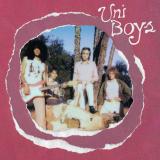
Uni Boys waltz back into our lives spinning thundering playful songs full of ideas on a self titled power-pop LP recorded all analogue across two weeks with Paul D. Millar in Brooklyn and once again with cameos from friends The Lemon Twigs. The raw power of Uni Boys undeniable pop has marked them for rock’n’roll greatness from the start. With a unique feel for classic melodies — worn proudly on their sleeves, delivered tongue in cheek, and charged with the swagger of restless youth — they’ve won the hearts of their young generation’s music scene and earned the respect of their legendary predecessors.

Power Pop saviors recorded in all their analog glory on their third Curation Records long player UNI BOYS. Returning to NYC under the sonic thumb of Paul D. Millar (Lemon Twigs/Tchotchke) Noah Nash and Lemon Twigs drummer/guitarist Reza Matin have crafted 12 new songs of introspection, heartbreak and young love - the follow-up to their success with‘BUY THIS NOW!’. The resulting ‘UNI BOYS’ album is their most listenable, radio-ready (if this was 1979) record to date, it's so super catchy you’ll not get away easily.

pre-order now03.04.2026

expected to be published on 03.04.2026

Uni Boys - UNI BOYS LP

Uni Boys

UNI BOYS LP

12inchLPCURED051
CURATION RECORDS
03.04.2026
also available

Pink Vinyl


Uni Boys waltz back into our lives spinning thundering playful songs full of ideas on a self titled power-pop LP recorded all analogue across two weeks with Paul D. Millar in Brooklyn and once again with cameos from friends The Lemon Twigs. The raw power of Uni Boys undeniable pop has marked them for rock’n’roll greatness from the start. With a unique feel for classic melodies — worn proudly on their sleeves, delivered tongue in cheek, and charged with the swagger of restless youth — they’ve won the hearts of their young generation’s music scene and earned the respect of their legendary predecessors.

Power Pop saviors recorded in all their analog glory on their third Curation Records long player UNI BOYS. Returning to NYC under the sonic thumb of Paul D. Millar (Lemon Twigs/Tchotchke) Noah Nash and Lemon Twigs drummer/guitarist Reza Matin have crafted 12 new songs of introspection, heartbreak and young love - the follow-up to their success with‘BUY THIS NOW!’. The resulting ‘UNI BOYS’ album is their most listenable, radio-ready (if this was 1979) record to date, it's so super catchy you’ll not get away easily.

pre-order now03.04.2026

expected to be published on 03.04.2026

ABY'S GANG - My LIttle Japanese Boy / Happy Song (Remix)

Challenger was the debut and unique album from the iconic and unique italo disco band Baby's Gang. Altough oficially it had only two singles (Happy Song and Challenger), some other labels found extra tracks to be released as single (America) when Memory Records decided to focus on new releases. Produced by Anfrando Maiola (KOTO), Stefano Cundari and Alessadro Zanni, 'My LIttle Japanese Boy' is one of those tracks so it was worth buying the album. The album did not neither included the original version for Happy Song, but a 'Remix'. Probably someone back in the days should have made this EP including both track...now we have done it. This 12" included the original versions plus two Razor's Edit to make it more DJ Friendly.

out of Stock

Order now and we will order the item for you at our supplier.


Last In: 4 months ago
Mahotella Queens - Buya Buya: Come Back LP
  • Jomba Jomba (Jump To The Music)
  • Buya Buya (Come Back)
  • Ngibuz'indlela (Show Me The Way)
  • Mpho Ke Lehlohonolo (Take Care Of Your Gift)
  • Phephezela (Wedding Dance)
  • Šalang (Farewell) Ft. Jack Lerole Jnr
  • Thoko, Ujola Nobani? (Thoko, Who Are You Dating?)
  • Mma Ditaba (Gossipmonger)
  • Uyeke Amanga (Stop Your Lies)
  • Ba Ntshepisa Lenyalo (I'm Tired Of Your Promises)
  • Nkhono Le Ntate-Moholo (My Grandparents)
  • Laduma Lamthatha (The Thunder Roars)

'The joyous harmonies and high-octane jive dances of South Africa’s greatest mbaqanga girlgroup, the Mahotella Queens, have enthralled audiences for six decades. "Buya Buya: Come Back" is the first full album of exciting new Queens material in nearly 20 years and marks their long-awaited return to the world stage. "These songs are in the Mahotella Queens’ original style and I can promise fans that it has been worth the wait," says lead singer Hilda Tloubatla, who at the grand age of 83 is the group’s last surviving original member. Hilda has been leading the Queens with her famously resonant voice since the beginning in 1964 and is now actively preparing the ground for the group’s future. She is now accompanied on record and on stage by the youthful voices of Amanda Nkosi and Nonku Maseko – the next generation of Queens – proof if ever it were needed that the mbaqanga beat is as indestructible now as it was 60 years ago. "Buya Buya: Come Back" is the group’s debut album for Umsakazo Records in the UK and is being launched with a two-week tour of Japan, the first performances of the Mahotella Queens outside South Africa since 2019 and their first appearance in Japan since 2005.'

pre-order now

This item has not yet been released. You can pre-order the product now.

VARIOUS ARTISTS (YASUKUNI TERASHIMA) - For Jazz Vocal Fans Only Vol. 8
  • A1: The Windmills Of Your Mind / Vivian Buczek
  • A2: A Cottage For Sale / Moon Haewon With Tsuyoshi Yamamoto
  • A3: Embraceable You / Caity Gyorgy
  • A4: The Look Of Love / Denise Donatelli
  • A5: April In Paris / April Varner
  • A6: Blame It On My Youth / Cajsa Zerhouni
  • B1: The Thrill Is Gone / Carme Canela & Joan Monné
  • B2: (Sittin' On) The Dock Of The Bay / Inger Marie
  • B3: They Long To Be Close To You / Diana Panton
  • B4: From This Moment On / Naama Gheber
  • B5: Fragile / Sacha
  • B6: I Get Along Without You Very Well / Clare Tea

Vocals are the starting point of all music and the source of connection with listeners.
This exquisite female vocal compilation features a lineup exclusive to Terashima Records, from hidden gems to promising young vocalists.
"Jazz is about enjoying the music, not the improvisation," and "buying for the beautiful album cover is recommended," Terashima has long advocated.
Enjoy a moment of enchantment with his unique vocal style. Yasukuni Terashima has carefully selected great voices, great sounds, and great songs, providing a l
uxurious listening experience. Enjoy this vocal compilation while driving, relaxing, or enjoying a drink. It's also recommended as a way to learn about the current
state of contemporary jazz vocals. The "For Jazz Vocal Fans Only" series, featuring carefully selected female vocalists from a lineup exclusive to Terashima Records,
from hidden gems to promising young singers, has received such positive feedback that the eighth installment is now available on limited-edition vinyl!
It also includes tracks by MOON, who recently made waves with Tsuyoshi Yamamoto, as well as Katie George and Diana Panton, who are popular in Japan.

pre-order now12.12.2025

expected to be published on 12.12.2025

Sly & Robbie - Present Gregory Isaacs LP
  • A1: Soon Forward
  • A2: You'll Never Know
  • A3: Motherless Children
  • B1: Slave Driver
  • B2: Mistake
  • B3: Going Downtown
  • B4: I'm Coming Home

Reissue of the very first album ever released by Sly & Robbie’s iconic TAXI label back in 1979.


"Having saved enough money during a tour with Peter Tosh to buy 4 multitrack recording tapes, Sly & Robbie asked Gregory to voice a few songs for them. Because they had played on so many of his hits, Gregory generously agreed to do it for free to help bootstrap the new TAXI label.

In 1979, Gregory Isaacs was by far Jamaica’s most popular artist, earning his "Cool Ruler" nickname many times over releasing hit after hit, most of which were produced with Sly & Robbie, who at 25 years of age were already the hottest backing band. Out of these sessions came hits like "Soon Forward", a fabulous cover of Bob Marley’s "Slave Driver" and 4 other potent tracks. There were no flimsy soul or pop covers: Gregory Isaacs, whose voice and range were at their peak, sang with clarity, depth, verve and confidence, with no unnecessary mannerisms.

A must have for any serious music fan, this crucial album features extended so-called "Discomix" versions of all the songs, providing listeners with a generous serving of the Riddim Twins drum and bass extravaganza. In addition to the original album, we have added 3 dub versions that were only released in Jamaica, as B Sides of singles, in 1979. These have never been reissued until now and provide a fascinating glimpse into Sly & Robbie's drum and bass sound, which revolutionized Reggae music at the time."

pre-order now28.11.2025

expected to be published on 28.11.2025

The Beatles - Anthology Collection (2025 Edition)

12LP
Anthology 1-3: track listing remains as per original releases.

4 x 3LP albums in triple gatefold sleeves and slipcase

The Anthology Collection 12LP set includes the three groundbreaking Anthology albums from the mid-1990s, remastered in 2025 by Giles Martin, plus a new compilation, Anthology 4. Containing 191 tracks, the collection’s studio outtakes, live performances, broadcasts and demos reveal the musical development of The Beatles from 1958 to the final single ‘Now And Then’ released in 2023.

Anthology 4 features 13 previously unreleased tracks and 17 songs selected from Super Deluxe versions of five classic albums. In addition to fascinating outtakes dating from 1963 to 1969, the album includes new 2025 mixes by Jeff Lynne of ‘Free As A Bird’ and ‘Real Love’.

Furthermore, Anthology 4 presents 26 tracks that have never previously been released on vinyl.

Pressed on 180g black vinyl, each 3LP album will be housed within a triple gatefold sleeve, featuring the original art, sleevenotes by Mark Lewisohn, and restored photos for Anthology 1-3; Anthology 4 has brand new sleevenotes written by Kevin Howlett alongside photos. The outer slipcase features the original Klaus Voorman triptych art, and a 3/4 O-Card image of the band with detailed track listing.

pre-order now21.11.2025

expected to be published on 21.11.2025

Jezebell - Jezebellearic Beats Volume 2 (LP 2x12")

DJ Support: Luke Una, Justin Robertson, Trevor Fung, Leo Elstob, Bill Brewster , Sean Johnston, Duncan Gray, Nathan Gregory Wilkins and DJ mag Balearic album of the month.

Limited edition double vinyl release of Jezebell’s debut new-Balearic epic, which stylishly weaves the history of eclectic club bombs through 16 tracks of downtempo, electro dub, and acid chug.

After the huge, and now sold out, never to be repressed debut album release, Jezebell come again with their second instalment, delivering their trademark Balearic and chuggy, electro-tinged dancefloor bizness in the form of Jezebellearic Beats Volume 2. You get the vibe of the artwork, the Jez crew have the class. These won’t be around for long. One press only. Buy or Cry.

out of Stock

Order now and we will order the item for you at our supplier.


Last In: 58 days ago
Various - Dolores: Salsa & Guaracha From 70's French West Indies

In Guadeloupe, many people think that jazz and ka music are like a ring and a finger. To some extent, the same could be said about so called Latin music and the music played in the French West Indies.

Both aesthetics were born in the Caribbean and bear so many connections that they can easily be considered cousins. In constant dialogue, there are lots of examples of their fruitful alliance and have been for a while. The English country dance that used to be practiced in European lounges came to be called kadrille in Martinique and contradanza in Cuba. They both featured additional percussion instruments inherited from the transatlantic deportation. Drawing from shared feelings about the same traumatized identity – later to be creolized – it would be hard not to assume that they were meant to inspire each other. The golden age of the orchestras that graced the Pigalle nights during the interwar period further proves the point. As soon as the 1930s, Havana-born Don Barreto naturally mixed danzón and biguine music in a combo based at Melody's Bar. In the following decade, Félix Valvert, a conductor who was born and raised in Basse-Terre in Guadelupe, also worked wonders in Montparnasse with La Coupole, which was an orchestra made up of eclectic musicians. Afro- Caribbean performers of various origins were often hired on rhythm and brass sections in jazz bands, which used to enliven the typical French balls of the capital. In the 1930s and onwards, Rico’s Creole Band was one of them.


Martinican violinist-clarinettist Ernest Léardée, who would become the king of biguine music as well as the main figure of French Uncle Ben's TV commercials (a dark stigma of post-colonial stereotypes), had musicians from the whole Caribbean sphere play at his Bal Blomet – and they all enchanted "ces Zazous-là" (according the words of Léardée's biguine-calypso piece). In les Antilles (French for French West Indies), music history started to speed up in the 1950s, when trade expanded and radio stations grew bigger. The Guadelupean and Martiniquais youth tuned in their old galena radio sets to South American and Caribbean music. As for the women traders, les pacotilleuses, they bought and sold goods across different islands (the "passing of items through various hands" was thought to be most pleasurable) and brought back countless sounds in their luggage. Such was the case of Madame Balthazar, who once returned from Puerto Rico with the first 45rpm and 33rpm to ever enter Martinique.

Out of this adventure was created the famous Martinican label La Maison des Merengues, a music business she opened and undertook with her husband and which proved to be a major landmark. At the end of the 1950s, in Puerto Rico, Marius Cultier competed in the Piano International Contest playing a version of Monk's Round 'Midnight. He won the first prize and this distinction foreshadowed everything that was to come. Cultier, the heretic Monk of jazz, was quickly praised for writing superb melodies, always tinged with a twist that conferred a unique sound to his music. It didn't take long for the gifted self-taught musician to get to play with Los Cubanos, making a name for himself thanks to his impressive maestria on merengues.

The rest is history. Besides, in the late 1950s, Frantz Charles-Denis, born into the upper middle class in Saint-Pierre and better known by his first name Francisco, went back home after working at La Cabane Cubaine – a club located rue Fontaine where he had caught the Latin fever. Francisco's music was therefore heavily marked by his Cuban cousins' influence, which gave the combos he led a specific style and also led to renewal. Things were swinging hard in La Savane, located in the main square in Fort-de-France. He set up the Shango club close by and tested out the biguine lélé there, a new music formula spiced up with Latin rhythms. Soon afterwards, fate had him fly to Puerto Rico and Venezuela.

As for percussionist Henri Guédon (percussions were only a part of his many talents), he was born in Fort-de-France in May 22nd 1944, the day marking the celebration of the abolition of slavery. As an old man, he could remember that in " his father's Teppaz, a lot of hectic 6/8 music was constantly playing...". In the opening lines of his Lettre à Dizzy, a small illustrated collection of writings published by Del Arco, he highlighted the huge impact that cubop had on him as a teenage boy, around 1960. He eventually turned out to be the lider maximo in La Contesta, a big band steeped in Latin jazz. He was also the one who originated the word zouk to describe music which brought the sound of the New York barrio to Paris. It was the culmination of a journey that started in Sainte-Marie: "a mythical place for bélé, the equivalent of Cuban guaguancó". In the early 1960s, the tertiary economy developed to the detriment of agriculture. Yet rural life was where roots music emerged in Martinique and in Guadeloupe.

Record companies played a major part in the process of Latin versions sweeping across the islands – before reaching everywhere else. Producer Célini, boss of the great Aux Ondes label, and Marcel Mavounzy, both the head of Émeraude records - a firm which was founded in 1953 - as well as the brother of famous saxophonist Robert Mavounzy, were big names to bear in mind. Although there were many of them - all of whom are featured on this record - Henri Debs was definitely the major figure in the recording adventure. He proved to be so influential that he even got compared to Berry Gordy. In the mid 1950s, when he acquired his first Teppaz, he worked on his first compositions: a bolero and a chachacha. Then, he became the one man who made people discover Caribbean music, from calypso to merengue. He was among the first ones to rush out to San Juan, Puerto Rico, to buy records and distribute them through a store run by one of his brothers in Fort-de-France. He had members of the Fania All Star come and perform there, which he was madly proud about. He was also the first one to pay attention to Haitian music, such as compas direct and various other rhythms which would soon flood the market. As a result, many of the combos hitting his legendary studio would end up boosted by widespread "Afro-Latin" rhythms. However, he never denied his identity: gwo ka drums were given a major role, although they were instruments which had long been banned from the "official" music spheres. The present selection bears witness to such a creative swarming. Here are fourteen tracks of untimely yet unprecedented cross-fertilization: all types of music rooted in the Creole archipelago have found their way, whatsoever, to the tracklisting. Whether originating from the city or being more rural, they all go back to what Edouard Glissant, in an interview about the place of West Indian music in the Afro-American scope, called "the trace of singing, the one which got erased by slavery." "It is so in jazz, but also in reggae, calypso, biguine, salsa... This trace also manifests through the drums, whether Guadelupean, Dominican, Jamaican or Cuban... None of them being quite the same. They all point to the idea of a trace, seeking it out and connecting to each other through it. This is the hallmark of the African diaspora: its ability to create something new, in relation to itself, out of a trace. It may be the memory of a rhythm, the crafting of a drum, a means of expression which doesn't resort to an old language but to the modalities of it." The opening track features one of the emblematic orchestras of this aesthetic identity, criscrossing many music types from the archipelago. The 1974 Ray Barretto guajira – Ray Barretto was a major New York drummer influenced by Charlie Parker and Chano Pozzo – is magnificently performed by Malavoi, a legendary Fayolais group (i.e from Fort-de-France). Additionally, the compilation ends on a piece by Los Martiniqueños de Francisco. It symbolically closes the circle as it is a genuine potomitan of Martinique culture which also functions as a tireless campaigner for Afro-Caribbean music. Practicing the danmyé rounds (a kind of capoeiria) to the rhythm of the bèlè drum, it delivers a terrific Caterete, a kind of champeta of Afro- Colombian obedience which was originally composed by Colombian Fabián Ramón Veloz Fernández for the group Wgenda Kenya. The icing on the cake is Brazilian Marku Ribas, who found refuge in Martinique in the early 1970s, bringing his singing to the last trance-inducing track. These two "versions" convey the whole tone of a selection composed of rarities and classics of the tropicalized genre, swarming with tonic accents and convoluted rhythms. It is the sort of cocktail that the West Indians never failed to spice up with their own ingredients. For instance, the Los Caraïbes cover of Dónde, a famous Cuban theme composed by producer Ernesto Duarte Brito, has a typical violin and features renowned Martinique singer Joby Valente and his piquant voice.


The track used to be – or so we think – their only existing 45rpm. The meaningful Amor en chachachá by L'Ensemble Tropicana, a band which included Haitian musicians among whom was composer and leader Michel Desgrotte, also recalls how Latin music was pervasive in the tropics in the mid-1960s. They were the ones keeping people dancing at Le Cocoteraie in Guadelupe and La Bananeraie in Martinique. Around the same time, another "foreign" band, Congolese Freddy Mars N'Kounkou's Ryco Jazz, achieved some success on both islands by covering Latin jazz classics – such as their adaptation of Wachi Wara, a "soul sauce" by Dizzy Gillespie and Chano Pozo whose interweaving of strings and percussions can have anyone hit the dancefloor. How can you resist Dap Pinian indeed, a powerful guaguancó by Eugene Balthazar, performed by the Tropicana Orchestra and published by the Martinique-founded La Maison des Merengues? It also acts as a symbol of the maelstrom at work. Going by the name Paco et L'orchestre Cachunga, Roger Jaffory used to play guaguancó too: his Fania-inspired Oye mi consejo is one example of his style. Baila!!!!! Dancing was also one of the Kings' focus points. Oriza is a Puerto Rican bomba and a "classic" originally composed by Nuevayorquino trumpeter Ernie Agosto, which reserves major space for brasses, giving it a special sheen.

Emerging from the New York barrios crucible was also La Perfecta, a Martinique group originating from Trinidad, whose name directly references the totemic Eddie Palmieri figure as well as his own band, also called La Perfecta. Here they borrow Toumbadora from Colombian producer and composer Efraín Lancheros and interpret it by emphasizing percussions, which set fire to the track even more than the wind instruments. The same goes for Martinique's Super Jaguars, who use Tatalibaba – a composition by Cuban guitarist Florencio "Picolo" Santana which was made famous by Celia Cruz & La Sonora Matencera – as a pretext for sending their cadences into a frenzy. In a more typically salsa vein, the Super Combo, a famous Guadelupean orchestra from Pointe-Noire that was formed around the Desplan family and had Roger Plonquitte and Elie Bianay on board, adapt Serana, a theme by Roberto Angleró Pepín, a Puerto Rican composer, singer and musician also known for his song Soy Boricua. Here again, their vision comes close to surpassing the original. In the 1970s, L'Ensemble Abricot provided a handful of tracks of different syles, hence reaching the pinnacle of the art of achieving variety and giving pleasure. They played boleros, biguines, compas direct, guaguancó and even a good old boogaloo - the type they wanted to keep close to their hearts for ever, "pour toujours", as they sang along together in one of their songs. Léon Bertide's Martinican ensemble excelled at the boogaloo which had been composed by Puerto Rican saxophonist Hector Santos for the legendary El Gran Combo.


Three years later, in 1972, Henri Guédon, with the help of Paul Rosine on the vibraphone, tackled the Bilongo made famous by Eddie Palmieri. Such a classic!!!!! And so were the Aiglons, the band from Guadelupe: choosing to execute Pensando en tí, a composition by Dominican Aniceto Batista, on a cooler tempo than the original, they noticeably used a wonderfully (un)tuned keyboard in place of the accordion. On the high-value collectible single – the first one released by Les Aiglons under the Duli Disc label – there is a sticker classifying the track under the generic name "Afro". Now that is what we call a symbol. Jacques Denis

out of Stock

Order now and we will order the item for you at our supplier.


Last In: 71 days ago
Vice Squad - Punk Rockers : The Best of Vice Squad Volume 1
  • 1: If I Knew What I Know Now
  • 2: Out Of Reach
  • 3: Get A Life
  • 4: Resurrection
  • 5: Allergy
  • 6: Sniffing Glue
  • 7: Ordinary Girl
  • 8: The World Is Wrong
  • 9: Citizen
  • 10: Scarred For Life
  • 11: Voice Of The People
  • 12: Punk Police
  • 13: Humane
  • 14: Spitfire
  • 15: Born In A War
  • 16: Last Rockers

Vice Squad are 100% DIY and record everything in their home studio with guitarist/riffmaster Paul Rooney engineering and mixing. There is nothing sloppy here; the whole album is concise and intelligent with lightning-speed diction, passion, and intent. The glorious ‘If I Knew What I Know Now’ and ‘The World Is Wrong’ are examples of Vice Squad’s ability to write instantly catchy, witty songs, and the more gut-wrenching material from their last album, ‘Battle of Britain’, showcases some enormous riffs and a voice that is a million decibels from Beki's untried teen vocals. The album opens with the deliciously effervescent ‘If I Knew What I Know Now’, followed by the sparkling old-school tongue-twister ‘Out of Reach’. Next up is the visceral ‘Get A Life’, an angry anti-suicide note to the desperate, originally the title track from their 1998 comeback album. This is followed by a shimmering version of Vice Squad's old-school classic ‘Resurrection’. While the treatment of the old songs remains true to the original teenage renditions, the upgraded versions pack more of a punch with detuned guitars and growling bass. The tribal tom-toms of ‘Allergy’ underpin just over two minutes of punk protest about the delights of pollution and asthma. Then comes the sublime ‘Sniffing Glue’, a near-perfect punk love song that would be a huge hit if not for its subject matter. ‘Ordinary Girl’ is punk-pop perfection brimming with hook lines and harmonies, warmly mocking the life that could have been chosen instead of the grindstone at the sharp end of the music industry. ‘The World Is Wrong’ is anthemic, joyous, and wonderfully contrary, and one would expect nothing less from a band that has soldiered on and grown through the decades. It’s always great when bands lead by example. In these increasingly tough times where our survival is threatened by the gargantuan greed of a few individuals, it's important to continuously stick two fingers up to the grabbers and spoilers. 'The World Is Wrong' does just that in an impassioned, melodic, and optimistic style. 'Hold your head up, stand your ground, and don't let the bastards grind you down.' Then we roar into the final single Beki wrote with original and now sadly deceased guitarist Dave Bateman, ‘Citizen’, and continue with another teenage opus, the quite brutal ‘Scarred For Life’. ‘Voice of the People’ is a bulldozer of a song, all swagger and ballsy riffs, and the chorus, ‘Freedom of speech is against the law; now we’re all criminals,’ snarls its derision at red-handed red tape. ‘Punk Police’ sneers over a catchy-as-COVID guitar riff, and the lyrics, ‘Regulation cut, you must measure up, down on the street, PR companies, monied families, running the scene,’ call out the hierarchies that now permeate Punk. Baritone guitars add extra darkness to one of the first-ever animal rights songs, ‘Humane’, and I’m struck by how relevant the older songs are. Chocks away, and the awesome ’Spitfire’ takes flight like Motörhead on extra amphetamines. Merlin engines fade into ‘Born In A War’, the second in the triumvirate of conflict-themed songs, an absolute stonker with huge muscular riffs and lyrics that roar pure outrage. Then comes the ominous Last Rockers, with all the angst of the original plus added depth and resonance. Beki: ' "Last Rockers" is a typically depressive adolescent song about nuclear war and being too young to die but too late to live. I believed Punks were the ‘Last Rockers’, the final youth cult before the Apocalypse. I was obsessed with punk, and all I wanted to do was sing in a band and be part of the movement, so I would often romanticise the idea of punk in my lyrics.' The four bonus CD tracks kick off with ‘Coward’, another teen Bateman/Bond composition. ‘No You Don’t’ is just over two minutes of vocal acrobatics over a Dexedrine-driven Devo-esque chord sequence, and the frantically brilliant ‘I Dare To Breathe’ from ‘Battle of Britain’ continues the aural assault. Then the final sombre entreaty of ‘You Can’t Buy Back The Dead’ warns us that ‘Enough’s never enough; absolute power will corrupt; the war machine still rumbles on’ before fading into the future.

pre-order now18.07.2025

expected to be published on 18.07.2025

Karizma - Tech This Out Pt.1

The highly sought after 'Tech This Out Pt. 1' by Karizma is back again on Atjazz Record Company. This limited blue vinyl edition will give people a chance who weren’t fortunate enough the first-time round, to now have a copy for themselves. With the first pressing selling for £50 on the second-hand market, this new version will not be around for long. As always, buy or cry.

stock from03.06.2026


Last In: 7 days ago
Mike Jones - Who Is Mike Jones ? (LP 2x12")
  • A1: Intro
  • A2: Back Then
  • A3: Flossin' (Feat. Big Moe)
  • A4: Still Tippin' (Feat. Slim Thug And Paul Wall)
  • B1: Got It Sewed Up (Remix) (Feat. Juicy J And Dj Paul)
  • B2: Scandalous Hoes (Feat. Lil Bran)
  • B3: Screw Dat
  • B4: Turning Lane
  • C1: Laws Patrolling (Feat. Cj Mellow And Lil Bran)
  • C2: 5 Years From Now (Feat. Lil Bran)
  • C3: Cuttin' (Remix)
  • C4: What Ya Know About... (Feat. Paul Wall And Killa Kyleon)
  • D1: Know What I'm Sayin' (Feat. Bun B And Lil Keke)
  • D2: Type Of N**Ga U Need (Feat. Brighteyes) D3. Grandma

It takes grindin' to be a king and Houston's Mike Jones' work ethic of "You Don't Work, You Don't Eat, You Don't Grind, You Don't Shine" had his phone blowing up in 2005 with the release of his major label debut Who is Mike Jones? on Asylum/Swisha House/Warner Records. Mike Jones started rapping in the early 2000s and he released a couple of independent albums on his own label Ice Age Entertainment before linking up with Michael "5000" Watts of Swisha House. He recorded the underground single "Still Tippin" with Texas contemporaries Paul Wall and Slim Thug, which appeared on the Swisha House compilation The Day Hell Broke Loose 2. The song, full of southern hip-hop slang and braggadocio, was an ode to the classic car culture in Houston, Texas, and could be heard bumpin' out the trunks of cars nationwide with its heavy bass and classical string loops. Before the release of Who Is Mike Jones? girls would ignore him, but after the release of "Still Tippin" they were all up on him, which led to the release of the single "Back Then" where he shouted out his real cell phone number that played a major part in the marketing and promotion of the album.You could call 281-330-8004 and get his voicemail and leave a message, but sometimes he would answer, which led to spreading the word of Mike Jones' debut album. "Back Then" was also a top-selling ringtone because (back then) you had to buy and download ringtones, unlike today. Mike truly went viral before going viral was even a thing. After dropping the two hit singles, Who Is Mike Jones? was released on April 19th, 2005, and would sell over a million copies that year, leading to certified platinum status. Twenty years later, this Texas Rap classic still holds up with features from other H-Town legends including S.U.C.'s Big Moe (RIP),Bun B, Paul Wall and Lil Keke. Juicy J & DJ Paul of Three 6 Mafia added their Memphis touch to the "Got It Sewed Up Remix" and the album ends with a heartfelt dedication to Mike Jones' late Grandmother on "Grandma". Get On Down is proud to present the first vinyl reissue of Who Is Mike Jones? in a limited edition silver and red color-in-color pressing packaged with a full color printed insert tocommemorate the 20th anniversary of this H-Town classic

pre-order now20.06.2025

expected to be published on 20.06.2025

ALEPHER - DODGES AIM 2 xCS
 
20

This material was released digitally via Belgian label, Stroom as single tracks, as well as located on the Internet Archive as a free download in the form of 4 bulky sides (A,B,C,D) as it was originally conceived. Now available for the first time as physical, compact double MC-set via Tax Free Records.

Alepher “Dodges Aim” was made by iRiAi Verlag and TRii Compiler ca. between 2020-24.

pre-order now06.06.2025

expected to be published on 06.06.2025

COMPUMA - HORIZONS

Compuma

HORIZONS

12inchSA008LP
SOMETHING ABOUT
30.05.2025

COMPUMA's new new album “horizons”now available on vinyl via his own label Something About!

The album “horizons” is a further development of COMPUMA's “horizons EP”, which was released in July 2023 as a digital-only EP on his Bandcamp. The songs are inspired by the scenery and environment of Lake Ezu, Kumamoto, where the artist's roots lie, and by his walks in various places around Japan.

Horizons 1”, in which the undulations of electronic sounds seem to represent a leisurely walk across a clear expanse of sky and lake scenery, and the vocoder voice somewhat reminds us of people's activities, and the piece changes to a more minimalistic play of rhythms and electronic sounds, as if focusing on introspection in the midst of walking. The album also includes “horizons 2,” which changes with exquisite salinity, “horizons 3,” which pays homage to early electronic music, and “horizons 4,” a more stoic minimal electro-dubwise piece that seems to be immersed in the act of walking, The last track on the album, “horizons 5,” is a non-beat ambient track with a hint of the waterfront, as if the artist is gazing at the vast sky, as if the steps of the first half of the album are expanding into a faint memory, and is accompanied by a field recording. The album includes “horizons 5”, a non-beating ambient taste that is covered by field recordings and depicts the atmosphere of a wandering waterfront, and five versions of “horizons” that remind us of the days of “walking”, sometimes immersed in the scenery and walking, sometimes lost in thought, with “horizons interlude” in between, which reminds us of the surface of a bobbing lake, and is a self-titled version of “View 2” from the previous album, “A View”. The album contains seven songs in total, including a self-remix of “View 2” and an electro version of “view 2 electro”, reminiscent of the shimmering surface of a lake.

Personally speaking, this work reminds me somewhat of Kraftwerk's “Autobahn,” which depicted the countryside of West Germany with minimal electronic sounds, and this work also seems to depict a scene of a “walk” with electronic sounds. However, what is different from “Autobahn” is that there is an element in the middle part of the album that seems to go into introspection in the midst of walking, and it is a work that shows various views (including feelings) throughout the album. From a macro perspective, this album is a new response to the recent environmental music revival and generalization of ambient music, which he has introduced as a DJ and record buyer for a long time.
The album was co-produced by hacchi, who also works with Deavid Soul, Urban Volcano Sound, and as a recording/mastering engineer, and mastered by Nakamura Soichiro of Peace Music, a studio that has produced many masterpieces, including Shintaro Sakamoto's solo work. The package artwork is by designer Seiichiro Suzuki. The package artwork is by designer Sei Suzuki. (The package artwork was designed by designer Sei Suzuki.)

******

Compuma is a Tokyo-based log-serving DJ whose extensive knowledge of obscure and left-field music across so many genres and different regions of the world established himself as one of the most respected record buyers in Japan,
a country well known as record collectors’ paradise. While he built his career in record business over decades, he has also been sharing his expertise in music as a DJ just as long. Not only the breath and the depth of where his selection derives are hard to compete, the way he blends them all together is also a state of art. Often intricately layered and collaged, Compuma is capable of sculpting something entirely new with bits and pieces of existing tracks in various forms such as ambient soundscapes to dubbed out club sets. In 2017, his unique ability caught the attention of Berlin Atonal directors and he was invited to play at the festival in Berlin.

He extends his skills into remixing which can be heard on the released from EM Records - “Compuma meets Haku” (2015) and “Bangkok Nights” (2017.) In June 2022, he released his first solo album, A View.
He is also an active member of a DJ trio called Akuma No Numa (which translates to “devil’s swamp”) in which he explores darker and more psychedelic periphery of dance music.

pre-order now30.05.2025

expected to be published on 30.05.2025

Figūras - Figūras

Figūras

Figūras

12inchONO 436-9
Ono
23.05.2025

Figūras is a project of the artist Kaspars Groševs , Based in Latvia Kaspars is an Artist, Musician , Gallerist and Activist. He works in many mediums and has been creating in this way for many years . This record LP is a collection of early works by him , previously released on small editions of cassette tapes and now made available to buy in this small collection pressed and selected for vinyl by Kaspars Groševs & Michael Holland .

Two tracks feature other artists , Buer & Andromalius is a project with Gatis Ziema and Andrei Jastrebinski! Untitled (Feat Vivienne Griffin) features the multimedia artist Vivienne Griffin.

Covers are all hand-painted and handmade by Kaspars Groševs and are unique artworks made on recycled covers . Limited to 300 copies only .

out of Stock

Order now and we will order the item for you at our supplier.


Last In: 14 months ago
Muck and the Mires - Beat Revolution LP

MuckandThe Mires

Beat Revolution LP

12inchDWC1132LP
Dirty Water
23.05.2025
  • 1: Beat Revolution
  • 2: Because Of You
  • 3: Overnight Delivery
  • 4: Julia (I Want To Kill Your Boyfriend)
  • 5: Lemon And Lime
  • 6: You Can't Try It (Before You Buy It)
  • 7: The World's Gone Mad
  • 8: She's Too Good For You
  • 9: Down In The Underground
  • 10: Mary Ann Man
  • 11: Cool Imposter
  • 12: One Hit Wonder Of Love
  • 13: Carefree
  • 14: Beat Revolution 9

Beat Revolution is the new 14-song album by MUCK AND THE MIRES available April 25 from Dirty Water Records (London), featuring their smash radio singles “Cool Imposter” and “Beat Revolution” + 12 brand new revolutionary tracks.
On BEAT REVOLUTION, their 7th full-length album, we find the band marching forward into the sounds of Powerpop (“Overnight Delivery”), Punk Rock (“Julia’s Got a Boyfriend”), and pure Nuggets-era Garage Rock (“She’s Too Good For You”).
“With a blend of ‘50s kitsch, late ‘60s garage rock guitar and one of the most repetitious hooks ever, ‘Cool Imposter’ quickly marked out a place as one of their strongest tracks to date.”- Real Gone
“Now here's a political campaign we can all get behind! “ ‘Beat Revolution’ features the signature Muck sound — recalling '64 era Beatles if they'd somehow time travelled into the future and heard the Ramones. Be sure to volunteer today! Faster and Louder
“’Beat Revolution’ is pure classic early garage rock 'n' roll, and who doesn't need that sound more often? - If It’s Too Loud
Boston's Muck and the Mires, have been described as a blend of the HAMBURG era BEATLES and the CBGBs era RAMONES. They have built a worldwide following through relentless touring, radio and satellite airplay and a string of recordings (considered by many to be cult classics) produced by Kim Fowley and Jim Diamond. The band gained worldwide recognition when they were featured on MTV as the winners of Little Steven Van Zandt's (E-Street Band/Underground Garage) national battle of the garage bands contest. Beat Revolution is the followup to their highly successful album, Greetings From Muckingham Palace, which earned a Coolest Song in the World (“I’m Your Man”) on the Underground Garage SIRIUS XM show.

pre-order now23.05.2025

expected to be published on 23.05.2025

Mucha - Skin

Mucha

Skin

12inchFD025
Frequency Domain
09.05.2025

Mucha, AKA Amanda Butterworth presents a stunning double header for Frequency Domain's tenth birthday release. But when up against one of the most thoughtful, precise, yet loose and rave inducing producers in the history of synthesisers, there was only ever going to be one opening point being made here. Surgeon's remix is typically essential for any techno fan. So while the original 'Skin' is this patient, rhythmic but beat-less slice of post- (or pre-)club stuff, full of ecstasy moods and comedown overtures, Surgeon's take refocuses us on the repetitive vocal patterns and slaps a wonderful compelling broken kick underneath to create a proper dancefloor builder. B-side 'You Make Me Go Under' goes for a neo-Bjork style IDM leaning piece, which then gets a moody, apocalyptic Datassette cut to top off an exceptionally strong package. Buy it. Buy it now.

pre-order now09.05.2025

expected to be published on 09.05.2025

Funkadelic Feat. Louie Vega - Ain't That Funkin' Kind Of Hard On You? (Louie Vega Remixes) (Purple Vinyl Repress)

Purple Vinyl

House music, nightlife entertainment and DJ/Producer virtuoso Louie Vega has proven over and over again that he's a master chemist in the studio. His latest release is an uptempo and speaker-knocking remix of Funkadelic's 'Ain't That Funkin' Kind of Hard on You' (produced by George Clinton and & G Koop) from the album 'First Ya Gotta Shake the Gate'.
The original version is nothing short of a classic, but it's as if the song had never been invited to a Louie Vega post-midnight global extravaganza. Was the song not aware that spellbound dancing and high BPMs were the standard for House Music Normally, such a blaring disregard for nightlife decorum would relegate a song to the pits of sonic hell, but we're talking about George Clinton here!The original opens up with a G-funk groove that screams Westside and lowriders. The listener is then blessed with Clinton as he adds his sage, soulful and pimpadelic vocals, complemented by Funkadelic singers asking him about the pains of the funk. The semblance of a beat that could drive the dancefloor into the morning hours is there, but in no way has it blossomed into its full glory. Enter Louie Vega.
His remix immediately greets listeners with a decadent spread of instrumentation and chutzpah. The original song's DNA populates the first thirty seconds of the remix but then an explosion takes place and the song assumes a new identity. The transcendent experience is akin to taking the elevator to a rooftop party and once the doors open- boom! The remix begs you to dance, the G-funk groove is now in your face instead of being laidback and percussion takes a front seat to take you away. The song is alive, there's no other way to describe it.
Be sure to buy your vinyl at an outlet near you! the Louie Vega remix of Funkadelic's 'Ain't That Funkin' Kind of Hard on You' on Vega Records!

out of Stock

Order now and we will order the item for you at our supplier.


Last In: 11 months ago
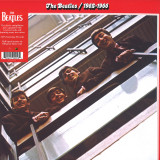
The Beatles - The Red Album LP 3x12"

The Beatles

The Red Album LP 3x12"

3x12inch5592053
APPLE
14.04.2025
 
38

This landmark compilation has introduced generations of fans to the incredible history of the most storied band in music. For its 50th anniversary, the collection has been expanded with 12 additional tracks, including for the first time some of George Harrison’s earliest songs and some classic Beatles versions of R&B and rock ‘n’ roll hits that were so influential on the band.

The 3LP collection now contains 38 tracks, 30 of which have new mixes for 2023. The set’s 12 newly added tracks are collected on its 3rd LP. An insert contains new sleeve notes by journalist and author John Harris. For current fans and future generations alike, the new 1962 – 1966 collection is a joyous celebration of The Beatles’ timeless musical legacy.

out of Stock

Order now and we will order the item for you at our supplier.


Last In: 13 months ago
Various - Midnight In Tokyo Vol.4  (LP2x12")

compiled by tsunaki kadowaki
artwork by yoshirotten
mastering by kuniyuki takahashi

Tsunaki Kadowaki, a staff member at Kyoto’s record store Meditations, the supervisor of "New Age Music Disc Guide", and the founder of Sad Disco, curates the fourth installment of "Midnight in Tokyo" themed around Ambient Kayō.

The Midnight in Tokyo series by Studio Mule focuses on Japanese music, serving as a soundtrack for Tokyo nights—whether for home listening, club play, or as a driving BGM, transcending location and space. After a six-year hiatus, the fourth volume takes "Ambient Kayō" as its new perspective, compiling genre-defying tracks released between 1977 and 1999 to explore the intersection of Japanese ambient and pop music.

For this long-awaited fourth installment, selections were made regardless of record label status (major or independent), era, format (vinyl or CD), original release price, or prior reissues. Instead, the focus was on music that deeply moves the listener, is open-minded and evocative, brims with inspiration and spiritual insight, and embodies the "utagokoro" (singing heart) of Japanese artists.

Opening the compilation is "Umi e Kinasai" by Yōsui Inoue, a legendary Japanese singer-songwriter whose works have recently gained renewed interest as hidden gems of Walearic and ambient pop

Composed and arranged by Katsu Hoshi—who is also known for his arrangements on Inoue’s masterpiece Ice World—the track features renowned players such as Masayoshi Takanaka, Hiroki Inui, and Shigeru Inoue. The song embodies a yearning for Balearic horizons, tinged with youthful vibrancy and sentimentality.

Next, "Oritatamu Umi", compiled from Keiko Nosaka, a 20-string koto player, and George Murasaki, a pioneer of Okinawan rock, is an instrumental track from their album "Niraikanai Requiem 1945". As the title suggests, it carries themes of requiem and remembrance, conveying poetic lyricism even without words. Blending Ryukyuan/Okinawan harmonies and indigenous elements, it unfolds as an intimate and nostalgic piece of progressive rock.

Also featured is "Natsu no Kowareru Koro" by Higurashi, a folk-rock band led by Seiichi Takeda, formerly a guitarist of The Remainders of The Clover, the predecessor of RC Succession. Like the opening track "Umi e Kinasai", this song was also produced by Katsu Hoshi. It stands as a folk/new music piece that takes a step into an "otherworldly" realm, recommended for fans of Twin Cosmos and Masumi Hara.

From the enigmatic Blue, the only work left by the mysterious composer S.R. Kinoshita, comes "Mangrove", a hidden treasure of Japan's ambient/new age scene from the CD era. With an oriental and enigmatic atmosphere, the track evokes a mystical world of deep, uncharted jungles, unfolding as an otherworldly New Age Kayō.

"Yaponesia Sakura", selected from Rehabilual’s sole album New Child, is a masterpiece of Japanese new age music. Produced by Swami Dhyan Akamo, a disciple of Indian meditation teacher Osho and a renowned balafon player, the track features Michio Ogawa (Chakra) and Atsuo Fujimoto (Colored Music). Their collective artistry creates an exquisite spiritual ambient pop sound.

"Asa no Hitoshizuku", the opening folk song from Sachiko Kanenobu’s album Sachiko, is also included. Known for her legendary folk album Misora, produced by Haruomi Hosono, Kanenobu’s fourth album after resuming her career was inspired by her experiences living in San Francisco and revolves around the theme of "love." This track carries the same intimate poetic world as Misora, imbued with a pure, crystalline innocence.

From the synth-pop band E.S. Island, known for the Haruomi Hosono-produced *Teku Teku Mami", comes "Yume Fūrin ", selected from their long-lost new age classic Nanpū from Hachijo. Created while the band’s core duo was living in Hachijō Island, the album aimed to sonically capture "the high and happy vibrations of everyday island life." This track offers a dynamic, tribal-infused New Age Kayō experience.

Dubbed "the world's first Min’yō House Mix" "Esashi Oiwake (Maeuta) " comes from Kanazawa Akiko HOUSE MIX Ⅰ, a collaboration between Japanese house music pioneer Soichi Terada and Akiko Kanazawa, a renowned min’yō singer. Through the prism of club music, Hokkaido's Esashi Oiwake, one of Japan’s most iconic folk songs, is transformed into a futuristic ambient pop piece with intricate sound design.

The compilation also includes "Sweet Ong Choh", a track from Voice From Asia, a group active between 1989 and 1992 featuring vocal artist Shizuru Ohtaka. Taken from their imaginative minimal work Voice From Asia, released under Aoyama Spiral’s music label Newsic, the song presents a tranquil, tribal-minimal soundscape enriched by ethnic instruments.

Hailed by Haruomi Hosono as having “a shaman residing in her voice,” singer-songwriter Nami Hōdatsu also appears in the selection. Known for her collaborations with Henry Kawahara, her debut album featured "Asa-Hikari-Ame-Yume", a track that now stands as a precursor to modern vocaloid/synthesized vocal music—a hidden gem of post-choir aesthetics that deserves rediscovery.

Likewise, "Tennessee Waltz", from Naomi Akimoto’s album One Night Stand, supported by members of Mariah, serves as another early prototype of vocaloid/synthesized vocal music. The track weaves fragmented vocal samples, pastoral yet sweetly minimal synth sounds, and mechanical beats into a strikingly unconventional piece in the history of Japanese music.

Closing the compilation is "Heaven Electric", a track from Nav Katze’s album Gentle & Elegance, which featured remixes by Autechre, Seefeel, and Sun Electric. Merging elements of IDM, ambient techno, and chillout, the song embodies an optimism reminiscent of space music while seamlessly blending a mystical Japanese aesthetic—an ambient pop masterpiece.

---

The album presents 12 exquisite pop tracks infused with an ambient feeling, resonating deeply with the evolving landscape of the mid-2020s—a time of post-hyperpop and Y2K revival.

Tsunaki Kadowaki (Compiler)

Born in 1993 in Yonago, Tottori, Tsunaki Kadowaki is a staff member and buyer at Kyoto’s Meditations record store. He is the editor of New Age Music Disc Guide (DU BOOKS) and a contributor to Music Magazine, Record Collectors' Magazine, ele-king, and more. Kadowaki has written liner notes for multiple Japanese releases (Brian Eno, Masahiro Sugaya etc.) and runs the Sad Disco music label under Disk Union. He also curates Spotify’s official New Age Music playlist and performed as a DJ at YCAM’s Audio Base Camp #3 in 2024.

out of Stock

Order now and we will order the item for you at our supplier.


Last In: 9 months ago
Elvis Presley - Rockin' 57
  • 1: Got A Lot O' Livin' To Do
  • All Shook Up
  • Mean Woman Blues
  • (I'm Having A) Party
  • Hot Dog
  • Lonesome Cowboy
  • Blueberry Hill
  • Have I Told You Lately That I Love You?
  • It's So Strange
  • (Let Me Be Your) Teddy Bear
  • One Night Of Sin
  • Don't Leave Me Now
  • I Beg Of You
  • One Night
  • I Need You So
  • Loving You
  • When It Rains, It Really Pours
  • Jailhouse Rock
  • I Want To Be Free
  • (You're So Square) Baby, I Don't Care
  • Treat Me Nice

Elvis' debut LP, titled Elvis Presley, was the first rock album to reach number one on
the US charts. It was recorded for the RCA label, which had paid what was then a
king's ransom to buy his contract from Sam Phillips' Sun Records in Memphis. The
album was produced by Steve Sholes, head of RCA's Country & Western and Rhythm &
Blues division, and released in March 1956.
"This was as startling a debut record as any ever made, representing every side of
Elvis' musical influences except gospel - rockabilly, blues, R&B, country, and pop were
all here in an explosive and seductive combination. Elvis Presley became the first rock
& roll album to reach the number one spot on the national charts, and RCA's first
million dollar-earning pop album." - ***** Bruce Eder, AllMusic

pre-order now14.03.2025

expected to be published on 14.03.2025

THE HILLBILLY MOON EXPLOSION - BUY BEG OR STEAL
  • Buy Beg Or Steal
  • Broken Heart
  • She Kicked Me To The Curb
  • Natascia
  • Trouble & Strife
  • My Love For Evermore (With Sparky)
  • Night Of The Living Ted
  • Imagine A World
  • Goin' To Milano
  • Touch Me
  • Rock'n'roll Girl
  • Chalk Farm Breakdown
  • Enola Gay
  • Non Ho L'età (Lp Only)

Emanuela Hutter and Oliver Baroni front this Anglo-Italian masterly, modern rockabilly band, making worldwide waves from their home base of Zurich. Highlights of this 2011 relaunch album Buy Beg or Steal include a rockabilly cover of Enola Gay and their classic hit duet between Demented Are Go"s Sparky and Emanuela: My Love For Evermore. The song"s murder ballad viral video now has over 25,000,000 views. An international cult hit, it has also inspired myriad tattoos, multiple 7" pressings and well over fifty cover versions. The LP version features an exclusive extra track.

pre-order now07.03.2025

expected to be published on 07.03.2025

Jamie 3:26 - Dancefloor Damage Vol 2

After the success of Volume One, Jamie 3:26 returns for the second volume in the Dancefloor Damage series! Personal exclusives from his collection, these have damaged dancefloors around the world for years and are now available on vinyl for the first time ever. From the Southside of Chicago to the world. Three killer disco classics re-worked by a legend. No one does it like Jamie! Buy or cry.

out of Stock

Order now and we will order the item for you at our supplier.


Last In: 11 months ago
Etelin - Patio User Manual LP

On his third album as Etelin, Alex Cobb explores the intricacies of separation and belonging using field recordings and electronics, reconfiguring the dividing line between what is artificial and natural in the process. Maintaining a sense of playful reverence and lurking melancholy in its glitchy pastoralism, Patio User Manual hums with a meticulous and singular energy. From the loops and static pulses of "The Chemistry of Cobalt" to the tension and release of "Electrical Sailing," the listener is pulled into a sound world at once ambivalent and radiant, reaching its denouement in the lovely melody that closes the final track, "Picnic at Gas Station Park". Although the album might bring to mind the nuanced and imaginative ambient music published by labels such as Mille Plateaux, Sonig, and Silent Records in the 1990s, it is, in the end, a world of its own and very much of today. The patio as a stage for alienated life, pyrrhic in its isolation, deceptive in its promise of distinction. Orientation as disorientation, often unseen inside the frame but felt in the bones. What is out there, anyway, other than the thing we fear the most?


"Another day of weird weather and screens. What type of perfume did Philip Johnson wear when he designed Glass House? Is it actually possible to flee to the country when you’ve internalized a lifetime of intellectualized urban living? When you buy a DIY patio kit, you get instructions for how best to embed concrete or brick or flagstone into the natural world. The patio will make you enjoy your environment more. It will become yours. You can stand on it and think “this is Mine.” The structuralists talked about the importance of fixed camera position, but didn’t properly interrogate it because to do so would be impossible. It’s hard to believe that it really wasn’t long ago that computer music seemed exciting, novel, even radical. We’re now thoroughly estranged from eating what’s in season. Walking around the woods in southern Ohio in spring, I thought about the curious imperative of the patio, how my kids get excited about picking oyster mushrooms, the dynamics of switched capacitor filters, and how adequacy is tethered to doubt." - AC, May 2024

out of Stock

Order now and we will order the item for you at our supplier.


Last In: 16 months ago
Arthur Boto Conley's Music Workshop presents - Acidboychair / Come Down Easy

The Acidboychair music project started in the early noughties as a commentary on what journalist Simon Reynolds would summarise a few years later as Retromania. Initially conceived by Thomas Baldischwyler and Andreas Diefenbach as a performative revival travesty with large-format drum computers and synthesizers reconstructed from cardboard, everything took a surprising turn when DJ Mooner (the man behind the now defunct Munich music label Erkrankung Durch Musique) took an interest in the adventurous audio material produced by Baldischwyler. In 2005, the LP 1987 (EDM1016), produced almost exclusively with long-forgotten software (SoundEdit 16, RB-338, etc.), was released on Mooner's label. As a result of the growing number of bookings, Baldischwyler had to think about improving the performability of his intentionally amateurish productions. Fortunately, the Ableton Live programme became a DAW with a MIDI sequencer and support for VST plug-ins as early as 2004 - and this made it easier for him to execute his intuitive, error-friendly version of acid house. This can be heard on the first two sample-heavy tracks on the A-side of Come Down Easy, which were recorded in 2005 and 2006 respectively at Acidboychair gigs at Hamburg's Golden Pudel Club and Munich's Registratur. The first two tracks on the B-side (produced sometime between 2006 and 2008) were actually supposed to be part of a solo release on the Acido label run by Dynamo Dreesen, but this never materialised. However, the final tracks and the 133.3 BPM lock grooves that follow are the title and central to this catalogue number TBG123: Through ethno-musicologist Arthur Boto Conley, who had already released a one-sided 12 on his label with material from one of Baldischwyler's audio installations, he met Florian Meyer (Don't DJ) and Marc Matter (Spoken Matter), who introduced him to their collaborative project Institut F?r Feinmotorik (IFFM). Baldischwyler's attempt to approach the sound aesthetics of IFFM led to the tape 60 Minutes Of Barely Modified Lock Grooves (TCCC06), recorded in Rome in 2018. A buyer of this tape introduced him to the Detroit collective Pure Rave, which he immediately contacted and introduced to the work of the IFFM. It was important for Baldischwyler to have an analogue update made and so both the Detroiters and IFFM, who now live in Berlin, were given 8 copies of EDM1016's backstock to remix the material in their own way. At their jam in Detroit, Pure Rave opted for the almost identical material that IFFM had also used for a live performance in the Hamburg project space Beek. The dominant jumps in both arrangements come from the track Eightyseven, produced in the early 2000s for the LP 1987, an awkward remix of the Spacemen 3 track Come Down Easy, which is also referred to in the liner notes on the inner sleeve of TBG123. The almost two-decade-old revival idea thus turns into false memory syndrome and runs into a - in keeping with our times - clean-cut (endless) groove. Kassem Mosse (The KM of MM/KM) on Come Down Easy after a first listening session: I think it all works very well as a mix, no matter where you start it carries you further forward back in the loop. if I understand the liner notes correctly, it's about the music's turn from tradition preservation (doing everything right) to ecstatic delusion (not doing everything right when intoxicated). Now that I'm reading again instead of listening, the titles give me a different understanding of the connections; how the skipping belongs together, which playtime is connected. Now I can name my favourites. Thank you for the journey!

pre-order now06.01.2025

expected to be published on 06.01.2025

Bjarki - A Guide To Hellthier Lifestyle LP 2x12"

The prolific, virtuosic original Bjarki Sigurðarson returns to the concept album format, with ‘A Guide To Hellthier Lifestyle’. It’s the first LP to be released on Differance.

‘A Guide To Hellthier Lifestyle’ explores the psychological landscape of contemporary social issues, offering a sideways rumination on lifestyle dilemmas and wellness obsessions, presenting itself as a response to the modern condition. It combines storytelling with innovative sound textures – encouraging listeners to pause and contemplate the absurdities of contemporary life. Neither a critique nor an endorsement, it represents an honest exploration of our world through Bjarki’s sonic lens, gleaming a heart of darkness, but eventually finding light.

The album utilises hyper-stereo techniques, soothing melodies, complex audio structures, AIgenerated voices and sampled vocals – influenced by Coil, Genesis P- Orridge, and Paul Lansky. Bjarki investigates how specific frequencies can impact consciousness, awareness, mood, and mental state, thereby influencing our perception of reality. His vaporous sound design provides a listening experience that bridges the physical and imaginative realms; sometimes placing the listener in contemplative sanctuary, and at others making them lost – somewhere strange, uneasy, disconnected.

Bjarki on his Guide To Hellthier Lifestyle

“This new album has been two years in the works. It’s sort of my take on all the social weirdness and wellness obsessions happening right now. It kicked off with a track I started in California – the story of a soul that got born into the wrong womb. During that time, I was noticing more and more of this whole ‘wellness religion’ everywhere – people trying to sell you ‘good vibes’ and random people offering you life coaching sessions on Instagram who maybe have less life experience than a houseplant. All these apps that track our every move; it’s like they’re repackaging control and calling it ‘self care’. Capitalism in yoga pants. Thats when I started putting ‘A Guide To Hellthier Lifestyle’ concept together. A never ending, self improvement rabbit hole. We are all being sold this idea that we are not quite enough and we need to buy our way out to being better.

At one point, I took a break from the album and started working on another album full of satirical speeches, AI generated voices, where I create my own voices and type in some ideas of speeches, taking the piss out of wellness gurus and life coaches. I messed a lot with these AI voice generators, creating these deep, faux serious monologues. Proper weird stuff, but it cracked me up. Reminded me of the early days, when I was 13, making tracks on Fruity Loops, mucking around with text-to- speech generators. After the break I came back to finish ‘The Guide’ on a much deeper level.

I moved part of my studio to Latvia and continued in the countryside for few months. I realised that I just wanted something beautiful. So, yeah, this album is all of that. It’s spiritual, bits and pieces from the past, all these weird cultural moments, and whatever strange places my head goes. It’s a reflection, a rebellion, a bit of a piss take. But mostly, it’s just me, doing what I do.” - Duncan Clark

The album will be released only in its entirety, December 13th digi, with no advance singles.

out of Stock

Order now and we will order the item for you at our supplier.


Last In: 9 months ago
Cameron Winter - Cosmic Waves Volume 1

A few years ago, Angel Olsen quietly formed somethingscosmic, a new imprint and a home for Olsen to have “the flexibility to release when and how I want to with the help from my longtime partners at Jagjaguwar.” Somethingscosmic’s second release, ‘Cosmic Waves Volume 1’ is a compilation reimagined as a dialogue; side A features artists chosen by Olsen, with each artist choosing their own song for the collection. Side B is a collection of songs from the same artists, but chosen by Olsen and recorded by her. Each song, unsurprisingly, illuminates a new artist Olsen finds spectacular. Hearing Olsen refract the artists’ songs back to them reveals the depth of Olsen’s imagination, while spotlighting multiple exciting artists at work.

“As someone that emerged into the music scene through a small tape label,” says Olsen, “I’ve wanted to continue the spirit of discovery and of my debut release, ‘Strange Cacti’, while supporting and collaborating with artists and friends whose music I have been moved by. I feel there is something unique and special about covering another artist's song,” she continues. “We all make it our own, or we try to, but I personally always learn something new about the process when I’m engaging someone else’s words and melodies in such a close way. Time and again I find that putting myself into various different styles of songs can lead to new ways of thinking and creating.”

The artists on “Cosmic Waves Volume 1” draw from a sprawling, myriad sounds, eras and inspirations. Poppy Jean Crawford’s magnetic growl and guitar-god heaviness; Coffin Prick’s reckless, psychedelic fuzz; Sarah Grace White’s hypnotic voice and melody; Maxim Ludwig’s expert minimalism; and Camp Saint Helene’s beautiful, big sky folk. “Thank you for listening and supporting this experiment,” Olsen says. “If you like what you hear, please support these artists by buying some of their music, merch, a ticket to their show, or telling your friends about them. It goes a long way. Love, Angel”

out of Stock

Order now and we will order the item for you at our supplier.


Last In: 17 months ago
Bart Davenport - Game Preserve LP

The last couple of years have seen a renaissance for West Coast singer-songwriters. LA-based youngsters such as Drugdealer and Sylvie have attracted considerable attention releasing warm and mellow records tonally reminiscent of the early 70s. Most fans of this new/old sound are unaware of Bart Davenport's early explorations in the same sonic territory. His now 20-year-old "Game Preserve"album should gain an appreciative new audience with its first ever vinyl release.

In the year 2000, Bay Area troubadour Bart Davenport and several other musicians were recruited by a major tech corporation in Seattle to work on an algorithm-based music matching/search engine. It was what looked like the beginning of a promising career. After a year, however, the project was shelved. Bart and his colleagues were laid off with a healthy severance package... on the 12th of September, 2001. Not only had the musician's life changed, so had the world. Rather than blow the money on a holiday or new car, Bart knew he had to make a record. A proper album that meant something.

Back in Oakland, he entered Wally Sound Studios with former Kinetics bandmate Jon Erickson at the controls, and a swathe of talented local musicians. "With Game Preserve," Bart explains, "Jon and I really wanted to knock it out of the park. I wanted to utilize people from my old bands like Loved Ones drummer John Kent. I also invited my newer indie-pop friends from Call & Response, and a young Nedelle Torrisi. Harmony singing by The Moore Brothers was an essential ingredient on Game Preserve as well."

Both Erickson and Davenport fondly recall growing up in households where the music of The Carpenters, Joni Mitchell and The Eagles soundtracked their young lives. By the early 00s they were ready to reconnect with what is often referred to as the "Laurel Canyon" sound. "I'd buy used tapes at garage sales and play them in the car. "Ladies Of The Canyon" by Joni and Jackson Browne's first album were both in heavy rotation. Jon Erickson was getting deeper into the Steely-Mac-Doobie yacht-rock sound in earnest. A certain amount of childhood nostalgia led a lot of us back to that part of the 70s. I'd flirted with classic soft-rock on my first album, but that record was pretty scattered esthetically. I wanted my next one to be more focused. Jon and I made some ground rules: no electric guitars (except on 'Bar-Code Trees'). No synths. Most importantly, all the songs have an air-tight, super dead, close mic'd drum sound. Putting these sorts of limitations on the sessions will give your record a specific quality. In the case of "Game Preserve"it's mostly about tight drums, acoustic instruments and analog production. We used a 24-track, two-inch tape machine for tracking, then ran the mixes through an analog board straight to a 1/4 inch master tape."

While the album's sonic palette may be firmly planted in 1970, Davenport's songwriting covers a sizable landscape of moods and reflections. From the quasi-flamenco intro of 'Sweetest Game' to the somber Wurlitzer of 'Nowhere Left To Go', to the 12-string shimmer of 'Intertwine', "Game Preserve" tells a story of young love, lost innocence and redemption, crossing borders and oceans along the way.

Released in 2003 on family-run Oakland label Antenna Farm, the ultra-analog sounding "Game Preserve" was only made available on digital formats, including CD. Copies were later pressed by labels in Germany and Spain; the latter being one country the album actually did well in, establishing Bart Davenport with a small but loyal fanbase he still enjoys today. Two European tours as support for Kings of Convenience also helped gain a foothold on the continent. Back in the US, however, Davenport and his sophomore album remained quite obscure.

Limited promotion meant it did little, but for the music lovers that heard it, the album undoubtedly remains a classic of the era, deserving far more. Twenty years on, it now finally receives its vinyl debut. "I personally think it holds up well," says Bart of the album two decades later. "The idea was to make something that could be an homage to late 60s/early 70s West Coast pop but hopefully timeless as well. Years on, I hear it as just that. It was a colorful and brief period of my life that felt at times like it could last forever. I discovered the joy of working in a proper studio with a perfect cast of characters. I'm still very close with all these people and still play music with many of them."

out of Stock

Order now and we will order the item for you at our supplier.


Last In: 17 months ago
The Van Pelt - Stealing From Our Favorite Thieves LP

ON SAND COLOUR VINYL FOR FIRST TIME

Post-Punk? Indie-Rock? Post-Hardcore? The Van Pelt walked between all these worlds. Spoken/sung vocals, anthemic pop hooks, fiery guitars and a tightly wound rhythm section made them stand outs of the DIY basement scene they emerged from.
RELATED TO: The Lapse, Native Nod, St Vincent, Blonde Redhead, Enon, Jets to Brazil, Vague Angels.

ABOUT “STEALING FROM OUR FAVORITE THIEVES”:
90s NYC indie heroes The Van Pelt have had a lasting power far greater than so many of the other once bigger bands of that era have had. The sort of interest that has neither waxed nor waned over the decades since they disbanded, yet just mysteriously continues on despite their discography being out of print since the end of the last millennium. So what is it that sets them apart? Too soft to have ran with the AmRep or Touch and Go crowds, not hip enough to have made sense on Matador or Merge, ernest yet not histrionic enough to make it onto the “best emo bands” lists, not weird enough to be on bills with Arto Lindsay and Thurston Moore, etc. In a sense, their outsider status comes not from the wings, but from the dead center eye of the storm. The 90s were happening all around them, they were witnesses thereof, yet they emerged transcendent of it all. You Follow? Maybe it’s worth having a listen to see what I mean.
Barcelona’s La Castanya records is treating us with the first ever rerelease of the two Van Pelt albums to mark the 20th anniversary of Sultans of Sentiment, their benchmark album. They teased us in 2014 that this might be on the docket with the release of Imaginary Third, a collection of singles and unreleased Van Pelt tracks which were originally intended to have been the components of their third album, including the alt-famous “Speeding Train”. Now we’ll finally have access to their entire discography. The first album, Stealing From Our Favorite Thieves is an explosion of anthems belted out as if the war was already lost yet they were hoisting that tattered banner anyhow until there wasn’t a shred to salvage. The momentum coming out of that album had every major label in the States salivating at the possibility of turning them into the next Nirvana. Instead, The Van Pelt followed it up by pulling the van into the garage, leaving the engine running, funneling the exhaust into their lungs, and blissfully deciding to bow out of the race with the epic Sultans of Sentiment. Of course as the story goes, their intended financial flop was the exact opus that jettisoned them into the history books. Buy both albums. You’ll need them both.

out of Stock

Order now and we will order the item for you at our supplier.


Last In: 17 months ago
The Van Pelt - Sultans of Sentiment

BRAND NEW VINYL PRESSING ON GREEN VINYL FOR FIRST TIME

Recorded in 1996, the second album from this NYC quartet featured a new line up & sound. Clean, warm, spacious guitars paired with repetitive, hypnotic songs showcased the band reaching a new peak. Beloved by those initiated, it continues to find new devotees.
RELATED TO: The Lapse, Native Nod, Blonde Redhead, Enon, Jets to Brazil, Vague Angels

90s NYC indie heroes The Van Pelt have had a lasting power far greater than so many of the other once bigger bands of that era have had. The sort of interest that has neither waxed nor waned over the decades since they disbanded, yet just mysteriously continues on despite their discography being out of print since the end of the last millennium. So what is it that sets them apart?
Too soft to have ran with the AmRep or Touch and Go crowds, not hip enough to have made sense on Matador or Merge, ernest yet not histrionic enough to make it onto the “best emo bands” lists, not weird enough to be on bills with Arto Lindsay and Thurston Moore, etc. In a sense, their outsider status comes not from the wings, but from the dead center eye of the storm. The 90s were happening all around them, they were witnesses thereof, yet they emerged transcendent of it all. You Follow? Maybe it’s worth having a listen to see what I mean.
Barcelona’s La Castanya records is treating us with the first ever rerelease of the two Van Pelt albums to mark the 20th anniversary of Sultans of Sentiment, their benchmark album. They teased us in 2014 that this might be on the docket with the release of Imaginary Third, a collection of singles and unreleased Van Pelt tracks which were originally intended to have been the components of their third album, including the alt-famous “Speeding Train”. Now we’ll finally have access to their entire discography. The first album, Stealing From Our Favorite Thieves is an explosion of anthems belted out as if the war was already lost yet they were hoisting that tattered banner anyhow until there wasn’t a shred to salvage. The momentum coming out of that album had every major label in the States salivating at the possibility of turning them into the next Nirvana. Instead, The Van Pelt followed it up by pulling the van into the garage, leaving the engine running, funneling the exhaust into their lungs, and blissfully deciding to bow out of the race with the epic Sultans of Sentiment. Of course as the story goes, their intended financial flop was the exact opus that jettisoned them into the history books. Buy both albums. You’ll need them both.

out of Stock

Order now and we will order the item for you at our supplier.


Last In: 17 months ago
Prism - Vapour Trails

Originally released on Robs Records offshoot Pleasure, followed by a repress on Air Trance in 1995 featuring Francesco Farfa & Kiticonti on remix duty, the debut offering from French/UK outfit Prism - aka Pascal Eloy & Grant Wilkinson - ‘Vapour Trails’ EP eventually gets a much needed reissue on Cosmocities this summer, enhanced with a remix from Bliss Inc.

From its initial sortie on the label run by Rob Gretton, former manager of legendary New Wave bands New Order and Joy Division, onto making it to a then en-vogue Italian trance imprint, this record made waves and opened new portals for many lovers of the burgeoning electronic sound, including - years later - Cosmocities head exec himself, holding the special status of being his first ever vinyl record buy. Harder was the path towards that longed-for repress, but with a twist from destiny - after tracking down one half of Prism - Pascal Eloy - to no avail, the label managed to find him through his father, contemporary composer Christian Eloy, plans were set out to release a first EP, ‘Rain’ (2022), and now ‘Vapour Trails’, which comes as the icing on the cake.

A future-facing slice of fast-track trance bound to have ravers melting in XTC thru and thru, the lead single treats us to a deluge of prismatic arps and multi-faceted synthwaves, ushering us into a vivid, mind-expanding kaleidoscope of throbbing colours and propulsive groove; an absolute killer of a tune that’s lost nothing of its frenzied punch. In the hands of Italian duo Farmakit, the track morphs into a further corrosive churner tailored for peak-time rumble in the warehouse with its calibrated mix of acid-drenched bass whorls, hard house bounce and Tangerine Dream vibrations.

Flip sides and here’s ‘O.N.V.I.’ shifting gears towards a more tribal / spiritual kind of uptempo hoodoo, running the gamut wildly from ethereal choirs to warlike drum programming, via sci-fi-indebted cosmicness and proper 303-infused salvos from outer space. New addition to the bunch, the remix from Bliss Inc. treats us to a more focussed parade of jacking house percussions, hi-NRG acid tropes and Afro funk-minded psychedelia, revving up the engines as the room temp rises from hot to sweltering. No surrender

stock from02.06.2026


Last In: 29 days ago
Too Short - Blow The Whistle LP 2x12"

PRESENTED FOR THE FIRST TIME EVER ON VINYL AS A DOUBLE LP IN A GOLD VINYL PRESSING WITH A FOLD-OUT INSERT

As music fans know, James Brown wasn't just the greatest funk and soul singer the world has ever seen - he was also a musical visionary and businessman, who surrounded himself with geniuses who made him better and pushed him further. From horn masters Maceo Parker and Pee Wee Ellis to vocalists Lyn Collins and Bobby Byrd, Brown was a musical A & R master, restless and always looking for the next big thing. Most times, that would manifest in the latest James Brown smash under his own name. But not always. His stable of talent was overflowing in the 60s and 70s, and, thankfully, the tape machine in his studio was always rolling. Originally released in 1988, during the era of hip-hop's golden age of sampling, it's no surprise that just about every note heard in this incredible collection has been used on not one, but multiple rap classics. Which, at the time, was proof of Brown's (and his crew's) staying power. But we are over three decades beyond those days now, and it has lost none of its musical potency. Diving deeper into the vaults than the also-incredible Part 1 of the Funky People series, there is not a weak track in the bunch. Moving beyond well-known JBs cuts, things get interesting from the get-go with Bobby Byrd's monumental groove "I Know You Got Soul". Hank Ballard and Marva Whitney also enter the fray, leading the way to Myra Barnes's emotional and powerful "Message From The Soul Sisters (Parts 1 & 2)" and Lyn Collins's slow, smoldering cover of Isaac Haye's "Do Your Thing." Politics even get the funky soul treatment, with Fred Wesley & The JBs "You Can Have Watergate But Gimme Some Bucks And I'll Be Straight" and "I'm Paying Taxes, But What Am I Buying?" And it should not be overlooked that Maceo & The Macks instrumental workout "Soul Power ‘74" even features a proto-sampling snippet from MLK’s I’ve Been To The Mountaintop speech from 1968. This is another amazing collection of James Brown's funky friends, without one second of filler, brought to you as a glorious 2-LP gatefold by your friends at Get On Down.

pre-order now08.11.2024

expected to be published on 08.11.2024

The Lovely Eggs - Deathgrip Kids / Memory Man

Released on October 25th as a limited-edition double AA 7” on limited edition “Death Grey” vinyl, "Death Grip Kids" is The Lovely Eggs at their most punk rock. Kicking and screaming and stamping their way through three minutes of righteously pissed off fury. With more out of this world artwork by illustrator Casey Raymond, the Double AA features a re-release of their digital single “Memory Man” (which has not been previously available on 7” vinyl until now). ‘Memory Man’ shows the Eggs at their hypnotic, Can-like best. David’s drums lock into a flawless Krautrock inspired groove, whilst Holly’s vocals hang ethereally over the song’s swirling, mesmerising psychedelia. The strictly limited edition 7" also features one of the band’s first ever songs “True Grit” from 2005 which will not be available digitally and can only be heard by buying this vinyl. Both A-sides come from the band’s new album Eggsistentialism, released in May 2024. Recorded by the band at home in Lancaster with production work from Flaming Lips producer Dave Fridmann, the results are without doubt the most expansive, mind-melting ten songs the band have delivered yet. They head out on the final leg of their Eggsistentialism tour in October with support from Psych Poppers ‘British Birds’ as well as performance poet ‘Violet Malice’

pre-order now25.10.2024

expected to be published on 25.10.2024

Analog Mutants - Tittyshaker/Mod Edit
also available

Marbled

Marbled plain


Analog Mutants consist of Phill Most Chill on the vocals, DJ Snafu of Bankrupt Europeans fame on production and the inimitable DJ Grazzhoppa on the cuts.

Vocals: Phill Most Chill

Phill Most Chill grew up in Conecticut half hour away from Boogie Down Bronx and by the late 80s had already established himself in the hip hop scene, having released a very strongly received (and eventually highly collectible fetching amounts in the high three digits) single (On Tempo Jack/ That Girl), the preccedent setting left field Baritone Tiplove releases and writing for the seminal Rap Sheet magazine. The Arcahaelogists' Classics and Soulman's World of Beats tape series and column further established him as an elite beatmaker and sample collector, with highly acclaimed producers seeking him out to purchase records in conventions. The random rap craze brought renewed attention to Phill Most's releases in the late 90s, leading to reissues of On Tempo, the release of previously unissued Baritone Tiplove records, his return with the Lo-Fi EP, and then the highly influential Fast Rap EP on Nobody Buys Records which led to a flurry of funky uptempo releases across the globe again. The interest in Phill Most records over the whole 2010s was rabid, with further releases produced by Bankrupt Europeans, Mr. Fantastic and Chris Read flying off the shelves, and two full length albums produced by 90s stalwarts Paul Nice and DJ Format, as well as the recent Jorun-PMC album being now considered classics in the boom bap scene. Having now signed with Chuck D's Spitslam label, Phill Most continues his journey in stepping all over MC conventions, and these first two Analog Mutants release are a perfect example of this.

Produced by DJ Snafu

DJ Snafu has been part of the Bankrupt Europeans crew since 2004, co-founding Nobody Buys Records in 2012 with the other two Bankrupt Euros members. Huge collector of vinyl from the 50s ad 60s primarily, and with an interest in modular production, FM synthesis and marrying modern techniques with the love of sampling old records, the Analog Mutants project is his first without the Bankrupt Euros crew. Having produced among others for Chill Rob G on his seminal return to music with the classic Tell 'Em on the Chilled Not Frozen EP, Roc Marciano on the Goodfelons label, DITC legend AG on The 21st Day and Chicago legend MC Juice's return to vinyl after 15 years, this is Snafu's first whole album to produce since Rise of Demigodz' debut album The Cornerstone in 2006 (released in 2013). Snafu shows he's honed his skills and developed an even crazier side to his production in the 5 year that passed between the last Bankrupt Euros project and the Analog Mutants album and the first three Analog Mutants singles are a sign of things to come in the post Bankrupt Euros years.

Scratches: DJ Grazzhoppa

DJ Grazzhoppa got infected in 1983 with the hip hop virus, demolishing local DJs and winning the European DMC Championships in 1991, and taking 3rd place in the ITF World Championships in 1998! His unique and immediately recognizable style was first heard on Blade's legendary 12” Clear The Way, and caught so many ears that the list of MCs and producers who queued up to work with him is seemingly endless. From MF Doom, Ruste Juxx, Guilty Simpson and Cage to Necro, Keith Murray, Big Daddy Kane, Kool G Rap and of course the Bankrupt Europeans projects with Phill Most Chill, MC Juice and Chill Rob G! This is a short list of a page of credits spanning over 4 pages long- if you have hip hop records, Grazzhoppa is already in your collection!

pre-order now28.09.2024

expected to be published on 28.09.2024

Analog Mutants - Tittyshaker/Mod Edit
also available

Black

Marbled plain


Analog Mutants consist of Phill Most Chill on the vocals, DJ Snafu of Bankrupt Europeans fame on production and the inimitable DJ Grazzhoppa on the cuts.

Vocals: Phill Most Chill

Phill Most Chill grew up in Conecticut half hour away from Boogie Down Bronx and by the late 80s had already established himself in the hip hop scene, having released a very strongly received (and eventually highly collectible fetching amounts in the high three digits) single (On Tempo Jack/ That Girl), the preccedent setting left field Baritone Tiplove releases and writing for the seminal Rap Sheet magazine. The Arcahaelogists' Classics and Soulman's World of Beats tape series and column further established him as an elite beatmaker and sample collector, with highly acclaimed producers seeking him out to purchase records in conventions. The random rap craze brought renewed attention to Phill Most's releases in the late 90s, leading to reissues of On Tempo, the release of previously unissued Baritone Tiplove records, his return with the Lo-Fi EP, and then the highly influential Fast Rap EP on Nobody Buys Records which led to a flurry of funky uptempo releases across the globe again. The interest in Phill Most records over the whole 2010s was rabid, with further releases produced by Bankrupt Europeans, Mr. Fantastic and Chris Read flying off the shelves, and two full length albums produced by 90s stalwarts Paul Nice and DJ Format, as well as the recent Jorun-PMC album being now considered classics in the boom bap scene. Having now signed with Chuck D's Spitslam label, Phill Most continues his journey in stepping all over MC conventions, and these first two Analog Mutants release are a perfect example of this.

Produced by DJ Snafu

DJ Snafu has been part of the Bankrupt Europeans crew since 2004, co-founding Nobody Buys Records in 2012 with the other two Bankrupt Euros members. Huge collector of vinyl from the 50s ad 60s primarily, and with an interest in modular production, FM synthesis and marrying modern techniques with the love of sampling old records, the Analog Mutants project is his first without the Bankrupt Euros crew. Having produced among others for Chill Rob G on his seminal return to music with the classic Tell 'Em on the Chilled Not Frozen EP, Roc Marciano on the Goodfelons label, DITC legend AG on The 21st Day and Chicago legend MC Juice's return to vinyl after 15 years, this is Snafu's first whole album to produce since Rise of Demigodz' debut album The Cornerstone in 2006 (released in 2013). Snafu shows he's honed his skills and developed an even crazier side to his production in the 5 year that passed between the last Bankrupt Euros project and the Analog Mutants album and the first three Analog Mutants singles are a sign of things to come in the post Bankrupt Euros years.

Scratches: DJ Grazzhoppa

DJ Grazzhoppa got infected in 1983 with the hip hop virus, demolishing local DJs and winning the European DMC Championships in 1991, and taking 3rd place in the ITF World Championships in 1998! His unique and immediately recognizable style was first heard on Blade's legendary 12” Clear The Way, and caught so many ears that the list of MCs and producers who queued up to work with him is seemingly endless. From MF Doom, Ruste Juxx, Guilty Simpson and Cage to Necro, Keith Murray, Big Daddy Kane, Kool G Rap and of course the Bankrupt Europeans projects with Phill Most Chill, MC Juice and Chill Rob G! This is a short list of a page of credits spanning over 4 pages long- if you have hip hop records, Grazzhoppa is already in your collection!

pre-order now28.09.2024

expected to be published on 28.09.2024

Analog Mutants - Tittyshaker/Mod Edit
also available

Black

Marbled


Analog Mutants consist of Phill Most Chill on the vocals, DJ Snafu of Bankrupt Europeans fame on production and the inimitable DJ Grazzhoppa on the cuts.

Vocals: Phill Most Chill

Phill Most Chill grew up in Conecticut half hour away from Boogie Down Bronx and by the late 80s had already established himself in the hip hop scene, having released a very strongly received (and eventually highly collectible fetching amounts in the high three digits) single (On Tempo Jack/ That Girl), the preccedent setting left field Baritone Tiplove releases and writing for the seminal Rap Sheet magazine. The Arcahaelogists' Classics and Soulman's World of Beats tape series and column further established him as an elite beatmaker and sample collector, with highly acclaimed producers seeking him out to purchase records in conventions. The random rap craze brought renewed attention to Phill Most's releases in the late 90s, leading to reissues of On Tempo, the release of previously unissued Baritone Tiplove records, his return with the Lo-Fi EP, and then the highly influential Fast Rap EP on Nobody Buys Records which led to a flurry of funky uptempo releases across the globe again. The interest in Phill Most records over the whole 2010s was rabid, with further releases produced by Bankrupt Europeans, Mr. Fantastic and Chris Read flying off the shelves, and two full length albums produced by 90s stalwarts Paul Nice and DJ Format, as well as the recent Jorun-PMC album being now considered classics in the boom bap scene. Having now signed with Chuck D's Spitslam label, Phill Most continues his journey in stepping all over MC conventions, and these first two Analog Mutants release are a perfect example of this.

Produced by DJ Snafu

DJ Snafu has been part of the Bankrupt Europeans crew since 2004, co-founding Nobody Buys Records in 2012 with the other two Bankrupt Euros members. Huge collector of vinyl from the 50s ad 60s primarily, and with an interest in modular production, FM synthesis and marrying modern techniques with the love of sampling old records, the Analog Mutants project is his first without the Bankrupt Euros crew. Having produced among others for Chill Rob G on his seminal return to music with the classic Tell 'Em on the Chilled Not Frozen EP, Roc Marciano on the Goodfelons label, DITC legend AG on The 21st Day and Chicago legend MC Juice's return to vinyl after 15 years, this is Snafu's first whole album to produce since Rise of Demigodz' debut album The Cornerstone in 2006 (released in 2013). Snafu shows he's honed his skills and developed an even crazier side to his production in the 5 year that passed between the last Bankrupt Euros project and the Analog Mutants album and the first three Analog Mutants singles are a sign of things to come in the post Bankrupt Euros years.

Scratches: DJ Grazzhoppa

DJ Grazzhoppa got infected in 1983 with the hip hop virus, demolishing local DJs and winning the European DMC Championships in 1991, and taking 3rd place in the ITF World Championships in 1998! His unique and immediately recognizable style was first heard on Blade's legendary 12” Clear The Way, and caught so many ears that the list of MCs and producers who queued up to work with him is seemingly endless. From MF Doom, Ruste Juxx, Guilty Simpson and Cage to Necro, Keith Murray, Big Daddy Kane, Kool G Rap and of course the Bankrupt Europeans projects with Phill Most Chill, MC Juice and Chill Rob G! This is a short list of a page of credits spanning over 4 pages long- if you have hip hop records, Grazzhoppa is already in your collection!

pre-order now28.09.2024

expected to be published on 28.09.2024

Items per Page:
N/ABPM
Vinyl