debe ser publicado en 01.11.2025
Buscar:books
- World Famous
- Bless The M.i.c
- Intermission
- Here’s A Drink
- Off The Books
- Be Proud/Interlude
- Do You Believe
- Finger Smoke
- Stone Crazy
- N*Ggaz Know
- Horny Horns
- Find That
- Supa Supreme
- Thinkin ‘Bout Cash
- Uncivilized
- Give Me Tha Ass
- Strokes
debe ser publicado en 01.11.2025
"The Bad Seeds and Zakary Thaks were mid ‘60s Texas garage rock bands formed in the wake of the British Invasion, influenced by The Rolling Stones, Kinks, Yardbirds and others, becoming top local live attractions at a time when the 13th Floor Elevators and Moving Sidewalks were leading the way into psychedelia. In late 1966 Rod Prince on guitar and Roy Cox on bass from Bad Seeds joined up with David Fore from Zakary Thaks on drums to create a new band out of San Antonio featuring two lead guitarists. Todd Potter filled out the quartet on second guitar and they chose the name Bubble Puppy, taken from Aldous Huxley’s 1932 dystopian novel Brave New World. Huxley was an early advocate of LSD, appropriately. In 1969 Bubble Puppy scored a top 20 hit single with “Hot Smoke & Sasafrass” which led to their LP “A Gathering Of Promises”. International Artists, the legendary Texas label that previously had unleashed mind expanding classics by the Elevators, Red Crayola, Golden Dawn and others was a perfect fit. After the LP and additional 45s didn’t repeat the success of “Hot Smoke & Sasafrass” the band hooked up with Nick St. Nicholas of Steppenwolf as their new manager and moved to Los Angeles. A new band name was in order, Nick St. Nicholas chose Demian, title of the 1919 novel by Herman Hesse. His books were popular with the counterculture at the time and had provided Steppenwolf with their new name after they changed it from the Sparrow and hit it big. Demian recorded the LP live in the studio at the Record Plant in one midnight to six session. They had their arrangements fully realized, allowing them to combine live show energy and economy with to-the-point delivery suitable for repeated listening. No doubt they were aiming for pop hit success, using proto hard rock skills in a radio friendly way without compromising the heavy guitar moves. The vocals have echoes of the earlier Bubble Puppy style in spots but are more melodic with vibrant harmonies reminiscent of Moby Grape, Buffalo Springfield, James Gang… at times flashing on Steve Stills/Richie Furay westcoast without being too sweet about it. It works terrifically when the radio friendly voices top off killer hard guitar ensemble action. Early hard rock that is too bluesy flashy can get tiresome with repeat listening, especially if overdosing on guitar solos with the band relegated to the background… Demian keep it interesting with inventive song structures allowing all four players to integrate constantly into an ever changing but focused whole. This LP is a grower, despite the basic two guitars, bass and drums lineup and no frills production you reach a lot of different places during the ride. Demian is deadly hard rock, a perfectly organized vibe straddling live energy and crafted itinerary, amongst the first obscure major label killers that commanded premium $$ with collectors even way back in the late ‘70s. It gets you there every time, even half a century later!"
debe ser publicado en 31.10.2025
- A1: Etude No. 1
- A2: Etude No. 2
- A3: Etude No. 3
- B1: Etude No. 4
- B2: Etude No. 5
- B3: Etude No. 6
- C1: Etude No. 7
- C2: Etude No. 8
- D1: Etude No. 9
- D2: Etude No. 10
- D3: Etude No. 11
- E1: Etude No. 12
- E2: Etude No. 13
- E3: Etude No. 14
- F1: Etude No. 15
- F2: Etude No. 16
- G1: Etude No. 17
- G2: Etude No. 18
- H1: Etude No. 19
- H2: Etude No. 20
The Complete Piano Etudes of Philip Glass available for the first time on vinyl, housed in a 4LP Box set (also available as a 2CD format).
After more than thirty years of working with and performing the great repertoire, the music of Philip Glass has, in a way, almost revolutionized my life as a musician,” confides Vanessa Wagner.
An emblematic artist on the French music scene, winner of a Victoire de la musique award and director of the Chambord and Giverny festivals, Vanessa Wagner is as inspired in her interpretation of Mozart, Debussy, Tchaikovsky and Dusapin as she is alongside Murcof and Rone.
With her innovative and daring approach, she has established herself as a major influence on the classical music landscape, crossing boundaries and blazing inspiring trails.
A tireless pioneer of new repertoires, she has been exploring the repertoire of minimalist composers for several years. For InFiné, she has dedicated 4 albums to the major figures of this movement, John Adams, Meredith Monk, Brian Eno, Ryūichi Sakamoto, as well as to the new generation Caroline Shaw, Bryce Dessner and Nico Muhly.
After giving numerous concerts based on these works, she felt the need to record in their entirety this essential monument in the history of music, which bridges the gap between the 20th and 21st centuries: Philip Glass's 20 Etudes for piano
by Philip Glass.
His approach helps to place these two books in the great repertoire, alongside the great cycles of studies by Ligeti, Debussy, Dusapin, and before them, Chopin and Liszt.
Philip Glass was born in 1937 and grew up in Baltimore. He studied at the University of Chicago, the Juilliard School and in Aspen with Darius Milhaud. Dissatisfied with much of what was then considered modern music, he moved to Europe, where he studied with the legendary pedagogue Nadia Boulanger (who also taught Aaron Copland, Virgil Thomson and Quincy Jones) and worked closely with sitar virtuoso and composer Ravi Shankar.
The thread linking Philip Glass to Vanessa Wagner may be as simple as a detail: a moment, a pedagogy, a way of looking at the piano. In Words Without Music, Glass recalls his apprenticeship with Nadia Boulanger in Paris - a lesson in rigorous received just as the Nouvelle Vague was about to shatter the conventions of cinema the conventions of cinema, just as the composers of the minimalist movement had done with with the language of music. Nurtured by Ravel and Debussy, the great French pedagogue disciplined yet inquisitive minds, capable of embracing modernity without denying modernity without denying their heritage.
debe ser publicado en 10.10.2025
Pandemic, war, inflation, apocalyptic scenarios about climate change and artificial intelligence, all connected with widespread bonkers conspiracy narratives and growing fascist sentiments – in this crisis environment we re-emerge with a new issue.
What may appear like a ‘normal’ datacide issue – which it is indeed – is however also a part of a broader strategy. We’ve been busy expanding activities into the field of videos, documentaries and interviews. The very first signs of this are visible on our Noise & Politics YouTube channel.
There will be much more.
Datacide nineteen is now at the printers and will be available for the first time at the Hekate event at Forte Prenestino in Rome on October 6/7.
Subscribers, depending where they are based, will receive their copies soon after.
General distribution will commence later in October, our aim is to have the issue available in all the most important radical bookstores around Europe by early November. If you are interested to resell datacide in your area, please get in touch!
We will also have a table at the Radical Bookfair in London on November 4th, presenting the new magazine along with older issues.
With this issue we pick up the story where we left it with the last one. We’re unfolding a countercultural panorama, this time beginning in the mid-20th century with Howard Slater exploring the beginnings of the Electronic Disturbance Zone, multiple reflections of 1948 via the 1990s, sonic adumbrations of new social relations.
Christoph Fringeli then introduces us to a document from 1967 where situationist ideas popped up in the Extra-Parliamentary Opposition in West Berlin, in a text called Vietnam, the Third World and the Self-Deception of the Left, which contains a détournement of the Address to Revolutionaries of Algeria and of all Countries published by the Situationist International the previous year.
From 1967 we move on to 1978 with Ian Trowell, in an excerpt from his forthcoming book ‘Throbbing Gristle – An Endless Discontent’, tracking the movements of Throbbing Gristle as they play their first gig up north at the aptly named Wakefield Industrial Training College. Uncanny overlaps of the timelines of TG’s operation and The Yorkshire Ripper’s killing spree reveal themselves.
The time window from the 90s to the present day is illuminated by Nihil Fist, as we’re printing the interview previously published in video form on our YouTube channel.
This issue then moves into ficticious territory with stories and poetry by Joke Lanz, Dan Hekate, Howard Slater and Riccardo Balli. Book and record reviews follow, as do the charts and a short report of our wider activities since the last issue.
Please pre-order your copy now (6 euro incl. Shipping in Europe, 8 euro elsewhere) or, even better, take out a subscription (standard subscription for only 23 euros for 4 issues (Europe) or 3 issues (rest of the world) – or our super-subscription which includes also records, t-shirts, books and digital items.
Or just make a donation if you can’t be bothered with print, but want to support our work.
debe ser publicado en 30.09.2025
- In The Rural Pattern
- What To Look For Outside
- Birds In General: And The Rook
- Outline Of Nature
- Moths That Rally To A Soundless Call
- Rotating Seasons
- All The Animals Under A Fractal Sky
First released on August 18, 2023, "Outline of Nature" started as an experiment in building a modular synthesizer system and ended up as a voltage controlled outpouring of love for the natural world. Sylvan-born and pastoral-powered, sap-blooded and lightning-charged, this album grew out of the damp florescent corners of the woods, each note and sound, a fractal extension of their seedling sounds. It was nurtured into being at The Twilight Research Centre, a studio facility situated on the border of Somerset and Dorset. During Covid lockdown 1.0, I spent the outdoor hours we were permitted, wandering through the centre's surroundings, in the green lanes, woodlands and corridors of the wilds with their wary and flickering inhabitants, beneath the distant eyes of the soaring buzzards and the hulking red kites. I didn't expect it, but it was in the quiet, ferociously vibrant dens of nature, that I found a deeply profound connection with the natural world. It once again made sense to feel as much a part of the woods as the trees were; I felt like a natural entity in its habitat again, not something I'd properly felt since running wild through the gullies, dells and fells of the Midlands as a child. And I became afflicted with a powerful urge to build strange electronic sound systems that were organic, chaotic, fractal and in some way reflective of the awesome natural systems that surround us and surround the centre. I plugged in the modular, and went searching for signs of life. Adding to this, just before the lockdowns, I stumbled across a three volume nature encyclopedia in a local charity shop, called "Outline of Nature in the British Isles" by Sir John Hammerton. The sub-heading reads "A Comprehensive Photo-Survey of the Varied Life of Field and Hedgerow, Moor and Mountain, River, Pond and Sea", and it's a stunning collection of grainy photographs, beautiful illustrations and wondrously poetic writing, some of which inspired track titles and of course, the album title. I also rekindled my love of Ladybird nature books such as the "What to Look for in Spring/Summer/Autumn/Winter" series, "Birds and How They Live" and "Butterflies, Moths and Other Insects", rebuilding a small collection I had as a child and discovering numerous volumes new to me. Between the two literary sources, I had a rich well of imagery, writing and pastoral nostalgia to draw from; and coupled with the extended sessions of blissing out in my own heavily ecstatic awe descended on me in the sheer grandness of the wilderness, I set about enticing out of the woods an album of phosphorescent electrical music, abundant with comparatively microscopic, but persistent and wild life-forces.
debe ser publicado en 19.09.2025
- Montevideo Disney Samba
- Parque Rodo Cookies
- Noa Noa Blues
- Las Canteras Breakbeat Science
- Candombe Doble Gota
- La Sombra Del Limonero
- Parque Rodo Thugs
- The Sound Of Ramirez Shore
A unique sonic journey blending jazz, candombe, dub, hip-hop, and electronic music. Written, sequenced, and recorded by Ian Lampel (Uruguay), the album captures Montevideo's vibrant essence with innovative beats and deep roots. Embark on a sonic journey through the rich tapestry of Ian Lampel's multicultural heritage with his debut solo album, "The Parque Rodó Tapes." From the echoes of his grandparents' wartime exodus from Europe's tumultuous past to the rhythms of daily life in Parque Rodó, Lampel's artistic vision was shaped by a kaleidoscope of influences: Science fiction and fantasy books, graphic design annuals, comics, films, early computers and videogames as well as music; the haunting melodies of Russian and Polish classical composers hummed by his grandmother while cooking, the choir and hammond music of the synagogue, his early explorations in club music and dub or the syncopated drumming of candombe and carnaval echoing in the streets of Montevideo. The composer, producer and bass player, wrote, sequenced and recorded practically everything that is heard throughout the album. With meticulous attention to detail, he has crafted a sonic landscape that seamlessly blends elements of jazz and Uruguayan music with the innovative spirit of dub, hip-hop and electronica; from the infectious rhythms of candombe and the raw energy of murga, to breakbeats, moog's and samples. Drawing from a treasure trove of samples collected over two decades, "The Parque Rodó Tapes" weaves together a tapestry of sound that is both nostalgic and forward-thinking, from the haunting voice of Marosa Di Giorgio and the vibrant cacophony of a carnival field recording by Lauro Ayestaran, to the guest contributions from notable musicians including Lampel's wife, singer/songwriter Eco Lopez, multi-instrumentalist Luciana Giovinazzo on flute, and Ferna Nunez on repique drum. Each track is a testament to Lampel's eclectic vision. A debut album with a certain degree of melancholy that works as a soundtrack to the world in which the artist grew up, a world now gone, without cellphones or social networks, in which everything had to be proactively pursued "in the streets".
debe ser publicado en 19.09.2025
- The Sink Thank You
- Beers With My Name On Them
- Why I Bought The House
- Travel Safe
- Cobalt Room: Good Work / Silver Saab
- Voice Memo
- Like Another Planet Instrumental
- Country Girls
- Falls
On the cover of 8 Tips for Full Catastrophe Living, the new album by Asher White, The Statue of Liberty is in pieces but not destroyed - in progress, being built, not yet complete. Her torch is on the ground, her head somewhere out of frame. Before she was a symbol, she was metal, and living, sweating people riveted her together. The spirit of de/construction characterizes 8 Tips, White's 16th LP overall and first since signing to Joyful Noise. Like White's previous albums, 8 Tips for Full Catastrophe Living darts boldly among varied musical styles. Doom metal splits open into bossa nova; psychedelic rock and power pop flip into industrial techno. Each song emerges from its composite parts in the studio: White doesn't draft or demo before recording, but builds out her pieces sculpturally, sound by sound. "It's forever collage, forever assemblage," she says of her music. "To me, it has more to do with J Dilla, L.A. beat, and musique concrète than pop songwriting." The record's quick turns and vivid contrasts reflect White's cultural voraciousness. A writer, painter, and sculptor as well as a musician, she gathers materials constantly, always digging for new ideas in every possible form. The films of Claire Denis, the novels of Clarice Lispector, and the memoirs of Eve Babitz all funnel into White's reflection of 21st century disaster capitalism. 8 Tips is also White's first album to have been mixed outside her Providence studio; after recording it herself, she brought tracks to Seth Manchester (Lightning Bolt, Battles, The Body) who gave the album its brawny, unruly charge. "I was interested in making something that serves dually as a self-help book and a chronicle of self-destruction," says White. Overlaying autobiography onto character vignettes, 8 Tips for Full Catastrophe Living wrenches open the idea of apocalypse - an abrupt disaster rained down on uncomplicated innocents - and peers inside at its bursting, devastated particulars. Apocalypse is slow and uneven. Nations falter as do individual people, clinging fast to their old, dilapidated self-preservation strategies. What saved you in the past might destroy you in the future. Flip it around, shake yourself loose, ruin the person you've known yourself to be, and you might get the chance to become something else. "There have been so many end times, many other apocalypses." White says. "People were writing self-help tips, and people were partying." We have survived catastrophe before. Out of the ruins, people made work - art, books, culture. "I was interested in making something that sounds like a self-help book, but it's actually about self-destruction," says White. "In full catastrophe living, you just have to do a bunch of whippets. This album is mostly about doing whippets. I'm not even kidding."
debe ser publicado en 12.09.2025
- Obsolete
- Violence Voyager
- Earthshaped
- Congratulations Champion
- Human Bean Instruction Manual
- Steps
- Massive Everything
- Infinite Trolley
Pickle Darling has always existed just outside of the periphery. In a heightened time of fast music, algorithmic consumption and rapid virality, Lukas Mayo (they/them) has remained focused on the album. Their discography is a reflection of their creative evolution, and they deliberately look for ways to push sonic boundaries from release to release. Since debuting with Bigness in 2019 followed by Cosmonaut in 2021, Mayo has curated a catalog that is deeply personal and strangely tactile, where tiny, unexpected details_an off-kilter loop, a whispered aside, the warmth of an old Casio_become as crucial as melody itself. Their 2023 LP Laundromat was a precise and polished expansion of that world, a record that felt like it had been carefully placed behind glass. Their forthcoming fourth album, Battlebots, by contrast, is unruly and full of static: a collection of songs that feel like they could only ever exist on scratched CD-Rs passed between friends. Self-recorded in their home studio in Christchurch, New Zealand, it finds Mayo taking a scalpel to their own songwriting. Songs were stretched, chopped, reversed. Some ideas started as "unlistenable garbage" before morphing into something unexpectedly beautiful. If a song felt too straightforward, Mayo had to mess it up. That friction of old and new, organic and digital, melody and noise is what drives Battlebots. Drawing inspiration from a strange, scattered lineage: Four Tet's Rounds, The Books, Neneh Cherry's Broken Politics, The Wrens' Three types of reading ambiguity, but also the emotional directness of 2000s pop like Madonna's Ray of Light and Robyn's Body Talk, the result is an album that feels like a glitch in the system, pushing against past constraints while embracing the weird, beautiful mess of making something new.
debe ser publicado en 05.09.2025
- A1: Disappearances And Losses
- A2: Forest Encyclopedia
- A3: Oceanus Procellarum
- A4: Villa Sacchetti
- A5: Mare Crisium
- A6: Garbo's Face
- A7: Mare Imbrium
- B1: Tuanaki Atoll
- B2: Mare Serenitatis
- B3: Guericke's Unicorn
- B4: Mare Humorum
- B5: Sappho's Poems
- B6: Ghost Train
- C1: Caspian Tiger
- C2: Mani's 7 Books
- C3: Moon Voyager
- C4: Mare Nectaris
- C5: Mare Tranquillitatis
A Study of Losses", das siebte Studioalbum von Beirut, ist eine Odyssee mit 18 Tracks. Das Projekt entstand im Frühjahr 2023, als Viktoria Dalborg, Direktorin des schwedischen Zirkus Kompani Giraff, Condon fragte, ob er Interesse hätte, die Musik für ihr nächstes Projekt zu liefern, eine Show, die auf einer Adaption eines Romans der deutschen Autorin Judith Schalansky basiert. Die Hauptthemen in Schalanskys Buch "Verzeichnis einiger Verluste" und in der Adaption für die Zirkusshow befassen sich mit dem Konzept des Verlusts und der Vergänglichkeit von allem, was uns bekannt ist: von ausgestorbenen Tierarten, verlorenen architektonischen und literarischen Schätzen bis hin zu abstrakteren Konzepten des Verlusts durch den Prozess des Alterns. "A Study of Losses" reist durch elf Songs und sieben erweiterte instrumentale Themen, die nach den Mondmeeren benannt und von der erschreckenden Geschichte eines Mannes inspiriert sind, der davon besessen ist, alle verlorenen Gedanken und Schöpfungen der Menschheit zu archivieren. Musikalisch jedoch taucht er wieder in Chorgesang, Renaissance und andere Stile ein, die seine frühe Arbeiten inspiriert haben, sowie in Variationen von Klängen und Ideen, die sich auf eine seiner Lieblingsplatten, "69 Love Songs" von The Magnetic Fields, beziehen. Mit einer Länge von fast einer Stunde ist es das bei weitem umfangreichste Album, das Beirut je gemacht hat, und es gehört fraglos zu Condons bisher schönsten Arbeiten. "A Study of Losses" ist das zweite neue Beirut-Album innerhalb von nur zwei Jahren und die Fortsetzung eines weiteren, charakteristisch produktiven Kapitels für Zach Condon. Nach einem halben Jahrzehnt, das er damit verbrachte, sich von hartnäckigen Halsproblemen und einem drohenden mentalen Zusammenbruch zu erholen - was ihn daran zweifeln ließ, ob er jemals wieder vor Publikum auftreten würde - folgt "A Study of Losses" auf "Hadsel", das "einen neuen Anfang für Beirut" markierte, lobte Pitchfork und nannte es "eine aus Verzweiflung und Einsamkeit geborene Platte, die sich dennoch voller Leben anfühlt". Während sich "Hadsel" um eine gewaltige, antike Kirchenorgel drehte, die Condon während eines dunklen arktischen Winters in Nordnorwegen entdeckte, wird "A Study of Losses" durch Streichquartette und Arrangements der Cellistin und "No No No"-Mitarbeiterin Clarice Jensen aufgehellt. Geschrieben und aufgenommen von Zach Condon in Berlin (DE) und Stokmarknes (NO), wobei die Wurzeln des Albums in Schweden und Deutschland liegen, erweitert "A Study of Losses" auch die weite Welt, die er durch die Musik von Beirut aufgebaut hat, seit er das Projekt als neugieriger und umherziehender 14-Jähriger begonnen hat. "Als ich zum ersten Mal angesprochen wurde, einen Soundtrack für einen Zirkus zu schreiben, kam zunächst ein gewisses Trauma der 'Elephant Gun'-Ära hoch", erklärt Condon, als er Ende 2024 ,Caspian Tiger' von "A Study of Losses" vorstellt. "Ich war jahrelang in eine Schublade gesteckt worden, in der ich ein skurriles Zirkuskind war, voller sepiafarbener Bilder von Groschenromanen und vielleicht Löwendompteuren mit Schnurrbärten. Es hätte nicht weiter davon entfernt sein können, wie ich mir die Musik vorstellte, die ich machte. Es ist also eine Ironie, dass ich das Projekt von Kompani Giraff so verlockend fand."
Haga su pedido ahora y le encargaremos el artículo en nuestro proveedor.
Ültimo hace: 8 Meses
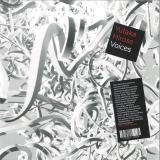
WRWTFWW Records is very excited to announce its third release from visionary Japanese ambient/experimental/environmental composer/producer Yutaka Hirose, this time with brand new album Voices, available on limited edition heavyweight-sleeved double LP as well as double CD, both with liner notes from the artist.
Voices finds Yutaka Hirose expanding his signature spatial layering into a three-dimensional videography of sound, blending field recordings, electronic manipulations, and abstract narratives. The 12-track album is a journey through a crumbling library where books whisper, history collides, and sonic textures weave new realities. Chaos, memory, and transformation – Hirose’s voices echo throughout the space, creating a fully immersive sonic experience.
The pioneering experimental and abstract electronic piece with deep hints of ambient and IDM is beautifully represented by the original artwork by Koji Shiroshita and Mifuku gracing the double LP and double digipack CD sleeves.
Voices marks Yutaka Hirose’s third full-length release on WRWTFWW Records, following his kankyõ ongaku classics Nova + 4 (an expanded version of his genre defining Soundscape 2: Nova album) and archival compilation TRACE: Sound Design Works 1986-1989, both available in vinyl, CD, and digital formats.
Haga su pedido ahora y le encargaremos el artículo en nuestro proveedor.
Ültimo hace: 9 Meses
“I cross the void beyond the mind. The empty space that circles time... Eternal wisdom is my guide. I am the Doctor!” Demon Records celebrates Jon Pertwee’s flamboyant portrayal of the famous Time Lord, 55 years after he made his screen debut on 3 January 1970. Available on Blue and 4 x Blue and Green Vinyl, with a beautifully illustrated cover, this set presents Jon Pertwee narrating two classic Doctor Who Target Books, an array of bonus Jon Pertwee audio appearances, and his own 1972 pop single, Who Is The Doctor? Doctor Who and the Curse of Peladon is Brian Hayles’ abridged TV novelisation set on a medieval-style world, and Doctor Who and the Planet of the Daleks is Terrance Dicks’s abridged adaptation of the Terry Nation adventure set on the jungle-like Spiridon. Bonus features are also included on each disc spanning the 1970s to the 1990s, including BBC radio interviews, a Goodwood Races sketch with Elisabeth Sladen, comedy featuring Mel Giedroyc, and tributes paid by family members and Doctor Who producers. This also includes a frameable photographic print of the Third Doctor. Accompanied by the BBC Radiophonic Workshop’s familiar Doctor Who theme, the Jon Pertwee Collection celebrates one of the most stylish, iconic and beloved Doctors of all
debe ser publicado en 15.07.2025
A Study of Losses", das siebte Studioalbum von Beirut, ist eine Odyssee mit 18 Tracks. Das Projekt entstand im Frühjahr 2023, als Viktoria Dalborg, Direktorin des schwedischen Zirkus Kompani Giraff, Condon fragte, ob er Interesse hätte, die Musik für ihr nächstes Projekt zu liefern, eine Show, die auf einer Adaption eines Romans der deutschen Autorin Judith Schalansky basiert. Die Hauptthemen in Schalanskys Buch "Verzeichnis einiger Verluste" und in der Adaption für die Zirkusshow befassen sich mit dem Konzept des Verlusts und der Vergänglichkeit von allem, was uns bekannt ist: von ausgestorbenen Tierarten, verlorenen architektonischen und literarischen Schätzen bis hin zu abstrakteren Konzepten des Verlusts durch den Prozess des Alterns. "A Study of Losses" reist durch elf Songs und sieben erweiterte instrumentale Themen, die nach den Mondmeeren benannt und von der erschreckenden Geschichte eines Mannes inspiriert sind, der davon besessen ist, alle verlorenen Gedanken und Schöpfungen der Menschheit zu archivieren. Musikalisch jedoch taucht er wieder in Chorgesang, Renaissance und andere Stile ein, die seine frühe Arbeiten inspiriert haben, sowie in Variationen von Klängen und Ideen, die sich auf eine seiner Lieblingsplatten, "69 Love Songs" von The Magnetic Fields, beziehen. Mit einer Länge von fast einer Stunde ist es das bei weitem umfangreichste Album, das Beirut je gemacht hat, und es gehört fraglos zu Condons bisher schönsten Arbeiten. "A Study of Losses" ist das zweite neue Beirut-Album innerhalb von nur zwei Jahren und die Fortsetzung eines weiteren, charakteristisch produktiven Kapitels für Zach Condon. Nach einem halben Jahrzehnt, das er damit verbrachte, sich von hartnäckigen Halsproblemen und einem drohenden mentalen Zusammenbruch zu erholen - was ihn daran zweifeln ließ, ob er jemals wieder vor Publikum auftreten würde - folgt "A Study of Losses" auf "Hadsel", das "einen neuen Anfang für Beirut" markierte, lobte Pitchfork und nannte es "eine aus Verzweiflung und Einsamkeit geborene Platte, die sich dennoch voller Leben anfühlt". Während sich "Hadsel" um eine gewaltige, antike Kirchenorgel drehte, die Condon während eines dunklen arktischen Winters in Nordnorwegen entdeckte, wird "A Study of Losses" durch Streichquartette und Arrangements der Cellistin und "No No No"-Mitarbeiterin Clarice Jensen aufgehellt. Geschrieben und aufgenommen von Zach Condon in Berlin (DE) und Stokmarknes (NO), wobei die Wurzeln des Albums in Schweden und Deutschland liegen, erweitert "A Study of Losses" auch die weite Welt, die er durch die Musik von Beirut aufgebaut hat, seit er das Projekt als neugieriger und umherziehender 14-Jähriger begonnen hat. "Als ich zum ersten Mal angesprochen wurde, einen Soundtrack für einen Zirkus zu schreiben, kam zunächst ein gewisses Trauma der 'Elephant Gun'-Ära hoch", erklärt Condon, als er Ende 2024 ,Caspian Tiger' von "A Study of Losses" vorstellt. "Ich war jahrelang in eine Schublade gesteckt worden, in der ich ein skurriles Zirkuskind war, voller sepiafarbener Bilder von Groschenromanen und vielleicht Löwendompteuren mit Schnurrbärten. Es hätte nicht weiter davon entfernt sein können, wie ich mir die Musik vorstellte, die ich machte. Es ist also eine Ironie, dass ich das Projekt von Kompani Giraff so verlockend fand."
debe ser publicado en 11.07.2025
Repress!
In the mid-1970s, a force of nature swept across the continental United States, cutting across all strata of race and class, rooting in our minds, our homes, our culture. It wasn’t The Exorcist, Goodbye Yellow Brick Road, or even bell-bottoms, but instead a book called The Secret Life of Plants. The work of occultist/former OSS agent Peter Tompkins and former CIA agent/dowsing enthusiast Christopher Bird, the books shot up the bestseller charts and spread like kudzu across the landscape, becoming a phenomenon. Seemingly overnight, the indoor plant business was in full bloom and photosynthetic eukaryotes of every genus were hanging off walls, lording over bookshelves, and basking on sunny window ledges. The science behind Secret Life was specious: plants can hear our prayers, they’re lie detectors, they’re telepathic, able to predict natural disasters and receive signals from distant galaxies. But that didn’t stop millions from buying and nurturing their new plants.
Perhaps the craziest claim of the book was that plants also dug music. And whether you purchased a snake plant, asparagus fern, peace lily, or what have you from Mother Earth on Melrose Avenue in Los Angeles (or bought a Simmons mattress from Sears), you also took home Plantasia, an album recorded especially for them. Subtitled “warm earth music for plants…and the people that love them,” it was full of bucolic, charming, stoner-friendly, decidedly unscientific tunes enacted on the new-fangled device called the Moog. Plants date back from the dawn of time, but apparently they loved the Moog, never mind that the synthesizer had been on the market for just a few years. Most of all, the plants loved the ditties made by composer Mort Garson.
Few characters in early electronic music can be both fearless pioneers and cheesy trend-chasers, but Garson embraced both extremes, and has been unheralded as a result. When one writer rhetorically asked: “How was Garson’s music so ubiquitous while the man remained so under the radar?” the answer was simple. Well before Brian Eno did it, Garson was making discreet music, both the man and his music as inconspicuous as a Chlorophytumcomosum. Julliard-educated and active as a session player in the post-war era, Garson wrote lounge hits, scored plush arrangements for Doris Day, and garlanded weeping countrypolitan strings around Glen Campbell’s “By the Time I Get to Phoenix.” He could render the Beatles and Simon & Garfunkel alike into easy listening and also dreamed up his own ditties. “An idear” as Garson himself would drawl it out. “I live with it, I walk it, I sing it.”
But as his daughter Day Darmet recalls: “When my dad found the synthesizer, he realized he didn’t want to do pop music anymore.” Garson encountered Robert Moog and his new device at the Audio Engineering Society’s West Coast convention in 1967 and immediately began tinkering with the device. With the Moog, those idears could be transformed. “He constantly had a song he was humming,” Darmet says. “At the table he was constantly tapping.” Which is to say that Mort pulled his melodies out of thin air, just like any household plant would.
The Plantae kingdom grew to its height by 1976, from DC Comics’ mossy superhero Swamp Thing to Stevie Wonder’s own herbal meditation, Journey Through the Secret Life of Plants. Nefarious manifestations of human-plant interaction also abounded, be it the grotesque pods in Invasion of the Body Snatchers or the pothead paranoia of the US Government spraying Mexican marijuana fields with the herbicide paraquat (which led to the rise in homegrown pot by the 1980s). And then there’s the warm, leafy embrace of Plantasia itself.
“My mom had a lot of plants,” Darmet says. “She didn’t believe in organized religion, she believed the earth was the best thing in the whole world. Whatever created us was incredible.” And she also knew when her husband had a good song, shouting from another room when she heard him humming a good idear. Novel as it might seem, Plantasia is simply full of good tunes.
Garson may have given the album away to new plant and bed owners, but a decade later a new generation could hear his music in another surreptitious way. Millions of kids bought The Legend of Zelda for their Nintendo Entertainment System back in 1986 and one distinct 8-bit tune bears more than a passing resemblance to album highlight “Concerto for Philodendron and Pothos.” Garson was never properly credited for it, but he nevertheless subliminally slipped into a new generations’ head, helping kids and plants alike grow.
Hearing Plantasia in the 21st century, it seems less an ode to our photosynthesizing friends by Garson and more an homage to his wife, the one with the green thumb that made everything flower around him. “My dad would be totally pleased to know that people are really interested in this music that had no popularity at the time,” Darmet says of Plantasia’snew renaissance. “He would be fascinated by the fact that people are finally understanding and appreciating this part of his musical career that he got no admiration for back then.” Garson seems to be everywhere again, even if he’s not really noticed, just like a houseplant.
Haga su pedido ahora y le encargaremos el artículo en nuestro proveedor.
Ültimo hace: 5 Meses
- All I Really Want
- You Oughta Know
- Perfect
- Hand In My Pocket
- Right Through You
- Forgiven
- You Learn
- Head Over Feet
- Mary Jane
- Ironic
- Not The Doctor
- Wake Up
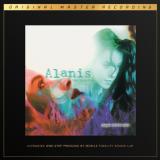
When Alanis Morissette took direct aim at an ex who wronged her on the eviscerating “You Oughta Know” in 1995, everything about the Top 10 song communicated it wasn’t the usual narrative about love gone south. Or the typical wounded singer wallowing in self pity. Morissette, and both the lead single from and her entire American major-label debut — the profoundly personal Jagged Little Pill — represented a sea change. They kickstarted a movement, one whose impact continues to echo throughout the mainstream nearly three decades later.
Ranked the 69th Greatest Album of All Time by Rolling Stone, included on the Rock and Roll Hall of Fame’s list of 200 Definitive Albums, and featured in several books about essential albums, Jagged Little Pill remains more than a blockbuster that has sold more than 17 million copies in the U.S. and 33 million units worldwide. It’s a statement, an attitude, a soundtrack for anyone seeking inspiration, an outlet, or permission to be themselves.
Sourced from the original master tapes, pressed at Fidelity Record Pressing on MoFi SuperVinyl, and strictly limited to 4,000 numbered copies, Mobile Fidelity’s UltraDisc One-Step 180g 45RPM 2LP box set of Jagged Little Pill presents the landmark effort in audiophile-grade sound for the first time. A key part of the record’s appeal and accessibility — Glen Ballard’s smooth production, touches that help Morissette’s exposed-nerve fare seem more accessible and melodic — comes through on this special 30th anniversary edition with an openness, presence, and dynamic explosiveness that make the vocalist’s songs that much more real and visceral.
The singer’s distinctive mezzo-soprano deliveries — the octave-rippling highs, dark-hued lows, dramatic crescendos, belted choruses, wispy reflections, occasional yodels — resonate with full-range ardor and depth. As crucial as anything on the record, Morissette’s confessional words take center stage like never before. Ditto the instrumentation and atmospherics that form the magnetic backgrounds of the songs. Key in on the contributions from Red Hot Chili Peppers Dave Navarro and Flea on “You Oughta Know” to Tom Petty & the Heartbreakers' co-founder Benmont Tench’s organ playing on six tracks.
The deluxe packaging of Mobile Fidelity’s Jagged Little Pill UD1S set underscores the work’s distinguished status. Housed in a slipcase, the LPs come in special foil-stamped jackets with faithful-to-the-original graphics that illuminate the splendor of the recording. Benefitting from an ultra-low noise floor, superior groove definition, and dead-quiet surfaces, this UD1S reissue is for listeners who prize sound quality and desire to engage themselves in everything involved with the album, including the now-iconic cover art that juxtaposes two portraits of the then-21-year-old singer-songwriter and features typewriter font.
That script — which suggests a raw, blood-on-the-floor document created without modern aids like spell check or language correction — hints at the heightened level of unvarnished intimacy, honesty, and catharsis Morissette offers throughout Jagged Little Pill. Named after a phrase uttered on the astute “You Learn,” the album explores the frank emotions, inherent contradictions, and wishful desires people feel everyday but are often too afraid to express. Morissette displays no such fear or shyness.
Akin to a woman reading from a diary, Morissette leaves nothing to the imagination as she skewers hypocrisy during the poignant “Forgiven,” seeks recompense on the vengeful “You Oughta Know,” and spills her guts on the soul-purging “All I Really Want.” For all the anger and bile ascribed to the singer and record, Jagged Little Pill is incredibly healthy and upbeat. Morissette uses the catchy pop-rock frameworks and moody ambience to suss out situations, to learn, to give hope. There’s the clever yearning of “Hand in My Pocket”; wry contrarianism of “Ironic”; kind-heartedness of “Hand over Feet”; the live-and-let-live spirit of “You Learn” – all positive and amiable.
Throughout Jagged Little Pill, the ever-approachable Morissette connects with listeners who recognize themselves in her — and has an intelligent conversation with anyone who wants to participate. It seemed almost everyone did. In addition to the mammoth sales that make the effort the 17th-best-selling album in American history, Jagged Little Pill collected four Grammy Awards, two American Music Awards, three Billboard Music Awards, and eight Juno Awards. In 2018, the record became the basis for a musical that netted 15 Tony nominations on Broadway.
Ironic? Anything but. Jagged Little Pill transcends generations, gender, and trends. As Morissette sings on the opening “All I Really Want,”, the album represents “deliverance” — “a place to find common ground.”
debe ser publicado en 03.07.2025
- 1: Expressions Of Regret (Feat. Remo Helfenstein) – Live At B-Sides 2024
- 2: Where We Broke Off – Live At B-Sides 04
- 3: Unsung – Live At B-Sides 2024
- 4: As Bright As A Burning Star – Live At B-Sides 202
- 5: About Atonement – Live At B-Sides 2024
Grown through collaboration, Samuel Savenberg’s EP As Bright as a Burning Star stands for a music that evolves and becomes newly tangible in the very moment of performance.
The live EP captures a concert by Savenberg and his band, recorded at the 2024 B-Sides Festival on Sonnenberg near Lucerne. In this setting, the concert with his close musical companions takes on a life distinct from the studio recordings it draws upon, casting the music in a new light: more immediate, vibrant, and warmer.
As Bright as a Burning Star features newly interpreted pieces from Unsung—Savenberg’s 2023 album released via Präsens Editionen—alongside two new songs. The title track had existed in a similar form since 2016 but had never been released—until it was rediscovered by chance during preparations for the concert. The second new piece, "Expressions of Regret", features vocals by Remo Helfenstein, a longtime friend and fellow Präsens Editionen artist.
As Bright as a Burning Star is a labor of love—shaped by shared musical histories and lasting friendships. It is available on cassette tape, for streaming and as a digital release via Präsens Editionen.
Samuel Savenberg is a composer and producer based between Lucerne and Berlin. Following the release of Unsung in 2023, he has presented selected remixes and live performances—the latter mostly in a band setup—and collaborated with other artists, taking on a variety of roles.
Founded in 2011 in the process of launching zweikommasieben, Switzerland-based publishing house and music label Präsens Editionen has released music on vinyl, cassette, CD, and digital formats—alongside magazines, books, and other printed matter. Audio releases include works by Anna Homler, Robert Turman, Belia Winnewisser, Samuel Reinhard, Martina Lussi, and Magda Drozd & Nicola Genovese’s Sopraterra.
* Edition of 66 professionally dubbed cassette tapes (colored)
* Special artwork by Denise Haeberli at INTR in custom snapbox
* Free DL
debe ser publicado en 20.06.2025
- Artist
- Wickerman
- Books
- Perfect
- Hill
- Confetti
- Ceasar
- November
- Cover
- Weather
- Seasons
"Poems & Non-Fiction" ist das Debütalbum von Ruth Lyon aus Newcastle – einer talentierten Songwriterin, die tief bewegende Erzählungen und Meditationen mit einer Kunstfertigkeit verbindet, die Zartheit und Kraft in sich vereint. Geprägt von den Erfahrungen als Frau mit Behinderung und einem lebenslangen Gefühl des Andersseins, erkundet sie das schöne Chaos der Existenz, hinterfragt gesellschaftliche Normen und entfacht eine Reise hin zu Selbstakzeptanz, Selbstbestimmung und – vielleicht am wichtigsten – Hoffnung.
In Zusammenarbeit mit dem renommierten Produzenten John Parish (PJ Harvey, Aldous Harding) und beeinflusst von Künstlern wie Adrienne Lenker, Fiona Apple und Moondog, sind die Songs reich an poetischen Nuancen. Eine faszinierende Mischung aus analogem und kantigem Indie-Folk, die der Stille ebenso viel Aufmerksamkeit schenkt wie dem Klang, mit dezenten, aber kraftvollen Grooves. Sanft getrieben, mit verträumten Klarinetten und melancholischen Streichern, die wie Meereslicht über dem hypnotischen Groove von Klavier, Bass und Schlagzeug schweben.
debe ser publicado en 13.06.2025
- A1: Hey Joe 3:30
- A2: Going To The Country 4:21
- A3: Full Moon Song 1:27
- A4: So Cool 2:59
- B1 26: 3:55
- B2: Autumn Leaves/No Esta Aqui 7:03
- B3: Common Man 2:13
- B4: Just Wonderin 3:18
- C1: Song For A Friend 3:18
- C2: Books 3:56
- C3: Strawberries 3:39
- C4: Send The Fisherman 3:48
debe ser publicado en 13.06.2025
Haga su pedido ahora y le encargaremos el artículo en nuestro proveedor.
Ültimo hace: 3 Meses
- 1: You Think
- 2: Movement Two
- 3: (Blueberry Pop)
- 4: A Flowing Field Of Green
- 5: With Your Sunglasses On Like A Ghoul
- 6: Grivo
- 7: Twenty-Seventh Of February
- 8: Fresh Flowers For All Time
- 9: Farm Cat, Watching
Planning For Burial is the solo project of Thom Wasluck, emerging from Wilkes-Barre, Pennsylvania. It’s Closeness, It’s Easy is the long-awaited follow-up to 2017’s Below The House. If Below The House was about returning home, following in the footsteps of one’s father and joining a union, and leaving behind youth’s wild days, It’s Closeness, It’s Easy embraces what comes next—the weight of all years, the quiet shifts, the reckoning with what remains. This record is many things. It captures the slow drift of time, the unnoticed shifts in a loved one—the creeping changes in mental health, the quiet pull of addiction, the kind of grief that settles in the bones rather than announces itself.
At its core, It’s Closeness, It’s Easy is about stepping into middle age and taking stock. It confronts the reality of living with the hand that’s been dealt and searching for meaning in what remains. It speaks to loss—the crushing weight of saying goodbye to a beloved 17-year old cat, the slow-motion grief of watching friends self-destruct, the inescapable passage of time as it bears down on aging parents and the self. But it also reflects the warmth of reconnection, the kind of love that never burns out but instead deepens. The feeling of picking up where things left off, untouched by the years in between.
While written over the course of two years, the recording process reflects a sense of immediacy. Rather than assembling songs piece by piece over time, the album took shape in singular, immersive sessions—less an act of construction, more an unveiling of something already waiting to take shape.
Rooted in a staunch DIY ethos, Wasluck handles every aspect of Planning For Burial project himself—recording the music, designing the artwork, and performing live as a one-man band. He books his own tours, ever and independent creative. This hands-on approach has led Planning For Burial to play hundreds of shows solidifying his place in the underground music scene. A defining moment came in 2018 when he performed at the Meltdown Festival in London, curated by Robert Smith of The Cure.
debe ser publicado en 30.05.2025
Planning For Burial is the solo project of Thom Wasluck, emerging from Wilkes-Barre, Pennsylvania. It’s Closeness, It’s Easy is the long-awaited follow-up to 2017’s Below The House. If Below The House was about returning home, following in the footsteps of one’s father and joining a union, and leaving behind youth’s wild days, It’s Closeness, It’s Easy embraces what comes next—the weight of all years, the quiet shifts, the reckoning with what remains. This record is many things. It captures the slow drift of time, the unnoticed shifts in a loved one—the creeping changes in mental health, the quiet pull of addiction, the kind of grief that settles in the bones rather than announces itself.
At its core, It’s Closeness, It’s Easy is about stepping into middle age and taking stock. It confronts the reality of living with the hand that’s been dealt and searching for meaning in what remains. It speaks to loss—the crushing weight of saying goodbye to a beloved 17-year old cat, the slow-motion grief of watching friends self-destruct, the inescapable passage of time as it bears down on aging parents and the self. But it also reflects the warmth of reconnection, the kind of love that never burns out but instead deepens. The feeling of picking up where things left off, untouched by the years in between.
While written over the course of two years, the recording process reflects a sense of immediacy. Rather than assembling songs piece by piece over time, the album took shape in singular, immersive sessions—less an act of construction, more an unveiling of something already waiting to take shape.
Rooted in a staunch DIY ethos, Wasluck handles every aspect of Planning For Burial project himself—recording the music, designing the artwork, and performing live as a one-man band. He books his own tours, ever and independent creative. This hands-on approach has led Planning For Burial to play hundreds of shows solidifying his place in the underground music scene. A defining moment came in 2018 when he performed at the Meltdown Festival in London, curated by Robert Smith of The Cure.
debe ser publicado en 30.05.2025
- A1: Main Title
- A2: The Hidden Hand
- A3: Sisterhood Choir Ritual
- A5: Our Past Always Finds Us
- A6: Push And Pull
- A7: Lankiveil
- A8: You Did This
- B1: Arrakis
- B2: Entering Landsraad
- B3: Obligated To Follow
- B4: God Created Arrakis
- B5: The Emperor
- B6: Give It Some Rest
- B7: Arrest Her
- B8: Opening The Inquest
- B9: Spaceport
- B10: Chamber Baliset
Dune: Prophecy is an HBO original series based on the
best-selling books by Frank Herbert and Brian Herbert, and a spin-off to the blockbuster movies of Dune.
The music for the series was composed by Academy Award-winning composer Volker Bertelmann (All Quiet on
the Western Front, Conclave, Lion), whose evocative, futuris- tic ambience, meets bold, powerful orchestral tracks on this score, accompanying the story.
Set 10,000 years before the ascension of Paul Atreides, Dune: Prophecy follows two Harkonnen sisters as they combat forces that threaten the future of humankind and establish the fa- bled sect that will become known as the Bene Gesserit. Dune: Prophecy is inspired by the novel “Sisterhood of Dune”, writ- ten by Brian Herbert and Kevin J. Anderson.
The soundtrack of Dune: Prophecy is available as a limited edition of 1000 numbered copies on orange “Spice” marbled vinyl and includes a 4-page booklet with pictures from the series.
debe ser publicado en 23.05.2025
- Stars In My Eyes
- Travelling Man
- Sunny Days
- Me And My Mind
- Live Your Life
- Bringing Me Down
- Blue Eyes
- Complicated
- In Too Deep
- Written Songs
- Running
Twelve years on from the release of their debut album This Life, Dublin indierap trio The Original Rudeboys are back to play a sold-out show in the 3Olympia Theatre in April 2025, coupled with a limited edition run of first time vinyl pressings of debut album "This Life" One could say that indie- rap trio "The Original Rudeboys" were ahead of their time. Once sniffed upon, a strong Irish accent is prominent in most breakout Irish acts at the moment (Fontaines DC, Kneecap, Gurriers, LYRA, Curtisy). The Original Rudeboys were doing this 15 years ago, and their stand-out hit 'Stars In My Eyes' was met by thousands of fans across Europe when they supported The Script, or headlined their own arena tours. The Original Rudeboys: Reunion Show in the 3Olympia this April sold out straight away which is a testament to the staying power their music still has in Ireland.
Speaking on the incredible feat, the band said; "We never thought a show was ever going to happen for us again nevermind at somewhere as prestigious as the Olympia theatre. We have played 5 of our own headline shows there but to add 1 more to the history books over 10 years on is truly a blessing and we are very grateful to everyone who made it happen, we can't wait to do it again." With the reunion show being in such high demand that it was an instant sellout, the band also wanted to give back to the fans another way. They are releasing a limited vinyl pressing of their debut album "This Life". This album was never released on vinyl before and will contain one extra bonus track - a new release from the band, hinting at what's to come. "We started in the music industry on the backend of the physical media decline but to see it come full circle and the rise in fans buying vinyl records is very promising. The magic of having something tangible as fans ourselves is not lost on us and to be able to listen back to this album with the crackle of the needle gives it an extra bit of magic we didn't know it needed.
debe ser publicado en 23.05.2025
- 1: Alle Dør I Fremtiden
- 2: I Mangel Af Tid
- 3: Alt Eller Intet Som Før
- 4: Incelcitadel (De Sidste Fyldte Papirer)
- 5: I Mangel Af Tro
- 6: Ildånden (Den Knitrende Fortærer)
The deadbeat Danish duo return to serenade us with their signature sound of fuzzed-out garage-rock guitars, falsetto vocal supremacy, and an unyielding rhythm section. Gabestok find themselves lodged at the pinch point between the grandiose and the garage, crafting songs that are at once eminently epic yet raw and direct. Alle Dør I Fremtiden is a road trip into oblivion, always accelerating toward some unknown precipice until inevitably driving you over the edge. Laying in the wreckage of an old car smelling of stale cigarettes and beer you wonder what happened, then flip the record and start again.
A short conceptual album steeped in hopelessness, regression, power, and the almighty battle against mob mentality in the wake of advancing technology and knowledge. Set amidst a geomagnetic storm on a desolate, scorched Earth, we follow an obsessive collector who has amassed a vast physical repository of lost knowledge now esoteric in an era of hard drives and remote storage. Books, piles of papers, and artefacts are all locked away in his private Citadel, far removed from a population of spiritless people, trapped within their own thought-prisons, fiercely guarded by corporate algorithms.
Fire and flames come in many disguises and eventually We All Die in the Future.
debe ser publicado en 16.05.2025
Justin Moore
The Radio Phonics Laboratory - Telecommunications, Speech Synthesis, and the Birth of Electronic Mus
The Radio Phonics Laboratory by Justin Patrick Moore is the story of how electronic music came to be, told through the lens of the telecommunications scientists and composers who helped give birth to the bleeps and blips that have captured the imagination of musicians and dedicated listeners around the world.
Featuring the likes of Leon Theremin, Hedy Lamarr, Max Matthews, Hal 9000, Robert Moog, Wendy Carlos, Claude Shannon, Halim El-Dabh, Pierre Schaeffer, Pierre Henry, Francois Bayle, Karlheinz Stockhausen, Vladimir Ussachevsky, Milton Babbitt, Daphne Oram, Delia Derbyshire, Edgar Varese & Laurie Spiegel.
Quotes
“From telegraphy to the airwaves, by way of Hedy Lamarr and Doctor Who, listening to Hal 9000 sing to us whilst a Clockwork Orange unravels the past and present, Moore spirits us on an expansive trip across the twentieth century of sonic discovery. The joys of electrical discovery are unravelled page by page.”
Robin Rimbaud aka Scanner
“Embark on an odyssey through the harmonious realms of Justin Patrick Moore’s Radio Phonics Laboratory echoing the resonances of innovation and discovery. Witness the mesmerising fusion of telecommunications and musical evolution as it weaves a sonic tapestry, a testament to the boundless creativity within the electronic realm. A compelling pilgrimage for those attuned to the avant-garde rhythms of technological alchemy.”
Nigel Ayers (Nocturnal Emissions)
“In this captivating exploration of electronic music, Justin Patrick Moore unveils its evolution as guided by telecommunication technology, spotlighting the enigmatic laboratories of early experimenters who shaped the sound of 20th century music. A must-read for electronic musicians & sound artists alike—this book will undoubtedly find a prominent place on their bookshelves.”
Kim Cascone
Haga su pedido ahora y le encargaremos el artículo en nuestro proveedor.
Ültimo hace: 11 Meses
- Annunciation 06:12
- Riel 04:52
- Stone Leaf And Pond 04:11
- Katwijk 04:01
- Dongen 05:20
- Tilburg 03:09
- Maryam 04:51
- Two Wings 04:53
Originally released on Ben Chasny's own Pavilion imprint in 2011.
"I was invited by the Incubate Festival and the city of Tilburg to participate in an artist residency where I would explore the region’s unique chapels built for the Virgin Mary. After writing the music for about six months by drawing on memories of the encounters with the chapels and using techniques inspired by Gaston Bachelard’s Poetics Of Reverie, I flew back to Tilburg to perform the music at the Incubate Festival. We recorded the evening and I released the result on my Pavilion label. Each cover was hand painted white on white in the old Pavilion style. I created a stencil and used graphite powder to make the design that is inspired by the sun imagery in Athanasius Kircher diagrams."
Roadside chapels express the identity of the inhabitants of North Brabant, a Dutch province, bordering on Belgium. Roman Catholicism has been the dominant religion in this southern part of the Netherlands since the eighth century. For about a century and a half this religion was strongly suppressed. Only when the French revolutionaries preached freedom of belief around 1800 could the people of North Brabant exercise their faith again. This was the start of a very strong emancipatory development from which a special form of the Roman Catholic faith arose that fully determined everyday life of the people here. This faith was the determining factor in life and the measure of all things. After the second Vatican Council (1962-1965) the reins of the catholic faith in Brabant were loosened as well. This was the start of a revolutionary process of secularisation. Within a decade hardly anything was left of the almighty influence of the Roman Catholic Church and this situation has lasted up to the present day.
In spite of the almightiness of the official, Vatican ruled, Roman Catholic faith, North Brabant has always and perhaps notoriously fostered an undercurrent of popular belief as well. This is a kind of belief in which elements of the official faith and age-old pre-Christian traditions are combined. Worshipping relics, holding pilgrimages and processions, the use of water from holy wells, popular art, recitations and songs, festivals, rituals, folk traditions, superstition and the like are all examples of popular devotion. These matters have strongly influenced and formed the identity of the present-day population of North Brabant. It is part of their immaterial heritage.
An obvious and still very much visible form of popular devotion are the roadside chapels. In Brabant some 400 can be found, most of which have been devoted to Mary. Chapels are small buildings in which Mary or other saints are worshipped. They can be found within villages or towns or in natural surroundings. Always at the finest spots! The beauty of the environment adds a primary religious or mystical feeling to the visitor. Local people attach great value to their chapels. In spite of the overall secularisation in society they are still at the centre of cultural and social life. Where people in North Brabant can hardly be found in the churches nowadays, this doesn’t mean at all they are no longer religious. On the contrary, religious feelings are perhaps stronger than ever, but now people have to find their own expression of them. That’s why they fall back on the age-old popular belief in which chapels play an important role. We can even witness new forms of popular belief with chapels as their focal point. An example of this is the scattering of ashes of people who have been cremated. Chapels clearly also play a role in the lives of young people. On an average five new chapels are added every year.
I have studied the popular culture and belief and the identity of the inhabitants of North Brabant for over thirty years. I have published over forty books on these subjects. In 2010 I was approached by the organisation of the Incubate Festival in the North Brabant town of Tilburg. Their request was for me to lead the American composer and guitarist Ben Chasny around a number of chapels in the province devoted to Mary. He had been invited to North Brabant to write some new compositions. Ben Chasny then chose to be inspired by these chapels and that’s how we met. I was especially curious how an American would react to something as specific and small as a roadside chapel in North Brabant, since we tend to think here of (people in) America in terms of ‘big-bigger-biggest’. Would an inhabitant of this enormous country with this prevailing culture be able to grasp and respect the identity of some 2.5 million people in North Brabant with their chapels? The answer to this question lies hidden in the compositions he made and that can be listened to on this album. Yes, Ben Chasny has been able to convert the phenomenon of a simple chapel devoted to Mary into music. The physical and the spiritual have found each other. What a beautiful world…just listen! - Paul Spapens
debe ser publicado en 09.05.2025
Solo artist debut album for Vidar Landa, mostly known as guitarist and co-founder of the Norwegian rock/metal group Kvelertak and the powerpop outfit Beachheads. For his solo work he record and performs under the name King Hüsky.
A self-annointed ‘over thinker’, nudged into sociability with dark humour and most comfortable in the silent company of books, Landa’s sidewards step into the realms of subtle, honeysweet songcraft peaks with the release of the first, self-titled King Hüsky album Nine tracks are set to offer listeners the same loosely-assembled, yet graciously insistent sonic experience inherent to not only the single Lately I’ve Been Thinking Of Your Mother, but also King Hüsky’s skip-a-long, late-2024 teaser Running
debe ser publicado en 09.05.2025
- 1: #4
- 2: #7
- 3: #
- 4: #
- 5: #2
- 6: #10
- 7: #11
- 8: #
- 9: #
The work of each of these powerfully creative & exceptionally perceptive individuals - poet and scholar Fred Moten and jazz bassist Brandon Lopez - concerns itself with how one might navigate the ascending reign of longinstitutionalised madness while simultaneously keeping humanity and sanity intact The synergistic mesh of these two voices in Duo is here presented on record for the frst time, following two acclaimed works on the Reading Group label in trio with Gerald Cleaver. Inimitable poet, cultural theorist, author, 2020 MacArthur Fellow, Fred Moten creates new conceptual spaces that accommodate emergent forms of Black cultural production, aesthetics, and social life. Moten is a professor of performance studies and comparative literature at New York University concerned with social movement, aesthetic experiment, and Black study. He is also a United States Artists Rockefeller Fellow and was elected to the American Academy of Arts and Sciences. Puerto Rican- American bassist Brandon Lopez is the son of a gravedigger who himself put time in doing the same, developing muscles that serve him well in his thorough command of the upright bass. On moving to NYC, Lopez made himself indispensable within numerous realms of creative music. As the Cleveland Review of Books noted, "This is virtuosity as vocabulary, a total command of texture, subtlety, and a depth that can be reached into."
On their previous work in trio with Gerald Cleaver:
"Best Jazz Albums of 2022: Moten is after nothing less than a full interrogation of the ways Black systems of knowledge have been strip-mined and cast aside, and yet have regrown." - New York Times
"8.0 - A conceptually rich, politically weighty album that asks timeless questions without over-explaining...breathlessly complex" - Pitchfork
Fred Moten: texts, voice
Brandon Lopez: bass
debe ser publicado en 11.04.2025
- A1: Del Jones - The Last Letter
- A2: Herb Johnson - Where Are You
- A3: Timothy Mcnealy - Will You Be There
- A4: Little Beaver - Do Right Man
- A5: Soul Superiors - Trust In Me Baby
- A6: Outback - Strangers In Our Homeland
- A7: The Montecarlos - If You Leave
- A8: Words Of Wisdom - You Made Me Everything
- B1: Soul Charges - My Heart Beats For You
- B2: The Power Of Attorney - I'm Just Your Clown
- B3: James Reese - Throwing Stones (Kenny Dope Mix)
- B4: Richard Marks - I'm With You Love
- B5: Bonnie Floyd - You're My Everything
- B6: The Ledgends - A Fool For You
- B7: Apple & The Three Oranges - Moonlight
This anthology follows Now-Again's Loving On The Flipside, issued more than a decade ago. And that anthology itself got its start in a different time, a decade even earlier - the era in which Now-Again's Egon and his friends chased down funk 45s and the odd LP for their testosterone riddled, aggressive sound. Often times the funk song on one of their chosen is would be the throw-away b-side, the hasty afterthought the band cobbled together the night before hitting - or while in - the studio because they'd put all of their energies into writing the amazing ballad that would ensure their entry in soul's history books. Every once in a while, that funk song they coveted could have been - in an alternate universe - a ballad. The Third Guitar's "Baby Don't Cry," El Pooks* "I Could Do The Impossible" and Spider Harrison's "Beautiful Day" all fit into this category. That realization notwithstanding, more often than not they shined over the ballads to get to the tough stuff. Then they started flipping those funk records over to find some loving on the flip side. Some marvellous tunes were there to be found. This is the long awaited follow up. Contained within this anthology are some of the greatest soul ballads that go sweet with a beat - or, to follow our tagline, epitomize "sweet funk." Most of these songs have never been compiled. Some have never been issued in any form. Some, like the Ledgends entry here, were sampled to great success (in that case for Freddie Gibbs and Madlib's "Deeper"). Some haven't been sampled, but, like Herb Johnson's entry, are patiently awaiting their day. It should go without saying that we're proud to present this music in good conscience; with the full participation of everyone but the most obscure names contained within. And, for those who we've not yet been able to contact, this is our message: We've found your brethren, we've placed them beside you on an album that we hope you feel is befitting of your collective contributions to soul music and now we're just waiting for you. Though the music you recorded is from the years past, vour time is now.
Haga su pedido ahora y le encargaremos el artículo en nuestro proveedor.
Ültimo hace: 13 Meses
- A1: Yousui Inoue - Umi He Kinasai 5 29
- A2: Keiko Nosaka / George Murasaki - Oritatamu Umi 5 17
- A3: Higurashi - Natsuno Kowareru Koro 3 56
- B1: Blue - Mangrove 6 45
- B2: Rehabilual - Yaponesia Sakura 5 07
- B3: Sachiko Kanenobu - Asano Hitoshizuku 4 36
- C1: E S.island - Yumefurin 3 47
- C2: Akiko Kanazawa - Esashi Oiwake(Maeuta) (Virtual Reality Mix) 5 53
- C3: Voice From Asia - Sweet Ong Choh 4 43
- D1: Nami Hotatsu - Asa Hikari Ame Yume 1 53
- D2: Nav Katza - Heaven Electric 5 26
- D3: Naomi Akimoto - Tennessee Waltz 3 01
compiled by tsunaki kadowaki
artwork by yoshirotten
mastering by kuniyuki takahashi
Tsunaki Kadowaki, a staff member at Kyoto’s record store Meditations, the supervisor of "New Age Music Disc Guide", and the founder of Sad Disco, curates the fourth installment of "Midnight in Tokyo" themed around Ambient Kayō.
The Midnight in Tokyo series by Studio Mule focuses on Japanese music, serving as a soundtrack for Tokyo nights—whether for home listening, club play, or as a driving BGM, transcending location and space. After a six-year hiatus, the fourth volume takes "Ambient Kayō" as its new perspective, compiling genre-defying tracks released between 1977 and 1999 to explore the intersection of Japanese ambient and pop music.
For this long-awaited fourth installment, selections were made regardless of record label status (major or independent), era, format (vinyl or CD), original release price, or prior reissues. Instead, the focus was on music that deeply moves the listener, is open-minded and evocative, brims with inspiration and spiritual insight, and embodies the "utagokoro" (singing heart) of Japanese artists.
Opening the compilation is "Umi e Kinasai" by Yōsui Inoue, a legendary Japanese singer-songwriter whose works have recently gained renewed interest as hidden gems of Walearic and ambient pop
Composed and arranged by Katsu Hoshi—who is also known for his arrangements on Inoue’s masterpiece Ice World—the track features renowned players such as Masayoshi Takanaka, Hiroki Inui, and Shigeru Inoue. The song embodies a yearning for Balearic horizons, tinged with youthful vibrancy and sentimentality.
Next, "Oritatamu Umi", compiled from Keiko Nosaka, a 20-string koto player, and George Murasaki, a pioneer of Okinawan rock, is an instrumental track from their album "Niraikanai Requiem 1945". As the title suggests, it carries themes of requiem and remembrance, conveying poetic lyricism even without words. Blending Ryukyuan/Okinawan harmonies and indigenous elements, it unfolds as an intimate and nostalgic piece of progressive rock.
Also featured is "Natsu no Kowareru Koro" by Higurashi, a folk-rock band led by Seiichi Takeda, formerly a guitarist of The Remainders of The Clover, the predecessor of RC Succession. Like the opening track "Umi e Kinasai", this song was also produced by Katsu Hoshi. It stands as a folk/new music piece that takes a step into an "otherworldly" realm, recommended for fans of Twin Cosmos and Masumi Hara.
From the enigmatic Blue, the only work left by the mysterious composer S.R. Kinoshita, comes "Mangrove", a hidden treasure of Japan's ambient/new age scene from the CD era. With an oriental and enigmatic atmosphere, the track evokes a mystical world of deep, uncharted jungles, unfolding as an otherworldly New Age Kayō.
"Yaponesia Sakura", selected from Rehabilual’s sole album New Child, is a masterpiece of Japanese new age music. Produced by Swami Dhyan Akamo, a disciple of Indian meditation teacher Osho and a renowned balafon player, the track features Michio Ogawa (Chakra) and Atsuo Fujimoto (Colored Music). Their collective artistry creates an exquisite spiritual ambient pop sound.
"Asa no Hitoshizuku", the opening folk song from Sachiko Kanenobu’s album Sachiko, is also included. Known for her legendary folk album Misora, produced by Haruomi Hosono, Kanenobu’s fourth album after resuming her career was inspired by her experiences living in San Francisco and revolves around the theme of "love." This track carries the same intimate poetic world as Misora, imbued with a pure, crystalline innocence.
From the synth-pop band E.S. Island, known for the Haruomi Hosono-produced *Teku Teku Mami", comes "Yume Fūrin ", selected from their long-lost new age classic Nanpū from Hachijo. Created while the band’s core duo was living in Hachijō Island, the album aimed to sonically capture "the high and happy vibrations of everyday island life." This track offers a dynamic, tribal-infused New Age Kayō experience.
Dubbed "the world's first Min’yō House Mix" "Esashi Oiwake (Maeuta) " comes from Kanazawa Akiko HOUSE MIX Ⅰ, a collaboration between Japanese house music pioneer Soichi Terada and Akiko Kanazawa, a renowned min’yō singer. Through the prism of club music, Hokkaido's Esashi Oiwake, one of Japan’s most iconic folk songs, is transformed into a futuristic ambient pop piece with intricate sound design.
The compilation also includes "Sweet Ong Choh", a track from Voice From Asia, a group active between 1989 and 1992 featuring vocal artist Shizuru Ohtaka. Taken from their imaginative minimal work Voice From Asia, released under Aoyama Spiral’s music label Newsic, the song presents a tranquil, tribal-minimal soundscape enriched by ethnic instruments.
Hailed by Haruomi Hosono as having “a shaman residing in her voice,” singer-songwriter Nami Hōdatsu also appears in the selection. Known for her collaborations with Henry Kawahara, her debut album featured "Asa-Hikari-Ame-Yume", a track that now stands as a precursor to modern vocaloid/synthesized vocal music—a hidden gem of post-choir aesthetics that deserves rediscovery.
Likewise, "Tennessee Waltz", from Naomi Akimoto’s album One Night Stand, supported by members of Mariah, serves as another early prototype of vocaloid/synthesized vocal music. The track weaves fragmented vocal samples, pastoral yet sweetly minimal synth sounds, and mechanical beats into a strikingly unconventional piece in the history of Japanese music.
Closing the compilation is "Heaven Electric", a track from Nav Katze’s album Gentle & Elegance, which featured remixes by Autechre, Seefeel, and Sun Electric. Merging elements of IDM, ambient techno, and chillout, the song embodies an optimism reminiscent of space music while seamlessly blending a mystical Japanese aesthetic—an ambient pop masterpiece.
---
The album presents 12 exquisite pop tracks infused with an ambient feeling, resonating deeply with the evolving landscape of the mid-2020s—a time of post-hyperpop and Y2K revival.
Tsunaki Kadowaki (Compiler)
Born in 1993 in Yonago, Tottori, Tsunaki Kadowaki is a staff member and buyer at Kyoto’s Meditations record store. He is the editor of New Age Music Disc Guide (DU BOOKS) and a contributor to Music Magazine, Record Collectors' Magazine, ele-king, and more. Kadowaki has written liner notes for multiple Japanese releases (Brian Eno, Masahiro Sugaya etc.) and runs the Sad Disco music label under Disk Union. He also curates Spotify’s official New Age Music playlist and performed as a DJ at YCAM’s Audio Base Camp #3 in 2024.
Haga su pedido ahora y le encargaremos el artículo en nuestro proveedor.
Ültimo hace: 9 Meses
debe ser publicado en 14.03.2025
“Here is my first-born child, a fuck you to all my exes, and basically me just trying to figure out some shit openly and honestly on record. First of many and if you don't like it, then this wasn't meant for you anyway.” - Lola Young.
This Wasn’t Meant For You Anyway marks a remarkable shift in Lola’s sound as an artist. Recorded in LA and produced by friend and collaborator Solomonophic (Remi Wolf, BROCKHAMPTON, Dominic Fike), This Wasn’t Meant For You Anyway
is a multi-faceted, fearless concept. As irresistible as it is unexpected, Lola’s album is crackling with kinetic energy and lyrically fuelled by rage, passion, narrative flair and comedy derision. A contemporary break-up album, This Wasn’t Meant For You Anyway
encapsulates the sound of what it means to be young and in constant romantic chaos. With exciting plans up Lola’s sleeve, her upcoming record will undoubtedly add to her musical trajectory.
Haga su pedido ahora y le encargaremos el artículo en nuestro proveedor.
Ültimo hace: 14 Meses
Texas jazz, funk and soul group PHYREWORK were signed to Mercury Records in 1978 releasing an acclaimed self titled album. They measure up to the bands that inspired them: Sly and the Family Stone, Earth Wind & Fire, Tower of Power - to name a few.
PHYREWORK recorded a plethora of songs that went unreleased - this record documents the legacy of this brilliant band. We are proud to present eleven dazzling songs circa 1977 - 1982, nine of which are originally unreleased and two from the elusive early 80s 7” single.
We are honoured to have the liner notes written by David Ritz, author of the definitive books on Ray Charles, Marvin Gaye, Aretha Franklin, and many more.
Haga su pedido ahora y le encargaremos el artículo en nuestro proveedor.
Ültimo hace: 12 Meses
Texas jazz, funk and soul group PHYREWORK were signed to Mercury Records in 1978 releasing an acclaimed self titled album. They measure up to the bands that inspired them: Sly and the Family Stone, Earth Wind & Fire, Tower of Power - to name a few.
PHYREWORK recorded a plethora of songs that went unreleased - this record documents the legacy of this brilliant band. We are proud to present eleven dazzling songs circa 1977 - 1982, nine of which are originally unreleased and two from the elusive early 80s 7” single.
We are honoured to have the liner notes written by David Ritz, author of the definitive books on Ray Charles, Marvin Gaye, Aretha Franklin, and many more.
Haga su pedido ahora y le encargaremos el artículo en nuestro proveedor.
Ültimo hace: 12 Meses
Band leader, songwriter, arranger and producer of the now disbanded Pizzicato Five (1985-2001). Although having 2 successful world tours and 5 international albums under his belt, with fans ranging from London’s Karminsky Experience to Karl Lagerfeld, many of his fans know him as a DJ, spinning in Tokyo’s hotspots such as Shibuya’s ‘Organ Bar’. He tours regularly throughout Japan and abroad. In the Jackson 5 Remix Album, his remix ‘I want you back (readymade 524 mix)’ received an extraordinary amount of national radio play.
The remix album itself has scored healthy rankings in major record stores. In 1998, his own project ‘Punch the Monkey!’ (in which he remixes the theme tune of a popular Japanese cartoon series ‘Lupin the Third’) sold over 700,000 records, and this, some say, began Japan’s remix rush. His achievements truly invaded the mainstream when in 2000, he produced the No.1 single ‘Oha-Rock’ which became a social phenomenon in itself. Most
recently, he set up his own record label, ‘readymade international inc.’ from he which he plans to release new exciting solo works.
His talents also embrace film and photography and he is well known as a director in promotional videos, shows and advertisements. T-shirts and original goods which Konishi personally designed are sold in select shops such as BEAMS of Shibuya.
He is also a writer having regular columns in various magazines, and has also written several books. A collection of his essays have been published under the title ‘Kore wa koi de wa nai’ (’This is not love’)
SUNAGA tatsuo (sunaga t'experience)
DJ and Music Producer. Basing his activities around his own club ‘Shibuya Organ Bar’, holds regular club nights throughout Japan. Apart from his own mix CDs such as the ‘Organ b. SUITE’ which many say is in a class of its own, has produced remixes for the ‘Soul Source 2: Jackson 5 Remix’ and Yasuharu Konishi’s ‘Punch the Monkey’. He began his own label ‘AFTERS OR’ in 1998,acting both as artist and producer. Releasing records under the alias of ‘Sunaga t experience’ on avex/cutting edge records, the ‘It’s you’ 12 inch made record sales of 7,000 records, an incredibly large number in the vinyl market. His name is known in Europe through such labels as IRMA and SCHEMA records, and has remained in the forefront of the industry since the beginning of the Tokyo club scene.
Haga su pedido ahora y le encargaremos el artículo en nuestro proveedor.
Ültimo hace: 14 Meses
Profile 1
KONISHI yasuharu
Band leader, songwriter, arranger and producer of the now disbanded Pizzicato Five (1985- 2001). Although having 2 successful world tours and 5 international albums under his belt, with fans ranging from London’s Karminsky Experience to Karl Lagerfeld, many of his fans know him as a DJ, spinning in Tokyo’s hotspots such as Shibuya’s ‘Organ Bar’. He tours regularly throughout Japan and abroad. In the Jackson 5 Remix Album, his remix ‘I want you back (readymade 524 mix)’ received an extraordinary amount of national radio play.
The remix album itself has scored healthy rankings in major record stores. In 1998, his own project ‘Punch the Monkey!’ (in which he remixes the theme tune of a popular Japanese cartoon series ‘Lupin the Third’) sold over 700,000 records, and this, some say, began Japan’s remix rush. His achievements truly invaded the mainstream when in 2000, he produced the No.1 single ‘Oha-Rock’ which became a social phenomenon in itself. Most
recently, he set up his own record label, ‘readymade international inc.’ from he which he plans to release new exciting solo works.
His talents also embrace film and photography and he is well known as a director in promotional videos, shows and advertisements. T-shirts and original goods which Konishi personally designed are sold in select shops such as BEAMS of Shibuya.
He is also a writer having regular columns in various magazines, and has also written several books. A collection of his essays have been published under the title ‘Kore wa koi de wa nai’ (’This is not love’
)
Profile 2
IKEDA masanori (Mansfield)
Began his DJ career in London, 1991, while working in Soho’s Soul Jazz Records. After becoming resident DJ at ‘Blow-Up’ in London’s Wag Club, he has toured the country and the rest of Europe. With his friends Karminsky Experience and Gentle People, he has also organised numerous club events, compiled CDs and produced radio programs. Returning to Japan in 1997, as the DJ with the rarest records in the East, he immediately made his name Djing at many popular events up and down the country. He is recognised for rocking dancefloors on a global scale having completed a very well-received European tour in 2000.
Apart from his DJ work, he has contributed remixes for Konishi Yasuharu’s ‘Punch the Monkey!’. His solo releases include his mix CD series ‘Spin Out’ , ‘Spin Out 2’ (V2 Records Japan). His albums ‘6 Complexions of Mansfield’ and ‘It’s a mans’s man’s field’ (readymade records) released under his alias Mansfield have established his name as a sound creator. He is expecting to release a new album from readymade international early 2002. This
is the DJ/composer that everyone’s talking about.
Haga su pedido ahora y le encargaremos el artículo en nuestro proveedor.
Ültimo hace: 12 Meses
2025 Repress
Quickly building a following as purveyors of some of the very finest edits around, Samosa Records announce the 7th release since their debut just over a year ago.
Back for his 3rd appearance on the label is none other than big boss De Gama, dropping off a truly tropical package with the 'Back 2 Afrika' EP.
Whether he's showcasing the true warmth and joie de vivre of the continent soca-style on 'Tropical Boogie', or setting off into the organ-and-horn-fueled delirium of 'Cosmic Safari', De Gama is on a mission to turn up the temperature.
And with a fresh, remastered edit of the best-selling dancefloor destroyer that is 'AfrikA' on the flip, winter 2018 might just go down in the books as the warmest one on record.
Haga su pedido ahora y le encargaremos el artículo en nuestro proveedor.
Ültimo hace: 3 Meses
Two records came out in 1988 that forever changed the perception of "experimental" or "serious" music produced in Portugal. These were "Plux Quba" by Nuno Canavarro and "Música de Baixa Fidelidade" by Tózé (António) Ferreira. Both were released by the same label - Ama Romanta -, an influential independent imprint closely linked to avantgarde pop band Pop Dell'Arte. Because those records appeared in what could be perceived as an "alternative pop" framework, they rescued this difficult music from Academia. It helps that Canavarro played in a successful new wave pop band (Street Kids) during the period 1980-83. By association, being a friend since 1976, António was in close contact with many of the musicians and bands that were part of the equally celebrated and detested Portuguese Rock Boom (roughly 79-82).
He was not a musician then but through his friendship with Canavarro, who had the means to acquire electronic equipment, António became involved with that equipment and shared Canavarro's passion for experimentation and curiosity for knowledge. They tried to get hold of as many technical magazines as possible and learn while testing ideas. In 1983, Street Kids were about to break up, young lives drafted into the Army and maybe, in Canavarro's case, a whole new passion for challenging music similar to his bandmate Nuno Rebelo, by then in the process of discovering a wide range of "other" music mainly through Jorge Lima Barreto. Barreto, who had started Telectu with Vítor Rua, possessed a huge book and record collection and, like Rua before them, Canavarro, Rebelo and Ferreira became fascinated by the pool of knowledge they now had access to by frequenting Barreto's house in Lisbon. He was roughly a decade older, had published several books and other writings throughout the 1970s, cultivated an anarchic stance and a penchant for cultural indoctrination. Rebelo was the first to be introduced via his contact with Rua (who had invited him to play in his other band GNR).
Overwhelmed, he felt the need to share his enthusiasm with friends and eventually took a few to the house in true pilgrimage fashion. To see the Light. Among the few he led there was even João Peste, founder of Ama Romanta. Canavarro and Ferreira preceded him.
Ferreira recalls an exciting learning process added to his experiments with Canavarro's array of synths such as the Korg Ms 20, Korg polysix, ARP Axxe, Roland SH-01, the Ensoniq Mirage sampler... He read in a magazine article about someone who had studied at the Institute of Sonology (then in Utrecht, Netherlands) and went there during a vacation trip in the Summer of 1983. He became excited by the prospect of studying at the Institute but money was a problem. Canavarro, on the other hand, was admitted there in the following year. Back in Portugal, Ferreira eventually abandoned his Chemical Engineering studies in Lisbon's Technical Institute in favour of a more focused music practice. He collaborated with Telectu during 1984 and 85 as a sort of technical engineer, implementing some recording solutions and background tapes and went to work at a thermoelectric power plant in Sines, hoping to make enough money to fund his musical studies. He did and proceeded with the paperwork for admission at the Institute of Sonology, now based in The Hague. António studied there in 1986-87 and the present album includes two compositions developed at the Institute: "More Adult Music" and "This Is Music, As It Was Expected", both featuring the voice of Rodney Waschka II. Among other activities and talents, Rodney is an expert in computer music and to António his voice sounded similar to Robert Ashley's, whose work he admired.
What happened at the Institute was a systematization of António's self-taught practice. Computer software, Musique Concrète, noise and silence, organisation of abstract ideas and sounds. The original notes on the back sleeve of the LP give some indication of process and thinking, but a more detailed account was given by António in the liner notes of the CD reissue in 2002, which are also included in this 2025 LP reissue.
The music sounds deep and detailed, despite the fact of António calling it low-fi ("Baixa Fidelidade"). It flows like an improvised performance where several musicians might be responding to each other, respectful of their mutual space. Drama occurs, as a natural emotional connection is sought by the listener. Piano, bells, drone, processed voices, even the clear narrative of Rodney Waschka II, contribute to create a sort of alternative perceptual reality. The sounds are almost tangible, more a part of the physical world than ethereal manifestations and thus it would not be correct to invoke "ambient music" as a selling point. But although "physical" and distinct, this music is still alien, more so in Portugal's 1988 environment. In March, helped by Canavarro, António set up a home studio and there he recorded the remaining material for this album: "Algumas Pessoas Olharam O Sul E Viram Deserto", "Um Som, Seguido De Uma Cena Negra E Malva" and "O Verão Nasceu Da Paixão De 1921".
"Música de Baixa Fidelidade" stands not only as a proof of great resilience but as one of those magnificent works of art coming from someone who balanced technical inclination and emotional sensibility. Because of that, Tózé Ferreira is able to decode the phantom world of sound for anyone who cares to experience the sensation of inhabiting a version of the Future. First ever vinyl reissue, reproduction of the original artwork with an additional insert. Made in collaboration with the artist and the support of Paulo Menezes (Plancton Music), who provided valuable assistance. Remastered by Taylor Deupree.
debe ser publicado en 21.02.2025
- 1: Prepad
- 2: Svetski Osmeh
- 3: Daj Mi Sansu
- 4: Progresio Sam
- 5: Djuskaj
- 6: Kupatilo Je Shvatilo
- 7: Meterology
- 8: Otisli Smo
ŽUR (‘Zhure’, party) is absolute cult and one of the most rare Yugoslavian disco funk albums, originally recorded in 1981, reissued on Everland Music for the first time since the original vinyl came out more than 40 years ago. The album was carefully and brilliantly remastered by grammy nominated sound engineer Jessica Thomson.
Boban Petrović is a legend of Belgrade's sophisticated disco funk scene from the late 70s and early 80s.
Back in the second half of the 70s Boban started one of the first disco clubs in Belgrade and he was one of the biggest organizers of private house parties.
The finest balance between Boban Petrović's big-hearted party-maker-turned-philanthropist personality and his hustler one was achieved on Žur.
On Žur, he is at home, in his safe place, since the parties, the music and the people are the first out of many things he had completely figured out in his life. He is at the top of his game, occasionally bothered by a casual heartbreak, but always feeling himself, coming out playful and fundamentally peaceful, satisfied and ready to transcend himself in order to put the rest of the world in the limelight. In fact, Žur isn’t about the party, music, lyrics or its, hands down, beautifully balanced sonics. It’s about Boban and the funk he lived thoroughly. The funk before, but the funk he lived after this album even more so. All the ups and downs that he faced since the moment the first needle dropped on a Žur record to this very day are on this album as the unwritten destiny of that lighthearted character he played.
In short, ŽUR represents the essence of underground club life in Belgrade from the late 70s, when the album was recorded.
The quality of this trust is confirmed by the fact that Boban Petrovic's music is still actively listened to today, not just anywhere, but at the finest club events.
High end production and extremely authentic arrangements outside the mold of classic disco music, and lyrics that literally convey the vibe of his already jet-set lifestyle in Belgrade at the time.
Shortly after his musical career, Boban Petrovic became a businessman of the conscious class. He was living in Spain on his own luxury yacht for years, he had a private airplane, a car park. But all this time living on highest class level he never lost his identity. In all his offices, yacht, airplane and everywhere was playing loud funk music and he was dressed like a musician who just finished or need to start a gig.
Along the way Boban also wrote two books: Rokanje 1 & 2 describing the time when the album ŽUR was created.
The ŽUR album is one of the the holy grails of disco funk music releases on a global level.
debe ser publicado en 15.02.2025