Buscar:blue house

Estilos
Todo
Her Shadow - The Ghost Love Chronicles

Her Shadow offers dreamy pop music with moonlight melodies, heavenly hooks and Lynchian twists. The ethereal soundscapes come to life in a dream noir universe oozing with catchy choruses, Morricone motifs and vintage sounds interweave with state of the art production. The birth of Her Shadow was inevitable. Old friends, guitarist-songwriter Tomi Henttunen (Royal Lips) and keyboardist-lyricist (Kuolemanlaakso) had a versatile but very different background in making music but a shared obsession with Twin Peaks and Lana Del Rey. The original idea in 2016 was to combine the best of both worlds, and spice up the mix with film noir and dream-like elements – to make music that they love, but had never done before. They recruited the enigmatic singer Anna Carolina (Royal Lips), drummer extraordinaire Toni Ronkainen (Kuolemanlaakso) and producer-engineer Jaani Peuhu (Swallow the Sun, Lord of the Lost etc.), and recorded a four-song demo. They instantly got signed to Svart Records, and started working on their debut album. After five long years of hard work, it is finally ready to be released upon the world. As they say, good things come to those who wait: The Ghost Love Chronicles will be released on November 11, 2022. The album was produced by musical and visual mastermind Henttunen, mixed by Sampsa Väätäinen (Ismo Alanko, Neøv etc.) and mastered by Jaime Gomez Arellano (Ghost, Paradise Lost, Opeth etc.). The songs range from the mellow Motown mood of Fifth Season to the modern pop banger Kinda Love You, from the Morricone-inspired Vigilante to the nightmarish haunted house thriller What Hides in the Dark and from eerie playfulness of White Lane to ghoulishly beautiful Devil Inside. It remains to see, if The Ghost Love Chronicles will grow into a hit album or a cult classic, but it sure has the potential for both. Slip into something comfortable, open the doors of your perception and enter realm of Her Shadow. HER SHADOW Anna Carolina – lead vocals Tomi Henttunen – guitar, bass, keyboards Markus Laakso – keyboards, backing vocals Toni Ronkainen – drums and percussion Harri Hyvönen – live bass Otto Daavitsainen – live guitar

Reservar11.11.2022

debe ser publicado en 11.11.2022

Adam Ten & Mita Gami - High On

A meeting of the minds between two Israeli DJs and producers. Adam Ten & Mita Gami release a combined two-tracker in September on Crosstown Rebels, dipping into dark and hypnotising waters while maintaining a club-cut aesthetic.

The pair pen a slow-burning chugger on the title track, merging tones of tech house, progressive house and techno. A high-pitched vocal weave’s throughout, in tandem with a distorted synthline and oddball sound FX—one for a wavey dancefloor. On the flip, Night Shift glistens with emotion as tribal-tinged percussion collides with long, drawn-out piano notes. A cosmic creation that blurs the line between melancholia and warmth.

Adam Ten is a Tel Aviv-born producer and resident DJ of institutional club The Block, located in his home city. Ten is a key artist on the Israeli scene, recognised for his all-night sets that blend a myriad of moods in electronic music. He’s played worldwide, spanning stints in Miami, Cape Town and Mykonos, amongst several other regions, and he’s channelled his compelling sound on labels like Diynamic, Multinotes, Disco Halal and Selador. As a co-founder of the event series TERRA, Ten curates some of the finest nature-orientated parties in Israel. Mita Gami hails from Tel Aviv. A multi-instrumentalist from a young age, he goes beyond the trope of entertainer. Instead, Gami invites his audience into immersive and almost trippy journeys during his performances via a hybrid set-up and enticing energy on-stage. Releases on REALM Records and Diynamic display his metaphysical approach. Beyond producing, Gami co-runs the label Blue Shadow Records and the Sunrise Kingdom area in Midburn Festival, based in the Negev Desert in Israel.

No en stock

Haga su pedido ahora y le encargaremos el artículo en nuestro proveedor.


Ültimo hace: 14 Meses
Simon Shaheen - The Music Of Mohamed Abdel Wahab LP

Reissue of the oud / viola virtuoso SIMON SHAHEEN's interpretations of pieces by one of the Middle East's most important 20th Century composers, MOHAMED ABDEL WAHAB. Produced by BILL LASWELL, remastered for vinyl at D&M Berlin.

MOHAMED ABDEL WAHAB (1902-1991) was "a giant in the world of Middle Eastern entertainment" (Al Jadid Magazine) - as singer, actor and composer – and is commonly considered "the father of modern Egyptian song". After a visit to Paris, he revolutionized the film industry by introducing the genre "musical film" to the Arabic world, the movie "The White Rose" in which he starred broke all records and to this day is frequently presented in Cairo's cinemas. But in 1950, WAHAB left the film industry to focus on singing and composing – he wrote over 1800 songs (among others for Umm Kalthoum, an iconic artist in the Arabic music in her own right) that were deeply rooted in classical Arabic music but also laid the foundation for a new era of Egyptian music as WAHAB was open to Western elements such as waltz rhythms or even rock'n'roll in Abdel Halim Hafez's song "Ya Albi Ya Khali". He also composed several national anthems (Tunisia, Oman, Libya, United Arabic Emirates) and re-composed the Egyptian national anthem "Belady Belady Belady", based on the original by Sayed Darwish. WAHAB received several decorations of Arabic states, and at his death in 1991, Egypt honored its famous son with a huge military funeral at the Rabia al-Adawiya Mosque in Cairo, the six-horse carriage procession carrying his coffin was actually led by the prime and foreign ministers, followed by the ministers of defense, interior and culture!


SIMON SHAHEEN (born 1955) is the perfect choice for WAHAB's compositions. Born into a family of gifted musicians, he learned playing the oud at the age of 5 and the violin shortly thereafter. He earned degrees in Arabic literature and music performance at the Tel Aviv University, and later pursued further studies at Hebrew University of Jerusalem and after his emigration to the USA (in 1980) at the Manhattan School of Music and Columbia University. SHAHEEN lives in New York where he founded the Near Eastern Music Ensemble and Qantara, a formation that blends traditional Arabic Music with elements of Jazz and classical music, and he also has been organizing the Annual Arab Festival of Arts called Mahrajan al-Fan since 1994. The same year he received a National Heritage Fellowship from the National Endowment for the Arts at the White House. Solo albums like Saltanah (Water Lily Acoustics), Turath (CMP) or Taqasim (Lyrichord) underline his importance as one of the most significant Arab musicians, performers, and composers of his generation. His work incorporates and reflects a legacy of Arabic music, while it forges ahead to new frontiers, embracing many different styles in the process. SHAHEEN has participated in many cross-cultural musical projects with artists as diverse as Henry Threadgill, Vishwa Mohan Bhatt, or the Jewish klezmer ensemble The Klezmatics, contributed to the soundtracks for The Sheltering Sky and Malcolm X and composed the entire score for the United Nations sponsored documentary, For Everyone Everywhere, celebrating the 50th anniversary of the United Nations Human Rights Charter. SHAHEENS biggest success was the Qantara album Blue Flame (2001) which has been nominated for eleven Grammy Awards.

Besides all his activities as performer, he dedicates a good part of his time to working with schools and universities, including Julliard, Columbia, Cornell, Princeton, Brown, Harvard, Yale, University of California in San Diego, University of Michigan in Ann Arbor and many others.
The Music Of Mohamed Abdel Wahab was originally released in 1990 on Axiom, the record label curated by iconic producer and bass player Bill Laswell, and has been carefully remastered for this vinyl reissue at D&M, Berlin.


Press quotes:
"Master oud player and composer Simon Shaheen finds the perfect mix on this collection of Mohammed Abdel Wahab's pieces … seven wonderful interpretations sparkling with oud and strings interplay." Stephen Cook / AllMusic


"Shaheen's violin soars over a slicing string section and a bed of percolating percussion, while accordion, oud, finger cymbals and a chorus of singers weave in and out. Produced with sparkling clarity by Bill Laswell … this record opens a new world of harmonic and melodic possibilities to ears accustomed to Western pop." Greg Kot / Chicago Tribune


Musicians:
Simon Shaheen: Oud, Violin, Viola
Najib Shaheen: Oud
Sheikh Taha: Accordion
Anton Hajjar: Ney
Paula Bing: Flute
Ramzi Bisharat: Tabla
Hanna Mirhige: Mizhar
Michael Baklouk: Daff
Bobby Farah: Sagat
Ibrahim Salman: Quanoun
Artemis Theodos, Gabriel Palka, Nessim Dakwar, Kamil Shajrawi: Violin
Mike Richmond: Double Bass
Michael Finkel, Vladimir Greenberg: Cello
Laura Shaheen, Louise Salman, Maurice Chedid, Nermine Rawi,
Simon Shaheen, Youssef Kassab: Chorus

No en stock

Haga su pedido ahora y le encargaremos el artículo en nuestro proveedor.


Ültimo hace: 3 Años
Casini - Casini LP

Casini

Casini LP

12inchHRCLS011
HRCLS
04.11.2022

By freeing himself from the labels that have made D.L.i.d.'s career, Casini turns to more pointed and experimental sounds, he is now part of a purely electronic current, at the electronic current, at the crossroads of the influences that have forged his unique musical identity. For this adventure, the objective is simple: to let the creativity of its author take him to where he where he wishes it. From Trap to house through more hybrid styles, he lays his deep and catchy voice on 6 tracks that will be unveiled one after the other in the heart of an evolving EP.

Reservar04.11.2022

debe ser publicado en 04.11.2022

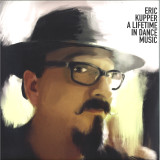
Eric Kupper - A Lifetime In Dance Music LP 2x12"

If the ideal greatest hits collection captures the fundamental truth about an artist, Eric Kupper’s – 'A Lifetime In Dance Music' highlights an envious catalogue, extraordinary production skills and ultimately reveals a passionate maven of house music.

The 24-track compilation celebrates the vast work and revered career of Eric Kupper and is a collectable occasion to re-acknowledge his influence and golden touch as a remixer for over five decades.

Within this first volume you’ll find signature and standout remixes for all-time greats such as Diana Ross, Depeche Mode and Degrees of Motion alongside Kupper classics both new and old under his own name and the legendary K-Scope alias.

'A Lifetime In Dance Music' will be available across three separate vinyl and digital release packages including a full collectors CD release in 2023.

Emblematic of an iconic nightlife and reflecting on the sheer scale of his work for seminal artists including Curtis Mayfield, Diana Ross, Earth Wind & Fire, Gloria Gaynor and Donna Summer, this ultimate collection serves as a reminder of Kupper’s astounding blend of studio power, control, and agility as a producer and remixer. As the writing and production partner of the late godfather of house music, Frankie Knuckles, Kupper is a true musician and multi-instrumentalist who has played on, remixed, produced or engineered over 2,000 records spanning a wide range of contemporary musical genres.

Having worked on over 100 Billboard #1 ‘Dance’ records and mixed two records that have received the ‘Dance Record of the Year’ Grammy award, it is safe to say Eric Kupper’s hugely successful career underpins house music.

No en stock

Haga su pedido ahora y le encargaremos el artículo en nuestro proveedor.


Ültimo hace: 8 Días
Spain - World of Blue

Spain

World of Blue

12inchSHIMMY2013LPC2
Joyful Noise Recordings
30.10.2022

Moody Blue Vinyl. RIYL: Codeine, Mazzy Star, Bedhead, Red House Painters, Low & American Music Club. Previously unreleased 16-track recordings that predates Spain’s 1995's landmark “The Blue Moods Of Spain". Includes original studio version of "World Of Blue" featuring Petra Haden on violin. Re-mixed and re-imagined by Kramer for Shimmy-Disc. The LP “World of Blue” features Merlo Podlewski on guitar. I first met Merlo in 1994. My sister Rachel Haden, who had been working with him at the Rhino Records store in Westwood, knew I was looking for a new guitarist for my band, and introduced us. Merlo is one of those guitarists whose playing is so smooth and effortless he makes anyone feel like they can play. He had an instinctual grasp of harmony and theory, which brought a great counterpoint to the technical knowledge and finesse of lead guitarist Ken. Spain played their first official L.A. gig with Merlo at a club called Pan, which shortly thereafter changed its name to Spaceland. We opened for Beck and That Dog. We played at Spaceland a lot and at other small clubs and coffee joints like the Troy Cafe (owned by Beck’s mom), Congo Square Coffee House in Santa Monica, Alligator Lounge, and others. At a certain point that year we were ready to record our first 7” single, and I reserved some time at Poop Alley. Poop Alley didn’t seem like the ideal recording setting. The walls and floors were made of concrete, and there was no soundproofing. The mixing board was in a loft up this steep staircase with no guard rails. But it worked somehow. On the particular day we recorded basics there was a rain storm which you can clearly hear in the background. The ceiling was so high there almost wasn’t a ceiling. A steep curving staircase with no guardrail led up to a loft area where the console was located, and next to it, on a custom-built, guardrail-less ledge, a queen-sized bed where Tom slept. I paid for the session with weed I grew in my closet. We set up and it started raining. Tom put a microphone outside. After tracking was finished, Petra came over and overdubbed violin. There was a cushioned area where I remember sitting during mixdown. We stayed good friends with Tom. We recorded a couple more songs with him the following year. Tom recorded lots of bands at Poop Alley. My sisters’ band That Dog, Beck, the Rentals, Rod Poole, Tom’s band Waldo the Dog Faced Boy, and many others. There were parties in the alley. There would be a keg of beer. Everyone was well-behaved. The most dangerous it got was when Kenny asked Beck if he was a Scientologist. I remember laughter and happiness the most from those parties. Not long afterwards Tom shut down the studio. Luckily for us, the tapes still exist. On those tapes are five songs, all of which are represented here. “I Lied” and “Her Used-To-Been” were released on the 7”, the remaining three have never been released before now. I can’t remember who I sent copies of the 7” to but shortly after it came out I got a call from an A&R executive at Geffen inviting me to their offices to talk. “I love your songs,” I remember him saying to me, “but my boss David Geffen won’t let me sign you because he doesn’t know how to market you.” Eventually a label that did want to sign us got in touch with me. Restless Records, they had decent distribution, so I said to myself, “Why not?”. This eventually led to the recording that produced our debut LP “Blue Moods of Spain”. Track listing: A1. Her Used-To-Been A2. Phone Machine A3. I Lied B1. Dreaming of Love B2. World of Blue

Reservar30.10.2022

debe ser publicado en 30.10.2022

Howe Gelb - ‘The Coincidentalist’ and ‘Dust Bowl’ LP 2x12"

Released on gold vinyl, ‘The Coincidentalist’ and ‘Dust Bowl’ are two discs of Howe Gelb filled with randomness and happenstance, a typical treasure trove spanning all genres from alt country to Cohen-esque grandeur. They traverse, unflinchingly, his chameleon-like repertoire. This deluxe re-issue includes ‘Dust Bowl’ on vinyl for the very first time, with the records housed in a gatefold sleeve featuring updated artwork and liner notes. ‘The Coincidentalist’, originally released in 2013, features a raft of friends and collaborators including Bonnie Prince Billy, Andrew Bird, M. Ward, Steve Shelley, and Jason Lytle of Grandaddy with John Parrish on mixing duties. Ever the focal point of Giant Sand and Gelb releases, the Arizona Desert serves as a key inspiration for the record, animating the barren landscape with stories of those that have navigated them. Praise for the release was not short, with AllMusic proclaiming that it’s “one of Gelb's most realized efforts; despite its relaxed, airy presentation, it's musically and lyrically provocative, as poetic, strange, and mysterious as the desert itself." The accompanying collection ‘Dust Bowl’ is a personal sketchbook of songs, a more stripped back set than it’s counterpart. Featuring everything from the country blues of ‘Porch Banjo’ and ‘John Deere’, to off-kilter piano ballads like ‘The Old Overrated’ and ‘Reality Or Not’ and the deconstructed desert pop on ‘Forever And A Day’ and the fragile ‘Man On A String’. ‘Dust Bowl’ is an insider’s view of Howe’s songwriting craft, a unique insight into the man himself. “‘Dust Bowl’ was primarily for fans that have followed me for a while. ‘The Coincidentalist’ is for the friends of the fans.” Howe told Under The Radar. While Nightlife magazine reported that; “Without warning, the Giant Sand frontman and polymorphous countryman dropped this compilation of house recordings via Bandcamp… At a time when so much harmless, soulless folk resonates, Howe Gelb is a mandatory point of reference for any fan of the genre.”

Reservar30.10.2022

debe ser publicado en 30.10.2022

David Westlake - My Beautiful England LP

We love nothing more than belated success, from the Nightingales' rise to top cult band, to the string of five marvelous Blue Orchids LPs in six years (as much as Martin Bramah had managed in the previous four decades) . . . so give us more. Like David Westlake. The release of NME's C86 cassette heralded a new generation of artists who'd emerged since the preceding C81 assembled a set of acts who'd coaxed new dialects out of punk, rhythms, reggae and the avant-garde. Though variable, C86 became a phenomenon, making a bigger splash and enduring longer than anyone could have predicted. The evolution by 1986 of "independent" or "alternative" music into "indie" brought a modified focus. From C81's post-punk negotiations of politics and cross-cultural influence to C86's compact blasts of, on the one hand, effervescent melodic pop and, on the other, jagged Beefheart-esque racket. Tiny Global Productions has proudly presented already one of the best from C86. The Wolfhounds' leader David Callahan's talent evolved masterfully into Moonshake, and more recently to a strain of blistering raga-folk psychedelia which deals with sociopolitical issues in brilliantly idiosyncratic fashion. And what of another of the best from C86 - the Servants, David Westlake's band? Ambivalent about the invitation to be on C86, Westlake gave the NME a wrong-footing b-side, before keeping a distance from the noise around the compilation. Subsequent releases from Westlake and The Servants and Westlake attracted fine reviews but settled quietly into relative obscurity, despite musical involvement from various Housemartins, Go-Betweens and Triffids, a quest by Stuart from Belle & Sebastian to find Westlake and form a band; not to mention Luke Haines' own five-year presence in the Servants before forming The Auteurs, Baader Meinhof and Black Box Recorder. Westlake went first into the law, then spent years in literary academia. Now the surprise arrival of My Beautiful England. The album is a masterpiece of concept, composition and performance, a conceptual work of truths and reflections of difficult but deft and unflinching expression. "It is not only fashionable now to denigrate England and its past; it is heresy to recognise good in it. The place that made me is disappearing. Its values and traditions. Among them: good manners, humility and clemency, resilience and perseverance, good humour. History is being refashioned – in spirit and material fact – by ideologues unshakeably certain they are in the right, and people are being distanced from their pasts. Some find themselves forced into passive acceptance of new distortions of the past, out of imitativeness or cowardice. I resist. This album is a memorial. Intentionally, a museum piece. It is a personal tribute to the England I knew."

Reservar30.10.2022

debe ser publicado en 30.10.2022

Mark de Clive-Lowe - Midnight Snacks Remixed

The fourth installment of MdCL’s Midnight Snacks series features remixes of snacks from vol 1 & 2, reimagined by Foursixone (Germany), Sound of Fractures (UK), Laroye (France) and Coflo (USA) – instrumental dancefloor pressure for the broken beat and soulful house heads. Curated by the Mashibeats community – community-sourced remixes and community-A&R’d – the EP kicks off with Foursixone’s broken beat reimagining of ‘Crush Velvet’: file alongside BITA and 2000Black. Sound of Fractures blends jungle bass-line pressure with a 2-step bounce on ‘Blue Hour’. On the flipside we dive into house with Laroye’s alternate mix of ‘Crush Velvet’ – a future nu-jazz house classic, and wrap up with the gospel organs and deep 4/4 grooves courtesy frequent Osunlade collaborator, Coflo.

No en stock

Haga su pedido ahora y le encargaremos el artículo en nuestro proveedor.


Ültimo hace: 5 Meses
Jessie Ware - What's Your Pleasure (The Platinum Pleasure Edition)

2021 has been an incredible year so far for Jessie Ware. ‘What’s Your Pleasure?’ re-entered the Top 10 following a brilliant Graham Norton performance of ‘Remember Where You Are’ which has proved itself to be one of Jessie’s most connective singles to date. In addition, Jessie has two BRITs nominations, one for Female Solo artist and one for Album Of The Year – the category with a historic four women up for the award. On 28th April Jessie returns with a brand new single ‘Please’ taken from the upcoming deluxe release of ‘What’s Your Pleasure?’ officially titled as ‘What’s Your Pleasure? The Platinum Pleasure Edition’. Released on 11th June, the album features 6 brand new songs and more.


Her newest track, ‘Please’ sees Jessie continue the energy of ‘What’s Your Pleasure’ in the form of a throwback to 70s and 80s dance music, and pulls it together in a wonderfully anachronistic style, all packaged with Ware’s outstanding vocals. The track fits perfectly into ‘What’s Your Pleasure - The Platinum Pleasure Edition’, Ware’s deluxe offering of her sensational 2020 record. This edition still bears the cohesive, complementary songwriting, the killer grooves and flawless production of the original version. The Platinum Pleasure Edition only serves to heighten the rich and powerful soul of last year’s release with tracks like Please, 0208 featuring synthpop visionary Kindness, the Endless Remix of ‘Adore You’ and a whole host more.

Talking about the upcoming deluxe and new single Jessie said: ”I had such an amazing response to the ‘What’s Your Pleasure?’ record that I didn’t want the lights to go up and the party to be over just yet! ‘Please’ is full of optimism and ready to be played in a place where we can all be together and flirt, dance, touch and kiss. A wonderful excuse not to stop the party from ending.”

It’s safe to say that the last twelve months have been pretty stellar for Jessie Ware. June 2020 saw Jessie release ‘What’s Your Pleasure?’ and gain not only her fourth UK Top 10 album of her career, but also her highest charting record when it entered straight into the UK Official Album Charts at No.3. As if this wasn’t amazing enough, she went on to release her first cookbook and continued her immensely popular podcast Table Manners and recently hit a massive milestone of 21 million individual listens, oftentimes featuring household names such as Dua Lipa, Kylie Minogue, Yungblud, Robbie Williams, Alanis Morissette., Dawn French and Dolly Parton to name a few.

Last year saw the album continue to receive widespread critical acclaim, with ‘What’s Your Pleasure?’ featuring heavily amongst ‘album of the year’ lists including for music critic Anthony Fantano, also known as The Needle Drop, who gave What’s Your Pleasure?’ the coveted no. 1 spot on his ‘Best Albums of 2020’ list, declaring it to be “a religious experience”. The record garnered praise from The Guardian who say it’s“Ware’s finest record yet"; Rolling Stone laude it as a “fantastic dance-pop record”; Pitchfork say “Jessie reminds us why we listen to dance music in the first place.”, GQ proclaim it as “the perfect album” and NME stated it was“pure escapism.”

No en stock

Haga su pedido ahora y le encargaremos el artículo en nuestro proveedor.


Ültimo hace: 3 Años
Headswim - Flood LP 2x12"

Headswim

Flood LP 2x12"

2x12inchTAR055B
TRAPPED ANIMAL
18.10.2022
También disponible

Deluxe Version


Indie store exclusive is a Gatefold sleeve, Galaxy blue vinyl, the Bonus Disc Banana Yellow vinyl. Standard LP is a Gatefold sleeve, Black vinyl with a banana yellow vinyl bonus disc. Double CD digipak with a Bonus Disc tht includes Flood era tracks Proud, Morning Song, BBC R1 Sessions and 12 page booklet with original lyric illustrations. Trapped Animal is pleased to announce the return of 90's legends Headswim! We present a reissue of their seminal psych-grunge masterpiece, Flood. Pressed on 180G, Double Vinyl Gatefold with photo lyric insert all printed on uncoated card, this is an absolutely stunning package that truly matches the timeless quality of the songs it houses. Flood #Redux - Headswim's seminal 1994 Psych-Grunge masterpiece gets its first reissue since the original 1994 pressing. A highly sought after record and produced with mountains of love between label and artists. Previously unreleased BBC sessions, and material from the Flood era. Available on double vinyl, double CD and lossless download.

Reservar18.10.2022

debe ser publicado en 18.10.2022

Various - Pure Wicked Tune: Rare Groove Blues Dances & House Parties, 1985-1992

Pure Wicked Tune is a mixtape-style collection of extracts & cut-ups, taken from DIY cassette recordings featuring rare groove and "soul blues" soundsystems playing at early morning house parties and blues dances - mostly in South & East London - between the mid 1980s & early 90s.

Sounds like Funkadelic, Touch of Class, Latest Edition, JB Crew, Manhattan, 5th Avenue (and the many more featured on this tape) originally began to form in the mid-1980s. With lovers rock dwindling, and the reggae scene becoming dominated by harder digital-style dancehall, these sounds provided a tight but loyal crowd with a potent alternative - playing a mixture of killer rare soul, funk and boogie records in an inimitably reggae soundsystem style, complete with toasting, sirens and effects aplenty.

They were most well-known for playing at house parties and blues dances, typically in small flats or warehouses, with timing of such events generally running from the early morning hours until late the next afternoon. Though the popularity of the sounds faded following the dance music explosion of the early 1990s, there has been continued demand for revival sessions ever since. Whilst the influence of key British reggae & dancehall soundsystems on subsequent UK sounds like hardcore & jungle is relatively well documented, a similar line can just as easily be drawn from these sounds and the aforementioned styles' tendency toward sampling popular rare groove cuts, particularly well evidenced in the work of Tom & Jerry, 4hero, Reinforced & LTJ Bukem among others.

This represents the first outing in a series of collections exploring the sounds of UK soundsystem culture, via extracts from archival DIY cassette recordings of blues parties, dances & clashes made between the late 70s and early 90s. Often duplicated and shared widely, these ruff and ready "sound tapes" provided keen ears with music that wasn't otherwise readily available on the airwaves or in the record shops, and would go on to leave a deeply-rooted but too often overlooked influence on the UK's musical landscape.

No en stock

Haga su pedido ahora y le encargaremos el artículo en nuestro proveedor.


Ültimo hace: 7 Meses
Lee Tracy & Isaac Manning - Is it What You Want

As the sun sets on a quaint East Nashville house, a young man bares a piece of his soul. Facing the camera, sporting a silky suit jacket/shirt/slacks/fingerless gloves ensemble that announces "singer" before he's even opened his mouth, Lee Tracy Johnson settles onto his stage, the front yard. He sways to the dirge-like drum machine pulse of a synth-soaked slow jam, extends his arms as if gaining his balance, and croons in affecting, fragile earnest, "I need your love… oh baby…"

Dogs in the yard next door begin barking. A mysterious cardboard robot figure, beamed in from galaxies unknown and affixed to a tree, is less vocal. Lee doesn't acknowledge either's presence. He's busy feeling it, arms and hands gesticulating. His voice rises in falsetto over the now-quiet dogs, over the ambient noise from the street that seeps into the handheld camcorder's microphone, over the recording of his own voice played back from a boombox off-camera. After six minutes the single, continuous shot ends. In this intimate creative universe there are no re-takes. There are many more music videos to shoot, and as Lee later puts it, "The first time you do it is actually the best. Because you can never get that again. You expressing yourself from within."

"I Need Your Love" dates from a lost heyday. From some time in the '80s or early '90s, when Lee Tracy (as he was known in performance) and his music partner/producer/manager Isaac Manning committed hours upon hours of their sonic and visual ideas to tape. Embracing drum machines and synthesizers – electronics that made their personal futurism palpable – they recorded exclusively at home, live in a room into a simple cassette deck. Soul, funk, electro and new wave informed their songs, yet Lee and Isaac eschewed the confinement of conventional categories and genres, preferring to let experimentation guide them.

"Anytime somebody put out a new record they had the same instruments or the same sound," explains Isaac. "So I basically wanted to find something that's really gonna stand out away from all of the rest of 'em." Their ethos meant that every idea they came up with was at least worth trying: echoed out half-rapped exhortations over frantic techno-style beats, gospel synth soul, modal electro-funk, oddball pop reinterpretations, emo AOR balladry, nods to Prince and the Fat Boys, or arrangements that might collapse mid-song into a mess of arcade game-ish blips before rallying to reach the finish line. All of it conjoined by consistent tape hiss, and most vitally, Lee's chameleonic voice, which managed to wildly shape shift and still evoke something sincere – whether toggling between falsetto and tenor exalting Jesus's return, or punctuating a melismatic romantic adlib with a succinct, "We all know how it feels to be alone."

"People think we went to a studio," says Isaac derisively. "We never went to no studio. We didn't have the money to go to no studio! We did this stuff at home. I shot videos in my front yard with whatever we could to get things together." Sometimes Isaac would just put on an instrumental record, be it "Planet Rock" or "Don't Cry For Me Argentina" (from Evita), press "record," and let Lee improvise over it, yielding peculiar love songs, would-be patriotic anthems, or Elvis Presley or Marilyn Monroe tributes. Technical limitations and a lack of professional polish never dissuaded them. They believed they were onto something.

"That struggle," Isaac says, "made that sound sound good to me."

In the parlance of modern music criticism Lee and Isaac's dizzying DIY efforts would inevitably be described as "outsider." But "outsider" carries the burden of untold additional layers of meaning if you're Black and from the South, creating on a budget, and trying to get someone, anyone within the country music capital of the world to take your vision seriously. "What category should we put it in?" Isaac asks rhetorically. "I don't know. All I know is feeling. I ain't gonna name it nothing. It's music. If it grabs your soul and touch your heart that's what it basically is supposed to do."

=

Born in 1963, the baby boy of nine siblings, Lee Tracy spent his earliest years living amidst the shotgun houses on Nashville's south side. "We was poor, man!" he says, recalling the outhouse his family used for a bathroom and the blocks of ice they kept in the kitchen to chill perishables. "But I actually don't think I really realized I was in poverty until I got grown and started thinking about it." Lee's mom worked at the Holiday Inn; his dad did whatever he had to do, from selling fruit from a horse drawn cart to bootlegging. "We didn't have much," Lee continues, "but my mother and my father got us the things we needed, the clothes on our back." By the end of the decade with the city's urban renewal programs razing entire neighborhoods to accommodate construction of the Interstate, the family moved to Edgehill Projects. Lee remembers music and art as a constant source of inspiration for he and his brothers and sisters – especially after seeing the Jackson 5 perform on Ed Sullivan. "As a small child I just knew that was what I wanted to do."

His older brother Don began musically mentoring him, introducing Lee to a variety of instruments and sounds. "He would never play one particular type of music, like R&B," says Lee. "I was surrounded by jazz, hard rock and roll, easy listening, gospel, reggae, country music; I mean I was a sponge absorbing all of that." Lee taught himself to play drums by beating on cardboard boxes, gaining a rep around the way for his timekeeping, and his singing voice. Emulating his favorites, Earth Wind & Fire and Cameo, he formed groups with other kids with era-evocative band names like Concept and TNT Connection, and emerged as the leader of disciplined rehearsals. "I made them practice," says Lee. "We practiced and practiced and practiced. Because I wanted that perfection." By high school the most accomplished of these bands would take top prize in a prominent local talent show. It was a big moment for Lee, and he felt ready to take things to the next level. But his band-mates had other ideas.

"I don't know what happened," he says, still miffed at the memory. "It must have blew they mind after we won and people started showing notice, because it's like everybody quit! I was like, where the hell did everybody go?" Lee had always made a point of interrogating prospective musicians about their intentions before joining his groups: were they really serious or just looking for a way to pick up girls? Now he understood even more the importance of finding a collaborator just as committed to the music as he was.

=

Isaac Manning had spent much of his life immersed in music and the arts – singing in the church choir with his family on Nashville's north side, writing, painting, dancing, and working various gigs within the entertainment industry. After serving in the armed forces, in the early '70s he ran The Teenage Place, a music and performance venue that catered to the local youth. But he was forced out of town when word of one of his recreational routines created a stir beyond the safe haven of his bohemian circles.

"I was growing marijuana," Isaac explains. "It wasn't no business, I was smoking it myself… I would put marijuana in scrambled eggs, cornbread and stuff." His weed use originated as a form of self-medication to combat severe tooth pain. But when he began sharing it with some of the other young people he hung out with, some of who just so happened to be the kids of Nashville politicians, the cops came calling. "When I got busted," he remembers, "they were talking about how they were gonna get rid of me because they didn't want me saying nothing about they children because of the politics and stuff. So I got my family, took two raggedy cars, and left Nashville and went to Vegas."

Out in the desert, Isaac happened to meet Chubby Checker of "The Twist" fame while the singer was gigging at The Flamingo. Impressed by Isaac's zeal, Checker invited him to go on the road with him as his tour manager/roadie/valet. The experience gave Isaac a window into a part of the entertainment world he'd never encountered – a glimpse of what a true pop act's audience looked like. "Chubby Checker, none of his shows were played for Black folks," he remembers. "All his gigs were done at high-class white people areas." Returning home after a few years with Chubby, Isaac was properly motivated to make it in Music City. He began writing songs and scouting around Nashville for local talent anywhere he could find it with an expressed goal: "Find someone who can deliver your songs the way you want 'em delivered and make people feel what you want them to feel."

One day while walking through Edgehill Projects Isaac heard someone playing the drums in a way that made him stop and take notice. "The music was so tight, just the drums made me feel like, oh I'm-a find this person," he recalls. "So I circled through the projects until I found who it was.

"That's how I met him – Lee Tracy. When I found him and he started singing and stuff, I said, ohhh, this is somebody different."

=

Theirs was a true complementary partnership: young Lee possessed the raw talent, the older Isaac the belief. "He's really the only one besides my brother and my family that really seen the potential in me," says Lee. "He made me see that I could do it."

Isaac long being a night owl, his house also made for a fertile collaborative environment – a space where there always seemed to be a new piece of his visual art on display: paintings, illustrations, and dolls and figures (including an enigmatic cardboard robot). Lee and Issac would hang out together and talk, listen to music, conjure ideas, and smoke the herb Isaac had resumed growing in his yard. "It got to where I could trust him, he could trust me," Isaac says of their bond. They also worked together for hours on drawings, spreading larges rolls of paper on the walls and sketching faces with abstract patterns and imagery: alien-like beings, tri-horned horse heads, inverted Janus-like characters where one visage blurred into the other.

Soon it became apparent that they didn't need other collaborators; self-sufficiency was the natural way forward. At Isaac's behest Lee, already fed up with dealing with band musicians, began playing around with a poly-sonic Yamaha keyboard at the local music store. "It had everything on it – trumpet, bass, drums, organ," remembers Lee. "And that's when I started recording my own stuff."

The technology afforded Lee the flexibility and independence he craved, setting him on a path other bedroom musicians and producers around the world were simultaneously following through the '80s into the early '90s. Saving up money from day jobs, he eventually supplemented the Yamaha Isaac had gotten him with Roland and Casio drum machines and a Moog. Lee was living in an apartment in Hillside at that point caring for his dad, who'd been partially paralyzed since early in life. In the evenings up in his second floor room, the music put him in a zone where he could tune out everything and lose himself in his ideas.

"Oh I loved it," he recalls. "I would really experiment with the instruments and use a lot of different sound effects. I was looking for something nobody else had. I wanted something totally different. And once I found the sound I was looking for, I would just smoke me a good joint and just let it go, hit the record button." More potent a creative stimulant than even Isaac's weed was the holistic flow and spontaneity of recording. Between sessions at Isaac's place and Lee's apartment, their volume of output quickly ballooned.

"We was always recording," says Lee. "That's why we have so much music. Even when I went to Isaac's and we start creating, I get home, my mind is racing, I gotta start creating, creating, creating. I remember there were times when I took a 90-minute tape from front to back and just filled it up."

"We never practiced," says Isaac. "See, that was just so odd about the whole thing. I could relate to him, and tell him about the songs I had ideas for and everything and stuff. And then he would bring it back or whatever, and we'd get together and put it down." Once the taskmaster hell bent on rehearsing, Lee had flipped a full 180. Perfection was no longer an aspiration, but the enemy of inspiration.

"I seen where practicing and practicing got me," says Lee. "A lot of musicians you get to playing and they gotta stop, they have to analyze the music. But while you analyzing you losing a lot of the greatness of what you creating. Stop analyzing what you play, just play! And it'll all take shape."

=

"I hope you understood the beginning of the record because this was invented from a dream I had today… (You tell me, I'll tell you, we'll figure it out together)" – Lee Tracy and Isaac Manning, "Hope You Understand"

Lee lets loose a maniacal cackle when he acknowledges that the material that he and Isaac recorded was by anyone's estimation pretty out there. It's the same laugh that commences "Hope You Understand" – a chaotic transmission that encapsulates the duality at the heart of their music: a stated desire to reach people and a compulsion to go as leftfield as they saw fit.

"We just did it," says Lee. "We cut the music on and cut loose. I don't sit around and write. I do it by listening, get a feeling, play the music, and the lyrics and stuff just come out of me."

The approach proved adaptable to interpreting other artists' material. While recording a cover of Whitney Houston's pop ballad "Saving All My Love For You," Lee played Whitney's version in his headphones as he laid down his own vocals – partially following the lyrics, partially using them as a departure point. The end result is barely recognizable compared with the original, Lee and Isaac having switched up the time signature and reinvented the melody along the way towards morphing a slick mainstream radio standard into something that sounds solely their own.

"I really used that song to get me started," says Lee. "Then I said, well I need something else, something is missing. Something just came over me. That's when I came up with 'Is It What You Want.'"

The song would become the centerpiece of Lee and Isaac's repertoire. Pushed along by a percolating metronomic Rhythm King style beat somewhere between a military march and a samba, "Is It What You Want" finds Lee pleading the sincerity of his commitment to a potential love interest embellished by vocal tics and hiccups subtlely reminiscent of his childhood hero MJ. Absent chord changes, only synth riffs gliding in and out like apparitions, the song achieves a lingering lo-fi power that leaves you feeling like it's still playing, somewhere, even after the fade out.

"I don't know, it's like a real spiritual song," Lee reflects. "But it's not just spiritual. To me the more I listen to it it's like about everything that you do in your everyday life, period. Is it what you want? Do you want a car or you don't want a car? Do you want Jesus or do you want the Devil? It's basically asking you the question. Can't nobody answer the question but you yourself."

In 1989 Lee won a lawsuit stemming from injuries sustained from a fight he'd gotten into. He took part of the settlement money and with Isaac pressed up "Saving All My Love For You" b/w "Is It What You Want" as a 45 single. Isaac christened the label One Chance Records. "Because that's all we wanted," he says with a laugh, "one chance."

Isaac sent the record out to radio stations and major labels, hoping for it to make enough noise to get picked up nationally. But the response he and Lee were hoping for never materialized. According to Isaac the closest the single got to getting played on the radio is when a disk jock from a local station made a highly unusual announcement on air: "The dude said on the radio, 107.5 – 'We are not gonna play 'Is It What You Want.' We cracked up! Wow, that's deep.

"It was a whole racist thing that was going on," he reflects. "So we just looked over and kept on going. That was it. That was about the way it goes… If you were Black and you were living in Nashville and stuff, that's the way you got treated." Isaac already knew as much from all the times he'd brought he and Lee's tapes (even their cache of country music tunes) over to Music Row to try to drum up interest to no avail.

"Isaac, he really worked his ass off," says Lee. "He probably been to every record place down on Music Row." Nashville's famed recording and music business corridor wasn't but a few blocks from where Lee grew up. Close enough, he remembers, for him to ride his bike along its back alleys and stumble upon the occasional random treasure, like a discarded box of harmonicas. Getting in through the front door, however, still felt a world away.

"I just don't think at the time our music fell into a category for them," he concedes. "It was before its time."

=

Lee stopped making music some time in the latter part of the '90s, around the time his mom passed away and life became increasingly tough to manage. "When my mother died I had a nervous breakdown," he says, "So I shut down for a long time. I was in such a sadness frame of mind. That's why nobody seen me. I had just disappeared off the map." He fell out of touch with Isaac, and in an indication of just how bad things had gotten for him, lost track of all the recordings they'd made together. Music became a distant memory.

Fortunately, Isaac kept the faith. In a self-published collection of his poetry – paeans to some of his favorite entertainment and public figures entitled Friends and Dick Clark – he'd written that he believed "music has a life of its own." But his prescience and presence of mind were truly manifested in the fact that he kept an archive of he and Lee's work. As perfectly imperfect as "Is It What You Want" now sounds in a post-Personal Space world, Lee and Isaac's lone official release was in fact just a taste. The bulk of the Is It What You Want album is culled from the pair's essentially unheard home recordings – complete songs, half-realized experiments, Isaac's blue monologues and pronouncements et al – compiled, mixed and programmed in the loose and impulsive creative spirit of their regular get-togethers from decades ago. The rest of us, it seems, may have finally caught up to them.

On the prospect of at long last reaching a wider audience, Isaac says simply, "I been trying for a long time, it feels good." Ever the survivor, he adds, "The only way I know how to make it to the top is to keep climbing. If one leg break on the ladder, hey, you gotta fix it and keep on going… That's where I be at. I'll kill death to make it out there."

For Lee it all feels akin to a personal resurrection: "It's like I was in a tomb and the tomb was opened and I'm back… Man, it feels so great. I feel like I'm gonna jump out of my skin." Success at this stage of his life, he realizes, probably means something different than what it did back when he was singing and dancing in Isaac's front yard. "What I really mean by 'making it,'" he explains isn't just the music being heard but, "the story being told."

Occasionally Lee will pull up "Is It What You Want" on YouTube on his phone, put on his headphones, and listen. He remembers the first time he heard his recorded voice. How surreal it was, how he thought to himself, "Is that really me?" What would he say to that younger version of himself now?

"I would probably tell myself, hang in there, don't give up. Keep striving for the goal. And everything will work out."

Despite what's printed on the record label, sometimes you do get more than one chance.

No en stock

Haga su pedido ahora y le encargaremos el artículo en nuestro proveedor.


Ültimo hace: 3 Años
Kehlani - blue water road

Kehlani

blue water road

12inch0075678639685
Atlantic
14.10.2022
  • Little Story
  • Any Given Sunday Ft. Blxst
  • Shooter Interlude
  • Wish I Never
  • Up At Night Ft. Justin Bieber
  • Get Me Started Ft. Syd
  • Everything Interlude
  • More Than I Should Ft. Jessie Reyes
  • Altar
  • Melt
  • Tangerine
  • Everything
  • Wondering/Wandering Ft. Thundercat And Ambre

Kehlani is set to release the vinyl product of her latest album ‘blue water road’ on 14th October, which is available to pre-order now. “blue water road is a destination in my mind,” Kehlani explains. “I’m giving everyone access. It’s an emotional journey, a sexual journey, and a spiritual journey.

To me, the album is like a glass house. It's light, transparent, and the sun is shining right through it.” The album includes features from the likes of Justin Bieber, Ambre, thundercat. Kehlani has sold over 90K albums in the UK to date.

Reservar14.10.2022

debe ser publicado en 14.10.2022

JOHN MASSARI - KILLER KLOWNS FROM OUTER SPACE LP (2x12")

- The Complete 1988 Film Score by John Massari - Available For The First Time On Vinyl 180 Gram Violet and Blue Vinyl (Light In The Attic Exclusive Variant) - Exclusive Liner Notes by Composer John Massari - Exclusive Liner Notes by Killer Klowns Co-Creator Stephen Chiodo - Heavyweight 12" x 12" Art Print - Old-Style Tip-On Jackets with Matte Satin Coating // KILLER KLOWNS FROM OUTER SPACE have finally landed at Waxwork Records! After much anticipation, we are thrilled to present the official 1988 Original Motion Picture Soundtrack by John Massari for the very first time on vinyl! Would you believe someone if they told you a circus tent-shaped spaceship landed in your small town and was abducting your neighbors to store them in cotton candy cocoons? In this '80's cult classic, teens Mike Tobacco (Grant Cramer) and Debbie Stone (Suzanne Snyder) have to fight both the diabolical bozos and the local law enforcement's disbelief to save themselves and their community! The original score to Killer Klowns From Outer Space is kicked off by the classic 80's horror movie theme track, Killer Klowns (From Outer Space) by California punk band, The Dickies. The 'nightmare merry-go-round' continues with a smattering of menacing electronic brass sections, electric guitar, bombastic drum machine beats, & harpsichord combined with sci-fi synth elements to capture the ultra-specific origins of the antagonists. Massari's score to Klowns is a retro-synth joyride from start to finish featuring immediately recognizable cues from the beloved 80's cult-classic! Waxwork Records is thrilled to present the official Killer Klowns From Outer Space double LP, released for the first time on vinyl. Complete with 180 gram "Cotton Candy" and "Popcorn" vinyl, deluxe packaging, new artwork by Ruiz Burgos, old-style tip-on jackets with matte coating, a heavyweight 12"x12" art print, and liner notes by composer Massari and Klowns co-creator Stephen Chiodo!

Reservar14.10.2022

debe ser publicado en 14.10.2022

Brigade - Hard Times, Soft Music LP

In a time where electronic music gets harder and faster each day, Berlin-based duo Brigade‘s debut album „Hard Times, Soft Music“ reclaims easy listening as a badge of honour. Being released on 14.10.2022, the record is a meticulously calibrated work of room temperature, a home cooked meal between friends or a warm sonic blanket that tugs you in after a rainy day. Pushing their club roots to the side, Brigade‘s debut album con- dently sits between ambient, house and hip hop. „We took the pandemic as a cue to take a break from dance floor productions and play around with different genres and production styles.“ The rst single „International CommunicationTM“ showcases that breadth and introduces an album pretty much anyone in the post-Shrek cultural landscape could agree on. Basically, if you appreciate a good hug, chances are you‘ll enjoy this LP. Also, there's a pretty cute dog on the cover.

No en stock

Haga su pedido ahora y le encargaremos el artículo en nuestro proveedor.


Ültimo hace: 2 Años
William The Conqueror - Proud Disturber of the Peace

Fifth Anniversary reissue of William The
Conqueror’s debut album, ‘Proud Disturber of the
Peace’, featuring all-new mixes by Joseph Lorge
(Hiss Golden Messenger, Blake Mills, Phoebe
Bridgers et al) and new artwork by Australian
design studio Headjam.
The album includes fan favourites ‘Tend to the
Thorns’, ‘Cold Ontario’ and ‘Sunny is the Style’,
delivered with bluesy, alt-rock swagger and wry,
cerebral lyrics that find the band in the same lane
as Built to Spill, Spoon and Pavement.
Tourdates - October 12 Southampton Joiners, 13
Tunbridge Wells Forum, 14 Cambridge Portland Arms, 16
Liverpool Jimmy’s, 17 Manchester Night & Day, 18
Glasgow Attic, 19 Todmorden The Golden Lion, 20 Stoke
Sugarmill, 21 Sunderland Pop Records, 22 Scunthorpe
Café Indie, 23 London The Lexington, 25 Ashford The
Glass House, 26 Bristol Thekla, 28 Falmouth The Cornish
Bank.

Reservar14.10.2022

debe ser publicado en 14.10.2022

Various - SUN RECORDS - ROCK 'N' ROLL COLLECTION
También disponible

Orange Vinyl


CELEBRATING SUN RECORDS - THE LABEL WHERE ROCK 'N' ROLL WAS BORN! The Rock 'n' Roll Collection features 40-songs from the most important record label in the history of music, with everyone newly remastered from the original Sun Records master tapes. A comprehensive introduction to some of the most iconic and influential music ever recorded. These are the list remaining copies of the strictly limited edition pressed on orange vinyl exclusive to UK retailer Sainsbury’s. Elvis Presley introduced the rockabilly sound to the world in 1954 with the recordings he made at Sun Records. These epitomised the famous “Sun sound” and set the scene for the rock ‘n’ roll explosion to follow. This raw and exciting new sound was a remarkable fusion of white country music and black R&B and quickly found an eager audience with the youth of the day. Presley’s extraordinary success at Sun Records led to the tiny Memphis-based label becoming a magnet for aspiring rockabilly singers from all over America’s South. Despite a relatively short heyday, that “Sun sound” has endured the test of time and remains as popular as ever with listeners of all age groups. As well as featuring Elvis and such other household names as Jerry Lee Lewis, Johnny Cash, Carl Perkins, Charlie Rich and Roy Orbison, the gatefold-sleeved double-album also includes significant contributions from the label’s other important artists such as: Billy Lee Riley, Sonny Burgess, The Miller Sisters, Warren Smith, Malcolm Yelvington, Jimmy Wages, and Earl Hooker. Includes such all-time rock ‘n’ roll classics as: Mystery Train, That’s All Right, Blue Suede Shoes, Great Balls Of Fire, I Walk The Line, Yakety Yak, Rock Island Line, Good Rockin’ Tonight, Red Hot, Ooby Dooby, Whole Lotta Shakin’ Goin’ On …and many more!

Reservar14.10.2022

debe ser publicado en 14.10.2022

Various - SUN RECORDS - ROCK 'N' ROLL COLLECTION
También disponible

Black Vinyl


CELEBRATING SUN RECORDS - THE LABEL WHERE ROCK 'N' ROLL WAS BORN! The Rock 'n' Roll Collection features 40-songs from the most important record label in the history of music, with everyone newly remastered from the original Sun Records master tapes. A comprehensive introduction to some of the most iconic and influential music ever recorded. These are the list remaining copies of the strictly limited edition pressed on orange vinyl exclusive to UK retailer Sainsbury’s. Elvis Presley introduced the rockabilly sound to the world in 1954 with the recordings he made at Sun Records. These epitomised the famous “Sun sound” and set the scene for the rock ‘n’ roll explosion to follow. This raw and exciting new sound was a remarkable fusion of white country music and black R&B and quickly found an eager audience with the youth of the day. Presley’s extraordinary success at Sun Records led to the tiny Memphis-based label becoming a magnet for aspiring rockabilly singers from all over America’s South. Despite a relatively short heyday, that “Sun sound” has endured the test of time and remains as popular as ever with listeners of all age groups. As well as featuring Elvis and such other household names as Jerry Lee Lewis, Johnny Cash, Carl Perkins, Charlie Rich and Roy Orbison, the gatefold-sleeved double-album also includes significant contributions from the label’s other important artists such as: Billy Lee Riley, Sonny Burgess, The Miller Sisters, Warren Smith, Malcolm Yelvington, Jimmy Wages, and Earl Hooker. Includes such all-time rock ‘n’ roll classics as: Mystery Train, That’s All Right, Blue Suede Shoes, Great Balls Of Fire, I Walk The Line, Yakety Yak, Rock Island Line, Good Rockin’ Tonight, Red Hot, Ooby Dooby, Whole Lotta Shakin’ Goin’ On …and many more!

Reservar14.10.2022

debe ser publicado en 14.10.2022

Southside Johnny And The Asbury Dukes - I Don't Want To Go Home - Live

Live Blue Vinyl LP from the master of rocking Rhythm and Blues
Recorded at The Opera House, Newcastle on 26th November 2002. Features a
track by track synopsis written by Southside Johnny of the songs by Steven van
Zandt, Tom Waits, amongst others plus their own self penned compositions .
Promotion across social media platforms
Advertising in Shindig and Record Collector

Reservar14.10.2022

debe ser publicado en 14.10.2022

A Great Big Pile Of Leaves - Pono
También disponible

Black/White Smoke Vinyl


Produced by A Great Big Pile of Leaves and recorded primarily at their
home studio, new album Pono was mixed by touring guitarist Matthew
Weber at Gradwell House Recording and mastered by Dave Downham
(Beach Slang, Into It Over It)
With eight years between releases, the band recalls how the recording process of
Pono felt like they were making their first record, adding 'we worked at our own
pace with no preconceived notion of what it needed to be.'
Pressed on White + Green + Blue Marbled color vinyl.

Reservar14.10.2022

debe ser publicado en 14.10.2022

700 BLISS - NOTHING TO DECLARE LP

The LP version is limited to 1000 copies, pressed on blue vinyl, in a high grade spot-varnished gatefold sleeve.

700 Bliss is the forward-thinking duo of DJ Haram and Moor Mother. Their first full length for Hyperdub is an album of noise rap that ties together the raw edges of club music and hip hop with punk energy, jazz, house-party catharsis, percussion-heavy analogue sound design, and cheeky skits, ranging from experimental rap tracks with rolling hi hats and lyrical bravado, to poetry set to noise and sound collage.

Moor Mother and DJ Haram started collaborating in 2014 and eventually formed 700 Bliss, a blistering live act in Philly's DIY scene, releasing their 2018 debut, Spa 700 on Halcyon Veil / Don Giovanni Records. Since that time, both artists have grown global followings. Moor Mother is a prolific solo artist and collaborator, writer, and member of Black Quantum Futurism while Haram has been curating and creating radio shows, DJing, and producing (including an EP for Hyperdub in 2019).

‘Nothing To Declare’ is a smart, danceable revelation, a chiseled soundscape of dive bombing bass, piercing bleeps, crunchy distortion, and wavering synth lines. Welcoming in a variety of voices from their extended, cross-genre scene, 700 Bliss also bring along a cast of collaborators, including vocalists Orion Sun, Lawfandah, Ase Manual, and Ali Logout (from the band Special Interest), plus Palestinian producer Muqata'a, and writer M Téllez who delivers a surreal sci fi monologue over a pounding kick drum on ‘More Victories’.

‘Nothing To Declare’ is a deeply layered rewriting of hip hop and electronic music that gives more with each listen. You won't hear another rap album like it in 2022.

No en stock

Haga su pedido ahora y le encargaremos el artículo en nuestro proveedor.


Ültimo hace: 3 Años
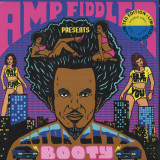
Amp Fiddler - Motor City Booty LP 2x12"

South Street delve into the The Sound Of Detroit from one of its unsung heroes, reissuing Amp Fiddler's 'Motor City Booty' LP on Yellow & Blue vinyl respectively. Coming straight off the D Funk assembly line, it's a full on dance floor affair from Motown to P-Funk, Techno and Neo Soul.

This 12 track album produced by Amp Fiddler & Yam Who? includes the massive 'Soul Fly' sounding like a Mark Ronson production had he been hanging out with George Clinton's Parlet followed by the bonafide P-Funk anthem 'Steppin' both featuring the stunning vocals by the Dames Brown girls.

Amp Fiddler is credited for taking both a young J Dilla and also Q-Tip under his wing teaching them his Akai MPC techniques, setting the path for some of Hip Hop's finest recordings which have defined the shape of things to come.

His musical collaborations & current duties include: Moodymann's musical maestro, keyboard wizard for Theo Parrish's live band, a longstanding Funkadelic member, co-writer for Sly & Robbie, Prince, Maxwell, Jamiroquai & Seal to name a few.

No en stock

Haga su pedido ahora y le encargaremos el artículo en nuestro proveedor.


Ültimo hace: 5 Meses
Raekwon - Only Built 4 Cuban Linx LP 2x12"
 
17

Re-pressed at last!! Limited purple vinyl. The cultural phenomenon that is the Wu-Tang cannot accurately be described without referencing one of the pillars in the Clan's discography, Chef Raekwon's Only Built 4 Cuban Linx remains firmly planted as one of the defining triumphs in their artistic legacy. The oft referred "Purple Tape", has been cited and debated by many as the greatest Wu-Tang solo project to date and a remains a bullet point in any discussion involving the greatest "Cocaine Rap" or "Street Hop" albums of all time. Raekwon's narrative, plays out like a movie script from the violent, drug fueled, underbelly of New York City's criminal landscape, intricately woven over instrumentals from the legendary mastermind behind the Wu-Tang Clan, The RZA. Even the album's main feature "Tony Starks aka Ghostface Killer", referred to as such rather described as a "guest star" appearing on 12 of the albums 18 tracks. It should be noted that while the Only Built 4 Cuban Linx did produce a string of successful singles, such as "Ice Cream", "Incarcerated Scarfaces", and "Criminology", like all classic cinema, the album was intentionally engineered to be appreciated in one sitting, played from beginning to end. In continuing with it's proud tradition of honoring historically significant hip hop albums, Get On Down is honored to present Raekwon's "Only Built 4 Cuban Linx" for the first time ever on double translucent purple vinyl housed in a high density resealable poly bag. This edition features for the first time ever on vinyl, the formerly CD only bonus track, "North Star (Jewels)". And if that wasn't enough, the entire album also features completely enhanced and painstakingly remastered audio. This is the definitive must-own vinyl edition of Raekwon's masterpiece.

No en stock

Haga su pedido ahora y le encargaremos el artículo en nuestro proveedor.


Ültimo hace: 3 Años
The Yardbirds - Yardbirds (Roger The Engineer)
  • A1: Lost Women
  • A2: Over, Under, Sideways, Down
  • A3: The Nazz Are Blue
  • A4: I Can’t Make Your Way
  • A5: Rack My Mind
  • A6: Farewell
  • B1: Hot House Of Omagararshid
  • B2: Jeff’s Boogie
  • B3: He’s Always There
  • B4: Turn Into Earth
  • B5: What Do You Want
  • B6: Ever Since The World Began

First released in the summer of 1966, ‘Yardbirds’ (or ‘Roger The Engineer’ as it became known’) showcases the
Yardbirds at the peak of their powers. Featuring the classic line-up of Jeff Beck, Keith Relf, Jim McCarty, Chris Dreja,
and Paul Samwell-Smith, the group explored explosive new sonic territories, pushing their blues-rock sound into the
realms of the avant-garde, psychedelia and Indian music.
• This new edition has been expertly cut from the original stereo tapes using precision half-speed mastering by
Cicely Balston at AIR Mastering.
• Half-speed mastering is a vinyl cutting technique that improves groove accuracy and transient information creating
an incredibly detailed stereo image with a natural high frequency response.
• Pressed on 180g heavyweight vinyl, featuring an obi strip and housed in a poly-lined inner sleeve. Also includes a
4-page booklet with extensive liner notes by David French based on interviews with Jimmy Page, Paul SamwellSmith, Jim McCarty and Simon Napier-Bell.

Reservar07.10.2022

debe ser publicado en 07.10.2022

The Box Tops - The Best Of

The Box Tops

The Best Of

12inchDEMREC1070
Demon Records
07.10.2022
  • A1: The Letter
  • A2: Soul Deep
  • A3: Whiter Shade Of Pale
  • A3: Neon Rainbow
  • A5: Sweet Cream Ladies, Forward March
  • A6: Trains & Boats & Planet
  • B1: Cry Like A Baby
  • B2: Choo Choo Train
  • B3: She Knows How
  • B4: I’m Your Puppet
  • B5: Happy Times
  • B6: Turn On A Dream

Demon Records is proud to present a new ‘Best Of’ collection that gathers together twelve
highlights from across the Box Tops’s career.
• Formed in Memphis in 1967, the Box Tops were fronted by Alex Chilton (who later went on to lead
Big Star) and are best known for their blue-eyed soul and psychedelic pop-rock sound on hits
including ‘The Letter’, ‘Cry Like A Baby’, ‘Choo Choo Train’ and ‘Soul Deep’. Alongside those classic
singles, this new collection also includes a selection of lesser known fan favourites including ‘Neon
Rainbow’, ‘Sweet Cream Ladies, Forward March’, and their cover of Procol Harum’s ‘Whiter Shade
Of Pale’.
• Pressed on 140g vinyl and housed in a printed inner sleeve featuring new liner notes by Alan
Robinson. Also available as a comprehensive 2CD edition.

Reservar07.10.2022

debe ser publicado en 07.10.2022

Various - Sexopolis Psychedelic Funk Experience 2x12"

Psychedelic Funk: this is the musical mood of the new Sexopolis. For those who enjoyed in the 70s or those who jus discover them today, will find in this last release internationa and very rare historical songs shuch as “Flute Salad” from JuPar Universal Orchestra, “Misty Purple” by Rolf Kühn, “Dove” by Cymande, and also some Italian gem
such as “Fall out” by The Braen's Machine (Alessandro Alessandroni ), “Nebbie misteriose” by Ugo Busoni.

16 tracks, 80 minutes of a music journey between the mystic and psychedelic, funk and afrofuturism, as always original versions gently remastered, and pressed on limited light blue splattered double vinyl.

No en stock

Haga su pedido ahora y le encargaremos el artículo en nuestro proveedor.


Ültimo hace: 2 Años
Kalabrese - Independent Dancer LP 2x12"

HOT REPRESS !!!

Kalabrese is a curious tastemaker and bold musical force that dares to tread the murky waters between indie and electronica, playfully emphasising vocals on song based productions and presenting an album that pushes the limits and portrays dance music in a peculiar and natural way. Inspired by blues, funk, and all those beautiful dancers and tragic heroes of the night, 'Independent Dancer' is laced with curiosity and fever inducing productions.

Six years on from his 2007 debut album 'Rumpelzirkus', a critically acclaimed project that was pursued by performances at infamous festivals like Sonar, Mutek in Montreal and Transmediale in Berlin as well as playing nearly every club basement in Europe with his live-project "Rumpelorchester", Sascha Winkler AKA Kalabrese returns with a masterpiece.

Sounding like a soundtrack from James Murphy (in fact Kalabrese played back to back with the LCD Soundsystem lead man in 2012) and Nicolas Jaar, who featured his epic blues solo 'Desperate Man' on his own Resident-Advisor podcast, 'Independent Dancer' commences with an almost euphoric and certainly unpretentious spirit. 'Purple Rose' steps out downbeat with Sarah Palin, the newest Rumpel discovery, singing an astonishing duet with Kala, an almost country-like creation with ringing bells from the Alps and a hypnotic house beat crashing behind. Kalabrese recruits friend and mentor, A.C.

No en stock

Haga su pedido ahora y le encargaremos el artículo en nuestro proveedor.


Ültimo hace: 21 Meses
Various - DISCO REGGAE ROCKERS LP (2x12")

Over recent years, there have been countless reissue of reggae-disco rarities and slept-on classics. Soul Jazz has, surprisingly given that they first dipped into the style 20 years ago on the now legendary Reggae Disco Hustle compilation, been surprisingly silent, so it's nice to see them joining the party in fine style. Disco Reggae Rockers is a fitting sequel to its illustrious predecessor, featuring as it does a wealth of killer covers of - and more adventurous 're-versions' inspired by - vintage soul, disco and funk tunes. The plentiful highlights include Devon Russell's inspired take on Curtis Mayfield's 'Move On Up', Risco Connection's super-sweet version of Diana Ross classic 'It's My House', Valerie Harrison's interpretation of Me'lissa Morgan's 'Fools Paradise' and Hortense Ellis re-frame of Candi Staton hit 'Young Hearts Run Free'.

No en stock

Haga su pedido ahora y le encargaremos el artículo en nuestro proveedor.


Ültimo hace: 3 Años
Shuggie Otis - Inspiration Information

Inspiration Information Is Presented In An Opaque Metalic Silver Pressing. Well before Shuggie Otis cut his debut album, musicianship and performance had long been a part of his life. The son of rhythm and blues legend Johnny Otis, Shuggie learned to play guitar as early as the age of two, and performed professionally with his father's band at eleven. Throughout his long and illustrious career he performed on records for the likes of Frank Zappa, Al Kooper, Etta James, and George Duke, to name a few. Despite only moderate success upon its initial release, Shuggie Otis' third album Inspiration Information turned into underground smash decades later and has since maintained a level of cult status normally reserved for mysterious, unearthed legends like Sixto Rodriguez or Lee Fields. Inspiration Information is also noteworthy among Shuggie's other releases, as it was entirely self-produced, as opposed to being overseen by his father Johnny Otis. Shuggie's signature blend of baroque funk is on full display, but with a heavy dosage of psychedelic soul blended in, resulting in an album that's equally swarthy, lush, funky, and emotional; gathering all the best bits of Marvin Gaye, Love, Miles Davis, and even Os Mutantes. Inspiration Information is more than worthy of all acclaim awarded to it, despite the delayed reverence. Track Listing: A1. Inspiration / Information A2. Island Letter A3. Sparkle City A4. Aht Uh Mi Hed B1. Happy House B2. Rainy Day B3. XL-30 B4. Pling! B5. Not Available

Reservar29.09.2022

debe ser publicado en 29.09.2022

Ralph White - Something About Dreaming

Here’s artist Max Kuhn on hearing the new Ralph White recordings for the first time: “I was driving a familiar round trip across the high desert when I first put it on. It immediately spoke to me. In the lyrics there's a familiar geography for me, a familiar emotional landscape for all of us. And maybe it was driving an almost 40 year old truck on sun baked & cracked asphalt in July, but it's like you can hear his songs coming apart- the cadence, the rhymes stumbling & defying expectations, consistency but they just keep moving. You have no choice but to go with it. Probably a good lesson for how to live in this era we're in, cracking up but keeping it all running somehow, trying to make something pretty with the time.” Recorded in Austin, Texas in March of 2020, just days before the city and the rest of the world shut down, Ralph White spent two days with producer, Jerry David DeCicca (Will Beeley, Ed Askew) and recording engineer, Don Cento, capturing a raw and wild set of performances. Ralph, having recently converted his van into a mobile living and touring quarters equipped with a wood-burning stove, left Austin, the city where he was born 70 years ago, and retreated to an Arizona commune where he began building a new house in the desert hills to escape the virus and insanity of daily living. Ralph takes us on a journey through his myriad of travels: from Dock Boggs to Syd Barrett to William Faulkner to Stella Chiweshe to Blind Uncle Gaspard…scratching banjo, rasping train whistle hollers, rolling kalimba, rousing accordion, taut shimmers of guitar, caustic fiddle and lyrics - that could have been hidden amongst the dusty inner groove of a lost Harry Smith 78 - weaving in and out of streams of consciousness, time and place. In addition to his solo work, White has recorded or performed with a diverse group of folk and avant-garde musicians: Thurston Moore of Sonic Youth, Jandek, Jack Rose, Eugene Chadbourne, Michelle Shocked, Sir Richard Bishop, and Michael Hurley. “This is what Ralph White really sounds like. It’s what time passing really sounds like. It’s what a look really feels like. This record is someone touching you all over!” --Bill Callahan “Striking, electrifying acoustic music from an underappreciated legend of the American Southwest. Here, tight song structures meet open, unadorned instrumentation: guitar, banjo, kalimba, accordion, fiddle, and White's elastic voice, unspooling pitches and syllables. White draws listeners in on his terms. Lyrics wind and twist and pull back: "Motel 6, Motel 6, Altoona, Altoona; missing you, missing you so, great big hole in my--..." Brave, beautiful, a high point in White's long career. And this is just Volume 1!” - Eli Winter. "What Ralph White puts on albums and onstage is so mind-boggling and vast, it forces those of us in the description business down a treacherous path." --Darcie Stevens, Austin Chronicle. “White was a member of well-loved punk bluegrass outfit Bad Livers, but his solo work is possessed of a much more lonesome spark, exaggerating the implied drone at the heart of the music of Dock Boggs and The Stanley Brothers…White plays wooden six-string banjo, violin, button accordion and kalimba and his voice has a high, eerie quality to it…extremely psychedelic.” --David Keenan, The Wire Tracklisting: 1. Gun Barrel Polka 2. Misinformation Shuffle 3. El Golfo 4. Something About Dreaming 5. Rye Straw 6. The Stovepipe Blues 7. No Stranger 8. Morning Sickness 9. Lord Franklin

Reservar29.09.2022

debe ser publicado en 29.09.2022

LTJ XPERIENCE - FEELING BETTER EP

Luca LTJ Trevisi (LTJ Xperience) began his dj/producer career in the 80s. As resident dj in two of the most famous Italian clubs of the time, Kinky in Bologna and Cap Creus in Imola, he was one of the first Italian jocks to spin House and to re-propose those black music, jazz and latin-bossa classics from the 70s that at the end of the same decade would have given birth to the Acid Jazz and Rare Groove movements. His first single release in 1988, titled First Job, together with Kekkotronics, was also the first release ever on Bologna based Irma Records. It was featured in a lot of compilations of the time and entered several playlists, rapidly reaching cult status for many UK and US djs. During the early 90s LTJ delivered a couple of singles in a kind of pre-breakbeat style: Dont Stop The Sax, released all over Europe, and Funky Superfly. He also produced US singer Tameka Starrs single Going In Circles, always for Irma Records, still a classic in the downtempo/r&b field. In the second half of the nineties Luca began to produce acid jazz bands like Bossa Nostra, still today one of Irma Records main acts. Their first album had Vicky Anderson as special
guest and today is still considered one of the most important European acid jazz albums. In the following years he concentrated on developing his activity as collector and rare vinyl merchant, which gave him the chance to get in touch with djs from all over the World and to discover many forgotten gems from the past years. Thanks to this experience he was able to create two extremely successful rarities series on Irma Records:

Groovy and Suono Libero. In the meanwhile LTJ started to dj outside Italy too, performing in important venues like the Blue Note and Jazz Café in London, Giant Step in New York and Montreux Jazz Festival in Switzerland. In 1999 saw the release of his first solo album under the LTJ Xperience moniker. The album was produced with the collaboration of fellow Irma artist and producer Ohm Guru and had Taka Boom and Jackson Sloan among the guests. Two of the main tracks on the album are brazil house classic Sombre Guitar and title track Moon Beat, which became a true hit of the Chill Out genre, featured in dozens of important compilations.

After making countless productions for Irma Records, including their second album When The Rain Begins To Fall (with the participation of the historic Spanish-American singer Joe Bataan), and the recents singles as ORGAN MIND / I LOVE YOU (favorite track by Larry Heard ) & ON THE FLOOR / SOUND MACHINE, LTJ is devoted almost exclusively to re-edit and reconstruct tracks from the past with the addition of sounds and rhythms in post production for labels like SUPER VALUE, SMALL WORLD DISCO, HOT GROOVY RECORDS, OH CRISTO! increasing the production of this new musical genre that is currently defined as beatdown/slo-mo, working with international labels such as Far Out Recordings, Sleazy Beats, Future Classics, E.A.R. Music For Dreams, Apersonal Music, Roam Recordings, !K7.

No en stock

Haga su pedido ahora y le encargaremos el artículo en nuestro proveedor.


Ültimo hace: 12 Meses
Lee Tracy & Isaac Manning - Is it What You Want LP

As the sun sets on a quaint East Nashville house, a young man bares a piece of his soul. Facing the camera, sporting a silky suit jacket/shirt/slacks/fingerless gloves ensemble that announces "singer" before he's even opened his mouth, Lee Tracy Johnson settles onto his stage, the front yard. He sways to the dirge-like drum machine pulse of a synth-soaked slow jam, extends his arms as if gaining his balance, and croons in affecting, fragile earnest, "I need your love… oh baby…"

Dogs in the yard next door begin barking. A mysterious cardboard robot figure, beamed in from galaxies unknown and affixed to a tree, is less vocal. Lee doesn't acknowledge either's presence. He's busy feeling it, arms and hands gesticulating. His voice rises in falsetto over the now-quiet dogs, over the ambient noise from the street that seeps into the handheld camcorder's microphone, over the recording of his own voice played back from a boombox off-camera. After six minutes the single, continuous shot ends. In this intimate creative universe there are no re-takes. There are many more music videos to shoot, and as Lee later puts it, "The first time you do it is actually the best. Because you can never get that again. You expressing yourself from within."

"I Need Your Love" dates from a lost heyday. From some time in the '80s or early '90s, when Lee Tracy (as he was known in performance) and his music partner/producer/manager Isaac Manning committed hours upon hours of their sonic and visual ideas to tape. Embracing drum machines and synthesizers – electronics that made their personal futurism palpable – they recorded exclusively at home, live in a room into a simple cassette deck. Soul, funk, electro and new wave informed their songs, yet Lee and Isaac eschewed the confinement of conventional categories and genres, preferring to let experimentation guide them.

"Anytime somebody put out a new record they had the same instruments or the same sound," explains Isaac. "So I basically wanted to find something that's really gonna stand out away from all of the rest of 'em." Their ethos meant that every idea they came up with was at least worth trying: echoed out half-rapped exhortations over frantic techno-style beats, gospel synth soul, modal electro-funk, oddball pop reinterpretations, emo AOR balladry, nods to Prince and the Fat Boys, or arrangements that might collapse mid-song into a mess of arcade game-ish blips before rallying to reach the finish line. All of it conjoined by consistent tape hiss, and most vitally, Lee's chameleonic voice, which managed to wildly shape shift and still evoke something sincere – whether toggling between falsetto and tenor exalting Jesus's return, or punctuating a melismatic romantic adlib with a succinct, "We all know how it feels to be alone."

"People think we went to a studio," says Isaac derisively. "We never went to no studio. We didn't have the money to go to no studio! We did this stuff at home. I shot videos in my front yard with whatever we could to get things together." Sometimes Isaac would just put on an instrumental record, be it "Planet Rock" or "Don't Cry For Me Argentina" (from Evita), press "record," and let Lee improvise over it, yielding peculiar love songs, would-be patriotic anthems, or Elvis Presley or Marilyn Monroe tributes. Technical limitations and a lack of professional polish never dissuaded them. They believed they were onto something.

"That struggle," Isaac says, "made that sound sound good to me."

In the parlance of modern music criticism Lee and Isaac's dizzying DIY efforts would inevitably be described as "outsider." But "outsider" carries the burden of untold additional layers of meaning if you're Black and from the South, creating on a budget, and trying to get someone, anyone within the country music capital of the world to take your vision seriously. "What category should we put it in?" Isaac asks rhetorically. "I don't know. All I know is feeling. I ain't gonna name it nothing. It's music. If it grabs your soul and touch your heart that's what it basically is supposed to do."

=

Born in 1963, the baby boy of nine siblings, Lee Tracy spent his earliest years living amidst the shotgun houses on Nashville's south side. "We was poor, man!" he says, recalling the outhouse his family used for a bathroom and the blocks of ice they kept in the kitchen to chill perishables. "But I actually don't think I really realized I was in poverty until I got grown and started thinking about it." Lee's mom worked at the Holiday Inn; his dad did whatever he had to do, from selling fruit from a horse drawn cart to bootlegging. "We didn't have much," Lee continues, "but my mother and my father got us the things we needed, the clothes on our back." By the end of the decade with the city's urban renewal programs razing entire neighborhoods to accommodate construction of the Interstate, the family moved to Edgehill Projects. Lee remembers music and art as a constant source of inspiration for he and his brothers and sisters – especially after seeing the Jackson 5 perform on Ed Sullivan. "As a small child I just knew that was what I wanted to do."

His older brother Don began musically mentoring him, introducing Lee to a variety of instruments and sounds. "He would never play one particular type of music, like R&B," says Lee. "I was surrounded by jazz, hard rock and roll, easy listening, gospel, reggae, country music; I mean I was a sponge absorbing all of that." Lee taught himself to play drums by beating on cardboard boxes, gaining a rep around the way for his timekeeping, and his singing voice. Emulating his favorites, Earth Wind & Fire and Cameo, he formed groups with other kids with era-evocative band names like Concept and TNT Connection, and emerged as the leader of disciplined rehearsals. "I made them practice," says Lee. "We practiced and practiced and practiced. Because I wanted that perfection." By high school the most accomplished of these bands would take top prize in a prominent local talent show. It was a big moment for Lee, and he felt ready to take things to the next level. But his band-mates had other ideas.

"I don't know what happened," he says, still miffed at the memory. "It must have blew they mind after we won and people started showing notice, because it's like everybody quit! I was like, where the hell did everybody go?" Lee had always made a point of interrogating prospective musicians about their intentions before joining his groups: were they really serious or just looking for a way to pick up girls? Now he understood even more the importance of finding a collaborator just as committed to the music as he was.

=

Isaac Manning had spent much of his life immersed in music and the arts – singing in the church choir with his family on Nashville's north side, writing, painting, dancing, and working various gigs within the entertainment industry. After serving in the armed forces, in the early '70s he ran The Teenage Place, a music and performance venue that catered to the local youth. But he was forced out of town when word of one of his recreational routines created a stir beyond the safe haven of his bohemian circles.

"I was growing marijuana," Isaac explains. "It wasn't no business, I was smoking it myself… I would put marijuana in scrambled eggs, cornbread and stuff." His weed use originated as a form of self-medication to combat severe tooth pain. But when he began sharing it with some of the other young people he hung out with, some of who just so happened to be the kids of Nashville politicians, the cops came calling. "When I got busted," he remembers, "they were talking about how they were gonna get rid of me because they didn't want me saying nothing about they children because of the politics and stuff. So I got my family, took two raggedy cars, and left Nashville and went to Vegas."

Out in the desert, Isaac happened to meet Chubby Checker of "The Twist" fame while the singer was gigging at The Flamingo. Impressed by Isaac's zeal, Checker invited him to go on the road with him as his tour manager/roadie/valet. The experience gave Isaac a window into a part of the entertainment world he'd never encountered – a glimpse of what a true pop act's audience looked like. "Chubby Checker, none of his shows were played for Black folks," he remembers. "All his gigs were done at high-class white people areas." Returning home after a few years with Chubby, Isaac was properly motivated to make it in Music City. He began writing songs and scouting around Nashville for local talent anywhere he could find it with an expressed goal: "Find someone who can deliver your songs the way you want 'em delivered and make people feel what you want them to feel."

One day while walking through Edgehill Projects Isaac heard someone playing the drums in a way that made him stop and take notice. "The music was so tight, just the drums made me feel like, oh I'm-a find this person," he recalls. "So I circled through the projects until I found who it was.

"That's how I met him – Lee Tracy. When I found him and he started singing and stuff, I said, ohhh, this is somebody different."

=

Theirs was a true complementary partnership: young Lee possessed the raw talent, the older Isaac the belief. "He's really the only one besides my brother and my family that really seen the potential in me," says Lee. "He made me see that I could do it."

Isaac long being a night owl, his house also made for a fertile collaborative environment – a space where there always seemed to be a new piece of his visual art on display: paintings, illustrations, and dolls and figures (including an enigmatic cardboard robot). Lee and Issac would hang out together and talk, listen to music, conjure ideas, and smoke the herb Isaac had resumed growing in his yard. "It got to where I could trust him, he could trust me," Isaac says of their bond. They also worked together for hours on drawings, spreading larges rolls of paper on the walls and sketching faces with abstract patterns and imagery: alien-like beings, tri-horned horse heads, inverted Janus-like characters where one visage blurred into the other.

Soon it became apparent that they didn't need other collaborators; self-sufficiency was the natural way forward. At Isaac's behest Lee, already fed up with dealing with band musicians, began playing around with a poly-sonic Yamaha keyboard at the local music store. "It had everything on it – trumpet, bass, drums, organ," remembers Lee. "And that's when I started recording my own stuff."

The technology afforded Lee the flexibility and independence he craved, setting him on a path other bedroom musicians and producers around the world were simultaneously following through the '80s into the early '90s. Saving up money from day jobs, he eventually supplemented the Yamaha Isaac had gotten him with Roland and Casio drum machines and a Moog. Lee was living in an apartment in Hillside at that point caring for his dad, who'd been partially paralyzed since early in life. In the evenings up in his second floor room, the music put him in a zone where he could tune out everything and lose himself in his ideas.

"Oh I loved it," he recalls. "I would really experiment with the instruments and use a lot of different sound effects. I was looking for something nobody else had. I wanted something totally different. And once I found the sound I was looking for, I would just smoke me a good joint and just let it go, hit the record button." More potent a creative stimulant than even Isaac's weed was the holistic flow and spontaneity of recording. Between sessions at Isaac's place and Lee's apartment, their volume of output quickly ballooned.

"We was always recording," says Lee. "That's why we have so much music. Even when I went to Isaac's and we start creating, I get home, my mind is racing, I gotta start creating, creating, creating. I remember there were times when I took a 90-minute tape from front to back and just filled it up."

"We never practiced," says Isaac. "See, that was just so odd about the whole thing. I could relate to him, and tell him about the songs I had ideas for and everything and stuff. And then he would bring it back or whatever, and we'd get together and put it down." Once the taskmaster hell bent on rehearsing, Lee had flipped a full 180. Perfection was no longer an aspiration, but the enemy of inspiration.

"I seen where practicing and practicing got me," says Lee. "A lot of musicians you get to playing and they gotta stop, they have to analyze the music. But while you analyzing you losing a lot of the greatness of what you creating. Stop analyzing what you play, just play! And it'll all take shape."

=

"I hope you understood the beginning of the record because this was invented from a dream I had today… (You tell me, I'll tell you, we'll figure it out together)" – Lee Tracy and Isaac Manning, "Hope You Understand"

Lee lets loose a maniacal cackle when he acknowledges that the material that he and Isaac recorded was by anyone's estimation pretty out there. It's the same laugh that commences "Hope You Understand" – a chaotic transmission that encapsulates the duality at the heart of their music: a stated desire to reach people and a compulsion to go as leftfield as they saw fit.

"We just did it," says Lee. "We cut the music on and cut loose. I don't sit around and write. I do it by listening, get a feeling, play the music, and the lyrics and stuff just come out of me."

The approach proved adaptable to interpreting other artists' material. While recording a cover of Whitney Houston's pop ballad "Saving All My Love For You," Lee played Whitney's version in his headphones as he laid down his own vocals – partially following the lyrics, partially using them as a departure point. The end result is barely recognizable compared with the original, Lee and Isaac having switched up the time signature and reinvented the melody along the way towards morphing a slick mainstream radio standard into something that sounds solely their own.

"I really used that song to get me started," says Lee. "Then I said, well I need something else, something is missing. Something just came over me. That's when I came up with 'Is It What You Want.'"

The song would become the centerpiece of Lee and Isaac's repertoire. Pushed along by a percolating metronomic Rhythm King style beat somewhere between a military march and a samba, "Is It What You Want" finds Lee pleading the sincerity of his commitment to a potential love interest embellished by vocal tics and hiccups subtlely reminiscent of his childhood hero MJ. Absent chord changes, only synth riffs gliding in and out like apparitions, the song achieves a lingering lo-fi power that leaves you feeling like it's still playing, somewhere, even after the fade out.

"I don't know, it's like a real spiritual song," Lee reflects. "But it's not just spiritual. To me the more I listen to it it's like about everything that you do in your everyday life, period. Is it what you want? Do you want a car or you don't want a car? Do you want Jesus or do you want the Devil? It's basically asking you the question. Can't nobody answer the question but you yourself."

In 1989 Lee won a lawsuit stemming from injuries sustained from a fight he'd gotten into. He took part of the settlement money and with Isaac pressed up "Saving All My Love For You" b/w "Is It What You Want" as a 45 single. Isaac christened the label One Chance Records. "Because that's all we wanted," he says with a laugh, "one chance."

Isaac sent the record out to radio stations and major labels, hoping for it to make enough noise to get picked up nationally. But the response he and Lee were hoping for never materialized. According to Isaac the closest the single got to getting played on the radio is when a disk jock from a local station made a highly unusual announcement on air: "The dude said on the radio, 107.5 – 'We are not gonna play 'Is It What You Want.' We cracked up! Wow, that's deep.

"It was a whole racist thing that was going on," he reflects. "So we just looked over and kept on going. That was it. That was about the way it goes… If you were Black and you were living in Nashville and stuff, that's the way you got treated." Isaac already knew as much from all the times he'd brought he and Lee's tapes (even their cache of country music tunes) over to Music Row to try to drum up interest to no avail.

"Isaac, he really worked his ass off," says Lee. "He probably been to every record place down on Music Row." Nashville's famed recording and music business corridor wasn't but a few blocks from where Lee grew up. Close enough, he remembers, for him to ride his bike along its back alleys and stumble upon the occasional random treasure, like a discarded box of harmonicas. Getting in through the front door, however, still felt a world away.

"I just don't think at the time our music fell into a category for them," he concedes. "It was before its time."

=

Lee stopped making music some time in the latter part of the '90s, around the time his mom passed away and life became increasingly tough to manage. "When my mother died I had a nervous breakdown," he says, "So I shut down for a long time. I was in such a sadness frame of mind. That's why nobody seen me. I had just disappeared off the map." He fell out of touch with Isaac, and in an indication of just how bad things had gotten for him, lost track of all the recordings they'd made together. Music became a distant memory.

Fortunately, Isaac kept the faith. In a self-published collection of his poetry – paeans to some of his favorite entertainment and public figures entitled Friends and Dick Clark – he'd written that he believed "music has a life of its own." But his prescience and presence of mind were truly manifested in the fact that he kept an archive of he and Lee's work. As perfectly imperfect as "Is It What You Want" now sounds in a post-Personal Space world, Lee and Isaac's lone official release was in fact just a taste. The bulk of the Is It What You Want album is culled from the pair's essentially unheard home recordings – complete songs, half-realized experiments, Isaac's blue monologues and pronouncements et al – compiled, mixed and programmed in the loose and impulsive creative spirit of their regular get-togethers from decades ago. The rest of us, it seems, may have finally caught up to them.

On the prospect of at long last reaching a wider audience, Isaac says simply, "I been trying for a long time, it feels good." Ever the survivor, he adds, "The only way I know how to make it to the top is to keep climbing. If one leg break on the ladder, hey, you gotta fix it and keep on going… That's where I be at. I'll kill death to make it out there."

For Lee it all feels akin to a personal resurrection: "It's like I was in a tomb and the tomb was opened and I'm back… Man, it feels so great. I feel like I'm gonna jump out of my skin." Success at this stage of his life, he realizes, probably means something different than what it did back when he was singing and dancing in Isaac's front yard. "What I really mean by 'making it,'" he explains isn't just the music being heard but, "the story being told."

Occasionally Lee will pull up "Is It What You Want" on YouTube on his phone, put on his headphones, and listen. He remembers the first time he heard his recorded voice. How surreal it was, how he thought to himself, "Is that really me?" What would he say to that younger version of himself now?

"I would probably tell myself, hang in there, don't give up. Keep striving for the goal. And everything will work out."

Despite what's printed on the record label, sometimes you do get more than one chance.

No en stock

Haga su pedido ahora y le encargaremos el artículo en nuestro proveedor.


Ültimo hace: 3 Años
Joni Mitchell - The Asylum Albums (1972-1975) LP (5x12")
  • E1: You Turn Me On I’m A Radio (Live)
  • E2: Big Yellow Taxi (Live)
  • E4: Woodstock (Live)
  • F1: Cactus Tree (Live)
  • F2: Cold Blue Steel And Sweet Fire (Live)
  • F3: Woman Of Heart And Mind (Live)
  • F4: A Case Of You (Live)
  • F5: Blue (Live)
  • G1: Circle Game (Live)
  • G2: People’s Parties (Live)
  • G3: All I Want (Live)
  • G4: Real Good For Free (Live)
  • G5: Both Sides Now (Live)
  • H1: Carey (Live)
  • H2: The Last Time I Saw Richard (Live)
  • H3: Jericho (Live)
  • H4: Love Or Money (Live)
  • A1: Banquet (2022 Remaster)
  • A2: Cold Blue Steel And Sweet Fire (2022 Remaster)
  • A3: Barangrill (2022 Remaster)
  • A4: Lesson In Survival (2022 Remaster)
  • A5: Let The Wind Carry Me (2022 Remaster)
  • A6: For The Roses (2022 Remaster)
  • B1: See You Sometime (2022 Remaster)
  • B2: Electricity (2022 Remaster)
  • B3: You Turn Me On I’m A Radio (2022 Remaster)
  • B4: Blonde In The Bleachers (2022 Remaster)
  • B5: Woman Of Heart And Mind (2022 Remaster)
  • B6: Judgement Of The Moon And Stars (Ludwig’s Tune)
  • C1: Court And Spark (2022 Remaster)
  • C2: Help Me (2022 Remaster)
  • C3: Free Man In Paris (2022 Remaster)
  • C4: People’s Parties (2022 Remaster)
  • C5: Same Situation (2022 Remaster)
  • D1: Car On A Hill (2022 Remaster)
  • D2: Down To You (2022 Remaster)
  • D3: Just Like This Train (2022 Remaster)
  • D4: Raised On Robbery (2022 Remaster)
  • D5: Trouble Child (2022 Remaster)
  • D6: Twisted (2022 Remaster)
  • I1: In France They Kiss On Main Street (2022 Remaster)I
  • I2: The Jungle Line (2022 Remaster)
  • I3: Edith And The Kingpin (2022 Remaster)
  • I4: Don’t Interrupt The Sorrow (2022 Remaster)
  • I5: Shades Of Scarlett Conquering (2022 Remaster)
  • J1: The Hissing Of Summer Lawns (2022 Remaster)
  • J2: The Boho Dance (2022 Remaster)
  • J3: Harry’s House/Centerpiece (2022 Remaster)
  • J4: Sweet Bird (2022 Remaster)
  • J5: Shadows And Light (2022 Remaster)
  • E3: Rainy Night House (Live)

Joni Mitchell was at a turning point 50 years ago. After making four acclaimed albums with Reprise Records, including her 1971 masterpiece Blue, she left the label to join the brand-new Asylum Records in 1972. Over the next seven years, Mitchell would record some of the most acclaimed music of her career while changing her musical direction by adding more jazz elements into her song writing. The evolution culminated in 1979 with Mingus, her collaboration with jazz titan Charles Mingus, and her studio last album for Asylum.

The Asylum Albums (1972-1975), the next instalment in the Joni Mitchell archive series, explores the beginning of that prolific era. The collection features newly remastered versions of For The Roses (1972), Court And Spark (1974), the double live album Miles Of Aisles (1974), and The Hissing Of Summer Lawns (1975). All four were recently remastered by Bernie Grundman. The Asylum Albums (1972-1975 will be available on 23rd September on 5-LP 180-gram vinyl (Limited Edition Of 20,000) and as a 4CD set. The cover art for the set features a previously unseen painting by Mitchell. The set also includes an essay by friend and fellow Canadian Neil Young.

The Asylum Albums (1972-1975), follows Mitchell’s musical evolution over four albums as she embraced more jazz-inspired pieces and moved away from the folk and pop of her early years. It includes essential tracks like her first Top 40 hit, “You Turn Me On, I’m A Radio” and her highest-charting (#7) single “Help Me,” plus favourites like “Free Man In Paris,” “Raised On Robbery” and “In France They Kiss On Main Street.” Mitchell has been intimately involved in producing the collection, lending her vision and personal touch to every element.


l b6. Judgement Of The Moon And Stars (Ludwig’s Tune) 2022 Remaster


[x] e1. You Turn Me On I’m A Radio (Live) [2022 Remaster]
[y] e2. Big Yellow Taxi (Live) [2022 Remaster]
[2022 Remaster]
[xa] e4. Woodstock (Live) [2022 Remaster]
[xb] f1. Cactus Tree (Live) [2022 Remaster]
[xc] f2. Cold Blue Steel And Sweet Fire (Live) [2022 Remaster]
[xd] f3. Woman Of Heart And Mind (Live) [2022 Remaster]
[xe] f4. A Case Of You (Live) [2022 Remaster]
[xf] f5. Blue (Live) [2022 Remaster]
[xg] g1. Circle Game (Live) [2022 Remaster]
[xh] g2. People’s Parties (Live) [2022 Remaster]
[xi] g3. All I Want (Live) [2022 Remaster]
[xj] g4. Real Good For Free (Live) [2022 Remaster]
[xk] g5. Both Sides Now (Live) [2022 Remaster]
[xl] h1. Carey (Live) [2022 Remaster]
[xm] h2. The Last Time I Saw Richard (Live) [2022 Remaster]
[xn] h3. Jericho (Live) [2022 Remaster]
[xo] h4. Love Or Money (Live) [2022 Remaster]

Reservar23.09.2022

debe ser publicado en 23.09.2022

Various - Berlin Gets Physical 2x12"

Three years after Reno Wurzbacher’s entry into the series, Cook Strummer now offers up his own Berlin Gets Physical, a collection of all-new and exclusive tracks.

Berlin-based, Belgium-born Strummer has been a Get Physical associate for several years. He has dropped various singles including the standout 'Rising' which also featured on the Words Don't Come Easy series, and always crafts the perfect mix of rhythm and melody with plenty of hints of his homeland's famous cold wave sound. He often uses his own voice, drum machines, synths and guitars in his music, and since his debut album in 2018 on LOK Recordings, he has had high profile support from the likes of Laurent Garnier, Adam Port and Ame. This summer, he dropped 'Atmosphere' on Obsolet Records which proved another successful outing and now Berlin Gets Physical finds him digging deep into the famous city's freshest and most essential house sounds across 15 well-sequenced tracks.

His own new offering 'For Berlin' kicks off with a dark and edgy vibe, gothic vocals and tense drums. Glitchy hits and blurting synths add to the prickly atmosphere and immediately lock you in while Los Cabra & Manuel Sahagun's 'Italian Groove' then takes off on waves of serrated dark disco synths and Freudenthal feat. Nowhere People continue that macho disco vibe with the rugged chug and cosmic rays of 'Cipher.'

The twinkling 'Bad Karma' by Marvin Jam & Le Mythe then allows you to catch your breath with a slower, more spacious dub disco sound and the twanging bass riffs and exotic effects of Daniel Jaeger & Valenti's 'Quarantine Cowboys' rebuilds the atmosphere with some innovative house blues. The mid-section brings brain-frying synth work on 'Out Of The Blue', bubbling dub house and disco courtesy of dramasquad's sprawling 'ziggy' and percussive deep house looseness from 'Abayomi.'

After KEENE's rubbery and rolling Afro sounds comes more cosmic house richness from Dan Buri and Max Joni & MUKKIMIAU, the driving tech of Red Pig Flower & Lulla and heady sounds of Mike Book. There is a raw house heaviness to FreedomB's 'State of Shock' and things shut down with Electronic Elephant's tightly coiled minimal drum funk on 'Ask Yourself'.

This on point collection is an authentic snapshot of the contemporary underground sound of the Berlin.

No en stock

Haga su pedido ahora y le encargaremos el artículo en nuestro proveedor.


Ültimo hace: 2 Años
Cypherphunk - Dance Trax Vol. 41

Cypherphunk

Dance Trax Vol. 41

12inchDANCETRAX041
Dance Trax
15.09.2022

Cypherphunk debuts on Dance Trax with an incredible 4 machine jack track 12 that draws inspiration from the minimal techno blueprint created by artists like Daniel Bell & Todd Sines back in the early 1990s . Deeply mechanical “body house” cuts set for dance floor annihilation!

No en stock

Haga su pedido ahora y le encargaremos el artículo en nuestro proveedor.


Ültimo hace: 2 Años
Guber - Wrong Ibiza w/ Ploy Remix EP

Guber is a blue-collar bass music producer from Paris. While you may think he’s newcomer in the local electronic scene, he has already released several records from Paris-based Beat X Changers, Bad Winners Records labels as well as several self-releases that has been heard all around Europe. His influences come from the 90’ metal scene to the UK Bass 2010 decade bangers, both following common paths of massive sub-frequencies shocks and obsessional drum loop. When Guber is self-releasing, his visual identity is heavily influenced by asset plants & machinery from the Energy Industry and enable to finally produce overall tracks with a universe deeply reflecting his own day-to-day work environment.

Wrong Ibiza EP follows 2 opposite dynamics from mental endothermic deployments to spontaneous exothermic loop deliveries. One face that is more uncertain, with bass lines densely packed with Brazilian-influenced drums, while the other is composed with tech-house cuts dimensioned and played around different rhythms and tempos. Guber shows in 'Wrong Ibiza' he is a savant in creating an engaging tapestry of sample loops, a sonic magic carpet ride of forgotten genres, a ride that does not lean on nostalgia to create magic but utilizing his uncompromising ears to weaves and waves decades of dance music sounds into a new end-product for the here and now.

The final remix from Ploy is overarching and consolidates the whole EP around sharp resequenced loops based on the main sample cuts. Diligent 148 bpm-remix, the track focuses on the development of hard cut vocals from the original mix, mechanically deployed among muddy atmospheric breaks. Side elements moving forward enhance the whole structure to deliver pure mental vibe construction.

No en stock

Haga su pedido ahora y le encargaremos el artículo en nuestro proveedor.


Ültimo hace: 2 Años
Artículos por página
N/ABPM
Vinyl