Suche:black connection

Styles
Alle
SLUG - THY SOCIALITE!

Slug

THY SOCIALITE!

12inchADD1001LP
Memphis Industries
20.01.2023

Thy Socialite!, the first release from Field Music"s new record label Daylight Saving Records, is not the sound of Lloyd Webber quivering and sweating in a rotting Berlin flat but instead, a fun, joyous, audacious record of hard rock, glam, and pop that ranges from arena to art school. "I wanted to include a more rockist palette," Black says. "My last album, Higgledypiggledy, had influences including The Cardiacs, Prince and The Residents. For this one I wanted to see what I could get out of less indie audience friendly artists such as Toto, Sweet, Wings, Def Leppard and ZZ Top and merge it with a SLUG sensibility. Due to the more rock approach, I was happy for the album to become a big classic rock unit - pompous even." However, simply a pastiche and nostalgic throwback this isn"t. Despite the playful nods to some of the more grandiose, theatrical and overblown elements of the aforementioned genre, it"s also an album with a contemporary pop edge, slick production and a tangible connection to SLUG"s previous deft mix of indie, rock and art pop. The result of all of this is an album that is fun and unpredictable but also conceptually smart, ambitious and adventurous. A place where classic hard rock and smart art-pop are treated equal, and where taking the piss doesn"t have to equate to being novelty or disposable. It was all part of the challenge that Black set himself from the off when he asked himself "how could I challenge the SLUG listener but bring them on a new fresh journey which will confuse them at first but they will ultimately love?"

vorbestellen20.01.2023

erscheint voraussichtlich am 20.01.2023

Lionel Pillay - Plum & Cherry

Following the April 2022 reissue of the album Shrimp Boats, We Are Busy
Bodies presents companion titles Plum and Cherry and Deeper in Black
to round out a Lionel Pillay and Basil Mannenberg Coetzee trilogy as part
of the label's As-Shams South African jazz archive series
The connection between these three albums is tight as the 1987 release Shrimp
Boats compiled unreleased recordings from both the 1979 session for Plum and
Cherry and the 1980 session for Deeper in Black. These two rare records have
been carefully remastered from their original tapes and are back in print for the
very first time in over 40 years.Shrimp Boats and Plum and Cherry capture the
extraordinary musical chemistry that existed between pianist Lionel Pillay and
tenor saxophonist Basil Coetzee in the late 1970s. The respective album
showpieces Shrimp Boats and Cherry each occupy an entire side of vinyl with
both exquisite musical journeys clocking in at an epic 25 minutes a piece. While
Shrimp Boats was an instrumental reimagining of the popular 1951 song by
American singer Jo Stafford, Cherry drew inspiration from Abdullah Ibrahim at the
behest of producer Rashid Vally, who wanted to emulate the success of the
famous track that had helped launch his independent As-Shams/The Sun record
label in 1974.
Ibrahim's hit Mannenberg had also featured Basil Coetzee and it was this zeitgeist
South African jazz recording that had given rise to his stage name. Capturing the
grace and vitality of working- class township life on the city fringe, Cherry
channels the type of laid-back Cape groove that Abdullah Ibrahim, recording as
Dollar Brand, introduced to South African jazz in the 1970s. On the flip side, Plum
appears to take its own simple chord change in the same direction before
breaking into a chugging 20-minute romp that verges on proto-electronica and on
which Pillay hangs all manner of savage keyboard riffing and experimentation.
The two distinct flavours of Plum and Cherry make for a well-rounded platter with
an iconic cover featuring the work of abstract expressionist painter and AsShams/The Sun collaborator Hargreaves Ntukwana.

vorbestellen20.01.2023

erscheint voraussichtlich am 20.01.2023

Mehenet - Ngambu

Mehenet

Ngambu

12inchLPRELIC133
Gilead Media
13.01.2023
auch erhältlich

Fire Red Color Vinyl


Five tracks of masterful, ritualistic, and pitch-black evil make up the
entirety of Ng'ambu - an album which is meant to be interpreted as a
hymnal to invoke and praise spirits - shows the band drenched in
offerings to the bands personal connection and dedication to Quimbanda,
the Afro-Brazilian diasporic belief system based around magic, rituals,
and offerings
The band explains, "It is both an offering to our Cabula, that is our house, as it is
to the spirits of Quimbanda themselves. In some sense we are turning what could
otherwise be poison into medicine. It is a process of engaging, through struggle,
with those aspects of ourselves and the world which live at the pivot point of
chance and desire. It is about seeking agency even in the thistles of the road.
Quimbanda is the fire by which we forge our iron and the strangling plantst that
cure disease. Quimbanda is both the pox and the inoculation. Quimbanda is our
anxiety and the motivation that anxiety produces. It is conflict and the strength
that comes from engaging that conflict. People say, idle hands are the devil's
plaything, and so we have put those hands and The Devil to work."
For the band's sophomore release, MEHENET connects a powerful fury of black
metal mastery to the deeply rooted sounds of New Orleans - by way of utilizing
samples of the bustling French Quarter and by paying respect and praise to the
cultural music of the city by incorporating congas, whistles, and bells. Recorded
and mixed in 2019 by James Whitten at High Tower Recording in New Orleans,
LA.

vorbestellen13.01.2023

erscheint voraussichtlich am 13.01.2023

Mehenet - Ngambu

Mehenet

Ngambu

12inchLPRELIC133C
Gilead Media
13.01.2023
auch erhältlich

Black Vinyl


Five tracks of masterful, ritualistic, and pitch-black evil make up the
entirety of Ng'ambu - an album which is meant to be interpreted as a
hymnal to invoke and praise spirits - shows the band drenched in
offerings to the bands personal connection and dedication to Quimbanda,
the Afro-Brazilian diasporic belief system based around magic, rituals,
and offerings
The band explains, "It is both an offering to our Cabula, that is our house, as it is
to the spirits of Quimbanda themselves. In some sense we are turning what could
otherwise be poison into medicine. It is a process of engaging, through struggle,
with those aspects of ourselves and the world which live at the pivot point of
chance and desire. It is about seeking agency even in the thistles of the road.
Quimbanda is the fire by which we forge our iron and the strangling plantst that
cure disease. Quimbanda is both the pox and the inoculation. Quimbanda is our
anxiety and the motivation that anxiety produces. It is conflict and the strength
that comes from engaging that conflict. People say, idle hands are the devil's
plaything, and so we have put those hands and The Devil to work."
For the band's sophomore release, MEHENET connects a powerful fury of black
metal mastery to the deeply rooted sounds of New Orleans - by way of utilizing
samples of the bustling French Quarter and by paying respect and praise to the
cultural music of the city by incorporating congas, whistles, and bells. Recorded
and mixed in 2019 by James Whitten at High Tower Recording in New Orleans,
LA.

vorbestellen13.01.2023

erscheint voraussichtlich am 13.01.2023

BELL ORCHESTRE - RECORDING A TAPE THE COLOUR OF THE LIGHT

Black Vinyl

Erased Tapes are immensely proud to announce the reissue of the debut album Recording a Tape the Colour of the Light by Bell Orchestre. To honour the album"s original recordings the album is also seeing its first vinyl repress since it was released in 2005. Originally formed in 1999 whilst studying at university, the first music Bell Orchestre made was live scores for contemporary dance performances. A few years later, the studio sessions for Recording A Tape.. took place simultaneously in the same studio as when Arcade Fire were recording their eponymous debut album Funeral. The two Montreal-based bands took turns to record their albums but due to the growing interest in Arcade Fire, Bell Orchestre was put on hold as band members Parry and Sarah Neufeld quickly became occupied with Arcade Fire"s busy touring schedule. "The Bell Orchestre album was almost done, but it kind of sat there. We were just sitting on this album that we were really proud of, but we didn"t have anyone to pay attention to it" Parry told Pitchfork in 2005. The album was released to critical acclaim and has since received cult status among fans. Bell Orchestre is a collaborative instrumental group based in Montreal. Its six members come from wildly divergent musical backgrounds, and the unlikely chemistry that results from their collaboration is the very thing that sustains their connection. It"s as if the group as a whole has tapped into a very particular, very distinct energy: like that of an approaching storm. In many ways, Bell Orchestre is the sum of not only its parts, but the sum of its influences and inspirations. Among those influences can be listed such diverse artists as Lee "Scratch" Perry, Arvo Pärt, Charles Mingus, and Talk Talk. But ultimately they work together to create something that none of them has quite heard before. Bell Orchestre has been known to retreat into the woods to make and write music: from a residency at the Banff Centre for the Arts, to the forests of Quebec and Vermont, and back to their hometown of Montreal. The specifics of time and place, the elemental forces at work outside, and those forces that exist inside, all come into play within Bell Orchestre"s musical process. This particular music could be made by no one else at no other time in history. The experience of listening to Bell Orchestre, whether live or recorded, is almost that of experiencing a form of synaesthesia: the result is a collage-like construction of not just sound, but visual elements as well. From a herd of elephants to that approaching storm on the horizon, from a quiet forest in the country to ice forming on a city street, from watching vapour trails disappear in the sky to watching the changing light of dusk through a window. The result then is not so much cinematic as it is evocative: Bell Orchestre have not just written the music to the film - they have created an invisible film that only comes to life in the listening

nicht am Lager

Bestelle jetzt und wir bestellen den Artikel für dich beim Lieferanten.


Last In: vor 3 Jahren
RICK HYDE - PLATES 2 2x12"

Griselda's Rick Hyde release's Plates 2 w/ features by Benny The Butcher, Conway the Machine, Westside Gunn and others With Griselda rhymer Benny The Butcher having what seems like an endless run of Ws, his BSF Records imprint appears to be getting more attention by the day. Rick Hyde is one of the top benefactors. His new project Plates II, a sequel to his independent mixtape Plates, positions Hyde as one to watch in the Griselda-wave 2.0. Sporting production from the likes of Daringer, Sha Money XL, Harry Fraud and the late DJ Shay (who the album commemorates by its release date falling on the anniversary of his death), as well as verses from Benny, Heem, Skyzoo and Westside Gunn, Hyde flexes his connections and curates a solid body of work.The project's shiniest gems include some of the singles that have already hit the net. "Hustler's Prayer" features Hyde and Heem interlocked in a battle to see who can drop the most street flexes, complemented by The SoulMonsters' grainy production. Another noteworthy cut is the DJ L-produced "Alone" featuring Benny and G Herbo -- which, aside from the DJ Shay-produced outro "Black Sinatra," is possibly the project's most replayable track.One thing that comes across crystal clear is Hyde's lyricism. He holds his own alongside a formidable tracklist of guests and shows a lot of diversity with his delivery. Look no further than the "Sarah Freestyle," where the subdued DJ Chopz and Skrilla loop provides an atmospheric backdrop to a relentless, two-minute onslaught.

nicht am Lager

Bestelle jetzt und wir bestellen den Artikel für dich beim Lieferanten.


Last In: vor 3 Jahren
Turntable / Plattenspieler - Glorious VNL-500 USB

Features:
•Quartz-driven turntable with direct drive
•Perfect playback device for your home and for DJ or Studio use
•USB audio output making it easy to digitize your vinyl
•Precise motor control with 2 speed options (33 1/3 & 45 RPM)
•Powerful motor drive with 5.5 kg/cm torque
•Anti-resonant, die-cast aluminium platter with stable rotation
•Stroboscopic platter with speed indicator
•Statically balanced S-shaped tone arm with hydraulic lift and anti-skate control
•Universal connection for pick-up systems (SME)
•Built-in phono pre-amplifier (no grounding necessary)
•Switchable phono and line level output
•Shock-absorbing feet for vibration isolation
•Scratch-resistant finish in matt black
•Incl. removable hinged dust cover, platter, OM Black cartridge system (by Ortofon), headshell, slipmat, counterweight, detachable RCA output cable, power cord, operating instruction manual

vorbestellen

Der Artikel ist noch nicht erschienen. Du kannst den Artikel jetzt vorbestellen, dieser ist nach Wareneingang für dich versandbereit.

THEY HATE CHANGE - FINALLY, NEW

They Hate Change

FINALLY, NEW

12inchJAGLP411C
JAGJAGUWAR
28.12.2022

If it's really a post-genre world, why does everything sound the same? The two halves of Tampa rap duo They Hate Change_Dre (he/him) and Vonne (they/them)_first came together in front of the apartment complex where they both lived as teens. Dre had just moved down from Rochester, NY; Vonne was trying to sell him bad weed. It was clear from the start that the two listen to music differently from most people_they're sonic omnivores, obsessive deep-divers, lovers of rare and radical sounds. Starting as kids trawling the internet for tracks, they've been collecting music from around the world and across the decades, amassing a shared sonic knowledge so deep that "encyclopedic" barely begins to cover it _ not just the East Coast hip-hop that Dre grew up on, or the hyperlocal bass-music variants like jook (the Gulf Coast's twerkably raunchy answer to house) and crank (think "Miami bass meets NOLA bounce"), but also drum `n' bass, Chicago footwork, post-punk, prog (they're, like, seriously into prog), grime, krautrock, emo, and basically any genre on the map. Once they graduated to DJs on the Tampa DIY scene _ which includes everything from punk rock house parties to the black "teen nights" that pop up in rec centers and ballrooms _ they figured out how to pull all these disparate sounds together into a cohesive style. More importantly, they figured out how to make it something people will actually move to. When they made the transition to rapping and making beats, they brought that pleasure-seeking approach to sonic experimentation with them. "With this album, Vonne says, "it's really like, okay, you know how you talk about the internet breaking down borders? Here's what that actually sounds like. It's not just a hip-hop record with a couple more weird sounds. You want homegrown DIY? This is a record that was written, produced, and recorded in a 150-squarefoot bedroom from the least cool city you could think of." Finally, New is what a truly post-genre musical landscape is supposed to be: building deep connections that transcend outdated distinctions between them, spilling over with the joy of exploration and possibility, and daring other artists to think broader, go deeper, take bigger risks. Let the rest of them keep playing by the old rules_They Hate Change will keep changing the game.

nicht am Lager

Bestelle jetzt und wir bestellen den Artikel für dich beim Lieferanten.


Last In: vor 3 Jahren
Melvin Gibbs - Anamibia Sessions 1: The Wave

A potentially surprising release on Editions Mego. Another planned prior to the untimely passing of Peter Rehberg in 2021.

Melvin Gibbs is the renowned bass player and producer from Brooklyn who’s vast resume includes playing with Sonny Sharrock, John Zorn, The Rollins Band, Dead Prez, Caetano Veloso and Femi Kuti amongst others. A solid resume, no doubt, but what is Gibbs doing on Editions Mego?

Behind the scenes, those who know Gibbs knew that amongst all this he was also tinkering away at another form of music, one which skirts around the border between music and sound design. The Wave is the first release that reveals this side of Gibbs’ creative output to those outside his inner circle.

The driving force for this output is Gibbs’ multi-decade friendship with acclaimed American video artist and cinematographer Arthur Jafa. Over the course of time Gibbs and Jafa have had many conversations about music and the connection between film and music. Jafa’s desire to make film that worked the way Black (as in Black/African-American/ Afro-diasporic peoples) music worked inspired Gibbs to study the filmmakers Serge Eisenstein and Dziga Vertov and incorporate their philosophies and tactics when recording his own music. The two discussed sound design which directly informed Gibbs’ choice of music making tools and led to him acquiring Symbolic Systems Kyma software and hardware, incorporating this as a composition tool and sound design and component in his work. These conversations bore concrete fruit through Gibbs’ work for TNEG, the film studio Jafa ran with filmmakers Malik Sayeed and Elissa Blount Moorhead. Gibbs created the soundtrack for their very first project, the short film “Deshotten 1.0” (2009 - directed by Jafa and Sayeed) as well as their Martin Luther King-inspired meditation on Black life “Dreams Are Colder Than Death” (2013, directed by Jafa)

The bass-forward music, or ‘sonics’ as Gibbs calls it, emerged from an alternative mode of contemplation, a mode that he sees as closer to the mindset of a rootworker, an African-American herbal doctor who cures psychic ailments using means derived from African spiritual practice, entering a forest to find the right plants for a suffering client than a mediator attempting to invoke mindfulness. Gibbs says this practice yields results that suggest an aural form of creation akin to coagulation, a formal movement that gives the sense that a flow of sounds can emit something bearing resemblance to solidifying objects.

In 2020 Jafa asked Gibbs to work on the soundtrack for a work in progress called “The Wave''. When they got together to work on the soundtrack, Jafa played Gibbs a selection of sounds that included random moments of (probably unwanted) feedback on 70's Miles Davis records, Pop Smoke's Brooklyn drill, the music of Bernard Gunter and Darmstadt-style compositions made with test equipment. Those sounds, filtered through years of conversation with Jafa about Black creativity and the possible evolution of Black music, formed the sonic vocabulary of “The Wave”.

nicht am Lager

Bestelle jetzt und wir bestellen den Artikel für dich beim Lieferanten.


Last In: vor 3 Jahren
CHARLES STEPNEY - STEP ON STEP LP (2x12")

Chicago-born composer, producer and arranger Charles Stepney is known to some for his work with Earth, Wind & Fire, Deniece Williams, and Ramsey Lewis, or for his work with Chess Records in the 1960s, where he was an essential creative force behind seminal recordings by Rotary Connection, Minnie Riperton, Marlena Shaw, Muddy Waters, Howlin Wolf, Terry Callier, The Dells, The Emotions, and many many more. In the decades since his untimely death in 1976, the presence of his name in liner notes and on vinyl labels has become a seal of quality for record collectors, music historians, and aficionados, while his sound has been used by countless samplers in the hip-hop world including Kanye West, A Tribe Called Quest, The Fugees, MF Doom, and Madlib. But in comparison to the post-mortem renown of his sound, or the music he created and the artists he supported while he was alive, Stepney is a greatly under-appreciated figure... a genius relegated to the shadows.

vorbestellen02.12.2022

erscheint voraussichtlich am 02.12.2022

THEY HATE CHANGE - FINALLY, NEW

If it's really a post-genre world, why does everything sound the same? The two halves of Tampa rap duo They Hate Change_Dre (he/him) and Vonne (they/them)_first came together in front of the apartment complex where they both lived as teens. Dre had just moved down from Rochester, NY; Vonne was trying to sell him bad weed. It was clear from the start that the two listen to music differently from most people_they're sonic omnivores, obsessive deep-divers, lovers of rare and radical sounds. Starting as kids trawling the internet for tracks, they've been collecting music from around the world and across the decades, amassing a shared sonic knowledge so deep that "encyclopedic" barely begins to cover it _ not just the East Coast hip-hop that Dre grew up on, or the hyperlocal bass-music variants like jook (the Gulf Coast's twerkably raunchy answer to house) and crank (think "Miami bass meets NOLA bounce"), but also drum `n' bass, Chicago footwork, post-punk, prog (they're, like, seriously into prog), grime, krautrock, emo, and basically any genre on the map. Once they graduated to DJs on the Tampa DIY scene _ which includes everything from punk rock house parties to the black "teen nights" that pop up in rec centers and ballrooms _ they figured out how to pull all these disparate sounds together into a cohesive style. More importantly, they figured out how to make it something people will actually move to. When they made the transition to rapping and making beats, they brought that pleasure-seeking approach to sonic experimentation with them. "With this album, Vonne says, "it's really like, okay, you know how you talk about the internet breaking down borders? Here's what that actually sounds like. It's not just a hip-hop record with a couple more weird sounds. You want homegrown DIY? This is a record that was written, produced, and recorded in a 150-squarefoot bedroom from the least cool city you could think of." Finally, New is what a truly post-genre musical landscape is supposed to be: building deep connections that transcend outdated distinctions between them, spilling over with the joy of exploration and possibility, and daring other artists to think broader, go deeper, take bigger risks. Let the rest of them keep playing by the old rules_They Hate Change will keep changing the game.

nicht am Lager

Bestelle jetzt und wir bestellen den Artikel für dich beim Lieferanten.


Last In: vor 3 Jahren
Svaneborg Kardyb - Over Tage LP

Clear Vinyl

New Nordic jazz duo Svaneborg Kardyb sign to Gondwana Records and announce NPR Tiny Desk session and captivating third album Over Tage

Svaneborg Kardyb are Nikolaj Svaneborg - Wurlitzer, Juno, piano and Jonas Kardyb - drums, percussion a multi award winning duo from Denmark, where they won two "grammys" at the Danish Music Awards Jazz 2019: New artist of the year and Composer of the year. ?Drawing on Danish folk music and Scandinavian jazz influences, including Nils Frahm, Esbjörn Svennson and Jan Johansson's landmark recording Jazz På Svenska, their music is an exquisite and joyful melding of beautiful melodies, delicate minimalism, catchy grooves, subtle electronica vibes, Nordic atmospheres and organic interplay, all underwritten by the sheer joy of playing together. "We started in the earliest of mornings over the blackest of coffee, sometimes even without talking, just music.

Immediately we felt a connection between our personal style of playing and the compositions emerged like out of nowhere. The vibe from these early sessions is still the backbone of our little band".

Svaneborg Kardyb hail from Aalborg, in Jutland, in the north of Denmark where they first met in 2013 and discussed the possibility of creating a duo over late night talks. Six years went by as they both explored other projects before they eventually realised the idea of making music together. Like their new label mates, Vega Trails, Svaneborg Kardyb are a duo, a format that gives them a lot of space to occupy - or leave blank. "We enjoy the simplicity and focus it gives to the interplay. We come from very different musical backgrounds; Nikolaj from Scandinavian jazz, and Jonas from Roots, blues and folk, so the music is a sum of our personal contributions and doesn't thrive to be anything else than that. It's quite unique for us to have this shared musical tongue and friendship".

Their music is intentionally simple at first glance, but evolves and unfolds through listening over time, with plenty of room for exploration, reflection and improvisation. Their aim is to create music that is as honest and intimate as possible "with melodies and rhythms so strong that we are left as only the messengers". And their fast-developing music chemistry allowed them to give little thought to what their musical influences were. Giving their music a captivating charm. "We explored whatever sounds and musical structures our duality gave birth to and through long jam-sessions we found small seeds of ideas that turned into tunes. Danish traditional songs, community singing and hymns are a big inspiration too. Both the tonal language, the lyrical melodies and the way generations can gather around the music, is something that is close to our hearts".

Over Tage (over roofs) is their third album, following Knob (2019) and Haven (2020) and marks their debut for Gondwana Records a label noted for working with artists such as Mammal Hands, Portico Quartet and GoGo Penguin whose music, like that of Svaneborg Kardyb delights in exploring the fertile spaces between genres. For the duo it is their most serious and thoughtful record to date. "It may be our strongest and most honest record so far. Doubts and uncertainty were kind of the foundation for the sounds of the album but there is also hope and lots of uplifting moments and we're very pleased with how it came out." And it is that mixture of elevation and thoughtfulness, honesty and intimacy that makes the music of Svaneborg Kardyb so special and Over Tage such a joy to listen to. The world awaits.

nicht am Lager

Bestelle jetzt und wir bestellen den Artikel für dich beim Lieferanten.


Last In: vor 3 Jahren
Beth Orton - Weather Alive LP

Beth Orton returns after six years with her new album, ‘Weather Alive’.

“Through the writing of these songs and the making of this music, I found my way back to the world around me - a way to reach nature and the people I love and care about. This record is a sensory exploration that allowed for a connection to a consciousness that I was searching for. Through the resonance of sound and a beaten up old piano I bought in Camden Market while living in a city I had no intention of staying in, I found acceptance and a way of healing.” - Beth Orton

Album collaborators include Tom Skinner, Alabaster dePlume, Shahzad Ismaily and Tom Herbert.

Big headline UK tour in October 2022, including a headline show at Koko in Camden, London.
CD housed in digipak packaging. Clear vinyl in a single-sleeve jacket and printed inner. Black vinyl, housed in a single-sleeve jacket and printed inner.

“As the music rises against the ragged pulse of her vocals, the English artist, nearly 30 years into her career, constructs an entirely new landscape for her songwriting - a wide-open space that grows stranger and more beautiful the further inside she leads us.” - Pitchfork

“The musical richness only mirrors Orton’s astounding writing” -MOJO (★★★★)

“Viscerally corporeal music, full of gristle and breath and richly ambient” - Uncut (8/10)

“‘Weather Alive’ is an enormously exciting record” - The Guardian

“Soaring” – NME

“Best New Track” - Pitchfork

“Singular and captivating” - Stereogum

nicht am Lager

Bestelle jetzt und wir bestellen den Artikel für dich beim Lieferanten.


Last In: vor 3 Jahren
Beth Orton - Weather Alive LP

Beth Orton returns after six years with her new album, ‘Weather Alive’.

“Through the writing of these songs and the making of this music, I found my way back to the world around me - a way to reach nature and the people I love and care about. This record is a sensory exploration that allowed for a connection to a consciousness that I was searching for. Through the resonance of sound and a beaten up old piano I bought in Camden Market while living in a city I had no intention of staying in, I found acceptance and a way of healing.” - Beth Orton

Album collaborators include Tom Skinner, Alabaster dePlume, Shahzad Ismaily and Tom Herbert.

Big headline UK tour in October 2022, including a headline show at Koko in Camden, London.
CD housed in digipak packaging. Clear vinyl in a single-sleeve jacket and printed inner. Black vinyl, housed in a single-sleeve jacket and printed inner.

“As the music rises against the ragged pulse of her vocals, the English artist, nearly 30 years into her career, constructs an entirely new landscape for her songwriting - a wide-open space that grows stranger and more beautiful the further inside she leads us.” - Pitchfork

“The musical richness only mirrors Orton’s astounding writing” -MOJO (★★★★)

“Viscerally corporeal music, full of gristle and breath and richly ambient” - Uncut (8/10)

“‘Weather Alive’ is an enormously exciting record” - The Guardian

“Soaring” – NME

“Best New Track” - Pitchfork

“Singular and captivating” - Stereogum

nicht am Lager

Bestelle jetzt und wir bestellen den Artikel für dich beim Lieferanten.


Last In: vor 3 Jahren
JAIRUS SHARIF - WATER & TOOLS LP

Freedom is both an integral and multi-layered topic for improvised music, describing its mechanics, aesthetics, and values and often an underlying political dimension as well. In the case of free jazz specifically, the word carries additional weight given the music's deep connection to the black liberation movement of the 1960's and 70's.

The passionate and unclassifiable work of Calgary-based improviser Jairus Sharif embraces each of these definitions of freedom and others, albeit strictly on its own personal and idiosyncratic terms. Since early 2020, the 34 year-old autodidact has been generating a steady stream of homespun solo recordings that forge unprecedented connections between hip-hop abstraction, cosmic skronk, outsider jazz, and staunch post-punk DIY ethos.

Leading up to the pandemic, Sharif's immersion in spiritual and exploratory jazz had culminated in him deciding to purchase an alto saxophone. Unbeknownst to him this instrument would be a catalyst for him to discover his own ardently individualistic artistic voice.

Prior to that point, he had always been somewhat of a solitary musical traveler. In 2002, he acquired his first instrument—a pair of Technics 1200s — but struggled to find local collaborators that had equal investment in hip hop culture. Ultimately, Sharif picked up the guitar, turning to the resilient local punk community, that had also nurtured both of his mothers some time earlier.

As Black Lives Matter gained momentum in the wake of George Floyd's murder, Sharif was suddenly flooded with an acute awareness of his own identity. It compelled him to zealously plunge headlong into open-ended spontaneous solo creation. Water & Tools, his strange and stirring debut for Toronto's Telephone Explosion Records (home to full-lengths from the likes of Brodie West's Eucalyptus, Mas Aya, and Joseph Shabason), offers a glimpse into this ongoing hermetic journey.

As Sharif dedicated himself to uncovering his own deeper musical truths, he assembled a home studio in his basement, cobbling together a drum kit from bits his bandmate had left at his house pre-pandemic, chaining effects together and outfitting the entire space with microphones. Somewhere between the chaos of child's treehouse and the tidy import of a shrine, this space (pictured on the album's back cover) consecrated his own imagination. He laid it out to maximize access to any and every tool in his arsenal, providing him a freedom to explore that he had never permitted himself to consummate before.

Within this cozy private universe, his recent purchase—the saxophone—assumed new meaning. It furnished a tangible connection to the black radicalism that mobilized free jazz, but also something far more personal. From a technical standpoint, the instrument was completely unfamiliar to him, yet rather than this being a hindrance to Sharif, his inexperience opened fruitful path forward, unencumbered by preconceptions. Resolving to shirk formal training, convention, and build his own understanding of it from scratch, allowed him to access his most raw, fundamental creative impulses. The Saxophone's inseverable bond with breath compounded this effect, echoing revelatory discoveries he had been making about breathing through yoga, research, and psychotherapy. Of course, the parallels with BLM's harrowing rallying cry—“I can't breathe”—were not lost on him either.

Water & Tools is a dense, contradictory statement with a blustery surface that shelters a soulful heart. It's generous music, exuding profound vulnerability—grappling with the loss of one his mothers, Lisa—all the while brimming with electric wide-eyed wonder. Almost every one of the nine pieces seems to carry some semblance of a groove, while remaining completely untethered from pulse. For Sharif, this collection is an expression of newfound lucidity, however for the listener his sonic concoctions act as powerful psychotropics. At points, there's a timelessness that's conveyed through the music's processional, ritualistic tenor, and yet there's an endless amount of wild, futuristic detail waiting to unspool at any given moment. Similarly, while this recording emerges from Sharif's private pilgrimage and personal emancipation, he also leaves room for collaboration. Woven throughout Sharif's one-man-ensemble textures, one finds Maxmilian Turnbull (of Badge Epoque, U.S. Girls, and Cosmic Range infamy) providing sundry keyboards and treatments, as well as his mixing skills.

Whether conjuring effusive psychedelia or plumbing introspective depths, the music that Jairus Sharif produces is singular, visceral, and wondrously unpredictable. Water & Tools sketches a raw, firsthand account of his nascent explorations within his own unbridled imagination.

vorbestellen31.10.2022

erscheint voraussichtlich am 31.10.2022

Lee Tracy & Isaac Manning - Is it What You Want

As the sun sets on a quaint East Nashville house, a young man bares a piece of his soul. Facing the camera, sporting a silky suit jacket/shirt/slacks/fingerless gloves ensemble that announces "singer" before he's even opened his mouth, Lee Tracy Johnson settles onto his stage, the front yard. He sways to the dirge-like drum machine pulse of a synth-soaked slow jam, extends his arms as if gaining his balance, and croons in affecting, fragile earnest, "I need your love… oh baby…"

Dogs in the yard next door begin barking. A mysterious cardboard robot figure, beamed in from galaxies unknown and affixed to a tree, is less vocal. Lee doesn't acknowledge either's presence. He's busy feeling it, arms and hands gesticulating. His voice rises in falsetto over the now-quiet dogs, over the ambient noise from the street that seeps into the handheld camcorder's microphone, over the recording of his own voice played back from a boombox off-camera. After six minutes the single, continuous shot ends. In this intimate creative universe there are no re-takes. There are many more music videos to shoot, and as Lee later puts it, "The first time you do it is actually the best. Because you can never get that again. You expressing yourself from within."

"I Need Your Love" dates from a lost heyday. From some time in the '80s or early '90s, when Lee Tracy (as he was known in performance) and his music partner/producer/manager Isaac Manning committed hours upon hours of their sonic and visual ideas to tape. Embracing drum machines and synthesizers – electronics that made their personal futurism palpable – they recorded exclusively at home, live in a room into a simple cassette deck. Soul, funk, electro and new wave informed their songs, yet Lee and Isaac eschewed the confinement of conventional categories and genres, preferring to let experimentation guide them.

"Anytime somebody put out a new record they had the same instruments or the same sound," explains Isaac. "So I basically wanted to find something that's really gonna stand out away from all of the rest of 'em." Their ethos meant that every idea they came up with was at least worth trying: echoed out half-rapped exhortations over frantic techno-style beats, gospel synth soul, modal electro-funk, oddball pop reinterpretations, emo AOR balladry, nods to Prince and the Fat Boys, or arrangements that might collapse mid-song into a mess of arcade game-ish blips before rallying to reach the finish line. All of it conjoined by consistent tape hiss, and most vitally, Lee's chameleonic voice, which managed to wildly shape shift and still evoke something sincere – whether toggling between falsetto and tenor exalting Jesus's return, or punctuating a melismatic romantic adlib with a succinct, "We all know how it feels to be alone."

"People think we went to a studio," says Isaac derisively. "We never went to no studio. We didn't have the money to go to no studio! We did this stuff at home. I shot videos in my front yard with whatever we could to get things together." Sometimes Isaac would just put on an instrumental record, be it "Planet Rock" or "Don't Cry For Me Argentina" (from Evita), press "record," and let Lee improvise over it, yielding peculiar love songs, would-be patriotic anthems, or Elvis Presley or Marilyn Monroe tributes. Technical limitations and a lack of professional polish never dissuaded them. They believed they were onto something.

"That struggle," Isaac says, "made that sound sound good to me."

In the parlance of modern music criticism Lee and Isaac's dizzying DIY efforts would inevitably be described as "outsider." But "outsider" carries the burden of untold additional layers of meaning if you're Black and from the South, creating on a budget, and trying to get someone, anyone within the country music capital of the world to take your vision seriously. "What category should we put it in?" Isaac asks rhetorically. "I don't know. All I know is feeling. I ain't gonna name it nothing. It's music. If it grabs your soul and touch your heart that's what it basically is supposed to do."

=

Born in 1963, the baby boy of nine siblings, Lee Tracy spent his earliest years living amidst the shotgun houses on Nashville's south side. "We was poor, man!" he says, recalling the outhouse his family used for a bathroom and the blocks of ice they kept in the kitchen to chill perishables. "But I actually don't think I really realized I was in poverty until I got grown and started thinking about it." Lee's mom worked at the Holiday Inn; his dad did whatever he had to do, from selling fruit from a horse drawn cart to bootlegging. "We didn't have much," Lee continues, "but my mother and my father got us the things we needed, the clothes on our back." By the end of the decade with the city's urban renewal programs razing entire neighborhoods to accommodate construction of the Interstate, the family moved to Edgehill Projects. Lee remembers music and art as a constant source of inspiration for he and his brothers and sisters – especially after seeing the Jackson 5 perform on Ed Sullivan. "As a small child I just knew that was what I wanted to do."

His older brother Don began musically mentoring him, introducing Lee to a variety of instruments and sounds. "He would never play one particular type of music, like R&B," says Lee. "I was surrounded by jazz, hard rock and roll, easy listening, gospel, reggae, country music; I mean I was a sponge absorbing all of that." Lee taught himself to play drums by beating on cardboard boxes, gaining a rep around the way for his timekeeping, and his singing voice. Emulating his favorites, Earth Wind & Fire and Cameo, he formed groups with other kids with era-evocative band names like Concept and TNT Connection, and emerged as the leader of disciplined rehearsals. "I made them practice," says Lee. "We practiced and practiced and practiced. Because I wanted that perfection." By high school the most accomplished of these bands would take top prize in a prominent local talent show. It was a big moment for Lee, and he felt ready to take things to the next level. But his band-mates had other ideas.

"I don't know what happened," he says, still miffed at the memory. "It must have blew they mind after we won and people started showing notice, because it's like everybody quit! I was like, where the hell did everybody go?" Lee had always made a point of interrogating prospective musicians about their intentions before joining his groups: were they really serious or just looking for a way to pick up girls? Now he understood even more the importance of finding a collaborator just as committed to the music as he was.

=

Isaac Manning had spent much of his life immersed in music and the arts – singing in the church choir with his family on Nashville's north side, writing, painting, dancing, and working various gigs within the entertainment industry. After serving in the armed forces, in the early '70s he ran The Teenage Place, a music and performance venue that catered to the local youth. But he was forced out of town when word of one of his recreational routines created a stir beyond the safe haven of his bohemian circles.

"I was growing marijuana," Isaac explains. "It wasn't no business, I was smoking it myself… I would put marijuana in scrambled eggs, cornbread and stuff." His weed use originated as a form of self-medication to combat severe tooth pain. But when he began sharing it with some of the other young people he hung out with, some of who just so happened to be the kids of Nashville politicians, the cops came calling. "When I got busted," he remembers, "they were talking about how they were gonna get rid of me because they didn't want me saying nothing about they children because of the politics and stuff. So I got my family, took two raggedy cars, and left Nashville and went to Vegas."

Out in the desert, Isaac happened to meet Chubby Checker of "The Twist" fame while the singer was gigging at The Flamingo. Impressed by Isaac's zeal, Checker invited him to go on the road with him as his tour manager/roadie/valet. The experience gave Isaac a window into a part of the entertainment world he'd never encountered – a glimpse of what a true pop act's audience looked like. "Chubby Checker, none of his shows were played for Black folks," he remembers. "All his gigs were done at high-class white people areas." Returning home after a few years with Chubby, Isaac was properly motivated to make it in Music City. He began writing songs and scouting around Nashville for local talent anywhere he could find it with an expressed goal: "Find someone who can deliver your songs the way you want 'em delivered and make people feel what you want them to feel."

One day while walking through Edgehill Projects Isaac heard someone playing the drums in a way that made him stop and take notice. "The music was so tight, just the drums made me feel like, oh I'm-a find this person," he recalls. "So I circled through the projects until I found who it was.

"That's how I met him – Lee Tracy. When I found him and he started singing and stuff, I said, ohhh, this is somebody different."

=

Theirs was a true complementary partnership: young Lee possessed the raw talent, the older Isaac the belief. "He's really the only one besides my brother and my family that really seen the potential in me," says Lee. "He made me see that I could do it."

Isaac long being a night owl, his house also made for a fertile collaborative environment – a space where there always seemed to be a new piece of his visual art on display: paintings, illustrations, and dolls and figures (including an enigmatic cardboard robot). Lee and Issac would hang out together and talk, listen to music, conjure ideas, and smoke the herb Isaac had resumed growing in his yard. "It got to where I could trust him, he could trust me," Isaac says of their bond. They also worked together for hours on drawings, spreading larges rolls of paper on the walls and sketching faces with abstract patterns and imagery: alien-like beings, tri-horned horse heads, inverted Janus-like characters where one visage blurred into the other.

Soon it became apparent that they didn't need other collaborators; self-sufficiency was the natural way forward. At Isaac's behest Lee, already fed up with dealing with band musicians, began playing around with a poly-sonic Yamaha keyboard at the local music store. "It had everything on it – trumpet, bass, drums, organ," remembers Lee. "And that's when I started recording my own stuff."

The technology afforded Lee the flexibility and independence he craved, setting him on a path other bedroom musicians and producers around the world were simultaneously following through the '80s into the early '90s. Saving up money from day jobs, he eventually supplemented the Yamaha Isaac had gotten him with Roland and Casio drum machines and a Moog. Lee was living in an apartment in Hillside at that point caring for his dad, who'd been partially paralyzed since early in life. In the evenings up in his second floor room, the music put him in a zone where he could tune out everything and lose himself in his ideas.

"Oh I loved it," he recalls. "I would really experiment with the instruments and use a lot of different sound effects. I was looking for something nobody else had. I wanted something totally different. And once I found the sound I was looking for, I would just smoke me a good joint and just let it go, hit the record button." More potent a creative stimulant than even Isaac's weed was the holistic flow and spontaneity of recording. Between sessions at Isaac's place and Lee's apartment, their volume of output quickly ballooned.

"We was always recording," says Lee. "That's why we have so much music. Even when I went to Isaac's and we start creating, I get home, my mind is racing, I gotta start creating, creating, creating. I remember there were times when I took a 90-minute tape from front to back and just filled it up."

"We never practiced," says Isaac. "See, that was just so odd about the whole thing. I could relate to him, and tell him about the songs I had ideas for and everything and stuff. And then he would bring it back or whatever, and we'd get together and put it down." Once the taskmaster hell bent on rehearsing, Lee had flipped a full 180. Perfection was no longer an aspiration, but the enemy of inspiration.

"I seen where practicing and practicing got me," says Lee. "A lot of musicians you get to playing and they gotta stop, they have to analyze the music. But while you analyzing you losing a lot of the greatness of what you creating. Stop analyzing what you play, just play! And it'll all take shape."

=

"I hope you understood the beginning of the record because this was invented from a dream I had today… (You tell me, I'll tell you, we'll figure it out together)" – Lee Tracy and Isaac Manning, "Hope You Understand"

Lee lets loose a maniacal cackle when he acknowledges that the material that he and Isaac recorded was by anyone's estimation pretty out there. It's the same laugh that commences "Hope You Understand" – a chaotic transmission that encapsulates the duality at the heart of their music: a stated desire to reach people and a compulsion to go as leftfield as they saw fit.

"We just did it," says Lee. "We cut the music on and cut loose. I don't sit around and write. I do it by listening, get a feeling, play the music, and the lyrics and stuff just come out of me."

The approach proved adaptable to interpreting other artists' material. While recording a cover of Whitney Houston's pop ballad "Saving All My Love For You," Lee played Whitney's version in his headphones as he laid down his own vocals – partially following the lyrics, partially using them as a departure point. The end result is barely recognizable compared with the original, Lee and Isaac having switched up the time signature and reinvented the melody along the way towards morphing a slick mainstream radio standard into something that sounds solely their own.

"I really used that song to get me started," says Lee. "Then I said, well I need something else, something is missing. Something just came over me. That's when I came up with 'Is It What You Want.'"

The song would become the centerpiece of Lee and Isaac's repertoire. Pushed along by a percolating metronomic Rhythm King style beat somewhere between a military march and a samba, "Is It What You Want" finds Lee pleading the sincerity of his commitment to a potential love interest embellished by vocal tics and hiccups subtlely reminiscent of his childhood hero MJ. Absent chord changes, only synth riffs gliding in and out like apparitions, the song achieves a lingering lo-fi power that leaves you feeling like it's still playing, somewhere, even after the fade out.

"I don't know, it's like a real spiritual song," Lee reflects. "But it's not just spiritual. To me the more I listen to it it's like about everything that you do in your everyday life, period. Is it what you want? Do you want a car or you don't want a car? Do you want Jesus or do you want the Devil? It's basically asking you the question. Can't nobody answer the question but you yourself."

In 1989 Lee won a lawsuit stemming from injuries sustained from a fight he'd gotten into. He took part of the settlement money and with Isaac pressed up "Saving All My Love For You" b/w "Is It What You Want" as a 45 single. Isaac christened the label One Chance Records. "Because that's all we wanted," he says with a laugh, "one chance."

Isaac sent the record out to radio stations and major labels, hoping for it to make enough noise to get picked up nationally. But the response he and Lee were hoping for never materialized. According to Isaac the closest the single got to getting played on the radio is when a disk jock from a local station made a highly unusual announcement on air: "The dude said on the radio, 107.5 – 'We are not gonna play 'Is It What You Want.' We cracked up! Wow, that's deep.

"It was a whole racist thing that was going on," he reflects. "So we just looked over and kept on going. That was it. That was about the way it goes… If you were Black and you were living in Nashville and stuff, that's the way you got treated." Isaac already knew as much from all the times he'd brought he and Lee's tapes (even their cache of country music tunes) over to Music Row to try to drum up interest to no avail.

"Isaac, he really worked his ass off," says Lee. "He probably been to every record place down on Music Row." Nashville's famed recording and music business corridor wasn't but a few blocks from where Lee grew up. Close enough, he remembers, for him to ride his bike along its back alleys and stumble upon the occasional random treasure, like a discarded box of harmonicas. Getting in through the front door, however, still felt a world away.

"I just don't think at the time our music fell into a category for them," he concedes. "It was before its time."

=

Lee stopped making music some time in the latter part of the '90s, around the time his mom passed away and life became increasingly tough to manage. "When my mother died I had a nervous breakdown," he says, "So I shut down for a long time. I was in such a sadness frame of mind. That's why nobody seen me. I had just disappeared off the map." He fell out of touch with Isaac, and in an indication of just how bad things had gotten for him, lost track of all the recordings they'd made together. Music became a distant memory.

Fortunately, Isaac kept the faith. In a self-published collection of his poetry – paeans to some of his favorite entertainment and public figures entitled Friends and Dick Clark – he'd written that he believed "music has a life of its own." But his prescience and presence of mind were truly manifested in the fact that he kept an archive of he and Lee's work. As perfectly imperfect as "Is It What You Want" now sounds in a post-Personal Space world, Lee and Isaac's lone official release was in fact just a taste. The bulk of the Is It What You Want album is culled from the pair's essentially unheard home recordings – complete songs, half-realized experiments, Isaac's blue monologues and pronouncements et al – compiled, mixed and programmed in the loose and impulsive creative spirit of their regular get-togethers from decades ago. The rest of us, it seems, may have finally caught up to them.

On the prospect of at long last reaching a wider audience, Isaac says simply, "I been trying for a long time, it feels good." Ever the survivor, he adds, "The only way I know how to make it to the top is to keep climbing. If one leg break on the ladder, hey, you gotta fix it and keep on going… That's where I be at. I'll kill death to make it out there."

For Lee it all feels akin to a personal resurrection: "It's like I was in a tomb and the tomb was opened and I'm back… Man, it feels so great. I feel like I'm gonna jump out of my skin." Success at this stage of his life, he realizes, probably means something different than what it did back when he was singing and dancing in Isaac's front yard. "What I really mean by 'making it,'" he explains isn't just the music being heard but, "the story being told."

Occasionally Lee will pull up "Is It What You Want" on YouTube on his phone, put on his headphones, and listen. He remembers the first time he heard his recorded voice. How surreal it was, how he thought to himself, "Is that really me?" What would he say to that younger version of himself now?

"I would probably tell myself, hang in there, don't give up. Keep striving for the goal. And everything will work out."

Despite what's printed on the record label, sometimes you do get more than one chance.

nicht am Lager

Bestelle jetzt und wir bestellen den Artikel für dich beim Lieferanten.


Last In: vor 3 Jahren
Shovel - Shovel LP

Shovel

Shovel LP

12inchREX2212LPG
Argonauta Records
29.09.2022

Berlin-based psychedelic sludge and dark postmetal heavy weights Shovel are gearing up for the
release of their self-titled, first full length album.
Ever since their first gig, Shovel create an immediate
connection with the vibrant scene of Berlin and,
following their first demo in 2019, they managed to
establish themselves within the heavy music
underground.
The four piece connect the immediacy of an intense
riffage, existential screams and the elusiveness of
experimental sounds and otherworldly atmospheres.
Emerging from the mud of sludge, doom and post
metal, their intense music travels through the
openness and freedom of psychedelic textures to
end up crawling in black metal claustrophobia and
despair with an unconventional and distinct sound.
Shovel’s album was recorded at Big Snuff Studio,
Berlin by producer and engineer Richard Behrens
(Kadavar, Samsara Blues Experiment, Elder). The
album was mastered in The Atomic Garden Studio
(Oakland, California, USA) by Grammy-nominated
producer Jack Shirley (Amenra, Deafheaven,
Oathbreaker).
For fans of EyeHateGod, Iron Monkey, Grief,
Unearthly Trance, Crowbar, Soilent Green, Cavity,
Buzzoven.
LP pressed on clear green coloured vinyl.

vorbestellen29.09.2022

erscheint voraussichtlich am 29.09.2022

Lee Tracy & Isaac Manning - Is it What You Want LP

As the sun sets on a quaint East Nashville house, a young man bares a piece of his soul. Facing the camera, sporting a silky suit jacket/shirt/slacks/fingerless gloves ensemble that announces "singer" before he's even opened his mouth, Lee Tracy Johnson settles onto his stage, the front yard. He sways to the dirge-like drum machine pulse of a synth-soaked slow jam, extends his arms as if gaining his balance, and croons in affecting, fragile earnest, "I need your love… oh baby…"

Dogs in the yard next door begin barking. A mysterious cardboard robot figure, beamed in from galaxies unknown and affixed to a tree, is less vocal. Lee doesn't acknowledge either's presence. He's busy feeling it, arms and hands gesticulating. His voice rises in falsetto over the now-quiet dogs, over the ambient noise from the street that seeps into the handheld camcorder's microphone, over the recording of his own voice played back from a boombox off-camera. After six minutes the single, continuous shot ends. In this intimate creative universe there are no re-takes. There are many more music videos to shoot, and as Lee later puts it, "The first time you do it is actually the best. Because you can never get that again. You expressing yourself from within."

"I Need Your Love" dates from a lost heyday. From some time in the '80s or early '90s, when Lee Tracy (as he was known in performance) and his music partner/producer/manager Isaac Manning committed hours upon hours of their sonic and visual ideas to tape. Embracing drum machines and synthesizers – electronics that made their personal futurism palpable – they recorded exclusively at home, live in a room into a simple cassette deck. Soul, funk, electro and new wave informed their songs, yet Lee and Isaac eschewed the confinement of conventional categories and genres, preferring to let experimentation guide them.

"Anytime somebody put out a new record they had the same instruments or the same sound," explains Isaac. "So I basically wanted to find something that's really gonna stand out away from all of the rest of 'em." Their ethos meant that every idea they came up with was at least worth trying: echoed out half-rapped exhortations over frantic techno-style beats, gospel synth soul, modal electro-funk, oddball pop reinterpretations, emo AOR balladry, nods to Prince and the Fat Boys, or arrangements that might collapse mid-song into a mess of arcade game-ish blips before rallying to reach the finish line. All of it conjoined by consistent tape hiss, and most vitally, Lee's chameleonic voice, which managed to wildly shape shift and still evoke something sincere – whether toggling between falsetto and tenor exalting Jesus's return, or punctuating a melismatic romantic adlib with a succinct, "We all know how it feels to be alone."

"People think we went to a studio," says Isaac derisively. "We never went to no studio. We didn't have the money to go to no studio! We did this stuff at home. I shot videos in my front yard with whatever we could to get things together." Sometimes Isaac would just put on an instrumental record, be it "Planet Rock" or "Don't Cry For Me Argentina" (from Evita), press "record," and let Lee improvise over it, yielding peculiar love songs, would-be patriotic anthems, or Elvis Presley or Marilyn Monroe tributes. Technical limitations and a lack of professional polish never dissuaded them. They believed they were onto something.

"That struggle," Isaac says, "made that sound sound good to me."

In the parlance of modern music criticism Lee and Isaac's dizzying DIY efforts would inevitably be described as "outsider." But "outsider" carries the burden of untold additional layers of meaning if you're Black and from the South, creating on a budget, and trying to get someone, anyone within the country music capital of the world to take your vision seriously. "What category should we put it in?" Isaac asks rhetorically. "I don't know. All I know is feeling. I ain't gonna name it nothing. It's music. If it grabs your soul and touch your heart that's what it basically is supposed to do."

=

Born in 1963, the baby boy of nine siblings, Lee Tracy spent his earliest years living amidst the shotgun houses on Nashville's south side. "We was poor, man!" he says, recalling the outhouse his family used for a bathroom and the blocks of ice they kept in the kitchen to chill perishables. "But I actually don't think I really realized I was in poverty until I got grown and started thinking about it." Lee's mom worked at the Holiday Inn; his dad did whatever he had to do, from selling fruit from a horse drawn cart to bootlegging. "We didn't have much," Lee continues, "but my mother and my father got us the things we needed, the clothes on our back." By the end of the decade with the city's urban renewal programs razing entire neighborhoods to accommodate construction of the Interstate, the family moved to Edgehill Projects. Lee remembers music and art as a constant source of inspiration for he and his brothers and sisters – especially after seeing the Jackson 5 perform on Ed Sullivan. "As a small child I just knew that was what I wanted to do."

His older brother Don began musically mentoring him, introducing Lee to a variety of instruments and sounds. "He would never play one particular type of music, like R&B," says Lee. "I was surrounded by jazz, hard rock and roll, easy listening, gospel, reggae, country music; I mean I was a sponge absorbing all of that." Lee taught himself to play drums by beating on cardboard boxes, gaining a rep around the way for his timekeeping, and his singing voice. Emulating his favorites, Earth Wind & Fire and Cameo, he formed groups with other kids with era-evocative band names like Concept and TNT Connection, and emerged as the leader of disciplined rehearsals. "I made them practice," says Lee. "We practiced and practiced and practiced. Because I wanted that perfection." By high school the most accomplished of these bands would take top prize in a prominent local talent show. It was a big moment for Lee, and he felt ready to take things to the next level. But his band-mates had other ideas.

"I don't know what happened," he says, still miffed at the memory. "It must have blew they mind after we won and people started showing notice, because it's like everybody quit! I was like, where the hell did everybody go?" Lee had always made a point of interrogating prospective musicians about their intentions before joining his groups: were they really serious or just looking for a way to pick up girls? Now he understood even more the importance of finding a collaborator just as committed to the music as he was.

=

Isaac Manning had spent much of his life immersed in music and the arts – singing in the church choir with his family on Nashville's north side, writing, painting, dancing, and working various gigs within the entertainment industry. After serving in the armed forces, in the early '70s he ran The Teenage Place, a music and performance venue that catered to the local youth. But he was forced out of town when word of one of his recreational routines created a stir beyond the safe haven of his bohemian circles.

"I was growing marijuana," Isaac explains. "It wasn't no business, I was smoking it myself… I would put marijuana in scrambled eggs, cornbread and stuff." His weed use originated as a form of self-medication to combat severe tooth pain. But when he began sharing it with some of the other young people he hung out with, some of who just so happened to be the kids of Nashville politicians, the cops came calling. "When I got busted," he remembers, "they were talking about how they were gonna get rid of me because they didn't want me saying nothing about they children because of the politics and stuff. So I got my family, took two raggedy cars, and left Nashville and went to Vegas."

Out in the desert, Isaac happened to meet Chubby Checker of "The Twist" fame while the singer was gigging at The Flamingo. Impressed by Isaac's zeal, Checker invited him to go on the road with him as his tour manager/roadie/valet. The experience gave Isaac a window into a part of the entertainment world he'd never encountered – a glimpse of what a true pop act's audience looked like. "Chubby Checker, none of his shows were played for Black folks," he remembers. "All his gigs were done at high-class white people areas." Returning home after a few years with Chubby, Isaac was properly motivated to make it in Music City. He began writing songs and scouting around Nashville for local talent anywhere he could find it with an expressed goal: "Find someone who can deliver your songs the way you want 'em delivered and make people feel what you want them to feel."

One day while walking through Edgehill Projects Isaac heard someone playing the drums in a way that made him stop and take notice. "The music was so tight, just the drums made me feel like, oh I'm-a find this person," he recalls. "So I circled through the projects until I found who it was.

"That's how I met him – Lee Tracy. When I found him and he started singing and stuff, I said, ohhh, this is somebody different."

=

Theirs was a true complementary partnership: young Lee possessed the raw talent, the older Isaac the belief. "He's really the only one besides my brother and my family that really seen the potential in me," says Lee. "He made me see that I could do it."

Isaac long being a night owl, his house also made for a fertile collaborative environment – a space where there always seemed to be a new piece of his visual art on display: paintings, illustrations, and dolls and figures (including an enigmatic cardboard robot). Lee and Issac would hang out together and talk, listen to music, conjure ideas, and smoke the herb Isaac had resumed growing in his yard. "It got to where I could trust him, he could trust me," Isaac says of their bond. They also worked together for hours on drawings, spreading larges rolls of paper on the walls and sketching faces with abstract patterns and imagery: alien-like beings, tri-horned horse heads, inverted Janus-like characters where one visage blurred into the other.

Soon it became apparent that they didn't need other collaborators; self-sufficiency was the natural way forward. At Isaac's behest Lee, already fed up with dealing with band musicians, began playing around with a poly-sonic Yamaha keyboard at the local music store. "It had everything on it – trumpet, bass, drums, organ," remembers Lee. "And that's when I started recording my own stuff."

The technology afforded Lee the flexibility and independence he craved, setting him on a path other bedroom musicians and producers around the world were simultaneously following through the '80s into the early '90s. Saving up money from day jobs, he eventually supplemented the Yamaha Isaac had gotten him with Roland and Casio drum machines and a Moog. Lee was living in an apartment in Hillside at that point caring for his dad, who'd been partially paralyzed since early in life. In the evenings up in his second floor room, the music put him in a zone where he could tune out everything and lose himself in his ideas.

"Oh I loved it," he recalls. "I would really experiment with the instruments and use a lot of different sound effects. I was looking for something nobody else had. I wanted something totally different. And once I found the sound I was looking for, I would just smoke me a good joint and just let it go, hit the record button." More potent a creative stimulant than even Isaac's weed was the holistic flow and spontaneity of recording. Between sessions at Isaac's place and Lee's apartment, their volume of output quickly ballooned.

"We was always recording," says Lee. "That's why we have so much music. Even when I went to Isaac's and we start creating, I get home, my mind is racing, I gotta start creating, creating, creating. I remember there were times when I took a 90-minute tape from front to back and just filled it up."

"We never practiced," says Isaac. "See, that was just so odd about the whole thing. I could relate to him, and tell him about the songs I had ideas for and everything and stuff. And then he would bring it back or whatever, and we'd get together and put it down." Once the taskmaster hell bent on rehearsing, Lee had flipped a full 180. Perfection was no longer an aspiration, but the enemy of inspiration.

"I seen where practicing and practicing got me," says Lee. "A lot of musicians you get to playing and they gotta stop, they have to analyze the music. But while you analyzing you losing a lot of the greatness of what you creating. Stop analyzing what you play, just play! And it'll all take shape."

=

"I hope you understood the beginning of the record because this was invented from a dream I had today… (You tell me, I'll tell you, we'll figure it out together)" – Lee Tracy and Isaac Manning, "Hope You Understand"

Lee lets loose a maniacal cackle when he acknowledges that the material that he and Isaac recorded was by anyone's estimation pretty out there. It's the same laugh that commences "Hope You Understand" – a chaotic transmission that encapsulates the duality at the heart of their music: a stated desire to reach people and a compulsion to go as leftfield as they saw fit.

"We just did it," says Lee. "We cut the music on and cut loose. I don't sit around and write. I do it by listening, get a feeling, play the music, and the lyrics and stuff just come out of me."

The approach proved adaptable to interpreting other artists' material. While recording a cover of Whitney Houston's pop ballad "Saving All My Love For You," Lee played Whitney's version in his headphones as he laid down his own vocals – partially following the lyrics, partially using them as a departure point. The end result is barely recognizable compared with the original, Lee and Isaac having switched up the time signature and reinvented the melody along the way towards morphing a slick mainstream radio standard into something that sounds solely their own.

"I really used that song to get me started," says Lee. "Then I said, well I need something else, something is missing. Something just came over me. That's when I came up with 'Is It What You Want.'"

The song would become the centerpiece of Lee and Isaac's repertoire. Pushed along by a percolating metronomic Rhythm King style beat somewhere between a military march and a samba, "Is It What You Want" finds Lee pleading the sincerity of his commitment to a potential love interest embellished by vocal tics and hiccups subtlely reminiscent of his childhood hero MJ. Absent chord changes, only synth riffs gliding in and out like apparitions, the song achieves a lingering lo-fi power that leaves you feeling like it's still playing, somewhere, even after the fade out.

"I don't know, it's like a real spiritual song," Lee reflects. "But it's not just spiritual. To me the more I listen to it it's like about everything that you do in your everyday life, period. Is it what you want? Do you want a car or you don't want a car? Do you want Jesus or do you want the Devil? It's basically asking you the question. Can't nobody answer the question but you yourself."

In 1989 Lee won a lawsuit stemming from injuries sustained from a fight he'd gotten into. He took part of the settlement money and with Isaac pressed up "Saving All My Love For You" b/w "Is It What You Want" as a 45 single. Isaac christened the label One Chance Records. "Because that's all we wanted," he says with a laugh, "one chance."

Isaac sent the record out to radio stations and major labels, hoping for it to make enough noise to get picked up nationally. But the response he and Lee were hoping for never materialized. According to Isaac the closest the single got to getting played on the radio is when a disk jock from a local station made a highly unusual announcement on air: "The dude said on the radio, 107.5 – 'We are not gonna play 'Is It What You Want.' We cracked up! Wow, that's deep.

"It was a whole racist thing that was going on," he reflects. "So we just looked over and kept on going. That was it. That was about the way it goes… If you were Black and you were living in Nashville and stuff, that's the way you got treated." Isaac already knew as much from all the times he'd brought he and Lee's tapes (even their cache of country music tunes) over to Music Row to try to drum up interest to no avail.

"Isaac, he really worked his ass off," says Lee. "He probably been to every record place down on Music Row." Nashville's famed recording and music business corridor wasn't but a few blocks from where Lee grew up. Close enough, he remembers, for him to ride his bike along its back alleys and stumble upon the occasional random treasure, like a discarded box of harmonicas. Getting in through the front door, however, still felt a world away.

"I just don't think at the time our music fell into a category for them," he concedes. "It was before its time."

=

Lee stopped making music some time in the latter part of the '90s, around the time his mom passed away and life became increasingly tough to manage. "When my mother died I had a nervous breakdown," he says, "So I shut down for a long time. I was in such a sadness frame of mind. That's why nobody seen me. I had just disappeared off the map." He fell out of touch with Isaac, and in an indication of just how bad things had gotten for him, lost track of all the recordings they'd made together. Music became a distant memory.

Fortunately, Isaac kept the faith. In a self-published collection of his poetry – paeans to some of his favorite entertainment and public figures entitled Friends and Dick Clark – he'd written that he believed "music has a life of its own." But his prescience and presence of mind were truly manifested in the fact that he kept an archive of he and Lee's work. As perfectly imperfect as "Is It What You Want" now sounds in a post-Personal Space world, Lee and Isaac's lone official release was in fact just a taste. The bulk of the Is It What You Want album is culled from the pair's essentially unheard home recordings – complete songs, half-realized experiments, Isaac's blue monologues and pronouncements et al – compiled, mixed and programmed in the loose and impulsive creative spirit of their regular get-togethers from decades ago. The rest of us, it seems, may have finally caught up to them.

On the prospect of at long last reaching a wider audience, Isaac says simply, "I been trying for a long time, it feels good." Ever the survivor, he adds, "The only way I know how to make it to the top is to keep climbing. If one leg break on the ladder, hey, you gotta fix it and keep on going… That's where I be at. I'll kill death to make it out there."

For Lee it all feels akin to a personal resurrection: "It's like I was in a tomb and the tomb was opened and I'm back… Man, it feels so great. I feel like I'm gonna jump out of my skin." Success at this stage of his life, he realizes, probably means something different than what it did back when he was singing and dancing in Isaac's front yard. "What I really mean by 'making it,'" he explains isn't just the music being heard but, "the story being told."

Occasionally Lee will pull up "Is It What You Want" on YouTube on his phone, put on his headphones, and listen. He remembers the first time he heard his recorded voice. How surreal it was, how he thought to himself, "Is that really me?" What would he say to that younger version of himself now?

"I would probably tell myself, hang in there, don't give up. Keep striving for the goal. And everything will work out."

Despite what's printed on the record label, sometimes you do get more than one chance.

nicht am Lager

Bestelle jetzt und wir bestellen den Artikel für dich beim Lieferanten.


Last In: vor 3 Jahren
Charles Stepney - Step on Step LP 2x12"

International Anthem proudly presents Step on Step, a double LP collection of newly unearthed solo home recordings created by enigmatic producer, arranger, and composer Charles Stepney in the basement of his home on the Southside of Chicago during the years before his untimely death in 1976. Stepney’s signature “baroque soul” sound is known to many as it’s heard in his prismatic orchestral arrangements for Rotary Connection, Minnie Riperton, Howlin Wolf, Terry Callier, Earth, Wind & Fire, and many more. His sound has been used by countless samplers in the hip-hop world including Kanye West, The Fugees, and MF Doom. But in comparison to the post-mortem renown of his sound, or the artists he supported while he was alive, Stepney is a greatly underappreciated figure… a genius relegated to the shadows.

Step on Step is Stepney’s eponymous debut album, featuring 23 bare-bones, demo-style home recordings, most of which are Stepney originals that were never again recorded by him or any other artist. Highlights from those original works include “Denim Groove,” which hears Stepney on piano and congas alongside his first instrument (the vibraphone), and “Look B4U Leap,” one of several kinetic lo-fi dance numbers that feature Stepney having fun with an early-gen Moog synthesizer. It also features prototypical, seedling-style demos of Stepney compositions for Earth, Wind & Fire, including “That’s The Way of The World,” “Imagination,” and “On Your Face,” as well as the original version of “Black Gold,” which would eventually be recorded by Rotary Connection (as “I Am The Black Gold of The Sun”).

A collection of home recordings Charles Stepney -- the late composer/producer who worked with Earth Wind & Fire, Deniece Williams, Rotary Connection, Minnie Ripperton, Muddy Waters, Howlin Wolf, Terry Callier, and more, and was sampled by Kanye West, Madlib, MF Doom, A Tribe Called Quest, The Fugees, and more -- called Step On Step is coming out September 9 via International Anthem.

nicht am Lager

Bestelle jetzt und wir bestellen den Artikel für dich beim Lieferanten.


Last In: vor 3 Jahren
AVR - SANKOFA LP

Uruguayan music that sheds light on a new path, guarded by candombe & hip hop. An hypnotic, contemporary and ancestral record. To listen from beggining to end, in a trance. Include contributions of Hugo Fattoruso y Ruben Rada. Txt: Martín Buscaglia . DESCRIPTION Sankofa is the debut album by Avr (Alvaro Silva), a work that takes form through the research and fusion of Candombe and other Afro rhythms from Río de la Plata region with Hip Hop and Black American Music. Avr, the great-grandson of Juan Julio Arrascaeta (one of the first afrodescendant poets to be published in Latin America) writes throughout the album, using several "africanisms" and lost words that date back from colonial and slavery times, giving the lyrics a connection with his great-grandfather's work, introducing himself as a skilfull MC who travels through past, present and future while using several Candombe rhythms in his flow. Highlighting several personalities from the Afrouruguayan culture and from across the American continent, it also presents itself as a valuable work for those interested in researching cultural figures of Black America, especially, Uruguayan. Under the production of Felipe Fuentes, an album knitted with tons of messages, some direct, some to be discovered, came to life. Sankofa means "to look back, to go forward" which is exactly from the beggining what this musical journey is, from a very heavy and dense, ancestral, drum presence, to complex harmonic compositions and arrangments, a work that counts with important contributions of some of the main afrouruguayan artists. A musical "Guiso" (South American stew) Sankofa is the vision of the world of a young black male, his way of feeling and interpreting the past, present and future; and how to transform it in order to generate something new.

vorbestellen23.09.2022

erscheint voraussichtlich am 23.09.2022

VIEUX FARKA TOURÉ & KHRUANGBIN - ALI LP

Ali Farka Touré trekked the world, bringing his beloved Malian music to the masses. Dubbed "the African John Lee Hooker," one could hear strong connections between the two; both employed a bluesy style of play with gritty textures that elicit calm and fury in equal measure. While the influence of Black blues music prevailed, Touré created a West African blend of 'desert blues' that garnered Grammy awards and widespread reverence. Though he transcended in 2006, Ali's musical legacy lives on through his son, Vieux aka "the Hendrix of the Sahara," an accomplished guitarist and champion of Malian music in his own right. On Ali, his collaborative album with Khruangbin, Vieux pays homage to his father by recreating some of his most resonant work, putting new twists on it while maintaining the original's integrity. The result is a rightful ode to a legend. Ali isn't just a greatest hits compilation. It's a lullaby, a remembrance of Ali's life through known highlights and B-sides from his catalog. It is a testament to what happens when creativity is approached through open arms and open hearts. "To me, music is magic, it is spontaneous, it is the energy between people," Vieux says. "I think Khruangbin understands this very well." The genesis of the album dates back to 2019, when Khruangbin, coming off their breakthrough album Con Todo el Mundo, was beginning to playto bigger crowds. The record was finished in 2021, as a global pandemic shuttered businesses and forced us to take stock of what Earth was becoming. Indirectly, Ali captures this as a moment of peace within a raging storm, a conversation between past and present without allegiance to suffering. Now, given Khruangbin's reach as a unit with legions of fans (including the likes of Jay-Z and Paul McCartney), they're poised to bring Malian music to broader groups of listeners. Ali is a masterful work in which the love surrounding it is just as vital as the music itself, driving it to unforeseen places; Vieux and Khruangbin are spreading the good word to a completely new generation. "I hope it takes them somewhere new, or puts them in a place they haven't felt or heard," Lee says. "It is about the love of new friendship and making something beautiful together," Vieux continues. "It is about pouring your love into something old to make it new again. In the end and in a word it is love, that's all."

nicht am Lager

Bestelle jetzt und wir bestellen den Artikel für dich beim Lieferanten.


Last In: vor 8 Monaten
VIEUX FARKA TOURÉ & KHRUANGBIN - ALI LP

Ali Farka Touré trekked the world, bringing his beloved Malian music to the masses. Dubbed "the African John Lee Hooker," one could hear strong connections between the two; both employed a bluesy style of play with gritty textures that elicit calm and fury in equal measure. While the influence of Black blues music prevailed, Touré created a West African blend of 'desert blues' that garnered Grammy awards and widespread reverence. Though he transcended in 2006, Ali's musical legacy lives on through his son, Vieux aka "the Hendrix of the Sahara," an accomplished guitarist and champion of Malian music in his own right. On Ali, his collaborative album with Khruangbin, Vieux pays homage to his father by recreating some of his most resonant work, putting new twists on it while maintaining the original's integrity. The result is a rightful ode to a legend. Ali isn't just a greatest hits compilation. It's a lullaby, a remembrance of Ali's life through known highlights and B-sides from his catalog. It is a testament to what happens when creativity is approached through open arms and open hearts. "To me, music is magic, it is spontaneous, it is the energy between people," Vieux says. "I think Khruangbin understands this very well." The genesis of the album dates back to 2019, when Khruangbin, coming off their breakthrough album Con Todo el Mundo, was beginning to playto bigger crowds. The record was finished in 2021, as a global pandemic shuttered businesses and forced us to take stock of what Earth was becoming. Indirectly, Ali captures this as a moment of peace within a raging storm, a conversation between past and present without allegiance to suffering. Now, given Khruangbin's reach as a unit with legions of fans (including the likes of Jay-Z and Paul McCartney), they're poised to bring Malian music to broader groups of listeners. Ali is a masterful work in which the love surrounding it is just as vital as the music itself, driving it to unforeseen places; Vieux and Khruangbin are spreading the good word to a completely new generation. "I hope it takes them somewhere new, or puts them in a place they haven't felt or heard," Lee says. "It is about the love of new friendship and making something beautiful together," Vieux continues. "It is about pouring your love into something old to make it new again. In the end and in a word it is love, that's all."

nicht am Lager

Bestelle jetzt und wir bestellen den Artikel für dich beim Lieferanten.


Last In: vor 2 Jahren
Black Jesus Experience - Good Evening Black Buddha 2x12"

“Good evening Black Buddha” is Black Jesus eXperience’s seventh studio album. Inspired by the land we live on and the connection to all that have gone before and will follow, inspired by the multicultural power of our community, inspired by the paradox of the story of the Black Buddha. From the perversity of the pandemic and its imposition of separation comes "Good Evening Black Buddha", celebrating togetherness. Darkness is light.

At the heart of Black Jesus eXperience’s inspiration is Ethiopian/Australian singer Enushu Taye. Enushu’s openness and poetic insight, delivered with unique beauty in her own Amharic tongue, lie at the core of "Good Evening Black Buddha" and all that Black Jesus eXperience (BJX) do. MC Mista Monk (Liam Monkhouse) compliments and contrasts with rhymes and flow born of Africa and outback Australia. BJX are joined by their great friends powerhouse singer Vida-Sunshyne, and crystalline new voice Gracie Sinclair.

The songs on “Good Evening Black Buddha” rove from the lightness of touch of a trio to BJX’s full fourteen piece polyrhythmic, polymetric, polytonal Ethiofunk juggernaut with six-piece horn arrangements. Soloists include living national treasure Bob Sedergreen on keyboards, Peter Harper on saxophone, Ian Dixon on trumpet, Zac Lister guitar, Larry Crestani guitar and his own invention ‘kraartar’, over the deep grooves of Richard Rose bass, James Davies kit, and Kahan Harper percussion. Black Jesus eXperience is also proud to be joined by our friends conga player Louis Poblete, kraar and masinko virtuoso Endalkachew Yenehun, proud Kuku Nyunkal man and master yiki yiki (dijeridu) player Sean Ryan.

vorbestellen16.09.2022

erscheint voraussichtlich am 16.09.2022

Charles Stepney - Step on Step LP 2x12"
auch erhältlich

Gold Color Vinyl


International Anthem proudly presents Step on Step, a double LP collection of newly unearthed solo home recordings created by enigmatic producer, arranger, and composer Charles Stepney in the basement of his home on the Southside of Chicago during the years before his untimely death in 1976. Stepney’s signature “baroque soul” sound is known to many as it’s heard in his prismatic orchestral arrangements for Rotary Connection, Minnie Riperton, Howlin Wolf, Terry Callier, Earth, Wind & Fire, and many more. His sound has been used by countless samplers in the hip-hop world including Kanye West, The Fugees, and MF Doom. But in comparison to the post-mortem renown of his sound, or the artists he supported while he was alive, Stepney is a greatly underappreciated figure… a genius relegated to the shadows.

Step on Step is Stepney’s eponymous debut album, featuring 23 bare-bones, demo-style home recordings, most of which are Stepney originals that were never again recorded by him or any other artist. Highlights from those original works include “Denim Groove,” which hears Stepney on piano and congas alongside his first instrument (the vibraphone), and “Look B4U Leap,” one of several kinetic lo-fi dance numbers that feature Stepney having fun with an early-gen Moog synthesizer. It also features prototypical, seedling-style demos of Stepney compositions for Earth, Wind & Fire, including “That’s The Way of The World,” “Imagination,” and “On Your Face,” as well as the original version of “Black Gold,” which would eventually be recorded by Rotary Connection (as “I Am The Black Gold of The Sun”).

A collection of home recordings Charles Stepney -- the late composer/producer who worked with Earth Wind & Fire, Deniece Williams, Rotary Connection, Minnie Ripperton, Muddy Waters, Howlin Wolf, Terry Callier, and more, and was sampled by Kanye West, Madlib, MF Doom, A Tribe Called Quest, The Fugees, and more -- called Step On Step is coming out September 9 via International Anthem.

vorbestellen09.09.2022

erscheint voraussichtlich am 09.09.2022

CHARLES STEPNEY - STEP ON STEP LP 2x12"

Chicago-born composer, producer and arranger Charles Stepney is known to some for his work with Earth, Wind & Fire, Deniece Williams, and Ramsey Lewis, or for his work with Chess Records in the 1960s, where he was an essential creative force behind seminal recordings by Rotary Connection, Minnie Riperton, Marlena Shaw, Muddy Waters, Howlin Wolf, Terry Callier, The Dells, The Emotions, and many many more. In the decades since his untimely death in 1976, the presence of his name in liner notes and on vinyl labels has become a seal of quality for record collectors, music historians, and aficionados, while his sound has been used by countless samplers in the hip-hop world including Kanye West, A Tribe Called Quest, The Fugees, MF Doom, and Madlib. But in comparison to the post-mortem renown of his sound, or the music he created and the artists he supported while he was alive, Stepney is a greatly under-appreciated figure... a genius relegated to the shadows.

nicht am Lager

Bestelle jetzt und wir bestellen den Artikel für dich beim Lieferanten.


Last In: vor 2 Jahren
SPICE - SPICE LP

Spice

SPICE LP

12inchDAISC3153
Dais Records
09.09.2022

As a collective thought, Spice's Self-Titled debut album offers a deliberate isolation of pain as interpreted through different vehicles. Less than 30-minutes in length, the record diverts from a singular mood, tempo, or delivery, instead focusing on orchestrating emotional drain as single impulses_fast, slow, driving, simple, and layered_that coalesce in their machinations. At its core, Spice's SelfTitled album is wired together by brawny and brittle guitars, lock-groove rhythms, and vocals announce each moment and mood. Formed in 2018 and based across California, each members' roots are in the North Bay of San Francisco. Comprised of Ross Farrar (vocals) and Jake Casarotti (drums), both of Ceremony, along with Cody Sullivan (bass), Ian Simpson (guitar), and Victoria Skudlarek (violin), Spice's sound pulls from the sense of melody and drive inherent to Bay Area pedigree, peppered with modernity and awash with an anthemic haze. The hook is in the connection as much as melody, with each song building its inner narrative and exploration of affliction. Traversing guitar-driven indie-pop and call-to-action impulse, Spice balances their urgency by interspersing violin melodies and layers, creating depth without oversaturating the heart of each song. Building complexity with laser focus, Spice shares the authoritative drive of Jawbreaker, J Church, The Horrors, and Fugazi, set in their own world of unrest. The treatment of each song is a statement that informs the whole - anecdotes that can bleed slowly or swirl quickly. In a sense, the Self-Titled album itself is an entire song, with each track becoming the verses, choruses, and interludes that narrate its intent. Ending with the final track they workshopped for the album titled "I Don't Wanna Die in New York," the album ends with a punch before winding back into meditation. Honed over late nights at Panda Studios in Fremont, California with producer Sam Pura (Basement, The Story So Far, Self Defense Family), Spice spent hours tweaking it until it became a little world formed by what they refer to as "the power of groupthink." Sprinkled with field recordings_audio snapshots from the member's every-day-lives_the record offers an intimate twist that builds on its theme of a single thread that connects everything with continuity, making it a single organism with as many depths as questions.

vorbestellen09.09.2022

erscheint voraussichtlich am 09.09.2022

SPICE - SPICE LP

Spice

SPICE LP

12inchDAISC4153
Dais Records
09.09.2022

As a collective thought, Spice's Self-Titled debut album offers a deliberate isolation of pain as interpreted through different vehicles. Less than 30-minutes in length, the record diverts from a singular mood, tempo, or delivery, instead focusing on orchestrating emotional drain as single impulses_fast, slow, driving, simple, and layered_that coalesce in their machinations. At its core, Spice's SelfTitled album is wired together by brawny and brittle guitars, lock-groove rhythms, and vocals announce each moment and mood. Formed in 2018 and based across California, each members' roots are in the North Bay of San Francisco. Comprised of Ross Farrar (vocals) and Jake Casarotti (drums), both of Ceremony, along with Cody Sullivan (bass), Ian Simpson (guitar), and Victoria Skudlarek (violin), Spice's sound pulls from the sense of melody and drive inherent to Bay Area pedigree, peppered with modernity and awash with an anthemic haze. The hook is in the connection as much as melody, with each song building its inner narrative and exploration of affliction. Traversing guitar-driven indie-pop and call-to-action impulse, Spice balances their urgency by interspersing violin melodies and layers, creating depth without oversaturating the heart of each song. Building complexity with laser focus, Spice shares the authoritative drive of Jawbreaker, J Church, The Horrors, and Fugazi, set in their own world of unrest. The treatment of each song is a statement that informs the whole - anecdotes that can bleed slowly or swirl quickly. In a sense, the Self-Titled album itself is an entire song, with each track becoming the verses, choruses, and interludes that narrate its intent. Ending with the final track they workshopped for the album titled "I Don't Wanna Die in New York," the album ends with a punch before winding back into meditation. Honed over late nights at Panda Studios in Fremont, California with producer Sam Pura (Basement, The Story So Far, Self Defense Family), Spice spent hours tweaking it until it became a little world formed by what they refer to as "the power of groupthink." Sprinkled with field recordings_audio snapshots from the member's every-day-lives_the record offers an intimate twist that builds on its theme of a single thread that connects everything with continuity, making it a single organism with as many depths as questions.

vorbestellen09.09.2022

erscheint voraussichtlich am 09.09.2022

Camp Lo - Uptown Saturday Night LP LP 2x12"

Repressed!

REMASTERED FROM THE ORIGINAL TAPES & PRESSED ON LOUD DOUBLE VINYL!

Hot of the success of Jay-Z’s Reasonable Doubt, producer extraordinaire Ski was on fire when he flipped Dynasty’s “Adventures In The Land of Music” for Camp Lo’s breakout 1996 smash single
“Luchini aka This Is It”. The same year saw Camp Lo opening shows for De La Soul during their Stakes is High tour. Combine that with the fact that Ish aka Butterfly from Digable Planets had cosigned for the group’s reputation and would appear on of the tracks (in addition to Trugoy from De La), there became a huge buzz around their debut album Uptown Saturday Night.

Fast forward a few months to January 1997 and the heavily anticipated release of Camp Lo’s first record, which did not disappoint. It struck the perfect balance between club tracks and underground bangers for the mixtape crowd. Critically acclaimed and fan approved, this late 90s must-have was complimented by the incredible cover art illustrated by legendary NYC graffiti artist Dr. Revolt that paid homage to Marvin Gaye’s 1976 classic I Want You. It’s hard to believe in the time of Puffy’s heyday, Camp Lo had developed and delivered a style of Hip Hop that was not only fresh and creative, but also straight up dope. Flipping intricate rhyme styles over some of Rap’s finer beats, the fact that Camp Lo got main stream radio play and love from big time club DJ’s is a testament to the essence of what Hip Hop was once about: raw talent and originality!

nicht am Lager

Bestelle jetzt und wir bestellen den Artikel für dich beim Lieferanten.


Last In: vor 3 Jahren
The Maghreban - Connection LP 2x12"

The Maghreban has been making Dance music and related genres under various names since the mid 90s, spanning Jungle, Hip Hop, Rave, House and Techno; on labels like Versatile, Black Acre, Eglo Records, R&S Records and his own Zoot Records.

This is his second full length LP under this project and is a refinement on his first. He has worked with the jazz saxophonist Idris Rahman to craft something more cohesive perhaps and more rooted in Jazz and Techno as well as Eastern music. There are also vocal collaborations with Nah Eeto, Omar and Abdullah Miniawy.

Airplay from Benji B, Gilles Peterson and Tom Ravenscroft on BBC Radio. DJ and Radio Support from Ben UFO, Nina Kraviz, Mosca, Otik, Eclair Fifi, Totally Enormous Extinct Dinosaur, Martyn Bootyspoon, Appleblim, Krikor, Photonz, Gramrcy, and many more.

Favourable reviews so far in Uncut & DJ Magazine: "His most expansive statement so far..Innovative and Irresistable", Reveiws to come in Mixmag, The Wire and other publications.

vorbestellen02.09.2022

erscheint voraussichtlich am 02.09.2022

ESMERINE - EVERYTHING WAS FOREVER UNTIL IT WAS NO MORE LP

Deluxe 180gram vinyl edition comes in a foil-embossed and die-cut cardstock jacket with printed inner sleeve and additional 12x12 art cards featuring the collages of Maciek Szczerbowski. All the art interacts with the die-cut jacket framing. Edition of 300. Rooted in a distinct and immediately identifiable sound_with the cello of Rebecca Foon (Saltland, Set Fire To Flames, Thee Silver Mt Zion) and the marimba of ex-Godspeed You! Black Emperor percussionist Bruce Cawdron at its core_Esmerine has long embroidered emotive chamber works using threads of post-classical, post-rock, Minimalism, neo-Baroque, jazz, pop and a wide array of folk traditions. Multi-instrumentalist Brian Sanderson, who joined the group in 2012, has furthered Esmerine's melodic and ethnomusicological sensibility ever since, expanding the ensemble's palette as its third core member with guitars, ngoni, ekonting, hulusi, brass horns of all sorts, and more. Since 2003, six stately and filmic instrumental albums have inscribed compositional landscapes through epigrammatic miniatures, longform multi-movement chronicles, and all manner of evocative musical prosody between. Marked by an inimitably turbid yet tempered pastoralism, alternately lit by dappled dawn and disquieted dusk, Esmerine's musical narratives balance asceticism and romanticism, melancholy and hope, stillness and wanderlust. Esmerine now shares Everything Was Forever Until It Was No More, its seventh full-length album and first in five years. The band surprise-dropped the full album digitally on 06 May 2022, with the CD and Deluxe 180gram LP editions hitting stores on official release date 26 August 2022. Following an acclaimed run of mid-career records on Constellation through the 2010s_the last three of which have all been finalists or winners of Juno Awards for Instrumental Album of the Year and/or Album Packaging of the Year_Esmerine began working on new music at decade's end. Under the auspices of a grant from the Canada Council for the Arts, and a summer 2019 residency at Le Château de Monthelon (an artist commune in France where the band has cherished long-standing spiritual, creative, and personal connections), compositional seeds were planted_and then pandemic rooted everyone in place. In between lockdown waves, at the respective rural Québec homesteads of Cawdron and Foon, longtime co-producer Jace Lasek (The Bernard Lakes) began capturing the band in various stripped-down configurations with spartan remote equipment. More fulsome arrangement and overdub sessions at Foon's converted barn during the summer of 2021 brought the album to full fruition_where a notable increase in the use of acoustic piano also poured forth, with just about every band member having a go. The record also signals the definitive integration of bassist Philippe Charbonneau_having joined Esmerine as a touring member pre-pandemic, he plays throughout the album on upright and electric bass, with turns on piano and synth, as well as sound design contributions via tape echo and other processing. Everything Was Forever Until It Was No More grapples with the existential tensions between atmosphere and airlessness, seclusion and claustrophobia, forbearance and coalescence. In many ways it is one of Esmerine's most restrained records. Only a few passages are driven by full percussion. There is palpably less Sturm and Drang or overt crescendos compared to its recent predecessors. The new album roils with a different sort of dynamic intensity, where instrumental densities ebb and flow within an overtonal centre, melding into each other with gauzy timbral warmth, sometimes tracing fleeting tendrils outwards, but always rotating around a saturnine gravitational force. Everything Was Forever Until It Was No More is like a dark forest lit by a closely-orbiting opalescent planet; it could be the alternate score to Von Trier's Melancholia or Cormac McCarthy's The Road.

vorbestellen02.09.2022

erscheint voraussichtlich am 02.09.2022

Grave Lines - Communion

Grave Lines

Communion

12inchNHSLP035X
New Heavy Sounds
05.08.2022

Very limited vinyl pressing, 500 copies in a full colour single outer sleeve and full colour printed lyric inner sleeve, housing black and white smoke effect vinyl. Two albums in and London’s Grave Lines, purveyors of ‘heavy gloom’ have already carved a unique niche in the myriad spheres of heavy music. Their first album ‘Welcome To Nothing’ set the tone for their distinct take on doom metal, which was broadened even further with album two ‘Fed Into The Nihilist Engine’. An epic feast of hard ‘n’ heavy riffs coupled with brooding sadness interspersed with thoughtful transcendent moments of introspection. Never a band to rely solely on trotting out those ‘doom metal’ tropes, the band began to weave in gothic and experimental elements into their music, to delve deeper into the dark shadows of the psyche. Now with their third album ‘Communion’ Grave Lines continue their exploration into the ugliness of the human condition, at the same time becoming a band that truly defies any pigeonhole. Continuing to hone and evolve their collective vision and aided by the masterful production of Andy Hawkins at The Nave Studios, 'Communion' sees Grave Lines creep further into the various corners of their sound. In a nutshell ‘Communion’ is a violent descent of bile-soaked intensity spiralling between filth laden swagger, and fragile mournful lament. The album delves into the internal aloneness of existence and the failings of the human connection. Owing as much to Bauhaus and Killing Joke as it does to Black Sabbath or Neurosis, there are moments of gut wrenching doomed up heaviness and bellowing noise rock, contrasting with ambient gothic passages and a thoughtful melancholy, to a create a powerful new chapter in their ceaseless journey through the gloom. The seven tracks act as distinctly separate representations of the album, each individually mirroring the remoteness of human consciousness. Opening track 'Gordian' doesn't waste any time, a burst of feedback kicks you straight into a filthy low slung punked up stomp before the band switch mood to drop off into a doom abyss, singer Jake raging at the void. 'Argyraphaga' continues the pummelling groove, gradually descending into nihilistic sludge. In direct contrast the sprawling atmosphere of 'Lyceanid' travels through the darkness. Jake’s vocals harnessing the spirits of Scott Walker and Mark Lanegan in equal measure. The rest of the band (on top form throughout) focus the dynamics over eleven enthralling minutes, as the song builds and builds to a towering crescendo before finishing with a plaintive acoustic coda. This is pure Grave Lines’. An immersive blend of darkness and light. 'Tachinid' is a violent palette cleanser, harsh industrial synths astride a hateful droning spoken word sermon. 'Carcini' is soaring melancholic doom, with the band at their most melodic whilst still able to crush the listener. Broodsac, with its circular riffs, is all gothic post punk noise rock meets fuzz fat riffs, and album closer ‘Sinensis’ offers a final delicate, melancholy moment of calm before launching into an industrial charged grind into oblivion. Grave Lines’ fusion of elements makes them one of the most powerful and mesmerising bands inhabiting the heavy music world at the moment, and with ‘Communion’ they have crafted an album that encapsulates their distinctive dynamic perfectly. ‘COMMUNION’ will be released in deluxe black and white smoke effect vinyl, housed in a full colour single sleeve with download included, CD and all digital platforms

vorbestellen05.08.2022

erscheint voraussichtlich am 05.08.2022

Kimberly Kelly - I'll Tell You What's Gonna Happen

Something's happening in country music. Newer artists and younger audiences are embracing instrumentation, vocal stylings and song structures long thought drowned in the ocean of slick, snap-track productions. Not easily dismissed as merely regional or a novelty throwback, the trend could be on its way to full-blown movement. If so, Kimberly Kelly's Show Dog Nashville debut album may prove to be the clarion call. Either way ... she's not asking. I'll Tell You What's Gonna Happen is more than her (abbreviated) album title, more than a reference to her connection with a Country Music Hall of Famer, and much more than a historical footnote. Rather, it's a statement of musical confidence earned the only way that happens: talent, work ethic, experience, vulnerability, and courage. For Kelly, it's all of a piece. "I like to think of it as a sub-genre of country music called 'country music,'" she says with a wink. A native of Lorena, Texas, Kelly has multiple connections to the Nashville industry. She has also been unafraid to defy convention. "This is not my first rodeo," she says of her label debut. "I worked really hard in Texas before I came to Nashville. I wrote songs, put out records, did a radio tour, and played every weekend while earning a Master's degree. They say don't have a 'plan B,' but I watched my mom struggle to get that next level of pay. My mom earned her bachelor's degree when she was 60, so school was important to me to know I could take care of myself.

vorbestellen08.07.2022

erscheint voraussichtlich am 08.07.2022

Fantastic Negrito - White Jesus Black Problems

Fantastic Negrito's upcoming album and short film "White Jesus Black
Problems" was inspired by a search into his ancestry where he found that
his 7th generation grandmother was a Scottish indentured servant who
entered into a common law marriage with an African American enslaved
man, his 7th generation grandfather, in open defiance of the racist laws of
1750's colonial Virginia
Their love story is a healing testament to standing up against inhumane and
brutal systems with love as your only weapon. Their perseverance is a lesson in
today's polarized society on the virtues of constant struggle in the face of
ignorance, fear, and violence, which is still present in the contemporary
embodiments of white supremacy, bigotry, and hatred. It's important to tell the
story of how those who suffered much greater indignities and violence than we
do in contemporary times were nonetheless able to preserve their humanity
through human connection and the determination to love. If they can do it in
1759, we can do it 2022.

vorbestellen30.06.2022

erscheint voraussichtlich am 30.06.2022

RISCO CONNECTION - Risco Version LP (3x12")

Drummer "Drummie" Joe Isaacs had already created history as the house drummer at Studio 1 in Jamaica on countless pre-reggae classics before moving to Canada in 1968 and is credited with slowing down the fast pace of ska during the rocksteady era. With Risco Connection, Isaacs released a series of choice reggae / disco covers, from 'Ain't No Stopping Us Now' and 'Good Times' to 'I'm Caught Up (In A One Night Love Affair)' and 'It's My House' as limited 12" singles on his own Black Rose imprint. "Arriving in Canada, we were one of the first set of musicians out of Jamaica coming here," explains Isaacs. "With Risco Connection, we wanted to try something new, songs that would have a crossover between disco and the rocksteady feeling and the right lyrics. We had trouble getting them well distributed widely at the time but people still picked up on the sound." 'Risco Version' brings together all of the vocal versions, dubs and extra tracks from the singles. Both formats feature an interview with Joe Isaacs and liner notes by journalist Angus Taylor. Audio is restored by Sean P and fully remastered and cut loud and proud by The Carvery.

nicht am Lager

Bestelle jetzt und wir bestellen den Artikel für dich beim Lieferanten.
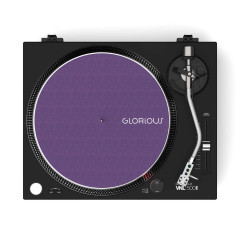

Last In: vor 3 Jahren
Lykke Li - EYEYE LP

Lykke Li

EYEYE LP

12inchPIASR1290LP
PLAY IT AGAIN SAM
17.06.2022
  • A1: No Hotel
  • A2: You Didn't Go Away
  • A3: Highway To Yur Heart
  • A4: Happy Hurts
  • B1: Carousel
  • B2: 5D
  • B3: Over
  • B4: U&I

Lykke Li returns with her fifth studio album, ‘EYEYE’.
The LP is an eight-track story about lust, attraction,
attachment and rejection - the landscape of love. The
songs are inhabited by moving images that neither
start nor end. Each film functions as a visual loop,
concise as a haiku, yet continuing in perpetuity. The
result is a somatic, repetitious experience.
Compounding chapters between a dream and reality.
 Lykke Li creates connection with the depth of emotion
in her lyrics and her consistency has made her an
iconic staple in music with a decade spanning career
having created her own lane when it comes to genre
and songwriting.

 In addition to selling out shows across the world, she
has performed on The Late Show with Stephen
Colbert, Conan, Jools Holland, and received praise
from The New York Times, NPR, Pitchfork, The Fader,
Complex, Rolling Stone and more. Last year, Lykke
featured on Mark Ronson’s critically acclaimed single
‘Late Night Feelings’ and joined him for a live
performance on The Tonight Show with Jimmy Fallon.
Outside of music, she starred in the Terrence Malick
film ‘Song to Song’ and also co-founded the female
owned Yola Mezcal brand, which brought the inaugural
all-female music and arts festival Yola Día to Los
Angeles and featured performances from Megan Thee
Stallion, Cat Power, and Courtney Love.

 180g heavyweight black vinyl housed in tip-on outer
sleeve and printed inner.

vorbestellen17.06.2022

erscheint voraussichtlich am 17.06.2022

Anthony Moore - Flying Doesn't Help LP

40-plus years since its original release, the pop-punk-new wave inventions of Anthony
Moore’s ‘Flying Doesn’t Help’ are freshly remastered, blasting the sparkling, angular
sounds into today with perfect vitality.
 After spending the early years of the 1970s making experimental music first as a solo
artist, then with Slapp Happy and Henry Cow, 1976’s ‘OUT’ sessions had reinvigorated
Anthony’s youthful love of the naive pop melodies of pop radio, the undeniable excitement
of songs. While ‘OUT’ ultimately went unreleased at the time, the iconoclasm clouding the
late ’70s air was addictive and transformative for Anthony. England seemed to be roiled
as violently as it had been in counter-cultural days a decade earlier; the UK pop charts
breathlessly reflected the changing spectrum with equal parts aging hippie and prog
delicacies alongside new ascendant sounds: rough-hewn pub and punk rock, plus dub
reggae and disco and ska and Stiff and Krautrock. This proved to be an ideal environment
for Anthony to make records by exploring, as he puts it, the “deep connection between
minimalism, repetition, working with tape and celluloid and forming the modules of a
three-minute pop song.”
 Caught up in a no-holds-barred era, Anthony was more than happy to play the out-of-hishead madman, raving through outrageous exchanges with the press, while ‘Judy Get
Down’ received Single Of The Week honours from the NME (with review penned by Brian
Eno). Represented by Blackhill Enterprises, Anthony did production work throughout
1978-1979, on Kevin Ayers’ ‘Rainbow Takeaway’, Manfred Mann’s Earth Band’s ‘Angel
Station’ and the first This Heat album, meanwhile cutting his own songs on a dead time
deal at Workhouse Studio with engineer / producer Laurie Latham. Through the wee
hours of countless nights, the two pieced together ‘Flying Doesn’t Help’, with a little help
from friends (an inspired bunch, including Bob Shilling, Charles Hayward, Chris Slade,
Robert Vogel, Festus, Matt Irving, Sam Harley, Bernie Clark, Edwin Cross and Martine
Moore on the telephone).
 Building upon the axis of pop and experimental impulses that distinguished ‘OUT’, and
informed further by the raw sensibilities exploding everywhere, ‘Flying Doesn’t Help’
blasts out of the speakers with its own unique blend of sophistication and aggression,
Anthony’s keyboard flashes between arpeggiations and outright stabs among the noise of
slicing guitars, funk basslines and the reverbed blare of the drumkit. Opening with
Anthony’s greatest hit, ‘Judy Get Down’, and containing a noise-laden remake of the
Slapp Happy/Henry Cow number, ‘War’, among other delightful sweet-and-salty
confections, ‘Flying Doesn’t Help’ never stops moving, fuelled with raw outrage and dark
satirical intent, churning with the energy of next-gen types like Tubeway Army and DEVO,
while shimmering with the elegance of the still-challenging old guard types, like Cale and
Bowie.
 Clearly, ‘Flying Doesn’t Help’ was steeped in the time, and the original release reflected a
deep mistrust of the corporation mindset. Information was a dubious concept, and
connections to any recognizable organization were seen as untrustworthy, so facts like
musician credits were left out of the package, and even Anthony’s name was altered (he
was credited as A. More on the album and Tony More on a single release). The label
name QUANGO was conceptual as well, standing for ‘Quasi Autonomous NonGovernmental Organization’; each record was sealed with red tape that the listener was
required to cut through in order to get to the music. Rather than recreate the conditions of
the original release of ‘Flying Doesn’t Help’, this reissue instead embraces the changed
environment of the current time and place: instead of no credits, now they are complete,
with Anthony’s full name restored and even the artwork subtly ‘relocated’ to reflect a new
set of relationships. All of which brings the forward-looking sounds of ‘Flying Doesn’t Help’
into the more independent-minded 21st Century syntax where it belongs.

vorbestellen10.06.2022

erscheint voraussichtlich am 10.06.2022

Federico Albanese - The Houseboat And The Moonu 2x12"

Federico Albanese is a composer born in Milan, Italy in 1982, and currently based in Berlin. His musical versatility is a natural gift that pushes him to explore music in all its facets. Albanese's compositions are airy and cinematic, blending classical music, electronics and psychedelia. Federico started studying piano and clarinet as a child before becoming fascinated by rock music. As a teenager he studied bass and became a self-taught guitarist and soon became one of the leading figures of Milan's underground scene, performing in several bands. Influenced by black music, folk, electronic, modern and contemporary classical music his skills as a composer soon emerged, He worked for 5 years as prop man in several film sets. This experience made him understand the power of the connection between music and images and helped him to develop his personal musical path. In 2007 Albanese met singer and songwriter Jessica Einaudi and together they founded the avant-garde duo ""La Blanche Alchimie"". Composing songs with Jessica he rediscovered his love for the piano, which from that moment on, became his main instrument. Since then Federico has scored several films, short films and documentaries, including a documentary on a project commissioned by Ermenegildo Zegna in the National Museum of XXI Century Arts in Rome. In February 2014, Federico Albanese will release his debut album entitled ""The Houseboat and the Moon"". He found a place, an imaginary place, where, whenever he wanted to, he could jump on and just float away. On this moving shelter, traveling across memories and imagination, lulled by water and led by the moon, Federico wrote the 13 compositions of his debut. He recorded all of the piano parts with a 1969 German tape recorder, the Uher Royal Deluxe, which allowed him to catch all of the tiny hidden shades, the imperfections, the noises of the piano and its surrounding space. Federico melts this rarefied sound with electronics, live recordings, strings, and homemade instruments. The result is a combination of contrasts and colors with a variety of atmospheres that wonderfully represents Federico's musical universe. Vinyl: thick gatefold covers, 180g vinyl,free download.

nicht am Lager

Bestelle jetzt und wir bestellen den Artikel für dich beim Lieferanten.


Last In: vor 75 Tagen
MOON SHADOW / MOON LIGHT - BASSFORT (10th ANNIVERSARY MIXES)

From the very beginning in 2011 the concept was simple and crystal clear.

Mad Mats & Tooli's new label Local Talk had two main focus points.
First, the actual music was to be inspired around those magical 4/4 house rhythms...and beyond.

Second, the logo! The idea was that a simple and direct visual point together with a strong dance MUSIC message would make the label stand out among other labels in their northern neck of the woods.
In Scandinavia, the main theme is electronic 4/4 rhythms (techno, tech-house etc) and with Local Talk being more inspired by black dance music this has made them the black sheep in the hometown of Stockholm.

To set the musical direction straight from the very start they released Bassfort's 'Moon Shadow' which got instant attraction from both house heads and the more open-minded clubbing community.
With its warm, melodic chords, infectious piano theme and big strings it's always been the label's fave jam from their now +150(ish) releases.
When they decided to choose a track that would define the label for their 10-year anniversary, the choice was simple.

Mats & Tooli thought long and hard about who they wanted to interpret 'Moon Shadow' and after months of discussing options they decided that the only one they could trust to give the track a quality boost was NYC legend Joe Claussell.
Back in the late 90's, Mats used to book Joe for his legendary Raw Fusion parties in Stockholm so the connection and mutual respect were already in place. The result is a +11 minute long musical house journey that builds and builds until those characteristic piano chords make an entrance and transform the dynamics into a rainbow of sounds. Epic is not a word big enough to explain this grand musical production !

But the goodness does not end there, we're only halfway in on this anniversary release. The blood brothers Javi & Luis aka Kyodai (and 2/3 of Bassfort) made their own mix on the B side track from the original release, Moonlight.
As schooled jazz musicians they diverted from the electronic soundscape and went for a live jazz-funk production.
The final product is a warm and musical version with live drums, bass, piano, strings and even vocals from the brothers themselves.
The track almost comes across as something 4 Hero would put out back in the day.

All we can say, enjoy the dance!

nicht am Lager

Bestelle jetzt und wir bestellen den Artikel für dich beim Lieferanten.


Last In: vor 20 Monaten
Artikel pro Seite:
N/ABPM
Vinyl

