quête:big dese

Genres
Tout
STÖNER - BOOGIE TO BAJA

"During the recording of TOTALLY, we were having a blast and the music just kept rollin' out so we decided to also put together a tasty EP. Guests Mario Lalli on STÖNER Theme and Greg Hetson of Circle Jerks and Bad Religion on our version of the Motorhead/Pink Fairies classic City Kids makes this EP extra sweet. Jump in and let's BOOGIE TO BAJA! If the name Stöner seems a little on the nose, well_ it is. Brant Bjork and Nick Oliveri, founding members of the stoner rock legend Kyuss, are joined again by drummer Ryan Güt (of Bjork's solo band) and they've got dibs on the thick and dusty swinging grooves, returning as Stöner with their sophomore release "totally_" Stöner's love for their early inspirations (bands like Blue Oyster Cult, Kiss, Ramones, Blue Cheer, Misfits, Black Flag, The Stooges, MC5) result in big, groovy, sunbaked riffs that can cruise low and slow but then floor it and run all the red lights. Live, this is a band about the magnetism between the players, the groove, the loose vibe and straight up badass rock and roll_ Stöner are masters of their trade. With "totally..." Stöner is in its true form, getting together and having fun. Stöner's world is a colorful joyride, heavy of rock but not of head. The record cranks with vibes of classic hard rock, heavy blues, desert rock and psych rock jams - things that come organically to this trio Stöner can't help but express an abundance of punk rock rawness and passion for real rock and roll swagger. With two records, "Live at Mojave" and "Stoners Rule" (available on Heavy Psych Sounds), the latest release "totally..." sees the band realizing the chemistry of these old friends developing a statement of pure rock and roll fun.

pré-commande24.02.2023

il devrait être publié sur 24.02.2023


Last In: 2026 years ago
STÖNER - BOOGIE TO BAJA

Stöner

BOOGIE TO BAJA

12inchHPS249LPLT
HEAVY PSYCH SOUNDS
24.02.2023

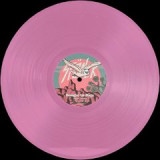
LTD Violet Vinyl

"During the recording of TOTALLY, we were having a blast and the music just kept rollin' out so we decided to also put together a tasty EP. Guests Mario Lalli on STÖNER Theme and Greg Hetson of Circle Jerks and Bad Religion on our version of the Motorhead/Pink Fairies classic City Kids makes this EP extra sweet. Jump in and let's BOOGIE TO BAJA! If the name Stöner seems a little on the nose, well_ it is. Brant Bjork and Nick Oliveri, founding members of the stoner rock legend Kyuss, are joined again by drummer Ryan Güt (of Bjork's solo band) and they've got dibs on the thick and dusty swinging grooves, returning as Stöner with their sophomore release "totally_" Stöner's love for their early inspirations (bands like Blue Oyster Cult, Kiss, Ramones, Blue Cheer, Misfits, Black Flag, The Stooges, MC5) result in big, groovy, sunbaked riffs that can cruise low and slow but then floor it and run all the red lights. Live, this is a band about the magnetism between the players, the groove, the loose vibe and straight up badass rock and roll_ Stöner are masters of their trade. With "totally..." Stöner is in its true form, getting together and having fun. Stöner's world is a colorful joyride, heavy of rock but not of head. The record cranks with vibes of classic hard rock, heavy blues, desert rock and psych rock jams - things that come organically to this trio Stöner can't help but express an abundance of punk rock rawness and passion for real rock and roll swagger. With two records, "Live at Mojave" and "Stoners Rule" (available on Heavy Psych Sounds), the latest release "totally..." sees the band realizing the chemistry of these old friends developing a statement of pure rock and roll fun.

pré-commande24.02.2023

il devrait être publié sur 24.02.2023


Last In: 2026 years ago
STÖNER - BOOGIE TO BAJA

Stöner

BOOGIE TO BAJA

12inchHPSULTD249
HEAVY PSYCH SOUNDS
24.02.2023

Violet Vinyl

"During the recording of TOTALLY, we were having a blast and the music just kept rollin' out so we decided to also put together a tasty EP. Guests Mario Lalli on STÖNER Theme and Greg Hetson of Circle Jerks and Bad Religion on our version of the Motorhead/Pink Fairies classic City Kids makes this EP extra sweet. Jump in and let's BOOGIE TO BAJA! If the name Stöner seems a little on the nose, well_ it is. Brant Bjork and Nick Oliveri, founding members of the stoner rock legend Kyuss, are joined again by drummer Ryan Güt (of Bjork's solo band) and they've got dibs on the thick and dusty swinging grooves, returning as Stöner with their sophomore release "totally_" Stöner's love for their early inspirations (bands like Blue Oyster Cult, Kiss, Ramones, Blue Cheer, Misfits, Black Flag, The Stooges, MC5) result in big, groovy, sunbaked riffs that can cruise low and slow but then floor it and run all the red lights. Live, this is a band about the magnetism between the players, the groove, the loose vibe and straight up badass rock and roll_ Stöner are masters of their trade. With "totally..." Stöner is in its true form, getting together and having fun. Stöner's world is a colorful joyride, heavy of rock but not of head. The record cranks with vibes of classic hard rock, heavy blues, desert rock and psych rock jams - things that come organically to this trio Stöner can't help but express an abundance of punk rock rawness and passion for real rock and roll swagger. With two records, "Live at Mojave" and "Stoners Rule" (available on Heavy Psych Sounds), the latest release "totally..." sees the band realizing the chemistry of these old friends developing a statement of pure rock and roll fun.

pas en stock

Commandez maintenant et nous commanderons l'article pour vous chez notre fournisseur.


Last In: 3 years ago
Sound Of Smoke - Phases (Ltd. 180g Pink Marble LP)

Sound Of Smoke sind eine vierköpfige Psychedelic Soul- & Bluesrock Band aus Freiburg mit einem ordentlichen Vintagevibe. Die Bandmitgliedern um Frontfrau Isabelle Bapté schaffen es mit einem Mix aus Blues, Soul und Stonerrock auf eine Reise durch die Zeit mit zu nehmen, als Klänge a la Jefferson Airplane, Black Sabbath und Led Zeppelin in Ihren Bann zogen. Mit "Phases" veröffentlicht das Freiburger Psychedelic-, Soul- & Bluesrock Quartett kaum ein Jahr nach der Platte "Tales" ihre zweites Album über Tonzonen Records. In zahlreichen psychedelischen Jamsessions entstanden elf neue Songs, welche man im legendären Big Snuff Studio in Berlin aufnahm. Das Album wurde in einer 10-tägigen Session komplett analog mit der Technik aus den 60er & 70er Jahren auf Tonband von Szenen-Ikone Richard Behrens (Kadaver, Elder, Odd Couple, All Them Witches uvm.) aufgenommen. "Phases" überzeugt mit eingängigen Bluesrockriffs, orientalische Klängen, bis hin zu schwebenden, sphärischen Klangwelten aber auch Krautrock. Das Leitmotiv bleibt jedoch Isabelle Baptés versiertes Flötenspiel und ihre warme, individuelle Stimme, welche Grace Slick wieder aufleben lässt. Florian Kiefer, welcher den Titel "Reincarnation of Lemmy Kilmister" mit seinem markanten, grollendem Basssound (und Backenbart) für sich beansprucht, bildet mit Johannes Braunstein ein groovendes Fundament im Stile von John Bonham. Getreu dem Motto "Im just tryin to write the best guitar riff in history" wie schon einst Jimmy Page oder Richie Blackmore und einem Faible für Wildwestromantik, trägt Jens Stöver letztlich das gewisse Etwas zum "Sound Of Smoke" bei. Veredelt wurde "PHASES" danach noch mit Orgel- und Synthoverdubs von Isabelle und Florian. Sound Of Smoke freuen sich mit " Phases" ihr anspruchsvollstes Album einem großen Publikum präsentieren zu können.

pré-commande24.02.2023

il devrait être publié sur 24.02.2023


Last In: 2026 years ago
Various - Praise Poems, Vol. 9

After 6 years and 7 volumes, the Tramp Records crew invites you to join them on yet another enlightening journey into soulful Jazz, Folk and Funk from the 1970s.

This 8th volume contains nineteen Jazz, Soul and Folk nuggets from between the late 1960s and the late 1970s. One of the many highlights is the opening track by Bobby Cole which is most likely one of the finest independently produced vocal jazz recordings ever put on wax. So true. Oscar Brown Jr. and Mark Murphy sends its regards. But that's just the beginning. Praise Poems Vol.8 covers a wide selection of genres, from big band jazz (Helmut Pistor's Big Rock Jazz Band and Germany's own Ladykiller) to psych-pop (Portraits in Sound, Harve and Charee and Allison & Shaffer), from folk-rock (Flash, Garndarf and the incredible Fang Buzbee) to AOR (The Menagerie and Penn Central), completing the set with a handful of melancholic folk beauties, most notably Hans Hass Jr.'s mind-blowing "Welche Farbe hat der Wind".

Very few compilation series' release as many as eight volumes and those that get that far often start to run out of quality music or meander too far from their original artistic direction. That certainly is not the case with the "Praise Poems" series which leaps from strength-to-strength as our team of compilers and researchers continue to unearth lost and often overlooked music from an era long gone. Many of these records were released in small quantities as private pressings or by small regional labels. Obviously, those labels neither had the budget, expertise, nor options to promote their releases in a sweeping way. Therefore the majority of these artists failed to find the wider audience their music so richly deserved.

pas en stock

Commandez maintenant et nous commanderons l'article pour vous chez notre fournisseur.


Last In: 3 years ago
RED D PRESENTS: RED BASICS - FANTASIZE THEN REALIZE LP 2x12"

Some 30 years after first putting on a slab of vinyl in front of an audience Belgian DJ mainstay Red D presents his debut album called ‘Fantasize Then Realize’ under his Red Basics guise. An experienced and versatile DJ if ever there is one, it was logical that his album takes in a wealth of influences from around the house and techno block and features some of his best musical friends and inspirations. From his ‘go to’ singer Lady Linn, to his musical friend and partner in FCL San Soda via Belgian stronghold Lefto, to his Detroit buddy Reggie Dokes: these are the people Red D has been working with and learning from for years on end.

The music ranges from the dreamy beatless title track to the sleazy spoken word ‘Just Like Hercules’ up to the Larry Heard-inspired deepness ‘Compelled’ and including the melancholy of ‘The Larkin’.

Locked down during the first months of the Covid 19 madness Red D had no more ‘I’m too busy to get into the studio’ excuses and all the inspiration gathered during the countless hours of DJ’ing and listening to records in the last 30 years simply poured out. Making track after track was daily (and nightly) business and after a while the idea of a full album simply came naturally. The next lockdowns were spent fine-tuning the tracks, coming up with lyrics and finalizing the tracklist.

The result is ‘Fantasize Then Realize’, Red D’s debut album and a testament to his sound and attitude.


DJ FEEDBACK:

Mousse T:”22 Shoulders, hell yeah!”
Laurent Garnier: “Thanks a lot for these tracks. There’s some lovelyyyyyyy deeeeeepness in there. Love it.”
Levon Vincent: “I gave the LP a listen, nice one! I thought ‘Devious Monday’ was captivating and I liked the work with Classy Lassy as well. Congrats!”
Ka§par:"When a guys knows what he's doing, it sounds like it's real. Great tracks, loving it more and more the further we go."
Roberto Rodriguez: "Classy album! Red D quality!"
Nacho Marco: "Loving it, hard to pick a favorite. Thanks!!"
Kong: "Big up Bart, well done. Belgium = house = Red D!!"
Melon: "House music represent! Love it, feel it & gonna drop it. Great stuff :)"
Simon Caldwell: "Some really special house music on this album. Many thanks!!"
OOFT!: "Yes! This sounds amazing! Authentic underground house music just the way I like it :)"
Massimiliano Pagliara: "Nice tunes!"
Tomaz: "We all knew Bart knows where it's at but this is ridiculously good. Hard to pick a fave. The collabs are great, so are the ‘solo’ tracks. I picked the single with Lien as fave because that'll hopefully draw the deserved attention to the rest of the album. Top marks !"
Juliano: "Congrats for your album Bart ! love the deepness of the tracks and the authenticity you brought. Thank you"
Harri: "Liking these a lot, will play and support."
Alex Barck: "That's a great piece of work"
Quintessentials: "All around fantastic album! Congrats!"
Lauer: "Respect, amigo!"
Darko Esser: "Beautiful album, congrats mate great work!"

pas en stock

Commandez maintenant et nous commanderons l'article pour vous chez notre fournisseur.


Last In: 2 years ago
Bonecarver - Carnage Funeral

The sophomore album from the Spanish Deathcore group BONECARVER. Previously known as CANNIBAL GRANDPA and now one of the biggest metal bands in Spain. For fans of Lorna Shore, Within Destruction, Ov Sulfur

pré-commande27.01.2023

il devrait être publié sur 27.01.2023


Last In: 2026 years ago
Pete Molinari - Just Like Achilles

PETE MOLINARI is a country blues singer, songwriter from the Medway Delta. He was born into a large Maltese/ Italian/ Egyptian family in Chatham, Kent, where he was discovered by Billy Childish.
He’s got five critically-acclaimed albums’ worth of timeless folk, blues, rock and alt- country songs to his credit, plus a bunch more EPs.

THIS IS THE FIRST PHYSICAL RELEASE OF ALBUM ONLY RELEASED DIGITALLY IN 2020 DURING THE PANDEMIC…AVAILABLE ON BLACK VINYL AND INDIES-ONLY PALE BLUE VINYL (NON-RETURNABLE) WITH NEW ARTWORK.

Just Like Achilles is the distillation of everything Pete has learned since those years on the road as a travelling troubadour, playing tiny theatres and coffee houses everywhere from London, to New York, Paris to Nashville and around the world, eventually taking him to the most celebrated venues such as The Royal Albert Hall, The Royal Festival Hall, Carnegie Hall and Radio City Music Hall.

Just Like Achilles brims with big songs and huge choruses. After a first listen, it’s like you’ve known and loved this record forever. Although surprising for some who think he is the lone songwriter with his guitar, Pete is a big fan of Pop. Yes, somewhat of a dirty word today, but it is that timeless and well-crafted pop that created so many hit songs in the past that we still adore today.

Pete’s songs always cut straight to the heart of the matter. No fat, no artifice, no histrionics. The sound is real. Live. Real people playing real instruments. Front and center are Pete’s own majestic guitar chops and unique, soulful voice. Even on Achilles’ sadder songs, there’s a buoyancy and potency to them, an infectious effervescence that imbues life is for living, and it is that loving of life that we find celebrated in every song, arrangement and composition.

To coincide with Just Like Achilles highly anticipated release, Linda Perry organized an extraordinary event. She booked out the legendary Capitol Records’ Studio A and hit her contacts list to pull together a supergroup to join Pete in performing his new songs live in the studio. It included legends Ronnie Spector and Don Was, plus Mike Garson and Gail Ann Dorsey from the David Bowie band. Evan Rachel Wood also came along to sing on a couple of songs, while Jakob Dylan duetted with Pete on a very special version of “Waiting For A Train”.

So, everything was ready to go, ready for release. This was the beginning of 2020. And then .... well, as we all know, everything stopped. Now, two more years on, this is Take Two: Just Like Achilles is finally set to receive the release it always deserved.

pré-commande13.01.2023

il devrait être publié sur 13.01.2023


Last In: 2026 years ago
Pete Molinari - Just Like Achilles

Blue Vinyl

PETE MOLINARI is a country blues singer, songwriter from the Medway Delta. He was born into a large Maltese/ Italian/ Egyptian family in Chatham, Kent, where he was discovered by Billy Childish.
He’s got five critically-acclaimed albums’ worth of timeless folk, blues, rock and alt- country songs to his credit, plus a bunch more EPs.

THIS IS THE FIRST PHYSICAL RELEASE OF ALBUM ONLY RELEASED DIGITALLY IN 2020 DURING THE PANDEMIC…AVAILABLE ON BLACK VINYL AND INDIES-ONLY PALE BLUE VINYL (NON-RETURNABLE) WITH NEW ARTWORK.

Just Like Achilles is the distillation of everything Pete has learned since those years on the road as a travelling troubadour, playing tiny theatres and coffee houses everywhere from London, to New York, Paris to Nashville and around the world, eventually taking him to the most celebrated venues such as The Royal Albert Hall, The Royal Festival Hall, Carnegie Hall and Radio City Music Hall.

Just Like Achilles brims with big songs and huge choruses. After a first listen, it’s like you’ve known and loved this record forever. Although surprising for some who think he is the lone songwriter with his guitar, Pete is a big fan of Pop. Yes, somewhat of a dirty word today, but it is that timeless and well-crafted pop that created so many hit songs in the past that we still adore today.

Pete’s songs always cut straight to the heart of the matter. No fat, no artifice, no histrionics. The sound is real. Live. Real people playing real instruments. Front and center are Pete’s own majestic guitar chops and unique, soulful voice. Even on Achilles’ sadder songs, there’s a buoyancy and potency to them, an infectious effervescence that imbues life is for living, and it is that loving of life that we find celebrated in every song, arrangement and composition.

To coincide with Just Like Achilles highly anticipated release, Linda Perry organized an extraordinary event. She booked out the legendary Capitol Records’ Studio A and hit her contacts list to pull together a supergroup to join Pete in performing his new songs live in the studio. It included legends Ronnie Spector and Don Was, plus Mike Garson and Gail Ann Dorsey from the David Bowie band. Evan Rachel Wood also came along to sing on a couple of songs, while Jakob Dylan duetted with Pete on a very special version of “Waiting For A Train”.

So, everything was ready to go, ready for release. This was the beginning of 2020. And then .... well, as we all know, everything stopped. Now, two more years on, this is Take Two: Just Like Achilles is finally set to receive the release it always deserved.

pré-commande13.01.2023

il devrait être publié sur 13.01.2023


Last In: 2026 years ago
A Blaze Colour - Against The Dark Trees Beyond

The Belgian minimal synth band's three releases – a cassette and two vinyl EPs – were all titled »Against The Dark Trees Beyond«. This compilation collects the songs from these records.

"They were interesting times, the early eighties. Against a backdrop of cold war and economic crises, the DIY attitude of the earlier punk movement had spawned near countless new genres where artists and bands broke the three-chord guitar mould and experimented with new content matter, singular song structures and – in many cases – new instruments. Synthesizers became affordable and were no longer the sole privilege of rock millionaires. All around the globe, musical creativity boomed as never before, and Belgium was no exception: Digital Dance, Snowy Red, The Names, Pseudocode, Marine, 1000 Ohm, De Kommeniste, M.Bryo & D.M.T., De Brassers, Struggler, Siglo XX are but a few legendary names of bands and artists who started making a name for themselves.

In Leuven, things were happening as well. Until then, the music scene in this rather provincial town had been dominated by straightforward rock and blues acts. Not for much longer, though: in places like Arno'z and (later) The Gladhouse, where young budding artists met with kindred spirits, bands were often formed on the spot and, more importantly, started to make ripples.

Ludo Camberlin and Karel 'Bam' Saelemaekers already had a certain track record in Leuven's burgeoning music microcosm. But what they shared would become the cornerstone of A Blaze Colour (Against The Dark Trees Beyond): a fascination for new forms and instruments, a penchant for sonic adventure and a profound love for gripping songs. The full band name, by the way, was inspired by a phrase from the Irish-American novelist J.P. Donleavy, a writer who belongs in the definitely-worth-checking-out section.

After appearing on the first No Big Business LP (1981) with the instrumental 'Fisk', A Blaze Colour's first proper release, as was so often the case in those days, was a self-produced cassette. The music – which would later be dubbed 'minimal' – was characterized by the use of basic rhythm machines (Boss Dr. 55, mainly) and analog synthesizers (for the synth geeks: Korg Delta and MS20, Roland SH-2 and Jupiter IV, and the infamous Casio VL-1). Camberlin’s vocals, meanwhile, displayed an aloofness totally in sync with the zeitgeist. Equally important, though: all five tracks on this cassette were bona fide songs with a clear sense of structure, aided by a sonic mastery that demonstrated a high level of experience: 'Means To An End' started out as a proto-industrial track before bursting out into a moroderesque finale. The remix of 'Fisk' was as sprightly as the next river salmon, while 'Or Lie Again' proved the perfect soundtrack to a nightly walk through wet deserted streets. On the other hand, 'Through With Life', rife with disturbing sound effects countered by a slow portamento, could have been a prize track on a post punk 'Lamb Lies Down On Broadway'. And in true dramatic fashion, 'Follow The Signs' was the perfect ending of this five-song cycle: a driving sequencer and gripping chord progression coupled with a simple but powerful vocal line. Considering the limited technical means the duo was working with, this was no less than a triumph.

A few months later, the band released a seven-inch single on its own ABLACO label. 'Dark Trees Beyond', a quirky pop song, was coupled with 'Addict Of Time', a dark and brooding spoken word piece. Not the kind of single to storm hit parades, but it didn't go unnoticed. The Minny Pops' Wally van Middendorp, who had founded the Plurex label in 1978, invited A Blaze Colour to his studio in the Netherlands, to record an EP. It would prove to be a massive step forward: recording in a semi-professional studio offered great possibilities, the recently acquired TR-808 drum machine allowed for a broader rhythm palette, and the three new tracks (next to the re-recording of 'Through With Life') showed a band on the top of their game: 'The New Ones' was a wry and haunting song built around a live drum loop and an ominous bass pattern, while 'Nowhere Else' was a near-pop track with very un-minimal vocal harmonies. And it's a mystery why 'Altitude' – another instrumental – was never used in a stylized, high-profile detective soundtrack.

Another song from these sessions, the revved-up 'Cold As Ever' turned up on the high-profile Plurex "Hours" compilation, where it shone brightly, next to songs of a.o. X-Mal Deutschland, Nasmak, Minny Pops and Section XXV.

Meanwhile, Camberlin had already carved out a bit of a reputation for himself as a producer, while Saelemaekers was a respected graphic designer. It remains uncertain if this played a big part in the end of A Blaze Colour, but the fact remains: as studio recordings go, 'The Ultimate Fight' on the "No Big Business 2" compilation, was to be their swan song. What a way to go, though: maybe their best song ever, this was a synthetic bastard funk groove, complete with shout-out chorus and punch-drunk middle-eight. It shut a door, for sure, but it did so with a resounding bang.

So there it is and there it was. Short, sweet, visionary, pioneering and highly influential. And as anybody listening to this first ever compilation will be able to assess probably one of the most colourful electronic acts of its time.

On a more a personal note, A Blaze Colour proved to be instrumental in my own coming of age as a lyric writer, when Ludo and Bam graciously adopted some of my earlier writings, warts and all. To hear them translated into songs was no less than magic, and it certainly gave me the confidence to start our own band a bit later. And the magic continued when Ludo became our producer and Bam designed our record sleeves. But that’s another story, obviously. Because this is the place and the time to dive back into the wondrous world of A Blaze Colour!"

Bart Azijn (Aimless Device)

pas en stock

Commandez maintenant et nous commanderons l'article pour vous chez notre fournisseur.


Last In: 3 years ago
Redge - Dancing Robot Ep

Redge

Dancing Robot Ep

12inchTEKNOLAND01
Teknoland Production
12.12.2022

This is Freebreak : an alliance between tribe datas and the break free spirit... Heard that long time ago on the Strange breaks from the Spiral tribe, anbd after ward with Kamehouse (Capsule) and after again with Cycloscotsch (Hokus pokus), or Rislo (Triphase)... This long tradition of beautiful « hard to sell records » leaded to some really nice mixes... and a sweet dance in parties.. Hopefully this record reaches his public because it's quiet courageous and deserve a true audience. Big up to all Freebreas makerz !

pas en stock

Commandez maintenant et nous commanderons l'article pour vous chez notre fournisseur.


Last In: 3 years ago
Yleiset Syyt - Toisten Todellisuus

“Toisten Todellisuus” compiles two 7”s by Helsinki, Finland’s YLEISET SYYT: their self-titled EP, originally released in 2019, and 2021’s “Umpikujamekanismi”. Despite members playing in well-known underground Finnish bands like KOHTI TUHOA and FORESEEN, YLEISET SYYT has flown under the radar in the Anglophone world, with only a small fraction of their records’ tiny pressings making it outside Finland. Fortunately for you, the hardcore fanatics at Sorry State and La Vida Es Un Mus have our ears to the ground, and we agreed that a band this killer deserves a much wider audience. YLEISET SYYT’s sound is both blistering and anthemic, moving nimbly from full-throttle rippers like “Hygieeninen Ruumis” to tracks like “Hyväntekijä” and “Luovan Keskiluokan Takapihalla,” whose big chorus hooks could have anchored a Riot City or No Future A-side. The combination of ferocious performances and songwriting chops might remind you of older Finnish bands like LAMA, MELLAKKA, and APPENDIX, but MINOR THREAT, THE FIX, and NECROS are equally apt comparisons. If you like your early 80s-style hardcore tightly-wound, razor-sharp, and bristling with hooks, you’re gonna love “Toisten Todellisuus” as much as we do (Daniel Lupton) Side A recorded in Helsinki, February 2019. Side B recorded in Helsinki, March 2021. Recorded, mixed and mastered by Ville Valavuo. Artwork by Fetal Brain. Genre: Alternative / Punk

pré-commande25.11.2022

il devrait être publié sur 25.11.2022


Last In: 2026 years ago
Sea Moss - SEAMOSS2

Sea Moss

SEAMOSS2

12inchLPRL65
Ramp Local
31.10.2022

Hitting play on SEAMOSS2, the latest missive from Portland noisetinkerers Sea Moss, is like punching the big red button on a cartoon
bomb before it explodes into a multicolored mushroom cloud
From the second Nap Time revs up, vocalist Noa Ver and drummer Zach
D'Agostino absolutely clobber the listener with a distorted hodgepodge of sounds
as raw and violent as they are winkingly playful, as if Black Dice and Melt-Banana
were caught in the middle of some kind of psychotic square dance together.The
duo's setup "which involves a primitive assemblage of hacked feedback
oscillators, colorful Rococo tin boxes, and a contact mic plugged directly onto
Ver's neck to capture her barking intonations " harkens back to an era of DIY
where live performance meant everything. Blurring the line between reckless
improvisation and tightly- knit compositions, the band achieves a disorientingly
complex interplay. Though Sea Moss's music may initially seem to be an act of
pure blunt force, the duo's true prowess lies in the intricacy of their rhythmic
interplay. As freeform as it all might seem, SEAMOSS2 contains the band's most
potent, precise compositions yet, refining the distinct style they forged on
disorienting releases like Bread Bored and Bidet Dreaming into a thrilling act of
controlled chaos.
In an era where the communal spirit of DIY feels more difficult to achieve than
ever, Sea Moss embody the classic ethos of weirdo punk music in all its absurdity
and wonder. It's this same sense of scrappiness that's earned them attention
from legends like Lightning Bolt and Machine Girl, and SEAMOSS2 illustrates why
they're every bit as deserving of their own trophy in the noise-rock hall of fame
one adorned in broken contact mics and scuffed-up scratches from one too many
bloody basement shows.

pré-commande31.10.2022

il devrait être publié sur 31.10.2022


Last In: 2026 years ago
Elektro Nova - Elektro Nova 2x12"

Like a rediscovered Viking burial ship, Electro Nova compiles near-mythical drone recordings produced in 1998 and described by Helge Sten aka Deathprod as some of the most important music to ever come out of Norway. It's the work of Kåre Dehlie Thorstad and compiles two of the earliest releases on Smalltown Supersound, back when it was basically no more than a bedroom operation. It’s taken over two decades, but finally the label have given the material a first ever proper release on vinyl, complete with mixing and mastering by Deathprod. If you’re into the ice cold swells of anyone from Thomas Köner to Harley Gaber, Biosphere, Kali Malone or, of course, Deathprod - this one's as essential as they come.

Kaare Dehlie Thorstad's Elektro Nova produced just two releases during the late ‘90s that have since slipped into drone lore - Trans-Inter-Ference and Elektro Nova/Electro Nova. Admired not only by Deathprod and Joakim Haugland of Smalltown, but also by his contemporaries Lasse Marhaug and Biosphere, his work has evaded pretty much any attention outside of Norway these last two decades. Following a chance meeting with Thorstad at Oslo airport a few years back, Smalltown were prompted to give the recordings a second wind, presenting what is essentially a captivating new release, and crucial addition to the Norsk drone canon.

As the story goes, Thorstad was studying photography in the late 90’s in Scotland, but instead of delivering a photo for his final exam he made a record - a double album (2CDs) and a 10” to be precise. That should provide some idea of the textural synaesthetic and landscaping qualities evoked by his music, which he ended up sending to a then-young Smalltown label, who were mostly issuing tapes at the time. With no proper distribution the records largely bypassed wider attention, and become a personal favourite of Smalltown’s Joakim Haugland, as well as avowed fan Helge Sten (Deathprod), who helped render its diaphanous scale in mix down, and Lasse Marhaug who describes them as "two perfect records that deserved much bigger attention”.

Between its jaw-dropping opener; the post-apocalyptic vision of its untitled part; and the cinematic white-out of the 10” tracks; Thorstad comes as close as we’ve ever heard to evoking the inhospitable nature and stark beauty of the wild far north. We can hear those landscapes palpably internalised and alchemically transmuted into its coarse grained textural swells and a reverberating multi-dimensionality, variously sustained to extents that evoke an abandonment of the senses, or likewise squashed and isolated to imply the relative anxiety relief of atmospheric flux, where a few degrees temperature rise or a drop in the wind speed can make the difference between life and death.

Impressively, Thorstad realised after the release of Elektro Nova and just two live shows that he couldn’t really follow up the work and instead pursued a career as professional cyclist, eventually combining his visual skills to become a pro cycling photographer. In that sense, he’s a bit like composer-turned-tennis coach Harley Gaber, whose almighty ‘The Winds Rise In The North’ (1976) is in some ways richly prescient of this work. Like Gaber, Thorstad can remain safe in the knowledge that his contribution to the drone sphere will endure for the ages, especially with this important, impressive new edition.

pas en stock

Commandez maintenant et nous commanderons l'article pour vous chez notre fournisseur.


Last In: 3 years ago
Lee Tracy & Isaac Manning - Is it What You Want

As the sun sets on a quaint East Nashville house, a young man bares a piece of his soul. Facing the camera, sporting a silky suit jacket/shirt/slacks/fingerless gloves ensemble that announces "singer" before he's even opened his mouth, Lee Tracy Johnson settles onto his stage, the front yard. He sways to the dirge-like drum machine pulse of a synth-soaked slow jam, extends his arms as if gaining his balance, and croons in affecting, fragile earnest, "I need your love… oh baby…"

Dogs in the yard next door begin barking. A mysterious cardboard robot figure, beamed in from galaxies unknown and affixed to a tree, is less vocal. Lee doesn't acknowledge either's presence. He's busy feeling it, arms and hands gesticulating. His voice rises in falsetto over the now-quiet dogs, over the ambient noise from the street that seeps into the handheld camcorder's microphone, over the recording of his own voice played back from a boombox off-camera. After six minutes the single, continuous shot ends. In this intimate creative universe there are no re-takes. There are many more music videos to shoot, and as Lee later puts it, "The first time you do it is actually the best. Because you can never get that again. You expressing yourself from within."

"I Need Your Love" dates from a lost heyday. From some time in the '80s or early '90s, when Lee Tracy (as he was known in performance) and his music partner/producer/manager Isaac Manning committed hours upon hours of their sonic and visual ideas to tape. Embracing drum machines and synthesizers – electronics that made their personal futurism palpable – they recorded exclusively at home, live in a room into a simple cassette deck. Soul, funk, electro and new wave informed their songs, yet Lee and Isaac eschewed the confinement of conventional categories and genres, preferring to let experimentation guide them.

"Anytime somebody put out a new record they had the same instruments or the same sound," explains Isaac. "So I basically wanted to find something that's really gonna stand out away from all of the rest of 'em." Their ethos meant that every idea they came up with was at least worth trying: echoed out half-rapped exhortations over frantic techno-style beats, gospel synth soul, modal electro-funk, oddball pop reinterpretations, emo AOR balladry, nods to Prince and the Fat Boys, or arrangements that might collapse mid-song into a mess of arcade game-ish blips before rallying to reach the finish line. All of it conjoined by consistent tape hiss, and most vitally, Lee's chameleonic voice, which managed to wildly shape shift and still evoke something sincere – whether toggling between falsetto and tenor exalting Jesus's return, or punctuating a melismatic romantic adlib with a succinct, "We all know how it feels to be alone."

"People think we went to a studio," says Isaac derisively. "We never went to no studio. We didn't have the money to go to no studio! We did this stuff at home. I shot videos in my front yard with whatever we could to get things together." Sometimes Isaac would just put on an instrumental record, be it "Planet Rock" or "Don't Cry For Me Argentina" (from Evita), press "record," and let Lee improvise over it, yielding peculiar love songs, would-be patriotic anthems, or Elvis Presley or Marilyn Monroe tributes. Technical limitations and a lack of professional polish never dissuaded them. They believed they were onto something.

"That struggle," Isaac says, "made that sound sound good to me."

In the parlance of modern music criticism Lee and Isaac's dizzying DIY efforts would inevitably be described as "outsider." But "outsider" carries the burden of untold additional layers of meaning if you're Black and from the South, creating on a budget, and trying to get someone, anyone within the country music capital of the world to take your vision seriously. "What category should we put it in?" Isaac asks rhetorically. "I don't know. All I know is feeling. I ain't gonna name it nothing. It's music. If it grabs your soul and touch your heart that's what it basically is supposed to do."

=

Born in 1963, the baby boy of nine siblings, Lee Tracy spent his earliest years living amidst the shotgun houses on Nashville's south side. "We was poor, man!" he says, recalling the outhouse his family used for a bathroom and the blocks of ice they kept in the kitchen to chill perishables. "But I actually don't think I really realized I was in poverty until I got grown and started thinking about it." Lee's mom worked at the Holiday Inn; his dad did whatever he had to do, from selling fruit from a horse drawn cart to bootlegging. "We didn't have much," Lee continues, "but my mother and my father got us the things we needed, the clothes on our back." By the end of the decade with the city's urban renewal programs razing entire neighborhoods to accommodate construction of the Interstate, the family moved to Edgehill Projects. Lee remembers music and art as a constant source of inspiration for he and his brothers and sisters – especially after seeing the Jackson 5 perform on Ed Sullivan. "As a small child I just knew that was what I wanted to do."

His older brother Don began musically mentoring him, introducing Lee to a variety of instruments and sounds. "He would never play one particular type of music, like R&B," says Lee. "I was surrounded by jazz, hard rock and roll, easy listening, gospel, reggae, country music; I mean I was a sponge absorbing all of that." Lee taught himself to play drums by beating on cardboard boxes, gaining a rep around the way for his timekeeping, and his singing voice. Emulating his favorites, Earth Wind & Fire and Cameo, he formed groups with other kids with era-evocative band names like Concept and TNT Connection, and emerged as the leader of disciplined rehearsals. "I made them practice," says Lee. "We practiced and practiced and practiced. Because I wanted that perfection." By high school the most accomplished of these bands would take top prize in a prominent local talent show. It was a big moment for Lee, and he felt ready to take things to the next level. But his band-mates had other ideas.

"I don't know what happened," he says, still miffed at the memory. "It must have blew they mind after we won and people started showing notice, because it's like everybody quit! I was like, where the hell did everybody go?" Lee had always made a point of interrogating prospective musicians about their intentions before joining his groups: were they really serious or just looking for a way to pick up girls? Now he understood even more the importance of finding a collaborator just as committed to the music as he was.

=

Isaac Manning had spent much of his life immersed in music and the arts – singing in the church choir with his family on Nashville's north side, writing, painting, dancing, and working various gigs within the entertainment industry. After serving in the armed forces, in the early '70s he ran The Teenage Place, a music and performance venue that catered to the local youth. But he was forced out of town when word of one of his recreational routines created a stir beyond the safe haven of his bohemian circles.

"I was growing marijuana," Isaac explains. "It wasn't no business, I was smoking it myself… I would put marijuana in scrambled eggs, cornbread and stuff." His weed use originated as a form of self-medication to combat severe tooth pain. But when he began sharing it with some of the other young people he hung out with, some of who just so happened to be the kids of Nashville politicians, the cops came calling. "When I got busted," he remembers, "they were talking about how they were gonna get rid of me because they didn't want me saying nothing about they children because of the politics and stuff. So I got my family, took two raggedy cars, and left Nashville and went to Vegas."

Out in the desert, Isaac happened to meet Chubby Checker of "The Twist" fame while the singer was gigging at The Flamingo. Impressed by Isaac's zeal, Checker invited him to go on the road with him as his tour manager/roadie/valet. The experience gave Isaac a window into a part of the entertainment world he'd never encountered – a glimpse of what a true pop act's audience looked like. "Chubby Checker, none of his shows were played for Black folks," he remembers. "All his gigs were done at high-class white people areas." Returning home after a few years with Chubby, Isaac was properly motivated to make it in Music City. He began writing songs and scouting around Nashville for local talent anywhere he could find it with an expressed goal: "Find someone who can deliver your songs the way you want 'em delivered and make people feel what you want them to feel."

One day while walking through Edgehill Projects Isaac heard someone playing the drums in a way that made him stop and take notice. "The music was so tight, just the drums made me feel like, oh I'm-a find this person," he recalls. "So I circled through the projects until I found who it was.

"That's how I met him – Lee Tracy. When I found him and he started singing and stuff, I said, ohhh, this is somebody different."

=

Theirs was a true complementary partnership: young Lee possessed the raw talent, the older Isaac the belief. "He's really the only one besides my brother and my family that really seen the potential in me," says Lee. "He made me see that I could do it."

Isaac long being a night owl, his house also made for a fertile collaborative environment – a space where there always seemed to be a new piece of his visual art on display: paintings, illustrations, and dolls and figures (including an enigmatic cardboard robot). Lee and Issac would hang out together and talk, listen to music, conjure ideas, and smoke the herb Isaac had resumed growing in his yard. "It got to where I could trust him, he could trust me," Isaac says of their bond. They also worked together for hours on drawings, spreading larges rolls of paper on the walls and sketching faces with abstract patterns and imagery: alien-like beings, tri-horned horse heads, inverted Janus-like characters where one visage blurred into the other.

Soon it became apparent that they didn't need other collaborators; self-sufficiency was the natural way forward. At Isaac's behest Lee, already fed up with dealing with band musicians, began playing around with a poly-sonic Yamaha keyboard at the local music store. "It had everything on it – trumpet, bass, drums, organ," remembers Lee. "And that's when I started recording my own stuff."

The technology afforded Lee the flexibility and independence he craved, setting him on a path other bedroom musicians and producers around the world were simultaneously following through the '80s into the early '90s. Saving up money from day jobs, he eventually supplemented the Yamaha Isaac had gotten him with Roland and Casio drum machines and a Moog. Lee was living in an apartment in Hillside at that point caring for his dad, who'd been partially paralyzed since early in life. In the evenings up in his second floor room, the music put him in a zone where he could tune out everything and lose himself in his ideas.

"Oh I loved it," he recalls. "I would really experiment with the instruments and use a lot of different sound effects. I was looking for something nobody else had. I wanted something totally different. And once I found the sound I was looking for, I would just smoke me a good joint and just let it go, hit the record button." More potent a creative stimulant than even Isaac's weed was the holistic flow and spontaneity of recording. Between sessions at Isaac's place and Lee's apartment, their volume of output quickly ballooned.

"We was always recording," says Lee. "That's why we have so much music. Even when I went to Isaac's and we start creating, I get home, my mind is racing, I gotta start creating, creating, creating. I remember there were times when I took a 90-minute tape from front to back and just filled it up."

"We never practiced," says Isaac. "See, that was just so odd about the whole thing. I could relate to him, and tell him about the songs I had ideas for and everything and stuff. And then he would bring it back or whatever, and we'd get together and put it down." Once the taskmaster hell bent on rehearsing, Lee had flipped a full 180. Perfection was no longer an aspiration, but the enemy of inspiration.

"I seen where practicing and practicing got me," says Lee. "A lot of musicians you get to playing and they gotta stop, they have to analyze the music. But while you analyzing you losing a lot of the greatness of what you creating. Stop analyzing what you play, just play! And it'll all take shape."

=

"I hope you understood the beginning of the record because this was invented from a dream I had today… (You tell me, I'll tell you, we'll figure it out together)" – Lee Tracy and Isaac Manning, "Hope You Understand"

Lee lets loose a maniacal cackle when he acknowledges that the material that he and Isaac recorded was by anyone's estimation pretty out there. It's the same laugh that commences "Hope You Understand" – a chaotic transmission that encapsulates the duality at the heart of their music: a stated desire to reach people and a compulsion to go as leftfield as they saw fit.

"We just did it," says Lee. "We cut the music on and cut loose. I don't sit around and write. I do it by listening, get a feeling, play the music, and the lyrics and stuff just come out of me."

The approach proved adaptable to interpreting other artists' material. While recording a cover of Whitney Houston's pop ballad "Saving All My Love For You," Lee played Whitney's version in his headphones as he laid down his own vocals – partially following the lyrics, partially using them as a departure point. The end result is barely recognizable compared with the original, Lee and Isaac having switched up the time signature and reinvented the melody along the way towards morphing a slick mainstream radio standard into something that sounds solely their own.

"I really used that song to get me started," says Lee. "Then I said, well I need something else, something is missing. Something just came over me. That's when I came up with 'Is It What You Want.'"

The song would become the centerpiece of Lee and Isaac's repertoire. Pushed along by a percolating metronomic Rhythm King style beat somewhere between a military march and a samba, "Is It What You Want" finds Lee pleading the sincerity of his commitment to a potential love interest embellished by vocal tics and hiccups subtlely reminiscent of his childhood hero MJ. Absent chord changes, only synth riffs gliding in and out like apparitions, the song achieves a lingering lo-fi power that leaves you feeling like it's still playing, somewhere, even after the fade out.

"I don't know, it's like a real spiritual song," Lee reflects. "But it's not just spiritual. To me the more I listen to it it's like about everything that you do in your everyday life, period. Is it what you want? Do you want a car or you don't want a car? Do you want Jesus or do you want the Devil? It's basically asking you the question. Can't nobody answer the question but you yourself."

In 1989 Lee won a lawsuit stemming from injuries sustained from a fight he'd gotten into. He took part of the settlement money and with Isaac pressed up "Saving All My Love For You" b/w "Is It What You Want" as a 45 single. Isaac christened the label One Chance Records. "Because that's all we wanted," he says with a laugh, "one chance."

Isaac sent the record out to radio stations and major labels, hoping for it to make enough noise to get picked up nationally. But the response he and Lee were hoping for never materialized. According to Isaac the closest the single got to getting played on the radio is when a disk jock from a local station made a highly unusual announcement on air: "The dude said on the radio, 107.5 – 'We are not gonna play 'Is It What You Want.' We cracked up! Wow, that's deep.

"It was a whole racist thing that was going on," he reflects. "So we just looked over and kept on going. That was it. That was about the way it goes… If you were Black and you were living in Nashville and stuff, that's the way you got treated." Isaac already knew as much from all the times he'd brought he and Lee's tapes (even their cache of country music tunes) over to Music Row to try to drum up interest to no avail.

"Isaac, he really worked his ass off," says Lee. "He probably been to every record place down on Music Row." Nashville's famed recording and music business corridor wasn't but a few blocks from where Lee grew up. Close enough, he remembers, for him to ride his bike along its back alleys and stumble upon the occasional random treasure, like a discarded box of harmonicas. Getting in through the front door, however, still felt a world away.

"I just don't think at the time our music fell into a category for them," he concedes. "It was before its time."

=

Lee stopped making music some time in the latter part of the '90s, around the time his mom passed away and life became increasingly tough to manage. "When my mother died I had a nervous breakdown," he says, "So I shut down for a long time. I was in such a sadness frame of mind. That's why nobody seen me. I had just disappeared off the map." He fell out of touch with Isaac, and in an indication of just how bad things had gotten for him, lost track of all the recordings they'd made together. Music became a distant memory.

Fortunately, Isaac kept the faith. In a self-published collection of his poetry – paeans to some of his favorite entertainment and public figures entitled Friends and Dick Clark – he'd written that he believed "music has a life of its own." But his prescience and presence of mind were truly manifested in the fact that he kept an archive of he and Lee's work. As perfectly imperfect as "Is It What You Want" now sounds in a post-Personal Space world, Lee and Isaac's lone official release was in fact just a taste. The bulk of the Is It What You Want album is culled from the pair's essentially unheard home recordings – complete songs, half-realized experiments, Isaac's blue monologues and pronouncements et al – compiled, mixed and programmed in the loose and impulsive creative spirit of their regular get-togethers from decades ago. The rest of us, it seems, may have finally caught up to them.

On the prospect of at long last reaching a wider audience, Isaac says simply, "I been trying for a long time, it feels good." Ever the survivor, he adds, "The only way I know how to make it to the top is to keep climbing. If one leg break on the ladder, hey, you gotta fix it and keep on going… That's where I be at. I'll kill death to make it out there."

For Lee it all feels akin to a personal resurrection: "It's like I was in a tomb and the tomb was opened and I'm back… Man, it feels so great. I feel like I'm gonna jump out of my skin." Success at this stage of his life, he realizes, probably means something different than what it did back when he was singing and dancing in Isaac's front yard. "What I really mean by 'making it,'" he explains isn't just the music being heard but, "the story being told."

Occasionally Lee will pull up "Is It What You Want" on YouTube on his phone, put on his headphones, and listen. He remembers the first time he heard his recorded voice. How surreal it was, how he thought to himself, "Is that really me?" What would he say to that younger version of himself now?

"I would probably tell myself, hang in there, don't give up. Keep striving for the goal. And everything will work out."

Despite what's printed on the record label, sometimes you do get more than one chance.

pas en stock

Commandez maintenant et nous commanderons l'article pour vous chez notre fournisseur.


Last In: 3 years ago
Lightnin' Rod - Hustler’s Convention LP

In 1973, a fast-talking hustler by the name of Sport played a huge part in the birth of Hip-Hop. Brought to life by Lightnin’ Rod a.k.a Jalal of The Last Poets and backed by music from Kool & The Gang, Buddy Miles, Billy Preston and more, ‘Hustlers' Convention’ is a concept album documenting the rise and fall of Sport, a street gambler who ends up in jail after a shoot-out with the police. His street tales of card games, throwing dice and chasing women influenced the Wu Tang Clan, Ice T, Public Enemy, Jungle Brothers and many more while also playing a key role in establishing rap as an accepted modern musical art form. A documentary about the album and its pivotal role in the evolution of hip hop is currently being made. The film features interviews with Chuck D, Melle Mel, KRS One, Fab 5 Freddy and more. This remastered vinyl edition is pressed on 180-gram vinyl and is packaged in a facsimile gatefold sleeve and also reproduces the illustrated inner booklet from original pressings. “this is a masterpiece of jailhouse blues and cinematic street rap... it deserves its growing reputation as a lost classic.” * * * * Uncut “a cornerstone in the development of what is now a part of global culture” Fab 5 Freddy “a verbal bible” Chuck D (Public Enemy)

pré-commande14.10.2022

il devrait être publié sur 14.10.2022


Last In: 2026 years ago
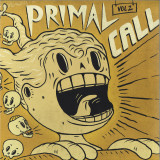
MANDO DIAO - PRIMAL CALL VOL.2

Mando Diao is back on full effect having played all the major rock-festivals across Europe in summer 2022 including Southside and Novarock. Just before the summer-season they rolled out the first in a series of volumes with sizzling hot and high octane ROCK fresh of the studio. Vol 1 produced the radio-success "Frustration" that managed to climb all the way to No 2 at rock-radio in Germany. Now we are happy to announce Vol 2 to drop 23rd of September having parts of the band in Hamburg for an exclusive and personal 20 YEARS OF MANDO DIAO panel during Reeperbahn Festival. The lead-track "Primal Call" is a hippie-like sounding one that draws inspiration from Led Zeppelin and King Crimson, a much punkier version. No logic whatsoever in the changes throughout the track but hey, that's how the band likes it. Full of surprises. As if the producer was a total lunatic out of control. "Fire in the hall" is a short, intense song written by Björn and Jens. Once again, a blend of primitive rock'n'roll feel and electronics. For example, the drums are based on samples of Patso's drumming. The lyrics are simple and almost trivial, with a "La Vida Loca" vibe: start a great fire, for yourself and others. Most things can be solved with a cleansing dance - both in reality and in lyrics. "If you write the lyrics together with someone, it's easier to avoid becoming pretentious and over-analytical," they summarize. Finally, "Charlie", about their current producer (Charlie Storm). One of the greatest there is having worked with so many big releases (Roxette, In Flames, Hurl etc). At least partly. They were excited about him and felt that he deserved a song. Or maybe they didn't have anything else to write about. Everyone had different inputs, but it ended up being a pure rock'n'roll song. And a real banger.

pas en stock

Commandez maintenant et nous commanderons l'article pour vous chez notre fournisseur.


Last In: 3 years ago
Ralph White - Something About Dreaming

Here’s artist Max Kuhn on hearing the new Ralph White recordings for the first time: “I was driving a familiar round trip across the high desert when I first put it on. It immediately spoke to me. In the lyrics there's a familiar geography for me, a familiar emotional landscape for all of us. And maybe it was driving an almost 40 year old truck on sun baked & cracked asphalt in July, but it's like you can hear his songs coming apart- the cadence, the rhymes stumbling & defying expectations, consistency but they just keep moving. You have no choice but to go with it. Probably a good lesson for how to live in this era we're in, cracking up but keeping it all running somehow, trying to make something pretty with the time.” Recorded in Austin, Texas in March of 2020, just days before the city and the rest of the world shut down, Ralph White spent two days with producer, Jerry David DeCicca (Will Beeley, Ed Askew) and recording engineer, Don Cento, capturing a raw and wild set of performances. Ralph, having recently converted his van into a mobile living and touring quarters equipped with a wood-burning stove, left Austin, the city where he was born 70 years ago, and retreated to an Arizona commune where he began building a new house in the desert hills to escape the virus and insanity of daily living. Ralph takes us on a journey through his myriad of travels: from Dock Boggs to Syd Barrett to William Faulkner to Stella Chiweshe to Blind Uncle Gaspard…scratching banjo, rasping train whistle hollers, rolling kalimba, rousing accordion, taut shimmers of guitar, caustic fiddle and lyrics - that could have been hidden amongst the dusty inner groove of a lost Harry Smith 78 - weaving in and out of streams of consciousness, time and place. In addition to his solo work, White has recorded or performed with a diverse group of folk and avant-garde musicians: Thurston Moore of Sonic Youth, Jandek, Jack Rose, Eugene Chadbourne, Michelle Shocked, Sir Richard Bishop, and Michael Hurley. “This is what Ralph White really sounds like. It’s what time passing really sounds like. It’s what a look really feels like. This record is someone touching you all over!” --Bill Callahan “Striking, electrifying acoustic music from an underappreciated legend of the American Southwest. Here, tight song structures meet open, unadorned instrumentation: guitar, banjo, kalimba, accordion, fiddle, and White's elastic voice, unspooling pitches and syllables. White draws listeners in on his terms. Lyrics wind and twist and pull back: "Motel 6, Motel 6, Altoona, Altoona; missing you, missing you so, great big hole in my--..." Brave, beautiful, a high point in White's long career. And this is just Volume 1!” - Eli Winter. "What Ralph White puts on albums and onstage is so mind-boggling and vast, it forces those of us in the description business down a treacherous path." --Darcie Stevens, Austin Chronicle. “White was a member of well-loved punk bluegrass outfit Bad Livers, but his solo work is possessed of a much more lonesome spark, exaggerating the implied drone at the heart of the music of Dock Boggs and The Stanley Brothers…White plays wooden six-string banjo, violin, button accordion and kalimba and his voice has a high, eerie quality to it…extremely psychedelic.” --David Keenan, The Wire Tracklisting: 1. Gun Barrel Polka 2. Misinformation Shuffle 3. El Golfo 4. Something About Dreaming 5. Rye Straw 6. The Stovepipe Blues 7. No Stranger 8. Morning Sickness 9. Lord Franklin

pré-commande29.09.2022

il devrait être publié sur 29.09.2022


Last In: 2026 years ago
Lee Tracy & Isaac Manning - Is it What You Want LP

As the sun sets on a quaint East Nashville house, a young man bares a piece of his soul. Facing the camera, sporting a silky suit jacket/shirt/slacks/fingerless gloves ensemble that announces "singer" before he's even opened his mouth, Lee Tracy Johnson settles onto his stage, the front yard. He sways to the dirge-like drum machine pulse of a synth-soaked slow jam, extends his arms as if gaining his balance, and croons in affecting, fragile earnest, "I need your love… oh baby…"

Dogs in the yard next door begin barking. A mysterious cardboard robot figure, beamed in from galaxies unknown and affixed to a tree, is less vocal. Lee doesn't acknowledge either's presence. He's busy feeling it, arms and hands gesticulating. His voice rises in falsetto over the now-quiet dogs, over the ambient noise from the street that seeps into the handheld camcorder's microphone, over the recording of his own voice played back from a boombox off-camera. After six minutes the single, continuous shot ends. In this intimate creative universe there are no re-takes. There are many more music videos to shoot, and as Lee later puts it, "The first time you do it is actually the best. Because you can never get that again. You expressing yourself from within."

"I Need Your Love" dates from a lost heyday. From some time in the '80s or early '90s, when Lee Tracy (as he was known in performance) and his music partner/producer/manager Isaac Manning committed hours upon hours of their sonic and visual ideas to tape. Embracing drum machines and synthesizers – electronics that made their personal futurism palpable – they recorded exclusively at home, live in a room into a simple cassette deck. Soul, funk, electro and new wave informed their songs, yet Lee and Isaac eschewed the confinement of conventional categories and genres, preferring to let experimentation guide them.

"Anytime somebody put out a new record they had the same instruments or the same sound," explains Isaac. "So I basically wanted to find something that's really gonna stand out away from all of the rest of 'em." Their ethos meant that every idea they came up with was at least worth trying: echoed out half-rapped exhortations over frantic techno-style beats, gospel synth soul, modal electro-funk, oddball pop reinterpretations, emo AOR balladry, nods to Prince and the Fat Boys, or arrangements that might collapse mid-song into a mess of arcade game-ish blips before rallying to reach the finish line. All of it conjoined by consistent tape hiss, and most vitally, Lee's chameleonic voice, which managed to wildly shape shift and still evoke something sincere – whether toggling between falsetto and tenor exalting Jesus's return, or punctuating a melismatic romantic adlib with a succinct, "We all know how it feels to be alone."

"People think we went to a studio," says Isaac derisively. "We never went to no studio. We didn't have the money to go to no studio! We did this stuff at home. I shot videos in my front yard with whatever we could to get things together." Sometimes Isaac would just put on an instrumental record, be it "Planet Rock" or "Don't Cry For Me Argentina" (from Evita), press "record," and let Lee improvise over it, yielding peculiar love songs, would-be patriotic anthems, or Elvis Presley or Marilyn Monroe tributes. Technical limitations and a lack of professional polish never dissuaded them. They believed they were onto something.

"That struggle," Isaac says, "made that sound sound good to me."

In the parlance of modern music criticism Lee and Isaac's dizzying DIY efforts would inevitably be described as "outsider." But "outsider" carries the burden of untold additional layers of meaning if you're Black and from the South, creating on a budget, and trying to get someone, anyone within the country music capital of the world to take your vision seriously. "What category should we put it in?" Isaac asks rhetorically. "I don't know. All I know is feeling. I ain't gonna name it nothing. It's music. If it grabs your soul and touch your heart that's what it basically is supposed to do."

=

Born in 1963, the baby boy of nine siblings, Lee Tracy spent his earliest years living amidst the shotgun houses on Nashville's south side. "We was poor, man!" he says, recalling the outhouse his family used for a bathroom and the blocks of ice they kept in the kitchen to chill perishables. "But I actually don't think I really realized I was in poverty until I got grown and started thinking about it." Lee's mom worked at the Holiday Inn; his dad did whatever he had to do, from selling fruit from a horse drawn cart to bootlegging. "We didn't have much," Lee continues, "but my mother and my father got us the things we needed, the clothes on our back." By the end of the decade with the city's urban renewal programs razing entire neighborhoods to accommodate construction of the Interstate, the family moved to Edgehill Projects. Lee remembers music and art as a constant source of inspiration for he and his brothers and sisters – especially after seeing the Jackson 5 perform on Ed Sullivan. "As a small child I just knew that was what I wanted to do."

His older brother Don began musically mentoring him, introducing Lee to a variety of instruments and sounds. "He would never play one particular type of music, like R&B," says Lee. "I was surrounded by jazz, hard rock and roll, easy listening, gospel, reggae, country music; I mean I was a sponge absorbing all of that." Lee taught himself to play drums by beating on cardboard boxes, gaining a rep around the way for his timekeeping, and his singing voice. Emulating his favorites, Earth Wind & Fire and Cameo, he formed groups with other kids with era-evocative band names like Concept and TNT Connection, and emerged as the leader of disciplined rehearsals. "I made them practice," says Lee. "We practiced and practiced and practiced. Because I wanted that perfection." By high school the most accomplished of these bands would take top prize in a prominent local talent show. It was a big moment for Lee, and he felt ready to take things to the next level. But his band-mates had other ideas.

"I don't know what happened," he says, still miffed at the memory. "It must have blew they mind after we won and people started showing notice, because it's like everybody quit! I was like, where the hell did everybody go?" Lee had always made a point of interrogating prospective musicians about their intentions before joining his groups: were they really serious or just looking for a way to pick up girls? Now he understood even more the importance of finding a collaborator just as committed to the music as he was.

=

Isaac Manning had spent much of his life immersed in music and the arts – singing in the church choir with his family on Nashville's north side, writing, painting, dancing, and working various gigs within the entertainment industry. After serving in the armed forces, in the early '70s he ran The Teenage Place, a music and performance venue that catered to the local youth. But he was forced out of town when word of one of his recreational routines created a stir beyond the safe haven of his bohemian circles.

"I was growing marijuana," Isaac explains. "It wasn't no business, I was smoking it myself… I would put marijuana in scrambled eggs, cornbread and stuff." His weed use originated as a form of self-medication to combat severe tooth pain. But when he began sharing it with some of the other young people he hung out with, some of who just so happened to be the kids of Nashville politicians, the cops came calling. "When I got busted," he remembers, "they were talking about how they were gonna get rid of me because they didn't want me saying nothing about they children because of the politics and stuff. So I got my family, took two raggedy cars, and left Nashville and went to Vegas."

Out in the desert, Isaac happened to meet Chubby Checker of "The Twist" fame while the singer was gigging at The Flamingo. Impressed by Isaac's zeal, Checker invited him to go on the road with him as his tour manager/roadie/valet. The experience gave Isaac a window into a part of the entertainment world he'd never encountered – a glimpse of what a true pop act's audience looked like. "Chubby Checker, none of his shows were played for Black folks," he remembers. "All his gigs were done at high-class white people areas." Returning home after a few years with Chubby, Isaac was properly motivated to make it in Music City. He began writing songs and scouting around Nashville for local talent anywhere he could find it with an expressed goal: "Find someone who can deliver your songs the way you want 'em delivered and make people feel what you want them to feel."

One day while walking through Edgehill Projects Isaac heard someone playing the drums in a way that made him stop and take notice. "The music was so tight, just the drums made me feel like, oh I'm-a find this person," he recalls. "So I circled through the projects until I found who it was.

"That's how I met him – Lee Tracy. When I found him and he started singing and stuff, I said, ohhh, this is somebody different."

=

Theirs was a true complementary partnership: young Lee possessed the raw talent, the older Isaac the belief. "He's really the only one besides my brother and my family that really seen the potential in me," says Lee. "He made me see that I could do it."

Isaac long being a night owl, his house also made for a fertile collaborative environment – a space where there always seemed to be a new piece of his visual art on display: paintings, illustrations, and dolls and figures (including an enigmatic cardboard robot). Lee and Issac would hang out together and talk, listen to music, conjure ideas, and smoke the herb Isaac had resumed growing in his yard. "It got to where I could trust him, he could trust me," Isaac says of their bond. They also worked together for hours on drawings, spreading larges rolls of paper on the walls and sketching faces with abstract patterns and imagery: alien-like beings, tri-horned horse heads, inverted Janus-like characters where one visage blurred into the other.

Soon it became apparent that they didn't need other collaborators; self-sufficiency was the natural way forward. At Isaac's behest Lee, already fed up with dealing with band musicians, began playing around with a poly-sonic Yamaha keyboard at the local music store. "It had everything on it – trumpet, bass, drums, organ," remembers Lee. "And that's when I started recording my own stuff."

The technology afforded Lee the flexibility and independence he craved, setting him on a path other bedroom musicians and producers around the world were simultaneously following through the '80s into the early '90s. Saving up money from day jobs, he eventually supplemented the Yamaha Isaac had gotten him with Roland and Casio drum machines and a Moog. Lee was living in an apartment in Hillside at that point caring for his dad, who'd been partially paralyzed since early in life. In the evenings up in his second floor room, the music put him in a zone where he could tune out everything and lose himself in his ideas.

"Oh I loved it," he recalls. "I would really experiment with the instruments and use a lot of different sound effects. I was looking for something nobody else had. I wanted something totally different. And once I found the sound I was looking for, I would just smoke me a good joint and just let it go, hit the record button." More potent a creative stimulant than even Isaac's weed was the holistic flow and spontaneity of recording. Between sessions at Isaac's place and Lee's apartment, their volume of output quickly ballooned.

"We was always recording," says Lee. "That's why we have so much music. Even when I went to Isaac's and we start creating, I get home, my mind is racing, I gotta start creating, creating, creating. I remember there were times when I took a 90-minute tape from front to back and just filled it up."

"We never practiced," says Isaac. "See, that was just so odd about the whole thing. I could relate to him, and tell him about the songs I had ideas for and everything and stuff. And then he would bring it back or whatever, and we'd get together and put it down." Once the taskmaster hell bent on rehearsing, Lee had flipped a full 180. Perfection was no longer an aspiration, but the enemy of inspiration.

"I seen where practicing and practicing got me," says Lee. "A lot of musicians you get to playing and they gotta stop, they have to analyze the music. But while you analyzing you losing a lot of the greatness of what you creating. Stop analyzing what you play, just play! And it'll all take shape."

=

"I hope you understood the beginning of the record because this was invented from a dream I had today… (You tell me, I'll tell you, we'll figure it out together)" – Lee Tracy and Isaac Manning, "Hope You Understand"

Lee lets loose a maniacal cackle when he acknowledges that the material that he and Isaac recorded was by anyone's estimation pretty out there. It's the same laugh that commences "Hope You Understand" – a chaotic transmission that encapsulates the duality at the heart of their music: a stated desire to reach people and a compulsion to go as leftfield as they saw fit.

"We just did it," says Lee. "We cut the music on and cut loose. I don't sit around and write. I do it by listening, get a feeling, play the music, and the lyrics and stuff just come out of me."

The approach proved adaptable to interpreting other artists' material. While recording a cover of Whitney Houston's pop ballad "Saving All My Love For You," Lee played Whitney's version in his headphones as he laid down his own vocals – partially following the lyrics, partially using them as a departure point. The end result is barely recognizable compared with the original, Lee and Isaac having switched up the time signature and reinvented the melody along the way towards morphing a slick mainstream radio standard into something that sounds solely their own.

"I really used that song to get me started," says Lee. "Then I said, well I need something else, something is missing. Something just came over me. That's when I came up with 'Is It What You Want.'"

The song would become the centerpiece of Lee and Isaac's repertoire. Pushed along by a percolating metronomic Rhythm King style beat somewhere between a military march and a samba, "Is It What You Want" finds Lee pleading the sincerity of his commitment to a potential love interest embellished by vocal tics and hiccups subtlely reminiscent of his childhood hero MJ. Absent chord changes, only synth riffs gliding in and out like apparitions, the song achieves a lingering lo-fi power that leaves you feeling like it's still playing, somewhere, even after the fade out.

"I don't know, it's like a real spiritual song," Lee reflects. "But it's not just spiritual. To me the more I listen to it it's like about everything that you do in your everyday life, period. Is it what you want? Do you want a car or you don't want a car? Do you want Jesus or do you want the Devil? It's basically asking you the question. Can't nobody answer the question but you yourself."

In 1989 Lee won a lawsuit stemming from injuries sustained from a fight he'd gotten into. He took part of the settlement money and with Isaac pressed up "Saving All My Love For You" b/w "Is It What You Want" as a 45 single. Isaac christened the label One Chance Records. "Because that's all we wanted," he says with a laugh, "one chance."

Isaac sent the record out to radio stations and major labels, hoping for it to make enough noise to get picked up nationally. But the response he and Lee were hoping for never materialized. According to Isaac the closest the single got to getting played on the radio is when a disk jock from a local station made a highly unusual announcement on air: "The dude said on the radio, 107.5 – 'We are not gonna play 'Is It What You Want.' We cracked up! Wow, that's deep.

"It was a whole racist thing that was going on," he reflects. "So we just looked over and kept on going. That was it. That was about the way it goes… If you were Black and you were living in Nashville and stuff, that's the way you got treated." Isaac already knew as much from all the times he'd brought he and Lee's tapes (even their cache of country music tunes) over to Music Row to try to drum up interest to no avail.

"Isaac, he really worked his ass off," says Lee. "He probably been to every record place down on Music Row." Nashville's famed recording and music business corridor wasn't but a few blocks from where Lee grew up. Close enough, he remembers, for him to ride his bike along its back alleys and stumble upon the occasional random treasure, like a discarded box of harmonicas. Getting in through the front door, however, still felt a world away.

"I just don't think at the time our music fell into a category for them," he concedes. "It was before its time."

=

Lee stopped making music some time in the latter part of the '90s, around the time his mom passed away and life became increasingly tough to manage. "When my mother died I had a nervous breakdown," he says, "So I shut down for a long time. I was in such a sadness frame of mind. That's why nobody seen me. I had just disappeared off the map." He fell out of touch with Isaac, and in an indication of just how bad things had gotten for him, lost track of all the recordings they'd made together. Music became a distant memory.

Fortunately, Isaac kept the faith. In a self-published collection of his poetry – paeans to some of his favorite entertainment and public figures entitled Friends and Dick Clark – he'd written that he believed "music has a life of its own." But his prescience and presence of mind were truly manifested in the fact that he kept an archive of he and Lee's work. As perfectly imperfect as "Is It What You Want" now sounds in a post-Personal Space world, Lee and Isaac's lone official release was in fact just a taste. The bulk of the Is It What You Want album is culled from the pair's essentially unheard home recordings – complete songs, half-realized experiments, Isaac's blue monologues and pronouncements et al – compiled, mixed and programmed in the loose and impulsive creative spirit of their regular get-togethers from decades ago. The rest of us, it seems, may have finally caught up to them.

On the prospect of at long last reaching a wider audience, Isaac says simply, "I been trying for a long time, it feels good." Ever the survivor, he adds, "The only way I know how to make it to the top is to keep climbing. If one leg break on the ladder, hey, you gotta fix it and keep on going… That's where I be at. I'll kill death to make it out there."

For Lee it all feels akin to a personal resurrection: "It's like I was in a tomb and the tomb was opened and I'm back… Man, it feels so great. I feel like I'm gonna jump out of my skin." Success at this stage of his life, he realizes, probably means something different than what it did back when he was singing and dancing in Isaac's front yard. "What I really mean by 'making it,'" he explains isn't just the music being heard but, "the story being told."

Occasionally Lee will pull up "Is It What You Want" on YouTube on his phone, put on his headphones, and listen. He remembers the first time he heard his recorded voice. How surreal it was, how he thought to himself, "Is that really me?" What would he say to that younger version of himself now?

"I would probably tell myself, hang in there, don't give up. Keep striving for the goal. And everything will work out."

Despite what's printed on the record label, sometimes you do get more than one chance.

pas en stock

Commandez maintenant et nous commanderons l'article pour vous chez notre fournisseur.


Last In: 3 years ago
VIEUX FARKA TOURÉ & KHRUANGBIN - ALI LP

Ali Farka Touré trekked the world, bringing his beloved Malian music to the masses. Dubbed "the African John Lee Hooker," one could hear strong connections between the two; both employed a bluesy style of play with gritty textures that elicit calm and fury in equal measure. While the influence of Black blues music prevailed, Touré created a West African blend of 'desert blues' that garnered Grammy awards and widespread reverence. Though he transcended in 2006, Ali's musical legacy lives on through his son, Vieux aka "the Hendrix of the Sahara," an accomplished guitarist and champion of Malian music in his own right. On Ali, his collaborative album with Khruangbin, Vieux pays homage to his father by recreating some of his most resonant work, putting new twists on it while maintaining the original's integrity. The result is a rightful ode to a legend. Ali isn't just a greatest hits compilation. It's a lullaby, a remembrance of Ali's life through known highlights and B-sides from his catalog. It is a testament to what happens when creativity is approached through open arms and open hearts. "To me, music is magic, it is spontaneous, it is the energy between people," Vieux says. "I think Khruangbin understands this very well." The genesis of the album dates back to 2019, when Khruangbin, coming off their breakthrough album Con Todo el Mundo, was beginning to playto bigger crowds. The record was finished in 2021, as a global pandemic shuttered businesses and forced us to take stock of what Earth was becoming. Indirectly, Ali captures this as a moment of peace within a raging storm, a conversation between past and present without allegiance to suffering. Now, given Khruangbin's reach as a unit with legions of fans (including the likes of Jay-Z and Paul McCartney), they're poised to bring Malian music to broader groups of listeners. Ali is a masterful work in which the love surrounding it is just as vital as the music itself, driving it to unforeseen places; Vieux and Khruangbin are spreading the good word to a completely new generation. "I hope it takes them somewhere new, or puts them in a place they haven't felt or heard," Lee says. "It is about the love of new friendship and making something beautiful together," Vieux continues. "It is about pouring your love into something old to make it new again. In the end and in a word it is love, that's all."

pas en stock

Commandez maintenant et nous commanderons l'article pour vous chez notre fournisseur.


Last In: 7 months ago
VIEUX FARKA TOURÉ & KHRUANGBIN - ALI LP

Ali Farka Touré trekked the world, bringing his beloved Malian music to the masses. Dubbed "the African John Lee Hooker," one could hear strong connections between the two; both employed a bluesy style of play with gritty textures that elicit calm and fury in equal measure. While the influence of Black blues music prevailed, Touré created a West African blend of 'desert blues' that garnered Grammy awards and widespread reverence. Though he transcended in 2006, Ali's musical legacy lives on through his son, Vieux aka "the Hendrix of the Sahara," an accomplished guitarist and champion of Malian music in his own right. On Ali, his collaborative album with Khruangbin, Vieux pays homage to his father by recreating some of his most resonant work, putting new twists on it while maintaining the original's integrity. The result is a rightful ode to a legend. Ali isn't just a greatest hits compilation. It's a lullaby, a remembrance of Ali's life through known highlights and B-sides from his catalog. It is a testament to what happens when creativity is approached through open arms and open hearts. "To me, music is magic, it is spontaneous, it is the energy between people," Vieux says. "I think Khruangbin understands this very well." The genesis of the album dates back to 2019, when Khruangbin, coming off their breakthrough album Con Todo el Mundo, was beginning to playto bigger crowds. The record was finished in 2021, as a global pandemic shuttered businesses and forced us to take stock of what Earth was becoming. Indirectly, Ali captures this as a moment of peace within a raging storm, a conversation between past and present without allegiance to suffering. Now, given Khruangbin's reach as a unit with legions of fans (including the likes of Jay-Z and Paul McCartney), they're poised to bring Malian music to broader groups of listeners. Ali is a masterful work in which the love surrounding it is just as vital as the music itself, driving it to unforeseen places; Vieux and Khruangbin are spreading the good word to a completely new generation. "I hope it takes them somewhere new, or puts them in a place they haven't felt or heard," Lee says. "It is about the love of new friendship and making something beautiful together," Vieux continues. "It is about pouring your love into something old to make it new again. In the end and in a word it is love, that's all."

pas en stock

Commandez maintenant et nous commanderons l'article pour vous chez notre fournisseur.


Last In: 23 months ago
Various - Total 22 (2x12")

Various

Total 22 (2x12")

2x12inchKOM450
Kompakt
16.09.2022

It’s common knowledge that KOMPAKT’s TOTAL series serves as our yearbook, a musical wrap up of the past 12 months. Therefore it doesn’t come as a surprise that this year’s edition is informed by another pandemic year, where dancefloors were still mostly deserted and the devastating developments in Eastern Europe. Kompakt’s A&R team still kept on foot on the imaginary dancefloor, while scouting different realms apart from the big room euphoria. Anyway, brain dance has always been a key ingredient to our catalogue.

The Voigt brothers are opening this years vinyl edition in an unusually romantic fashion. ‘Why’ combines a bubbly FM bassline with lush washes of looped guitars. High off the (presumably high) heels of her recent album ‘Jesus Was An Alien’ she delivers a spanking new excursion into her sonic world, ‘The Hill’. Our Mexican friend Rebolledo makes his first ever solo appearance on TOTAL with his trademark hypnotic desert sound. Jürgen Paape is calling a spade a spade with ‘Le Monde À Changé’ – The world has changed indeed. Our prodigal son, Matias Aguayo, returns to the mothership with ‘Cinco Y Rojo’. An exercise in Chicago-esque groove theory paired with a cheeky visitor from Denmark. Spot the reference and win a pair of hooves. It’s hard to find a quality party around Cologne without Jonathan Kaspar on its bill. Rightly so, as he continues to hone his craft as an impeccable DJ and producer. Michael gives the tremendously talented Danish singer songwriter eee gee a proper Mayer treatment and Kompakt founding member Jörg Burger closes off the festivities with a groovy midtempo chugger that reminisces ‘Blue Lines’ era Massive Attack as much as the late Andy Weatheralls low slung psychedelia.

Es ist allgemein bekannt, dass die TOTAL Reihe eine jährliche Positionsbestimmung des Kölner Labels KOMPAKT darstellt und der Jahrbuch-hafte Charakter war ja auch immer beabsichtigt. So wundert es wenig, dass man TOTAL 22 die Irrungen und Wirrungen des zweiten pandemischen Jahres 2022 deutlich anhört. Die A&R Abteilung des Labels hatte zwar – trotz geschlossener Clubs – weiter mindestens einen Fuss auf dem imaginären Tanzboden, aber man spürt, dass es ein eher verhaltener Jahrgang geworden ist. Dance Tracks brauchen einen entsprechenden Resonanzraum – und der war zumindest bis zur Deadline dieser Platte kaum gegeben. Aber Kopfdisco gehörte schon immer zum kompakten Repertoire. Letztlich entsteht in diesem vom Big Room los gekoppelten Bereich meist die interessanteste Musik.

Die Gebrüder Voigt eröffnen TOTAL 22 auf einer unerwartet romantischen Note. Quirlige FM Bässe schmiegen sich an verhuschte Gitarrenloops, so dass es eine wahre Freude ist. Perel hat gerade ihr fulminantes Album “Jesus Was An Alien” abgeliefert und spurtet bereits mit Siebenmeilenstiefeln (oder vielleicht auch Pumps?) zum nächsten Ziel: ‘The Hills’. Unser mexikanischer Freund Rebolledo ist erstmals solo auf einer TOTAL zu finden und beschwört mit ‘The Sharper Image’ seinen hypnotischen Prärie Sound herauf. Jürgen Paape nennt das Kind direkt beim Namen: Le monde a changé… Die Welt hat sich verändert – ein Kommentar zum Zeitgeschehen, der keiner Erklärung bedarf. Nach längerer Abstinenz hat Matias Aguayo wieder am Mutterschiff angedockt. ‘Cinco Y Rojo’ ist ein Lehrstück in Sachen Chicago-esquen Grooves, kombiniert mit einem frechen Besucher aus dem Dänemark der 80er. Findet die Referenz und gewinnt ein paar nagelneuer Hufen. Es ist derzeit schwer eine qualitativ hochwertige Party im Rheinland zu finden, auf der Jonathan Kaspar nicht spielt. Zurecht, denn er schärft seine Skills als DJ und Produzent wie ein Sushi Chef sein Messer. Michael Mayer dreht die überaus talentierte Singer Songwriterin eee gee auf links und überlässt seinem Weggefährten Jörg Burger das letzte Wort. "Crawling Up That Hill’ ist ein slicker Midtempo Groover, der in seiner behutsamen Psychedelik irgendwo zwischen Massive Attack in der ‘Blue Lines’ Epoche und Andy Weatherall changiert.

pas en stock

Commandez maintenant et nous commanderons l'article pour vous chez notre fournisseur.


Last In: 5 months ago
Various Arists - Electronic Jugoton Vol 1 LP 2x12"
 
26

Synthetic Music From Yugoslavia 1980-1989

"The galloping technical progress in the second half of the last century dominated all spheres of daily life, art and culture. In the music industry machines took over the role of classical instruments and did not stop at RnR, punk nor industrial music. No one could resist the challenge, but also the prevailing trends in the 80s. The music industry was influenced by the electronic virus globally, not sparing even the remotest corners of the planet, producing bands like Depeche Mode, New Order, Soft Cell or lesser known ones like Liquid Liquid, Section 25, The Wake as well as the pioneers of the electronic music Silver Apples, Pierre Henry,etc .
What was going on in the music industry of former Yugoslavia and at Jugoton, the biggest YU music label at that time? The all over answer is given by a new release of Everland Music: Electronic Jugoton - Synthetic music from Yugoslavia 1964. - 1989. Vol. 1

Electronic Jugoton is the first part of two double albums, where the second part will even go back to pre-electronic music from 1964. Both double albums were initially released by Croatia Records (ex-Jugoton) in 2014 on a 2CD set with no less than two and a half hours of material (47 songs, 35 performers), showing the contemporary trend of Jugoton at that time towards avant-garde and provocative directions in electronic music. This untimely compilation is released for the first time on vinyl now on two double LPs, housed in gatefold sleeves by Everland Music, where part 2 will be released in 2023.
The brave and insightful creators of the compilation Electronic Jugoton, veteran crate diggers Višeslav Laboš and Zeljko Luketić, have excelled at reconstructing the musical past of electronic music in Yugoslavia from 1964 – 1989. Jugoton's extensive research included the most exciting and progressive moments of pop and disco music, early rap, electronic responses of new wave, RnR, post punk and industrial bands to the current trend of the 80s, but also pioneers of avant-garde electronic music.

Electronic Jugoton part 1 is officially opened by the band Laboratorija with the song Devica 69, which opens a window to a completely new and experimental world in former Yugoslavia.Laboš and Luketić have boldly chosen the material without reservations, suggesting that for the first time in one place we have a section of forgotten, unique underground bands like Beograd, Data, Brazil, The Master Scratch band, DU DU A and beyond.
Besides the excellent underground bands, we find popular performers of the time performing less well-known songs: Denis & Denis, Oliver Mandić, Slađana & Neutral Design.

Electronic Jugoton part 2 is partly dedicated to unique electronic music in the performance of important Yugoslav punk, new wave, RnR and industrial bands: Zana, Pekinška patka, Električni orgazam and Borghesia, while the second part of the material is focused on avant-garde early electronic music in Yugoslavia, where the works of composers Igor Savin, Branimir Sakac, Igor Kuljerić and Miroslav Miletić were presented. Luketić and Laboš rescued the obscure electronic tune Elektra by Zdenka Kovačiček, who was at that time Jugoslovska Soul and funk diva.

The uniqueness and quality of this compilation are also audio stories for children, which were extremely fertile ground for an experimentation with electronic sounds, as they should be highly imaginative to attract the attention of the childrens. Electronic Jugoton is also the first compilation in which the listener will find fragments of interviews with actors from the time gave for Jugoton Express. This was a series of promo vinyls printed in extremely small quantities in the 80's and intended to be exclusively for radio stations. An average of 30 minutes of promotion material and interviews with musicians were available for the first time through this compilation.

The value of this compilation is time and priceless. The only question is whether you will be fast enough to catch your copy of the limited double vinyl editions!"

pas en stock

Commandez maintenant et nous commanderons l'article pour vous chez notre fournisseur.


Last In: 2 years ago
Pestilence - Testimony Of The Ancients

An iconic landmark album within Death Metal. “Testinomy of the Ancients” gets the well-deserved reissue! Two years after releasing one of the best death metal albums ever to surface from The Netherlands, Pestilence hit jackpot again with their 1991 album “Testimony Of The Ancients”. The biggest differences with their previous effort “Consuming Impulse” are simple: The production is more clean, short intermezzos between all the songs, the average pace is lower and Patrick Mameli has taken over lead vocals. Pestilence has had a well-deserved place in the first wave death metal elite, mentioned in one breath with the likes of Death, Sepultura, Cynic, Atheist and the likes. Rightly so, because their progression up untill this album is comparable to, say, Carcass. With every album they developed their sound so no release sounds alike but still stays Pestilence undeniably. Their previous album “Consuming Impulse” was unprecedented in brutality and morbidness. ‘Testimony of the Ancients” is less relentless, but it makes up for that with an onimous dose of morbid melodies, great lyrics and an all out Lovecraftian atmosphere. The highlight of this album is definately the guitars. Patrick Mameli and Patrick Uterwijk are a great tandem, combining melodic (twin) soloing with screeches and crashes of tremolo filled chaos. Take for example the song “Land Of Tears”. The guitar solo starts out very emotional, almost ballad like and then switches into high gear, so that all listeners who were dreaming away immediately abbandon all hope for solution of the saddening first guitar part. Noteworthy also are the supportive keyboard samples, never obnoxious, always morbid. Other album highlights are the title track (with truly frightening and insane lyrics), ‘Twisted Truth’ with its catchy dynamics, ‘Profetic Revelations’ (excellent chorus) and basically the whole album is perfect. Special attention to the final track (the album sticks together with samples, which are all great by the way) ‘Stigmatized’. This is death metal perfection, combining Slayer, Death and even Iron Maiden to create a masterpiece of metal.

pré-commande09.09.2022

il devrait être publié sur 09.09.2022


Last In: 2026 years ago
Various - Eddie Piller Presents - British Mod Sounds Of the 1960s LP (2x12")
 
26

Demon are proud to release “Eddie Piller Presents British Mod Sounds Of the 1960s”, the follow up the “The Mod Revival”. This 2LP set serves an introduction to 'British Mod Sounds of the '60s’ and features 34 tracks.

Curated by Acid Jazz Records and Modcast founder Eddie Piller, this collection features the stapes of the British Mod scene including Small Faces, The High Numbers, The Action, The Fleur De Lys, The Kinks, Spencer Davis Group, The Creation, Rod Stewart, The Yardbirds, and The Love Affair.

"Be in with the In Crowd once more."
Every great youth cult deserves a great soundtrack, and when the '60s Mods adopted classic American R&B, with a side order of hip Jazz, they undoubtedly found the right music for their exuberant and stylish way of life. And yet, buying expensive imports, hoping for a local release or praying for a rare visit from overseas talent was never going to be enough to satisfy British youth with a thirst for the latest sounds. Certainly not those on the dancefloor and definitely not those with their own musical ambitions.

It was a music scene that began with imitation, before skill and imagination lead curious minds to innovation, a scene that evolved from average (at best) copies of releases on the Chess, Motown and Stax labels, to become something more sophisticated,something quite unique, something very British.

pas en stock

Commandez maintenant et nous commanderons l'article pour vous chez notre fournisseur.


Last In: 3 years ago
Ian Carr With Nucleus - Labyrinth

Labyrinth is dark, brooding, beat-heavy, melancholic mood music courtesy of Ian Carr and the Nucleus crew. A favourite of Madlib, it goes without saying that this is one magnificent record. Originally released on Vertigo in 1973, Labyrinth was never re-pressed and of course those original copies are now very tricky to score. Like all the Nucleus records, it’s aged ridiculously well and this Be With re-issue, re-mastered from the original analogue tapes, shows off just why this deserves to be back in press.

Genius trumpeter and visionary composer Ian Carr was one of the most respected British musicians of his era. He was a true pioneer and saw the potential in fusing the worlds of jazz with rock, just as Miles Davis and The Tony Williams Lifetime did in the US. In late 1969, following the demise of the Rendell-Carr quintet, and tiring of British jazz, Carr assembled the legendary Nucleus. Regarding music as a continuous process, Nucleus refused to “recognise rigid boundaries” and worked on delivering what they saw as a “total musical experience”. We can get behind that.

Under bandleader Carr, Nucleus existed as a fluid line-up of inventive, skilled musicians. This constant evolution and revolution was all part of the continuous musical exploration and discovery that took jazz to new levels. And the music has kept relevant. To steal a line from a recent review of our re-issue of Roots, when it comes to anything Nucleus “it’s basically already hip-hop”.

At this point Carr had parted ways with guitarist Alan Holdsworth and as a result the Nucleus sound found itself returning to the core elements of groove and melody. Carr had become bolder and more self-confident in his compositions and it shows in the sheer ambition of Labyrinth. Composed by Carr, and with lyrics written by his wife Sandy, Labyrinth was the result of a commission from the Park Lane Group and funded by the Arts Council of Great Britain. Originally a live performance by an augmented Nucleus, some of the expanded cast were brought back for the recording sessions, including vocalist Norma Winstone. So as the front cover of the finished album says, this is literally “Nucleus Plus”.

Labyrinth is presented as a suite, based on the ancient Greek legend of the Minotaur with musical instruments representing the various elements of the mythology. According to the LP’s original sleeve notes, the bass clarinet represents the tragic element, the trumpet represents the heroic element and the voice represents the human element. The rest of the musicians represent the two societies of Athens and Crete and their comments on the story as it unfolds.

The album opens with the experimental, sumptuously dissonant “Origins”. Teasing strands of atmospheric bass clarinet introduce the first theme before swiftly fading out with a startling blast of staccato fanfares and big drums. Heavy. The album soon finds its rhythm as it alights on the spell-binding and groove-friendly “Bull-Dance”, showing off the best Nucleus has to offer: subtle trumpet melodies, compelling rhythms, a psych-rock vibe and tight soloing. And of course there’s Norma Winstone’s stunning wordless vocals, that also take the lead in the next track “Ariadne”, a spacey-jazz song with beautiful piano, flute and clarinet, and the only recognisable lyrics on the album. You might recognise a snatch of it being looped by Madlib on Quasimoto’s “Astro Travellin”. The first part of the improvised “Arena” closes out the first side of the album, a short experimental piece with piano and horns.

Over on the flip-side, the powerful second part of “Arena” introduces a new theme. It swiftly builds, with vocal melodies, piano and horns all pronounced over the thick drums snapping your neck. It comes on like an alternate take on “Bull-Dance”, noisier, with a looser rhythm. The triumphant, shuffling Latin-jam “Exultation” leans on more scintillating vocals from Winstone, and a chunky counter melody from the rhythm section. It’ll get you moving.

The final track, the haunting, twelve minute “Naxos”, is an incredible way to close out this remarkable record. A circling bass guitar loop inspiring the group to a meditative psychedelic jazz rock improvisation in a silent, Miles kind of way, with a great flugelhorn solo from Carr and an ace synth climax.

This Be With edition of Labyrinth has been re-mastered from the original Vertigo master tapes, Simon Francis’ mastering working together with Pete Norman’s cut to weave their usual magic with these wonderful recordings. Another great Keith Davis sleeve has been restored in all its airbrushed Golden Age of comics, gatefold splendour. Complete with Minotaur of course.

pas en stock

Commandez maintenant et nous commanderons l'article pour vous chez notre fournisseur.


Last In: 2 years ago
Blacklab - In A Bizarre Dream

Very limited vinyl pressing, 500 copies in a full colour single outer sleeve and full colour printed lyric inner sleeve, housing a 2-colour blue and yellow cosmic swirl vinyl. Full download included as well. Blacklab are back. The self-proclaimed ‘Doom witch duo from Osaka’ are set to drop their 3rd album ‘In A Bizarre Dream’ this summer. Their debut ‘Under the Strawberry Moon 2.0’ saw them taking Sabbath inspired doom, mashing it with a Japanese sensibility and a fuzzed-up groove. It certainly caused a stir, but only hinted at their potential. Album two ‘Abyss’ added to the mix. A Stooges like squalor to the riffs, dollops of lo-fi hardcore punk and loose riffing, pointing the way towards a signature sound. So what of the ‘difficult’ third album? Not so difficult at all it seems. ‘In A Bizarre Dream’ ups the ante considerably, to let rip and define what Blacklab are about. The combined talents of Jun Morino on production and Wayne Adams (Big Lad, Green Lung, Pet Brick, John, Cold In Berlin) on the mix have conspired to produce a towering beast of a record. A real step forward for the ‘Doom Witch Duo’. The drums have a humungous ‘Fugazi’ like welly, and the guitars are a boiling maelstrom of fuzz dense riffola and warped psychedelics, with added synth. Yuko’s throat shredding snarls are as mean as a pissed off Satan, and melodious, often within the same song. This is doom meets hardcore punk, hooky melodies, and killer riffs, all cranked up to the max. Japan has always had a special take on ‘noise’ and ‘heavy’ and with ‘In A Bizarre Dream’ Blacklab add their own spin to that tradition. Gone is the lo-fi approach, here is Blacklab in full effect. ‘Cold Rain’ and ‘Abyss Woods’ (debuted at their storming set at London’s Desert Fest and appearing here in its full version) are two nuggets of epic fuzz heavy doom with added screamo and a neat and canny grasp of melody at its core. Very much a Blacklab trademark. ‘Dark Clouds’ is D-beat fuelled hardcore, fierce and ferocious, with Chia’s rolling thunder drumming underpinning the distorted guitar. It’s pretty exhilarating stuff that shifts the mood perfectly. ‘Evil I’ is just that, a riff as evil as it gets, morphing into a chugging punk wig out. Then followed by ‘Evil II’ a breather, almost mellow, melancholy, with layers of dark overdrive threatening to explode beneath a sweet yet menacing vocal. Then, the mid-point of the album drops a real surprise. Yuko has said before that the band’s name is a combination of her two favourite bands, Black Sabbath and Stereolab. Odd bedfellows to be sure, but if you want to know what that combination might sound like ... here it is. ‘Crows, Sparrows and Cats’ actually features Laetitia Sadier of Stereolab, no less, providing the lead vocal, adding a layer of cool over Blacklab’s Hawkwind meets krautrock sludge. It’s a stoner groove with pop at its heart ...Sludge Pop even, a surprising gem amongst the maelstrom of sound around it. The skewed, sludgecore of ‘Lost’ with its push-pull riffs and rolling thunder drumming, signals that it’s back to business as usual. And after the brief atmospheric instrumental interlude that gives the album its title, comes ‘Monochrome Rainbow’ a huge beast of a track so simple, yet so seductive, from its filtered bass intro to its massive ebb and flow groove and stomping ending. The vocals are all mystery and melody, and the music is kind of a Groundhogs meets Goatsnake ten-ton fuzz-fest, with a singalong, wave your arms in the air chorus. The new Japanese Doom-blues, and what could be the album’s defining moment. ‘In A Bizarre Dream’ closes with ‘Collapse’ verging on noise rock, complete with throat shredding vocals and a crushing wall of guitars, that switch from a stoner groove to full on punk assault, teetering on mayhem before finally ending with the sound of Yuko switching off her fuzz pedal. Perfect. Blacklab have negotiated that ‘difficult’ third album with aplomb and have created a sound that, despite their many influences, is all their own.

pré-commande07.09.2022

il devrait être publié sur 07.09.2022


Last In: 2026 years ago
FUZZY HASKINS - RADIO ACTIVE LP

A co-founder of the P-Funk movement, Clarence Eugene ""Fuzzy"" Haskins was born in West Virginia in 1941 and started as a singer in the doo-wop vocal group The Parliaments, led by George Clinton in the late 1950s. He was a founding member of the groundbreaking and influential 1970s funk bands PARLIAMENT-FUNKADELIC. Fuzzy Haskins toured and appeared on P-Funk albums as a singer, and occasionally as a guitarist, throughout the 1970s. He is a member of the Rock and Roll Hall of Fame, inducted in 1997. Despite the success of Mothership Connection, Fuzzy Haskins was growing frustrated that his songs were no longer being featured on albums by Funkadelic and Parliament. He also watched as Bootsy Collins, a relative newcomer to the family, embarked upon a solo career. This added to Haskins' frustration and at the height of P-Funk's popularity, Fuzzy left the ensemble to pursue a solo career. Fuzzy Haskins released two landmark solo albums on Westbound Records: `A Whole Nother Thang' in 1976 and `Radio Active' in 1978. With his brand of earthy & heavyweight funk, Fuzzy Haskins' solo works fits right in with many of the other great P-Funk side projects and was sampled by renowned artists and acts from the likes of Prince, The Prodigy, N.W.A and Fatboy Slim.On the album we are presenting you today (Radio Active from 1978) you'll find eight sublime tracks written (or co-written) by Mr. Haskins himself and recorded by Richard Becker at the legendary PAC 3 Recording Studios in Dearborn, Michigan where classic albums from Norman Feels and Dennis Coffey were born. One of the tracks (Woman) was personally mixed for the album by Tom Moulton (the originator of musical revolutions like `the remix', `the breakdown section' and the `12inch single vinyl format').Fuzzy switched between drums and guitar, while taking charge of the lead vocals and production, he was accompanied in the studio by an all-star musician line-up of P-Funk family members such as Jerome `Bigfoot' Brailey (drums), Cordell `Boogie' Mossom (bass), Gary Shider & Michael Hampton (guitars), Glen Goins (piano, drums & guitar)_and of course the fantastic Mr. Bernie Worrell on keyboards. Besides these Parliament/Funkadelic alumni, also present on the recordings are Bruce Nazarian (The Temptations) on Moog and Jazz pianist Gary Schunk (known for his collaborations with Marcus Belgrave & Wendell Harrison).The result of all this musicianship was a record that oozed quality. Despite the quality of the music (and just like with `A Whole Nother Thang') the album didn't sell the vast quantities that were projected and didn't reach the audience it deserved.`Radio Active' is filled with keyboard-driven spacey funk, sharp hooks, popping bass-lines, JB styled soulful (yet sexy) vocals, a hint of disco, fantastic guitar build-ups and breaks that make you shake_a true gem that deserves a place in your record collection (mint vinyl copies are hard to find and pricey these days). If you are a Funkateer_this one's for you! This unique album comes as a deluxe 180g vinyl edition (strictly limited to 500 copies) with obi strip and features the original artwork created by virtuoso Ronald Edwards (known for his graphic work with Parliament-Funkadelic, Bootsy Collins, Fred Wesley, George Clinton, Maceo Parker, Bernie Worrell, Fishbone_and countless others). To top it all off, this release also includes an insert featuring the original liner notes written in 1994 by renowned author and producer Rob Bowman (Otis Redding, Isaac Hayes, Marvin Gaye) who reflects on Fuzzy Haskins' two solo albums.

pré-commande02.09.2022

il devrait être publié sur 02.09.2022


Last In: 2026 years ago
VARIOUS - ECCENTRIC SOUL: THE SHIPTOWN LABEL LP (2x12")

From a humble storefront studio located in a shoeshine parlor on Norfolk, Virginia's Church Street, Noah Biggs built a world. Hustler by day, gambler by night, the always-in-a-suit Biggs took a gaggle of off-brand singers and combined his connections and charisma to forge timeless soul music during a period of deep upheaval. Compiled here are 25 of Shiptown's most compelling sides recorded between 1965-1977, from the likes of Ida Sands, The Soul Duo, The Anglos, Dream Team, The Grooms, Positive Sounds, Barbara Stant, Wilson Williams, Art Ensley, and yes, Flip Flop Stevens.

pré-commande12.08.2022

il devrait être publié sur 12.08.2022


Last In: 2026 years ago
VARIOUS - ECCENTRIC SOUL: THE SHIPTOWN LABEL LP (2x12")

From a humble storefront studio located in a shoeshine parlor on Norfolk, Virginia's Church Street, Noah Biggs built a world. Hustler by day, gambler by night, the always-in-a-suit Biggs took a gaggle of off-brand singers and combined his connections and charisma to forge timeless soul music during a period of deep upheaval. Compiled here are 25 of Shiptown's most compelling sides recorded between 1965-1977, from the likes of Ida Sands, The Soul Duo, The Anglos, Dream Team, The Grooms, Positive Sounds, Barbara Stant, Wilson Williams, Art Ensley, and yes, Flip Flop Stevens.

pré-commande12.08.2022

il devrait être publié sur 12.08.2022


Last In: 2026 years ago
Fear Factory - Soul Of A New Machine 30th Anniversary Edition LP (3x12")

Fear Factory ist eine amerikanische Industrial-Metal-Band, die 1990 in Los Angeles gegründet wurde. Im Laufe ihrer Karriere haben sie neun Alben veröffentlicht, ein zehntes Studioalbum ist für 2021 geplant. Sie haben sich durch eine Reihe von Klängen entwickelt, alle im Hauptstil von Groove Metal und Industrial Metal. Die Band hatte großen Einfluss auf die Heavy-Metal- und Industrial-Szene, vor allem Mitte bis Ende der 1990er Jahre, inspiriert aber auch heute noch junge Musiker. Soul Of A New Machine ist das Debütalbum der Band für Roadrunner Records und wurde am 25. August 1992 veröffentlicht.

pré-commande29.07.2022

il devrait être publié sur 29.07.2022


Last In: 2026 years ago
Jenifa Mayanja - Random Nature

Limited promo restock !

With her 3-track-smasher 'Random Nature' Jenifa Mayanja gives us an impression of what House Music in 2013 should sound like! The Random Nature EP is a tasteful collection of warm and Detroit like Deep-House- Meditations with definitely that little extra spice of Afro-American awareness for rhythm and sound!
After the release of her very successful album 'Woman Walking in the Shadows' - rated by the Groove Magazine as one of the best albums in 2011 - and a celebrated DJ-tour through Europe's most famous clubs, Jenifa now makes her debut at Big Bait Records with this amazing 3-track EP.

pas en stock

Commandez maintenant et nous commanderons l'article pour vous chez notre fournisseur.


Last In: 2 years ago
N-Zo & DJ Invincible - Take Me Away EP

Just another repress here, nothing to see! That is of course a joke because this EP is proper fire! For many, Funky Sensation is their favourite N-Zo & DJ Invincible track…but for the rest it is this total classic “Take Me Away”! N-Zo & DJ Invincible had a sound that was distinctly their own, being able to take big vocals and pianos mixed with very jungle inspired chopped breaks but keeping the sound firmly hardcore. Take Me Away remains pure goose bump material to this day. With such a classic on one side it’s not surprising that the other side doesn’t get the airtime it deserves. Red 5 is another amazing track that shows off the style of N-Zo & DJ Invincible perfectly but this time without the big piano and female vocal. Don’t let that fool you into thinking that this isn’t really another A side in disguise. Once again you can hear the jungle influence in it, especially with the slightly darker tone, compared to Take Me Away.

Club / DJ Support
Jay Cunning, Billy Bunter, the Fat Controller, Liquid, Hyper On Experience, Glowkid, Slipmatt, Dj Jedi, Dj Luna-C, Dj Brisk, Paul Bradley, Jimni Cricket, Bustin, Jimmy J, Doughboy, Lowercase, Dave Skywalker, Ponder and many others

pas en stock

Commandez maintenant et nous commanderons l'article pour vous chez notre fournisseur.


Last In: 3 years ago
Blood - Bye Bye

Blood

Bye Bye

10inchPCR055T
Permanent Creeps Records
25.06.2022

‘Bye Bye’ is a three-track offering from Philadelphia-based
sextet Blood, that rarely stays put in one style for long.

 All three songs were recorded by the band throughout the
pandemic, providing a uniting force whilst touring remained
impossible.

 The tracks are a testament to the unforgiving and rewarding
process of self-recording. The band found great relief in
finally having the time to flesh out an experimental
atmosphere without the constraint of paid studio time.
 Blood are proud of the work they’ve made, but it is
imperative to mention that all three tracks were brought to life
in a way not formerly thought possible, by the mixing
brilliance of Nancy Conforti.

 ‘Money Worries’ finds Blood slingshotted over an open letter
to their landlord. What starts as a clear threat to an obvious
albeit deserving villain, soon caves into an acoustic respite,
in which the nightmare of financial ruin becomes lullaby.

 Blood began as a solo project of current lead singer Tim
O’Brien in the winter of 2017. After going through several
line-up changes throughout 2018, the current iteration began
making waves in the bijou punk scene of Austin. They were
considered “a live staple in their own prospective scene” and
“one of Austin’s buzziest new acts” by press nationally and
locally.

 After twice touring the US, Blood were poised for a big 2020
when plans were altered drastically by the pandemic. They
then self-released their debut EP, ‘Why Wait Til’ 55, We Might
Not Even Be Alive’, in April of that year.

 In 2021, the sextet made a move to West Philadelphia and
began recording their upcoming release, ‘Bye Bye’, while
also playing shows throughout the North Eastern United
States. At this time, the group live in a seven-bedroom house
with a converted basement for recording and rehearsing.

pré-commande25.06.2022

il devrait être publié sur 25.06.2022


Last In: 2026 years ago
Mani Festo - Pathfinder LP

Mani Festo

Pathfinder LP

12inchSNFBT012
Shall Not Fade
10.06.2022

When Mani Festo isn't designing the artwork for Club Glow - the collective he forms part of alongside Borai, Denham Audio and LMajor - or running his own imprint "Flightpath", he uses his DJ sets and production to pay homage to the soundsystem-oriented music that made him. A real artist of the moment, the past couple of years have seen Mani Festo get the recognition he deserves, with many citing his prowess in capturing the darkly seductive essence of hardcore's antecedents, creating something at once nostalgic and futuristic.

Those searching for this fine balance will not be disappointed by Pathfinder EP, the next instalment of Basement Trax: a series which focuses on club-fuelled Techno and Electro. "Powertriip" is a full-bodied electro slammer, coloured by the metallic textures of an industrial soundscape. The title track continues with the same high-voltage pressure, this time with hi-hats that give it double-time energy.

The B-side is about computer love: "Big Rooms" is driven by a highly-processed acid melody whilst "Auto Sequence" is a dizzying take on breaks with high-pitched arpeggios and deranged vocal chops that add to the track's eeriness.

pas en stock

Commandez maintenant et nous commanderons l'article pour vous chez notre fournisseur.


Last In: 2 years ago
Various - Too Slow To Disco Vol. 2 (2x12")

More Late 70s/early 80s Westcoast Yachtpop you can almost dance to!
Buoyed by the incredible love felt for TSTD Vol. 1 in summer 2014, Berlin's renowned pop archaeologist, that master musical excavator DJ Super-markt, has leapt straight back into the soft-top and been out digging for the lost gems you'll find here on Volume 2. This is another perfect collection of missing-in-action, late-70s/early-80s smooth, singer/songwriter, AOR-paced, yacht-based pop and blue-eyed soul. Every song brims over with that West Coast sunshine, and for Volume 2 we've dug even deeper into obscure corners of LA, London, even Cologne, to create an even more potent soundtrack to that lost world that's somehow always with us. So join us on another sunset trip as we soundtrack summer 2015 in the company of these lost luminaries. Bask in every detail of that glorious over-production, and recall an era when the music industry had the time, money and sheer musical talent to make everything BIG. Pay no mind to the cynics, the cooler-than-thou-erati, or the buzz kills of the sincerity police. These are big tunes that deserve to be hits, even if it's taken 40 years to get there, driving slowly up that winding California coast road in the wonderful warm summer air.

pas en stock

Commandez maintenant et nous commanderons l'article pour vous chez notre fournisseur.


Last In: 3 years ago
Clive From Accounts - Pearls EP

Our man in London is back on the label! Exactly 1 year after his first release on Dirt Crew and two very successful records on
his own new imprint “Income Trax” and the New York based “Razor-N-Tape” label. Clive has been consistently growing his following this past year and refining his sound and production. So now we are truly excited to welcome him back, especially as this release will also be on a limited 12” vinyl.

The opener “Pearls” features the amazingly talented London based musician/ composer Jessica Roch on violin and vocals.
It’s an uplifting electronica meets deep house track that shines with positivity and beautiful melodies based on an analogue synth foundation by Clive himself. Truly a new addition to Clive’s musical language.

The A2 track “4 Time” is a swinging groover featuring a lush deep beat topped with piano and strings stabs and consisting of great funk all over. Followed be the super fun “Rough and Tough” as first track on then B side. Clive really gives us his new summer anthem here as far as we are concerned. Dance floor happiness guaranteed and we can’t wait to hear this one in an open field and on a big sound system!

As a treat for all fans, we decided to give “Gravitate” the well-deserved vinyl spot as the closing track to this great new record. This jam got massive support over the last months and is Clive’s best performing track on the digital platforms. Here we remastered it especially for vinyl and it sounds doper than ever! Enjoy!

All tracks have been mastered by Salz Mastering in Cologne. Art & Photography by Break 3000.

pas en stock

Commandez maintenant et nous commanderons l'article pour vous chez notre fournisseur.


Last In: 3 years ago
King Tubby - King Tubby's Classics: The Lost Midnight Rock Dubs Chapter 3

When dubwise music really started to come into its own in the early to mid 70s, it made overnight stars of backroom boys who had hitherto worked behind a mixing desk to serve those who were beginning to hoist reggae to an international stardom that it had long deserved, but that it had only achieved on short and non-sustained bursts until Chris Blackwell decided to throw a lot of promotion and money at the work of Bob Marley and his fellow Wailers in 1972. Of those men, there was no bigger star than the late Osbourne Ruddock, the great King Tubby’s and the man who, from a tiny home-made studio in the Waterhouse district of Kingston, Jamaica, did more than most to reposition the boundaries that production and mixing of Jamaican recordings.

pré-commande30.05.2022

il devrait être publié sur 30.05.2022


Last In: 2026 years ago
The Nightingales - Hysterics

The Nightingales

Hysterics

2x12inchVOID012LP
Call Of The Void
30.05.2022

Back on vinyl for the first time in 3 decades, Hysterics is pressed on double silver vinyl LP. As essential vinyl reissue from the recently revived King Rocker stars. Following the release of the critically acclaimed King Rocker documentary (staring Stewart Lee), Robert Lloyd’s cult post-punk are selling out tours and receiving the long-overdue recognition they deserve. Long out of print, rarity-packed deluxe edition of their second album is a worthy follow-up to that of their debut and a harbinger of great things to come.

pré-commande30.05.2022

il devrait être publié sur 30.05.2022


Last In: 2026 years ago
Articles par page:
N/ABPM
Vinyl