Phosphor returns with its fifth release and a new chapter for the label’s founders, Blue Vision. As their second EP on the imprint, Machines Will Transform Us (PHP005) confirms the project’s direction: a precise balance between club-driven tech house and more immersive, hypnotic electro textures.
Across the EP, Blue Vision asks a simple question: after spending our days connected to algorithms and modern machines, can repetitive rhythms and mechanical grooves on the dancefloor turn us into machines once again, or instead help us reconnect with ourselves?
Machines Will Transform Us (A1) opens the EP with a driving Italo bassline and tight, tech-driven drums. Melodic 80s synths contrast with sharper electro elements, gradually building tension before a final drop designed for peak-time impact. The track sets the tone for the release: machines transform us as much as we transform them.
Then comes Just a Game (A2), blending spacious 90s progressive and synthwave influences over a rock-solid club bassline and crisp drums. Playing with atmosphere and emotion, the track explores the feeling that we are never too far from a simulation, that maybe everything is just a game. Perfectly suited for introspective yet intense moments, it acts as an ideal bridge between harder tracks in a set.
On the flip side, I Love Acid (B1) is direct, hypnotic, and designed to lock the dancefloor into a steady flow. Stripped back to punchy drums and a raw acid line, it takes a minimal approach that works equally well in early hours or late-night sets. Behind the title lies the idea of acid as both machine energy and mental escape, where repetitive sequences blur the boundary between human emotion and mechanical movement.
As a final touch, Scan Your Brain (B2) shifts into deeper, more immersive territory. Analog pad textures create a drifting atmosphere over a hypnotic bassline and electro drums. With this closing track, Blue Vision answers their initial question by imagining the dancefloor as a space to disconnect from rigid thinking. The vocal serves as a reminder that the brain is constantly overloaded, and that dancing becomes a way to let go, reset, and reconnect.
Buscar:between machines
- 01: Adventum
- 02: Two Hearts
- 03: Life Selection Room
- 04: Elders
- 05: Wings On Waves
- 06: Boy Faced Boy
- 07: Parted Down the Middle
- 08: Second Nature
- 09: Baby Creature
- 10: Fear and its Disciples
- 11: Glossover
- 12: From Me to We
ROSE KEELER-SCHAFFELER
UNIVERSAL LANGUAGE
Magic Hollow (MH002)
Before we learn language, we learn the voice.
Universal Language is the second release on Magic Hollow and an exploration of the voice before song and before speech. Written and recorded during pregnancy and early motherhood, Rose Keeler-Schaffeler's album draws inspiration from the earliest forms of human communication: coos, cries, sighs and instinctive vocalisations that precede language yet already contain the seeds of music.
Best known as Keel Her, the cult DIY songwriter, producer and NTS Radio DJ whose fiercely independent body of work helped define a generation of bedroom pop, Rose reveals a strikingly different side of her musical practice here. Produced by Daniel O'Sullivan, Universal Language places the human voice at its centre, treating it not as a vehicle for lyrics but as the raw material from which music, language and relationships emerge.
With the exception of a handful of bass vocal parts performed by O'Sullivan, every voice heard on the album is Rose's own.
Across twelve meticulously composed pieces, layered vocal arrangements intertwine with subtle electronics, tape manipulation, synthesizers and understated drum machines. At times the music evokes the luminous purity of medieval sacred music; elsewhere voices dissolve into hazy ambient textures or unfold through hypnotic loops that blur the distinction between singer, choir and atmosphere.
The album was recorded during the first year of her son’s life. Many of its melodic contours and vocal gestures were inspired directly by his earliest sounds. His pre-linguistic attempts at communication became compositional material, guiding Rose towards a deeper exploration of the voice at its point of origin.
Deeply personal yet reaching towards something universal, Universal Language is a meditation on the human voice: our first instrument, our first language and our first experience of belonging.
debe ser publicado en 07.08.2026
- 1: The Ebb and Flow of Tides in a Sea of Ash
- 2: The Blessed Lay Down and Writhe in Agony
- 3: Worship
- 4: Cop Killer
- 5: Dead Cop
- 6: Untitled
The Body"s landmark record Master, We Perish, originally released in 2013, found the acclaimed duo at a crossroads in their career. Recorded just before the duo of drummer Lee Buford and guitarist/vocalist Chip King were leaving their longtime home of Providence for Portland and released in between their breakthrough albums All the Waters of the Earth Turn to Blood and Christs, Redeemers, Master expanded on the duo"s love of layered worldbuilding with more precision and a stronger emphasis on percussive samples than ever before. The seeds of the duo"s celebrated collaborative inclination are evident as the album features Assembly of Light Choir leader Chrissy Wolpert, choir member Reba Mitchell, Otesanek vocalist Leslie Weitz, and guitarist David Lifrieri. With the expanded edition, the album"s striking cover painting by Providence mainstay Manifester aka Matt Brinkman (Mindflayer, Forcefield) is finally rendered in its original form. Master, We Perish is expanded with rare bonus tracks from The Body"s early days, taken from a pair of rare 7" singles Cop Killer/Dead Cops as well as a split with Get Killed. These storied singles mark the first time the band truly pushed the boundaries of sound in the studio and on record. It also marks the beginning of The Body"s practice of wielding the studio as a veritable weapon to translate their gargantuan sound with deeper impact on LP. The results are not only pushing the capacity of the album format but are sonically riveting. The bonus material was recorded at Machines with Magnets. The band described them economically: "NASTY."
debe ser publicado en 31.07.2026
The Body"s landmark record Master, We Perish, originally released in 2013, found the acclaimed duo at a crossroads in their career. Recorded just before the duo of drummer Lee Buford and guitarist/vocalist Chip King were leaving their longtime home of Providence for Portland and released in between their breakthrough albums All the Waters of the Earth Turn to Blood and Christs, Redeemers, Master expanded on the duo"s love of layered worldbuilding with more precision and a stronger emphasis on percussive samples than ever before. The seeds of the duo"s celebrated collaborative inclination are evident as the album features Assembly of Light Choir leader Chrissy Wolpert, choir member Reba Mitchell, Otesanek vocalist Leslie Weitz, and guitarist David Lifrieri. With the expanded edition, the album"s striking cover painting by Providence mainstay Manifester aka Matt Brinkman (Mindflayer, Forcefield) is finally rendered in its original form. Master, We Perish is expanded with rare bonus tracks from The Body"s early days, taken from a pair of rare 7" singles Cop Killer/Dead Cops as well as a split with Get Killed. These storied singles mark the first time the band truly pushed the boundaries of sound in the studio and on record. It also marks the beginning of The Body"s practice of wielding the studio as a veritable weapon to translate their gargantuan sound with deeper impact on LP. The results are not only pushing the capacity of the album format but are sonically riveting. The bonus material was recorded at Machines with Magnets. The band described them economically: "NASTY."
debe ser publicado en 31.07.2026
Originally released on Art Yard in 2017 finally back in print!
Solo album displaying a collection of foggy electronic dub meditations recorded between 2000 and 2005 by Berliner Ring member Alexander Christou under his Al Chem guise.
In 2009, the label Art Yard sent a probe into the outer regions of contemporary electronic music, releasing Berliner Ring's "Orbital" album, a dub techno hymnal for Berlin’s orbital ring road. Drawing together the disparate elements of invented instruments, modified keyboards, customized rhythm and string machines, it was built around moods and themes drawn from the Berlin landscape.
One member of the Ring, Alexander Christou, also a part of the Berlin electro rock group Elecdrones, recording for Katzensonne. The band were “not interested in the crafting of chunks of music ready to be consumed”. Christou has since been recording under the moniker Al Chem, crossing analogue and digital realms, synthesizing a kind of philosopher’s stone. As Al Chem, he released on Tummy Touch Records, and now follows with a collection of foggy electronic dub meditations recorded between 2000 and 2005 in a full album.
In the battle to harness the elements, ancient mists permeated Chem’s music. A murky, mercurial humidity saturates the project. A distinctly north European descendant of dub, a kind of Seventh Seal that Bergman could have made, if provided enough hydroponic infusions.
No Hopper is a rework of the Ras Michael song No Hoppers, from his legendary album, Rastafari Dub, Chem's version shuffles the pack of electronic percussion with organic, Moondog-like rhythms and hazy atmospheric chords; The Prophet pinpoints Chem's GPS firmly in Berlin, just as The Red Tower blurs that kick-drum parallel between reggae and house music; Baudelaire sputters digital delay, piling on the pressure, a clatter of surgical implements performing an operation out of Dead Ringers, the patient storming out of the theatre with loosely fitted mechanical body parts; the instrumental No Hopper only serves to highlight the distant gathering storm. Ladder of Perfection rounds off the set with a drone, creaking with bubbling digital mud pools
Haga su pedido ahora y le encargaremos el artículo en nuestro proveedor.
- A1: NO ME JODAS
- A2: THE CITY BEGINS
- A3: SIRENA
- A4: YELLOW SUN
- A5: VIVA LA ROSA
- B1: ENEMY WITHOUT
- B2: YOU'RE A GHOST
- B3: ALBUTEROL
- B4: MI CONCHA
- B5: PUBLIC WORKS
- B6: PUBLIC LUXURY
Downtown Boys have pushed relentlessly forward as an artistic and political project since their founding. Singer Victoria Marie and guitarist/singer Joey La Neve DeFrancesco first met at union meetings while working together at a hotel in Providence, RI, writing many of the band's early songs about labor organizing and exploitative workplaces. The quintet is completed by Joe DeGeorge (sax/synth), Mary Jane Regalado (bass), and Joey Doubek (drums). Over years of touring, and three acclaimed albums, Downtown Boys have continued to grow as artists, musicians, and organizers. Now, the band has arrived with Public Luxury, an enthralling album that keeps politics front and center while summoning the band's most urgent and powerful sound to date. The definition of Public Luxury falls very much in line with that of the title of the second Downtown Boys LP, Full Communism. Straight up, Public Luxury means, "everything for everyone." It's the stubborn insistence that a better world is possible, while fully recognizing the horrors we witness daily, and the individual and collective responsibility to resist the nihilism and hopelessness we all feel. Sentiments like "everything for everyone," and "we will have it all" perfectly represent the cathartic, communal live experience this cadre of multi-instrumentalists create. These sentiments also encapsulate the inclusive, joyful sonic fusion that defines the album: anthemic punk and indie rock mix with Latin traditions, drum machines blend with acoustic drums, saxophones punctuate riffs, and layers of synths add flourishes from new-wave to industrial. The amount of ground covered on Public Luxury can't be overstated, and yet the album feels totally vital and cohesive. Public Luxury is a revisitation of the band's past for the sake of their future. It was co-produced by DeFrancesco with recording engineer and longtime Downtown Boys supporter Seth Manchester (Lambrini Girls, Lightning Bolt, Model/Actriz) at the Pawtucket, RI studio and arts space Machines With Magnets, not far from the band's first home of Providence, RI. Victoria Marie's grandmother-a monumental figure for the band throughout their existence-passed away in May of 2025, and her influence looms large over the album; the songs "No Me Jodas" and "Sirena" are crystallized representations of the love between a woman and her ancestor. Beyond the loss, rage and frustration of the present, Public Luxury points boldly towards a vibrant, open-hearted vision of both music and the world: "Our music is simply for anyone and everyone who believes in the new future we can make together," Victoria Marie declares. "A world that will be awkward, inconsistent, yet truly free when it comes to all that matters."
Haga su pedido ahora y le encargaremos el artículo en nuestro proveedor.
- A1: Trycket
- A2: Krossad
- A3: Ruiner
- A4: Europa 1984
- A5: Eld
- A6: Ôgats Fest
- A7: Viskningar Och Rop
- A8: Europa
- A9: Ge Upp
- B1: Modern Kvinnor
- B2: Zon Zon
- B3: Ensam
- B4: Music From The Border
- B5: Music From An Extended Border
- B6: Alles
- C1: Kvinnor
- C2: Peur
- C3: Burnout
- C4: Pulz
- C5: Winter Arcade
- D1: Turn Grey
- D2: Black And White
- D3: Glas
- D4: Soon Soon
- D5: SyriFestia
40 years after its creation, MOß GARTEN – Sekvensstyrd 1981–1986 arrives as a compelling double vinyl LP, diving deep into the early Swedish DIY electronic scene. Inspired by pioneers such as Kraftwerk, Cabaret Voltaire, John Foxx, and The Human League, Mikael Isaksson developed a distinct sound situated between minimal electronics, industrial, synth wave, and experimental sound art. At its core was the sequencer: pulsing, programmed structures forming the backbone of dense, often hypnotic compositions.
Working initially with his cousin Jan or friend Thomas and later evolving into a largely one-man project, recordings were made on cassette tapes and in improvised studios—often under time pressure, frequently recorded and mixed within just a few hours. These very limitations gave the tracks their raw and immediate character. Pieces like “Moderna Kvinnor,” “Soon Soon,” “Ensam,” and “Music From The Border” exemplify the uncompromising, sequence-driven (“sekvensstyrd”) approach that defined this era.
Using an arsenal of analog synthesizers, early sequencers, and drum machines, the project created music that feels at once cold, mechanical, and deeply emotional. Sekvenssytrd 1981–1986 is more than a collection of archival recordings—it is a vivid document of a time when electronic music was conceived as a radical and deeply personal form of expression.
Mastered by Martin Bowes. Graphic design by Steve Lippert.
2LP features: limited to approx. 200 copies, solid moss green vinyl, gatefold outer sleeve gloss lamination, polylined inner sleeves, hand-numbered silver foil paper insert with lyrics, download coupon)
debe ser publicado en 10.07.2026
Bristol's Sam Binga & Addison Groove have been friends and collaborators since their 2013 'BS3' EP, released on Modeselektor's '50 Weapons' imprint. This project, the third full-length on Binga’s Pineapple Records, is born from an intense 72-hour session at the legendary Devon Analogue Studios, where the pair were able to explore their mutual love of uptempo machine funk - whether that be Detroit Jit, Chicago
Boxjams or Turbo Electro.
Three days of intense creativity across classic drum machines, vintage analogue synths and rare hardware effects resulted in a collection of raw but powerful audio building blocks - and over the past two years, the pair have been gradually shaping them into what is now a complete project - the BAGS INC album. Across 12 tracks, Binga & Addison explore that exciting space between 140 and 150 bpm - but while it's fast, it's not 'hard'; as you'd expect from the creators, it's still got that wiggle, and the all-important cheekiness for which they're known.
Mastered by Bob Macc @ SC Mastering and cut at the Sony plant in Europe,, the album has immersive and musical detail to warrant deep listening, while maintaining that essential club energy.
PNØ is the duo project of experimental vocalist Agnes Hvizdalek and techno innovator Jakob Schneidewind on electronics. They combine minimalistic musical structures with organic improvisations, pure vocal sounds with drum machines, synthesizers and effects
that trigger and manipulate each other’s output. Their vision for the future of music makes them explore crossing points between experimental and electronic dance music. Their first album, «Zakeri», was released in 2015. Since then, they have performed, among others, at ORF Musikprotokoll, Wiener Festwochen, Jazzwerkstatt Wien, Ottosonics, and de/semble.
The album «Hypatia» will be released on June 26th by Palazzo Recordings.
debe ser publicado en 26.06.2026
- Antichristian Codec (intro)
- With No Human Intervention
- U. V. Impaler
- Humecanics Virus
- Does not compute
- Faustian Spirit of the Earth
- Digital Goat Masque
- The Triumph
- Black Hole Spell
- Me(n)tal Striken Terror Action
- Out of shell
- Chernobyl
Compared to their debut, the band pushes even further the fusion between black metal and industrial electronics, resulting in a colder, more mechanical and chaotic sound. Extreme guitars and traditional black metal vocals are intertwined with drum machines, abrasive synths, and digital noise, creating the impression of a kind of "dehumanized" music, as the title suggests. The atmosphere is dystopian and aggressive, far removed from traditional metal: it does not aim for melody, but rather for a dense and oppressive sonic impact, where everything feels filtered through a technological lens. In short, it is a record that pushes the idea of black metal to its limits by placing it within an industrial, cyberpunk universe, becoming one of the band's most representative works.
debe ser publicado en 26.06.2026
Compared to their debut, the band pushes even further the fusion between black metal and industrial electronics, resulting in a colder, more mechanical and chaotic sound. Extreme guitars and traditional black metal vocals are intertwined with drum machines, abrasive synths, and digital noise, creating the impression of a kind of "dehumanized" music, as the title suggests. The atmosphere is dystopian and aggressive, far removed from traditional metal: it does not aim for melody, but rather for a dense and oppressive sonic impact, where everything feels filtered through a technological lens. In short, it is a record that pushes the idea of black metal to its limits by placing it within an industrial, cyberpunk universe, becoming one of the band's most representative works.
debe ser publicado en 26.06.2026
The mighty Channel One Studios,Kingston, Jamaica, has its place set in Reggae's Musical History.Its distinctive sound the studio created on opening its doors in 1972 to its closure in the early 1980's made it the Producers, Singers and Musicians studio of choice during this furtive period. Achieving that vibe and clarity, separated it from the other Kingston establishments.
Run by the Hookim Family's four sons, Jo Jo the eldest followed by Paulie, Ernest and Kenneth. Their father originally came from China and married a Chinese Jamaican lady and settled in the St Andrews district before moving to Kingston Town itself. The family business was built on jukeboxes and one armed bandit machines in and around Kingston. A lucrative venture until the gaming laws changed in 1970, outlawing the gaming machines. So the music side of the business would have to be expanded. So it was decided to open a studio to make the music to supply their already established Jukebox enterprise. The four brothers opened Channel One Recording Studios in 1972 at 29 Maxfield Avenue, Kingston 13. Initially as we stated the purpose of the studio was for the brothers use only, but this would soon change when the various Producers all looking for that Channel One sound came asking for studio time.
The brothers had used the services of Bill Garnet a renowned and well respected technical engineer on setting up the studio. They spent a lot of time laying out the space to get the right acoustics and picking the right quipment. They went with a four track API desk and the best quality microphones such as Neuman, Sony and AKG, vital in obtaining the quality sound and track separation that would prove so worthwhile after the music was recorded to give the best flexibility on the final mix downs. Jo Jo would take over the production duties after the initial hiring of Syd Bucknor a producer who had worked closely with Coxonne Dodds Studio 1 stable. The first release on the Channel One label would be 'Don't Give Up The Fight' by Stranger Cole and Gladstone 'Gladdy' Anderson.The initial two thousand run being swallowed up by their Jukebox interests and so the steady flow of hits would run up to the brake through hit of 1975 'Right Time' by the Mighty Diamonds.
1977 saw Jo Jo extending his stays in New York to a semipermanent status, returning mainly to oversee recording sessions and then taking the results back to America for worldwide distribution. His brother Paulies senseless killing in that year also added to Jo Jo's decision to spend more time with his Hit Bound Manufacturing set up in New York. The Channel One studio would be upgraded in 1979 to sixteen tracks and although Jo Jo and Ernest still covered the mixing and engineering duties Kenneth would now supervise sessions. An often untold part of Channel Ones history is the involvement of Producer Niney The Observer. The mid to late 1970's were heavy times both musically and politically and Maxfield Avenue was in the heart of this crossfire. Some artists and musicians were weary of using the establishment especially when sessions ended late at night and exiting the studio at these times could be somewhat dangerous. But Niney’s fearlessness seen him over running and in many cases running the all night sessions with his trusted set of musicians loosely called The Soul Syndicate. Having the run of the mighty Channel One studio's allowed Niney to build up and work on a stockpile of rhythms that he still has yet to unleash on the world. We have been lucky to select a bunch of material from Niney's vaults for this release. Some great unreleased rhythms and some different cuts to some tracks you might already know. Niney's work with Dennis Brown and his own distinctive heavy roots style productions have been documented and indeed his work on Channel Ones Yellowman releases stand tall also. We hope this fine set of Niney Productions set inside the hollowed walls of Channel One will sit beside them as they so richly deserve.
Haga su pedido ahora y le encargaremos el artículo en nuestro proveedor.
Glaring's release is a glorious feast of emotions. A journey into the deep, a fast rise above the sky, then back down again into the gloom. It's incredible how many places she can guide you to. A mesmerizing voyage through life, death, and everything in between. See the world through her eyes, let her machines obliterate you.
Haga su pedido ahora y le encargaremos el artículo en nuestro proveedor.
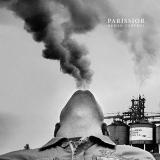
Parissior, moving between EBM, dark disco, indie dance and electronic music while blending analog and digital production.
The album brings together tracks that originally didn’t belong to previous EPs but eventually formed a coherent narrative exploring themes such as digital identity, illusion, authenticity and human imperfection.
From the sense of social pursuit in “The Chase”, to reflections on artificial validation in “True Connection” and “Smoke and Mirrors”, the record balances introspection with dancefloor energy.
The album also includes “Sintes Guarros” featuring Size M, and two additional digital-only tracks, expanding the project beyond the physical format.
Human Control ultimately works as a sonic map connecting machines, emotion and underground culture.
Haga su pedido ahora y le encargaremos el artículo en nuestro proveedor.
- A1: Anything (feat Maja)
- A2: Holding Patterns
- A3: Whirlwind (Extragalactic Mix)
- B1: Flicker Of Us
- B2: Fluffy Toy (Feat Creams)
- B3: We Can Touch The Sky
- C1: Wawes Of Desire (Sunset Mix)
- C2: Cool Breeze
- C3: Back To Nowhere (feat Ben Holz)
- D1: It's In Your Eyes (feat Aérea Negrot)
- D2: Oh Boy (feat Alessandro Tartari)
- D3: Flawed People (feat Unconscious Honey)
Massimiliano Pagliara celebrates 20 years of music production with a special anniversary compilation on Funnuvojere. The release brings together solo productions and collaborations spanning a rich and abundant period that began when Pagliara acquired his first analogue machines, five years after moving to Berlin from Milan, where he worked as a professional dancer and choreographer.
The compilation features 20 previously unreleased tracks, deeply infused with italo grooves, wonky bass-lines, balearic pads, drama, love, sex, and dreams. These tracks evoke a wide spectrum of moments, ranging from intimate, pleasure-driven home listening to full-blown dance-floor euphoria. Throughout the compilation, one can feel Pagliara’s enthusiasm for discovery—his excitement in encountering new machines and immediately putting them to work.
Pagliara’s sonic identity is unmistakable, present in every track and in the compilation as a whole. Like the facets of a crystal, the music reflects his many nuances while maintaining a strong, coherent core. Tracks such as Waves of Desire pay homage to Dream House, reimagined through contemporary production with cosmic tones and infectious drums. Flicker Of Us reveals a dramatic tension between a rowdy bass-line and melancholic pads, while We Can Touch The Sky features Pagliara himself on vocals, blending synth-pop with elements of new wave and glam rock. Cool Breeze unfolds as a sunlit, optimistic walk through a wide Berlin avenue—funky, warm, and filled with curiosity for what lies ahead.
A notable strength of the compilation lies in its collaborations, which highlight Pagliara’s joy in working with other producers and vocalists. Each collaboration reveals a distinct character: the balearic sensibility of A Journey of Discovery with Gatto Fritto, the French house flavour of Neon Memories with Alinka, the 70s disco inflection of It’s In Your Eyes with the late Aérea Negrot, and the driving techno attitude of Whirlwind with Fabrizio Mammarella, to name just a few.
Ultimately, this compilation stands as both a gift to Massimiliano’s long-time fans and an open invitation to new listeners. It offers entry into a world shaped by beauty, order, balance, and ecstasy—guided by an enduring love for the craft.
Haga su pedido ahora y le encargaremos el artículo en nuestro proveedor.
- 1: The Sound of Glink
- 2: Analysis of Joel
- 3300: 0
- 4: Our Theme
- 5: Trigger Effect
- 6: The Balcony
- 7: Gecko Lazzaro
- 8: Fragile Parlor Music
- 9: Comrade Knee
- 10: Cloud Machines
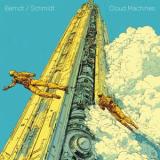
Cloud Machines is the extraordinary debut collaboration between M.C. Schmidt of legendary electronic duo Matmos and John Berndt, the Baltimore avant-garde institution and band leader behind High Zero Festival, the Red Room collective, Geodesic Gnome, and radical sonic concepts like Spectral Relay (a bespoke signal processing architecture) and Relabi (a conceptual genre defined by a Rorschach-blot pulse. These two iconoclasts have delivered something genuinely unexpected: an oddly sweet electronic opus that"s as immediately engaging as it is a series of delicious puzzles. When two of experimental music"s most irascible characters spend twelve years crafting an album, you don"t just get another release - it is an anthology of pocket universes. The record is a love letter to two of their strongest mutual influences of the 1980s - the delirious comic books of French auteur Jean Giraud (AKA Moebius) and the beautiful miniatures of the SKY Records Cluster/Eno/Conny Plank collaborations. Cloud Machines honors the spirit of those ineffably "hermetic" creations by reinventing their legacy through the lens of decades of accumulated experimental practice and the duo"s singular creative personalities. The result feels simultaneously like rediscovering a lost classic from 1978 and receiving a transmission from an alternate, somehow better timeline in 2026. Yet unlike so much "difficult" experimental music, Cloud Machines maintains an uncanny and sneaky accessibility - each track a self-contained world, inviting and alien in equal measure.
debe ser publicado en 12.06.2026
Cloud Machines is the extraordinary debut collaboration between M.C. Schmidt of legendary electronic duo Matmos and John Berndt, the Baltimore avant-garde institution and band leader behind High Zero Festival, the Red Room collective, Geodesic Gnome, and radical sonic concepts like Spectral Relay (a bespoke signal processing architecture) and Relabi (a conceptual genre defined by a Rorschach-blot pulse. These two iconoclasts have delivered something genuinely unexpected: an oddly sweet electronic opus that"s as immediately engaging as it is a series of delicious puzzles. When two of experimental music"s most irascible characters spend twelve years crafting an album, you don"t just get another release - it is an anthology of pocket universes. The record is a love letter to two of their strongest mutual influences of the 1980s - the delirious comic books of French auteur Jean Giraud (AKA Moebius) and the beautiful miniatures of the SKY Records Cluster/Eno/Conny Plank collaborations. Cloud Machines honors the spirit of those ineffably "hermetic" creations by reinventing their legacy through the lens of decades of accumulated experimental practice and the duo"s singular creative personalities. The result feels simultaneously like rediscovering a lost classic from 1978 and receiving a transmission from an alternate, somehow better timeline in 2026. Yet unlike so much "difficult" experimental music, Cloud Machines maintains an uncanny and sneaky accessibility - each track a self-contained world, inviting and alien in equal measure.
debe ser publicado en 12.06.2026
Acclaimed producer, DJ, and dancefloor healer Octo Octa (Maya Bouldry-Morrison) announces her fourth full-length album, Sigils For Survival. Following 2013's Between Two Selves, 2017's Where Are We Going?, and 2019's Resonant Body, the new record marks a decade since Maya publicly came out as transgender in November 2015. ''As an autobiographical artist, I set out to write an album that would be a milestone for this past decade of joy and sorrow,'' Maya explains. ''Sigils For Survival is my attempt to encapsulate the intentions and techniques that I used to move through life into a spell.'' For each of the record's eight tracks, Maya drew a sigil. Each is a personal symbol intended to ''bind magic to the song and seal its intention.'' These drawings appear throughout the physical edition's design. Maya's sister, New York artist Hope Morrison, incorporated each sigil into her original paintings, which comprise the album's vivid artwork. Hope Morrison, whose imagery translates the sigils' energy into vivid form; the layout was designed by Jo?o Ervedosa. Created entirely on hardware instruments and later mixed in Logic, Sigils For Survival captures the tactile immediacy of live performance. Maya preserved the feel of MIDI-clock drift and off-grid recording, letting her machines interact in the rhythmic pocket, rather than confirming them to a click. Alongside her signature deep, ecstatic electronics, the album features hand-played dulcimer, hand-pan, and recorder. Her voice also returns, carrying spells of love, protection, and transformation. Across Sigils For Survival, Octo Octa channels the ecstatic house lineage into an intimate ritual space. The music speaks of immediacy, play, and communion -- of magic as method, love as survival, and sound as spellcraft. Sigils For Survival is both a document of ten years lived fully and an invocation for the next chapter -- a glowing testament to music's power to protect, transform, and set the spirit free.
Haga su pedido ahora y le encargaremos el artículo en nuestro proveedor.
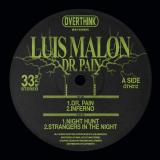
Luis Malon returns to Overthink Records with a 4-track EP.
Four cuts rooted in his distinctive, functional sound.
Driven by raw drum machines, acidic lines and precise sequencing, the release moves between techno and electro with a direct, dancefloor-focused approach — tight, hypnotic and built for late hours.
Haga su pedido ahora y le encargaremos el artículo en nuestro proveedor.
Sometimes the title of an album tells you everything you need to know. Laurence Pike’s Possible Utopias for Jazz Quintet is like that: The music within represents a search for freedom, potentiality—liberatory strategies that transcend the ego and the solitary, atomized figure.
But in this case, the album title is also a red herring, because there is no jazz quintet here—just Pike, his drums, and his machines, not so much an ersatz ensemble as a purely notional one, a thought experiment equipped with drumsticks, circuitry, and the desire to go beyond hardwired limits.
And the results, strictly speaking, aren’t really jazz, though they incorporate the vocabulary of jazz, along with that of ambient, electronica, and post-rock. They are some other thing, cognizant of genre but never beholden to it. Again, we’re talking about a search for freedom here.
The Sydney-based musician has a long history of coloring outside the lines, not just in his solo recordings—including four albums for the Leaf label between 2018 and 2024—but also in the trio Pivot (later PVT); Szun Waves (alongside saxophonist Jack Wyllie and Border Community’s Luke Abbott); Triosk, which recorded an album with Jan Jelinek in 2003; and even post-punk titans Liars, whom he joined in late 2018.
Of his first album for Balmat, Pike says, “My loose concept was: What does music sound like when the expectations of late capitalism are removed from it? How might a jazz musician from an idealised culture of the future, or even another world, utilise musical language when the conventions of style and marketing are no longer a factor in music making?”
That inquiry, he says, connects to his “guiding principle: that the purpose of music is to access something bigger than the individual, and reveal a sense of possibility and freedom in the world to the listener. To create an understanding that the future can be something other than what we imagined or expect, even unconsciously.”
Heady ideas, but plug into his stream-of-metaconsciousness flow and you may start to intuit what motivates him. There is a deeply lyrical expression in these pieces—in the ruminative piano of opener “Guardians of Memory,” for example—but also a sense of exploded perspective, of ideas approached from more angles than any one mind could dream up. Of a collectivized consciousness, of mycelial networks branching across tone and rhythm and timbre, of ideas articulated in distributed fashion, nodal points dancing across drum heads.
Pike’s imaginary quintet is hardly without precedent; it’s a continuation of concepts floated across Jan Jelinek’s Loop-Finding-Jazz-Records, Burnt Friedman’s many guises, and much of the recombinant improv of the International Anthem roster, not to mention the far corners of ECM’s catalog in the late 1970s and 1980s, which Pike says have been integral to his development since he was a teenager. Possible Utopias for Jazz Quintet is a point in a continuum, a voice in a conversation, a question with no obvious answer: How can the search for otherness in music manifest something true about ourselves?
Haga su pedido ahora y le encargaremos el artículo en nuestro proveedor.
- A1: Walk Walk Walk
- A2: Too Much Noise (feat Joe Yorke)
- A3: Dem Try (feat Nazamba)
- B1: Machines
- B2: In & Out (feat Marina P)
- B3: This is Music (feat Nazamba)
- C1: LSD Explosion (feat Jah Thomas)
- C2: Waterhouse Club
- C3: Shaka
- D1: Dem Try (Jeanville Remix)
- D2: LSD Explosion (Mad Profesor Dub Mix)
- D3: Too Much Dub (Androo Re-Interpretation)
New Stand High Patrol album, featuring Joe Yorke, Nazamba, Jah Thomas - and remixes from Mad Professor, Androo & Jeanville.
Dub and House Music. Two aesthetics born in the shadows, shaped far from the mainstream music industry. Two underground cultures where independence is often a necessity and ingenuity is essential. Two scenes rooted in the margins of society, with dance, sound systems and minorities at their heart.
From the Jamaican sound system sessions of the late sixties, through the nights at Chicago's Warehouse, to the murmurings of the New York house scene in the early eighties — history shows that house, reggae and dub share far more than many people may assume. Collective action, resistance as a driving force, music moving straight from studio to turntable, shared messages: these are the threads that bind these landmark musical movements together. It is at this crossroads, driven by the spirit of experimentation that defines them, that the members of Stand High Patrol found yet another territory worth mapping.
"Skanking & Jacking", the new Musketeerz album, reveals a side of the Dubadub sound never heard on record before. Built for the dancers and for DJs, the LP brings together the pulse of house music and the vibrant groove of reggae. Uncharted territory, never interfaced like this before. The result of a meticulous blending of styles, house, reggae and dub intertwine across 12 extended tracks. The sound is carefully crafted. Built on immersive loops and interlaced with micro-variations that give it an organic texture. Born from the interaction between being and machine. This is not about simply bringing worlds closer together; it's about mobilising influences to chart a new sonic galaxy.
Beyond it's aesthetic statement, "Skanking & Jacking" also stands out for its international cast. The most extensive Stand High Patrol have ever assembled on an album. From England, Italy, Switzerland and Jamaica, the guest vocalists, producers and MCs deepen the sense of dialogue between cultures and styles. At the mic, Joe Yorke, Marina P, Nazamba and Jah Thomas join the Dubadub Musketeerz on their explorations. Each appearance subtly reshaping the contours of the project.
Never fixed, always in motion, "Skanking & Jacking" pays tribute to the traditions that shaped it and closes, as a final nod, with remixes from Jeanville, Androo and the legendary Mad Professor. The album stands as further proof of a crew that shows no signs of stopping its reinvention. Available on stream, digital and double LP on May 29th.
Haga su pedido ahora y le encargaremos el artículo en nuestro proveedor.
Munich's machine enthusiasts 9ms return to Squama with their third album 'Lunch'.
More heterogenic than its predecessors, the album incorporates Dub-infused IDM, cinematic slow jams and off-kilter drum workouts giving the daring DJ plenty of material to treat dancefloors and listening rooms alike.
On their previous albums Pleats (2021) and II (2023) Florian König and Simon Popp mapped out the musical symbiosis between man and machine, using motion sensors to translate their bodies' movement while playing drums into sound. On Lunch the conceptual centerpiece is the pendulum. Neither man, nor machine, its steady movement is converted into analog voltage with what's called a gyroscope, allowing it to trigger and control any parameter in the duo's setup.
The album was conceived over the course of a year in weekly morning sessions that had to be wrapped up by lunch due to family obligations. The temporal limits, as paradoxically is often the case, turned out to be quite liberating and resulted in a more playful and fearless process.
"We worked pretty efficiently, but since there was no deadline for the album to be finished, the whole process felt very light". The duo also freed themselves from the limitations of having a recording setup that's reproducible for touring.
"We didn't think about the live aspect at all this time." So for every session they would choose from a wide array of instruments and machines, an abundance that has inspired the record's artwork, overflowing with words from the list of gear used on the record.
Sonically, 9ms keep on forging their own niche with thick, compressed drums set against wide stereo-processed soundscapes and a genuine curiosity that's pleasantly contagious.
debe ser publicado en 08.05.2026
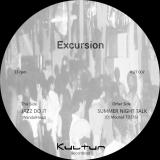
A. WandalHouz – Jazz Do it
Full 13 and a half minute ride, Wandalhouz wanted you to nab some quality use of your favorite material on this earth (vinyl) to its fullest potential. “Jazz Do It” sparks the same feeling and vibe as a sit in studio in session. Using a unique spacey Sci Fi sound creation as its main loop character, its main stand out is its big, bouncing fatty synth bass. Each introduced sound is eloquently placed upon its next, giving each individual sound its own time to welcome itself to the greater whole, and no moment is wasted. Each sound is playfully placed, perpetuating a bounce between the synths rubbing the low end frequencies, while the melodic pipe organ stabs shine bright through the ebbs and flows of sweeping fx to give it movement through the entire wave of sound. Its a driving deep, jazzy, and funky House track that truly encourages you to “Jazz Do It” on the dance floor, and as much as you can, for as long as you can.
B. Dj Mourad TD216 – Summer night talk
“Summer Night Talk” is Deep House cut that meets Electronic Jazz for a drink, at a Broken Beat art show, thats coming from the brain of a Techno OG, and Professor with years of producing, Djing, remixing, and sound design.
Mourad uses “Summer Night Talk” as his latest musical canvas. His machines are his paint brushes, and this song is his poem for its soundtrack. Mourad delivers thumping bass, peppy percussion, skippity snares, and fx that grab attention like poppin off fire crackers inside an art museum. Hypnotizing bass rumbles up your backside, creeps over your shoulders, and then whispers in your ear with a moist breath “Listen….” With each kick of the drum, each new brassy and chunky horn that graces your ear drum, you get further lost in the groove. His melody grab and spin you around, making you take another moment to catch your balance. “Summer Night Talk” is thumping and melodically techy in all the right ways to keep it deep, and true to its title.
Caterina Barbieri & Bendik Giske's At Source resounds music as wellspring, that which is essential and unknowable, and yet utterly primary. It finds two acclaimed composer-musicians building a world together in self-contained collaboration between analogue synthesis and an extended approach to the saxophone that conjures its own universe of sound. It is at once intimate and cosmic, drawing on the challenges and possibilities of their artistic exchange, tearing down technique to access all the expansive possibilities of their sonic meeting point.
At Source is a document of the world of sound to be conjured when two artists strive for something together, discovering the expansions and limitations of performance by bodies and machines. It is not an exercise in assimilation, but in productive exchange and creative confrontation. It does not draw on outside energies or influences, but grapples with what there is to find in their respective playing. "It also reflects how natural the collaboration was," says Barbieri, "a meeting at the source which was spontaneous, graceful and natural".
Barbieri and Giske first met and were enthralled by one another's performances at Kunsthaus Glarus in 2019, a meeting that spurred conversations on the power of transitions as a compositional force. Giske later contributed a rework of Fantas for Fantas Variations (Editions Mego, 2021), an ambitious undertaking to rescore Barbieri’s work for his saxophone and voice, a challenge Giske had started undertaking two years prior as an ongoing practice of transcription. “The request came as a proof of aligned ideas”, says Giske.
Their new collaborative project then started during an artistic residency in Milan’s ICA in 2021, by invitation of swiss artist and curator Jan Vorisek, as the world was emerging from lockdown. This meeting, and the preceding closure of sites for cultural exchange, made their work together 'feel like springtime' says Barbieri. Giske, who was on the brink of releasing his sophomore album, Cracks, then joined Barbieri's light-years tour, which functioned as an inaugural incarnation of her newborn label and platform through a series of multi-artist curated shows with appearances of Lyra Pramuk, Nkisi, MFO, among other artists.
Through the tour, they continued to develop material live, and this release, laid down in the studio, is true to that ever-evolving process of creation, where live feedback stays essential to the vitality of this collaborative effort. The tracks are each named with two evocative words that contain the two poles of their sound. Theirs is both abstract and cosmic, in the synth as machine undermined by Barbieri's naturalistic playing, and in Giske's continuous exploration of the symbiosis between his instrument, voice, and body. These binaries, of body and machine, posed various challenges, notably in how the stepped patterns Barbieri uses were near-impossible to translate for Giske's body to perform, and other times where mathematical resolutions were needed to sync their playing. Explains Giske: "It forced me to go to the core of what I am and what I have to offer”. Barbieri says that it "explores the liminality between the machine and the human, and the vulnerability in this process".
At Source is testament to two divergent practices finding a whole cosmos in which to convene; music is crystalised and made utterly enveloping through the focused and critical work of two musicians working at their peak. The versions here are, temptingly, "just one of many versions" of this abundant source material Giske explains. Like the best collaborations, At Source is more than the sum of its parts – bringing more to the feast than the simple combination of two musicians, promising versions upon versions of the exquisite material captured here.
Haga su pedido ahora y le encargaremos el artículo en nuestro proveedor.
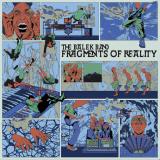
Some grooves don’t rush to the dancefloor — they crawl there, slow and heavy, like smoke wrapping around a bassline. With Fragments of Reality, The Balek Band sculpt an electronic funk that lives between shadow and light — an end-of-the-world fever dream, a Barjavel-style Ravage where chaos turns nihilistic.
No sequencer grid here — just four musicians sharing the same room, shaping air and tension together: drums locked tight with a slap bass, a guitar dripping with echo and heat, and a one-man orchestra behind his machines, weaving acid lines and synth arpeggios while mixing the band live — drenching it in delay, reverb, and saturation, like a dub producer in a Kingston studio, Lee Scratch Perry or King Tubby conjuring ghosts through smoke.
This isn’t fusion — it’s friction. A living ritual where the TB-303 hums, and machines don’t dominate but converse with the human pulse. Each track feels like a night that refuses to end — that humid in-between where trance slips into languor, and the body starts to think for itself.
The record recalls the cosmic jazz of Alain Mion or Eddy Louiss meeting the fiery energy of West African afrobeat musicians freshly arrived in a smoky Belleville basement in the mid-’80s. When The Balek Band summon ghosts, it’s only to reshape them — bending the past into something futuristic, alive, and strangely refreshing. Both disciplined and delirious, Fragments of Reality feels like a promise at dawn: dark funk for the late hours, slow acid for warm blood.
This EP isn’t nostalgic, though it remembers. It’s a transmission from a parallel past — a moment when jazz players met drum machines and decided never to stop playing. Each note sweats, each rhythm breathes. You can almost see the light cutting through the haze, faces half-awake, half-possessed.
The Balek Band aren’t recreating a moment — they’re keeping it alive.
Flesh and cables. Impulse and patience.
A band, not a loop.
A trip, not a format.
Haga su pedido ahora y le encargaremos el artículo en nuestro proveedor.
- Blow Mix
- Fluxstrata
- Phract Lament
- Hark Mix
- First Reflex
- Mu
- Drift Lens
- Tangent Bile
- Allegria
- Dull Echo
- Crabwalk
Late Bush presents “Hoarses” on the label Vlek Records, an original repertoire in which he blends electronic music - power ambient, IDM, avant-pop - and early music, which share the same affective intensity, a taste for ornamentation and a form of sonic excess.
At the heart of this material, AI-cloned voices, both human and spectral, extend the idea that any baroque interpretation is a reconstruction of the unknown. They contrast with organic strings recorded with Echo Collective, in a temporal and radical hybridization, creating a fluid and unstable material, between memory and simulation.
One of the conceptual starting points is essential: we have no sonic trace of baroque music as it was played. Only scores remain, and sometimes contradictory indications, a sensitive archaeology, even an imaginary projection.
Everything that is played today is therefore, in fact, a reconstruction, an interpretation of a vanished material. According to this logic and to pursue this reflection, the cloned voices, transformed by AI, are not a rupture but propose a natural continuation of this chain of reinvention, of this relationship to the invisible, to the indefinite. They do not aim to replace a human voice, but rather to embody the fact that any baroque restitution is already a fiction.
The project does not seek to imitate the real, but to play with the thresholds of the plausible, of the spectral. The music then becomes a fluid material, manipulable, alterable, and the performers, musicians or machines, are its vehicles.
The strings, carried by the sensitive and expressive interpretation of Echo Collective, breathe into the project a vibrant authenticity. Their presence brings an organic and tactile dimension that contrasts with the fluid and intangible aspect of the voices and the electronics.
debe ser publicado en 24.04.2026
Analog Fingerprints Vol. 0 is a compilation bringing together the early 2000s works of Marco Passarani under his Analog Fingerprints alias, collecting key tracks originally released on Rome’s Plasmek and Pigna labels.
For Numbers, the story starts long before the label itself. In their formative years, digging in Glasgow’s Rubadub, Passarani’s records felt like dispatches from a future city. Releases on his own Nature Records and on labels such as Generator and Interr-Ference Communications were mind blowing: rooted in Detroit techno, Chicago house and electro, yet pushing somewhere new. Much like fellow travellers Autechre, who would remix him in 2001, Passarani’s music balanced machine funk with restless experimentation.
Information was scarce, and you would hear these records first on the dancefloor or at listening stations in shops like Rubadub. Print fanzines like Ear and early web outposts such as Forcefield offered only fragments. But there was a palpable axis forming between Detroit techno and a new European wave of record labels including Skam, Rephlex, Clone, Viewlexx and Nature itself. It was the sound that defined Saturday nights at Rubadub’s ‘69’ parties in Paisley, just outside of Glasgow.
Passarani’s records, in particular, were instrumental in bringing together the future Numbers co-founders. Richard had already booked him pre-Numbers; meanwhile Calum (Spencer) and Jack (Jackmaster), then 16/17 year olds working alternate Saturdays in Rubadub, were so enamoured with the Roman sound that they travelled to Rome for the Bitz Festival in 2003 to seek out Passarani and Lory D at their source.
The first Analog Fingerprints release landed as a 12” on Plasmek in 2001, following the fractured, IDM-leaning 6 Katun material. For Passarani, the project marked a recalibration. A DJ first and foremost, he had moved into production via early computer setups, from a Commodore Amiga through primitive PC audio, Cubase and Logic, later experimenting with Ableton. The IDM scene had offered a playground for trial and error, but there was always a tension between abstraction and the dancefloor. Analog Fingerprints became the bridge: still intelligent, but with more dance than distance. After years of broken beats and complex arrangements, he wanted directness without surrendering identity.
Working closely with Francesco de Bellis and Mario Pierro in the Pigneto district, the trio formed Pigna as a vehicle for reclaiming a more accessible dance sound, deliberately steering away from the minimal wave beginning to dominate Europe. Sessions were fast, instinctive, often stretching late into the night with friends dropping by. It was a studio as social space, production as collective energy.
“In that constant search for balance, Analog Fingerprints was my way of expressing something closer to the classic dance floor. The track 'Tribute' - a tribute to my favourite early Detroit techno track of all time, 'First Bass' by Separate Minds - came after I realised I had almost lost my connection with the dance floor. The simplest step was to take inspiration from early Chicago and Detroit and twist it in our Roman ‘Pigna’ way. My goal was to create more accessible dancefloor tracks by mixing my unconscious Italo roots with my teenage love for that early US sound, ensuring the result was as far as possible from the minimal sound that was starting to dominate everywhere.” - Marco Passarani
Technically, the Analog Fingerprints tracks span a transitional era: Roland TR-909, SH-101 and Alpha Juno hardware met early software experiments. A Novation Drumstation rack stood in for the unattainable TR-808, syncing with TB-303 and TR-606. Yet the true secret weapon was Jeskola Buzz, a tracker-style modular environment that allowed step-by-step parameter control and strange melodic constructions, later exported into the audio sequencer. Even the lead on ‘Tribute’ came from an early PPG Wave-style plugin. It was hybrid thinking at a moment when digital tools still felt unstable but full of possibility for technologists like Passarani.
Behind the music sat Finalfrontier, a loose Roman collective orbiting Nature and Plasmek. Distribution and production were intertwined; importing obscure records into Italy built connections with like-minded outsiders across Europe and the US. Expensive phone bills and fax machines forged an “electronix network” that linked Rome to Clone, Viewlexx, Skam, Rephlex, Rubadub and Detroit’s Underground Resistance. There was a shared sense of survival and resistance, of operating against commercial systems.
Passarani recalls “The first time I found a sheet of paper inside an Underground Resistance 12” with info about upcoming releases... and a huge picture of Spock on the back. Imagine that: you love the music, you love Star Trek, and there’s someone on the other side of the ocean sharing those same values and sounds. It was the perfect match. We even gave our original company the suffix ‘Finalfrontier’: that says it all.”
Feedback in that era arrived physically: distributor faxes, conversations with visiting DJs, the experience of playing abroad and meeting kids who had connected with the records. Glasgow became a key node in a scattered outlier network. Passarani personally brought the first two Nature releases to Fat Cat in London, playing them in-store. Shortly after, a fax arrived from Rubadub in Glasgow requesting copies.
“I still remember that phone buzz and the fax paper slowly sliding out, with someone I didn’t know saying they wanted 75 copies of Nature 001. Or like the time we got a fax from the Rephlex crew just saying, “Hello Nature Records, Keep up the good work.” That was how we knew the message was getting through. It was a fantastic feeling; just one piece of thermal fax paper as an analog notification - the mood for the entire week would change.” - Passarani
The connection to Glasgow has since stretched across generations. As Passarani reflects, links often fracture as scenes renew themselves, but in Glasgow something different happened. New and old mixed seamlessly. There was a visible trust in what came before, and a willingness to carry it forward rather than discard it. Observed from Rome, it was deeply encouraging.
Analog Fingerprints Vol. 0 captures that moment of exchange: Rome to Glasgow, Detroit to Europe, experiment to dancefloor. It documents an artist recalibrating his sound and a network of scenes discovering one another in real time, connected by vinyl, faxes and shared intent.
Roman Khropko delivers four cuts balancing precision club mechanics with flashes of emotion. The record moves between stripped minimal techno and warmer electro, designed to unfold gradually.
The A side opens with Glimpse, a straight-forward roller driven by tight drums and a suspenseful build. Piece of Truth follows with a funkier swing, blending elastic basslines with subtle tech house inflections that keep things in motion.
On the B side, Fractum settles into a hypnotic minimal tech mood, laying steady groundwork for an extended club stretch. The closing track, Among The Machines, shifts into emotional electro territory, carrying melodic tension that leaves a melancholic aftertaste.
A concise and functional toolset for the dancefloor. This is one to stay in your bag for a long time.
Haga su pedido ahora y le encargaremos el artículo en nuestro proveedor.
Eight years have passed since 8 regards obliques, the album in which Jaumet reinvented his spiritual jazz classics, letting them drift into other dimensions. Since then, an intense tour alongside Thomas de Pourquery and a new recording adventure with Zombie Zombie have taken him on the road. Yet it is in the inspiring calm of his brand-new studio in Bagnolet that he found the material for Du cortex à l’iris, his new album recorded for his label Versatile Records. Du cortex à l’iris continues this delicate balance that defines Jaumet’s signature: a constant tension between hypnotic abstraction and an almost animal groove. "To reduce the distance between my cortex and my senses, in order to compose mental images with sounds," he says. This intention runs through the entire album: a desire to make people dance, yes, but with echoes of EBM, bursts of cinematic landscapes, and that singular way of slowly inducing trance rather than declaring it. Saxophone, synths, analog drum machines: the arsenal remains familiar, but the approach is even more direct. Playing fast, composing in the moment, letting the hand run before the mind corrects. Capturing something primal, spontaneous, almost raw – as if the sound were really passing, this time, directly from the cortex to the iris.
Haga su pedido ahora y le encargaremos el artículo en nuestro proveedor.
B. Chamber (Stratum A), by B. Close, is the first full length solo release by Los Angeles-based multi-disciplinary artist Brian Close. The first of two volumes assembled from some thirteen hours of music produced by Close while residing in Connecticut from 2021-2025, B. Chamber (Stratum A) offers a vivid, fractal afterimage of a prolific, specific time and space in the artist’s oeuvre.
After leaving New York City early in the pandemic to a farmhouse in the countryside with dedicated spaces for multiple sound stations, Close developed an intensive daily practice of melding with the machines. The vast, pastoral backdrop of rural CT provided inspiration and contrast for his ongoing investigations into dynamic, poly-rhythmic electronic music. The sounds on B. Chamber (Stratum A) range from the machine-modeling of acoustic instruments and natural environments to the utterly unhuman, spinning on the axis between crystalline, pointillist precision and shifty blown-cone distortion. Close’s atypical interpretations of rhythm, noise and other undefined musics land in a hybrid zone of their own.
Throughout B. Chamber (Stratum A), Close’s productions are in perpetual motion. Foxtrot’s shifting hi-hats and disembodied voices rise like cicadas propelled by glitching machines and tangled rhythms, Many Drive draws momentum from dubby stabs and twinkling atmospherics. Character Community’s nimble, drifting snares and erratic static are uplifted by swelling synths, and Mpan’s modular mining forgoes drums but is no less propulsive for it. Acre Voices’ seasick pads and deft drum patterns tap an energizing nerve, and closer 5D Bow’s ambush of pummeling machine gun fire spirals into the tryptamine palace and emerges completely rinsed and refreshed.
Equally powerful in the club as in the outdoors, in the headphones eyes closed or on the move, B. Chamber (Stratum A) grants an immersive temporary trip on B. Close’s unique wavelength, with Stratum B to complete the picture in the summer of 2026.
RIYL - Mark Fell, muay thai, Vladislav Delay, gaming, Errorsmith, modular synthesizer.
+++++
Brian Close (b. 1979, NYC) uses the cold logic of mathematics to trigger states of total sensory displacement. Close co-founded multiple AV studios to explore the "hypnotic"—a ritualistic practice of motional-graphism and improvisational sound. His work is a study in synesthesia and the architecture of trance, using geometric precision to dissolve the sense of time. It is a digital-visceral experience built on heavy logic, designed for large-scale immersion and timelessness.
Close is one half of Georgia who have released records on Palto Flats, Firecracker Recordings, Meakusma, Youth, OOH-Sounds and EM Records, and have a long-running residency on NTS.
B. Chamber was written, produced and mixed by Brian Close.
Mastered by Rashad Becker.
Artwork by Brian Close.
debe ser publicado en 12.03.2026
- LP 1: A Fever You Can’t Sweat Out (20th Anniversary Remaster) a1. Introduction
- A2: The Only Difference Between Martyrdom And Suicide Is Press Coverage
- A3: London Beckoned Songs About Money Written By Machines
- A4: Nails For Breakfast, Tacks For Snacks
- A5: Camisado
- A6: Time To Dance
- A7: Lying Is The Most Fun A Girl Can Have Without Taking Her Clothes Off
- A8: Intermission
- B1: But It’s Better If You Do
- B2: I Write Sins Not Tragedies
- B3: I Constantly Thank God For Esteban
- B4: There’s A Good Reason These Tables Are Numbered Honey, You Just Haven’t Thought Of It Yet
- B5: Build God, Then We’ll Talk
- LP 2: A Fever You Can’t Sweat Out (Demos) c1. The Only Difference Between Martyrdom And Suicide Is Press Coverage (Demo)
- C2: London Beckoned Songs About Money Written By Machines (Demo)
- C3: Nails For Breakfast, Tacks For Snacks (Demo)
- C4: Camisado (Demo)
- C5: Time To Dance (Demo)
- D1: Lying Is The Most Fun A Girl Can Have Without Taking Her Clothes Off (Demo)
- D2: But It’s Better If You Do (Demo)
- D3: I Write Sins Not Tragedies (Demo)
- D4: I Constantly Thank God For Esteban (Demo)
- D5: There’s A Good Reason These Tables Are Numbered Honey, You Just Haven’t Thought Of It Yet (Demo)
- D6: Build God, Then We’ll Talk (Demo)
Die Standard-Doppel-LP-Version enthält das Remaster zum 20-jährigen Jubiläum und die A Fever You Can't Sweat Out (Demos).
Nach ihrem aufsehenerregenden Auftritt beim When We Were Young Festival in Las Vegas feiern Panic! At The Disco weiterhin die zwei Jahrzehnte seit der Veröffentlichung ihres bahnbrechenden, mit Mehrfach-Platin ausgezeichneten Debütalbums mit der Ankündigung der A Fever You Can't Sweat Out (20th Anniversary Deluxe) Edition.
Das wegweisende Album, hervorgehoben durch den neu mit Diamant-Status ausgezeichneten Hit „I Write Sins Not Tragedies“, katapultierte die Band aus Las Vegas zum Rock-Star-Ruhm und etablierte sie als eine der prägendsten Acts ihrer Generation.
Entdeckt von Pete Wentz von Fall Out Boy, als die Bandmitglieder noch Teenager waren, explodierten Panic! At The Disco mit der Veröffentlichung von A Fever You Can't Sweat Out im Herbst 2005 in die Musiklandschaft. Das Album erreichte die oberen Ränge der Billboard 200 und feierte Mehrfach-Platin-Erfolge.
Die Breakout-Single der Veröffentlichung, „I Write Sins Not Tragedies“, wurde zu einem der bekanntesten Songs dieser Ära, erreichte die Top 10 der Billboard Hot 100 und wurde ein Radiohit in verschiedenen Formaten. Die ikonische Hymne findet weiterhin großen Anklang bei Musikfans und erhielt kürzlich eine RIAA Diamant-Zertifizierung für über 10 Millionen Streams/Verkäufe.
Angetrieben von Hymnen wie „Build God, Then We’ll Talk“, „The Only Difference Between Martyrdom And Suicide Is Press Coverage“ und „Lying Is The Most Fun A Girl Can Have Without Taking Her Clothes Off“, hat das Album bis heute Verkäufe von über 5 Millionen Alben und fast 4 Milliarden globale Streams generiert.
debe ser publicado en 27.02.2026
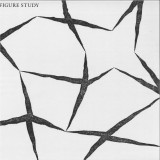
Figure Study is the Manhattan-based duo of Nathan Antolik and April Chalpara. They formed in 2009, after meeting through the Wierd Records weekly party, where they would play their first concert soon after. While their debut 7" contained two songs recorded in 2009, this full length contains all new material recorded throughout the past year.
For their debut self-titled album, Figure Study utilizes a carefully tailored set up of vintage analog synthesizers and drum machines. Figure Study creates a lush sound where haunting vocals echo over dark melodies that reflect an isolated and disintegrating world. Songs flux between dissonant dance numbers and more sparse, somber compositions, each carrying a sense of urgency and modernism. Figure Study's sound includes influences from such early underground artists as Kirlian Camera, Nine Circles, and The Actor.
The album was recorded in their small Chinatown studio using a sparse set-up of analog synthesizers, drum machines and sequencers. It was mixed at The Wave Lab in Brooklyn by AJ Tissian and mastered for vinyl at Fantasy Studios in Berkeley by George Horn. Each LP is packaged in a specially designed jacket and includes an insert with lyrics. Figure Study draw their own model using shapes and forms from the synthetic landscape.
Haga su pedido ahora y le encargaremos el artículo en nuestro proveedor.
Hamburg is sinking into an ever-expanding landscape of fresh construction ruins born from investor fantasies, concrete monster-bridges and ghostly office spaces. But from secret basements, a Geflecht begins to grow. After the first tape by Hamburg duo Kostenfalle, now comes their second album on vinyl.
The furious electropunk of Kostenfalle has been cut into the matrix at 45 RPM. Nine
songs in the fast lane, driven by sequencers, synthesizers, drum machines, and bass guitar. Despite the electronic machinery, Kostenfalle remain fiercely dynamic, twisting and shifting through intricate structures and sudden turns. Punk and Electronic Body Music lock into a dance; without warning we’re plunged into a psychedelic riff, only to slam angrily into the next guardrail.
With alternating vocals, Christian manning the transistors, Philipp holding the bass, the lyrics emerge dark and oblique, meditating on life as a one-dimensional human and on the spaces between people. Boycott and sabotage. Explode and generate.
debe ser publicado en 27.02.2026
- Open Fields
- Memory
- Opioid
- Reset
- Always You
- Seeker
- Warnung
- Gabriel
- Kind
- God Is Lonelier
- Warum
- Neuzeit
Mute welcomes German synthesizer and producer duo Felsmann + Tiley to the roster with the release of their new album Protomensch. Out February 13, 2026 on limited edition black vinyl packaged in a special gatefold sleeve featuring a mirror foil lamination on the inner panel revealing a ‘self-portrait of the protomensch.’
On Protomensch (German for “proto-human”), Felsmann + Tiley blend shimmering synthwave, pounding trance, and introspective IDM with synth-pop-infused tracks featuring guest vocalists including London’s Pet Deaths and Australian artists The Kite String Tangle, Woodes, and Laius.
This juxtaposition between sentient beings and machines permeates the whole album – right from the duo’s manifesto introducing us the highly intelligent yet irrevocably shortsighted and downright tragic character of Protomensch – the cover artwork featuring turtleneck wearing chimpanzee, futuristic music videos, and stark social media aesthetics to seated, next-level live-shows involving collaboration with dozens of visual artists.
Despite their online ubiquity, sparked in part by their viral reinterpretation of label-mate M83’s “Solitude,” which has been used over 1 million times on TikTok and high-profile syncs on shows including Young Royals (season two), the BAFTA-winning crime thriller Top Boy (season three), and Amazon’s The Better Sister, Felsmann + Tiley have lingered largely on the periphery, their origins cloaked in quiet anonymity, until now. With the release of Protomensch, Felsmann + Tiley present their fully realized artistic vision and step into the spotlight.
debe ser publicado en 27.02.2026
Somewhere between heaven and hell…there is Fallen Angel. Dark Entries continues its mission of shining light on a generation of composers and musicians lost to AIDS with Brandy Dalton’s Fallen Angel, his soundtrack work for the award-winning Fallen Angel series. Brandy was known for many years in the LA underground for his performances with his boyfriend, Robert Woods, who was the resident DJ at Club Fuck. Eventually, they recruited John Munt to form the band Drance, becoming infamous for their high-energy performances and songs that tackled taboo topics like sadomasochism. While Drance explored the aggressive sounds of industrial and EBM, Dalton continued to produce a wide range of electronica, from abstract sonic textures to techno bangers. The Fallen Angel album collects 16 sweaty, sticky cuts composed for the pornographic series Fallen Angel, a trio of leather-focused films released by Titan Studios. The sounds here span from the fractured cyberpunk-rave of “Swelled” to the tabla-laced trance of “FA2,” taking listeners on a journey through hedonistic recesses chock full of crunchy digital drum machines and wailing FM synths.
This album was originally released on CD in 1999 by Titan Studios, capitalizing on the success of the film franchise. It will be reissued on LP as well as CD, featuring 6 bonus tracks. Artwork for the album, designed by Eloise Shir-Juen Leigh, features stills from the Fallen Angel film. Also included is an insert with liner notes and photographs. This album is dedicated to Brandy, who passed away from AIDS-related illness in 2006, after battling with the disease for 17 years. Brandy’s passing was preceded by his best friend and Drance co-founder Robert’s death in 1995. Documenting a sonic shift in the 90s bathhouse music, Fallen Angel provides a hardcore BDSM ride, building upon the analogue archival soundtracks that Dark Entries has previously released.
Haga su pedido ahora y le encargaremos el artículo en nuestro proveedor.
KIK is the new project of two core strategists of sonic enigma HHY & The Macumbas: Jonathan Uliel Saldanha & João Pais Filipe. Ditching acoustic instruments in favour of drum synthetics & tightly controlled sound design, the duo's debut album NIGHTSHIFT focuses on off-kilter club tracks that thwart 4-on-the-floor flavours whilst maintaining trance-inducing extended cycles. If the devil is in the details, this is all about the spectromophology of the details.
Beginning with moving morse code blips in an odd time signature We Can't Dance announces the characteristic unlife of the album's pulse. Once the kick enters, syncopations progressively accumulate into a weave of interacting rhythmic lines. Smoke Machine's groove is reminiscent of the riddims Saldanha explores in his HHY & The Kampala Unit, adding scintillating pads and snippets of blitzed out laughter.
The album's third track, Proff, hearkens back to the initial pulse, displaced and pitched down in register. Here's a more meditative temperament on display, where the regular geometries of the club have been moved into higher-order structures. Segments rise & fall into earshot. Deepening the meditative mood, Back Room explores a short melodic leitmotif anchoring the track's wander- lust.
The rhythmic assault continues in Tactical Gear, bringing further experiments into polyrhythmic contours exacerbated by preci- sion movements of echo & delay. Limping can be heard as a what-if sonic fiction taking Autechre-inspired abstractions through Durbanoid Gqom terrains. The album closes with its longest track, Night Shift, that segments into shifting sound worlds.
Drawing from industrial grit, cybernetic percussion and the eerie fluorescence of after-hours energy, NIGHTSHIFT exists in the liminal space between body music and abstraction——a soundtrack for phantom warehouses and malfunctioning machines. This isn’t just music; it’s an immersive sonic environment, a journey into the heart of deconstructed dancefloors.
For fans of Rian Treanor, Proc Fiskal, Jlin and Lorenzo Senni.
Most recently, HHY has been collaborating with Nyege Nyege through projects such as Kampala Unit and Arsenal Mikebe, performing live with the ensemble alongside Valentina Magaletti, and producing records for artists like Fulu Miziki, as well as collaborations with Phelimucasi, Rey Sapiens, Kingdom Choir and others. He also released Camouflage Vector: Edits From Live Actions 2017–2019 on the label, a live album featuring two tracks with Adrian Sherwood.
Previous collaborations include Tunnel Vision with Badawi (released on Tzadik), the HHY & The Macumbas album Beheaded Totem on House of Mythology, and Fujako (Wordsound, with MC Sensational), along with double-bill shows with acts such as Clipping and Death Grips.
debe ser publicado en 13.02.2026
With Spam Vol.2, KVR - Niels Broos, Dries Laheye & Lander Gyselinck - delivers its second statement.
Recorded in a beautiful studio tucked beneath a bridge in Rotterdam, the album distills a week of free improvisation into vivid, shape-shifting pieces. A beautiful chaos of bass guitars, synths stacked on clavs, drums and machines to get lost in, in between coincidence and intention. Jungle rhythms, elastic time, open structures and organic textures come together in a lively sound that feels playful as well as restless and deeply intuitive.
KVR is Niels Broos (Jameszoo, Binkbeats) on keys, Dries Laheye (STUFF., Selah Sue) on bass and Lander Gyselinck (STUFF., Lander & Adriaan, BeraadGeslagen) on drums.
For fans of Thundercat, Hudson Mohawke, The Comet Is Coming, Jameszoo, etc.
Haga su pedido ahora y le encargaremos el artículo en nuestro proveedor.
2026 Restocked!
If you've been following the Payfone story over the last 13 years, you'll know that Phil Passera and Jimmy Day's long-running collaborative project has specialised in one-off musical morsels - sublime songs cooked up in cahoots with all manner of guest musicians and vocalists. Never ones to rest on their laurels, Day and Passera have now delivered a full six-track tasting menu in the shape of Lunch, their hotly anticipated debut album.
Recorded over an 18-month period at Passera's Barcelona studio and Day's studio in Brighton, Lunch is an unsurprisingly assured and musically detailed affair that's entirely made up of previously unheard songs. Unlike acid-flecked recent single 'Volt To Volt', which delivered a tweaked take on late 1980s house music, the album's six tracks showcase the trademark sound the duo has been developing since first joining forces 13 years ago.
Trawl back through Passera and Day's high-quality catalogue, which includes outings on Leng, Golf Channel Recordings and Defected as well as their own OTIS imprint, and that distinctive musical recipe becomes clear. Rooted in their love of classic drum machines and their trusty JUNO-60 synthesiser, the Payfone sound combines equal amounts of electronic and organic instrumentation, warm and inviting downtempo and mid-tempo grooves, and pertinent and thoughtful lyrics delivered with panache by an impressive roll call of guest vocalists.
Lunch, then, is a standalone sonic statement - an initially vinyl only album on their own OTIS imprint - that continues this impressive lineage. Like all Passera and Day's collaborative work, it is free of samples, with the pair preferring to create their own sounds from scratch. Opener 'Movin' On', featuring the honeyed vocals of former XL Recordings artist Willis Earl Beal AKA Nobody and slap-bass from Jo Gabriel Harris (who also features on three other songs across the album), is a deep and effortlessly evocative mid-tempo delight that perfectly sets the tone for what's to come.
Brooklyn-born April Pittman and Russian/Armenian vocalist Zara Kian lend their talents to woozy, sun-baked shuffler 'Paperman' before regular Payfone collaborator Ludmilla Rodriguez headlines 'Joan of Arc', a veritable Mediterranean breeze rich in tumbling analogue synth synths, elastic bass and tumbling guitar solos. Those yearning for a touch of lightly disco-flecked dancefloor heat will savour 'Spend The Night', where Los Angeles singer Collette Tibbetts AKA Carmella The Balls, accompanied by virtuoso keys courtesy of Parisian pianist Gabriel Cazes, rises above a sweet, melodious, dub disco-adjacent backing track. In contrast, 'Pamela' is low-slung and hypnotic, with 'Sofian' vocalist Barbara Alcindor ushering us through a deep, heady groove-scape.
Fittingly, Passera and Day round off Lunch via a vibrant and potent sweet treat, 'Pony Bar'. Headed up by the J.J Cale-esque lead vocals of man of mystery Leon Lace, the pedal steel-sporting song joins the dots between dusty Americana, kaleidoscopic Balearic beats and lilting, slow-motion disco. Like the rest of the album, you'll be thinking about it long after you've washed down the last few musical mouthfuls.
Haga su pedido ahora y le encargaremos el artículo en nuestro proveedor.
DIN SYNC DUB is an exploration of communication through sound. Six tightly packed experimental dub tracks use bass-heavy vibrations to rattle both body and mind, pushing the limits of self-expression in the hope of fostering deeper human connection.
The drive for more efficient and precise communication tools—whether between man and machine or machine and machine—has been a foundational force in the evolution of technology. This duality, the way we interface with computers and the way we speak to one another, is at the heart of DIN SYNC DUB. For this album, N1_SOUND looks back to 1980, drawing inspiration from Roland’s Din Sync—a 40-year-old synchronization technology once used to link musical machines in perfect harmony. While connecting machines to produce precisely sequenced music is nothing new, it’s the tension between perfection and imperfection—the mistakes of both man and machine—that gives DIN SYNC DUB its voice, its emotional rawness.
The journey begins with “Horizontal Hang”, which crashes through the door with a relentless bassline and crystalline synths. “Such Love” introduces a throbbing, guitar-driven groove, while “Intuition Dub” channels the spirit of Jah Shaka, offering a rhythmic pulse that echoes dub’s deep roots. “Us All” provides a moment of introspection with its sparse, three-dimensional melodies, before “Joy” reintroduces chaos, creating a post-dubstep soundscape that dismantles everything in its path. The album closes with “Mauzy” , a hopeful yet fragmented conclusion, reflecting the ever-evolving nature of technology and connection.
By the mid-to-late 1980s, Din Sync was superseded by the more widely adopted MIDI, yet obsolescence is built into the nature of all technology. Just as our relationship with machines shifts and fades, so too does our understanding of how those changes shape us. Before we can grasp the impact, the world has already moved on.
DIN SYNC DUB, the first full-length LP from Spiritual World, pulses with energy, on the edge of malfunction—a manifestation of the tension between the digital and the organic, the past and the present.
Haga su pedido ahora y le encargaremos el artículo en nuestro proveedor.
Deep, fragile, rhythmic, dubby and funny - the album Tremor by Silva is a collaboration between Moa Franzen, artist and performer, and Magnus Dahl, artist and music producer. With clarinet as the leading instrument, backed by cello, synths and drum machines, they build a world at the intersection of different genres, influenced by dance music, jazz and ambient.
Haga su pedido ahora y le encargaremos el artículo en nuestro proveedor.