Поиск:basic black

Стили
Все
Uri Katzenstein - Audio Works 2x12"

Black Truffle is pleased to announce Uri Katzenstein’s Audio Works, produced in collaboration with Holon’s Centre for Digital Art. Spanning sculptural installation, performance, video art, and many other media, Katzenstein’s absurdist, poetic, and often hilarious work made extensive use of sound and music. This, however, is the first release dedicated to the artist’s audio work, collecting 28 tracks produced between the early 1980s and 2017. Compiled from dozens of hours of recordings left uncatalogued (and in some instances unheard) at the artist’s death in 2018, these four sides are a treasure trove, offering a captivating glimpse into a uniquely uninhibited creative practice. Predominantly recorded alone, with some contributions from regular collaborators such as Ohad Fishof on the later pieces, many of these tracks stem from Katzenstein’s time living in New York in the 1980s. Feeding on the cross-pollination of post-punk energy, radical art practice, and new media possibilities that characterised the New York scene at this time, many of Katzenstein’s recordings squeeze multilayered vocal experimentation into synth-based miniatures with a distinctively pop twist, their forms ruptured with anarchic bursts of free-form electronics, sounds from self-built instruments, and field-recorded snatches of the outside world. Katzenstein’s electronic production calls up touchstones of skewed 80s art pop like Laurie Anderson, Ambitious Lovers, and Scritti Politti, but imbued with DIY directness and economy of means. The arrangements of synths, percussion, and noise elements are invigoratingly raw and, at times, almost austerely minimal. On ‘Intermission’, thick distorted chords accompany a wandering portamento melody, inhabiting the wayward carnival space of Roedelius’ most unhinged efforts. Many of the tracks centre on Katzenstein’s multi-tracked vocal performances, often moving between multiple languages, (most commonly English, German, French, and Hebrew). A bewildering range of vocal approaches are present on these pieces, from sweet wordless harmonies to hammed-up growls and monastic recitations. On ‘Skin O. Daayba – Complex Habits no. 3’, improvised resonance singing against a backdrop of echoing electronics and radio snatches. ‘Half Monk Half Herring’ layers multi-lingual syllabic fragments, crossing sound poetry techniques with melodic invention in a way rarely heard outside of Caetano Veloso’s Araçá Azul. On ‘Attempt to Raise Hell’, Katzenstein’s distorted voice spits out streams of alliterative nonsense (‘the hemlock of Henry, he was a hermit…purple pumpkin pulsates to pops’), while on the hilarious ‘Eric’, Katzenstein appears to instruct a small boy simultaneously in basic French and German conversation. On ‘Chicken’, vocal harmonies accompany the pecking and clucking of the titular fowl. Moving from bent, outsider synth pop to snatches of Jo Jones-esque automated instrumental clang and absurdist linguistic experiments, these are far more than footnotes to an artist’s gallery works. Accompanied by extensive, beautifully written liner notes by Roee Rosen and the little information that exists on the individual tracks, Katzenstein’s Audio Works inhabits an outer fringe of DIY pop and sonic experiment reminiscent of Pascal Comelade or Die Welttraumforscher, where accessible forms convey radical interrogations of song, word, and sound.

нет на складе

Закажите сейчас, и мы закажем товар для вас у нашего поставщика.


Последний логин: 3 г. назад
Toribio - Brown Cocoa Skin LP

Real Feel Records looks to blend old and new in paying tribute to the roots of U.S. house music. Real Feel is the vehicle intended to bring it back to basics and create a platform to boost US-based artists in an inclusionary way. The label is run out of DC, pressed in the US, and will look to elevate Black, Latinx, AAPI, women and TLGBQ artists—new and OG—in the US. The intention is not to come in and Columbus anything--we all know vets in Detroit, Chicago etc have been self-releasing material for a long time; but rather give a channel for new artists while blending in established names.

For its first release, NY DJ, producer and multi-instrumentalist Toribio baptizes Real Feel Records with the Brown Cocoa Skin EP. The record is chock full of lush, swingy tracks built for the dancefloor. The legendary DJ Spinna contributes the finishing touches with a monster remix.

нет на складе

Закажите сейчас, и мы закажем товар для вас у нашего поставщика.


Последний логин: 7 мес. назад
Tone Scientist - Basic Moves 16 2x12"

Far over on the west coast of the USA we find a room full of drum
machines, samplers and keyboards. Hard at work is Israel ‘Iz’ Gravning aka Tone Scientist, who’s been using this Seattle studio to produce genre-defying future music for more than 25 years.
An avid student of jazz fusion, hip hop, house, techno and others, he
was galvanised to build his own studio after hearing jungle and drum & bass on a trip to London in 1995. His musical course thus intersected with the collectives then pushing new dancefloor sonics rooted in the rich tradition of Black music – like Nuyorican Soul over on the east coast, and the new broken beats of IG Culture, Dego and Bugz In The Attic in London. Then, in the early 2000s, Iz put out a handful of EPs under different aliases, including ‘Lion Dub’ on the Guidance sublabel Subtitled, but soon stepped back from the public stage. That’s not to say he stopped making or playing music, though. Far from it. Fast forward two decades and our very own Walrus, chilly but happy in the depths of a Toronto winter, happened across ‘Lion Dub’ in the legendary Play The Record store. Intrigued, he tracked Iz down and discovered he had been active all this time. A short email exchange later and this 2xLP of archive material was born.

These six tracks explain fully why Iz calls his studio the ‘Time Machine’: vintage equipment and instruments converse with up-to-date software; classic sounds and textures twist into fresh configurations; and Iz’s own creativity and musicality sings to us from a location beyond the trappings of time or genre.

All music written, produced and mixed by Israel Gravning aka Tone
Scientist in Seattle/Washington between 2005 - 2008 except for “Things

нет на складе

Закажите сейчас, и мы закажем товар для вас у нашего поставщика.


Последний логин: 3 г. назад
Lee Tracy & Isaac Manning - Is it What You Want

As the sun sets on a quaint East Nashville house, a young man bares a piece of his soul. Facing the camera, sporting a silky suit jacket/shirt/slacks/fingerless gloves ensemble that announces "singer" before he's even opened his mouth, Lee Tracy Johnson settles onto his stage, the front yard. He sways to the dirge-like drum machine pulse of a synth-soaked slow jam, extends his arms as if gaining his balance, and croons in affecting, fragile earnest, "I need your love… oh baby…"

Dogs in the yard next door begin barking. A mysterious cardboard robot figure, beamed in from galaxies unknown and affixed to a tree, is less vocal. Lee doesn't acknowledge either's presence. He's busy feeling it, arms and hands gesticulating. His voice rises in falsetto over the now-quiet dogs, over the ambient noise from the street that seeps into the handheld camcorder's microphone, over the recording of his own voice played back from a boombox off-camera. After six minutes the single, continuous shot ends. In this intimate creative universe there are no re-takes. There are many more music videos to shoot, and as Lee later puts it, "The first time you do it is actually the best. Because you can never get that again. You expressing yourself from within."

"I Need Your Love" dates from a lost heyday. From some time in the '80s or early '90s, when Lee Tracy (as he was known in performance) and his music partner/producer/manager Isaac Manning committed hours upon hours of their sonic and visual ideas to tape. Embracing drum machines and synthesizers – electronics that made their personal futurism palpable – they recorded exclusively at home, live in a room into a simple cassette deck. Soul, funk, electro and new wave informed their songs, yet Lee and Isaac eschewed the confinement of conventional categories and genres, preferring to let experimentation guide them.

"Anytime somebody put out a new record they had the same instruments or the same sound," explains Isaac. "So I basically wanted to find something that's really gonna stand out away from all of the rest of 'em." Their ethos meant that every idea they came up with was at least worth trying: echoed out half-rapped exhortations over frantic techno-style beats, gospel synth soul, modal electro-funk, oddball pop reinterpretations, emo AOR balladry, nods to Prince and the Fat Boys, or arrangements that might collapse mid-song into a mess of arcade game-ish blips before rallying to reach the finish line. All of it conjoined by consistent tape hiss, and most vitally, Lee's chameleonic voice, which managed to wildly shape shift and still evoke something sincere – whether toggling between falsetto and tenor exalting Jesus's return, or punctuating a melismatic romantic adlib with a succinct, "We all know how it feels to be alone."

"People think we went to a studio," says Isaac derisively. "We never went to no studio. We didn't have the money to go to no studio! We did this stuff at home. I shot videos in my front yard with whatever we could to get things together." Sometimes Isaac would just put on an instrumental record, be it "Planet Rock" or "Don't Cry For Me Argentina" (from Evita), press "record," and let Lee improvise over it, yielding peculiar love songs, would-be patriotic anthems, or Elvis Presley or Marilyn Monroe tributes. Technical limitations and a lack of professional polish never dissuaded them. They believed they were onto something.

"That struggle," Isaac says, "made that sound sound good to me."

In the parlance of modern music criticism Lee and Isaac's dizzying DIY efforts would inevitably be described as "outsider." But "outsider" carries the burden of untold additional layers of meaning if you're Black and from the South, creating on a budget, and trying to get someone, anyone within the country music capital of the world to take your vision seriously. "What category should we put it in?" Isaac asks rhetorically. "I don't know. All I know is feeling. I ain't gonna name it nothing. It's music. If it grabs your soul and touch your heart that's what it basically is supposed to do."

=

Born in 1963, the baby boy of nine siblings, Lee Tracy spent his earliest years living amidst the shotgun houses on Nashville's south side. "We was poor, man!" he says, recalling the outhouse his family used for a bathroom and the blocks of ice they kept in the kitchen to chill perishables. "But I actually don't think I really realized I was in poverty until I got grown and started thinking about it." Lee's mom worked at the Holiday Inn; his dad did whatever he had to do, from selling fruit from a horse drawn cart to bootlegging. "We didn't have much," Lee continues, "but my mother and my father got us the things we needed, the clothes on our back." By the end of the decade with the city's urban renewal programs razing entire neighborhoods to accommodate construction of the Interstate, the family moved to Edgehill Projects. Lee remembers music and art as a constant source of inspiration for he and his brothers and sisters – especially after seeing the Jackson 5 perform on Ed Sullivan. "As a small child I just knew that was what I wanted to do."

His older brother Don began musically mentoring him, introducing Lee to a variety of instruments and sounds. "He would never play one particular type of music, like R&B," says Lee. "I was surrounded by jazz, hard rock and roll, easy listening, gospel, reggae, country music; I mean I was a sponge absorbing all of that." Lee taught himself to play drums by beating on cardboard boxes, gaining a rep around the way for his timekeeping, and his singing voice. Emulating his favorites, Earth Wind & Fire and Cameo, he formed groups with other kids with era-evocative band names like Concept and TNT Connection, and emerged as the leader of disciplined rehearsals. "I made them practice," says Lee. "We practiced and practiced and practiced. Because I wanted that perfection." By high school the most accomplished of these bands would take top prize in a prominent local talent show. It was a big moment for Lee, and he felt ready to take things to the next level. But his band-mates had other ideas.

"I don't know what happened," he says, still miffed at the memory. "It must have blew they mind after we won and people started showing notice, because it's like everybody quit! I was like, where the hell did everybody go?" Lee had always made a point of interrogating prospective musicians about their intentions before joining his groups: were they really serious or just looking for a way to pick up girls? Now he understood even more the importance of finding a collaborator just as committed to the music as he was.

=

Isaac Manning had spent much of his life immersed in music and the arts – singing in the church choir with his family on Nashville's north side, writing, painting, dancing, and working various gigs within the entertainment industry. After serving in the armed forces, in the early '70s he ran The Teenage Place, a music and performance venue that catered to the local youth. But he was forced out of town when word of one of his recreational routines created a stir beyond the safe haven of his bohemian circles.

"I was growing marijuana," Isaac explains. "It wasn't no business, I was smoking it myself… I would put marijuana in scrambled eggs, cornbread and stuff." His weed use originated as a form of self-medication to combat severe tooth pain. But when he began sharing it with some of the other young people he hung out with, some of who just so happened to be the kids of Nashville politicians, the cops came calling. "When I got busted," he remembers, "they were talking about how they were gonna get rid of me because they didn't want me saying nothing about they children because of the politics and stuff. So I got my family, took two raggedy cars, and left Nashville and went to Vegas."

Out in the desert, Isaac happened to meet Chubby Checker of "The Twist" fame while the singer was gigging at The Flamingo. Impressed by Isaac's zeal, Checker invited him to go on the road with him as his tour manager/roadie/valet. The experience gave Isaac a window into a part of the entertainment world he'd never encountered – a glimpse of what a true pop act's audience looked like. "Chubby Checker, none of his shows were played for Black folks," he remembers. "All his gigs were done at high-class white people areas." Returning home after a few years with Chubby, Isaac was properly motivated to make it in Music City. He began writing songs and scouting around Nashville for local talent anywhere he could find it with an expressed goal: "Find someone who can deliver your songs the way you want 'em delivered and make people feel what you want them to feel."

One day while walking through Edgehill Projects Isaac heard someone playing the drums in a way that made him stop and take notice. "The music was so tight, just the drums made me feel like, oh I'm-a find this person," he recalls. "So I circled through the projects until I found who it was.

"That's how I met him – Lee Tracy. When I found him and he started singing and stuff, I said, ohhh, this is somebody different."

=

Theirs was a true complementary partnership: young Lee possessed the raw talent, the older Isaac the belief. "He's really the only one besides my brother and my family that really seen the potential in me," says Lee. "He made me see that I could do it."

Isaac long being a night owl, his house also made for a fertile collaborative environment – a space where there always seemed to be a new piece of his visual art on display: paintings, illustrations, and dolls and figures (including an enigmatic cardboard robot). Lee and Issac would hang out together and talk, listen to music, conjure ideas, and smoke the herb Isaac had resumed growing in his yard. "It got to where I could trust him, he could trust me," Isaac says of their bond. They also worked together for hours on drawings, spreading larges rolls of paper on the walls and sketching faces with abstract patterns and imagery: alien-like beings, tri-horned horse heads, inverted Janus-like characters where one visage blurred into the other.

Soon it became apparent that they didn't need other collaborators; self-sufficiency was the natural way forward. At Isaac's behest Lee, already fed up with dealing with band musicians, began playing around with a poly-sonic Yamaha keyboard at the local music store. "It had everything on it – trumpet, bass, drums, organ," remembers Lee. "And that's when I started recording my own stuff."

The technology afforded Lee the flexibility and independence he craved, setting him on a path other bedroom musicians and producers around the world were simultaneously following through the '80s into the early '90s. Saving up money from day jobs, he eventually supplemented the Yamaha Isaac had gotten him with Roland and Casio drum machines and a Moog. Lee was living in an apartment in Hillside at that point caring for his dad, who'd been partially paralyzed since early in life. In the evenings up in his second floor room, the music put him in a zone where he could tune out everything and lose himself in his ideas.

"Oh I loved it," he recalls. "I would really experiment with the instruments and use a lot of different sound effects. I was looking for something nobody else had. I wanted something totally different. And once I found the sound I was looking for, I would just smoke me a good joint and just let it go, hit the record button." More potent a creative stimulant than even Isaac's weed was the holistic flow and spontaneity of recording. Between sessions at Isaac's place and Lee's apartment, their volume of output quickly ballooned.

"We was always recording," says Lee. "That's why we have so much music. Even when I went to Isaac's and we start creating, I get home, my mind is racing, I gotta start creating, creating, creating. I remember there were times when I took a 90-minute tape from front to back and just filled it up."

"We never practiced," says Isaac. "See, that was just so odd about the whole thing. I could relate to him, and tell him about the songs I had ideas for and everything and stuff. And then he would bring it back or whatever, and we'd get together and put it down." Once the taskmaster hell bent on rehearsing, Lee had flipped a full 180. Perfection was no longer an aspiration, but the enemy of inspiration.

"I seen where practicing and practicing got me," says Lee. "A lot of musicians you get to playing and they gotta stop, they have to analyze the music. But while you analyzing you losing a lot of the greatness of what you creating. Stop analyzing what you play, just play! And it'll all take shape."

=

"I hope you understood the beginning of the record because this was invented from a dream I had today… (You tell me, I'll tell you, we'll figure it out together)" – Lee Tracy and Isaac Manning, "Hope You Understand"

Lee lets loose a maniacal cackle when he acknowledges that the material that he and Isaac recorded was by anyone's estimation pretty out there. It's the same laugh that commences "Hope You Understand" – a chaotic transmission that encapsulates the duality at the heart of their music: a stated desire to reach people and a compulsion to go as leftfield as they saw fit.

"We just did it," says Lee. "We cut the music on and cut loose. I don't sit around and write. I do it by listening, get a feeling, play the music, and the lyrics and stuff just come out of me."

The approach proved adaptable to interpreting other artists' material. While recording a cover of Whitney Houston's pop ballad "Saving All My Love For You," Lee played Whitney's version in his headphones as he laid down his own vocals – partially following the lyrics, partially using them as a departure point. The end result is barely recognizable compared with the original, Lee and Isaac having switched up the time signature and reinvented the melody along the way towards morphing a slick mainstream radio standard into something that sounds solely their own.

"I really used that song to get me started," says Lee. "Then I said, well I need something else, something is missing. Something just came over me. That's when I came up with 'Is It What You Want.'"

The song would become the centerpiece of Lee and Isaac's repertoire. Pushed along by a percolating metronomic Rhythm King style beat somewhere between a military march and a samba, "Is It What You Want" finds Lee pleading the sincerity of his commitment to a potential love interest embellished by vocal tics and hiccups subtlely reminiscent of his childhood hero MJ. Absent chord changes, only synth riffs gliding in and out like apparitions, the song achieves a lingering lo-fi power that leaves you feeling like it's still playing, somewhere, even after the fade out.

"I don't know, it's like a real spiritual song," Lee reflects. "But it's not just spiritual. To me the more I listen to it it's like about everything that you do in your everyday life, period. Is it what you want? Do you want a car or you don't want a car? Do you want Jesus or do you want the Devil? It's basically asking you the question. Can't nobody answer the question but you yourself."

In 1989 Lee won a lawsuit stemming from injuries sustained from a fight he'd gotten into. He took part of the settlement money and with Isaac pressed up "Saving All My Love For You" b/w "Is It What You Want" as a 45 single. Isaac christened the label One Chance Records. "Because that's all we wanted," he says with a laugh, "one chance."

Isaac sent the record out to radio stations and major labels, hoping for it to make enough noise to get picked up nationally. But the response he and Lee were hoping for never materialized. According to Isaac the closest the single got to getting played on the radio is when a disk jock from a local station made a highly unusual announcement on air: "The dude said on the radio, 107.5 – 'We are not gonna play 'Is It What You Want.' We cracked up! Wow, that's deep.

"It was a whole racist thing that was going on," he reflects. "So we just looked over and kept on going. That was it. That was about the way it goes… If you were Black and you were living in Nashville and stuff, that's the way you got treated." Isaac already knew as much from all the times he'd brought he and Lee's tapes (even their cache of country music tunes) over to Music Row to try to drum up interest to no avail.

"Isaac, he really worked his ass off," says Lee. "He probably been to every record place down on Music Row." Nashville's famed recording and music business corridor wasn't but a few blocks from where Lee grew up. Close enough, he remembers, for him to ride his bike along its back alleys and stumble upon the occasional random treasure, like a discarded box of harmonicas. Getting in through the front door, however, still felt a world away.

"I just don't think at the time our music fell into a category for them," he concedes. "It was before its time."

=

Lee stopped making music some time in the latter part of the '90s, around the time his mom passed away and life became increasingly tough to manage. "When my mother died I had a nervous breakdown," he says, "So I shut down for a long time. I was in such a sadness frame of mind. That's why nobody seen me. I had just disappeared off the map." He fell out of touch with Isaac, and in an indication of just how bad things had gotten for him, lost track of all the recordings they'd made together. Music became a distant memory.

Fortunately, Isaac kept the faith. In a self-published collection of his poetry – paeans to some of his favorite entertainment and public figures entitled Friends and Dick Clark – he'd written that he believed "music has a life of its own." But his prescience and presence of mind were truly manifested in the fact that he kept an archive of he and Lee's work. As perfectly imperfect as "Is It What You Want" now sounds in a post-Personal Space world, Lee and Isaac's lone official release was in fact just a taste. The bulk of the Is It What You Want album is culled from the pair's essentially unheard home recordings – complete songs, half-realized experiments, Isaac's blue monologues and pronouncements et al – compiled, mixed and programmed in the loose and impulsive creative spirit of their regular get-togethers from decades ago. The rest of us, it seems, may have finally caught up to them.

On the prospect of at long last reaching a wider audience, Isaac says simply, "I been trying for a long time, it feels good." Ever the survivor, he adds, "The only way I know how to make it to the top is to keep climbing. If one leg break on the ladder, hey, you gotta fix it and keep on going… That's where I be at. I'll kill death to make it out there."

For Lee it all feels akin to a personal resurrection: "It's like I was in a tomb and the tomb was opened and I'm back… Man, it feels so great. I feel like I'm gonna jump out of my skin." Success at this stage of his life, he realizes, probably means something different than what it did back when he was singing and dancing in Isaac's front yard. "What I really mean by 'making it,'" he explains isn't just the music being heard but, "the story being told."

Occasionally Lee will pull up "Is It What You Want" on YouTube on his phone, put on his headphones, and listen. He remembers the first time he heard his recorded voice. How surreal it was, how he thought to himself, "Is that really me?" What would he say to that younger version of himself now?

"I would probably tell myself, hang in there, don't give up. Keep striving for the goal. And everything will work out."

Despite what's printed on the record label, sometimes you do get more than one chance.

нет на складе

Закажите сейчас, и мы закажем товар для вас у нашего поставщика.


Последний логин: 3 г. назад
Lee Tracy & Isaac Manning - Is it What You Want LP

As the sun sets on a quaint East Nashville house, a young man bares a piece of his soul. Facing the camera, sporting a silky suit jacket/shirt/slacks/fingerless gloves ensemble that announces "singer" before he's even opened his mouth, Lee Tracy Johnson settles onto his stage, the front yard. He sways to the dirge-like drum machine pulse of a synth-soaked slow jam, extends his arms as if gaining his balance, and croons in affecting, fragile earnest, "I need your love… oh baby…"

Dogs in the yard next door begin barking. A mysterious cardboard robot figure, beamed in from galaxies unknown and affixed to a tree, is less vocal. Lee doesn't acknowledge either's presence. He's busy feeling it, arms and hands gesticulating. His voice rises in falsetto over the now-quiet dogs, over the ambient noise from the street that seeps into the handheld camcorder's microphone, over the recording of his own voice played back from a boombox off-camera. After six minutes the single, continuous shot ends. In this intimate creative universe there are no re-takes. There are many more music videos to shoot, and as Lee later puts it, "The first time you do it is actually the best. Because you can never get that again. You expressing yourself from within."

"I Need Your Love" dates from a lost heyday. From some time in the '80s or early '90s, when Lee Tracy (as he was known in performance) and his music partner/producer/manager Isaac Manning committed hours upon hours of their sonic and visual ideas to tape. Embracing drum machines and synthesizers – electronics that made their personal futurism palpable – they recorded exclusively at home, live in a room into a simple cassette deck. Soul, funk, electro and new wave informed their songs, yet Lee and Isaac eschewed the confinement of conventional categories and genres, preferring to let experimentation guide them.

"Anytime somebody put out a new record they had the same instruments or the same sound," explains Isaac. "So I basically wanted to find something that's really gonna stand out away from all of the rest of 'em." Their ethos meant that every idea they came up with was at least worth trying: echoed out half-rapped exhortations over frantic techno-style beats, gospel synth soul, modal electro-funk, oddball pop reinterpretations, emo AOR balladry, nods to Prince and the Fat Boys, or arrangements that might collapse mid-song into a mess of arcade game-ish blips before rallying to reach the finish line. All of it conjoined by consistent tape hiss, and most vitally, Lee's chameleonic voice, which managed to wildly shape shift and still evoke something sincere – whether toggling between falsetto and tenor exalting Jesus's return, or punctuating a melismatic romantic adlib with a succinct, "We all know how it feels to be alone."

"People think we went to a studio," says Isaac derisively. "We never went to no studio. We didn't have the money to go to no studio! We did this stuff at home. I shot videos in my front yard with whatever we could to get things together." Sometimes Isaac would just put on an instrumental record, be it "Planet Rock" or "Don't Cry For Me Argentina" (from Evita), press "record," and let Lee improvise over it, yielding peculiar love songs, would-be patriotic anthems, or Elvis Presley or Marilyn Monroe tributes. Technical limitations and a lack of professional polish never dissuaded them. They believed they were onto something.

"That struggle," Isaac says, "made that sound sound good to me."

In the parlance of modern music criticism Lee and Isaac's dizzying DIY efforts would inevitably be described as "outsider." But "outsider" carries the burden of untold additional layers of meaning if you're Black and from the South, creating on a budget, and trying to get someone, anyone within the country music capital of the world to take your vision seriously. "What category should we put it in?" Isaac asks rhetorically. "I don't know. All I know is feeling. I ain't gonna name it nothing. It's music. If it grabs your soul and touch your heart that's what it basically is supposed to do."

=

Born in 1963, the baby boy of nine siblings, Lee Tracy spent his earliest years living amidst the shotgun houses on Nashville's south side. "We was poor, man!" he says, recalling the outhouse his family used for a bathroom and the blocks of ice they kept in the kitchen to chill perishables. "But I actually don't think I really realized I was in poverty until I got grown and started thinking about it." Lee's mom worked at the Holiday Inn; his dad did whatever he had to do, from selling fruit from a horse drawn cart to bootlegging. "We didn't have much," Lee continues, "but my mother and my father got us the things we needed, the clothes on our back." By the end of the decade with the city's urban renewal programs razing entire neighborhoods to accommodate construction of the Interstate, the family moved to Edgehill Projects. Lee remembers music and art as a constant source of inspiration for he and his brothers and sisters – especially after seeing the Jackson 5 perform on Ed Sullivan. "As a small child I just knew that was what I wanted to do."

His older brother Don began musically mentoring him, introducing Lee to a variety of instruments and sounds. "He would never play one particular type of music, like R&B," says Lee. "I was surrounded by jazz, hard rock and roll, easy listening, gospel, reggae, country music; I mean I was a sponge absorbing all of that." Lee taught himself to play drums by beating on cardboard boxes, gaining a rep around the way for his timekeeping, and his singing voice. Emulating his favorites, Earth Wind & Fire and Cameo, he formed groups with other kids with era-evocative band names like Concept and TNT Connection, and emerged as the leader of disciplined rehearsals. "I made them practice," says Lee. "We practiced and practiced and practiced. Because I wanted that perfection." By high school the most accomplished of these bands would take top prize in a prominent local talent show. It was a big moment for Lee, and he felt ready to take things to the next level. But his band-mates had other ideas.

"I don't know what happened," he says, still miffed at the memory. "It must have blew they mind after we won and people started showing notice, because it's like everybody quit! I was like, where the hell did everybody go?" Lee had always made a point of interrogating prospective musicians about their intentions before joining his groups: were they really serious or just looking for a way to pick up girls? Now he understood even more the importance of finding a collaborator just as committed to the music as he was.

=

Isaac Manning had spent much of his life immersed in music and the arts – singing in the church choir with his family on Nashville's north side, writing, painting, dancing, and working various gigs within the entertainment industry. After serving in the armed forces, in the early '70s he ran The Teenage Place, a music and performance venue that catered to the local youth. But he was forced out of town when word of one of his recreational routines created a stir beyond the safe haven of his bohemian circles.

"I was growing marijuana," Isaac explains. "It wasn't no business, I was smoking it myself… I would put marijuana in scrambled eggs, cornbread and stuff." His weed use originated as a form of self-medication to combat severe tooth pain. But when he began sharing it with some of the other young people he hung out with, some of who just so happened to be the kids of Nashville politicians, the cops came calling. "When I got busted," he remembers, "they were talking about how they were gonna get rid of me because they didn't want me saying nothing about they children because of the politics and stuff. So I got my family, took two raggedy cars, and left Nashville and went to Vegas."

Out in the desert, Isaac happened to meet Chubby Checker of "The Twist" fame while the singer was gigging at The Flamingo. Impressed by Isaac's zeal, Checker invited him to go on the road with him as his tour manager/roadie/valet. The experience gave Isaac a window into a part of the entertainment world he'd never encountered – a glimpse of what a true pop act's audience looked like. "Chubby Checker, none of his shows were played for Black folks," he remembers. "All his gigs were done at high-class white people areas." Returning home after a few years with Chubby, Isaac was properly motivated to make it in Music City. He began writing songs and scouting around Nashville for local talent anywhere he could find it with an expressed goal: "Find someone who can deliver your songs the way you want 'em delivered and make people feel what you want them to feel."

One day while walking through Edgehill Projects Isaac heard someone playing the drums in a way that made him stop and take notice. "The music was so tight, just the drums made me feel like, oh I'm-a find this person," he recalls. "So I circled through the projects until I found who it was.

"That's how I met him – Lee Tracy. When I found him and he started singing and stuff, I said, ohhh, this is somebody different."

=

Theirs was a true complementary partnership: young Lee possessed the raw talent, the older Isaac the belief. "He's really the only one besides my brother and my family that really seen the potential in me," says Lee. "He made me see that I could do it."

Isaac long being a night owl, his house also made for a fertile collaborative environment – a space where there always seemed to be a new piece of his visual art on display: paintings, illustrations, and dolls and figures (including an enigmatic cardboard robot). Lee and Issac would hang out together and talk, listen to music, conjure ideas, and smoke the herb Isaac had resumed growing in his yard. "It got to where I could trust him, he could trust me," Isaac says of their bond. They also worked together for hours on drawings, spreading larges rolls of paper on the walls and sketching faces with abstract patterns and imagery: alien-like beings, tri-horned horse heads, inverted Janus-like characters where one visage blurred into the other.

Soon it became apparent that they didn't need other collaborators; self-sufficiency was the natural way forward. At Isaac's behest Lee, already fed up with dealing with band musicians, began playing around with a poly-sonic Yamaha keyboard at the local music store. "It had everything on it – trumpet, bass, drums, organ," remembers Lee. "And that's when I started recording my own stuff."

The technology afforded Lee the flexibility and independence he craved, setting him on a path other bedroom musicians and producers around the world were simultaneously following through the '80s into the early '90s. Saving up money from day jobs, he eventually supplemented the Yamaha Isaac had gotten him with Roland and Casio drum machines and a Moog. Lee was living in an apartment in Hillside at that point caring for his dad, who'd been partially paralyzed since early in life. In the evenings up in his second floor room, the music put him in a zone where he could tune out everything and lose himself in his ideas.

"Oh I loved it," he recalls. "I would really experiment with the instruments and use a lot of different sound effects. I was looking for something nobody else had. I wanted something totally different. And once I found the sound I was looking for, I would just smoke me a good joint and just let it go, hit the record button." More potent a creative stimulant than even Isaac's weed was the holistic flow and spontaneity of recording. Between sessions at Isaac's place and Lee's apartment, their volume of output quickly ballooned.

"We was always recording," says Lee. "That's why we have so much music. Even when I went to Isaac's and we start creating, I get home, my mind is racing, I gotta start creating, creating, creating. I remember there were times when I took a 90-minute tape from front to back and just filled it up."

"We never practiced," says Isaac. "See, that was just so odd about the whole thing. I could relate to him, and tell him about the songs I had ideas for and everything and stuff. And then he would bring it back or whatever, and we'd get together and put it down." Once the taskmaster hell bent on rehearsing, Lee had flipped a full 180. Perfection was no longer an aspiration, but the enemy of inspiration.

"I seen where practicing and practicing got me," says Lee. "A lot of musicians you get to playing and they gotta stop, they have to analyze the music. But while you analyzing you losing a lot of the greatness of what you creating. Stop analyzing what you play, just play! And it'll all take shape."

=

"I hope you understood the beginning of the record because this was invented from a dream I had today… (You tell me, I'll tell you, we'll figure it out together)" – Lee Tracy and Isaac Manning, "Hope You Understand"

Lee lets loose a maniacal cackle when he acknowledges that the material that he and Isaac recorded was by anyone's estimation pretty out there. It's the same laugh that commences "Hope You Understand" – a chaotic transmission that encapsulates the duality at the heart of their music: a stated desire to reach people and a compulsion to go as leftfield as they saw fit.

"We just did it," says Lee. "We cut the music on and cut loose. I don't sit around and write. I do it by listening, get a feeling, play the music, and the lyrics and stuff just come out of me."

The approach proved adaptable to interpreting other artists' material. While recording a cover of Whitney Houston's pop ballad "Saving All My Love For You," Lee played Whitney's version in his headphones as he laid down his own vocals – partially following the lyrics, partially using them as a departure point. The end result is barely recognizable compared with the original, Lee and Isaac having switched up the time signature and reinvented the melody along the way towards morphing a slick mainstream radio standard into something that sounds solely their own.

"I really used that song to get me started," says Lee. "Then I said, well I need something else, something is missing. Something just came over me. That's when I came up with 'Is It What You Want.'"

The song would become the centerpiece of Lee and Isaac's repertoire. Pushed along by a percolating metronomic Rhythm King style beat somewhere between a military march and a samba, "Is It What You Want" finds Lee pleading the sincerity of his commitment to a potential love interest embellished by vocal tics and hiccups subtlely reminiscent of his childhood hero MJ. Absent chord changes, only synth riffs gliding in and out like apparitions, the song achieves a lingering lo-fi power that leaves you feeling like it's still playing, somewhere, even after the fade out.

"I don't know, it's like a real spiritual song," Lee reflects. "But it's not just spiritual. To me the more I listen to it it's like about everything that you do in your everyday life, period. Is it what you want? Do you want a car or you don't want a car? Do you want Jesus or do you want the Devil? It's basically asking you the question. Can't nobody answer the question but you yourself."

In 1989 Lee won a lawsuit stemming from injuries sustained from a fight he'd gotten into. He took part of the settlement money and with Isaac pressed up "Saving All My Love For You" b/w "Is It What You Want" as a 45 single. Isaac christened the label One Chance Records. "Because that's all we wanted," he says with a laugh, "one chance."

Isaac sent the record out to radio stations and major labels, hoping for it to make enough noise to get picked up nationally. But the response he and Lee were hoping for never materialized. According to Isaac the closest the single got to getting played on the radio is when a disk jock from a local station made a highly unusual announcement on air: "The dude said on the radio, 107.5 – 'We are not gonna play 'Is It What You Want.' We cracked up! Wow, that's deep.

"It was a whole racist thing that was going on," he reflects. "So we just looked over and kept on going. That was it. That was about the way it goes… If you were Black and you were living in Nashville and stuff, that's the way you got treated." Isaac already knew as much from all the times he'd brought he and Lee's tapes (even their cache of country music tunes) over to Music Row to try to drum up interest to no avail.

"Isaac, he really worked his ass off," says Lee. "He probably been to every record place down on Music Row." Nashville's famed recording and music business corridor wasn't but a few blocks from where Lee grew up. Close enough, he remembers, for him to ride his bike along its back alleys and stumble upon the occasional random treasure, like a discarded box of harmonicas. Getting in through the front door, however, still felt a world away.

"I just don't think at the time our music fell into a category for them," he concedes. "It was before its time."

=

Lee stopped making music some time in the latter part of the '90s, around the time his mom passed away and life became increasingly tough to manage. "When my mother died I had a nervous breakdown," he says, "So I shut down for a long time. I was in such a sadness frame of mind. That's why nobody seen me. I had just disappeared off the map." He fell out of touch with Isaac, and in an indication of just how bad things had gotten for him, lost track of all the recordings they'd made together. Music became a distant memory.

Fortunately, Isaac kept the faith. In a self-published collection of his poetry – paeans to some of his favorite entertainment and public figures entitled Friends and Dick Clark – he'd written that he believed "music has a life of its own." But his prescience and presence of mind were truly manifested in the fact that he kept an archive of he and Lee's work. As perfectly imperfect as "Is It What You Want" now sounds in a post-Personal Space world, Lee and Isaac's lone official release was in fact just a taste. The bulk of the Is It What You Want album is culled from the pair's essentially unheard home recordings – complete songs, half-realized experiments, Isaac's blue monologues and pronouncements et al – compiled, mixed and programmed in the loose and impulsive creative spirit of their regular get-togethers from decades ago. The rest of us, it seems, may have finally caught up to them.

On the prospect of at long last reaching a wider audience, Isaac says simply, "I been trying for a long time, it feels good." Ever the survivor, he adds, "The only way I know how to make it to the top is to keep climbing. If one leg break on the ladder, hey, you gotta fix it and keep on going… That's where I be at. I'll kill death to make it out there."

For Lee it all feels akin to a personal resurrection: "It's like I was in a tomb and the tomb was opened and I'm back… Man, it feels so great. I feel like I'm gonna jump out of my skin." Success at this stage of his life, he realizes, probably means something different than what it did back when he was singing and dancing in Isaac's front yard. "What I really mean by 'making it,'" he explains isn't just the music being heard but, "the story being told."

Occasionally Lee will pull up "Is It What You Want" on YouTube on his phone, put on his headphones, and listen. He remembers the first time he heard his recorded voice. How surreal it was, how he thought to himself, "Is that really me?" What would he say to that younger version of himself now?

"I would probably tell myself, hang in there, don't give up. Keep striving for the goal. And everything will work out."

Despite what's printed on the record label, sometimes you do get more than one chance.

нет на складе

Закажите сейчас, и мы закажем товар для вас у нашего поставщика.


Последний логин: 3 г. назад
Mathias Kaden feat. Zöe Xenia - Blackbird EP

Mathias Kadenfeat.Zöe Xenia

Blackbird EP

12inchREKIDS206
Rekids
13.09.2022

Mathias Kaden returns to Rekids with ‘Blackbird’, featuring a remix from Ian Pooley.

Last appearing on Rekids with the ‘Control Your Mind’ EP in 2020, Mathias Kaden now delivers his third release on Radio Slave’s label, teaming up with Zoë Xenia for the mammoth ‘Blackbird’ backed with a pair of remixes from house legend Ian Pooley.

Leading the A-side, ‘Blackbird’ sees Mathias Kaden reach for rumbling basslines, fluttering synths, and lush piano chords to craft a tense, building track enhanced by Zoë Xenia’s soaring vocal performance. Additionally, an instrumental version of the track features on the A2, providing a welcome bonus for listeners and DJs alike.

On the flip, Ian Pooley twists the track into a rattling house jam, with wriggling keys, bouncing low-end sizzling percussion sitting under slices of Xenia’s effortless vocals. Rounding out the release is the ‘Basic Dub’ mix, which sees Pooley playing with classic dub techniques for a sharp instrumental take on the original.

нет на складе

Закажите сейчас, и мы закажем товар для вас у нашего поставщика.


Последний логин: 6 мес. назад
Bowery Electric - Beat 2x12"

Bowery Electric

Beat 2x12"

2x12inchKRANK014LP
Kranky Records
12.09.2022

repress

"The haunting ambience of Beat fit somewhat with the then-popular Massive Attack and Portishead, but the album's subsonic drone made it more of a minimal mood piece than a collection of songs." MAGNET

The second in a trio of albums released by the core duo of Lawrence Chandler and Martha Schwendener, Beat is without doubt their definitive artistic statement.

Coming 20 years to the day of its original release, this is the first time this album has been available on vinyl in almost two decades, and the first ever U.S. vinyl release. (Was released here on Beggars Banquet, original copies very hard to find..)

The second album from New York City's Bowery Electric was released in late 1996, less than 15 months after their self-titled debut, but it found them having traveled light years musically in the interim, the group having seemingly decided to see how far they could take the guitar/ bass/ drums/ vocal setup into the atmosphere.

Every aspect of their approach had been refined and focused: squalling, distorted guitars had been transformed into hazy, sensual sheets; the live drums transmuted to sampled rhythms more in debt to the blossoming downtempo sound of the day; bass lines reduced to their most basic diagrams; vocals submerged to become one with the narcotized fog of the instruments; even the lyrics were reduced to a few minimal lines used sparingly so as not to overshadow the dynamic.

Beat is a lush and dense mantra of shadowy percussion, barely-there vocals and immersive drones that envelops the listener in an opiated blanket of sound.

quotes:

"Bowery Electric have made something utterly astonishing here. So deep, so wide, and somehow as intimate as a train crash. The first six tracks are just the most crushingly beautiful thing I've heard in 1997; the last five are even better. Good god, THIS IS IT." Melody Maker

"While cymbals shower down over the songs like a torrent of shattered glass, their austere beauty is never static. Ambience has rarely sounded so messy." Exclaim

A near-perfect mix of shifting dance beats, menacing electronic drones, analogue bleeps,
syncopated rhythms and ethereal vocals." Now UK

нет на складе

Закажите сейчас, и мы закажем товар для вас у нашего поставщика.


Последний логин: 2 г. назад
Nic Joseph - Love is Here EP

Nic Joseph

Love is Here EP

12inchBM011
Beretta
19.08.2022

300 copies

BerettaMusic, known for discovering and developing Detroit talent and serving as a launching ground for several well known artists such as Seth Troxler, Ryan Crosson, Luke Hess and many others, exposes another great new talent in Detroit with his first vinyl release, Nic Joseph.

Nic is a rising star in the house music scene and has been honing his sound the past 10 years incorporating driving deep house and soulful Detroit techno elements. He has had some massive house releases this year on Simma Black, Too Many Rules & Origins and has made a
big splash in the UK. His last release, “On Me” peaked at #13 on the top 100 Beatport House chart amongst thousands of other tracks and was featured on Defected Radio’s show. His music is currently supported by the likes of Simon Dunmore (Defected), Sam Divine (Radio 1), Josh Butler, Mark Knight (Toolroom) and Kevin McKay. Nic delivers 3 of his signature style driving house tunes for the first time on vinyl and they are not to be missed!

Airport Society are the Detroit duo of Brian Kage and Ryan Sadorus who founded the label BerettaMusic together nearly 20 years ago. They are on remix duties serving up their signature deep, late night dark Detroit warehouse inspired sound. Drawing inspiration from Basic Channel, Echo Space and Terry Lee Brown Jr., this mix will fit great into those deep dark German style house sets.

нет на складе

Закажите сейчас, и мы закажем товар для вас у нашего поставщика.


Последний логин: 8 мес. назад
Ozric Tentacles - Strangeitude LP

Ozric Tentacles

Strangeitude LP

12inchKSCOPE1170
KSCOPE
04.07.2022

CLASSIC ALBUM REMASTERED BY ED WYNNE & RE-ISSUED ON CLASSIC BLACK VINYL.

One of the most influential bands to emerge from the UK's festival scene, the Ozrics layer ambient & ethereal landscapes with freeform dub trips, incredible rave grooves & psychedelic progressive rock

It's an open exploration of music & the soul. One of the most influential bands to emerge from the UK's festival scene, the Ozrics layer ambient & ethereal landscapes with freeform dub trips, incredible rave grooves & psychedelic progressive rock. It's an open exploration of music & the soul.

For over 30 years, the Ozrics have experienced the vicissitudes of the rock & roll life. The band has flourished through several line- up changes, spawned several side projects, created their own record label, put out close to 25 albums, scored a hit record & sold over a million albums world-wide. And yet, the basic motivation behind the band's existence has never wavered. Their signature blend of hippy aesthetics & raver electronics with spiraling guitars, textured waves of keyboard & midi samplers & supergroovy bass & drum rhythms continues to delight fans across the world to this day.

'Strangeitude' was released in 1991 & featured the band's first single, 'Sploosh!' which reached number 1 in the UK independent chart. Presented for the first time since its original release on classic black vinyl by Kscope.

нет на складе

Закажите сейчас, и мы закажем товар для вас у нашего поставщика.


Последний логин: 3 г. назад
Various - SOUL FINGERS LP (2x12")

A sound that embraces different styles and different eras, but which has only one basic concept as a common denominator: spreading the “Black Power Sound”.

That’s the spirit of the double vinyl compilation of Soul Fingers, a legendary Black Music traveling party that has now become a cult in Italy, still religiously followed by dancers of all kinds and ages.

At Soul Fingers it is usual to listen and dance to a unique and tasty blend of soul, disco and funk, with rap and latin rhythms. There are no preconceptions other than that of putting songs to feel good and make people feel good.

The real deal is to share with the dancefloor a record that is magical, full of soul and that can elevate us from our state of human beings to become a single beating heart under the speakers of the sound system.

нет на складе

Закажите сейчас, и мы закажем товар для вас у нашего поставщика.


Последний логин: 3 г. назад
FORT ROMEAU - BEINGS OF LIGHT LP

- Followup to 2015's Insides. - RIYL: Jacques Greene, Leon Vynehall, DJ Seinfeld, Project Pablo - Features cover art by Salvador Dalí protégé Steven Arnold. - Silver halide (gray + black marble) vinyl limited to 1,500 copies worldwide - Vinyl is housed in a black dust sleeve inserted in to a matte varnish jacket with metallic silver spot color // After a run of critically-acclaimed singles and EPs, British producer Michael Greene, aka Fort Romeau, returns to the full-length format with Beings of Light, the long-awaited follow-up to 2015's Insides and his second LP on Ghostly International. While a prolific DJ who orients many of his productions for the dancefloor, Greene still sees the album as the ultimate statement of intent, "a space to stretch out, to speak in full paragraphs rather than stunted sentences." He has explored several stylistic fragments in recent years (including the summer 2018 anthem "Pablo," hailed a Best New Track by Pitchfork), but when faced with the extended pause to the dance community in 2020, Greene felt compelled to focus on a larger body of work. Embracing a back-to-basics mentality, he amassed over a dozen hours of sounds, asking himself throughout the sessions: "Does the music move you? Is it honest?" He came out the other end with Beings of Light, an expressive collection traversing rainy day ambient, moonlit disco, and dream-like techno in pursuit of the power found within our subconscious. Album opener "Untitled IV" ushers in a sprinting tempo in its exploration of the human voice, a recurring device in the Fort Romeau project. Greene uses it as a compositional layer, disembodied with its context often opaque or reduced to a single phrase. Here the voice is scattered in percussive twitches, colliding with a kick drum to induce a near state of hypnosis as horns sound off in the distance. Propulsive standout "Spotlights'' is Greene's ode to the romanticised New York City that lives in our hearts, nocturnal and carefree. A vocal snippet repeats the title with a breezy poise, reminiscent of classic house cuts. "Ramona'' honors the beloved Robert Johnson club in Offenbach, Germany. Hazy, spacious, and sustained, Greene designed the beat with their system in mind, "also with a strong nod to the more modern lineage of exceptional minimal house music from Frankfurt," he says. Two ambient pieces surround the track, "(In The) Rain" sets the scene and "Porta Coeli" (a Latin phrase which loosely translates to "heaven's gate") soundtracks the comedown. The album's closer, the title track, is an arc constructed with atmospheric textures, euphoric swings of percussion, and a well-placed piano refrain, "Beings of Light" is adaptive; one could imagine it reverberating from a club, scoring the emotional apex of a film, or radiating through the realm of dreams.

нет на складе

Закажите сейчас, и мы закажем товар для вас у нашего поставщика.


Последний логин: 6 мес. назад
The Durutti Column 2x12" - Sunlight to blue … Blue to blackness LP 2x12"

“Sunlight to blue … Blue to blackness” - This was one of the more upbeat title suggestions for the very bare, back to basics, reflective album from The Durutti Column. Originally released in June 2008, Sunlight to Blue… was a conscious response to the previous two polished and ‘studio-based’ releases. Here he created some sparse, simply beautiful 'sketches' as he once called them, more reminiscent of his work from the early eighties. Many of the pieces are instrumentals played on his Juan Montero flamenco guitar, and he returns to 'Without Mercy' for the last track 'Grief' whilst reinventing 'Never Known' from LC. Now, for the first time, the LP is available remastered and re-packaged as a gatefold double 12” 180gram vinyl release.

This album also saw the debut of the then talented young pianist and singer, Poppy Morgan, who co-wrote the melancholy Ananda as a duet with what Reilly dryly called 'intrusive guitar'. For the uninitiated, Vini was the first artist signed to Manchester’s influential Factory Records, co-wrote and played on Morrissey’s first solo album ‘Viva Hate’, and was heavily featured in the Manchester music culture film, ’24 Hour Party People’. Vini Reilly has recorded under the name The Durutti Column since 1978 and has a rich portfolio of work, releasing over twenty albums in this time. Ever critical of Vini’s voice, but ever a fierce champion of his talent, the late Tony Wilson would surely appreciate this return of The Durutti Column.

Сделать предзаказ27.01.2022

он должен быть опубликован на 27.01.2022


Последний логин: 2026 г. назад
Timo Lassy - Trio

Timo Lassy

Trio

12inchWJLP36
WE JAZZ
16.12.2021

Tenor saxophonist Timo Lassy, one of Finland's leading jazz artists, is back with a new album release "Trio" on We Jazz Records. The album, to be released on 27 August, introduces Lassy's new combo with bassist Ville Herrala and drummer Jaska Lukkarinen – both We Jazz Records roster artists on their own right.

The new Lassy sound is tight, swinging and funky, led by the strong and riff-ready sax of the tenorman. That being said, the album's sound is not limited to that of the swinging trio. Lassy's new vision also brings in some subtle electronics (played by Lassy, Dalindèo frontman Valtteri Laurell Pöyhönen and Ilmiliekki Quartet pianist Tuomo Prättälä) and lush strings performed by Budapest Art Orchestra as arranged by Finnish artist Marzi Nyman. It's a new sound for Lassy, but one which keeps true to his no-nonsense cookin' on the tenor.

This combination proves to be a winning one on the album, ranging from the more solemn moments on tracks such as "Sunday 20" and "Sointu" to the all out groovers like "Pumping C" and "Subtropical". The basic three sylinders of the band tenor sax, bass and drums, are strong throughout and the strings add air beneath the wings to really lift things off. Electronics are used as a tasty condiment, not taking over the main course but adding to it just right.

"We began the process with the bare bones trio but along the way, the sound started evolving into something else" Lassy explains. "That's how I like to work, anyway, while the trio can take this music to great lengths live, on the album I like to paint a fuller, more colourful picture sonically."

Speaking of painting, the sleeve of the album features the original artwork "Subtropic" by Finnish artist Ilari Hautamäki. "Trio" by Timo Lassy will be released by We Jazz Records as blue and black vinyl editions complete with a heavy duty tip-on sleeve, on CD and digitally. The special BUNDLE version includes the LP with a 7" featuring two non-LP tracks, available with blue LP + blue 7" or as black LP + black 7", bound together in a re-sealable "Japanese styled" sleeve, plus a We Jazz sticker.

нет на складе

Закажите сейчас, и мы закажем товар для вас у нашего поставщика.


Последний логин: 4 г. назад
Timo Lassy - Trio 12" + 7"

Timo Lassy

Trio 12" + 7"

2x12inchWJLP36BLACK07
WE JAZZ
10.12.2021

Tenor saxophonist Timo Lassy, one of Finland's leading jazz artists, is back with a new album release "Trio" on We Jazz Records. The album, to be released on 27 August, introduces Lassy's new combo with bassist Ville Herrala and drummer Jaska Lukkarinen – both We Jazz Records roster artists on their own right.

The new Lassy sound is tight, swinging and funky, led by the strong and riff-ready sax of the tenorman. That being said, the album's sound is not limited to that of the swinging trio. Lassy's new vision also brings in some subtle electronics (played by Lassy, Dalindèo frontman Valtteri Laurell Pöyhönen and Ilmiliekki Quartet pianist Tuomo Prättälä) and lush strings performed by Budapest Art Orchestra as arranged by Finnish artist Marzi Nyman. It's a new sound for Lassy, but one which keeps true to his no-nonsense cookin' on the tenor.

This combination proves to be a winning one on the album, ranging from the more solemn moments on tracks such as "Sunday 20" and "Sointu" to the all out groovers like "Pumping C" and "Subtropical". The basic three sylinders of the band tenor sax, bass and drums, are strong throughout and the strings add air beneath the wings to really lift things off. Electronics are used as a tasty condiment, not taking over the main course but adding to it just right.

"We began the process with the bare bones trio but along the way, the sound started evolving into something else" Lassy explains. "That's how I like to work, anyway, while the trio can take this music to great lengths live, on the album I like to paint a fuller, more colourful picture sonically."

Speaking of painting, the sleeve of the album features the original artwork "Subtropic" by Finnish artist Ilari Hautamäki. "Trio" by Timo Lassy will be released by We Jazz Records as blue and black vinyl editions complete with a heavy duty tip-on sleeve, on CD and digitally. The special BUNDLE version includes the LP with a 7" featuring two non-LP tracks, available with blue LP + blue 7" or as black LP + black 7", bound together in a re-sealable "Japanese styled" sleeve, plus a We Jazz sticker.

Сделать предзаказ10.12.2021

он должен быть опубликован на 10.12.2021


Последний логин: 2026 г. назад
Timo Lassy - Trio

Timo Lassy

Trio

12inchWJLP36BLUE
WE JAZZ
10.12.2021

Tenor saxophonist Timo Lassy, one of Finland's leading jazz artists, is back with a new album release "Trio" on We Jazz Records. The album, to be released on 27 August, introduces Lassy's new combo with bassist Ville Herrala and drummer Jaska Lukkarinen – both We Jazz Records roster artists on their own right.

The new Lassy sound is tight, swinging and funky, led by the strong and riff-ready sax of the tenorman. That being said, the album's sound is not limited to that of the swinging trio. Lassy's new vision also brings in some subtle electronics (played by Lassy, Dalindèo frontman Valtteri Laurell Pöyhönen and Ilmiliekki Quartet pianist Tuomo Prättälä) and lush strings performed by Budapest Art Orchestra as arranged by Finnish artist Marzi Nyman. It's a new sound for Lassy, but one which keeps true to his no-nonsense cookin' on the tenor.

This combination proves to be a winning one on the album, ranging from the more solemn moments on tracks such as "Sunday 20" and "Sointu" to the all out groovers like "Pumping C" and "Subtropical". The basic three sylinders of the band tenor sax, bass and drums, are strong throughout and the strings add air beneath the wings to really lift things off. Electronics are used as a tasty condiment, not taking over the main course but adding to it just right.

"We began the process with the bare bones trio but along the way, the sound started evolving into something else" Lassy explains. "That's how I like to work, anyway, while the trio can take this music to great lengths live, on the album I like to paint a fuller, more colourful picture sonically."

Speaking of painting, the sleeve of the album features the original artwork "Subtropic" by Finnish artist Ilari Hautamäki. "Trio" by Timo Lassy will be released by We Jazz Records as blue and black vinyl editions complete with a heavy duty tip-on sleeve, on CD and digitally. The special BUNDLE version includes the LP with a 7" featuring two non-LP tracks, available with blue LP + blue 7" or as black LP + black 7", bound together in a re-sealable "Japanese styled" sleeve, plus a We Jazz sticker.

Сделать предзаказ10.12.2021

он должен быть опубликован на 10.12.2021


Последний логин: 2026 г. назад
Timo Lassy - Trio 12" + 7" Blue Vinyl

Timo Lassy

Trio 12" + 7" Blue Vinyl

2x12inchWJLP36BLUE07
WE JAZZ
10.12.2021

Tenor saxophonist Timo Lassy, one of Finland's leading jazz artists, is back with a new album release "Trio" on We Jazz Records. The album, to be released on 27 August, introduces Lassy's new combo with bassist Ville Herrala and drummer Jaska Lukkarinen – both We Jazz Records roster artists on their own right.

The new Lassy sound is tight, swinging and funky, led by the strong and riff-ready sax of the tenorman. That being said, the album's sound is not limited to that of the swinging trio. Lassy's new vision also brings in some subtle electronics (played by Lassy, Dalindèo frontman Valtteri Laurell Pöyhönen and Ilmiliekki Quartet pianist Tuomo Prättälä) and lush strings performed by Budapest Art Orchestra as arranged by Finnish artist Marzi Nyman. It's a new sound for Lassy, but one which keeps true to his no-nonsense cookin' on the tenor.

This combination proves to be a winning one on the album, ranging from the more solemn moments on tracks such as "Sunday 20" and "Sointu" to the all out groovers like "Pumping C" and "Subtropical". The basic three sylinders of the band tenor sax, bass and drums, are strong throughout and the strings add air beneath the wings to really lift things off. Electronics are used as a tasty condiment, not taking over the main course but adding to it just right.

"We began the process with the bare bones trio but along the way, the sound started evolving into something else" Lassy explains. "That's how I like to work, anyway, while the trio can take this music to great lengths live, on the album I like to paint a fuller, more colourful picture sonically."

Speaking of painting, the sleeve of the album features the original artwork "Subtropic" by Finnish artist Ilari Hautamäki. "Trio" by Timo Lassy will be released by We Jazz Records as blue and black vinyl editions complete with a heavy duty tip-on sleeve, on CD and digitally. The special BUNDLE version includes the LP with a 7" featuring two non-LP tracks, available with blue LP + blue 7" or as black LP + black 7", bound together in a re-sealable "Japanese styled" sleeve, plus a We Jazz sticker.

Сделать предзаказ10.12.2021

он должен быть опубликован на 10.12.2021


Последний логин: 2026 г. назад
Various - fabric presents SHERELLE 2x12"

This is a high-octane tribute to jungle, footwork
and bass beats, with a BPM that rarely drops
below 150BPM and studded with names key to all
genres.
 It respects both the birth of the scene, with
inclusions like the late legend DJ Rashad and
former footwork dancer RP Boo, as well as its
current locality, pointing to a trio of uber cool US
producers in New York’s AceMo and Kush Jones,
and Miami-based duo INVT.
 Fellow Londoners Tim Reaper and Worldwide
Epidemic take in the latest of the UK scene, along
with label Time Tunnel who deliver remixes of
tracks from the glory days of rave.
 Driven, proudly black, gay and outspoken,
SHERELLE co-runs the established jungle label
Hooversound, while 2021 saw her launching new
label Beautiful, a platform for supporting black and
LGBTQI+ artists.

нет на складе

Закажите сейчас, и мы закажем товар для вас у нашего поставщика.


Последний логин: 4 г. назад
Ghedalia Tazartes & Rhys Chatham - Two Men In A Boat

"The beauty of all this, as well as its sorrowful brutality, is even more powerful and stupefying since Ghédalia's sudden departure. Because retrospectively, not only is this recording the trace of a rare moment in a Parisian garden, it also summons a ghost, that of a loved one that is gone, and of his voice, which is fully alive here."

Tazartes and Chatham had met once in 1977 at CBGC's and had not seen each other since then when they were asked by their mutual agent to play a private show in Paris. This happened in September 2018 in a house with a garden where sax player Steve Lacy had lived back in the 1990s. This album presents the recording of this show plus another show at La semaine du bizarre festival in Montreuil, France a year later, mixed with a couple of studio sessions. This was probably the last music Tazartès, who died in February 2021, recorded. His unique singing blends perfectly with Chatham's loops on electric guitar, trumpet and flute.

Rhys Chatham is a composer, guitarist, trumpet player and flutist from Manhattan, currently living in Paris, who altered the DNA of rock and created a new type of urban music by fusing the overtone-drenched minimalism of the early 60s with the relentless, elemental fury of the Ramones — the textural intricacies of the avant-garde colliding with the visceral punch of electric guitar-slinging punk rock. Starting with Guitar Trio in the 1970s and culminating with A Crimson Grail for 200 electric guitars in 2009, Chatham has been working for over 30 years to make use of armies of electric guitars in special tunings to merge the extended-time music of the sixties and seventies with serious hard rock. Parallel with his rock-influenced pieces, Chatham has been working with various brass configurations since 1982, and recently has developed a completely new approach to collaborations, improvised and compositional pieces involving trumpet through performances and recordings that started in 2009. Chatham’s trumpet work deploys extended playing techniques inherited from the glory days of the early New York minimalist and 70s loft jazz period. Starting in 2014, Rhys has been touring a solo program featuring an electric guitar in a Pythagorean tuning, Bb trumpet, and bass, alto and C flutes. Rhys was introduced to electronic music and composition by Morton Subotnick in the late 60s, and in the early seventies he studied composition with La Monte Young and played in Tony Conrad’s early group. These composers are, along with Terry Riley, the founders of American minimalism and were a profound influence on Chatham’s work. Chatham’s instrumentation ranges from the seminal composition composed in 1977 entitled Guitar Trio for 3 electric guitars, electric bass and drums, to the epoch evening-length work for 100 electric guitars, An Angel Moves Too Fast to See, composed in 1989… all the way to Chatham’s recent composition for 200 electric guitars, Crimson Grail, which was commissioned by the City of Paris for La Nuit Blanche Festival in 2005. A completely new version of the piece was commissioned by the Lincoln Center Outdoor Summer Festival in 2009. What does a composer do after mounting many performances with forces of 100-200 electric guitars? The composer gets back to basics, at least that’s what Rhys does! Along with the G100 and G3 programs, Chatham is currently offering a solo program, an evening length work with the composer performing himself on electric guitar, trumpets and bass alto and C flutes.

French cult artist Ghedalia Tazartes is an uncompromising character who defied categorization. He recorded alone more than 20 albums, calling his Art “Impromuz” for lack of a better term. Before the years 2000s, his public appearances remained exceptional events. Ghédalia Tazartès’ music has always been a mystery. It switches from musique concrète to – existing or invented – ethnic music, from poetry to noise, or from loops and collages to sad and extremely beautiful tunes in a second, but it constantly is in flux and coherent. In 2004, Ghedalia finally decided to do live performances again. He first worked with other musicians (Les Reines d’Angleterre, David Fenech & Jac Berrocal, Norscq & Black Sifichi, Nicolas Lelièvre) then went solo for ten years. Since then Tazartes has played many shows across Europe including a show in the Patti Smith exhibition at Fondation Cartier in Paris and a cinemix to the “Haxan” silent movie in 2008. In 2018 Ghedalia decided to stop playing solo and to collaborate with other musicians again: Maya Dunietz, Rhys Chatham, Chris Corsano and Dennis Tyfus, Quentin Rollet and Jérôme Lorichon. Ghedalia died at his home in Paris on 9th February 2021.

Сделать предзаказ12.11.2021

он должен быть опубликован на 12.11.2021


Последний логин: 2026 г. назад
Mystery Jets - A Billion Heartbeats

Mystery Jets announce that their sixth studio album ‘A Billion Heartbeats’ will be released on 27th September on Caroline International. The band also release ‘Screwdriver’, the first single to be taken from the album.

Screwdriver is an uncompromising look at the rise of the rebranded alt-right in the UK, built around a powerfully positive message: "Fight them with love / then the world will be ours".

Lead singer Blaine Harrison says of the song, “Screwdriver is about the mechanics of intolerance. Looking back at times of economic instability in history, we see how easily deep chasms grow in society and the population seeks change wherever it is most convincingly promised. Conflict arises as cultures and belief systems clash, unwilling to accept one another’s place in society, because we are fed the rhetoric that our neighbours are those responsible for our problems: then inevitably nationalism once more raises its ugly head above the parapet. But whereas political agendas fuel divisiveness, music unites and reminds us of all that we have in common. The message of Screwdriver is not a pessimistic one - because perhaps faced with confrontation we can find understanding, and even maybe learn how to listen to, and love one another.”

Each room of the house in the video is a metaphor for the different sections of society in the UK. It wraps around the narrative of the song, that in order to overcome adversity, you have to “Fight Them With Love”. The visual showcases the song’s inherent message, clashing aggressiveness with tenderness, and culminates in showing after anger, we can always come together through love.
All great albums start from a unique perspective. But try a window on the Strand, in an abandoned office block, overlooking the kind of political upheaval London hasn’t seen in a generation. Blaine Harrison was living as a property guardian right around the corner from Trafalgar Square when he found himself witness to an entire year of protests. Every weekend from January 2017 on, people were marching for a different cause: "In the space of six months it was Black Lives Matter, the huge ‘Our NHS’ march, Unite for Europe," he recalls. "Then the solidarity sleep-out organised by Help Refugees, where we slept in Whitehall for the night... The protestors would wake me up in the morning. I’d just walk down and join in.”

Over the course of that year, Mystery Jets' sixth long-player, A Billion Heartbeats, was born. "This album wasn’t about making pointed opinions,” says Blaine. “It was about being a mirror for what’s going on, reflecting back the way people are feeling.” By turns tender and fierce, abstract and full of classic rock energy, A Billion Heartbeats achieves a balance of passion, fear and hope. Amid the colourful cavalcade of rich harmonies, heavy guitars and rallying cries, the album’s essential message - about personal responsibility, and the power in becoming engaged. In a sense, it's not just their "state of the nation” record but their “state of a generation” record too.

We increasingly hear from musicians that music should be an escape these days - that there’s enough suffering in the world, enough misery on the news, without writings songs about it too. A Billion Heartbeats makes all that sound like a bit of a cop-out. These are songs of protest that get the heart racing in joy; high on hope, and serious in their message. Proof, basically, that music speaks louder than words.

Сделать предзаказ29.10.2021

он должен быть опубликован на 29.10.2021


Последний логин: 2026 г. назад
Shad - Tao

Shad

Tao

12inchSCR125LPX
Secret City
11.10.2021

Over the course of five records to date, JUNO Award-winning Toronto rapper Shad has used an array of old-school tools to tackle modern problems, addressing the indignities and absurdities of our world through a shapeshfiting melange of boom-bap breaks, dusty soul samples, jazzy improvisation, and 10 dollar words rolled into thousand-dollar rhymes. But after weaving his myriad musical and philosophical interests into a narrative socio-political song cycle—2018’s A Short Story About a War—Shad began building his sixth record, TAO, from a much simpler concept: an image of a circle. Though, in true Shad fashion, he saw something much more profound within its basic round boundaries.

“The thing that inspired this record was this image in my mind of a circle, but it’s getting fragmented, and then the pieces start floating away from each other,” he explains. “And that felt to me like a picture of ourselves as individuals. If you think of our humanity as one whole, there’s all these different aspects of that, whether that’s work, or our relationship to the land, or our relationship to the transcendent, or our relationship to our bodies, or to our inner child?”

Сделать предзаказ11.10.2021

он должен быть опубликован на 11.10.2021


Последний логин: 2026 г. назад
VARIOUS / ALENA ARPELS - UNDER THE INFLUENCE 9
нет на складе

Закажите сейчас, и мы закажем товар для вас у нашего поставщика.
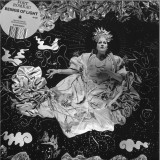

Последний логин: 4 г. назад
ALEX FIGUEIRA - ARACAS / GRASPING & WISHING

Fresh one on Music With Soul - a channel for hot 7"s that always fly out here. TIP!

"Two and a half frenetic minutes that sound like Aphex Twin and The Incredible Bongo Band dancing Capoeira in the early hours of an illegal rave, somewhere in the deep amazon forest. After the success of his first solo 45, Alex Figueira comes back to the aesthetics of the early Fumaça Preta, with an utterly bonkers 45 that can only be described as an “in-your-face acid macumba techno breakbeat funk freakout”.

The flip side contains a haunting Psychedelic ballad, with the sweet vocals of Maddie Ruthless, from NY’s leading Lovers Reggae sensation, The Far East. Equally trippy and beautiful, the soothing sounds of the Wurlitzer piano and the electric sitar will be bouncing in your head for hours after first listen. The kind of song that finds collectors dropping eye-popping sums, decades after the original release. Guarantee your retirement now by getting a few copies! The song “Maracas” is the main theme of the movie “Maracas, tambourines and other hellish things” directed by fellow record nerds Matteo Fava and Dave Potsma. They managed to convince Figueira to play the main character, and later on, to do the complete music score. The movie tells the story of a struggling underground musician / part time record store clerk, whose music career is basically going nowhere until an improbable encounter gives his life a dramatic turn. They asked Figueira to give them something with “a fresh tropicalized take on Blacksploitation”. One might argue, after listening to the insanity carved on the grooves of this piece of vinyl, that he certainly did deliver.

The characteristic mix of synthesizers and heavy percussion used by Figueira in almost all his projects, gains here a somewhat freer dimension, embracing the chaos openly, without ever neglecting the groove, nor the ancestry axis. Values that are at the core of the label. Even while laying down all the instruments himself, Figueira has managed to capture the same out of control tropical psychedelic spirit of his former band, Fumaça Preta. Fans of the group’s outfit will certainly be rejoiced by this new release.

The flip carries “Grasping & Wishing”, an evocative Psych ballad that retains the same tripped-out flair of the A side, while slowing down the tempo considerably with a decidedly african 6/8 beat. Sung by New Orleans’ own “Rocksteady Queen”, Maddie Ruthless, stepping out of her classic Reggae background, to grace the track with her beautiful voice, permeating the issues of belonging, doubt and introspective reflection portrayed in the lyrics, with a thin layer of exquisite fragility that will comfort your ears.

The production includes a significant number of sound effects, ranging from different types of percussion performed with liquids to bamboo flutes of different sizes and several layers of multiprocessed electric Sitar tracks. Listen carefully and you will discover new sonic nounces every time you put the record on."

нет на складе

Закажите сейчас, и мы закажем товар для вас у нашего поставщика.


Последний логин: 4 г. назад
Andy Odysee - Ruthless:Insidious / Provocateur / Status Anxiety

Over the last 3 years, original 90’s D&B imprint Odysee has been steadily building its profile, both through its ‘Remix/Remaster’ series as well as a growing number of new releases. Label Partner Andy Odysee continues to develop his own unique sound with this third solo E.P. All three tracks work together as a triptych, whilst simultaneously maintaining their own unique identity.

Ruthless (In Purpose): Insidious (In Design) immediately establishes an ominous mood of brooding menace with its creeping bass stabs. As the drums enter, the track builds towards a drop of deep subs and driving breakbeat fury, punctuated by the ripped synth basses and curling drum edits that are fast becoming characteristic of Andy’s productions. There are subtle nods to the later Hokusai releases such as Sculptures Hide and even Black Domina; with eerie chiff-flute phrases, and those signature Mirage-style film-noire and dark avant-garde Jazz sounds nestling amongst the tapestry of beats and basslines.

As a contrast, Provocateur has a sweeter, almost sexier feel. A dreamy oscillating pad soon gives way to razor-sharp curling Jazz breaks and deep subs. The vocals border on the ‘saucy’ with their tantalising suggestions of ‘who thinks the technique is to make love to me’ and ‘the sexiest thing about me is my a**!’ There is a subtle darkness nonetheless to this track, with its plethora of dark film-noire samples. Although the framework of breaks & bass is strident enough for the dance floor, it is also the kind of track that is loaded with all those little production details that will reveal something fresh with each hearing.

The third track Status Anxiety is a frenetic, tense piece of music. Underpinned by a relentless bass synth stab that slips and slides throughout the track, the drum patterns are more elaborate, cutting between several different breaks, with abrupt stops to expose dark string sweeps, hammered Rhodes strikes and shimmering china cymbals. Again there is a subtle reference to the Hokusai releases, but with a fresh twist on that darker Jazz-infused style of Breakbeat D&B.

DJ Support
Source Direct, Law & Ben Repertoire, Mister Shifter, Basic Rhythm, Voodoo & Sensenet

нет на складе

Закажите сейчас, и мы закажем товар для вас у нашего поставщика.


Последний логин: 2 г. назад
Lee Perry - Dub Treasures From The Black Ark

Lee 'Scratch' Perry's Black Ark Studio opened its doors in 1974. Situated in his backyard at 5 Washington Gardens, Kingston, Jamaica. Using only basic
equipment, a Teac Four-Track Recorder, a Sound craft mixing desk, an Echoplex delay unit and later adding a Phaser effects unit that he used in conjunction with his Roland RE201 Space Echo. He managed mixing down the tracks from Four track to Two track to make his distinctive whirling sound that sets apart the Black Ark Sound from the other Jamaican Studios.

Born Rainford Hugh Perry, 28 March 1936, Hanover, Jamaica. He began his career at the grand age of 16, working for Clement ‘Coxsone’ Dodd’s sound
system, rising quickly to the position of record scout and organising recording sessions during his 3-year period 1963-1966. Restlessness and unsatisfied with credit he felt due to him he moved on to work with Producers J.J. Johnson and Clancy Eccles, the latter of which would help him set up his ‘Upsetter’ label in 1968, which would see his first of many recordings telling the injustices done to him by previous employers. ‘The Upsetter’ track itself pointed at Mr Dodd but reflected to Perry when he inherited it as a nick name alongside many others during the course of his career, including ‘Scratch’, again taken from one of his recordings ‘Chicken Scratch’ recorded in 1965/1966. Perrys work in 1968 with producer Joe Gibbs was fruitful and resulted in many successful releases, but again feeling a lack of credit and itchy feet, it was time to move on. Still not having a studio of his own, Perry recorded at the various Kingston establishments at the time, Randy’s Studio 17 on North Parade, Dynamics on Bell Road and Harry J’s on Roosevelt Avenue where the bulk of the aforementioned recordings with The Wailers were carried out. His dream was always to build his own studio and not to have to work to the constraints of the other studios and producers.

On opening the Black Ark studios, the hits seemed to come immediately. Firstly with Junior Byles' 'Curly Locks' and in 1975 the massive crossover hit Susan Cadogans' 'Hurt So Good' that reached No 4 in the UK charts.1976 saw Island Records releasing Perrys vast output, timeless material like the Heptones 'Party Time', Max Romeo's 'War Inna Babylon' Bob Marley and the Wailers 'Jah Live', 'Punky Reggae Party' and Junior Murvins 'Police and Thieves' to name but a few.But sometimes missing out on a few classics like Perrys own 'Roast Fish, Collie Weed & Corn Bread' and possibly one of the best reggae albums of all time The Congos 'Heart of the Congos'. Dub releases like 'Revolution Dub' (1975) showed a way forward for his production skills in this formidable arena. Having his own studio allowed him to build up a vast catalogue of tracks to work on. We have culled together some lost productions that Lee Perry carried out with singer Mike Brookes, a fine singer, arranger from that special time in the Black Arks history. Sounding like Junior Marvin in parts and Max Romeo in others but still carrying a distinctive Falsetto voice. Some classic tracks as you can see recorded with the cream of musicians at Lee Perrys disposal. Mr Perry works his magic that gives these songs that distinctive feel that his output.
carried around the mid 1970's.

So we hope you enjoy some more lost treasures from the Black Ark that we feel should be added to that mighty cannon of material that still sound so fresh and strong today.

нет на складе

Закажите сейчас, и мы закажем товар для вас у нашего поставщика.


Последний логин: 4 г. назад
COSMIC JOKERS - GALACTIC SUPERMARKET

180g, black Vinyl. 1974. the Cosmic Jokers were basically Klaus Schulze, Manuel Göttsching, various Ash Ra Tempel and Wallenstein members doing late night jamming. Galactic Supermarket is one of them, and is more rock-oriented than many others. It's no surprise the music bears more than a passing resemblance to Ash Ra Tempel, because of Manuel Göttsching and his guitar playing. Also Jürgen Dollase gives some nice keyboard work, particularly the piano, Farfisa electric piano, synths, and even a little Mellotron. Klaus Schulze were more responsible for the more droning organ and synth end of things, it's pretty obvious when he plays it. The legendary producer Dieter Dierks plays Bass on these nearly never ending improvisation. The recording was transferred from the original analog tapes at the Dierks Studios in Germany. And carefully remastered for an incredible result. Released on the label "Kosmische Kuriere" (Cosmic Couriers)

нет на складе

Закажите сейчас, и мы закажем товар для вас у нашего поставщика.


Последний логин: 4 г. назад
The Limit - Caveman Logic

The Limit

Caveman Logic

12inchSVART260LP
Svart Records
09.04.2021

Svart Records is proud to present The Limit. Punk & Doom originators go straight to the soul of heavy rock on their new album Caveman Logic to be released via Svart Records on the 9th of April 2021. More than a super-group, The Limit goes over the edge, to deliver real-deal, soulful Rock and Roll. Consisting of members of legendary Punk instigators The Stooges, the founders of Doom Rock Pentagram, legendary NYC Punk originators Testors and infamous Portugese metal band Dawnrider, The Limit break out from the foundations of heavy rock and defy all expectations, to show a new generation what doom and punk really means. On the new album Caveman Logic, Bobby Liebling, singer and main-man of Pentagram, one of the originators of early Doom Rock and an inspiration for generations of Heavy Rock fans, on vocals, gives the performance of his career, singing like his life depended on it. Sonny Vincent, enigmatic legend of the early NYC Max's Kansas City, CBGB Punk scene with his band Testors, having been on the road and recording with members of The Velvet Underground, lays down the guitar driven songs, his writing bearing all the hallmarks of ground-breaking Rock history in it’s filthy DNA. Phenomenal bass playing from Jimmy Recca, ex- The Stooges, and Ron Asheton’s New Order, gives The Limit the intense and world-class, speaker-destroying bottom end. Joined by Hugo Conim on Guitar and João Pedro Ventura on Drums from Portuguese band Dawnrider, The Limit fuses star-dust pedigree with an organic incendiary chemistry that’s instantly raw and real. A dream come true to those that know their Doom/Punk history, The Limit brings the past right up to date on Caveman Logic, with an essential, burning passion at the heart of their songs. Seldom has a collaboration of well known stars in music sounded so vigorous and frenzied as The Limit’s caveman-like roar. The Limit is an astoundingly fresh and hot-blooded shot to the veins that Heavy Rock needs in this day and age. Conjured forth by stone-age pioneers, Caveman Logic goes to the heart of impassioned Heavy Rock and Punk, to deliver the basic and vital elements often missing in so much of today’s music. If you want primitive and straight to the soul primal rock, fresh from the grave and exhumed for a new unwitting future, look no further than Caveman Logic. This is it.

Сделать предзаказ09.04.2021

он должен быть опубликован на 09.04.2021


Последний логин: 2026 г. назад
The Limit - Caveman Logic (European Edition on Blue Vinyl)

Svart Records is proud to present The Limit. Punk & Doom originators go straight to the soul of heavy rock on their new album Caveman Logic to be released via Svart Records on the 9th of April 2021. More than a super-group, The Limit goes over the edge, to deliver real-deal, soulful Rock and Roll. Consisting of members of legendary Punk instigators The Stooges, the founders of Doom Rock Pentagram, legendary NYC Punk originators Testors and infamous Portugese metal band Dawnrider, The Limit break out from the foundations of heavy rock and defy all expectations, to show a new generation what doom and punk really means. On the new album Caveman Logic, Bobby Liebling, singer and main-man of Pentagram, one of the originators of early Doom Rock and an inspiration for generations of Heavy Rock fans, on vocals, gives the performance of his career, singing like his life depended on it. Sonny Vincent, enigmatic legend of the early NYC Max's Kansas City, CBGB Punk scene with his band Testors, having been on the road and recording with members of The Velvet Underground, lays down the guitar driven songs, his writing bearing all the hallmarks of ground-breaking Rock history in it’s filthy DNA. Phenomenal bass playing from Jimmy Recca, ex- The Stooges, and Ron Asheton’s New Order, gives The Limit the intense and world-class, speaker-destroying bottom end. Joined by Hugo Conim on Guitar and João Pedro Ventura on Drums from Portuguese band Dawnrider, The Limit fuses star-dust pedigree with an organic incendiary chemistry that’s instantly raw and real. A dream come true to those that know their Doom/Punk history, The Limit brings the past right up to date on Caveman Logic, with an essential, burning passion at the heart of their songs. Seldom has a collaboration of well known stars in music sounded so vigorous and frenzied as The Limit’s caveman-like roar. The Limit is an astoundingly fresh and hot-blooded shot to the veins that Heavy Rock needs in this day and age. Conjured forth by stone-age pioneers, Caveman Logic goes to the heart of impassioned Heavy Rock and Punk, to deliver the basic and vital elements often missing in so much of today’s music. If you want primitive and straight to the soul primal rock, fresh from the grave and exhumed for a new unwitting future, look no further than Caveman Logic. This is it.

Сделать предзаказ09.04.2021

он должен быть опубликован на 09.04.2021


Последний логин: 2026 г. назад
Zebularin - Hermetic Topography

Tape

After tapes on Steep Gloss and Cruel Nature, we are happy that Stuttgart-based collective Zebularin join the OM family with their new release “Hermetic Topography“.

The album, a product of weekly recording sessions between March and July 2020, just when the pandemic slowed a bit down, might be the closest approach to what communal experiences sounded throughout 2020. It‘s a bold design of how collective improvisation can work in the post-covid era.

The first minute of „Budenzauber“ sets the tone for the whole record. Synth waveforms get joined by a drumset, both settling into a vivid conversation between digital noise and analog free jazz, finding a shared rhythm for this journey.

Daniel Vujanic, known to some from his recordings with Höhlenmusk Ensemble, Ixtar or E Jugend and the driving force behind Zebularin, had this urge to layer electro-acoustic solo material, synths, prerecorded audio meditations, without bending the sounds into detailed harmonic structures, but to build up dense, morphing atmospheres. In came Daniel Kartmann, a combatant in many of Vujanic‘s musical endeavours, his percussions, wind instruments and some deep musical talk - from obscure black metal to brazilian psychedelica, from Scott Walker to Gustav Mahler. The duo laid down basic tracks, kept arrangements vague, creating a perfect environment for a range of other players and instruments to walk in: piano, woodwinds, electronics, ebowed guitars and a vibraphone. The resulting record is a tender, affectionate take on jazz and electroacoustic composition. One can hear the routine of the involved cast as well as the fun, deep listening and correspondence that took place; even though this album was not recorded live in big-band-style, musical ideas interlock on an intuitive level and complement each other.

Take „Peljuga“ as a perfect example, a loosened jazz improv reminding of The Notwist‘s more psychic enhanced moments, which blends into a conversation between a contact mic and heavily manipulated synths and turns into a minimalist piano composition, which melds into a climactic peak and is interrupted only to rise again. And as complex as this description sounds, as uplifting is the actual song. Or the album‘s last track, „Holmen“, which starts out as an underwater ambient piece and evolves pretty organically into cosmic power electronics.

Despite its name and the Heideggerian flair of some song titles, „Hermetic Topography“ is all but hermetic. It‘s rich in musical colours without melting into a quagmire of maximalist noise. It‘s sophisticated but never top-heavy. It might be one of your favourite tapes of 2021.

Сделать предзаказ19.03.2021

он должен быть опубликован на 19.03.2021


Последний логин: 2026 г. назад
Gene Russell - Talk to My Lady (Remastered Vinyl Edition)

In between acting as Producer on all of the Black Jazz label releases, keyboardist Gene Russell also cut two fine albums for the imprint, of which this is the second, released in 1973. Judging by the quality of their respective solo outings for the label, the fact that Russell’s band includes bassist Henry Franklin and guitarist Calvin Keys bodes very, very well for the quality of this record. And indeed, Talk to My Lady represents a sterling stylistic leap for Russell from his New Direction album, which was the first release issued on Black Jazz; here, he’s leading an electric band instead of the basic piano trio format found on the former record, and playing a number of original, soul jazz compositions like “Get Down” and the title tune. As for the covers, both “Me and Mrs. Jones” and “You Are the Sunshine of My Life” are heartfelt renditions given a little extra bounce by Russell’s ivory tickling and Franklin’s expressive bass playing in particular, while the version of “My Favorite Things” goes way out beyond what John Coltrane played on his original Atlantic studio version. It’s hard to go wrong with a Black Jazz album and you won’t on this one from the label’s creative helm. First-ever LP reissue!

Сделать предзаказ05.03.2021

он должен быть опубликован на 05.03.2021


Последний логин: 2026 г. назад
HAWKWIND - Solstice at Stonehenge 1984

Hawkwind have always been associated with music festivals, most notably the free festivals, where Dave Brock has said that, at

those events, the band is not shackled to appease an audience by giving them what they expect and have paid to see. With that obligation removed, the band can relax and experiment more than usual and gigs become even more fun. Their sessions, where they played for free, sometimes with the Pink Fairies, at Canvas City, outside the official site of the Isle Of White Festival in 1970, are a matter of legend and Nik Turner gained much attention when he painted his face silver and was much photographed as a result. During his set, Jimi Hendrix referred to him as 'the cat with the silver face'. However, when we think of Hawkwind and festivals, the word Stonehenge leaps to the fore.

The band always loved being there, enjoying the whole event as well as the freedom of how and when they played. This was not a time of business, but a time of fun. The most important one of these was Stonehenge 1984, which proved to be the last festival before the authorities moved in the following year to block the festival from being set up and Hawkwind ended up playing a few miles away instead. It was the sad end to an era. It had taken place twelve times and, had it been allowed one more time, it would have become a public event and the powers that be were determined to prevent that from happening. Happily, the 1984 festival was recorded and filmed and the Hawkwind Solstice Eve and Solstice Morning were both preserved...and we should be grateful for that.


The fact that Hawkwind were playing for free didn't mean it was a basic show. As well as the line-up of Dave Brock, Harvey Bainbridge, Huw Lloyd Langton (who played the evening session, but not the following morning), Nik Turner, Alan Davey and Danny Thompson, there were half a dozen dancers, a mime artist and fire spitting. A free event, it was the ideal time to introduce the new rhythm section to the band in the form of Danny Thompson on drums and Alan Davey on bass, with Harvey moved to keyboards. A move which was to have a long term affect in the way he made music, leading to his solo career, as well as years playing synths for Hawklords, in years to come, after his stint as the Hawkwind keyboards player came to an end.. Danny fitted the bill comfortably and drummed for the band until he left in 1988, to be replaced by Richard Chadwick. Danny went on to play for other bands including Bedouin and Pre Med. He also recorded a cassette album called Skinwalker. Alan made a good team alongside Dave Brock and it can be seen on the video just how pleased he was to be playing alongside Dave Brock, a man whom he had only met for the first time in November 1982, backstage at the Ipswich Gaumont. He went on to be the longest serving Hawkwind bass player, before moving on to pursue solo projects and form a nmber of bands. So in terms of the line-up, Stonehenge 1984 had a notable impact on the formation of the band for a number of years and, indeed, the destinies of Harvey, Danny and Alan. As if that were not enough to make the event special in the annals of Hawkwind, they played an interesting and varied main set in the evening, featuring a blend of old and new Hawkwind songs, along with numbers from Inner City Unit and

Bob Calvert's Lucky Leif And The Starfighters album. In keeping with the relaxed atmosphere, there was a considerably extended

version of Ghost Dance, lasting around ten minutes. The sunrise set was special too, with a long, laid-back, jam at dawn, in fitting with the occasion.


A lovely and relaxing start to the day and the kind of jam they couldn't really play to a paying audience. It's good to have the

memories of this significant festival gathered together in three formats.

Enjoy this special set, which commemorates a special event, not only in the history of Hawkwind, but of the saga of Stonehenge festivals.

Сделать предзаказ05.03.2021

он должен быть опубликован на 05.03.2021


Последний логин: 2026 г. назад
KASHMERE STAGE BAND - Our Thing
  • Boss City
  • Misty
  • Take Five
  • Burning Spear
  • Billie Joe
  • Summertime
  • Georgia
  • Every Day I Have The Blues

Self-released in 1969 ‘Our Thing’ is the debut album of the performing Houston unit known as Kashmere Stage Band. The Texas student band came together at the Kashmere High School and under the direction of musical director Conrad O. Johnson, released a series of cult album on Kram Records, before disbanding in 1978. Raw funk, that’s basically what they’ve been playing and clearly there was a blacksploitation feel all over the place, but their drive was quite unique. Rediscover the myth

Сделать предзаказ05.02.2021

он должен быть опубликован на 05.02.2021


Последний логин: 2026 г. назад
Sam McQueen - Dreams In Sepia 2x12"

Sam Mcqueen

Dreams In Sepia 2x12"

2x12inchARTLESSLP2
a.r.t.less
23.11.2020

In these dark times of Covid we still have our music. We have the sounds to soothe us, distract and take our minds away from the chaos and uncertainty.
We can't dance like we used to but we can hear and feel. Our release must be found in another way, we must look within. We find solace and grant ourselves space and time in the music.

Sam McQueen (Indio co-producer with John Beltran, Indigo Aera, Delsin Records, Furthur Electronix) presents his debut album Dreams In Sepia for Mojuba sub label a.r.t.less and hits us with a real time soundscape of the moment, an epic-like document of these times. The rhythms are subtle, sometimes broken, the time structures often complex, this is not primarily dance floor orientated music. These sounds are way more cerebral, for the heads. They reflect perfectly the complexities of life we are experiencing in 2020.

The edges are rounded with occasional strolling bass lines and comfy chords. Slabs of keys and spaced out female vocals like a psychedelic journey that scares you at first yet comforts you soon after. Sam McQueen's mediatory sounds give an overwhelming sense of the moment. The music makes you take time out and listen. Its purposeful manner suggests there are more hours in the day, like time slowing down a pause, like the sun slithering slowly behind the horizon. These are sunset sounds for dark back-rooms.

Daytime or night, it works. This is the soundtrack for the other room, the deeper sounds not designed to make you dance. This music doesn't get in your face, it creeps up and smacks you on the ass. There are elements of early nineties UK Techno, a warmth and delicateness that pervades a distinct lack of four four dance floor in the beat structures, a softer tone throughout than the harder Detroit techno sounds of the same era but still nods and acknowledgements to the D in the layout and way the sounds present themselves. Think John Beltran, Symbols and Instruments, Black Dog or Kirk DeGiorgio, mid 90s Berlin sounds from Basic Channel / Rhythm & Sound, but in lockdown. Music for today's modern lacking landscape. The sounds often familiar, analogue, the drums, hi hats and snares, shimmer, jazz style. They accentuate and push the rest of the elements around them.
?In a bygone era this would be crudely classed as Chill Out music. In 2020 Covid era its about how it makes you feel as you relax and really listen to it. It is about emotion and empathy, a oneness, a new unknown and a deeper train of thought for the listener. Much like 2020, Sam McQueen lays the pieces round the edge of the jigsaw and lets you fill in the rest.

нет на складе

Закажите сейчас, и мы закажем товар для вас у нашего поставщика.


Последний логин: 4 г. назад
Steve Legget & Mark Hand feat Greg Blackman - If You Cannot Try

Apollo are delighted to welcome Steve Legget & Mark Hand to the fold with their lush new single ‘If You Cannot Try’ featuring the dulcet vocals of Greg Blackman. Originally released as an uplifting bumping house track on Ramrock Records Blackman sent the stems of the release to longtime collaborator Steve Legget for a rework. Legget tore the original to pieces, deconstructing it into a much more ambiguous form. ”I’ve never been a fan of a chorus in a song,” Legget muses. "I like songs that are not direct that leave room for your imagination - Mark and I ended up building a new song around the texture of the original.”

Hand and Legget met in the early 90s at the Northern College of Art in Middlesbrough, and have collaborated at various times in the intervening years, through a shared love of Detroit techno, experimental electronic music, jazz and funk. Their creative process involves sending audio files back and forth - “The release was written in collaboration over the internet Greg in Colchester, Mark in Hartlepool, and me in St Albans."

Hand added spaced out textures and riffs from his collection of vintage Fender Rhodes and classic synths - taking the track into sunny space funk realms that comes on like a lost release from joe Claussell’s Spiritual Life label or Basic Channel jamming with Herbie Hancock.

Using their new version as the seed - Hand decided to try his own ’Teesside Techno’ version - "I wanted to give the track more of a 'machine funk' vibe with my rework” he explains. “I generally like to work by jamming with hardware - the bass line is generated by triggering the arp on my Juno 6..using triggers from a TR606 kick drum and hats replaced by a TR909.. the result being more of a jackin' electronic funk mutation!"

This continuing game of musical pass the parcel has indeed born some juicy fruit -

нет на складе

Закажите сейчас, и мы закажем товар для вас у нашего поставщика.


Последний логин: 3 г. назад
Tirzah - Devotion

Tirzah

Devotion

12inchWIGLP394
Domino Records
03.12.2019

Domino introduce 'Devotion', the hugely
anticipated debut album from one of London's
most exciting underground talents, Tirzah.
Arriving on the back of a lauded run of releases on
Greco Roman, 'Devotion' shines a brilliant new
light on Tirzah's unique experimental pop,
exquisitely soulful voice and potent contemporary
lyricism.
Written and produced in collaboration with
longtime friend and collaborator Micachu,
'Devotion''s hallmarks are rooted in a fresh, raw
emotion and feeling.
CD and heavyweight black vinyl with digital
download code.

нет на складе

Закажите сейчас, и мы закажем товар для вас у нашего поставщика.


Последний логин: 6 г. назад
VASE - Amos’ Flat : Room 1

Vase

Amos’ Flat : Room 1

12inchINDEXOPAL01
INDEX:Records
22.11.2019

Amos’ Flat is a three part album by VASE in collaboration with Opal Tapes & INDEX:Records: an odyssey of sonic manoeuvres through ambient, bass and IDM. This trilogy reveals VASE dissecting compositions down to sparse rhythmic explorations, disruptive power shifts and nebulous bass bliss.

Amos’ Flat: Room 1 will be sculpted into the physical form of a 12” vinyl record, released by INDEX:Records, followed by Opal Tapes reeling out Room 1 & 2 on double Cassette Tape.

Room 3 transcends into the digital, where VASE passes the brush to fellow artists, to rework into their own decorative pieces. Featured artists for Room 3 include Basic house, Fis, Katsunori Sawa, Shelley Parker and PYUR.

нет на складе

Закажите сейчас, и мы закажем товар для вас у нашего поставщика.


Последний логин: 5 г. назад
Jack on Black - Plutonian Funk EP

Vinyl Only

Jack On Black consists of Jib Rafill and Joe Le Groove, the pair met 6 years ago when Joe was djing in Malta. Their love electronic music, machines and old school sampling techniques sparked a desire to collaborate and organically work towards writing various genres of music, including Dub, House, Techno, Downtempo and even Film Scores.

Their music is made from passion, a love of technology and Roland outboard gear. Both have been on the scene for many years and separately have their own unique journeys and projects. Joe Le Groove started producing in the mid-nineties and was taught the basics by Darren White aka D-Bridge. He currently has projects on labels such as Desolat, Defected, Moon Habour,Snatch, Defected, Heidi's Jackathon

The pair also have released music on Cesare vs Disorders Serialism and written scores for forthcoming independant films.Their sets are performed live using outboard gear, mics, turntables and EFX. Expect the unexpected from this unlikely duo...

Plutonian Funk is an EP that has been crafted for lovers of House & Techno. It has been destroying dance floors across the world by a handful of the scenes elite, such as Seth Troxler, Quenum Richy Ahmed, tINI, Cesare vs Disorder, Carlo Lio, Victor Calderone, Marco Carola, Audiofly, Dubfire and more.

The EP is split across vinyl and digital, all the tracks on vinyl will never be released on digital format.

The boys have been working hard over the past few years to develop their sound and forthcoming live performances with visuals

Enter Jack On Black…

нет на складе

Закажите сейчас, и мы закажем товар для вас у нашего поставщика.


Последний логин: 4 г. назад
Ellis Dee Project - Do You Want Me / Rock To The Max

This record contains two stone cold classics from the rave era. If you bought any tape packs or went to any raves in 1992, these are the two staple tracks most DJs would draw upon to keep the energy levels high.


On top of that, they are written by the rave overlord – Ellis Dee. Basically, the go to guy for any promoter that wanted their rave to be up there in the top tier.
These tracks sound as fresh and as the day they were released. And that is why we have decided it needed to have another short run repress as its been 4 years since we first pressed this record. But to make them even more special we have pressed 120 units on heavyweight 180g marbled grey vinyl. And as with every Vinyl Fanatiks release it comes presented in a black paper inner sleeve within a heavyboard Vinyl Fanatiks housebag.


This is a short run so get your orders in whilst they are in stock.


Fantazia… are you ready???

нет на складе

Закажите сейчас, и мы закажем товар для вас у нашего поставщика.


Последний логин: 6 г. назад
Charles Tolliver - All Stars

Charles Tolliver

All Stars

12inchSES-19681
Strata-East
19.03.2019

This was Charles Tolliver's first album as a leader. The setting is unique only because his second Freedom-Black Lion album 'The Ringer' and all of his subsequent albums on Strata-East featured his quartet Music Inc. with pianist Stanley Cowell. Here he is surrounded in quartet and quintet formats with a truly stellar cast of the leading players on the New York jazz scene.

Charles plays the role of leader, composer and trumpeter. But it is surely that last role that deserves the most attention. The trumpet is a brass instrument that leans toward a hard sound and staccato phrasing. Yet Tolliver is the quintessence of fluidity. While it may be undeniable that he has learned from his musical heritage and past trumpet masters, a trumpeter of such flow, tone, control, lyricism and creativity is, by definition, a major musician.

Charles Tolliver first came to the professional jazz scene in the mid-sixties, when he first met Jackie McLean. Under McLean's leadership, he played on a number of Blue Note record sessions, some of which have yet to be released. He contributed original tunes to many of those sessions.

Within a couple of years, Tolliver was a well known figure in New York circles, playing and/or recording with Booker Ervin, Archie Shepp, Andrew Hill, Roy Ayers, Art Blakey, Sonny Rollins, Willie Bobo, Gerald Wilson, McCoy Tyner, Hank Mobley, and many others. His compositions were getting recorded by many artists. He gained his greatest recognition during a two year stint with the Max Roach quintet that also included Gary Bartz and Stanley Cowell.

There is also a previously unreleased bonus track of the song, "Repetition", recorded by Charles for this LP which will be included on this new release of the album. This song was originally made famous by Charlie Parker's LP With Strings.

This album is certainly an important and lasting document in light of the musicians involved and in light of its unique context for Charles Tolliver. But basically, it is just a great album to listen to. Michael Cuscuna

нет на складе

Закажите сейчас, и мы закажем товар для вас у нашего поставщика.


Последний логин: 7 г. назад
Продуктов на странице:
N/ABPM
Vinyl
