Cerca:bare sole

Generi
Tutto
  • 1
Kurtiss - The Curtis Vodka Ep

Kurtiss is a shadowy and enigmatic figure working on the boundaries of civilization. A sporadic figure on the House music scene with eccentric habits, Kurtiss’ music is a rarified sonic experience for those who seek it out. The Ameri-can artist is hard to pin down and his music is a tantalizing little secret only for adept diggers who appreciate the style of Hi-Def House music that the artist has cultivated. Although he’s a known Soundcloud fixture, he’s only put out a handful of digital singles as Curtis Vodka in the past, with Mutual Intentions facilitating his latest and immortalizing his music on their next set of releases. A nomadic artist, who’s worked on music ranging from Ghetto Tech to House, his music has spanned the known musical spectrum, forging uncanny relationships with everything from 50 Cent to Mall Grab. Under the pseudonym Kurtiss (or Curtis Vodka), he’s all about HIGH-Fi House, life, aliens, Jazz and no trends. It’s an attitude that he lays bare on this rare contribution to the physical, recorded format for Mutual Intentions on ‘The Curtis Vodka EP’. The EP weaves classic House music influences through a penchant for vintage sound machines and arrangements that evoke a solemn air. Elements of Gospel and New York’s deeper inclinations in House music seep through his sound as archived vocal samples and noisy machines give his work its defining character. Glistening keys and strings that slither through airy textures create dense aural experiences on ‘The Curtis Vodka EP’, calling to mind the musical masterpieces of House music’s golden era when the likes of Kerri Chandler and Mas-ters At Work were producing som

In Stock

Disponibile in Stock e pronto per la spedizione

Kas - Like Sunlit Threads 2x12"

Encounters with the ineffable.
The dormant roused.
Openness, observation, questioning, humility, sincerity.
Re-imagining the known, that which is untapped, all that was concealed.
Pathways to wholeness unearthed.
Meeting of truest self.
Temporal versus infinite.

The fallout.

Sudden disintegration, falling away, continuity shattered.
Facade ruptured, persona released, identity laid bare, history withdrawn.

Appearance of no-thing-ness.

Pregnant with possibilities, birth out of chaos, mystery unfolds.
Healing through anguish, renewal through trauma.
Newborn imaginings.

Accept the summons.

Chapters of lucidity, adventures in clarity.
Alignment in harmony.
All encompassing.
Reorientation emerges, subsequent renewal, transcendent insights, enlightened revelations.
Surrender reached, acceptance embraced, liberation appears.

Transmutation.

Solemn symbols of gratitude.
New found depth of meaning, of understanding, of moving, of seeing.
Beyond mental illusion, unifying as nature, expression of stillness.
Vision of the undivided, transmission of wisdom.

Flowering into being.

- Kas ॐ

In Stock

Disponibile in Stock e pronto per la spedizione

GbClifford - Love, Diskito (TAPE)

There is an abruptness to waking up to the sight of the other person’s back, a quiet violence hidden in the impression of intimacy, that’s leaving an aftertaste of emptiness. The feeling of losing oneself completely in a love that is given but never returned. Or the slower, less immediate one - the gradual disintegration of a world into which so much was once invested.

Love, Diskito is like a worn out overdubbed cassette found in a drawer, with its underlying tracks flickering between contrasting emotional states. Written, produced and mixed by GbClifford, the release follows up on the elusive, multifaceted output of the Prague-based experimental artist, who dresses fleeting glimpses of youthful yearning, sentiment and fragility in the blunt apparel of distortion and immediacy.

Drawing from their idiosyncratic, collage-like approach to music production, GbClifford condenses on Love, Diskito a varied palette of field recordings, samples, distorted instruments and ambient sounds. They resemble doodles in the corner of a school notebook, tightly overlapping with the evocative, minimalistic artwork by Czech artist Kateřina Šípová.

The guidance of GbClifford’s personless, at times highly decomposed vocals modulates the emotional urgency of the recording and reflects on the past. “I’m so close to relapsing, I’m here for you, closer than ever,” echoes in the elusive track So Only Yours, carrying the undercurrents of surrendering to the sole necessity of caring, even at the cost of individual ache. While the album does not forgo its earthbound, bare setting, there is something deeply pastoral and sky-gazing in the layered, multi-pitched vocals, horn-like tones and sense of space that Love, Diskito evokes.

pre-ordina ora19.05.2026

dovrebbe essere pubblicato su 19.05.2026

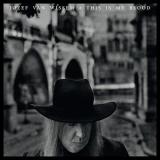
JOZEF VAN WISSEM - THIS IS MY BLOOD LP
  • 1: What The Eternal Beginning Is 6.0
  • 2: Praise Shall Sound From Shore To Shore, Until The Sun Shall Rise And Set No More 9.0
  • 3: Concerning Our Saviours Silence 7.02
  • 4: How You Must Enter Into Suffering 7.07
  • 5: Remission 4.27
  • 6: All You Do All You Bare 2.2
  • 7: What The Eternal End Is 4.13

**RED VINYL**Bookending “This Is My Blood “ are two cinematic hypnotist slide lute pieces that evoke contemporary deserted landscapes. They were improvised and made for “ Maquina”, a film shot in the Colorado desert during a psychedelic trip by film maker Joaquim Pujol. The works on here, like the ecstatic second piece invite a return to long form listening. They explore contemporary darkness and contemplate personal loss. There is solely one vocal piece, “ Remission”. A worldwide concert tour of this material is slated for 2026/2027. Since studying the lute in New York with Patrick O'Brien in the 1990s, Van Wissem has gone on to create works equally as rooted in classical Renaissance and Baroque forms of lute music, as contemporary sounds spanning drones, electronics and field recordings. Throw in some of his formative influences from the no wave and industrial scenes, alongside a dedicated approach to minimalism and this has resulted in Van Wissem producing distinct and singular work whose sound is often a marriage of opposites; meditative and intense, forward thinking but with a sense of the arcane. The Quietus has called him "probably the most famous lutenist in the world”. Jozef Van Wissem is an avant-garde composer and lutenist who plays a unique all-black baroque lute. His timeless music is often described as hypnotic, minimal, and hauntingly atmospheric, merging beauty with a dark, meditative edge. His lyrics have a mythical Christian appeal, incorporating themes of love, faith, and the afterlife, often with a repetitive, mantra-like quality. Bridging classical traditions with modern sounds like drones, electronics, field recordings and voice. He collaborates with filmmaker and musician Jim Jarmusch, including the award-winning soundtrack for Only Lovers Left Alive, for which Van Wissem won the Cannes Soundtrack Award in 2013. He also scored the Sims Medieval Video game ( 2011), Uncle Howard ( 2016) Land (2018), Irma Vep (2022), Queens (2023) and Un Prince (2024). He did a world tour in duo with Jarmusch in 2025 and their 5th record “ The Day The Angels Cried” was released. Van Wissem tours extensively, performing in diverse venues from rock festivals to churches, and has worked with artists like Tilda Swinton and Zola Jesus. In 2019 he was commissioned by Cinematheque Francaise to score the silent horror film Nosferatu (1922). He released the soundtrack in 2022 on his own Incunabulum label. The New York Times wrote: Beginning with a solo played on the lute, his performance will incorporate electric guitar and distorted recordings of extinct birds, graduating from subtlety to gothic horror. “My soundtrack goes from silence to noise over the course of 90 minutes,” he said, culminating in “dense, slow death metal.” In 2024 Van Wissem did a sold out nationwide American tour with the film. A worldwide tour is slated for 2026/2027

pre-ordina ora12.05.2026

dovrebbe essere pubblicato su 12.05.2026

Julia, Julia - Sugaring A Strawberry LP
  • 1: Bound
  • 2: A Love That Hurts
  • 3: Breathe
  • 4: Feeling Lucky
  • 5: Flickering Light
  • 6: I Know
  • 7: Blackout
  • 8: Stalemate
  • 9: Hang On
  • 10: One Of Us Cannot Be Wrong

Sugaring a Strawberry, the sophomore record from Julia, Julia, is a study in coming undone—on purpose. Recorded at COMA, Julia Kugel's home studio, and mixed through a custom Flickenger clone, the album drifts in and out of clarity like memory itself. It's emotionally retrospective, creatively unvarnished, and deeply human. You can hear it in the hiss, the warmth, in the vocals so raw they're like an open window. These songs weren't engineered for perfection. They were built to breathe. Her long-time collaborator and husband, Scott Montoya, mixes it all so loosely that you can hear the air between tracks— a space that makes the music feel inhabited rather than recorded.


"Bound" opens the album like a secret passed between sisters, solemn and unspeakably close. It begins with the softest of touches: hushed guitar, a near- whispered delivery that carries the intimacy of someone singing only for one other person. It's a love song, but not romantic, more ancestral in the way long bonds can be. All glow and undercurrent, "I Know," is like hearing someone hum through a wound. The track arrives as if it had been waiting, coiled and complete, to be sung. Its pulse is slow but insistent, anchored on a hypnotic loop and a vocal that's half-incantation, half-confession. One of the most outward-facing songs on the record, "Feeling Lucky," opens like a cigarette flicked in the dark– smoky and a little bit slick. Built on a skeletal beat and a nearly detached vocal, it leans into a sarcastic swagger that barely masks the ache beneath. The delivery is droll and glazed, the instrumentation is sparse and a little woozy, leaving space for her voice to sway—a shrug of a song, stylish in its sadness. "A Love That Hurts" drifts in on soft, fingerpicked guitar and a dry, close-mic vocal that feels both haunted and immediate. The mix is stripped down and analog-warm, letting tape hum and silence frame the emotion. Julia sings like she's remembering something she doesn't want to, each line a slight unraveling. Like the rest of the album, "A Love That Hurts" doesn't push toward resolution. It sits in the ache, sifts through it, makes it beautiful.

Sugaring a Strawberry doesn't seek catharsis so much as stumbles into it. There's a quiet volatility to these songs like they might fall apart if you press too hard. It moves in shadow and softness, asking questions it doesn't answer. It doesn’t end with closure. It ends with truth.

pre-ordina ora28.11.2025

dovrebbe essere pubblicato su 28.11.2025

Tekamolo - Best tunes for your answering machine
  • Oh No
  • Fail
  • World
  • Never
  • Flag
  • Please
  • Nothing
  • Break
  • Home

‘Best tunes for your answering machine’ is the debut album of oblique, introspective electronic music by the mysterious solo artist Tekamolo.

Fusing melancholic synth pop and absurdist trip hop, ‘best tunes for your answering machine’ is a special assemblage of pitch-modified vocals, retrofuturist samples and freeform electronics that coalesces into music both outlandish and bittersweet, playful and profound.

Produced by a renowned artist, opting to conceal their identity under the guise of a new pseudonym, Tekamolo presents a series of curious, incognito confessionals with ‘best tunes for your answering machine’. An album led by a voice like a sentient, heavy-hearted android, the nine tracks collected here contend with themes of inertia, solitude and longing, revealing an inspired, affecting stream of messages from an unknown caller.

Without preconceptions tied to provenance, this is music liberated from the burdens of biographical detail. Music that eschews ego and the cult of the self. An album that can be heard purely for the strange, poignant sounds unfurled throughout.

For Tekamolo, the album signifies an attempt to navigate aesthetic reductionism, as well as an absolute sense of seclusion:

“An audio diary of a lonely soul. Broken, wounded mantra-songs. Memories of things that never happened. Dreams that never had the chance to be dreamed. Disassembled songs. As if testing the limits of emptiness — how much void can a song endure while still remaining a song? How much can be stripped away, how bare can it be, and still, the groove lingers, the melody pierces the memory, sinking into the listener's mind.

These are the skeletons of songs, an attempt to assemble music from the bare minimum — words, sounds, fragments of memory.

The songs are filled with desperate calm. They are not sung to the world, nor to anyone tangible, but solely to oneself and to the unseen. In a way, they could be considered songs of the end of the world: you wake up, and there is not a single person left in the world. At least, no one you can see. You wander through empty streets and deserted shopping malls, humming softly to yourself, hoping that someone — anyone — might hear you.”

‘best tunes for your answering machine’ is a sui generis conception of warped 21st century blues from an enigmatic figure, a work filled with surreal, indelible songs of modern isolation. Lost contemporary hymns, now recovered. Voicemails worth hearing.

pre-ordina ora08.08.2025

dovrebbe essere pubblicato su 08.08.2025

Fan Club Orchestra - An Insane Portrait (TAPE)

The strength of Fan Club Orchestra's (FCO) trajectory lies in their nebulous, collaborative, and experimental nature, always with Laurent Baudoux at the centre. With its roots in the DIY impulses of the Brussels art and music scene of the late nineties, Baudoux rallied together a revolving cast of players with an unconventional ensemble of instruments to explore melancholic psychedelia that touched on drone and minimalism as readily as it carved minor pop hits from cracked electronics. Performances were often highly improvisational, aided by the barely controlled chaos that guest collaborators—such as American artist Mike Kelley—would inject into an appearance.

FCO self-released two albums in the early 2000s before finding a home with Sonig, where they released several more records up until their last with the label in 2013. This was a fitting frame as Sonig, like FCO, channelled the fervour and formalism of the experimental music history of the Rhineland, which includes Kraftwerk, krautrock, and key early electronic music studios.

Following an eleven year hiatus, Laurent Baudoux reassembled the group in 2024 and presented a new album with the esteemed Glaswegian label 12th Isle late in that same year. Building on the strength of the new iteration, and with the aim of reappraising some of the rich yet oblique history of the group through this new lens, FCO have remastered and reissued their 2013 album, 'An Insane Portrait'.

The recordings were originally commissioned in 2009 for Fabrizio Terranova's film 'Josée Andrei, An Insane Portrait' about the truly remarkable figure Josée Andrei. Shot in San Francisco, the film is an intimate portrait of Andre. Blind from birth, she is a witch, painter, photographer, tarot reader, and psychology and modern literature graduate.

'An Insane Portrait' captures a stripped-back FCO, with Baudoux working solely with original FCO member Ann Appermans. The configuration of Baudoux's electronics and Appermans' bass guitar yield a tender and preciously melodic suite of instrumentals.

Originally released on vinyl by Sonig in 2013, the remaster will again be presented by the label in a limited cassette edition and in digital formats, each featuring a bonus track that was not included in its original release.

pre-ordina ora27.06.2025

dovrebbe essere pubblicato su 27.06.2025

Fan Club Orchestra - An Insane Portrait

The strength of Fan Club Orchestra's (FCO) trajectory lies in their nebulous, collaborative, and experimental nature, always with Laurent Baudoux at the centre. With its roots in the DIY impulses of the Brussels art and music scene of the late nineties, Baudoux rallied together a revolving cast of players with an unconventional ensemble of instruments to explore melancholic psychedelia that touched on drone and minimalism as readily as it carved minor pop hits from cracked electronics. Performances were often highly improvisational, aided by the barely controlled chaos that guest collaborators—such as American artist Mike Kelley—would inject into an appearance.

FCO self-released two albums in the early 2000s before finding a home with Sonig, where they released several more records up until their last with the label in 2013. This was a fitting frame as Sonig, like FCO, channelled the fervour and formalism of the experimental music history of the Rhineland, which includes Kraftwerk, krautrock, and key early electronic music studios.

Following an eleven year hiatus, Laurent Baudoux reassembled the group in 2024 and presented a new album with the esteemed Glaswegian label 12th Isle late in that same year. Building on the strength of the new iteration, and with the aim of reappraising some of the rich yet oblique history of the group through this new lens, FCO have remastered and reissued their 2013 album, 'An Insane Portrait'.

The recordings were originally commissioned in 2009 for Fabrizio Terranova's film 'Josée Andrei, An Insane Portrait' about the truly remarkable figure Josée Andrei. Shot in San Francisco, the film is an intimate portrait of Andre. Blind from birth, she is a witch, painter, photographer, tarot reader, and psychology and modern literature graduate.

'An Insane Portrait' captures a stripped-back FCO, with Baudoux working solely with original FCO member Ann Appermans. The configuration of Baudoux's electronics and Appermans' bass guitar yield a tender and preciously melodic suite of instrumentals.

Originally released on vinyl by Sonig in 2013, the remaster will again be presented by the label in a limited cassette edition and in digital formats, each featuring a bonus track that was not included in its original release.

pre-ordina ora27.06.2025

dovrebbe essere pubblicato su 27.06.2025

Marc Melià - Pièces Monophoniques
  • 1: Overture
  • 2: Illusions Of Polyphony
  • 3: Echos Et Fantasies
  • 4: In Simplicity We Trust
  • 5: Octus
  • 6: Volatiles
  • 7: Resonances
  • 8: 224 Steps
  • 9: Subtracting The Superflous

Crafted entirely on an analog monophonic synthesizer with no overdubs, Pièces Monophoniques is a tribute to simplicity in an era of limitless digital possibilities. Since his debut album, Music For Prophet (Les Disques du Festival Permanent, 2017), Majorca-born composer Marc Melià, now a long-time resident of Brussels, has been redefining the contours of electronic music through a minimalist, reductionist approach. Much like a solitary hike through the vastness of mountains, where one carries only the essentials, Melià’s work invites listeners on a journey stripped of excess, focusing instead on the purity of sound and intention.
While some have dismissed monophonic music as overly simplistic, others have embraced its distinct charm. Historical records, such as those by Johannes Quasten, reveal that early Church leaders were drawn to monophonic music because it resonated with the era's cosmological beliefs, highlighting the harmony and unity of all creation. In an age of digital abundance, Marc Melià deliberately embraces constraint, crafting an album that thrives within a limited palette of choices. Yet, from these self-imposed boundaries emerges a stunning universe, brimming with rich textures and elegant harmonies. For his debut album, Melià worked exclusively with a Sequential Prophet. With Pièces Monophoniques, his third LP, he returns armed solely with an analog monophonic synthesizer and handcrafted MIDI sequences etched directly onto a single stereo track. These recordings seek to uncover beauty within the boundaries of limitations and simplicity, rejecting any embellishments that are not essential. Melià presents the bare skeleton of music, highlighting the power of absence and silence as creative forces. Like the hidden mass of an iceberg, what is not heard becomes as significant as what is heard.
The album navigates the boundary where the quest for an uninhibited emotional response intersects with the mechanical sounds generated by synthesizer circuitry. Despite being a collection of beatless tracks, a pulse occasionally surfaces, like in the closing piece, "224 Steps. A sharp sequence blended with multiple delays and reverbs creates the vaporous celestial specter of multiple voices in "Illusions of Polyphony", while "Échoes et Fantasies" conjures the illusion of dual harmony. The expansive reverbs and silences between the euphoric synth phrases in "Overture" transport us to an imaginary magestic landscape shaped out of an electric field. "Resonances," a one-note drone-like sequence, embodies the album's aims as a series of resonances created with the synth filter emerge from the fundamental note.
"Pièces Monophoniques," aims to contribute to a tradition that dates back to the dawn of humanity. After all, there is no denying that the earliest music crafted by humanity was monophonic, from the soothing lullabies sung to newborns to Gregorian chants, traditional labor songs, and the repertoire of solo compositions by countless composers.

pre-ordina ora13.06.2025

dovrebbe essere pubblicato su 13.06.2025

BARE FOLK - NOE TROR JEG & NOE VET JEG
  • Reinsdyrlokk
  • Solsiden
  • Barnedrm
  • Sumarmorgon
  • Allfarvei
  • Noe Tror Jeg & Noe Vet Jeg
  • Båndsull
  • Til Havet Går Tomt For Vann
  • Rapport- Og Panelvise
  • Hele Jorden Rundt
  • Årepolska
  • Solen Skinner Ikke På Meg
  • Srgesang
  • Ole, Lukk Yet

Bergen-born Bare Folk's songs belong to the ballad genre, with clear elements of jazz and folk music. With harmonious, original melodies, the mood ranges from the melancholic to the life-affirming. Inspired by the greats of Norwegian ballad music, Bare Folk vitalizes the connection between poetry and music. Bergen's very own folk jazz song band Bare Folk has already been critically acclaimed and established as something unique on the music scene in the city between the mountains. Nevertheless, Bare Folk plays songs that songs should sound well-known but fresh, wistful but hopeful, humorous but serious. Their debut album is called "Noe Tror Jeg & Noe Vet Jeg" (Some things I think & some things I know). No surefire title, but it is sure that it contains something for every taste. Here you will find everything from socially critical satire to traditional harp songs to love songs - and everything in-between in beautiful harmony.

pre-ordina ora13.06.2025

dovrebbe essere pubblicato su 13.06.2025

Himmelkraft - Himmelkraft LP 2x12"
  • The Pages Of History (Opening)
  • Full Steam Ahead
  • Uranium
  • Paika
  • Fat American Lies
  • Dog Bones
  • When The Music Stops
  • Gorya
  • There’s A Date On Every Dream
  • Crystal Cave
  • I Was Made To Rain On Your Parade
  • Deeper

"There is great power in secrecy. Detached from the world, brewed under a strict code of confidentiality, a new lifeform came into existence. Led by none other than Sonata Arctica frontman Tony Kakko, this new beast of his gained momentum in the massive shadow of his wildly successful power metal superheroes, slowly, steadily, biding its time, waiting for the right moment. This moment is now: With his self-titled debut, Tony Kakko opens the curtains into this strange new world of his just enough to take a first peek – and instantly hunger for more. A master story teller and a wizard of conjuring musical emotions, Himmelkraft stages Kakkos trademark talents in a wholly new, unexpected and thrilling way. To him, the sky truly is the limit, bestowing upon us an album that sounds like nothing else out there – brooding and dark, menacing and eerie, stomping and monumental.


This project sees Tony Kakko enter a fascinating new era. Much like the legendary Elven smiths of old, forging away in solemn silence, Kakko has stopped the wheel of time to reinvent himself and his bold musical vision. Shrouded in mystery, a new being appears in the fog, barely discernible and yet distinct the very moment Tony Kakko starts to sing.

Yet, everything else remains just what it was from the very start – a mystery. Call them songs for a dying world or songs for a world reborn – either way, you will be intrigued how this extraordinary project will develop. And that’s a promise
"

pre-ordina ora07.03.2025

dovrebbe essere pubblicato su 07.03.2025

GUTS - STRAIGHT FROM THE DECKS VOL. 4

"Because it's the passion for music that drives the person behind the decks, a dj's debut is bound to exude authenticity. It's often themselves they're recounting in music, posing on the slip mats their DNA and what makes them who they are.

When you're just starting out, you're faced with a multitude of routes to take and styles to play. When you know just how devastating it can be to step out of line and empty the dance floor even faster than it filled up, it often takes a lot of audacity to break the unity of a funk evening with a punk track.

Over time, to evolve is to find oneself facing only two roads.

On the first one, to satisfy the greatest number of people and not lose the credit for his fees, the dj adapts to the trend. Whether he likes what he's playing or not, the road has become a freeway and, indeed, a very comfortable one. The audience already knows everything there is to hear and doesn't come to hear anything else. Thirty seconds, or even a minute of each track, is more than enough. Everything has to flow quickly. Everything is marked out and secured. Those who respect the regulations will (normally) make the journey without accident. Several times a week, several times a month, several times a year. Curiosity disappears altogether.

And then there's the other road. Where nothing is expected nor sometimes even ever heard. The road of an unquenchable passion for diggin' and the desire to always know more and more. A passion billed at the price of hours of research-finding spent in the discomfort and possible disappointment of never coming across anything exciting, as well as nights exploring platforms and multiplying clicks resulting in a good old headache. Until that moment of grace happens when, after thousands of fruitless shakes, the nugget stands alone in the sieve, without the slightest doubt as to its quality.

Coming from places never mentioned for their music, sometimes classics of their genre, they are also rarities miraculously saved from total disappearance, as much as current marvels, but threatened to never leave the immensity of the web. Even if the possibility of a text with substance is never excluded, they can tell long stories or be destined solely to make you dance till you're dehydrated. Scintillating with spirituality, some can also vaporize energy and replace it with a pure emotion capable of touching hearts in the bareness of simple percussions.

This road is marked by sincerity, singularity and surprises, but always in a communion between the dj and the audience, who embark on it together, with mutual confidence in the promise of hours of sharing and discovering. "

non in magazzino

Ordina ora e ordineremo l'articolo per te presso il nostro fornitore.


Last In: 12 months ago
AVA MENDOZA - THE CIRCULAR TRAIN
  • 1: Cypress Crossing
  • 2: Pink River Dolphins
  • 3: Ride To Cerro Rico
  • 4: Dust From The Mines
  • 5: The Shadow Song
  • 6: Irene, Goodnight

Ava Mendoza has never made an album quite as personal as her second solo full-length, The Circular Train. Through her decades of collaborations with Nels Cline, Carla Bozulich, William Parker, Fred Frith, Matana Roberts, and Mick Barr—plus years leading her power trio Unnatural Ways and playing in Bill Orcutt’s quartet—the guitarist’s name has become synonymous with virtuoso technique, raw passion, and visceral resonance, a player pushing the edges of the guitar’s possibilities. Along the way, from 2007 to 2023, Mendoza was writing these slow-burning, incandescent songs. The Circular Train is comprised solely of her single-tracked guitar playing and, on two songs, her corporeal singing. Her first solo LP of original material since relocating from California to New York City a decade ago, much of The Circular Train was honed amid pandemic years that clarified the virtues of slowing down. This expressive avant-rock is a definitive introduction to one of the most uncompromising and inquisitive visions in creative music. Mendoza’s thrilling melange of free jazz, blues, noise, classical training, and blazing experimental rock’n’roll all coheres with ecstatic feedback, with picking and solos that crest with shimmer. Sometimes she sounds like a one-woman Sonic Youth with guttural and poised vocals that equally evoke Patti Smith and blues greats like Jessie Mae Hemphill. Conceptually, The Circular Train is presented as a psychogeographical train ride through certain of Mendoza’s musical homelands. The songs draw on ancestral and recent familial memories, notably of her parents’ roots in mining towns—in her father’s home country of Bolivia and mother’s hometown of Butte, Montana, each country with its own history of colonialism, racism, forced labor, the eradication of culture and the subsequent excavation of it. These adventurous songs were composed in cars and planes, in the heart of the Mississippi Delta, in Los Angeles and upstate New York—which is to say in motion. “Ride to Cerro Rico,” named for the mountain and silver mine at the center of Potosi, Bolivia, was inspired by Mendoza’s great grandmother’s life there in a Quechua mining family. “Dust From the Mines” drew from that history as well as Mendoza’s familial lineage of miners in Montana, building up to stunning swaths of shredded iridescence. “Pink River Dolphins” was inspired by a visit to the Amazon rainforest, swimming with dolphins alongside her father—the pink bufeos that inhabit both Bolivia and Columbia—and the song is dedicated to the memory of Mendoza’s late friend, the Colombian-American trumpeter jaimie branch. They shared a fascination with those intelligent and agile creatures who often communicate by echolocation. “Make a sound, it comes back around,” Mendoza sings, and later, “Echo, echo/The answer in a sound,” evoking what branch knew well: through music we navigate life. The Circular Train contains one cover, “Irene, Goodnight,” composed by Gussie Lord Davis and popularized by Leadbelly; Mendoza has been performing it for over 20 years. Almost as deeply embedded in her repertoire is the penultimate track, “The Shadow Song.” “Treat your shadow kind and it might treat you good,” Mendoza sings on this song that she’s been reworking for over a decade, an emblem of devotion. “Treat your shadow kind and it might treat you right,” she repeats, becoming a blues mantra. What is a shadow self if not one’s secret world, which, once laid bare, awaits an echo, a return?

pre-ordina ora15.11.2024

dovrebbe essere pubblicato su 15.11.2024

ALL SEEING DOLLS (ANTON NEWCOMBE & DOT ALLISON) - THAT'S AMAZING GRACE / SIREN'S ECHO IRON LUNG (

ANTON NEWCOMBE and DOT ALLISON just announcedthat they will be releasing an album together under the moniker All Seeing Dolls. ''Parallel' will be out in February 2025. Upfront they share the single 'That's Amazing Grace' (backed with "Siren's Echo iron Lung") and make available this 2-track 10" as a limited teaser. Anton Newcombe is the founder, the sole constant and the creative mastermind at the centre of one of music's most fascinating bands; Brian Jonestown Massacre. He's a frontman, songwriter, composer, studio owner, multi-instrumentalist, producer, engineer, father and force of nature. There have been 21 BJM albums over the last 30 years, each embarking on their own mind-expanding adventure and exploring the outer realms of rock'n'roll; psychedelic rock, country-blues, snarling rock'n'roll, blissed-out noise-pop and more. Newcombe has established himself as a once-in-a-lifetime talent, a revolutionary force in modern music and an underground hero. Dot Allison released her debut solo album Afterglow in 1999. Over the years she has strived to keep the listener on a journey - and herself too. She revolts against what she has done before, to evolve and not just occupy the same space. That journey has taken her from Afterglow's broad church (trip-hop, Tim Buckley-esque ballads, dance tracks, chilled psychedelia) to the sultry synth-pop of We Are Science (2002), the lush, baroque Exaltation Of Larks (2007) and the eclectic, rootsy drama of Room 7½ (2009). After a hiatus to raise her family she returned with the graceful acoustic folk record Heart-Shaped Scars (2021) and the haunting, barely there beauty of Consciousology (2023). The range of guest stars on Allison's records is equally broad: where else would you find a cast list that includes Kevin Shields, Hal David, Paul Weller, Pete Doherty and Darren Emerson. Likewise, Allison's own guest roles with the likes of Massive Attack, Scott Walker, Slam, Philip Shepard, The Babyshambles & Pete Doherty, underlining the huge respect her peers hold her in.

pre-ordina ora11.10.2024

dovrebbe essere pubblicato su 11.10.2024

Various - PSYCHED OUT GROOVES FROM HUNGARY (1969-1972) LP

(Physical release only, Limited edition of 300 hand numbered copies + insert) Psyched Out Grooves from Hungary compiles ten of the most outstanding singles recorded by the underdogs of this period.


The psychedelic scene that never was – the perfect subtitle to this compilation. There were barely any drugs in Hungary to begin with. In this era, alcohol, music, and imagination have served as the primary means of mind alteration among the youth. The Communist party had a firm grip on culture through monopole control over venues, the media, and the recording industry, western records were not available, clubs enforced a strict dress code of suits, shirts, and longer skirts, and the police harassed young men for not more than having long hair or wearing blue jeans.


There was, however, an undercurrent of smaller semi-professional bands striving to succeed in the shadow of the very few stars privileged by the sole state owned record company. Given their chances to release music were at best limited to a few 7“ singles at the mercy of said record company powers. Psyched Out Grooves from Hungary compiles ten of the most outstanding singles recorded by the underdogs of this period. Some of the bands featured on here have eventually reached wider success by switching to more commercial styles, like Bergendy, Neoton, and Apostol. Most, like Echo, Meteor, Kék Csillag, Non-Stop, were temporal formations that dissolved after a few years due to personal conflicts, lack of success, or both. Others, like Scampolo or Juventus, lasted a longer time without an actual break through. Most of these bands never had a consistent, lasting ’psychedelic’ repertoire or identity at any point. These tracks were the exception, not the norm. That coherence - the illusion of a scene - comes from the curation and sequencing of Budabeats head honchos Von Yodi and Gandharva. It is the arrangement of these puzzle pieces that makes them fit together.


Limited edition of 300 hand numbered copies. Edited excerpt from the liner notes written by Gábor Vályi (Dj Shuriken)

non in magazzino

Ordina ora e ordineremo l'articolo per te presso il nostro fornitore.


Last In: 18 months ago
SHIZUKA - III LP

Shizuka

III LP

12inchCC007
CONCENTRIC CIRCLES
01.04.2024

During the 1990s Shizuka self-released a series of four cassettes, barely heard by anyone outside of their inner circle. Culling together live recordings and home demos, these served as companions to the scant amount of proper Shizuka releases at the time (including the recently reissued Heavenly Persona). Concentric Circles is proud to present the third and most anomalous cassette from Shizuka, simply titled III, on vinyl for the first time in an edition of 500 copies. Formed by guitarist and singer Shizuka Miura, alongside husband Maki Miura, who’d previously played with both Les Rallizes Dénudés and Fushitsusha, the group known as Shizuka started in the early 90s with Jun Kosugi (also of Fushitsusha) on drums, and a revolving cast of bass players, including J.J. Junko, whose sole recorded appearance with the band is here on III. Devoid of any of their trademark noise and bombast, III feel distinct from their studio and live albums of the era, largely due to its fragility; haunted and spare, the songs revolve around Shizuka Miura’s gentle, unforced sighs, and Maki’s flickering, flinty guitar. The first side of the album features four songs – “For You,” “Lunatic Pearl,” “The Night When The Door Opens” and “To The Sky” – which will be well-known to Shizuka fans from previous recordings, but the drastically understated renditions here are particularly moving for their quietude and intimacy. The second half of III consists of a side-long duo session, just Shizuka and Maki Miura together at home, circling around the simplest two-chord motif for twenty minutes, Shizuka singing the most heavenly melody, strung through the sky of this lengthy improvisation. It’s an astonishingly beautiful performance, one that stills time through its becalmed repetition, pointing towards the endless forever. In this respect, it feels like an ultimate extension of Opal’s early recordings, Big Star’s 3rd or even Galaxie 500’s quietest moments. III lifts the darkness away, allowing for a softer, more gentle Shizuka to shine through, bringing with it a side to the band that most never knew existed. A lovely discovery if there ever was one.

pre-ordina ora01.04.2024

dovrebbe essere pubblicato su 01.04.2024

Phill Niblock - Boston III / Tenor / Index

Some of the earliest works by American composer Phill Niblock, including three never before released pieces: "Index" (1969), "Tenor," and "Boston III" (both from 1972). Until now, it's been impossible to encounter Niblock's compositions from earlier than the 1960s, a reality thankfully rectified by the long overdue publication of this Boston/Tenor/Index LP on Alga Marghen.

"Tenor" (1972) represents the first evolution of Niblock's musical thought towards the aesthetics of microtones, overtones, and drones which the composer would develop in following decades. The piece was recorded by the photographer Martin Bough on tenor saxophone and gradually dubbed back and forth by the composer in his New York studio. "Boston III" (1972) was recorded at the Intermedia Sound studio in Boston with Rhys Chatham (flute, voice), Martin Bough (tenor saxophone), and Gregory Reeve (viola, voice); the composer himself also contributed with his voice. The LP also includes "Index" (1969), an improvised sound performance by the composer himself. Guitar (both its body and strings), fingers and fingering fuse in a vehement action around which barely listenable sounds and resonances vibrate. Considering the extended pulsation as an organic blend of impulse, rhythm, drive, strength, vitality and passion, the end of this sole solo in Niblock's complete oeuvre is not defined by the fixed duration of the piece but as the consequence of the tiredness of the performer. The music changes according to the loudness of playback. The interaction of the upper harmonics changes especially, with much richer overtone patterns being produced at louder levels.

pre-ordina ora08.12.2023

dovrebbe essere pubblicato su 08.12.2023

ELSKAVON - ORIGINS

Elskavon

ORIGINS

12inchWV241LP
Western Vinyl
17.02.2023

On Origins Chris Bartels takes on the role of singer-songwriter for the first time under his Elskavon moniker, unveiling a voice that wouldn't sound out of place next to vocal-forward artists like Justin Vernon, Jónsi, or Baths, who master the balance between conventional songcraft and bold, idiosyncratic experimentation. Origins is vast yet intimate, fluttering yet cohesive, tattered yet clean, a little like rainfall during sunlight. Shedding the ambient-classical confines of his previous output, the album's opener and title track, offers a swirling mosaic of acoustic textures that recall the beloved duo The Books, laced with warped vocal utterances flitting in and out of a club-friendly beat. "Origins" is followed by the equally danceable "Coastline," which drives home the smiling melodies and intricate sound-design that form the spine of Origins, keeping Bartels' voice in a largely decorative and impressionistic role up to this point. "Blossom and the Void" dissolves the introductory tension as Bartels comes out lyrically swinging, his digitized voice chanting widely over the mutated New Wave-esque anthem. Here, Bartels shows his instinct for dynamics by rising to bombast and quickly dispelling it, making steep yet grace- ful descents into skillfully delicate sound-design. Throughout Origins, the patient glacial aesthetic of his previous work is still discernible-- there are wordless, expansive panoramas that stretch out patiently for minutes at a time and smartly resist the impulse to pack each moment with a persona made even more impactful when Bartels chooses to wield it. At other times, his spokesmanship is woven discreetly into a larger tapestry, like on "See Out Loud" (and its ambient reprise) where Bartels' voice shimmers from a distance, covering the scene in diffuse splendor. "There is so much warping, mangling, re-sampling, reversing and pitching," Bartels says of his intricate vocal manipulations. "I printed a lot of the vocal recordings onto a tape machine from the `60s, first at one speed, and then I'd halve, or double the speed going back into my comput- er," he elaborates, illustrating how this kind of analog processing freed him from his habits. "Sometimes I'd do this multiple times on one recording or layer-- it gave me such a unique and unexpected sound. At this point, I threw away any inhibition on what type of vocals to have, or not have, on the album." This newfound freedom is palpable in the peaks of soaring grandeur that dot the emotional landscape of Origins. "All These Years" cathartically reaches one such summit in its second half after laying a path of gently plodding indie-IDM in its first. The cinematic vignette "Dreymur Aftur" provides pause for reflection amid its brisk procession of string plucks and rhythmic synthesizer while marching wordlessly into album-closer "This Won't Last Forever." Here at the end, Bartels' guitar playing is laid bare in the mix, skeletally framing a single ribbon of his voice as it unfurls into the atmosphere. Though the track isn't expressly lyrical, its starkness still exemplifies the new leaf of vulnerability Bartels has turned over on Origins, an album that documents his hard-won evolution from musician, to producer, to composer_ and finally_ his confident arrival in the role of songwriter.

pre-ordina ora17.02.2023

dovrebbe essere pubblicato su 17.02.2023

Lee Tracy & Isaac Manning - Is it What You Want

As the sun sets on a quaint East Nashville house, a young man bares a piece of his soul. Facing the camera, sporting a silky suit jacket/shirt/slacks/fingerless gloves ensemble that announces "singer" before he's even opened his mouth, Lee Tracy Johnson settles onto his stage, the front yard. He sways to the dirge-like drum machine pulse of a synth-soaked slow jam, extends his arms as if gaining his balance, and croons in affecting, fragile earnest, "I need your love… oh baby…"

Dogs in the yard next door begin barking. A mysterious cardboard robot figure, beamed in from galaxies unknown and affixed to a tree, is less vocal. Lee doesn't acknowledge either's presence. He's busy feeling it, arms and hands gesticulating. His voice rises in falsetto over the now-quiet dogs, over the ambient noise from the street that seeps into the handheld camcorder's microphone, over the recording of his own voice played back from a boombox off-camera. After six minutes the single, continuous shot ends. In this intimate creative universe there are no re-takes. There are many more music videos to shoot, and as Lee later puts it, "The first time you do it is actually the best. Because you can never get that again. You expressing yourself from within."

"I Need Your Love" dates from a lost heyday. From some time in the '80s or early '90s, when Lee Tracy (as he was known in performance) and his music partner/producer/manager Isaac Manning committed hours upon hours of their sonic and visual ideas to tape. Embracing drum machines and synthesizers – electronics that made their personal futurism palpable – they recorded exclusively at home, live in a room into a simple cassette deck. Soul, funk, electro and new wave informed their songs, yet Lee and Isaac eschewed the confinement of conventional categories and genres, preferring to let experimentation guide them.

"Anytime somebody put out a new record they had the same instruments or the same sound," explains Isaac. "So I basically wanted to find something that's really gonna stand out away from all of the rest of 'em." Their ethos meant that every idea they came up with was at least worth trying: echoed out half-rapped exhortations over frantic techno-style beats, gospel synth soul, modal electro-funk, oddball pop reinterpretations, emo AOR balladry, nods to Prince and the Fat Boys, or arrangements that might collapse mid-song into a mess of arcade game-ish blips before rallying to reach the finish line. All of it conjoined by consistent tape hiss, and most vitally, Lee's chameleonic voice, which managed to wildly shape shift and still evoke something sincere – whether toggling between falsetto and tenor exalting Jesus's return, or punctuating a melismatic romantic adlib with a succinct, "We all know how it feels to be alone."

"People think we went to a studio," says Isaac derisively. "We never went to no studio. We didn't have the money to go to no studio! We did this stuff at home. I shot videos in my front yard with whatever we could to get things together." Sometimes Isaac would just put on an instrumental record, be it "Planet Rock" or "Don't Cry For Me Argentina" (from Evita), press "record," and let Lee improvise over it, yielding peculiar love songs, would-be patriotic anthems, or Elvis Presley or Marilyn Monroe tributes. Technical limitations and a lack of professional polish never dissuaded them. They believed they were onto something.

"That struggle," Isaac says, "made that sound sound good to me."

In the parlance of modern music criticism Lee and Isaac's dizzying DIY efforts would inevitably be described as "outsider." But "outsider" carries the burden of untold additional layers of meaning if you're Black and from the South, creating on a budget, and trying to get someone, anyone within the country music capital of the world to take your vision seriously. "What category should we put it in?" Isaac asks rhetorically. "I don't know. All I know is feeling. I ain't gonna name it nothing. It's music. If it grabs your soul and touch your heart that's what it basically is supposed to do."

=

Born in 1963, the baby boy of nine siblings, Lee Tracy spent his earliest years living amidst the shotgun houses on Nashville's south side. "We was poor, man!" he says, recalling the outhouse his family used for a bathroom and the blocks of ice they kept in the kitchen to chill perishables. "But I actually don't think I really realized I was in poverty until I got grown and started thinking about it." Lee's mom worked at the Holiday Inn; his dad did whatever he had to do, from selling fruit from a horse drawn cart to bootlegging. "We didn't have much," Lee continues, "but my mother and my father got us the things we needed, the clothes on our back." By the end of the decade with the city's urban renewal programs razing entire neighborhoods to accommodate construction of the Interstate, the family moved to Edgehill Projects. Lee remembers music and art as a constant source of inspiration for he and his brothers and sisters – especially after seeing the Jackson 5 perform on Ed Sullivan. "As a small child I just knew that was what I wanted to do."

His older brother Don began musically mentoring him, introducing Lee to a variety of instruments and sounds. "He would never play one particular type of music, like R&B," says Lee. "I was surrounded by jazz, hard rock and roll, easy listening, gospel, reggae, country music; I mean I was a sponge absorbing all of that." Lee taught himself to play drums by beating on cardboard boxes, gaining a rep around the way for his timekeeping, and his singing voice. Emulating his favorites, Earth Wind & Fire and Cameo, he formed groups with other kids with era-evocative band names like Concept and TNT Connection, and emerged as the leader of disciplined rehearsals. "I made them practice," says Lee. "We practiced and practiced and practiced. Because I wanted that perfection." By high school the most accomplished of these bands would take top prize in a prominent local talent show. It was a big moment for Lee, and he felt ready to take things to the next level. But his band-mates had other ideas.

"I don't know what happened," he says, still miffed at the memory. "It must have blew they mind after we won and people started showing notice, because it's like everybody quit! I was like, where the hell did everybody go?" Lee had always made a point of interrogating prospective musicians about their intentions before joining his groups: were they really serious or just looking for a way to pick up girls? Now he understood even more the importance of finding a collaborator just as committed to the music as he was.

=

Isaac Manning had spent much of his life immersed in music and the arts – singing in the church choir with his family on Nashville's north side, writing, painting, dancing, and working various gigs within the entertainment industry. After serving in the armed forces, in the early '70s he ran The Teenage Place, a music and performance venue that catered to the local youth. But he was forced out of town when word of one of his recreational routines created a stir beyond the safe haven of his bohemian circles.

"I was growing marijuana," Isaac explains. "It wasn't no business, I was smoking it myself… I would put marijuana in scrambled eggs, cornbread and stuff." His weed use originated as a form of self-medication to combat severe tooth pain. But when he began sharing it with some of the other young people he hung out with, some of who just so happened to be the kids of Nashville politicians, the cops came calling. "When I got busted," he remembers, "they were talking about how they were gonna get rid of me because they didn't want me saying nothing about they children because of the politics and stuff. So I got my family, took two raggedy cars, and left Nashville and went to Vegas."

Out in the desert, Isaac happened to meet Chubby Checker of "The Twist" fame while the singer was gigging at The Flamingo. Impressed by Isaac's zeal, Checker invited him to go on the road with him as his tour manager/roadie/valet. The experience gave Isaac a window into a part of the entertainment world he'd never encountered – a glimpse of what a true pop act's audience looked like. "Chubby Checker, none of his shows were played for Black folks," he remembers. "All his gigs were done at high-class white people areas." Returning home after a few years with Chubby, Isaac was properly motivated to make it in Music City. He began writing songs and scouting around Nashville for local talent anywhere he could find it with an expressed goal: "Find someone who can deliver your songs the way you want 'em delivered and make people feel what you want them to feel."

One day while walking through Edgehill Projects Isaac heard someone playing the drums in a way that made him stop and take notice. "The music was so tight, just the drums made me feel like, oh I'm-a find this person," he recalls. "So I circled through the projects until I found who it was.

"That's how I met him – Lee Tracy. When I found him and he started singing and stuff, I said, ohhh, this is somebody different."

=

Theirs was a true complementary partnership: young Lee possessed the raw talent, the older Isaac the belief. "He's really the only one besides my brother and my family that really seen the potential in me," says Lee. "He made me see that I could do it."

Isaac long being a night owl, his house also made for a fertile collaborative environment – a space where there always seemed to be a new piece of his visual art on display: paintings, illustrations, and dolls and figures (including an enigmatic cardboard robot). Lee and Issac would hang out together and talk, listen to music, conjure ideas, and smoke the herb Isaac had resumed growing in his yard. "It got to where I could trust him, he could trust me," Isaac says of their bond. They also worked together for hours on drawings, spreading larges rolls of paper on the walls and sketching faces with abstract patterns and imagery: alien-like beings, tri-horned horse heads, inverted Janus-like characters where one visage blurred into the other.

Soon it became apparent that they didn't need other collaborators; self-sufficiency was the natural way forward. At Isaac's behest Lee, already fed up with dealing with band musicians, began playing around with a poly-sonic Yamaha keyboard at the local music store. "It had everything on it – trumpet, bass, drums, organ," remembers Lee. "And that's when I started recording my own stuff."

The technology afforded Lee the flexibility and independence he craved, setting him on a path other bedroom musicians and producers around the world were simultaneously following through the '80s into the early '90s. Saving up money from day jobs, he eventually supplemented the Yamaha Isaac had gotten him with Roland and Casio drum machines and a Moog. Lee was living in an apartment in Hillside at that point caring for his dad, who'd been partially paralyzed since early in life. In the evenings up in his second floor room, the music put him in a zone where he could tune out everything and lose himself in his ideas.

"Oh I loved it," he recalls. "I would really experiment with the instruments and use a lot of different sound effects. I was looking for something nobody else had. I wanted something totally different. And once I found the sound I was looking for, I would just smoke me a good joint and just let it go, hit the record button." More potent a creative stimulant than even Isaac's weed was the holistic flow and spontaneity of recording. Between sessions at Isaac's place and Lee's apartment, their volume of output quickly ballooned.

"We was always recording," says Lee. "That's why we have so much music. Even when I went to Isaac's and we start creating, I get home, my mind is racing, I gotta start creating, creating, creating. I remember there were times when I took a 90-minute tape from front to back and just filled it up."

"We never practiced," says Isaac. "See, that was just so odd about the whole thing. I could relate to him, and tell him about the songs I had ideas for and everything and stuff. And then he would bring it back or whatever, and we'd get together and put it down." Once the taskmaster hell bent on rehearsing, Lee had flipped a full 180. Perfection was no longer an aspiration, but the enemy of inspiration.

"I seen where practicing and practicing got me," says Lee. "A lot of musicians you get to playing and they gotta stop, they have to analyze the music. But while you analyzing you losing a lot of the greatness of what you creating. Stop analyzing what you play, just play! And it'll all take shape."

=

"I hope you understood the beginning of the record because this was invented from a dream I had today… (You tell me, I'll tell you, we'll figure it out together)" – Lee Tracy and Isaac Manning, "Hope You Understand"

Lee lets loose a maniacal cackle when he acknowledges that the material that he and Isaac recorded was by anyone's estimation pretty out there. It's the same laugh that commences "Hope You Understand" – a chaotic transmission that encapsulates the duality at the heart of their music: a stated desire to reach people and a compulsion to go as leftfield as they saw fit.

"We just did it," says Lee. "We cut the music on and cut loose. I don't sit around and write. I do it by listening, get a feeling, play the music, and the lyrics and stuff just come out of me."

The approach proved adaptable to interpreting other artists' material. While recording a cover of Whitney Houston's pop ballad "Saving All My Love For You," Lee played Whitney's version in his headphones as he laid down his own vocals – partially following the lyrics, partially using them as a departure point. The end result is barely recognizable compared with the original, Lee and Isaac having switched up the time signature and reinvented the melody along the way towards morphing a slick mainstream radio standard into something that sounds solely their own.

"I really used that song to get me started," says Lee. "Then I said, well I need something else, something is missing. Something just came over me. That's when I came up with 'Is It What You Want.'"

The song would become the centerpiece of Lee and Isaac's repertoire. Pushed along by a percolating metronomic Rhythm King style beat somewhere between a military march and a samba, "Is It What You Want" finds Lee pleading the sincerity of his commitment to a potential love interest embellished by vocal tics and hiccups subtlely reminiscent of his childhood hero MJ. Absent chord changes, only synth riffs gliding in and out like apparitions, the song achieves a lingering lo-fi power that leaves you feeling like it's still playing, somewhere, even after the fade out.

"I don't know, it's like a real spiritual song," Lee reflects. "But it's not just spiritual. To me the more I listen to it it's like about everything that you do in your everyday life, period. Is it what you want? Do you want a car or you don't want a car? Do you want Jesus or do you want the Devil? It's basically asking you the question. Can't nobody answer the question but you yourself."

In 1989 Lee won a lawsuit stemming from injuries sustained from a fight he'd gotten into. He took part of the settlement money and with Isaac pressed up "Saving All My Love For You" b/w "Is It What You Want" as a 45 single. Isaac christened the label One Chance Records. "Because that's all we wanted," he says with a laugh, "one chance."

Isaac sent the record out to radio stations and major labels, hoping for it to make enough noise to get picked up nationally. But the response he and Lee were hoping for never materialized. According to Isaac the closest the single got to getting played on the radio is when a disk jock from a local station made a highly unusual announcement on air: "The dude said on the radio, 107.5 – 'We are not gonna play 'Is It What You Want.' We cracked up! Wow, that's deep.

"It was a whole racist thing that was going on," he reflects. "So we just looked over and kept on going. That was it. That was about the way it goes… If you were Black and you were living in Nashville and stuff, that's the way you got treated." Isaac already knew as much from all the times he'd brought he and Lee's tapes (even their cache of country music tunes) over to Music Row to try to drum up interest to no avail.

"Isaac, he really worked his ass off," says Lee. "He probably been to every record place down on Music Row." Nashville's famed recording and music business corridor wasn't but a few blocks from where Lee grew up. Close enough, he remembers, for him to ride his bike along its back alleys and stumble upon the occasional random treasure, like a discarded box of harmonicas. Getting in through the front door, however, still felt a world away.

"I just don't think at the time our music fell into a category for them," he concedes. "It was before its time."

=

Lee stopped making music some time in the latter part of the '90s, around the time his mom passed away and life became increasingly tough to manage. "When my mother died I had a nervous breakdown," he says, "So I shut down for a long time. I was in such a sadness frame of mind. That's why nobody seen me. I had just disappeared off the map." He fell out of touch with Isaac, and in an indication of just how bad things had gotten for him, lost track of all the recordings they'd made together. Music became a distant memory.

Fortunately, Isaac kept the faith. In a self-published collection of his poetry – paeans to some of his favorite entertainment and public figures entitled Friends and Dick Clark – he'd written that he believed "music has a life of its own." But his prescience and presence of mind were truly manifested in the fact that he kept an archive of he and Lee's work. As perfectly imperfect as "Is It What You Want" now sounds in a post-Personal Space world, Lee and Isaac's lone official release was in fact just a taste. The bulk of the Is It What You Want album is culled from the pair's essentially unheard home recordings – complete songs, half-realized experiments, Isaac's blue monologues and pronouncements et al – compiled, mixed and programmed in the loose and impulsive creative spirit of their regular get-togethers from decades ago. The rest of us, it seems, may have finally caught up to them.

On the prospect of at long last reaching a wider audience, Isaac says simply, "I been trying for a long time, it feels good." Ever the survivor, he adds, "The only way I know how to make it to the top is to keep climbing. If one leg break on the ladder, hey, you gotta fix it and keep on going… That's where I be at. I'll kill death to make it out there."

For Lee it all feels akin to a personal resurrection: "It's like I was in a tomb and the tomb was opened and I'm back… Man, it feels so great. I feel like I'm gonna jump out of my skin." Success at this stage of his life, he realizes, probably means something different than what it did back when he was singing and dancing in Isaac's front yard. "What I really mean by 'making it,'" he explains isn't just the music being heard but, "the story being told."

Occasionally Lee will pull up "Is It What You Want" on YouTube on his phone, put on his headphones, and listen. He remembers the first time he heard his recorded voice. How surreal it was, how he thought to himself, "Is that really me?" What would he say to that younger version of himself now?

"I would probably tell myself, hang in there, don't give up. Keep striving for the goal. And everything will work out."

Despite what's printed on the record label, sometimes you do get more than one chance.

non in magazzino

Ordina ora e ordineremo l'articolo per te presso il nostro fornitore.


Last In: 3 years ago
Lee Tracy & Isaac Manning - Is it What You Want LP

As the sun sets on a quaint East Nashville house, a young man bares a piece of his soul. Facing the camera, sporting a silky suit jacket/shirt/slacks/fingerless gloves ensemble that announces "singer" before he's even opened his mouth, Lee Tracy Johnson settles onto his stage, the front yard. He sways to the dirge-like drum machine pulse of a synth-soaked slow jam, extends his arms as if gaining his balance, and croons in affecting, fragile earnest, "I need your love… oh baby…"

Dogs in the yard next door begin barking. A mysterious cardboard robot figure, beamed in from galaxies unknown and affixed to a tree, is less vocal. Lee doesn't acknowledge either's presence. He's busy feeling it, arms and hands gesticulating. His voice rises in falsetto over the now-quiet dogs, over the ambient noise from the street that seeps into the handheld camcorder's microphone, over the recording of his own voice played back from a boombox off-camera. After six minutes the single, continuous shot ends. In this intimate creative universe there are no re-takes. There are many more music videos to shoot, and as Lee later puts it, "The first time you do it is actually the best. Because you can never get that again. You expressing yourself from within."

"I Need Your Love" dates from a lost heyday. From some time in the '80s or early '90s, when Lee Tracy (as he was known in performance) and his music partner/producer/manager Isaac Manning committed hours upon hours of their sonic and visual ideas to tape. Embracing drum machines and synthesizers – electronics that made their personal futurism palpable – they recorded exclusively at home, live in a room into a simple cassette deck. Soul, funk, electro and new wave informed their songs, yet Lee and Isaac eschewed the confinement of conventional categories and genres, preferring to let experimentation guide them.

"Anytime somebody put out a new record they had the same instruments or the same sound," explains Isaac. "So I basically wanted to find something that's really gonna stand out away from all of the rest of 'em." Their ethos meant that every idea they came up with was at least worth trying: echoed out half-rapped exhortations over frantic techno-style beats, gospel synth soul, modal electro-funk, oddball pop reinterpretations, emo AOR balladry, nods to Prince and the Fat Boys, or arrangements that might collapse mid-song into a mess of arcade game-ish blips before rallying to reach the finish line. All of it conjoined by consistent tape hiss, and most vitally, Lee's chameleonic voice, which managed to wildly shape shift and still evoke something sincere – whether toggling between falsetto and tenor exalting Jesus's return, or punctuating a melismatic romantic adlib with a succinct, "We all know how it feels to be alone."

"People think we went to a studio," says Isaac derisively. "We never went to no studio. We didn't have the money to go to no studio! We did this stuff at home. I shot videos in my front yard with whatever we could to get things together." Sometimes Isaac would just put on an instrumental record, be it "Planet Rock" or "Don't Cry For Me Argentina" (from Evita), press "record," and let Lee improvise over it, yielding peculiar love songs, would-be patriotic anthems, or Elvis Presley or Marilyn Monroe tributes. Technical limitations and a lack of professional polish never dissuaded them. They believed they were onto something.

"That struggle," Isaac says, "made that sound sound good to me."

In the parlance of modern music criticism Lee and Isaac's dizzying DIY efforts would inevitably be described as "outsider." But "outsider" carries the burden of untold additional layers of meaning if you're Black and from the South, creating on a budget, and trying to get someone, anyone within the country music capital of the world to take your vision seriously. "What category should we put it in?" Isaac asks rhetorically. "I don't know. All I know is feeling. I ain't gonna name it nothing. It's music. If it grabs your soul and touch your heart that's what it basically is supposed to do."

=

Born in 1963, the baby boy of nine siblings, Lee Tracy spent his earliest years living amidst the shotgun houses on Nashville's south side. "We was poor, man!" he says, recalling the outhouse his family used for a bathroom and the blocks of ice they kept in the kitchen to chill perishables. "But I actually don't think I really realized I was in poverty until I got grown and started thinking about it." Lee's mom worked at the Holiday Inn; his dad did whatever he had to do, from selling fruit from a horse drawn cart to bootlegging. "We didn't have much," Lee continues, "but my mother and my father got us the things we needed, the clothes on our back." By the end of the decade with the city's urban renewal programs razing entire neighborhoods to accommodate construction of the Interstate, the family moved to Edgehill Projects. Lee remembers music and art as a constant source of inspiration for he and his brothers and sisters – especially after seeing the Jackson 5 perform on Ed Sullivan. "As a small child I just knew that was what I wanted to do."

His older brother Don began musically mentoring him, introducing Lee to a variety of instruments and sounds. "He would never play one particular type of music, like R&B," says Lee. "I was surrounded by jazz, hard rock and roll, easy listening, gospel, reggae, country music; I mean I was a sponge absorbing all of that." Lee taught himself to play drums by beating on cardboard boxes, gaining a rep around the way for his timekeeping, and his singing voice. Emulating his favorites, Earth Wind & Fire and Cameo, he formed groups with other kids with era-evocative band names like Concept and TNT Connection, and emerged as the leader of disciplined rehearsals. "I made them practice," says Lee. "We practiced and practiced and practiced. Because I wanted that perfection." By high school the most accomplished of these bands would take top prize in a prominent local talent show. It was a big moment for Lee, and he felt ready to take things to the next level. But his band-mates had other ideas.

"I don't know what happened," he says, still miffed at the memory. "It must have blew they mind after we won and people started showing notice, because it's like everybody quit! I was like, where the hell did everybody go?" Lee had always made a point of interrogating prospective musicians about their intentions before joining his groups: were they really serious or just looking for a way to pick up girls? Now he understood even more the importance of finding a collaborator just as committed to the music as he was.

=

Isaac Manning had spent much of his life immersed in music and the arts – singing in the church choir with his family on Nashville's north side, writing, painting, dancing, and working various gigs within the entertainment industry. After serving in the armed forces, in the early '70s he ran The Teenage Place, a music and performance venue that catered to the local youth. But he was forced out of town when word of one of his recreational routines created a stir beyond the safe haven of his bohemian circles.

"I was growing marijuana," Isaac explains. "It wasn't no business, I was smoking it myself… I would put marijuana in scrambled eggs, cornbread and stuff." His weed use originated as a form of self-medication to combat severe tooth pain. But when he began sharing it with some of the other young people he hung out with, some of who just so happened to be the kids of Nashville politicians, the cops came calling. "When I got busted," he remembers, "they were talking about how they were gonna get rid of me because they didn't want me saying nothing about they children because of the politics and stuff. So I got my family, took two raggedy cars, and left Nashville and went to Vegas."

Out in the desert, Isaac happened to meet Chubby Checker of "The Twist" fame while the singer was gigging at The Flamingo. Impressed by Isaac's zeal, Checker invited him to go on the road with him as his tour manager/roadie/valet. The experience gave Isaac a window into a part of the entertainment world he'd never encountered – a glimpse of what a true pop act's audience looked like. "Chubby Checker, none of his shows were played for Black folks," he remembers. "All his gigs were done at high-class white people areas." Returning home after a few years with Chubby, Isaac was properly motivated to make it in Music City. He began writing songs and scouting around Nashville for local talent anywhere he could find it with an expressed goal: "Find someone who can deliver your songs the way you want 'em delivered and make people feel what you want them to feel."

One day while walking through Edgehill Projects Isaac heard someone playing the drums in a way that made him stop and take notice. "The music was so tight, just the drums made me feel like, oh I'm-a find this person," he recalls. "So I circled through the projects until I found who it was.

"That's how I met him – Lee Tracy. When I found him and he started singing and stuff, I said, ohhh, this is somebody different."

=

Theirs was a true complementary partnership: young Lee possessed the raw talent, the older Isaac the belief. "He's really the only one besides my brother and my family that really seen the potential in me," says Lee. "He made me see that I could do it."

Isaac long being a night owl, his house also made for a fertile collaborative environment – a space where there always seemed to be a new piece of his visual art on display: paintings, illustrations, and dolls and figures (including an enigmatic cardboard robot). Lee and Issac would hang out together and talk, listen to music, conjure ideas, and smoke the herb Isaac had resumed growing in his yard. "It got to where I could trust him, he could trust me," Isaac says of their bond. They also worked together for hours on drawings, spreading larges rolls of paper on the walls and sketching faces with abstract patterns and imagery: alien-like beings, tri-horned horse heads, inverted Janus-like characters where one visage blurred into the other.

Soon it became apparent that they didn't need other collaborators; self-sufficiency was the natural way forward. At Isaac's behest Lee, already fed up with dealing with band musicians, began playing around with a poly-sonic Yamaha keyboard at the local music store. "It had everything on it – trumpet, bass, drums, organ," remembers Lee. "And that's when I started recording my own stuff."

The technology afforded Lee the flexibility and independence he craved, setting him on a path other bedroom musicians and producers around the world were simultaneously following through the '80s into the early '90s. Saving up money from day jobs, he eventually supplemented the Yamaha Isaac had gotten him with Roland and Casio drum machines and a Moog. Lee was living in an apartment in Hillside at that point caring for his dad, who'd been partially paralyzed since early in life. In the evenings up in his second floor room, the music put him in a zone where he could tune out everything and lose himself in his ideas.

"Oh I loved it," he recalls. "I would really experiment with the instruments and use a lot of different sound effects. I was looking for something nobody else had. I wanted something totally different. And once I found the sound I was looking for, I would just smoke me a good joint and just let it go, hit the record button." More potent a creative stimulant than even Isaac's weed was the holistic flow and spontaneity of recording. Between sessions at Isaac's place and Lee's apartment, their volume of output quickly ballooned.

"We was always recording," says Lee. "That's why we have so much music. Even when I went to Isaac's and we start creating, I get home, my mind is racing, I gotta start creating, creating, creating. I remember there were times when I took a 90-minute tape from front to back and just filled it up."

"We never practiced," says Isaac. "See, that was just so odd about the whole thing. I could relate to him, and tell him about the songs I had ideas for and everything and stuff. And then he would bring it back or whatever, and we'd get together and put it down." Once the taskmaster hell bent on rehearsing, Lee had flipped a full 180. Perfection was no longer an aspiration, but the enemy of inspiration.

"I seen where practicing and practicing got me," says Lee. "A lot of musicians you get to playing and they gotta stop, they have to analyze the music. But while you analyzing you losing a lot of the greatness of what you creating. Stop analyzing what you play, just play! And it'll all take shape."

=

"I hope you understood the beginning of the record because this was invented from a dream I had today… (You tell me, I'll tell you, we'll figure it out together)" – Lee Tracy and Isaac Manning, "Hope You Understand"

Lee lets loose a maniacal cackle when he acknowledges that the material that he and Isaac recorded was by anyone's estimation pretty out there. It's the same laugh that commences "Hope You Understand" – a chaotic transmission that encapsulates the duality at the heart of their music: a stated desire to reach people and a compulsion to go as leftfield as they saw fit.

"We just did it," says Lee. "We cut the music on and cut loose. I don't sit around and write. I do it by listening, get a feeling, play the music, and the lyrics and stuff just come out of me."

The approach proved adaptable to interpreting other artists' material. While recording a cover of Whitney Houston's pop ballad "Saving All My Love For You," Lee played Whitney's version in his headphones as he laid down his own vocals – partially following the lyrics, partially using them as a departure point. The end result is barely recognizable compared with the original, Lee and Isaac having switched up the time signature and reinvented the melody along the way towards morphing a slick mainstream radio standard into something that sounds solely their own.

"I really used that song to get me started," says Lee. "Then I said, well I need something else, something is missing. Something just came over me. That's when I came up with 'Is It What You Want.'"

The song would become the centerpiece of Lee and Isaac's repertoire. Pushed along by a percolating metronomic Rhythm King style beat somewhere between a military march and a samba, "Is It What You Want" finds Lee pleading the sincerity of his commitment to a potential love interest embellished by vocal tics and hiccups subtlely reminiscent of his childhood hero MJ. Absent chord changes, only synth riffs gliding in and out like apparitions, the song achieves a lingering lo-fi power that leaves you feeling like it's still playing, somewhere, even after the fade out.

"I don't know, it's like a real spiritual song," Lee reflects. "But it's not just spiritual. To me the more I listen to it it's like about everything that you do in your everyday life, period. Is it what you want? Do you want a car or you don't want a car? Do you want Jesus or do you want the Devil? It's basically asking you the question. Can't nobody answer the question but you yourself."

In 1989 Lee won a lawsuit stemming from injuries sustained from a fight he'd gotten into. He took part of the settlement money and with Isaac pressed up "Saving All My Love For You" b/w "Is It What You Want" as a 45 single. Isaac christened the label One Chance Records. "Because that's all we wanted," he says with a laugh, "one chance."

Isaac sent the record out to radio stations and major labels, hoping for it to make enough noise to get picked up nationally. But the response he and Lee were hoping for never materialized. According to Isaac the closest the single got to getting played on the radio is when a disk jock from a local station made a highly unusual announcement on air: "The dude said on the radio, 107.5 – 'We are not gonna play 'Is It What You Want.' We cracked up! Wow, that's deep.

"It was a whole racist thing that was going on," he reflects. "So we just looked over and kept on going. That was it. That was about the way it goes… If you were Black and you were living in Nashville and stuff, that's the way you got treated." Isaac already knew as much from all the times he'd brought he and Lee's tapes (even their cache of country music tunes) over to Music Row to try to drum up interest to no avail.

"Isaac, he really worked his ass off," says Lee. "He probably been to every record place down on Music Row." Nashville's famed recording and music business corridor wasn't but a few blocks from where Lee grew up. Close enough, he remembers, for him to ride his bike along its back alleys and stumble upon the occasional random treasure, like a discarded box of harmonicas. Getting in through the front door, however, still felt a world away.

"I just don't think at the time our music fell into a category for them," he concedes. "It was before its time."

=

Lee stopped making music some time in the latter part of the '90s, around the time his mom passed away and life became increasingly tough to manage. "When my mother died I had a nervous breakdown," he says, "So I shut down for a long time. I was in such a sadness frame of mind. That's why nobody seen me. I had just disappeared off the map." He fell out of touch with Isaac, and in an indication of just how bad things had gotten for him, lost track of all the recordings they'd made together. Music became a distant memory.

Fortunately, Isaac kept the faith. In a self-published collection of his poetry – paeans to some of his favorite entertainment and public figures entitled Friends and Dick Clark – he'd written that he believed "music has a life of its own." But his prescience and presence of mind were truly manifested in the fact that he kept an archive of he and Lee's work. As perfectly imperfect as "Is It What You Want" now sounds in a post-Personal Space world, Lee and Isaac's lone official release was in fact just a taste. The bulk of the Is It What You Want album is culled from the pair's essentially unheard home recordings – complete songs, half-realized experiments, Isaac's blue monologues and pronouncements et al – compiled, mixed and programmed in the loose and impulsive creative spirit of their regular get-togethers from decades ago. The rest of us, it seems, may have finally caught up to them.

On the prospect of at long last reaching a wider audience, Isaac says simply, "I been trying for a long time, it feels good." Ever the survivor, he adds, "The only way I know how to make it to the top is to keep climbing. If one leg break on the ladder, hey, you gotta fix it and keep on going… That's where I be at. I'll kill death to make it out there."

For Lee it all feels akin to a personal resurrection: "It's like I was in a tomb and the tomb was opened and I'm back… Man, it feels so great. I feel like I'm gonna jump out of my skin." Success at this stage of his life, he realizes, probably means something different than what it did back when he was singing and dancing in Isaac's front yard. "What I really mean by 'making it,'" he explains isn't just the music being heard but, "the story being told."

Occasionally Lee will pull up "Is It What You Want" on YouTube on his phone, put on his headphones, and listen. He remembers the first time he heard his recorded voice. How surreal it was, how he thought to himself, "Is that really me?" What would he say to that younger version of himself now?

"I would probably tell myself, hang in there, don't give up. Keep striving for the goal. And everything will work out."

Despite what's printed on the record label, sometimes you do get more than one chance.

non in magazzino

Ordina ora e ordineremo l'articolo per te presso il nostro fornitore.


Last In: 3 years ago
Mick Harris / Martyn Bates - Murder Ballads [Drift] 2x12"

Rarely do two types of music meet on a level where they threaten to cancel each other out - let alone create something even more meaningful in their mutual vanishing. But the music created within the seminal Murder Ballads (Drift) by Martyn Bates (Eyeless in Gaza, & parallel solo career) and Mick Harris (Napalm Death, Lull, Painkiller, Scorn) creates just such a world. Murder Ballads (Drift) evolves Martyn Bates vocalisations / storytelling song-voices, by turns expressed as labyrinthine layers, calls and responses, muted and distant echoes, sung whispers and counter-melodies, ultimately resulting in a mesmeric conversation of musical inferences and correspondences. Murder Ballads (Drift) created the post-isolationist frame of reference, innovating and extemporising into a truly original dazzlingly unique form.

Mick Harris traffics in the isolationist ambience of Lull, while Martyn Bates is the emotive voice of literate cult-pop duo Eyeless in Gaza. The unlikely pair - one given to terminally frigid drone, the other to impassioned, bittersweet voicings - finds common ground in folk music's most macabre tradition, the murder ballad. These ghoulish parables are awash in blood and tears, the strands of love, hate, birth, death, sin, and salvation entwined within like the roots of an ancient tree. Mothers callously kill their children; suitors slay their maidens without remorse; and fate exacts its cruel price from all.

The archaic murder ballads that leak from Bates' vocal cords are intensely sad and carnal. They tend to leap off cliffs of hollow effects or drone darkly, offering neither a robust delivery nor an element of irony to take the edge off. The archetypal characters that live and die in them give life's full tragedy back to Harris' electronically numbed "post-isolationist" dreaming.

Drift (originally released in 1994) plays out an unbreakable and timeless cycle of bloody folklore (people) and hypnotic soundscapes (the god who watches). The effect is chilling yet engrossing. Where most ambient music has barely enough courage to ring the doorbell and run, Murder Ballads slips through the cracks of the unconscious and does its work with remarkable ease.

All the more reason to listen thoughtfully.

In 2021 - re-emerging nearly twenty years after its initial inception, and first time on vinyl - somewhat surprisingly, Murder Ballads (Drift) still remains/exists in an area overlooked by other artists, an area that truly still remains the sole province of M.J. Harris / Martyn Bates.

pre-ordina ora10.06.2022

dovrebbe essere pubblicato su 10.06.2022

Dadju - Cullinan

Dadju

Cullinan

12inch4560048
Blue Wrasse
27.05.2022

"It's now time for Prince Dadju's return. Several months after the phenomenal success of ""Mon soleil"", Dadju unveiled his new single, ""KING"", the first single from the new album ""CULLINAN"". In barely 5 years, In France Dadju has accumulated 2 CERTIFIED DIAMOND ALBUMS (+ than 1.5Million albums sold) and more than 66 certified singles (10 of Diamond, 16 Platinum and 40 Gold). Reviews and Ads R2 and London Macadam

“Cullinan” released on very limited LP "

pre-ordina ora27.05.2022

dovrebbe essere pubblicato su 27.05.2022

SYLVAIN CHAUVEAU & ENSEMBLE NOCTURNE - DOWN TO THE BONE (TRIBUTE TO DEPECHE MODE)

Vor gerade mal zehn Jahren wurde "Down To The Bone" von Les Disques Du Soleil Et De L'Acier veröffentlicht - ein DEPECHE MODE Tribute Album, auf dem SYLVAIN CHAUVEAU zum ersten Mal auf einem Album sang. Er interpretierte elf Tracks in seinem typisch minimalistischen Stil und ließ nur die ,bare bones" der Originale zurück. Mit dem ENSEMBLE NOCTURNE definiert er die Konturen dieser bekannten Hits auf ungeheuer intime Art und Weise neu. Das von Kritikern hochgelobte Album ist ein Muss für Fans von CHAUVEAU ("The Black Book Of Capitalism", "Nocturne Impalpable") und DEPECHE MODE. Zur Feier des zehnten Jubiläums des Albums macht sich Ici D'ailleurs an das Re-Issue auf CD und zum allerersten Mal mit neuem Artwork auch auf LP. Ein Jahrzehnt und eine ganze Stange Alben später ist "Down To The Bone" noch immer ein großer Erfolg für CHAUVEAU - das Album reicht weit über ein simples Tribute hinaus, indem es einen Schritt von den Originalen zurücktritt. Die Inspiration des Pop ist noch immer vorhanden, doch diese Stücke geben dem Ganzen einen melancholischen Touch. Das Album ist der beste Weg für CHAUVEAU, der Musik von DEPECHE MODE seine Liebe zu erklären.

pre-ordina ora15.05.2022

dovrebbe essere pubblicato su 15.05.2022

Timo Lassy - Trio

Timo Lassy

Trio

12inchWJLP36
WE JAZZ
16.12.2021

Tenor saxophonist Timo Lassy, one of Finland's leading jazz artists, is back with a new album release "Trio" on We Jazz Records. The album, to be released on 27 August, introduces Lassy's new combo with bassist Ville Herrala and drummer Jaska Lukkarinen – both We Jazz Records roster artists on their own right.

The new Lassy sound is tight, swinging and funky, led by the strong and riff-ready sax of the tenorman. That being said, the album's sound is not limited to that of the swinging trio. Lassy's new vision also brings in some subtle electronics (played by Lassy, Dalindèo frontman Valtteri Laurell Pöyhönen and Ilmiliekki Quartet pianist Tuomo Prättälä) and lush strings performed by Budapest Art Orchestra as arranged by Finnish artist Marzi Nyman. It's a new sound for Lassy, but one which keeps true to his no-nonsense cookin' on the tenor.

This combination proves to be a winning one on the album, ranging from the more solemn moments on tracks such as "Sunday 20" and "Sointu" to the all out groovers like "Pumping C" and "Subtropical". The basic three sylinders of the band tenor sax, bass and drums, are strong throughout and the strings add air beneath the wings to really lift things off. Electronics are used as a tasty condiment, not taking over the main course but adding to it just right.

"We began the process with the bare bones trio but along the way, the sound started evolving into something else" Lassy explains. "That's how I like to work, anyway, while the trio can take this music to great lengths live, on the album I like to paint a fuller, more colourful picture sonically."

Speaking of painting, the sleeve of the album features the original artwork "Subtropic" by Finnish artist Ilari Hautamäki. "Trio" by Timo Lassy will be released by We Jazz Records as blue and black vinyl editions complete with a heavy duty tip-on sleeve, on CD and digitally. The special BUNDLE version includes the LP with a 7" featuring two non-LP tracks, available with blue LP + blue 7" or as black LP + black 7", bound together in a re-sealable "Japanese styled" sleeve, plus a We Jazz sticker.

non in magazzino

Ordina ora e ordineremo l'articolo per te presso il nostro fornitore.


Last In: 4 years ago
Timo Lassy - Trio 12" + 7" Blue Vinyl

Timo Lassy

Trio 12" + 7" Blue Vinyl

2x12inchWJLP36BLUE07
WE JAZZ
10.12.2021

Tenor saxophonist Timo Lassy, one of Finland's leading jazz artists, is back with a new album release "Trio" on We Jazz Records. The album, to be released on 27 August, introduces Lassy's new combo with bassist Ville Herrala and drummer Jaska Lukkarinen – both We Jazz Records roster artists on their own right.

The new Lassy sound is tight, swinging and funky, led by the strong and riff-ready sax of the tenorman. That being said, the album's sound is not limited to that of the swinging trio. Lassy's new vision also brings in some subtle electronics (played by Lassy, Dalindèo frontman Valtteri Laurell Pöyhönen and Ilmiliekki Quartet pianist Tuomo Prättälä) and lush strings performed by Budapest Art Orchestra as arranged by Finnish artist Marzi Nyman. It's a new sound for Lassy, but one which keeps true to his no-nonsense cookin' on the tenor.

This combination proves to be a winning one on the album, ranging from the more solemn moments on tracks such as "Sunday 20" and "Sointu" to the all out groovers like "Pumping C" and "Subtropical". The basic three sylinders of the band tenor sax, bass and drums, are strong throughout and the strings add air beneath the wings to really lift things off. Electronics are used as a tasty condiment, not taking over the main course but adding to it just right.

"We began the process with the bare bones trio but along the way, the sound started evolving into something else" Lassy explains. "That's how I like to work, anyway, while the trio can take this music to great lengths live, on the album I like to paint a fuller, more colourful picture sonically."

Speaking of painting, the sleeve of the album features the original artwork "Subtropic" by Finnish artist Ilari Hautamäki. "Trio" by Timo Lassy will be released by We Jazz Records as blue and black vinyl editions complete with a heavy duty tip-on sleeve, on CD and digitally. The special BUNDLE version includes the LP with a 7" featuring two non-LP tracks, available with blue LP + blue 7" or as black LP + black 7", bound together in a re-sealable "Japanese styled" sleeve, plus a We Jazz sticker.

pre-ordina ora10.12.2021

dovrebbe essere pubblicato su 10.12.2021

Timo Lassy - Trio

Timo Lassy

Trio

12inchWJLP36BLUE
WE JAZZ
10.12.2021

Tenor saxophonist Timo Lassy, one of Finland's leading jazz artists, is back with a new album release "Trio" on We Jazz Records. The album, to be released on 27 August, introduces Lassy's new combo with bassist Ville Herrala and drummer Jaska Lukkarinen – both We Jazz Records roster artists on their own right.

The new Lassy sound is tight, swinging and funky, led by the strong and riff-ready sax of the tenorman. That being said, the album's sound is not limited to that of the swinging trio. Lassy's new vision also brings in some subtle electronics (played by Lassy, Dalindèo frontman Valtteri Laurell Pöyhönen and Ilmiliekki Quartet pianist Tuomo Prättälä) and lush strings performed by Budapest Art Orchestra as arranged by Finnish artist Marzi Nyman. It's a new sound for Lassy, but one which keeps true to his no-nonsense cookin' on the tenor.

This combination proves to be a winning one on the album, ranging from the more solemn moments on tracks such as "Sunday 20" and "Sointu" to the all out groovers like "Pumping C" and "Subtropical". The basic three sylinders of the band tenor sax, bass and drums, are strong throughout and the strings add air beneath the wings to really lift things off. Electronics are used as a tasty condiment, not taking over the main course but adding to it just right.

"We began the process with the bare bones trio but along the way, the sound started evolving into something else" Lassy explains. "That's how I like to work, anyway, while the trio can take this music to great lengths live, on the album I like to paint a fuller, more colourful picture sonically."

Speaking of painting, the sleeve of the album features the original artwork "Subtropic" by Finnish artist Ilari Hautamäki. "Trio" by Timo Lassy will be released by We Jazz Records as blue and black vinyl editions complete with a heavy duty tip-on sleeve, on CD and digitally. The special BUNDLE version includes the LP with a 7" featuring two non-LP tracks, available with blue LP + blue 7" or as black LP + black 7", bound together in a re-sealable "Japanese styled" sleeve, plus a We Jazz sticker.

pre-ordina ora10.12.2021

dovrebbe essere pubblicato su 10.12.2021

Timo Lassy - Trio 12" + 7"

Timo Lassy

Trio 12" + 7"

2x12inchWJLP36BLACK07
WE JAZZ
10.12.2021

Tenor saxophonist Timo Lassy, one of Finland's leading jazz artists, is back with a new album release "Trio" on We Jazz Records. The album, to be released on 27 August, introduces Lassy's new combo with bassist Ville Herrala and drummer Jaska Lukkarinen – both We Jazz Records roster artists on their own right.

The new Lassy sound is tight, swinging and funky, led by the strong and riff-ready sax of the tenorman. That being said, the album's sound is not limited to that of the swinging trio. Lassy's new vision also brings in some subtle electronics (played by Lassy, Dalindèo frontman Valtteri Laurell Pöyhönen and Ilmiliekki Quartet pianist Tuomo Prättälä) and lush strings performed by Budapest Art Orchestra as arranged by Finnish artist Marzi Nyman. It's a new sound for Lassy, but one which keeps true to his no-nonsense cookin' on the tenor.

This combination proves to be a winning one on the album, ranging from the more solemn moments on tracks such as "Sunday 20" and "Sointu" to the all out groovers like "Pumping C" and "Subtropical". The basic three sylinders of the band tenor sax, bass and drums, are strong throughout and the strings add air beneath the wings to really lift things off. Electronics are used as a tasty condiment, not taking over the main course but adding to it just right.

"We began the process with the bare bones trio but along the way, the sound started evolving into something else" Lassy explains. "That's how I like to work, anyway, while the trio can take this music to great lengths live, on the album I like to paint a fuller, more colourful picture sonically."

Speaking of painting, the sleeve of the album features the original artwork "Subtropic" by Finnish artist Ilari Hautamäki. "Trio" by Timo Lassy will be released by We Jazz Records as blue and black vinyl editions complete with a heavy duty tip-on sleeve, on CD and digitally. The special BUNDLE version includes the LP with a 7" featuring two non-LP tracks, available with blue LP + blue 7" or as black LP + black 7", bound together in a re-sealable "Japanese styled" sleeve, plus a We Jazz sticker.

pre-ordina ora10.12.2021

dovrebbe essere pubblicato su 10.12.2021

J.McFarlane’s Reality Guest - Ta-Da

“Ta Da” is the debut full length from J. McFarlane Reality Guest, the collective name for the trio headed by the eponymous McFarlane. As a member of the group Twerps, McFarlane has traversed guitar-centric, melodic pop music for some years while honing a highly unique, personal musical language. Ta Da is the first recorded unveiling of McFarlane’s affecting, oblique songwriting panache. Originally released in her native Australia on Hobbies Galore, Ta Da will be released worldwide by Night School in June 2019.

Wheezing into view with a troubled reed instrument set against a s of whoozy synth lines, Human Tissue Act is a foggy curtain the listener is invited to peel back. The dissonant notes are left to dance entwined, with clarinet heralding a Harry Partch-esque mallet percussion interlude. It’s a mood. With no resolution in sight, an audience dragged closer into uncertainty is suddenly drenched with the light of inter-weaving wah wah synth and saxophone. I Am A Toy introduces us to McFarlane’s vocal, an effortless and matter-of-fact, accented statement that quietly takes the reins. While McFarlane’s previous work in Twerps might reference 80s UK and antipodean guitar pop, Ta Da showcases a different influences immersed in psychedelic music and synths. It’s a brilliant, deft concoction swimming in Young Marble Giants-type minimalism washed with bare pop and harmony similar to Kevin Ayers making sense of a Melbourne suburb full of faces half-recognised in the blanching sun.

What Has He Bought begins with a Casio-keyboard rhythm pattern, palm-muted guitars and immaculately enunciated vocal give way to a burnt melodica part that elevates the spirits. Simple patterns repeated, like a well-tempered pop song that does what it needs to do and no more, build into the sound of summer leaking orange juice. They’re moments of joy, layered on top of each other like a melting cake. Do You Like What I’m Sayin’ recalls Marine Girls covering a classic ‘66 Garage nugget, organ lines fighting funk with guitar chords played just behind the percussion. “In a talking world, meanings are the same. Words want to hold on to the people they contain. Do you like what I’m sayin’?” We’re in a Beckett play perhaps, obtuse absurdities rendered pretty. Alien Ceremony is a heart-melter, given a melancholic timbre by bowed double bass it’s a tragi-comic piece that almost reeks of Robert Wyatt at his mid-whimsical twisting a fugue completely out of shape. Beneath the layers of harmony and twinkling instrumentation you sense there’s a genuine sadness somewhere even if it remains veiled.

Through out Ta Da, McFarlane plays with counterpoint and contrast to sometimes delirious effect. On Your Torturer, a simple, upbeat chord progression is hard panned, underpinning a flute solo which seems out of place, hence making it completely in place on this warmly surreal album. My Enemy is a slowly swinging eulogy to a failed relationship punctuated by analogue synth burbles, with our protagonist simply asking, in the aftermath, “can we be nice?” Here McFarlane’s vocal is straight forward, lyrically conversational but still not completely in focus, a surreal kitchen sink drama filtered through a dream where everything is in the wrong place. It’s a fine precursor to Heartburn, which similarly borrows BBC Radiophonic Workshop-style noise synths and the use of space to carve up the simple “You Will Make My Heart Burn” line. At this point, the listener has been in such close proximity to McFarlane’s show, the reality guest in a performance where they’re the sole audience member, that when Where Are You My Love rises on the horizon as a sleepy, psychedelic send off it’s uplifting. The vocal drifts away into the sunset, simple and direct. It leaves the listener slightly confused, perhaps, but grateful for the gentle surprise.

pre-ordina ora14.06.2019

dovrebbe essere pubblicato su 14.06.2019

The Deirdre Wilson Tabac - The Deirdre Wilson Tabac

Recorded in Philadelphia in 1969, The Deirdre Wilson Tabac's sole album is a beautiful blend of funk, jazz and soulful pop. Possessing the complex grooves, thrilling breaks and ethereal weirdness that The Rotary Connection pedalled so brilliantly, the LP failed to connect with audiences upon its original release.

In the decades since, it has deservedly attracted a considerable cult following. However, almost inevitably, it has become increasingly tricky to pick up a copy in good condition for anything less than eye-watering sums. As such, we're delighted to present the first officially licensed vinyl reissue of this undoubted masterpiece of freaky funk-rock, limited to just 500 copies.

The Tabac were, in fact, a trio. Discovered, managed and produced by Svengali Sonny Casella (who'd earlier managed garage band The Magic Mushrooms), they comprised Deirdre Wilson, Stu Freeman (formerly of said Mushrooms) and Barbara Payne (formerly with the James Brown Revue). They were backed by session players including jazz guitarist Chuck Anderson, bassist Hugh McDonald and keyboardist Roy Bittan (who went on to be a long-term Bruce Springsteen sideman).

Their first single coupled two fine Casella compositions, each featuring powerhouse vocal workouts, the supremely funk-fuelled blues beat of "The Other Side Of Life" and the psychedelic-flavoured "Look In My Face" - both of which are featured here. This 7" picked enough up airplay to merit an album, which duly appeared early the following year, but, as is often the way with these lost classics, it received barely any press. Correspondingly, sales where low and the trio didn't last long.

And herein lies the real tragedy. The rest of the LP deserves to be heard from start-to-finish - it's that good. A beguiling mix of funky folk and rocky jazz tracks, with some deep, string-drenched harmony soul ballads and a handful of remarkable covers elegantly presented througout. Indeed, they put some sauntered head-nod funk into The Beatles' "Get Back" whilst tearing through a version of "Sittin' On The Dock Of The Bay" which gives Otis' original a real run for its money.

But the real standout cut for most - with its soulful, haunting vocals, swinging hammond organ and stabbing horns, is the incredible 6/8 time jazz dancer "I Can't Keep From Cryin' Sometimes." Staggering.

non in magazzino

Ordina ora e ordineremo l'articolo per te presso il nostro fornitore.


Last In: 7 years ago
Plush - Korp Sole Roller

Plush

Korp Sole Roller

12inchBEWITH031LP
Be With Records
24.04.2018

A wonderful companion piece to the totemic Fed, we proudly announce the first ever vinyl edition of Korp Sole Roller by Plush. Liam Hayes' magical fourth full-length LP was previously only available on a rare Japanese import CD. Produced and arranged in 2010 by Pat Sansone (Wilco / The Autumn Defense), it finally arrives in a limited edition of 500 copies.

The common impression of Plush is that of an underground rock myth, lent greater poignancy by the lofty vision that galvanised his music. Yet while he has long been a cult concern, clued-up celebrity fans periodically declare their profound love for Hayes' maverick genius. Indeed, after Jason Schwartzman introduced Plush to Roman Coppola, several stunning songs from Korp Sole Roller soundtracked Coppola's A Glimpse Inside The Mind Of Charles Swan III.

As ever with Plush, it's easy to imagine you are listening to a privately pressed rarity from the mid-late 1970s. Or one of the criminally neglected jewels from the discography of Jimmy Webb or Burt Bacharach. The sound on Korp Sole Roller does differ crucially from Fed, however. It is more streamlined. These 10 gorgeously seductive creations careen around ornate string and wind instrument arrangements and producer Sansone's deft work is likely the reason for this. Yet, brilliantly, it still possesses that sun-warped take on classic pop-rock, that Plush specialises in. That peculiar "down-lifting" phenomenon of performing upbeat songs in an enigmatically mournful way.

Upon completion, Korp Sole Roller barely received anything resembling a release. Press coverage was zero because none of the major magazines or blogs knew of its existence. His management at the time essentially buried the album in order to concentrate on other releases. Looking back on this decision, it really made little sense. Everyone involved in its creation of these near-perfect gems is extremely proud of it. Liam himself has described it as the favourite of his albums. Pat's delicate work is astounding. Remastered especially for this special limited edition, it is presented in a sumptuous gatefold jacket with high-end art photography throughout, including full colour inner sleeves. Finally, here's your chance to own a slice of kaleidoscopic pop history.

non in magazzino

Ordina ora e ordineremo l'articolo per te presso il nostro fornitore.


Last In: 8 years ago
Various - Sunday Mixtape (2x12")

Hunting down the coolest sounds around the globe, the wewantsounds crew have curated another special mix for your Lazy Sundays. Dishing out a tasteful mix of new tracks from under the radar, this selection features a string of sunny pop, indie grooves, chilled electro and relaxed disco, the whole seasoned with a couple of leftfield cult classics and classy jazz tracks for good measure. Sunday Mixtape is the perfect sonic brew that will bring you back to life after a long night or hard partying. Many of the tracks in this selection have barely been heard outside of the underground circles and feature young artists who have just sprung out to life with the exception of UK soul diva ALA.Ni and the recent success of her melancholic jazzy album and L'Impératrice, the next disco big thing out of France, whose buzz is getting louder.
Here you'll find new French nouvelle vague singer Laure Briard, US groovy duet Bones & Beeker, minimal house producers Roscius and Shigeto as well as Domenique Dumont with a buzzing balearic beat.
Sunday Mixtape also features a few cult classics such as Mock & Toof's 'Farewell to Wendo', Louie Austen's 'Hoping' and Justine & The Victorian Punks' 'Still You', a sought after NY avant disco 1979 tune led by French expat fashionista Justine and saxophonist (and frequent Arthur Russell collaborator) Peter Gordon.

non in magazzino

Ordina ora e ordineremo l'articolo per te presso il nostro fornitore.


Last In: 9 months ago
Uncto - Pain Remixes 2x12"

Uncto's seminal 2013 release Pain was an uncompromising exercise in rhythmical brutality amidst a conflux of themes of suffering, industry, man, and machine.
The record now sees itself reinterpreted and reimagined under the auspices of some of the scene's most eminent and accomplished forerunners in what is perhaps, as it arrives on an opulent red double-vinyl format, the label's most ambitious addition to its catalog to date.

Long-time trailblazers Exium first take on 'Dirty Minds' as they apply their unequalled peak-time treatment. While retaining the driving force of the original, the Spanish duo transmute its somber sense of narrative into a singular and infective pattern that unrelentingly maintains its intensity throughout. In contrast, Frenchman Mondkopf's reconstruction is a radical departure from its progenitor, almost as if the merciless titular oppressor ('Schinder') has been injected with an empathogenic truth serum and made to face the toll of his deeds. Serving as his final penance, the resultant insuppressible melodic radiance gushes to the fore as powerfully as his remorse and tears.
Continuing on the second record, Canadians Orphx draw upon the immense and unwieldy cyclicality of 'Judas Cradle' as they deconstruct the torture device into a prolonged yet unfaltering dirge. Harnessing the raw power of the original, they adroitly fuel and layer the modular solemn synths of the drawn-out nine minute epic. Finally, the unequivocal master of industrial cannonry, Ancient Methods (DE), takes on and reins in the unyielding beast of 'It,' leaving the monster not only tamed but fully subjugated to his will. Now capable of executing the most inscrutable order, itsees itself violently degenerated to the barest of elements and recombined anew, with the cadence of its frame shifted and staggered to the striding rhythm of a being more machine than flesh. Providing solace and closure are Uncto themselves, as they complement the compositions with two droning interludes.

Mastered by CGB at Berlin's Dubplates & Mastering, Pain Remixes will be available at fine vinyl retailers

non in magazzino

Ordina ora e ordineremo l'articolo per te presso il nostro fornitore.


Last In: 4 years ago
  • 1
Articoli per pagina:
N/ABPM
Vinyl