- A1: Skip
- A2: Cryptid
- A3: Rainbow Gal
- A4: Baby Spoon
- A5: Npc
- A6: Reaper
- B1: Straight Through My Head (Do It!!!)
- B2: Tarmac
- B3: No Bark No Bite
- B4: Micah
- B5: Sailboat
- B6: First Time
- B7: Running With Scissors
debe ser publicado en 16.01.2026
Confessor's genre defying album Unraveled reissued in January Confessor is a progressive doom metal band from North Carolina that made its mark on the underground metal scene in the late 80's by combining some of the genre's essential elements in a way that no band had attempted before. Once dubbed "the world's most obstinately technical metal band", Confessor's technically complex interpretation of traditional doom gained them a reputation also within the progressive metal circles. Their grand sophomore album Unraveled from 2005 will finally be reissued after two decades on January 16th via Svart Records. Following the release of their 1991 debut album, Condemned, Confessor disbanded in 1994 while they were already planning a second album. Sadly, in 2002 the band's guitarist Ivan Colon passed away, and in tribute to Ivan, the band re-formed in order to play a benefit show for him. Things went so well, that they decided to continue after almost a decade apart. Their second full length Unraveled followed in 2005; an immensely satisfying and unique blend of majestic Doom Metal raised to the next level.
debe ser publicado en 16.01.2026
Confessor's genre defying album Unraveled reissued in January Confessor is a progressive doom metal band from North Carolina that made its mark on the underground metal scene in the late 80's by combining some of the genre's essential elements in a way that no band had attempted before. Once dubbed "the world's most obstinately technical metal band", Confessor's technically complex interpretation of traditional doom gained them a reputation also within the progressive metal circles. Their grand sophomore album Unraveled from 2005 will finally be reissued after two decades on January 16th via Svart Records. Following the release of their 1991 debut album, Condemned, Confessor disbanded in 1994 while they were already planning a second album. Sadly, in 2002 the band's guitarist Ivan Colon passed away, and in tribute to Ivan, the band re-formed in order to play a benefit show for him. Things went so well, that they decided to continue after almost a decade apart. Their second full length Unraveled followed in 2005; an immensely satisfying and unique blend of majestic Doom Metal raised to the next level.
debe ser publicado en 16.01.2026
A true gem of French animated cinema, Sylvain Chomet's Les Triplettes de Belleville (2003) left a lasting impression with its quirky universe, tender humor, and unforgettable musical score.
Composed by Benoît Charest, this cult soundtrack blends retro swing, gypsy jazz, ramshackle brass bands, and cycling rhythms to create a unique atmosphere that is both nostalgic and fiercely modern.
This vinyl edition finally celebrates the soundscape of Belleville as it deserves to be celebrated: unusual percussion instruments made from bicycle parts, mischievous orchestrations, and the playful voice of the cult song “Belleville Rendez-vous,” performed by M - Matthieu Chedid in its French version.
Carefully remastered for analog format, the record captures all the warmth and vitality of this timeless music, a vibrant tribute to the creativity and audacity of the film.
A must-have for lovers of cinema, jazz, and beautiful vinyl editions.
debe ser publicado en 16.01.2026
Leave it to Langhorne Slim - a pioneer of raw, rule-breaking Americana for more than two decades - to reach far beyond the genre he helped inspire.
The Dreamin' Kind finds the Nashville transplant strapping on an electric guitar and embracing his longtime love of larger-than-life rock & roll. With it's chugging power chords, 1970s-sized riffs, and richly layered arrangements, The Dreamin' Kind is fueled not only by sheer amplification, but by the soul-baring songwriting that's become Slim's calling card, too. Tucked between those anthems are acoustic-driven songs that skirt the outer orbits of folk music, from the bare-boned heartbreak of ''Stealin' Time'' to the organic, orchestral sweep of ''Dance On Thru.'' The result is the more explorative and expansive album of Slim's career: a record made for rock clubs, campfires, and garages alike, produced by Greta Van Fleet's Sam Kiszka, and anchored by a lifelong desire to break down new walls.
''It felt like I was blowing some old shit up so I could plant some new flowers,'' Slim says of the creation process. ''I love acoustic music. I love folk music. But those aren't my only loves. Rock & roll has always tickled the same place in my soul as great singer-songwriter music, and I wanted to explore those influences. Raw songs that make you feel something: that's the stuff I'm after.''
debe ser publicado en 16.01.2026
'Yamame' (the Japanese name for a kind of freshwater salmon) was recorded in 1962 and was Miyazawa’s first album, but the sharpness and avant-garde modernity of the music creates a completely timeless quality. Miyazawa is one of a group of musicians who laid the foundation of the Japanese jazz scene. He wanted to express his cultural heritage by doing something he felt “only someone Japanese” could do, and so he dedicated himself to a pursuit of “Japanese jazz”. Incidentally, the album was originally simply titled “Akira Miyazawa”, but perhaps due to the impression the cover art and the track titles made, it was reissued in 1977 as “Yamame”, and has gone by that title ever since. This is an historic masterpiece of Japanese jazz.
Tenor Saxophone – Akira Miyazawa
Alto Saxophone, Flute – Sadao Watanabe (tracks: B1 to B3)
Baritone Saxophone, Clarinet – Tadayuki Harada (tracks: B1 to B3)
Trombone – Mitsuhiko Matsumoto (tracks: B1 to B3), Yasuhiro Tomoto (tracks: B1 to B3)
Trumpet – Akira Nakano (tracks: B1 to B3)
Piano – Masahiko Sato
Bass – Masanaga Harada
Bass Trombone – Takeshi Aoki (tracks: B1 to B3)
Drums – Kanji Harada, Takeshi Inomata
Supervised By – Jiro Kubota
debe ser publicado en 16.01.2026
Das dritte Album von Jana Horn wurde in New York geschrieben und in der Wüste von Texas aufgenommen. Horn begab sich mit Jade Guterman (Bass) und Adam Jones (Schlagzeug) ins Sonic Ranch Studio, um ihr selbstbetiteltes Album aufzunehmen, das aus zehn Klanglandschaften besteht, die nicht wirklich so klingen, als kämen sie von irgendwoher. Frühere Vergleiche mit Yo La Tengo und Phil Elverum sind nach wie vor zutreffend für ,Love" und ,All in bet", während sparsame Post-Punk-Rhythmen ,Designer" und ,Don't Think" prägen. Im Jahr 2023 schrieb The New Yorker: ,Horns Werk reiht sich in eine Gemeinschaft der Einsamen ein, die Genregrenzen überschreitet: Spuren von Young Marble Giants, Syd Barrett und Broadcast schweben durch ihre Songs."
debe ser publicado en 16.01.2026
Gitarrist Harald Barrett über Heaven in Hiding: "Mit jedem neuen Album haben wir das letzte bis auf den Grund gerissen. Wir haben uns eine Vorstellung davon gemacht, wer wir als Band sind, und diese Idee dann durch neue kreative Neugier und Einflüsse herausgefordert. Was wir mit "Heaven In Hiding" entdeckt haben, hat sich nie mehr wie zu Hause angefühlt und nie besser verkörpert, was IMMINENCE ist und immer sein wird."
debe ser publicado en 16.01.2026
SOEN - the Swedish progressive metal powerhouse spearheaded by Joel Ekelöf (vocals) and Martin Lopez (drums) - continue to find incredible new pathways into the spatial areas between light and dark, loud and calm, heavy and soothing. And with its seamless march across deeply human emotional terrain, their forthcoming 7th studio album Reliance, SOEN continues to explore the human mind, heart, and soul with a visionary duty of care, plus an extra edge of heavy. With Lars Enok Åhlund (keyboards & guitar), Cody Lee Ford (guitar), and Stefan Stenberg (bass) standing shoulder to shoulder with Ekelöf and Lopez, the lush continual evolution of SOEN’s sound soars. Take “Primal”, a barrel-chested roar detailing the existential fight between the human spirit and our current world, Ekelöf’s incredible vocals leading the heavy charge. “Axis” is a resolute and defiant look into where humanity sits, propelled by Lopez’s relentless yet swinging drums, and then there’s the serene elegance of “Indifferent” a beautifully orchestrated modern lament on the loss of love which rides resolutely on the power of strings, piano, and Ekelöf’s marvellous voice. With Reliance, SOEN continue their extraordinarily raw and earnest lifetime exploration of the mental and physical boundaries which challenge humankind as it writhes and wrestles with itself in these challenging times. Thoughtful, provocative, beautiful and brutal, Reliance is a journey you need to take.
debe ser publicado en 16.01.2026
SOEN - the Swedish progressive metal powerhouse spearheaded by Joel Ekelöf (vocals) and Martin Lopez (drums) - continue to find incredible new pathways into the spatial areas between light and dark, loud and calm, heavy and soothing. And with its seamless march across deeply human emotional terrain, their forthcoming 7th studio album Reliance, SOEN continues to explore the human mind, heart, and soul with a visionary duty of care, plus an extra edge of heavy. With Lars Enok Åhlund (keyboards & guitar), Cody Lee Ford (guitar), and Stefan Stenberg (bass) standing shoulder to shoulder with Ekelöf and Lopez, the lush continual evolution of SOEN’s sound soars. Take “Primal”, a barrel-chested roar detailing the existential fight between the human spirit and our current world, Ekelöf’s incredible vocals leading the heavy charge. “Axis” is a resolute and defiant look into where humanity sits, propelled by Lopez’s relentless yet swinging drums, and then there’s the serene elegance of “Indifferent” a beautifully orchestrated modern lament on the loss of love which rides resolutely on the power of strings, piano, and Ekelöf’s marvellous voice. With Reliance, SOEN continue their extraordinarily raw and earnest lifetime exploration of the mental and physical boundaries which challenge humankind as it writhes and wrestles with itself in these challenging times. Thoughtful, provocative, beautiful and brutal, Reliance is a journey you need to take.
debe ser publicado en 16.01.2026
Georgie Jesson was born in London to a Bosnian mum and British father. One, a communist turned neurotic capitalist, the other a private school boy cast-off turned heroin addict. Georgie fell in love with poetry through music and lyric writing at an early age. She has since performed her work to music, written extensively for various music magazines as a journalist and culture writer, and written biographies and forewords for acclaimed artists including Baxter Dury and photographer Ewen Spencer.
Her debut collection traverses grief and love in equal measure, reflecting on family memories with a sharp honesty and a blurred edge. The book charts the changing ways the passing of time can affect us. They are conversational and confessional poems, coloured by images of bittersweet family holidays and hospital trips; sleepy Balkans bars and long London nights. Poems from the heart, about the effects of life on the heart.
“we collect figurines to make a monument of memory / to help ignore the wastage of life”.
The collection features illustrations by Greek artist Maro Michalakakos, whose work has been displayed internationally in galleries including MCA - Chicago, The Guggenheim, Tate, FNAC - Paris and many private collections. The book’s foreword is written by musician Grian Chatten, notably the lead singer & lyricist of critically acclaimed band Fontaines D.C. and whom has also released solo work under his own name.
debe ser publicado en 16.01.2026
The 3rd album from Jana Horn was written in New York and recorded in the Texas desert. Horn went to Sonic Ranch studio with her trio (Jade Guterman - bass / Adam Jones - drums) to record her self-titled record, comprised of 10 sonic landscapes which don't quite sound like they're from anywhere. Past comparisons to Yo La Tengo and Phil Elverum are still apt on "Love" and "All in bet", while spare post-punk rhythms drive "Designer" and
"Don't Think."
In 2023 The New Yorker stated: "Horn's work aligns with a fraternity of the lonely that cuts across genres: traces of Young Marble Giants, Syd Barrett, and Broadcast all waft through her songs."
debe ser publicado en 16.01.2026
Wiccans only make noise when they feel like it. A band that’s been uttered in reverence for nearly two decades with only a handful of releases, each one a stand-alone classic.
You see, it’s hard to pinpoint a band that actually has the equal influences of American psychedelia and hard rock all anchored in the glorious benevolence of American Hardcore. A tonne of bands dance around and flirt with each but it rarely lands in the sweet spot. They’re not trying to fit some supposed perfect space and that’s the very point so many others miss.
Wiccans are creating the space. Breaking rules and allowing a bit of breadth to what is often a claustrophobic style of music. This might sound scary as everyone knows that the more Hardcore evolves the worse it is - at least on record. The formula that Wiccans are playing with on Phase IV should scare you. It’s totally potent with odd songwriting, intensely creative and varied guitar work and completely pissed vocals. Phase IV does whatever the fuck it wants and passes the bar that only Wiccans could have set for themselves. All of this is propelled by a far stronger production quality than previous efforts and instead of having that expose some fault line it’s secured it as a modern classic.
It’s the kind of shit that will shake the dandruff from the beard of a Third Man collector but will also make that guy stop going to DIY gigs because they’re “too rough” or whatever. I’m just sitting here wondering if this is maybe what might have happened if Poison Idea wrote Hidden World. There’s always space for a carbon copy Negative Approach destroying someones basement and they usually put out a record that is clearly brilliant but fuck me if I can’t help but yawn.
Am I getting old or is Hardcore painting by numbers? In a slough of legitimately top tier Hardcore Punk releases, this one actually sounds like something truly special.
debe ser publicado en 16.01.2026
Haga su pedido ahora y le encargaremos el artículo en nuestro proveedor.
Zeitkratzer director Reinhold Friedl and his ensemble present new compositions, grounded on Domenico Scarlatti's piano sonata F-minor K.466. Commissioned by the dance company Rubato and dedicated to Mario Bertoncini (1932-2019).
Little is known about Domenico Scarlatti (1685-1757). His music is, so to speak, left to its own devices: free, cheeky, playful, sonorous, surprising. Harmonically strolling again and again into unforeseen regions, the ear leads, not the theory; and also the fingers get their right: playful and haptic it goes. Scarlatti explained, "since nature has given me ten fingers and my instrument provides employment for all, I see no reason why I should not use all ten of them."
Freedom, friction and listening pleasure instead of convention: "He knew quite well that he had disregarded all the rules of composition in his piano pieces, but asked whether his deviation from the rules offended the ear? He believes there is almost no other rule than that of not offending the only sense whose object is music - the ear."
Reinhold Friedl applied this principle and composed the music for a choreography by dance company Rubato. Dance music drawn from Scarlatti, who was so inspired by dance music. The material of the piano sonata F-minor K.466 is twisted anew in all its richness, shifted back and forth, declined, frozen, noisified, sound structures extracted, floating. Those who know the sonata, will more than smell it’s shadows. Dedicated to Mario Bertoncini (Gruppo di Improvvisazione Nuova Consonanza) who was particularly fond of K.466, on which all the music presented here is grounded.
"Wild flowers", Barbara Zubers had once called Scarlatti's music. Let them bloom.
Haga su pedido ahora y le encargaremos el artículo en nuestro proveedor.
"Ensomheden Vi Deler" ("The Loneliness We Share") is the result of a dialogue between the collages and the music of øjeRum, initiated by IIKKI, between December 2024 and July 2025.
øjeRum is Copenhagen based musician and collage artist Paw Grabowski.
With his collages, the distinctive feature of øjeRum's works is their ability to combine different historical and artistic periods, such as ancient sculpture, medieval frescoes, classical painting and photography, and to make them interact with one another. øjeRum is also renowned for his work as a musician, where he stands out for his surreal, mysterious and poetic universe. His music and art are closely linked. These two sides of the artist's work are constantly intertwined.
In his øjeRum guise, he plucks and strums his treated acoustic instruments, sounding at times like church bells, at times like angelic harp, at time like drones, and suspends the listener in the magic of his melodies. With a deep back-catalogue of releases since 2014 - spanning labels such as eilean rec., Room40, Line, Opal Tapes and many more - he continues exploring his minimal, textural and deeply personal style of ambient music.
The collage and music project "Ensomheden Vi Deler" ("The Loneliness We Share") is an exploration of loneliness, closeness and distance. A meditation on the fragile architectures and hidden shapes of human connection. This is his second release on IIKKI.
Fine Art Book, Ltd. to 500 copies:
Hand numbered & hand stamped / first edition and only edition (no re-print) / hardcover book (15 cm x 21 cm) on Wibalin Natural Cotton White / 80 pages, 35 collages printed on Freelife Vellum 120g/m2 / Swiss Binding / Coloured edges with neon green pantone / Neon Green pantone on front and back cover (logo, slot and circle) / Sticker on front cover.
Haga su pedido ahora y le encargaremos el artículo en nuestro proveedor.
Swan Song
The vinyl LP at the heart of this éthiopiques 31 tracks 2 to 11 was one of the very last vinyl records ever released in Ethiopia. But above all it represents, we felt, the absolute masterpiece of the Ethiopian Groove – the Swan Song of Swinging Addis. The album leaves a clear idea for posterity of the level of sophistication and mastery that modern Ethiopian music had achieved, before being crushed under the Stalino-military heel of the Derg – as the bloody revolution that was unfolding came to be called.
Ethiopia1976.
The Revolution that broke out in February 1974 rolled on in a ruthless march. The whole of Ethiopian society was utterly stunned. The bouquets of flowers handed joyfully to the first tanks of the coup d'état were to wilt very rapidly. From September 1976 to February 1978, 18 months of Red Terror (the name given by the junta itself) spilled blood throughout the country. This fratricidal conflict took its heaviest toll among students and youth. The shift from feudalism to a cruel and primitive Stalinism left the country's citizens deeply traumatised, and snuffed out any pretence of activism, whatever the sector of society. This ice age was to last for seventeen long years.
ሙሉቀን፡መለሰ Mulukèn Mellèssè Muluqän Mälläsä
It was three tracks by Muluken that served as the opener for éthiopiques-1 more than 25 years ago. Seven more tracks appeared on éthiopiques-3 and 13, all accompanied by The Equators, which was soon to become the Dahlak Band.
The first track, Hédètch alu, also the very first piece that Muluken ever recorded, left audiences both unsettled and amazed. Reflecting the singer's extremely young age (he was just 17 at the time), this angelic voice mystified many, who thought they were in fact listening to a feminine voice. He was not yet 22 when he released his last vinyl record in 1976 with Kaifa Records (KF 39LP), one of the very last to be issued in Ethiopia, before the cassette tape became the dominant medium for music distribution – and before the new revolutionary regime put a stop to all independent musical life, via an unspeakable barrage of prohibitions and other persecutions.
Mulu qèn, literally, “A well filled day”. This tender maternal intention wasn't enough to ward off the cruelty of fate. His mother's premature death drove Muluken to leave his native Godjam, in northeast Ethiopia, to live with an uncle in Addis Ababa. Born Muluken Tamer, he took his uncle's last name – Mèllèssè.
The spelling Muluken appeared in his administrative records. Transcription of Amharic to the Latin alphabet, both in Ethiopia and for scholars, gives rise to controversies and quibbles that can never be neatly settled. French allows for a closer approximation of the original pronunciation, thanks to its battery of accent marks, confusing as they may be to anglophones.
Between rather accommodating administrative record-keepers and the various versions that pop up in interviews given by the artist, Muluken's year of birth oscillates between 1953 and 1955…
1954? One thing is certain: the artist's talent made itself known very early indeed, because he got his start in 1966-67, at the age of 13 or 14. Photos from the period attest to his extreme youth. It's a strange sort of initiation for a very young teenager to become a sensation in the heart of Addis's nightlife at the time, Woubé Bèrèha – the Wilds of Woubé. And what's more, in the club of the Queen of the Night, the Godjamé Assègèdètch Alamrèw herself, the very same that was portrayed by Sebhat Guèbrè-Egziabhér in his novel-memoir Les Nuits d’Addis Abeba2… The legendary female club owner who is remembered to this day by the capital's ageing boomers.
Muluken first tried his hand at the drums, before he grabbed the microphone. He emigrated briefly to the Zula Club, across the street from the old Addis Post Office, one of the ground-breaking bars of the burgeoning musical scene, before joining the Second Police Band in 1968, for around three years. He spent a few months with the short-lived Blue Nile Band founded by saxophonist Besrat Tammènè. As the musical scene grew increasingly successful, and pulled slowly but decisively away from its institutional ties, Muluken released his first 45rpm single in February 1972 (Amha Records AE 440). It was included in two LP Ethiopian Hit Parade compilation albums in September of the same year. All in all, Muluken released eight two-track 45s and the same number of original cassette tapes between February 1972 and 1984, the year that he departed for permanent exile in the USA. After converting to Pentecostalism in 1980, Muluken gradually abandoned all secular musical activity. In 1985, at the end of a concert in Philadelphia, he decided to quit concerts and recording for good. Mèlakè Gèbré, the historic bass player from the Walias band who was playing with him that night, recalls that everything appeared so irredeemably diabolical in Muluken's eyes, that it was to be the end of his contribution to Ethiopian Groove.
The end of the story, the beginning of a legend.
Dahlak Band, forgotten by History
Aside from his personal history and vocal talents, it must be remembered that Muluken Mèllèssè was one of the biggest names in the musical innovations that marked the end of the imperial period. These éthiopiques aim to convince those who are just discovering this hidden gem... As for Ethiopians themselves, they are to this day captivated by this singular and atypical figure in the Abyssinian pop landscape – even though he withdrew from public life some 40 years ago. Incorrigible devotees of poetic twists, of more or less hidden meanings, Ethiopians appreciate above all the care Muluken took in choosing his lyrics and the writers who penned them, such as Feqerte Haylou, Alemtsehay Wodajo and, here, Shewalul Mengistu (1944-1977). Love songs, written by women, a far cry from the conventional drivel that pleases sappy sentimentalists.
Muluken is equally acclaimed for his perfectionism when it came to music, the opposite of the overly casual approach that is all too common. He remained a faithful partner of musicians who came from a lineage that borrowed from several inventive and pioneering bands (Venus, Equators, Dahlak). Amongst them were certain artists who began their musical lives with Nersès Nalbandian at the Haile Sellassie Theatre and who come of age in around 1973 – at just the wrong time, you might say. Among them were the pillars Shimèlis Bèyènè (trumpet), Dawit Yifru (keyboards) and Tilayé Gèbrè (sax & flute). Most notably Tilayé Gèbrè, certainly one of the most important musicians, composers and arrangers of his generation, of the end of the imperial era, and of the early years of the Derg.
It was only in 1981 that a miraculous opportunity arose for Tilayé to escape the Stalinist paradise of the dictator Menguistou Haylè-Maryam. Once again it was Amha Eshèté (1946-2021) who provided a solution. The spirited and courageous producer, who had been in exile in Washington since 1975, succeeded, thanks to his incredible perseverence, in bringing the Walias Band to the USA. It was, in fact an extended Walias Band comprising ten musicians3, six of whom chose to slip away after a few concerts and the recording of an LP (The Best of Walias, WRS 100). Tilayé Gèbrè was one of these. He has been living in the USA ever since. There he joined the then-nascent Ethiopian diaspora, which lived largely unto itself, and was making only very modest headway in the American musical market. It seems unfair that Tilayé Gèbrè and the Dahlak Band were not able to benefit earlier from the public recognition that they do deserve.
A similar draining away of the top-rate talents would lead to the reorganization of the major groups of the “Derg Time”. The remaining artists spread themselves around between Ibex Band (renamed Roha Band), Ethio Star Band and a remodeled Walias Band. That spelled the end of the Dahlak Band.
With this record, produced by the essential Ali Abdella Kaifa a.k.a. Ali Tango, we can appreciate everything that the Derg not only destroyed, but also prevented from flourishing. This gem of Ethiopian-style afrobeat came out in 1976 (and, by way of a parenthesis, before the FESTAC 1977 in Lagos, which was attended by an impressive delegation of Ethiopian musicians — although Fela was already personna non grata in his own country). Despite everything that might distinguish this ethio-groove from Fela’s music – no colonial axe to grind, no question of political confrontation with the authorities, no claims to negritude or Africanism for the Ethiopian musicians, and less extrovertion! –, this LP fits beautifully into the saga of intense and electrified soul of the new “African” groove that Fela and Manu Dibango embodied so well from that point onwards.
In restoring this record to its place in the afrobeat epic, it can be seen that, if nothing else, the timeline bestows a legitimate pedigree and a historical primacy to works that had no international impact when they were originally released.
Warning! Masterpiece!
Haga su pedido ahora y le encargaremos el artículo en nuestro proveedor.
The Godfather Of Salsa - HAVANNA & NYC RECORDINGS 1946-1962! Grosso! again presents this compilation from "El Ciego Maravilloso", the authentic godfather of salsa. His early Havana & NYC recordings. The tracks have been remastered and restored and some are available on vinyl after many years. Format and selection designed for DJs, collectors and latin lovers. Ignacio de Loyola Rodríguez Scull aka Arsenio Rodríguez (30 August, 1911, Güira de Macurijes, Matanzas, Cuba - 30 December, 1970, Los Angeles, CA, USA) was a Cuban musician, bandleader and prolific composer who developed the son montuno and other Afro-Cuban-based rhythms. Today he is seen as one of the most important figures in Latin music, with his influence reaching beyond the Spanish speaking world to also include African popular music of the 20th Century, though when he died he was not widely known by the public for his contributions and influence. He is also recognized (along with Israel 'Cachao' López and Dámaso Pérez Prado) as one of the creators of mambo, what Rodríguez himself often referred to as "ritmo diablo". Some of his best-known, and most-often covered recordings from the 1950s and early 1960s are included here, among them "Dame un cachito pa' huele'," "Dundunbanza," "El reloj de pastora," "Cambia El Paso," and "Hay Fuego En El 23."
debe ser publicado en 13.01.2026
2LP, 180gm vinyl, “Impex Style” Heavy Duty Outer Sleeve w/Flap, Sealed with Analogue October Records Sticker, Hype Sticker
Abbey Road Half speed master from the original tapes
380 gsm Invercote G Sleeve 300 gsm 12 page insert
4.5/5 RECOMMENDED / Editors Choice in Jazzwise magazine
‘And much as audiophiles will savour the tech achievement of this re-issue, the point is the Kaleidoscope of Rainbows
remains joyous, optimistic music that embraces difference and divergence. It needs celebrating not as a revived fossil but as a timeless artwork. Enjoy. And enjoy again’
RIYL Ian Carr / Nucleus / Weather Report / Clips and Art: https://we.tl/t-PfY9QXSjlt
NEIL ARDLEY – KALEIDOSCOPE OF RAINBOWS The Definitive 2LP Reissue of a Landmark in British Jazz Fusion
Analogue October Records proudly presents the long-awaited reissue of Kaleidoscope of Rainbows, Neil Ardley’s 1976 masterpiece, originally released on Gull Records. Produced by Neil Ardley and recorded at London’s famed Morgan Studios, the sessions were engineered and mixed by Martin Levan, capturing one of the most ambitious and beloved works in British jazz. Following the acclaimed reissues of Courtney Pine’s Journey to the Urge Within (AOR-001-ST) and Neil Ardley’s Harmony of the Spheres (AOR-002-ST)—both praised by the audiophile press including The Tracking Angle—this third release confirms Analogue October as one of today’s most meticulous and exciting reissue labels.
A Suite of Sound and Colour
Commissioned for the 1975 Camden Jazz Festival, Kaleidoscope of Rainbows is structured as a seven-part suite, each movement reflecting a colour of the spectrum. Ardley’s composition weaves together jazz improvisation, progressive rock energy, and orchestral elegance in one of the most imaginative British jazz recordings of the era. Featuring Ian Carr, Barbara Thompson, Tony Coe, Trevor Tomkins, and Geoff Castle, the album is a who’s who of the UK’s vibrant 1970s jazz scene.
Cut at Abbey Road, Pressed at Record Industry
For this definitive edition, Analogue October worked directly from the original Gull master tapes. Mastering was entrusted to Miles Showell at Abbey Road Studios, using his renowned half-speed process to extract every detail and dynamic from Ardley’s score. To give the music the headroom it deserves, the reissue has been expanded to a deluxe 2LP set, pressed on the highest-quality vinyl at Record Industry in Haarlem, Netherlands. The result is a presentation that finally does justice to the scope and brilliance of Ardley’s vision.
Deluxe Package – Restored from the Source
The artwork has been meticulously restored from the original film elements, ensuring a sleeve of unmatched vibrancy and fidelity. Inside, a 12-page booklet printed on heavyweight card features an in-depth essay on Neil Ardley and the making of Kaleidoscope of Rainbows, written by Jazzwise magazine editor Mike Flynn, alongside rare photographs from the period.
Curated and Produced by Craig Crane
As with every Analogue October release, Kaleidoscope of Rainbows has been curated and produced by label founder Craig Crane with a collector’s eye for detail and a deep respect for the music’s legacy. This reissue is not only the definitive vinyl edition of one of the great British jazz fusion albums—it also continues the label’s mission to restore and celebrate the most vital recordings of the era.
Neil Ardley’s Kaleidoscope of Rainbows—vivid, expansive, and timeless—returns as the essential edition for audiophiles and jazz lovers alike.
Retail-ready product description (short form):
Produced by Neil Ardley and recorded in 1976 at London’s Morgan Studios, engineered and mixed by Martin Levan, Kaleidoscope of Rainbows is a cornerstone of British jazz fusion. This definitive 2LP reissue, mastered at Abbey Road by Miles Showell from the original Gull master tapes and pressed at Record Industry (NL), finally gives the music the dynamic headroom it deserves. The deluxe edition includes restored artwork and a 12-page booklet featuring an in-depth essay by Jazzwise editor Mike Flynn.
debe ser publicado en 12.01.2026
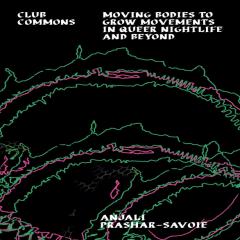
Queer communities have long transformed parties into something powerful: spaces where care flourishes, injustice gets challenged, and new worlds are danced into being. But today, DJs command huge fees while behind-the-scenes workers earn below minimum wage. Corporations profit from our culture while communities that created these spaces are displaced. As venues shut and workers burn out, it’s clear that something has gone deeply wrong.
Club Commons: Moving Bodies to Grow Movements in Queer Nightlife & Beyond by Anjali Prashar-Savoie takes you inside hidden stories of resistance and reinvention. We meet the people reshaping nightlife from below: abolitionist security teams creating safety without police, sober raves doubling as mental health support, radical childcare at parties, venues becoming worker cooperatives, and free party crews reclaiming public space. Through their work, we see how party-throwing skills build movements, how refusing to play changes everything, and why protecting queer nightlife means transforming who owns it.
Quotes
“When Anjali shines her perceptive light on dancefloor culture, everything is better illuminated. I can’t wait to read this book. It’s one we need.” Emma Warren (author of Dance Your Way Home/Up the Youth Club)
“Anjali’s one of the most exciting and insightful voices writing about dance music today, bringing fresh perspectives, intellectual rigour and emotive power to a conversation that’s too often homogenous, superficial or cynically commercial. Club Commons promises to be an essential and overdue book: a chance to reexamine the queer history of club culture, celebrate and critique its present, and map out radical possibilities for its future.” Ed Gillett (author of Party Lines)
“Beautifully written and unique, Anjali Prashar-Savoie’s behind-the-scenes journey through queer nightlife is as thorough as it is fascinating. Documenting a world that commercial interests are rapidly destroying, Club Commons is proof that queer culture holds the key to a better future for the dancefloor and beyond.” Professor Sam Parsley (author of Minor Keys, coach, DJ and founder of In the Key, a directory and platform championing the careers of women, trans and non-binary electronic music producers)
“Club Commons: Moving Bodies to Grow Movements in Queer Nightlife & Beyond is a vital reminder of how important the dance floor is to connect, unfurl and envision new futures. The text highlights the historic and existing care work entangled with the club space, particularly in providing temporary sites of refuge and embodied joy for Black and LGBTQIA+ communities. This is juxtaposed with research on the corporate and carceral commodification of nightlife in recent years, which exposes the false premise that club spaces are always radical. This book affirms my belief that the non-commercial nightlife ecosystem is an essential part of our social change infrastructure, rather than a luxury. Club Commons is a call to action to reclaim this space on our own terms and revive the underground.” Camille Sapara Barton, (author of Tending Grief: An Embodied Guide to Being with Grief Individually and in Community)
debe ser publicado en 12.01.2026
Pullman ist eine im Studio entstandene Akustik-Supergroup, die Ende der 90er Jahre aus der Post-Rock-Szene Chicagos hervorging und Ken ,Bundy K." Brown (Tortoise/Directions in Music), Curtis Harvey (Rex), Chris Brokaw (Come) und Doug McCombs (Tortoise/Eleventh Dream Day) vereinte. Später kam Schlagzeuger Tim Barnes hinzu, wodurch die Kernbesetzung der Gruppe gefestigt wurde. Ihr Debüt bei Thrill Jockey gaben sie 1998 mit "Turnstyles & Junkpiles", einer leisen, live auf zwei Spuren aufgenommenen Sammlung verwobener Gitarrenklänge, die Kritiker mit John Fahey, Leo Kottke und Gastr del Sol verglichen. Ihr Folgealbum "Viewfinder" (2001) erweiterte die Palette um Percussion, subtile elektrische Texturen und Mehrspur-Layering, wobei die rustikale, filmische Zurückhaltung von Pullman beibehalten wurde. Mit beiden Alben wurde die Band zu einem Maßstab für akustische, songorientierte Instrumentalmusik: folkig im Geist, postrockig in der Methode und zeitlos im Klang. Zwei Jahrzehnte später kehrt Pullman mit "III" zurück, einem Album, das von Freundschaft und Widerstandsfähigkeit geprägt ist. Im Jahr 2021 gab Barnes seine Diagnose einer früh einsetzenden Alzheimer-Erkrankung im Alter von 54 Jahren öffentlich bekannt. Trotz seines fortschreitenden Gesundheitszustands begannen er und Brown fast täglich, oft aus der Ferne, mit einem großen Kreis von Mitwirkenden aus Barnes' musikalischer Vergangenheit zusammenzuarbeiten. Was als einzelner Beitrag für eine Compilation begann, entwickelte sich nach und nach zu einem vollständigen Pullman-Album, das zwischen 2021 und 2023 fertiggestellt wurde. "III" wurde von Brown bearbeitet und gemischt, mit frühen Beiträgen von Barnes, und führt die für die Gruppe charakteristische Intimität und Räumlichkeit fort, während es gleichzeitig den Geist der Gemeinschaft verkörpert, der ihre Arbeit seit jeher geprägt hat. "III" ist sowohl eine Fortsetzung der einzigartigen Ästhetik von Pullman als auch ein Beweis für die nachhaltige Kraft der Musik und schwebt mit der stillen Schwere der Erinnerung, der Beharrlichkeit und der Anmut.
debe ser publicado en 09.01.2026
London’s gothic five-piece, Dog Race, unveil ‘Return The Day’—a debut EP that drags you deep into the fog of burnout, codependency, and emotional stasis. Across five tracks, the band unspools the slow horror of fading joy and fractured identity, where insomnia bleeds into daylight and personal growth is sacrificed to keep others comfortable. Following the stark theatrics of ‘It’s The Squeeze’ and the icy operatic swell of ‘The Leader – which earned praise from BBC Radio 6, landed them in NME’s 2025 Top 100, and left Anthony Fantano in awe, placing It’s The Squeeze at #11 in his Best Singles of 2024 – the EP pushes further into the dark. Operatic vocals drift through modulated guitars and synths that crackle with unease. Produced by Ali Chant and released via Fascination Street Records, ‘Return The Day’ captures a band fully embracing psychological unrest and emotional paralysis. Dog Race may take their time, but they strike hard.
debe ser publicado en 09.01.2026
-Vinyl
The Ruins Of Beverast narrate fables of the darkest secrets in human history and present. ‘Tempelschlaf’ is The Ruins Of Beverast’s seventh full-length output and sees the band continue with their sonic morbidity, noises and melodies of a human habitat in its sunset era, while maintaining and refining the widescreen low end that has been sustaining their sound from the beginning. On the instrumental side, ‘Tempelschlaf’ is stripped of some fat, forging the songs with a reduction in length and layers, cautiously leaning towards the stage part of things. While synths and samples have always played an adamant role in The Ruins Of Beverast’s sound, they reach yet another level of psychedelia and insanity on ‘Tempelschlaf’. The Ruins Of Beverast were formed in early 2003 and named after the most bloodcurdling occasion of the collapse of the giant bridge Bifröst. This incident bears analogy to the musical aura of The Ruins Of Beverast, which builds a sonic landscape of massive, surreal, barren mountain formations. Seven full-length albums and several EPs, splits and compilation releases have been published through Ván Records so far. As a live act, The Ruins Of Beverast became a strong force after Roadburn 2013, a festival the band have played again since with exclusive shows. The Ruins Of Beverast have embarked on several European tours with acts like 1349, Grave Miasma and King Dude, as well as a highly acclaimed US tour that eventually concluded with an iconic show at Fire In The Mountains festival. The band have played such well-established club shows and festivals as Hellfest, Inferno, Incubate, Party.San Open Air and Beyond The Gates, to name just a few.
debe ser publicado en 09.01.2026
Louis Armstrong and his All-Stars are captured in rare form during this live recording from 1956. The album features a great collection of tunes which had become staples of Armstrong's live shows, including his perennial opener, "Indiana"; the crowd favorite, "Tiger Rag"; the always joyful, "When The Saints Go Marching In"; and the great title-track, "Basin Street Blues". Satch's frontline band at the time boasted the very distinctive sounds of trombonist Trummy Young and clarinetist Ed Hall.
debe ser publicado en 09.01.2026
Large Professor’s classic cut “The Man” arrives on vinyl for the first time as a limited-edition 7-inch. Pulled from his 1st Class era, the track finds the Extra P in peak form—flipping the haunting “Sugar Man” sample into a warm, soulful groove while delivering razor-sharp bars.
This special pressing features custom artwork and is essential for collectors, DJs, and true-school hip-hop fans. A timeless snapshot of Large Professor’s unmatched producer/MC chemistry.
debe ser publicado en 09.01.2026
Mit ihrem neuen Album 'For The People' kehren Dropkick Murphys zurück zu ihren Punk-Wurzeln - laut, kämpferisch und voller Haltung. Zwischen Klassenkampf und Familiengeschichte, zwischen Protestsong und Pogues-Hommage - 'For The People' ist mehr als nur ein Albumtitel. Es ist ein Statement gegen Ungerechtigkeit, für Menschlichkeit und Solidarität.
Produziert von Langzeit-Weggefährte Ted Hutt und mit Artwork von Shepard Faireys Studio Number One, erscheint das Album über Dummy Luck Music / Play It Again Sam digital am 4. Juli (passend zum US-Unabhängigkeitstag) und am 10. Oktober auf CD und 2LP. Die Vinyl-Version kommt mit fünf Bonustracks.
Ob mit der ersten Single 'Who’ll Stand With Us?' oder der bewegenden Shane-MacGowan-Verneigung 'One Last Goodbye' - Dropkick Murphys liefern den Soundtrack für alle, die sich nicht mit der Welt, wie sie ist, zufriedengeben. 'For the People'!
- Ltd. Col. 2LP: (Silver 2LP/Gatefold mit Etching einer schwarzen Rose auf der D-Seite + Faltposter)
debe ser publicado en 08.01.2026
Mit ihrem neuen Album 'For The People' kehren Dropkick Murphys zurück zu ihren Punk-Wurzeln - laut, kämpferisch und voller Haltung. Zwischen Klassenkampf und Familiengeschichte, zwischen Protestsong und Pogues-Hommage - 'For The People' ist mehr als nur ein Albumtitel. Es ist ein Statement gegen Ungerechtigkeit, für Menschlichkeit und Solidarität.
Produziert von Langzeit-Weggefährte Ted Hutt und mit Artwork von Shepard Faireys Studio Number One, erscheint das Album über Dummy Luck Music / Play It Again Sam digital am 4. Juli (passend zum US-Unabhängigkeitstag) und am 10. Oktober auf CD und 2LP. Die Vinyl-Version kommt mit fünf Bonustracks.
Ob mit der ersten Single 'Who’ll Stand With Us?' oder der bewegenden Shane-MacGowan-Verneigung 'One Last Goodbye' - Dropkick Murphys liefern den Soundtrack für alle, die sich nicht mit der Welt, wie sie ist, zufriedengeben. 'For the People'!
Gatefold mit Etching einer schwarzen Rose auf der D-Seite + Faltposter)
debe ser publicado en 08.01.2026
Mit ihrem neuen Album 'For The People' kehren Dropkick Murphys zurück zu ihren Punk-Wurzeln - laut, kämpferisch und voller Haltung. Zwischen Klassenkampf und Familiengeschichte, zwischen Protestsong und Pogues-Hommage - 'For The People' ist mehr als nur ein Albumtitel. Es ist ein Statement gegen Ungerechtigkeit, für Menschlichkeit und Solidarität.
Produziert von Langzeit-Weggefährte Ted Hutt und mit Artwork von Shepard Faireys Studio Number One, erscheint das Album über Dummy Luck Music / Play It Again Sam digital am 4. Juli (passend zum US-Unabhängigkeitstag) und am 10. Oktober auf CD und 2LP. Die Vinyl-Version kommt mit fünf Bonustracks.
Ob mit der ersten Single 'Who’ll Stand With Us?' oder der bewegenden Shane-MacGowan-Verneigung 'One Last Goodbye' - Dropkick Murphys liefern den Soundtrack für alle, die sich nicht mit der Welt, wie sie ist, zufriedengeben. 'For the People'!
- Ltd. Col. 2LP: (Silver 2LP/Gatefold mit Etching einer schwarzen Rose auf der D-Seite + Faltposter)
debe ser publicado en 08.01.2026
Supergroups existed before Emerson, Lake & Palmer formed in 1970. And, as we all know well, many came after. But few, if any, matched the English trio’s chemistry and its elevated combination of virtuosity, vision, and verve. Having influenced a multitude of followers, ELP’s prowess was obvious from the start. The band’s self-titled debut stands as a towering statement of creative imagination, execution, and discipline more than five decades after its original release.
Mastered at MoFi’s California studio, housed in a Stoughton jacket, and pressed at Fidelity Record Pressing, Mobile Fidelity’s numbered-edition 180g 33RPM LP of Emerson, Lake & Palmer presents the benchmark album in audiophile sound. Clear, dynamic, and balanced, this collectible edition honors the perfectionist approaches that both informed the playing and recording of the record.
Distinguished with black backgrounds, this reissue brings to light the epic scope, tonal depth, and mind-bending degrees of musicianship on display. Aspects — textures, nuances, effects, melodies, tempo changes — that go hand-in-hand with the trio’s compositions and interplay are rendered amid broad soundstages and delivered with pinpoint detail. Whether you’ve owned multiple copies of this touchstone or seeking out your first version, you’ll relish the presence, separation, imaging, and crispness that help make every song come across as if the group has set up shop in your listening space.
Opening the door to the seemingly infinite possibilities of progressive rock while steering clear of excess, Emerson, Lake & Palmer achieved a rare feat in that its complex, cerebral music didn’t prevent it from attaining mainstream success. The gold-certified effort launched the career of a band that would sell tens of millions of records. It also landed a Top 50 single in the form of the ballad “Lucky Man,” whose vocal harmonies, folksy strumming, multi-tracked instrumentation, and breakthrough Moog solo almost feel quaint in the face of the other fare on the album.
Comprised of genre-defying originals and hybrid arrangements of two classical pieces, the album Rolling Stone originally and rightly said is “best heard as a whole” matches outrageous ambition with the otherworldly skills of three musicians who remain among the finest to ever pick up their respective instruments. While Emerson soon drew the lion’s share of headlines for his ability on keys — clavinet, Moog, piano, Hammond organ, and pipe organ included — Greg Lake’s aptitude on guitar and bass, along with well as Carl Palmer’s monster talents behind the kit, created a three-headed hydra that devoured everything in front of it.
That extends to the radical reinterpretation of Bela Bartok’s “The Barbarian” that begins the LP, a performance that in less than four-and-a-half minutes runs the gamut from distorted to churchy to angular and blustery. More classical flourishes, keyboard wizardry, hard-rock heaviness, and gothic signatures emerge throughout “Knife-Edge,” which reimagines music by Leos Janacek and J.S. Bach — and ultimately invites you to explore a cathedral of sound teeming with separate bursts of keys and percussion.
And did someone say “drumming”? Check out Palmer’s monster salvo on “Tank,” a rhythmic showcase that marches out with knee-bent notes and mirror-reflected passages. Or dive into the mythological suite “The Three Fates.” Replete with three parts and Emerson playing the pipe organ at Royal Festival Hall, it shoots off sonic fireworks via sophisticated arpeggios, jazz improvisations, dancing counter-meters, sizzling chords, and a few explosions. Please don’t hold anyone at MoFi responsible if your system cannot handle it; this is heady stuff.
Indeed, everything on Emerson, Lake & Palmer is there for a purpose. Whether you aim to attempt to dissect all of the notes, shifts, and polyrhythmic bluster or just want to absorb this album as one living, breathing organism, this version invites you to do both as many times as you desire.
El artículo no se ha publicado. Tú puedes reservar ahora el artículo y después de ser pagado se te será enviado.
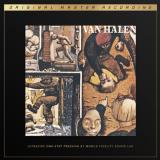
The song titles on Van Halen's aptly titled Fair Warning don't lie. The likes of "Unchained," "Mean Street," "Push Comes to Shove," "One Foot Out the Door," and more indicate the mood the band channels on its double-platinum 1981 record — the nastiest, darkest, and fiercest album of the group's storied career. For the fourth time in four years, Van Halen throws down the gauntlet to all challengers and emerges victorious.
Sourced from the original analog tapes, pressed on MoFi SuperVinyl at Fidelity Record Pressing, and strictly limited to 5,000 numbered copies, Mobile Fidelity's UltraDisc One-Step 180g 45RPM 2LP set plays with unfettered clarity, dynamics, and immediacy. Benefitting from superb groove definition, an ultra-low noise floor, and dead-quiet surfaces, this vinyl edition captures what went down in the studio with tremendous realism and involving presence.
Taking a more controlled approach in the studio and still completing everything in less than two weeks, Van Halen and producer Ted Templeman relied on studio amplifiers to direct the sound. Further diverging from the live-on-the-floor approach of its earlier albums, the ensemble also employed overdubs to great effect. The result: Dense, stacked architecture that underlines the hard-hitting tenor of the songs — and which comes alive like never before on this reference edition that looks as good as it sounds.
The premium packaging and gorgeous presentation befit the reissue's select status. Housed in a deluxe slipcase, it features special foil-stamped jackets and faithful-to-the-original graphics that illuminate the splendor of the recording. Aurally and visually, it is made for listeners who want to immerse themselves in everything involved with the album, including the iconic cover art adopted from William Kurelek's haunting painting, "The Maze."
Isolated frames from Kurelek's childhood-inspired work — including a man bashing his head into a brick wall, a guy pinning down an adversary as he delivers bare-fist blows to his face and others watch with apparent glee, a boy tied down on a conveyer belt and being sent through the equivalent of a meat saw — adorn the front and back covers. The sunnier visual disposition of Van Halen's prior efforts gives way to something sinister and tortured, traits reflective of the music within. The band members, too, are visually depicted not in glamorous shots but in a serious black-and-white portrait in which the quartet is clad in black leather jackets.
Tough, aggressive, stark: Fair Warning comes on like a series of bare-knuckled punches to the solar plexus and boasts lyrical narratives to match. Though not a concept record, the concise album revolves around themes of roughing it on the streets and struggling to survive amid dim prospects. Singer David Lee Roth reportedly penned many of the initial lyrics after traveling to Haiti and observing extreme poverty. The characters and situations populating Fair Warning reflect hardscrabble existence, last-chance desperation, and underlying danger.
Witness the crazies, poor folks, and hunters of “Mean Street”; the former prom queen turned pornographic actress on “Dirty Movies”; the menace and vice of “Sinners Swing!”; the streetwise hustle of “Unchained”; the isolation and alienation of “Push Comes to Shove”; the desire for escape on “One Foot Out the Door”: A carefree California beach party Fair Warning is not.
Having said he felt angry and frustrated during the sessions, guitarist Eddie Van Halen uses the forceful arrangements as a playground for his seemingly unlimited arsenal. Supported by a crack rhythm section and a hyped-up Roth, he performs with an almost impossible combination of punk-like intensity, technical finesse, lyrical fluidity, and unbridled emotion. The virtuoso was increasingly butting heads with Templeton and seeking a freedom in the studio he believed denied him.
No wonder he plays like a bat out of hell. Listen to the rapid-fire manner in which he slaps the high and low E strings on the 12th fret of his instrument on “Mean Street,” instilling the tune with funk flair and metal-spiked sharpness. For the pouty strut of “Dirty Movies,” Eddie Van Halen contributes slide guitar magic made possible after he sawed off the lower portion of a Gibson SG so he could reach further down the fretboard.
Related intensity, urgency, and daredevil momentum punctuate the surging “Sinner’s Swing!” A heavily flanged, delicately melodic introduction frames the attitudinal “Hear About It Later,” among the most creative arrangements of Van Halen’s career. And do riffs come any bigger or magnetic than those on the high-wire kick of “Unchained”? As for the out-of-left-field “Sunday in the Park,” an instrumental composed on an Electro-Harmonix micro-synthesizer: Who but Eddie Van Halen to supply creep factor in such an ingenious way?
Despite selling fewer quantities than Van Halen’s prior efforts, Fair Warning remains for many diehards the record that epitomizes all of the band’s immense strengths —Roth’s manic energy and tongue-wagging humor, Alex Van Halen’s rhythmic heartbeat-in-your-chest bombast, and Michael Anthony’s lucid bass lines included. Arriving when the New Wave of British Heavy Metal and new-wave movements were taking flight, it signaled a shot across the bow from a band determined to stay a step ahead and provide proof nobody could touch what it delivered.
More than four decades later, Fair Warning still sounds that alarm.
El artículo no se ha publicado. Tú puedes reservar ahora el artículo y después de ser pagado se te será enviado.
Throughout a professional career defined by early pop successes, every single one of Andy Fairweather Low's performances has been shaped by his blues, gospel and soul influences, and although the many hits he has enjoyed have to some extent overshadowed his undeniable credentials as a great bluesman - his talent for the blues hasn't escaped the notice of some of the world's finest artists who have drawn on his skills as a guitarist and singer Eric Clapton of course leads this impressive list of Andy's discerning employers and collaborators which includes, BB King, Benmont Tench, Bill Wyman, Bob Dylan, Bonnie Raitt, Buddy Guy, Charlie Dore, Charlie Watts, Chris Barber, Chris Rea, Clarence 'Gatemouth' Brown, Dave Edmunds, David Crosby, David Gilmour, David Sanborn, Donald 'Duck' Dunn, Edie Brickell, Elton John, Emmylou Harris, Garth Hudson, George Harrison, Georgie Fame, Gerry Rafferty, Helen Watson, Jackson Browne, Jeff Beck, Jimi Hendrix, Jimmy Page, Joe Cocker, Joe Satriani, John Mayall, Kate Bush, Levon Helm, Linda Ronstadt, Lonnie Donegan, Mary J. Blige, Mick Hucknall, Otis Rush, Paul Weller, Paul Young, Pete Townshend, Phil Collins, Richard and Linda Thompson, Rick Danko, Ringo Starr, Roger Waters, Ronnie Lane, Sheryl Crow, Steve Gadd, Steve Winwood, Stevie Nicks, The Impressions, The Who, Van Morrison, Warren Zevon, and hundreds more. But, despite the blues having become such a hugely popular genre internationally these days, and Andy having been in the thick of it for most of his professional life, he has largely missed the recognition he deserves in that field because up until now, he has never released a blues album. That's why I wanted to make a record that reveals the identity of the Invisible Bluesman to the world beyond his existing loyal fans. Meet Andy Fairweather Lowdown!
El artículo no se ha publicado. Tú puedes reservar ahora el artículo y después de ser pagado se te será enviado.
In the summer of 2021, Brighton-based, Scottish-Thai songwriter Helen Ganya's grandmother passed away
The grief hit the artist hard, not only because it marked the loss of her last remaining grandparent, but also because it felt like her links to being half- Thai were disintegrating, roots quaking and shifting in uncharted territories. Ganya grew up in Singapore, but spent her summers in the northeast of Thailand where her mum's side of the family is from, visiting her grandmother. Where would all those memories go now that the person at the centre of them was gone? What was her relationship to this place without that glue? And so, in an attempt to process it all, Ganya began to write. "I got my diary and wrote every single memory of my time as a child in Thailand, spending time with her, my grandad, my aunts and cousins and everything," she explains, "I had these snapshots of memories that I just wrote down because I just suddenly panicked: it was like, who am I, then?" It was for this reason that, while Helen Ganya was waiting for her acclaimed 2022 album, polish the machine, to come out, she was already working on what would become her arresting new record, Share Your Care. Ganya has been releasing music since 2015 (formerly under the moniker Dog in the Snow). In the records she's put out over the years, she's shown a proclivity towards dark and artful rock and off- kilter sounds, garnering praise from the likes of the Sunday Times, Uncut, Clash, Loud & Quiet and more. But Share Your Caremarks a new era, building on Ganya's past sonic worlds and interspersing them with traditional Thai instrumentation, resulting in a plush, luminous, psych-tinged affair that is full of feeling. The result is a triumphant, abundant record, teeming with heart and cinematic warmth.
El artículo no se ha publicado. Tú puedes reservar ahora el artículo y después de ser pagado se te será enviado.
The Germany-based band Rikas' new album, "Soundtrack For A Movie That Has Not Been Written Yet," promises to be their most cohesive and contemplative project to date
Comprising 11 brisk yet beautiful tracks, the album showcases the band's tight tempos and mellow delivery. "We started this record just to have fun. It's not been that easy, because so much change has happened," guitarist and keyboardist Sascha Scherer reflects. "We've had to learn to adapt... This record is more inward-looking. We were reflecting. " Scherer further explains, "I think a lot of bands have trouble staying still. When you stop touring and moving to a new city each day, you feel lost. I feel like our new album is capturing that feeling of go, go, go." This feeling of inertia contains layers: there's a sense of restlessness, but also brotherhood and camaraderie-- feelings Rikas aim to depict in each of the album's videos. "For our sophomore album, we wanted to create a very homogeneous one," Scherer continues. "Which was not easy to achieve because we have made the experience that throughout all of our records every song differs from each other. We have four songwriters who happen to be also multi-instrumentalists in our band, and that's why we don't have to put much effort into diverse record making. Instead, we had to put pressure on ourselves to make something consistent. But we also didn't want to make every song sound the same. So the concept of the album lays in its topics."The songs for "Soundtrack For A Movie That Has Not Been Written Yet" were written over the past year, adapting and shaping old snippets and ideas, as well as creating songs completely from scratch. "For some reason, when we started writing and listening back to the songs, they all shared a similar feeling of cruising, traveling, being in motion," Scherer says. "This wasn't intentional at first, but felt more and more suiting as we proceeded with the writing. We found we'd enjoy the songs most while driving in our van, looking out the window, seeing the landscapes passing by. This has something very meditating to itself already, amplified even more by a suiting soundtrack. This is the soundtrack we tried to write. The album in its entirety is supposed to feel warm, hugging, like 'being bedded in cotton.'" For the visual content of the album, the band decided to travel to San Remo, northern Italy, to capture some of the late November sun. "In a way, you could say we tried to film the first part of the movie whose soundtrack we had just written," Scherer concludes. "Soundtrack For A Movie That Has Not Been Written Yet" is a testament to Rikas' ability to adapt and reflect on their journey, offering listeners a meditative and immersive experience that captures the essence of being in motion.
El artículo no se ha publicado. Tú puedes reservar ahora el artículo y después de ser pagado se te será enviado.
They are sexy, powerful, and subversive! HUMAN TOYS is a raw punk rock duo fronted by fierce female vocals
Poupee Mecanik (vocals, theremin) thrives on playing with female archetypes, bringing a subversive edge to their music, all flavoured with a generous dose of irony.
The addition of guitarist Jon Von, formerly of RIP OFFS, since their previous hit record "Spin To Win" (Topsy- Turvy Records), has revitalised the band with an all- new punk rock sound that lands somewhere between THE RAMONES and THE AVENGERS.
Since their debut album "Excuse My French" (Records Ad Nauseam), HUMAN TOYS has evolved musically into a wild punk rock riot grrrl-style force. Anyone lucky enough to catch one of their electrifying live shows around the globe knows they deliver relentless energy, raw power, and a tough yet seductive attitude. That same fierce energy shines through in their new album "At The Poor Cow", named after a legendary underground punk rock bar in Tokyo. The album features fantastic covers of IGGY POP's "I'm Sick of You", THE NERVES' "When You Find Out", and BOB CENTER's "Lost In The Jungle", alongside addictive and wild HUMAN TOYS originals. This record is a true modern-day punkrock-classic!
El artículo no se ha publicado. Tú puedes reservar ahora el artículo y después de ser pagado se te será enviado.
The scottish singer-songwriter and multi-instrumentalist James Yorkston and the english guitarist with a fluid fingerpicking touch, David A. Jaycock, already played together in the first formation of the experimental folk ensemble Big Eyes Family Players. Their encounter with Swedish saxophonist Lina Langendorf gives rise to a little gem of pure acoustic candour, perfectly balanced between chamber avant-garde and neo-folk. As on an endless autumn evening in front of a lake in Finland or Estonia, the trio's nordic soul creates atmospheres that recall hidden nostalgia. In a process of rarefied sound matter, elegiac paintings spring up, moments that flow slowly and silently in a tension that is always suspended and unresolved. Soft, crepuscular passages, at times sharp and cold guitar, but also the velvety breath of the nickelharpa, combine with a saxophone that still blows dramas of distant Norwegian fjords, but can also become more Mediterranean and arabesque. The music becomes like a warm warmth around the fire, reflecting a hidden twilight zone of the soul, in a quiet, gentle whisper between poetic abstraction and arpeggiated themes of more recognisable narrative melody, typical of a certain Northern folklore.
Co-Release with We are busy bodies.
El artículo no se ha publicado. Tú puedes reservar ahora el artículo y después de ser pagado se te será enviado.