quête:analog fingerprints

Genres
Tout
  • 1
Passarani - Analog Fingerprints Vol. 0 (2x12")

Analog Fingerprints Vol. 0 is a compilation bringing together the early 2000s works of Marco Passarani under his Analog Fingerprints alias, collecting key tracks originally released on Rome’s Plasmek and Pigna labels.

For Numbers, the story starts long before the label itself. In their formative years, digging in Glasgow’s Rubadub, Passarani’s records felt like dispatches from a future city. Releases on his own Nature Records and on labels such as Generator and Interr-Ference Communications were mind blowing: rooted in Detroit techno, Chicago house and electro, yet pushing somewhere new. Much like fellow travellers Autechre, who would remix him in 2001, Passarani’s music balanced machine funk with restless experimentation.

Information was scarce, and you would hear these records first on the dancefloor or at listening stations in shops like Rubadub. Print fanzines like Ear and early web outposts such as Forcefield offered only fragments. But there was a palpable axis forming between Detroit techno and a new European wave of record labels including Skam, Rephlex, Clone, Viewlexx and Nature itself. It was the sound that defined Saturday nights at Rubadub’s ‘69’ parties in Paisley, just outside of Glasgow.

Passarani’s records, in particular, were instrumental in bringing together the future Numbers co-founders. Richard had already booked him pre-Numbers; meanwhile Calum (Spencer) and Jack (Jackmaster), then 16/17 year olds working alternate Saturdays in Rubadub, were so enamoured with the Roman sound that they travelled to Rome for the Bitz Festival in 2003 to seek out Passarani and Lory D at their source.

The first Analog Fingerprints release landed as a 12” on Plasmek in 2001, following the fractured, IDM-leaning 6 Katun material. For Passarani, the project marked a recalibration. A DJ first and foremost, he had moved into production via early computer setups, from a Commodore Amiga through primitive PC audio, Cubase and Logic, later experimenting with Ableton. The IDM scene had offered a playground for trial and error, but there was always a tension between abstraction and the dancefloor. Analog Fingerprints became the bridge: still intelligent, but with more dance than distance. After years of broken beats and complex arrangements, he wanted directness without surrendering identity.

Working closely with Francesco de Bellis and Mario Pierro in the Pigneto district, the trio formed Pigna as a vehicle for reclaiming a more accessible dance sound, deliberately steering away from the minimal wave beginning to dominate Europe. Sessions were fast, instinctive, often stretching late into the night with friends dropping by. It was a studio as social space, production as collective energy.

“In that constant search for balance, Analog Fingerprints was my way of expressing something closer to the classic dance floor. The track 'Tribute' - a tribute to my favourite early Detroit techno track of all time, 'First Bass' by Separate Minds - came after I realised I had almost lost my connection with the dance floor. The simplest step was to take inspiration from early Chicago and Detroit and twist it in our Roman ‘Pigna’ way. My goal was to create more accessible dancefloor tracks by mixing my unconscious Italo roots with my teenage love for that early US sound, ensuring the result was as far as possible from the minimal sound that was starting to dominate everywhere.” - Marco Passarani

Technically, the Analog Fingerprints tracks span a transitional era: Roland TR-909, SH-101 and Alpha Juno hardware met early software experiments. A Novation Drumstation rack stood in for the unattainable TR-808, syncing with TB-303 and TR-606. Yet the true secret weapon was Jeskola Buzz, a tracker-style modular environment that allowed step-by-step parameter control and strange melodic constructions, later exported into the audio sequencer. Even the lead on ‘Tribute’ came from an early PPG Wave-style plugin. It was hybrid thinking at a moment when digital tools still felt unstable but full of possibility for technologists like Passarani.

Behind the music sat Finalfrontier, a loose Roman collective orbiting Nature and Plasmek. Distribution and production were intertwined; importing obscure records into Italy built connections with like-minded outsiders across Europe and the US. Expensive phone bills and fax machines forged an “electronix network” that linked Rome to Clone, Viewlexx, Skam, Rephlex, Rubadub and Detroit’s Underground Resistance. There was a shared sense of survival and resistance, of operating against commercial systems.

Passarani recalls “The first time I found a sheet of paper inside an Underground Resistance 12” with info about upcoming releases... and a huge picture of Spock on the back. Imagine that: you love the music, you love Star Trek, and there’s someone on the other side of the ocean sharing those same values and sounds. It was the perfect match. We even gave our original company the suffix ‘Finalfrontier’: that says it all.”

Feedback in that era arrived physically: distributor faxes, conversations with visiting DJs, the experience of playing abroad and meeting kids who had connected with the records. Glasgow became a key node in a scattered outlier network. Passarani personally brought the first two Nature releases to Fat Cat in London, playing them in-store. Shortly after, a fax arrived from Rubadub in Glasgow requesting copies.

“I still remember that phone buzz and the fax paper slowly sliding out, with someone I didn’t know saying they wanted 75 copies of Nature 001. Or like the time we got a fax from the Rephlex crew just saying, “Hello Nature Records, Keep up the good work.” That was how we knew the message was getting through. It was a fantastic feeling; just one piece of thermal fax paper as an analog notification - the mood for the entire week would change.” - Passarani

The connection to Glasgow has since stretched across generations. As Passarani reflects, links often fracture as scenes renew themselves, but in Glasgow something different happened. New and old mixed seamlessly. There was a visible trust in what came before, and a willingness to carry it forward rather than discard it. Observed from Rome, it was deeply encouraging.

Analog Fingerprints Vol. 0 captures that moment of exchange: Rome to Glasgow, Detroit to Europe, experiment to dancefloor. It documents an artist recalibrating his sound and a network of scenes discovering one another in real time, connected by vinyl, faxes and shared intent.

En stock

Disponible en stock et prêt pour l'expédition
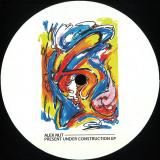
Alex Nut, Patrice Scott & Last Nubian - Present Under Construction EP

After years of shaping the UK underground from behind the scenes, Alex Nut steps out with his first official solo EP, serving up an intoxicating blend of Spiritual Jazz, Deep House, Dub, Hip Hop and analog electronics. The Present Under Construction EP is rooted in a deep musical language and future-facing energy, it captures a moment of creative transformation and exploration.
Built up over a few years from rough sketches made on an old MPC2000XL, the tracks were revisited, reshaped and eventually brought to life in the studio with longtime friend and collaborator Sam Crowe (Cleo Sol, Lianne La Havas). Together, they added a range of analogue sounds using the Dave Smith Prophet Rev 2, a Fender Rhodes, and a Moog Sub 37. Those recordings were then chopped, resampled, and restructured into the versions you hear on the record today. The records lead track 'andthenitstarted' features saxophonist James Mollison (Ezra Collective, Nala Sinephro) and includes remixes from Detroit House legend Patrice Scott and fellow Eglo Records alumni Last Nubian.

Best known as a DJ, broadcaster, curator and co-founder of Eglo Records, Alex has spent over a decade championing soulful underground music, through fabled Radio shows to legendary club nights, his fingerprints are all over a scene that continues to evolve. Initially making noise alongside the likes of Floating Points, Steven Julien, and Fatima, Alex Nut has long been a cornerstone of the UK's soulful underground. His work continues to champion the evolution of Jazz, Soul, House, and Broken Beat — nurturing a generation of artists now reshaping the global soundscape.

En stock

Disponible en stock et prêt pour l'expédition

Marco Passarani - Studiomaster Megamix Vol. 1  (MC)

Studiomaster was born from an experiment I ran for a little over a year, releasing tracks exclusively on Bandcamp. I wanted to see how far music could travel without the institutional machinery of a label, without physical products, and without relying on mainstream platforms. The experiment worked so well that Studiomaster has now evolved into a label with physical vinyl releases. Throughout this journey, I found myself missing the physicality of music. So, to celebrate it, I decided to release something in a format I had never used before: the cassette tape. What better occasion to bring together a collection of previously unreleased tracks in the physical world and craft a mix the old-school way? Get your tape quickly, it's limited!
ps: The tape unlocks download for all the tracks featured in the mix!

En stock

Disponible en stock et prêt pour l'expédition

LEX & LOCKE - PACIFICA EP

Lex&Locke

PACIFICA EP

12inchSMS024
SAMOSA Records
30.07.2021

Samosa Records releases are coming thick and fast in what could be their finest year yet. Lex & Locke are the latest talent to make their Samosa debut with their ‘Pacifica’ EP – a sublime three tracker which is mouth watering from the off.

First up is Balandra. From the moment you hear the raw four to the floor drumbeat, you’re under its spell. The infectious bass riff moves the scenery around a little, whilst the subtle bongo attack teases what’s to come. And what’s coming is a funky, rolling cosmic lead synth that has no right to sound that damn sexy, no right at all. The vibe quickly grows into an interstellar journey, aided by an outrageously funky clav jam that gets inside your head. Balandra feels like the soundtrack to an ‘after dark’ undercover stakeout in a 1970s cop thriller. Detectives Lex & Locke are on the case and the evidence is compelling. A unique, 122bpm funk bomb which has the Samosa fingerprints all over it.

A2 is Cabo Pulmo – continuing the vibe of Balandra, Lex & Locke lay down some serious grooves in what initially sounds like a live funk band jamming away in the studio without a care in the world. No soon as we get into the beat and the bass, there’s an immediate switch to a swirling, bold cocktail of funk infused with a touch of jazz that belies the 124bpm tempo. The production is expertly tight; layers of synth, electric organ and punchy guitar riffs make this ideal for both the sun terrace and the dance floor. You’re under arrest, and Lex & Locke are reading you your rights!

The final track, Nine Palms has a real quirky, almost broken beat feel to it with its high-hat ride pattern and punchy bass drum. A wickedly twisted analogue organ riff is quickly introduced, which is cleverly used as both a rhythm device and the melodic platform that sets up the whole track. Lex & Locke seem to be total masters of a ‘free-style funky synth lead’, and we’re treated to another slice of this particularly tasty pie in ‘Nine Palms’. Whereas Balandra is the late-night stake-out, Nine Palms is the final act where Lex & Locke high five each other following another successful bust.

The Pacifica EP has a wonderfully intimate and assured vibe about it and is sure to feature in many a summer soundtrack. This release also proves that Samosa Records aren’t afraid to go off the beaten path occasionally - and when it’s this good we’re more than happy to follow. Grab this amazing cut of wax while you can!

En stock

Disponible en stock et prêt pour l'expédition

Marco Passarani - Digipack Vol. 1

Marco Passarani

Digipack Vol. 1

12inchSTUDIOMST001
Studiomaster
07.02.2025

Roma techno legend Marco Passarani dusts off his Studiomaster moniker to present a selection of vibey dancefloor burners on 12” vinyl brimming with energy and packed with 303 squelch, thumping drums, moody synths and perfectly-placed vocal cuts. Marco took the Studiomaster name from his Studiomaster P7 console, which he runs his in-the-box mixes through, to bring extra dirt and character to his tracks. The Studiomaster alias first appeared on the Passarani Bandcamp page just as summer began in 2023. The newly built B.K.S. studio space was running smoothly, and the machines have been buzzing ever since, as Marco fires off vital, futuristic, acid-drenched club tracks, under pseudonyms like Passarani 2099, Analog Fingerprints, and Kids of Rotten Future. In contrast to an internet full of streaming files and AI generated artworks, the Studiomaster brand brings the look and feel of rare 12” white label promos, minimal on design and information.
The tracks here are collected on vinyl for the first time, “They represent proper studio jam sessions,” says Marco “meant to be performed in the club. There are no songs here, just pure dance floor tools!” And it’s to those in the club that this release is dedicated: to those still dreaming about the future while dancing in the dark.

pas en stock

Commandez maintenant et nous commanderons l'article pour vous chez notre fournisseur.


Last In: 13 months ago
CHERRY BANDORA - BACK TO THE TAVERNA LP

There’s a connection between the musical history of the Mediterranean that can’t be explained through academia alone. It’s an expression of simultaneous grief and celebration that trespasses cultures and generations; and demands to be felt, or even better, danced, to be understood. The same spirit weaves Rebetiko from the ashes of the Ottoman empire to the heavy Hafla soundtracks on the Koliphone label in ‘70s Jaffa, or rebellious Turkish psychedelic music to the first generation of surf guitarist migrants in America. It's an infectious feeling that travelled and evolved wherever it was called, and that passion is embodied in “Back to the Taverna”, the new album by Berlin based bouzouki quintet, Cherry Bandora.

On the milestone of their third release, original members Liad Vanounou (Bouzouki) and Lorena Atrakci (Vocals) have bolstered their sound with longtime friends and collaborators Moshe ‘Moosh’ Lahav on Keyboards and flute, Tamir ‘Hassan’ Chen on Bass and Nimrod Lieberman on Drums to create an album celebrating the ecstasy of being able to drink and perform together again, freed from the anathema of the last years. The band has evolved considerably since their beginnings ten years ago as an Agean-influenced part of the local Balkan Swing scene; the most significant addition being the deployment of “The Hardest Working Man in Tropical Music” Alex Figueira as musical director for this album. His scorched fingerprints are unmissable throughout the extended psychedelic breakdowns and percussive overdubs that make “Back to the Taverna” such a dynamic offering.

Cherry Bandora have always been a very personal band; collecting songs from nearby cultures and history and blending them into their own experience by developing new arrangements or lyrics, just as musicians from those times would have. Lorena delights in expressing herself away from her mother tongue or providing modern lyrics for an updated feeling, as she does to the beloved Turkish standard, “Rampi Rampi”. In this interpretation she uses her native Hebrew in a saucy lockdown-delivery-guy romance... This track also features Baris Öner from local Turkish rock band Kara Delik on his signature flanging Saz.

Singing in Greek, English, Turkish and Hebrew was also a natural choice on the album, representing the “multikulti” area of Berlin that the band lives and records in. These languages would all be heard on the street as they walked to record in the analog Studio Wong in Kreuzberg.

“As descendants of Mizrahi Jews (Jewish migrants from non-European countries), growing up listening both to Beatles and Umm Kulthum, playing in jazz music departments in high school, and now living in Kruezkölln, we basically pay tribute and revive this shared heritage in the context of the global music scene of today” says Lorena.

The opening track, The Sound Of Baglama, is an interpretation of the anthemic Tsitsanis homage to the tavernas and sweethearts of Thessaloniki. It lays the ground for what to expect from Cherry Bandora’s exceptional live performances, featuring effortless switch-ups between surf rock choruses and laid-back verses dipping into Persian disco funk. This song will be accompanied by a tour-collage “found footage” style film clip in production at this
time.

Cherry Bandoras show their dedication to the bit with a rousing English version of the canonical rembetiko tune Dimitroula Mou. This amour song, popular with generations of female singers, is accompanied by real studio plate smashing, a ritual which sealed their final session for the album. 2 bonus tracks are included on the digital release, both a little more raw from the band’s home studio: the reeling dervish Rubi Rubi (which will be released as a second single with a video clip) and the emotionally dense and hypnotic slow burner Esý.

The album will be released digitally and on vinyl as a collaboration between Rebel Up Records (Belgium) and Rumi Sounds (Berlin) on Friday 3 november 2023 and is a prime example of what a raunchy, open minded and tireless bouzouki band can do as they hit their prime.

An extensive highlighted review will appear in Songlines magazine #135 December issue and the track ‘Benimde Canim Var’ will be featured on their free compilation. Also radioplay on Radio Campus France playlist (allover) during November and December.

pré-commande03.11.2023

il devrait être publié sur 03.11.2023

Kurt Stenzel - Jodorowsky's Dune OST 2x12"

Jodorowsky's Dune tells the tale of cult filmmaker Alejandro Jodorowsky's unsuccessful attempt to adapt Frank Herbert's classic sci-fi novel, Dune, to the big screen. Composer Kurt Stenzel gives life to a retro-futuristic universe as fantastic as Jodorowsky's own vision for his Dune-a film whose A-list cast would have included Salvador Dalí, Orson Welles, and Mick Jagger in starring roles and music by psychedelic prog-rockers Pink Floyd.

Building upon director Frank Pavich's idea for a score with a Tangerine Dream-type feel,' Stenzel lays out a cosmic arsenal of analog synthesizers that would make any collector green at the gills: among other gems are a rare Moog Source, CZ-101s, and a Roland Juno 6, as well as unorthodox instruments like a toy Concertmate organ and a Nintendo DS. I also played guitar and did vocals,' says Stenzel, some chanting... and some screaming, which comes naturally to me.' The score also features narration by Jodorowsky himself. As Stenzel notes, Jodo's voice is actually the soundtrack's main musical instrument-listening to him was almost like hypnosis, like going to the guru every night.'

This highly-anticipated soundtrack LP was sequenced and mixed by Stenzel with the listener in mind and flows through a four-sides' LP approach. I wanted it to play like the records I grew up with, where every side was a journey.'

pré-commande10.06.2022

il devrait être publié sur 10.06.2022

Various - SATURNO 2000: LA REBAJADA DE LOS SONIDEROS 1962-1983 LP (2x12")

Analog Africa delves deep into the scene of the Mexican's sonideros (sound-system operators) to present the "Rebajada" movement they've created using locally made pitch controls, speakers and sound effects.

"In 2010, I had asked Eamon Ore-Giron - aka DJ Lengua - if he would be interested in compiling a Latin project for Analog Africa, and if so, if he had a theme in mind. He replied, “Have you ever heard of rebajada?“ The question mark above my head, together with the wall of China, must have been the only other object visible from out of space because Eamon, probably noticing I got paralysed, continued, “Rebajada in Spanish means “to reduce, to lower”. It’s basically Mexican sonideros (soundsystem operators) slowing down the beat of a Cumbia to create a much more tangible music to dance to. I’ll send you a mix I made last year and let me know what you think.“ And so he did.

That mix was called Rebajada Mota Mix and I began listening to it on a loop. Although I was not immediately hooked it was intriguing from the get-go, and so I kept listening until magic began unfolding. Slowed down music allows you enough time to hear right through it, revealing itself in ways I had rarely experienced before. Everything became more transparent and I was noticing sounds normally only perceptible by bats. A near psychedelic experience. That mysterious mix included a few Ecuadorian songs by Junior y su Equipo - aka Polibio Mayorga (a cult figure in the sonidero scene), a couple of Mexican tunes, one Colombian, and various Peruvian songs, undoubtedly the driving force behind this project.

The sonidero who brought Peruvian and Ecuadorian music to Mexico was the legendary Pablo Perea from Sonido Arco-Iris, and although his fingerprints are all over the compilation Saturno 2000, this selection of songs in rebajada is exclusive to DJ Lengua. With the exception of a few classics from Polibio Mayorga and La Sampuesana – the queen of all rebajadas – most of these songs were probably never performed as such before, let alone released.

So how did rebajada come to be? In a nutshell; Rebajada started with two families of brothers – the Pereas and the Ortegas – who travelled all over Latin America and returned to Mexico with heavy loads of records which they would sell to the various sonideros always on the lookout for new tunes. Colombian beats especially seemed to fit almost perfectly with the Mexican dance steps – but they were just a bit too fast. As a result some sonideros began experimenting with equipment, and Marco Antonio Cedillo of Sonido Imperial created a revolutionary pitching system that could slow records down to an extent other players could only dream about. And so rebajada was born . . . or so we thought.

At the same time in north of the country, in Monterrey, sonidero Gabriel Dueñez almost got electrocuted by a short circuit that nearly set his record player on fire. As a result the platter started spinning in slow motion for the rest of the party, turning Cumbia into a different affair altogether. The youngsters went crazy for it and started harassing the sonidero with requests to record cassettes for them. Reluctant at first, Dueñez finally began recording a series of pirated cassettes called “Rebajada” which included mainly Colombian cumbia and porro in slow-mo exclusively. Those tapes took the city by storm and turned rebajada into a celebrated and defiant movement of the youth.

Of course it would not be a Mexican urban legend if it didn’t include dramaturgical elements, and so for nearly 30 years, until this day and probably for ever, both cities have been arguing and claiming ownership the creation of rebajada for themselves. But sonidera Joyce Musicolor, who never has time for such trivial arguments, got straight to the point: “Rebajada, and the equipment to perform it, is from here Mexico City but it was Monterrey that popularised it.“

pas en stock

Commandez maintenant et nous commanderons l'article pour vous chez notre fournisseur.


Last In: 16 months ago
Matthew Bourne - Moogmemory LP

Matthew Bourne

Moogmemory LP

12inchBAY93V
Leaf
05.04.2019

moogmemory is the latest album from multi-award winning pianist and composer Matthew Bourne, who has turned his considerable talents to the world of analogue synthesizers.

Very much in demand as a collaborator and co-conspirator, Bourne has his fingerprints on a huge number of projects, having worked with artists as diverse as John Zorn, Annette Peacock, Nils Frahm, Nostalgia 77, Amon Tobin and Broadway Project.

Growing from spontaneous improvised live performances, the album took shape in the studio as Bourne explored and moulded the vast sonic possibilities of voltage-controlled oscillators, creating beautiful, brooding landscapes of thick impasto and translucent sunbursts.

The seed for this project was planted when Bourne acquired an uncooperative 1982 Memorymoog, having it painstakingly modified and upgraded by Rudi Linhard in Germany .

Created without the use of computers or sequencers,Moogmemory is the first album to be recorded using only the Lintronics Advanced Memorymoog.

Bourne will tour moogmemory in collaboration with brilliant visual artist Michael England, who has worked with Autechre, Bola, Leila, Demdike Stare and many more.

The album will be available on CD and as a limited edition LP (with CD) in an intricate embossed sleeve designed by England.

Album press release written by Bourne fan Graham Massey (808 State).

The album follows the critical success of Radioland: Radio-Activity Revisited, a visceral live audio/visual experience created to mark the 40th anniversary of Kraftwerk's seminal album, with Franck Vigroux and video artist Antoine Schmitt.

Bourne's first solo studio album, Montauk Variations (The Sunday Times' Leftfield Album of the Year in 2012), was celebrated for its sense of stillness and serenity, marking an important musical turning point in his career and the beginning of a new creative direction.

Tracks from Montauk Variations have appeared on compilations by Bonobo and Needwant.

pré-commande05.04.2019

il devrait être publié sur 05.04.2019

  • 1
Articles par page:
N/ABPM
Vinyl
