Buscar:analog 1

Estilos
Todo
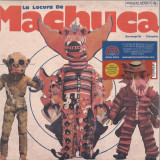
Various - LA LOCURA DE MACHUCA LP 2x12"

La Locura de Machuca is the story of one man’s bizarre odyssey into Colombia’s coastal music underground, and the wild, hypnotic sounds he helped bring up to the surface.

One night in 1975, a successful tax lawyer named Rafael Machuca had his mind blown in Barranquilla’s ‘Plaza de los Musicos’. Overnight he went from a high ranking position in the Columbian revenue authority to visionary production guru of the newly formed record label that bore his name, Discos Machuca, and for the next six years he devoted his life to releasing some of the strangest, most experimental Afro Psychedelia Cumbias ever produced. La Locura de Machuca is the story of one man’s bizarre odyssey into Colombia’s coastal music underground, and the wild, hypnotic sounds he helped bring up to the surface.

The Colombian music industry was thriving in the mid-seventies, but while homegrown bolero and vallenato tunes were doing well on the charts, it was imported African records that were setting crowds on fire at the picos – the sound-systems that fuelled neighbourhood parties – and wherever those records were played there were always a handful of groups who were inspired to plug traditional Cumbia directly into the electric currents coming from across the Atlantic.

It was these obscure bands, who fused Colombian and African rhythms with the swirling organs and psychedelic guitars of underground rock, that fired Machuca’s imagination. While the label made its money releasing popular hits by legends such as Alejandro Durán and Aníbal Velásquez, that money was poured back into a unique run of experimental releases by fringe artists such as La Banda Africana, King Somalie, Conjunto Barbacoa, and Abelardo Carbono, one of the godfathers of Champeta Criolla.

When Machuca couldn’t find groups to realise his particular vision, he simply created them himself. Drawing on a fearsome roster of musicians associated with the label, he assembled bands that lasted only as long as it took to record an album ,and unleashed the results – complete with arrestingly unusual album covers – under a series of different names such as Samba Negra or El Grupo Folclórico. This unorthodox approach led his longtime recording engineer, Eduardo Dávila, to describes Machuca’s productions as the “B-Movies of Colombian music.”

The story of Doctor Machuca and his eccentric exploits tells of one of Colombia’s most atypical and peculiar record companies; a defining pillar of Afro-Caribbean psychedelia. His productions have come to represent the roots of Champeta and set the pedigree standards for Afro and Costeño avant-garde. The seventeen tracks on La Locura de Machuca, harvested from the darkest, strangest corners of the Discos Machuca catalogue, sound like little else recorded before or since.

No en stock

Haga su pedido ahora y le encargaremos el artículo en nuestro proveedor.


Ültimo hace: 5 Años
VARIOUS - TAKE ONE – HALLELUJAH CHICKEN RUN BAND

The band that modernised Zimbabwean music, and by doing so revolutionised the music industry in their country. Available for the first time on vinyl (180 gramms) with gatefold cover, and now all tracks fully remastered !

In 1972, the country of Rhodesia – as Zimbabwe was then known – was in the middle of a long-simmering struggle for independence from British colonial rule.
In the hotels and nightclubs of the capital, bands could make a living playing a mix of Afro-Rock, Cha-Cha-Cha and Congolese Rumba. But as the desire for independence grew stronger, a number of Zimbabwean musicians began to look to their own culture for inspiration. They began to emulate the staccato sound and looping melodies of the mbira (thumb piano) on their electric guitars, and to replicate the insistent shaker rhythms on the hi-hat; they also started to sing in the Shona language and to add overtly political messages to their lyrics (safe in the knowledge that the predominantly white minority government wouldn’t understand them).
From this collision of electric instruments and indigenous traditions, a new style of Zimbabwean popular music – later known as Chimurenga, from the Shona word for ‘struggle’ – was born.

And there were few bands more essential to the development of this music than the Hallelujah Chicken Run Band. The band came into being when a young trumpet player named Daram Karanga offered to assemble a group to entertain the workers at a copper mine in the town of Mhangura.

The original line-up – which included legendary singer Thomas Mapfumo, who would bring the sounds of Chimurenga to the world in the early 1980s with his band the Blacks Unlimited, and Joshua Hlomayi, one of the pioneers of mbira- style guitar – started out playing the Rumba and Afro-Rock styles popular in the capital. Although this was a hit with the white owners of the mine, the workers greeted it with indifference. But when they started adding electric arrangements of traditional Shona music to their repertoire, the audience went wild.

With the addition of “Zim” sounds to their arsenal, the HCR Band became unstoppable. Their reputation spread quickly and, in 1974, they were invited to the capital to compete in a national music contest organised by the South-African Teal label. Not only did they win the competition, but they also attracted the attention of famed producer Crispen Matema, who quickly organised their first recording sessions.
On their first day at Jameson House studios, they recorded half a dozen songs, including “Ngoma Yarira” and “Murembo”, two singles that would alter the course of Zimbabwean popular music.
During the next five years, the band would relocate from their small mining town to the capital city, go through numerous line-up changes and pay a few more visits to the recording studio, without ever losing the raucous urgency that had transformed them from popular entertainers into titans of Zimbabwean culture.

No en stock

Haga su pedido ahora y le encargaremos el artículo en nuestro proveedor.


Ültimo hace: 5 Años
VOZ DI SANICOLAU - Fundo De Mare Palinha

In 1976, seven Cabo Verdean musicians going by the name Voz Di Sanicolau gathered in a small recording studio in Rotterdam where they laid down an album of fearsome coladeira songs inspired by the music of their home island of Sao Nicolau.

The album took only a few days to record, which may explain the unexpected urgency that fires each track. Treble-soaked electric guitar lines snake back and forth through percussion-and-cavaquinho driven rhythms rooted in the sound of the islands established by the previous generation of Cabo Verdean emigres; subtle keyboards wash through the background, and the vocals, traded between Joana Do Rosario and To-Ze, alternately push the music forward and soar above it. The resulting album is both deeply felt and fiercely executed, and in its grooves one hears the sound of some of the finest Cabo Verdean musicians of their era locked in complete unity of purpose.

It should have been the beginning of something extraordinary; but the pressures of making ends meet forced the musicians back to their day jobs, and Voz Di Sanicolau vanished as quickly as they had appeared, leaving their lone album, Fundo de Mare Palinha, as sole proof of their existence. Forty-four years later the album sounds as fresh as it did the day it was recorded. It is unknown if dutch sound engineer Frans Rolland, who oversaw the recordings, knew he was helping to make history: during these sessions, Joana Do Rosario, whose majestic vocals were crucial to the sound of Voz Di Sanicolau, became the first Cabo Verdean woman ever to appear on a long playing record.

No en stock

Haga su pedido ahora y le encargaremos el artículo en nuestro proveedor.


Ültimo hace: 5 Años
Pop Makossa - The Invasive Dance Beat Of Cameroon 1976-1984 LP (2x12")

Repress!

Just when you think that the well of obscure music from around the world has run dry, Analog Africa returns to put the record straight. Pop-Makossa shines a light on a glorious but largely overlooked period in the story of Cameroonian makossa, when local musicians began to replace funk and highlife influences with the rubbery bass of classic disco and the sparkling synth flourishes and drum machines of electrofunk. The resultant compilation, which apparently took eight years to produce, is packed full of brilliant cuts, from the heavily-electronic jauntiness of Pasteur Lappe's "Sanaga Calypso" and horn-totin' Highlife-disco of Emmaniel Kahe and Jeanette Kemogne's "Ye Medjuie", to the dense, organ-laden wig out that is Clement Djimogne's "Africa".

No en stock

Haga su pedido ahora y le encargaremos el artículo en nuestro proveedor.


Ültimo hace: 5 Años
The Analog Cops - Lucretio versus Marieu Vol.2

After the successful first volume of their split collection, Lucretio
and Marieu a.k.a. The Analogue Cops come back on Memento with a
breathtaking four tracks E.P..
Lucretio delivers two cuts written and produced with the extraordinary
Kyma workstation: “Ghetto Stab” is an heavy DanceMania influenced
party banger while “Any Idea” is a deep techno journey into the realms of spectral manipulation.
Marieu brings in all the hardware horsepower romanticism with “Tab and Rub” and “The Restored Text”; the first being acid excursion into the memories of the earl From days, the second interpolating massive kick drums and saturated harmonics with frantic vocal samples.
A record not to be missed!

Supported by: Rhadoo, Ame (Kristian), Dj Ralf, Marco Faraone, Arnaud Le Texier, Ilario Alicante, The Wasp, Shlomi Aber, Richie Hawtin, Joseph Capriati, Maceo Plex, Marco Carola, Francesco Farfa..

No en stock

Haga su pedido ahora y le encargaremos el artículo en nuestro proveedor.


Ültimo hace: 4 Años
Various - Space Echo - The Mystery Behind The "cosmic Sound" Of Cabo Verde 2 X 12"

repress

2LP 140G VINYL + 12 PAGE BOOKLET.

"Space Echo - The mystery behind the "Cosmic Sound" of Cabo Verde finally revealed!" is the 20th release by the fabulous Analog Africa Label.

In the spring of 1968 a cargo ship was preparing to leave the port of Baltimore with an important shipment of musical instruments. Its final destination was Rio De Janeiro, where the EMSE Exhibition (Exposição Mundial Do Son Eletrônico) was going to be held.

It was the first expo of its kind to take place in the Southern Hemisphere and many of the leading companies in were all eager to present their newest synthesisers and other gadgets to a growing and promising South American market, spearheaded by Brazil and Colombia.

The ship with the goods set sail on the 20th of March on a calm morning and mysteriously disappeared from the radar on the very same day.

One can only imagine the surprise of the villagers of Cachaço, on the Sao Nicolau island of Cabo Verde, when a few months later they woke up and found a ship stranded in their fields, in the middle of nowhere, 8 km from any coastline.

After consulting with the village elders, the locals had decided to open the containers to see what was inside - however gossip as scintillating as this travels fast and colonial police had already arrived and secured the area.

Portuguese scientists and physicians were ordered to the scene and after weeks of thorough studies and research, it was concluded that the ship had fallen from the sky. One of the less plausible theories was that it might have fallen from a Russian military air carrier. The locals joked that again the government had wasted their tax money on a useless exercise, as a simple look at the crater generated by the impact could explain the phenomena. "No need for Portuguese rocket scientists to explain this!" they laughed.

What the villagers didn't know, was that traces of cosmic particles were discovered on the boat. The bow of the ship showed traces of extreme heat, very similar to traces found on meteors, suggesting that the ship had penetrated the hemisphere at high speed. That theory also didn't make sense as such an impact would have reduced the ship to dust. Mystery permeated the event.

Finally, a team of welders arrived to open the containers and the whole village waited impatiently.

The atmosphere, which had been filled with joy and excitement, quickly gave way to astonishment. Hundreds of boxes conjured, all containing keyboards and other instruments which they had never seen before: and all useless in an area devoid of electricity. Disappointment was palpable. The goods were temporarily stored in the local church and the women of the village had insisted a solution be found before Sunday mass.

It is said that charismatic anti-colonial leader Amílcar Cabral had ordered for the instruments to be distributed equally in places that had access to electricity, which placed them mainly in schools.

This distribution was best thing that could have happened - keyboards found fertile grounds in the hands of curious children, born with an innate sense of rhythm who picked up the ready-to-use instruments. This in turn facilitated the modernisation of local rhythms such as Mornas, Coladeras and the highly danceable music style called Funaná, which had been banned by the Portuguese colonial rulers until 1975 due to its sensuality!

The observation was made that the children who came into contact with the instruments found on the ship inherited prodigious capabilities to understand music and learn instruments. One of them was the musical genius Paulino Vieira, who by the end of the 70s would become the country´s most important music arranger. 8 out of the 15 songs presented in this compilation had been recorded with the backing of the band Voz de Cabo Verde, lead by Paulino Vieira, the mastermind behind the creation and promulgation of what is known today as "The Cosmic Sound of Cabo Verde".

The field of electronic music were involved. Rhodes, Moog, Farfisa, Hammond and Korg, just to name a few.

No en stock

Haga su pedido ahora y le encargaremos el artículo en nuestro proveedor.


Ültimo hace: 17 Días
Various - MOGADISCO - DANCING MOGADISHU

After being blown away by a few tunes - probably just as you will be after listening to this - Samy Ben Redjeb travelled to the infamous capital city of Somalia in November of 2016, making Analog Africa the first music label to set foot in Mogadishu.

On his arrival in Somalia Samy began rifling through piles of cassettes and listening to reel-to-reel tapes in the dusty archives of Radio Mogadishu, looking for music that ‘swam against the current’.

The stars were aligned: an uncovered and unmarked pile
of discarded recordings was discovered in a cluttered corner of the building. Colonel Abshir - the senior employee and protector of Radio Mogadishu’s archives - clarified that the pile consisted mostly of music nobody had manage to identify, or music he described as being ‘mainly instrumental and strange music’.

At the words ‘strange music’ Samy was hooked, the return flight to Tunisia was cancelled. The pile turned out to be a cornucopia of different sounds: radio jingles, background music and interludes for radio programmes, television shows and theatre plays. There were also a good number of disco tunes, some had been stripped of their lyrics, the interesting parts had been recorded multiple times then cut, taped together and spliced into a long groovy instrumental loop.

Like everywhere in Africa during the 1970s, both men and women sported huge afros, bell-bottom trousers and platform shoes.
James Brown, Stevie Wonder, Marvin Gaye and The Temptations’ funk were the talk of the town. In 1977, Iftin Band were invited to perform at the Festac festival in Lagos where they represented Somalia at the Second World Black and African Festival of Arts and Culture.

Not only did they come back with an award but they also returned with Afrobeat. While Fela Kuti’s ‘Shakara’ had taken over the continent and was spreading like wildfire throughout Latin America, it was the track ‘Lady’ that would become the hit in Mogadishu.

No en stock

Haga su pedido ahora y le encargaremos el artículo en nuestro proveedor.


Ültimo hace: 6 Años
MOOR MOTHER - ANALOG FLUIDS OF SONIC BLACK HOLES

Analog Fluids of Sonic Black Holes is a new full-length by Philadelphiabased artist, poet, and musician, Camae Ayewa, who performs under the name Moor Mother.
A sonic black hole is a place where fluid moves so fast that it traps all sound.
To be entangled in its gravity is to feel the pressure of an unjust system -- corruption so powerful that it drowns out whatever you throw at it. Analog fluids are resistance -- individuals who work to create and preserve community in the face of immense darkness and cosmic pressure.
Begun in 2017 as a sonic counterpart to Ayewa’s art show at New York performance space, The Kitchen, Analog Fluids was refined through exhaustive touring. It tracks Ayewa’s emergence into an expanded artistic ecosystem, with contributions from a distinctive set of friends and collaborators like Justin Broadrick (Godflesh, Zonal), King Britt, Saul Williams, Giant Swan, and Bookworms

No en stock

Haga su pedido ahora y le encargaremos el artículo en nuestro proveedor.


Ültimo hace: 6 Años
G303, Lnt Mike, FaSid 303 - We Control The Transmission 2 EP
No en stock

Haga su pedido ahora y le encargaremos el artículo en nuestro proveedor.


Ültimo hace: 11 Meses
Various - Radar Love EP

Various

Radar Love EP

12inchACTIV-0014
ACTIV ANALOG RECORDS
03.05.2019

New Release From Activ-analog Records! This One Includes Tracks From Annix Of Detroit Techno Militia & A Collaboration Of New Talent Ben Clack & Matt Steve As "j-rez"! Also Featuring New Ambient/idm Cuts From Trio Of Pq Square (paul D.+qbik+quench Inclusion) & Jdt Of Abstracta Audio.

No en stock

Haga su pedido ahora y le encargaremos el artículo en nuestro proveedor.


Ültimo hace: 6 Años
Salar Ansari - Ehsaasaat EP

Analog Room Director and co-founder Mehdi Ansari expands his dedication to the electronic music scene of the Middle East. After six years of weekly events, presenting quality and cutting edge electronic music from around the globe, the educating continues with the launch of Moozike Analog Room. Moozike ('Music of' in Farsi) Analog Room launch is to showcase the sounds and artists that Analog Room is all about.
The first release is an EP by Analog Room's co-founder and resident artist Salar Ansari who has been producing for over a decade. Salar's sound is influenced by a very unique mix of
residencies from Tehran and Dubai to Detroit, Michigan. It took all these years for Salar to reach a place where he is happy to share his work with the world.
In this release he speaks jazz in house music by a very romantic conversation of percussions, horns, keys and bass. The release contains of 2 special remixes by Patrice Scott and Donald
Lee Roland II where both explain their angle of these heavenly compositions.

No en stock

Haga su pedido ahora y le encargaremos el artículo en nuestro proveedor.


Ültimo hace: 4 Años
AUTOKINETIC - In Search Of

"AutoKinetic (Mike McClure) returns to Analog Records with an aural expedition through atmospheric synthscapes and elastic acid basslines. ""In Search Of"" is a nod to the 1970's TV show dedicated to exploring mysterious and unexplained phenomena. Forged in the Minneapolis electronic music scene of the 1990's, AutoKinetic's myriad productions have thrilled dark warehouses and club dance floors worldwide for over 25 years."

No en stock

Haga su pedido ahora y le encargaremos el artículo en nuestro proveedor.


Ültimo hace: 7 Años
Clocked Devices & Strange FM - Biorhythm EP

First release from new label ANALOG CONCEPT from St. Petersburg, Russia! This EP contains four classic deep electro jams by new local talents CLOCKED DEVICES & STRANGE FM.

No en stock

Haga su pedido ahora y le encargaremos el artículo en nuestro proveedor.


Ültimo hace: 2 Años
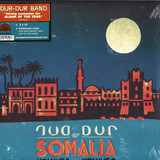
Dur Dur of Somalia - Volume 1, Volume 2 & Previously Unreleased Tracks

In the expansive sleeve notes accompanying this superb triple-album, Analog Africa founder Samy Ben Redjeb accounts, in great detail, the epic tale of Dur-Dur Band, a Mogadishu-based deep funk outfit that took Somalian radio by storm during the early 1980s. It's a remarkable story, all told, but nowhere near as remarkable as the music contained on this essential retrospective. Redjeb has managed to license both of their previously cassette-only albums, stretching them across three slabs of wax. Brilliantly played and performed, the songs mix killer American and African style funk grooves with hooky Somalian vocals, spacey synths and occasional nods towards other styles (most notably reggae on later period cut "Diinleeya" and Juju on "Salkuu Dhigey"). Simply essential.

No en stock

Haga su pedido ahora y le encargaremos el artículo en nuestro proveedor.


Ültimo hace: 7 Años
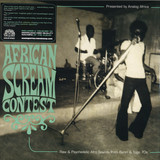
Various - African Scream Contest 2

African Scream Contest 2

A great compilation can open the gate to another world. Who knew that some of the most exciting Afro-funk records of all time were actually made in the small West African country of Benin Once Analog Africa released the first African Scream Contest in 2008, the proof was there for all to hear, gut-busting yelps, lethally well- drilled horn sections and irresistibly insistent rhythms added up to a record that took you into its own space with the same electrifying sureness as any favourite blues or soul or funk or punk sampler you might care to mention.

Ten years on, intrepid crate-digger Samy Ben Redjeb unveils a new treasure- trove of Vodoun-inspired Afrobeat heavy funk crossover greatness. Right from the laceratingly raw guitar fanfare which kicks o Les Sympathics' pile-driving opener, it's clear that African Scream Contest II is going to be every bit as joyous a voyage of discovery as its predecessor. And just as you're trying to get o the canvas after this one-punch knock out, an irresistible Afro-ska romp with a more than subliminal echo of the Batman theme puts you right back there. Ignace De Souza and the Melody Aces' Asaw Fofor" would've been a killer instrumental but once you've factored in the improbably-rich-to-the-point-of-being-Nat-King-Cole-influenced lead vocal, it's a total revelation.

The screaming does not stop there, in fact it's only just beginning. But the

strange thing about African Scream Contest II's celebration of unfettered Beninese creativity is that it would not have been possible without the assistance of a musician who had been trained by the Russian secret services to "search and destroy" enemies of the country's (then) Marxist-Leninist president Mathieu Kerekou.

Already familiar to fans of the first African Scream Contest as a mainstay of ruthlessly disciplined military band Les Volcans de la Capitale, Lokonon André vanished in a cloud of dust at Ben Redjeb's behest with a list of names and some petrol money, only to return a few days later having miraculously tracked down every single name he'd been given. The source of this Afrobeat bounty-hunter's impressive people-finding skills - his training with the KGB - highlights the tension between encroaching authoritarian politics and fearless expressions of personal creative freedom which is the back-story of so much great African music of the 60s and 70s. Happily, in this instance, Lokonon was tracking the artists down to oer them licensing deals, rather than to arrest them.

Where some purveyors of vintage African sounds seem to be strip-mining the

continent's musical heritage with no less rapacious intent than the mining companies and colonial authorities who previously extracted its mineral wealth, Samy Ben Redjeb's determination to track this amazing music to its human sources pays huge karmic dividends.

Like every other Analog Africa release, African Scream Contest II is illuminated by meticulously researched text and eortlessly fashion-forward photography supplied by the artists themselves. Looming large - alongside Lokonon André - in the cast of biopic-worthy characters to emerge from this seductive tropical miasma is visionary space-nerd Bernard Dohounso, who laid the foundations for Benin's vinyl predominance by importing and assembling the turntables that would play the products of his Bond villain-acronymed pressing plant SATEL, a factory that would revolutionise the music industry in the whole region.

The scene documented here couldn't have been born anywhere else but in the Benin Republic , and the prime reason for that is Vodoun. It's one of the world's most complex religions, involving the worship of some 250 divinities, where each divinity has its own specific set of rhythms, and the bands introduced on the African Scream Contest series and other compilations from that country were no less diverse than that army of dierent Gods. At once restless pioneers and masters of the art of modernising their own folklore, the mystic sound of Vodoun was their prime source of inspiration.

One especially irascible Vodoun-adept was Antoine Dougbe, who styled himself The devil's prime minister' while turning ancestral rhythms into satanically alluring modern beats. As Orchestre Poly-Rythmo songwriter Pynasco has observed sagely, Evil is not elsewhere, evil extends into the house'. And African Scream Contest II is a gloriously cinematic road-trip through an undiscovered realm of music lore whose familiarity is every bit as thrilling as its otherness.

Written by Ben Thomson, March 2018

No en stock

Haga su pedido ahora y le encargaremos el artículo en nuestro proveedor.


Ültimo hace: 7 Años
Adam Solomon - Analog Expressions Ep

Another dreamer joins our OCD ranks. After our launch EP by ac$, we've cast our ears across the pond and discovered Adam Solomon, pushing the underground scene up in Montreal. With influences spanning across various genres, we believe Adam's debut EP is just a small insight into what his career will bring forth. From MTL 2 the World.

No en stock

Haga su pedido ahora y le encargaremos el artículo en nuestro proveedor.


Ültimo hace: 2 Años
Camarao - The Imaginary Soundtrack To A Brazilian Western Movie 1964- 1974

Camarão - The Imaginary Soundtrack to a Brazilian Western Movie 1964 - 1974
In 1960 we received an invitation to play in Recife, a wonderful, exciting and dangerous place, often described as a social jungle'.

The Forró party took place at Caxangá´s neighbourhood theatre, on the first floor, with its high ceilings, wooden floors and balconies, the place was perfect for these kinds of events. When all the windows were wide open, there would be a wonderful breeze during the hot tropical evenings.

Since everyone was looking for amusement, the place was packed on weekends. People from all corners of society would arrive nicely dressed, animated and chatting loudly over the sound of clinking glasses.

Pernambuco´s Cachaça, considered by many, especially by the locals, to be the best in the country, had started flowing generously and the popular sugar cane based alcohol lives up to its reputation.

We always had a few shots to warm up before performing and by the time the place was packed we were already in a very good mood.

Our local cachaça had loosened the bodies and minds of everyone in the room, people started to pair off and twirl around to the sound of forró music, smiling and sliding their feet off the floor - a reflex picked up from dancing in rural villages to avoid kicking up the dust'.

No en stock

Haga su pedido ahora y le encargaremos el artículo en nuestro proveedor.


Ültimo hace: 8 Años
Analog 1 - Restoration Ep

Analog 1

Restoration Ep

12inchMEANDYOU09
MEANDYOU
01.03.2018

Meandyou return with the ninth instalment of the collective's record label, this time presenting Manchester cult techno artist J.S. Zeiter. Zeither resurrects his Analog 1 alias for his second outing on the label, after 2012s mini album on the collective's first edition of the TAPE series - the cassette featured original material split per side between Zeiter and Meandyou's Herron. In the late 1990s, J.S. Zeiter reached cult status by releasing a string of dub-infused techno EPs under his SJ moniker, each becoming sought after amongst collectors and DJs. Styrax Leaves recently reissued a number of his classic tracks, including new edits of the previously released tracks. He has released music on his own MCMLXV and JS imprints, as well as Pleasure Music and Phorma. 'Restoration EP' features 3 new productions that float between slow-mo techno and electro, plus the previously CD only track 'Interude 3' that appeared on the acclaimed 'Decade' album.

No en stock

Haga su pedido ahora y le encargaremos el artículo en nuestro proveedor.


Ültimo hace: 8 Años
F.t.g & Siyah Kuma Pres. Analog Inside - Keep On

F.t.g&Siyah Kumapres.Analog Inside

Keep On

12inchCITYLOW90000006
Citylow Records
29.01.2018

The Berlin-based Citylow label has been releasing quality house and techno for some time now. Born from a mix of musical influences from the metropolitan suburban life, the label is characterized by vintage, analogue sounds, modular systems and the many other influences of label manager Alfredo Trastulli aka F.T.G. The heart of the label is Citylow Humans Crew, a movement of underground artists around the world who day-after-day match their story with an underground music philosophy.

Staunchly dedicated to vinyl culture and with an ethos that tends to veer toward assured, confident sounding house and techno, theirs is a modus operandi that's served them very well indeed. For their latest, the attention switches to Fuckthegovernment.Ltd label boss F.T.G, who hooks up with regular collaborator Brando Torri aka Siyha Kuma for another release that speaks volumes of their talents. The A side features the remix, which comes at us from none other than the fucking parisienne talent Jef K, who in this instance has hooked up with Mikael Weill to supply a differing take on the original. Jef K of course, is a man who needs no introduction to house music fans. One of Paris' most acclaimed DJs and producers, he has a monthly gig at famed club Concrete, where he's renowned for sumptuous basslines and exquisite house music. Gritty and relentless, their remix is characterised by some steely bass hits and a stubborn refusal to compromise. A gnarly jam that soon comes to life courtesy of a quite brilliant bassline, this one is sure to make an impression wherever it's let out of the bag. Exceptional stuff we're sure you'll agree. Elsewhere, the B side features the original, which we soon realise is where the aforementioned remix earned its industrial stripes.

No en stock

Haga su pedido ahora y le encargaremos el artículo en nuestro proveedor.


Ültimo hace: 8 Años
Kristina & Orbe & Eduardo De La Calle - Asr019

Our beloved record label ANALOG SOLUTIONS presents this time to V / A Signed by Kristina and ORBE and where Eduardo De La Calle label owner add as well a special detroitish techno soul tool on side B2. It's been several months since the last vinyl release of the record label But it certainly strike back again with a sonic quantum force! Dropping the catalog reference number 019 which is full of
usefull and mesmerized ideas dj tools for worldwide DJs that deserve it ! It would be nice to pay attention to this great job that will be available only in vinyl format for the first few weeks. Pure " shake that ass science " on 12 " ... special design for the dance floor .. DON,T LET IT GO !!

No en stock

Haga su pedido ahora y le encargaremos el artículo en nuestro proveedor.


Ültimo hace: 7 Años
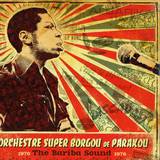
Ochestre Super Borgou - The Bariba Sound

Lost sounds are the archives of a forgotten history. The raucously raw, Vodoun-inspired rhythms of Cotonou have confirmed Benin as a mecca of 70s Afro sounds and revived the story of its people, but the unopened vaults housing the country's catacombs of musical riches are endless. With this as our compass, Analog Africa charters its fifth expedition to Benin, traveling far north to delve deeper into the obscured repertoires and tales of the Bariba and Dendi people.

No en stock

Haga su pedido ahora y le encargaremos el artículo en nuestro proveedor.


Ültimo hace: 13 Años
The Analog Roland Orchestra - 303 And Chill

Spell PETS backwards to get STEP. Spell STEP forwards and you get PETS going back to basics. STEP is the new vinyl-only label from the founders of PETS " Catz n Dogz " with a focus on the rawest forms and root functions of dance music. STEP searches for the fundamentals with under-theradar house and techno that's not afraid to be rough around the edges. It's all about the music.

No en stock

Haga su pedido ahora y le encargaremos el artículo en nuestro proveedor.


Ültimo hace: 7 Años
Shadow - Sweet Sweet Dreams

'I take my guitar and strum and sing some tings and blow people's mind. But I ain't trying to do anybody's music. I'm doing what I feel' - Shadow

When it came out in 1984 the far-out album Sweet Sweet Dreams by Trinidad & Tobago's Shadow (aka Winston Bailey) was described as 'way ahead of its time'. Undeservedly it was panned by critics and, unable to reach markets, disappeared into the dusty record collections of a few music aficionados. Now, more than three decades later that cosmic dance-floor UFO is about to take off again, change all that and set the record straight. Remastered and cut by Frank Meritt at The Carvery the album is truly a masterpiece.

But who is this Shadow behind Sweet Sweet Dreams Shadow is a man of understated magnitude. A truly enigmatic artist, he first emerged in Trinidad and Tobago during the 1970s, becoming a part of the tapestry of Caribbean music and reinvigorating calypso at the time. Calypso, the indigenous folk music of Trinidad and Tobago, has roots in West African kaiso rhythms, French Creole influences, and the hardships endured by the African slaves brought to Trinbago, whose descendants still use it as a tool for satire, self-expression, and social commentary. Calypso has also given birth to several other music genres, including soca, with its uptempo beats and festival context. Shadow effortlessly moves between both.

Shadow came from a humble but musical family and started writing songs as a youth while tending cattle in the fields. To his family's initial chagrin he chose calypso over church music but his talent and drive were undeniable. In the early days of his career Shadow's style was cramped when working with some of the more conservative music arrangers who felt that calypso and soca should fit a mould. But after a while Shadow teamed up with more innovative arrangers, including Arthur 'Art'de Coteau, who followed their and Shadow's intuitions resulting in a long line of hits.

'The first time we met for me to arrange his music we had a heated argument on the arrangement for one of his songs, I was theoretically correct but Shadow was musically right. Shadow broke all the traditional musical rules and made his own and that made him a musical giant. He changed the face of Calypso music in 1974 with the release of "Bassman" a tune in which Bass and magnificent horn line took central stage changing Soca music for ever. What Shadow did with his music was to put calypso on the International Dance circuit, giving it a totally different groove. You could take his music and swing it in any direction, Disco, Pop, Calypso, you name it. His music was different from anything that existed before'. - Carl "Beaver" Henderson, one of Trinidad's veteran producers.

This inert creativeness culminated in Sweet Sweet Dreams which was arranged by Shadow and deals with burning and ever-relevant themes like love and the ups and downs of relationships. a surprising fact for someone mainly known for his satirical and political lyrics. It prompted his manager to wonder if Shadow had written the lyrics while in a state of 'tabanca' (a word used in Trinidad and Tobago to describe lovesickness).

Sweet Sweet Dreams was recorded at the legendary SHARC studios, located on a hill in Chaguaramas (near Port of Spain) and despite a fantastic sound and monster Soca-boogie tunes like 'Lets get it together', 'Lets Make it Up' and 'Way, Way Out' the album was a commercial flop, probably due to the fact that it didn't sound like anything else coming out of Trinidad & Tobago at the time: It fused a range of different rhythms and new sounds, primarily heavy synth riffs.

Shadow took the album's lack of success in his stride with usual aplomb:
'When I did Sweet Dreams I expect something could happen. But nothing big happen because I have no big market and no distribution and all this thing now. So I just cool myself and move on to another song. I wasn't doing just one song. I used to always have plenty songs at the one time. And be writing music'.

What Shadow didn't realise back then was that the proto-electronic cocktail he had mixed in 1984 would only find the recognition it deserved three decades later. Life has swung full circle: Sweet Sweet Dreams has come true and been elevated to holy grail status becoming one of the most sought-after Caribbean disco records in existence.

For this re-release we carried out extensive interviews with Shadow and the musicians and have included as bonuses exclusive photos from Shadow's personal collection and the dancefloor filler tune 'D'Hardest' was added as a bonus track.

No en stock

Haga su pedido ahora y le encargaremos el artículo en nuestro proveedor.


Ültimo hace: 6 Años
Verckys & Orchestre Veve - Congolese Funk, Afrobeat & Psychedelic Rumba 1969-1978

Analog Africa has now the privilege to present 11 tracks by Verckys et L'Orchestre Vévé at the height of their most funky capabilities.

Compiled over the course of many years in a land of hardship, we welcome you to the grooviest era of the Congo.

Congo's turbulent and exhilarating '70s: Nightclubs and dance floors were packed to the brim in the capital, Kinshasa. Exuberant crowds, still giddy from independence

a decade prior, grooved to the sounds of the country`s classics. In fact the whole continent was submerged into the Congolese Rumba craze. Encouraged by the fantastic

productions of the Ngoma label, vibrant radio waves had been spreading the Congo sound from Leopoldville all over the continent, becoming the countries' No.1 export.

Reservar31.10.2016

debe ser publicado en 31.10.2016

Youandme & The Analog Roland Orchestra Feat. Black Soda - Reflection

Poker Flat Recordings deliver another killer collaboration, this time between Berlin's youANDme and The Analog Roland Orchestra. The result is Reflection - an EP containing more than its fair share of pure dance-floor moments. The Analog Roland Orchestra is Michal Matlak, the Berliner whose intimate knowledge of dance music's most iconic machines has made him a much-in-demand producer and remixer. Teaming up with party starters youANDme as well as vocalist Black Soda, the title track of this release explores deep vibrations, merging 303 basslines, crisp 909 programming and a highly effective vocal. The Dub Tool reworks the vocals into a more spacey arrangement, adding atmosphere for DJs who like to keep their sets stripped back and trippy. The Hyenah remix flips the script and develops a deep afro-house inspired cut - the man from the Caymen Islands developing an irresistible groove stretched out over seven and a half minutes. The Acid mix gives an opportunity for the guys to get busy working the 303 to its full (un) natural potential, while the Morning Light mix locks into a cosmic vibe - shimmering synths over a smooth, rolling deep house vibe.

No en stock

Haga su pedido ahora y le encargaremos el artículo en nuestro proveedor.


Ültimo hace: 8 Meses
Bitori - Legend Of Funana LP

In 1997, a quiet, unassuming man of 59 years old named Victor Tavares - better know as Bitori - walks into a studio for the very first time to record a masterpiece which many Cabo Verdean consider to be the best Funaná album ever made. Bitori´s musical adventure had begun long before this point. It was 1954 when he embarked on a journey across the seas to the island of Sao Tomé & Principe. The young man´s hope was to return to Cabo Verde with an accordion.

Following two years of hard labour Bitori had succeeded in saving enough money to acquire what was to become his most valued possession, his cherished instrument. The two month journey back to Santiago, his island of birth, proved time enough to master it. Self taught, Bitori developed his own style, an infectious blaze, that quickly caught the attention of the older generation. Before long Bitori was being asked to share his musical talents, igniting the local festivities around Praia with his music.

But not everybody welcomed the rural accordion-based sound. Perceived as a symbol of the struggle for Cape Verdean independence and frowned upon as music of uneducated peasants, Funaná was prohibited by the Portuguese colonial rulers. Performing it in public or in urban centres had serious consequences - often jail time and torture awaited musicians that were caught in the act'. In light of such persecution the genre of Funaná began to slowly disappear.

In 1975 Cabo Verde achieved independence from Portuguese colonial rule. Along with Cabo Verde's independence came a lifting of the ban placed on Funaná. The musical repercussions in Cabo Verde were plenty - many upcoming artists embraced Funaná, translating and adapting its musical form in new ways. It was not to be until the mid-1990's, however, that Funaná in its traditional form was actually recorded. It was a young singer from Tarafal, Chando Graciosa, who was to play a key role in this event. Upon hearing Bitori, Graciosa immediately felt drawn to Bitori's unique playing style - a raw and passionate sound accompanied by honest lyrics that reflected the harsh reality of the Cabo Verdean working class. He eagerly approached Bitori suggesting they join forces and travel overseas with the objective of taking Funaná beyond its rural roots. The two of them, with others in tow, achieved their goal and travelled to Europe, introducing a receptive European audience to the vibrant energy of Funaná.

Eventually Bitori returned to his beloved Cabo Verde. Graciosa opted to settle in Rotterdam in order to pursue his career - he vowed, however, to bring Bitori across to Holland at a later date to record an album.

In 1997 the time was ripe to immortalise the sound Bitori had shaped over a time span of four decades. Built around a formidable rhythm section, formed of drummer Grace Evora and bass player Danilo Tavares, "Bitori Nha Bibinha" was recorded. The recording catapulted Chando Graciosa to stardom, making him Cabo Verde´s No.1 interpreter of Funaná.

The success in Cabo Verde was phenomenal and Funaná rapidly gained the recognition it deserved, especially in urban dance clubs. Bitori´s songs quickly became standards - classics known and loved throughout the country. The musical success, however, was solely limited to the Cabo Verdean islands - until now!
Analog Africa is proud to contribute to the worldwide promotion of Funaná - the once forbidden sound of the Cabo Verde archipelago - by releasing a worldwide re-issue of Bitori and Chando Graciosa´s legendary recording.

The release will herald Bitori´s first European tour taking place during the summer of 2016. Watch this space! And listen!

No en stock

Haga su pedido ahora y le encargaremos el artículo en nuestro proveedor.


Ültimo hace: 10 Meses
The Analog Roland Orchestra - Aftermath 2

Deep'a & Biri's Black Crow Records further expands its horizons with its seventh release, welcoming another new artist to the family following appearances by 2030, Aril Brihka, Hakimonu, Luke Hess, ROD, Inland and Markus Suckut. The Analog Roland Orchestra's label debut follows the widely acclaimed 2030 EP and shares with it a widening of the label's sonic scope to once again showcase Deep'a & Biri's desire to reach beyond techno and explore ambient and cinematic musical textures. Michal Matlak's Analog Roland Orchestra finds the Poland born & Berlin based producer in the conductor role among an array of classic electronic hardware, taking on the role of shaping & directing a free flowing sound that moves across genres, whether in a studio or live setting. His previous releases for labels including Ornaments, Rotary Cocktail Recordings and Pastamusik have seen the project indulge in an array of sounds across the techno spectrum. 'Aftermath II' is no different, moving from the classic roots techno sounds of 'Plant' and 'Father Detroit', through the dub excursion of 'Urei Dub', to the cinematic, Boards of Canada & Tangerine Dream-recalling pair 'Her' and 'Aftermath. For those with a taste for electronic music's widescreen possibilities, TARO's arrival on the Tel Aviv imprint will be a long term favourite.

No en stock

Haga su pedido ahora y le encargaremos el artículo en nuestro proveedor.


Ültimo hace: 3 Años
Orbe / Kristina - Analog Theories

The new Analog Solutions 018 , label owned by the Spanish producer Eduardo de la Calle, will be released in May.This time presenting a various artists, by Kristina and ORBE, that combine an ep with a personal character, full of floating arrangements and inherently techno flavor, but sophisticatedly Dub. It seems that the label Analog Solutions will take refuge next references on collaborations lauching a series of various artists so better to be alert .

Different artists will take the place like Japanese Takairo Oishi, already on catalog reference 015 from the spanish label, and also appear in the reference 019 coming soon.

On side A we have 2 tracks of ORBE, the first A1 titled "Modern Cicles it is certainly an exercise in resilience and compromised to the authentic,
where Fernando Sanz aka ORBE develops a track infinite and penetrating where arrangements certainly exemplify the finest and purist made in Spain techno.

The second ORBE track A2 , entitled "Beyond The Ubiquity" reflects the good moment that Madrid based producer ORBE is going on with , and drops certainly an epic ideal for closing sets track with melodic nuances and highly useful for high voltaje DJ,S .

The novel but solid Kristina opens side B1 with his tool "Hydragea", where again, based dub elements, manages to build a disciplined rhythmic atmosphere , at the same time delicate, and that will delight lovers techno more fluctuating.

In the side B2 kristina it attack with "Dicentra" .A extremely funk track with multiple hi hats variants, and where the first minute of listening past, one enters a deep cerebral hypnotism .Dicentra is without any doubt one of the highlights of the record, where Kristina synthesized based revers again and again succulent and repetitive sounds, which make the reference number 18 Analog Solutions certainly Essential to find a place in the case of any dj.

No en stock

Haga su pedido ahora y le encargaremos el artículo en nuestro proveedor.


Ültimo hace: 5 Años
Amara Toure - Amara Toure 2x12"

The enigmatic Amara Touré from Guinée Conakry finally getting a well deserved compilation showcasing all of the 10 songs ever released between 1973 and 1980. Cuban influenced music of a different kind featuring amazing spaced-out guitar works!! Analog Africa compiles a complete collection of Amara Touré's Afro-Cuban compositions, originally released between 1973 and 1980."Lamento Cubana and Temedy are the two finest Afro-Cuban compositions ever recorded. As if they were played in a smokey, poorly lit ballroom where dark rum was sipped ever so slowly" - Vikram Sohonie - Ostinato Records
Analog Africa to release a compilation by Amara Toure, the enigmatic Afro-Cuban musician from Guinea-Conakry, showcasing all of the 10 songs he ever released between 1973 and 1980.
"Latin music, is it really foreign to us Africans I don't think so. Listen to the drums, to the rhythm. It all seems very close to us - it feels like it's our own culture," declared enigmatic singer Amara Toure. It is the late 50s, and Senegal is going crazy to the groove of Son Montuno and Patchanga. Brought to West Africa by Cuban sailors in the early 40s, these styles were immediately adopted by a flourishing music scene that did not hesitate to embrace the Caribbean sound, mixed it with their own Folklore, and, in the process, created something new. Through the unique cultural fusion of West African and Caribbean influences, Latin music took on a new and unique sound - the format was reinvented. Producer Ibra Kasseì and his Miami nightclub acted as the spearheads of this movement. They brought a breath of fresh air into Dakar's nightlife, further energising one of West Africa's most exciting cities. The demand for ballroom parties and live acts exploded, attracting numerous musicians from surrounding countries. One of the musicians who answered this call was percussionist and singer Amara Toureì, from Guinea-Conakry. Spotted by Kasseì while performing with Dexter Johnson, Toureì was asked if he would like to be part of a new project. Little did he know that this project would become a phenomenon.Immensely important for the development of Senegalese modern music, Le Star Band de Dakar, led by Mady Konate, became a sort of musical incubator and workshop, where many musicians learned and practiced their trade before moving on to become stars in their own right. Toureì's talent on percussion was undeniable, but it was his powerful and raw voice that captivated the producer. The fascinating way Toure interpreted Cuban music was unparalleled, and it was this feature that encouraged Kasse to recruit the unknown artist.
Although already brimming with incredible talent, Amara Toure's joining of Le Star Band de Dakar in 1958 began the band's meteoric rise to the top. The band quickly became Dakar's number one orchestra, and it cemented the reputation of the Miami nightclub as the hottest spot in the country. The place was packed nightly, and Dakar was boiling.
Amara Toure's Senegalese adventure lasted for ten years when he received an irrefutable offer and in 1968, joined by a few talented Senegalese musicians, headed to Cameroon and immediately formed the Black and White ensemble. Many live gigs later and it was time for the first songs to be recorded. A total of three singles were produced between 1973 and 1976. These singles, representing the first six songs on this compilation, fully epitomise and distill the essence of what Toureì had learned during his career. His Mandingue roots fused with the Senegalese sound that he had mastered - the perfect foundation for the Toureì's Cuban interpretations.
If Toure's intention was to create the most sensual music ever recorded in Africa, he might very well have reached this goal. The musicians on the recording sound like they are playing in a smokey, poorly lit juke joint, where dark rum was sipped ever so slowly, and the pulse of the music took up a life of its own. How many couples have danced, swayed, and melted together to the distinct sound of Amara Toure Nobody can say for sure ...
Amara Toureì's success poured across the borders of Cameroon, and in 1980 he went to Libreville, Gabon, to team up with the powerful Orchestre Massako. Toureì recorded an LP at that time which is hailed by many music aficionados as one of the very best African albums. The songs from that LP are the last four on this compilation. It took only ten songs for Amara Toureì to become a legend. These ten treasures, representing Toure ìs complete discography, have been carefully re-mastered from original session tapes and vinyl records, and will be released by Analog Africa on 22 June 2015. After the release of his LP in 1980, Toureì seems to have disappeared. Apparently he was last seen in Cameroon but it is unknown if he is still alive today. His music though is definitely alive.

No en stock

Haga su pedido ahora y le encargaremos el artículo en nuestro proveedor.


Ültimo hace: 3 Años
Artículos por página
N/ABPM
Vinyl