Search:alone in my room

Styles
All
TEX PERKINS & THE FAT RUBBER BAND - OTHER WORLD LP

limited repress available! *gatefold sleeve + insert, regular 120g black vinyl!0 Through the recent years of lockdowns and silence and having too much time to think, Tex Perkins always found solace in the company of song. Having his friend Matt Walker as a co-writer-conspirator, Perkins revelled in the experience which prompted the forming and recording of the first Fat Rubber Band album at Walker & #39's Stovepipe Studios with bassist Steve Hadley, drummer Roger Bergodaz and percussionist Evan Richards. After such an affirmative and creative experience Perkins was itching to commence work on what has become the band's second album, Other World. "The first Fat Rubber Band album was kind of deliberately a little ragged. A bit fuzzy around the edges" said Perkins. "There is a certain maturity that we now possess where ideas can be realised and take form very quickly. We've become a real band. I think what you heard on the first album is the band being formed." While he's played with many musicians, finding true collaborators is something that Perkins treasures. During the lockdowns, he pondered whether he would ever have that day-to-day musician experience again. With The Fat Rubber Band it's not just another grouping of musicians playing music together, but a gathering that is very much about the head, heart and soul and something he is clearly grateful for. "Roger Bergodaz was incredible. His drum kit was in the control room and he engineered the record and played drums pretty much at the same time! He constantly created the surroundings where an enthusiastic and positive atmosphere always prevailed. We never came away empty handed. I loved making this record so much," Perkins says, "because fucking magic happened. Yes, that's right, magic or how about alchemy? (A medieval science with a mysterious process that seeks to turn base metals into Gold.) Well, I dunno about gold, but I witnessed ideas, thoughts, whims and imaginings transmute almost effortlessly into living breathing songs with a soul and a heartbeat and even their own private history every time we went into the studio for this recording. Actually, no, magic is better." Perkins explains "This magic came about with the help of over 4O years of experience from each of the Fat Rubber band members. They're all truly great players and they're all really generous collaborators, so I guess what I'm saying is, it doesn't matter what happens from here. I'm very aware these days, with 100s of new releases each week, it's harder than ever to get people to give a shit about a new album from anybody, let alone from a bunch of hairy blokes in their 50s from Australia fronted by a dude that's been around since the early eighties named Tex. Actually, I can't believe you're still reading this! But you know it doesn't really matter, I've seen the magic."

pre-order now01.04.2024

expected to be published on 01.04.2024

Liv Andrea Hauge Trio - Ville Blomster LP

The trio's debut album, "Live from St. Hanshaugen," was recorded in Liv's living room just a week after they started playing together. In contrast, "Ville Blomster" represents the result of a year of frequent touring, practice, and studio time. The trio has developed its own expression, allowing room for exploration and improvisation. The title "Ville blomster" symbolizes the wild and improvised side of their music, along with the beautiful and simple melodic elements (the flowers) that stand out. The album was recorded at Athletic Sound in Halden with Dag Erik Johansen in May 2023. Much of the music was written just before, and the album's tracks range from rhythmic, catchy tunes inspired by pianists like Keith Jarrett and Brad Mehldau to more melancholic, airy compositions like "Vår" (Spring) and "Ødemarka."(Wasteland) Regarding the writing process, Liv says, "All the songs, except for 'Ødemarka' and 'Du og jeg, baby,' (You and me, Baby) were written in my apartment in the center of Oslo. I like to open the windows and listen to life outside, sitting alone at the piano for hours, searching for an idea with a clear character." Liv Andrea Hauge (b.1995) is an Oslo-based musician originally from Mosjøen in Nordland. She studied jazz piano at the Norwegian Academy of Music and, despite her young age and career, has made a mark with Kongle Trio (with Veslemøy Narvesen on drums and Øystein Skjelstad Østensen on bass) and Ladybird Orchestra. In 2022, she released the album "Live from St.Hanshaugen" with the Liv Andrea Hauge Trio, recorded in Liv's living room. The album was acclaimed as one of the best Norwegian jazz albums of the year. In 2023, she released the album "Hva nå, Ekko?" on Odin, with Marte Eberson, Ragnhild Moan, Signe Emmeluth, Torstein Lavik Larsen, Fredrik Luhr, and Andreas Winther. This music was a commissioned work by the Festspillene Helgeland and toured in the summer of 2022, visiting the Kongsberg Jazz Festival, Oslo Jazz Festival, and Hemnesjazz. The album's second single, "Again," was praised in Dagsavisen as "a candidate for Song of the Year in a more just world." Georgia Wartel Collins - Double bass August Glännestrand – Drums Liv Andrea Hauge – Piano

pre-order now05.03.2024

expected to be published on 05.03.2024

Danielle Boutet - Pièces LP

Danielle Boutet’s P »Pièces« is a mysterious artifact of Quebecois marginalia, self-released in 1985. Moving from languid ennui to high drama, »Pièces« is a dreamy gestalt, an album that borders Chanson, spoken-word, jazz noir, and minimalism, conjured from the chasm between acoustic and electronic realms. »Pièces« allows us a window into the highly intimate songcraft and compositional skill of an artist who longed to linger not in the public eye, but in relation with others and the world around her.

Born in Quebec City, Boutet studied music at the University of Montreal, where she focused on composition and percussion, before becoming involved in Montreal’s feminist and lesbian art scene. Primarily written, performed, and recorded by Boutet, with voice, guitar work, and technical assistance by Sylvie Gagnon, Pièces was created during a paradigm shift in home recording. Originally composed for the piano, Boutet and Gagnon utilized a consumer-friendly Tascam 4-track Portastudio and versatile Yamaha DX-7, alongside guitar, bass, marimba, and the human voice, to expand and contemporize the original composition’s scope.

Inspired by prog rock and British poet and musician Anne Clark, »Pièces« translates Boutet’s influence by moving between sunny, wistful fairytale and dark, wintry dirge. Filled with longing marimba, vertiginous, startling synth pads, and folk guitar, each track on Pièces offers a wholly unique proposition. Some are modal and rife with the ethereal psychological tension of a sci-fi soundtrack, while others are more like entering a smoke-laced lounge, the entertainer embodying seduction.

With the sprechgesang of artists like Serge Gainsbourg, there is an intense intimacy to Boutet’s delivery, sometimes as if she is performing for an audience of one. As one lyric goes, translated to English from French: “Like holograms/ Images from a world/ That inhales souls/ And exudes drama.” Another song contains an excerpt from The Tao of Physics: “The eastern sages specify clearly that they do not identify an ordinary void, but rather, a void having an infinite creative potential.”

To English-language audiences, the album’s title, »Pièces«, might seem to simply refer to the eleven different pieces. The title can also, of course, refer to parts of a larger whole, but Boutet is keen to point out that there is also another meaning: In French, a pièce is a room. On the cover of the original cassette, Boutet is seen sitting on a chair, alone in an empty apartment, a cable snaking at her feet. Listening to »Pièces« is like entering eleven different rooms: whether a study encased in shadow, a greenhouse left to wither in an eternal frost, or a divine nave.

Boutet sold a few dozen copies around Montreal, a scene mostly occupied by the new wave explosion de rigueur, but the inclusion of Pièces in the 1987 issue of Ladyslipper—the North Carolina-based mail order catalog that championed women musicians of all calibers and careers—led to more exposure throughout North America. “In the catalog,” Boutet says, “they included it in the New Age section, but I was, and still am, aware that this album is relatively unclassifiable.”

Boutet would release one more album, titled Musiques Urbaines, before getting pulled in the direction of interdisciplinary art and theory. “Although I never stopped making music, I lost all interest in public diffusion or performance,” Boutet says. Despite her departure from performance and publicly releasing music, she left behind a strange and enthralling document of Montreal’s 1980s feminist fringe, an aural document of the historic moment when self-recorded music and its practical potential became a prismatic reality.

Danielle Boutet’s Pièces arrives February 16, 2024 as part of uncommon¢ (“uncommon sense”), an open-ended, serialized endeavor from Freedom to Spend that provides new meaning for rarefied recordings from music’s outermost fringe.

pre-order now16.02.2024

expected to be published on 16.02.2024

Frances Chang - Psychedelic Anxiety LP

Psychedelic Anxiety, as a mood, goes something like this: overwhelming, existential, vertigoic, arising when we stare into the void. This metaphysical unease also serves as the title for Brooklyn-based musician Frances Chang’s second album, and as a feeling it’s present throughout, charged by all things occultish. Recorded by Chang and engineer Andrea Schiavelli, featuring a cast of revered NYC DIY players, including Schiavelli (Eyes of Love) and Liza Winter (Birthing Hips), Psychedelic Anxiety relishes in the refining of aesthetic, in the electricity of improvisation, in balancing bleakness with humor. It embodies an idiosyncratic genre Chang calls slacker prog — offbeat, but brimming with spiritual and emotional resonance. The record infuses artifacts of the mundane with otherworldliness— even the love songs live more in the realm of fantasy (or horror) than the romantic. The psychic twin and mirror image of Chang’s 2022 debut full-length Support Your Local Nihilist, Psychedelic Anxiety by comparison is less urgent, leaving space for more nuance and storytelling. Together, these albums represent a new cycle of creativity for Chang, a reset to zero. “Eye Land,” captures Chang on a tour around the Irish and English countryside, in a moment of major life change. “Lying around your spare room,” she sings, “Sky is cloudy here in June.” Around her, guitar sputters and stops. Vocals branch off like vines on the side of an old house. It is a profoundly lovely song, a freaky miniature in the way that a Broadcast song is a freaky miniature. “Darkside” opens up with a particularly memorable narrative moment. “Last night I saw Parasite,” sings Chang, describing how she saw it alone, how regular life that week was acute, weird, intense. How she found comfort in resignation. After all: Psychedelic Anxiety is a serene, bizarre record full of alien sounds and big introspection.

pre-order now16.02.2024

expected to be published on 16.02.2024

Michael Franti & Spearhead - Big Big Love LP

Big Big Love is the first single from the eponymous album that is a mantra for embracing humanity with kindness. The single will be released in conjunction with the Michael Franti & Spearhead tour date celebrating a return to Red Rocks on June 2. Franti announced the US Big Big Love tour on January 31 which launched May 13 and runs through August 20. Michael Franti is a globally recognized musician, humanitarian, activist, and award-winning filmmaker revered for his high-energy live shows, inspiring music, devotion to health and wellness, worldwide philanthropic efforts and the power of optimism. Throughout his multi-decade career, Franti has earned three Billboard No. 1's with triumphantly hopeful hits "Sound of Sunshine," "Say Hey (I Love You)," and "I Got You," as well as sic Top 30 Hot AC singles, 10 Top 25 AAA singles and three Billboard Top 5 Rock Albums. Michael Franti & Spearhead continue to foster their community both on and off stage with a wish granting non-profit, Do It For The Love, founded by Franti and his wife, Sara. Do It For The Love brings those with life threatening illnesses, veterans, and children with severe challenges to concerts worldwide, fulfilling over 3,300 wishes and touching the lives of over 12,000 people to date. Franti also owns SOULSHINE Bali, a 32-room top-rated boutique retreat hotel located in Ubud, Bali.

pre-order now08.12.2023

expected to be published on 08.12.2023

Billy Joel - The Vinyl Collection, Vol. 2 LP 8x12"
 
91

"The Vinyl Collection, Volume 2" vereint Billy Joels monumental erfolgreiche Alben aus dem späteren Teil seiner Karriere: "Glass Houses" (1980), "The Nylon Curtain" (1982), "An Innocent Man" (1983), "The Bridge" (1986) und "Storm Front" (1989), "River of Dreams" (1993). Außerdem gibt es 2 Titel zum ersten Mal auf Vinyl: die Doppel-LP "Fantasies & Delusions" und die 3er-LP "Live from Long Island" aus dem Jahr 1982. Alle Songs stammen von den Original-Album-Mastern, Zudem ist ein über 60-seitiges Booklet mit Billys persönlichen Anmerkungen und einem Essay von Rob Tannenbaum enthalten

pre-order now03.11.2023

expected to be published on 03.11.2023

Billy Joel - The Vinyl Collection, Vol. 2 LP 8x12"
 
91

Today we announce The Vinyl Collection, Vol. 2, an 11-LP boxset to follow 2021’s Vol. 1, which includes the remainder of Billy’s catalogue: Glass Houses, The Nylon Curtain, An Innocent Man, The Bridge, Storm Front, River of Dreams. It exclusively features Fantasies & Delusions & Live from Long Island on vinyl for the first time. The boxset includes a 60+ page booklet that highlights the era through photos, quotes, and an essay by Rob Tannenbaum. All albums remastered from original sources at Sterling Sound.

pre-order now03.11.2023

expected to be published on 03.11.2023

Jetplane Landing - Once Like A Spark LP

From Northern Ireland and the South of England hail Jetplane Landing - which, for the last two decades has been variously composed of: Jamie Burchell (Bass/Vocals), Raife Burchell (Drums), Andrew Ferris (Vocals/Guitars), Cahir O’Doherty (Guitars/Vocals) and Craig McKean (Drums). Big Scary Monsters are releasing their debut album Zero For Conduct on vinyl this January as well as putting their entire back catalogue back on streaming services. Their debut album ‘Zero For Conduct’, was recorded on an 8-track tape machine in Jamie's parents' garage in Bognor Regis and mixed during engineer Sean Doherty’s downtime in a London studio owned by a diamond mining company. Hailed a 'masterpiece’ (5Ks - Kerrang!) upon its release in 2001 - it contains fan favourites ‘This Is Not Revolution Rock’ and ‘Summer Ends’ and perfectly encapsulates the vitality of the 00's post-hardcore DIY scene that inspired its creation. Deriving their name from the moment a blissed-out Burchell/Ferris witnessed At The Drive-In perform ‘One Armed Scissor’ on their debut British TV performance - “Fuck me Ferris, they sound like a jet plane landing!” - ZFC channels that riotous energy across its heart-felt eleven cuts. Delicate acoustic confessionals sit alongside full-throated math-rock experimentation; this is an album as varied as it is ambitious. Jamie: “We initially set out to track the record during a two-week period Andrew had off from work. At the end of those two weeks, we didn’t even have all the drums recorded let alone the overdubs. So the idea emerged that Ferris and I would drive down every weekend from London to my parents’ house and we would make the album that way. Cut to… one year later…” Andrew: “When I listen back now, I can physically feel the conversations we had on those long drives, all those micro-decisions - getting the songs to be… right. It was a long process, but truthfully I’d have been happy to let it go longer. Jamie gave me so much confidence and pushed me to places I didn’t know I had or even needed to be. It was a really special time.”. Jamie continues, “There was this weird fusion between us musically which seemed to just work.” Fans of Elliot Smith, Nick Drake, J Mascis, and Stephen Malkmus will feel right at home with this lovingly crafted set. Spoiler alert: heavier sounds and bigger rooms were to come for Jetplane but on Zero For Conduct their musical universe feels at once expansive and deeply personal.

pre-order now28.10.2023

expected to be published on 28.10.2023

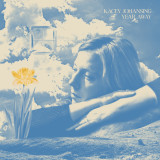
Kacey Johansing - Year Away LP

In March of 2020, after learning that a dear friend’s life was coming to an end, Johansing sat down and in one sitting wrote the song “Daffodils”. An elegiac tribute to someone facing death with grace and curiosity, the lyrics confront Johansing’s own mortality by observing the brief lifespan of a Hlower. Only a week later when the world came to an abrupt standstill, she soon found herself processing this recent loss while trying to make sense of a new global reality. Across the ensuing months, Johansing found herself increasingly untethered by a world of isolation and political upheaval.

Having been a frequent touring member of bands like Hand Habits and Fruit Bats, and often being called into the studio to lend her harmonies and multi-instrumental talents to records, Johansing’s phone no longer rang. Living in Los Angeles she feared her musical community was vanishing, as friends and collaborators continually announced they were leaving the city. It was in returning to her piano nightly that she found the greatest solace, feverishly writing the songs that would be collected on her next album. Resulting from this new sense of time and focus was a deepening of her songwriting. As Johansing recalls, “I felt like a metamorphosis happened during that time. There was a lot of personal growth and healing.”

Throughout Year Away Johansing traverses uncharted emotional landscapes brought upon by the changes occurring all around her. The forced self-reflection of the moment is aptly captured by “Old Friend”, featuring an aching melody and swooning production that recalls the best of Harry Nilsson. The epic piano and saxophone-driven “Smile with My Eyes” addresses the loss of community as friends became distant and political divides between family grew. On “Smile” Johansing pushes her vocals further than ever, expanding her range and using her peerless voice as the singular instrument it is. Facing the loss of a family home due to environmental destruction, “Shifting Sands” is marked by soaring Hlutes, Hield recordings and glassy synthesizers that nod to Japanese New Age.

“Daffodils”, the stunning album centerpiece, is built from a pastiche of looping samples, swirling Mellotron and dazzling vibraphone. “Keep your heart open wide, you never know your time / Keep your heart wild, true Hlower child”, Johansing sings as she says goodbye to an elder, while the band reaches a grief-stricken crescendo of woodwinds and chiming bells. On the title track, Johansing takes listeners on an eerily meditative journey of collective experiences. “I wanted to keep the progression simple and repetitive so that musically we could add new elements little by little, while the emotional tone of the lyrics becomes increasingly more strained and expressive”. The song grows to a fever pitch as Johansing sings higher than she thought possible; the tension of the repeating chords Hinally resolving into a hopeful coda as multiple soloists weave around each other.

Amidst heavier themes, Johansing still leaves room for her love of irresistible pop melodies and lush production. The driving “Last Drop” and mid-tempo “Valley Green” are two of her catchiest songs to date. On the former Johansing sings the anthemic chorus, “As if it were the last drop, and nothing ever lasts forever / As if it were the last stop, too far out to come back ever”, longing for a love that she’ll never take for granted, while also admitting that she doesn’t always know how good she has it. “Valley Green” features shimmering layers of 12- string guitars, stacked horns and an impeccable solo by co-producer and multi- instrumentalist Tim Ramsey (Vetiver, Fruit Bats), hinting at a love for bands like NRBQ.

Having been eager to capture the initial spark of songwriting, Johansing booked time at Highland Park’s 64 Sound Studio the week that it reopened. Over the course of three days, she and her band gathered basic tracks for 10 songs, before returning home to Hinish the record with Ramsey. Setting forth to make an album that paid homage to the music that kept them company during the months spent alone together, the duo pulled inspiration from a wide net including Burt Bacharach, John Carroll Kirby & Haruomi Hosono. Ramsey’s newfound love of early digital synthesizers dovetailed effortlessly with Johansing’s fondness for classic 70’s horn and string arrangements, creating a sound that is distinctly modern yet warm and familiar.

Once again Johansing called upon some of the Hinest players of Northeast Los Angeles’ vibrant music community to lend a hand with the record. The 70s R&B-folk of “Watch It Like a Show” features an electric guitar solo from Hand Habits’ Meg Duffy, while album closer “Endless Sound” boasts backing vocals from electronic musician Kaitlyn Aurelia Smith and swooping Indian-inspired violins from Amir Yaghmai (HAIM, The Voidz). The record shines brightly thanks to an ace mix from veteran producer Rob Schnapf (Beck, Elliott Smith, Cat Power), woodwinds from Logan Hone (John Carroll Kirby, Eddie Chacon), and a featured rhythm section of drummer Josh Adams (Jenny Lewis, Bedouine) and bassist Todd Dahlhoff (Feist, Devendra Banhart). Recorded across multiple studios including LA’s famed Sunset Sound, the album remains steadfastly buoyed by the adept engineering of Tyler Karmen (MGMT, Alvvays).

Though born of turbulent times, Year Away is ultimately interested in moving forward. The album ends with “Endless Sound,” where Johansing laments seismic global changes, (“The water is hotter, the mighty thaw / The current’s reversing, the last are lost”) but vows to keep going (“No storm can take me down / Endless light, endless sound”). It’s Year Away’s resilience that shines through despite the darkness. It’s a sound all her own and Johansing’s most cohesive set of songs yet.

pre-order now27.10.2023

expected to be published on 27.10.2023

Lesser Of - Within My Fragility

Having been deck slaying as near their London headquarters as Germany and as far as Canada, goth techno prodigy Lesser Of is steadily approaching double digit release count. With an established residence at queer x trans focused, revolutionary event series Subverted, their efforts have been welcomed to a formidable list of industrial electronic labels and remixed by a tidy sum of high profile scene icons.

Here at Depth.Request our sonars are attuned to emanant potential, and so we conscript Lesser Of to hammer out our fourth acetate offering to date. To this, harsh noise and drone music inspirations are declared, alongside an artistic secret of the trade: lights-off sessions in live room of a recording studio vibrating with the pulse of a bass guitar ran through a freeze pedal were what begot the tracks, and they are well intent on assaulting your headphones with noise. Reeko on the remix - yes, this record fucks.

Prolonged, ominous intro? Nah. Have a face full of Crude Manifestation Of Power instead, as an insatiable, 10-minute long opener braces your ears for a week of ringing with a sonic equivalent of metallic thrashing one could expect from being a sinful, rave-lusting scoundrel. On title-diverting continuation Within My Fragility the words "strength in fragility" are truly alliterated as the pace, abrasiveness and intensity of pummelling are all ramped up fiercely, with linear open hats thrown against them from time to time for good measure. Having reached 140 BPM and concrete mean, Masked proceeds in a well anticipated ra(n)ge: infernal atmosphere, sandy hats and layered tectonic tremors achieved with increasingly undefined low end consisting of a rumble line and rolling kick morphing into abrasive haze. Winding the tempo back a notch, a halftimearranged contemplation Our Descent grows in direct, hyperborean vector: glassy drones and sharp syncopulsation first - atonal reverberations, distorted arpeggios and punchy stabs endwise. Reeko's analog reinvention of Masked convolves the drum structure by borrowing from breakbeat narratives and authorizes the dystopian ambiance to rise and fall on more gradual, panning, confined terms; adding, however, more disorder to the mix with spectrum slicing, high-range chaos.

As you would have learned to expect from Depth.Request, Within My Fragility EP is not an easy listening five-tracker. If by the end of it you find yourself feeling as if you just stepped out of a pounding warehouse at 3AM and you don't know what day it is, you wouldn't have been experiencing this mindspace alone.

out of Stock

Order now and we will order the item for you at our supplier.


Last In: 2 years ago
MUDHONEY - SUPERFUZZ BIGMUFF (35TH ANNIVERSARY VINYL EDITION)

Limited Loser Edition on Mustard Yellow vinyl. In 1988 Mudhoney released their debut 7" single, "Touch Me I'm Sick," and it rapidly became the defining anthem of the Seattle scene that, shortly thereafter, took the world by storm. Punk? Garage? G****e? Who cares when it rips this much! The B side, "Sweet Young Thing Ain't Sweet No More," ain't no slouch, either. Later in 1988, the band followed up with Superfuzz Bigmuff, a six-song EP so overflowing with chaotic rock energy it warped thousands of minds, and inspired countless guitarists to immediately search for the titular fuzz pedals. In the words of Dynamite Hemmorage's Jay Hinman: "My feeling - and I know I'm not alone in this one - is that for all the play and worldwide attention several Seattle-area bands got during the 1988-92 period, at the end of the day (and even at the time), there was Mudhoney - and then there was everybody else. To me, you, and most everyone who was paying close attention to underground rock music during those years, Mudhoney still sound like the undisputed kingpins of roaring, surging, fuzzed-out, punk rock music. These first recordings were so life-affirming upon their release, connecting everything great about the sixties (biker movies, fuzzboxes, old guitars, three-minute songs) with the frothing, punk rock of the early 80s, that a whole new style of music was born. They called it grunge, but to me it was amped-up, clear-the-room, ramalama rock that exploded like Nagasaki live, and it was about as joyous and as fun a noise as anyone'd heard in years." These 2023 colored-vinyl editions of the two releases celebrate the 35th anniversary of Mudhoney's opening salvos, and we couldn't be more excited to have them back in print.

pre-order now06.10.2023

expected to be published on 06.10.2023

WILL BUTLER + SISTER SQUARES - WILL BUTLER + SISTER SQUARES LP

Sara Dobbs and Jenny Shore used to work summer stock theater in St. Louis, Missouri. They'd do the hand jive with TV stars past and future; they'd get coldly corrected by the ancient, legendary choreographer Gemze de Lappe. Sara went on to Broadway, including a run as Anybodys in West Side Story. Jenny went on to choreograph in the independent dance scene of early 2000s Chicago. Julie Shore is Jenny's sister. She's always made music_playing Chopin, writing songs, making bands with her friends. She's had the archetypal Millennial journey of entering adulthood in the '08 financial crisis and figuring out what stupid series of jobs you have to take to pay rent while keeping an artistic life alive. Miles Francis grew up in New York City with Backstreet Boys posters covering their walls. An extraordinary drummer since youth, Miles thrives in collaboration_ whether producing artists in their West Village studio, performing with artists like Angelique Kidjo, or powering protests with a big marching drum. These four_Miles, Julie, Jenny, and Sara_are Sister Squares. What made them a musical unit was working with Grammy winner and Oscar nominee Will Butler. They've all just finished a new record together: Will Butler + Sister Squares. "After Generations, I considered making a weird solo record. Me alone in the basement, etc., etc. Mostly I realized that what I wanted was the opposite," says Will. He increasingly turned to the band for feedback on lyrics and song structures. He asked Miles if they'd produce the record. The band played a run of shows in August 2022, airing out studio ideas in live rooms. After coming home, the band regrouped at Figure 8 Studios in Brooklyn. "I had quit my band Arcade Fire very recently, after 20 years_maybe the most complex decision of my life. I had spent the preceding two years at home with my three children. I was 39 years old. I was waking up every morning and reading Emily Dickinson, until I had read every Emily Dickinson poem. I was listening to Morrissey, to Shostakovich, to the Spotify top 50. I had unformed questions with inchoate answers," says Will. "But, honestly, I was feeling great about the record." The album projects widescreen emotional landscapes. Lead-off single "Long Grass" is like a Harry Styles song with 20 more years of life behind it. Standout track "Saturday Night" has a beat, according to Miles, "with that robot-alien-dancing-at-a-haunted- dive-bar feeling that we were going for." The back half of the album is a danceable, weird choral record with harmonies both beautiful and dissonant. Closing song "The Window" is the comedown after the party_Julie playing a Chopin Nocturne on a three-years-out-of-tune piano, slowed to half-speed on tape with Will singing over it in a voice exactly as tired as he was. It's a record with a warm, humane soul.

pre-order now22.09.2023

expected to be published on 22.09.2023

WILL BUTLER + SISTER SQUARES - WILL BUTLER + SISTER SQUARES LP

Sara Dobbs and Jenny Shore used to work summer stock theater in St. Louis, Missouri. They'd do the hand jive with TV stars past and future; they'd get coldly corrected by the ancient, legendary choreographer Gemze de Lappe. Sara went on to Broadway, including a run as Anybodys in West Side Story. Jenny went on to choreograph in the independent dance scene of early 2000s Chicago. Julie Shore is Jenny's sister. She's always made music_playing Chopin, writing songs, making bands with her friends. She's had the archetypal Millennial journey of entering adulthood in the '08 financial crisis and figuring out what stupid series of jobs you have to take to pay rent while keeping an artistic life alive. Miles Francis grew up in New York City with Backstreet Boys posters covering their walls. An extraordinary drummer since youth, Miles thrives in collaboration_ whether producing artists in their West Village studio, performing with artists like Angelique Kidjo, or powering protests with a big marching drum. These four_Miles, Julie, Jenny, and Sara_are Sister Squares. What made them a musical unit was working with Grammy winner and Oscar nominee Will Butler. They've all just finished a new record together: Will Butler + Sister Squares. "After Generations, I considered making a weird solo record. Me alone in the basement, etc., etc. Mostly I realized that what I wanted was the opposite," says Will. He increasingly turned to the band for feedback on lyrics and song structures. He asked Miles if they'd produce the record. The band played a run of shows in August 2022, airing out studio ideas in live rooms. After coming home, the band regrouped at Figure 8 Studios in Brooklyn. "I had quit my band Arcade Fire very recently, after 20 years_maybe the most complex decision of my life. I had spent the preceding two years at home with my three children. I was 39 years old. I was waking up every morning and reading Emily Dickinson, until I had read every Emily Dickinson poem. I was listening to Morrissey, to Shostakovich, to the Spotify top 50. I had unformed questions with inchoate answers," says Will. "But, honestly, I was feeling great about the record." The album projects widescreen emotional landscapes. Lead-off single "Long Grass" is like a Harry Styles song with 20 more years of life behind it. Standout track "Saturday Night" has a beat, according to Miles, "with that robot-alien-dancing-at-a-haunted- dive-bar feeling that we were going for." The back half of the album is a danceable, weird choral record with harmonies both beautiful and dissonant. Closing song "The Window" is the comedown after the party_Julie playing a Chopin Nocturne on a three-years-out-of-tune piano, slowed to half-speed on tape with Will singing over it in a voice exactly as tired as he was. It's a record with a warm, humane soul.

pre-order now22.09.2023

expected to be published on 22.09.2023

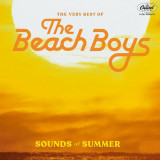
The Beach Boys - Sounds Of Summer (Expanded Edition) 6x12"
 
80

"To kick off the yearlong celebration and provide the perfect summer soundtrack, Capitol Records and UMe will release a newly remastered and expanded edition of The Beach Boys career-spanning greatest hits collection, Sounds Of Summer: The Very Best Of The Beach Boys, on June 17. Originally released in 2003, the album soared to no. 16 in the US and stayed on the chart for 104 weeks. Now certified 4x platinum for sales of nearly four and a half million albums, the collection has been updated in both number of songs and audio quality, expanding the original 30-track best of with 50 more of the band’s most beloved songs for a total of 80 tracks that span their earliest hits to deeper fan-favorite cuts and from their 1962 debut album, Surfin’ Safari through to 1989’s Still Cruisin’.
Assembled by Mark Linett and Alan Boyd, the team behind 2013's GRAMMY® Award-winning SMiLE Sessions and last year’s acclaimed boxed set, Feel Flows – The Sunflower and Surf's Up Sessions 1969-1971, Sounds Of Summer features nearly every US Top 40 hit of The Beach Boys’ incredible career, including “California Girls,” “I Get Around,” “Surfer Girl,” “Surfin’ U.S.A.,” “Fun, Fun, Fun,” “God Only Knows,” “Good Vibrations,” “Be True To Your School,” “Wouldn’t It Be Nice,” “Kokomo,” “Barbara Ann,” “Help Me, Rhonda,” “In My Room,” and many others. Fifty additional tracks showcase a broad mix of songs from across their wide-ranging catalog with some of the many highlights including “All Summer Long,” “Disney Girls,” “Forever,” “Feel Flows,” “Friends,” “Roll Plymouth Rock,” “Sail on Sailor,” “Surf’s Up,” and “Wind Chimes.”
The collection boasts 24 new mixes including two first-time stereo mixes, plus 22 new-and-improved stereo mixes, which in some cases feature the latest in digital stereo extraction technology, allowing for the team to separate the original mono backing tracks for the first time.
The expanded edition of Sounds Of Summer will be available in a variety of formats, including a 3CD softpack, and as a Super Deluxe Edition 6LP vinyl boxed set on 180-gram black vinyl in two options – a standard set or a numbered, limited edition version featuring a rainbow foil slipcase and four collectible lithographs. Both versions will feature color printed sleeves that replicate the original “Capitol Catalog” sleeves that highlight the entire Beach Boys discography, and all formats will include a booklet with new liner notes and updated photos. The original 30-track version will also be available in its newly remastered and upgraded form on single CD or double gatefold LP on standard weight vinyl or as a higher-end limited edition numbered version pressed on 180-gram vinyl with a tip-on jacket and a lithograph. "

pre-order now17.08.2023

expected to be published on 17.08.2023

Svarte Greiner - Devolving Trust LP

Erik K Skodvin's alter persona “Svarte Greiner” re-appears with another chapter in his “zen music for disturbed souls” series, channeling both spiritual distress and meditation in a live recording from the bunkers of a bombed out brewery.

The first piece, entitled “Devolving Trust” is recorded live in the bunkers of Schneider Brewery in Berlin, 2018. Erik explains : “I was invited to use the vast old cellars located underneath the site for a performance / installation. Wet and hollow with a dark past and long reverb, it was a perfect location to channel a cello and electro-acoustic improvisation in the spirit of my two long-form, meditative albums Black Tie & Moss Garden. As a 30 minute piece, it was left looping in the room for hours after it ended as an echo of the performance, allowing people to walk around and soak up the sounds and empty hallways alone.

I am usually not into the idea of releasing a live recording, as there are so many factors that are lost in the translation from being present and listening to it in another space. The eyes, ears and body can often see beyond small mistakes once a live performance unfolds in front of you. The details are usually lost in translating it to a pure recording. I made an exception for this as I feel it translates the live feeling in a way I like. Very personal and full of small mistakes it creates its own life. Also, as an improvisation, I am very happy with it, and have been listening to it on and off since a few years. With this in mind I decided I want it to be another document in my ongoing series of longform, atmospheric pieces following the aforementioned two albums.

The second track simply called “Devolve” is mostly constructed out of fragments from the performance as a sort of minimal, reversed echo, further tunnelling into the unknown. These pieces has given me calmness, reflection and escape from the madness escalating outside of our doors. I hope it can do the same for you”.

out of Stock

Order now and we will order the item for you at our supplier.


Last In: 7 months ago
AWOLNATION - My Echo, My Shadow, My Covers and Me

'My Echo, My Shadow, My Covers and Me' is a fiercely collaborative and celebratory project. An eclectic collection of masterfully crafted and carefully curated covers, each track features at least one acclaimed musical artist. It includes epic re-imaginings of classics such as 'Wind Of Change' by Scorpions, 'Take A Chance On Me' by Abba and 'Beds Are Burning' by Midnight Oil. It features collaborations with artists like Portugal the Man, Brandon Boyd of Incubus, Jewel, Beck, Taylor Hanson and more. It will be available on one-of-a kind recycled coloured vinyl, mystery coloured cassette and CD.

pre-order now23.12.2022

expected to be published on 23.12.2022

FRUIT DISTRO COLLECTIVE - SOME KIND OF WISDOM

Dopeness Galore / Records We Release
"A newfound father's attempt to pass wisdom on to his children."

- Spring 2019 -

"As my girlfriend’s pregnancy was steadily treading along, I settled into my home studio in the attic of our new house. In our previous apartment I had a tiny room which could hardly fit my recording gear, let alone my drums which were still sitting at my parents’ house eating dust. Now that we’d moved into a bigger place, I had confiscated a part of the top floor to build my studio. This time I had just enough space to fit my drum set together with other percussion instruments, Fender Rhodes and synths. This sparked a whole new world of creative opportunities.

At the same time I also started to think about what kind of wisdom I would want to pass on to my children. I started writing down my thoughts. Little anecdotes, ponderings and things to think about as a human being.

These two events took place in parallel and once I actually started jotting down my first compositional ideas I saw the concept right there in front of me bright as day.

This LP has been written and recorded as inspiration to think about things and to keep re-thinking again and again to strengthen the knowledge of self.

Fruit Distro Collective is heavily inspired by Jazz composition, Hiphop drum sounds and the percussive elements of Afrobeat and Afro latin styles. "

pre-order now16.12.2022

expected to be published on 16.12.2022

Lee Tracy & Isaac Manning - Is it What You Want

As the sun sets on a quaint East Nashville house, a young man bares a piece of his soul. Facing the camera, sporting a silky suit jacket/shirt/slacks/fingerless gloves ensemble that announces "singer" before he's even opened his mouth, Lee Tracy Johnson settles onto his stage, the front yard. He sways to the dirge-like drum machine pulse of a synth-soaked slow jam, extends his arms as if gaining his balance, and croons in affecting, fragile earnest, "I need your love… oh baby…"

Dogs in the yard next door begin barking. A mysterious cardboard robot figure, beamed in from galaxies unknown and affixed to a tree, is less vocal. Lee doesn't acknowledge either's presence. He's busy feeling it, arms and hands gesticulating. His voice rises in falsetto over the now-quiet dogs, over the ambient noise from the street that seeps into the handheld camcorder's microphone, over the recording of his own voice played back from a boombox off-camera. After six minutes the single, continuous shot ends. In this intimate creative universe there are no re-takes. There are many more music videos to shoot, and as Lee later puts it, "The first time you do it is actually the best. Because you can never get that again. You expressing yourself from within."

"I Need Your Love" dates from a lost heyday. From some time in the '80s or early '90s, when Lee Tracy (as he was known in performance) and his music partner/producer/manager Isaac Manning committed hours upon hours of their sonic and visual ideas to tape. Embracing drum machines and synthesizers – electronics that made their personal futurism palpable – they recorded exclusively at home, live in a room into a simple cassette deck. Soul, funk, electro and new wave informed their songs, yet Lee and Isaac eschewed the confinement of conventional categories and genres, preferring to let experimentation guide them.

"Anytime somebody put out a new record they had the same instruments or the same sound," explains Isaac. "So I basically wanted to find something that's really gonna stand out away from all of the rest of 'em." Their ethos meant that every idea they came up with was at least worth trying: echoed out half-rapped exhortations over frantic techno-style beats, gospel synth soul, modal electro-funk, oddball pop reinterpretations, emo AOR balladry, nods to Prince and the Fat Boys, or arrangements that might collapse mid-song into a mess of arcade game-ish blips before rallying to reach the finish line. All of it conjoined by consistent tape hiss, and most vitally, Lee's chameleonic voice, which managed to wildly shape shift and still evoke something sincere – whether toggling between falsetto and tenor exalting Jesus's return, or punctuating a melismatic romantic adlib with a succinct, "We all know how it feels to be alone."

"People think we went to a studio," says Isaac derisively. "We never went to no studio. We didn't have the money to go to no studio! We did this stuff at home. I shot videos in my front yard with whatever we could to get things together." Sometimes Isaac would just put on an instrumental record, be it "Planet Rock" or "Don't Cry For Me Argentina" (from Evita), press "record," and let Lee improvise over it, yielding peculiar love songs, would-be patriotic anthems, or Elvis Presley or Marilyn Monroe tributes. Technical limitations and a lack of professional polish never dissuaded them. They believed they were onto something.

"That struggle," Isaac says, "made that sound sound good to me."

In the parlance of modern music criticism Lee and Isaac's dizzying DIY efforts would inevitably be described as "outsider." But "outsider" carries the burden of untold additional layers of meaning if you're Black and from the South, creating on a budget, and trying to get someone, anyone within the country music capital of the world to take your vision seriously. "What category should we put it in?" Isaac asks rhetorically. "I don't know. All I know is feeling. I ain't gonna name it nothing. It's music. If it grabs your soul and touch your heart that's what it basically is supposed to do."

=

Born in 1963, the baby boy of nine siblings, Lee Tracy spent his earliest years living amidst the shotgun houses on Nashville's south side. "We was poor, man!" he says, recalling the outhouse his family used for a bathroom and the blocks of ice they kept in the kitchen to chill perishables. "But I actually don't think I really realized I was in poverty until I got grown and started thinking about it." Lee's mom worked at the Holiday Inn; his dad did whatever he had to do, from selling fruit from a horse drawn cart to bootlegging. "We didn't have much," Lee continues, "but my mother and my father got us the things we needed, the clothes on our back." By the end of the decade with the city's urban renewal programs razing entire neighborhoods to accommodate construction of the Interstate, the family moved to Edgehill Projects. Lee remembers music and art as a constant source of inspiration for he and his brothers and sisters – especially after seeing the Jackson 5 perform on Ed Sullivan. "As a small child I just knew that was what I wanted to do."

His older brother Don began musically mentoring him, introducing Lee to a variety of instruments and sounds. "He would never play one particular type of music, like R&B," says Lee. "I was surrounded by jazz, hard rock and roll, easy listening, gospel, reggae, country music; I mean I was a sponge absorbing all of that." Lee taught himself to play drums by beating on cardboard boxes, gaining a rep around the way for his timekeeping, and his singing voice. Emulating his favorites, Earth Wind & Fire and Cameo, he formed groups with other kids with era-evocative band names like Concept and TNT Connection, and emerged as the leader of disciplined rehearsals. "I made them practice," says Lee. "We practiced and practiced and practiced. Because I wanted that perfection." By high school the most accomplished of these bands would take top prize in a prominent local talent show. It was a big moment for Lee, and he felt ready to take things to the next level. But his band-mates had other ideas.

"I don't know what happened," he says, still miffed at the memory. "It must have blew they mind after we won and people started showing notice, because it's like everybody quit! I was like, where the hell did everybody go?" Lee had always made a point of interrogating prospective musicians about their intentions before joining his groups: were they really serious or just looking for a way to pick up girls? Now he understood even more the importance of finding a collaborator just as committed to the music as he was.

=

Isaac Manning had spent much of his life immersed in music and the arts – singing in the church choir with his family on Nashville's north side, writing, painting, dancing, and working various gigs within the entertainment industry. After serving in the armed forces, in the early '70s he ran The Teenage Place, a music and performance venue that catered to the local youth. But he was forced out of town when word of one of his recreational routines created a stir beyond the safe haven of his bohemian circles.

"I was growing marijuana," Isaac explains. "It wasn't no business, I was smoking it myself… I would put marijuana in scrambled eggs, cornbread and stuff." His weed use originated as a form of self-medication to combat severe tooth pain. But when he began sharing it with some of the other young people he hung out with, some of who just so happened to be the kids of Nashville politicians, the cops came calling. "When I got busted," he remembers, "they were talking about how they were gonna get rid of me because they didn't want me saying nothing about they children because of the politics and stuff. So I got my family, took two raggedy cars, and left Nashville and went to Vegas."

Out in the desert, Isaac happened to meet Chubby Checker of "The Twist" fame while the singer was gigging at The Flamingo. Impressed by Isaac's zeal, Checker invited him to go on the road with him as his tour manager/roadie/valet. The experience gave Isaac a window into a part of the entertainment world he'd never encountered – a glimpse of what a true pop act's audience looked like. "Chubby Checker, none of his shows were played for Black folks," he remembers. "All his gigs were done at high-class white people areas." Returning home after a few years with Chubby, Isaac was properly motivated to make it in Music City. He began writing songs and scouting around Nashville for local talent anywhere he could find it with an expressed goal: "Find someone who can deliver your songs the way you want 'em delivered and make people feel what you want them to feel."

One day while walking through Edgehill Projects Isaac heard someone playing the drums in a way that made him stop and take notice. "The music was so tight, just the drums made me feel like, oh I'm-a find this person," he recalls. "So I circled through the projects until I found who it was.

"That's how I met him – Lee Tracy. When I found him and he started singing and stuff, I said, ohhh, this is somebody different."

=

Theirs was a true complementary partnership: young Lee possessed the raw talent, the older Isaac the belief. "He's really the only one besides my brother and my family that really seen the potential in me," says Lee. "He made me see that I could do it."

Isaac long being a night owl, his house also made for a fertile collaborative environment – a space where there always seemed to be a new piece of his visual art on display: paintings, illustrations, and dolls and figures (including an enigmatic cardboard robot). Lee and Issac would hang out together and talk, listen to music, conjure ideas, and smoke the herb Isaac had resumed growing in his yard. "It got to where I could trust him, he could trust me," Isaac says of their bond. They also worked together for hours on drawings, spreading larges rolls of paper on the walls and sketching faces with abstract patterns and imagery: alien-like beings, tri-horned horse heads, inverted Janus-like characters where one visage blurred into the other.

Soon it became apparent that they didn't need other collaborators; self-sufficiency was the natural way forward. At Isaac's behest Lee, already fed up with dealing with band musicians, began playing around with a poly-sonic Yamaha keyboard at the local music store. "It had everything on it – trumpet, bass, drums, organ," remembers Lee. "And that's when I started recording my own stuff."

The technology afforded Lee the flexibility and independence he craved, setting him on a path other bedroom musicians and producers around the world were simultaneously following through the '80s into the early '90s. Saving up money from day jobs, he eventually supplemented the Yamaha Isaac had gotten him with Roland and Casio drum machines and a Moog. Lee was living in an apartment in Hillside at that point caring for his dad, who'd been partially paralyzed since early in life. In the evenings up in his second floor room, the music put him in a zone where he could tune out everything and lose himself in his ideas.

"Oh I loved it," he recalls. "I would really experiment with the instruments and use a lot of different sound effects. I was looking for something nobody else had. I wanted something totally different. And once I found the sound I was looking for, I would just smoke me a good joint and just let it go, hit the record button." More potent a creative stimulant than even Isaac's weed was the holistic flow and spontaneity of recording. Between sessions at Isaac's place and Lee's apartment, their volume of output quickly ballooned.

"We was always recording," says Lee. "That's why we have so much music. Even when I went to Isaac's and we start creating, I get home, my mind is racing, I gotta start creating, creating, creating. I remember there were times when I took a 90-minute tape from front to back and just filled it up."

"We never practiced," says Isaac. "See, that was just so odd about the whole thing. I could relate to him, and tell him about the songs I had ideas for and everything and stuff. And then he would bring it back or whatever, and we'd get together and put it down." Once the taskmaster hell bent on rehearsing, Lee had flipped a full 180. Perfection was no longer an aspiration, but the enemy of inspiration.

"I seen where practicing and practicing got me," says Lee. "A lot of musicians you get to playing and they gotta stop, they have to analyze the music. But while you analyzing you losing a lot of the greatness of what you creating. Stop analyzing what you play, just play! And it'll all take shape."

=

"I hope you understood the beginning of the record because this was invented from a dream I had today… (You tell me, I'll tell you, we'll figure it out together)" – Lee Tracy and Isaac Manning, "Hope You Understand"

Lee lets loose a maniacal cackle when he acknowledges that the material that he and Isaac recorded was by anyone's estimation pretty out there. It's the same laugh that commences "Hope You Understand" – a chaotic transmission that encapsulates the duality at the heart of their music: a stated desire to reach people and a compulsion to go as leftfield as they saw fit.

"We just did it," says Lee. "We cut the music on and cut loose. I don't sit around and write. I do it by listening, get a feeling, play the music, and the lyrics and stuff just come out of me."

The approach proved adaptable to interpreting other artists' material. While recording a cover of Whitney Houston's pop ballad "Saving All My Love For You," Lee played Whitney's version in his headphones as he laid down his own vocals – partially following the lyrics, partially using them as a departure point. The end result is barely recognizable compared with the original, Lee and Isaac having switched up the time signature and reinvented the melody along the way towards morphing a slick mainstream radio standard into something that sounds solely their own.

"I really used that song to get me started," says Lee. "Then I said, well I need something else, something is missing. Something just came over me. That's when I came up with 'Is It What You Want.'"

The song would become the centerpiece of Lee and Isaac's repertoire. Pushed along by a percolating metronomic Rhythm King style beat somewhere between a military march and a samba, "Is It What You Want" finds Lee pleading the sincerity of his commitment to a potential love interest embellished by vocal tics and hiccups subtlely reminiscent of his childhood hero MJ. Absent chord changes, only synth riffs gliding in and out like apparitions, the song achieves a lingering lo-fi power that leaves you feeling like it's still playing, somewhere, even after the fade out.

"I don't know, it's like a real spiritual song," Lee reflects. "But it's not just spiritual. To me the more I listen to it it's like about everything that you do in your everyday life, period. Is it what you want? Do you want a car or you don't want a car? Do you want Jesus or do you want the Devil? It's basically asking you the question. Can't nobody answer the question but you yourself."

In 1989 Lee won a lawsuit stemming from injuries sustained from a fight he'd gotten into. He took part of the settlement money and with Isaac pressed up "Saving All My Love For You" b/w "Is It What You Want" as a 45 single. Isaac christened the label One Chance Records. "Because that's all we wanted," he says with a laugh, "one chance."

Isaac sent the record out to radio stations and major labels, hoping for it to make enough noise to get picked up nationally. But the response he and Lee were hoping for never materialized. According to Isaac the closest the single got to getting played on the radio is when a disk jock from a local station made a highly unusual announcement on air: "The dude said on the radio, 107.5 – 'We are not gonna play 'Is It What You Want.' We cracked up! Wow, that's deep.

"It was a whole racist thing that was going on," he reflects. "So we just looked over and kept on going. That was it. That was about the way it goes… If you were Black and you were living in Nashville and stuff, that's the way you got treated." Isaac already knew as much from all the times he'd brought he and Lee's tapes (even their cache of country music tunes) over to Music Row to try to drum up interest to no avail.

"Isaac, he really worked his ass off," says Lee. "He probably been to every record place down on Music Row." Nashville's famed recording and music business corridor wasn't but a few blocks from where Lee grew up. Close enough, he remembers, for him to ride his bike along its back alleys and stumble upon the occasional random treasure, like a discarded box of harmonicas. Getting in through the front door, however, still felt a world away.

"I just don't think at the time our music fell into a category for them," he concedes. "It was before its time."

=

Lee stopped making music some time in the latter part of the '90s, around the time his mom passed away and life became increasingly tough to manage. "When my mother died I had a nervous breakdown," he says, "So I shut down for a long time. I was in such a sadness frame of mind. That's why nobody seen me. I had just disappeared off the map." He fell out of touch with Isaac, and in an indication of just how bad things had gotten for him, lost track of all the recordings they'd made together. Music became a distant memory.

Fortunately, Isaac kept the faith. In a self-published collection of his poetry – paeans to some of his favorite entertainment and public figures entitled Friends and Dick Clark – he'd written that he believed "music has a life of its own." But his prescience and presence of mind were truly manifested in the fact that he kept an archive of he and Lee's work. As perfectly imperfect as "Is It What You Want" now sounds in a post-Personal Space world, Lee and Isaac's lone official release was in fact just a taste. The bulk of the Is It What You Want album is culled from the pair's essentially unheard home recordings – complete songs, half-realized experiments, Isaac's blue monologues and pronouncements et al – compiled, mixed and programmed in the loose and impulsive creative spirit of their regular get-togethers from decades ago. The rest of us, it seems, may have finally caught up to them.

On the prospect of at long last reaching a wider audience, Isaac says simply, "I been trying for a long time, it feels good." Ever the survivor, he adds, "The only way I know how to make it to the top is to keep climbing. If one leg break on the ladder, hey, you gotta fix it and keep on going… That's where I be at. I'll kill death to make it out there."

For Lee it all feels akin to a personal resurrection: "It's like I was in a tomb and the tomb was opened and I'm back… Man, it feels so great. I feel like I'm gonna jump out of my skin." Success at this stage of his life, he realizes, probably means something different than what it did back when he was singing and dancing in Isaac's front yard. "What I really mean by 'making it,'" he explains isn't just the music being heard but, "the story being told."

Occasionally Lee will pull up "Is It What You Want" on YouTube on his phone, put on his headphones, and listen. He remembers the first time he heard his recorded voice. How surreal it was, how he thought to himself, "Is that really me?" What would he say to that younger version of himself now?

"I would probably tell myself, hang in there, don't give up. Keep striving for the goal. And everything will work out."

Despite what's printed on the record label, sometimes you do get more than one chance.

out of Stock

Order now and we will order the item for you at our supplier.


Last In: 3 years ago
Eric Clapton - The Complete Reprise Studio Albums Vol 1 (12x12

Eric Clapton, one of music’s most influential and successful recording artists, joined Reprise Records in 1983, launching a prolific period that spans 30 years and encompasses some of his most celebrated work. This limited edition, 12-LP boxed set revisits Clapton’s first six albums for Reprise along with an LP exclusive to this collection that features rarities from the era, including a previously unreleased remix of “Pilgrim” by co-writer and long-time Clapton producer Simon Climie.
The Complete Reprise Studio Albums – Volume I contains newly remastered versions of six studio albums pressed on 180-gram vinyl: Money and Cigarettes (1983) as a single LP, and Behind the Sun (1985), August (1986), Journeyman (1989), From the Cradle (1994), and Pilgrim (1998) as double-LPs. Behind The Sun and August were originally released as single LPs; both are now 3-sided double albums to avoid long LP sides and to maximize the audio quality.
The final LP in the collection, Rarities (1983-1998) brings together eight rare recordings from this era, including live versions of “White Room” and “Crossroads” that were both featured on the B-side on the 1987 single “Behind The Mask.” Another B-side, “Theme From A Movie That Never Happened” (Orchestral), appeared in 1998 on the Grammy winning single, “My Father’s Eyes.”, and a cover of Albert King’s “Born Under A Bad Sign” (an outtake from Grammy winning album From The Cradle).
All the music included in this collection was mastered by Bob Ludwig at Gateway Mastering and the lacquers for the LPs were cut by Chris Bellman at Bernie Grundman Mastering.
Volume I spans 15 years and touches on some of Clapton’s biggest studio albums. It begins with Money and Cigarettes, the guitarist’s eighth solo studio album, which he co-produced with Atlantic Records’ legend Tom Dowd. Released in 1983, it reached the Top 20 in the U.S. and the U.K. and introduced the hit single “I’ve Got A Rock ’n’ Roll Heart.”
Clapton worked with Phil Collins to produce his next album, Behind the Sun, which peaked at #8 in the U.K. The album would earn platinum-certification in the U.S. thanks to hits like “Forever Man” and “She’s Waiting.” Collins returned to co-produce the next album, August, as well. Certified gold in the U.S., it featured a trio of Top 10 singles – “Miss You,” “Tearing Us Apart,” (a duet with Tina Turner) and the #1 smash, “It’s In The Way That You Use It.” Clapton co-wrote the latter with Robbie Robertson and co-produced the track with Dowd. The song was also featured in The Color of Money, the 1986 blockbuster film starring Paul Newman and Tom Cruise.
Journeyman, Clapton’s 1989 follow-up, reached #2 in the U.K. where it was certified platinum. An international sensation, the record was certified platinum in Canada and gold in Argentina, Australia, France, Japan, Netherlands, New Zealand, Spain, Sweden, and Switzerland. The album was certified double platinum in the U.S., scoring #1 hits on the Mainstream Rock charts with “Pretending” and the Grammy winning single “Bad Love.” The album had two more Top 10 hits in America with “Before You Accuse Me” (#9) and “No Alibis” (#4).
Following the runaway success of his 1992 live album Unplugged, Clapton returned in 1994 with From The Cradle. A blues covers album, it featured his versions of songs recorded by some of the bluesmen who influenced him, including Robert Johnson, Howlin’ Wolf, Muddy Waters, Freddie King and more. The album was certified triple-platinum in the U.S., where it topped the Billboard 200. It also reached #1 in the U.K., making it his only #1 album in the U.K. to date. In addition, From The Cradle won the Grammy Award for Best Traditional Blues Album.
The final release on VOLUME I is Pilgrim, Clapton’s 1998 Grammy Award winning 13th solo studio album. It reached the Top 10 in more than 20 countries, including the U.S. (#4) and the U.K. (#3). A passion project for Clapton, the album was certified platinum in America thanks to hit singles like, “My Father’s Eyes,” “Circus,” “Born In Time” (penned by Bob Dylan) and the title track.

Money and Cigarettes (1983)
• Everybody Oughta Make A Change
• The Shape You’re In
• Ain’t Going Down
• I’ve Got A Rock ’n’ Roll Heart
• Man Overboard
• Pretty Girl
• Man In Love
• Crosscut Saw
• Slow Down Linda
• Crazy Country Hop

Behind the Sun (1985)
• She’s Waiting
• See What Love Can Do
• Same Old Blues
• Knock On Wood
• Something’s Happening
• Forever Man
• It All Depends
• Tangled In Love
• Never Make You Cry
• Just Like A Prisoner
• Behind The Sun

August (1986)
• It’s In The Way That You Use It
• Run
• Tearing Us Apart
• Bad Influence
• Walk Away
• Hung Up On Your Love
• Take A Chance
• Hold On
• Miss You
• Holy Mother
• Behind the Mask

Journeyman (1989)
• Pretending
• Anything For Your Love
• Bad Love
• Running On Faith
• Hard Times
• Hound Dog
• No Alibis
• Run So Far
• Old Love
• Breaking Point
• Lead Me On
• Before You Accuse Me

From the Cradle (1994)
• Blues Before Sunrise
• Third Degree
• Reconsider Baby
• Hoochie Coochie Man
• Five Long Years
• I’m Tore Down
• How Long Blues
• Goin’ Away Baby
• Blues Leave Me Alone
• Sinner’s Prayer
• Motherless Child
• It Hurts Me Too
• Someday After A While
• Standin’ Round Crying
• Driftin’
• Groaning The Blues

Pilgrim (1998)
• My Father’s Eyes
• River Of Tears
• Pilgrim
• Broken Hearted
• One Chance
• Circus
• Goin’ Down Slow
• Fall Like Rain
• Born In Time
• Sick And Tired
• Needs His Woman
• She’s Gone
• You Were There
• Inside Of Me

Rarities Vol. 1 (2022)
• Stone Free
• Crossroads – Live
• White Room – Live
• Theme From A Movie That Never Happened (Orchestral)
• Pilgrim – Remix *
• 32-20 Blues – Live
• County Jail Blues – Live
• Born Under A Bad Sign*


* previously unreleased

pre-order now30.09.2022

expected to be published on 30.09.2022

Lee Tracy & Isaac Manning - Is it What You Want LP

As the sun sets on a quaint East Nashville house, a young man bares a piece of his soul. Facing the camera, sporting a silky suit jacket/shirt/slacks/fingerless gloves ensemble that announces "singer" before he's even opened his mouth, Lee Tracy Johnson settles onto his stage, the front yard. He sways to the dirge-like drum machine pulse of a synth-soaked slow jam, extends his arms as if gaining his balance, and croons in affecting, fragile earnest, "I need your love… oh baby…"

Dogs in the yard next door begin barking. A mysterious cardboard robot figure, beamed in from galaxies unknown and affixed to a tree, is less vocal. Lee doesn't acknowledge either's presence. He's busy feeling it, arms and hands gesticulating. His voice rises in falsetto over the now-quiet dogs, over the ambient noise from the street that seeps into the handheld camcorder's microphone, over the recording of his own voice played back from a boombox off-camera. After six minutes the single, continuous shot ends. In this intimate creative universe there are no re-takes. There are many more music videos to shoot, and as Lee later puts it, "The first time you do it is actually the best. Because you can never get that again. You expressing yourself from within."

"I Need Your Love" dates from a lost heyday. From some time in the '80s or early '90s, when Lee Tracy (as he was known in performance) and his music partner/producer/manager Isaac Manning committed hours upon hours of their sonic and visual ideas to tape. Embracing drum machines and synthesizers – electronics that made their personal futurism palpable – they recorded exclusively at home, live in a room into a simple cassette deck. Soul, funk, electro and new wave informed their songs, yet Lee and Isaac eschewed the confinement of conventional categories and genres, preferring to let experimentation guide them.

"Anytime somebody put out a new record they had the same instruments or the same sound," explains Isaac. "So I basically wanted to find something that's really gonna stand out away from all of the rest of 'em." Their ethos meant that every idea they came up with was at least worth trying: echoed out half-rapped exhortations over frantic techno-style beats, gospel synth soul, modal electro-funk, oddball pop reinterpretations, emo AOR balladry, nods to Prince and the Fat Boys, or arrangements that might collapse mid-song into a mess of arcade game-ish blips before rallying to reach the finish line. All of it conjoined by consistent tape hiss, and most vitally, Lee's chameleonic voice, which managed to wildly shape shift and still evoke something sincere – whether toggling between falsetto and tenor exalting Jesus's return, or punctuating a melismatic romantic adlib with a succinct, "We all know how it feels to be alone."

"People think we went to a studio," says Isaac derisively. "We never went to no studio. We didn't have the money to go to no studio! We did this stuff at home. I shot videos in my front yard with whatever we could to get things together." Sometimes Isaac would just put on an instrumental record, be it "Planet Rock" or "Don't Cry For Me Argentina" (from Evita), press "record," and let Lee improvise over it, yielding peculiar love songs, would-be patriotic anthems, or Elvis Presley or Marilyn Monroe tributes. Technical limitations and a lack of professional polish never dissuaded them. They believed they were onto something.

"That struggle," Isaac says, "made that sound sound good to me."

In the parlance of modern music criticism Lee and Isaac's dizzying DIY efforts would inevitably be described as "outsider." But "outsider" carries the burden of untold additional layers of meaning if you're Black and from the South, creating on a budget, and trying to get someone, anyone within the country music capital of the world to take your vision seriously. "What category should we put it in?" Isaac asks rhetorically. "I don't know. All I know is feeling. I ain't gonna name it nothing. It's music. If it grabs your soul and touch your heart that's what it basically is supposed to do."

=

Born in 1963, the baby boy of nine siblings, Lee Tracy spent his earliest years living amidst the shotgun houses on Nashville's south side. "We was poor, man!" he says, recalling the outhouse his family used for a bathroom and the blocks of ice they kept in the kitchen to chill perishables. "But I actually don't think I really realized I was in poverty until I got grown and started thinking about it." Lee's mom worked at the Holiday Inn; his dad did whatever he had to do, from selling fruit from a horse drawn cart to bootlegging. "We didn't have much," Lee continues, "but my mother and my father got us the things we needed, the clothes on our back." By the end of the decade with the city's urban renewal programs razing entire neighborhoods to accommodate construction of the Interstate, the family moved to Edgehill Projects. Lee remembers music and art as a constant source of inspiration for he and his brothers and sisters – especially after seeing the Jackson 5 perform on Ed Sullivan. "As a small child I just knew that was what I wanted to do."

His older brother Don began musically mentoring him, introducing Lee to a variety of instruments and sounds. "He would never play one particular type of music, like R&B," says Lee. "I was surrounded by jazz, hard rock and roll, easy listening, gospel, reggae, country music; I mean I was a sponge absorbing all of that." Lee taught himself to play drums by beating on cardboard boxes, gaining a rep around the way for his timekeeping, and his singing voice. Emulating his favorites, Earth Wind & Fire and Cameo, he formed groups with other kids with era-evocative band names like Concept and TNT Connection, and emerged as the leader of disciplined rehearsals. "I made them practice," says Lee. "We practiced and practiced and practiced. Because I wanted that perfection." By high school the most accomplished of these bands would take top prize in a prominent local talent show. It was a big moment for Lee, and he felt ready to take things to the next level. But his band-mates had other ideas.

"I don't know what happened," he says, still miffed at the memory. "It must have blew they mind after we won and people started showing notice, because it's like everybody quit! I was like, where the hell did everybody go?" Lee had always made a point of interrogating prospective musicians about their intentions before joining his groups: were they really serious or just looking for a way to pick up girls? Now he understood even more the importance of finding a collaborator just as committed to the music as he was.

=

Isaac Manning had spent much of his life immersed in music and the arts – singing in the church choir with his family on Nashville's north side, writing, painting, dancing, and working various gigs within the entertainment industry. After serving in the armed forces, in the early '70s he ran The Teenage Place, a music and performance venue that catered to the local youth. But he was forced out of town when word of one of his recreational routines created a stir beyond the safe haven of his bohemian circles.

"I was growing marijuana," Isaac explains. "It wasn't no business, I was smoking it myself… I would put marijuana in scrambled eggs, cornbread and stuff." His weed use originated as a form of self-medication to combat severe tooth pain. But when he began sharing it with some of the other young people he hung out with, some of who just so happened to be the kids of Nashville politicians, the cops came calling. "When I got busted," he remembers, "they were talking about how they were gonna get rid of me because they didn't want me saying nothing about they children because of the politics and stuff. So I got my family, took two raggedy cars, and left Nashville and went to Vegas."

Out in the desert, Isaac happened to meet Chubby Checker of "The Twist" fame while the singer was gigging at The Flamingo. Impressed by Isaac's zeal, Checker invited him to go on the road with him as his tour manager/roadie/valet. The experience gave Isaac a window into a part of the entertainment world he'd never encountered – a glimpse of what a true pop act's audience looked like. "Chubby Checker, none of his shows were played for Black folks," he remembers. "All his gigs were done at high-class white people areas." Returning home after a few years with Chubby, Isaac was properly motivated to make it in Music City. He began writing songs and scouting around Nashville for local talent anywhere he could find it with an expressed goal: "Find someone who can deliver your songs the way you want 'em delivered and make people feel what you want them to feel."

One day while walking through Edgehill Projects Isaac heard someone playing the drums in a way that made him stop and take notice. "The music was so tight, just the drums made me feel like, oh I'm-a find this person," he recalls. "So I circled through the projects until I found who it was.

"That's how I met him – Lee Tracy. When I found him and he started singing and stuff, I said, ohhh, this is somebody different."

=

Theirs was a true complementary partnership: young Lee possessed the raw talent, the older Isaac the belief. "He's really the only one besides my brother and my family that really seen the potential in me," says Lee. "He made me see that I could do it."

Isaac long being a night owl, his house also made for a fertile collaborative environment – a space where there always seemed to be a new piece of his visual art on display: paintings, illustrations, and dolls and figures (including an enigmatic cardboard robot). Lee and Issac would hang out together and talk, listen to music, conjure ideas, and smoke the herb Isaac had resumed growing in his yard. "It got to where I could trust him, he could trust me," Isaac says of their bond. They also worked together for hours on drawings, spreading larges rolls of paper on the walls and sketching faces with abstract patterns and imagery: alien-like beings, tri-horned horse heads, inverted Janus-like characters where one visage blurred into the other.

Soon it became apparent that they didn't need other collaborators; self-sufficiency was the natural way forward. At Isaac's behest Lee, already fed up with dealing with band musicians, began playing around with a poly-sonic Yamaha keyboard at the local music store. "It had everything on it – trumpet, bass, drums, organ," remembers Lee. "And that's when I started recording my own stuff."

The technology afforded Lee the flexibility and independence he craved, setting him on a path other bedroom musicians and producers around the world were simultaneously following through the '80s into the early '90s. Saving up money from day jobs, he eventually supplemented the Yamaha Isaac had gotten him with Roland and Casio drum machines and a Moog. Lee was living in an apartment in Hillside at that point caring for his dad, who'd been partially paralyzed since early in life. In the evenings up in his second floor room, the music put him in a zone where he could tune out everything and lose himself in his ideas.

"Oh I loved it," he recalls. "I would really experiment with the instruments and use a lot of different sound effects. I was looking for something nobody else had. I wanted something totally different. And once I found the sound I was looking for, I would just smoke me a good joint and just let it go, hit the record button." More potent a creative stimulant than even Isaac's weed was the holistic flow and spontaneity of recording. Between sessions at Isaac's place and Lee's apartment, their volume of output quickly ballooned.

"We was always recording," says Lee. "That's why we have so much music. Even when I went to Isaac's and we start creating, I get home, my mind is racing, I gotta start creating, creating, creating. I remember there were times when I took a 90-minute tape from front to back and just filled it up."

"We never practiced," says Isaac. "See, that was just so odd about the whole thing. I could relate to him, and tell him about the songs I had ideas for and everything and stuff. And then he would bring it back or whatever, and we'd get together and put it down." Once the taskmaster hell bent on rehearsing, Lee had flipped a full 180. Perfection was no longer an aspiration, but the enemy of inspiration.

"I seen where practicing and practicing got me," says Lee. "A lot of musicians you get to playing and they gotta stop, they have to analyze the music. But while you analyzing you losing a lot of the greatness of what you creating. Stop analyzing what you play, just play! And it'll all take shape."

=

"I hope you understood the beginning of the record because this was invented from a dream I had today… (You tell me, I'll tell you, we'll figure it out together)" – Lee Tracy and Isaac Manning, "Hope You Understand"

Lee lets loose a maniacal cackle when he acknowledges that the material that he and Isaac recorded was by anyone's estimation pretty out there. It's the same laugh that commences "Hope You Understand" – a chaotic transmission that encapsulates the duality at the heart of their music: a stated desire to reach people and a compulsion to go as leftfield as they saw fit.

"We just did it," says Lee. "We cut the music on and cut loose. I don't sit around and write. I do it by listening, get a feeling, play the music, and the lyrics and stuff just come out of me."

The approach proved adaptable to interpreting other artists' material. While recording a cover of Whitney Houston's pop ballad "Saving All My Love For You," Lee played Whitney's version in his headphones as he laid down his own vocals – partially following the lyrics, partially using them as a departure point. The end result is barely recognizable compared with the original, Lee and Isaac having switched up the time signature and reinvented the melody along the way towards morphing a slick mainstream radio standard into something that sounds solely their own.

"I really used that song to get me started," says Lee. "Then I said, well I need something else, something is missing. Something just came over me. That's when I came up with 'Is It What You Want.'"

The song would become the centerpiece of Lee and Isaac's repertoire. Pushed along by a percolating metronomic Rhythm King style beat somewhere between a military march and a samba, "Is It What You Want" finds Lee pleading the sincerity of his commitment to a potential love interest embellished by vocal tics and hiccups subtlely reminiscent of his childhood hero MJ. Absent chord changes, only synth riffs gliding in and out like apparitions, the song achieves a lingering lo-fi power that leaves you feeling like it's still playing, somewhere, even after the fade out.

"I don't know, it's like a real spiritual song," Lee reflects. "But it's not just spiritual. To me the more I listen to it it's like about everything that you do in your everyday life, period. Is it what you want? Do you want a car or you don't want a car? Do you want Jesus or do you want the Devil? It's basically asking you the question. Can't nobody answer the question but you yourself."

In 1989 Lee won a lawsuit stemming from injuries sustained from a fight he'd gotten into. He took part of the settlement money and with Isaac pressed up "Saving All My Love For You" b/w "Is It What You Want" as a 45 single. Isaac christened the label One Chance Records. "Because that's all we wanted," he says with a laugh, "one chance."

Isaac sent the record out to radio stations and major labels, hoping for it to make enough noise to get picked up nationally. But the response he and Lee were hoping for never materialized. According to Isaac the closest the single got to getting played on the radio is when a disk jock from a local station made a highly unusual announcement on air: "The dude said on the radio, 107.5 – 'We are not gonna play 'Is It What You Want.' We cracked up! Wow, that's deep.

"It was a whole racist thing that was going on," he reflects. "So we just looked over and kept on going. That was it. That was about the way it goes… If you were Black and you were living in Nashville and stuff, that's the way you got treated." Isaac already knew as much from all the times he'd brought he and Lee's tapes (even their cache of country music tunes) over to Music Row to try to drum up interest to no avail.

"Isaac, he really worked his ass off," says Lee. "He probably been to every record place down on Music Row." Nashville's famed recording and music business corridor wasn't but a few blocks from where Lee grew up. Close enough, he remembers, for him to ride his bike along its back alleys and stumble upon the occasional random treasure, like a discarded box of harmonicas. Getting in through the front door, however, still felt a world away.

"I just don't think at the time our music fell into a category for them," he concedes. "It was before its time."

=

Lee stopped making music some time in the latter part of the '90s, around the time his mom passed away and life became increasingly tough to manage. "When my mother died I had a nervous breakdown," he says, "So I shut down for a long time. I was in such a sadness frame of mind. That's why nobody seen me. I had just disappeared off the map." He fell out of touch with Isaac, and in an indication of just how bad things had gotten for him, lost track of all the recordings they'd made together. Music became a distant memory.

Fortunately, Isaac kept the faith. In a self-published collection of his poetry – paeans to some of his favorite entertainment and public figures entitled Friends and Dick Clark – he'd written that he believed "music has a life of its own." But his prescience and presence of mind were truly manifested in the fact that he kept an archive of he and Lee's work. As perfectly imperfect as "Is It What You Want" now sounds in a post-Personal Space world, Lee and Isaac's lone official release was in fact just a taste. The bulk of the Is It What You Want album is culled from the pair's essentially unheard home recordings – complete songs, half-realized experiments, Isaac's blue monologues and pronouncements et al – compiled, mixed and programmed in the loose and impulsive creative spirit of their regular get-togethers from decades ago. The rest of us, it seems, may have finally caught up to them.

On the prospect of at long last reaching a wider audience, Isaac says simply, "I been trying for a long time, it feels good." Ever the survivor, he adds, "The only way I know how to make it to the top is to keep climbing. If one leg break on the ladder, hey, you gotta fix it and keep on going… That's where I be at. I'll kill death to make it out there."

For Lee it all feels akin to a personal resurrection: "It's like I was in a tomb and the tomb was opened and I'm back… Man, it feels so great. I feel like I'm gonna jump out of my skin." Success at this stage of his life, he realizes, probably means something different than what it did back when he was singing and dancing in Isaac's front yard. "What I really mean by 'making it,'" he explains isn't just the music being heard but, "the story being told."

Occasionally Lee will pull up "Is It What You Want" on YouTube on his phone, put on his headphones, and listen. He remembers the first time he heard his recorded voice. How surreal it was, how he thought to himself, "Is that really me?" What would he say to that younger version of himself now?

"I would probably tell myself, hang in there, don't give up. Keep striving for the goal. And everything will work out."

Despite what's printed on the record label, sometimes you do get more than one chance.

out of Stock

Order now and we will order the item for you at our supplier.


Last In: 3 years ago
SMITH, KAITLYN AURELIA - LET'S TURN IT INTO SOUND LP

"Art is awe, art is mystery expressed," writes Kaitlyn Aurelia Smith. "Art is somatic, even if it is experienced cerebrally. It is felt." The central mysteries of Smith's ninth studio album, Let's Turn it Into Sound, have to do with perception, expression, and communication: How can we communicate when spoken language is inadequate? How do we understand what it is we're feeling? How do we translate our experience of the world into something that someone else can understand? For Smith, a self-described "feeler," the answers are inspired by compound words in non-English languages, translation, sculptural fashion, dance, butoh, wushu shaolin, and other forms of sensory and somatic experience. Just like fashion uses lines, shapes, colors, textures, and silhouettes to communicate on a sensual level separate from the conscious mind, Let's Turn it Into Sound strives to use sound to communicate what words alone cannot. "The album is a puzzle," Smith says. "It is a symbol of receiving a compound of a ton of feelings from going out into a situation, and the song titles are instructions to breaking apart the feelings and understanding them." The energized "Is it Me or is it You" comes from traversing the gaps between how you see yourself and how another might see you, through a filter of their own projections. The hushed sense of revelation that brackets "There is Something" refers to the feeling of walking into a room and being subconsciously aware of the dynamic present. All the while, Smith interprets these feelings through sound. This auditory interpretation process, driven by earnest curiosity, led Smith to record some thoughts and questions that popped up along the journey in Somatic Hearing_a booklet which accompanies the album. Over three frenzied months, recording alone in her home studio, Smith allowed herself to pursue new experiments to accompany her usual toolkit of modular, analogue, and rare synthesizers (including her signature Buchla), orchestral sounds, and the voice. She created a new vocal processing technique, and gave herself permission to pursue a pacing that felt intuitive, rather one that followed typical song structures. She walked around in the windiest season with a subwoofer backpack and an umbrella, listening to the low end of the album amidst 60mph gusts. She listened to herself, and, in doing so, to an inner community which suddenly opened to her. Underlying the album is a dynamic relationship between what Smith describes as six distinct voices, each a multifaceted storyteller. By acknowledging these characters, she was acknowledging her whole being: the woven plurality of self, the complex process of noticing and resolving inner conflicts, and the joy of finding harmony in flux. "I started to feel so embodied by all of these characters. This is all the felt, unsaid stuff my inner community wants to communicate but it doesn't have the English language as its form of communication, and so this album was a form of giving space to let it talk and not judge it and just let it play." By not adhering to expected song structures, each song feels even more like a conversation, with each character getting to express themselves in full.

pre-order now26.08.2022

expected to be published on 26.08.2022

SMITH, KAITLYN AURELIA - LET'S TURN IT INTO SOUND LP

"Art is awe, art is mystery expressed," writes Kaitlyn Aurelia Smith. "Art is somatic, even if it is experienced cerebrally. It is felt." The central mysteries of Smith's ninth studio album, Let's Turn it Into Sound, have to do with perception, expression, and communication: How can we communicate when spoken language is inadequate? How do we understand what it is we're feeling? How do we translate our experience of the world into something that someone else can understand? For Smith, a self-described "feeler," the answers are inspired by compound words in non-English languages, translation, sculptural fashion, dance, butoh, wushu shaolin, and other forms of sensory and somatic experience. Just like fashion uses lines, shapes, colors, textures, and silhouettes to communicate on a sensual level separate from the conscious mind, Let's Turn it Into Sound strives to use sound to communicate what words alone cannot. "The album is a puzzle," Smith says. "It is a symbol of receiving a compound of a ton of feelings from going out into a situation, and the song titles are instructions to breaking apart the feelings and understanding them." The energized "Is it Me or is it You" comes from traversing the gaps between how you see yourself and how another might see you, through a filter of their own projections. The hushed sense of revelation that brackets "There is Something" refers to the feeling of walking into a room and being subconsciously aware of the dynamic present. All the while, Smith interprets these feelings through sound. This auditory interpretation process, driven by earnest curiosity, led Smith to record some thoughts and questions that popped up along the journey in Somatic Hearing_a booklet which accompanies the album. Over three frenzied months, recording alone in her home studio, Smith allowed herself to pursue new experiments to accompany her usual toolkit of modular, analogue, and rare synthesizers (including her signature Buchla), orchestral sounds, and the voice. She created a new vocal processing technique, and gave herself permission to pursue a pacing that felt intuitive, rather one that followed typical song structures. She walked around in the windiest season with a subwoofer backpack and an umbrella, listening to the low end of the album amidst 60mph gusts. She listened to herself, and, in doing so, to an inner community which suddenly opened to her. Underlying the album is a dynamic relationship between what Smith describes as six distinct voices, each a multifaceted storyteller. By acknowledging these characters, she was acknowledging her whole being: the woven plurality of self, the complex process of noticing and resolving inner conflicts, and the joy of finding harmony in flux. "I started to feel so embodied by all of these characters. This is all the felt, unsaid stuff my inner community wants to communicate but it doesn't have the English language as its form of communication, and so this album was a form of giving space to let it talk and not judge it and just let it play." By not adhering to expected song structures, each song feels even more like a conversation, with each character getting to express themselves in full.

pre-order now26.08.2022

expected to be published on 26.08.2022

AWOLNATION - My Echo, My Shadow, My Covers and Me

'My Echo, My Shadow, My Covers and Me' is a fiercely collaborative and celebratory project. An eclectic collection of masterfully crafted and carefully curated covers, each track features at least one acclaimed musical artist. It includes epic re-imaginings of classics such as 'Wind Of Change' by Scorpions, 'Take A Chance On Me' by Abba and 'Beds Are Burning' by Midnight Oil. It features collaborations with artists like Portugal the Man, Brandon Boyd of Incubus, Jewel, Beck, Taylor Hanson and more. It will be available on one-of-a kind recycled coloured vinyl, mystery coloured cassette and CD.

pre-order now29.07.2022

expected to be published on 29.07.2022

AWOLNATION - My Echo, My Shadow, My Covers and Me

'My Echo, My Shadow, My Covers and Me' is a fiercely collaborative and celebratory project. An eclectic collection of masterfully crafted and carefully curated covers, each track features at least one acclaimed musical artist. It includes epic re-imaginings of classics such as 'Wind Of Change' by Scorpions, 'Take A Chance On Me' by Abba and 'Beds Are Burning' by Midnight Oil. It features collaborations with artists like Portugal the Man, Brandon Boyd of Incubus, Jewel, Beck, Taylor Hanson and more. It will be available on one-of-a kind recycled coloured vinyl, mystery coloured cassette and CD.

pre-order now03.06.2022

expected to be published on 03.06.2022

Mall Girl - Superstar LP

Mall Girl

Superstar LP

12inchJANSEN129LP
Jansen Records
29.04.2022

Mall Girl: «Superstar» Jansen Records 2022 «Superstar», the debut record from Norwegian art-pop outfit Mall Girl, represents an exciting new chapter for the buzzed-about band. The release follows a string of successful singles, including their 2018 track “Slay Queen,” which introduced them as an act to watch in the alt-pop arena. The chaotic year of 2020 brought a string of infectious, vibey singles, including “My Sweet Mall Girl” and the fierce “Bad Girl." Members Iver Armand Tandsether, Hannah Veslemøy Narvesen, Eskild Myrvoll and Bethany Forseth-Reichberg were forced to get creative when the pandemic hit, sidelining best-laid plans to flesh out some songs before heading into the studio together. "Because of COVID regulations and the four of us living in two different cities, we changed the way we worked with the songs quite radically in the months leading up to the studio recording,” Narvesen says. "We’ve always been very oriented towards the live performance of the songs, including when we compose them together in our rehearsal space. That way of working has led to some challenges when recording, as you end up listening to the songs in a different manner and might figure out you should have done everything differently." While others put their creative endeavors on hold, Mall Girl opted to try something different. Many of the songs on «Superstar» were tracks that the band regularly performed, but they wanted to seize the opportunity to evolve their sound even more. “We actually ended up ‘remote composing’ big parts of the album, with everyone working from their own home studio and bouncing ideas back and forth,” Narvesen explains. "This was a very welcome change of workflow for us, and it lead to us making some songs which probably wouldn’t have turned out that way had we been together in the same room." This experimental shift in their creative process led to the creation of songs bursting with infectious hooks, hypnotizing grooves and punchy lyrics.

pre-order now29.04.2022

expected to be published on 29.04.2022

DRUNK UNCLE - LOOK UP LP

Drunk Uncle hail from Austin, TX, but their namesakes are probably drawn from someone you know. Think about your last family gettogether- Uncle Bill is halfway through a six-pack when the alien conspiracy theories start pouring out of his mouth. He starts chaotic and loud, then gets quiet and sad as he keeps drinking. His mood will swing wildly in-between emotions. His speech is raw and his vulnerability is beautiful. Bottle that energy up into music form and you have Drunk Uncle. Drunk Uncle's debut album "Look Up" draws on catharsis. Picture yourself in a grimy basement surrounded by your best friends, watching a band as music washes over you and you feel like everything is in the right place. You smile as frantic guitars fill the room and gruff vocals push out every emotion you could possibly feel. Drums and bass slow down and speed back up as the music moves from anger to regret to hope. You feel it all- every note, every hit, every strain. It feels good to feel. You open your eyes and you are in your room alone. You flip the record back over and you are back in the basement. All is right.

pre-order now11.03.2022

expected to be published on 11.03.2022

BRIAN WILSON - AT MY PIANO

Brian Wilson

AT MY PIANO

12inch3850040
Decca Records
10.12.2021
  • 1: God Only Knows
  • 2: In My Room
  • 3: Don't Worry Baby
  • 4: California Girls
  • 5: The Warmth Of The Sun
  • 6: Wouldn't It Be Nice
  • 7: You Still Believe In Me
  • 8: I Just Wasn't Made For These Times
  • 9: Sketches Of Smile
  • 10: Surfs Up
  • 11: Friends
  • 12: Till I Die
  • 13: Love And Mercy
  • 14: Mt Vernon Farewell
  • 15: Good Vibrations

Genius, icon, trailblazer - he revolutionised music as head of the Beach Boys. Now, legend Brian Wilsonr etraces his steps and reimagines the most iconic songs from his back catalogue into their purest form, him alone at the piano. Featuring renditions of classic hits 'God Only Knows', 'Wouldn't It Be Nice', 'California Girls', 'Good Vibrations' and many more on solo piano. "I can't express how much the piano has played such an important part in my life. It has bought me comfort, joy and security." - Brian Wilson.

pre-order now10.12.2021

expected to be published on 10.12.2021

7FO - RAN - BOUTEN LP

7Fo

RAN - BOUTEN LP

12inchCONATALA004
Conatala
30.10.2021

“ When I started working on the piece in March of 2020, I had only decided to record it in the way I wanted to. The coronavirus was spreading globally, and the situation was gradually changing into something very serious. With no gigs scheduled and hardly seeing anyone, I felt as if my spirit was in a slightly deeper place than usual during the production. I sat down in front of my equipment as if I were dropping a fishing line into a quiet lake. I kept feeling that something new was lurking beneath the water surface. I was trying to catch that something that seemed to be just out of reach, that floated in and out of sight like a speck of smoke. “ _Referenced from: Afterword of 7FO「Ran - Bouten」

2021 brings a new album by Osaka electronic musician / producer 7FO. This work is a departure from the recent global ambient / new age approach, and the unique sound aesthetic created using only hardware equipment is a new frontier of 7FO or a return to his origin. "Ran - Bouten" is a new electronic music album with a poetic sensibility using machines.Discovered by overseas labels such as RVNG intl., Bokeh Versions, and Metron-and with the release that followed EM Records in his hometown Osaka, it's like his personal folk craft that was once quietly played at his own pace. Music has reached listeners around the world. In recent years, he has been touring from a famous performance with Tapes at the Belgian "Meakusma Festival 2019" to a Japan-Korea tour. "Ran - Bouten" was born as a result of facing the sound alone without being asked by anyone to cool down the heat when the steaming and intense experience had settled down. Inside the cool electronic sound like a water bath, you can feel the maker's heart sending hot blood.Peep into the condensed universe of a home-recorded miniature world that looks like an independent production of unknown age. He was alone in a dark room, making full use of KAWAI's 1990 digital and FM synthesizers , tracing the shape of nature and resonating the micro and macro sound worlds. The Rhythm and melody that continues to the Paradise Pure Land, which floats in a dreamy atmosphere, is the true value of 7FO even without his guitar play.Mastering by Makoto Oshiro, which supports everything from home listening to club sound systems. Hiroaki Hidaka designed the jacket to make the image of the sound appear cool and friendly everywhere.

out of Stock

Order now and we will order the item for you at our supplier.


Last In: 4 years ago
Kevin Morby - A Night At The Little Los Angeles (Sundowner 4-Track Demos)

“Friends! I am so pleased to announce ‘A Night At The Little Los
Angeles’ - the 4-track version of ‘Sundowner’. Recorded at
home and in my back shed - aka The Little Los Angeles - in
suburban Kansas during the summer and winter seasons of
2017 and 2018. This is quite simply the sound of me alone in a
room with a four-track to catch my songs as they fell out of my
mouth. When I later went into a proper studio to make
‘Sundowner’ my goal was to capture the essence of these initial
recordings, and here you will now have access to the very
essence I was chasing.

“In many ways, this feels like a proper album to me, as it’s my
initial attempt to capture the Kansas sunset and put it into
sound, whereas ‘Sundowner’ was an attempt of an attempt. I
love and am proud of them both, of course, but am happy to -
for the first time - share this vulnerable side of my songwriting
process with the public. Many of my favorite recordings have
been made inside of an artist’s home without regard of the
outside world, but instead deep in their own world that they’re
creating in real time. And with that - I’d like to invite you into my
own little world here and now and ask you to please... step
inside of... and spend ‘A Night At The Little Los Angeles’!” -
Kevin Morby

Released in 2020 on Dead Oceans, ‘Sundowner’, with Morby’s
distinctively conversational and reflective writing style, was
received with open arms and was beloved by fans and critics
alike. Pitchfork lauded it as “a vision of the Midwest that feels
mythical and enormous.” ‘Sundowner’’s vision was further
fleshed out in comprehensive features in Vanity Fair, New York
Magazine, Stereogum, The FADER, Vice, Aquarium Drunkard,
and more.

In addition to traditional music publications, Morby appeared on
Adult Swim’s Fishcenter and Office Hours with Tim Heidecker.
Morby also made his network television debut on CBS This
Morning, where he performed the songs ‘Campfire’ and
‘Sundowner’ as part of a special joint performance with his
partner and fellow songwriter Katie Crutchfield, aka
Waxahatchee.

pre-order now08.10.2021

expected to be published on 08.10.2021

Jim Noir - Deep Blue View

Jim Noir

Deep Blue View

12inchDOOKAH82
Dook Recordings
06.10.2021

No less than 12 months later arrives ‘Deep Blue View’ – not so much of a follow-up, as a mini-flipside moving the Jazz from AM to PM, between city and sea.
“I originally had AM Jazz down as walking around some New York backstreet at 4am, smoking in a fedora, looking for crimes to solve but it now ends as night begins,” reveals Al, of his latest tale’s gradual evolution. “Deep Blue View is the night-time album now… like losing yourself deeper in the fog, or disappearing in the sea… would someone, or some 'thing' come to save you or would they , or it , come along for the ride?”
Usually by now, Daveyhulme’s own could-be John Barry would have left distractions of success for suburban side-projects and writing with his fellow Mancunian musicians, but AM Jazz left unfinished business - and, with 50 or so session recordings leaving a litter of sonic debris strewn about the cutting room floor, one major clean-up. Deep Blue View is 6 brand new tracks crafted from its reconstructed and revived remnants, unfurling like Sinatra’s Wee Small Hours to reinforce the strangely beautiful atmosphere of Al’s now revered repertoire. “I had the urge to create something new and started playing around with different EPs and pseudonyms but when I sequenced these tracks, I was really happy how smoothly they flowed; it just needed an opener. I quickly wrote ‘Deep Blue View’ and it fell into place. It’s great, so I carried on, knowing it was time to save the best stuff for myself,” Al grins.
Just as AM Jazz was created in the spirit of his earlier working style on debut album Tower of Love, Deep Blue View fuses Al’s love of finding the ‘right’ in the odd, weird, back-to-front and everything in between, with the hi-fi meets lo-fi sounds of his crate-digging curiosity and empathy for TV themes and movie soundtracks. Guided by melody, his home-based sorcery of working with analog, tape and field recordings opposed to the lure of studio mechanics allowed his inner subconscious to tap at the door and reveal itself in new musical forms. “In the studio it’s tempting to turn everything up loud but I’ve got bad tinnitus and don’t want to write anything else in a Beatles style. I have done all that now… at home I have a computer, a microphone and just go crazy and lose myself staring at the screen. Then suddenly loads of music is written.”
Setting his inner autopilot to flight mode, ‘Peppergone’ adds to the tracks’ nocturnal narrative and appears reborn after a last-minute culling from AM Jazz’s initial tracklist. Like a beautifully romantic ode to Beethoven’s Moonlight Sonata, it is a fitting tribute to dearly departed best friend 'Batfinks', written in the middle of a tough night. “I have no idea why or how the song came about because I was so upset to do anything, let alone record any music. But there you go. Somehow I did and it’s a really special thing. I know he would have dug me using his chords; growing up we’d both try to create the perfect chord sequence. This is his idea of that. I hope he doesn’t think it’s shit,” Al jests.
Also revived from AM Jazz’s archive is the simmering groove of ‘Night Talk Late Street’ and instrumental ‘Star Six Seven’, whilst ‘Have Another Cigar’ weaves its own semi-autobiographical fairy-tale with lyrics written and sung by long-time pal and former housemate Aidan Smith. Transformed from backing track into a cool morsel of story pop, it recalls the drunken joy of when the pair would make recordings together between singing the Everly Brothers at full volume. “I’m sure it’s about not wanting the musical party to stop and having to get on with real life,” Al says.
‘String Beat’ meanwhile, soars like a beautiful Bond theme with the shimmer of Lee Hazlewood holidaying in Palm Springs, alongside perhaps, the waltzing string-like synthonies of some long-lost rhythm and blues orchestra of Davyhulme (whose real-life origins reside with the Berlin Symphony Orchestra), introduced to him by Super Furry Animals’ Cian Ciaran. “I’ve never created anything this moody before and have always threatened to do something John Barry-esque with some slightly dark and spooky musical changes.”

out of Stock

Order now and we will order the item for you at our supplier.


Last In: 4 years ago
Gary Numan - Warriors

Gary Numan

Warriors

12inchBBL47LP
Beggars Banquet
24.09.2021

Beggars Arkive announce the LP reissue of Gary Numan’s
fifth album, ‘Warriors’, on orange vinyl. Originally released
in 1983 and co-produced with Bill Nelson, the album
continues Numan’s ambient-funk experimentations.
 “I still like a lot of the ‘Warriors’ stuff and Bill Nelson did a
lot of very inventive things on it which, because of our
differences, I failed to appreciate at the time. I think the
Mad Max image convinced a lot of people, the press
especially, that it was a sci-fi album. Much of it though was
actually quite autobiographical. Even songs like ‘The
Iceman Comes’ and ‘This Prison Moon’ were more to do
with what I was going through than anything sci-fi. Lyrically
I was already becoming overly focused on the career
struggle. ‘Warriors’ was written, in the main, in a hotel
room in Jersey. My girlfriend had just left me, I’d been
evicted from the house I was living in and I felt pretty much
alone in more ways than one. Despite its surface gloss of
futurism it was really very inward looking. To me the image
was meant to represent someone fighting for survival as
much as anything” - Gary Numan
 The achievements over his four-decade career (and
counting) are remarkable for someone who never made
any concessions to mainstream success. Seven Top 10
singles, including ‘Are ‘Friends’ Electric?’ and the debut
solo hit ‘Cars’; seven Top 10 albums, three of which
topped the charts; and huge critical acclaim, most notably
with the Inspiration Award at the prestigious Ivor Novellos.
 In a career that spans over forty years, the music evolves
and the themes change. But fans remain fascinated by
Numan for the v

pre-order now24.09.2021

expected to be published on 24.09.2021

Jim Ward - Daggers

Jim Ward

Daggers

12inchDAV297
Dine Alone Music
11.06.2021

I tend to exist in the darker parts of the psyche, Jim Ward admits. “That’s where I’ve always been.” And yet what makes the musician so unique and downright compelling is how exactly at the moment when the world joins him in the darkness — take, for example, the ultra-challenging year that was 2020— it’s then Ward is able to claw his way back into the light. “All I was doing was basically meditating with a guitar,” Ward says of how every night during the pandemic,armed with a guitar as well as a bit of time and purpose, this prolific musician was able to churn out several riotous riffs that ultimately transformed into one of his most personal and profound albums to date. “I’ve always used music as an outlet for anxiety and frustration,” notes Ward, who has played in a slew of monumental bands, from the iconic post-hardcore band At The Drive-In to Sparta, aswell his alt-country project, Sleepercar. In fact, it’s this healing power of music, Ward offers, that led him to Daggers, the lauded musician’s new solo record set for release in 2021 via Dine Alone. “When my world has upheaval, it becomes about doing the work in front of me,” he adds. “And this record was pure joy: talking to my friends on the phone, swapping ideas with them, going into my head for a while, coming out with something.” So while Daggers is officially credited as a solo work, and Ward never entered the room with any of his collaborators due to the COVID-19 pandemic, he’s effusive in his praise for them: notably the twin team of Incubus bassist Ben Kenney and Thursday drummer Tucker Rule, both of whom took Ward’s guitar riffs and helped propel them into fully fleshed-out songs. For Fans of: Sparta, At The Drive-In, The Mars Volta, Thursday, Incubus, Frank Eiro, Bear vs Shark, Glassjaw, ...Trail of Dead, Deftones, Jimmy Eat World, Taking Back Sunday, Queens of the Stone Age, Thrice, The Smashing Pumpkins Key marketing highlights: - Jim Ward is the lead singer and guitarist of Sparta and co-founder of post-hardcore band At The Drive-In. - Ward has toured with the likes of My Chemical Romance, Deftones, mewithoutyou and many more - Ward has received acclaim from Pitchfork, Consequence of Sound, Brooklyn Vegan, Alternative Press, Guitar World, Billboard and more. - Ward has performed on the late night TV programs of Conan and David Letterman. - Ben Kinney From Incubus playing bass on record and Tucker Rule from Thursday playing drums on record

pre-order now11.06.2021

expected to be published on 11.06.2021

Cloud Nothings - The Shadow I Remember

For a band that resists repeating itself, picking up lessons from a decade prior is the strange route Cloud Nothings took to create their most fully-realized album. Their new record, The Shadow I Remember, marks eleven years of touring, a return to early songwriting practices, and revisiting the studio where they first recorded together.

In a way not previously captured, this album expertly combines the group’s pummeling, aggressive approach with singer-songwriter Dylan Baldi’s extraordinary talent for perfect pop. To document this newly realized maturity, the group returned to producer Steve Albini and his Electrical Audio studios in Chicago, where the band famously destroyed its initial reputation as a bedroom solo project with the release of 2012 album Attack on Memory.

Another throwback was Baldi’s return to constant songwriting à la the early solo days, which led to the nearly 30 demos that became the 11 songs on The Shadow I Remember. Instead of sticking to a tried-but-true formula, his songwriting stretched out while digging deeper into his melodic talents. “I felt like I was locked in a character,” Baldi says of becoming a reliable supplier of heavy, hook-filled rock songs. “I felt like I was playing a role and not myself. I really didn’t like that role.” More frequent writing led to the freedom in form heard on The Shadow I Remember. What he can’t do alone is get loud and play noisily, which is exactly what happened when the entire band— bassist TJ Duke, guitarist Chris Brown, and drummer Jayson Gerycz—convened.

The band had more fun in the studio than they’ve had in years, playing in their signature, pulverizing way, while also trying new things. The absurdly catchy “Nothing Without You” includes a first for the band: Macie Stewart of Ohmme contributes guest vocals. Elsewhere, celebrated electronic composer Brett Naucke adds subtle synthesizer parts.

The songs are kept trim, mostly around the three-minute mark, while being gleefully overstuffed. Almost every musical part turns into at least two parts, with guitar and drums opening up and the bass switching gears. “That’s the goal—I want the three-minute song to be an epic,” Baldi says. “That’s the short version of the long-ass jam.”

Lyrically, Baldi delivers an aching exploration of tortured existence, punishing self-doubt, and the familiar pangs of oppressive mystery. “Am I something?” Baldi screams on the song of the same name. “Does anybody living out there really need me?” It’s a heartbreaking admission of existential confusion, delivered hoarsely, with an instantly relatable melody.

“Is this the end/ of the life I've known?” he asks on lead single and album opener “Oslo.” “Am I older now/ or am I just another age?” Despite the questioning lyrics, the band plays with more assurance and joy than ever before. The Shadow I Remember announces Cloud Nothings’ second decade and it sounds like a new beginning.

pre-order now26.02.2021

expected to be published on 26.02.2021

Cloud Nothings - The Shadow I Remember

For a band that resists repeating itself, picking up lessons from a decade prior is the strange route Cloud Nothings took to create their most fully-realized album. Their new record, The Shadow I Remember, marks eleven years of touring, a return to early songwriting practices, and revisiting the studio where they first recorded together.

In a way not previously captured, this album expertly combines the group’s pummeling, aggressive approach with singer-songwriter Dylan Baldi’s extraordinary talent for perfect pop. To document this newly realized maturity, the group returned to producer Steve Albini and his Electrical Audio studios in Chicago, where the band famously destroyed its initial reputation as a bedroom solo project with the release of 2012 album Attack on Memory.

Another throwback was Baldi’s return to constant songwriting à la the early solo days, which led to the nearly 30 demos that became the 11 songs on The Shadow I Remember. Instead of sticking to a tried-but-true formula, his songwriting stretched out while digging deeper into his melodic talents. “I felt like I was locked in a character,” Baldi says of becoming a reliable supplier of heavy, hook-filled rock songs. “I felt like I was playing a role and not myself. I really didn’t like that role.” More frequent writing led to the freedom in form heard on The Shadow I Remember. What he can’t do alone is get loud and play noisily, which is exactly what happened when the entire band— bassist TJ Duke, guitarist Chris Brown, and drummer Jayson Gerycz—convened.

The band had more fun in the studio than they’ve had in years, playing in their signature, pulverizing way, while also trying new things. The absurdly catchy “Nothing Without You” includes a first for the band: Macie Stewart of Ohmme contributes guest vocals. Elsewhere, celebrated electronic composer Brett Naucke adds subtle synthesizer parts.

The songs are kept trim, mostly around the three-minute mark, while being gleefully overstuffed. Almost every musical part turns into at least two parts, with guitar and drums opening up and the bass switching gears. “That’s the goal—I want the three-minute song to be an epic,” Baldi says. “That’s the short version of the long-ass jam.”

Lyrically, Baldi delivers an aching exploration of tortured existence, punishing self-doubt, and the familiar pangs of oppressive mystery. “Am I something?” Baldi screams on the song of the same name. “Does anybody living out there really need me?” It’s a heartbreaking admission of existential confusion, delivered hoarsely, with an instantly relatable melody.

“Is this the end/ of the life I've known?” he asks on lead single and album opener “Oslo.” “Am I older now/ or am I just another age?” Despite the questioning lyrics, the band plays with more assurance and joy than ever before. The Shadow I Remember announces Cloud Nothings’ second decade and it sounds like a new beginning.

pre-order now26.02.2021

expected to be published on 26.02.2021

Jabu - Sweet Company

Jabu

Sweet Company

12inchDYHP003
Do You Have Peace?
07.01.2021

Bristol-based trip hop trio Jabu this week announced details of their second album. ‘Sweet Company’ will be released on November 20th via the group’s own do you have peace? imprint.

Sweet Company is the second album by Jabu. Where their first LP, Sleep Heavy, was an unflinching exploration of grief, dark and disembodied, Sweet Company’s deep, sedative soul feels like more of a lovers’ outing: optimistic, becalmed, looking outwards as well as inwards, and longing for the kind of human connections where ego and self-consciousness might dissolve. It is perhaps also an exhortation to love and accept yourself, to recover a lost innocence and peace – that paradise which has always been lost. Released via their own do you have peace? label, Sweet Company is on the one hand a very intimate and private-sounding work - the sound of life played out in a room, a bubble, a home, a head. The rhythms of everyday domesticity: listening to the plants, cars in the street, voices through the wall…. going to work, not going to work, sleeping heavy or not sleeping at all. Wavering on the brink of a revelation, of something just beyond the material world, while you wait for the kettle to boil. The core Jabu trio of producer Amos Childs and vocalists Jasmine Butt and Alex Rendall is present and correct. Sweet Company has theexhilarating sweep and confidence of a collaboration between people who trust and understand each other implicitly, and, secure in that knowledge, are able to give the absolute best of themselves to us. As before, Jasmine’s voice is a textural, painterly instrument, layered and blurred into abstraction, resisting the limits of language; the songs she sings on are portals into vast internal landscapes where the normal rules of gravity are suspended, every sound is smothered in a cathedral-like resonance, and you're both fearful and hopeful that you might never find your way back out again. Alex takes a more narrative, confessional and no less engaging pop tack: as on the gauzy, decelerated 2-step of ‘Lately’, with his masochistic, self-mocking entreaties to “be cruel to me … I like it when you make a fool of me”. Childs has a true hip-hop fiend's ear for a striking sample, and how to loop it to most hypnotic and rapturous effect, but here takes things to ever more powerfully uncanny and auteurish places, drawing inspiration from the voidal bliss-outs of shoegaze (AR Kane’s amniotic dream-pop epic 69 is one influence cited) and the space-time disturbances of dub, commanding both a raindrops-on-cobwebs delicacy and an immense, oceanic pressure. His productions seem to resist linear progression - instead they move by a kind of unstoppable diffusion, like weeds reclaiming an unkempt garden, or alien flora patterning the sea-floor and coral-caves of the subaquatic level of a computer game which may exist only in your, or his, imagination. Perhaps it's Daniela Dyson, the British-Afro-Colombian artist who contributes her vivid, energising poetic mysticism to two tracks, who best sums up Sweet Company's ambition and effect: “Me quiero perder en los momentos tan puros en su esencia que Las Horas mismas se detienen para ser testigo de nuestro amor” (I want to lose myself in the moments so pure in their essence / that The Hours themselves stop to bear witness to our love…). For a precious half an hour, we're invited to celebrate the smallness of our lives - and the limitless grandeur which that smallness contains. When it ends, we step back from the brink but things aren’t quite the same anymore: we’re haunted by what we briefly almost knew.

out of Stock

Order now and we will order the item for you at our supplier.


Last In: 4 years ago
Roy Hamilton/H B Barnum - Earthquake 7"

Outta Sight’s collectable ‘Classics’ series continues with two real heavyweight’s of the rare soul scene, face-to-face for the very first time. Together, these two icons helped define, not only Northern Soul, but the soul music genre… and now, almost sixty years on, they go head to head.

In the blue corner is former commercial artist and amateur heavyweight boxer Mr Roy Hamilton who set the dancefloors trembling across the North of England when his 1962 “Earthquake” was finally unleashed on the Northern Soul scene. Hamilton was already a huge star in America scoring two R&B No.1’s in 1954 and ’55 with the standards “You’ll Never Walk Alone” and “Unchned Melody”. But, he will forever be remembered in the U.K. for his Northern anthems “Crackin’ Up Over You”, “The Panic Is On”, “You Shook Me Up” and the explosive “Earthquake”.

In the red corner is the multi-talented actor, pianist, arranger, producer, songwriter and singer Mr H. B. Barnum who’s early belter “It Hurts Too Much To Cry” belies its 1962 recording date. Barnum also scored on the rare soul scene with “Three Rooms With Running Water”, “The Record” and the awesome “Heartbreaker”.

But his contribution far exceeds his personal output with writer, producer and arranger credits on a slue of floorfillers inlcuding Judy Street’s “What”, Earl Wright’s “Thumb A Ride” and The Magnificents’ ”My Heart Is Calling You”, to name but a few.

out of Stock

Order now and we will order the item for you at our supplier.


Last In: 6 years ago
Roger Eno - This Floating World

Roger Eno

This Floating World

12inchR38LP
d
31.01.2020

The newest solo work by Roger Eno in nearly a decade. This Floating World holds rustic and melancholic piano works, as grey and mossy as a country cottage. I hear the LP chiming from the dark corners of a pub, soaking in the damp wood like spilled ale.

I first fell in love with Roger's music with his 1985 debut album Voices, which cradled many rainy and caffeinated mornings when I was living in San Francisco years back. He played on the infamous Apollo, Music for Films vol. 3, and recorded a theme for the Dune soundtrack. Pad-keyboards and veils of reverb pour through those processed tracks.

I later rediscovered Roger Eno in a different light with his 1997 album The Music of Neglected English Composers. A playful and beautiful album of chamber pieces guised as the works of forgotten (and fabricated) composers from the past century. His compositional sensibilities remind me of my favorite recent English composers... Hobbs, White, Bryars, Skempton, etc.

This Floating World feels like a hybrid of these two styles, a melding of both his ambient and 'prelude'-esque compositions. Warm and feathered furniture music. An antique on the shelf gifted from an a cherished relative.

In our communication Roger has been a real charmer, ending every email with Roger and out.' A curious fellow, with a knack for tracing the understated beauties of this world.

In addition to the lovely LP, Roger wrote some brief stories which are set in a 12-page booklet alongside his photography.

out of Stock

Order now and we will order the item for you at our supplier.


Last In: 6 years ago
Katerina - Who Am I If I'm Not Me

"One of the hardest thing as a musician is to maintain this naive, almost utopian and emotional approach to our music. Especially when it comes to a highly codified genre like Electronic music which appeared in the late 80s/early 90s like a promise of a bright future for music, everything sounding so fresh and revolutionary. When Katerina sent me those demos I heard that freshness, that pure intention, something I remember from discovering melancholic Detroit tunes in the 90s or early Warp ‘artificial intelligence’ compilations, bridging the gap between techno and more intricate electronica. It’s been a while since I didn’t hear an EP so sincere - and not JUST nostalgic, that makes me want to dance alone in my living room and forget about everything else. It’s a subtle thing that makes the difference but that difference is everything, it’s Music."

- Joakim

out of Stock

Order now and we will order the item for you at our supplier.


Last In: 5 years ago
Sage Caswell - Evil Twin

Sage Caswell

Evil Twin

12inch2MR-040LP
2MR
02.05.2019

Shape-shifting left
coast producer Sage Caswell likens his latest full-length to a surrealist
architectural space: "I walk up to a building and Evil Twin is playing. A copy of
me is at the door and I let myself in. Inside the house is inside my head; each
room is a different song and emotion." A distinct dream sequence logic threads
together these nine nuanced tracks, which swerve from vaporous melancholy to
ecstatic motion to nocturnal wanderlust, alternately lucid and opaque.

Last year's relocation
from his beloved home base of Los Angeles to Madison, Wisconsin certainly played
a role, as pulling up roots inevitably does: "I love L.A. more than I can
properly articulate, but I saw an opportunity to leave so I took it." The
experience prompted an exploratory set of recordings inspired by notions of separation,
vulnerability, and "how it feels to identify the things in your life that don't
feel like you." Evil Twin captures
Caswell at his most fluid and dualistic, mapping a multi-hued maze of twisted rhythms
and refracted textures, fluctuating between beatific expanse and amniotic
bangers.
Previous releases for
Spring Theory and Far Away showcased Caswell's capacity for innerspace club
voyaging but here his vision skews even more vividly elusive, immersive and
immaterial, lost and found. The record's contradictions were deliberate and,
most importantly, therapeutic: "Evil Twin was intended to be as much a visual idea
as a soundtrack to feeling out of control. I didn't really want to talk about
it, so I made this album."

out of Stock

Order now and we will order the item for you at our supplier.


Last In: 7 years ago
Items per Page:
N/ABPM
Vinyl