Search:allow sea

Styles
All
Martina Bertoni - Electroacoustic Works for Halldorophone LP 2x12"

For her new and most radical album »Electroacoustic Works for Halldorophone«, Martina Bertoni used the electronic instrument at EMS Stockholm to create four pieces that are massive in scale and incredibly intimate, sonically restrained and emotionally overwhelming—almost ambient and always demanding your full attention.

Martina Bertoni returns to Karlrecords with »Electroacoustic Works for Halldorophone,« her most radical album yet. The foundation for the four electroacoustic pieces was laid during a residency at Stockholm’s legendary Elektronmusikstudion (EMS) that the Berlin-based cellist and composer used to explore the curious instrument, originally designed by Halldór Úlfarsson in 2008, as an algorithmic system in order to examine tunings and the mathematical relationships between Aiming to analyse and understand their interaction beyond the composer’s control, Bertoni sought to engage more deeply with the concepts of time, tuning, and, most importantly, control. Accordingly, her four »Electroacoustic Works for Halldorophone« seem both massive in scale and incredibly intimate, sonically restrained and emotionally overwhelming— almost ambient and always demanding your full attention.

While the halldorophone—famously used by Hildur Guðnadóttir for her »Joker« score—roughly resembles a cello and can be played like one, it is an electronic instrument. The vibration of its strings is being picked up, amplified, and then routed through a speaker. This creates a feedback loop that becomes increasingly complex depending on how much gain is added to individual strings. Úlfarsson gave Bertoni a carte blanche for how to handle the instrument, but she stresses that she relied on »minimal interventions—some string strumming and plucking« that set the interactions of different sounds and frequencies into motion. »I decided to not approach it like a cellist would,« she explains. »Instead I used it as a kind of generative organ by turning it into a feedback machine, with tuned feedback triggering more feedback depending on the tuning, which was based on tetraphonic scales that I could apply on the four main strings as well as the sympathetic group of strings.«

Bertoni recorded the material in the EMS studio, later composing and arranging the four complex pieces in her home in Berlin, after which they were mixed and mastered by Ciaran O’Shea. While this can be considered a compositional abstraction process, traces of her concrete work as a performer are firmly ingrained in the music. »The halldorophone doesn’t have a line output, just a double set of speakers, which is why I recorded all sounds with two microphones in the EMS studio,« she explains. »That’s why there’s plenty of breathing sounds here and there—label owner Thomas Herbst and I jokingly refer to the album as my ›chamber music record‹.« And indeed, there is a striking sense of intimacy to these four pieces throughout which individual sounds, harmonic frequencies, and even subtle rhythmic figures seem to move both on their own accord but also according to a underlying vision that steers their interplay.

Indeed, »Electroacoustic Works for Halldorophone« is an album built on and marked by contrasts. The soothing polylogue of single sounds in the higher register on opener »Omen in G« is counterpointed by massive bass drones, while the second piece, »Nominal in D,« plays a cunning game of repetition and difference by combining thick textures with all kinds of rhythmic elements. »Fades in C«—the longest of the four pieces, clocking in at 17 minutes—unlocks the emotional potentials of the sonic qualities of the halldorophone, sounding at once serene and anthemic, and »Organon in D« closes the album by underscoring how Bertoni’s unconventional approach allows her to seamlessly transform simple, quiet tones into complex, towering walls of sound.

pre-order now21.09.2026

expected to be published on 21.09.2026

Bachar Mar Khalifé - joue Christophe
  • A1: Les mots bleus
  • A2: La dolce vita
  • A3: Tangerine/Minuit boulevard
  • B1: Ferber endormi
  • B2: Emporte-moi
  • B3: Les paradis perdus
  • B4: Les amoureux qui passent

Bachar Mar-Khalifé Plays Christophe

The album title, Bachar Mar-Khalifé Plays Christophe, inevitably comes as a surprise: the Lebanese composer, singer, and multi-instrumentalist ventures into the world of the pop dandy who escaped the yé-yé era… From the very first notes, one thing becomes clear: splendor flows effortlessly from melodies restored to their fragility and simplicity. Bachar Mar-Khalifé explores the hypnotic melancholy of a world that is both sophisticated and crystal clear. A fascinating plunge “into this collapsing luxury,” as the lyrics of Paradise Lost say. Seven tracks with his collaborators Dogan Poyraz on drums and Aleksander Angelov on bass, seven narratives unfolding the musical richness of Christophe’s songs as much as that of Bachar Mar-Khalifé’s playing and singing. A captivating journey, both on record and on stage. It all started there, in fact. In April 2025, BMK dared to pay tribute to Christophe at the Fragile Festival, at the Cirque Zingaro, five years after his death. At first glance, it wasn't his familiar world. "I haven't idolized him my whole life," he explains. "I really knew Christophe personally before I knew his work in detail." During his childhood in Lebanon, and then after arriving in France in 1989 at the age of six, the music played at home left little room for Christophe's pop. "We listened more to Brassens, Brel, Ferré, Barbara. I hardly knew anything more than 'Les Mots bleus.' Then we met. Christophe loved the night, young musicians, exploring together..." In 2018, Bachar and Christophe recorded a Unik session for FIP, which involved recording a 45 rpm single live, followed by a concert at the Maison de la Radio. The younger brother has the opportunity to discover a legend, but also how it works: “His melodies allow you to go very far—even him, who seems to be searching for a new version with each interpretation, as if he wanted to return to the organic aspect of the song. A researcher who, out of a need for freedom, wants to escape the image people have of him.” So there was no question of overproducing these covers as one might do with the stage fright of tackling an intimidating work. “I tried to go very fast to deliver each song, as if I had composed it myself.” Working instinctively, very spontaneously, the bulk of the album comes from the trio's rehearsals and the concerts that followed. “I chose songs that moved me. Very beautiful melodies and very beautiful lyrics.” Whether the lyrics are by Jean-Michel Jarre or Alain Kan, “they often speak of love in danger.” “I like to hear this quote from Paradise Lost: ‘Dandy, a little cursed, a little aged / In this crumbling luxury.’ Here and there, he pruned the lyrics, as if to make them more audible, in Les Mots bleus, ‘The winter wind blows in April / I love the still silence’ – an evocation of the month of Christophe’s death. And he chose a little-known song from the yé-yé era, Les Amoureux qui passent, in which we hear the young trumpeter Siméon Petrov, who further expands the play on the archetypes of vintage romantic song. Between accepted fragility and the vertigo of feeling, between virtuosity of lightness and unfathomable depths, Bachar Mar-Khalifé unfolds an unexpected kinship with Christophe.” A kinship of silences and sonic surprises (a synthesized zurna sound in "Emporte-moi," for example) that will continue on tour. He is also preparing an album of original songs, his first since 2020, after many compositions for film and collaborations with other artists. He writes songs of love and dance, at a time when Lebanon and the world are experiencing such dark times. Perhaps this is yet another lesson from Christophe: to love and sing "in this crumbling luxury."

pre-order now18.09.2026

expected to be published on 18.09.2026

Pouya - Foreverglades LP

Pouya

Foreverglades LP

12inchERE1347
EMPIRE
15.09.2026

With Foreverglades, Miami’s independent rap cornerstone Pouya delivers a cohesive, highly anticipated body of work that serves as a gritty love letter to the Sunshine State. Moving away from the claustrophobic trap beats that defined the early SoundCloud era, Pouya steps fully into his veteran status by embracing a distinctly rich and organic Southern sonic palette. The album's title plays heavily on the Florida Everglades, signaling a destination that is both a permanent state of mind and a humid, unforgiving landscape where only the strongest survive. Over the course of 12 tracks, the project balances hazy nostalgia with modern underground rap execution, highlighting Pouya's sharp technical growth and deep roots in his hometown culture.

The production on Foreverglades is remarkably cohesive, leaning into thick basslines, melting instrumentation, and classic Southern rap influences that give the tracks a heavy, atmospheric depth. Behind the boards, the album leans on a talented collective of underground producers—including Alexis Martin, Boohmii, Esthetic Gloom, and Oleg—who construct a soundscape that is both menacingly smooth and psychedelic. Rather than relying on the frantic tempos of his early catalog, the backdrops here allow Pouya to showcase his immense vocal versatility. He flows effortlessly, seamlessly shifting from his signature rapid-fire, triplet-flow delivery to a more grounded, melodic cadence that mirrors the thick humidity of the Florida landscape.

Lyrically, Foreverglades is a self-reflective journey that finds Pouya confronting the psychological realities of a decade-long independent career. While his trademark dark humor and raw bravado remain intact, they are balanced by a vulnerable perspective on success, mortal anxieties, and the paranoia that comes with staying independent in a shifting industry. The tracklist is meticulously curated, anchored by atmospheric standouts like "Found You," "Florida Baby," "In My City," and the Rocci-assisted "Burnt Down." By anchoring the project with raw storytelling and a distinct sonic identity, Foreverglades stands as a defining moment in Pouya's discography—a project best experienced with the bass turned all the way up and the windows rolled down.

1xLP, pressed on Whirlpool colored vinyl, includes 12x12 double-sided insert.

out of Stock

Order now and we will order the item for you at our supplier.

Last In: 15 days ago
ARGENTO - MIRAGGI

ARGENTO

MIRAGGI

12inchMFM084
MUSIC FROM MEMORY
14.09.2026

Music From Memory presents ‘Miraggi’, the debut release by Argento, a new project conceived by composer and producer David August. Written between Berlin and the Tuscan coast, the record unfolds as an imagined soundtrack to the Mediterranean, shaped by memory, longing and a profound connection to landscape.

The earliest sketches emerged during extended periods spent along Italy’s Tyrrhenian coast, where the shifting light, vegetation and ever-changing presence of the sea became lasting creative impulses. At the same time, an immersion in Italian library music of the 1970s and ‘80s quietly informed the project’s tonal language, while traces of jazz fusion and Balearic ambience surfaced not as direct references but as distant echoes.

Built around a dialogue between synthesizers, electronics, acoustic percussion and environmental recordings, ‘Miraggi’ balances rhythmic movement with spacious, cinematic composition. During the recording process, August was joined by drummer and percussionist Lorenzo Setti, whose performances and co-writing became an integral part of the album’s evolving rhythmic language. Across extended improvisations and recording sessions, August and Setti gradually shaped a musical language that feels both deeply personal and quietly transportive, allowing atmosphere and place to become as important as melody or rhythm.

The title ‘Miraggi’ (‘Mirages’) emerged organically, evoking a longing for something that remains just out of reach — something that cannot fully be grasped or lived. It suggests a suspended state between perception and imagination, akin to a hallucination or a dream. In this sense, ‘Miraggi’ reflects the project’s inner narrative: an imagined soundtrack shaped by desire, memory and the spiritual abundance of the Mediterranean Sea.

‘Miraggi’ will be released on vinyl and digitally via Music From Memory on September 10th 2026.

out of Stock

Order now and we will order the item for you at our supplier.

THANDII X REGALADO - COCO OKAYO

When a British alt-soul and art-pop duo collaborates with Filipino musical royalty, the result is a blinding flash of artistic spirit that transcends geographical andgenerational barriers.

For Margate-based act Thandii, a chaotic whirlwind of a trip to Manila allowed Graham Godfrey and Jess Berry to explore a new cultural context of song- writing. After several prolific years of self-released albums together, they took the opportunity to channel Graham’s Filipino heritage through an ambitious project proposed by the label Sama Sama Records: for Thandii to make their next album with the most recorded drummer in the Philippines, Jun Regalado.

Now in his late 70s, Regalado has recently gained more recognition internationally after the reissue of his track ‘Pinoy Funk’ (from the Soundway compilation Ayo Ke Disco in 2024), along with the discovery of nearly 500 album appearances that are now finding themselves in the collections of younger generations. And on Coco Okayo - the first time he has collaborated outside of his contemporaries - Regalado effectively passes the torch.

In exploring a sound born of the diaspora with roots in British soul music, Coco Okayo makes full use of the polymath abilities of Thandii. While they provide vocals, percussion, flutes and production, they still manage to carve out space for regular Margate collaborators (including keyboardist Steve Pringle, Graham’s bandmate in Pigeon), as well as tapping Filipino connections in the United States such as Wyn Avillas and Ian Santillano.

“It’s a new genre coming from Filipino diaspora artists paying tribute to the Manila sound of the 70s,” say Thandii, “but combining it with modern day post-punk- disco, beat-driven-art-pop music coming from the small seaside town of Margate”. However the listener might interpret it, it’s clear that Coco Okayo is not stuck between worlds, but rather, has built a utopian world of its own.

out of Stock

Order now and we will order the item for you at our supplier.

Last In: 16 days ago
Various - Synthetic Water Music (2xTAPE)
 
51

There is a pivotal scene in “August in the Water” (dir. Sōgo Ishii, 1995) where the surface of a pool turns into a stone wall. The water that gave the protagonist's life its meaning becomes a threat. As you fall through this stone wall, you appear in a set of underwater coral-reef corridors, and one of the most beautiful musical themes begins to play: Aquatic Ambience, composed by David Wise for Donkey Kong Country (1994). It's a theme that represents the weightless vibe of your new deep-sea life, where you go about your mundane errands, collecting bananas while driving on a swordfish, or, as HerzMayhem put it: "Poor monkey... always swimming, never going anywhere..."

Synthetic Water Music is the second of three compilations, following Synthetic Bird Music and timed to mappa's 10th anniversary. As with the birds, it gathers friends of the label, artists who have released with mappa or played our shows. Most of the music is new, made to measure for this compilation, much of it from Central and Eastern European hands. Birds and water mix well, so please feel invited to play them together, creating your own environments.

Where the birds were in one flock, water is dispersed across four chapters. You live your life as a droppity drop: vapour in the heavens, condensing in clouds, falling into a swamp, trickling into the deepest sea.

Tlālōcān (Cassette 1, Side A)
A place of eternal spring, of aquatic energy that nourishes everything and allows all things to bloom. Bubbly and splishy-sploshy, it is full of dripping sounds and moist caverns (“Emerald Pool” by Pauline Anna Strom), a landscape filled with living fountains (“Oh, to be a Fountain” by Eva Sajanová) and winding streams that flow through the area, forming part of its organic architecture. It is also a paradise reserved for those whose deaths were water-related, where the aquatic and terrestrial beings live in symbiosis and perspectives shift rapidly, from observing a single droplet (Shakali, Lau Nau) to dew (Feronia Wennborg & Lucy Duncombe) and on to flowing currents (Visible Cloaks) that gradually transform into river music (Ursula K. Le Guin & Todd Barton).

Nephelora (Cassette 1, Side B)
A celestial anti-gravity sound world made of evaporation, steam and the formation of clouds, as if looking at “The Sky At The Bottom of the Well” (by Natalia Beylis) or at “The Cloud That Never Rains” (by Henrique Vaz).

If a cloud never rains,
it is not a cloud at all, but a veil that parches the earth with its gaze.
It generates only its own shadow —
a looming mass of suspended longing,
a sky that hoards but never yields,
a reservoir that swallows every river and returns nothing but echoes.

The water in this world is often invisible but sometimes all the more present, as Bint Mbareh describes it: “Recently been obsessed with invisible waters because I come from a place where you have to imagine the water is there even though you cannot see a river, a sea, usually no rain, so water is in the air, the voice and the imaginal realm, drought is imagined to be negotiable.”

Žaboglach Zha-bo-glahch (Cassette 2, Side A)
A fusion of Scottish lochs and Slovak ponds: a misty, foul-smelling, swampy realm, the kind of place that swallowed Artax from The NeverEnding Story. Stagnant waters full of decay become a blooming habitat for sirens (“thereby losing the weightless delight of being swept along with it” by Adam Badí Donoval) and beings straddling the line between fauna and flora, inventing their own communication systems (“Water-lily phase” by Action Pyramid).

R'lyeh (Cassette 2, Side B)
A brooding sunken city at the bottom of the ocean. It’s a journey to get there. Let this chapter guide you, from the shore down to the depths, to the gates of an unexplored world that is inherently dark, unfathomable, and beyond the limits of human perception: starting with seasickness ("Seasick" by Nikolaienko), passing through a classic Poe-esque maelstrom ("Flurry at the Whirl-pull" by Atte Elias Kantonen), a gateway into the darkness and emptiness of the ocean floor, and finally traversing the city itself (“last waves of 2025” by Jules Reidy).
But what is pulling you to a place like this that only a few explore and even fewer leave? Maybe “the darkness that water can contain, the expanse of things we don't know and that can trigger fear instincts even as we try to rationalise them and think we are in control of the rest of nature” (“supercritical fluids” by Diane Barbé).

Dive in and surface wherever you like. Always swimming, never going anywhere. Just don’t forget to take water breaks.

P.S. Birds, then water, can you guess what comes next? Synthetic Soil Music, an elegy for insects and worms? Synthetic Glaciers, or maybe Pollinators? Which sounds would you miss the most if they disappeared? Or what if the third one never comes at all, and somebody, or something, makes Synthetic mappa Music instead. Don't you worry, with the right training data, it can all be replicated, better than the real thing.

pre-order now11.09.2026

expected to be published on 11.09.2026

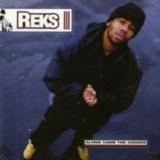
REKS - Along Came The Chosen (25th Anniversary) LP 2x12"
  • A1: Meet Corey Christie
  • A2: You Ain't Never Heard Of Me
  • A3: To Whom It May Concern
  • A4: Fearless
  • A5: My City
  • B1: Beantown To Cali f. Rasco & L Da Headtoucha
  • B2: Soul Of Black Folk
  • B3: Final Four f. Esoteric, Pace Won, Young Zee, Danja Mowf, Lonnie B, J-Live & Shabaam Sahdeeq
  • B4: Skills 101 *Bonus Track, Not On Original LP
  • B5: Enemy Killa
  • C1: Till Death Do Us f. Kiki Breevlife
  • C2: Skills 201 f. Edo.G, Lucky Dice & B.Knox
  • C3: Easy
  • C4: Work f. Lucky Dice, B.Knox & Ripshop
  • D1: Science Of Life II f. Alias of OVM
  • D2: Frozen Moments f. Lucky Dice & B.Knox
  • D3: What You Need f. Balistik 82
  • D4: Dead Poets Society *Bonus Track, Not On Original LP
  • D5: Dynamite Mic Specialist *Bonus Track, Not On Original LP

Features Rasco, L da Headtoucha, Edo. G, Esoteric, Pace Won, Young Zee, Danja Mowf, Lonnie B, J-Live, Shabaam Sahdeeq, Lucky Dice, Ripshop and more, plus the first production from Statik Selektah and beats by Soul Searchers, Eddie Bones of Skitzofreniks, Ray Fernandes & Fakts-1.
Along Came the Chosen dropped in 2001 and was the first solo album from Reks, and the first album by a solo artist released on Boston-based Brick Records, which celebrates its 30th anniversary in 2026 too. Its release was a defining building block in the long and storied history of Boston independent hip-hop, and this album set the bar for what was expected from MCs and Beatmakers on the Beatown rap scene and beyond.
Brick Records and Reks are proud to celebrate its 25th anniversary with this deluxe double-vinyl pressing. "Along Came the Chosen reaching its 25 year anniversary, being the piece of art that established my hip hop career, is something monumental to celebrate. The fact that individuals still reach out to me to express how they grew with this album means so much to me. There were so many voices in my ear telling me that being a successful artist in this game required bending to popular trends and styles. This album allowed me to establish my own voice and identity, and I am thankful for Soul Searchers (Magoo and Rockwell) for being the foundational sound bed, Shay Boogs for being my first manager, and Brick Records for being the label that believed in me. I am happy to say we have put out some incredible art together. This album boasts the first-ever Statik Selektah beat placement too! We have come a long way. Here’s to 25 more!" REKS.

pre-order now11.09.2026

expected to be published on 11.09.2026

Andrew Chalk - Mystical Obscurant

Over the course of more than four decades, Andrew Chalk has created one of ambient and experimental music's most distinctive, influential, and enduring bodies of work. Though his recordings have taken many forms—from the raw, post-Industrial sounds of Ferial Confine in the 1980s to the fragile guitar meditations, blurred keyboard studies, and richly textured collages that populate the Faraway Press catalogue—they remain united by a singular sensibility: an uncommon attentiveness to atmosphere, nostalgia, and the power of restraint.

Mystical Obscurant offers a rare opportunity to encounter the expansive character of that oeuvre in miniature. Rather than documenting a single period or methodology, it functions almost like a survey of Chalk's musical language—a collection of new music that illuminates the breadth of his practice while distilling the singular vision that unites it.

“The Sea of Sorrow” and “Peacemaker” feel cut from the same cloth as the sacred guitar minimalism of The River That Flows Into the Sands, while “Against the Tide” would sit naturally alongside the smudged and distant keys of Blue Eyes of the March. Other pieces draw upon environmental sound and loop-based constructions, hallmarks of Chalk's more recent, vignette-like compositions. Though these recordings emerge from different moments in his long creative journey, each inhabits a recognizable world: one where melodies drift in diffuse, unhurried forms and sound gathers with painterly grace.

What is most striking when these pieces are heard together is not their difference but their coherence. Across changing instruments, collaborators, and approaches, Chalk has consistently pursued a subjunctive music of suggestion rather than declaration, creating spaces where memory and imagination are allowed to unfold at their own pace.

pre-order now04.09.2026

expected to be published on 04.09.2026

Sees (Michael J. Blood) - Ampersand Curve

»Ampersand Curve« initiates a brilliant new phase of work by North Manchester’s most elusive artist, best known as Michael J. Blood. His string of ruffkut club bangers, as well as jams with Rat Heart & Samizdat over the past seven years, have made his records a true cult property, and now find him signed to one of the UK’s most foundational techno imprints – more of which later this year.

But under the Sees aegis, he swims in very different waters, following his instincts to use the studio-as-instrument to produce his most impressive, deep-minded work, made from – and for – the heart. Where MJB was all about off-the-cuff club jams cooked for immediacy, his new stylistic switch reveals myriad worlds of influence swirling under the hood, where interrelated spheres of spiritual jazz, dub, ambient, and concrète more clearly light up his rich inner world.

As the story goes, MJB was burgled a few years back and lost most of his studio just as the project was hitting its stride. It prompted a personal review of his practice, re-learning new kit, allowing him to bend the rules. Adopting a sort of first-thought, best-thought approach to composition, the new methodology fuelled a renewed imagination in flux, or what he identifies as Sees: a personalised way of conveying complex emotions. That undoing of musical and mental conditioning opens the walls of his music to vast new horizons. Opener »Ithaca« fathoms sonorous midnight jazz with 10 mins of a plangent, searching sax solo in HD widescreen, like some alternate version to the Blade Runner Love Theme, while a resonant vocoder soliloquy, »Unseem«, reaches into space harmonised between Alvin Lucier and Ron Trent, and »Sheer« chases the devil out of labyrinthine dub dimensions.

The floating dream architecture of »Caprices« caps the LP’s underlying narrative and painterly qualities with a romantic conclusion of blushing pads and shivered, metallic echoes of the subtropical that suggest a coming-to-terms with worries, refreshed and good to go again.

out of Stock

Order now and we will order the item for you at our supplier.

Last In: 28 days ago
YUVÉE - LAVA CORE / BLUE

YUVÉE

LAVA CORE / BLUE

12inchNDXP006
NO DRAMA
02.09.2026

No Drama, the imprint founded and curated by Roy Rosenfeld, continues to expand its artistic vision with a sixth release valuing originality over convention. The label has steadily established a platform for forward-thinking electronic music, inviting artists to challenge familiar structures while remaining grounded in musical substance.

The latest release features two tracks by internationally recognized producer Yuvée, known for seamlessly blending live instrumentation with deep house, melodic elements, and organic percussion. While Yuvée appears solo on one track, the other is a collaboration with Omer Inbar, who performs under the name Oi.

The opening track, Lava Core, presents the sound that has earned Yuvée international recognition. Tribal influences unfold through carefully crafted percussion, while evolving textures occupy every part of the stereo field. Every section advances the narrative, allowing the arrangement to grow naturally while maintaining dancefloor impact from beginning to end.

The second piece, Blue, brings Yuvée together with Oi, an internationally acclaimed DJ, producer, and sound engineer whose work bridges psychedelic vibes and groove-driven electronic music. The collaboration introduces greater club energy. Tonal and atonal elements interact with shifting harmonies and evolving instrumental phrasing, creating constant movement without losing coherence.

Rather than relying on formulas, the duo demonstrates the value of artistic perspective in an era increasingly shaped by technological automation. The result is music that balances intellect with feeling, offering a listening experience that remains equally compelling on a festival sound system, in a club, or through focused listening at home.

With its sixth release, No Drama reinforces its commitment to artists who expand the language of contemporary electronic music through craftsmanship, authenticity, and creative ambition.

out of Stock

Order now and we will order the item for you at our supplier.

Last In: 7 days ago
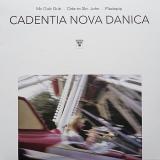
Cadentia Nova Danica - Mc Gub Gub / Ode To Skt. John / Pladepip

John Tchicai (1936 – 2012) was one of the most important free improvising saxophonists of the 20th Century: an artist of rare vision and aptitude whose lines soared and stood out even in the most hallowed company, and whose body of work as a leader / composer is among the most singular and distinct within the entire canon of that music. But Tchicai’s importance doesn’t end there. Born in Copenhagen, Denmark, to a Danish mother and a Congolese father, his life and career represent a crucial bridge between the European and American traditions of free jazz. Initially trained on violin as a child, Tchicai shifted his focus to the clarinet and alto saxophone during his mid-teens, and began touring Europe as a professional musician by his early 20s, which landed him at a socialist youth festival in Helsinki, Finland, where he met the trumpeter Bill Dixon and saxophonist Archie Shepp. Impressed by what they heard, Dixon and Shepp encouraged the young saxophonist to move to New York, and in so doing changed the history of jazz forever.

Tchicai’s arrival in New York marks the rare occurrence of a European player joining the intimate circle that was first wave of American free jazz. Following his landing in the city in November of 1962, in addition to regularly sitting in with Don Cherry’s group, Tchicai began playing with Bill Dixon's band alongside Archie Shepp and Roswell Rudd, forming the nucleus of the foundation of the New York Contemporary Five - one of the most important groups of the era - which counted Tchicai, Shepp, Cherry, Don Moore, and J. C. Moses as its members. From the ashes of this group, Tchicai would go on to found the legendary ensemble, New York Art Quartet, with Roswell Rudd, Milford Graves, and Lewis Worrell, as well as working within Albert Ayler's band, recording “New York Eye and Ear Control”, Shepp’s band, recording “Four for Trane”, the ensemble that recorded John Coltrane's “Ascension”, and the Jazz Composer's “Orchestra”.

By the time he decided to return to Denmark in 1966, had Tchicai chosen to record little else, his legacy within the history of music would have been ensured. Incredibly ambitious, his arrival home marked the beginning of an incredible period of activity which saw him radically expanding his creative explorations, which by the end of the decade would include becoming a founding member of Amsterdam's Instant Composers Pool and helping to record John Lennon and Yoko Ono's “Unfinished Music No.2: Life with the Lions”. This, however, was proceeded the formation of a new orchestra, Cadentia Nova Danica, led by Tchicai, dedicated to radical cross-disciplinary exploration. Remaining together between 1966 and 1971, the group and its shifting membership regularly fell into collaboration with artists and composers, notably Musica Elettronica Viva, who existed beyond the realms of jazz, as well as participating within multi-media events that incorporated the visual realms.

Cadentia Nova Danica’s only two LPs - “Cadentia Nova Danica” (Polydor, 1968), and “Afrodisiaca” (MPS, 1969) - are effectively Tchicai recorded efforts as a leader, and are legendary. There’s little mystery, once heard, why the later landed on Thurston Moore’s iconic “Top Ten from the Free Jazz Underground”, published by Grand Royal in 1996. Sadly, despite playing extensively during their five year run, with exception of a CD documenting a performance at Jazzhus Montmartre, in 1966, until now there has been no other publicly available recordings that allow us to capture a glimpse of this astounding band at work. Alga Marghen / Formalibera’s vinyl pressing of a never before released body of recordings, made in Copenhagen between 1969 and 1970, changes that in the most exciting of ways.

Comprising three pieces - “Mc Gub Gub, (I–VIII)”; “Ode to Skt. John”; and “Pladepip” - the material on this stunning LP comes from two specific events. The first, which encompasses the first side, “Mc Gub Gub, (I–VIII)” was recorded by Cadentia Nova Danica - in this instance, Tchicai, Sune Weimar, Theo Rahbek, Christian Kyhl, Niels Holt, Jørgen Thorup, Michael Schou, Morgens Bollerup, Allan Gregersen, Ole Matthiessen, Pierre Dørge, Willy Jaegert, Anthony Barnett, and Jon Finsen - on May 29th, 1969, at the ABC-Theatre in Copenhagen. Penned by Tchicai, the piece is a sprawling, evolutionary composition at the outer reaches of free jazz, rooted in large blocks of colliding tonality and rhythm - a sound only accessible to larger ensembles - that push territories explored by Charles Mingus to previously unimagined heights, threaded by moments of hard blown fire. Writhing like a stormy sea - skronking and devilish - “Mc Gub Gub, (I–VIII)” is a work of profound complexity that singlehandedly illuminates not only Tchicai’s singular vision as a composer, but also the power and uniqueness of Cadentia Nova Danica during the band’s most vital period.

The two pieces - “Ode to Skt. John” and “Pladepip” - taking up the flip side, were recorded on February 21st, 1970, at the Danish Broadcasting Corporation’s Radio House, and are the outcome of Cadentia Nova Danica’s extended residency there between 1969 and 1970. In many ways, these two recordings offer some of the best insights into the broad collaborative approaches that defined the band, in this case encountering them working with Danish experimental composer, Svend Erik Werner, who was among the earliest in his country to embrace stylistic pluralism and the use historical forms within a modern context. “Ode to Skt. John” - based on aspects of Gregorian music - was penned by Werner, incorporating heady improvisation by the members of Cadentia Nova Danica, this time made up by Tchicai, Sune Weimar, Hugh Steinmetz, Theo Rahbek, Christian Kyhl, Michael Schou, Morgens Bollerup, Ole Kühl, Torben Enghoff, Mauritz Tchikai, Kjeld Ipsen, Willy Jaegert, Ole Matthiessen, Ole Thilo, Pierre Dørge, Steffen Andersen, Jon Finse, and Clause Bøje. The piece is a fascinating binary of the composed and improvised, utilising the band’s large scale to introduce a remarkable sound within its slow progressions and furious, driving free moments, in this incredible meeting of worlds.

The album’s final piece, “Pladepip”, is arguably its most historically significant: an entirely singular piece, unlike anything in Tchicai’s recorded canon as his foray into musique concréte. Drawing upon two recordings of full-band improvisations by Cadentia Nova Danica, for its creation Tchicai also gouged the surfaces of 78rpm records in his collection to skip and create repeated phrases and patterns, creating a stunning sound collage of hard angles and abrupt phrase, that creates a striking counterpoint to the band’s flowing improvisations that bookend those passages. The result is an engrossing listen and easily one of the most unique and culturally important gestures in the entire history of musique concréte.

Truly incredible, Alga Marghen / Formalibera’s vinyl pressing of this never before released body of recordings, made by John Tchicai’s Cadentia Nova Danica, in Copenhagen between 1969 and 1970, offers an unprecedented window into one of the most important groups working in Europe during that period, significantly expanding their rare and slim discography to date. Accompanied by extensive exploratory liner notes by veteran jazz writer, Ed Hazell, this is easily one of the most historically important archival releases of the year and is impossible to recommend enough. Absolutely essential on every count.

pre-order now28.08.2026

expected to be published on 28.08.2026

ROY MONTGOMERY & MARTHA SKYE MURPHY - NEBULAR

Roy Montgomery, a key figure in the experimental underground rock scene, lives in Christchurch, New Zealand, just a short drive from the sea. Avant-garde vocalist and songwriter Martha Skye Murphy is based in London. Though geographically worlds apart, the pair inhabit an intimate and almost tactile shared sonic world. Their collaboration feels transformative, like the gradual shifting spell from night to day.

What draws them together is the emotional force of each other’s music. Montgomery’s cyclical, decaying compositions are shaped through intricate guitar and piano work, blending post-rock, folk, and drone. Murphy, meanwhile, possesses a rare gift for transformation, from the intimate cracked whispers of 'At Dawn' to the hypnotic drift of 'The Play of Dark and Light'. On the latter, she evokes old maritime folk tales of fishermen lured into the darkness by the sea’s siren call. The song both seduces and warns, finding something magical and frightening in the temptation of drowning. Though her vocals often resemble fragments of words, consonants, or vowels, they frequently function as pure sound, drawing on glossolalia and prioritising feeling over any ‘learnt’ language.

Emotion and intuition are the driving forces behind Nebular, an album that oscillates between the intimate with the unknown. This spirit is reflected in its artwork. Murphy shared a painting by Irish artist Simon English depicting a solitary house bathed in dusky blue light, and the pair quickly settled on it as the cover image. Both were captivated by its atmosphere. Montgomery related it to the isolated, seemingly uninhabited houses he encounters while travelling through rural New Zealand—places that inspire a desire to knock on the door and discover what lies beyond. “Terra incognita springs to mind. A search into the unknown,” Murphy agrees.

The nocturnal and remote nature of the artwork mirrors the process of making Nebular. With Montgomery in New Zealand and Murphy in London, the album was created entirely through remote correspondence, with stems exchanged via email. Their messages were often written and read at different times of day, and, because of the time difference and the demands of daily life, replies usually were sent late at night and the music too often composed at nocturnal hours. Their exchanges took on the quality of pen pals sending letters across great distances. This suspended sense of time is echoed in Nebular’s sound, with its feeling of temporal drift and timelessness.

On Nebular, Montgomery and Murphy have harnessed raw emotion and launched it into a time capsule bound for the stars. It allows you to drift, to be present, and to feel; creating something timeless.

TRACKLISTING

pre-order now14.08.2026

expected to be published on 14.08.2026

Donnoya Drake / Prince Alphonso & The Fever - You Don’t Love Me (No No No) (7")

ome songs are simply too good to leave alone.

Original Gravity Records returns with a fresh take on one of the most enduring songs in Jamaican music as Donnoya Drake breathes new life into "You Don't Love Me (No No No)."

The song's remarkable journey begins with Bo Diddley's 1955 recording "She's Fine, She's Mine," before evolving into Willie Cobbs' blues classic "You Don't Love Me." It was then embraced in Jamaica, where it became a foundation stone of the island's musical heritage through Dawn Penn's original Studio One recording.

Rather than recreating any single version, Donnoya Drake's recording draws together the defining moments in the song's evolution. The unmistakable Bo Diddley-inspired riff, popularised by Willie Cobbs, is reimagined by the horn section, while the middle eight pays tribute to Dawn Penn's original Jamaican arrangement. The result is an infectious ska recording that honours every chapter of the song's evolution while bringing a fresh energy of its own.

On the flip, Prince Alphonso & The Fever present "You Don't Love Me Pt.2", an instrumental version that proved far too good to keep in the vault. Stripping away the vocals allows the arrangement to shine in its own right, creating the kind of infectious ska instrumental that selectors and DJs are always searching for.

Produced by Original Gravity Records founder Neil Anderson, the single continues the label's tradition of creating new recordings inspired by the golden era of Jamaican music—not as museum pieces, but as vibrant records made for today's dancefloors. Respectful of the past while unmistakably original, this is another release that bridges the gap between vintage authenticity and fresh interpretation.

out of Stock

Order now and we will order the item for you at our supplier.

Last In: 15 days ago
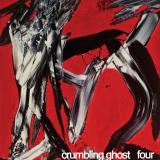
Crumbling Ghost - Four LP

Crumbling Ghost

Four LP

12inchNHSLP057C
New Heavy Sounds
07.08.2026
  • A1: Bows of London
  • A2: Bill Norrie
  • A3: Valtz Efter Tor Lohne
  • B1: Lovely Joan
  • B2: Gower Wassail
  • B3: Last of all Sleep
  • B4: The Unquiet Grave

Within the broad church of metal and its many offshoots – rock, doom, stoner and all the rest – it remains a minor thrill to stumble across a group who seem to exist at a slight tangent to everything else. Crumbling Ghost is one such anomaly. Crumbling Ghost are not newcomers. They've been operating for some time, releasing records sporadically, Four' is in fact their fourth release. Along the way they've accumulated a fervent coterie of followers, not to mention the occasional nod of approval from tastemakers such as Stuart Maconie, Stewart Lee and Tom Ravenscroft. And though they've appeared at Roadburn, shared stages with Hawkwind and even Damo Suzuki, they remain (possibly by design) curiously under the radar.
The group's core idea is deceptively simple: traditional folk material refracted through the haze and heft of heavy, fuzzy stoner rock with a chunk of psyche and a smattering of doom. But crucially, this is done without the costumery and theatrical tics that often accompany such collisions. No mock pagan pageantry, no graveyard cosplay, no cartoon Satanism.
What Crumbling Ghost latch onto is not folk as a museum piece, but as a lived experience, the dramas rooted in the culture, stories, and daily lives of ordinary people, the folklore, the tales of love and death, murder and adultery, freedom and oppression. Singer Katie Harnett says. "Doting mothers, possessive, violent partners, vulnerable women, seasonal workers and Royal scandals this album is our representation of the trials and tribulations of human existence and universal experiences that still feel relevant today.

Guitarist John adds. "Themes of murder, betrayal, loss, jealousy, and love are found across the record. In particular, the songs of Martin Carthy have been a particular source of inspiration".
The result is a set of murder ballads, supernatural reckonings and cautionary tales, all wrapped in slabs of heavy, thumping fuzz and atmospheric sonics. Harnett's voice sits at the centre: unmistakably folk rooted, but shorn of prettification, melodic yet capable of real bite.

The album opener 'Bows Of London' is a murder ballad of sisterly hatred and grim sibling rivalry, centred on a haunted fiddle fashioned from a dead sister's bones. The loping relentless, hypnotic backing chillingly and perfectly accompanies the narrative. Of course, the story doesn't end well. 'Bill Norrie' follows, a hooky melody propelled by an insistent bassline and a haunting psych tinged haze punctured with sheets of noise.. The story of young Bill Norrie who sends a token to a married woman, whose jealous husband beheads him, without knowing he was his wife's son from an earlier affair. An instrumental palate cleanser arrives in the shape of 'Valtz Efter Tor Lohne' a Norwegian traditional the band jokingly describe as a "banger".
Then we have 'Lovely Joan' which offers a rare note of sly triumph: a quick witted woman outmanoeuvres a predatory nobleman, escaping with his ring and his horse. Muscular riffs give this tale of empowerment a welcome sense of teeth. 'Gower Wassail' is a traditional Welsh folk tune that captures the raucous spirit of communal ritual, noise making and drink fuelled hope for a good harvest. Captured perfectly here by CG complete with wah wah guitar and a drunken groove catching the song's celebratory chaos. Then we have a little gem in 'Last Of All Sleep' , an original band composition and a genuine highlight: a heavy lidded, shoegaze tinged folk reverie, equal parts distortion and delicacy. It's a drop-dead gorgeous shoegaze-tastic psychedelic grunge mini epic. The album closer 'The Unquiet Grave' is a very apt place to finish. It's about a young man whose constant grief at the death of his true love disturbs her eternal sleep so she cannot rest. Even though the playout on this track, complete with a demonic repeated riff and feedback feels suitably bleak, even this song allows a glimmer of release ... we think.
And there we have it, 7 songs, 7 worlds, all honed to perfection by producer Wayne Adams (Green Lung/Big Lad) that will reward every repeated listen.

Folk and metal/heavy rock do have a connection of course, just look at Green Lung and their 'folk horror' infused musical universe, but Crumbling Ghost are a very different beast.
'Four' amply and beautifully demonstrates that when it comes to 'folk horror' there's nothing quite as horrible as folk ... Here, the horror such as it is, and it must be said, the moments of light, comes not from theatrics, but from the songs themselves – which, after all, is where it's always lived.
Crumbling Ghost are John Mosley – Guitar / Donny Hopkins – Guitar / Ruth O’Loughlin – Bass / Katie Harnett – Vocals / Matthew Atkins- Drums.

pre-order now07.08.2026

expected to be published on 07.08.2026

Isaiah Collier - Joy

Isaiah Collier

Joy

12inchBWOOD455LP
Brownswood Recordings
03.08.2026
 
3

In a world currently defined by unrest, uncertainty, and cultural fracture, acclaimed saxophonist, composer, and bandleader Isaiah Collier returns with Joy, a 5-track EP that reframes one of humanity’s most nuanced emotions both as a devotional grounding and political act.

Collier’s deeply personal compositions present joy as an act that isn’t rooted in escapism or abstraction, but rather, as something hard-won rooted in lived experience, shaped by transformation, and sustained through connection. Throughout the album’s five compositions, Collier positions joy as a guiding light during challenging times, an expression of challenging yourself to utilize your gifts, an affirmation of love and discovery, and as an affirmative source of reassurance.

“We are in a paradoxical time, where so much is being revealed to us,” Collier shares. “Everything feels political from every scope… our collective hearts feel the heaviness in the air. Yet I say to you all—don’t despair. For right now, the most political thing we can do is share joy.”

That ethos is made clear in the opening title track and lead single “Joy.” A pulsing rhythmic motif anchors the melody with a sense of both searching and certainty. Collier conceived the piece around 3 years ago reflecting on a time where many people in his life were experiencing loss of family and friends and experiencing profound life transitions. “Everything just felt like it was falling apart with no aim in sight,” he reflects. “Yet, there is a light at the end of it all.”

As he played the chords with a sense of urgency, he could feel the vibration of yellow in the piece. That initial triplet motif serves as the guiding light on the piano and the only word Collier could hear was Joy. In addition to Collier at the helm singing and playing piano and tenor sax on the track, it features an expansive 11-piece ensemble with a full horn and string section allowing Collier’s propensity for composition and arrangement to shine with an eclectic sonic palette.

“Landscape of Dreams” finds Collier serendipitously leaning into utilizing his gifts as a multi-instrumentalist. While he had a sketch of the piece going into the studio, a traffic delay caused musicians to be late arriving at the studio. Never one to waste time in the studio environment, Collier stepped into new creative territory and took up the challenge of executing playing all instruments himself as an act of trust and experimentation. “I’ve never done this before, and so it was a leap of faith for me,” he asserts. “I always dream of doing stuff like this, and being part of the small percentage of people who can do it like Prince, Steve Lacy, Frank Zappa, and Stevie Wonder. The end result finds Collier immersed in a hypnotic soundscape playing layered flutes, drums, Metatron, Wurlitzer, and auxiliary percussion.

Another layer of joy is revealed in “Where I’m Loved” that serves as a love letter and leaning into the process of stepping into the willingness to explore life and love with a partner. On the intimate meditation of vulnerability and connection, Collier's vocal prowess is on full display, exerting effortless falsetto reminiscent of D’Angelo over soulful Wurlitzer and guitar as he crosses over into more R&B-inspired realms. “I believe everyone deserves this feeling or to honor the memories of it. Furthermore, I believe you should also go where you’re celebrated and not tolerated.”

“When the Dust Settles” captures the electricity of live collaboration and Collier further steps out of being confined to any specific genre. He had just gotten a microKORG keyboard from co-producer Sonny Daze and was exploring the vast array of sounds on the instrument. Collier plays synth bass on the microKORG joined by the electrifying improvisation of Cole Runge on guitar and the combustible rhythm of his brother Jeremiah Collier on drums with additional post-production work from Sonny Daze.

The album’s final track “God’s By Your Side” reflects on perseverance and artistic legacy, directly inspired from the passing of D’Angelo, whose life’s work was a huge part of Collier’s childhood growing up in the late 90s and early 00s. With gospel flavor and direct influence both from D’Angelo’s vocal and instrumental arrangements, the track speaks to resilience and persistence in the face of obstacles—an affirmation of source and reassurance. “And what’s better than having God by your side, right?” asserts Collier.

Joy is a through-and-through expression of the arc of joy in its truest form. Joy transcends fleeting happiness and is conscious gratitude shaped by taking chances, leaning into your gifts, fostering community, and lived experiences.

“Joy is partially happiness,” Collier explains. “But to me it means happily being grateful for family, friends, lovers, teachers, and good times. These are the things that anchor us.”

The release of Joy comes off the heels of significant momentum for Collier, whose work continues to garner accolades and resonate across cultural spheres. He was featured on the cover of DownBeat’s April 2025 issue, where he was named “The Next Sax Giant,” and profiled on NPR’s Jazz Night in America for his ambitious 13-movement interdisciplinary suite The Story of 400 Years, that traces 400 years of Black American History. He released two full-length albums in 2024 with The World Is on Fire highlighted in The New York Times’ Fall Arts Preview and The Almighty named among the publication’s Best Jazz Albums of the year.

Beyond performance and recoding, Collier’s influence is recognized in broader cultural and intellectual spaces as he was the recipient of the Jazz Journalists Association’s 2025 Up and Coming Artist of the Year Award, the 2024 Chicagoan of the Year in Jazz, and was named a Steve Jobs Archive Fellow joining an elite cohort of the next generation of artistic visionaries through a yearlong program.

In addition to the release of Joy, Collier is touring his “Collier Plays Coltrane” program throughout 2026 in honor of John Coltrane’s centennial. Rather than presenting Coltrane’s expansive catalog as repertory, Collier approaches this music as something living, reshaping it in real-time with a sense of space and improvisational dialog reflecting both reverence to the past and present times.

out of Stock

Order now and we will order the item for you at our supplier.

Last In: 51 days ago
SEU JORGE - THE OTHER SIDE (DELUXE GATEFOLD SLEEVE EDITION)

Deluxe 12" Tip-On (pasted card) Gatefold Edition (Limited Edition)

A new solo album from Seu Jorge reveals his 'other side' on this new solo album featuring Beck and Maria Rita. Produced by Mario Caldato Jr. (Beastie Boys), the album moves between jazz and bossa nova and is the result of a 16-year musical journey.
Seu Jorge is ready to present to the world the most ambitious project of his international career. After 16 years in the making, “The Other Side” finally arrives on streaming platforms in May. A departure from the soul and samba that defined his solo career, the new album is a sophisticated orchestral celebration of Brazilian music, moving between jazz and bossa nova.

The seed for this meeting between the Brazilian soul and orchestral sophistication was planted by a longtime friend and admirer: the legendary producer Mario Caldato Jr., known for his work with the Beastie Boys and Jack Johnson. The partnership, however, goes back further. “It’s not often that you find a voice and talent as vibrant and powerful as Seu Jorge’s. That’s what I felt in 1999, when I met him in Los Angeles,” recalls Caldato. “Since then, our friendship and admiration have only grown, allowing us to create music together with total freedom.”

The spark for “The Other Side” came from a moment of pure sensitivity. “This album was born when I recorded Jorge playing a simple version of ‘Girl You Move Me,’ by the band Cane and Able, on a nylon-string guitar. The performance was very sensitive and dynamic, which moved me deeply,” says the producer.

It was then that Caldato had the idea to invite multi-instrumentalist and arranger Miguel Atwood-Ferguson to orchestrate that demo. The partnership, which began in 2009, blossomed organically. “I shared some ideas with Miguel, and he understood perfectly, creating a beautiful arrangement that elevated the song to a much more luxurious and sophisticated dimension. That experience planted the seed for this orchestral adventure. "

With his characteristically deep, velvety voice, Seu Jorge guides the listener through a repertoire that revives gems of MPB. The artist cites as references the catalog of the German label ECM Records and the arrangements of Claus Ogerman, a conductor who worked with Tom Jobim and João Gilberto.

Recorded in stages between 2009 and 2018, the album is a true work of musical
craftsmanship, created with calm and friendship. The live rhythmic foundations were
provided by Seu Jorge’s band. “Jorge has a lot of confidence in and pride for his musicians, allowing them to express themselves freely. Each one brings a special flavor to every song; this was their album too, ” notes Caldato Jr.

“It was a week of pure joy for me and for all of us, recording and capturing that magical spirit and vibe,” adds the producer, who saw the work come together with arrangements by Miguel Atwood-Ferguson. “When it came time for mixing, everything felt very natural. The album revealed itself and came together magnificently. For me, it’s a timeless album.”

The album features covers of songs such as “Crença” by Milton Nascimento (from his 1969 debut album); “Caboclo” by Arthur Verocai, in a version with psychedelic guitars; and, of course, “Girl You Move Me” by the Canadian band Cane & Able, which inspired the project. Among the tracks featuring guest artists, “Vento de Maio” by Márcio Borges (a hit with Lô Borges and Elis Regina) features an intense duet with Maria Rita. Another major collaboration is with American singer Beck, a self-proclaimed fan of Brazilian music and Grammy winner. Together, they perform “River Man” by the revered British singer Nick Drake.

out of Stock

Order now and we will order the item for you at our supplier.

Last In: 72 days ago
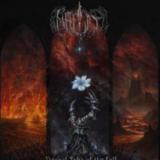
Malist - Eternal Echo of the Fall LP
  • Eternal Echo
  • Through a Distorted Gaze
  • Days of the Eclipse
  • Snows of Remembrance
  • Her Dark Backwater
  • To Walk the Path of the Dead
  • The Hird
  • Above the Mists of the World

Riff-driven and immediate, MALIST's style is rooted in the best Atmospheric Black Metal imprint, although experimenting with Post-Metal passages and modern-oriented melodic approaches Often epic and fierce, "Eternal Echo of the Fall" allows the listener to experience the perfect balance between anger and melancholy, as well as a raw, suggestive quality, thanks to mutable sections that float between slow, magical atmospheres and more fiery, aggressive ones. A particular attention to arrangements and a certain amount of ideas seal this album as an intriguing musical journey, in which each song has distinctive traits when compared to the others.

pre-order now10.07.2026

expected to be published on 10.07.2026

Various - Tchic Tchic: French Bossa Nova 1963-1974  Colored Edition LP 2x12"
 
22

Ever since the late 1950s bossa-nova revolution, Brazil’s influence on French music has been undeniable. Pierre Barouh, Georges Moustaki and a vast array of lesser known artists, all made the Musica Popular Brasileira (MPB) an axis of promotion at the service of a cool and metaphysical, modern and mixed Brazilian lifestyle. Some were seduced by the poetic languors of the bossa, some were looking for fun, and others just loved the American hybridization of jazz-bossa, jazz-samba.


What is bossa nova? One of its creators, Joao Gilberto said: "Its style, cadence, everything is samba. At the very start, we didn't call it bossa nova, we sang a little samba made up of a single note - Samba de uma nota so .... The discussion around the origins of bossa nova is therefore useless”. It is nevertheless useful to remember that these magnificent Brazilian songs, which the guitarist describes as samba, were shifted and balanced around improbable chords. "I like things that lean, the in-betweens that limp with grace," said Pierre Barrouh, quoting Jean Cocteau.


With emotion, arrangements for violin and supple guitar licks, bossa nova rapidly changed. A transformation that can be heard in the Tchic, tchic, French Bossa Nova 1963-1974 compilation, the result of a cultural reappropriation, which traveled through the United States and supplemented itself in France.

A musical revolution that has remained significant, bossa nova was born in Rio. From 1956 to 1961, Brazil lived through its golden years. In five years, the country had invented its modernist style. Elected president in 1956, Juscelino Kubitschek de Oliveira, an elegant man with a broad forehead, brandished a promising slogan: "Fifty years of progress in five years". He quickly got to work. Not worried about increasing debt, he launched the project for a new federal capital, Brasilia, designed by the communist architect Oscar Niemeyer. Volkswagen opened state-of-the-art factories and created the “fusquinha”, the Beetle. In Rio, the Vespa made its first appearance. The Arpoador Surf Club crew run into the “girl” from Ipanema, Helô Pinheiro - the tanned garota ("chick"), between a flower and mermaid, who at 17 walked by the Veloso bar, where the fiery author and composer, Tom Jobim and Vinicius de Moraes, were getting drunk on whiskey. From then on, bossa symbolized cool.

In 1958, Joao Gilberto recorded Chega de Saudade, which the directors of Philips denied, calling it "music for fagots". The marketing director, who believed in it, secretly pressed 3000 78-inch vinyls and distributed them at schools around Rio, creating a tidal wave.

American jazzmen then took over. In particular, trumpeter Dizzy Gillespie and guitarist Charlie Byrd. In November 1962, the Brazilian Ministry of Foreign Affairs funded a "Bossa-Nova" concert at Carnegie Hall in New York, inviting the genre’s pioneers. Unprepared, the show soon turned to disaster. But the troupe was invited to the White House by Jackie Kennedy. The first lady loved "the new beat" and in particular Maria Ninguem, a song by Carlos Lyra, later covered by Brigitte Bardot.

In Brazil, the 1964 military coup quickly ended this euphoria. The destructive atmosphere that ensued pushed many Brazilian musicians to leave, if not to exile. Thus, Tom Jobim, Sergio Mendes and Joao Gilberto arrived to the United States. In New York, Joao Gilberto met saxophonist Stan Getz. At the time, he was married to the Bahianese Astrud Weinert Gilberto, who had a German father. She had never sung before, but she knew how to speak English. Getz therefore asked her to replace her husband on The Girl From Ipanema. The Getz/Gilberto record with Tom Jobim on piano, was released in March 1964. Phil Ramone, the "pope of pop" was in charge of sound.

Bossa nova arrived in Paris through the classic “guitar-voice” channel (Pierre Barouh, Baden Powell, Moustaki…) But France loved jazz and Paris had already welcomed its American contributors. All these good people were to pass through Saint-Germain-des-Prés. The cabaret l'Escale became the Mecca of Latin American sound where one could find Pierre Barrouh and his friends, such as the Camara Trio, samba-jazz aces, whose only record was published by the Saravah label. With a band strangely called Les Masques (a band that included Nicole Croisille and Pierre Vassiliu, among others), the Camara Trio recorded an interesting Brazilian Sound, including the track Il faut tenir which is present on this tasty compilation of rarities.

Other enlightened musicians can also be found on the compilation, such as Jean-Pierre Sabar (songwriter for Hardy, Auffray, Leforestier ...) and the French pop rock organist Balthazar. In 1975, Sabar recorded Aurinkoinen Musiikkimatka on a Finnish label, which featured the crazy Vai, Vai, included on this record. We are now following the footsteps of Brazilian electronic musicians such as Sergio Mendes, Eumir Deodato or Marcos Valle who created funk and disco sounds on their keyboards and synthesizers. A style that influenced Véronique Sanson when she wrote Jusqu’à la Tombée de la nuit in 1969 for Isabelle de Funès, the niece of Louis and a great friend of Michel Berger - Sanson did end up singing this track on her 1992 Sans Regret record.


The pinnacle of exoticism and travel, Sylvia Fels’ Corto Maltese includes bongos, sea mist and ocean sounds. The title was taken from Jacky Chalard’s concept album written in 1974, Je suis vivant, mais j’ai peur (I am alive, but I am scared), based on Gilbert Deflez’s science fiction novel.


However, bossa nova extended the scope of popularity. "In the 1970s, I was a fan of Sergio Mendes, Getz / Gilberto. I fell in love with this music that I knew because I had been an orchestral singer, " explained Isabelle Aubret, who in 1971 delivered a composite record of covers by the very funky Jorge Ben, Orfeu Negro, Tom Jobim, Vinicius de Morais and Jean Ferrat. "I recorded this album for Meys Records in Paris, far from Brazil, with wonderful musicians, François Raubert, Roland Vincent, Alain Goraguer...". The latter wrote the arrangements for Casa Forte, a very percussive title borrowed from Edu Lobo, one of the initiators of the bossa who spent time in California. "Jazz and bossa came together and produced very rhythmic music. I love singing, it allows me to dream, to have fun, to feel a high on stage, and these songs brought me joy, made me swing, my singing felt like a dance.”


The world tours of French singers and their desire for the tropics, often brought them to Rio with its hills, forests, caipirinhas and tanned bodies. There are surprises though, like this Iemenja (Iemenja is the goddess of the sea in the Afro-Brazilian candomblé religion). Not unlike the composer and musician Jean-Pierre Lang, based in Sao Paulo, Claire Chevalier taught Brazil to Brazil. In 1970, the singer and painter published a 45-inch vinyl, Mon mari et mes amants (My husband and my lovers), under the improbable pseudonym of Clarinha (little Claire). She was then living in Rio, with her husband, Joël Leibovitz, who founded a band called Azimuth, and who owned a record label specialized in "sambas enredos" songs for samba school parades.


For its B side, she asked Pierre Perret to come up with lyrics for a song composed by Carlos Imperial: "Oh goddess of the sea, o goddess Iemenja, I bring a white rose to adorn your long hair ..." . "Perret came to see us, and we had fun, remembers Joël Leibovitz. We wrote Lemenja for fun, we recorded it at the Havaí studio, behind the Central do Brasil the central station. Erlon Chaves, the arranger who worked with Elis Regina, joined us" adding his share of Afro-Brazilian percussions and funky brass to the mix.

There is a common misunderstanding in Franco-Brazilian history: that bossa, admittedly hedonistic, is perceived as funny, even though the poets who wrote the texts are often philosophizing on the human condition. Its French interpreters pull it towards a carnival inspired universe, far removed from its fundamental essence. Thus, Jean Constantin covered the famous Samba da minha terra, an ode to the art of samba written by the classic Bahian composer Dorival Caymmi, renaming it with the enticing title of Pas tant de tchi tchi pompon: "On your pier there is no tchi tchi / when you arch your back, you know everything is alright ”(lyrics by Gérard Calvi). This expedited bossa aims for the absurd, but retains a certain elegance.

Indeed, Jean Constantin was not an idiot, the rather large man had a huge mustache and liked fantasy, (Les pantoufles à papa, Le pacha, inspired by cha-cha-cha-cha, salsa and jazz) but he was also the lyricist of Mon manège à moi interpreted by Edith Piaf, the composer of Mon Truc en plume by Zizi Jeanmaire and the soundtrack of François Truffaut’s 400 Blows. Le Poulpe, published in 1970, from which this bossa is extract, was arranged by Jean-Claude Vannier, an accomplice of Serge Gainsbourg’s Melody Nelson. In short: "There is enough of samba / By looking at the parasol / Because my poor cabeza / Is going to die in the sun".

Even the American actress Marpessa Down, who was at the heart of the bossa nova revolution with her role as Euridyce in Marcel Camus’ film Orfeu Negro, winner of the 1959 Cannes Palme d'or, fed the clichée with Je voudrais parler au petit cuica - "Tell me how you manage to always make people want to dance / It's true, I must admit that I cannot resist your magic" - in consequence, once can hear the cuica, a little drum inherited from the Bantu.


But bossa nova had many angles. Societal, of course, pushing actresses who were symbols of women's liberation like Brigitte Bardot, Jeanne Moreau, or Sophia Loren to engage in the exercise of accelerated bossa. In February of 1963, Sophia Loren made a record in French in Rome, Je ne t'aime plus, featuring the song De jour en jour, a bossa written by two Italians, Armando Trovajoli and Tino Fornai, which was released a little later by Barclay. Bossa accompanied the 1960s, a decade of moral liberation. Ann Sorel, who interpreted La Poupée des favellas, caused a sensation with L’amour à plusieurs, a provocative song written by Frédéric Bottom and Jean-Claude Vannier. As for the actress Andrea Parisy, she displayed her bourgeois cheekiness in Marcel Carné's Les Tricheurs before interpreting Les mains qui font du bien. And Magalie Noël, the friend of Boris Vian, who sung Johnny fais-moi mal, was hired to sing Une énorme Samba, composed by Alain Goraguer (arranger to Gainsbourg, Bobby Lapointe and Jean Ferrat) with lyrics by Frédéric Botton.

But in the end, of what wood is bossa nova made of? The answer is given by Christianne Legrand, daughter of Raymond the conductor, and sister to Michel the composer: "With me, with jà" - jà means "immediately" in Portuguese. In 1972, the singer, an expert in vocal jazz and a member of the Double Six, published Le Brésil de Christianne Legrand. Two songs included on the Tchic Tchic compilation that demonstrate how bossa, jazz, funk, rock, etc. work like a swiss army knife: the music is used to denounce broken systems, or miracles, HLM et ciné roman, Cent mille poissons dans ton filet, two songs from the O Cafona soundtrack, a successful telenovela broadcast, at the time in black and white, on TV Globo. The first was adapted in French by the fighter and friend of the Legrand tribe, Agnès Varda. The second is content with a play on words, jostling them into a summer fun.


Véronique Mortaigne

out of Stock

Order now and we will order the item for you at our supplier.

Last In: 83 days ago
Field Medic - Floral Prince LP
  • 1: h-o-u-s-e-k-e-y-z
  • 2: i want you so bad it hurts
  • 3: i will not mourn who i was that has gone away
  • 4: bundle of hyacinths
  • 5: HEADCASE
  • 6: it’s so lonely being sober
  • 7: better way
  • 8: talkin johnny & june (your arms around me)
  • 9: older now (it hurts)
  • 10: before your body goes
  • 11: TRANQUILIZED

For some time now, followers of Field Medic have been piecing together clues about Floral Prince. The name has been mentioned in late night Twitter hints, secret YouTube leaks, teaser riddles, Instagram live sets, and standalone single drops. This unconventional approach paints a bigger picture for the 11-track project as a whole, set for release October 2nd from Run For Cover Records. Part mixtape, part album, part collection, part musical patchwork quilt, Floral Prince is the latest offering from Field Medic, aka the preeminent Bay Area freak folk artist Kevin Patrick Sullivan. It’s a reflection of his unique approach to songwriting and a creative drive that can’t be contained to the traditional album format. Field Medic’s songwriting rarely slows down; even after the release of his 2019 full-length fade into the dawn and the busy touring schedule that followed, Sullivan still found himself flush with new songs and ideas. As he attempted to earmark certain songs for his next release Sullivan began to chafe at the pressures of a follow-up album. Longing for the spontaneity of Field Medic’s earlier work, Sullivan found inspiration in what he calls the “full-time freestyle” mindset where he writes and records songs on the fly with a four-track, usually with a self-imposed limit of three takes. “This style lends itself to more off-the-cuff lyrics and recordings that communicate their point much clearer to my ears,” he explains. “It’s also fun.”

The process proved surprisingly satisfying, often capturing the diary-like nature of Sullivan’s songwriting more accurately than some of the music he’d been poring over. “The songs born from this method aren’t always ‘hits,’ he says. “But they feel much more important to me…closer to how I really feel.” Some of these charming homespun missives made their way onto the internet, spurring fans to follow the breadcrumbs towards these first glimpses into Floral Prince and the ever-expanding Field Medic mythology. “I realized the songs I was saving for another album were much less focused and effective than some of the freestyles I had been creating and subsequently leaking,” Sullivan says. “I think that’s because I really enjoyed the process of writing and recording the freestyles, whereas the ‘hits’ I was attempting to make were being approached as more of a chore.” Floral Prince officially began to see the light of day through a series of stand-alone singles released throughout early 2020 in tandem with episodes of Sullivan’s homemade webseries, the field medic show. To invite fans further into Field Medic’s unique world of achingly beautiful melodies and conversational lyricism, songs like the atmospheric ballad “better way” and the Alex Menne (pickleboy/Great Grandpa) collaboration “talkin johnny & june (your arms around me)” were shared alongside the YouTube show’s accompanying live versions. Other tracks—like rousing opener “-h-o-u-s-e-k-e-y-z-” and the longing “i want you so bad it hurts”—were repurposed from the fade into the dawn sessions to finally find a home on Floral Prince. Elsewhere “it’s so lonely being sober” exemplifies the unvarnished appeal of the full-time freestyle attitude. The song’s direct lyrics and single-take phone recording preserve the deeply personal storytelling, relatable details, and palpable emotions that make Field Medic’s work so intimate and enthralling.

Although Floral Prince is culled from several years of Field Medic songs, its 11 tracks have a sense of cohesion that can be attributed to Sullivan’s singular vision and willingness to allow the listener into his life. “These songs were written through different seasons of my life but they all share a common theme of quiet, nagging, yet somehow defiant insecurity,” he explains. “To hear them all grouped together reminds me that I’ve always felt more or less the same way, and have had the same obsessive tendencies my whole life that have often led to self-destructive behavior. Maybe this is catharsis.” In the end Floral Prince is actually many things at once: a snapshot of an artist shaking off the perceived boundaries of his medium; a document of years of Sullivan’s life preserved in musical form; the closing of one songwriting chapter and the start of another. Or perhaps as Sullivan puts it, “All songs have their day…”

pre-order now03.07.2026

expected to be published on 03.07.2026

Ezekiel Honig - Surfaces Of A Broken Marching Band

Originally released in 2008 on Ezekiel Honig’s own Anticipate Recordings, Surfaces of a Broken Marching Band finds the artist refining a compositional language rooted in the methodologies of musique concrete, ambient, and beat research. Working from a palette of environmental recordings, instrumental fragments, and soft electronic treatments, Honig pushes the source material into an array of sympathetic forms ranging from pillow-soft, lowercase ambient to diffuse downtempo and minimal house. For its reissue on Keplar, the album has been remastered by Kassian Troyer (D&M), bringing a new clarity to its intricate, low-lit architectures.

Throughout the record, serving almost as audiographic guideposts, are faint but insistent gestures toward propulsion, an abiding and recurrent 4/4 pulse that guides the music laterally and instantiates a slow negotiation between its various elements. This music invites close listening precisely by not revealing itself all at once, allowing small collisions of timbre and subtle shifts in emphasis to carry the weight. The traces of lived environments that remain embedded in the mix - distant crowds, sounds of transit, the indistinct acoustics of interiors in flux - expand the frame without breaking its intimacy, creating a potent dislocation between the nearness of the sound and the scale of its sources.

Rather than foregrounding any single voice, this is music that distributes attention equally across its materials, allowing background details to assert their presence as much as melody or rhythm. Honig presents listeners with an astute practice that’s concerned less with building from the ground up than with uncovering what happens when disparate textures and structures are brought into close contact with one another. (Alex Cobb, 2026)

pre-order now19.06.2026

expected to be published on 19.06.2026

Adrian Rew - Slot Machine Music, Vol. 1 & 2: Field Recordings from Middle American Casinos (Tape)
  • 01: 3/31/23 - Horseshoe Casino, Cleveland, OH
  • 02: 6/23/2013 - Horseshoe Casino, Hammond, IN
  • 03: 7/3/2013 - Grand Victoria Casino, Elgin, IL
  • 04: 1/1/2014 - Greektown Casino, Detroit, MI
  • 05: 1/11/2014 - Majestic Star Casino, Gary, IN
  • 06: 1/1/2014 - MotorCity Casino, Detroit, MI

"Chance animates the smallest parts of the universe: the scintillation of the stars is its power, a wildflower its incantation."
—Georges Bataille, Le Petit

"Even on my way to the gambling hall, as soon as I hear, two rooms away, the clink of the scattered money I almost go into convulsions." —Fyodor Dostoevsky, The Gambler

Video gambling addicts, academic researchers, and industry professionals alike describe the trancelike state into which problem gamblers suspend themselves with remarkable consistency: they unanimously call it the machine “zone,” a kind of inner experience during which the rhythmic flow of human-machine collusion borders on mysticism. Time is abolished in the act of contemporary video gambling —simulated slot reels roll, virtual poker decks deal, and all worldly concerns are lost—leaving only the aura of total zone immersion in its wake. Sometimes characterized as the crack cocaine of gambling, the intensity of the machine zone is a symptom of casino ergonomics: emotionally manipulative fragrance-saturation, mesmerizing lights, subtly controlling walkways and, as captured here, meticulously engineered sonic environments all play a role in evoking the timeless void of the zone.

Although I was not yet aware of the extent to which casinos tailor their environments for maximum comfort (and, correspondingly, profit), I did know as I crossed the threshold of my first casino floor last year that I would be back for more. Hit by a cornucopia of slot machine tones, triggering aleatorically and coalescing into shimmering masses, I was struck by the need to return and record the sounds that so entranced me. It wouldn't prove to be easy—casino security is intense—and due to the clandestine nature of the operation, my recording techniques were by no means sophisticated. Equipped with nothing but an Olympus LS-11 recorder's internal microphone stashed in a sweaty coat pocket, I allowed the lure of the zone to guide me through a series of ambling recording sessions, the best of which are included here.

I learned a lot about casino sonics in the process: game designers, for example, once tuned all their machines to the key of C major in order to optimize harmonic cohesion (strict adherence to the key is no more but C still dominates the game floor); one team of designers, the story goes, even spent a month perfecting a single 'ding' sound on one machine. In the interest of preserving the true ambient sounds of the casino these recordings are untreated, but lost in the sea of chance I did exert some affirmative control by means of meandering intent and my actual playing of the machines. And by participating in the games myself I got a taste of the financially debilitating consequences that accompany the enchantment of video gambling. The cassette in your hands represents my endeavor to bring you the zone experience without the harsh comedown of its unfortunate reality.

—Adrian Rew

pre-order now19.06.2026

expected to be published on 19.06.2026

Vakula - Time

Vakula

Time

12inchOATH029
Oath
12.06.2026

On the label's latest, Oath are proud to present 'Times', the latest morphological masterclass from Ukrainian producer extrodinaire Vakula, on which his boundless and intuitively captivating sound remains as absorbing as ever.

Drawing deeply from a rich palette of genres such as deep house, ambient, dub techno, and jazz, and feeding in inspirations from natural and philosophical spheres, Vakula's musical ethos has allowed him to continuously explore the inner and outer reaches of his universal soundscape. By feeling things out through hardware, he allows his music to grow organically, blending humanistic tendencies with technological outputs that always bring harmonious musical riches to the surface.
'Times' represents another seismic chapter in his story, one which contains a series of genre-defying blends that twist, turn, and enthrall with their ever-evolving beauty. 'Atmos Time' plays out as the EP opens up, and draws the listener close with a textured melodic chime and spaced out groove.

Floating along on a bed of cosmic ambience, the groove and melodic features cascade as one, drifting further through the layers of time and thought. 'Break Time' ups the urgency ever so slightly, with a similar atmosphere unraveling above an energised broken beat.
'Drum Time' brings in side B, and this one shifts perspective once more. The melodic sways up above merge and blend with the poly-rhythmic undertones, with the jungle-lite broken beat creating an enchanting energy. 'Soul Time' wraps things up, which moves into a distinctly ambient techno sort of realm. Dreamy pads and looping key lines intertwine amongst a captivating sea of mood and tone, as a laid-back beat shimmers underneath with poise and elegance. . A fitting end to a record filled with moments of tonal excellence, ever-shifting melodic feeling and rhythmic sequencing - an experience that forever drifts through the memory, always capturing the imagination….

out of Stock

Order now and we will order the item for you at our supplier.

Last In: 82 days ago
Vilhelm Bromander + Fredrik Rasten - Astral Twins

Maybe it was inevitable that Vilhelm Bromander and Fredrik Rasten would find each other. A symbiotic musical alliance of suggestive combinatory magic that stretches back to the interstitial two day space that separates their dates of birth and manifests here as the movement between ‘perfect’ or ‘just’ intonation and the ragged, psychoactive energy of the slippages from and towards that togetherness that render otherwise simple patterns or generally understood repetitions as wildly other and alive.

Astral Twins shares ‘twin’ works by each composer. The patiently unfolding real time retuning of Fredrik Rasten’s guitars on the a-side’s Sojourns and Vilhelm Bromander’s quickened steps and spry looping melodies on the flip’s Partially Dancing.

Both artists have history of going deep into the aesthetic and acoustic impact of intonation (how you think about what is ‘in tune’). Where their first LP (...for some reason that escapes us, 2019, Differ Records) shared a gorgeous set of sustained tone colour fields, this time they lean more explicitly into the folk music traditions of Scandinavia and further afield, whilst echoing the zoned minimalist atmosphere of Arthur Russell’s classic Instrumentals.

Recorded up close and in real time at Fylkingen’s soon-to-be-abandoned temporary location in Stockholm’s southern suburb of Bredäng, Astral Twins sings with the possibility that one plus one can equal more than two.

Fredrik Rasten:
 Sojourns explores the live retuning of guitar and double bass in a sequence of just intonation harmonies. A guitar ostinato runs throughout the piece where the retuning becomes an integral part of the composition. The slow pace reveals every detail in the transition from one harmonic arpeggio to another — how interfering waves emerge and disappear as the tonal interactions settle in electric clarity. The double bass shadows the guitar's process and comments with occasional pizzicato tones and register jumps, at times providing a low foundation for the sound and sometimes soaring together with the guitar. This is music that is deeply listening; experimental and at the same time humbly inviting many kinds of being with sound.

Vilhelm Bromander: 
As the title suggests, this song has a partially dancing character. The title also has a double meaning with reference to the partials and harmonics that dance together. The basic idea was to write music in just intonation that instead of being drone-based is reminiscent of a lightly dancing folk music, where the joyous feeling of just being in the music — “musicking" — is allowed to lead the way.

The double bass plays repeated overtone double stops in an open harmonic progression with subtle modulations that is inspired in equal parts by Steve Lacy's persistent repetition of phrases as east-asian khaen music. The guitars and mandolin have a freer role, with plucked retuned strings that enhance the bass's modulations and provide forward movement. The music invites to both melodic and spectral listening, suddenly halting so that other focal points can reveal themselves. For example, a chord sequence suddenly transitions to a more spectral part where Fredrik is playing a bowed guitar with a chain, several plucking guitars, voices, and pitch pipes. I wanted to make something ‘orchestral’ with just two people and no overdubs: a dance of overtones and open resonant strings, where we seamlessly take turns standing in the foreground.

pre-order now29.05.2026

expected to be published on 29.05.2026

Jolanda Moletta - Oceanine

Jolanda Moletta

Oceanine

12inchBNSD098
Beacon Sound
01.05.2026

Oceanine, Jolanda Moletta’s third album and her first for Beacon Sound, is a powerful and ethereal statement of artistic community. Expanding on her previous work, each track represents a collaboration with a different female vocalist, with the foundational elements being generated entirely by her own voice. By turns haunting, enchanting, and inspiring, you won’t want to come up for air once you’ve been pulled under. Representing a
musical practice that is distinctly feminist, this is an album with a longer view in mind, to an age when the altars were to goddesses and women were centered as powerful beings representing the earth’s cycles of regeneration and renewal. Oceanine then, in all its beauty, can be viewed as an album of survival. It is deeply transportive, accessing something that lies within all of us. As the late, great Lithuanian folklorist and archaeologist Marija Gimbutas noted, “We must refocus our collective memory. The necessity for this has never been greater as we discover that the path of 'progress' is extinguishing the very conditions for life on earth.”

Jolanda Moletta is a multimedia artist and one-woman electronic choir. She creates wordless compositions through extended vocal techniques, integrating wearable-controlled live processing, alongside symbolic visuals. Moletta considers her performances to be a collective ritual and creates her Sonic & Visual Spells following the cycles of nature and the moon. Jolanda's 2022 critically acclaimed album Nine Spells was released on the Ambientologist label, followed by Night Caves on Whitelabrecs in 2025. Moletta’s artistic practice is a radical and spiritual journey through sound art, ritual, and the symbolic archaeology of the feminine.

Oceanine is inspired by sirens, water nymphs, and the timeless call of the sea. At its core lies Jolanda’s deep, lifelong connection to the Mediterranean Sea and to the ancient and modern myths and folklore that have emerged from its waters. Growing up by the Mar Ligure, Jolanda was surrounded by stories carried by salt, wind, and waves: legends of sirens, echoes of ancient voices, and the sea as both origin and oracle. This intimate relationship with the Mediterranean is not merely a backdrop, but a living source that shapes Oceanine’s emotional, symbolic, and sonic world.

Each track features a different female vocalist, creating a rich tapestry of voices, styles, and perspectives. This artistic choice not only broadens the album’s sonic palette, but also deepens its narrative core: celebrating the power, beauty, and mystique of feminine energy through myth, history, and sound.

The entire album is built exclusively from the human voice, processed and layered, yet always remaining voice, and nothing else. For each piece, Jolanda invited every vocalist involved to contribute a raw stem: a short, unedited melodic fragment of just a few seconds, inspired by the album’s themes. These intimate vocal seeds became the foundation of each track: the guest artists’ voices appear as brief, melodic stems, while the entire surrounding “orchestral” fabric is created solely from Jolanda’s own layered and processed voice. In this way, Jolanda’s voice becomes the Ocean itself, embracing, absorbing, and carrying the sirens’ calls within a vast, immersive soundscape. Every song is a unique expression of the feminine experience, revealing its depth, complexity, and emotional range, echoing the call of the sea and the many faces of the siren archetype.

The figure of the siren has transformed across centuries. In myths of Ancient Greece and Rome, sirens were hybrid beings, part woman, part bird, whose irresistible songs lured sailors to their doom. During the Middle Ages, the image shifted toward the half-woman, half-fish figure, often associated with temptation and danger. Historically, the voice of women has often been feared. Sirens were considered harbingers of misfortune not simply because they seduced or destroyed, but because they were powerful liminal beings.

In Ancient Greek, sirens functioned as psychopomps: figures who existed between worlds and guided souls, especially between life and death. Their songs were believed to carry forbidden knowledge, including prophetic insight and the ability to reveal truths about fate and the future. The danger of the sirens lay in what they revealed: knowledge that humans were not meant, or ready, to hear.

Oceanine confronts this legacy head-on. The voices heard throughout the album are not merely beautiful: they are dark and luminous, wild and enchanting, magical, soothing, dreamy, and at times fractured or distorted. They whisper, lament, beckon, and enchant. Like sirens, they skim the surface of the water and sink into its depths, hovering on the edge between tenderness and danger, vulnerability and power. They rise toward the sky, dissolve into mist, and return as echoes charged with raw, elemental emotion: voices that seduce, warn, mourn, and remember. They refuse to be reduced to decoration.

Alongside the album’s release in May, Oceanine will also unfold as a visual and performative work through a short art film. The film includes a live session recorded inside a sea cave facing the Mar Ligure, the very coastline where Jolanda spent her childhood, dreaming of sirens and listening to the sea as if it were speaking directly to her. This site-specific performance reconnects the music to its place of origin, allowing the voice to resonate within stone, water, and air, and transforming the cave into both a sanctuary and a threshold between myth and reality.

What if the sirens’ songs were considered dangerous because they carried another truth, an ancient truth long forgotten?

Oceanine embraces the idea that we are still deeply woven into myth. Though we may see ourselves as rational and modern beings, our world is saturated with ancient symbols and archetypes, often distorted, simplified, or stripped of their original meaning. And if those symbols are allowed to shift, if the mirror once held by the siren becomes an invitation to look beyond appearances and into what has been obscured, then we may finally uncover a deeper truth and reclaim the voice that was always ours.

Oceanine is not just an album. It is a reclamation, a spell, and a call from the depths.

pre-order now01.05.2026

expected to be published on 01.05.2026

From the Land - Stolen Season Pt. I LP
  • Psalm 2
  • I'm Your Salvation
  • In The Shadow
  • Graveyard Blues
  • Mun Pa
  • Run On
  • No Man's Land
  • Would You Know? (feat. Nytt Land)
  • F.K

Out now via 7 Mater, in collaboration with The Circle Music for worldwide distribution, this special edition of Stolen Season Pt. I captures both the essence of the project and the spirit of the upcoming full-length Stolen Season Pt. I. This first pressing is destined to become a collector's item: numbered and limited to 250 black vinyl copies and 250 gold vinyl copies, each edition comes housed in a deluxe sleeve with an exclusive 30x30 insert that perfectly frames the visual world of the band. It is a striking presentation that mirrors the richness of the music contained within. The creative force behind From The Land is Anatoly Pakhalenko, best known as the frontman of the acclaimed dark folk ensemble Nytt Land.

Conceived in 2025, this new project serves as an alter ego for Pakhalenko, allowing him to explore the darker edges of country, blues, and folk traditions while weaving them into a world described as "a black and white landscape, tired of all this s**t that's going on around and gradually sinking into an endless sleep". Together with Aleksandr Rosliakov, Pakhalenko composed Stolen Season Pt. I between January and May 2025 at Nytt Land Studio, handling recording, mixing, and production duties himself. The result is an album that resonates with uncompromising artistic vision and raw emotional depth. From The Land 's universe draws inspiration from the haunting literary realms of H.P. Lovecraft and Edgar Allan Poe, as well as the surreal, unsettling imagery of David Lynch. This heady mixture of influences creates a soundscape that is equally cinematic and visceral, where ritual meets ruin, and folk traditions dissolve into the smoke of blues and country noir.

pre-order now01.05.2026

expected to be published on 01.05.2026

Tarik Hensen - Förvandling

Tarik Hensen

Förvandling

12inchDL-013
DeepLabs
13.04.2026

DeepLabs opens 2026 with an exciting new release, “Förvandling,” from Tarik Hensen—the collaborative project of two exceptional producers, Martinou & Ben Kaczor.
This release completes a full-circle journey: rooted in Detroit techno, traveling through Malmö, and landing in Basel, where these influences converge into a singular, immersive statement.
Longtime admirer of both artists’ solo works, Luke Hess joins the project with his own interpretation of Förvandling, bringing his distinct Detroit-informed perspective to the release.
Förvandling is the Swedish word for “transformation,” describing the metamorphosis of a caterpillar into a butterfly.
The title reflects the evolution of techno itself—how it shifts and reshapes across cities, communities, and eras while retaining its core spirit.
Varp refers to the vertical warp threads in woven fabric—essential structural lines that hold everything together.
The track mirrors this concept: hypnotic percussion and immersive ambience interlace with melodic tones, unified through Tarik’s live dub mixing approach, creating a rich, fluid tapestry of sound.
Malm translates to raw ore, the unrefined material that, when forged with alloys, becomes durable metal.
True to its name, the track channels a deep, raw warehouse energy—refined into a functional gem through harmonious stabs, textured layers, and driving momentum.
Closing the EP, Luke Hess’s remix of Förvandling draws from elements across the original works while incorporating new audio stems from the DeepLabs studio.
The result is a seamless transformation of Tarik Hensen’s aesthetic into Luke’s unmistakable Detroit sound—an adventurous, atmospheric journey crafted for extended DJ sets and immersive dancefloor moments.
Tarik Hensen and Luke Hess invite you to weave these tracks into your curated selections and allow them to transform the dancefloor in unexpected ways.

out of Stock

Order now and we will order the item for you at our supplier.

Last In: 4 months ago
WILD NOTHING - LIFE OF PAUSE (LENTICULAR SLEEVE) [SIGNED PRINT ED]
  • 1: REICHPOP
  • 2: LADY BLUE
  • 3: A WOMAN'S WISDOM
  • 4: JAPANESE ALICE
  • 5: LIFE OF PAUSE
  • 6: ALIEN
  • 7: TO KNOW YOU
  • 8: ADORE
  • 9: TV QUEEN
  • 10: WHENEVER I
  • 11: LOVE UNDERNEATH MY THUMB

White vinyl. Signed Print Edition. When Jack Tatum began work on Life of Pause, his third full-length to date, he had lofty ambitions: Don't just write another album; create another world. One with enough detail and texture and dimension that a listener could step inside, explore, and inhabit it as they see fit. "I desperately wanted for this to be the kind of record that would displace me," he says. "I'm terrified by the idea of being any one thing, or being of any one genre. And whether or not I accomplish that, I know that my only hope of getting there is to constantly reinvent. That reinvention doesn't need to be drastic, but every new record has to have its own identity, and it has to have a separate set of goals from what came before." What came before: a rightfully acclaimed, much beloved display of singular pop craftsmanship. Tatum's dreamy, unexpected 2010 debut, Gemini, was written while he was still a student at Virginia Tech University. Its equally disarming follow-up, 2012's Nocturne, marked the first time he'd been able to bring his bedroom recordings into a studio, to be performed and fully realized with the help of other musicians. There has been a set of wonderfully expansive EPs in between_each hinting at new directions and punctuating previous ideas_but with Life of Pause, Tatum delivers what he describes as his most "honest" and "mature" work yet, an exquisitely arranged and beautifully recorded collection of songs that marry the immediate with the indefinable. "I allowed myself to go down every route I could imagine even if it ended up not working for me," he says. "I owe it to myself to take as many risks as possible. Songs are songs and you have to allow yourself to be open to everything." After a prolonged period of writing and experimentation, recording took place over several weeks in both Los Angeles and Stockholm, with producer Thom Monahan (Devendra Banhart, Beachwood Sparks) helping Tatum in his search for a more natural and organically textured sound. In Sweden, in a studio once owned by ABBA, they enlisted Peter, Bjorn and John drummer John Ericsson and fellow Swedish Radio Symphony Orchestra veteran Pelle Jacobsson, to contribute drums and marimba. In California, at Monahan's home, Tatum collaborated with Medicine guitarist Brad Laner and a crew of saxophonists. From the hypnotic polyrhythms of "Reichpop" to the sugary howl of "Japanese Alice" to the hallucinogenic R&B of "A Woman's Wisdom," the result is a complete, fully immersive listening environment. "I just kept things really simple, writing as ideas came to me," he says. "There's definitely a different kind of `self' in the picture this time around. There's no real love lost, it's much more a record of coming to terms and defining what it is that you have_your place, your relationships. I view every record as an opportunity to write better songs. At the end of the day it still sounds like me, just new."

pre-order now10.04.2026

expected to be published on 10.04.2026

Linnea Talp - Variations for Light Waves LP

With Variations for Light Waves, Swedish composer Linnéa Talp deepens the focus and intensity that shaped her 2022 debut Arch of Motion. Once again, the breath and hum of the pipe organ form the album’s core, but here she pushes further into deep listening and sonic nuance. Across seven pieces, she lingers on the instrument’s most resonant points, allowing its character to reveal itself slowly and patiently.
Talp’s path to this work has unfolded with similar steadiness. After first emerging with her project Deerest, she shifted toward improvisation and minimal composition, guided by an increasing sensitivity to sound and perception. Careful listening is now central to her practice, informing both her methods and her musical language.
The album was recorded over four years on pipe organs across Sweden, including a small funeral-chapel instrument in Lötsjökapellet—an environment Talp describes as an exceptional space for listening. Several pieces feature Christer Bothén (contrabass clarinet) and Mats Äleklint (trombone), whose playing blends seamlessly into her aerated organ tones. The improvisation “Air On Both Sides,” recorded in 2022 with Bothén, became the project’s starting point, an immersive bath in glowing harmonics. At times she interweaves Buchla recordings, setting electronic breath against acoustic resonance.
Talp’s fascination with quietness and delicacy is balanced by an interest in sonic brittleness. The closing title track gradually dismantles a downward chord progression, drifting into gentle collapse, while the brief opener pushes the organ’s pipes into gasping strain. These moments create a music open to chance, instability, and transformation.
Threads running through the album include an interest in chords, subtle improvisation, light, and memories of coastal landscapes. Talp also connects the work to the “thick white fog” surrounding her daughter’s birth. The result is music that envelopes like mist yet continually reveals new shapes—a world o

pre-order now10.04.2026

expected to be published on 10.04.2026

THE MON - SONGS OF EMBRACE LP
  • 1: Invocation Of The Abyss
  • 2: Three Nails, One Heart
  • 3: Incantation
  • 4: The Sigil
  • 5: A Pearlescent Pulse Of Light
  • 6: Ritual Of Night Violence
  • 7: Sovereign Of Silence
  • 8: Embers Of Calendula
  • 9: Echoes Of The Drowned
  • 10: Embrace The Abandon

Embrace The Abandon is the new project by THE MON, the solo vision of Urlo, vocalist, bassist, and founding member of the Italian heavy-psych veterans Ufomammut.
Structured in two complementary chapters - Songs of Abandon (November 7th, 2025) and Songs of Embrace (March 6th, 2026) - the project tells a journey of duality: loss and surrender on one side, acceptance and rebirth on the other.
“
Songs Of Embrace” is the second chapter of “Embrace The Abandon”, expanding its emotional landscape rather than closing it.
Where the first part explored abandonment and loss, “Songs Of Embrace” focuses on presence, proximity, and the physical act of staying.
It is the answering breath, the inner voice.

The album avoids resolution and comfort, embracing slowness, repetition, and bodily tension.
It is not just music, it is a stream of consciousness, an inner search, a way of inhabiting what weighs without letting go.
While “Songs Of Abandon” is a collection of songs, nine tracks written in nine days, Songs Of Embrace is a continuous musical flow.
It is a movement that changes, grows, erupts, slows down, settles, and rises again.

It feels like the sea: calm and still one moment, then moved by a simple breath of wind, suddenly breaking into a storm.
“Songs Of Embrace” was conceived more like a ritual, a work of classical music, a suite.

Different parts unfolding one into the next, each a continuation of the previous one, finding meaning only as a whole.
The pieces are deeply interconnected, like embraces: some bring comfort, others carry pain.
These are compositions meant to be listened to in one continuous breath, allowing yourself to be held, rocked, and sometimes pushed away, just like in an embrace.

pre-order now03.04.2026

expected to be published on 03.04.2026

Passarani - Analog Fingerprints Vol. 0 (2x12")

Analog Fingerprints Vol. 0 is a compilation bringing together the early 2000s works of Marco Passarani under his Analog Fingerprints alias, collecting key tracks originally released on Rome’s Plasmek and Pigna labels.

For Numbers, the story starts long before the label itself. In their formative years, digging in Glasgow’s Rubadub, Passarani’s records felt like dispatches from a future city. Releases on his own Nature Records and on labels such as Generator and Interr-Ference Communications were mind blowing: rooted in Detroit techno, Chicago house and electro, yet pushing somewhere new. Much like fellow travellers Autechre, who would remix him in 2001, Passarani’s music balanced machine funk with restless experimentation.

Information was scarce, and you would hear these records first on the dancefloor or at listening stations in shops like Rubadub. Print fanzines like Ear and early web outposts such as Forcefield offered only fragments. But there was a palpable axis forming between Detroit techno and a new European wave of record labels including Skam, Rephlex, Clone, Viewlexx and Nature itself. It was the sound that defined Saturday nights at Rubadub’s ‘69’ parties in Paisley, just outside of Glasgow.

Passarani’s records, in particular, were instrumental in bringing together the future Numbers co-founders. Richard had already booked him pre-Numbers; meanwhile Calum (Spencer) and Jack (Jackmaster), then 16/17 year olds working alternate Saturdays in Rubadub, were so enamoured with the Roman sound that they travelled to Rome for the Bitz Festival in 2003 to seek out Passarani and Lory D at their source.

The first Analog Fingerprints release landed as a 12” on Plasmek in 2001, following the fractured, IDM-leaning 6 Katun material. For Passarani, the project marked a recalibration. A DJ first and foremost, he had moved into production via early computer setups, from a Commodore Amiga through primitive PC audio, Cubase and Logic, later experimenting with Ableton. The IDM scene had offered a playground for trial and error, but there was always a tension between abstraction and the dancefloor. Analog Fingerprints became the bridge: still intelligent, but with more dance than distance. After years of broken beats and complex arrangements, he wanted directness without surrendering identity.

Working closely with Francesco de Bellis and Mario Pierro in the Pigneto district, the trio formed Pigna as a vehicle for reclaiming a more accessible dance sound, deliberately steering away from the minimal wave beginning to dominate Europe. Sessions were fast, instinctive, often stretching late into the night with friends dropping by. It was a studio as social space, production as collective energy.

“In that constant search for balance, Analog Fingerprints was my way of expressing something closer to the classic dance floor. The track 'Tribute' - a tribute to my favourite early Detroit techno track of all time, 'First Bass' by Separate Minds - came after I realised I had almost lost my connection with the dance floor. The simplest step was to take inspiration from early Chicago and Detroit and twist it in our Roman ‘Pigna’ way. My goal was to create more accessible dancefloor tracks by mixing my unconscious Italo roots with my teenage love for that early US sound, ensuring the result was as far as possible from the minimal sound that was starting to dominate everywhere.” - Marco Passarani

Technically, the Analog Fingerprints tracks span a transitional era: Roland TR-909, SH-101 and Alpha Juno hardware met early software experiments. A Novation Drumstation rack stood in for the unattainable TR-808, syncing with TB-303 and TR-606. Yet the true secret weapon was Jeskola Buzz, a tracker-style modular environment that allowed step-by-step parameter control and strange melodic constructions, later exported into the audio sequencer. Even the lead on ‘Tribute’ came from an early PPG Wave-style plugin. It was hybrid thinking at a moment when digital tools still felt unstable but full of possibility for technologists like Passarani.

Behind the music sat Finalfrontier, a loose Roman collective orbiting Nature and Plasmek. Distribution and production were intertwined; importing obscure records into Italy built connections with like-minded outsiders across Europe and the US. Expensive phone bills and fax machines forged an “electronix network” that linked Rome to Clone, Viewlexx, Skam, Rephlex, Rubadub and Detroit’s Underground Resistance. There was a shared sense of survival and resistance, of operating against commercial systems.

Passarani recalls “The first time I found a sheet of paper inside an Underground Resistance 12” with info about upcoming releases... and a huge picture of Spock on the back. Imagine that: you love the music, you love Star Trek, and there’s someone on the other side of the ocean sharing those same values and sounds. It was the perfect match. We even gave our original company the suffix ‘Finalfrontier’: that says it all.”

Feedback in that era arrived physically: distributor faxes, conversations with visiting DJs, the experience of playing abroad and meeting kids who had connected with the records. Glasgow became a key node in a scattered outlier network. Passarani personally brought the first two Nature releases to Fat Cat in London, playing them in-store. Shortly after, a fax arrived from Rubadub in Glasgow requesting copies.

“I still remember that phone buzz and the fax paper slowly sliding out, with someone I didn’t know saying they wanted 75 copies of Nature 001. Or like the time we got a fax from the Rephlex crew just saying, “Hello Nature Records, Keep up the good work.” That was how we knew the message was getting through. It was a fantastic feeling; just one piece of thermal fax paper as an analog notification - the mood for the entire week would change.” - Passarani

The connection to Glasgow has since stretched across generations. As Passarani reflects, links often fracture as scenes renew themselves, but in Glasgow something different happened. New and old mixed seamlessly. There was a visible trust in what came before, and a willingness to carry it forward rather than discard it. Observed from Rome, it was deeply encouraging.

Analog Fingerprints Vol. 0 captures that moment of exchange: Rome to Glasgow, Detroit to Europe, experiment to dancefloor. It documents an artist recalibrating his sound and a network of scenes discovering one another in real time, connected by vinyl, faxes and shared intent.

stock from02.10.2026

Last In: 21 days ago
Delta - Slippin’ Out (2x12")

Delta

Slippin’ Out (2x12")

2x12inchPLEXUS002P
Circuitry
27.02.2026

“From Birmingham and centred around the extraordinary songwriting talent of James and Patrick Roberts – initially as The Sea Urchins and since 1993 as Delta – they’ve only just got round to releasing their debut album, Slippin’ Out. It is a work of some beauty”. 9/10 NME ALBUM OF THE MONTH, 2000

“It’s classicist for sure, shot through with the influence of The Beatles, Byrds and Buffalo Springfield. In James’ downright beautiful closing ballad ‘I Want You’ one can also discern the school of ambitious English balladry that peaked in about 1968: The Casuals, Love Affair, Barry Ryan. The impression of accomplished old-schoolery is only furthered by the dizzying string arrangements penned by Louis Clark Jnr, son and namesake of the one-time orchestral chief of Electric Light Orchestra” – Mojo lead review, 2000


Having ended the 90s with the spirited ‘Laughing Mostly’ compilation of singles and demos (Guardian Album Of The Week) Delta finally released their debut studio album of twelve songs in the summer of 2000 on the Dishy Recordings label. Accepting that this might be their sole studio album the band threw everything at these recordings allowing it to exist in its own sphere, unbothered by their contemporary generation and disregarding the idea of even releasing a single.

Recorded at DEP International there was a notable difference to the scruffier, looser charm of their 1990s recordings, a tighter focus developed by having the experienced Lenny Franchi mixing the LP with them. Lenny had been working with a number of Island artists including My Bloody Valentine and Tricky so knew his way around a desk. There was also the question of budget (a few months passed between recording and mixing whilst funds were raised) so every day counted. Ultimately though you can hear the joy in the recordings, even amongst the melancholy and angst. As James recently recalled in an interview in Shindig! Magazine: “It was such a big deal for us. It’s one of my fondest memories doing that record. Everyone was happy. If there’s anything that I’d stand by, I think it would be that”

Louis Clark Jr joined the band towards the end of the ‘90s and brought a classically-trained element to the recordings particularly with his string arrangements. For ‘Cuckoo’, ‘I Want You’ and the prophetic ‘We Come Back’ Louis brought in eight players from the Birmingham Conservatoire; the baroque style is partly why the record often receives comparisons to Love’s ‘Forever Changes’.

On release ‘Slippin’ Out’ was a big favourite with writers at the NME, Mojo and The Guardian again and before long the band were signed to Mercury/Universal for their second studio album ‘Hard Light’, a far more expensive and expansive love affair. It was a temporary palatial home where things quietly fell apart again, but that’s another chapter.

“If long-term memory is nothing more than selective editing and only pop’s most weighty visceral works are built to last then it’s quite possible that in 50 years the Britpop era will be best recollected for the two bands it ostracised. Earlier this year we met Shack and thought their story of mercurial brilliance indicated the biggest music biz oversight of the 90s. We were wrong because we hadn’t met Delta yet. This is richer and more engrossing than anything by Shack” 

pre-order now27.02.2026

expected to be published on 27.02.2026

Franky Wah - Light Years

Franky Wah returns to Crosstown Rebels and reunites with Kuuda on ‘Light Years’.
Dropping on 13th February 2026, the two-tracker sees the acclaimed UK producer continue his collaborative journey alongside the impressive Brighton-based collective for both his and their second appearance on Damian Lazarus’ revered imprint.

Having made a splash with his impactful label debut last summer, Franky Wah returns to Damian Lazarus’ Crosstown Rebels imprint with ‘Light Years’, a two-track EP that explores emotion and movement with measured confidence. The release sees the Yorkshire-born producer further embed himself within the Crosstown universe, delivering a project built on patience, progression, and feeling, where every moment earns its weight.

The EP opens with the title track, a wide-screen, hypnotic solo burner that balances uplifting melodic energy with weighty, driving grooves. Built for long moments on the floor, the track unfolds, allowing atmosphere and tension to do the heavy lifting while maintaining a clear sense of momentum throughout. On the flip, Franky reunites with longtime collaborators, producer-songwriter-vocalist trio Kuuda, for their second outing alongside him on Crosstown Rebels with ‘House In My Veins’. Continuing a partnership rooted in shared musical language and emotional depth, the Brighton-based trio is central to the track, bringing drive, earworm vocals, and a distinctive identity, woven seamlessly throughout Franky’s cinematic production - grounding expansive moments with human connection.

Following heavy support from Pete Tong on his Crosstown Rebels debut, and a recent invitation to host Tong’s flagship BBC R1 show at the start of 2026, Franky continues to assert himself as an artist equally at home in club culture’s most intimate spaces and its widest-reaching platforms. Meanwhile, Kuuda continue their impressive start to 2026, hot on the heels of their recent collaboration with Hot Since 82 on Bedrock. This latest partnership delivers a focused yet expressive statement, music designed to breathe, to move, and to resonate long after the lights come up.

out of Stock

Order now and we will order the item for you at our supplier.

Last In: 23 days ago
Lukid - Underloop (TAPE)

After following Luke Blair's work for approaching two decades from his 2007 debut as Lukid on Actress' Werk Discs, we're humbled to present a new album on Death Is Not The End. Following relatively hot on the heels of 2023's Tilt (his first in 11 years, not counting his work with Jackson Bailey under the Rezzett guise) Underloop brings Blair's innate knack for building loops and sound structures further to the surface, while allowing his ear for emotional expression to be dialled up a notch. Those fortunate enough to be familiar with Lukid's work as a DJ will be aware of how distinct his ability is to seamlessly disappear into loop-based abstraction and back again seemingly without blinking, and often Underloop feels much like a collection of the sludgey interludes and foggy sketches that underpin his sets. Blending apparently ramshackle melodies and textures and pulling them together into an undeniable whole, Blair's tendency for pairing the simple and the indescribable with an understated vigour is fully on show here.

Written and produced by Luke Blair. Mastered by Giuseppe Ielasi.

out of Stock

Order now and we will order the item for you at our supplier.

Last In: 7 months ago
Roudi Vagou & Lauten der Seele - Taghelle Nacht LP
  • A1: Roudi Vagou - Gleisende Lichter
  • A2: Roudi Vagou - Halb So Schwer
  • A3: Roudi Vagou - So Sueß
  • A4: Roudi Vagou - Lila Gibt Es Nicht
  • A5: Roudi Vagou - Iss Mich Ganz Auf
  • A6: Roudi Vagou - Grenzueberschreitung
  • A7: Roudi Vagou - Aufgeben Ist Kein Verzicht
  • B1: Läuten der Seele - Komischer Anruf
  • B2: Läuten der Seele - Punkt Mitternacht
  • B3: Läuten der Seele - Nur Fuer Uns Zwei
  • B4: Läuten der Seele - Mineralwasserflasche 1
  • B5: Läuten der Seele - Glaskopf Mit Watte
  • B6: Läuten der Seele - Rathausdach
  • B7: Läuten der Seele - Ein Kitzeln In Den Graebern
  • B8: Läuten der Seele - Mineralwasserflasche 2
  • B9: Läuten der Seele - Mondraetsel

Across an extensive suite of enchanting miniatures, Matthias Kremsreiter and Christian Schoppik present the hypnagogic vision of Taghelle Nacht. Recording under their respective Roudi Vagou and Läuten der Seele aliases, Kremsreiter and Schoppik combine their distinct but equally accomplished instrumental practices into a new collaboration that weaves swooning samples amongst instrumental passages. They lead us through 16 vignettes that revel in the cognitive dissonance and seductive magic of moonlight at midnight.

Both artists have past form within the folds of contemporary experimental electronic music in Germany. Kremsreiter's work as alibikonkret has manifested on DIY tape releases created with a methodical, technically-minded approach. Debuting his Roudi Vagou pseudonym on Taghelle Nacht, he pivots to a more playful, instinctively felt method that allows the compositions to flow with a natural cadence. Schoppik has been a key figure in the celebrated dark-ambient-folk scene, not least as part of the group Brannten Schnüre. His work as Läuten der Seele includes the acclaimed 'water trilogy' of LPs between 2022 and 2024, with a greater emphasis on instrumental, atmospheric production, and a last, stunning collaborative album with Nový Sv?t's Jota Solo.

On Taghelle Nacht the precise ingredients of each piece soften at the edges as tape loops and swathes of reverb seal the joints between spellbinding melodic refrains. Opening track and lead single 'Gleisende Lichter' sets the tone with ghostly murmurs, spine-tingling string refrains and splashes of cymbal that cut through the gloom with stark clarity. A lilting romanticism stirs at the heart of the orchestral samples that populate the likes of "Grenzu?berschreitung" - old-world beauty sometimes buried in dust, elsewhere rendered with startling clarity. 'So Süß' lets buzzing, sustained drones and dissonant sweeps of extended technique glide in and out of each other. Granular processing subtly breaks apart the mellow swell on 'Komischer Anruf', and forlorn sax calls out into heavy-hearted space on 'Glaskopf Mit Watte'. At every turn a new scene is painted, distinct from the last and yet all bound up in the pervasive, pale blue light cast over the sleeping landscape Kremsreiter and Schoppik have sculpted.

Snatches of song drift by like dreamlike fragments, and achingly tender flourishes fleetingly appear and retreat - ideas and expressions momentarily caught in the light before retreating into the shadows once more. This is the evocative world of Taghelle Nacht - an unsettling depiction of the surreal blend of memories and imagination that merge into each other once the sun goes down.

out of Stock

Order now and we will order the item for you at our supplier.

Last In: 4 months ago
DAVID WALTERS - TI LOVE LP 2x12"

In his own time, in his own tone and in his own company.

‘Win and lose without losing oneself’’ This line from French rapper Oxmo Puccino greatly accompanied David Walters while composing his fourth studio album. Over the eleven tracks on ‘Ti Love’, David took his time to find the right tone and in turn, tell his truth.

‘Ti Love’, is a French-Creole abbreviation for “petite love”, meaning ‘little love’, evoking that sweet fondness found in those small gestures and little acts of kindness.

Think of things like young kids' brotherly love or a stranger lending you a helping hand, while expecting nothing in return. It’s these motions that allow this album to feel full of real life, carried by beating drums that also pull at our heart strings.

Basing himself in a small village in Martinique, where David had not long since scattered the ashes of his late mother, the multi-instrumentalist decided to remain there and let the writing of Ti Love pour out from deep inside him. Taking influence from around the island, the energy from his makeshift studio set up in Fort de France, allowing a resilient yet grieving man to recount, let go and come to terms with his recent loss.

So embracing these new circumstances, on the rugged coastal Caribbean island of Martinique, David took up an artist’s residency in the island’s capital Fort de France, located near the town’s port is the ‘Manoir des Artistes’, a bustling recording studio space. A place where the walls shake as the latest sounds being created are blasted by locals and visitors alike. Most studio doors are wide open; as music here is a huge part of everyday life, feedback from encouraging neighbouring musicians is on hand and welcomed. A contrast to the isolation often assumed with working in more traditional music studios.

It was here in this stimulating environment that David recorded Ti Love’s initial demos.

With his first collaborator onboard, Neeweed, a 25-year-old producer and gospel expert who David met at the Martinique Jazz Festival.

Of the album’s initial versions of the record David recollects: ‘It took me three years to write it, then I rewrote it, reworked it. In the end I'm really glad I stepped back and listened to myself.’ I found a great ally in GUTS, who ended up being the artistic director of the record”

David surrounded himself with the right people who helped him express himself in the best possible way. He called on other friends and musical comrades; album opener and title track, ‘Ti Love’ features the incomparable Fatoumata Diawara (World Circuit Records / Africa Express) and further along additional production came in from; Izem, Art Of Tones, and GUTS himself, who all added just the right amount of ‘little love’ to this

project. Further helping hands came from Californian producer and DJ Captain Planet, who David was introduced to a few years ago. Closer to home, here in Europe, the German producer Bluestaeb appears on two tracks: the very catchy disco funk ‘Mr Maraboo’ and ‘Kite Koule’, the latter being the first single lifted from the album, where David invited Nigerian guitarist Keziah Jones.

Elsewhere on the album, fellow Heavenly Sweetness recording artist Blundetto contributed two tracks; the reggae ‘Voodoo Love’, which is David's tribute to Studio One, and the very sweet and resilient ‘Bon Voyage’, which closes the album... "It's gold, it doesn't need anything changing.” remarked David - ‘Bon Voyage’ is a goodbye to his mother, whose voice called him from the bottom of the sea one night while he was surfing during the full Moon.

Released almost 20 years after his debut album ‘AWA’ released on French imprint Ya Basta, home to Gotan Project and many others, David boasts a long list of radio supporters including; Gilles Peterson, Cerys Matthews and Don Letts at the BBC, while further field Cosmo Radio in Germany, and KCRW in Los Angeles.

On this new record, David has shown sincerity and vulnerability, while still honouring the infectious groove that he is known for the world over. Despite the upsets, a little love can indeed go a long way.

CREDITS:
Produced by Bluestaeb / Blundetto / Captain Planet / Izem / Art of Tones
A&R : Guts
Mixed by Mr Gib @ Onetwopassit
Except "Bon Voyage” and "Voodoo Love" mixed by Jerome “Blackjoy” Carron
Mastered by Benjamin Joubert @ Biduloscope
Art by Elliott Walters

out of Stock

Order now and we will order the item for you at our supplier.

Last In: 7 months ago
Edward - Deep Sea Villain EP

Berlin scene figurehead Gilles Aiken, AKA Edward, coming through with a massive Kalahari debut (and it’s safe to say he understood the assignment).

Booting off on a massive remix tip as the veteran producer reinterprets Mike Parker & Aric Rist’s Trybet project, but trust him to allow for a moment of dancefloor introspection. It’s prime early morning gear in a rousing juxtaposition of beatific string harmony and tough-as-nails deepness. Triumphant ‘window shutters open in the club at 5 AM’-type shit.

The other two are quintessential Edward: impressionistic, widescreen odysseys across lysergic terrain, but groove-forward where it counts. A pair of head-spinning explorations intended for the dancefloor, flush with shadowy flex, insectoid detail and tripped-out flourishes while keeping it funked-out in the tradition of Detroit.

The ‘Deep Sea Villain EP’ plumbs the depths of smudged abstraction, and as we’ve come to expect from Edward, it’s big on hallucinatory detail. It all oozes the multi-layered surrealism that typifies his best work. Proper transcendent biz.

out of Stock

Order now and we will order the item for you at our supplier.

Last In: 5 months ago
Anar Band with E.M. de Melo e Castro - Dou Dou Doudo: Ao Vivo Na Cooperativa Árvore

Audio taken from a live performance by Anar Band (Jorge Lima Barreto and Rui Reininho) with E.M. de Melo e Castro in November of 1978 at Cooperativa Árvore, Porto. The performance was filmed. A segment was included in »Obrigatório Não Ver«, a weekly programme presented by Ana Hatherly on Public Television’s Second Channel. It was not possible to determine the exact date of the event, and no documentation seems to be available in the relevant archives.

»Encontro que Tenho« and »Profissões«: these titles are specific to this release. Having failed to locate the respective poems after a thorough search in E.M. de Melo e Castro’s body of work, it was deduced both texts were created for the occasion.

Even without a full contextualisation, the sound transmits the spirit of cultural agitation proper to these sessions. When this show happened, Anar Band were Jorge Lima Barreto (ARP Odyssey synthesizer) and Rui Reininho (Ibanez double-neck guitar), with the addition of E.M. de Melo e Castro, whom we shall call a poet but whose creative intervention was far reaching. Besides poetry, also continued his efforts in linking up diverse artistic areas (painting, drawing, collage, performance, video) and his official training in textile engineering. He was one of the artists featured in Henri Chopin's »OU Revue« in 1966, establishing his natural connection to the European concrete/visual/sound-poetry avant-garde. Melo e Castro was also proficient in the agitation of minds and political awareness. A good example in »Profissões«, where initially separate professionals (an intellectual, a fisherman, a soldier, a factory worker) are gradually mixed in a show of interdependency. Symbolically, through his words one listens to a transformation of society, although the same conclusion arises twice: surplus always finds its way to the hands of the capitalists.

That was the state of affairs many were looking to change, an economic and social malaise that the 1974 Revolution in Portugal fully uncovered, when dissident voices could finally be heard in public. Each in his own way, all three participants in this recording were non-believers in the structure of society such as it was presented. Through his books and press writings, mainly concerned with Jazz, Jorge Lima Barreto pushed his way into Portuguese artistic and critical circles since the late 1960s. Consciously and unwittingly, he collected enemies and pointed them by name, people he labelled as reactionary, people who delayed progress, social and cultural mixes, the avant-garde; they even delayed the chaos from which new forms and attitudes arise.

Rui Reininho, a non-conformist by heart, experienced incomprehension from an early age. His anarchic ways, a tendency to baffle others, were revealed through the choice of clothes and accessories, public behaviour, and »real life« performances. Just as Lima Barreto, and even together with him, he enjoyed provoking the extremes: Maoists on one side, right-wing conservatives on the other. He translated leftist books and joined Anar Band precisely on the day a duck or swan or goose (one of them) was thrown on stage in Porto, 1976.

This record documents a concrete action, a snapshot of the agitation, something we have no problem calling punk activism, something which allowed two people with little to no musical training to play and record music. By then, Anar Band had managed to release their only LP in 1977. It’s this performance, however, that reveals the naked rawness of the music: improvisation, mutual listening, and choice of intervention between both musicians and Melo e Castro, clearly sensing when the synth has to change tone, the voice has to make pauses, the guitar punctuates both and finds the space to… scream. The sound was captured by the film crew, adding to the rawness: the instruments are palpable, the voice often too close to the mic. Everything was preserved. First time on disc.

pre-order now30.01.2026

expected to be published on 30.01.2026

MidnightRoba - Raise A Symphony LP 2x12"

MidnightRoba is the solo project of vocalist, songwriter and producer Roba El-Essawy. The voice of Attica Blues (Mo Wax 1997, Sony 2000), Raise A Symphony is MidnightRoba's second solo album. Her first album, Golden Seams, very much rooted in jazz, received support, airplay and features from DJs such as Gilles Peterson (BBC Radio 6), Tony Minvielle and China Moses (Jazz FM), Robert Elms (BBC London Live) and Kevin Le Gendre on J to Z (BBC Radio 3). Single releases from this second album have been played by Gilles Peterson (WorldWideFM & BBC Radio 6), Kate Hutchinson (Soho Radio), Marshmello (NTS), Rob Luis (Tru Thoughts), Kev Beadle, Patrick Steele, DJ Amazon, and more.

'Raise A Symphony' is music of our time. A 15-track electronic offering, it comments on topics ranging from colonialism to complicity of silence; from compromised politicians to the power of protest and gratitude to those on the frontlines of change; from displacement and sea migration to the desire to protect our loved ones and the need for kindness; to have faith in the future and the importance of searching for joy in the meantime. The self-produced album 'Raise A Symphony' sees contributions from Saul Williams, Deschanel Gordon, Michael King and Tony Kofi, amongst others. The album title takes it's name from Martin Luther King's 'I Have A Dream' speech where King calls for the nation to rise to gather together and form a 'beautiful symphony of brotherhood'.

"..in Raise A Symphony, Midnight Roba has transmuted talent into something more powerful, where bridges built from her exquisite, unique harmonies, soaring songs and percussive productions allow competing emotions to co-exist and feed into each other. This album itself is a form of community; voices in unison, reaching outwards and offering restoration and upliftment throughout this remarkable work of love and fury." Emma Warren


a 01: Joy (Reprise) [feat. Deschanel Gordon]

pre-order now16.01.2026

expected to be published on 16.01.2026

Delta - Slippin’ Out (2x12")

Delta

Slippin’ Out (2x12")

2x12inchPLEXUS002
Circuitry
12.12.2025

“From Birmingham and centred around the extraordinary songwriting talent of James and Patrick Roberts – initially as The Sea Urchins and since 1993 as Delta – they’ve only just got round to releasing their debut album, Slippin’ Out. It is a work of some beauty”. 9/10 NME ALBUM OF THE MONTH, 2000

“It’s classicist for sure, shot through with the influence of The Beatles, Byrds and Buffalo Springfield. In James’ downright beautiful closing ballad ‘I Want You’ one can also discern the school of ambitious English balladry that peaked in about 1968: The Casuals, Love Affair, Barry Ryan. The impression of accomplished old-schoolery is only furthered by the dizzying string arrangements penned by Louis Clark Jnr, son and namesake of the one-time orchestral chief of Electric Light Orchestra” – Mojo lead review, 2000


Having ended the 90s with the spirited ‘Laughing Mostly’ compilation of singles and demos (Guardian Album Of The Week) Delta finally released their debut studio album of twelve songs in the summer of 2000 on the Dishy Recordings label. Accepting that this might be their sole studio album the band threw everything at these recordings allowing it to exist in its own sphere, unbothered by their contemporary generation and disregarding the idea of even releasing a single.

Recorded at DEP International there was a notable difference to the scruffier, looser charm of their 1990s recordings, a tighter focus developed by having the experienced Lenny Franchi mixing the LP with them. Lenny had been working with a number of Island artists including My Bloody Valentine and Tricky so knew his way around a desk. There was also the question of budget (a few months passed between recording and mixing whilst funds were raised) so every day counted. Ultimately though you can hear the joy in the recordings, even amongst the melancholy and angst. As James recently recalled in an interview in Shindig! Magazine: “It was such a big deal for us. It’s one of my fondest memories doing that record. Everyone was happy. If there’s anything that I’d stand by, I think it would be that”

Louis Clark Jr joined the band towards the end of the ‘90s and brought a classically-trained element to the recordings particularly with his string arrangements. For ‘Cuckoo’, ‘I Want You’ and the prophetic ‘We Come Back’ Louis brought in eight players from the Birmingham Conservatoire; the baroque style is partly why the record often receives comparisons to Love’s ‘Forever Changes’.

On release ‘Slippin’ Out’ was a big favourite with writers at the NME, Mojo and The Guardian again and before long the band were signed to Mercury/Universal for their second studio album ‘Hard Light’, a far more expensive and expansive love affair. It was a temporary palatial home where things quietly fell apart again, but that’s another chapter.

“If long-term memory is nothing more than selective editing and only pop’s most weighty visceral works are built to last then it’s quite possible that in 50 years the Britpop era will be best recollected for the two bands it ostracised. Earlier this year we met Shack and thought their story of mercurial brilliance indicated the biggest music biz oversight of the 90s. We were wrong because we hadn’t met Delta yet. This is richer and more engrossing than anything by Shack” 

out of Stock

Order now and we will order the item for you at our supplier.

Last In: 9 months ago
Blind Pigs - Blind Pigs EP (TAPE)

Blind Pigs

Blind Pigs EP (TAPE)

CassetteBRUK10
BRUK
05.12.2025

“Even a blind pig can find an acorn once in a while.”

Dialling up Bristol for a nearly-missed hard drive scoop from a moment back in the middle-distant past, Bruk proudly presents the sound of Blind Pigs. Snaffling up eight nuggets of open-format beats recorded over a 24-hour creative spurt, this record captures a moment in time and celebrates the magic that happens when seasoned heads cut loose in the studio without an Agenda.

The sound of Blind Pigs is steeped in many things, conjured as it is by two venerable wizards with all kinds of skin in the game. There are snatches of trap’ sharp contours, LA beat scene storytelling, grime immediacy, soundtrack atmospherics and the pervading influence of soundsystem-spirited low end. Those are all just hints really — the resulting spell is its own blend that manifests free of any conceit. The production is raw and impactful, cold to the touch but charged with emotional weight in the haunted polysynth shapes peeling out across the tracks. Re-discovered by chance and stripped of contextual baggage, Blind Pigs is what happens when music is allowed to happen naturally. No arch concept, no stylistic posturing, just properly crafted beats stumbled upon by chance from two real ones who maybe never entered the studio together Again.

pre-order now05.12.2025

expected to be published on 05.12.2025

Items per Page:

Language

N/ABPM
Vinyl