Search:aki aki

Styles
All
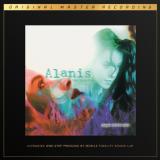
ALANIS MORISSETTE - Jagged Little Pill 2x12"
  • All I Really Want
  • You Oughta Know
  • Perfect
  • Hand In My Pocket
  • Right Through You
  • Forgiven
  • You Learn
  • Head Over Feet
  • Mary Jane
  • Ironic
  • Not The Doctor
  • Wake Up

When Alanis Morissette took direct aim at an ex who wronged her on the eviscerating “You Oughta Know” in 1995, everything about the Top 10 song communicated it wasn’t the usual narrative about love gone south. Or the typical wounded singer wallowing in self pity. Morissette, and both the lead single from and her entire American major-label debut — the profoundly personal Jagged Little Pill — represented a sea change. They kickstarted a movement, one whose impact continues to echo throughout the mainstream nearly three decades later.

Ranked the 69th Greatest Album of All Time by Rolling Stone, included on the Rock and Roll Hall of Fame’s list of 200 Definitive Albums, and featured in several books about essential albums, Jagged Little Pill remains more than a blockbuster that has sold more than 17 million copies in the U.S. and 33 million units worldwide. It’s a statement, an attitude, a soundtrack for anyone seeking inspiration, an outlet, or permission to be themselves.

Sourced from the original master tapes, pressed at Fidelity Record Pressing on MoFi SuperVinyl, and strictly limited to 4,000 numbered copies, Mobile Fidelity’s UltraDisc One-Step 180g 45RPM 2LP box set of Jagged Little Pill presents the landmark effort in audiophile-grade sound for the first time. A key part of the record’s appeal and accessibility — Glen Ballard’s smooth production, touches that help Morissette’s exposed-nerve fare seem more accessible and melodic — comes through on this special 30th anniversary edition with an openness, presence, and dynamic explosiveness that make the vocalist’s songs that much more real and visceral.

The singer’s distinctive mezzo-soprano deliveries — the octave-rippling highs, dark-hued lows, dramatic crescendos, belted choruses, wispy reflections, occasional yodels — resonate with full-range ardor and depth. As crucial as anything on the record, Morissette’s confessional words take center stage like never before. Ditto the instrumentation and atmospherics that form the magnetic backgrounds of the songs. Key in on the contributions from Red Hot Chili Peppers Dave Navarro and Flea on “You Oughta Know” to Tom Petty & the Heartbreakers' co-founder Benmont Tench’s organ playing on six tracks.

The deluxe packaging of Mobile Fidelity’s Jagged Little Pill UD1S set underscores the work’s distinguished status. Housed in a slipcase, the LPs come in special foil-stamped jackets with faithful-to-the-original graphics that illuminate the splendor of the recording. Benefitting from an ultra-low noise floor, superior groove definition, and dead-quiet surfaces, this UD1S reissue is for listeners who prize sound quality and desire to engage themselves in everything involved with the album, including the now-iconic cover art that juxtaposes two portraits of the then-21-year-old singer-songwriter and features typewriter font.

That script — which suggests a raw, blood-on-the-floor document created without modern aids like spell check or language correction — hints at the heightened level of unvarnished intimacy, honesty, and catharsis Morissette offers throughout Jagged Little Pill. Named after a phrase uttered on the astute “You Learn,” the album explores the frank emotions, inherent contradictions, and wishful desires people feel everyday but are often too afraid to express. Morissette displays no such fear or shyness.

Akin to a woman reading from a diary, Morissette leaves nothing to the imagination as she skewers hypocrisy during the poignant “Forgiven,” seeks recompense on the vengeful “You Oughta Know,” and spills her guts on the soul-purging “All I Really Want.” For all the anger and bile ascribed to the singer and record, Jagged Little Pill is incredibly healthy and upbeat. Morissette uses the catchy pop-rock frameworks and moody ambience to suss out situations, to learn, to give hope. There’s the clever yearning of “Hand in My Pocket”; wry contrarianism of “Ironic”; kind-heartedness of “Hand over Feet”; the live-and-let-live spirit of “You Learn” – all positive and amiable.

Throughout Jagged Little Pill, the ever-approachable Morissette connects with listeners who recognize themselves in her — and has an intelligent conversation with anyone who wants to participate. It seemed almost everyone did. In addition to the mammoth sales that make the effort the 17th-best-selling album in American history, Jagged Little Pill collected four Grammy Awards, two American Music Awards, three Billboard Music Awards, and eight Juno Awards. In 2018, the record became the basis for a musical that netted 15 Tony nominations on Broadway.

Ironic? Anything but. Jagged Little Pill transcends generations, gender, and trends. As Morissette sings on the opening “All I Really Want,”, the album represents “deliverance” — “a place to find common ground.”

pre-order now03.07.2025

expected to be published on 03.07.2025

Akim One - Frequency Spectrum

A masterful blend of neo-soul warmth & vintage JAY DEE-inspired vibes. Channeling the raw, soulful essence of SLUM VILLAGE, AKIM ONE crafts a rich tapestry of smooth rhythms and evocative melodies that resonate deep within the listener. Perfect for fans of timeless beats and modern soul.

pre-order now20.06.2025

expected to be published on 20.06.2025

Jyuriaano - Dreaming Glass

An’archives present the debut album by Tokyo avant-pop duo Jyuriaano, Dreaming Glass. Consisting of Morimoto Ariomi and Cobalt, the two members of Jyuriaano have long histories in Japanese underground music. Morimoto’s history traces back to the late nineties; his nascent interests in noise collage and solo acoustic performance slowly transmuted to group endeavours, and more recently he’s performed with the likes of Akiko Toshimitsu (Usurabi), Maki Miura (Shizuka) and Doronco (Los Doroncos).

Cobalt has released a string of excellent singer-songwriter albums, many on his Poet Portraits label, which has also released material by the likes of Kazumi Nikaido, Place Called Space, Cuthberts, and moools, the latter of which he also performs with on occasion. While Morimoto and Cobalt have known each other for decades, they decided to form Jyuriaano in 2016, and since then have performed at live houses and small bars in Japan, all while slowly working together on their gentle, spirited songs.

The group’s formation story is typically playful – “It all started when we brought an acoustic guitar into the car on a rainy afternoon and started writing songs while eating Japanese sweets,” Cobalt recalls. That sense of play is important to the songs on Dreaming Glass, which vary wildly, from bright, infectious pop songs with a sixties lilt (“Dreaming Baby”, “How Close”), through slinky jazz-pop numbers (“Drawing A Nude”) to melancholy folk laments (“Erica”, “Night Window”). There’s something in Jyuriaano’s collaborative dynamic that gifts Morimoto and Cobalt a particularly open field, when it comes to their creative endeavours.

Some of this might also be down to their listening habits. When asked about their interest in Japanese folk precursors, legendary groups like Folk Crusaders and Itsutsu-no-Akai-Fusen, Cobalt agrees that they have a place in the duo’s listening pantheon, but that’s not where the story ends. “We’ve also listened to commercial folk music outside of those core genres,” he reflects, “We don’t just listen to one genre, but also rock and roll, noise industrial, punk, new wave, jazz, chanson, and more.”

You might also hear touches of groups like the forementioned Usurabi, or Maher Shalal Hash Baz, or songwriters like Kazumi Nikaido and Shintaro Sakamoto. But Jyuriaano’s songs, somehow, feel quite sui generis in the way they magic up alternative visions for pop’s possibilities. Dreaming Glass is, quite simply, a lovely, unpretentious joy of an album.

pre-order now20.06.2025

expected to be published on 20.06.2025

RYUICHI SAKAMOTO - Better Days Of Ryuichi Sakamoto
  • A1: Das Neue Japanische Elektronische Volkslied, Percussion – Tatsuro Yamashita, Synthesizer – Hideki Matsutake; Synthesizer, Piano, Marimba – Ryuichi Sakamoto
  • A2: Plastic Bamboo; Percussion – Shigeya Hamaguchi*; Synthesizer – Hideki Matsutake; Synthesizer, Piano, Marimba – Ryuichi Sakamoto
  • B1: Thousand Knives; Guitar – Kazumi Watanabe; Percussion – Haruomi Hosono; Synthesizer – Hideki Matsutake ;Synthesizer, Drums – Shigeya Hamaguchi*; Synthesizer; Piano, Marimba – Ryuichi Sakamoto
  • B2: Tokyo Joe; Bass – Rei Ohara*; Drums, Vocals – Yukihiro Takahashi; Guitar, Vocals – Kazumi Watanabe; Keyboards, Synthesizer – Ryuichi Sakamoto; Percussion – Shigeya Hamaguchi*, Pecker
  • B3: E-Day Project; Bass – Rei Ohara*; Drums – Yukihiro Takahashi; Electric Piano, Synthesizer – Ryuichi Sakamoto; Guitar – Kazumi Watanabe; Percussion – Pecker; Piano – Akiko Yano
  • C1: Kylyn; Bass – Rei Ohara*; Drums – Yukihiro Takahashi; Electric Piano – Akiko Yano; Guitar – Kazumi Watanabe; Percussion – Pecker; Piano, Synthesizer – Ryuichi Sakamoto
  • C2: 在広東少年; Alto Saxophone, Soprano Saxophone, Chorus – Toshiyuki Honda; Bass, Chorus – Rei Ohara*; Drums – Shuichi Murakami; Guitar – Kazumi Watanabe; Keyboards, Vocals – Akiko Yano; Percussion, Vocals – Pecker; Piano, Synthesizer, Chorus – Ryuichi Sakamoto; Tenor Saxophone, Chorus – Yasuaki Shimizu; Trombone, Chorus – Shigeharu Mukai
  • C3: I'll Be There; Bass – Rei Ohara*; Drums – Yukihiro Takahashi; Electric Piano, Vocals – Akiko Yano; Guitar – Kazumi Watanabe; Percussion – Pecker; Piano, Synthesizer – Ryuichi Sakamoto
  • D1: ぼくのかけら; Arranged By – Yoshiharu Kawaguchi; Performer – Danceries, Ryuichi Sakamoto
  • D2: Grasshoppers; Piano – Yuji Takahashi; Piano, Synthesizer, Marimba – Ryuichi Sakamoto; Synthesizer – Hideki Matsutake
  • D3: Mother Terra; Bass – Rei Ohara*; Drums – Yukihiro Takahashi; Electric Piano, Synthesizer – Ryuichi Sakamoto; Guitar – Kazumi Watanabe; Percussion – Pecker
  • D4: The End Of Asia; Guitar – Kazumi Watanabe; Piano, Synthesizer, Marimba – Ryuichi Sakamoto; Synthesizer – Hideki Matsutake
pre-order now16.06.2025

expected to be published on 16.06.2025

Repetition Repetition - Fit for Consequences: Original Recordings, 1984–1987
 
2

Fit for Consequences: Original Recordings, 1984–1987 is the first ever archival release from Repetition Repetition, the “two-man electric minimalist band” consisting of Ruben Garcia and Steve Caton hailing from Los Angeles in the mid 1980’s. Repetition Repetition’s unique blend of cosmic art-rock minimalism / maximalism was self-released across a series of cassettes produced in micro editions, and while garnering the attention and participation of luminaries such as Harold Budd, remained under the radar during the band’s existence. Fit for Consequences: Original Recordings, 1984–1987 collects select material from across the duo’s catalog.

It was over a plate of Mexican breakfast food when Ruben Garcia and Steve Caton first told Harold Budd of Repetition Repetition and the worlds they intended to explore by respective way of synthesizers and guitars --- a rendezvous instigated by the former’s fan mail to the legendary composer. If the upstarts entered this restaurant from a one-way street of admiration, they would leave with not only Budd’s interest but, sometime later, a blessing in the wake of many hours shared by the three in Garcia’s Los Angeles home recording studio: “This is going to be difficult, but God help them, I think they’re great,” noted Budd in a USC lecture in 1985. Now several degrees removed from prior rock music aspirations, the real game was afoot.

Between 1984 and 1988, Repetition Repetition operated within something akin to the underground of the experimental underground, although even that designation perhaps overstates the case. The duo’s sparse output consisted of three cassettes self-released on Garcia’s Third Stone Music label: Repetition Repetition (1985), Lakeland (1987), and The Machinist (1987). Their songs would also be included during this period on Trance Port Tapes’ vital scene-scanning compilations assembled by A Produce. Live performances occurred with similar infrequency, but Garcia and Caton counted converts in quality over quantity, numbering among them the aforementioned Budd, a Chambers Brother, and, judging by a memorably drop-jawed reaction following a rare Repetition Repetition gig, Jackson Browne.

Likewise, critical support materialized in the form of KCRW deejays Brent Wilcox and Dean Suzuki, whose steady airplay positioned Repetition Repetition’s music amidst fearless company like Jon Hassell, Hiroshi Yoshimura, and Richard Horowitz. Yet, to hear fellow Trance Port featured players like Tom Recchion and Bruce Licher of Savage Republic tell it, Garcia and Caton moved as ghosts --- a notion more vexingly endorsed by the silence of record companies that failed to come knocking --- and therein lies an overarching truth to the work itself.

Journey to the heart of Repetition Repetition and one discovers a collective ear impossibly attuned to the hypnotic possibilities of stylistic convergence, the resulting music possessed of seamless multimodalities which beckon to a glimmering plane of the disembodied. Where Caton sought his artistic fixes at an intersection of popular genres, Garcia zoned in on the sonically spare, drawing from the same wellspring as the Enos and Rileys of his personal avant-garde pantheon, and in their coming together the two tapped into a deeper cosmic source. Synthetic walls of keyboard sound in forever states of reprise met waves of shimmering --- and at times even punishing --- guitar in reply, their soundscapes hovering convincingly between, as suggested in fittingly dualistic fashion in a press kit assembled by Garcia, such disparate sensations as bird flight in one song and oil drilling in the next.

But don’t call it a push-pull dynamic, as this was a creative partnership founded upon fluidity and organicism by way of, naturally, repetition. In contrast to, say, the Bressonian ideal of repetitive motion as a great stripping away, the concept in the hands of Garcia and Caton equated to ascendancy via continuous unfolding, a maximal route to minimalism. To be sure, their recording philosophy morphed over the course of the act’s short history, and what started as a process defined by consistent in-person interplay developed into a more isolated method formulated by Garcia, who eventually took to his own one-man bedroom-studio sessions in order to fully chart any and all potential ostinato-loaded paths which he could travel down, the Tascam-captured resonances subsequently provided to Caton as blueprints from which to take flight himself, adding layer upon layer of steel to the proceedings.

If the practice and execution changed, however, the evidence certainly didn’t rest in the results: The seamlessness remained, and, despite the brevity of their time together, so has Repetition Repetition. With this finely calibrated collection of songs in Fit for Consequences: Original Recordings, 1984–1987, Freedom To Spend sees to it that the private worlds of Garcia and Caton can now be visited by all rather than just the count-‘em-on-both-hands lucky few whose musical endeavors or collector vocations carried them into this once-distant dimension.

Repetition Repetition’s Fit for Consequences: Original Recordings, 1984–1987 will be released on Freedom To Spend in vinyl and digital editions on May 30, 2025. The collection includes extensive liner notes from Bill Perrine, and wil be offered alongside Over & Over, a supplemental collection of music available exclusively as a mail order cassette from Freedom To Spend and RVNG Intl.

pre-order now30.05.2025

expected to be published on 30.05.2025

B-Movie - Hidden Treasures

B-Movie

Hidden Treasures

12inchWLV001
Wanderlust
30.05.2025
  • A1: Citizen Kane
  • A2: Remembrance Day
  • A3: Polar Opposites
  • A4: Marilyn Dreams
  • A5: Ice
  • B1: La Lune Lunatique
  • B2: All Fall Down
  • B3: Nowhere Girl
  • B4: Crowds
  • B5: Beginning To Fade

In May 1981 B-Movie and Soft Cell went into Advision Studios in London with the same producer, Mike Thorne (Wire, Bronski Beat, China Crisis, The Communards) to record singles for the label they were both signed to. Phonogram had really wanted to sign B-Movie but had also committed to Soft Cell, having been coerced into it by Stev0, who managed both artists and wouldn’t let them have one without the other. B-Movie commenced recording the dark moody anti-fame anthem ‘Marilyn Dreams’, whilst Soft Cell got underway on a cover of an obscure Northern Soul classic. When both songs were released in July 1981, ‘Tainted Love’ became a worldwide hit and shot Soft Cell to international fame, making them the biggest stars of 1981. B-Movie had formed in 1979, in Mansfield, a typical northern town in the middle of the Nottinghamshire coalfield. Originally a three piece featuring, vocal / bass, guitar and drums, they expanded by adding a keyboard player to broaden their initial post punk sound. Local Lincoln independent record label, Dead Good Records, firstly put them on the compilation LP ‘East’, followed by 7" inch EP and then a mini-album releases, which led to an appearance on the legendary Some Bizarre label (alongside the likes of Blancmange, Depeche Mode, Soft Cell and The The)
Major label interest followed, from which came the deal with Phonogram, B-Movie initially re-recording the track ‘Remembrance Day’, which reached No61 in the UK chart in early 1981 and, more importantly, was played by BBC Radio 1 DJ John Peel, and appearing in his Festive 50 for that year. All of the recordings the band made during their Phonogram period have been consigned to the Universal Music vault for several decades, with the band finally managing to have these returned in 2024. The various tapes have been digitised and restored, resulting in the creation of what would have been their 1982 debut LP ‘that never was’. Ten tracks including the three singles plus seven previously unreleased recordings. The CD version contains a further seven recordings including the 12” versions, single B-sides and the track “Moles’” from the Some Bizarre compilation.So “Hidden Treasures” from B-Movie, is only four decades late but still able to sit seamlessly alongside contemporaries like The Chameleons and The Sound. The LP is a darker, more brooding and psychedelic affair, more akin to the gothic elements of the Bunnymen or Joy Division, than the ‘pop sensations’ Phonogram wanted them to become. By both opening and closing this chapter of B-Movie, it puts them firmly in the same bracket as their new wave and post-punk contemporaries, which is the least they deserve, as one of the great ‘lost’ bands of the early 1980’s. "It’s nice to hear B-Movie are finally getting a chance to release their forgotten gems’” Matt Johnson (The The) Vinyl

pre-order now30.05.2025

expected to be published on 30.05.2025

MERZBOW - RED MAGNESIA PINK

Merzbow

RED MAGNESIA PINK

12inchNOHLLP122
NO HOLIDAY
23.05.2025
  • Minus Zero
  • Etic
  • Delta X
  • Seishoku Nyu
  • Tremolo Man
  • Chameleon Body
  • Euclid's Pickel
  • You-Bahn
  • Little Bang!
  • Rm-04

First released by Extreme in the massive, infamous 'Merzbox,' "Red Magnesia Pink" is extracted and recontextualized as a standalone release for the first time. Recorded in 1995, "Red Magnesia Pink" sees Merzbow in peak form. A psychedelic whirlwind of synthetic transmissions; harsh, wet, screeching sounds that could only be produced by Masami Akita. Featuring two previously unreleased bonus tracks from the same era.

pre-order now23.05.2025

expected to be published on 23.05.2025

Julia Sabra - Natural History Museum
  • 1: White Walls
  • 2: Skyscape
  • 3: I Want It All
  • 4: Goodbye
  • 5: Home Is So Sad
  • 6: Fall From Grace
  • 7: Hands
  • 8: Dis, Quand Reviendras-Tu?
  • 9: Minor Detail

"I loved Julia Sabra’s Natural History Museum—it was released at the end of the year and is quietly devastating. Her lyricism and sensitivity in timbre and harmony is akin for me to the great Linda Perhacs. The songs are intimate and infinite feeling at the same time—I love the raw and soft poetic settings of love and death." Julia Holter (Best album 2024- Fader)

“This album is a collection of songs written between 2020 and 2024 in Beirut. I wanted to capture them the way they were written by keeping the rawness and fragility intact, like the late-night voice memos I send to my bandmates as soon as I have a first draft of a song. Fadi and I decided to record them live on tape, with no overdubs, barely any effect - with all the imperfections. Most of the tracks were done in one take only. Some were recorded in the studio, and some in the church I grew up going to every summer in Dhour Shweir.

This is a collection of songs that slipped through the cracks, and some of the most personal ones I ever wrote. Songs about the port explosion, its aftermath, picking up the pieces and trying to move on, coming to terms with the past, regret and nostalgia for a childhood that lives only in memory, the uncertain future, learning to love, getting married, watching a genocide unfold on my phone screen, having it fill my every waking moment, imagining a better send off for all the dead, processing the violence and terror, and finding solace in community.
These songs would’ve probably stayed in my “songs in limbo” folder on my laptop had it not been for Pascal and Fadi, who pushed me to release them. And for this I’m eternally grateful.”


[h] 8.Dis, quand reviendras-tu? [Barbara cover]

pre-order now23.05.2025

expected to be published on 23.05.2025

Eddie Marcon - Carpet Of Fallen Leaves LP 2x12"

»Carpet Of Fallen Leaves« is an introduction to the folk-pop world of Eddie Marcon. It follows in the footsteps of other collections of Japanese artists on Morr Music, such as yumbo, Andersens, and the »Minna Miteru« compilations. »Carpet Of Fallen Leaves« draws together songs from Eddie Marcon’s twenty-two-year history, including fragile, yet rich in melody material, collected from a prodigious run of limited edition, self-released CD-Rs.

Eddie Marcon is the project of Eddie Corman and Jules Marcon, who met through their involvement in Japan’s underground music scene. Eddie was a member of noise-rock duo Coa, while both Eddie and Marcon were part of psych-rock collective LSD-March. Forming in 2001, Eddie Marcon’s sound is markedly different from these groups, though they do, at times, share a sense of psychedelic dislocation, through the gentle, limpid pace of their songs. But with Eddie Marcon, melody and gentleness is at the music’s core.

They’ve long marked out their own, unique territory within a worldwide community of psych-folk and folk-pop artists; sharing their music through a subterranean network of colleagues and friends, they count groups like The Pastels and The Notwist as their fans, and Eddie has collaborated with the likes of Shintaro Sakamoto, and Aki Tsuyuko (in Tondekebana, and with Marcon and Ippei Matsui in the quartet Wasurerogusa). Eddie Marcon have also recently worked with drummer Ikuro Takahashi, who’s played with groups such as Fushitsusha, Maher Shalal Hash Baz, and Nagisa Ni Te.

Across the songs on »Carpet Of Fallen Leaves«, Eddie Marcon’s songs are performed by Eddie on guitar, organ and vocals, and Marcon on bass; they’re variously joined by Takahashi, Yojiro Tatekawa (drums), Tomoko Kageyama (vibraphone), Yasuhisa Mizutani (flute), Madoka Asakura (vocals), and Ztom Motoyama (pedal steel). The arrangements are pared back to best serve the core of each song, and the playing is gorgeous – fluent but not showy; capable of great intricacy, but aware that simplicity is key to direct communication.

Songs like »Mayonaka No Ongaku« stretch their limbs languidly, the music shivering with beauty as guitar and cymbal drift across Eddie’s poised vocal delivery. »Tora To Lion« began as an improvisation, but it’s become a firm favourite of the group’s fans: as Eddie says, »it has become a very important song for us, to the extent that it can be said to be our representative song.«

Perhaps the most moving thing about »Carpet Of Fallen Leaves«, though, is the way it captures the subtle yet significant moments of everydayness that ask for our attention. »Shoujo«, a song for a beloved cat who passed away, possesses rare emotional resonance. »At the end of the song,« Eddie remembers, »I wanted to have her throat rumbling endlessly.« When the song was cut, a television voice appeared behind the purring, saying ›thank you‹. »For us, it felt like words from Poco-chan, and tears came to our eyes.«

pre-order now02.05.2025

expected to be published on 02.05.2025

Miles Davis - Bitches Brew LP 2x12"
  • Pharaoh's Dance
  • Bitches Brew
  • Spanish Key
  • John Mclaughlin
  • Miles Runs The Voodoo Down
  • Sanctuary

Listen to This.” As the original working title for Bitches Brew, the instruction and invitation remains to this day as the best way to approach a record that shattered conventions, altered music history, and, 55 years later, still sounds far ahead of its time. The template for jazz fusion, Bitches Brew is rightly ranked by virtually every significant outlet among the 100 greatest albums ever made. Sewn together with vibrant colors, voodoo textures, and ethereal moods, the 1970 landmark emerges with supreme detail and nonpareil feeling on Mobile Fidelity’s UltraDisc One-Step 180g 33RPM 2LP vinyl set.

Sourced from the original master tapes, strictly limited to 5,000 numbered copies, and pressed at Fidelity Record Pressing in California, this definitive-sounding 55th anniversary reissue enhances every element of a double album that established new possibilities for studio recording techniques. You’ll hear wide and deep soundstages, separation between instruments, and an extremely broad dynamic range. If ever a jazz album can be said to have gone to outer space and back, this is it.

Sourced from the original master tapes, strictly limited to 5,000 numbered copies, and pressed at Fidelity Record Pressing in California, this definitive-sounding 55th anniversary reissue enhances every element of a double album that established new possibilities for studio recording techniques. You’ll hear wide and deep soundstages, separation between instruments, and an extremely broad dynamic range. If ever a jazz album can be said to have gone to outer space and back, this is it.

Davis conceived Bitches Brew by having the musicians stand in a semi-circle. There, he pointed at them with vague directions for tempo, solos, and cues. The collective improvisation and interplay spawned a galaxy of melodies and grooves that were later spliced together by producer Ted Macero. Benefitting from the ultra-low noise floor and superb groove definition of this pressing, these distinct creations take shape with utmost realism. Compositions stretch across jet-black backgrounds and paint canvases laden with millions of colors and shades. Juxtaposed percussion, loose jams, and melodic segues explode with impressionistic verve.

Bitches Brew also boasts visionary artwork. By design, the lavish packaging and gorgeous presentation of the UD1S Bitches Brew set call attention to such matters. Housed in a deluxe slipcase, it features special foil-stamped jackets and faithful-to-the-original graphics that illuminate the splendor of the recording. It is made for discerning listeners who desire to fully immerse themselves in everything surrounding the album, from the images to the tones. And this is one effort where every last detail matters.

Gathering a Hall of Fame-worthy lineup of musicians and tweaking it according to his desires, Davis follows through on his idea to “put together the greatest rock and roll band you ever heard.” Central to his proposition is the presence of two (and sometimes three) drummers and two bassists, a tactical move that makes rhythms a central focus. Akin to the futuristic album cover art, the drum-driven suites head toward distant universes and uncharted territories. At once hypnotizing and grooving, they chart maverick adventures via quixotic rock, funk, and R&B elements.

A without-a-net experiment involving interchangeable double-quintet lineups, Bitches Brew explores the previously unimaginable with electrified instruments — Fender Rhodes piano, processed trumpet, dissonant guitars, and bass among them — and an emphasis on feeling over composition. Mesmerizing and soothing, jarring and smooth, overt and subtle: The music seemingly covers an entire map of emotions and sensations, and like no record before, ties together the groundbreaking creativity of the multiple disciplines that were changing popular culture at the end of the 1960s and dawn of a new decade.

Conceptually, Davis described Bitches Brew as “a novel without words” and “an incredible journey of pain, joy, sorrow, hate, passion, and love.” The vast psychedelic expanses of warped echoes, liquid reverb, and tape loops confirm such ambitious contrasts of light and dark, fear and hope. Yet the most absolute characteristic of the watershed effort lies in how it resists definitive interpretation and encourages free thought — the very principles Davis used to conceive Bitches Brew.

More About Mobile Fidelity UltraDisc One-Step and Why It Is Superior
Mobile Fidelity Sound Lab’s UltraDisc One-Step (UD1S) technique bypasses generational losses inherent to the traditional three-step plating process by removing two steps: the production of father and mother plates, which are created to yield numerous stampers from each lacquer that is cut. For UD1S plating, stampers (also called “converts”) are made directly from the lacquers. Since each lacquer yields only one stamper, multiple lacquers need to be cut. Mobile Fidelity's UD1S process produces a final LP with the lowest-possible noise floor. The removal of two steps of the plating process also reveals musical details and dynamics that would otherwise be lost due to the standard multi-step process. With UD1S, every aspect of vinyl production is optimized to produce the best-sounding vinyl album available today.

pre-order now30.04.2025

expected to be published on 30.04.2025

Akiyo - Excursions In Gwoka Vol 2

Repress!

Excursions in Gwoka vol. 2 is another adventurous outing for the Beauty & the Beat label that takes them ever deeper into the gwoka scene of Guadeloupe. it is the celebrated carnival outfit Akiyo who are in focus here with two tracks taken from second and supremely hard-to-find long player, Mouvman, in 1993. 'Deboule' is a real heater with bustling drum funk and chatting tribal vocals all run through with synth wizardry from Marie-Galante Jacques-Marie Basses. 'Blo' is just as steamy and intern with percussion, whistles and big beats all making quite the impact. Breakplus adds a London twist to 'Deboule' while CW adds a cosmic air to 'Blo.'

out of Stock

Order now and we will order the item for you at our supplier.


Last In: 12 months ago
Akira Sakata / Giotis Damianidis - Adyton

Japanese free jazz legend Akira Sakata and Greek avant-garde guitarist Giotis Damianidis present Adyton, their first-ever duo recording. Having collaborated since 2018, the two musicians have developed an intuitive and electrifying musical dialogue, culminating in this live performance at Haekem, Brussels—the final concert of a two-week tour with Entasis in September 2023.

Sakata, who turned 80 on February 21st, 2024, delivers his signature fiery alto saxophone, evocative clarinet, expressive voice, and resonant bells, while Damianidis expands the sonic spectrum with textural guitar and effects, weaving a dynamic interplay between structure and chaos.

Titled after the "Adyton"—the innermost, most sacred part of an ancient temple—this album invites listeners into a raw, unfiltered space of musical exploration, where spontaneous energy and deep-rooted tradition converge. A testament to Sakata’s lifelong commitment to improvisation and Damianidis’ boundary-pushing approach to guitar, Adyton is a powerful, transcendental journey into the unknown.

pre-order now25.04.2025

expected to be published on 25.04.2025

Funkadelic Feat. Louie Vega - Ain't That Funkin' Kind Of Hard On You? (Louie Vega Remixes) (Purple Vinyl Repress)

Purple Vinyl

House music, nightlife entertainment and DJ/Producer virtuoso Louie Vega has proven over and over again that he's a master chemist in the studio. His latest release is an uptempo and speaker-knocking remix of Funkadelic's 'Ain't That Funkin' Kind of Hard on You' (produced by George Clinton and & G Koop) from the album 'First Ya Gotta Shake the Gate'.
The original version is nothing short of a classic, but it's as if the song had never been invited to a Louie Vega post-midnight global extravaganza. Was the song not aware that spellbound dancing and high BPMs were the standard for House Music Normally, such a blaring disregard for nightlife decorum would relegate a song to the pits of sonic hell, but we're talking about George Clinton here!The original opens up with a G-funk groove that screams Westside and lowriders. The listener is then blessed with Clinton as he adds his sage, soulful and pimpadelic vocals, complemented by Funkadelic singers asking him about the pains of the funk. The semblance of a beat that could drive the dancefloor into the morning hours is there, but in no way has it blossomed into its full glory. Enter Louie Vega.
His remix immediately greets listeners with a decadent spread of instrumentation and chutzpah. The original song's DNA populates the first thirty seconds of the remix but then an explosion takes place and the song assumes a new identity. The transcendent experience is akin to taking the elevator to a rooftop party and once the doors open- boom! The remix begs you to dance, the G-funk groove is now in your face instead of being laidback and percussion takes a front seat to take you away. The song is alive, there's no other way to describe it.
Be sure to buy your vinyl at an outlet near you! the Louie Vega remix of Funkadelic's 'Ain't That Funkin' Kind of Hard on You' on Vega Records!

out of Stock

Order now and we will order the item for you at our supplier.


Last In: 11 months ago
Various - Head Fuck 37

Various

Head Fuck 37

12inchHDF37
Head Fuck
23.04.2025

Hardcore from Italy and not only... With massive bass, spinning at 45 RPM. These collabs are total crazy for speed and noises ! One of the best Head Fuck !!!

out of Stock

Order now and we will order the item for you at our supplier.


Last In: 13 months ago
John M. Bennett - BLANKSMANSHIP

The first ever reissue of 1994 sound poetry masterpiece »BLANKSMANSHIP«, a high point in the work of legendary avant-garde poet and artist John M. Bennett. Editions Basilic and Luna Bisonte Prods previously collaborated on »A Flattened Face Fogs Through: Selected Sound Poetry (1986-1994)«, an anthology of Bennett’s sound poetry released in 2022 to widespread acclaim.

John M. Bennett’s »BLANKSMANSHIP« is a totemic representation of something impossible: a linguistic object containing a totality. Written and recorded in the early 1990s and released as a sound poetry cassette and chapbook, »BLANKSMANSHIP« begins and ends with a ten word mantra, distilling the poem’s ten cantos that act as phases of an extended meditation. Performed by the author accompanied only by minimalist shakuhachi flute and bell, a narrative emerges from a mythic place, spoken by a single voice that eventually multiplies into a horde of selves. The author states that »BLANKSMANSHIP« refers to a state of mind, the "empty yet swarming void from which the poem’s voice arises, as if it were the voice of completeness itself".

RIYL: Robert Ashley, Akio Suzuki, William S. Burroughs, Steve Dalachinsky, Max Headroom, Japanese Shakuhachi Flute Music

pre-order now18.04.2025

expected to be published on 18.04.2025

Merzbow - Collection 001-010 (LP 10x1" Box + Book)
  • Collection 001 - 001 A 23:46
  • Collection 001 - 001 B 23:48
  • Collection 002 - 002 A 18:12
  • Collection 002 - 002 B 20:54
  • Collection 003 - 003 A 22:14
  • Collection 003 - 003 B1 09:33
  • Collection 003 - 003 B2 05:25
  • Collection 004 - 004 A 16:11
  • Collection 004 - 004 B1 07:08
  • Collection 004 - 004 B2 09:52
  • Collection 005 - 005 A1 08:38
  • Collection 005 - 005 A2 08:54
  • Collection 005 - 005 B1 07:14
  • Collection 005 - 005 B2 03:53
  • Collection 005 - 005 B3 03:57
  • Collection 005 - 005 B4 04:03
  • Collection 006 - 006 A1 17:35
  • Collection 006 - 006 A2 05:12
  • Collection 006 - 006 B 23:12
  • Collection 007 - Merzrock B1 + Dubbing 5 11:21
  • Collection 007 - Merzrock A1 + Anemic Pop 1 02:00
  • Collection 007 - Merzrock A1 + Anemic Pop 2 08:32
  • Collection 007 - E-Study #3-1 + Merzsolo 1 15:49
  • Collection 007 - E-Study #3-1 + Merzsolo 2 05:58
  • Collection 008 - Concrete Tape Ph#1~ 05:19
  • Collection 008 - E8 A1 + 006 A1 06:03
  • Collection 008 - Merzsolo 10/6.81 A1 10:36
  • Collection 008 - E8 B2/Concrete Tape Ph#1~ 06:28
  • Collection 008 - Sans Titre Merz 1 + Tape Loops 04:54
  • Collection 008 E6 A3 + Concrete Tape Ph#1~ 06:46
  • Collection 008 - Merzsolo 10/6.81 A5 + Violin 03:21
  • Collection 009 - N.a.m.4 + E-8 06:11
  • Collection 009 - Telecom 1/3 + N.a.m.5 17:32
  • Collection 009 - E-3-1-1 11:24
  • Collection 009 - E-3-1-2 01:50
  • Collection 009 - Tape Loop + Noise 1 (Concrete Tapes) 02:39
  • Collection 009 - Tape Loop + Noise 2 (Concrete Tapes) 04:25
  • Collection 010 - 007 B1 + Ah Corps 11:47
  • Collection 010 - E3 B2 + Ah Corps 11:28
  • Collection 010 - N.a.m.6 With Radio & Tapes 22:47

Carrying on their longstanding dedication to the seminal output of Merzbow, Urashima returns with what is unquestionably their most ambitious release to date: “Collection 001-010”, a deluxe, 10 LP vinyl box set limited to 299 copies, gathering together the entirety of the project’s first ten releases, originally released in 1981. Encountering the band in its early incarnation of the duo of Masami Akita and Kiyoshi Mizutani, raw, exposed and bristling with energy, foreshadowing numerous trajectories they would follow over the coming years, these astounding full lengths - the majority of which have never been released on vinyl - come housed in a beautifully produced, deluxe wooden box, with each LP in its own individual sleeve reproducing the original artwork, and a LP-sized 32-page book containing reproductions of artworls and collages by Masami Akita, an interview conducted by Jim O'Rourke, and liner notes penned by Lasse Marhaug, Thurston Moore, and Akita himself, amounting to what is unquestionably one of the most historically significant releases we’re likely to encounter in 2025.

Deluxe Edition of 299 copies, remastered from the original analog tapes by Masami Akita, each LP comes in its individual sleeve reproducing the original artwork, also includes a LP-sized 32-page book. ** Since its founding during the late 2000s, the Italian imprint, Urashima, has become a definitive voice in the landscape of noise. Bringing forth beautiful limited edition releases, they’ve sculpted a singular vision of one of the most vibrant and revolutionary bodies of experimental sound to have graced the globe. Among the many projects that they have supported over the decades, there has been an undeniable dedication to the output of the seminal Japanese noise outfit, Merzbow, making a significant amount of the project’s out of print back catalog available across a range of formats. Now they return with what is arguably their most stunning and ambitious release dedicated to the project to date: “Collection 001-010”, gathering the entirety of Merzbow’s first ten releases, largely privately released by the band on cassette across 1981, in a deluxe, 10 LP vinyl box set. Representing what is effectively ground zero in Japanese noise and collectively amounting to some of the most sought after releases ever produced within that movement, Urashima’s truly beautiful collection comes fully remastered by Masami Akita himself from the original tapes, presenting all but a small number in their first ever vinyl pressings, with each LP housed in its own individual sleeve reproducing the original artwork, alongside a LP-sized 32-page book containing reproductions of artworks and collages by Masami Akita, an interview conducted by Jim O'Rourke, and liner notes penned by Lasse Marhaug, Thurston Moore and Akita himself. Towering with energy and groundbreaking creative vision, within the realms of noise and experimental music, releases don’t get more monumental or historically important than this!

Merzbow came roaring onto the Tokyo scene in 1979, and remains, to this day, one of the most prolific and aggressively forward-thinking projects in experimental music. Eventually becoming the solo vehicle for the efforts of Masami Akita, in its earliest incarnation the project was the duo of Akita and Kiyoshi Mizutani, taking their name from German artist Kurt Schwitters' pre-war architectural assemblage, The Cathedral of Erotic Misery or Merzbau, and quickly set out to challenge entrenched notions of what music could be. Embracing technology and the machine, even in its earliest iterations, Merzbow pushed toward new territories of the extreme, arriving at a space of pure, unadulterated sonic onslaught that has continued, for over 40 years, to set the pace for the entire genre of noise, and has remained one of the movement’s most important, definitive voices, continuously laying the groundwork for countless artists who have followed in its wake.

When dealing with historical gestures, there’s an invertible aura surrounding original line-ups and early statements, and rightfully so. It is often within a band’s debut that we catch the purest glimpse of the raw energy and creative ferment that made them what they are. This is certainly the case when regarding the coveted early releases of Merzbow, capturing the emergence of the project in its form as the duo of Masami Akita and Kiyoshi Mizutani as they helped set the blue print from the then emerging movement of Japanese noise. Over the course of its nearly five decades of activity, Merzbow has always been noted for how prolific and ambitious the project is. This was no less the case in the very beginning. While they were active for roughly two years prior, in 1981 alone they issued ten self-released cassettes numerically titled “Collection 001-010”, albums which have both individually and collectively become holy grails in the realms of noise, with only two - “Collection 007” and “Collection 009” - ever receiving vinyl reissues prior to now.

As Lasse Marhaug deftly articulates in the newly commissioned liner notes for “Collection 001-010”, despite having been recorded in different location across a span of time, the sum total of Merzbow’s first ten releases might be best regarded as a single release to be listened to in the same, durational sitting, with the material standing well apart from what most came to expect from Merzbow, while foreshadowing numerous trajectories the project would take over the coming years. Not only do these recordings feature a vast array of instrumentation - tapes, acoustic and electric guitar, violin, drums, voice, recorder, organ, found sounds, clarinet, homemade and prepared instruments, a vast arsenal of effects and electronics, and piano, to only begin to scratch the surface - the majority of which would disappear from the project’s active sources of sound generation over the subsequent years, but there is a slow pacing and raw sense of openness and exposure that reveals strong connections to the avant-garde improvisations of groups like AMM, Musica Elettronica Viva, and Gruppo di Improvvisazione Nuova Consonanza, the psychedelia of groups like Taj Mahal Travellers and Flower Traveling band (both of whom Akita mentions having seen in youth within his interview with Jim O’Rourke), and rock in general - albeit in fully abstracted forms - unspooling as brittle, pointillistic, textural, raw and abrasive forms, that occasionally flirts with unexpected tonal sensibilities. As Marhaug describes it in his excellent liner notes: «Sonically, “Collection” sounds more sparse and stripped. It’s dry sounding, up-front, no reverb, and there’s less heavy low-end grime and thin on the signature frequency sweeps. Viewed in a 1981 context, musically, it’s more akin to what the LAFMS (Los Angeles Free Music Society) pool of artists were doing at that time than what was happening in industrial music... There’s a strong playfulness throughout, like the sound objects are being explored for the first time, without neither restraint nor hurry. Events are allowed to be fully examined before the music moves on, or simply cuts off. To a large degree, the music on “Collection” feels acoustic in nature, although a Electro-Harmonix ring-modulator features prominently throughout.»

Easily described as a rarely encountered revelation into the original and earlier documented studio sound of Merzbow, “Collection 001-010” collectively amounts to an engrossing sonic journey in its own right, while also allowing for important, often overlooked connections drawn from numerous other creative wellsprings, notably free jazz, underground rock, the output of European and Japanese avant-garde music, as well as Dada, Fluxus, and Mail Art, much of which, beyond the illumination made possible by the sounds, Jim O’Rourke’s fantastic interview with Akita, published in the booklet, further explores, offering great insights into the origins of Merzbow and the thinking behind the project, as well as aspects of the earliest days of Japanese noise.

pre-order now18.04.2025

expected to be published on 18.04.2025

Yumiko Morioka - Resonance

Yumiko Morioka

Resonance

12inchMTR005-25
Métron Records
17.04.2025

Japanese pianist Yumiko Morioka initially released Resonance, her first and only solo recording, on Akira Ito's ‘Green & Water’ imprint in 1987. Whilst by no means a commercial failure, the album was mostly found in the background of Japanese TV documentaries, maternity clinics and healing shops before drifting into relative obscurity.

By 1994, Morioka had relocated to America and her solo music career had given way to the joys of starting a family and her new life in California. It was, and still is, a shock for her to learn that Resonance had gained the attention of a new audience outside of Japan through blog posts and YouTube album uploads.

After hearing Resonance for the first time ourselves back in early 2017, we tried for months to track Morioka down about a reissue. This news reached her at a particularly trying time in her life following the devastating loss of her home in the 2017 California wildfires.

Her home had recently been razed, destroying all of her possessions, musical equipment, scores and recordings. Morioka was lucky to escape with her life; her quick thinking neighbour raised the alarm in the middle of the night giving her just enough time to escape safely before then tragically watching her home burn to the ground.

In the aftermath, Morioka returned to Japan in an attempt to rebuild her life. She found work writing music for commercial projects and pop acts before recently opening her own chocolate shop in the Jiyugaoka neighbourhood of Tokyo - back where it all began.

‘’Space and time moved at a different speed than now’’ – Yumiko Morioka

A lifelong student of the piano, Morioka was born in Tokyo in 1956. A child prodigy, she took up the instrument under her mother’s tutelage at just three years old and by her teens she had won multiple piano scholarships. Her talent was so obvious that she was invited to train in America, eventually graduating from the San Francisco Conservatory of Music with a piano major during John Adams’ reign as head of composition.

After graduation, Morioka returned to Japan but struggled to find her place musically, working mostly on commercial songwriting assignments. Frustrated, and at times embarrassed by her musical output, she turned to the works of Brian Eno and the surroundings of her coastal home in the Izu Peninsula south of Tokyo for inspiration. It was here that she began to work on the compositions that would eventually become Resonance.

Recorded on a Bösendorfer grand piano, much of Resonance was made in an attempt to soothe her creative soul. Constructed from unwritten improvisations with additional instrumentation added later, Resonance explores the space between notes. As such, it's a record that feels open and inviting, permeated throughout with a sense of confident serenity.

The sparse, delicately played notes are allowed to reverberate and echo through the spaces between themselves, giving each track a feeling of both grandeur and intimacy. Like the great pioneers of classical and ambient music, there's a timelessness to Resonance - a comforting, familiar feeling, as if these melodies have always existed.

Resonance drew influence from the popular environmental music culture prevalent in Japan during the late 80s, but it was also heavily inspired by Western musicians such as the avant-garde Parisian composer Erik Satie. Listening today, it still feels fresh and pertinent; a warm, contemplative reflection of a travelled woman.

Resonance has been lovingly remastered by Séance Centre's Brandon Hocura and given new artwork by Métron Records’ label head Jack Hardwicke.

out of Stock

Order now and we will order the item for you at our supplier.


Last In: 10 months ago
Andreas O. Hirsch - The Salamander Treaty LP

ver the years, Andreas O. Hirsch has shaped a distinctive sound, exploring the possibilities of the electro-acoustic instruments he const- ructs. The Carbophone as well as the Electrified Palm Leaf are plucked instruments akin to the African Kalimba or Mbira. In combination with effects and loops, Hirsch creates an experimen- tal space, influenced by early electronics, Asian and African music as well as the possibilities of editing and collage. The majority of the pieces on The Salamander Treaty were made using the Carbophone Jr., a small traveling version of his original Carbophone which was the basis of the previously released Early Carbophonics. Shaped by the joy of discovery, the eight tracks traverse peculiar worlds of sound, carried by a warm downbeat and analogue vibe. Alongside the Car- bophone Jr., other instruments come into play: a vibrato-soaked guitar leads through the slowly evolving ‘Rise’, marked by a recurring Shepard tone and sounds made by striking the bars of an antique wall clock. In the straightforward yet sub-aquatic ‘Te- atime Unlimited’, a pitch-shifted Morse key wanders erratically in the background. Tape-delayed har- monicas serve as a flying carpet for ‘Drifting Newts’, and rubber bands make their melodic-rhythmical appearance through ‘Back Door Minimal’.

The Salamander Treaty refers to War with the Newts, a prophetic and black-humoured science fiction novel by Karel Čapek from 1936, which tells the story of the rise of the salamanders, who become in- creasingly intelligent and eventually begin to compete with mankind. The album is a pacifist response to this dark scenario: Hirsch’s salamanders prefer to hang out under the stars (‘Drifting Newts’), drink tea (‘Tea Time Unlimited’) and — as illustrated on the back cover — write conspiratorial-pacifist demands instead of calling for war (e.g., ‘Teaoism International’, ‘White Lilies’, ‘For Congress’). In image and word, the album invites looking at the term ‘treaty’, which phonetically contains the words ‘tree’ and ‘tea’, as a friendly reminder that the drafting of every treaty and agreement on this planet should be accompanied by a peaceful spirit.

Music, mix and artwork by Andreas Oskar Hirsch. Mastered by Volker Hennes. Pressed on BioVinyl by Optimal, who state that their manufacturing process reduces CO2 emissions by approximately 90% for the PVC component. 12“ LP, coloured sleeve, download code included,

LIMITED TO 100 COPIES!.

pre-order now11.04.2025

expected to be published on 11.04.2025

DeepChord - Vantage Isle (Remastered) 3x12"

Deepchord

Vantage Isle (Remastered) 3x12"

3x12inchECHOSPACE001-RE
Echospace
10.04.2025

Repress!

Echospace Detroit is the label launched by Rod Modell (Deepchord) and Soultek's Steven Hitchell, two leading lights of the minimal dub techno scene. And as with anything Deepchord, the entire release has an air of mystery to it. Previously, as a near-mythical vinyl pressing with minimal packaging and restricted pressings, everything about Vantage Isle was geared toward the underground, or 'those who know.' However, there's nothing but love of craft driving these grooves, and now a lot more people will finally be able to hear this absolutely brilliant collection of spacial dub wonder on CD. Vantage Isle Sessions consists of a whopping 13 takes of the title track, reworked by Modell and Hitchell in various guises (cv313, Deepchord, Echospace, Spacecho), as well as a guest spot (and first ever remix) from Gerard Hanson (Convextion). Across their 13 versions, Modell and Hitchell manage to take the Deepchord template (analog synths, deep bass, gently throbbing beats, bursts of static and noise, and deep, deep chords) into a surprising variety of directions, akin to looking at the same giant glacier from a helicopter from every angle possible: some are beatless and undulating, some are pulsing and dynamic, some are looking up from under the ice and some are towering overhead. The aforementioned Convextion version is revelatory. It's built on cascading and echoing pieces of the original that are layered like shifting sands, for a distinctly dark and shimmering journey to the bottom of the frozen ocean and back. It's remarkable enough to get all these takes on one basic template to sound somewhat different, given that the source material is really just a skeletal array of sound sheets. Vantage Isle Sessions is for anyone looking for the logical successors to the Basic Channel throne, or just looking for something mellow for those steamy late summer nights. A stone-cold classic of the genre. Don't miss it." -Todd Hutlock, Stylus Magazine/Beatz by the Pound

"Steeped in mystery, Detroit musicians Rod Modell and Mike Schommer (aka Deepchord) are legendary for their hard to find twelve-inch dub techno releases. Their sound is heavily influenced by Berlin dub techno producers like Maurizio, Basic Channel, Chain Reaction, Rhythm & Sound, Blue Train and Pole. While the German sound often has a futuristic metallic edge, Deepchord are known more for the rust and grease, which is part and parcel of those metal parts. Static, analog sounds, deep bass thumps and, of course, deep chords blend in a timeless minimal manner. However, the real gems on this disc are the drifty ambient cuts devoid of beats. This is an excellent album that is on par with the classics from a decade ago!" -Exclaim


"In terms of ambient dub, if Basic Channel is the Father (the source, remote and inaccessible and very powerful) and Pole is the Son (dazzling but ultimately stranded halfway between man and the divine), than Rod Modell’s Deepchord and his Echospace label he run with Steve Hitchell is definitely the Holy Spirit." -Popmatters


"Deepchord’s dub-techno stealthily peels away melody, leaving a bare chassis of beats to ghost-ride down Woodward Avenue. Vantage Isle Sessions, which collects remixes of a 2002 Detroit Electronic Music Festival performance, finds the duo swerving through empty, neon-smeared streets, and recalls Berlin’s Chain Reaction label, minus the anemic minimalism." -XLR8R

"The album scales a magnificent peak in “Spacecho Dub II - Extended Mix” when smeary chords ricochet over a massively deep, bass-heavy pulse, and Hanson's light-speed missile of vaporous propulsion (“Convextion Remix”) is beautiful too.
Long may they run." -Textura

‘Vantage Isle’ is a tremendous achievement that will most likely be held up as a high water mark of the genre for years to come." -Resident Advisor

"My favorite mix is by Convextion (his first remix for another artist). Reedy, distant synth tones sound like a science fiction soundtrack overheard rooms away. An undercurrent of echoes, many difficult to describe, drift in a sonic syrup." -Gridface

"Modell’s music always seems to be in this suspended animation, adrift and afloat in a majestic emptiness." -Dusted Mag

CREDITS:
Written & Produced by Deepchord. Redesigned and Reshaped by Convextion (Gerard Hanson) cv313 (Stephen Hitchell) echospace / spacecho (Rod Modell + Stephen Hitchell)
Additional Mastering, Mixing and Engineering by Ron Murphy @ NSC Mastering, Detroit, USA. Side E/F Remastering and Lacquer cutting by Dietrich @ Complete, NYC, USA. (2018)

out of Stock

Order now and we will order the item for you at our supplier.


Last In: 7 months ago
Babytron & Certified Trapper - Mario & Luigi LP

Mario & Luigi is the collaborative album between rappers Babytron & Certified Trapper. Originally released on July 10. 2024, the 13 track album clocks in at just under 30 minutes of blistering bars and enough brazen schemes to make your head crack. Akin to the greatest brothers in video game history, the link up between Babytron & Certified Trapper is perhaps the greatest link up in scammer history. The album focuses on Babytron & Certified Trapper trading off rounds of elite shit talking, braggadocious rhymes, and witty worldplay. Pressed on Picture Disc vinyl and limited to 1000 copies.

out of Stock

Order now and we will order the item for you at our supplier.


Last In: 13 months ago
Various - Costa Blanca's Cannibal Club LP 2x12"
out of Stock

Order now and we will order the item for you at our supplier.


Last In: 4 months ago
Various - EINE STADT WIRD BUNT. (Schuber-Edition) (LP 3x12"

Wie Hip-Hop nach Hamburg kam
Die Compilation ist als Zeitreise zu den Anfängen der Hamburger Hip-Hop-Kultur konzipiert und umfasst über 100 weitgehend unveröffentlichte Songs und Skits. Begleitet wird das Triple-Vinyl von einem 96-seitigen Booklet, das von den frühen Jahren von Hip-Hop, Rap und DJing in Hamburg erzählt. Präsentiert wird das Werk von den Herausgebern des Buchs und den Kuratoren der Museumsausstellung EINE STADT WIRD BUNT.

Kennt eigentlich noch jemand Easy Business? Was wie ein Ratgeber Video auf YouTube klingt, ist der Name einer der ersten Hamburger Rap-Gruppen. Die vierköpfige Formation aus Steilshoop gründete sich schon in den späten 1980er Jahren und begann bald erste englischsprachige Texte zu schreiben. 1989 nahmen sie gemeinsam mit Mario von Hacht den Song „Money“ in einem Jenfelder Jugendzentrum auf.
Als House-Produzent verfügte Von Hacht über ein vergleichsweise schon recht ansehnliches Produktions-Equipment. Selbst die legendäre Roland TR-808, analoger Drumcomputer und Allzweckwaffe von Hip-Hop-Produzenten, war bereits 1989 Teil seines Maschinenparks. Nur hatte er sie eben nicht für Rap genutzt – bis Easy Business anklopften. Und so öffnete ein Musik-Nerd und Technik-Freak dem Hip-Hop eine Tür in Hamburg. Von Hachts Offenheit für den neuen Musikstil sollte sich auszahlen: 1995 produzierte er mit „Nordisch by Nature“ den ersten Chartstürmer von Fettes Brot.

Es sind Geschichten wie diese aus der Gründerzeit des Rap in Hamburg, um die sich die 3-Vinyl-Compilation EINE STADT WIRD BUNT dreht. Unter den über 100 Songs und Skits aus den frühen Jahren des Rap in Hamburg finden sich neben dem Song „Money“ von Easy Business auch ein Mitschnitt eines Auftritts der Gruppe in der Fabrik im Mai 1991.
Von frühen Aufnahmen von MC Africa True, der später unter dem Namen Nana einige Hits landen würde, bis zu den Britcore-Veteranen von Readykill, von 2 Ruff, deren Mitglied Simple Simon zu den ersten Hip-Hop-Produzenten der Stadt gehörte, bis zu den Reim Banditen, die als eine der ersten hiesigen Bands mit einem Majorlabel-Vertrag als Hamburger Antwort auf die Fantastischen Vier positioniert werden sollten, vereint das Triple-Vinyl eine einzigartige Sammlung musikhistorischer Zeitdokumente. In Kombination mit dem begleitenden Booklet vermitteln sie ein authentisches – und überaus unterhaltsames – Bild von den Anfängen des Rap in Hamburg.

Nach dem preisgekrönten, 2021 erschienenen Buch „EINE STADT WIRD BUNT. Hamburg Graffiti History 1980-1999“ und der gleichnamigen Ausstellung, die bis Anfang Januar 2024, als eine der erfolgreichsten aller Zeiten, im Museum für Hamburgische Geschichte gezeigt wurde, folgt mit der Compilation nun also eine weitere Dokumentation Hamburger Subkultur Geschichte der 1980er und 1990er Jahre. Im Fokus diesmal: die Pioniere des Rap in der Hansestadt.
Zum Team hinter dem Triple-Vinyl gehören neben den vier Herausgebern von EINE STADT WIRD BUNT. Oliver Nebel, Frank Petering, Mirko Reisser und Andreas Timm drei ausgewiesene Kenner der deutschen Hip-Hop-Szene. Oliver Herbst, einst DJ der Hip-Hop-Band City Nord, betreibt heute ein Musiklabel, auf dem die Platte erscheint, und konnte im Zuge der Recherche an viele alte Kontakte anknüpfen. Ebenfalls mit an Bord: der langjährige Chefredakteur des Hip-Hop-Magazins Backspin Dennis Kraus und der Musikjournalist und Moderator Falk Schacht.
Über einen Zeitraum von über zwei Jahren hinweg hat sich das Team auf Recherche begeben. Sie nahmen Kontakt zu Bands, Rapper*innen, DJs und Produzenten auf, die in den 1980er und 1990er Jahren in und um Hamburg aktiv waren. Sie sichteten und archivierten unzählige Stunden von Radio-Shows, Tapes, Demo-DATs und Live-Mitschnitten und führten Interviews mit Hip-Hop-Pionieren aus der Hansestadt. „Unser Ziel war es, ein kaum beleuchtetes Kapitel Hamburger Subkulturgeschichte zu erzählen“, sagt Mirko Reisser.
Begleitet werden die Platten deshalb von einem rund 80-seitigen, reich bebilderten Booklet im Vinyl-Format, das in aufwändig recherchierten Texten nachzeichnet, wie der neue Musikstil ab Mitte der 1980er Jahre in Hamburg langsam heimisch wurde. Zu den zentralen Themen dieser Erzählung gehört die Abwesenheit von technischem Equipment – und der Umgang der jungen Szene mit diesem Mangel.
Ein Vierspur Kassettenrekorder musste für die ersten Aufnahmen im Kinderzimmer reichen. Und wer DJ werden wollte, übte Scratchen mit dem Plattenspieler der Eltern. Anders als heute, wo man mit einem Smartphone in der Hand theoretisch ein Millionenpublikum erreichen kann, stellte die Aufnahmetechnik damals eine große Hürde dar. Wer jedoch über die technischen Voraussetzungen verfügte, Songs aufzunehmen, wurde schnell zur Anlaufstelle für die junge Rap-Szene.
Parallel zu dieser Ära der Technik-Autodidakten, öffneten die Rapper*innen der frühen 1990er Jahre ebenfalls ein Fenster in eine neue Welt: Indem sie anfingen, auf Deutsch zu rappen, grenzten sie sich bewusst von den amerikanischen Vorbildern ab und schufen ein ganz neues Selbstbewusstsein der jungen Subkultur. Und ganz nebenbei auch ein ganz neues Bewusstsein für die Möglichkeiten der deutschen Sprache. „Hier wurde etwas gänzlich Neues erschaffen“, sagt Oliver Herbst.

Viele Künstler, die auf der Compilation vertreten sind, dürften heute nur noch echten Hip-Hop-Nerds bekannt sein. Doch es finden sich auch bekannte Namen auf der Tracklist. Jan Eißfeldt etwa, der heute solo als Jan Delay oder als Teil der Beginner Konzerthallen füllt. Oder Fettes Brot, die von einem Hip-Hop-Trio aus dem Hamburger Umland zu einer der erfolgreichsten deutschen Popbands der Gegenwart heranwuchsen. Oder Deichkind, die zu einem massentauglichen Universal Kunstprojekt avanciert sind.

Wie schon das gleichnamige Buch und die Museumsausstellung, so blickt auch die Compilation EINE STADT WIRD BUNT. hinter die Kulissen einer jungen Subkultur – und erzählt parallel spannende Kapitel Musik-, Technik- und Stadtgeschichte aus der Hip-Hop-Hochburg an der Elbe.

INTERPRETEN
Fettes Brot, Absolute Beginner, Deichkind, Das Bo, Ferris MC, Mr. Schnabel, Sleepwalker, Kastrierte Philosophen, Mellow Mark, David Fascher, Easy Business, Reim Banditen, Readykill, TobiTob, I.L.L. Will, City Nord, MK Cram (Poets of Peeze), Dialektik, 2 Ruff, Nina, Flashmaster Ray, Dennis Deutschland, 2BIAS, MC Africa True alias Nana, Vers Chaoten, Die Erstausgabe, THC (Ter Hartchor), R.A.F. (Reimende Antifaschisten), Direkt Aktion, Fogmoor, Syren, Mental Disorda (Crime Code Barets), Dennis the Menace, Selma, 08/15, Hamburg Royal, Skunk Funk, B-Low, Gizmo, AJ, SMG, Phantom Black, Leon Le Pro alias EL’OMC, Paolo 77, Monti, Hanseknaller, Schlechta Umgang u.v.a.

ZITATE VON
André Luth, Jan Eißfeldt, Mathias Arfmann, Ale Dumbsky, David Fascher, Fatih Akin, Carsten Bohn, Schiffmeister (Björn Beton), Pasha Kamber (DJ MPK), Boris Ekambi, Sleepwalker, Mr. Schnabel, Nana Abrokwa, Simon Vegas u.a.

PRODUCER
Mario von Hacht (Super Mario), Sleepwalker, B-Base, Bubblez, TobiTob, X-Ray, Simple Simon

pre-order now04.04.2025

expected to be published on 04.04.2025

Inon Zur - Starfield (Original Soundtrack) (Ltd. LP 6x12")
  • A1: Into The Starfield (Main Theme)
  • A2: Planetrise
  • A3: First Flight
  • A4: New Atlantis
  • A5: The Sol System
  • A6: Go Steady, Go Safe
  • B1: Peaks And Valleys
  • B2: Triumvirate
  • B3: Field Of Vision
  • B4: Starlight Far From Home
  • B5: Exploration I - Home Planets
  • C1: The Mountain Builders
  • C2: The Red Land
  • C3: Ancient Forces
  • C4: Constellations
  • C5: Navigator Corps
  • D1: The Last Explorers
  • D2: Within The Walls
  • D3: Long Shadows
  • D4: A Home Among The Stars
  • D5: Exploration Ii - The Hills And The Mountains
  • E1: Death And Crimson
  • E2: The Rock
  • E3: The New Old Frontier
  • E6: Moonbase
  • F1: The World Machine
  • F2: Deep Time
  • F3: Akila City
  • F4: Field Agent
  • F5: Hardness Scales
  • F6: Exploration Iii - Explorers Club
  • G1: Stars And Sacrifice
  • G2: Heliosphere
  • G3: Core Sample
  • G4: Chamber
  • G5: Tenacity Of Life
  • H1: Cydonia
  • H2: Wrecked Tech
  • H3: In Silent Orbit
  • H4: Tectonics
  • H5: Snowball
  • H6: Exploration Iv - Vulcanism
  • I1: Weapons To Bear
  • I2: Supra Et Ultra
  • I3: Abandoned
  • I4: Decay Heat
  • I5: Roughneck High-Tech
  • I6: Exploration V - Evergreen
  • J1: Sublevels
  • J2: The Eye
  • E4: The Safety Of The Citizens
  • J3: Under A Distant Sun
  • J4: Echo Marker
  • J5: Exploration Vi - Strange Sands
  • K1: Understory
  • K2: Badlanders
  • K3: Canopy
  • K4: Neon
  • K5: Exploration Vii - The Ice Lands
  • L1: Aurora
  • L2: Deep Freeze
  • L3: You Make Your Cut, You Get Your Cut
  • L4: Exploration Viii - The Far Reaches
  • L5: Nobody's Home
  • L6: A Home In The Galaxy
  • E5: Freestar

Bethesda Game Studios und Laced Records haben sich zusammengetan, um die Musik von 'Starfield' auf Deluxe-Vinyl zu bringen.

In allen Titeln der Bethesda Game Studios ist die Musik ein wesentlicher Bestandteil der Reise des Spielers und ein ständiger Begleiter während seines Abenteuers. Die langjährige Zusammenarbeit zwischen dem Komponisten Inon Zur und dem Studio begann bereits 2008 mit der Veröffentlichung von Fallout 3. Die Musik zu 'Starfield' sollte sowohl die Weite des Weltraums als auch die Neugier der Menschen auf das Unbekannte zum Ausdruck bringen. So verwob Zur traditionelle und nicht-traditionelle orchestrale und elektronische Klänge zu einem Klangteppich aus Organischem und Synthetischem.

Während der Entwicklung hat das Team ein eklektisches Spektrum an Referenzpunkten durchlaufen: Es begann bei den Sci-Fi-Grundsäulen von John Williams und Jerry Goldsmith, durchquerte einen klassischen Nebel von Debussy, Ravel und Prokofiev, flog an Vangelis' überragendem Synthesizerwerk vorbei und warf einen Blick auf die experimentellen Arbeiten der Einstürzenden Neubauten und von John Cage.

In den Orchesterstücken von Starfield, die vom Budapester Filmorchester eingespielt wurden, beschwören verschiedene Instrumentalgruppen oft imaginäre Aspekte des Weltraums herauf. Schnelle, sich wiederholende Sequenzen in den Holzbläsern stellen Partikel dar. Streicher, die wellenförmige Akkorde spielen, imitieren lange Wellen interstellarer Energie. Die Blechbläser werden zum Leuchtfeuer der Melodie, das über die Galaxie hinaus strahlt. In ähnlicher Weise erhalten die eher elektronischen Cues ein Gefühl von Erhabenheit durch schwere Synthesizerflächen, die kryptische, sich wiederholende Muster und ungewöhnliche perkussive Schläge untermauern.

Aeralie Brighton (DEATHLOOP, Ori-Serie) ist auf dem Soundtrack als Sängerin zu hören.

pre-order now04.04.2025

expected to be published on 04.04.2025

Inon Zur - Starfield (Original Soundtrack) (Ltd. LP 6x12")
  • A1: Into The Starfield (Main Theme)
  • A2: Planetrise
  • A3: First Flight
  • A4: New Atlantis
  • A5: The Sol System
  • A6: Go Steady, Go Safe
  • B1: Peaks And Valleys
  • B2: Triumvirate
  • B3: Field Of Vision
  • B4: Starlight Far From Home
  • B5: Exploration I - Home Planets
  • C1: The Mountain Builders
  • C2: The Red Land
  • C3: Ancient Forces
  • C4: Constellations
  • C5: Navigator Corps
  • D1: The Last Explorers
  • D2: Within The Walls
  • D3: Long Shadows
  • D4: A Home Among The Stars
  • D5: Exploration Ii - The Hills And The Mountains
  • E1: Death And Crimson
  • E2: The Rock
  • E3: The New Old Frontier
  • E4: The Safety Of The Citizens
  • E5: Freestar
  • E6: Moonbase
  • F1: The World Machine
  • F2: Deep Time
  • F3: Akila City
  • F4: Field Agent
  • F5: Hardness Scales
  • F6: Exploration Iii - Explorers Club
  • G1: Stars And Sacrifice
  • G2: Heliosphere
  • G3: Core Sample
  • G3: Chamber
  • G3: Tenacity Of Life
  • H1: Cydonia
  • H2: Wrecked Tech
  • H3: In Silent Orbit
  • H4: Tectonics
  • H5: Snowball
  • H6: Exploration Iv - Vulcanism
  • I1: Weapons To Bear
  • I2: Supra Et Ultra
  • I3: Abandoned
  • I4: Decay Heat
  • I5: Roughneck High-Tech
  • I6: Exploration V - Evergreen
  • J1: Sublevels
  • J2: The Eye
  • J3: Under A Distant Sun
  • J4: Echo Marker
  • J5: Exploration Vi - Strange Sands
  • K1: Understory
  • K2: Badlanders
  • K3: Canopy
  • K4: Neon
  • K5: Exploration Vii - The Ice Lands
  • L1: Aurora
  • L2: Deep Freeze
  • L3: You Make Your Cut, You Get Your Cut
  • L4: Exploration Viii - The Far Reaches
  • L5: Nobody's Home
  • L6: A Home In The Galaxy

Bethesda Game Studios und Laced Records haben sich zusammengetan, um die Musik von 'Starfield' auf Deluxe-Vinyl zu bringen.

In allen Titeln der Bethesda Game Studios ist die Musik ein wesentlicher Bestandteil der Reise des Spielers und ein ständiger Begleiter während seines Abenteuers. Die langjährige Zusammenarbeit zwischen dem Komponisten Inon Zur und dem Studio begann bereits 2008 mit der Veröffentlichung von Fallout 3. Die Musik zu 'Starfield' sollte sowohl die Weite des Weltraums als auch die Neugier der Menschen auf das Unbekannte zum Ausdruck bringen. So verwob Zur traditionelle und nicht-traditionelle orchestrale und elektronische Klänge zu einem Klangteppich aus Organischem und Synthetischem.

Während der Entwicklung hat das Team ein eklektisches Spektrum an Referenzpunkten durchlaufen: Es begann bei den Sci-Fi-Grundsäulen von John Williams und Jerry Goldsmith, durchquerte einen klassischen Nebel von Debussy, Ravel und Prokofiev, flog an Vangelis' überragendem Synthesizerwerk vorbei und warf einen Blick auf die experimentellen Arbeiten der Einstürzenden Neubauten und von John Cage.

In den Orchesterstücken von Starfield, die vom Budapester Filmorchester eingespielt wurden, beschwören verschiedene Instrumentalgruppen oft imaginäre Aspekte des Weltraums herauf. Schnelle, sich wiederholende Sequenzen in den Holzbläsern stellen Partikel dar. Streicher, die wellenförmige Akkorde spielen, imitieren lange Wellen interstellarer Energie. Die Blechbläser werden zum Leuchtfeuer der Melodie, das über die Galaxie hinaus strahlt. In ähnlicher Weise erhalten die eher elektronischen Cues ein Gefühl von Erhabenheit durch schwere Synthesizerflächen, die kryptische, sich wiederholende Muster und ungewöhnliche perkussive Schläge untermauern.

Aeralie Brighton (DEATHLOOP, Ori-Serie) ist auf dem Soundtrack als Sängerin zu hören.

pre-order now04.04.2025

expected to be published on 04.04.2025

Wet Enough? - Dancing People Don't Cry

Besançon, sometime before lockdown… Still in high school, Laszlo, Baptiste, Matthieu, Maël and Marius, driven by a common desire to make people dance till they sweat, formed Wet Enough!?, and began to make music together, driven by a burning passion for funk, electro, rap and disco.

Early 2023, they were contacted by Antoine Rajon from label KOMOS who was to go on to produce their debut EP “DASH”, released in January 2024. A series of gigs followed in Paris, London, Brussels and the Jazz à Vienne festival under the aegis of Astérios Spectacles. That same year, they were also selected to take part in the Inouïs talent showcase at the Printemps de Bourges, as representatives of the Bourgogne Franche-Comté region.

The “Burgundy Five” then studied at music schools in Brussels, Amsterdam and Lausanne, in institutions more open than their French counterparts when it comes to exploring the full gamut of musical styles; they also frequently met up for composition sessions and concerts.

In September 2024, they left for London to record their debut album, in the studio of producer and musician Malcolm Catto, as he was charmed by a live at ‘91 Living Room’ in Brick Lane. The Heliocentrics drummer and sonic wizard behind Yussef Kamal’s famous ‘Black Focus’, used his trademark analogue approach to help craft 10 powerful tracks, collectively composed and arranged by the group.

On this release, we detect the influence of American groups like Ghost-Note and Butcher Brown, but also an energy almost akin to punk rock. And especially, we can sense an enthusiastic appetite for defying genres, without a care for codes or the constraints of aesthetic purism.

Their starting point is new jazz, conjuring up current scenes in the UK and America (‘Green Tangerine’, ‘Emile Lédonien’, ‘Lullaby for a riot’), but they soon wander into the club with the unashamed housey inflections of ‘Dump’ (carried aloft by Galawesh Heril on vocals). When Marius, the trombonist grabs the mic, he displays mastery of chiselled flow and old school French hip-hop vibes (‘Lascars, San Pé’) as well as ultra-modern, alternative aesthetics (Les 2).

During the studio sessions in London, the band invited two British musicians to guest on the record - a junglist rapper from Manchester, OneDa, who illuinates up single ‘One Leg’ with the brightness of her rhymes; and a Londoner, saxophonist Camilla George who offers a vibrant solo, riding high over the amped-up groove of Funk4.

There’s no doubt they shall join the group for upcoming shows whose philosophy is also expressed in the album’s title :

DANCING PEOPLE DON’T DRY.

pre-order now21.03.2025

expected to be published on 21.03.2025

Sarter Kit - What I Am And What I'm Not lp

As the leader of new outfit Sarter Kit, saxophonist Tara Sarter is creating a unique form of minimal, experimental jazz drawing on humanist principles and shared experiences. Her uncluttered and emotionally heavy debut album 'What I am and What I'm Not' creates an open, instrumental soundworld, where breaks and silences command equal gravitas as the notes and beats.
The masterful drumming of Lukas Akintaya dances between oblique patterns in odd meters, into rolling grooves and afrobeat inspired rhythms. On keys and synth, Elias Stemeseder creates tension and releases, with lingering chords and fragile melodies. Stemeseder's synthesizer work throughout the album is subtle yet masterful. Stalking the silence between the sax, drums and piano, creating a haze of digital textures within the margins of the music. Much of the album was recorded live, preserving the raw, unedited energy of their performances.
Beyond its musical qualities, 'What I am and What I'm Not' is a reflection of Sarter's belief in the power of music as a form of human connection. For Sarter, music is not about proving technical prowess but about creating something meaningful, something that transcends barriers and speaks to the shared experience of being human.

pre-order now21.03.2025

expected to be published on 21.03.2025

Various - Midnight In Tokyo Vol.4  (LP2x12")

compiled by tsunaki kadowaki
artwork by yoshirotten
mastering by kuniyuki takahashi

Tsunaki Kadowaki, a staff member at Kyoto’s record store Meditations, the supervisor of "New Age Music Disc Guide", and the founder of Sad Disco, curates the fourth installment of "Midnight in Tokyo" themed around Ambient Kayō.

The Midnight in Tokyo series by Studio Mule focuses on Japanese music, serving as a soundtrack for Tokyo nights—whether for home listening, club play, or as a driving BGM, transcending location and space. After a six-year hiatus, the fourth volume takes "Ambient Kayō" as its new perspective, compiling genre-defying tracks released between 1977 and 1999 to explore the intersection of Japanese ambient and pop music.

For this long-awaited fourth installment, selections were made regardless of record label status (major or independent), era, format (vinyl or CD), original release price, or prior reissues. Instead, the focus was on music that deeply moves the listener, is open-minded and evocative, brims with inspiration and spiritual insight, and embodies the "utagokoro" (singing heart) of Japanese artists.

Opening the compilation is "Umi e Kinasai" by Yōsui Inoue, a legendary Japanese singer-songwriter whose works have recently gained renewed interest as hidden gems of Walearic and ambient pop

Composed and arranged by Katsu Hoshi—who is also known for his arrangements on Inoue’s masterpiece Ice World—the track features renowned players such as Masayoshi Takanaka, Hiroki Inui, and Shigeru Inoue. The song embodies a yearning for Balearic horizons, tinged with youthful vibrancy and sentimentality.

Next, "Oritatamu Umi", compiled from Keiko Nosaka, a 20-string koto player, and George Murasaki, a pioneer of Okinawan rock, is an instrumental track from their album "Niraikanai Requiem 1945". As the title suggests, it carries themes of requiem and remembrance, conveying poetic lyricism even without words. Blending Ryukyuan/Okinawan harmonies and indigenous elements, it unfolds as an intimate and nostalgic piece of progressive rock.

Also featured is "Natsu no Kowareru Koro" by Higurashi, a folk-rock band led by Seiichi Takeda, formerly a guitarist of The Remainders of The Clover, the predecessor of RC Succession. Like the opening track "Umi e Kinasai", this song was also produced by Katsu Hoshi. It stands as a folk/new music piece that takes a step into an "otherworldly" realm, recommended for fans of Twin Cosmos and Masumi Hara.

From the enigmatic Blue, the only work left by the mysterious composer S.R. Kinoshita, comes "Mangrove", a hidden treasure of Japan's ambient/new age scene from the CD era. With an oriental and enigmatic atmosphere, the track evokes a mystical world of deep, uncharted jungles, unfolding as an otherworldly New Age Kayō.

"Yaponesia Sakura", selected from Rehabilual’s sole album New Child, is a masterpiece of Japanese new age music. Produced by Swami Dhyan Akamo, a disciple of Indian meditation teacher Osho and a renowned balafon player, the track features Michio Ogawa (Chakra) and Atsuo Fujimoto (Colored Music). Their collective artistry creates an exquisite spiritual ambient pop sound.

"Asa no Hitoshizuku", the opening folk song from Sachiko Kanenobu’s album Sachiko, is also included. Known for her legendary folk album Misora, produced by Haruomi Hosono, Kanenobu’s fourth album after resuming her career was inspired by her experiences living in San Francisco and revolves around the theme of "love." This track carries the same intimate poetic world as Misora, imbued with a pure, crystalline innocence.

From the synth-pop band E.S. Island, known for the Haruomi Hosono-produced *Teku Teku Mami", comes "Yume Fūrin ", selected from their long-lost new age classic Nanpū from Hachijo. Created while the band’s core duo was living in Hachijō Island, the album aimed to sonically capture "the high and happy vibrations of everyday island life." This track offers a dynamic, tribal-infused New Age Kayō experience.

Dubbed "the world's first Min’yō House Mix" "Esashi Oiwake (Maeuta) " comes from Kanazawa Akiko HOUSE MIX Ⅰ, a collaboration between Japanese house music pioneer Soichi Terada and Akiko Kanazawa, a renowned min’yō singer. Through the prism of club music, Hokkaido's Esashi Oiwake, one of Japan’s most iconic folk songs, is transformed into a futuristic ambient pop piece with intricate sound design.

The compilation also includes "Sweet Ong Choh", a track from Voice From Asia, a group active between 1989 and 1992 featuring vocal artist Shizuru Ohtaka. Taken from their imaginative minimal work Voice From Asia, released under Aoyama Spiral’s music label Newsic, the song presents a tranquil, tribal-minimal soundscape enriched by ethnic instruments.

Hailed by Haruomi Hosono as having “a shaman residing in her voice,” singer-songwriter Nami Hōdatsu also appears in the selection. Known for her collaborations with Henry Kawahara, her debut album featured "Asa-Hikari-Ame-Yume", a track that now stands as a precursor to modern vocaloid/synthesized vocal music—a hidden gem of post-choir aesthetics that deserves rediscovery.

Likewise, "Tennessee Waltz", from Naomi Akimoto’s album One Night Stand, supported by members of Mariah, serves as another early prototype of vocaloid/synthesized vocal music. The track weaves fragmented vocal samples, pastoral yet sweetly minimal synth sounds, and mechanical beats into a strikingly unconventional piece in the history of Japanese music.

Closing the compilation is "Heaven Electric", a track from Nav Katze’s album Gentle & Elegance, which featured remixes by Autechre, Seefeel, and Sun Electric. Merging elements of IDM, ambient techno, and chillout, the song embodies an optimism reminiscent of space music while seamlessly blending a mystical Japanese aesthetic—an ambient pop masterpiece.

---

The album presents 12 exquisite pop tracks infused with an ambient feeling, resonating deeply with the evolving landscape of the mid-2020s—a time of post-hyperpop and Y2K revival.

Tsunaki Kadowaki (Compiler)

Born in 1993 in Yonago, Tottori, Tsunaki Kadowaki is a staff member and buyer at Kyoto’s Meditations record store. He is the editor of New Age Music Disc Guide (DU BOOKS) and a contributor to Music Magazine, Record Collectors' Magazine, ele-king, and more. Kadowaki has written liner notes for multiple Japanese releases (Brian Eno, Masahiro Sugaya etc.) and runs the Sad Disco music label under Disk Union. He also curates Spotify’s official New Age Music playlist and performed as a DJ at YCAM’s Audio Base Camp #3 in 2024.

out of Stock

Order now and we will order the item for you at our supplier.


Last In: 10 months ago
SANAM - Aykathani Malakon صنم - أيقظني ملاكٌ

Sanam is a free-rock post-folk sextet consisting of Sandy Chamoun, Antonio Hajj Moussa, Farah Kaddour, Anthony Sahyoun, Pascal Semerdjian and Marwan Tohme. The group first formed as part of a performance with Hans Joachim Irmler from the legendary German experimental group Faust, at the Irtijal music festival. Their music and performances are akin to a ritual, a marriage and an exorcism of traditional Egyptian song/Arabic poetry and improvised rock, free jazz and noise. They recorded their first albumAykathani Malakonin a traditional house in the village of Saqi Reshmaya, which was then mixed by Radwan Ghazi Mounmeh (Jersualem In My Heart).

out of Stock

Order now and we will order the item for you at our supplier.


Last In: 11 months ago
Ken Ikeda - Mist on the Window

Ken Ikeda

Mist on the Window

12inchMKSRZ002
mykesrhiza
28.02.2025

"Has there ever been music that so much represents the fact that electronic sound exists between the dead and the living?" - by Chihei Hatakeyama. The ultimate improbient that pursues the original human way of dealing with sound, imagining the very sounds that emerged from people's activities long ago. This is the first vinyl release of a 2007 masterpiece by KEN IKEDA, known for his collaborations with computer music pioneer CARL STONE, DAVID TOOP a leading figure in the British experimental music scene, and Japanese jazz saxophonist AKIRA SAKATA. KEN IKEDA is a musician and artist who emits primitive and original electronic sounds, known for "DAM," a collaboration with CARL STONE, recorded inside a huge dam approximately 40 meters high and deep, and works on the label "ROOM40" run by Australian composer LAWRENCE ENGLISH. Remastered by Chihei Hatakeyama, a leading figure in the ambient to drone scene.

pre-order now28.02.2025

expected to be published on 28.02.2025

Microtub - Thin Peaks

"Thin Peaks" is the sixth album by the microtonal tuba trio Microtub, featuring Robin Hayward (UK/DE), Peder Simonsen (NO), and Martin Taxt (NO). Initially developed during an artist residency in Andersabo, Sweden, the two pieces "Thin Peaks" and "Andersabo” underwent several adaptations before being recorded in 2022. The pieces draw on the acoustic phenomena of half-valve combinations, creating distinctive timbres and harmonic spectra based on the unique half-valve signature of each tuba. Whilst "Thin Peaks" hockets between the pitches arising from a single half-valve combination, each of the four movements of "Andersabo""results from a different half-valve combination, sometimes resulting in surprisingly consonant harmonies.

Formed in 2010, Microtub have performed at prestigious festivals such as Sonic Acts in Amsterdam, MaerzMusik in Berlin, Wien Modern, FIMAV in Victoriaville, and Intonal in Malmö. Their music works particularly well in reverberant spaces. Some of the most memorable venues have been the Ex Teresa Cathedral in Mexico City, Brønshøy Water Tower in Copenhagen and Wasserspeicher in Berlin. Their latest performance in Sweden was at Lumen Projects in the Eric Ericson Hall in March 2024, where they also collaborated with Paris-based Egyptian singer Abdullah Miniawy. While Microtub primarily perform their own compositions, often in Just Intonation using the Hayward Tuning Vine software, they also frequently collaborate with composers such as Ellen Arkbro and Catherine Lamb. At the Ultima Festival in Oslo in September 2024, they will premiere seven new works by emerging composers from Norway, Poland, Iran, and the USA.

The band members are all very active in the experimental music scene worldwide. Hayward has collaborated with legends such as Eliane Radigue, Alvin Lucier and Christian Wolff, Taxt has performed with Verdensteateret, Tetuzi Akiyama and Toshimaru Nakumura, and Peder Simonsen has worked with Jo David Meyer Lysne and Bendik Giske.

pre-order now28.02.2025

expected to be published on 28.02.2025

Senpolya & Wassily Minkow - Don't Kill My Vibe

Our debut single with Senpolya was born out of desire to create some modern Russian pop infused with references to the 80s dance music. While making 80s-inspired tunes is popular nowadays, this decade means different things to different people: be it A-ha and Modern Talking or African boogie and Chicago house. But we ended up making neither one nor the other.

The crowd who contributed to this release is absolutely legendary. Each time I listen to it and think of them, a new dimension opens up in my mind, adding up some deeper layers of context Ive immersed myself in over the past few years.

An italian producer and bass player Marco Boccamazzo created the first remix. By adding bass guitar and strings, he took the track back by another ten years.

DJ Popinjay, an alter ego of a tropical disco master who wishes to remain anonymous, provided the second rework.

The third remix or more like an essentially an entirely new track, comes from Sonestrose, a duo consisting of Andrey Algorithmic, an art director of Moscow Powerhouse, and Alexander Basian, the studio's sound engineer.

Ignat Akimov, also known as DJ Pecan and an art director of Esthetic Joys Embassy, crafted the fourth hallucinogenic remix, which spans from acid house with Indian drums to cool jazz sound.

Lipelis and Scruscru help me in making some key decisions about the tracks structure, arrangement, and mixing.

Ilya Varankin made a photo of us (on film!) and Nikita Demin designed the cover picture inspired by Daptone Records.

At last, I want to thank my wife, Masha Dostoewskaya, without whose love and patience I wouldn't have been able to see this project to an end.

out of Stock

Order now and we will order the item for you at our supplier.


Last In: 15 months ago
VARIOUS - AMBIENTALE

Various

AMBIENTALE

12inchBB3951
Bureau B
07.02.2025

Collector, seeker and storyteller Charles Bals brings his curatorial finesse to Hamburg"s Bureau B with "Ambientale", a journey into otherworldly sounds from the years 1983 - 2000.

Drifting effortlessly between digital exoticism, mellow fusion, new age groove and library electronics, the pieces range from largely obscure to utterly un-google-able, and coalesce into a stunning soundtrack to tranquil seas, desert sand and starlit skies.

Cinematic & enigmatic, "Ambientale" is a stranger you"ve only just met but can"t stop thinking about.

out of Stock

Order now and we will order the item for you at our supplier.


Last In: 14 months ago
AKIRA ISHIKAWA & COUNT BUFFALOS - ELECTRUM LP

In 1970, Akira Ishikawa, central to the jazz rock scene, embraced the chaos of the times and challenged himself with this ambitious work, pushing the boundaries of jazz. "Electrum" represents the pinnacle of Ishikawa's exploration into the genre, characterized by its intense and precise groove, where musicians compete to reach new heights.

This album includes standout tracks such as the storm-like "Electrum," the intricately layered "Revulsion," and the serene "Speak Under My Breath," evoking the clarity of dawn. The participation of two genius pianists, composers, and arrangers, Masahiko Sato and Hiromasa Suzuki, further enhances this dense and exhilarating work.

Regarded as one of Akira Ishikawa's masterpieces, "Electrum" is a significant revival within the Victor "Japanese Jazz" series.

out of Stock

Order now and we will order the item for you at our supplier.


Last In: 15 months ago
BIG'N - END COMES TOO SOON
  • Xmsn
  • South Of Loathsome
  • Them Wolves
  • Xmsn
  • Dead Ahead
  • Xmsn
  • Bison
  • Xmsn
  • Arkansas Death Cult
  • Piss Poor
  • Xmsn
  • End Transmission
  • To Hell With The Sun
  • Xmsn
  • Capsized

Big'n was, is and always shall be a legacy noise rock band from Chicago (est. 1990) comprised of vocalist William Akins, guitarist Todd Johnson, bassist Fred Popolo, and drummer Brian Wnukowski. After releasing a stellar debut album (1994), followed by their sophomore and signature effort Discipline Through Sound on Skingraft Records (1996) and a split single with Shellac, the band became inactive for some years. In 2018,Big'n recorded and releaseda new EP, Knife of Sin,via Computer Students. In 2022, they released DTS 25, an expansion of their pioneering second album. Both were recorded by the late, great Steve Albini. Big'n is back once again with a ruthless new album, End Comes Too Soon - their first in 28 years - released via Computer Student. It"sall still here as presentand disciplined as ever - BrianE's powerful, reliably precise drumming with melodic phrasing that shapes the songs, Fred's metallic superstructure of a bass that builds the defined framework of the music, Todd's clangorous guitar that has more harmonic content than a lot of his noisier peers, and William Akins' yarling vocals, the most recognizably human thing about the band, that convey layers of tension and intent, all the emotional content of a hellbound therapy session. Tragically, on May 7, 2024, Steve Albini suddenly passed away of a heart attack. Naturally, Big'n were shocked and devastated. End Comes Too Soons' title comes from a lyric, and is unrelated to Albini; still, the album became a roundabout love letter to the man, his studio, and his legacy. Like its predecessors, the album is structured by snippets of musical interludes or Transmissions - and there are six here, under the common code "XMSN."

pre-order now31.01.2025

expected to be published on 31.01.2025

Various - Godzilla OST LP

Various

Godzilla OST LP

12inchWW221
Waxwork
31.01.2025
  • Main Title
  • Eiko-Maru Sinking
  • Bingo-Maru Sinking
  • Uneasiness On Odo Island
  • Ritual Music Of Odo Island
  • Storm On Odo Island
  • Frigate March
  • Odo Theme Island
  • Godzilla Appears On Odo Island
  • Horror In The Water Tank
  • Shinagawa Pandemonium
  • Attack Godzilla
  • Godzilla Comes Ashore
  • Fury Of Godzilla
  • Deadly Broadcast
  • Godzilla To Tokyo Bay
  • Repel Godzilla
  • Devastated Tokyo
  • Oxygen Destroyer
  • Prayer For Peace
  • Frigate March Ii
  • Godzilla Under The Sea
  • Ending

Waxwork Records is thrilled to present GODZILLA 70th Anniversary Original Motion Picture Soundtrack by composer Akira Ifukube. Released in 1954 by director Ishirô Honda, Godzilla holds the record for being the longest- running franchise in film history. Waxwork Records worked closely with Toho to create this deluxe 70th Anniversary release, featuring a re-mastered score and all-new art.

When ships begin to go missing near Odo Island off the coast of Japan, the locals look to the government for help. Paleontologist Kyohei Yamane (Takashi Shimura) is sent to investigate the situation. There, he discovers the horrors of Godzilla, who soon begins attacking the Japanese mainland. As the military’s efforts to destroy the monster continuously fail, scientist Daisuke Serizawa (Akihiko Hirata) is called upon to use his “Oxygen Destroyer” to kill the beast. Finding Godzilla in Tokyo Bay, Serzawa’s machine is used and finally, the beast is felled.

Since its release, Godzilla has continued to terrorize audiences around the world. The film has influenced countless filmmakers, with both Akira Kurosawa and Steven Speilberg citing it as one of their favorite films. The genius use of practical special effects and miniatures changed how the Japanese film industry made movies for decades. Godzilla has spawned over thirty sequel films and countless video games, comic books, toys, TV shows, and more becoming a pop culture phenomenon in the process.

The film’s score by Akira Ifukube has become an instantly recognizable piece of film music. Given only the script and a week in which to compose, Ifukube crafted a score that feels as enormous as the kaiju himself. Godzilla’s theme has become a staple of nearly all subsequent Godzilla films and was considered by Ifukube to be the greatest piece of music he had written. Using low-pitched brass and string instruments, Ifukube gives the score a massiveness and weight that complement the terror and destruction brought about by the rampaging monster. Ifukube also used a deeply resonant stringed instrument to create Godzilla’s iconic roar, a trick used to create the roar throughout the franchise.

Waxwork Records is beyond excited to present this vinyl release of Godzilla for its 70th Anniversary. Re-mastered, pressed to colored vinyl, housed in a deluxe gatefold jacket with matte satin coating, an art print, and featuring all-new artwork throughout by Robert Sammelin.

pre-order now31.01.2025

expected to be published on 31.01.2025

Robert Ascroft - Echo Still Remains

"Visionary director, photographer and producer, Robert Ascroft unveils a captivating musical odyssey akin to the cinematic allure of Wim Wenders' ""Until The End Of The World"" and the ethereal resonance found in 4AD's This Mortal Coil. Emerging as a prominent photographer in the 2000s, Ascroft forged his path through collaborations with luminaries of the Oscars, Grammys, Tonys, and Emmys. With an innate ability to capture the essence of his subjects through his camera lens, he redefines photography, infusing it with depth, emotion, and narrative. A classically trained guitarist turned music producer, Ascroft weaves intricate melodies and evocative songwriting with cinematic narratives.

Drawing from a diverse array of talented friends, Ascroft curates a mesmerizing ensemble of vocal performances featuring luminaries such as Zumi Rosow (Black Lips), Kid Congo Powers (The Cramps, Gun Club), Tess Parks, Ruth Radelet (Chromatics), Britta Phillips (Luna), and more. With Ascroft's multi instrumental performances on guitar, bass, and keys, complemented by the rhythmic contributions of friends Derek James and Roger Brogan, the album takes on a rich and dynamic sonic journey.

""Echo Still Remains'' transcends traditional musical boundaries, beckoning listeners into a world crafted from Ascroft's vivid imagination. Each track unfolds like a technicolor scene in a cinematic narrative, with each melody and lyric evoking a sense of profound introspection and wonder. Accompanied by stylized music videos in Ascroft's distinct visual world, ""Echo Still Remains"" emerges as a multifaceted work of art, inviting listeners to stir the soul and lose themselves in a world of sound and sensation."

pre-order now31.01.2025

expected to be published on 31.01.2025

KIYOSHI SUGIMOTO - BABYLONIA WIND

A deep and mysterious groove that makes you hesitate to give in to it. Kiyoshi Sugimoto is a guitarist who has sharply shot through the heart of the times. This is the highest point of his achievement.

Kiyoshi Sugimoto is a guitarist that Terumasa Hino longed for and Akira Ishikawa fell in love with. His cutting-edge and diverse sound has always been at the forefront of modern jazz and jazz rock, and has sharply shot through the heart of the times. There is no doubt that this work, "Babylonia Wind", captures one of the pinnacles of his musical expression. Hideo Ichikawa's electric piano spreads like a ripple, Yoshio Ikeda's rich yet restrained bass, Motohiko Hino's drums with good grain and strong propulsion, Takao Uematsu's saxophone that combines wildness and luster, and Sugimoto's sharp guitar that flashes. From the deep sea-like "Babylonia Wind" to the delicate and fleeting "Hieroglyph", when you listen to the whole album, you will be astonished by the variety of expression and awed by the depth of the groove.

pre-order now31.01.2025

expected to be published on 31.01.2025

Akiko Yano - To Ki Me Ki LP

Akiko Yano

To Ki Me Ki LP

12inchWWSLP73
WeWantSounds
28.01.2025

Wewantsounds is glad to continue its Akiko Yano reissue series with the release of the singer's third studio album 'To Ki Me Ki', recorded in New York and released in 1978 in Japan. It follows her cult "Iroha Ni Konpeitou" LP and keeps the similar blend of Japanese pop and New York funk found in the latter. "To Ki Me Ki" features such musicians as Rick Marotta, Will Lee and David Spinozza and also programmer Hideki Matsutake who would soon join the YMO with Akiko for their international 1979/1980 tour before she recorded her next studio album "Tadaima" that year, featuring the YMO musicians. "To Ki Me Ki" is reissued outside of Japan for the first time, remastered in Tokyo by revered engineer Mitsuo Koike and featuring original artwork by Tsutomu Murakami with 4 page colour insert and new liner notes by Paul Bowler....

out of Stock

Order now and we will order the item for you at our supplier.


Last In: 16 months ago
Items per Page:
N/ABPM
Vinyl