
nicht am Lager
Bestelle jetzt und wir bestellen den Artikel für dich beim Lieferanten.
Last In: vor 9 Monaten
Bestelle jetzt und wir bestellen den Artikel für dich beim Lieferanten.
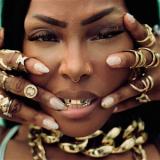
Creole Culture is the triumphant return of Dawn Richard’s King Creole era. Steeped in history but with its flag planted firmly in the future, Creole Culture pulls elements from Richard’s heritage as a Black and Native American woman who has spent a lifetime making and engaging with music. Following New Breed (2019) and Second Line (2021), Creole Culture is akin to a panel of a triptych: a fully-realized sonic and narrative universe in which Richard, as King Creole, rebuilds her hometown of New Orleans in her image. She not only honors her city for what it was or what it gave her, but stakes a claim for it as a cradle of global culture now and for all time.
Creole Culture follows two acclaimed avant-garde R&B albums with composer Spencer Zahn — the later of which, 2024’s Quiet in a World Full of Noise, found Richard exorcising the specters of grief and trauma in the wake of her father Frank Richard’s health struggles and the killing of her cousin Cisco. It is a softer take on the brass-soaked swagger of Richard’s previous King Creole efforts, an evolution brought about when she realized she had left a crucial viewpoint out of her exploration of New Orleans: her own. “New Breed was the story of New Orleans through my father’s eyes,” Richard explains. “I used his samples, his music, his cultures, his work with Chocolate Milk, his side of the family. Second Line was my mom — her interludes riddled the album with her depiction of what is meant to be a Creole woman in New Orleans. The masculine and feminine sides of King Creole had expressed themselves through them, but the story felt unfinished, like my version of the story was untold.”
That story is, for lack of a better word, complex: at turns triumphant and tragic, sexy and mournful, braggadocious and contemplative. Creole Culture presents Richard’s New Orleans as a utopian soundscape — an intoxicating blend of R&B, soul, hip-hop, pop, and jazz — that’s survived and thrived despite the dystopian circumstances visited upon it. Richard presents the melange of influence and artifact on Creole Culture with the care of a botanist nurturing new hybrids in a rose garden.
What emerges from that care is at once delightful and unexpected, enlisting a crew of guest stars including Big Freedia, Anjelika “Jelly” Joseph, Tarriona “Tank” Ball, and Durand Bernarr for features that play against type. Tank’s turn at spoken word verse on “l v r” serves to add dimension to King Creole’s New Orleans, as does Joseph’s undeniable voice on “chuuuurch.” “I’m not normally a features girl,” says Richard, ”but King Creole can’t build a world from scratch without help. What’s beautiful about the features here — which is also true of my band and producers — is they come from people who understand the materials of the world they’re from, they’re people I love, and they’re people who are just extraordinary at what they do. They’re part of the atmosphere of this place. You need them for the record to breathe.”
In the end, that’s what King Creole creates: a space where Dawn Richard can breathe, can be at peace with herself, and let loose with others. From finding love in opening single “enough” to relishing in the Afrocaribbean futurism of “fiesta,” Creole Culture is a tremendous, freeing breath of fresh air. It captures the resolve of a woman and a place who’ve survived the unimaginable and sees the future not as something to be endured, but as something to be created. Dawn Richard has been making that future one album at a time over the course of her career. Creole Culture is her most stunning one yet.
erscheint voraussichtlich am 09.10.2026
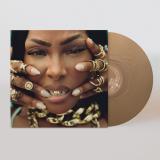
Creole Culture is the triumphant return of Dawn Richard’s King Creole era. Steeped in history but with its flag planted firmly in the future, Creole Culture pulls elements from Richard’s heritage as a Black and Native American woman who has spent a lifetime making and engaging with music. Following New Breed (2019) and Second Line (2021), Creole Culture is akin to a panel of a triptych: a fully-realized sonic and narrative universe in which Richard, as King Creole, rebuilds her hometown of New Orleans in her image. She not only honors her city for what it was or what it gave her, but stakes a claim for it as a cradle of global culture now and for all time.
Creole Culture follows two acclaimed avant-garde R&B albums with composer Spencer Zahn — the later of which, 2024’s Quiet in a World Full of Noise, found Richard exorcising the specters of grief and trauma in the wake of her father Frank Richard’s health struggles and the killing of her cousin Cisco. It is a softer take on the brass-soaked swagger of Richard’s previous King Creole efforts, an evolution brought about when she realized she had left a crucial viewpoint out of her exploration of New Orleans: her own. “New Breed was the story of New Orleans through my father’s eyes,” Richard explains. “I used his samples, his music, his cultures, his work with Chocolate Milk, his side of the family. Second Line was my mom — her interludes riddled the album with her depiction of what is meant to be a Creole woman in New Orleans. The masculine and feminine sides of King Creole had expressed themselves through them, but the story felt unfinished, like my version of the story was untold.”
That story is, for lack of a better word, complex: at turns triumphant and tragic, sexy and mournful, braggadocious and contemplative. Creole Culture presents Richard’s New Orleans as a utopian soundscape — an intoxicating blend of R&B, soul, hip-hop, pop, and jazz — that’s survived and thrived despite the dystopian circumstances visited upon it. Richard presents the melange of influence and artifact on Creole Culture with the care of a botanist nurturing new hybrids in a rose garden.
What emerges from that care is at once delightful and unexpected, enlisting a crew of guest stars including Big Freedia, Anjelika “Jelly” Joseph, Tarriona “Tank” Ball, and Durand Bernarr for features that play against type. Tank’s turn at spoken word verse on “l v r” serves to add dimension to King Creole’s New Orleans, as does Joseph’s undeniable voice on “chuuuurch.” “I’m not normally a features girl,” says Richard, ”but King Creole can’t build a world from scratch without help. What’s beautiful about the features here — which is also true of my band and producers — is they come from people who understand the materials of the world they’re from, they’re people I love, and they’re people who are just extraordinary at what they do. They’re part of the atmosphere of this place. You need them for the record to breathe.”
In the end, that’s what King Creole creates: a space where Dawn Richard can breathe, can be at peace with herself, and let loose with others. From finding love in opening single “enough” to relishing in the Afrocaribbean futurism of “fiesta,” Creole Culture is a tremendous, freeing breath of fresh air. It captures the resolve of a woman and a place who’ve survived the unimaginable and sees the future not as something to be endured, but as something to be created. Dawn Richard has been making that future one album at a time over the course of her career. Creole Culture is her most stunning one yet.
erscheint voraussichtlich am 09.10.2026

Darren Hayman New Starts are a spikey, fresh sounding band recalling the poppier ends of new wave and angular guitar rock. Their influences include The Cars, Breeders, Bay City Rollers, The Velvet Underground and ZZ Top. Lead singer Darren Hayman has his own long career running from the late 90s with John Peel faves Hefner to his more recent thematic and historical albums dealing with the English Civil War, William Morris and forgotten rural idylls. “I wanted a band again,” says Hayman, “and not a band that just backed me up and played my old songs. When we form our first bands in our teens we just find some friends and work through the musical differences. I usually look for players who play in a way I’m used to. This time I looked for variance and was led by people’s personality.” Guitarist Joely Smith of South London’s noise-pop adults and recently DIY-punks Fresh was recommended by a mutual friend who said, ‘She makes everything better’. Hayman and Smith shared a coffee and agreed on the correct number of guitar pedals and decided to proceed without an audition. “There is a tendency for me to make my chords too pretty. Joely cuts against that and plays in the opposite direction.” Hayman is a fan of rules and constraints and employed a new, oblique strategy on this record. “Even though I wrote all the songs, I wanted the songs to belong to everyone during arrangement. I decided that I would say ‘yes’ to every suggestion from the band, regardless of my instinct.” This made the songs warp and bend into new shapes and ensured that the record was the product of four individuals. Bassist Giles Barrett and drummer Will Connor come from funky afro beat influenced band Tigercats. “Pretty much the only rhythm I use, left to my own devices, is the ‘road runner’ rhythm. Will takes to care to find where the drum beat can be and we always end up somewhere I didn’t expect.” More Break Up Songs is a collection of 12 Break Up songs because Darren broke up with someone. Again. “I suck’, he says, “But it’s never anyone’s fault. It makes me very sad but I do have to work through these things in song and there’s always something to learn. I try to make songs about breakups that could be understood by both parties. I’m not interested in nasty songs.” Opening song ‘Little Stone in my Heart’ blisters along with Joely’s wildest guitars. The protagonist will do anything to make things right, but nothing ever is. ‘Under the Striplights’ has driving, choppy, incessant riffs, and is about the need to be anywhere but somewhere other than here. We could be under the moon or under the strip lights as long as we have each other. Another barely kept rule that Darren instigated on this album was that each song would be a tonal equivalent to one from The Velvet Underground’s third album. To that end ‘Don’t Need Persuading’ is this record’s ‘Pale Blue Eyes’ with the narrator being unable to break free of a vortex, knowing they will stay the night against all better judgment. ‘I’ve had a long standing distrust of the guitar,’ says Darren, ‘despite it being my primary instrument for twenty years. I thought it was time I made a record with two guitars and drums and bass. I wanted it to be bright, immediate and young sounding, despite the fact I’m old. We recorded it in four days and I think this might be the record a lot of my audience has wanted me to make for a long time.’ “bold and unique" The Sunday Times. // “Hayman has hit a creative purple patch… a treat” Mojo // “uniquely intimate and very satisfying”
erscheint voraussichtlich am 22.08.2024

With their 2013 debut single "Vintage Voudou," Conjunto Papa Upa cemented themselves as the torchbearers of a rare breed of Afro-Caribbean psychedelic soul, a clear delineation from the wonderful world of Venezuelan poly rhythms. That original song, named after the short lived but heavily influential Amsterdam brick and mortar record shop that band leader Alex Figueira founded, was a perfect clue into the deep exploration that Papa Upa would begin to take on their musical journey.
Like the store itself, known for it's solid connection to the musical footprints put down in relatively undiscovered places like Suriname, Curacao, Cabo Verde, Portugal and of course Figueira's native Venezuela, Papa Upa has captured a sound that is entirely unique, a new concoction of influences that at once sound strange, yet totally familiar (...) Perhaps because Venezuela shared such a rich & diverse mix of sounds from the Atlantic, Caribbean & US, a kindred spirit to their neighboring country, Colombia, an equal in terms of their industry output from the 60's & 70's, yet not nearly as publicized and compiled in recent years. Like many places in the greater Afro-Caribbean nexus, they were musically ahead of their time.
This futuristic mélange of sounds is reflective of Papa Upa itself, made up of musicians from Venezuela, Uruguay, Cuba & The Netherlands, all living, practicing & recording at Figueira's
Amsterdam studio, Barracão Sound. With such a wide range of tropical influences, in a cosmopolitan and diverse city like Amsterdam, it's no wonder that Papa Upa's first extended project would find kinship in a collaboration with New York's Names You Can Trust.
Bestelle jetzt und wir bestellen den Artikel für dich beim Lieferanten.

With their 2013 debut single "Vintage Voudou," Conjunto Papa Upa cemented themselves as the torchbearers of a rare breed of Afro-Caribbean psychedelic soul, a clear delineation from the wonderful world of Venezuelan poly rhythms. That original song, named after the short lived but heavily influential Amsterdam brick and mortar record shop that band leader Alex Figueira founded, was a perfect clue into the deep exploration that Papa Upa would begin to take on their musical journey. Like the store itself, known for its solid connection to the musical footprints put down in relatively undiscovered places like Suriname, Curacao, Cabo Verde, Portugal and of course Figueira's native Venezuela, Papa Upa has captured a sound that is entirely unique, a new concoction of influences that at once sound strange, yet totally familiar. Perhaps because Venezuela shared such a rich & diverse mix of sounds from the Atlantic, Caribbean & US, a kindred spirit to their neighboring country, Colombia, an equal in terms of their industry output from the 60's & 70's, yet not nearly as publicized and compiled in recent years. Like many places in the greater Afro-Caribbean nexus, they were musically ahead of their time.
This futuristic mélange of sounds is reflective of Papa Upa itself, made up of musicians from Venezuela, Uruguay, Cuba & The Netherlands, all living, practicing & recording at Figueira's Amsterdam studio, Barracão Sound. With such a wide range of tropical influences, in a cosmopolitan and diverse city like Amsterdam, it's no wonder that Papa Upa's first extended project would find kinship in a collaboration with New York's Names You Can Trust.
Their lead single for the label, a preview of an upcoming full-length project in 2020, features "El Secreto Del Metalero" & the 45-only bonus B-side, "Chicharrón Pelúo." Metalero, or "The Metalhead's Secret" is a fitting anecdote for Papa Upa, with Figueira's synthesized vocals leading the way. It's an allegorical exorcism of a debauched headbanger on a discreet dance floor of a tropical rave. The shedding of a gruff & gothic exterior for the buckle-to-buckle bliss of the changa. Similarly in the music itself, under the cloak of vintage synths and a woofer exploding bassline, lies a frenetic fusion of afro-latin percussion that is highlighted by the intense rhythms of Angola's giantguacharaca (or scraper), thedikanza. At its heart is a sugary sweetness that is capable of converting the roughest of rockers into a tropicalista on the dance floor.
Bestelle jetzt und wir bestellen den Artikel für dich beim Lieferanten.
