Suche:african fiesta

Styles
Alle
  • 1
African Fiesta - Roger Izeidi Presents Vita Matata with African Fiesta LP 2x12"
 
24

'The creation of the band African Fiesta, founded in 1963 by three well-known musicians, Nicolas Kasanda, Tabu Ley Rochereau and Roger Izeidi, and the contributions of the VITA label, established by Roger Izeidi, occupy an exciting chapter in the history of Congolese popular music. During the mid-1960s, African Fiesta consistently reached the top of the hit parade. The band, which back in the day positioned itself as a competitor to a current called ‘Fiesta Cubana’, breathed new life into Congolese Rumba, continuing the tradition of the African Jazz school started by Joseph Kabasele.
'The VITA label, with African Fiesta as their sole provider, besides four songs of Eduardo De Veracruz Vinagre et Son Orchestre, ran between May 1963 and early 1966. It created a spectacular legacy and back catalog full of tasteful sentiments and sensual melodies, deeply rooted in the Afro-Latin sound.
'This new compilation offers a few of the classic African Fiesta songs and complements them with an eclectic and original selection, divided into four thematic sides: Showcase, Rumba Lingala, Cha Cha Cha & Bolero. This double LP album comes with a 16-page booklet featuring the history of VITA and African Fiesta, song commentary by Congolese journalist Herman Bangi Bayo, and a written catalog of the VITA label. The heirs of Roger Izeidi kindly gave permission in Kinshasa to release this album of African Fiesta on Planet Ilunga.'

nicht am Lager

Bestelle jetzt und wir bestellen den Artikel für dich beim Lieferanten.


Last In: vor 3 Monaten
Docteur Nico & African Fiesta Sukisa - African Fiesta Sukisa 1966-1974
  • Mobali Nakobala (Nico – Ngoma J 5127, © Sukisa) Rumba Lingala
  • Nalingi Yo Na Motema (Nico, Chantal – Ngoma J 5130 © Sukisa) Kiri-Kiri
  • Mokili Makambo (Nico – Sukisa 93) Kiri-Kiri
  • Ata Osali (Chantal – Ngoma Dnj 5214, © Sukisa) Rumba Lingala
  • 1: Er Boeing (Kwamy – Air Congo) Merengue
  • Hommage A Lumumba Patrice (Sukisa 44) Mabanga
  • Bougie Ya Motema (Nico – Sukisa 47) Rumba Lingala
  • Okosambuisa Ngai (Mizele – Sukisa 66) Rumba Lingala
  • Sule (Nico – Sukisa 50) Rumba Lingala
  • Okosuka Wapi ? (Josky – Sukisa 110) Danse Kono
  • Kamungaziko (Lessa Lassan – Sukisa 114) Danse Kono
  • Mokili Matata (Nico – Tcheza 10.001; © Sukisa) Rumba-Kono Lingala
  • Baoulé (Lassan – Sukisa 99) Kiri-Kiri
  • Beauté (Nico – Sukisa 101) Rumba Lingala
  • Mansanga (Nico – Sukisa 131) Rumba Lingala
  • Souzi (Sangana – Sukisa 117) Rumba Lingala
  • Naboyi Koswana (Sangana – Sukisa 120) Rumba Cha Cha
  • July (Julie – Sukisa 120) Madre Rumba
  • Runeme Mama (Nico – Sukisa 47) Cha Cha Cha
  • A Morow (Arr. Nico – Sukisa 66) Cha Cha Cha
  • Apôtre Del Si Boney (Apôtre – Sukisa 73) Charanga
  • A La Savana (Arr. Nico – Sukisa 62) Pachanga
  • Alto Songo (Arr. Nico – Ngoma J5126, © Sukisa) Rumba Espagnol
  • Para Bailar (Nico – Sukisa 50) Pachanga
  • Meta Fua Mudia (Kaba – Sukisa 118) Rumba Lingala
  • Exhibition Show (Nico – Sukisa 135) Instrumental
  • Exhibition Dechaud (Dechaud – Sukisa 71) Instrumental
  • Bolala - Ayando (Nico – Sukisa 132) Extrait Show Kasanda
  • Excitation - Makwandungu - Ngombele (Nico – Sukisa 132) Extrait Show Kasanda
  • Kamulangu

'In collaboration with the children of Nico Kasanda, better known as Docteur Nico, Planet Ilunga proudly presents an anthology dedicated to African Fiesta Sukisa, available as a 3LP set and a digital release with bonus songs. This release is the result of many years of preparations and was realized in close partnership with Liliane Kasanda, Nico’s eldest daughter. Marking forty years since his passing, we felt that the year 2025 was the right time to honor Docteur Nico’s legacy with this original collection.
'Almost all of the African Fiesta Sukisa songs were released on Nico’s Sukisa label which translates in Lingala for “the final accomplishment”. The music on Sukisa, crafted by Nico and legendary vocalists such as Chantal, Sangana, Apôtre, Mizele, Lessa Lassan and Josky, embodies the essence of that powerful phrase with genius, class and depth. The label ran between 1966 and 1975 and released approximately 280 songs. Ngoma also issued the group between 1967 and 1971 and, in addition, reissued material from the Sukisa label. Many of these songs have become part of the collective memory of Congolese society and are still heard, discussed, and analyzed daily across digital platforms worldwide, as well as on numerous Congolese radio and TV stations.
'The album we put together features some of Nico’s signature songs alongside never before reissued tracks from the Sukisa catalog. It furthermore contains a large booklet with song commentary, testimonial interviews from well-known musicians, journalists, fans and Nico’s entourage, besides never before published photography about his personal and musical life.
'Alastair Johnston, author of the book ‘A Discography of Docteur Nico’ and longstanding Planet Ilunga collaborator, designed a stylish booklet and cover using all our collected material. Audifax Bemba, longtime admirer, compiler and connoisseur of Nico’s music, and the author of most of the song commentary in our accompanying booklet, offers his portrait of Docteur Nico:
“After displaying technical virtuosity with African Jazz, expert and accomplished guitar with African Fiesta, which musicologist Sylvain Bemba described as a dream guitar, Nico Kasanda was consecrated ‘dieu de la guitare’ by the public in the late sixties. With his band African Fiesta Sukisa, Docteur Nico displays his wide palette of unusual sounds. While exploring the Hawaiian guitar with its clear, airy, plangent, psychedelic effluvia, he continues to replicate the piano comping technique, and adds two missing strings to his bow: a simulation of the sanza (likembé or thumb piano), whose sounds he reproduces right down to the noisemakers of the tiny tin rings, on the one hand, and the sounds of the Luba balafon on the other. The right note, in the right place, at the right time, is the triptych on which Nico Kasanda’s playing is based, a note dressed in the perfect sound. A guitar of pure emotion. With African Fiesta Sukisa, his playing takes a ‘Chopin-esque’ turn, sending out more notes in a sublime adagio. The true artist is the one who simplifies everything. Docteur Nico is a genius of our time, whose style makes him the supreme exponent of the most important guitar school in Congolese music. He is recognized by his peers as the greatest African solo guitarist of all time. Sculpting sound in a tireless quest for beauty, Nico Kasanda has sublimated the guitar throughout his career.”


[xd] Kamulangu [Outro] (Dr. Kasanda – Sukisa 135) Folklore Baluba

vorbestellen05.12.2025

erscheint voraussichtlich am 05.12.2025


Last In: vor 2026 Jahren
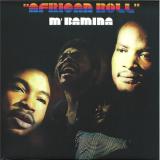
M’BAMINA - AFRICAN ROLL

Gatefold Sleeve

M’Bamina – African Roll (1975)
The story of an album born between Africa, Italy, and the nightclub culture of the 1970s
In the heart of 1970s Italy — a country undergoing profound social change and a music scene just beginning to open itself to distant sounds and cultures — an extraordinary, almost improbable story took shape. It is the story of a group of young African musicians who found their way to Europe, of a Turin nightclub that became a crossroads for communities and experimenters, and of an album which, released in small numbers and largely unnoticed at the time, is now considered a rare jewel of Afro-fusion.
The band called themselves M’Bamina — an ensemble of musicians from Congo, Cameroon, and Benin, who arrived in Italy in the early Seventies. Settling between northern Italy and the Pavia area, they began performing in small clubs and community events, bringing with them a vibrant rhythmic heritage: African polyrhythms, call-and-response vocals, funk-infused bass lines, and Caribbean or Afro-Latin colours absorbed along their musical journeys. Their raw, contagious energy on stage quickly drew attention.
Meanwhile, in Turin, another story was unfolding. There was a venue becoming almost legendary: Voom Voom, one of the city’s liveliest nightclubs, run by Ivo Lunardi. The club attracted an eclectic crowd — students, artists, foreigners, night owls — and Lunardi quickly understood that the dancefloor wasn’t just a place for music, but a melting pot for a new kind of cultural energy. Out of this vibrant atmosphere came his idea: to turn the club’s name into a small independent record label, Voom Voom Music, capable of capturing the spirit of those years and giving voice to unconventional projects.

When Lunardi heard M’Bamina, he immediately sensed that this was the sound he had been searching for: fresh, different from anything circulating in Italy at the time, and capable of blending African tradition with funk and European sensibility. He brought them into the studio.
Production was handled by Lunardi along with Christian Carbaza Michel, while the engineering was entrusted to Danilo Pennone, a young sound technician with a sharp, intuitive ear.
The recording sessions — held in Turin in 1975 — produced a remarkably warm and direct sound. The music feels almost live: grooves rooted in African tradition, but open to funk-rock structures and modern arrangements. It is a natural fusion, never forced. Tracks move between tribal rhythms, funk basslines, light electric guitars, congas and Afro-Latin percussion, with call-and-response vocals and melodies that echo both Congolese tradition and the lineage of Latin jazz. Not by chance, one of the album’s most striking tracks, Watchiwara, reinterprets a Latin standard through M’Bamina’s own rhythmic language.

The album was titled African Roll — a name that was already a statement of intention. It is African music that “rolls,” that moves, adapts, transforms within a new geographic and cultural setting. It is not strictly Afrobeat, nor Congolese rumba, nor Western funk: it is a spontaneous, hybrid blend, shaped more by lived experience than by any calculated aesthetic program.
When African Roll was released, the world around it barely noticed. Distribution was limited, and 1970s Italy had yet to develop a cultural framework for receiving such music. The national music press rarely paid attention to African or “world” productions. The album slipped into silence — though the band’s own story did not.

M’Bamina continued performing across Europe and Africa, even sharing a stage in Cameroon with none other than Manu Dibango. By the late Seventies, they moved to Paris, signed with Fiesta/Decca, and recorded a second LP, Experimental (1978). Meanwhile, the peculiar record they had made in Turin began to resurface quietly among vinyl collectors, Afro-funk enthusiasts, and DJs hunting for forgotten grooves.
That is when the album’s fate began to shift.

Over the decades, African Roll emerged as an almost unique document: a snapshot of an intercultural Italy before the word “intercultural” even existed, a fragment of migrant history, a spontaneous experiment in musical fusion born far from major industry circuits but rich in authenticity. Original copies began commanding high prices on the collector’s market, and the album became recognized as one of the hidden classics of European Afro-fusion from the 1970s.
Today, more than fifty years later, this reissue finally restores visibility and dignity to a project that deserves to be heard, studied, and celebrated. It is not simply an album: it is the testimony of a rare cultural encounter, born in an Italy unaware of how fertile such exchanges would one day become.

It is the story of a visionary producer, an extraordinary band, and a fleeting moment in which music, migration, and nightlife came together to create something genuinely new.
African Roll is — now more than ever — the sound of a bridge: between continents, between eras, between cultures. A record that, after rolling far and wide, has finally come home.
Auf Lager

Bei uns am Lager und sofort versandfertig

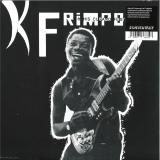
K. FRIMPONG & HIS CUBANO FIESTAS - THE BLACK ALBUM LP

Two Seminal albums from cult Ghanaian musician Alhaji K. Frimpong and his group the Cubano Fiestas, recorded in 1976 and 1977 respectively and considered to be some of the best highlife albums ever recorded, at the pinnacle of West African musical tradition and innovation.

Both originally self titled, they have become known by the colour of the covers - Blue and Black respectively. The Blue Album brings new arrangements to traditional Ghanaian melodies and features the masterpiece Kyenkyen Bi Adi M’awu (come back my love) - universally known in Ghana, covered and sampled by artists such as Chronnix, Gnarls Barkley and many more. The Black Album expands the electronic elements and features the equally visionary Hwehwe Mu Na Yi Wo Mpena, although the real gem is hiding on the B side: the extended groove of “Adam Nana”. Sinuously evolving guitar lines, clavinet vamps, harmonised vocal snatches and otherworldly percussion expand and contract over a full quarter of an hour - a Ghanaian repost to the Afro Jazz experiments going on at the same time on the other side of the Atlantic. Although popular in Ghana at the time of the release, the albums were never distributed internationally and original copies of the album are extremely rare.

The albums got a limited reissue in 2011 and have been unavailable since - even reissue copies sell for high prices on the second hand market

Auf Lager

Bei uns am Lager und sofort versandfertig

Jo Tongo - Sa Discossa LP

Jo Tongo

Sa Discossa LP

12inchEDGE-031
The Outer Edge
30.06.2025

A pioneering force in African music, Jo Tongo has always been on top of the game. Since the late 60s he has been recording music under his early Jojo L'Explosif moniker. His debut album "Jo Tongo" was released 1976 on Fiesta/Decca and features classic tracks like Jangolo and Piani. Now, after decades of underground influence and global recognition, his second album Sa Discossa (1980) is re-released for the first time. Being an electrifying fusion of African rhythms, disco, makossa, reggae and funk it is reflecting his lifelong journey of musical exploration and cultural storytelling and claims its place as an essential recording in the Afro-disco movement.
Jo Tongo's music is inseparable from his life's story-a journey that spans continents, struggles, and victories. From his early years as a leading African musician before the global rise of Afrobeat, to his deep roots in classical training, and his time performing in France and Germany, his sound is shaped by a rich blend of influences. Having played in bands across Europe, from American military bases in Germany to the jazz and soul circuits of Paris, he absorbed the pulse of multiple musical worlds, creating a sound uniquely his own.
"My music is my life. I never saw it as a way to become a star-I am a simple man," Tongo explains. "I came into music to say something, to tell about life, to share my experiences with the world." His perspective on fame and artistry is deeply rooted in his Cameroonian background. "I wasn't interested in business. I wanted to build something with music, to create a sound that was mine."
But Jo Tongo's music has always carried a deeper message. His work reflects his strong political stance against colonialism, social injustice, and oppression. "I cannot stay silent while my people suffer," he says. "Music is a way to resist, to stand strong, and to remind people of their dignity and their power." Throughout his career, Tongo has used his platform to advocate for African identity and independence. His songs, layered with messages of social consciousness, have continued to resonate with younger generations who recognize the relevance of his words even today.
Sa Discossa is more than just a disco record. It embodies Jo Tongo's philosophy of resistance, identity, and celebration. The title itself is a blend of "disco" and "makossa," reflecting the seamless fusion of African groove and the dancefloor energy that defined the era. Tracks like Bunya, sung in his native language, carry messages of love, gratitude, and resilience-sentiments that remain as relevant today as they were nearly 50 years ago. As Tongo describes it, "Every day, give thanks and praise to your Lord. Every day, show me your love. Every day, let me show you my tender love."
Tongo's musical journey also took him through the world of reggae, inspired by his exposure to American and Caribbean artists. "At first, I didn't like reggae-it was too slow for me," he admits. "But then I heard Bob Marley, and I realized the power in its simplicity. The rhythm, the
message-it was all connected to something bigger." He later found himself embracing reggae as an essential part of his musical DNA. "I realized that my music and reggae shared the same roots. We are all connected, all telling the same story in different ways."
Having spent much of his career performing across Europe, Jo Tongo reflects on his connection with international audiences. "I've played everywhere-from Africa to Germany, from Paris to other cities in France and what I've learned is that music speaks a universal language. You don't need to know the words to feel the message."
Despite taking a step back from the stage in recent years, he remains open to new possibilities. "Music is like a fire-it never truly dies. I have a lot to say, and music is the best way to say it."
For Jo Tongo, music is more than entertainment-it's a language of truth, a testament to history, and a bridge between cultures. The rhythm of Sa Discossa lives on, stronger than ever. With Sa Discossa returning under the African Edge series on The Outer Edge label, Jo Tongo's legacy continues to resonate, proving that real music never fades.

Auf Lager

Bei uns am Lager und sofort versandfertig

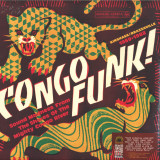
VARIOUS - CONGO FUNK! SOUND MADNESS FROM THE SHORES OF THE MIGHTY CONGO RIVER (KINSHASA/BRAZZAVILLE 1969-1982)

The making of Congo Funk!, our long-awaited journey to the musical heart of the African continent, took the Analog Africa Team on two journeys to Kinshasa and one to Brazzaville. Selected meticulously from around 2000 songs and boiled down to 14, this compilation aims to showcase the many facets of the funky, hypnotic and schizophrenic tunes emanating from the two Congolese capitals nestled on the banks of the Congo River.

On its south shore, the city of Kinshasa – capital of Democratic Republic of the Congo, the country formerly known as Zaïre – is often seen as Africa’s musical Mecca, the city that spawned such immortal bands as African Jazz, O.K. Jazz and African Fiesta, and the place to which aspiring musicians from throughout the continent would go to make a name for themselves.

But the city of Brazzaville on the north shore of the river – capital of the Congo Republic – played an equally important role in spreading Congolese sounds continentally. In addition to producing legendary bands such as Les Bantous de la Capital, it was the powerful transmitters of Radio Brazzaville that allowed the unmistakable groove of Congolese Rumba to be heard as far away as Nairobi, Yaoundé, Luanda and Lusaka thus turning the electric guitar into the continent’s most important instrument!

Although the musical landscape of these cities had been defined by a core group of bands in the late 1950s, the modernisation of Congolese music has been steadily evolving until the events surrounding the Muhammad Ali vs George Foreman boxing match marked a turning point. The promoter of that event known as “Rumble In The Jungle” was none other than the notorious Don King who needed 10 millions dollars to get Ali and Foreman into a boxing ring. The only candidate willing to put this kind of cash on the table was Mobutu Sese Seko, President of the Democratic Republic of the Congo.

Mobutu - the megalomaniac dictator who got to power with the support of the United States and Belgium in exchange for unlimited and affordable access to the riches of the country - had a soft spot for music and it doesn’t come as a surprise that he agreed to a three-day live music festival being organised prior to the “Rumble”. Zaïre 74 - as the festival was dubbed - was meant to hype the boxing match and many stars were invited.

Although a myriads of artists flocked in for the occasion, it was the performance of James Brown on Zairian soil that caused havoc among the younger generation, inspiring hundreds of would-be musicians to take up their electric guitars and reverbs cranked to the max in search of a new sound in which hyperactive Rumba was blended with elements of psych and funk. While the results were very different from the popular music of the three Musketeers - as Tabu Ley, Franco and Verckys were known - they weren’t a complete break with tradition.

These new sounds emerged at a time when the Congolese record industry – previously dominated by European major labels – was experiencing a period of decline due to rising production costs and needed a radical change. The void was filled by dozens of entrepreneurs willing to take chances on smaller scale releases. It was the beginning of a golden age for Congolese independent record labels, and the best of them – Cover N°1, Mondenge, Editions Moninga, Super Contact – preserved the work of some of the region’s finest artists, while launching a generation of younger musicians into the spotlight.

The movement was greatly helped by legendary radio shows but it was the dynamic productions of Télé-Zaïre that set the dynamite on fire. Legend has it that TV shows were so huge that president Mobutu himself ordered RTV du Zaïre to put on daily concerts since it halted criminal activities for the duration of the evening.

Congo Funk! is the story of these sounds and labels, but most of all it is the story of two cities, separated by water but united by an indestructible groove. The fourteen songs on this double LP showcase the many facets of the Congolese capitals, and highlight the bands and artists, famous and obscure, who pushed Rumba to new heights and ultimately influenced the musical landscape of the entire continent and beyond.

Auf Lager

Bei uns am Lager und sofort versandfertig

K. FRIMPONG & HIS CUBANO FIESTAS - THE BLUE ALBUM LP
 
4
auch erhältlich

Black Album


Two Seminal albums from cult Ghanaian musician Alhaji K. Frimpong and his group the Cubano Fiestas, recorded in 1976 and 1977 respectively and considered to be some of the best highlife albums ever recorded, at the pinnacle of West African musical tradition and innovation. Both originally self titled, they have become known by the colour of the covers - Blue and Black respectively. The Blue Album brings new arrangements to traditional Ghanaian melodies and features the masterpiece Kyenkyen Bi Adi M"awu (come back my love) - universally known in Ghana, covered and sampled by artists such as Chronnix, Gnarls Barkley and many more. The Black Album expands the electronic elements and features the equally visionary Hwehwe Mu Na Yi Wo Mpena, although the real gem is hiding on the B side: the extended groove of "Adam Nana". Sinuously evolving guitar lines, clavinet vamps, harmonised vocal snatches and otherworldly percussion expand and contract over a full quarter of an hour - a Ghanaian repost to the Afro Jazz experiments going on at the same time on the other side of the Atlantic. Although popular in Ghana at the time of the release, the albums were never distributed internationally and original copies of the album are extremely rare. The albums got a limited reissue in 2011 and have been unavailable since - even reissue copies sell for high prices on the second hand market.

vorbestellen26.09.2025

erscheint voraussichtlich am 26.09.2025


Last In: vor 2026 Jahren
De Frank Kakra - Finding De Frank LP 3x12"
  • 01: Call Me Frank
  • 02: The World Is One
  • 03: Psychedelic Man
  • 04: Think Of The Future
  • 05: Afe Ato Yen Bio
  • 06: Yare Ye Ya
  • 07: Sometimes We Love
  • 08: We Can Take Time
  • 09: Hippy Around
  • 10: Groovy In Groove
  • 11: Come On Baby
  • 12: Funky Train
  • 13: Ayee Menko
  • 14: Get On Tonite
  • 15: Dig This Way
  • 16: Dankasa
  • 17: Rain, Rain
  • 18: Worry
  • 19: Keep On Loving
  • 20: Sons Of Jehovah
  • 21: Baby Don&Apos;T Play Me Wayo
  • 22: Mefa Medo
  • 23: Rasudilahi
  • 24: Abusua

Not much is known about De Frank Kakra - let alone his birth name or where he is today. A few liner notes scattered across his records give a glimpse of his career as a backing vocalist and percussionist on the Ghanaian highlife scene of the 1970s, notably with Vis-A-Vis, K. Frimpong's band (Cubano Fiestas). He later formed his own bands, The Professionals and The Diggit Ways, alongside Sammy Copper, recording throughout West Africa. His recordings have now been unearthed, remastered and compiled in a triple LP anthology of his musical works. Although much remains unknown, RastaPastaRecords' goal is to ascertain several discoveries made about his life during the production of this record and to continue the research. "Call Me Frank" is a funky take on 1970s highlife set to a vintage Afro - rock fusion that evokes a time when West African dance floors vibrated with raw energy and relentless groove. "Psychedelic Man" is a full dive into the De Frank Kakra sound. With its hypnotic guitar riffs, cosmic organs and head- nodding drum rhythms, this infectious anthem will plunge you into a state of nostalgic psychedelia.

vorbestellen30.05.2025

erscheint voraussichtlich am 30.05.2025


Last In: vor 2026 Jahren
VARIOUS - CUMBIA CUMBIA CUMBIA!!! VOL.2 LP 2x12"
 
28
auch erhältlich

Vol.1

Vol.3


A selection of 28 Colombian cumbia bangers for the dance floor from the deep vaults of Codiscos and associated labels Costeño, Zeida and Famoso, all of them originally released between 1962 and 1983.

“Cumbia Cumbia Cumbia!!!” combines well-known classics and rarities that are difficult to find in their original formats. An invitation to enjoy and be amazed, above and beyond ethnographic and academic concerns.

The historical origins of cumbia in Colombia are nebulous and imprecise. The mythology surrounding it suggests an ancient past when Amerindian, African and European musical sounds were mixed together.

The main record companies in Colombia such as Discos Fuentes, Discos Tropical, Sonolux, Zeida-Codiscos, Silver, Ondina, Discos Atlantic, Vergara and Curro were created between Barranquilla, Medellín, Cartagena and Bogotá from 1936 to 1954. All of them, without exception, recorded Colombian tropical music that over the years was given different names such as porro, gaita, fandango, paseaito, merecumbé, mapalé, bullerengue or, of course, cumbia.

After digging deep into the overwhelming archive of Discos Fuentes in our previous volume, this second instalment in the series “Cumbia Cumbia Cumbia!!!” comprises 28 Colombian cumbia bangers for the dance floor from the deep vaults of Codiscos and associated labels Costeño, Zeida and Famoso, all of them originally released between 1962 and 1983. Legally established on July 1, 1950, Zeida (later Codiscos) was one of the companies that consolidated Medellín as the epicenter of the Colombian recording industry in the central decade of the last century.

“Cumbia Cumbia Cumbia!!!” combines well-known classics and rarities that are difficult to find in their original formats. An invitation to enjoy and be amazed, above and beyond ethnographic and academic concerns.

nicht am Lager

Bestelle jetzt und wir bestellen den Artikel für dich beim Lieferanten.


Last In: vor 18 Monaten
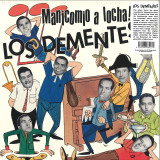
LOS DEMENTES - MANICOMIO A LOCHA LP

This album marks the debut recording for Venezuela's Velvet label by pianist Ray Pérez and his trombone-led salsa band Los Dementes. Heavy dance numbers and the distinctive vocals of Perucho Torcat make this historic 1967 rarity a sought-after collector's item. Now the LP has been lovingly restored, mastered from the original tapes, with its original artwork intact, preserving the legacy of Los Dementes for today's generation of salsa lovers everywhere. First time reissue. Salsa pianist, vocalist, composer and arranger Ray Pérez, acquired his nickname "Loco" by being a free, independent spirit, an innovator and iconoclast who was initially branded as "crazy" for the freshness and audacity of his sound. Amazingly, he is not that well known in the US, where he spent some time in the late 1960s and salsa was king during the 1970s. Yet he was quite popular in his home country from the beginning, especially amongst the working class of Caracas and Maracaibo, who adopted Cuban music played by New York Puerto Ricans as their own and called it "salsa" years before the term was employed by US labels like Fania as a marketing tool. Pérez is revered in Venezuela, as well as in Mexico and Colombia, and his storied career, which spans seven decades and thousands of concerts, has yielded more than 35 albums recorded by his various bands, including Los Dementes, Los Kenya, and Los Calvos, all of which are collector's items today. At the start of 1967 Pérez debuted Los Dementes, with vocalists Claudio Zerpa and Perucho Torcat backed by an ace band featuring only trombones in the brass section. Titled "¡Alerta mundo! Llegaron los 'The Crazy Men'" the record was released on the small Venezuelan label Prodansa. Soon after, Prodansa folded and Los Dementes were left without representation or much compensation for their efforts, being paid only in records. In the end of February of that year, Pérez returned to Caracas from a stint in Maracaibo in order to finish his first LP with the well-established and larger Velvet label, entitled "Manicomio a locha". In the first quarter of 1967, Velvet unleashed a trilogy of salsa records in order to compete with rival label Palacio and their recent success with Federico y su Combo Latino: "Porfi '67 Salsa & Boogaloo" by Porfi Jiménez y su Orquesta, "Guasancó" by Sexteto Juventud and lastly "Manicomio a locha". The LP begins appropriately with the boisterous title track, written by the band's conguero Carlos "Nené" Quintero, who would become a legend in coming years. Torcat describes a jam session in mental institution and introduces the band, with tasty solos by trombonist Rufo García followed by Ray on piano. Already you can hear something was different about Ray and his "Crazy Men"-a sound as wild and innovative as what was happening in New York with Eddie Palmieri, but with a more unhinged, raw feeling in line with Willie Colón and other younger Nuyorican bands. Next up is an intriguing track sung in a mix of Italian, English, Spanish and Papiamento by Pérez himself, performed in the complicated rhythm of the mozambique, an Afro-Cuban carnival beat developed in the early 1960s. This is followed by the heavy dancer 'Rico guaguancó', penned by Angelito Pérez, which changes from the guaguancó to the mozambique rhythm mid-way through, proving that Los Dementes were "different from the rest" as the lyrics say. 'Puerto Libre', sung by Torcat, is dedicated to the Venezuelan island of Margarita in the Oriente region, and the independent spirit of its working people. The rhythm changes from guaguancó to guajira and back again but remains danceable all the way through. The side closes out with a "3 in 1" medley inspired by the popular formula of the mosaicos of Billo's Caracas Boys, seamlessly knitting together several different tempos, rhythms, moods and compositions. Side two starts strong with the fierce yet satirical 'Corte e' patas', then 'Alma Cumanesa', a typical folk song refashioned as a guaguancó. This is followed by the funky 'Guajira con Boogaloo'. The tune echoes the sound of young Latin New York, pointing out the connection between Cuban and African American soul music. The pace picks up again with 'Fiesta de trombones', a hot descarga and then the album closes with another medley. Though this marks the end of a rather short album, it also signaled the emerging success of Los Dementes and their involvement with the salsa boom in Venezuela, quickly selling out of its initial run of 1000 records and making for a memorable debut on the Velvet label. Now this rare and sought-after LP has been lovingly restored, mastered from the original tapes, with its original artwork intact, preserving the legacy of Los Dementes for today's generation of salsa lovers everywhere.

nicht am Lager

Bestelle jetzt und wir bestellen den Artikel für dich beim Lieferanten.


Last In: vor 3 Jahren
Various - Reggae Africa (Roots & Culture 1972-1981)

On 18th April, 1980, after decades of anti colonial struggle, the Zimbabweian flag was finally raised at midnight at the Rufaro Stadium in Harare. Not long after, the words "Ladies and Gentlemen, Bob Marley and The Wailers!" rang out, and Zimbabwe's independent future began.

In the years that followed, Africa was to produce it's own reggae superstars, as the likes of Alpha Blondy, Majek Fashek and Lucky Dube swept across the continent and beyond, and there's no doubting Bob Marley's explosive impact on this particular narrative.

Marley's unswerving commitment to liberation and unity ranged from the sweeping spiritual sentiments of iconic hits such One Love and Redemption Song to the galvanising, focused tone of 1979's 'Zimbabwe', and his status as global superstar ensured that his (self funded) part in the countries' epochal celebrations meant that the history of reggae in Africa would always be viewed through the prism of his influence ( Wiki/African Reggae : "In 1980, world-famous Jamaican reggae musician Bob Marley performed in Harare, Zimbabwe, and that concert is often credited as marking the beginning of reggae in Africa")

But in fact, the recorded history of reggae produced in Africa stretches back over a decade before Marley's arrival on the continent, and showcases broad pan - diasporic interflows between the Carribean and Africa, with the UK and the US communities playing influential supporting roles, all helping shape the evolution and development of the genre in Africa from late 60's inception to Marley's arrival in 1980, and then well beyond.

Reggae Africa : Roots and Culture, 1972 - 1981 tries to capture a sense of that evolution, starting in 1972 as Mebussa's ultra rare 'Good Bye Friends' effortlessly captures triangular, transatlantic cultural interflows, with the short lived Nigerian group's bitter sweet chords echoing classic US soul, but laid over a gritty, skanking Jimmy Cliff - esque proto reggae rhythm.

Trying to work out the precise provenance of Black Reggae's 'Darling I'm So Proud of You' (1975) isn't easy, but involves Paris based / African focused label Fiesta, some proper OG co-branding exercise with Bols Brandy ( "Bols Brandy presents Black Reggae") - and deeply infectious, lilting Rocksteady.

By 1976, glorious Nigerian sister duo Lijadu Sisters are echoing the chunky roots of a Dennis Brown or U Roy on 'Bobby', and in 1977, bespoke Nigerian drummer Georges Happi is introing 'Hello Friends' with the soon to be universal signature reggae tom roll intro, before veering leftfield with snatches of spoken Afro - English vocal in between the hooky choruses.

Nigerian giant Chrissy Essien's 'I'll Be You Man' (1979) combines floaty Lovers vibes with catchy ska shuffle, and in the same year, Cameroonian afro-funk/disco heavyweight Pasteur Lappe' drifts seamlessly into skanking, Lovers infected reggae on 'Babbette D.O. ( Rastawoman )' (before a sprawling electric guitar solo reminds us how unselfconsiously eclectic so much African music of the era was.)

And finally bookending the compilation, in chronological terms, fellow Cameroonian Tala AM also swaps his funk and soul for the rootsy and infectious 'Hop Sy Trong' (1981), again highlighting the diverse and eclectic approach to this timeless Carribean musical genre taken by African musicians in the years before that Bob Marley year zero event in Zimbabwe.

nicht am Lager

Bestelle jetzt und wir bestellen den Artikel für dich beim Lieferanten.


Last In: vor 4 Jahren
Plu Con Pla - No Más Velorio Remixes

From Tumaco, in the deep pacific coast of Colombia, Plu con Pla carries forward essential styles such as Bunde and Currulao, which were created by the African diaspora in response to the realities of life in this coastal jungle territory. The musical language of the South Pacific region is traditionally interpreted with a marimba handmade from the wood of the Chontaduro palm tree and resonating tubes of Guadua (similar to bamboo), a large, two-sided bass drum called the bombo, two slender, high-pitched drums called cununos, and cylindrical shaker called a guasá, along with powerful call and response vocals. Plu con Pla brings a mastery of this language and repertoire together with an urgency of exploration and growth, incorporating hard-hitting urban styles such as Hip Hop and Reggae into their expression, and bringing Bass, Drum Set, Keys, and more into the mix. True to their roots, collective process and social justice consciousness is central to both their music and their actions, with lyrics that address hard themes such as racism and civil war, and a continuing commitment to teaching, leading workshops and accompanying the peace process in Colombia.

nicht am Lager

Bestelle jetzt und wir bestellen den Artikel für dich beim Lieferanten.


Last In: vor 4 Jahren
MANU DIBANGO - AFRICADELIC LP

The strange and majestic musical beast that is Africadelic was Dibango’s follow-up to Soul Makossa, but it was initially released on Louis Delacour’s library music label, Mondiaphone, before “Soul Makossa” became an international phenomenon. As a
Mondiaphone release, it was aimed at television and film producers seeking atmospheric background music, so the original titles are simply “Theme No 1,” “Theme No 2,” etc, with corresponding rhythmic notations such as “3/4 Africain,” “Afro Beat 12/8” and “Medium Soul Beat,” though once “Soul Makossa” hit the stratosphere, subsequent reissues bore actual song titles. In any case, the album is simply wonderful, a driving mix of Afro soul, funk and jazz, with an undercurrent of Latin percussion throughout, given further shades by rock guitar and soul organ, as heard on “African Battle” and the title track; opener “Soul Fiesta” builds
dramatic percussive tension before Dibango drops a killer vibraphone riff, while “African Carnival” makes the most of the full horn section, Dibango’s sax soloing giving room for complex polyrhythmic percussion breaks. “Oriental Sunset” has beautiful vibraphone from
Dibango too, as well as a thrilling flute melody, “Monkey Beat” and “Wa Wa” are funky soul struts and “Percussion Storm” has the band marching off into the African sunset as Dibango unleashes another killer vibraphone melody. Listening back to the album now, it is hard to believe that the whole shebang was written in a couple of days and committed to tape within the space of a week, but that is all more testimony to the greatness of Manu Dibango, one of African music’s true pioneers. Play loud and often for best effect!

nicht am Lager

Bestelle jetzt und wir bestellen den Artikel für dich beim Lieferanten.


Last In: vor 4 Jahren
Akofa Akoussah - Akofa Akoussah

Akofa Akoussah

Akofa Akoussah

12inchMRBLP174
Mr Bongo
29.01.2019

Rich, Deep, Percussive Soulful Folk Album From Master Togolese Singer, Akofa Akoussah.

The Album Moves Through Uptempo Afro-folk-funk On 'tango' To Deep Ballads Of 'ramer Sans Rame' And 'i Tcho Tchass' And Lighter Moments On 'g Blem Di' And 'mitso Aseye'. Akofas Exceptional Songs And Soaring Vocals Are Decorated With Percussion, Guitar Lines, Subtle Backing Vocals And Horns To Create A Unique, Rich Sonic. The Album Was Recorded For Release By French Label Sonafric In 1976. Produced By Gérard Akueson; Founder & Owner Of African Record Label, 'akue', Based In Paris.

Music Was Truly In The Blood Of Julie Akofa Akoussah. She Began Singing At The Age Of Three, Inspired And Led By Her Mother And Older Sister And Became Principal Soloist In Her School Choir, St. Peter & Paul Choir Of Our Immaculate Conception Parish Of Nyékonakpoé, At The Age Of 8. From There Her Career Blossomed, And Singing Often Took Precedence Over Her Studies. In Order To Master Her Art She Spent Time Studying And Working Closely With Local Groups Including Mélo Togo, Rocka Mambo, Rio Romamcero, Ok Fiesta, Eryco Jazz, Afro Cubano, Los Muchacho, Elégance Jazz And Togo Star Amongst Others. In Her Own Words: 'luck Opened The Door In January 1966 Where I Had The Honour Of Being Selected To Share The Stage With Bella Below - One Of The Best Voices Of

Africa - At The 1st 'negro Arts Festival' In Dakar. On My Return, I Was Approached By Ambroise Ouyi, The Highly Respected Singer & Poet, And We Wrote 'tu Ne M'écris Plus', My Very First Opus.'

The Popularity Of Her Work Led To An Increased Exposure For Togolese Music Outside Of The Country, In Neighbouring Ghana And Benin Most Notably. During Her Career She Collaborated And Performed With Greats Including Manou Djibango, Queen Pelagie, Abeti Massikini, Aycha Koné And Myriam Makeba. Akoussah Was Also Dedicated To, And Widely Recognised For, Her Work For Social Causes, Championing And Nurturing Young Musical Talent, And The Fight Against Aids. She Was President Of The National Union Of Artists Musicians Of Togo (unam) Before Sadly Passing Away In April 2007 After A Long Illness, At The Age Of 57.

nicht am Lager

Bestelle jetzt und wir bestellen den Artikel für dich beim Lieferanten.


Last In: vor 2 Jahren
Various - Afro-rock Volume One

Various

Afro-rock Volume One

2x12inchSTRUT59LP / 151771
STRUT
16.01.2018

'Afro Rock Vol. 1' is one of the most important compilations of heavy original '70s Afro funk and soul to be released in recent years. Originally surfacing on Duncan Brooker's indie Kona label in early 2001, the album single-handedly kick-started the thirst among jazz, funk and soul fans and 'diggers' to rediscover lost music from Africa made during the '60s and '70s from a time when many countries were gaining independence and celebrating a Pan-African identity within their music. The album was one of the first to reach a far different audience to the traditional 'world music' market and spawned many further projects and labels in its wake. A year later, the 'Nigeria 70' compilation surfaced on Strut and labels like Soundway and Analog Africa would continue to unearth amazing lost gems from the Motherland.The album is testament to the determined work of Brooker following several research trips, especially to East Africa - Kenya and Zaire. It brought to light East Africa's finest funk band, Air Fiesta Matata, led by the recently deceased Steele Beautttah, 'The Nigerian James Brown' Geraldo Pino from Port Harcourt in Nigeria, and the storming Afro jam 'Yuda' by Dackin Dackino, a previously unreleased gem from Zaire discovered on a discarded reel. The album has remained influential since its release with tracks appearing on other Afro compilations and on TV and the big screen - Jingo's 'Fever' featured in Kevin McDonald's 2006 hit film, 'Last King Of Scotland'.Out of print since 2015, the album is being reissued on Strut in its original form with the extra dynamite unreleased psychedelic cut by Kenya's Ishmael Jingo, 'Keep On Holding On' taken from the original master tape. The package features the original sleeve notes by Duncan Brooker along with new additional notes providing further background to the album and tracks.

nicht am Lager

Bestelle jetzt und wir bestellen den Artikel für dich beim Lieferanten.


Last In: vor 8 Jahren
Afro Rock - Volume 1

Afro Rock

Volume 1

2x12inchSTRUT059LP / 151771
STRUT
30.09.2017

'Afro Rock Vol. 1' is one of the most important compilations of heavy original '70s Afro funk and soul to be released in recent years. Originally surfacing on Duncan Brooker's indie Kona label in early 2001, the album single-handedly kick-started the thirst among jazz, funk and soul fans and 'diggers' to rediscover lost music from Africa made during the '60s and '70s from a time when many countries were gaining independence and celebrating a Pan-African identity within their music. The album was one of the frst to reach a far different audience to the traditional 'world music' market and spawned many further projects and labels in its wake. A year later, the 'Nigeria 70' compilation surfaced on Strut and labels like Soundway and Analog Africa would continue to unearth amazing lost gems from the Motherland. The album is testament to the determined work of Brooker following several research trips, especially to East Africa - Kenya and Zaire. It brought to light East Africa's fnest funk band, Air Fiesta Matata, led by the recently deceased Steele Beautttah, 'The Nigerian James Brown' Geraldo Pino from Port Harcourt in Nigeria, and the storming Afro jam 'Yuda' by Dackin Dackino, a previously unreleased gem from Zaire discovered on a discarded reel. The album has remained infuential since its release with tracks appearing on other Afro compilations and on TV and the big screen - Jingo's 'Fever' featured in Kevin McDonald's 2006 hit flm, 'Last King Of Scotland'.Out of print since 2015, the album is being reissued on Strut in its original form with the extra dynamite unreleased psychedelic cut by Kenya's Ishmael Jingo, 'Keep On Holding On' taken from the original master tape. The package features the original sleeve notes by Duncan Brooker along with new additional notes providing further background to the album and tracks.

nicht am Lager

Bestelle jetzt und wir bestellen den Artikel für dich beim Lieferanten.


Last In: vor 8 Jahren
  • 1
Artikel pro Seite:
N/ABPM
Vinyl