Cerca:african blues

Generi
Tutto
Marvin Parks - Marvin Parks

Marvin Parks

Marvin Parks

2x12inchSCLP476
Schema Records
27.11.2018

The arrival of Marvin Parks on today's musical scene is a perfect addition to the renaissance of the Afro-American Jazz Crooner panorama, deeply rooted in the Black Music tradition. Having his roots in Gospel and in the '50s and '60s jazz singers by the likes of Nat King Cole, Johnny Hartman and Joe Williams, Marvin Parks yet remains by all means an artist of today. In his debut Marvin shapes his light baritone colors within the sound of a well-established group of musicians under the direction and production of Nicola Conte, giving a different light to well-known standards and some originals.

non in magazzino

Ordina ora e ordineremo l'articolo per te presso il nostro fornitore.


Last In: 5 years ago
Various - Lets Get Swinging : Modern Jazz In Belgium 1950-1970
 
20

2LP in gatefold with liner notes. 180gr vinyl. Download code included. A new, twenty-track compilation focussing on a twenty-year period (1950-1970) of modern jazz in the little kingdom, featuring the leading players from that era.

Due to the absence of its main players during the heydays of modern jazz, Belgium will not be remembered for a unique jazz sound or an extensive discography. However, the little country produced a number of highly talented musicians who played lead roles on the international jazz scene.
'Let's Get Swinging: Modern Jazz in Belgium 1950-1970' retraces their steps and presents some of their finest works, including guitarist Philip Catherine, saxophonist Jack Sels, multi-instrumentalist Jacques Pelzer and vibraphone player, percussionist and vocalist 'Fats' Sadi Lallemand.^

non in magazzino

Ordina ora e ordineremo l'articolo per te presso il nostro fornitore.


Last In: 7 years ago
Various - I Had the Craziest Dream: Modern Jazz and Hard-Bop in Post War London, Vol. 2

The second volume in a survey of the modern jazz & hard-bop scenes that emerged in the new cultural melting pot of post war London, with recordings from the end of the 1940s through to the early 1960s.

Featuring representations from players whose roots lay in the East-End's jewish community alongside a wealth of talent of Caribbean and African descent playing and recording in post war London during this period.

Made in partnership with the Barbican to coincide with the exhibition Postwar Modern: New Art in Britain 1945-1965.

pre-ordina ora24.04.2026

dovrebbe essere pubblicato su 24.04.2026

Various - Next Stay True Cutz - Vol.9

Stay True Sounds presents ‘Stay True Cutz Vol. 9’, the ninth vinyl edition in the label’s ‘Cutz’ series, curated by Kid Fonque. Drawn from the label’s most recent catalogue, this selection brings together four essential South African house cuts for discerning ears and dancefloors.

Side A opens with beatsbyhand ft. Sio – ‘Trick Me’, a deep house reinterpretation of Kelis’ classic, reshaped into a soulful, floor-ready anthem carried by Sio’s assured vocal. It’s followed by Tea White’s ‘Earth Over Us’, a textured and emotive 3-step instrumental that leans into a more ambient, introspective space.

On the flip, Thabo Tonick’s ‘The Source’ delivers forward-facing 3-step with signature sampling and tight, purposeful builds. Closing the release, Nutty Nys offers ‘Never’ - a low-slung, heavyweight deep house cut layered with blues-tinged soul and unmistakable South African groove.

pre-ordina ora01.05.2026

dovrebbe essere pubblicato su 01.05.2026

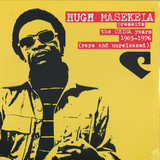
Hugh Masekela - The Chisa Years (1965-1975)

The Chisa Years: 1965-1975 (Rare and Unreleased) is a compilation album by South African jazz trumpeter Hugh Masekela. The album consists of 14 rare or forgotten tracks recorded by Stewart Levine and Hugh Masekela from 1965 to 1975 when they ran their own Chisa Records label.Thom Jurek of Allmusic wrote 'In sum, there isn't a weak moment on this entire collection. It's appeal is wide and deep and one can only hope this is the first of many volumes of this material to appear. BBE Records has done a stellar job in making this slab available.' Dan Nishimoto of the Prefix Magazine stated 'The compilation focuses on Masekela's original idea of 'African American Music.' From the early experiments of the Zulus (a group featuring M'Bulu) in mixing doo-wop, rhythm & blues and South African gospel and the mbaqanga/'Grazing in the Grass'-style work of the generically named Johannesburg Street Band to the clearly Fela-influenced Ojah (Masekela's band in the mid-'70s, consisting of players from Ghana and Nigeria) and the readyfor-primetime belting of M'Bulu, each track reveals a multi-pronged effort to find and challenge the notion(s) of how African and American cultural forms could interact.'

In Stock

Disponibile in Stock e pronto per la spedizione

The Buttshakers - Lessons In Love

With their musical roots deeply immersed in the fertile soil of Afro-American music, the Buttshakers have found a new direction for their nostalgia-heavy soul music. With Lessons In Love, their third album on Underdog Records, their early heartaches and furies have faded in favor of a more composed harmony – a sound enveloped in love and soaked in the blues. Guided by their singer Ciara Thompson, the Buttshakers have taken a more intimate path, whose compass, in the chaos of emotions and the modern world, points only in one direction: the light.


Seen from the sky, the view appears limitless. Accentuated by the sun, the ochre and sandy hues of the open road only reinforce this feeling of immensity. The sky stretches and the green stands out in striking contrast. In lighter tones, a road is drawn -- without bends or contours. This is the worn and weary road of soul music, which The Buttshakers explore on each album in new and unique ways. Soul music – a rare place to find a French band.

Vast, the musical direction could have taken them to lighter pastures. Yet the Buttshakers chose to evolve in a different way; to take a heavier load. Two paths – one sparked by social unrest, the other purely sentimental, Lessons In Love explores the deep roots of soul music, in the steps of Curtis Mayfield or Al Green. It is here that the heart and mind cross paths, merge, and become one. A weary road -- that brings together the agitation of a world where good intentions never rise above the level of digital outrage, and a faith in love which, however it manifests and expresses itself, remains the only truth that never loses its power.


Less rage and more compassion, it is through the haunting words and now tempered inflection of Ciara Thompson's voice, which opens to distinct emotions and perspectives, that the listener is guided. With its gaze fixed on the horizon, the acoustic guitar of Gotta Believe invites us on an intimate stroll through the open plains, while Dream On carries us away with a clavinet riff and a possessed saxophone; reconnecting the electric heat and neurosis of a city full of dreams. The senses are moved by the conjuring potion of the guitar which distills throughout Troubled Waters; the body is brought back into a visceral dance by the keys and brass section that are put to the test by Sure As Sin and its irrepressible rhythm. Passing through clouds of dust and sand has left a bluesy imprint on their groove: the miles travelled became hundreds, then thousands.


All of this leaves the listener bewitched by the halo of resilience that now surrounds Ciara's performance, as the ten tracks let the light fade. But certainly not hope in a better day. Like the sunflower that always lifts its head towards the sun’s rays, the Buttshakers continue to resource their sounds in the deep roots of soul music. Into the rich layers of African-American music of the 60s and 70s, The Buttshakers capture the spirit as much as the musical aesthetics of the epoch. A sound that reaches into the meanderings of the soul, bringing light to dark places and hope for all. A sound for the most parched of hearts, living in a damaged world, Lessons In Love confirms that even the tiniest beam of light can illuminate one’s path.

In Stock

Disponibile in Stock e pronto per la spedizione

Betty Black - Gypsy Heart 7"

New Release "Gypsy Heart / Beautiful Lies SKYLINE RECORDINGS Is proud to be release another OG banger from the wonderful Ms Betty Black "Gyspy Heart" is a driving dancer with sassiness and flair, just how Betty like it. Power vocals with a punching back beat, screaming for the dance floor. Betty goes back to the beginning when Rhythm met the Blues under the watchful eye of Gospel and the African-American Spiritual. It's mystical and cinematic but gutsy, and funky to boot! Roots Revival Soul with a sophisticated twist. On the flip "Beautiful Lies" Perfect song, uptempo dancer - which throws you staright into a story, where Ms Betty Black takes you into another world, but one that so many women, in particular, can relate to - another strong vocal mover, with a motown overtone. Summer fun. SL45030 x400 copies includes paper insert slv "I always expect excellence from her and she's delivered again" - Craig Charles, The Craig Charles Funk & Soul Show, BBC Radio6, 01.06.24...

In Stock

Disponibile in Stock e pronto per la spedizione

Idrissa Soumaoro - Diré

Idrissa Soumaoro

Diré

12inchMRB-ML01-019
Mieruba Record Label
03.06.2024

‘Diré’, Idrissa Soumaoro new album, comes as a surprise to Malian and international audiences. Composer, singer, guitarist and master of the kamalen n’goni Idrissa Soumaoro presents here a beautiful collection of songs on his third album, Diré, named in honor of the town where he met his wife and where his first daughter, who is no longer with us, was born.
In 1971, after his studies at the INA in Bamako, Idrissa was transferred to Diré to teach music at the lPEG (Pedagogical Institute of General Education). He was 22 years old when he arrived in Diré. Idrissa has always been nostalgic for this beautiful place in the 333 Saints of Timbuktu region. As Idrissa sings in ‘Diré taga’ (Going to Diré), the track that opens the album, the city evokes deep emotions for the artist, as if it were a long-lost friend or lover. Celebrating the memory of the city of Diré leads the artist to retrace stories and lived situations that marked and animated him in years gone by: ‘I really miss the people, the colleagues, the friends and that period. Despite the time that has flown by, I would ardently wish to see Diré again’. Today, at the difficult time Mali is experiencing, remembering the city of Diré in the 1970s also means for the artist not giving up hope for peace: ‘The memory of Diré, a beautiful town in northern Mali, strengthens my hope for peace, union and real independence for the happiness of my people’; as he sings in ‘Sababou’, ‘Without hope, there is no life. Together we will succeed’.
The ten highly original compositions of the album are strongly based upon traditional music of Mali, but Idrissa’s life experiences, travels, education, collaborations and personal musical career have led him to compose and perform music with other influences. As Idrissa quotes: ‘My inspiration generally comes from the donso n'goni, a Bambara instrument played by and for hunters throughout Mali. This is a pentatonic instrument, similar to the blues exported to the USA by black African slaves. I've also spent so much time playing a variety of music that my music also reflects rumba, salsa (as well as Bamanan blues and a few derivatives: jazz, country, soul, rhythm and blues) etc. I have looked for and hope to have found my own form of expression from these influences’.
Throughout the album, his strong, clear voice sings in French, Bambara and English. It rides seamlessly upon a complex rhythmic sea of distinctly West African stringed instrumentation and percussion with accents of flute and balafon. There are keyboards in a few songs, but these, happily, do not dominate the music as we hear so often in today’s music. This album presents the music of a mature artist who has ‘been there, done that’ and returned to celebrate his country, his roots and his dreams in a flawlessly produced collection of songs of love, reassurance, fatherly advice and hope.
The album already has a long history: it was initiated in 2012 by Marc-Antoine ‘Marko’ Moreau, former producer and manager of Amadou and Mariam. Moreau had plans to produce the album and invited Idrissa Soumaoro to start recording in Manjul's studio in Bamako. When Moreau suddenly passed away, work on the album was still missing. The pandemic still added time for the production to continue. With the help of Climax Orchestra, arrangements and orchestrations were finalized in France. At the artist's behest, 'Diré' will finally be presented to the public by Mieruba, the independent label based in Ségou, the home of the blues in Mali. 'Let's stand together so that Mali can flourish': from conception to production and distribution, this is the message that 'Diré' carries.

In Stock

Disponibile in Stock e pronto per la spedizione

Various - AfroMagic Vol.2 – Hypnotic Grooves & Ecstatic Moves LP

"Deep Dancefloor Jams of African Disco, Funk, Boogie, Reggae & Proto Electro Music 1977-1986reggWhen a passionate DJ and crate digger intuitively selects music for a DJ compilation, without artistic compromise and without the burden of trends, AfroMagic vol.1 emerges from the depths of his soul. Herewith we present the new favorite phonomancer’s tool for all the DJs who experience the dance floor as a sanctuary and a source of freedom and love.

The most fundamental thing that defines African music is that it was created for dancing. In African dance, there is often no clear distinction between ritual celebration and social recreational entertainment – one can seemlessly merge with the other. Because dance and rhythm have more power than gesture and more richness than words, and because they express the deepest experiences of human beings, dance is in itself a complete and self-sufficient language. It is truly an expression of life with all of its emotions – joy, love, sadness and hope – without which there is no African music and dance. For the African people, dance and music are integral parts of the body and soul, thus depicting the expression of life, current emotional states, visions or dreams. Through hypnotic repetitive music and dance, people communicate with each other and with the souls of the dead, the animals, the plants, the stars, the Gods… They free the body and the spirit through ecstatic states, reaching a healing sense of freedom, happiness, and satisfaction.

Throughout history, this transcendental perception of rhythm and dance originating from Africa, influenced popular music worldwide, thus creating new living and breathing forms of musical genres – freeing them from their industrial mold. Funk, disco, soul, boogie, reggae, dancefloor jazz etc., developed in parallel all over the world. It is foolish to perpetually discuss where they originated from and who were the creators of all these fiery dance floor genres – being obvious that they directly or indirectly originate from the African continent and its people who were as well, over the centuries, influenced by disturbing socio-cultural factors of colonialism. However, no one can enslave the soul. The seeds of free and uninhibited dance and rhythm, true to their original form, initially first sprouted onto the USA’s fertile fields of clubbing and popular music while later evolving in other parts of the world.

The disco funk club culture manifested itself as a phenomenal explosion of artists and grooves in the second half of the 70s in the USA. Shortly it spread around the world continually reigning over charts in its various forms – to this day. Clubs emerged where the DJ is an almighty shaman and the dancers are a tribe united under one roof. This urban ritual had and still has a single goal: togetherness, freedom, and love. Clubs have evolved into temples where we free ourselves from the burden of a consumerist lifestyle and suppressed emotions – a place where we receive love and give love – to be who we really are.

Disco funk clubbing was such an influential global phenomenon that its influence can be observed in various other genres from the disco funk era i.e. progressive rock, which mutated by layering complex rock arrangements with a disco funk groove resulting in hybrids, highly sought by today’s diggers, producers and collectors. The profit-hungry music industry of the 80s very quickly commercialized the original disco funk sound by amputating of its original Afro groove to be able to easily ‘sell’ it globally. So, the original disco funk groove became underground again, and it has remained so until this day. Today, for a DJ to unearth that ravishing groove that will lead the dancers to the stars, he must dig passionately like a true musical archaeologist in search of that groove that picks you up after just a few initial beats. That groove which forces the atoms in your body to vibrate, that groove which unites the body and releases the burden.

The AfroMagic compilation series is created as a tool for real DJs who stick to the aesthetics and essence of clubbing.

This continuation of the Afromagic compilation by DJ Borovich was created in a private jam session which served as an escape route from intense and complex love problems.

Unconsciously driven by intuition and emotion and following a live mix tape framework where many tunes are arranged instantaneously, Borovich narrates his story with a strong rhythm that cuts loose even the most blocked off energy nodes and restores happiness to the spirit and the body.

The musical experience of the groove is completed by the lyrics of the songs, which symbolically give DJ Borovich universal answers to his questions arising from questioning the boundaries, nuances and other forms of love.

When considering that Borovich’s selection was created to facilitate an escape from the burdens of reality through rhythm and dance, we can be sure that Afromagic Vol. 2 will have a 100% uplifting, energized and spaced-out effect on the listeners.

The intro to A1, “Feeling Happy” by the Apostles, introduces us to an experienced and slow, cool and irregularly tight groove containing a confidently sung chorus that instantly gives a sense of freedom and hints at the remainder of Afromagic Vol. 2: “I’m gonna feel happy, ´cause I know I’m gonna be myself.” After the anthemic song mantra of the Apostles, Aigbe Lebarty uncompromisingly continues with a dirty disco rhythm. Acidified by accented synths that elevate it to shamanic levels and held together by a female tribal choir, we embark on an uncompromising ritual disco journey. Without a moment to take a breather the prog funk band Mighty Flames and their Road Man launch a highly vicious and raw, thick funk groove spiced with acid synths and dirty RnR breaks, raising the bar for the A side. Jimi Hendrix himself would surely praise it given the ultimate freedom and virtuosity in the solo sections. With the last tune on A side DJ Borovich decides to burn the floor with Geraldo Pino’s psychedelic, acid furious groove and lyrics which describe this HEAVY part of love problems: “The way she walk, the way she talk, the way she does a funky dances, she is really really heavy – that woman”.

While the A side represents a compact intoxicating afro groove machine that separates us from reality and lifts us up to the stars in over 23 minutes, the B side is a treasure trove of proto sub-genres gems. This selection represents the mission of the Afromagic: to find singular events in African recorded discography of popular music from the 70s and 80s that give evidence to the birth of new modern genres on the Dark Continent even before they emerged in the U.S.A. or Europe. The beginnings of electronic music influenced genres are represented back to back with 80s synth jazzy pop, all painted in African colours.

The B side opens big with Jake Sollo and a huge reggae blues number singing about the humiliation of a man – goosebumps guaranteed! “You think I’m nobody that’s why, you don’t know the way for me, I’m somebody I know, I found myself at last”. Adolf Ahanotu then enters the scene with a hard sliding tackle at B2 and an exotic rare disco funk dancefloor napalm. A ‘Sensation’ that would ignite even the coldest of introverts. While we approach the end of the compilation the narrative revolves again and takes a different turn. No less and no more than to the proto-electro that Baad John Cross serves us in “Give Me Some Lovin´”. The fat and repetitive broken electro synth groove, championing many early 90s electro tracks, is presented here without hesitation and with constant tension accompanied by a mantric chorus “Gimme some, gimme some, gimme some looooovin’, EVERBODY!!!”. Finally, we’re guided to the end of Afromagic Vol. 2 by Eji Oyevole’s 80s synth pop style presented in an authentic afro manner, giving us a glimpse at yet another released Afromagic edition, as well as giving an answer to DJ Borovich’s love problems. A smoothly broken electronic rhythm resembling electrified highlife sounds, carried on the wings of a virtuoso dreamy saxophone on top of which Eji presents the most intimate parts of himself. Finalizing the track with a symbolic chorus, on the surface referring to the dancefloor and simply having fun, but in actuality referring to the skill and happiness of living: “I´m a dancer, I can dance”. So, get up and dance among the stars with DJ Borovich and Afromagic.

In Stock

Disponibile in Stock e pronto per la spedizione

Imarhan - Aboogi LP

Imarhan

Aboogi LP

12inchSLANG50269LP
CITY SLANG
02.02.2024

For 20 years the Tuareg culture and music has fascinated the world. Their quasi-sacred poetic songs inspire western songwriters like KURT VILE or JOSÉ GONZALEZ, while the virtuosity of their guitar playing fascinates guitar heroes like JIMMY PAGE, and finally the spirituality and meditative hypnotism impresses electronic music producers like FOUR TET.With two albums, IMARHAN has become an emblem of the new Tuareg generation, breathing new life into “Assouf”, the desert blues.

While most of current Tuareg productions are exiled to the United States, the group, led by Sadam, is part of their culture and their city, the capital of the Tuareg people, with an open door to the desert. By building their own studio in Tamanrasset Aboogi, Imarhan become the spokesmen of the young Tuareg lost generation (forgotten by Algerian, Nigerian and Malian governments).With their new album Aboogi, Imarhan manipulate the rights and ancestry of the Tuareg. By inviting the legendary Mohamed At Itlale aka Japonais (who has since, sadly, passed away) and the genius musician Abdallah Ag Alhousseyni, IMARHAN follows the heritage of TINARIWEN, the godfathers of Assouf. When they recorded with GRUFF RHYS of the SUPER FURRY ANIMALS, their brilliant and universal songwriting takes on every sense of the word. Finally, by inviting the Sudanese singer Sulafa Elyas, we understand that IMARHAN is open to all of Africa, defenders of the Tuaregs but above all spokesperson for the new African generation.

In Stock

Disponibile in Stock e pronto per la spedizione

Diepkloof United Voice - Harmonizing Soweto: Golden City Gospel & Kasi Soul from the new South Africa

In apartheid-era South Africa, gospel music provided solace and served as a tool for covert communication to circumvent the censorship of the settler regime. By the 2010s, South African gospel, deeply ingrained in the soul of Soweto, assumed a new role—as a heartfelt cry against persistent failures and shortcomings, a cry mourning a South Africa that never materialized.

A new South Africa needed a new gospel sound.

In 2016, nine young men from different parts of Diepkloof, a celebrated neighbourhood brimming with talent within Soweto's sprawling township, came together to form the sound of a new South Africa under the name Diepkloof United Voice.

Diepkloof United Voice's music has gone viral multiple times on TikTok, YouTube, and Facebook, garnering between 60,000 to 2 million views. The comments section displays flag emojis from Brazil to India, showcasing the global reach of their music.

This album was recorded on site in Soweto, in an abandoned classroom of Lebowa Elementary School in Diepkloof Zone 3, where the choir rehearsed for years. Amid rolling blackouts, Diepkloof United Voice poured their heart, soul, and vocal chords into their debut record, combining classic South Africa gospel, Soweto's own kasi soul, American blues, and Zulu flavor, to present the contemporary gospel sound of a changing South Africa.

The promise of a new South Africa might finally be realized, as Diepkloof United Voice guarantees the country's future is guided by the truth, uttered with each gasp of breath from their inimitable voices.

In Stock

Disponibile in Stock e pronto per la spedizione

BRA SELLO - BUTTERFLY LP

Bra Sello

BUTTERFLY LP

12inchAF1006
Afrodelic
15.09.2023

With one foot planted in jazz and the other in the township groove of Mbaqanga, saxophonist Sello Mmutung was a powerful crossover figure in the history of popular music in South Africa. Using the stage name Bra Sello, meaning “brother” and used as a term of affection and respect in the jazz community, he came up in the era of shellac 78s as an exponent of the 1960s sax jive sound that brought the swinging rhythm of kwela into the domain of South African jazz. Despite the injection of American rhythm and blues into South African pop in the late-1960s, Bra Sello’s first releases on vinyl on the CBS label saw him backed by the group Abafana Bentuthuko and holding down an unapologetic township sound.

Joining the independent Soweto label under producer Cambridge Matiwane in the mid-1970s, Bra Sello recorded two records in the hit-making bump jive style popularised by serious jazz musician Dollar Brand on the one hand and prolific studio group the Movers, operating in funk and soul territory, on the other. Blending modern American and traditional African elements into joyful hip-swinging rhythms, Butterfly (1975) and The Battle of Disco (1977) reflect the vivacity of urban life in South Africa and document an era when dance music was performed by bands as extended jams laced with jaw-dropping solos. With music trends shifting dramatically in the late-1970s, the title of The Battle of Disco was an ironic call to arms in response to the territory that group musicians were beginning to cede to synthesisers and DJs.

For enthusiasts of African music from the 1970s, a full appreciation of the continent’s output is incomplete without South Africa’s pop-jazz sound providing a regional counterpoint to the funk experimentation of West Africa. Reissued for the very first time, Bra Sello returns in 2023 with limited replica editions from Afrodelic using master tape sources from the As-Shams/The Sun collection. Afrodelic’s unique edition of Butterfly features a previously unreleased track on Side B.

In Stock

Disponibile in Stock e pronto per la spedizione

BRA SELLO - THE BATTLE OF DISCO LP

With one foot planted in jazz and the other in the township groove of Mbaqanga, saxophonist Sello Mmutung was a powerful crossover figure in the history of popular music in South Africa. Using the stage name Bra Sello, meaning “brother” and used as a term of affection and respect in the jazz community, he came up in the era of shellac 78s as an exponent of the 1960s sax jive sound that brought the swinging rhythm of kwela into the domain of South African jazz. Despite the injection of American rhythm and blues into South African pop in the late-1960s, Bra Sello’s first releases on vinyl on the CBS label saw him backed by the group Abafana Bentuthuko and holding down an unapologetic township sound.

Joining the independent Soweto label under producer Cambridge Matiwane in the mid-1970s, Bra Sello recorded two records in the hit-making bump jive style popularised by serious jazz musician Dollar Brand on the one hand and prolific studio group the Movers, operating in funk and soul territory, on the other. Blending modern American and traditional African elements into joyful hip-swinging rhythms, Butterfly (1975) and The Battle of Disco (1977) reflect the vivacity of urban life in South Africa and document an era when dance music was performed by bands as extended jams laced with jaw-dropping solos. With music trends shifting dramatically in the late-1970s, the title of The Battle of Disco was an ironic call to arms in response to the territory that group musicians were beginning to cede to synthesisers and DJs.

For enthusiasts of African music from the 1970s, a full appreciation of the continent’s output is incomplete without South Africa’s pop-jazz sound providing a regional counterpoint to the funk experimentation of West Africa. Reissued for the very first time, Bra Sello returns in 2023 with limited replica editions from Afrodelic using master tape sources from the As-Shams/The Sun collection. Afrodelic’s unique edition of Butterfly features a previously unreleased track on Side B.

In Stock

Disponibile in Stock e pronto per la spedizione

Akira Ishikawa & Count Buffaloes - Uganda (Dawn of Rock) Box Edition

Mr Bongo are delighted to present an officially licensed re-issue of this underground Japanese rock rarity 'Uganda (Dawn of Rock)' by Akira Ishikawa & Count Buffaloes. This album has become highly sought-after amongst psych, prog and acid rock collectors and due to the rare nature of original copies they come at a hefty price tag.

The respected Japanese jazz drummer Akira Ishikawa was not messing around when he recorded the 'Uganda (Dawn of Rock)' album with his band the Count Buffaloes. For this offering, originally released in 1972 on Toshiba Records, Akira Ishikawa takes us on a deep tripped-out journey. 'Uganda (Dawn of Rock)' is a fusion of progressive and psych rock with African percussion workouts, dergy-wah wah blues-funk, and jazzy sensibilities; with different genres morphing and uniting as they progress.

A long way from his funk and afrobeat album 'Back To Rhythm’, re-issued on Mr Bongo in 2019, this record has a darker, deeper, abstract and experimental stoned tone with the listener being pulled into its vortex for the ride. This record doesn’t pull any punches.

For this album, Akira is joined by Hideaki Chihara on bass, guitarist Kimio Mizutani, sounding at times like an early 70s Peter Green, percussionist Larry Sunaga and composer Takeru Muraoka.

The album has become highly sought-after amongst psych, prog and acid rock collectors and due to the rare nature of original copies they come at a hefty price tag.

We are delighted to present an officially licensed re-issue of this underground Japanese rock rarity.

Available in 2 formats: Original LP in Box version & Tip-on Sleeve with OBI version.


• Highly sought-after underground Japanese rock rarity, originally released in 1972.

• Feat. Hideaki Chihara, Kimio Mizutani, Larry Sunaga and Takeru Muraoka.

• Available as the original LP in Box version & Tip-on Sleeve with OBI version.

In Stock

Disponibile in Stock e pronto per la spedizione

Bukky Leo - The Legend of William Onyeabor

Recorded live at the Jazz Cafe 19/03/2018

In 1982, Bukky's path led him to London, where he became one of the forerunners in the Acid Jazz scene. A young A&R man named Gilles Peterson signed him to the newly formed Acid Jazz label and his first release "Rejoice In Righteousness" went straight to the heart of the Acid Jazz world, reaching number 1 in the rhythm and blues, dance and jazz charts. The follow-up album "River Nile" led to a nomination at the US African Music Awards in New York. There he became acquainted with the legendary, late tenor saxophonist Joe Henderson who invited Bukky to his home in San Francisco.

In Stock

Disponibile in Stock e pronto per la spedizione

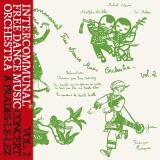
Intercommunal Free Dance Music Orchestra - Vol. 1 Concert A Prades Le Lez
  • On N'est Pas Chez Les Colonels
  • Intercommunal Blues
  • Mazir
  • Kan-Ha-Diskan - We Shall Over Come
  • African Rythm-N-Logy
disponibile anche

2


Concert at Prades-le-Lez marks the origins of the Intercommunal Free Dance Music Orchestra. In 1974, François Tusques and his companions (Michel Marre, Jo Maka, Adolf Winkler and Guem), in the spirit of Don Cherry or Chris McGregor, playfully dismantle all borders and all styles of creative music.

On this first volume, the Intercommunal takes its audience from New Orleans to Brittany and on to North Africa. The journey was bold, without a doubt—and its memory remains unforgettable.

“The music that we make is primarily meant to be listened to live,” warned a leaflet from the Intercommunal Free Dance Music Orchestra. This is precisely why the (restored!) reissue of the two volumes of Concert at Prades-le-Lez, recorded on January 25 and 26, 1974 by François Tusques and his comrades, is such an important event.

In 1971, after recording a series of albums that would leave a lasting mark on French jazz (Free Jazz, of course, with Michel Portal, François Jeanneau, Bernard Vitet, Beb Guérin and Charles Saudrais, but also Le Nouveau Jazz with Barney Wilen, or the solo Piano Dazibao), François Tusques founded the Intercommunal—a grouping whose very name called for the fraternization of the various communities making up the country: Our music will help, we hope, to resolve the contradictions that exist between workers be longing to different communities, by breaking down various forms of national chauvinism, and more particularly the chauvinism of certain French people toward the cultures of Third World countries… Long live the friendship between the peoples of the whole world!

Among the great records made by the Intercommunal Free Dance Music Orchestra, the two volumes of Concert at Prades-le-Lez come first, before L’Inter Communal, Vol. 4, Le Musichien, and Après la marée noire (four titles already reissued by Souffle Continu). François Tusques and his companions (Michel Marre and Jo Maka on saxophones, Adolf Winkler on trombone, and Guem on percussion) performed on January 25 and 26, 1974 at the Moulin de Prades-le-Lez, a few kilometers from Montpellier. It was thus in the southern region of Occitanie that the first echoes of this musical vision of a borderless brotherhood were recorded.

“We’re not among the Colonels,” the Intercommunal reassures us right away, performing a stride piano tune carried by African winds that the audience cannot resist for long. The energy is already striking and it never lets up throughout these two recordings, from start to finish: jazz, blues, traditional music, minimalism, even funk… The musicians of the Intercommunal have heard a lot of great music and now delight in reinventing it by mixing it all together.

“We want the song form to take its place as a weapon in the struggle against capitalist exploitation and all those who oppress us morally and materially,” declared an Intercommunal leaflet, quoting Jean-Baptiste Clément, author of the lyrics to “Le Temps des cerises.” The struggle was therefore serious—but it did not prevent François Tusques and his group from waging it in a festive spirit: each piece on Concert at Prades-le- Lez sends out a call for love and fraternity. Fifty years later, the message remains as relevant as ever—and once again, it is François Tusques who makes it heard.

pre-ordina ora17.04.2026

dovrebbe essere pubblicato su 17.04.2026

Intercommunal Free Dance Music Orchestra - Vol. 2 Concert A Prades Le Lez

Concert at Prades-le-Lez marks the origins of the Intercommunal Free Dance Music Orchestra. In 1974, François Tusques and his companions (Michel Marre, Jo Maka, Adolf Winkler and Guem), in the spirit of Don Cherry or Chris McGregor, playfully dismantle all borders and all styles of creative music.

On this second volume, the Intercommunal builds unprecedented soundscapes around a song of revolt, a dance tune, or a burst of dissonance. The journey is unforgettable, no question about it. On repeat listening, it even becomes… lunar!

“The music that we make is primarily meant to be listened to live,” warned a leaflet from the Intercommunal Free Dance Music Orchestra. This is precisely why the (restored!) reissue of the two volumes of Concert at Prades-le-Lez, recorded on January 25 and 26, 1974 by François Tusques and his comrades, is such an important event.

In 1971, after recording a series of albums that would leave a lasting mark on French jazz (Free Jazz, of course, with Michel Portal, François Jeanneau, Bernard Vitet, Beb Guérin and Charles Saudrais, but also Le Nouveau Jazz with Barney Wilen, or the solo Piano Dazibao), François Tusques founded the Intercommunal—a grouping whose very name called for the fraternization of the various communities making up the country: Our music will help, we hope, to resolve the contradictions that exist between workers be longing to different communities, by breaking down various forms of national chauvinism, and more particularly the chauvinism of certain French people toward the cultures of Third World countries… Long live the friendship between the peoples of the whole world!

Among the great records made by the Intercommunal Free Dance Music Orchestra, the two volumes of Concert at Prades-le-Lez come first, before L’Inter Communal, Vol. 4, Le Musichien, and Après la marée noire (four titles already reissued by Souffle Continu). François Tusques and his companions (Michel Marre and Jo Maka on saxophones, Adolf Winkler on trombone, and Guem on percussion) performed on January 25 and 26, 1974 at the Moulin de Prades-le-Lez, a few kilometers from Montpellier. It was thus in the southern region of Occitanie that the first echoes of this musical vision of a borderless brotherhood were recorded.

“We’re not among the Colonels,” the Intercommunal reassures us right away, performing a stride piano tune carried by African winds that the audience cannot resist for long. The energy is already striking and it never lets up throughout these two recordings, from start to finish: jazz, blues, traditional music, minimalism, even funk… The musicians of the Intercommunal have heard a lot of great music and now delight in reinventing it by mixing it all together.

“We want the song form to take its place as a weapon in the struggle against capitalist exploitation and all those who oppress us morally and materially,” declared an Intercommunal leaflet, quoting Jean-Baptiste Clément, author of the lyrics to “Le Temps des cerises.” The struggle was therefore serious—but it did not prevent François Tusques and his group from waging it in a festive spirit: each piece on Concert at Prades-le- Lez sends out a call for love and fraternity. Fifty years later, the message remains as relevant as ever—and once again, it is François Tusques who makes it heard.

pre-ordina ora17.04.2026

dovrebbe essere pubblicato su 17.04.2026

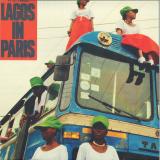
Lagos in Paris - We Are Lagos in Paris

The West African band and new sensation LAGOS IN PARIS make their striking debut with the release of their first and bold, EP « WE ARE LAGOS IN PARIS ».


After gaining support on their two first singles « Mali Spirit » and « Afro G Western » from Colors Studio, Trace or even Rollingstone and being broadcasted on BBC Radio 1Xtra the collective continues to expand and spread what they call the AFRAW sound : a mix of traditional African music with modern electronic styles resulting in a raw, powerful, and unique sound.
Recorded in different places across West Africa and Europe, every track on « WE ARE LAGOS IN PARIS » is shaped by the artists, musicians, and cultures they encountered along the way.


Blending heady blues loops in « Afro G Western », or groovy electronic basslines in « Faya », always with pure vibrant vocals, LAGOS IN PARIS offers trough this project a visceral and authentic experience speaking directly to the soul.


The listening experience also extends to the visual with the single « Faya », which will be accompanied by a video shot in Ghana, capturing the energy and aesthetic of the song.

non in magazzino

Ordina ora e ordineremo l'articolo per te presso il nostro fornitore.


Last In: 27 days ago
Randy Weston - The Music Of Randy Weston (5x12")
  • African Sunrise
  • The Last Day
  • Portrait Of Vivian
  • Blue Moses
  • African Sunrise
  • The Last Day
  • Portrait Of Vivian
  • Blue Moses
  • African Cookbook
  • Hi Fly
  • Blues For Strayhorn/Portrait Of F.e. Weston
  • African Sunrise
  • Congolese Children
  • C- Jam Blues
  • African Cookbook
  • Hi Fly
  • Blues For Strayhorn
  • Portrait Of F.e. Weston
  • African Sunrise
  • Congolese Children
  • C-Jam Blues
  • Hi Fly
  • Blue Moses
  • Caravan
  • Hi Fly
  • Blue Monk
  • St Thomas
  • Blues Moses
  • Hi Fly
  • Blue Moses
  • Caravan
  • Hi Fly
  • Blue Monk
  • St Thomas
  • Blue Moses

The box set includes:
Randy Weston & African Rhythm Orchestra - Brooklyn Acadamy Of Music 1985
(180g gatefold LP / CD)
Randy Weston Big Band - Montreux Jazz Festival 1985 (180g gatefold 2LP / CD)
Randy Weston & Monty Alexander - Montreux, Zaragoza, Ratatuelle Jazz Festivals
1988 (180g gatefold 2LP / CD)
4-page LP sized booklet
liner notes by producer Jacques Muyal
hand signed by Jacques Muyal
embedded brass med

pre-ordina ora20.03.2026

dovrebbe essere pubblicato su 20.03.2026

The "5" Royales - The Harbingers Of Soul LP
  • A1: Think
  • A2: Messin' Up
  • A3: Dedicated To The One I Love
  • A4: Tell The Truth
  • A5: It Hurts Inside
  • A6: When I Get Like This
  • A7: Good Lookin' Woman
  • A8: Say It
  • B1: Don't Let It Be In Vain
  • B2: I'm With You
  • B3: Show Me
  • B4: I Got To Know
  • B5: Much In Need
  • B6: Catch That Teardrop
  • B7: What's In The Heart
  • B8: Get Something Out Of It

The “5” Royales were the most enduring and influential of all the 1950s proto-soul groups. In a very crowded market, their success was remarkable. The Royales were the first African American group to introduce gospel based vocal styles into the rhythm and blues format. This gave an intensity to their recordings and live performances that no other combo could get near, thanks to the passion and power that lead singer Johnny Tanner generated. Furthermore, the group possessed in Lowman Pauling a songwriter of genius and a guitarist, who invented an exciting style of playing that linked stinging solos with rhythmic accompaniment. The Harbingers Of Soul is a mouth-watering overview featuring the best of the King era and the most soulful sides from their stay at Home Of The Blues. 180gsm vinyl. Sleeve notes by John Ridley.

pre-ordina ora13.03.2026

dovrebbe essere pubblicato su 13.03.2026

Henri Texier - Healing Songs LP
  • Amazone Blues
  • Chebika Courage
  • Leila
  • Greve Revolte
  • Vent Poussiere
  • Samba Loca
  • Quand Tout S'arrete

Featuring a topflight quintet, Healing Songs includes Texier's son Sebastien on alto sax and clarinet, rising US trumpet star Hermon Mehari, plus internationally acclaimed drummer Manu Katche guesting on two tracks. Henri Texier, born in Paris in 1945, is a highly respected French double bassist and composer who has played a pivotal role in shaping modern European jazz. He began his career in the vibrant Paris jazz scene of the 1960s, quickly gaining acclaim for his work alongside vanguard musicians such as Don Cherry and Daniel Humair.

Over the decades, Texier became known for blending jazz with influences from folk, African, and Middle Eastern music, giving his sound a unique global flavour. His work has earned him several prestigious awards, including multiple 'Victoires du Jazz' (France's top jazz honour) and widespread international recognition. In the words of The Guardian newspaper, "Texier is one of Europe's consistently inspired jazz musicians, with a career that continues to inspire new generations.

pre-ordina ora13.03.2026

dovrebbe essere pubblicato su 13.03.2026

Akio Nagase - Dub Acid EP

Especial is delighted to reprise the label’s relationship with Osaka’s acid master, Akio Nagase. Following his debut, Global Acid EP and follow up African Acid EP covered a range of influences, all with the heavy dose of Roland TR-303, here he completes a trilogy of EPs, culminating in a homage to his love of dub reggae.

Having made reggae influenced dance music under the Makedub alias for decades, here he takes it a step further, utilising a knack for catchy hooks and acid lines, while fusing reggae and live desk-dub mixing.

I Love Smoke, a chant, the stand-out, those classic vocals flowing in and out with a 3AM (Eternal) bump. Riotously expounding the virtues of smoking ’Mari Jane’, the hypnotic stoner vibes are wrapped around Nagase’s meditative and dancefloor heartbeat.

Night Time High Acid swings, the low-end rumble and kick build before the TR-303 and harmonica lead interweave, samples and sirens encase in an ethnic, tribal slo-mo dub flow.

Things shift with the 4/4 bump of Creation Dub. A call to rise wrapped in the warmth of Dub House beats. Melody and dub flow, no need for 303. Vox are space echo’d to the limit. Keys stab, horns call, slip side away.

To finish, Harmonica Dub is just that. Heavy mouth organ solo, the blues calling atop a dub-techno stepper beat. Rimshot, stabs, echo. All encompass that psychedelic flavour of Akio. Dub, Love and Respect. Thank you Mr Kikumoto for the acid, thank you Mr Nagase for beats

non in magazzino

Ordina ora e ordineremo l'articolo per te presso il nostro fornitore.


Last In: 55 days ago
Various - Highway of Diamonds - Black America Sings Bob Dylan (2x12")
 
20

Ace’s small but ever-evolving “Black America Sings…” series has been quiet of late, but it springs back into action this month with the 2-LP and CD releases of “Highway Of Diamonds” – a second dip onto the catalogue of Bob Dylan, as reimagined by some of the foremost African-American artists of the 20th century.

From almost the start of his songwriting career, Dylan’s words and music have impacted on black American music, with ‘Blowin’ In The Wind’, speaking to an America that was still mostly segregated and becoming an anthem for all colours and creeds. As Dylan’s own career progressed, so did the number of covers he received, with a significant amount coming from what might be termed ‘non-traditional’ sources such as those heard here.

The 20 songs on “Highway Of Diamonds” continue the story that was told in part on the earlier “How Many Roads” compilation, with an almost entirely different selection of artists lending their voices to some of the best songwriting of the 20th century, and an almost entirely different selection of songs (with the exception of ‘Blowin’ In The Wind’ itself, which provides a common thread linking the story told across the two sets).
Big names from the worlds of soul, gospel and jazz, timeless songs and, for many, new ways of appreciating ever-durable material make “Highway Of Diamonds” as essential a purchase as its predecessor.

As ever, the great audio is complemented by a handsomely illustrated package on both CD and double vinyl, with a plethora of illustrations and in depth song-by-song-and-track-by-track annotation by Ace legend Tony Rounce.

pre-ordina ora30.01.2026

dovrebbe essere pubblicato su 30.01.2026

حمد [Ahmed] - سماع [Sama'a] (Audition) LP 2x12"

حمد [Ahmed]

سماع [Sama'a] (Audition) LP 2x12"

2x12inchROKU046
OTOroku
16.01.2026

Known for their exhilarating live-to-record albums such as last year's critically acclaimed Wood Blues and Giant Beauty, سماع Sama'a (Audition) is the first of two releases that will surface after أحمدAhmed’s first studio recording sessions at North London’s The Fish Factory in early 2025.

Since 2014, Ahmed أحمد have excavated and re-imagined the music of Ahmed Abdul-Malik, in an ever ongoing search for future music. Over a decade on, the group were given the opportunity to set up in the studio for the first time and, with the aid of meticulous engineer Benedic Lamdin, سماع Sama'a (Audition) is the quartet's most detailed work to date.

Fastidious fans may recognise the album's tracklisting as that of Ahmed Abdul-Malik’s Jazz Sahara. After his success collaborating with the pianists Thelonious Monk and Randy Weston, Jazz Sahara was the first record Abdul-Malik made as a leader and was released in 1958. It used the flame of late Fifties jazz to light the wick of North African folk music and acted as a reminder of the Arabic origins of jazz, creating a distinct, unique sound that was far beyond its time. In Malik’s Jazz Sahara, there is no piano. The ongoing work of each member of [Ahmed] then is to think differently, to wonder how the music will work and to take a risk on trying it out - an extraordinarily compelling feat of imagination. Using group improvisation strategies and recording in single takes, سماع [Sama'a] (Audition) tackled the full suite of Jazz Sahara in just one session, with ‘Ya Annas [Oh, People’] and ‘Isma'a [Listen’] being previously unrecorded. 'Farah 'Alaiyna’, also released on 2019’s Super Majnoon, sounds unrecognisable - the slow, heady stomp and repeated phrasing of 2019’s embryonic [Ahmed] having been blast furnaced and sped up four-fold. The result is four kaleidoscopic, relative miniatures that move, unfold and re-imagine at a very different scale and proportion than [Ahmed]’s previous records. It’s a dizzying, euphoric music and an extraordinary record of a group moving through space-time like no other.


[b] Isma'a [Listen]
[c] El Haris [Anxious]
[d] Farah 'Alaiyna [Joy Upon Us]


[b] b1 Isma'a [Listen]
[c] c1 El Haris [Anxious]
[d] d1 Farah 'Alaiyna [Joy Upon Us]


[b] b1 | Isma'a [Listen]
[c] c1 | El Haris [Anxious]
[d] d1 | Farah 'Alaiyna [Joy Upon Us]

non in magazzino

Ordina ora e ordineremo l'articolo per te presso il nostro fornitore.


Last In: 30 days ago
Kingston Sounds - Return To Orange Street’ 14 Roots Rock Reggae Classics LP

From 1968 through to the mid 1970’s the reggae beat began to slow down,some say due to the extreme heat hitting down onto Kingston Town and its surrounding enclaves. People needed something less strenuous to dance to. The Ska and Rocksteady Sounds (see 101 Orange Street KS007) that rocked Jamaica previously, had now found a slower tempo and become more ‘Dread’ lyrically to suit the times. Reggae music has always moved within the social climate it found itself in and this set here, as we ‘Return To Orange Street’ was ROOTS ROCK REGGAE TIME....

The Rastafarian message that runs through this collection of ‘Reality’, sometimes labelled ‘Sufferers’ music,is strong and works on many levels. It can come across on a heavy rhythm and vocal cut. Its example represented here by Prince Jazzbo’s ‘Dread in a Earth’ and ‘I Roy’s ‘Roots Man Time’, moving through to the popular new sounds of the DJ’s working over an old rhythm and alongside its existing vocal. As with Busty Brown working with Delroy Wilson's ‘Know Your Friend’ and Mr Jah Stitch working over Johnny Clarke’s ‘Roots Natty Roots’ to produce an even more dreader ‘True Born African’. The heartfelt lyric can also convey this message as we can see when Horace Andy laments ‘Where is the Love’ and Delroy Wilson again shows us on his ‘Who Cares’ cut. The great Twinkle Brothers also put the message across on their two cuts we have here, ’Too Late’ one of their lost classics if ever there was one and the thoughtful ‘It’s Not Who You Know’,being another prime example.

Orange Street itself is always at the heart of all reggae's musical changes and some singers also ride these waves as Mr Cornell Campbell shows us here with two cuts. The mournful ‘Too Be Loved’ and his uplifting ‘Girl of My Dreams’, which uses the same rhythm as our previously mentioned Prince Jazzbo’s 'Dread in a Earth’. Showing us that firstly you can’t keep a good rhythm down and secondly that two if not more great songs can work from the same source point. The light hearted ‘Vengeful’ lyric also worked in this period when artists spared off to each other on records to vent their frustrations. As we can hear here with Mr Lee Perry’s ‘You Funny Boy’. The song snipping back at a previous employer over what he felt were his misdoings to an under appreciated Mr Perry. We have culled these tracks together to show that the Dread Roots feel of the 1970’s came across in many guises and even in earlier songs these sentiments were also prevalent. As represented in Slim Smith’s almost bluesy feel in ‘Trying To Find a Home’, never a truer statement in Kingston's ghetto areas.

Well we hope you enjoy this musical journey and make a connection with messages portrayed here, as Mr Monty Morris points out on his contribution to this collection ‘Times Are Dread’.... Dread indeed.....

non in magazzino

Ordina ora e ordineremo l'articolo per te presso il nostro fornitore.


Last In: 4 months ago
Various Artists - North African Rare Groove LP 2x12"
  • 1: Bsslama Hbubti
  • 2: Nisyan
  • 3: Tiou Tiou Tiou
  • 4: Hammouda
  • 5: Mama
  • 6: Sidi H'bibi
  • 7: Sodfa
  • 8: Zina
  • 9: Sidi Mansour
  • 10: Arbya
  • 11: Ya Aen Daly
  • 1: Amilyi
  • 2: Ana Ana
  • 3: Baba Bahri
  • 4: Chouaya Hob
  • 5: Soura
  • 6: Shaft
  • 7: Amarni Manssa
  • 8: Chenar Le Blues
  • 9: Sebar
  • 10: Je Suis Jaloux
  • 11: Coladera

Mit der neuen Ausgabe der Rare Groove Collection tauchen wir ein in die pulsierende Klangwelt Nordafrikas. Diese Doppel-LP vereint seltene Tracks aus Algerien, Marokko, Libyen und Tunesien, die zwischen den späten 70ern und frühen 80ern entstanden sind - eine Zeit, in der traditionelle Rhythmen auf Soul, Funk und Disco trafen. Die Compilation präsentiert eine elektrisierende Mischung aus hypnotischen Grooves, treibenden Basslines und souligen Gesangslinien, inspiriert von den Sounds jenseits des Atlantiks. Künstler wie Faboul, Freh Khodja, Vigon, Abranis, Faraji, Raina Raï, Malik Adouane und Najib Alhous stehen für eine Ära musikalischer Grenzüberschreitungen, in der kulturelle Identität und globale Einflüsse auf faszinierende Weise verschmolzen. Jeder Track ist ein Stück Musikgeschichte - tanzbar, psychedelisch, politisch und voller Energie.

pre-ordina ora24.10.2025

dovrebbe essere pubblicato su 24.10.2025

JAZZ SINNERS - SOUL STIRRIN’ (2x12")

JAZZ SINNERS

SOUL STIRRIN’ (2x12")

2x12inchMJJS2001DLP
Mono Jazz
17.10.2025

The new Mono Jazz series - The Jazz Sinners - is designed, crafted and produced to the highest standards allowed by today’s music industry.
The tracks featured come from either rare, top-condition vintage first pressings or from meticulously sourced recordings to ensure the
best possible sound quality. Thanks to the expertise of Giorgio Cencetti (DJ Farrapo), we've created a fully organic mastering process that offers a
360° sound spectrumfor a truly high-fidelity listening experience. The vinyl itself is pressed under the supervision of Elettroformati - Milano.

The cover is 100% Italian-made, using premium 350g cardstock with a luxurious hand feel, with inner sleeves lined in polyliner for complete protection of the record.

non in magazzino

Ordina ora e ordineremo l'articolo per te presso il nostro fornitore.


Last In: 74 days ago
Anura & Sr. Lobezno - Afro-Ritmo EP

Anura & Sr. Lobezno

Afro-Ritmo EP

12inchSMS038
SAMOSA Records
14.10.2025

pictured cover sealed in shrink wrap (first time ever on Samosa)


Samosa Records comes back with a real summer bang in the form of the ‘Afro-Ritmo EP’ – a four-track journey into afro soaked vibes courtesy of Anura & Sr. Lobezno and featuring label boss De Gama!

First up on side A is the EP’s title track, the mesmerising ‘Afro Ritmo’. Anura & Sr. Lobezno announce their arrival on Samosa Records with this spicy West African rhythm bomb. Kakaki trumpet fanfares meld with intricate synth stabs and ethereal Oja flute, whilst the solid tribal beats and rolling bass dictate the dance moves. And dance you must…

Track 2 is the deliciously glitchy, conga bonanza ‘Sungu Sa’. Make no mistake, ‘Sunga Sa’ is out to get you from the very first beat – tempting you to go behind the curtain as the haunting guitar lures you ever closer to its secret door. Dark, uplifting and ritualistic, the chant of ‘Sunga Sa’ will live in your head rent free well after the sun has gone down. Don’t say you weren’t warned.

Over on Side B De Gama takes the title track ‘Afro-Ritmo’ and applies his unique sonic rubs, balms and enhancers to create a pulsating after hours jam full to the brim with Afrotropic sparkle and magic dust. Like an unstoppable chugging train steaming through a savanna, De Gama is the conductor supreme as the raspy synth, bluesy guitar riff and uplifting brass fanfares entwine around that pounding beat.

Finally, Track 4 gives us the seriously powerful Javier Morrilas remix of ‘Afro-Ritmo’. The original is stripped right down and given the Big Beat treatment for this insanely good take – a peak time switcheroo of a track that keeps you guessing as to where it’s taking you. As the flutey breakdowns and broken beat madness get you, you will fall in love with this one instantly.

The ‘Afro Ritmo’ EP is a powerful, masterful four tracker from Anura & Sr. Lobezno which is well at home in the Samosa Records cooking pot. Spread the word, buy the vinyl. You won’t be disappointed.

• Reviewed with love by The Black Light Disco

Written, Produced, Arranged and Mixed by Anura & Sr. Lobezno.
Keyboards & Percussions: Anura.
Trumpet: Jimmy Garcia
Sax & Flute: Carlos Ligero
Trombone: Prudencio Valdivieso

*Remix and Additional Productions by Stefano Gamma aka De Gama for De Gama Rec - Rome.
Jazz Guitar & Acoustic Bass by Pietro Nicosia.

** Remix and Additional Productions by Javier Morillas.

All tracks mastered by Francesco Pierguidi at L’n’P Studio – Rome.

Artwork and computer graphics by Nerina Fernandez.


SMS038

non in magazzino

Ordina ora e ordineremo l'articolo per te presso il nostro fornitore.


Last In: 6 days ago
Amina Claudine Myers - Solace of the Mind LP
  • African Blues
  • Song For Mother E
  • Sensuou
  • Steal Away
  • Ode To My Ancestors
  • Voices
  • Hymn For John Lee Hooker
  • Twilight
  • Cairo
  • Beneath The Sun

Over sixty years into a life in music, Amina Claudine Myers revisits old compositions with a quiet force on Solace Of The Mind, her first solo record since receiving an NEA Jazz Master honours. Recorded for Red Hook Records and produced by Sun Chung, it hears Myers at the piano, Hammond B3 organ and mic, reinterpreting personal standards such as 'African Blues', 'Song For Mother E', 'Cairo' and 'Steal Away' with patient, spacious phrasing and the tonal sensitivity she's honed since her days with the AACM. Chung's production renders every harmonic shimmer and pause with startling clarity; a glistening move compared to last year's duo release with Wadada Leo Smith, adding a returnal layer to an otherwise eclectic discography, spanning free jazz and blues-rooted experimentalism. In her words, "I wanted to play (the originals) differently this time."

pre-ordina ora11.07.2025

dovrebbe essere pubblicato su 11.07.2025

Mort Garson - Mother Earth’s Plantasia

Repress!

In the mid-1970s, a force of nature swept across the continental United States, cutting across all strata of race and class, rooting in our minds, our homes, our culture. It wasn’t The Exorcist, Goodbye Yellow Brick Road, or even bell-bottoms, but instead a book called The Secret Life of Plants. The work of occultist/former OSS agent Peter Tompkins and former CIA agent/dowsing enthusiast Christopher Bird, the books shot up the bestseller charts and spread like kudzu across the landscape, becoming a phenomenon. Seemingly overnight, the indoor plant business was in full bloom and photosynthetic eukaryotes of every genus were hanging off walls, lording over bookshelves, and basking on sunny window ledges. The science behind Secret Life was specious: plants can hear our prayers, they’re lie detectors, they’re telepathic, able to predict natural disasters and receive signals from distant galaxies. But that didn’t stop millions from buying and nurturing their new plants.


Perhaps the craziest claim of the book was that plants also dug music. And whether you purchased a snake plant, asparagus fern, peace lily, or what have you from Mother Earth on Melrose Avenue in Los Angeles (or bought a Simmons mattress from Sears), you also took home Plantasia, an album recorded especially for them. Subtitled “warm earth music for plants…and the people that love them,” it was full of bucolic, charming, stoner-friendly, decidedly unscientific tunes enacted on the new-fangled device called the Moog. Plants date back from the dawn of time, but apparently they loved the Moog, never mind that the synthesizer had been on the market for just a few years. Most of all, the plants loved the ditties made by composer Mort Garson.


Few characters in early electronic music can be both fearless pioneers and cheesy trend-chasers, but Garson embraced both extremes, and has been unheralded as a result. When one writer rhetorically asked: “How was Garson’s music so ubiquitous while the man remained so under the radar?” the answer was simple. Well before Brian Eno did it, Garson was making discreet music, both the man and his music as inconspicuous as a Chlorophytumcomosum. Julliard-educated and active as a session player in the post-war era, Garson wrote lounge hits, scored plush arrangements for Doris Day, and garlanded weeping countrypolitan strings around Glen Campbell’s “By the Time I Get to Phoenix.” He could render the Beatles and Simon & Garfunkel alike into easy listening and also dreamed up his own ditties. “An idear” as Garson himself would drawl it out. “I live with it, I walk it, I sing it.”


But as his daughter Day Darmet recalls: “When my dad found the synthesizer, he realized he didn’t want to do pop music anymore.” Garson encountered Robert Moog and his new device at the Audio Engineering Society’s West Coast convention in 1967 and immediately began tinkering with the device. With the Moog, those idears could be transformed. “He constantly had a song he was humming,” Darmet says. “At the table he was constantly tapping.” Which is to say that Mort pulled his melodies out of thin air, just like any household plant would.


The Plantae kingdom grew to its height by 1976, from DC Comics’ mossy superhero Swamp Thing to Stevie Wonder’s own herbal meditation, Journey Through the Secret Life of Plants. Nefarious manifestations of human-plant interaction also abounded, be it the grotesque pods in Invasion of the Body Snatchers or the pothead paranoia of the US Government spraying Mexican marijuana fields with the herbicide paraquat (which led to the rise in homegrown pot by the 1980s). And then there’s the warm, leafy embrace of Plantasia itself.


“My mom had a lot of plants,” Darmet says. “She didn’t believe in organized religion, she believed the earth was the best thing in the whole world. Whatever created us was incredible.” And she also knew when her husband had a good song, shouting from another room when she heard him humming a good idear. Novel as it might seem, Plantasia is simply full of good tunes.


Garson may have given the album away to new plant and bed owners, but a decade later a new generation could hear his music in another surreptitious way. Millions of kids bought The Legend of Zelda for their Nintendo Entertainment System back in 1986 and one distinct 8-bit tune bears more than a passing resemblance to album highlight “Concerto for Philodendron and Pothos.” Garson was never properly credited for it, but he nevertheless subliminally slipped into a new generations’ head, helping kids and plants alike grow.


Hearing Plantasia in the 21st century, it seems less an ode to our photosynthesizing friends by Garson and more an homage to his wife, the one with the green thumb that made everything flower around him. “My dad would be totally pleased to know that people are really interested in this music that had no popularity at the time,” Darmet says of Plantasia’snew renaissance. “He would be fascinated by the fact that people are finally understanding and appreciating this part of his musical career that he got no admiration for back then.” Garson seems to be everywhere again, even if he’s not really noticed, just like a houseplant.

non in magazzino

Ordina ora e ordineremo l'articolo per te presso il nostro fornitore.


Last In: 5 months ago
Various - American Folk Blues Festival LP 2x12"
  • 1: I'm A Stranger Here/Stranger Blues
  • 2: Nervous
  • 3: I Just Want To Make Love To You
  • 4: Born With The Blues
  • 5: I Got My Eyes On You
  • 6: John Henry
  • 7: I Need Money
  • 8: Everyday, I Have The Blues
  • 9: Night Time Is The Right Time
  • 10: My Own Fault
  • 1: Baby, Won't You Please Come Home
  • 2: Moanin
  • 3: Money Honey
  • 4: Kansas City
  • 5: Bye Bye Baby
  • 6: Medley : The Blues Ain't Nothin' But A Woman & Bye Bye Baby
  • 7: Eyesight To The Blind*
  • 8: Your Funeral & My Trial*
  • 9: Bye Bye Bird*
  • 10: Fattening Frogs For Snakes*
  • 11: Bye Bye Blues*
  • 12: Wake Up Baby**

The blues, born in the cotton fields of the American South, emerged from makeshift instruments and simple harmonies rooted in African heritage. It captured the struggles, hopes, and fleeting joys of laborers enduring harsh conditions, with its hallmark "blue note" adding a unique dissonance to this evocative musical style.

As industrialization progressed, the blues migrated to urban centers like Chicago and New Orleans, evolving with modern instruments and expanding themes to reflect urban struggles, sensual nights, and existential despair. This period birthed many of the musicians who later formed the American Folk and Blues Festival (AFBF), an initiative started in 1950s Germany to introduce Europe to the genre and counter its reductive reputation as a precursor to jazz.

The Lost Recordings celebrates these legendary artists through restored performances from the 1962 Olympia in Paris and the 1963 Stadttheater in Bremen. Featured artists include John Lee Hooker, Memphis Slim, Sonny Terry, Brownie McGhee, T-Bone Walker, Helen Humes, and others, showcasing the depth and evolution of the blues.

From intimate duos like Brownie McGhee and Sonny Terry’s harmonica-guitar interplay to T-Bone Walker’s electrifying group performances, each act demonstrates the genre's versatility and influence. John Lee Hooker’s solo mastery mesmerized audiences, while T-Bone Walker pioneered the electric guitar's place in blues, inspiring legends like B.B. King.

The album also highlights Sonny Boy Williamson, whose charismatic harmonica and profound sensitivity defined his performances. These concerts take listeners on a journey through the authentic sound of the blues, traversing America’s history and foreshadowing its transformative impact on global music.

pre-ordina ora30.06.2025

dovrebbe essere pubblicato su 30.06.2025

Vieux Farka Touré & Khruangbin - Ali

Vieux Farka Touré&Khruangbin

Ali

12inchDOC274LPC3
Dead Oceans
13.06.2025
  • 1: Savanne
  • 2: Lobbo
  • 3: Diarabi
  • 4: Tongo Barra
  • 5: Tamalla
  • 6: Mahine Me
  • 7: Ali Hala Abada
  • 8: Alakarra

Ali Farka Touré trekked the world, bringing his beloved Malian music to the masses. Dubbed “the African John Lee Hooker,” one could hear strong connections between the two; both employed a bluesy style of play with gritty textures that elicit calm and fury in equal measure. While the influence of Black blues music prevailed, Touré created a West African blend of 'desert blues' that garnered Grammy awards and widespread reverence. Though he transcended in 2006, Ali’s musical legacy lives on through his son, Vieux aka “the Hendrix of the Sahara,” an accomplished guitarist and champion of Malian music in his own right. On Ali, his collaborative album with Khruangbin, Vieux pays homage to his father by recreating some of his most resonant work, putting new twists on it while maintaining the original’s integrity. The result is a rightful ode to a legend. Ali isn’t just a greatest hits compilation. It’s a lullaby, a remembrance of Ali's life through known highlights and B-sides from his catalog. It is a testament to what happens when creativity is approached through open arms and open hearts. “To me, music is magic, it is spontaneous, it is the energy between people,” Vieux says. “I think Khruangbin understands this very well.” The genesis of the album dates back to 2019, when Khruangbin, coming off their breakthrough album Con Todo el Mundo, was beginning to play to bigger crowds. The record was finished in 2021, as a global pandemic shuttered businesses and forced us to take stock of what Earth was becoming. Indirectly, Ali captures this as a moment of peace within a raging storm, a conversation between past and present without allegiance to suffering. Now, given Khruangbin’s reach as a unit with legions of fans (including the likes of Jay-Z and Paul McCartney), they’re poised to bring Malian music to broader groups of listeners. Ali is a masterful work in which the love surrounding it is just as vital as the music itself, driving it to unforeseen places; Vieux and Khruangbin are spreading the good word to a completely new generation. “I hope it takes them somewhere new, or puts them in a place they haven't felt or heard,” Lee says. “It is about the love of new friendship and making something beautiful together,” Vieux continues. “It is about pouring your love into something old to make it new again. In the end and in a word it is love, that's all.”

pre-ordina ora13.06.2025

dovrebbe essere pubblicato su 13.06.2025

FAT FREDDY’S DROP - WAIRUNGA 2x12"

Wairunga finds the Freddy juggernaut digging deep to debut five songs and revisit two classics captured in an outdoor performance sans audience but with wild weather elements playing an important creative role in producing this unique live album.

Recorded in Wairunga, high above Waimarama Beach in New Zealand, it is place etched into the DNA of Fat Freddy’s Drop who’ve roamed here for over 20 years; to party, relax between tours, make a song Wairunga Blues in its honour and even to get married. Farmed by the Parker family for a century, Wairunga is an oasis of green pasture and native tree filled valleys that fall away to the ocean below.

In inimitable Freddy's fashion the new tunes run a gamut of genre busting styles. Coffee Black is layered with cosmic hot buttered soul and cinematic wigged out psyche-blues while Shady continues Freddy's Afro-Acid adventures with Fitchie’s beat-making tapping into a South African township brand of techno Freddys experienced on tour.

Bush Telegraph is a reggae classic featuring MC Slave aka Mark Williams on the mic with freshly minted yum char spiced rhymes of hope. The other new tracks Leave Your Window Open and Dig Deep are loose rhythmic experiments that the band have been working on for a long time. Versions were developed, rehearsed, but then set aside – dismissed, demonised - only to be revived with new energy in some future moment of creative cohesion. The results are loose-limbed; broken and bruised beats smashing into subterranean bass and twisted up melodies.

Bones and Wairunga Blues are the two classics from Freddy's vast back catalogue. Off the Blackbird album, Bones has aged beautifully - like a fine wine - the song’s component parts matured and melded together in harmony and balance. DJ Fitchie rates this 2021 vintage superior to the 2013 original. Wairunga Blues has been a work-in-progress since it was released on Bays in 2015. Kuki dials up some appropriately off-kilter keys to match the wonky-funk laid down by Fitchie’s bass line and the horns. It’s a mighty comeback – and a fitting tribute to this magical place.

non in magazzino

Ordina ora e ordineremo l'articolo per te presso il nostro fornitore.


Last In: 11 months ago
ESKA - The Ordinary Life of A Magic Woman LP
  • 1: Down Here
  • 2: Daddy Long Legs
  • 3: Wake Me Up
  • 4: Magic Woman
  • 5: All The Way Down
  • 6: Klofrezaf
  • 7: Only Human
  • 8: Catfish Blues
  • 9: Snoozing Friends
  • 10: The Edge
  • 11: Fazerfolk
  • 12: Touch
  • 13: Muzak
disponibile anche

Black


Blurring the lines between the mundane and the mystical, ESKA’s latest album, ‘The Ordinary Life of a Magic Woman’, is a profound exploration of motherhood, artistry, and the delicate dance between daily rhythms and creative transcendence. For ESKA, these aren’t opposing forces—they’re inseparable threads in a richly woven life.

“It’s the sound of a first-generation, middle-aged African British woman living in post-everything Southeast London,” ESKA reflects.

After two decades of trailblazing collaborations with world-renowned artists – Moses Sumney, Grace Jones, Radiohead and Baxter Dury, to name a few - along with various accolades - including a Mercury Prize Nomination, ESKA’s new album stands as her most personal and compelling work yet. A self-directed journey, it sees her embracing her ultimate creative partner: herself.

Rooted in her eclectic musical upbringing, ESKA pulls inspiration from the sounds and influences that have defined her journey, breaking free of conventional boundaries. The result is a body of work that defies easy categorisation—bold, dynamic, and unmistakably hers.

pre-ordina ora25.04.2025

dovrebbe essere pubblicato su 25.04.2025

ESKA - The Ordinary Life of A Magic Woman LP

Blurring the lines between the mundane and the mystical, ESKA’s latest album, ‘The Ordinary Life of a Magic Woman’, is a profound exploration of motherhood, artistry, and the delicate dance between daily rhythms and creative transcendence. For ESKA, these aren’t opposing forces—they’re inseparable threads in a richly woven life.

“It’s the sound of a first-generation, middle-aged African British woman living in post-everything Southeast London,” ESKA reflects.

After two decades of trailblazing collaborations with world-renowned artists – Moses Sumney, Grace Jones, Radiohead and Baxter Dury, to name a few - along with various accolades - including a Mercury Prize Nomination, ESKA’s new album stands as her most personal and compelling work yet. A self-directed journey, it sees her embracing her ultimate creative partner: herself.

Rooted in her eclectic musical upbringing, ESKA pulls inspiration from the sounds and influences that have defined her journey, breaking free of conventional boundaries. The result is a body of work that defies easy categorisation—bold, dynamic, and unmistakably hers.

pre-ordina ora25.04.2025

dovrebbe essere pubblicato su 25.04.2025

KIPPIE MOKETSI - HARD TOP LP 2x12"

Limited edition of 500 copies.

Hard Top assembles the previously unreleased 1975 recordings of legendary South African saxophonist Kippie Moketsi (also spelled Moeketsi). The 2LP vinyl edition is presented in a gatefold sleeve featuring artwork by Mafa Ngwenya and comes from As-Shams Archive on the heels of the Tete Mbambisa's previously unreleased African Day album in 2024.

By 1975, at the age of 50, saxophonist Kippie Moketsi had already earned his stripes as a South African jazz figurehead. His tenure with the Jazz Epistles and the cast of the "South African Jazz Opera" King Kong in the late-1950s had not only marked his own rise to fame but also seen him help catalyse the ambitions of a younger generation of iconic artists who would go on to become the defining figures of modern South African jazz. While he didn't enjoy the same international attention as his protégés Miriam Makeba, Hugh Masekela and Abdullah Ibrahim, his humble and challenging career on the local jazz scene until his death in 1983 saw him forge an enduring legacy.

Owing to the efforts of record producer Rashid Vally, Kippie Moketsi's journey through the 1970s is beautifully documented, most notably on the albums Dollar Brand + 3 (1973), Tshona! (1975) and Blue Stompin' (1977), in which he shares the spotlight with Abdullah Ibrahim, Pat Matshikiza and Hal Singer respectively. As a featured performer on Soul of the City's Diagonal Street (1975) and Dennis Maple's Our Boys are Doing It (1977), Moketsi is seen embracing the popular orientations of South African jazz in 1970s but, having come up in the 1940s and 1950s, he never forgot his roots as a dedicated admirer and scholar of traditional American jazz.

While Moketsi did write some memorable compositions, it was in the role of interpreter that he shone most brightly. With its title derived from a good-natured nickname that nodded to Moketsi's elder status by way of his receding hairline, Hard Top is a covers album that looks back in time to the era of rhythm and blues while also indulging 1970s pop and funk with a decidedly South African vibe. Officially joining Kippie Moketsi's catalogue 50 years after it was recorded, Hard Top provides an opportunity to celebrate the multiple dimensions of a South African jazz legend and reflect on the unwavering support of his fan, producer and friend Rashid Vally, who passed away in December 2024.

pre-ordina ora18.04.2025

dovrebbe essere pubblicato su 18.04.2025

NINA SIMONE - Little Girl Blue
  • Mood Indigo
  • Don’t Smoke In Bed
  • He Needs Me
  • Little Girl Blue
  • Love Me Or Leave Me
  • My Baby Just Cares For Me
  • He’s Got The Whole World In His Hands
  • For All We Know
  • Good Bait (Instrumental)
  • Plain Gold Ring
  • You’ll Never Walk Alone
  • I Loves You Porgy
  • Central Park Blues (Instrumental)
  • African Mailman

"Little Girl Blue, released in 1957, was Nina Simone's first studio recording ever. It was originally issued on the Bethlehem label and features the singer/ pianist backed by bassist Jimmy Bond (who had been a member of the Chet Baker Quartet among other groups) and drummer Albert ""Tootie"" Heath, one of the celebrated Heath brothers (the other two being saxophonist Jimmy Heath, and bassist Percy Heath). Many of the tracks from this LP would become true classics, among them her perennial version of ""My Baby Just Cares For Me"".

THE COMPLETE ALBUM + 3 BONUS TRACKS - 180-GRAM VIRGIN VINYL -
LIMITED EDITION"

pre-ordina ora11.04.2025

dovrebbe essere pubblicato su 11.04.2025

Kamal Keila - Kamal Keila

Kamal Keila

Kamal Keila

2x12inchHABIBI008-1
HABIBI FUNK RECORDS
10.04.2025

Songs about the unity of Sudan, peace between Muslims and Christians and the fate of war orphans, backed by grooves equally taking influence from Arabic sounds, American funk as well as neighboring Ethiopia.

Kamal Keila was among the first artist we met in Sudan during our two trips to Khartoum and Omdurman last year. He is one of the key figures of the Sudanese jazz scene that was a vital part of the musical culture in Sudan from the mid 1960s until the islamist revolution in the late 1980s. When we meet Kamal he luckily presented us with two mold covered studio reels.
Each tape included five tracks. One with English lyrics and another with Arabic ones. Musically you can hear the influence of neighboring Ethiopia much more than on other Sudanese recordings of the time, as well as references to Fela and American funk and soul. His lyrics, at least when he sings in English which gave him more freedom from censorship, are very political. A brave statement in the political climate of Sudan of the last decades, preaching for the unity of Sudan, peace between Muslims and Christians and singing the blues about the fate of war orphans called "Shmasha".
A note inside one of the boxes specified the track titles, durations and the fact that the sessions were recorded on the 12th of august 1992. Both sessions stand as a hearable testament how Kamal Keila stuck to a sound aesthetic from decades ago, while incorporating current events into his lyrics.
Kamal Keila's album is the first in a series of releases covering the Sudanese jazz scene on Habibi Funk. Be on the lookout for albums by The Scorpions and Sharhabeel coming soon.

2LP + Download Code + 8 Page Booklet

non in magazzino

Ordina ora e ordineremo l'articolo per te presso il nostro fornitore.


Last In: 12 months ago
Articoli per pagina:
N/ABPM
Vinyl