Cerca:the sax brothers

Generi
Tutto
Tranquil Elephantizer - Zombie Dawn

On and on, the beat goes on. Sound System culture plays a huge part in the history of House music, shaping Mysticisms, its founders and the music it brings into the spotlight. Continuing the dive into that history, in all its forms and permutations, Tranquil Elephantizer’s 1995 classic Zombie Dawn is reissued here in its original form.

A name that has been getting noticed on recent releases for the likes of legendary San Francisco collective Wicked Records and Manchester’s cult Red Laser label, the project has, in fact, been around for several decades.

Morphing out of the late 80s Acid House revolution, members Alexis Worrall, brothers Caspar and Darius Kedros and focal point, David Jenkins aka DJ Shakra came together in the South London melting pot of free parties and DIY anything is possible ethos.

Born of a collaboration between the short-lived Camberwell Butterflies project – featuring Alexis Worrall and DJ Shakra amongst others – and the Kedros’ bothers downtempo/trip hop forbears Slowly. With a shared label, on the ground-breaking Chill Out Records, and Thursday late-night encounters at London’s legendary Megatripolis club, they decided to pool studio resources and Tranquil Elephantizer was born.

Mixing lo-fi 808 heavy analog jams of the Butterflies, with the studio sophistication from the Slowly crew, sparked something new and Zombie Dawn was the first result. Local producer Crispin J Glover dropped by the studio, riding high with his Caucasian Boy project’s hypnotic Northern Lights (featuring DJ Shakra on Roland 303) – recently out on Strictly Rhythm – he offered to remix both Zombie Dawn and the Slowly album cut No Slo Dub for release on his own Matrix label and an underground hit on the London and West Coast 90s party scene was born.

Coming in the original “Saxmental Mix”, alongside Glover’s storming “Nu Dawn Club Mix” Zombie Dawn was a correlation of the past, present and future in one record. The history of British House can be heard in the bumpin’ nature of the beats, the sharp hats encompassed around dub overtones that give it added warmth. The slightly quirky, left field touches of the tracks, set against the then weekly overload of sharp US imports, brought the mix of influences from the Tonka and Sugarlump Sound Systems they had partied and been involved with, on to vinyl, adding touches of jazz keys and disco’s heritage for good measure.

A bedfellow for the emerging UK House sound coming on the likes of Luxury Service (Rob Mello / Zaki Dee), Other (A Man Called Adam / DJ D) and Nuphonic (Faze Action / Idjut Boys), that shaped and defined London clubs and far beyond. Some 30 years later, with a new album on the way, here is debut Tranquil Elephantizer’s release, remastered especially for this reissue, ready to bring that optimistic thinking back.

Tranquil the Mystery.

In Stock

Disponibile in Stock e pronto per la spedizione

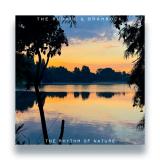
The Rurals & Shamrock - The Rhythm Of Nature LP

The Rhythm Of Nature’ is the stunning new masterpiece from Andy Compton (The Rurals) and Shamrock!

Written between Andy’s tours in South Africa and Shamrock’s extended UK trip in the summer of 2025, this album embodies their shared mission: to spread positive, joyful vibrations with LOVE.

Here, Soul, Jazz, and African music blend seamlessly through the talents of these two cosmic brothers, connected deeply by their love of making music.

When Andy and Shamrock jam and record, music flows so freely, creating a powerful, spiritual energy.

This follow-up to their 2023 debut album, Soul & Spirit — which still touches hearts worldwide — includes magical songs like ‘Bunny Chow’ and ‘Rosa Mziki’, originally created in Johannesburg and previously released on the Bunny Chow EP, Along with super fresh, unheard gems.

The album also features incredible musicians such as Nekoye Ommeh (Vocals), Pete Morris (Keys), Bongani Sessionist (Percussion), Kafele Bandele (Trumpet), and Charlie Hearnshaw (Sax), adding their magical energies to the soundscape.

Allow yourself to experience the full journey, feel and enjoy every note!

pre-ordina ora24.04.2026

dovrebbe essere pubblicato su 24.04.2026


Last In: 2026 years ago
Guilty Razors - Complete Recordings 1977 - 1978
  • A1: Hurts And Noises
  • A2: Wake Up
  • A3: I Don't Wanna Be A Rich
  • A4: Terrorist Bad Heart
  • A5: Provocate
  • A6: Lucifer Sam (Pink Floyd)
  • B1: Happy!?
  • B2: So Lazy
  • B3: I Feel Down
  • B4: Stupido
  • B5: Guilty
  • B6: Caroline Says (Loo Reed)

UILTY RAZORS, BONA FIDE PUNKS.


Writings on the topic that go off in all directions, mind-numbing lectures given by academics, and testimonies, most of them heavily doctored, from those who “lived through that era”: so many people today fantasize about the early days of punk in our country… This blessed moment when no one had yet thought of flaunting a ridiculous green mohawk, taking Sid Vicious as a hero, or – even worse – making the so-called alternative scene both festive and boorish. There was no such thing in 1976 or 1977, when it wasn’t easy to get hold of the first 45s by the Pistols or the Clash. Few people were aware of what was happening on the fringes of the fringes at the time. Malcolm McLaren was virtually unknown, and having short hair made you seem strange. Who knew then that rock music, which had taken a very bad turn since the early 1970s, would once again become an essential element of liberation? That, thanks to short and fast songs, it would once again rediscover that primitive, social side that was so hated by older generations? Who knew that, besides a few loners who read the music press (it was even better if they read it in English) and frequented the right record stores? Many of these formed bands, because it was impossible to do otherwise. We quickly went from listening to the Velvet Underground to trying to play the Stooges’ intros. It’s a somewhat collective story, even though there weren’t many people to start it.
The Guilty Razors were among those who took part in this initial upheaval in Paris. They were far from being the worst. They had something special and even released a single that was well above the national average. They also had enough songs to fill an album, the one you’re holding. In everyone’s opinion, they were definitely not among the punk impostors that followed in their wake. They were, at least, genuine and credible.

Guilty Razors, Parisian punk band (1975-1978). To understand something about their somewhat linear but very energetic sound, we might need to talk about the context in which it was born and, more broadly, recall the boredom (a theme that would become capital in punk songs) coupled with the desire to blow everything off, which were the basis for the formation of bands playing a rejuvenated rock music ; about the passion for a few records by the Kinks or the early Who, by the Stooges, by the Velvet mostly, which set you apart from the crowd.
And of course, we should remember this new wave, which was promoted by a few articles in the specialized press and some cutting-edge record stores, coming from New York or London, whose small but powerful influence could be felt in Paris and in a handful of isolated places in the provinces, lulled to sleep by so many appalling things, from Tangerine Dream to President Giscard d’Estaing...
In 1975-76, French music was, as almost always, in a sorry state ; it was still dominated by Johnny Hallyday and Sylvie Vartan. Local rock music was also rather bleak, apart from Bijou and Little Bob who tried to revive this small scene with poorly sound-engineered gigs played to almost no one.
In the working class suburbs at the time, it was mainly hard rock music played to 11 that helped people forget about their gruelling shifts at the factory. Here and there, on the outskirts of major cities, you still could find a few rockers with sideburns wearing black armbands since the death of Gene Vincent, but it wasn’t a proper mass movement, just a source of real danger to anyone they came across who wasn't like them. In August 1976, a festival unlike any other took place in Mont-de-Marsan – the First European Punk Festival as the poster said – with almost as many people on stage as in the audience. Yet, on that day, a quasi historical event happened, when, under the blazing afternoon sun, a band of unknowns called The Damned made an unprecedented noise in the arena, reminiscent of the chaotic Stooges in their early adolescence. They were the first genuine punk band to perform in our country: from then on, anything was possible, almost anything seemed permissible.

It makes sense that the four+1 members of Guilty Razors, who initially amplified acoustic guitars with crappy tape recorder microphones, would adopt punk music (pronounced paink in French) naturally and instinctively, since it combines liberating noise with speed of execution and – crucially – a very healthy sense of rebellion (the protesters of May 1968 proclaimed, and it was even a slogan, that they weren’t against old people, but against what had made them grow old. In the mid-1970s, it seemed normal and obvious that old people should now ALSO be targeted!!!).
At the time, the desire to fight back, and break down authority and apathy, was either red or black, often taking the form of leafleting, tumultuous general assemblies in the schoolyard, and massive or shabby demonstrations, most of the time overflowing with an exciting vitality that sometimes turned into fights with the riot police. Indeed, soon after the end of the Vietnam War and following Pinochet’s coup in Chile, all over France, Trotskyist and anarcho-libertarian fervour was firmly entrenched among parts of the educated youth population, who were equally rebellious and troublemakers whenever they had the chance. It should also be noted that when the single "Anarchy in the UK" was first heard, even though not many of us had access to it, both the title and its explosive sound immediately resonated with some of those troublemakers crying out for ANARCHY!!! Meanwhile, the left-wing majority still equated punks with reckless young neo-Nazis. Of course, the widely circulated photos in the mainstream press of Siouxsie Sioux with her swastikas didn’t necessarily help to win over the theorists of the Great Revolution. It took Joe Strummer to introduce The Clash as an anti-racist, anti-fascist and anti-ignorance band for the rejection of old-school revolutionaries to fade a little.

The Lycée Jean-Baptiste Say at Porte d’Auteuil, despite being located in the very posh and very exclusive 16th arrondissement of Paris, didn’t escape these "committed" upheavals, which doubled as the perfect outlet for the less timid members of this generation.
“Back then, politics were fun,” says Tristam Nada, who studied there and went on to become Guilty Razors’ frontman. “Jean-Baptiste was the leftist high-school in the neighbourhood. When the far right guys from the GUD came down there, the Communist League guys from elsewhere helped us fight them off.”
Anything that could challenge authority was fair game and of course, strikes for just about any reason would lead to increasingly frequent truancy (with a definitive farewell to education that would soon follow). Tristam Nada spent his 10th and 11th unfinished grades with José Perez, who had come from Spain, where his father, a janitor, had been sentenced to death by Franco. “José steered my tastes towards solid acts such as The Who. Like most teenagers, I had previously absorbed just about everything that came my way, from Yes to Led Zeppelin to Genesis. I was exploring… And then one day, he told me that he and his brother Carlos wanted to start a rock band.” The Perez brothers already played guitar. “Of course, they were Spanish!”, jokes their singer. “Then, somewhat reluctantly, José took up the bass and we were soon joined by Jano – who called himself Jano Homicid – who took up the rhythm guitar.” Several drummers would later join this core of not easily intimidated young guys who didn’t let adversity get the better of them.

The first rehearsals of the newly named Guilty Razors took place in the bedroom of a Perez aunt. There, the three rookies tried to cover a few standards, songs that often were an integral part of their lives. During a first, short gig, in front of a bewildered audience of tough old-school rockers, they launched into a clunky version of the Velvet Underground's “Heroin”. Challenge or recklessness? A bit of both, probably… And then, step by step, their limited repertoire expanded as they decided to write their own songs, sung in a not always very accurate or academic English, but who cared about proper grammar or the right vocabulary, since what truly mattered was to make the words sound as good as possible while playing very, very fast music? And spitting out those words in a language that left no doubt as to what it conveyed mattered as well.
Trying their hand a the kind of rock music disliked by most of the neighbourhood, making noise, being fiercely provocative: they still belonged to a tiny clique who, at this very moment, had chosen to impose this difference. And there were very few places in France or elsewhere, where one could witness the first stirrings of something that wasn’t a trend yet, let alone a movement.

In the provinces, in late 1976 or early 1977, there couldn’t be more than thirty record stores that were a bit more discerning than average, where you could hear this new kind of short-haired rock music called “punk”. The old clientele, who previously had no problem coming in to buy the latest McCartney or Aerosmith LP, now felt a little less comfortable there…
In Paris, these enlightened places were quite rare and often located nex to what would become the Forum des Halles, a big shopping mall. Between three aging sex workers, a couple of second-hand clothes shops, sellers of hippie paraphernalia and small fashion designers, the good word was loudly spread in two pioneering places – propagators of what was still only a new underground movement. Historically, the first one was the Open Market, a kind of poorly, but tastefully stocked cave. Speakers blasted out the sound of sixties garage bands from the Nuggets compilation (a crucial reference for José Perez) or the badly dressed English kids of Eddie and the Hot Rods. This black-painted den was opened a few years earlier by Marc Zermati, a character who wasn’t always in a sunny disposition, but always quite radical in his (good) choices and his opinions. He founded the independent label Skydog and was one of the promoters of the Mont-de-Marsan punk festivals. Not far from there was Harry Cover, another store more in tune with the new New York scene, which was amply covered in the house fanzine, Rock News (even though it was in it that the photos of the Sex Pistols were first published in France).
It was a favorite hang-out of the Perez brothers and Tristam Nada, as the latter explained. “It’s at Harry Cover’s that we first heard the Pistols and Clash’s 45s, and after that, we decided to start writing our first songs. If they could do it, so could we!”
The sonic shocks that were “Anarchy in the UK”, “White Riot” or the Buzzcocks’s EP, “Spiral Scratch” – which Guilty Razors' sound is reminiscent of – were soon to be amplified by an unparalleled visual shock. In April 1977, right after the release of their first LP, The Clash performed at the Palais des Glaces in Paris, during a punk night organised by Marc Zermati. For many who were there, it was the gig of a lifetime…
Of course, Guilty Razors and Tristam were in the audience: “That concert was fabulous… We Parisian punks were almost all dressed in black and white, with white shirts, skinny leather ties, bikers jackets or light jackets, etc. The Clash, on the other hand, wore colourful clothes. Well, the next day, at the Gibus, you’d spot everyone who had been at this concert, but they weren’t wearing anything black, they were all wearing colours.”

It makes sense to mention the Gibus club, as Guilty Razors often played there (sometimes in front of a hostile audience). It was also the only place in Paris that regularly scheduled new Parisian or Anglo-Saxon acts, such as Generation X, Siouxsie and the Banshees, the Slits, and Johnny Thunders who would become a kind of messed-up mascot for the venue. A little later, in 1978, the Rose Bonbon – formerly the Nashville – also attracted nightly owls in search of electric thrills… In 1977, the iconic but not necessarily excellent Asphalt Jungle often played at the Gibus, sometimes sharing the bill with Metal Urbain, the only band whose aura would later transcend the French borders (“I saw them as the French Sex Pistols,” said Geoff Travis, head of their British label Rough Trade). Already established in this small scene, Metal Urbain helped the young and restless Guilty Razors who had just arrived. Guitarist for Metal Urbain Hermann Schwartz remembers it: “They were younger than us, we were a bit like their mentors even if it’s too strong a word… At least they were credible. We thought they were good, and they had good songs which reminded of the Buzzcocks that I liked a lot. But at some point, they started hanging out with the Hells Angels. That’s when we stopped following them.”

The break-up was mutual, since, Guilty Razors, for their part, were shocked when they saw a fringe element of the audience at Metal Urbain concerts who repeatedly shouted “Sieg Heil” and gave Nazi salutes. These provocations, even still minor (the bulk of the skinhead crowd would later make their presence felt during concerts), weren’t really to the liking of the Perez brothers, whose anti-fascist convictions were firmly rooted. Some things are non-negotiable.
A few months earlier (in July 1978), Guilty Razors had nevertheless opened very successfully for Metal Urbain at the Bus Palladium, a more traditonally old-school rock night-club. But, as was sometimes the case back then, the night turned into a mass brawl when suburban rockers came to “beat up punks”.

Back then, Parisian nights weren’t always sweet and serene.

So, after opening as best as they could for The Jam (their sound having been ruined by the PA system), our local heroes were – once again – met outside by a horde of greasers out to get them. “Thankfully,” says Tristam, “we were with our roadies, motorless bikers who acted as a protective barrier. We were chased in the neighbouring streets and the whole thing ended in front of a bar, with the owner coming out with a rifle…”
Although Tristam and the Perez brothers narrowly escaped various, potentially bloody, incidents, they weren’t completely innocent of wrongdoing either. They still find amusing their mugging of two strangers in the street for example (“We were broke and we simply wanted to buy tickets for the Heartbreakers concert that night,” says Tristam). It so happened that their victims were two key figures in the rock business at the time: radio presenter Alain Manneval and music publisher Philippe Constantin. They filed a complaint and sought monetary compensation, but somehow the band’s manager, the skilful but very controversial Alexis, managed to get the complaint withdrawn and Guilty Razors ended up signing with Constantin with a substantial advance.

They also signed with Polydor and the label released in 1978 their only three-track 45, featuring “I Don't Wanna be A Rich”, “Hurts and Noises” and “Provocate” (songs that exuded perpetual rebellion and an unquenchable desire for “class” confrontation). It was a very good record, but due to a lack of promotion (radio stations didn’t play French artists singing in English), it didn’t sell very well. Only 800 copies were allegedly sold and the rest of the stock was pulped… Initially, the three tracks were to be included on a LP that never came to be, since they were dropped by Polydor (“Let’s say we sometimes caused a ruckus in their offices!” laughs Tristam.) In order to perfect the long-awaited LP, the band recorded demos of other tracks. There was a cover of Pink Floyd's “Lucifer Sam” from the Syd Barrett era – proof of an enduring love for the sixties’ greats –, “Wake Up” a hangover tale and “Bad Heart” about the Baader-Meinhof gang, whose actions had a profound impact on the era and on a generation seeking extreme dissent... On the album you’re now discovering, you can also hear five previously unreleased tracks recorded a bit later during an extended and freezing stay in Madrid, in a makeshift studio with the invaluable help of a drummer also acting as sound engineer. He was both an enthusiastic old hippie and a proper whizz at sound engineering. Here too, certain influences from the fifties and sixties (Link Wray, the Troggs) are more than obvious in the band’s music.

Shortly after a final stormy and rather barbaric (on the audience’s side) “Punk night” at the Olympia in June 1978, Tristam left the band ; his bandmates continued without him for a short while.

But like most pioneering punk bands of the era, Guilty Razors eventually split up for good after three years (besides once in Spain, they’d only played in Paris). The reason for ceasing business activities were more or less the same for everyone: there were no venues outside one’s small circuit to play this kind of rock music, which was still frightening, unknown, or of little interest to most people. The chances of recording an LP were virtually null, since major labels were only signing unoriginal but reassuring sub-Téléphone clones, and the smaller ones were only interested in progressive rock or French chanson for youth clubs. And what about self-production? No one in our small safety-pinned world had thought about it yet. There wasn’t enough money to embark on that sort of venture anyway.

So yes, the early days of punk in France were truly No Future!

pre-ordina ora22.05.2026

dovrebbe essere pubblicato su 22.05.2026


Last In: 2026 years ago
Tomorrow's People - Open Soul

Tomorrow's People

Open Soul

12inchPLP7575CR
P-Vine Japan
04.07.2025

This album is one that is always going to be reissued until the end of time. It's pure, raw, inescapably good soul music that was popularised in recent years by Floating Points and his Melodies International label. The 1976 debut album by Chicago soul, rare-groove and jazz-funk fusionists Tomorrow's People was led by the Burton Brothers. This reissue comes on red vinyl for the first time and is full of a dynamic blend of styles-from the sax-driven disco-funk of 'Let's Get Down With The Beat' to the doo-wop-tinged 'Hurry Up Tomorrow' and the fiery 'Hurt Perversion'. The 20-minute title track, Open Soul, is a mesmerising space-soul journey which kicks off this highly sought after gem in style.

In Stock

Disponibile in Stock e pronto per la spedizione

Mustafa - Polygamy

Heavyweight Black Vinyl / Original glued prints on Thick Cardboard 700 gram / 2 Separated parts hand-glued / Glossy lamination / PVC outer sleeve / Insert with 10 pages Booklet 30 x 30 cm printed on Gmund Colro Felt Red Purplea d 90 Gram Favini papers with detailed interview between Tony Higgins and Mustafa's family (his sisters and children are all musicians), as well as an insight into the recording of the album with Gregory Bufford, the drummer for the session, lyrics and exclusive pictures.


Colored Vinyl Details:
Heavyweight "A side - B side solid purple + transparent blue" vinyl / Original glued prints on Thick Cardboard 700 gram / 2 Separated parts hand-glued / Glossy lamination / PVC outer sleeve / Insert with 10 pages Booklet 30 x 30 cm printed on Gmund Colro Felt Red Purplea d 90 Gram Favini papers with detailed interview between Tony Higgins and Mustafa's family (his sisters and children are all musicians), as well as an insight into the recording of the album with Gregory Bufford, the drummer for the session, lyrics and exclusive pictures.

Peronnel:
Mustafa Abdul Rahman - Tenor Saxophone, Percussion, Producer
Ahmed Abdullah - Trumpet
Malachi Thompson - Drums
Gregory Bufford - Bass
Richard Radu Williams - Piano
Rafik Abdur Rahim
Tony Smith - Guitar
Larry Banks - Synthesizer
Khalil Abdullah - Congas
Babafumi Akunyon - Percussions
Odell Grier Backing Vocals – Fred Harley, Hilda "Asia" Richbow , Linda Hall

Notes:
In the course of our deep research, we sometimes discover a hidden thread that unites musicians, songwriters, artists, and poets linked by music. Mustafa's 'Polygamy' is no exception. Apart from the music - the main reason we decided to work on this first ever re-press, a jewel at the crossroads between jazz funk, spiritual jazz and proto rap - are the many other things that make Mustafa an intriguing and fascinating character. For starters, he was a childhood friend of the Ayler brothers with whom he played in different formations. He also played with other beloved figures such as Noah Howard and Charles Tyler, on a still unreleased album recorded for Amiri Baraka's Jihad label, and worked with The Legendary Master Brotherhood and Steve Reid. This and much more will be revealed in a detailed interview between Tony Higgins and Mustafa's family (his sisters and children are all musicians), as well as an insight into the recording of the album with Gregory Bufford, the drummer for the session.

In Stock

Disponibile in Stock e pronto per la spedizione

Herandu - Ocher Red LP 2x12"

"Once again it's quite difficult to pin down exactly what's going on through Herandu's debut album, Ocher Red, but its a little bit like Metalheadz meets Weather Report out on the Siberian steppes...

Herandu are brothers Evgeny and Mikhail Gavrilov from Novosibirsk in Siberia. Mikhail and his brother have played music together since they were very young eventually forming the band FPRF together in the mid 2000's. Eventually the group split as the members dispersed around Russia, but Evgeny and Mikhail continued to make music, Evgeny under the alias Dyad and Mikhail under the name Misha Sultan (some of you may remember his excellent cassette, Roots, which came out on Hive Mind in 2022).

Herandu was born in 2022 during several studio sessions they managed to grab whilst both visiting Siberia. They both quickly realised that together they were making music that didn't quite sound like either of their solo projects but which was influenced by the music of their formative years. Their friend Vladimir Luchansky was invited in to add saxophone and the result is an 'urban music' that's as influenced by the gritty cityscapes of '70s TV cop thrillers as it is by 21st Century urbanism.

The paintings on the album cover are by Italian artist Mauro Reggio, who kindly allowed us to use his work, and whose paintings seem to convey something of the mood of Herandu..."

In Stock

Disponibile in Stock e pronto per la spedizione

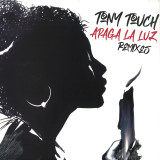
Tony Touch - Apaga La Luz (Remixes) 2x12"

“Apaga La Luz” has proven itself to be a bonified club hit with the Tony Touchand Pablo Fierro mixes released last summer 2022. A new buzz has beencreated with the brand new 2023 remixes by Two Soul Fusion AKA Louie Vega & Josh Milan, David Morales, Mike Dunn, and David Guetta. Yes you heard correct, these all star super talents have lent their expertise and made it work once again on dance floors worldwide in a big way. Just click on play and let the remixes take control.

Dancefloors at festival and clubs have been blowing up all summer to this sureshot fire choon championed by David Guetta, David Morales, Mike Dunn, Louie Vega, Anané Vega, Seth Troxler, Marco Corola, Paco Osuna, The Martinez Brothers, Pablo Fierro, and many more. Stream it, or load it in digital form, coming soon September 29, 2023 on Vega Records and what a true honor it is to have these leaders in thegame contribute their craft to these incredible remixes. Double Pack 12” Vinyl mastered by the DON of mastering Herb “Pump” Powers and Original cover art by artist RULER conceptualized by Pucci. Get the decks ready !!!

In Stock

Disponibile in Stock e pronto per la spedizione

Jackie Mittoo and The Soul Brothers - Last Train To Skaville LP 2x12"

Jackie Mittoo is one of the most important artists in the history of Jamaican music. As founding member of the legendary Skatalites, as in-house arranger/producer at Studio One and as a solo artist in his own right leading groups such as The Soul Brothers, Sound Dimension and Soul Vendors.

These classic and rare recordings were made in the mid 1960's at Studio One. The Soul Brothers bridged the gap between Ska and the arrival of Rocksteady mixing it all up with Funk, Jazz and Latin styles. The Soul Brothers recorded at Studio One between 1965-1967. This was the transitionary period between Ska and Rocksteady where the music was a mixture of Funk, Latin and Jazz sometimes with a reminder of Ska and the hint of Rocksteady.

The previous era of Ska had been dominated by the Skatalites, the first in-house band at Studio One who created classic hits such as "Guns of Navaronne", "Man in the Street", "El Pussy Cat" and many more. Unfortunately the strong personalities in the group meant that The Skatalites stayed together for less than two years. It was also around this time that the mentally unwell Don Drummond was arrested for the murder of his girlfriend, the dancer Margerita.

In August 1965, barely a week after the demise of the original Skatalites, The Soul Brothers (featuring ex-Skatalites members Jackie Mittoo, Roland Alphonso, Johnny Moore and Lloyd Brevitt) were up and running as the new house band at Studio One.

The Soul Brothers were essentially a collective, releasing material under their own name or under a nominal leader (usually Jackie Mittoo or Rolando Alphonso). The group line-up changed over time with Bobby Ellis (trumpet), Bryan Atkinson (bass), Dennis Campbell (Sax), Harry Haughton (guitarist) and Joe Isaacs (drummer) replacing various members alongside the ever present Jackie Mittoo.

REVIEWS

"Jackie Mittoo was a true star of Jamaican music; a founder member of The Skatalites, a prolific composer and the keyboard powerhouse behind many a classic tune. His simple, often hypnotic approach, to ska, rocksteady and reggae made him one of the most distinctive sounding musicians of the era." BBC.

"Jackie Mittoo was one of the great names in Jamaican music, manning the keyboards for the Skatalites, the Soul Vendors, and Sound Dimension-- three of the greatest house bands of the 60's
(and I mean anywhere, not just in Jamaica)." PITCHFORK.

In Stock

Disponibile in Stock e pronto per la spedizione

Twoonky - Ottico LP

Twoonky

Ottico LP

12inchMLPXX606
Macadam Mambo
19.06.2023

Twoonky, the brothers duo from Brescia (Italy) formed by Michele and Simone Bornati, is back on Macadam Mambo for a second album. After their brillantissimo ‘Dezzo’ from 2019, which was well noticed by the underground scene, the new opus ‘Ottico’ won’t leave you static. This is the kind of masterpiece that the more you listen, the more you love.

At the opposite of grandiloquent music that would have immediate effect, ‘Ottico’ is much more subtile, surfing on a cool wave of styles, a collage of vibes going from 70’s Kraut to 90’s Trip-Hop, where the analog sounds of guitars, synths, distorded voices, saxo, samples and electronics FX match so well, creating an ensemble in the unique mutant flow of the Twoonky’s that makes it so intemporal and so modern in the meanwile. It’s not about being curious, it’s about being open on crossing boundaries, like they are used to do with their unique place called Spettro in Brescia, where all the avant-garde of the electronic scene is coming to perform.

‘Ottico’ could be a kind of representation of the spirit of Spettro, and possibly one of the most interesting release of 2023. We don’t know why, but it’s true, Italians do it better 

In Stock

Disponibile in Stock e pronto per la spedizione

SHIVA - NEVER GONNA GIVE YOU UP

Two lost Disco classics appearing for the first time on a single 12” featuring soul legend Leon Ware and Jo Ann Harris, a little known backing singer for Bob Dylan throughout the 80s.

Both songs originally appeared on the ‘20 Minute Workout’ Video and LP released in 1983 by Canadian label Ronco, ‘What Does It Take’ providing an uptempo crescendo to the third part of the workout and ‘Never Gonna Give You Up’ the final warm down track. Licensed from producer Ira Newborn, Hollywood soundtrack royalty who composed the scores for an incredible run of films including The Blues Brothers, Ferris Bueller’s Day Off, The Naked Gun trilogy, Weird Science, Ace Ventura and Uncle Buck. Ira’s lawyer persuaded him to get involved in the project for Ronco and it was Ira who hand picked Leon Ware and Jo Ann Harris to add vocals to two tracks to aid the commercial potential of the album.

There are two original versions backed with extended instrumentals sourced from a rare Lazer Disc Version of the album. It feels right to shine a light on one of Leon Ware’s lesser known performances, whilst the Jo Ann Harris cut has a distinct Balearic air featuring sultry keys and sax at a tempo of 98 BPM.

In Stock

Disponibile in Stock e pronto per la spedizione

John Rocca - Reflections of the Sun

Reflections of the Sun is a collection of new music that see JOHN ROCCA experiment with a more laid back side to his musical personality. John is best know in Jazz Funk circles for his 1980s self funded, self produced and self released Brit Funk classic 'Southern Freeez', and as the band Freeez's founder.

"The melancholic suburban soul of ‘Southern Freeez’ never gets tired for me....an album that has remained at the top of my Brit Funk pile!" - GILLES PETERSON

Much of the album is also somewhat reflective. A personal and emotional reflection on John's life - the tracks a nod to John's varied musical pasts. Sounds, a pondering upon his collection of global influences and his life experiences over the years; Genre, the pulse of today, societal, musical or otherwise - but not easy to place as is John's character; Lyrics, the present dilemmas we face as humanity, whilst reflecting on our own private and deepest human feelings, of life and, of love in all its wonderous forms.

Musically, the 'Reflections of the Sun' album casts a glimpse back to Rocca's Brit Funk roots growing up amongst 1970s classic Jazz Funk and Soul, while also blending inspiration from his 1980-90s electronic influences topped off with everything else he has seen and heard on his life travels since then.

Giving a nod to John's own past while bringing Reflections of the Sun up to date was completed by adding elements of London's re-surgent and vibrant jazz scene. Not so different from John’s own early days jamming with Freeez, he is accompanied on all the album's tracks by his two young nephews and highly respected jazz musicians, Benjamin Rocca on keyboards and Joel Rocca on Saxophone. The two youngsters are known on the current London Jazz scene as the "Rocca Brothers".

The album's title track, "Reflections of the Sun" refers to how humanity, gorging on the sunshine that brings life to everything, also has a tendency to reflect the hellishness of the sun itself. Comparing our self-destructive nature with our planet's volumes of un-ending beauty.

Initial support for various tracks has come via radio plays on UK stations such as JazzFM, Jazz Funk & Soul Radio (JFSR), Soul Groove Radio and Solar (amongst others).

In Stock

Disponibile in Stock e pronto per la spedizione

Grupo Um - Starting Point LP

In 1975, under the oppressive air of military dictatorship in Brazil, brothers Lelo and Zé Eduardo Nazario invited bassist Zeca Assumpção to join their musical experiments in a basement under Sao Paulo’s Teodoro Sampaio Street. As teenagers, the trio had already been playing together in Hermeto Pascoal’s Grupo, alongside guitarist Toninho Horta and saxophonist Nivaldo Ornelas, and it was while working together under Hermeto’s direction that the Paulista rhythm section (as they were then known) began to realise their own potential.

With many nightclubs and venues closed in the mid-70s and government censors dictating the output of radio, TV and art galleries, many Brazilian artists fled during the years of dictatorship. But underground, Grupo Um were fusing avant garde ideals with contemporary jazz and Afro Brazilian rhythm; making phenomenally free and expressive music - in stark contrast to the sterile, conservative conditions being imposed above ground.

Just like Hermeto Pascoal’s Viajando Com O Som from the following year, Starting Point was recorded over two days at Vice-Versa Studios, by revered engineer Renato Viola. The studio was one of the best in Sao Paulo and musicians communicated with engineers through cameras and a monitor, allowing the group complete immersion in the process. They also made use of the studio’s hemispherical tiled room, which served as an acoustic reverberation chamber.

The album begins with Zé Eduardo Nazario’s thunderous drum solo on “Porão da Teodoro”, before clearing the clouds with the lone Berimbau which opens “Onze Por Oito”. Built around a hypnotic electric bass line, heady Fender Rhodes improvisations, and more rip-roaring drums, it’s a rapturous, electrifying freak-jam in 11/8.

Like some invertebrate deep-sea curiosity, the free-form “Organica” is made up of Lelo Nazario’s playfully eerie prepared piano, with Zé Eduardo’s percussion flurries darting around Assumpçao’s double bass. The equally non-conformist, percussion-only piece “Jardim Candida” features many of Zé Eduardo’s home-made instruments, including a long saw blade played with vibraphone sticks and violin bow. While working with Hermeto, Zé Eduardo famously built his own all-in-one percussion set-up known as the “Barraca de Percussão” (Percussion Tent) - the first of its kind in Brazil, which he would also use on Hermeto Pascoal’s Viajando Com O Som and throughout his career.

“Suite Orquidea Negra'' (Black Orchid Suite) was written by Lelo Nazario as the score for an imaginary movie - the story of a rare, black orchid which produced a substance meant to cure all diseases, but which had mysteriously disappeared from the laboratory… “As a screenplay it’s not very good” reflects Lelo in jest, “but the music ended up being very interesting, the way its parts are chained to one another carries a little of the mystery I imagined for the movie.”

The album closes with the triumphant “Cortejo dos Reis Negros” (Procession of Black Kings) - a groovy variation on the Maracatu rhythm, with a two-note bassline underpinning piano improvisations, exultant wordless vocals, cuicas, slide-whistles and a very special guest appearance from Zé’s dog Bolinha.

Starting Point was to mark the inception of one of Brazil’s most daring instrumental groups. Their debut now sits in the lofty echelon of otherworldly 70s Brazilian music, alongside the likes of Marcos Resende & Index’s self-titled debut, Cesar Mariano & Cia’s Sao Paulo Brasil, Azymuth’s debut and indeed Hermeto Pascoal’s Viajando Com O Som. But just like all of those titles, which were either shelved or largely ignored at the time, Grupo Um - so radically ahead of their time - struggled to find a label to release their debut album. So Lelo kept the tapes safe in his archives, which is where they sat for almost half a century. Finally, almost fifty years later, this mesmerising piece of history is here, and it was only the beginning...

Grupo Um’s Starting Point will be released by Far Out Recordings, on vinyl LP, with an insert featuring unseen photos and liner notes by the Nazario brothers, as well as a CD on 17th February 2023.

In Stock

Disponibile in Stock e pronto per la spedizione

KOSMO SOUND - FRUIT OF THE VOID LP

Upcoming album 'Fruit Of The Void' to be released later this fall.
Kosmo Sound is a perfect balance of tight rhythms and extended melodies, and they constantly strive to push boundaries with their sound. Having worked together with dub legends Daniel Boyle and Alpha & Omega and having played as the support act for Adrian Sherwood, The Twinkle Brothers and Omar Perry, heavily inspired, they took refuge in the studio to record this album full of meditative sounds and dense grooves.

“It's a slow motion dub explosion.” - Woodburner

“As a mixture of Slimmah Sound, El Michels Afffair and Khruangbin in which deep dub basses flirt with thin desert blues guitars, jazzy drum patterns and tufts of saxophone.” - Indiestyle

“The canvas that these six musicians span as Kosmo Sound has a musical breadth that effortlessly ranges from dub over jazz to psych.” - daMusic

"an amalgation of styles that tickle the senses" - ReggaeVibes

“This remarkable debut makes one curious about future releases” – Irie Ites

In Stock

Disponibile in Stock e pronto per la spedizione

Shotnez - Dose A Nova LP

Shotnez

Dose A Nova LP

12inchBTR66LP
Batov Records
20.10.2022

Two decades since they formed in New York City and over ten years since their last album, Tel Aviv based quartet Shotnez are back with Dose a Nova, an album of 10 exhilarating jazz filtered jams, with vibrations indebted to tuareg desert blues, Ethiopian-jazz, 1950's Afro Cuban recordings, surf- rock and folk from across the East Mediterranean basin.

Featuring the original Balkan Beat Box producers Ori Kaplan and Tamir Muskat alongside Uri Kinrot from Boom Pam and Itamar Ziegler from The Backyard, four musicians who are all producers and share love and deep connection to hip hop and jazz, Shotnez reunited in 2020 meeting up for improvised sessions and jams, once a week over a period of about four months at a carpentry turned music studio in suburban Tel Aviv.

Downing midi cards, triggers and synths, the day to day tools for these four producers and picking up and playing their respective traditional instruments - saxophone, clarinet, guitar, bass, percussion and drums – the group was immediately liberated by the moment. In the middle of a strict lockdown, they had no preconceptions, no deadlines, no labels or managers knocking on the door. This was an opportunity to rebuild the camaraderie that developed on the other side of the world two decades back, to reconnect as brothers and seek a higher spiritual plane, all the whilst fully encouraging each other to express their diverse musical backgrounds channelled within, during their time apart.

In Stock

Disponibile in Stock e pronto per la spedizione

Green Cosmos - Morgenmusiken LP
  • A1: Eine Reise
  • A2: Fools Of Paradise
  • A3: Kalimba Walk
  • A4: Galeria
  • B1: Island
  • B2: Gowande
  • B3: Kalimba Song

In the late 1970s, four young musicians from Marsberg, Germany—despite the absence of a local jazz scene—came together to form Green Cosmos, a quartet whose sound drew equally from John Coltrane’s spiritual fire, world music traditions, free jazz, and Indian classical influences.

Morgenmusiken marks a pivotal stage in the group’s evolution, moving beyond the ballad-driven character of their debut Abendmusiken—reissued earlier this year by Frederiksberg Records—toward freer, more meditative soundscapes. Across seven previously unreleased tracks, the album blends “cosmic music” with “live compositions,” reflecting the band’s distinctive approach to spontaneous creation. Sessions often began in silence and meditation, gradually unfolding into collective improvisations.

The lineup featured Michael Boxberger on saxophone, Benny Düring on piano, and twin brothers Alfred and Ulrich Franke forming a rhythm section frequently described as having a “telepathic connection.” Joined by sitar master Narayan Govande, they shaped a sound that balanced freedom with improvisation, space, and silence. “Silence might be the most beautiful part in music,” the band once reflected. “One single note can make more of an impression than 100 notes.”

With this ethos, Morgenmusiken invites listeners on a journey both meditative and expansive - a discovery of music that feels timeless.

pre-ordina ora20.03.2026

dovrebbe essere pubblicato su 20.03.2026


Last In: 2026 years ago
Mammal Hands - Captured Spirits (2x12")

Mammal Hands are pleased to announce the release of their highly anticipated fourth album 'Captured Spirits', released 11thSeptember via Manchester tastemaker record label, Gondwana Records.

Consisting of saxophonist Jordan Smart, pianist Nick Smart and drummer and tabla player Jesse Barrett, the trio have forged a growing reputation for their hypnotic fusion of jazz and electronica and have recieved glowing recommendations from the likes of The Guardian and Gilles Peterson. Drawing on their love of electronic, contemporary classical, world, folk and jazz music, Mammal Hands take in influences including Pharoah Sanders,Gétachèw Mekurya, Terry Riley, Steve Reich and Sirishkumar Manji.

Forming in Norwich in 2012, brothers Nick and Jordan along with Jesse, developed their distinctive and polished sound with their meteoric live shows and release of three critically acclaimed albums: 'Animalia' (2014), 'Floa' (2016) and 'Shadow Work (2017). Landmark live performances have included shows at The Roundhouse London, the main stage at Field Day Festival, La Cigale Paris, Montreal Jazz Festival, Hamburg Elb Jazz, Athens Technopolis and Unit Tokyo.

non in magazzino

Ordina ora e ordineremo l'articolo per te presso il nostro fornitore.


Last In: 7 days ago
CC Sorensen - Phantom Rooms

CC Sorensen

Phantom Rooms

CassetteMAP035CS
Mappa Editions
18.02.2026

A house is something that is so deeply temporary, yet it can hold so much energy. How do we carry or leave behind those energies while transitioning into new spaces? How does each space we occupy for some time shape us and how do we tear ourselves away from it and its influence once it’s time to go? These are some of the core questions behind CC Sorensen’s new album for mappa, ‘Phantom Rooms’ – it’s a record about movement, change, transformation, family, juxtapositions… but most of all, home.

CC Sorensen was reflecting a lot on their childhood home in rural Kansas, USA while working on this music. The album could be characterised by a familial, chamber feel and both of CC Sorensen’s brothers, Ryan and Nyal Ruehlen, make an appearance on ‘Phantom Rooms’, among other instrumentalists. Using a wide palette of sounds – CC Sorensen alone in charge of keyboards, software instruments, voice, electronics, percussion, trumpet, guitar and field recordings, in addition to guests on pedal steel, voice, chimes, saxophone and drumset – the American musician crafts music as mysterious as it is inviting. The idea behind it would be almost surrealist – ghostly rooms in houses where we live – if we all didn’t know exactly what CC Sorensen means. Home isn’t something concrete, but it’s also not just an abstract concept. It’s a space beyond space; home in itself is a phantom room we enter. And what enables us to enter is the object of exploration here.

CC Sorensen’s approach is playful – tracks like “Beat Bot” and “Plastic Portals” are almost fun – but also contemplative. They make thoughtful, meandering chamber music intertwined with field recordings and electronics. Reeds, strings and percussion often set the atmosphere – sometimes airy, gentle, at other points more insistent – as the music grapples with departure, instability, deep reflection and imagined future spaces. Especially in the closing “Bexar” there’s a tangible yearning for a stable home, a longing to rekindle and keep ablaze this beautiful familial connection to a physical place. It’s both music that invites to reflect and music that in itself reflects; desires, hopes and dreams.

non in magazzino

Ordina ora e ordineremo l'articolo per te presso il nostro fornitore.


Last In: 35 days ago
Jackie Mittoo - Rides On LP
  • A1: Jah Jah Harmony
  • A2: Natty Congo Rides On
  • A3: Soulful Times
  • A4: Jumping Up
  • A5: Freedom Smile
  • A6: Taking You Somewhere
  • B1: Nanny Skank
  • B2: Look At Life
  • B3: Hard Times
  • B4: Pray To Play
  • B5: Too Bad Bull
  • B6: No Get Dub Over

Jackie Mittoo, organ and piano maestro, was also one of the founding members of Jamaica's top session band The Skatalites. Musical arranger for Studio One he provided the backbone to so many of Jamaica's finest tunes. The invention of Ska music and the sounds that rode through the Rocksteady and Reggae period all carry his stamp. Whether it be in his various incarnations, the aforementioned Skatalites, The Soul Brothers, Soul Vendors and the Sound Dimension or under his own name, his distinctive organ and piano sound and musical arrangements have all played a major part in Jamaica's musical history.

Jackie Mittoo (born 1948, Kingston, Jamaica) began playing musical instruments at a very early age. Taught piano by his grandmother he was performing live by the age of 10 and recording by the age of 15. Two Kingston bands that he played with the Rivals and the Sheiks brought him to the attention of Studio One's founder Coxsone Dodd. Who at the time was putting a group of musicians together to be his studio band. Impressed by his skills on both the organ and the piano, Jackie was asked to join in what would become Jamaica's foremost band The Skatalites. The fellow band members were Lloyd Brevett (bass), Lloyd Knibbs (drums), Don Drummond (trombone), Tommy McCook, Roland Alphonso and Lester Sterling (Sax), Johnny Moore (trumpet), Jah Jerry (guitar) and Mr Mittoo (piano). This line up ruled the Jamaican scene between 1964 - 1965 as well as inventing the Ska sound, they also performed the backing duties for the other top labels of the time including Duke Reid's Treasure Isle and Justin Yap's Top Deck label.

1965 saw The Skatalites disband and Jackie Mittoo move on to his next musical project The Soul Brothers. Formed with fellow Skatalite Roland Alphonso, this band would back all the hits coming out of Studio One for the next three years with Jackie Mittoo working as band leader and musical arranger. Around this time Jackie also had his own single released, a Ska underground classic called 'Got My Bugaloo'. Rare, as it also features Jackie in the unusual role for him, as lead singer!!!!.

1966 saw the Ska sound evolve into Rocksteady, again with Jackie's band at the helm, and his first hit single the Rocksteady cut 'Ram Jam'. The success of which would lead to a solo career and album releases under his own name such as 'Now', 'Macka Fat', 'Evening Time', 'In London' and 'Keep on Dancing', to name but a few. In1967 the hits at Studio One were still flowing when The Soul Brothers morphed into The Soul Venders and began backing such luminaries as Ken Boothe, Alton Ellis, Delroy Wilson, The Heptones, The Cables, The Wailers and many other of the labels solo artists.

By 1968 Jamaican music was ready for another change and Rocksteady rolled into a slower groove soon to be called Reggae. Jackie Mittoo would be at the forefront with his latest band The Sound Dimension. A line up that included Leroy Sibbles (bass), Roland Alphonso and Cedric Brooks (saxophone), Eric Frater and Ernest Ranglin (guitar) and Bunny Williams (drums). Being the house band at Studio One they backed all the leading names of the time, John Holt, Horace Andy and Alton Ellis, all of Studio One's output carried his sound.

Jackie Mittoo emigrated in the late 60's to Canada, but travelled to Jamaica and London to record with many of the big new names, who were trying to redress Studio One's supremacy and needed his magic touch. Such Producers as Bunny Lee used Jackie Mittoo on many of his sessions, Sugar Minott among others were always glad of his services.

We have captured some fine 1970's cuts that feature Jackies numerous talents, showing his ability to embellish tracks with a feel that few could better, Musical arranger, band leader all round studio ace. We hope you enjoy the set and I'm sure you'll agree with us Jackie Mittoo does indeed Ride On.........

pre-ordina ora13.02.2026

dovrebbe essere pubblicato su 13.02.2026


Last In: 2026 years ago
Various - We Jazz Records 7" Singles Box / Vol. 3
non in magazzino

Ordina ora e ordineremo l'articolo per te presso il nostro fornitore.


Last In: 4 years ago
Antti Lötjönen & Koma Saxo - Erzeben Strasse / Erzeben Koma

Helsinki bassist Antti Lötjönen follows up his 2020 We Jazz Records debut LP with a new 7" introducing a fresh version of key album cut "Erzeben Strasse" and throws in a wild treatment by Petter Eldh's Koma Saxo on the flipside. "Erzeben Strasse" presents Lötjönen's Quintet East lineup in fine form, swinging steadily but also adding enough sideways movement to blur the lines just a little bit. The band features a stellar Finnish cast in Lötjönen (bass), Verneri Pohjola (trumpet), Mikko Innanen (baritone sax), Jussi Kannaste (tenor sax) and Joonas Riippa (drums).

The Koma Saxo treatment of the track, dubbed here as "Erzeben Koma" is full of fire. Uplifting, a bit hectic, beat-driven and jubilant, Eldh's band of brothers double the ensemble heard on Side A, both sampling and adding new recording into the mix. The entire Koma Saxo live band is featured here: Eldh (bass/production), Otis Sandsjö (tenor sax), Jonas Kullhammar (tenor sax), Innanen (alto sax) and Christian Lillinger (drums). The modern sound of Helsinki meet Mauerpark Liquid Jazz.

non in magazzino

Ordina ora e ordineremo l'articolo per te presso il nostro fornitore.


Last In: 4 years ago
GRUPO UM - NINETEEN SEVENTY SEVEN

Grupo um celebrate 50 years with release of lost dictatorship-era album nineteen seventy seven!

First time release - vinyl comes with printed innersleeves

Brazilian avant-jazz vanguardists Grupo Um celebrate their 50th anniversary, sharing a second previously lost 1970s album from the vaults. Nineteen Seventy Seven (titled after the year it was recorded) is another rip-roaring instrumental fusion treasure from the band which spawned from within Hermeto Pascoal’s famed mid-1970s São Paulo collective.

Like their debut album Starting Point, Grupo Um’s Nineteen Seventy Seven was recorded when Brazil's military dictatorship was at its most repressive. “There were no open doors to those who dreamt to be protagonists in creative instrumental music”, remembers drummer Zé Eduardo Nazario, “even popular composers and singers had to submit their songs to censors and many records were banned and confiscated from the stores.”

Just like Hermeto Pascoal's Viajando Com O Som (1977) and Grupo Um's previous album Starting Point (1975), both of which remained unreleased until the 21st century, Zé Eduardo asserts that the 1977 album was flatly 'without any chance to be released at that time."

Recorded at Rogério Duprat’s Vice-Versa Studios in São Paulo, the group were under both time and space restraints, “we chose the small Studio B,” Lelo Nazario recalls, “which had a Tascam (TE AC) 12x8 console and a 4-channel AMPEX AG 440 machine. Therefore, we had to record without overdubs, everything straight to tape.”

Expanding from a trio to a quintet, original Grupo Um members Lelo Nazario (keys), Zé Eduardo Nazario (drums), and Zeca Assumpção (bass) were joined by saxophonist Roberto Sion and percussionist Carlinhos Gonçalves. Carlinhos, Zé and Zeca had already played together in the group Mandala, while brothers Lelo and Zé had just finished a stint backing Hermeto Pascoal during his years in São Paulo.

Lelo was deeply immersed in modular synthesizer experimentation during this period, working extensively with the ARP2600 and EMS Synthi AKS. These electroacoustic explorations formed the sonic foundation for "Mobile/Stabile," one of his first compositions to merge modular synthesis with Brazilian music, a fusion that would ripple throughout the Brazilian jazz scene. The piece premiered at the first São Paulo International Jazz Festival in 1978, performed by Grupo Um with guest trumpeter Márcio Montarroyos. In a shocking moment, festival organizers interrupted the show mid-performance, sparking fierce backlash from both audience members and journalists who denounced the incident as artistic censorship during Brazil's era of political and cultural repression. The version on Nineteen Seventy Seven is the first recording of the composition.

Nineteen Seventy Seven combines Afro-Brazilian rhythm, modular synthesis and a plethora of whistles, percussion and effects pedals. Album opener “Absurdo Mudo” - so titled for the absurd difficulty it poses to the musicians performing it - starts out in a cloud of mysterious dissonance, before the haze breaks for a glorious keyboard and saxophone interplay atop an uptempo samba groove. “Cortejo dos Reis Negros (Version 2)” (Procession of the Black Kings), based on the maracatu rhythm, inverts the traditional jazz song structure by beginning with improvisations, which are followed by the theme and a final coda. “The studio also had two Parasound electronic reverb units,” Lelo notes, “and the timbre is very audible on the soprano sax and percussion.”

Grupo Um’s daring music represents a manifesto of resistance during the dictatorship years, but it’s one which remains just as relevant today. As Lelo puts it: “For me, the aesthetic issue has always been about combining contemporary avant-garde languages with Brazilian music, independent of categories and commercial interests. The result of this fusion takes music to a new level.”

Recording credits (1977)
Recorded at Vice-Versa B Studio, São Paulo, November 9, 1977
Produced by Lelo Nazario and Zé Eduardo Nazario
Engineered by Ricardo “Franja” Carvalheira


Lelo Nazario – Wurlitzer electric piano, acoustic piano, signal generator, percussion

Zé Eduardo Nazario – drums, percussion

Zeca Assumpção – electric bass

Carlinhos Gonçalves – percussion

Roberto Sion – soprano sax, clarinet

Release credits (2025)
Produced by UTOPIA Studio, São Paulo
Project Coordination in Brazil by Irati Antonio (Utopia Studio)
Tape Restoration and Digital Mastering by Lelo Nazario at Utopia Studio, July 2025
Liner Notes by Lelo Nazario and Zé Eduardo Nazario
Photography by Jorge Las Heras, Lelo Nazario, and artists' personal archives
Photo Restoration by Lelo Nazario
Artwork and Design by Alessandro Renaldin

pre-ordina ora30.01.2026

dovrebbe essere pubblicato su 30.01.2026


Last In: 2026 years ago
Various - On A Roll - Live (2x12")

Various

On A Roll - Live (2x12")

2x12inchLP31478
Leopard
05.12.2025
  • 1: Signed, Sealed And Delivered
  • 2: Along The Coast
  • 3: Two Brothers (As One)
  • 4: Close Call
  • 5: Donkey
  • 6: In Good Hands
  • 7: Exactly Like You
  • 8: Say It Again
  • 9: Cruisin
  • 10: Leaving Paradise
  • 11: On A Roll
  • 12: Quite Logical
  • 13: All That Matters
  • 14: Watching The River Flow

It was in Studio 4 of WDR in January 2022 when Simon Oslender first met Steve Gadd during the recording session for the album 'Centerstage'. Guitarist Bruno Muller was also there. The chemistry between the musicians was right from the very first time they played together. At the end of the session, Steve Gadd said to Simon and Bruno: "We'll do more together." And that's exactly what happened! Simon Oslender's highly successful studio album 'All That Matters' was recorded at the end of 2023.

Will Lee was also there on bass, who together with Steve Gadd has been one of the most famous rhythm sections in pop and jazz history for almost 40 years. At the end of the recording session, it was clear to everyone involved: this band had to go on tour to present this music to fans live. In December 2024, the time had come. The band, joined here and there by guests Jakob Manz on alto saxophone and Nils Landgren on trombone, went on tour. All concerts were sold out; the atmosphere in the respective venues was magnificent; thunderous applause and encores in every club or concert hall. Every concert was recorded. Now the result is here. An album full of joy, musicality, spontaneity, creativity, and incredible grooves! 'On A Roll - Live', a concert to take home with you. It doesn't get any better than this!

pre-ordina ora05.12.2025

dovrebbe essere pubblicato su 05.12.2025


Last In: 2026 years ago
Various - Dolores: Salsa & Guaracha From 70's French West Indies

In Guadeloupe, many people think that jazz and ka music are like a ring and a finger. To some extent, the same could be said about so called Latin music and the music played in the French West Indies.

Both aesthetics were born in the Caribbean and bear so many connections that they can easily be considered cousins. In constant dialogue, there are lots of examples of their fruitful alliance and have been for a while. The English country dance that used to be practiced in European lounges came to be called kadrille in Martinique and contradanza in Cuba. They both featured additional percussion instruments inherited from the transatlantic deportation. Drawing from shared feelings about the same traumatized identity – later to be creolized – it would be hard not to assume that they were meant to inspire each other. The golden age of the orchestras that graced the Pigalle nights during the interwar period further proves the point. As soon as the 1930s, Havana-born Don Barreto naturally mixed danzón and biguine music in a combo based at Melody's Bar. In the following decade, Félix Valvert, a conductor who was born and raised in Basse-Terre in Guadelupe, also worked wonders in Montparnasse with La Coupole, which was an orchestra made up of eclectic musicians. Afro- Caribbean performers of various origins were often hired on rhythm and brass sections in jazz bands, which used to enliven the typical French balls of the capital. In the 1930s and onwards, Rico’s Creole Band was one of them.


Martinican violinist-clarinettist Ernest Léardée, who would become the king of biguine music as well as the main figure of French Uncle Ben's TV commercials (a dark stigma of post-colonial stereotypes), had musicians from the whole Caribbean sphere play at his Bal Blomet – and they all enchanted "ces Zazous-là" (according the words of Léardée's biguine-calypso piece). In les Antilles (French for French West Indies), music history started to speed up in the 1950s, when trade expanded and radio stations grew bigger. The Guadelupean and Martiniquais youth tuned in their old galena radio sets to South American and Caribbean music. As for the women traders, les pacotilleuses, they bought and sold goods across different islands (the "passing of items through various hands" was thought to be most pleasurable) and brought back countless sounds in their luggage. Such was the case of Madame Balthazar, who once returned from Puerto Rico with the first 45rpm and 33rpm to ever enter Martinique.

Out of this adventure was created the famous Martinican label La Maison des Merengues, a music business she opened and undertook with her husband and which proved to be a major landmark. At the end of the 1950s, in Puerto Rico, Marius Cultier competed in the Piano International Contest playing a version of Monk's Round 'Midnight. He won the first prize and this distinction foreshadowed everything that was to come. Cultier, the heretic Monk of jazz, was quickly praised for writing superb melodies, always tinged with a twist that conferred a unique sound to his music. It didn't take long for the gifted self-taught musician to get to play with Los Cubanos, making a name for himself thanks to his impressive maestria on merengues.

The rest is history. Besides, in the late 1950s, Frantz Charles-Denis, born into the upper middle class in Saint-Pierre and better known by his first name Francisco, went back home after working at La Cabane Cubaine – a club located rue Fontaine where he had caught the Latin fever. Francisco's music was therefore heavily marked by his Cuban cousins' influence, which gave the combos he led a specific style and also led to renewal. Things were swinging hard in La Savane, located in the main square in Fort-de-France. He set up the Shango club close by and tested out the biguine lélé there, a new music formula spiced up with Latin rhythms. Soon afterwards, fate had him fly to Puerto Rico and Venezuela.

As for percussionist Henri Guédon (percussions were only a part of his many talents), he was born in Fort-de-France in May 22nd 1944, the day marking the celebration of the abolition of slavery. As an old man, he could remember that in " his father's Teppaz, a lot of hectic 6/8 music was constantly playing...". In the opening lines of his Lettre à Dizzy, a small illustrated collection of writings published by Del Arco, he highlighted the huge impact that cubop had on him as a teenage boy, around 1960. He eventually turned out to be the lider maximo in La Contesta, a big band steeped in Latin jazz. He was also the one who originated the word zouk to describe music which brought the sound of the New York barrio to Paris. It was the culmination of a journey that started in Sainte-Marie: "a mythical place for bélé, the equivalent of Cuban guaguancó". In the early 1960s, the tertiary economy developed to the detriment of agriculture. Yet rural life was where roots music emerged in Martinique and in Guadeloupe.

Record companies played a major part in the process of Latin versions sweeping across the islands – before reaching everywhere else. Producer Célini, boss of the great Aux Ondes label, and Marcel Mavounzy, both the head of Émeraude records - a firm which was founded in 1953 - as well as the brother of famous saxophonist Robert Mavounzy, were big names to bear in mind. Although there were many of them - all of whom are featured on this record - Henri Debs was definitely the major figure in the recording adventure. He proved to be so influential that he even got compared to Berry Gordy. In the mid 1950s, when he acquired his first Teppaz, he worked on his first compositions: a bolero and a chachacha. Then, he became the one man who made people discover Caribbean music, from calypso to merengue. He was among the first ones to rush out to San Juan, Puerto Rico, to buy records and distribute them through a store run by one of his brothers in Fort-de-France. He had members of the Fania All Star come and perform there, which he was madly proud about. He was also the first one to pay attention to Haitian music, such as compas direct and various other rhythms which would soon flood the market. As a result, many of the combos hitting his legendary studio would end up boosted by widespread "Afro-Latin" rhythms. However, he never denied his identity: gwo ka drums were given a major role, although they were instruments which had long been banned from the "official" music spheres. The present selection bears witness to such a creative swarming. Here are fourteen tracks of untimely yet unprecedented cross-fertilization: all types of music rooted in the Creole archipelago have found their way, whatsoever, to the tracklisting. Whether originating from the city or being more rural, they all go back to what Edouard Glissant, in an interview about the place of West Indian music in the Afro-American scope, called "the trace of singing, the one which got erased by slavery." "It is so in jazz, but also in reggae, calypso, biguine, salsa... This trace also manifests through the drums, whether Guadelupean, Dominican, Jamaican or Cuban... None of them being quite the same. They all point to the idea of a trace, seeking it out and connecting to each other through it. This is the hallmark of the African diaspora: its ability to create something new, in relation to itself, out of a trace. It may be the memory of a rhythm, the crafting of a drum, a means of expression which doesn't resort to an old language but to the modalities of it." The opening track features one of the emblematic orchestras of this aesthetic identity, criscrossing many music types from the archipelago. The 1974 Ray Barretto guajira – Ray Barretto was a major New York drummer influenced by Charlie Parker and Chano Pozzo – is magnificently performed by Malavoi, a legendary Fayolais group (i.e from Fort-de-France). Additionally, the compilation ends on a piece by Los Martiniqueños de Francisco. It symbolically closes the circle as it is a genuine potomitan of Martinique culture which also functions as a tireless campaigner for Afro-Caribbean music. Practicing the danmyé rounds (a kind of capoeiria) to the rhythm of the bèlè drum, it delivers a terrific Caterete, a kind of champeta of Afro- Colombian obedience which was originally composed by Colombian Fabián Ramón Veloz Fernández for the group Wgenda Kenya. The icing on the cake is Brazilian Marku Ribas, who found refuge in Martinique in the early 1970s, bringing his singing to the last trance-inducing track. These two "versions" convey the whole tone of a selection composed of rarities and classics of the tropicalized genre, swarming with tonic accents and convoluted rhythms. It is the sort of cocktail that the West Indians never failed to spice up with their own ingredients. For instance, the Los Caraïbes cover of Dónde, a famous Cuban theme composed by producer Ernesto Duarte Brito, has a typical violin and features renowned Martinique singer Joby Valente and his piquant voice.


The track used to be – or so we think – their only existing 45rpm. The meaningful Amor en chachachá by L'Ensemble Tropicana, a band which included Haitian musicians among whom was composer and leader Michel Desgrotte, also recalls how Latin music was pervasive in the tropics in the mid-1960s. They were the ones keeping people dancing at Le Cocoteraie in Guadelupe and La Bananeraie in Martinique. Around the same time, another "foreign" band, Congolese Freddy Mars N'Kounkou's Ryco Jazz, achieved some success on both islands by covering Latin jazz classics – such as their adaptation of Wachi Wara, a "soul sauce" by Dizzy Gillespie and Chano Pozo whose interweaving of strings and percussions can have anyone hit the dancefloor. How can you resist Dap Pinian indeed, a powerful guaguancó by Eugene Balthazar, performed by the Tropicana Orchestra and published by the Martinique-founded La Maison des Merengues? It also acts as a symbol of the maelstrom at work. Going by the name Paco et L'orchestre Cachunga, Roger Jaffory used to play guaguancó too: his Fania-inspired Oye mi consejo is one example of his style. Baila!!!!! Dancing was also one of the Kings' focus points. Oriza is a Puerto Rican bomba and a "classic" originally composed by Nuevayorquino trumpeter Ernie Agosto, which reserves major space for brasses, giving it a special sheen.

Emerging from the New York barrios crucible was also La Perfecta, a Martinique group originating from Trinidad, whose name directly references the totemic Eddie Palmieri figure as well as his own band, also called La Perfecta. Here they borrow Toumbadora from Colombian producer and composer Efraín Lancheros and interpret it by emphasizing percussions, which set fire to the track even more than the wind instruments. The same goes for Martinique's Super Jaguars, who use Tatalibaba – a composition by Cuban guitarist Florencio "Picolo" Santana which was made famous by Celia Cruz & La Sonora Matencera – as a pretext for sending their cadences into a frenzy. In a more typically salsa vein, the Super Combo, a famous Guadelupean orchestra from Pointe-Noire that was formed around the Desplan family and had Roger Plonquitte and Elie Bianay on board, adapt Serana, a theme by Roberto Angleró Pepín, a Puerto Rican composer, singer and musician also known for his song Soy Boricua. Here again, their vision comes close to surpassing the original. In the 1970s, L'Ensemble Abricot provided a handful of tracks of different syles, hence reaching the pinnacle of the art of achieving variety and giving pleasure. They played boleros, biguines, compas direct, guaguancó and even a good old boogaloo - the type they wanted to keep close to their hearts for ever, "pour toujours", as they sang along together in one of their songs. Léon Bertide's Martinican ensemble excelled at the boogaloo which had been composed by Puerto Rican saxophonist Hector Santos for the legendary El Gran Combo.


Three years later, in 1972, Henri Guédon, with the help of Paul Rosine on the vibraphone, tackled the Bilongo made famous by Eddie Palmieri. Such a classic!!!!! And so were the Aiglons, the band from Guadelupe: choosing to execute Pensando en tí, a composition by Dominican Aniceto Batista, on a cooler tempo than the original, they noticeably used a wonderfully (un)tuned keyboard in place of the accordion. On the high-value collectible single – the first one released by Les Aiglons under the Duli Disc label – there is a sticker classifying the track under the generic name "Afro". Now that is what we call a symbol. Jacques Denis

non in magazzino

Ordina ora e ordineremo l'articolo per te presso il nostro fornitore.


Last In: 7 days ago
Marcellus Pittman - I'm Gonna Be The Everything (Japanese Import Edition)

Detroit's Marcellus Pittman is one of house music's most unpredictable characters. He was a key member of the legendary 3 Chairs collective but his solo work is arguably even more essential. Here he delivers a standout track from the long sold-out 'The Eastside' EP on Adeen Records. 'I'm Gonna Be the Everything' captures the essence of Detroit deep house with its sparse, driving drums and a thumping bassline and it is rightly given a whole side here for maximum volume. Flip it over for Adeen's in-house live jazz ensemble, A Band of Brothers, rework with lush vibraphone layers and soothing saxophone melodies.

non in magazzino

Ordina ora e ordineremo l'articolo per te presso il nostro fornitore.


Last In: 7 months ago
Dog Trumpet - Live Forever

Dog Trumpet

Live Forever

12inchDEMREC1300
Demon Records
14.07.2025
  • 1: Veil Of Rain
  • 2: Live Forever
  • 3: High On The Rocks
  • 4: Space And Time
  • 5: Nobody Knows
  • 6: Waltz Of The Wind
  • 7: Marianne
  • 8: Ding Dong Butterfly
  • 9: Eileen
  • 10: Under Water
  • 11: Ancestral Ireland

Fronted by brothers Peter O'Doherty and Reg Mombassa , Dog Trumpet have been playing, writing and recording their music since the early 90s. Reg and Pete were founding members of iconic Australian band Mental As Anything, who hit the charts around the world with “Live It Up”. The band made a mark with their left field mix of music, art, video and humour and leading eventually to ARIA awards and induction into the Hall of Fame in 2009.

Dog Trumpet’s new album Live Forever is the result of 2 years in the studio.

For this, their ninth album , the song writing brothers Peter and Reg have brought Peter’s multi instrumentalist son Declan in on drums, production and mixing duties, enhancing and expanding their sonic palette.

At times psychedelic and ethereal, the album weaves together Dog Trumpet’s signature acoustic and electric guitar and bass driven sound with melodic drums, synthesisers, mandolin, saxophone and added backing vocals by their touring bass player Bernie Hayes.

pre-ordina ora14.07.2025

dovrebbe essere pubblicato su 14.07.2025


Last In: 2026 years ago
PROHIBITION - COBWEB-DAY (REVISITED)

In 1995, when Cobweb-day was released, Fabrice Laureau was 24, Nicolas Laureau 21, Ludovic Morillon 22, and Quentin Rollet, who had just joined them on this new album, was 21. Prohibition, founded in 1989, had already released two albums: Turtle in 1993 and Nobodinside in 1994, on the Distorsion label. Cobweb-day, literally "Spider-web Day," is poetic, satirical, and libertarian. A title conceived by Nicolas to express all the feelings and themes explored on the album, this neologism also echoes the artwork on the cover. The lyrics describe, in vitriolic poetry and with a touch of self-deprecation, a world based on the powers of commodification and order, on submission to modern Molochs. Thirty years ago, it addressed themes such as the trade in minds and bodies, Kafkaesque justice, state violence, and Western blindness. Is this a coincidence that might raise a smile? Fabrice and Nicolas were both conscientious objectors at the time the album was written. The deceptively childish drawing that adorns the cover was created by Fabrice in 1989. It evokes African art and the skyscraper where the brothers grew up. Its title? "Glances on the Horizon." Yet, in these naive eyes, locked in a rhizomic matrix, there is the disturbing sensation of being observed, scrutinized, or perhaps imprisoned. This is Cobweb-day. During this period, the band spent its entire life touring with the British post-punk trio Headcleaner and the furious Lyon-based Condense. Their correspondence, followed by a meeting in 1994 with Guy Picciotto, singer-guitarist in Fugazi, led to a series of concerts with the Washington, DC quartet, around the time of the album's release in the spring of 1995. Quentin Rollet gradually joined the band, first on stage and then on the records. The concerts of this era often ended with long improvisations featuring saxophone, sitar, bass, and drums. Prohibition had emerged from the shadows, but chose to continue evolving underground, with the Laureau brothers creating their label Prohibited Records. Cobweb-day serves as the first reference. Thirty years ago, then. The album was recorded at Ark Studios near Paris in January 1995, along with eight other previously unreleased tracks. This new mix was created at Black Box Studios by Peter Deimel and Nicolas from 24-track analog tapes in August 1998, shortly before the release of 14 Ups & Downs, Prohibition's fifth and final album, and their US tour. All tracks were remastered by Fabrice and Nicolas Laureau in March/April 2025.

pre-ordina ora11.07.2025

dovrebbe essere pubblicato su 11.07.2025


Last In: 2026 years ago
ALLMAN BROTHERS BAND - Cream Of The Crop 2003 - Highlights
  • A1: Don't Want You No More; Written-By – Edward Hardin (2), Spencer Davis
  • A2: It's Not My Cross To Bear; Written-By – Gregg Allman
  • A3: Rocking Horse; Written-By – Allen Woody, Gregg Allman, Jack Pearson, Warren Haynes
  • A4: Hot 'Lanta; Written-By – Berry Oakley, Butch Trucks, Dickey Betts, Duane Allman, Gregg Allman, Jai Johanny Johanson
  • B1: Old Before My Time; Written-By – Gregg Allman, Warren Haynes
  • B2: Come And Go Blues; Written-By – Gregg Allman
  • B3: Desdemona; Written-By – Gregg Allman, Warren Haynes
  • C1: Trouble No More; Written-By – Mckinley Morganfield
  • C2: Midnight Rider; Written-By – Gregg Allman, Robert Payne
  • C3: In Memory Of Elizabeth Reed (Part 1); Written-By – Dickey Betts
  • D1: In Memory Of Elizabeth Reed (Part 2); Written-By – Dickey Betts
  • E1: Statesboro Blues; Written-By – Bill Mctell*
  • E2: Don't Keep Me Wonderin'; Written-By – Gregg Allman
  • E3: The High Cost Of Low Living; Written-By – Gregg Allman, Jeff Anders, Ronnie Burgin, Warren Haynes
  • E4: Melissa; Written-By – Gregg Allman
  • F1: Soulshine; Written-By – Warren Haynes
  • F2: Whipping Post; Saxophone – Branford Marsalis; Written-By – Gregg Allman
pre-ordina ora16.06.2025

dovrebbe essere pubblicato su 16.06.2025


Last In: 2026 years ago
NINA SIMONE - Little Girl Blue
  • Mood Indigo
  • Don’t Smoke In Bed
  • He Needs Me
  • Little Girl Blue
  • Love Me Or Leave Me
  • My Baby Just Cares For Me
  • He’s Got The Whole World In His Hands
  • For All We Know
  • Good Bait (Instrumental)
  • Plain Gold Ring
  • You’ll Never Walk Alone
  • I Loves You Porgy
  • Central Park Blues (Instrumental)
  • African Mailman

"Little Girl Blue, released in 1957, was Nina Simone's first studio recording ever. It was originally issued on the Bethlehem label and features the singer/ pianist backed by bassist Jimmy Bond (who had been a member of the Chet Baker Quartet among other groups) and drummer Albert ""Tootie"" Heath, one of the celebrated Heath brothers (the other two being saxophonist Jimmy Heath, and bassist Percy Heath). Many of the tracks from this LP would become true classics, among them her perennial version of ""My Baby Just Cares For Me"".

THE COMPLETE ALBUM + 3 BONUS TRACKS - 180-GRAM VIRGIN VINYL -
LIMITED EDITION"

pre-ordina ora11.04.2025

dovrebbe essere pubblicato su 11.04.2025


Last In: 2026 years ago
Johnny and Edgar Winter - Together LP

JohnnyandEdgar Winter

Together LP

12inchMOVLP3842
Music On Vinyl
21.02.2025
  • A1: Harlem Shuffle
  • A2: Soul Man
  • A3: You’ve Lost That Lovin’ Feelin’
  • A4: Rock & Roll Medley
  • B1: Let The Good Times Roll
  • B2: Mercy, Mercy
  • B3: Baby, Whatcha Want Me To Do

Johnny and Edgar Winter - Together: Live (1976) is the first ever album featuring both brothers, Johnny Winter (guitar, vocals) and Edgar Winter (saxophone, vocals). Released just three months after Johnny Winter’s Captured Live!, it is composed entirely of rock and roll and soul standards. This album is a chance to hear The Edgar Winter Group (Edgar on saxophone, Rick Derringer on guitar, Dan Hartman on piano and Chuck Ruff on drums) playing with Johnny Winter’s band (Johnny and Floyd Radford on guitar, Randy Jo Hobbs on bass and Richard Hughes on drums) together on a same stage. The album was live recorded at San Diego Sports Arena and Swing Auditorium.

This MOV release comes as a limited edition of 1000 individually numbered copies on white marbled coloured vinyl.

pre-ordina ora21.02.2025

dovrebbe essere pubblicato su 21.02.2025


Last In: 2026 years ago
Mustafa - Polygamy

Heavyweight Black Vinyl / Original glued prints on Thick Cardboard 700 gram / 2 Separated parts hand-glued / Glossy lamination / PVC outer sleeve / Insert with 10 pages Booklet 30 x 30 cm printed on Gmund Colro Felt Red Purplea d 90 Gram Favini papers with detailed interview between Tony Higgins and Mustafa's family (his sisters and children are all musicians), as well as an insight into the recording of the album with Gregory Bufford, the drummer for the session, lyrics and exclusive pictures.


Colored Vinyl Details:
Heavyweight "A side - B side solid purple + transparent blue" vinyl / Original glued prints on Thick Cardboard 700 gram / 2 Separated parts hand-glued / Glossy lamination / PVC outer sleeve / Insert with 10 pages Booklet 30 x 30 cm printed on Gmund Colro Felt Red Purplea d 90 Gram Favini papers with detailed interview between Tony Higgins and Mustafa's family (his sisters and children are all musicians), as well as an insight into the recording of the album with Gregory Bufford, the drummer for the session, lyrics and exclusive pictures.

Peronnel:
Mustafa Abdul Rahman - Tenor Saxophone, Percussion, Producer
Ahmed Abdullah - Trumpet
Malachi Thompson - Drums
Gregory Bufford - Bass
Richard Radu Williams - Piano
Rafik Abdur Rahim
Tony Smith - Guitar
Larry Banks - Synthesizer
Khalil Abdullah - Congas
Babafumi Akunyon - Percussions
Odell Grier Backing Vocals – Fred Harley, Hilda "Asia" Richbow , Linda Hall

Notes:
In the course of our deep research, we sometimes discover a hidden thread that unites musicians, songwriters, artists, and poets linked by music. Mustafa's 'Polygamy' is no exception. Apart from the music - the main reason we decided to work on this first ever re-press, a jewel at the crossroads between jazz funk, spiritual jazz and proto rap - are the many other things that make Mustafa an intriguing and fascinating character. For starters, he was a childhood friend of the Ayler brothers with whom he played in different formations. He also played with other beloved figures such as Noah Howard and Charles Tyler, on a still unreleased album recorded for Amiri Baraka's Jihad label, and worked with The Legendary Master Brotherhood and Steve Reid. This and much more will be revealed in a detailed interview between Tony Higgins and Mustafa's family (his sisters and children are all musicians), as well as an insight into the recording of the album with Gregory Bufford, the drummer for the session.

pre-ordina ora14.02.2025

dovrebbe essere pubblicato su 14.02.2025


Last In: 2026 years ago
Julian & Roman Wasserfuhr feat. Jörg Brinkmann - Safe Place LP
  • Vent Chaud
  • Dodo 04:08
  • Dancing Windmills
  • Movimiento 04:57
  • Fields Of Gold
  • Solitude 03:20
  • El Caballo Valiente
  • Luzifer
  • Safe Place
  • Perfect Tiny Moment

The German jazz duo Roman and Julian Wasserfuhr craft an intimate refuge through music. This is not about a physical destination—it’s a state of mind, a sanctuary for reflection and focus amidst the noise of modern life. Joined by cellist Jörg Brinkmann and saxophonist Paul Heller, the brothers craft an intimate, heartfelt soundscape that celebrates genuine connection and invite the listener on a musical journey away from distractions, offering clarity and tranquility. It’s a celebration of friendships, authenticity, and the power of music to ground us in what truly matters.

pre-ordina ora31.01.2025

dovrebbe essere pubblicato su 31.01.2025


Last In: 2026 years ago
DANA AND ALDEN - QUIET MUSIC FOR YOUNG PEOPLE LP

Red Vinyl. Brothers Dana and Alden McWayne, along with a troupe of multi-instrumental artists, come together to create jazzy melodies with indie sounds inspired by their unconventional upbringing in Eugene, Oregon. Dana (saxophone) is an organic farm inspector while Alden (drums) is a recent grad of Berklee College of Music. Their debut full-length album, Quiet Music for Young People, is a lush album that melds vintage sounds with the aesthetic and experience of existing in Gen Z and the digital age. Quiet Music For Young People also reminisces of the brother's childhood, summer days spent working at an apple orchard and jamming at jazz clubs on rainy Oregon nights. The experimental smooth jazz-infused album closer "Dragonfly" has been gaining traction on streaming due to trends across Instagram and TikTok. The band has recently toured across the US supporting Benny Sings and will be making their headline debut at NYC's Baby's All Right this winter.

non in magazzino

Ordina ora e ordineremo l'articolo per te presso il nostro fornitore.


Last In: 13 months ago
Belmondo Quintet - Brotherhood

Belmondo Quintet

Brotherhood

12inchJP21BF001LP
jazz&people
21.01.2025

The long-awaited new album by the Belmondo
Brothers, their first in a decade.
Renowned internationally for their collaborations
with such luminaries as Milton Nascimento and
Yusef Lateef, trumpeter Stéphane Belmondo and
his brother saxophonist Lionel - the most famous
jazz siblings in France - celebrate their artistic
reunion.
The brothers salute their masters and synthesize a
quarter of century of musical adventures via a
series of new original compositions.
Featuring songs inspired and dedicated to Wayne
Shorter, Bill Evans, Yusef Lateef, Woody Shaw
and their late father Yvan.
Featuring the great Belgian Eric Legnini on piano
and a tight and full-bodied jazz quintet.
An original mix of modal and spiritual jazz with
hints of classical liturgical influences and ethnic
vibes.
For fans of John Coltrane, the Blue Note albums of
Wayne Shorter, Bill Evans, Freddie Hubbard,
Yusef Lateef, Herbie Hancock, Jacky Terrasson,
Lili Boulanger.

non in magazzino

Ordina ora e ordineremo l'articolo per te presso il nostro fornitore.


Last In: 14 months ago
The Last Poets & Tony Allen feat. Egypt 80 - Africanism LP

"This is the time that we, who have benefitted from the Last Poets shouldbe able to say, 'it's the Last Poets. It's them we should be honouring, because we did not honour them for so many years_"

KRS One wasn't just addressing the hip hop fraternity when he uttered
those words by way of introducing the video for Invocation - a poem
written thirty years ago, around the time of the Last Poets' last significant comeback. He was speaking to everyone who's been affected by the word, sound and power issuing from the most revolutionary poetry ever witnessed, and that the Last Poets had introduced to the world outside of Harlem at the dawn of the seventies.

In 2018 the two remaining Last Poets, Abiodun Oyewole and Umar Bin
Hassan, embarked on another memorable return with an album -
Understand What Black Is - that earned favourable comparison with theirseminal works of the past, whilst showcasing their undimmed passion andlyrical brilliance in an entirely new setting - that of reggae music. Trackslike Rain Of Terror ("America is a terrorist") and How Many Bullets demonstrated that they'd lost none of their fire or anger, and their essential raison d'etre remained the same.

"The Last Poets' mission was to pull the people out of the rubble o f their lives," wrote their biographer Kim Green. "They knew, deep down that poetry could save the people - that if black people could see and hear themselves and their struggles through the spoken word, they would be moved to change."

Several years later and the follow-up is now with us. The project started when Tony Allen, the Nigerian master drummer whose unique polyrhythms had driven much of Fela Kuti's best work, dropped by Prince Fatty's Brighton studio and laid down a selection of drum patterns to die for. That was back in 2019, but then the pandemic struck. Once it had passed, the label booked a studio in Brooklyn, where the two Poets voiced four tracks apiece and breathed fresh energy, fire and outrage into some of the most enduring landmarks of their career. Abiodun, who was one of the original Last Poets who'd gathered in East Harlem's Mount Morris Park to celebrate Malcolm X's birthday in May 1968, chose four poems that first appeared on the group's 1970 debut album, called simply The Last Poets. He'd written When The Revolution Comes aged twenty, whilst living in Jamaica, Queens. "We were getting ready for a revolution," he told Green. "There wasn't any question about whether there was going to be one or not. The truth was many of us still saw ourselves as "niggers" and slaves. This was a mindset that had to change if there was ever to be Black Power." He and writer Amiri Baraka were deep in conversation one day when Baraka became distracted by a pretty girl walking by. "You're a gash man," Abiodun told him. The poem inspired by that incident, Gash Man, is revisited on the new album, and exposes the heartless nature of sexual acts shorn of intimacy or affection. "Instead of the vagina being the entrance to heaven," he says, "it too often becomes a gash, an injury, a wound_" Two Little Boys meanwhile, was inspired after seeing two young boys aged around 11 or 12 "stuffing chicken and cornbread down their tasteless mouths, trying to revive shrinking lungs and a wasted mind." They'd walked into Sylvia's soul food restaurant in Harlem, ordered big meals, then bolted them down and run out the door. No one chased after them, knowing that they probably hadn't eaten in days. Fifty years later and children are still going hungry in major cities across America and elsewhere. Abiodun's poem hasn't lost any relevance at all, and neither has New York, New York, The Big Apple. "Although this was written in 1968, New York hasn't changed a bit," he admits, except "today, people just mistake her sickness for fashion." Umar is originally from Akron, Ohio, but had arrived in Harlem in early 1969 after seeing Abiodun and the other Last Poets at a Black Arts Festival in Cleveland. That's where he first witnessed what Amiri Baraka once called "the rhythmic animation of word, poem, image as word- music" - a creative force that redefined the concept of performance poetry and stripped it bare until it became a howl of rage, hurt and anger, saved from destruction by mockery and love for humanity. When Umar's father, who was a musician, was jailed for armed robbery he took to the streets from an early age where he shined shoes and raised whatever money he could to help feed his eight brothers and sisters. By the time he saw the Last Poets he'd joined the Black United Front and was ready to join the struggle. Once in Harlem, Abiodun asked him what he'd learnt in the few weeks since he'd got there. "Niggers are scared of revolution," Umar replied. "Write it down" urged Abiodun. That poem still gives off searing heat more than fifty years later. In Umar's own words, "it became a prayer, a call to arms, a spiritual pond to bathe and cleanse in because niggers are not just vile and disgusting and shiftless. Niggers are human beings lost in someone else's system of values and morals." And there you have it. It's not just race or religion that hold us back, but an economic system that keeps millions in poverty and living in fear - a system born from political choice and that's now become so entrenched, so bloated on its own success that it's put mankind in mortal danger. It was many black people's acceptance of the status quo that inspired Just Because, which like Niggers Are Scared Of Revolution, was included on that seminal first album. Along with their revolutionary rhetoric, it was the Last Poets' use of the "n word" that proved so shocking, but it would be wrong to suggest that they reclaimed it, since it never belonged to black people in the first place. There's never any hiding place when it comes to the Last Poets. They use words like weapons, and that force all who listen to decide who they are and where they stand. Umar's two remaining tracks find him revisiting poems first unleashed on the Poets' second album This Is Madness! Abiodun had left for North Carolina by then where he became more deeply enmeshed in revolutionary activities and spent almost four years in jail for armed robbery after attempting to seize funds related to the Klu Klux Klan. Meanwhile, the 21 year old Umar was squatting in Brooklyn and had developed close ties with the Dar-ul Islam Movement. A longing for purity and time-honoured spiritual values underpins Related to What, whilst This Is Madness is a call for freedom "by any means necessary," and that paints a feverish landscape peopled by prominent black leaders but that quickly descends into chaos. "All my dreams have been turned into psychedelic nightmares," he wails, over a groove now powered by Tony Allen's ferocious drumming. Those sessions lasted just two days, and we can only imagine the atmosphere in that room as the hip hop godfathers exchanged the conga drums of Harlem for the explosive sounds of authentic Afrobeat. Once they'd finished, the recordings and momentum returned to Prince Fatty's studio, since relocated from Brighton to SE London. This was stage three of the project, and who better to fill out the rhythm tracks than two key musicians from Seun Anikulapo Kuti's band Egypt 80? Enter guitarist Akinola Adio Oyebola and bassist Kunle Justice, who upon hearing Allen's trademark grooves exclaimed, "oh, the Father_ we are home!" Such joy and enthusiasm resulted in the perfect fusion of Nigerian Afrobeat and revolutionary poetry, but the vision for the album wasn't yet complete. He wanted to create a new kind of soundscape - one that reunited the Poets with the progressive jazz movement they'd once shared with musicians like Sun Ra and Pharoah Sanders. It was at that point they recruited exciting jazz talents based in the UK like Joe Armon Jones from Mercury Prize winners Ezra Collective, also widely acclaimed producer/remixer and keyboard player Kaidi Tatham, who's been likened to Herbie Hancock, and British jazz legend Courtney Pine, whose genius on the saxophone and influence on the UK's now vibrant jazz scene is beyond question. The instrumental tracks on Africanism are in many ways as revelatory and exciting as the Last Poets' own. It's important to remember that the kaleidoscope of styles and influences we're presented with here aren't the result of sampling but were played "live" by musicians responding to sounds made by other musicians. That's where the magic comes from, aided by Prince Fatty's peerless mixing which allows us to hear everything with such clarity. Music fans today have grown accustomed to listening to all kinds of different genres. Their tastes have never been so broad or all- encompassing, and so the music on this new Last Poets' album is as groundbreaking as their lyrics, and perfectly suited to the era that we're now living in. John Masouri

pre-ordina ora06.12.2024

dovrebbe essere pubblicato su 06.12.2024


Last In: 2026 years ago
The Boom Yeh - Near-Earth Objects
  • A1: Keep Right On
  • A2: Chronic Tonic
  • A3: Hot Tamale
  • A4: Pocket Rocket
  • B1: Near-Earth Objects
  • B2: Othership
  • B3: Mind's Eye
  • B4: Possibilities

Stalwarts of the London music scene The Boom Yeh are at the forefront of redefining British Jazz-Funk with the release of their new album Near-Earth Objects. Featuring a host of musicians that have worked with Jamiroquai, The Brand New Heavies, Incognito, Alice Russell and Leroy Hutson.

Keep Right On
A blistering syncopated jazz-funk assault reminiscent of The Brecker Brother and Tower Of Power. Featuring solos from trombone player Tom White and sax player/horn arranger Ian Bailey, followed by a virtuosic drum solo courtesy of Alessio Barelli.

Chronic Tonic
A smooth jazz-funker with hip-hop undertones, echoing early Prince with a boogie funk outro in the vein of George Duke, propelled by bass player Matteo Grassi.

Hot Tamale
If Jimi Hendrix was stuck in a Mexican traffic jam, it would probably sound like this. An abrasive funk-rock stomper featuring a heavy duty guitar solo from band leader Jon Speedy.

Pocket Rocket
Deep pocket funk in tribute to George Clinton's Parliament-Funkadelic with be-bop infused horn riffs. Featuring solos by Paul Silver on baritone sax and guest keyboard player Carl Hudson on Oberheim synth.

Near-Earth Objects
High energy jazz-fusion exploring the universe of Herbie Hancock and The headhunters with an afrobeat inspired horn outro. Featuring guest keyboard Carl Hudson on Fender Rhodes and synth.

Othership
Bombastic big band jazz-funk with a rare groove flavoured mid section. Composed by band leader/guitarist Jon Speedy as a nod to his father Dave Speedy - a jazz trumpet player and big band leader.

Mind's Eye
Laid back Ibiza chill out mixtape vibes meets Donald Byrd and the Mizell Brothers. Featuring blissful Fender Rhodes and synth by guest keyboard player Carl Hudson.

Possibilities
A slow burner in the spirit of Roy Hargrove's RH Factor and early neo-soul with a gospel flavoured outro.

pre-ordina ora29.11.2024

dovrebbe essere pubblicato su 29.11.2024


Last In: 2026 years ago
JEFF PARKER / ETA IVTET - THE WAY OUT OF EASY LP 2x12"

In their first bout of new music since 2022"s critically celebrated Mondays at Enfield Tennis Academy, Jeff Parker and his ETA IVtet find themselves exploring the depths of improvised jazz grooves on The Way Out of Easy. Featuring long time members Anna Butterss (Jason Isbell, SML) on upright bass, Josh Johnson (Meshell Ndegeocello, SML) on saxophone, and Jay Bellerose (Elton John, Punch Brothers), the selections are honed and focused to bring the atmosphere of one specific night"s setlist. The delight of the space (now sadly defunct) helped Parker build a beautifully multi-textured, gently-shifting four-dimensional construction out of simple ideas.

non in magazzino

Ordina ora e ordineremo l'articolo per te presso il nostro fornitore.


Last In: 10 months ago
THE GUY HAMPER TRIO - DOG JAW WOMAN

Here we have the third LP by the excellent Guy Hamper Trio, featuring James Taylor on Hamond organ, and Guy Hamper on guitar (sometimes called Childish) and what a first-class LP this is! 'Instrument of Evil' in particular has a very eerie vibe. We asked the man himself what was the inspiration for it? G.H. The track is the sequel to '7% Solution', which featured on the last Guy Hamper Trio LP (with Thee Headcoats standing in as rhythm section). A 7% Solution being the amount of morphine Dr Watson administered to Sherlock Holmes. For 'Instrument of Evil' I took Sherlock Holmes' later designation of his syringe as "an Instrument of Evil". This is originally a quote from the bible- "Wicked men do at times reject God's purpose for the state, transforming the good of civil government into an instrument of evil." Point of interest: Morphine addiction happens to tie in with another aspect of the song. In the section that nods to Elmer Bernstein's main title theme to the film of the book The Man With the Golden Arm, in which the main character is also a morphine addict. Another ingredient - we added six-string bass to that section in tribute to Jet Harris - he formerly of top group The Shadows, who recorded a great version of Bernstein's classic. To top it all off the record sleeve references the fine graphics of the great Saul Bass. The track also features contributions from Tom Morley (trumpet) and Anna Jordanous (sax) . Both Were a pleasure to work with. My job at the wheel is to basically make a playground and let Jamie, Anna and Tom loose in it with very little direction, apart from pointing out the swings and location of the roundabout. I told Tom "you're a Spanish trumpeter stood on a hill in Spain." For Anna, I think we said "go low and nasty." Other titles are taken from early poetry chapbooks I made in my youth. 'The First Creature is Jealousy' and 'Dog Jaw Woman' being examples. The title 'Incense Rising From a Censer' comes from Dostoevsky's The Brothers Karamazov, a book I really recommend. Prayer rises to God on the smoke of the incense burning in the censer. I imagine this track being some kind of antidote to 'Instrument of Evil'. They are all excellent tracks. I imagine film companies will be queuing up to use many of them.

pre-ordina ora15.11.2024

dovrebbe essere pubblicato su 15.11.2024


Last In: 2026 years ago
The Skatalites - Play Ska LP
 
7

repress !

If one band could be cited for the emergence of Ska music, that band would be the Skatalites.

Formed around June 1965 and built around the many musicians that had honed their craft at the Alpha Boys School in Kingston, Jamaica. The early line up consisted of Don Drummond (Trombone), Roland Alphonso (Tenor Saxophone), Tommy McCook (Tenor Saxophone), Johnny ’Dizzy’ Moore (Trumpet), Lester Sterling (Alto Saxophone), Jerome ’Jah Jerry’ Hines (Guitar), Jackie Mittoo (Piano), Llyod Brevett (Bass) and Llyod Knibbs (Drums).

Named originally The Satellites after the big news of the day, the Soviet space satellite. They became The Skatalites when band member Tommy McCook introduced a play on the characteristic ‘Ska’ sound, made by the guitar when following the’ after beat’ of the music.The group had already cut its musical teeth by playing under various guises around the Jamaican island in numerous ‘hotel bands’. When the big Sound System operators Sir Coxsane Dodd, Duke Reid and King Edwards needed new material to play out with and their usual source of the material, American R & B records were drying up. They turned to this pool of musicians to back up their main singers of the day. Delroy Wilson, Alton Ellis and Lord Creator to name but a few. Also to cut the many instrumental tracks they needed usually under the tutor ledge of Don Drummond, official band leader and main musical director. Their knowledge of the old mento tunes and an understanding of Jazz and R&B music somehow blended to make this musical sound that was to dominate the island from the early 60’s up until around 1966 when the sound would slow down to what we now know as Rocksteady.

The time span of the Skatalites career considering their output of litually 100’s of sides of music, was a relatively short one of just over two years. We have delved into the vaults of Wirl Records and have selected some tunes that show the dexterity of the band and what great sounds this group of musicians were capable of producing and the high quality they maintained. They recorded before they were named as a collective The Skatalites, when personal and financial problems became an issue the band split into two halves. Jackie Mittoo and Roland Alfonso going on to form The Soul Brothers band for Coxsone Dodd. Tommy McCook moving over to work with Duke Reid as musical director. Sadly, Don Drummond suffering for years from depression would see his career cut short ending in Belle Vue hospital in 1969.

But while together they cut some of the finest Ska Sounds to be found on record. We hope you enjoy this set as much as we have in putting it together.
So, stand Up, Listen Hard and do the Ska……

non in magazzino

Ordina ora e ordineremo l'articolo per te presso il nostro fornitore.


Last In: 13 months ago
Bywater Call - Shepherd

Meghan Parnell (vocals) and Dave Barnes (guitar) are the founding
members of Bywater Call, a powerhouse seven-piece Southern soul,
roots rock band from Toronto, Canada
The band is completed by Bruce McCarthy on drums, Mike Meusel on Bass,
newest member, John Kervin on Keys, Stephen Dyte on Trumpet and Julian Nalli
on Tenor Sax. Bywater Call has received multiple Independent Blues and
Maple Blues Award nominations including Entertainer, Electric Act and Best
Female Vocalist for the 2024 Awards Season. They have toured extensively in
Europe where shows have been praised by Dutch, German and UK media, with
references to Meghan as one of the best female voices in blues and roots today.
In August 2023, the band participated in Joe Bonamassa's thirdKeeping the Blues
Alive at Sea Mediterranean Cruise alongside headliners Blackberry Smoke and
Christone "Kingfish" Ingram, and were invited to perform at the All-Star Jam on
the mainstage with Bonamassa himself. Guitarist Dave Barnes was also asked to
join legendary blues artist Jimmy Vivino (Conan O'Brien's Basic Cable Band) on
stage. On October 24, 2023, Bywater performed a live stream performance for the
famed German TV show and festival Rockpalast. The band's music is an
exploration of life's highs and lows. From intimate ballads that lay bare the
complexities of human emotion to electrifying anthems that demand to be played
at full volume, their catalogue is a journey through the human experience,
incorporating influences from the likes of The Band, The Wood Brothers, Tedeschi
Trucks Band, Otis Redding, Little Feat, Sly and the Family Stone, among others.
Video Link:

pre-ordina ora09.08.2024

dovrebbe essere pubblicato su 09.08.2024


Last In: 2026 years ago
Freestyle Fellowship - Innercity Griots 2x12"

2024 Repress

Innercity Griots, the second album from Freestyle Fellowship, is perhaps *the* essential West Coast left-field rap album of the early ’90s. Released in 1993 on 4th & Broadway, it’s a towering, progressive hip-hop masterpiece that expanded rap’s boundaries through lyrical elevation and production innovation. Their talent was ahead of everybody else by light years. This is pure b-boy jazz.

The original single vinyl LP is now hideously scarce, and of course the sound suffers from not being officially released as a double. This Be With re-issue fixes both problems, and for completeness also includes “Pure Thought” from the CD version of the album. This incredible display of imaginative hip-hop sounds better than ever.

Freestyle Fellowship were some of the earliest technically dazzling rappers to come out of California. Mikah 9, P.E.A.C.E., Aceyalone and Self Jupiter - along with DJ Kiilu - forged their famed lyrical dexterity in the ultra-competitive crucible of the Good Life Cafe. Founded in Leimert Park, South Central LA in December 1989, this earthy health-food store and cafe was where the city’s finest microphone fiends would gather to showcase their freestyle skills at the Thursday night open-mic.

Innercity Griots has been described as the Rosetta Stone for rap styles. The group’s dense, vibrant wordplay and enviable interplay quickly earned the attention and respect of the city’s hip-hop underground. Frenetically trading acrobatic rhymes with agility and grace, the Fellowship used their voices as instruments like true virtuosos, spraying improvised raps like a Coltrane sax solo.

With the bulk of the album’s production handled by The Earthquake Brothers, and Bambawar, Daddy-O, and Edman taking over for some of the tracks, Innercity Griots dances between organic and programmed music, largely forgoing sampling and instead built around live jazz jams. The likes of Freddie Hubbard’s “Red Clay” and Miles Davis’s “Black Comedy” were used more as templates for house band The Underground Railroad Band to spiral out from. As Pitchfork noted in their recent 9.0 review of this classic album, “Freestyle Fellowship embodied the style and spirit of jazz on a molecular level. They shared the effortless cool and tough countenance of the great bebop players from the ’50s without verging into jazz-rap parody. Their innate jazziness felt tangible and hard-earned”.

The unusual approach to the music was matched by the Fellowship’s lyrics. Eschewing the tired rap tropes of the time, this multifaceted album instead explores their ruminations on greed and homelessness, weed, sex, survival, insecurity and tribalism.

Remastered by Simon Francis for double vinyl and cut by Pete Norman, we hope this long-overdue re-issue of Innercity Griots satisfies the legions of fans that have since been bewitched by the majesty of this record. It should also introduce some new listeners to yet another overlooked classic.

non in magazzino

Ordina ora e ordineremo l'articolo per te presso il nostro fornitore.


Last In: 20 months ago
Articoli per pagina:
N/ABPM
Vinyl