Suche:t shirt girl

Styles
Alle
  • 1
Oasis - Be Here Now (remastered)

Oasis

Be Here Now (remastered)

2x12inchRKIDLP85 / 132671
Big Brother Recordings
20.11.2017

Als Oasis 1997 ihr drittes Album "Be Here Now" veröffentlichten, waren sie nicht weniger als die größte
Rockband der Welt. Bereits im Vorjahr hatten sie einzelne Songs live gespielt und auf verschiedenen Singles
veröffentlicht. Dennoch waren seit den Beatles die Erwartungen an ein neues Album nicht mehr so hoch
gewesen. Die Reaktionen waren seinerzeit gespalten, aus heutiger Sicht muss man sagen: Das war
Jammern auf hohem Niveau. Vielleicht war aber auch die Zeit einfach noch nicht reif für das, was vor allem
Noel Gallagher über Monate austüftelte, ausprobierte, wieder verwarf und neu erfand. Jetzt ist das OasisMastermind in seine Archive gegangen und hat das "verflixte" dritte Album noch einmal runderneuert. Neben
dem knackigen, entschlackten Remaster auf CD und Doppel-LP hat er aber für die Deluxe-Fassung sage und
schreibe 28 zusätzliche Tracks ausgegraben: bis heute nie veröffentlichte Songs, Single-B-Seiten, LiveAufnahmen und Demos, darunter die legendären ersten Skizzen von 14 Songs, die 1996 auf der Karibikinsel
Mustique entstanden.

nicht am Lager

Bestelle jetzt und wir bestellen den Artikel für dich beim Lieferanten.


Last In: vor 8 Jahren
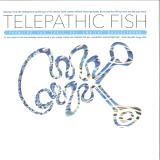
Various - Telepathic Fish: Trawling The Early 90s Ambient Underground 2x12"

2025 Repress

“In stark contrast to the stress-makingly staccato assault of your average 'ardcore rave, Telepathic Fish was a wombeldelic sound-and-light bath"

Simon Reynolds (Energy Flash: A Journey Through Rave Music And Dance Culture)

The first-ever illustrated compendium recounting the seminal underground South London ambient party that surfaced at the axis through which the likes of Ninja Tune, Warp and Rising High flowed. Telepathic Fish shared fertile waters with Megatripolis and The Big Chill, moving the early 90s London back room chill-out space into the kaleidoscopic spotlight.

Documenting the sights and sounds of South London’s seminal Telepathic Fish ambient parties. Hosted by Chantal Passamonte (aka Mira Calix - RIP), David Vallade, Mario Aguera and Kevin Foakes (aka DJ Food) - collectively named Openmind. With the help of Mixmaster Morris (The Irresistible Force) and Matt Black (Coldcut), they put on some of the earliest chill out events in London.

Rooted deep in the heart of the electronic underground they started DJing and decorating house parties or squats with mind-blowing installations and wholly idiosyncratic design, hosting the likes of Aphex Twin, Andrea Parker and Tony Morley (The Leaf Label). Within a year they were playing VIP after shows for the likes of Orbital and illegal New Year’s gatherings at the disused Roundhouse whilst guesting on Coldcut’s Solid Steel radio show on London’s KISS FM.

Whilst collaborations with legendary club nights such as Megatripolis saw them share bills with Autechre, Higher Intelligence Agency, Scanner and Global Communication, they also created their own ambient fanzine - Mindfood – to document the scene evolving around them. A 20-page history of their parties is included in the release, richly illustrated with personal photos, artwork and memorabilia from their adventures between 1992-95. The gatefold sleeve also features their Telepathic Fish logo, mirroring an original T-shirt design they sold in Ambient Soho, a record shop three of the four worked in at different times.

The selections featured here are all personal favourites that were played at the Telepathic Fish parties during the 90s. Picked and arranged by Mario, David and Kevin who combed their collections for key pieces they associate with the time and Chantal’s music tastes. Over a hundred tracks were selected, totalling nearly 11 hours of playing time, before being whittled down to the essentials by the trio, forming a snapshot of their world back in the day.

KEY POINTS:

* Features long deleted and hard to find tracks by Caustic Window (Richard D. James aka Aphex Twin), Tranquility Bass, Spacetime Continuum and Global Communication (Mark Pritchard and Tom Middleton).

• Pressed on DJ friendly double black vinyl

• Includes A 20-page history of their parties is included in the release, richly illustrated with unseen personal photos, artwork and memorabilia from the Telepathic Fish crew’s adventures between 1992-95, as well as detailed liner notes courtesy of founding members Mario Ageura and Kevin Foakes.

• Cover includes horizontal obi sticker with quote from Simon Reynolds' book Energy Flash: A Journey Through Rave Music And Dance Culture, describing the Telepathic Fish parties' place in the dance music landscape.

• Lacquer cut by Beau Thomas at Ten Eight Seven Mastering

Auf Lager

Bei uns am Lager und sofort versandfertig

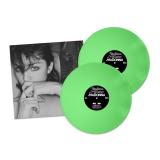
SZA - SOS 4x12"

SZA

SOS 4x12"

4x12inch19802892011
RCA
05.08.2025

SOS Deluxe: LANA« ist eine umfassende Erweiterung von SZAs mehrfach mit Platin und Grammy ausgezeichnetem zweiten Album »SOS«. In 42 sorgfältig ausgewählten Tracks verkörpert SZA intime Verletzlichkeit, bekennt Schwächen, spürt Liebeskummer nach, findet Heilung und findet schließlich inneren Frieden. Diese definitive Edition enthält das Originalalbum und 15 neue Aufnahmen.

Auf Lager

Bei uns am Lager und sofort versandfertig

Real Lies - We Will Annihilate Our Enemies

Real Lies’ new album ‘WE WILL ANNIHILATE OUR ENEMIES’ will arrive on April 16th 2025 via Tonal. The album is about taking the hand of someone you love intensely and running headlong into the chaos and noise and grinding forces that dominate modern life. It follows gilded 2024 collaborations with Mall Grab, Kettama and Drain Gang’s YEAR0001 label. Lyricist Kevin Lee Kharas and producer Patrick King created the record in their studio, hidden away under a railway bridge somewhere in London’s Zone 3. Three pictures stared down at them from the walls throughout, including an image of a young Sasha Shulgin in the relief print style of Che Guevara t-shirts sold at Camden Market, and a photo of an orbiter fairground ride in flight, taken sometime in the early 2000s. Kharas’ lyrical inspiration comes when he steps away from the tsunami of data flooding his consciousness and paces London’s rain-soaked streets late at night. “I wanted the songs on WWAOE to confront modern reality head-on, unflinching,” he explains. “I didn’t want to whine about a lost past. I didn’t want nostalgia. I wanted to learn to love the modern world, with all its horrors and futility.” After a teenhood spent playing in hardcore bands, the duo found ecstasy at a squat party for the first time, and moved to London. Since then, they’ve made music about finding romance and fun when the moon is up, becoming a cult act in the process.

nicht am Lager

Bestelle jetzt und wir bestellen den Artikel für dich beim Lieferanten.


Last In: vor 35 Tagen
HÜSKER DÜ - 1985: THE MIRACLE YEAR LP 4x12"
  • New Day Rising (Live January 30Th, 1985 At First Ave)
  • Everything Falls Apart (Live January 30Th, 1985 At First Ave
  • The Girl Who Lives On Heaven Hill (Live January 30Th, 1985 At First Ave)
  • I Apologize (Live January 30Th, 1985 At First Ave)
  • If I Told You (Live January 30Th, 1985 At First Ave)
  • Every Everything (Live January 30Th, 1985 At First Ave)
  • Makes No Sense At All (Live January 30Th, 1985 At First Ave)
  • Terms Of Psychic Warfare (Live January 30Th, 1985 At First Ave)
  • Powerline (Live January 30Th, 1985 At First Ave)
  • Books About Ufos (Live January 30Th, 1985 At First Ave)
  • Broken Home, Broken Heart (Live January 30Th, 1985 At First Ave)
  • Diane (Live January 30Th, 1985 At First Ave)
  • Hate Paper Doll (Live January 30Th, 1985 At First Ave)
  • Green Eyes (Live January 30Th, 1985 At First Ave)
  • Divide And Conquer (Live January 30Th, 1985 At First Ave)
  • Pink Turns To Blue (Live January 30Th, 1985 At First Ave)
  • Eight Miles High (Live January 30Th, 1985 At First Ave)
  • Out On A Limb (Live January 30Th, 1985 At First Ave)
  • Helter Skelter (Live January 30Th, 1985 At First Ave)
  • Ticket To Ride (Live January 30Th, 1985 At First Ave)
  • Love Is All Around (Live January 30Th, 1985 At First Ave)
  • Don't Want To Know If You're Lonely (Live 1985)
  • I Don't Know For Sure (Live 1985)
  • Hardly Getting Over It (Live 1985)
  • What's Going On (Live 1985)
  • Private Plane (Live 1985)
  • Celebrated Summer (Live 1985)
  • All Work And No Play (Live 1985)
  • Keep Hanging On (Live 1985)
  • Find Me (Live 1985)
  • Flexible Flyer (Live 1985)
  • Sunshine Superman (Live 1985)
  • In A Free Land (Live 1985)
  • Somewhere (Live 1985)
  • Flip Your Wig (Live 1985)
  • Never Talking To You Again (Live 1985)
  • Chartered Trips (Live 1985)
  • The Wit And The Wisdom (Live 1985)
  • Misty Modern Days (Live 1985)
  • Sorry Somehow (Live 1985)
  • Eiffffel Tower High (Live 1985)

Hüsker Dü. Live. 1985. Das transzendente Punk-Trio aus Minneapolis in seinem explosivsten Jahr, live aufgenommen auf der Bühne im First Avenue, in der vielleicht am besten klingenden Aufnahme der gefeierten SST-Ära der Band. Diese 4xLP/2xCD-Edition enthält Beau Sorensons Restaurierung der 21 Songs des gesamten Sets vom 30. Januar 1985, dazu 20 zusätzliche Live-Tracks aus dem weiteren Tourneeverlauf des Jahres und ein Deluxe-Booklet mit detaillierten Informationen zu den zwölf geschichtsträchtigen Monaten von Hüsker Dü. Wie klingt eine Legende, in dem Moment, wenn sie geschrieben wird? Betrachtet man das Jahr 1985 durch die dynamische Linse der Independent/DIY-Musik, so gab es Mitte des Jahrzehnts für Hüsker Dü einen kraftvollen und unbestreitbaren Sprint von der rauen Punk-Institution bei SST zur künstlerischen Empathie bei Warner Bros. Die New York Times bezeichnete die Band als "die beste, die aus der Hardcore-Szene hervorgegangen ist". Im Einklang mit diesem Lob zeigte Hüsker Dü ein kreatives Tempo, das in keiner anderen Musikära zuvor oder seitdem jemals erreicht wurde. Nachdem sie im Juli des Vorjahres mit dem Doppelalbum "Zen Arcade" die aufkeimende Alternative-Rock-Bewegung sprengte, veröffentlichte die Band nur sechs Monate später, am 14. Januar 1985, das epochale "New Day Rising" und hörte nie auf, dem Sonnenaufgang über dem Hidden Beach nachzujagen, der das Cover des Albums zierte. Am 30. Januar 1985 erreichte Minneapolis am Abend zum Zeitpunkt des Konzerts -11 °C, was einem gnadenlosen Temperatursturz von 19 Grad gegenüber dem Tageshöchstwert von 8 °C bedeutete. Die 1500 Besucher im First Avenue brauchten jedoch kein T-Shirt, geschweige denn eine Daunenjacke: Von den ersten blendenden Momenten von "New Day Rising" an war klar, dass Bob Mould, Grant Hart und Greg Norton fest entschlossen waren, jedes Molekül im Raum in Brand zu setzen. Ihre Setlist bot eine nächtliche Kaskade von Feuerbällen aus den Alben "Everything Falls Apart", "Metal Circus", "Zen Arcade" und "New Day Rising" sowie fünf neue Songs, die später auf "Flip Your Wig" wieder auftauchen sollten. Außerdem würdigten sie ihre rockigen Vorfahren: mit einer rasanten Version von "Eight Miles High" von The Byrds, einer turbulenten Interpretation von "Helter Skelter" von den Beatles mit Dave Pirner von Soul Asylum, einem Pop-Punk-Remake von "Ticket To Ride" ebenfalls von den Beatles und ihrem charakteristischen Cover von Sonny Curtis' Mary-Tyler-Moore-Titelsong "Love Is All Around" zum Abschluss. Die First-Avenue-Bänder von 1985 zeigen Hüsker Dü in Höchstform mit bereits beliebten Songs, ein paar Jahre bevor sie ihren Status als Blaupause für den kommenden Alternative-Rock-Boom endgültig gefestigt hatten. Dieses Box-Set feiert diese Aufnahmen, die vielleicht die besten Hüsker-Dü-Aufnahmen sind, die während der legendenhaften SST-Jahre der Band produziert wurden. "Wenn ich an diese Zeit zurückdenke", kommentiert Greg Norton, "waren das drei Jungs, die das taten, was sie liebten, Spaß hatten und im Grunde anderen Menschen zeigten, dass man sich selbst treu bleiben kann, seiner Musik treu bleiben kann und sich nicht der Mode oder den Erwartungen beugen muss, um etwas wirklich Großartiges zu schaffen."

vorbestellen07.11.2025

erscheint voraussichtlich am 07.11.2025


Last In: vor 2026 Jahren
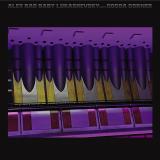
Alex Lukashevsky - OOOOH!

Alex Lukashevsky

OOOOH!

12inchTAR121
Tin Angel
24.10.2025
  • A1: That Musician Thats Dead
  • A2: Preference Is A Good Friend, Mind
  • A3: No One Can Sing That Well
  • B1: Last Herald
  • B2: Mo**Real
  • B3: Things Keep Happening

OOOOH! by Alex Bad Baby Lukashevsky with Cocoa Corner (2025)

Celebrated veteran of Toronto’s music scene, known for his boundary-pushing approach to folk and avant-garde music, twists rock music into strange and brilliant new shapes with the help of young jazz players, U.S. Girls, and his own immensely talented son.


OOOOH! is hard on the outside and soft on the inside. Made in the spirit of unity,
humanity, and poetry — disobediently renouncing the glory of personal triumph for the
generosity of an honest experiment. On the last track of the album you’ll hear “Or do you only ever never want to make a single enemy? / That’s not freedom or humility / It’s nothing, honestly.” Oooh, that's a bad baby!

A celebrated Toronto songwriter and performer, Alex Lukashevsky has always been disobedient. Which simply means, nothing is off the table when he’s looking for his
poetic voice; when trying to find the realest I of the teller. As he sings on the lead track “that musician that’s dead” The musician is radical/ it’s the world that’s demented/ listening with their eyes, the music looks dented/ they’re over-represented.
OOOOH! was recorded in January 2024 at Sound Department in Toronto, engineered by Patrick Lefler (ROY), mixed by Grammy-nominated producer Matt Smith. All the songs were tracked live off the floor in two days, with one extra day for recording vocals, to keep the recording fully alive and breathing. As leader of Deep Dark United, as a solo performer, and a sideman in Brodie Wests’ Eucalyptus and Luka Kuplowsky’s Ryokan Band, Alex has been an outsized influence on the Toronto music scene that spawned acts like Broken Social Scene and Owen Pallett. (Pallett, who has toured with Lukashevsky, went so far as to record an entire album’s worth of Alex’s songs, backed
by a full orchestra.)

Lukashevsky has approached each of his albums and projects as something completely new, using only the musical boundaries he creates with each song. Even when he
has recorded songs with nothing but his voice and his own acoustic guitar accompaniment, the results are never “stripped down” or “back to basics,”
Gong! How do you get to heaven / have fun! have fun!
It’s cool to approach music as a game of “spot the influence”; Burt Bacharach-meets-Black Flag; Lana Del Rey-meets-LCD Soundsystem etc. Glorified mash-ups are promising because of their conversational nature. But they can turn us into hyperboreans; blowing cold air beyond ourselves while doing what we can to remain warm. To devise a game or a narrative is to have a winner and a loser, but we all know that just as you win/ so you lose. And does anything really change? Alex Lukashevsky and Cocoa Corner are more at ease drawing blind contours or playing an old game like consequences. They let things add up without knowing particularly how. Cognition is recognition.

Lukashevsky, in addition to writing all the songs, plays guitar and sings on OOOOH!, doing both in ways that are soulful and spikey at the same time. Joining him on guitar and vocals is his oldest child, Charlie Lukashevsky, who, at 23, is already a talented performer and songwriter in his own right. Cocoa Corner also includes Aidan McConnell, an in-demand drummer and composer, Jack Johnston, a jazz bassist and Barry Harris acolyte, and percussionist Evan Cartwright (The Weather Station, U.S. Girls, Cola, Tasseomancy), who plays steel pan and marching drum.

Working with his son and with other younger musicians is central to the album’s
unpredictable aesthetic. It reinvigorated the sound in unexpected ways. Lukashevsky says, “I had to reconsider my own instincts. I had to deal with being 99 years old.”
In addition to these performers, the album includes a tasty contribution from Meg
Remy, the visionary musician and producer who is the leader of the critically acclaimed
project U.S. Girls. Remy duets with Lukashevsky on the imagistic and sprawling album
closer “things keep happening.”
About that album title: OOOOH! is taken straight from “that musician that’s dead” an
arch and unhinged comment on the exertion required to navigate a lifetime of music making.
Lukashevsky’s delivery of that one emotive word is a kind of cultural posture, but also a
hundred percent primitive expression. The impact is never less than visceral. His vocal
delivery ranges through rich baritone blues to keening falsettos to a kind of sprechstimme that periodically steps out from the music to grab the listener’s shirt. He
doesn’t sound too nice, but he is sincere. When life gives you lemons lament.
For OOOOH! his first official full-length album since 2012’s Too Late Blues, (a collection of knotty-yet-effervescent tunes built upon the enchantingly serpentine harmonies of Lukashevsky and his vocal collaborators, Felicity Williams (Bahamas, Bernice) and Daniela Gesundheit (Snowblink, HYDRA)), Alex has once again broken apart and rebuilt his own approach to music. Or rather (because that sounds too over-determined), he
has allowed his music to build itself into strange new shapes that only fleetingly and
coincidentally, but happily, resemble anything that might be called rock and roll. There is some editorializing within the song’s lyrics— Lukashevsky even cheekily contributes to the “spot the influence” game with the line “Muddy Waters, Rite of Spring!” a funny preemptive strike against anyone already reaching for some variation of avant-blues to describe what the song is up to here. In fact there are many names checked on this record (literally and in spirit); they are the lily pads that trace the path of this expression! Palestrina, Peter Pears and Benjamin Brittain, Andrés Segovia, Stravinsky, Lotte Lenya, Alice Coltrane, Skip James, Chuck Berry, D’Gary, Betty Carter, Mukhtiyar Ali, Chuck D, Yoko Ono, Hailu Mergia, David Bowie, Jane Siberry. rhythm is a skeleton mansion / haunted by melody / feckless prodigy / the world is under a spell / cast by some demon angel / Practice day and night / Try as hard as hell / no one can sing that well Musicians are often worried by the way in which they are prepared to fail rather
than how they would like to succeed; it’s such a deep concern that it tempers their creativity and shackles their process. Current cultural proclivities, tend to comfort a certain kind of artistic failure and abnegate another kind. How many testimonials, full of heartfelt care and investment, have you heard for Taylor Swift, and yet a craftsman like Chris Weisman is often dismissed easily as though he’s doing something anti-social. what’s throwing itself in my ears and my eyes / arrogant devil ad hominem christ.
The music you will hear on this recording veers off in multiple directions at once,
and features a rock and roll spirit with a divergent heart. This is no sclerotic clomp of the Average Rock Song, but in fact a flood of humanity in all its darkness and moodiness and unpredictability. If most performers make songs that are like sports cars or pickup trucks to drive around, Lukashevsky has built something more akin to a rowboat in a tree: it’s weird and beautiful.

vorbestellen24.10.2025

erscheint voraussichtlich am 24.10.2025


Last In: vor 2026 Jahren
Various - Italians Do it Better (A Tribute to Madonna) 2x12"

Since 2006, listeners have been curious about the origin of the label name Italians Do It Better. Some say it's an homage to Italo Disco, others guess it's related to ancestry, but in fact it's a nod to the iconic T-shirt Madonna wears in the "Papa Don't Preach" video circa 1986.
Fast forward to a world pandemic... To encourage creativity & lift spirits, Italians Do It Better President, Megan Louise asked every artist “If you could cover your favourite Madonna song…What would it be?”

As a tribute to their label muse & the impact Madonna’s music has had on the world around us, Italians Do It Better are sharing a compilation of covers simply titled “Italians Do It Better”. One of the tracks (“Lucky Star” by Club Intl) is even produced by Max Kamins, the son of Mark Kamins, the New York DJ who helped break Madonna in the early 1980's. From the experience he says “Dance music was the soundtrack of my early childhood. Working on "Lucky Star" reconnected me not only to my father, but also reminded me that a good song is timeless".

Executive produced by Johnny Jewel, the compilation is a passport to 20 covers from the bedrooms of 19 artists across 10 different countries.

nicht am Lager

Bestelle jetzt und wir bestellen den Artikel für dich beim Lieferanten.


Last In: vor 16 Monaten
Various - On Lego - Derun - Monaberry Vinyl 002

Monaberry Vinyl 002 ain knit from Sears. All artists wear it because it stretches for fit and it‘s styled for fashion.
Super Flu, NIIXII, Made In TLV, Goom Gum x Dancing On Lego and Derun are pretty savvy. They know how to dress fashionably
and comfortably. The second VA vinyl fills the bill. Consider the selection: 4 tracks, patterns and styles. And the Perma-Prest
baseline: it‘s a Monaberry polyester and triacetate knit for stretch comfort around the collar, across the shoulders and body.
Everybody has the comfort features that make music comfortable. See these great-looking Monaberry shirts now at most
stores, in the regular and Big and Tall catalogs

nicht am Lager

Bestelle jetzt und wir bestellen den Artikel für dich beim Lieferanten.


Last In: vor 7 Monaten
THE NATIONAL - ROME LP 2x12"

The National

ROME LP 2x12"

2x12inchADLPE40801
4AD/BEGGARS Group
18.12.2024

The National veröffentlichen mit "Rome" am 13. Dezember ein komplettes Live-Album mit 21 Tracks auf Doppel-Vinyl, als Doppel-CD und natürlich digital.

Das Konzert wurde am 3. Juni 2024 in Italien live (ohne Overdubs) aufgenommen wurde. Das Doppelalbum, welches von Peter Katis, einem langjährigen Begleiter der Band, abgemischt wurde, spannt einen Bogen über die mehr als 20 Jahre der Karriere von The National und zeigt, wie jeder Song auf der Bühne sein ganz eigenes und neues Leben entfaltet hat. Man muss diese Band live gesehen haben, die mittlerweile Stadien und große Arenen füllt. Warum das so ist, hört man auf "Rome". Aufgenommen in dem architektonisch beeindruckenden und nach dem berühmten italienischen Filmkomponisten benannten Veranstaltungsort "Parco Della Musica Ennio Morricone", zeigt die 21-Track-LP schillernde Versionen großer Songs wie "Bloodbuzz Ohio", "Don"t Swallow the Cap", "I Need My Girl", "The System Only Dreams in Total Darkness", "England" und "Fake Empire" - so wie Live-Interpretationen neuerer Tracks wie "Eucalyptus", "New Order T-Shirt", "Tropic Morning News" und "Smoke Detector". Die Band ändert ihre Setlist von Abend zu Abend, spielt Klassiker aus zwei Jahrzehnten und kombiniert diese mit Tracks aus den letzten Alben - kein Konzert ist wie das andere und beschert den Zuschauern jedes Mal im wahrsten Sinne ein einzigartiges Erlebnis. "Rome" ist geprägt von Raritäten wie dem Show-Opener "Runaway", "Lemonworld", "The Geese of Beverly Road", "Lit Up" und einer Tour-de-Force-Paarung von "Humiliation" vom von der Kritik gefeierten Album "Trouble Will Find Me" mit "Murder Me Rachael" von dem früheren Album "Sad Songs For Dirty Lovers". Als Zugabe gibt es in Rom die Wahlkampfhymne "Mr. November", "Terrible Love" von High Violet und das abschließende Fan-Singalong "Vanderlyle Crybaby Geeks". In ihrer Live-Kritik bezeichnete der Guardian The National als "eine die Ära definierende Band auf dem Höhepunkt ihrer Kräfte... als dieses atemberaubende zweieinhalbstündige Epos zu einer gemeinschaftlichen Katharsis wird". Auch der Rolling Stone UK schrieb: "Es ist klar, dass die Band...ihren Platz an der Spitze seit einem Jahrzehnt verdient hat.... Eine Show, die einfach euphorisch ist und die Band auf einem neuen Höhepunkt sieht." Das Doppel-Livealbum "Rome" ist das Zeugnis dafür.

nicht am Lager

Bestelle jetzt und wir bestellen den Artikel für dich beim Lieferanten.


Last In: vor 14 Monaten
THE NATIONAL - ROME LP 2x12"

The National

ROME LP 2x12"

2x12inchADLP40801
4AD/BEGGARS Group
13.12.2024
  • Runaway
  • Eucalyptus
  • Tropic Morning News
  • New Order T-Shirt
  • Don't Swallow The Cap
  • Bloodbuzz Ohio
  • The System Only Dreams In Total Darkness
  • I Nedd My Girl
  • Lemonworld
  • The Geese Of Beverly Road
  • Lit Up
  • Alien
  • Humiliation
  • Murder My Rachael
  • England
  • Graceless
  • Fake Empire
  • Smoke Detector
  • Mr November
  • Terrible Love
  • Vanderlyle
  • Crybaby Geeks
auch erhältlich

LTD. WHITE COLOURED EDIT


The National veröffentlichen mit "Rome" am 13. Dezember ein komplettes Live-Album mit 21 Tracks auf Doppel-Vinyl, als Doppel-CD und natürlich digital. Das Konzert wurde am 3. Juni 2024 in Italien live (ohne Overdubs) aufgenommen wurde. Das Doppelalbum, welches von Peter Katis, einem langjährigen Begleiter der Band, abgemischt wurde, spannt einen Bogen über die mehr als 20 Jahre der Karriere von The National und zeigt, wie jeder Song auf der Bühne sein ganz eigenes und neues Leben entfaltet hat. Man muss diese Band live gesehen haben, die mittlerweile Stadien und große Arenen füllt. Warum das so ist, hört man auf "Rome". Aufgenommen in dem architektonisch beeindruckenden und nach dem berühmten italienischen Filmkomponisten benannten Veranstaltungsort "Parco Della Musica Ennio Morricone", zeigt die 21-Track-LP schillernde Versionen großer Songs wie "Bloodbuzz Ohio", "Don"t Swallow the Cap", "I Need My Girl", "The System Only Dreams in Total Darkness", "England" und "Fake Empire" - so wie Live-Interpretationen neuerer Tracks wie "Eucalyptus", "New Order T-Shirt", "Tropic Morning News" und "Smoke Detector". Die Band ändert ihre Setlist von Abend zu Abend, spielt Klassiker aus zwei Jahrzehnten und kombiniert diese mit Tracks aus den letzten Alben - kein Konzert ist wie das andere und beschert den Zuschauern jedes Mal im wahrsten Sinne ein einzigartiges Erlebnis. "Rome" ist geprägt von Raritäten wie dem Show-Opener "Runaway", "Lemonworld", "The Geese of Beverly Road", "Lit Up" und einer Tour-de-Force-Paarung von "Humiliation" vom von der Kritik gefeierten Album "Trouble Will Find Me" mit "Murder Me Rachael" von dem früheren Album "Sad Songs For Dirty Lovers". Als Zugabe gibt es in Rom die Wahlkampfhymne "Mr. November", "Terrible Love" von High Violet und das abschließende Fan-Singalong "Vanderlyle Crybaby Geeks". In ihrer Live-Kritik bezeichnete der Guardian The National als "eine die Ära definierende Band auf dem Höhepunkt ihrer Kräfte... als dieses atemberaubende zweieinhalbstündige Epos zu einer gemeinschaftlichen Katharsis wird". Auch der Rolling Stone UK schrieb: "Es ist klar, dass die Band...ihren Platz an der Spitze seit einem Jahrzehnt verdient hat.... Eine Show, die einfach euphorisch ist und die Band auf einem neuen Höhepunkt sieht." Das Doppel-Livealbum "Rome" ist das Zeugnis dafür.

vorbestellen13.12.2024

erscheint voraussichtlich am 13.12.2024


Last In: vor 2026 Jahren
Ryan Kattner and Brett Morris - Destroy All Neighbors
  • A1: Destroy All Neighbors
  • A2: Always Hallways
  • A3: Rocking In The 5Th Dimension
  • A4: Bob Marley & Me
  • A5: Vlad's Hallway Now / Bitch / Sex Maniac / Kevin Bacon Haircut / Hemifacial Spasm
  • A6: My Epic Nightmare Life In Montage / My Girlfriend Has Sleep Apnea & There's A Vlad In My Bed
  • A7: Get Out Of My Kitchen
  • A8: Gloss Bounce / Euro Trip '69 / Pumping Jeremy Irons / Consensual Hand Puppet In Thump Country / Penetrate / The Gored Torso (Decapitation Blues)
  • A9: Swig's Advice On Corpse Disposal
  • A10: Make The Body Disappear
  • A11: Dirty Boys
  • A12: I Am God, Destroyer Of Vlad
  • A13: I Live!
  • A14: One Hot Lick Iii: Let's Go Incinerate A Body
  • A15: Meating Your Heroes
  • A16: Stupid Willie Brown
  • A17: Dragging Plastic Wrapped Bodies From A Van Music
  • A18: Mona Lisa Grimace
  • A19: Cool Dawn Dimension Shirt Theme / Fuck All Night Music / Sticky Pleather Jonah Jams
  • B1: Progressive Rock Is Life
  • B2: Epitaph For The Fallen Circus: Demo
  • B3: Requiem For Pig Guy
  • B4: My Girlfriend Has Just Realized That I'm A Very Violent Murderer Person / A Not So Beautiful Mind / Ode To Generic Investigative Tv Journalism Music
  • B5: Eleanor
  • B6: The Neon Rainbow
  • B7: The Mythology Of Madness, Call To Arms
  • B8: Caleb Bang Jansen Has A Gun / Cops Ruin Everything / The Ex Girlfriend Suddenly Appears To Witness Your Potential Suicide By Cop
  • B9: A Big Bear Story
  • B10: Epitaph For The Fallen Circus
  • B11: You Mean Everything To Me Even If I've Scarred You For Life Since You Witnessed A Horrible Crime (A Love Song)
  • B12: Free - Performed By Man Man

Destroy All Neighbors is a twisted splatter-comedy about a deranged journey of self-discovery full of goopy practical FX, a well-known ensemble cast, and LOTS of blood. William Brown (Jonah Ray Rodrigues), is a neurotic, self-absorbed musician determined to finish his prog-rock magnum opus, facing a creative roadblock in the form of a noisy and grotesque neighbor named Vlad (Alex Winter).

He finally works up the nerve to demand that Vlad keep it down, and William inadvertently decapitates him. But, while attempting to cover up one murder, William's accidental reign of terror causes victims to pile up and become undead corpses who torment and create more bloody detours on his road to prog-rock Valhalla. The soundtrack is an infectious slice of progressive rock cues, EDM freakouts, 80’s synth pop and so much more by the brilliant Ryan Kattner & Brett Morris. Released in conjunction with SUB POP Records, and features an original song by MAN MAN, artwork by Johnny Dombrowski, and pressed on coloured vinyl.

vorbestellen13.12.2024

erscheint voraussichtlich am 13.12.2024


Last In: vor 2026 Jahren
Various - NOW 80's: Part One - 1980 - 1982
 
44

xd H2 Rockers Revenge - Walking On Sunshine feat. Donnie Calvin (12" Version)

nicht am Lager

Bestelle jetzt und wir bestellen den Artikel für dich beim Lieferanten.


Last In: vor 13 Monaten
Various - NOW - Yearbook 1981 LP (3x12")
 
26

NOW Music is proud to present the newest addition to the ‘Yearbook’ series: NOW – Yearbook 1981. NOW – Yearbook 1981; a celebration of the eclectic and creative brilliance of the year in pop. 4 CDs of 85 tracks that defined the charts in 1981. Available on a 4CD special edition which is housed in ‘hard-back book’ packaging, including a 28-page booklet with a summary of the year, a track-by-track guide, a quiz, and original singles artwork, and as a standard 4-CD package. A limited edition 3LP set pressed in translucent red vinyl, limited to 3,000 units and a 4CD set

nicht am Lager

Bestelle jetzt und wir bestellen den Artikel für dich beim Lieferanten.


Last In: vor 3 Jahren
Odie Leigh - Carrier Pigeon LP

Odie Leigh

Carrier Pigeon LP

12inchLPMPC748
MOM+POP
12.07.2024

Odie Leigh would never have called herself a musician before the depths of the 2020 pandemic when her rapper roomies made a bet: Whoever records a song that goes viral first, wins. Slightly ticked off that they hadn’t included her in the wager, she decided to hit them with her best shot, and Leigh was crowned the victor when a track she wrote blew up on TikTok. “I was like, ‘I’m gonna show y’all. I’m gonna win.’“ Four years after posting what she calls “that silly joke song” on TikTok, Odie Leigh has continued to transform and evolve as an artist — from what she calls “acoustic, ethereal folk sad girl music” to harder-edged tunes that flirt with early Aughts pop-punktivism.

Born and raised in Louisiana, Odie Leigh sang in the church choir, sure — her grandfather built the building, after all, and her family attended three times per week. But after moving to New Orleans to study English, she fully intended on making her bones in the film industry. That 2020 wager changed things, though, when Odie realized that she could win hearts in addition to bets. After her releases began gaining steam on social media, Odie Leigh started hitting stages hard. She toured Europe, North America, and played Newport Folk in 2023, followed this year by gigs at Boise, ID’s Treefort Music Fest with more to come.

vorbestellen12.07.2024

erscheint voraussichtlich am 12.07.2024


Last In: vor 2026 Jahren
COSMIC PSYCHOS - GO THE HACK

Reissue of late-’80s release by lovably manly Australian punk rock trio! Sometime in the winter of 1989-90, I wandered into New York City’s Midnight Records, a store famous for its deep catalog of ’60s garage and psychedelic music, as well as a strong selection of classic punk rock and a cantankerous French owner with ridiculous hair. On this visit, instead of hearing a puny French bootleg of The Standells or the Seeds, as I opened the door I was enveloped in the massive opening chords to the first song on the Cosmic Psychos’ then-new album Go the Hack. “She’s a lost cause / She’s a lost, lost cause!” blasted into the air at maximum volume. In a perfect cinematic moment, the drums announced my entry, the bass dictated my walk, the air became thick with guitar fuzz and wah-wah, and snarled vocals described perfectly a girl’s descent into a cause which was lost. Instead of record shopping, I felt like I’d stepped into a biker movie and was motoring down a long, straight Outback road on a Harley. This was my introduction to the Cosmic Psychos, and I was hooked. I loved that a band could be so powerful, sound so big and unapologetically simple, and incorporate so much of what I loved about music—well, basically the attitudes and sounds of The Stooges and Ramones: setting up songs with a good title or idea, matching it with a massive riff, then running it out with squeals of wah-wah and manly disregard for cleverness or adornment. And they called themselves the Cosmic Psychos! They obviously had no regard for “makin’ it” in those days, when an alternative rock band at least had a chance to sell some records. I was an instant fan. Earlier records proved to be the same formula with even less refinement, and that was definitely a good thing. These were lovably manly Aussies singing about what they knew best: farm equipment, lusting after Elle Macpherson, wishing they were in Van Halen (for the ladies), drinking at the pub, and even more drinking at the pub. Trivia question: In what indie rock song does the lead singer bellow “I love my tractor!”? Answer: None! No scarves or looking like Stevie Nicks straight out of the hairstylist’s for these fellows. They were the real deal before the deal was dealt. And they couldn’t care less. The Psychos enjoyed a long run through the ’80s and ’90s on such Australian labels as What Goes On, Mr Spaceman, Survival and Rattlesnake, as well as American stalwarts Sub Pop and Amphetamine Reptile. Many bands from that era no longer seem vital today, lost in a murk of crisp drums, loud guitars, flannel shirts and shallow aspirations. These first Cosmic Psychos releases are as timeless and necessary as ever—still a bullshit bulldozer, a blurry loud night at the bar, a rollicking time hanging with the guys. The time has come for a new generation to be uplifted by these initial blasts from the Cosmic Psychos. Goner is proud to partner with Melbourne’s esteemed Aarght! Records to bring these platters of primal perfection back into a world that definitely needs them. — Eric Friedl, Oblivians / Goner Records 40th Anniversary tour about to hit UK / EU! Go the Hack!! Essential!!

vorbestellen21.06.2024

erscheint voraussichtlich am 21.06.2024


Last In: vor 2026 Jahren
Bibi Club - Feu De Garde

Bibi Club

Feu De Garde

12inchSCR164LP
Secret City
31.05.2024

Die beiden ehemaligen Plants And Animals-Mitgliedern Adèle Trottier-Rivard und Nicolas Basque aus Montreal erkunden emotionale und physische Terrains mit intensiver, roher und dennoch wohlwollender Radikalität. Der Einfluss von Moondog, Stereolab und mehr denn je von Suicide ist im direkten, einzigartigen Ansatz des Albums zu hören, das auch Gruppengesänge enthält, die von Girl Guide-Ausflügen im Wald inspiriert sind. Bibi Club füllen ihr neues Album "Feu de Garde" mit unerbittlichen Rhythmen und englischen und französischen Vocals. Schwarzes Vinyl plus Einleger mit Lyrics.

vorbestellen31.05.2024

erscheint voraussichtlich am 31.05.2024


Last In: vor 2026 Jahren
Various - Keb Darge Presents the Best of Ace Rockabilly

Legendary international DJ, Keb Darge, fell under the spell of this music when his Japanese girlfriend forced him to go down to a ‘Rockabilly’ night back in 1989. As soon as the DJ dropped the needle on Johnny Burnette’s ‘Rockabilly Boogie’ Keb was mesmerized. He was soon hunting down the hideously rare top tunes and slipping thousands of pounds into specialist collectors like Boz Boorer’s back pocket, when the legendary guitarist was not recording or touring with Morrissey. Of course, Keb was then taking these records and introducing them to new audiences in his DJ sets worldwide.

Although it has taken an age to persuade him, Keb has now applied his perfectionist compiling skills to pick 14 killers to grace this fantastic collection. Ranging from the bopping Glen Glenn’s ‘Blue Jeans and A Boy’s Shirt’ to the almost hillbilly Jimmy Johnson’s ‘All Dressed Up’. This is a must-have compilation not only for those who have been oiling their quiffs for decades, but also those wondering what this “rockabilly” is all about. Keb drops you in at the deep end with no easy-going fillers, and you’ll be glad he did.

Keb has written the sleeve notes and with cover art by the legendary Robin Banks – this album looks as good as it sounds.

vorbestellen24.11.2023

erscheint voraussichtlich am 24.11.2023


Last In: vor 2026 Jahren
LONG HOURS - NEVER ENOUGH LP

Long Hours is a solo project by Julian Medor. Long hours has been coined as being lofi, nowave, synth punk croon-core, gothdoowop with a relentless live show inspired by frontmen such as David Yow (the Jesus lizard) JG Thirlwell (Foetus) Alan Vega (Suicide). Long Hours has performed up & down the east coast of Australia countless times and has toured japan twice. He has also released 27 albums in the space of 3 years. "Never Enough" is his first LP available on Beast Records.

vorbestellen29.09.2023

erscheint voraussichtlich am 29.09.2023


Last In: vor 2026 Jahren
TRICATEL - TRICATEL MACHINE

Tricatel

TRICATEL MACHINE

12inchTRILPFR062
Tricatel
08.09.2023

On the occasion of its exceptional evening at the Cabaret Sauvage, Tricatel is releasing a superb vinyl compilation of thirteen tracks, including several previously unreleased ones. It's a collector's item for long-time fans and for those who want to discover the label.

The Tricatel Machine compilation pays tribute to this unique evening, including each artist present at the party. But not only that! Of the thirteen tracks, many are new or unreleased on vinyl.

nicht am Lager

Bestelle jetzt und wir bestellen den Artikel für dich beim Lieferanten.


Last In: vor 2 Jahren
SZA - SOS 2x12"

Sza

SOS 2x12"

2x12inch19658779211
RCA
19.05.2023

"SOS" ist das zweite Studioalbum der mit dem GRAMMY Award ausgezeichneten Sängerin SZA und der Nachfolger des 2017 erschienenen Major-Label-Debütalbums "Ctrl". Das genreübergreifende Album enthält Elemente aus Pop, R&B, Soft-Rock, Gospel und Hip-Hop. "SOS" enthält Features von Travis Scott, Don Toliver, Phoebe Bridgers und dem verstorbenen Ol' Dirty Bastard. SZA arbeitete mit einer Vielzahl von Hitproduzenten zusammen, darunter die Ctrl-Kollaborateure ThankGod4Cody und Carter Lang s

nicht am Lager

Bestelle jetzt und wir bestellen den Artikel für dich beim Lieferanten.


Last In: vor 12 Monaten
Lee Tracy & Isaac Manning - Is it What You Want

As the sun sets on a quaint East Nashville house, a young man bares a piece of his soul. Facing the camera, sporting a silky suit jacket/shirt/slacks/fingerless gloves ensemble that announces "singer" before he's even opened his mouth, Lee Tracy Johnson settles onto his stage, the front yard. He sways to the dirge-like drum machine pulse of a synth-soaked slow jam, extends his arms as if gaining his balance, and croons in affecting, fragile earnest, "I need your love… oh baby…"

Dogs in the yard next door begin barking. A mysterious cardboard robot figure, beamed in from galaxies unknown and affixed to a tree, is less vocal. Lee doesn't acknowledge either's presence. He's busy feeling it, arms and hands gesticulating. His voice rises in falsetto over the now-quiet dogs, over the ambient noise from the street that seeps into the handheld camcorder's microphone, over the recording of his own voice played back from a boombox off-camera. After six minutes the single, continuous shot ends. In this intimate creative universe there are no re-takes. There are many more music videos to shoot, and as Lee later puts it, "The first time you do it is actually the best. Because you can never get that again. You expressing yourself from within."

"I Need Your Love" dates from a lost heyday. From some time in the '80s or early '90s, when Lee Tracy (as he was known in performance) and his music partner/producer/manager Isaac Manning committed hours upon hours of their sonic and visual ideas to tape. Embracing drum machines and synthesizers – electronics that made their personal futurism palpable – they recorded exclusively at home, live in a room into a simple cassette deck. Soul, funk, electro and new wave informed their songs, yet Lee and Isaac eschewed the confinement of conventional categories and genres, preferring to let experimentation guide them.

"Anytime somebody put out a new record they had the same instruments or the same sound," explains Isaac. "So I basically wanted to find something that's really gonna stand out away from all of the rest of 'em." Their ethos meant that every idea they came up with was at least worth trying: echoed out half-rapped exhortations over frantic techno-style beats, gospel synth soul, modal electro-funk, oddball pop reinterpretations, emo AOR balladry, nods to Prince and the Fat Boys, or arrangements that might collapse mid-song into a mess of arcade game-ish blips before rallying to reach the finish line. All of it conjoined by consistent tape hiss, and most vitally, Lee's chameleonic voice, which managed to wildly shape shift and still evoke something sincere – whether toggling between falsetto and tenor exalting Jesus's return, or punctuating a melismatic romantic adlib with a succinct, "We all know how it feels to be alone."

"People think we went to a studio," says Isaac derisively. "We never went to no studio. We didn't have the money to go to no studio! We did this stuff at home. I shot videos in my front yard with whatever we could to get things together." Sometimes Isaac would just put on an instrumental record, be it "Planet Rock" or "Don't Cry For Me Argentina" (from Evita), press "record," and let Lee improvise over it, yielding peculiar love songs, would-be patriotic anthems, or Elvis Presley or Marilyn Monroe tributes. Technical limitations and a lack of professional polish never dissuaded them. They believed they were onto something.

"That struggle," Isaac says, "made that sound sound good to me."

In the parlance of modern music criticism Lee and Isaac's dizzying DIY efforts would inevitably be described as "outsider." But "outsider" carries the burden of untold additional layers of meaning if you're Black and from the South, creating on a budget, and trying to get someone, anyone within the country music capital of the world to take your vision seriously. "What category should we put it in?" Isaac asks rhetorically. "I don't know. All I know is feeling. I ain't gonna name it nothing. It's music. If it grabs your soul and touch your heart that's what it basically is supposed to do."

=

Born in 1963, the baby boy of nine siblings, Lee Tracy spent his earliest years living amidst the shotgun houses on Nashville's south side. "We was poor, man!" he says, recalling the outhouse his family used for a bathroom and the blocks of ice they kept in the kitchen to chill perishables. "But I actually don't think I really realized I was in poverty until I got grown and started thinking about it." Lee's mom worked at the Holiday Inn; his dad did whatever he had to do, from selling fruit from a horse drawn cart to bootlegging. "We didn't have much," Lee continues, "but my mother and my father got us the things we needed, the clothes on our back." By the end of the decade with the city's urban renewal programs razing entire neighborhoods to accommodate construction of the Interstate, the family moved to Edgehill Projects. Lee remembers music and art as a constant source of inspiration for he and his brothers and sisters – especially after seeing the Jackson 5 perform on Ed Sullivan. "As a small child I just knew that was what I wanted to do."

His older brother Don began musically mentoring him, introducing Lee to a variety of instruments and sounds. "He would never play one particular type of music, like R&B," says Lee. "I was surrounded by jazz, hard rock and roll, easy listening, gospel, reggae, country music; I mean I was a sponge absorbing all of that." Lee taught himself to play drums by beating on cardboard boxes, gaining a rep around the way for his timekeeping, and his singing voice. Emulating his favorites, Earth Wind & Fire and Cameo, he formed groups with other kids with era-evocative band names like Concept and TNT Connection, and emerged as the leader of disciplined rehearsals. "I made them practice," says Lee. "We practiced and practiced and practiced. Because I wanted that perfection." By high school the most accomplished of these bands would take top prize in a prominent local talent show. It was a big moment for Lee, and he felt ready to take things to the next level. But his band-mates had other ideas.

"I don't know what happened," he says, still miffed at the memory. "It must have blew they mind after we won and people started showing notice, because it's like everybody quit! I was like, where the hell did everybody go?" Lee had always made a point of interrogating prospective musicians about their intentions before joining his groups: were they really serious or just looking for a way to pick up girls? Now he understood even more the importance of finding a collaborator just as committed to the music as he was.

=

Isaac Manning had spent much of his life immersed in music and the arts – singing in the church choir with his family on Nashville's north side, writing, painting, dancing, and working various gigs within the entertainment industry. After serving in the armed forces, in the early '70s he ran The Teenage Place, a music and performance venue that catered to the local youth. But he was forced out of town when word of one of his recreational routines created a stir beyond the safe haven of his bohemian circles.

"I was growing marijuana," Isaac explains. "It wasn't no business, I was smoking it myself… I would put marijuana in scrambled eggs, cornbread and stuff." His weed use originated as a form of self-medication to combat severe tooth pain. But when he began sharing it with some of the other young people he hung out with, some of who just so happened to be the kids of Nashville politicians, the cops came calling. "When I got busted," he remembers, "they were talking about how they were gonna get rid of me because they didn't want me saying nothing about they children because of the politics and stuff. So I got my family, took two raggedy cars, and left Nashville and went to Vegas."

Out in the desert, Isaac happened to meet Chubby Checker of "The Twist" fame while the singer was gigging at The Flamingo. Impressed by Isaac's zeal, Checker invited him to go on the road with him as his tour manager/roadie/valet. The experience gave Isaac a window into a part of the entertainment world he'd never encountered – a glimpse of what a true pop act's audience looked like. "Chubby Checker, none of his shows were played for Black folks," he remembers. "All his gigs were done at high-class white people areas." Returning home after a few years with Chubby, Isaac was properly motivated to make it in Music City. He began writing songs and scouting around Nashville for local talent anywhere he could find it with an expressed goal: "Find someone who can deliver your songs the way you want 'em delivered and make people feel what you want them to feel."

One day while walking through Edgehill Projects Isaac heard someone playing the drums in a way that made him stop and take notice. "The music was so tight, just the drums made me feel like, oh I'm-a find this person," he recalls. "So I circled through the projects until I found who it was.

"That's how I met him – Lee Tracy. When I found him and he started singing and stuff, I said, ohhh, this is somebody different."

=

Theirs was a true complementary partnership: young Lee possessed the raw talent, the older Isaac the belief. "He's really the only one besides my brother and my family that really seen the potential in me," says Lee. "He made me see that I could do it."

Isaac long being a night owl, his house also made for a fertile collaborative environment – a space where there always seemed to be a new piece of his visual art on display: paintings, illustrations, and dolls and figures (including an enigmatic cardboard robot). Lee and Issac would hang out together and talk, listen to music, conjure ideas, and smoke the herb Isaac had resumed growing in his yard. "It got to where I could trust him, he could trust me," Isaac says of their bond. They also worked together for hours on drawings, spreading larges rolls of paper on the walls and sketching faces with abstract patterns and imagery: alien-like beings, tri-horned horse heads, inverted Janus-like characters where one visage blurred into the other.

Soon it became apparent that they didn't need other collaborators; self-sufficiency was the natural way forward. At Isaac's behest Lee, already fed up with dealing with band musicians, began playing around with a poly-sonic Yamaha keyboard at the local music store. "It had everything on it – trumpet, bass, drums, organ," remembers Lee. "And that's when I started recording my own stuff."

The technology afforded Lee the flexibility and independence he craved, setting him on a path other bedroom musicians and producers around the world were simultaneously following through the '80s into the early '90s. Saving up money from day jobs, he eventually supplemented the Yamaha Isaac had gotten him with Roland and Casio drum machines and a Moog. Lee was living in an apartment in Hillside at that point caring for his dad, who'd been partially paralyzed since early in life. In the evenings up in his second floor room, the music put him in a zone where he could tune out everything and lose himself in his ideas.

"Oh I loved it," he recalls. "I would really experiment with the instruments and use a lot of different sound effects. I was looking for something nobody else had. I wanted something totally different. And once I found the sound I was looking for, I would just smoke me a good joint and just let it go, hit the record button." More potent a creative stimulant than even Isaac's weed was the holistic flow and spontaneity of recording. Between sessions at Isaac's place and Lee's apartment, their volume of output quickly ballooned.

"We was always recording," says Lee. "That's why we have so much music. Even when I went to Isaac's and we start creating, I get home, my mind is racing, I gotta start creating, creating, creating. I remember there were times when I took a 90-minute tape from front to back and just filled it up."

"We never practiced," says Isaac. "See, that was just so odd about the whole thing. I could relate to him, and tell him about the songs I had ideas for and everything and stuff. And then he would bring it back or whatever, and we'd get together and put it down." Once the taskmaster hell bent on rehearsing, Lee had flipped a full 180. Perfection was no longer an aspiration, but the enemy of inspiration.

"I seen where practicing and practicing got me," says Lee. "A lot of musicians you get to playing and they gotta stop, they have to analyze the music. But while you analyzing you losing a lot of the greatness of what you creating. Stop analyzing what you play, just play! And it'll all take shape."

=

"I hope you understood the beginning of the record because this was invented from a dream I had today… (You tell me, I'll tell you, we'll figure it out together)" – Lee Tracy and Isaac Manning, "Hope You Understand"

Lee lets loose a maniacal cackle when he acknowledges that the material that he and Isaac recorded was by anyone's estimation pretty out there. It's the same laugh that commences "Hope You Understand" – a chaotic transmission that encapsulates the duality at the heart of their music: a stated desire to reach people and a compulsion to go as leftfield as they saw fit.

"We just did it," says Lee. "We cut the music on and cut loose. I don't sit around and write. I do it by listening, get a feeling, play the music, and the lyrics and stuff just come out of me."

The approach proved adaptable to interpreting other artists' material. While recording a cover of Whitney Houston's pop ballad "Saving All My Love For You," Lee played Whitney's version in his headphones as he laid down his own vocals – partially following the lyrics, partially using them as a departure point. The end result is barely recognizable compared with the original, Lee and Isaac having switched up the time signature and reinvented the melody along the way towards morphing a slick mainstream radio standard into something that sounds solely their own.

"I really used that song to get me started," says Lee. "Then I said, well I need something else, something is missing. Something just came over me. That's when I came up with 'Is It What You Want.'"

The song would become the centerpiece of Lee and Isaac's repertoire. Pushed along by a percolating metronomic Rhythm King style beat somewhere between a military march and a samba, "Is It What You Want" finds Lee pleading the sincerity of his commitment to a potential love interest embellished by vocal tics and hiccups subtlely reminiscent of his childhood hero MJ. Absent chord changes, only synth riffs gliding in and out like apparitions, the song achieves a lingering lo-fi power that leaves you feeling like it's still playing, somewhere, even after the fade out.

"I don't know, it's like a real spiritual song," Lee reflects. "But it's not just spiritual. To me the more I listen to it it's like about everything that you do in your everyday life, period. Is it what you want? Do you want a car or you don't want a car? Do you want Jesus or do you want the Devil? It's basically asking you the question. Can't nobody answer the question but you yourself."

In 1989 Lee won a lawsuit stemming from injuries sustained from a fight he'd gotten into. He took part of the settlement money and with Isaac pressed up "Saving All My Love For You" b/w "Is It What You Want" as a 45 single. Isaac christened the label One Chance Records. "Because that's all we wanted," he says with a laugh, "one chance."

Isaac sent the record out to radio stations and major labels, hoping for it to make enough noise to get picked up nationally. But the response he and Lee were hoping for never materialized. According to Isaac the closest the single got to getting played on the radio is when a disk jock from a local station made a highly unusual announcement on air: "The dude said on the radio, 107.5 – 'We are not gonna play 'Is It What You Want.' We cracked up! Wow, that's deep.

"It was a whole racist thing that was going on," he reflects. "So we just looked over and kept on going. That was it. That was about the way it goes… If you were Black and you were living in Nashville and stuff, that's the way you got treated." Isaac already knew as much from all the times he'd brought he and Lee's tapes (even their cache of country music tunes) over to Music Row to try to drum up interest to no avail.

"Isaac, he really worked his ass off," says Lee. "He probably been to every record place down on Music Row." Nashville's famed recording and music business corridor wasn't but a few blocks from where Lee grew up. Close enough, he remembers, for him to ride his bike along its back alleys and stumble upon the occasional random treasure, like a discarded box of harmonicas. Getting in through the front door, however, still felt a world away.

"I just don't think at the time our music fell into a category for them," he concedes. "It was before its time."

=

Lee stopped making music some time in the latter part of the '90s, around the time his mom passed away and life became increasingly tough to manage. "When my mother died I had a nervous breakdown," he says, "So I shut down for a long time. I was in such a sadness frame of mind. That's why nobody seen me. I had just disappeared off the map." He fell out of touch with Isaac, and in an indication of just how bad things had gotten for him, lost track of all the recordings they'd made together. Music became a distant memory.

Fortunately, Isaac kept the faith. In a self-published collection of his poetry – paeans to some of his favorite entertainment and public figures entitled Friends and Dick Clark – he'd written that he believed "music has a life of its own." But his prescience and presence of mind were truly manifested in the fact that he kept an archive of he and Lee's work. As perfectly imperfect as "Is It What You Want" now sounds in a post-Personal Space world, Lee and Isaac's lone official release was in fact just a taste. The bulk of the Is It What You Want album is culled from the pair's essentially unheard home recordings – complete songs, half-realized experiments, Isaac's blue monologues and pronouncements et al – compiled, mixed and programmed in the loose and impulsive creative spirit of their regular get-togethers from decades ago. The rest of us, it seems, may have finally caught up to them.

On the prospect of at long last reaching a wider audience, Isaac says simply, "I been trying for a long time, it feels good." Ever the survivor, he adds, "The only way I know how to make it to the top is to keep climbing. If one leg break on the ladder, hey, you gotta fix it and keep on going… That's where I be at. I'll kill death to make it out there."

For Lee it all feels akin to a personal resurrection: "It's like I was in a tomb and the tomb was opened and I'm back… Man, it feels so great. I feel like I'm gonna jump out of my skin." Success at this stage of his life, he realizes, probably means something different than what it did back when he was singing and dancing in Isaac's front yard. "What I really mean by 'making it,'" he explains isn't just the music being heard but, "the story being told."

Occasionally Lee will pull up "Is It What You Want" on YouTube on his phone, put on his headphones, and listen. He remembers the first time he heard his recorded voice. How surreal it was, how he thought to himself, "Is that really me?" What would he say to that younger version of himself now?

"I would probably tell myself, hang in there, don't give up. Keep striving for the goal. And everything will work out."

Despite what's printed on the record label, sometimes you do get more than one chance.

nicht am Lager

Bestelle jetzt und wir bestellen den Artikel für dich beim Lieferanten.


Last In: vor 3 Jahren
Lee Tracy & Isaac Manning - Is it What You Want LP

As the sun sets on a quaint East Nashville house, a young man bares a piece of his soul. Facing the camera, sporting a silky suit jacket/shirt/slacks/fingerless gloves ensemble that announces "singer" before he's even opened his mouth, Lee Tracy Johnson settles onto his stage, the front yard. He sways to the dirge-like drum machine pulse of a synth-soaked slow jam, extends his arms as if gaining his balance, and croons in affecting, fragile earnest, "I need your love… oh baby…"

Dogs in the yard next door begin barking. A mysterious cardboard robot figure, beamed in from galaxies unknown and affixed to a tree, is less vocal. Lee doesn't acknowledge either's presence. He's busy feeling it, arms and hands gesticulating. His voice rises in falsetto over the now-quiet dogs, over the ambient noise from the street that seeps into the handheld camcorder's microphone, over the recording of his own voice played back from a boombox off-camera. After six minutes the single, continuous shot ends. In this intimate creative universe there are no re-takes. There are many more music videos to shoot, and as Lee later puts it, "The first time you do it is actually the best. Because you can never get that again. You expressing yourself from within."

"I Need Your Love" dates from a lost heyday. From some time in the '80s or early '90s, when Lee Tracy (as he was known in performance) and his music partner/producer/manager Isaac Manning committed hours upon hours of their sonic and visual ideas to tape. Embracing drum machines and synthesizers – electronics that made their personal futurism palpable – they recorded exclusively at home, live in a room into a simple cassette deck. Soul, funk, electro and new wave informed their songs, yet Lee and Isaac eschewed the confinement of conventional categories and genres, preferring to let experimentation guide them.

"Anytime somebody put out a new record they had the same instruments or the same sound," explains Isaac. "So I basically wanted to find something that's really gonna stand out away from all of the rest of 'em." Their ethos meant that every idea they came up with was at least worth trying: echoed out half-rapped exhortations over frantic techno-style beats, gospel synth soul, modal electro-funk, oddball pop reinterpretations, emo AOR balladry, nods to Prince and the Fat Boys, or arrangements that might collapse mid-song into a mess of arcade game-ish blips before rallying to reach the finish line. All of it conjoined by consistent tape hiss, and most vitally, Lee's chameleonic voice, which managed to wildly shape shift and still evoke something sincere – whether toggling between falsetto and tenor exalting Jesus's return, or punctuating a melismatic romantic adlib with a succinct, "We all know how it feels to be alone."

"People think we went to a studio," says Isaac derisively. "We never went to no studio. We didn't have the money to go to no studio! We did this stuff at home. I shot videos in my front yard with whatever we could to get things together." Sometimes Isaac would just put on an instrumental record, be it "Planet Rock" or "Don't Cry For Me Argentina" (from Evita), press "record," and let Lee improvise over it, yielding peculiar love songs, would-be patriotic anthems, or Elvis Presley or Marilyn Monroe tributes. Technical limitations and a lack of professional polish never dissuaded them. They believed they were onto something.

"That struggle," Isaac says, "made that sound sound good to me."

In the parlance of modern music criticism Lee and Isaac's dizzying DIY efforts would inevitably be described as "outsider." But "outsider" carries the burden of untold additional layers of meaning if you're Black and from the South, creating on a budget, and trying to get someone, anyone within the country music capital of the world to take your vision seriously. "What category should we put it in?" Isaac asks rhetorically. "I don't know. All I know is feeling. I ain't gonna name it nothing. It's music. If it grabs your soul and touch your heart that's what it basically is supposed to do."

=

Born in 1963, the baby boy of nine siblings, Lee Tracy spent his earliest years living amidst the shotgun houses on Nashville's south side. "We was poor, man!" he says, recalling the outhouse his family used for a bathroom and the blocks of ice they kept in the kitchen to chill perishables. "But I actually don't think I really realized I was in poverty until I got grown and started thinking about it." Lee's mom worked at the Holiday Inn; his dad did whatever he had to do, from selling fruit from a horse drawn cart to bootlegging. "We didn't have much," Lee continues, "but my mother and my father got us the things we needed, the clothes on our back." By the end of the decade with the city's urban renewal programs razing entire neighborhoods to accommodate construction of the Interstate, the family moved to Edgehill Projects. Lee remembers music and art as a constant source of inspiration for he and his brothers and sisters – especially after seeing the Jackson 5 perform on Ed Sullivan. "As a small child I just knew that was what I wanted to do."

His older brother Don began musically mentoring him, introducing Lee to a variety of instruments and sounds. "He would never play one particular type of music, like R&B," says Lee. "I was surrounded by jazz, hard rock and roll, easy listening, gospel, reggae, country music; I mean I was a sponge absorbing all of that." Lee taught himself to play drums by beating on cardboard boxes, gaining a rep around the way for his timekeeping, and his singing voice. Emulating his favorites, Earth Wind & Fire and Cameo, he formed groups with other kids with era-evocative band names like Concept and TNT Connection, and emerged as the leader of disciplined rehearsals. "I made them practice," says Lee. "We practiced and practiced and practiced. Because I wanted that perfection." By high school the most accomplished of these bands would take top prize in a prominent local talent show. It was a big moment for Lee, and he felt ready to take things to the next level. But his band-mates had other ideas.

"I don't know what happened," he says, still miffed at the memory. "It must have blew they mind after we won and people started showing notice, because it's like everybody quit! I was like, where the hell did everybody go?" Lee had always made a point of interrogating prospective musicians about their intentions before joining his groups: were they really serious or just looking for a way to pick up girls? Now he understood even more the importance of finding a collaborator just as committed to the music as he was.

=

Isaac Manning had spent much of his life immersed in music and the arts – singing in the church choir with his family on Nashville's north side, writing, painting, dancing, and working various gigs within the entertainment industry. After serving in the armed forces, in the early '70s he ran The Teenage Place, a music and performance venue that catered to the local youth. But he was forced out of town when word of one of his recreational routines created a stir beyond the safe haven of his bohemian circles.

"I was growing marijuana," Isaac explains. "It wasn't no business, I was smoking it myself… I would put marijuana in scrambled eggs, cornbread and stuff." His weed use originated as a form of self-medication to combat severe tooth pain. But when he began sharing it with some of the other young people he hung out with, some of who just so happened to be the kids of Nashville politicians, the cops came calling. "When I got busted," he remembers, "they were talking about how they were gonna get rid of me because they didn't want me saying nothing about they children because of the politics and stuff. So I got my family, took two raggedy cars, and left Nashville and went to Vegas."

Out in the desert, Isaac happened to meet Chubby Checker of "The Twist" fame while the singer was gigging at The Flamingo. Impressed by Isaac's zeal, Checker invited him to go on the road with him as his tour manager/roadie/valet. The experience gave Isaac a window into a part of the entertainment world he'd never encountered – a glimpse of what a true pop act's audience looked like. "Chubby Checker, none of his shows were played for Black folks," he remembers. "All his gigs were done at high-class white people areas." Returning home after a few years with Chubby, Isaac was properly motivated to make it in Music City. He began writing songs and scouting around Nashville for local talent anywhere he could find it with an expressed goal: "Find someone who can deliver your songs the way you want 'em delivered and make people feel what you want them to feel."

One day while walking through Edgehill Projects Isaac heard someone playing the drums in a way that made him stop and take notice. "The music was so tight, just the drums made me feel like, oh I'm-a find this person," he recalls. "So I circled through the projects until I found who it was.

"That's how I met him – Lee Tracy. When I found him and he started singing and stuff, I said, ohhh, this is somebody different."

=

Theirs was a true complementary partnership: young Lee possessed the raw talent, the older Isaac the belief. "He's really the only one besides my brother and my family that really seen the potential in me," says Lee. "He made me see that I could do it."

Isaac long being a night owl, his house also made for a fertile collaborative environment – a space where there always seemed to be a new piece of his visual art on display: paintings, illustrations, and dolls and figures (including an enigmatic cardboard robot). Lee and Issac would hang out together and talk, listen to music, conjure ideas, and smoke the herb Isaac had resumed growing in his yard. "It got to where I could trust him, he could trust me," Isaac says of their bond. They also worked together for hours on drawings, spreading larges rolls of paper on the walls and sketching faces with abstract patterns and imagery: alien-like beings, tri-horned horse heads, inverted Janus-like characters where one visage blurred into the other.

Soon it became apparent that they didn't need other collaborators; self-sufficiency was the natural way forward. At Isaac's behest Lee, already fed up with dealing with band musicians, began playing around with a poly-sonic Yamaha keyboard at the local music store. "It had everything on it – trumpet, bass, drums, organ," remembers Lee. "And that's when I started recording my own stuff."

The technology afforded Lee the flexibility and independence he craved, setting him on a path other bedroom musicians and producers around the world were simultaneously following through the '80s into the early '90s. Saving up money from day jobs, he eventually supplemented the Yamaha Isaac had gotten him with Roland and Casio drum machines and a Moog. Lee was living in an apartment in Hillside at that point caring for his dad, who'd been partially paralyzed since early in life. In the evenings up in his second floor room, the music put him in a zone where he could tune out everything and lose himself in his ideas.

"Oh I loved it," he recalls. "I would really experiment with the instruments and use a lot of different sound effects. I was looking for something nobody else had. I wanted something totally different. And once I found the sound I was looking for, I would just smoke me a good joint and just let it go, hit the record button." More potent a creative stimulant than even Isaac's weed was the holistic flow and spontaneity of recording. Between sessions at Isaac's place and Lee's apartment, their volume of output quickly ballooned.

"We was always recording," says Lee. "That's why we have so much music. Even when I went to Isaac's and we start creating, I get home, my mind is racing, I gotta start creating, creating, creating. I remember there were times when I took a 90-minute tape from front to back and just filled it up."

"We never practiced," says Isaac. "See, that was just so odd about the whole thing. I could relate to him, and tell him about the songs I had ideas for and everything and stuff. And then he would bring it back or whatever, and we'd get together and put it down." Once the taskmaster hell bent on rehearsing, Lee had flipped a full 180. Perfection was no longer an aspiration, but the enemy of inspiration.

"I seen where practicing and practicing got me," says Lee. "A lot of musicians you get to playing and they gotta stop, they have to analyze the music. But while you analyzing you losing a lot of the greatness of what you creating. Stop analyzing what you play, just play! And it'll all take shape."

=

"I hope you understood the beginning of the record because this was invented from a dream I had today… (You tell me, I'll tell you, we'll figure it out together)" – Lee Tracy and Isaac Manning, "Hope You Understand"

Lee lets loose a maniacal cackle when he acknowledges that the material that he and Isaac recorded was by anyone's estimation pretty out there. It's the same laugh that commences "Hope You Understand" – a chaotic transmission that encapsulates the duality at the heart of their music: a stated desire to reach people and a compulsion to go as leftfield as they saw fit.

"We just did it," says Lee. "We cut the music on and cut loose. I don't sit around and write. I do it by listening, get a feeling, play the music, and the lyrics and stuff just come out of me."

The approach proved adaptable to interpreting other artists' material. While recording a cover of Whitney Houston's pop ballad "Saving All My Love For You," Lee played Whitney's version in his headphones as he laid down his own vocals – partially following the lyrics, partially using them as a departure point. The end result is barely recognizable compared with the original, Lee and Isaac having switched up the time signature and reinvented the melody along the way towards morphing a slick mainstream radio standard into something that sounds solely their own.

"I really used that song to get me started," says Lee. "Then I said, well I need something else, something is missing. Something just came over me. That's when I came up with 'Is It What You Want.'"

The song would become the centerpiece of Lee and Isaac's repertoire. Pushed along by a percolating metronomic Rhythm King style beat somewhere between a military march and a samba, "Is It What You Want" finds Lee pleading the sincerity of his commitment to a potential love interest embellished by vocal tics and hiccups subtlely reminiscent of his childhood hero MJ. Absent chord changes, only synth riffs gliding in and out like apparitions, the song achieves a lingering lo-fi power that leaves you feeling like it's still playing, somewhere, even after the fade out.

"I don't know, it's like a real spiritual song," Lee reflects. "But it's not just spiritual. To me the more I listen to it it's like about everything that you do in your everyday life, period. Is it what you want? Do you want a car or you don't want a car? Do you want Jesus or do you want the Devil? It's basically asking you the question. Can't nobody answer the question but you yourself."

In 1989 Lee won a lawsuit stemming from injuries sustained from a fight he'd gotten into. He took part of the settlement money and with Isaac pressed up "Saving All My Love For You" b/w "Is It What You Want" as a 45 single. Isaac christened the label One Chance Records. "Because that's all we wanted," he says with a laugh, "one chance."

Isaac sent the record out to radio stations and major labels, hoping for it to make enough noise to get picked up nationally. But the response he and Lee were hoping for never materialized. According to Isaac the closest the single got to getting played on the radio is when a disk jock from a local station made a highly unusual announcement on air: "The dude said on the radio, 107.5 – 'We are not gonna play 'Is It What You Want.' We cracked up! Wow, that's deep.

"It was a whole racist thing that was going on," he reflects. "So we just looked over and kept on going. That was it. That was about the way it goes… If you were Black and you were living in Nashville and stuff, that's the way you got treated." Isaac already knew as much from all the times he'd brought he and Lee's tapes (even their cache of country music tunes) over to Music Row to try to drum up interest to no avail.

"Isaac, he really worked his ass off," says Lee. "He probably been to every record place down on Music Row." Nashville's famed recording and music business corridor wasn't but a few blocks from where Lee grew up. Close enough, he remembers, for him to ride his bike along its back alleys and stumble upon the occasional random treasure, like a discarded box of harmonicas. Getting in through the front door, however, still felt a world away.

"I just don't think at the time our music fell into a category for them," he concedes. "It was before its time."

=

Lee stopped making music some time in the latter part of the '90s, around the time his mom passed away and life became increasingly tough to manage. "When my mother died I had a nervous breakdown," he says, "So I shut down for a long time. I was in such a sadness frame of mind. That's why nobody seen me. I had just disappeared off the map." He fell out of touch with Isaac, and in an indication of just how bad things had gotten for him, lost track of all the recordings they'd made together. Music became a distant memory.

Fortunately, Isaac kept the faith. In a self-published collection of his poetry – paeans to some of his favorite entertainment and public figures entitled Friends and Dick Clark – he'd written that he believed "music has a life of its own." But his prescience and presence of mind were truly manifested in the fact that he kept an archive of he and Lee's work. As perfectly imperfect as "Is It What You Want" now sounds in a post-Personal Space world, Lee and Isaac's lone official release was in fact just a taste. The bulk of the Is It What You Want album is culled from the pair's essentially unheard home recordings – complete songs, half-realized experiments, Isaac's blue monologues and pronouncements et al – compiled, mixed and programmed in the loose and impulsive creative spirit of their regular get-togethers from decades ago. The rest of us, it seems, may have finally caught up to them.

On the prospect of at long last reaching a wider audience, Isaac says simply, "I been trying for a long time, it feels good." Ever the survivor, he adds, "The only way I know how to make it to the top is to keep climbing. If one leg break on the ladder, hey, you gotta fix it and keep on going… That's where I be at. I'll kill death to make it out there."

For Lee it all feels akin to a personal resurrection: "It's like I was in a tomb and the tomb was opened and I'm back… Man, it feels so great. I feel like I'm gonna jump out of my skin." Success at this stage of his life, he realizes, probably means something different than what it did back when he was singing and dancing in Isaac's front yard. "What I really mean by 'making it,'" he explains isn't just the music being heard but, "the story being told."

Occasionally Lee will pull up "Is It What You Want" on YouTube on his phone, put on his headphones, and listen. He remembers the first time he heard his recorded voice. How surreal it was, how he thought to himself, "Is that really me?" What would he say to that younger version of himself now?

"I would probably tell myself, hang in there, don't give up. Keep striving for the goal. And everything will work out."

Despite what's printed on the record label, sometimes you do get more than one chance.
nicht am Lager

Bestelle jetzt und wir bestellen den Artikel für dich beim Lieferanten.


Last In: vor 3 Jahren
Oasis - Be Here Now - 25th anniversary (Remastered) LP 2x12"

Als Oasis 1997 ihr drittes Album "Be Here Now" veröffentlichten, waren sie nicht weniger als die größte
Rockband der Welt. Bereits im Vorjahr hatten sie einzelne Songs live gespielt und auf verschiedenen Singles
veröffentlicht. Dennoch waren seit den Beatles die Erwartungen an ein neues Album nicht mehr so hoch
gewesen. Die Reaktionen waren seinerzeit gespalten, aus heutiger Sicht muss man sagen: Das war
Jammern auf hohem Niveau. Vielleicht war aber auch die Zeit einfach noch nicht reif für das, was vor allem
Noel Gallagher über Monate austüftelte, ausprobierte, wieder verwarf und neu erfand. Jetzt ist das OasisMastermind in seine Archive gegangen und hat das "verflixte" dritte Album noch einmal runderneuert. Neben
dem knackigen, entschlackten Remaster auf CD und Doppel-LP hat er aber für die Deluxe-Fassung sage und
schreibe 28 zusätzliche Tracks ausgegraben: bis heute nie veröffentlichte Songs, Single-B-Seiten, LiveAufnahmen und Demos, darunter die legendären ersten Skizzen von 14 Songs, die 1996 auf der Karibikinsel
Mustique entstanden.

nicht am Lager

Bestelle jetzt und wir bestellen den Artikel für dich beim Lieferanten.


Last In: vor 3 Jahren
Shura - forevher: Deluxe Edition

Shura announces a deluxe version of her acclaimed 2019 album
‘forevher’, released via Secretly Canadian.
‘forevher: Deluxe Edition’ is released on cassette and features the
eleven original album tracks with nine extras. These include acoustic
versions of five album tracks recorded and produced with Sam Evian
and featuring Hannah Cohen on backing vocals, previous Bandcamp
single ‘magazine launch (demo)’, last year’s collaborative single
‘elevator girl’ featuring Ivy Sole and two unreleased tracks including
‘obsession’.
On ‘obsession’, Shura explains: “‘obsession’ was one of the songs I
wrote whilst I was writing ‘forevher’. I always wanted it to be a duet
between two women but it never came to fruition during the recording
process. Then, when I toured ‘forevher’ in Europe, Rosie Lowe came
with us and we’d always spoken about wanting to collaborate on
something together and I suddenly remembered this song, which I loved
but had somehow never finished. I sent the track across to Ro and when
she sent back her rough take I was like ‘YES. this is it.’”
With ‘forevher’, Shura’s immediately identifiable way with love, touch and
how we talk about it reached even greater creative heights. Having
moved from West London to New York following her adored 2016 debut,
,Nothing’s Real,, it’s all mirrored in a lyrical journey from rejection and
loss to desire, long-distance love and the prospect of how we make
something real actually work.
In 2020, Shura emerged as one of contemporary pop’s accidental
trailblazers. A frank, funny voice in the LGBTQ+ community whose
contribution to the paradigm-shift in the cultural landscape cannot be
underestimated.
Written primarily about Shura’s relationship with her girlfriend and their
long-distance conception, ‘forevher’ traces everything from the initial pull
of desire to that first real life meeting (‘the stage’), before recognising
when the connection develops into something scarily meaningful. It’s a
classic NYC-to-London love story but one told through the totally modern
filter of dating apps, unanswered texts, Skype chats and MUNA gigs.
And whilst how to live - and love - as a queer woman has always been
integral to Shura, it’s remarkable to hear these stories twisted through
such a gorgeous amalgam of influences: Joni Mitchell and Minnie
Riperton, Bon Iver and Frank Ocean, Prince and Ariel Pink. Through
these inspirations, Shura’s own modern, outlier perspective found a
newer, more daring approach to sound and song.

vorbestellen04.06.2021

erscheint voraussichtlich am 04.06.2021


Last In: vor 2026 Jahren
Kylie Minogue - Golden

Kylie Minogue

Golden

12inch4050538360806
BMG Rights Management
09.04.2018

Limited Edition Clear Vinyl

Includes 12' Vinyl and Deluxe CD album, 30 page hard back book

Now that I've been to Nashville,' Kylie Minogue says with audible affection, I understand. It's like some sort of musical ley-line...'

Golden, Kylie's fourteenth studio album, is the result of an intensive working trip to the home of Country music, a city whose influence lingered on long after the pop legend and her team returned to London to finish the record: We definitely brought a bit of Nashville back with us,' she states. The album is a vibrant hybrid, blending Kylie's familiar pop-dance sound with an unmistakeable Tennessee twang. It was Jamie Nelson, Kylie's long-serving A&R man, who first came up with the concept of incorporating a Country element' into Kylie's tried-and-trusted style. That idea sat there for a little while, with Minogue and her team initially unsure about how to bring it to life. Then, when Grammy-winning songwriter Amy Wadge's publisher suggested Kylie should come over to collaborate in Nashville, a city Kylie had previously never visited, something clicked. You know when you're so excited about something,' she recalls, that you repeat it an octave higher and double the decibels I was like that. 'Nashville! Yes! Of course I would!'. I hoped it would help the album to reveal itself. I thought 'If I don't get it in Nashville, I'm not going to get it anywhere.''

Kylie's Nashville trip involved working alongside two key writers, both with homes in the city. One was British-born songwriter Steve McEwan (whose credits include huge Country hits for Keith Urban, Kenny Chesney and Carrie Underwood), and the other was the aforementioned Amy Wadge, another Brit (best known for her mega-selling work with Ed Sheeran). It was then a truly international project: Golden was mainly created with African-German producer Sky Adams and a list of contributors including Jesse Frasure, Eg White, Jon Green, Biff Stannard, Samuel Dixon, Danny Shah and Lindsay Rimes, and there's a duet with English singer Jack Savoretti.

However, the album's agenda-setting lead single Dancing was, significantly, first demoed with Nathan Chapman, the man who guided Taylor Swift's transition from Country starlet to Pop megastar. If anyone knows how to mix those two genres, Chapman does. Nathan was the only actual Nashvillean I worked with. He's got a huge studio in his house, which is probably due to his success with Taylor... there's plenty of platinum discs of her, and others on his walls.' There's something of the spirit of Peggy Lee's Is That All There Is, of Dylan Thomas' Do Not Go Gentle Into That Good Night, even of Liza Minnelli's Cabaret about Dancing, a song which not only opens the album but sets out its stall, providing a microcosm of what is to come. You've got the lyrical edge, that Country feel, mixed with some sampling of the voice and electronic elements, so it does what it says on the label. And I love that it's called 'Dancing', it's immediately accessible and seemingly so obvious, but there's depth within the song.'

The experience of simply being in Nashville was an overwhelming one, before Kylie had even arrived. Once I knew I was going to Nashville, people talked about the place with such enthusiasm. They said without doubt I would love it and, I would come back with songs. They were sending lists of restaurants, coffee shops and bars. It really was a beautiful and genuine response and it felt like I was about to have a life changing experience and in a way, I did.' The reality came as something of a surprise, when she found a far more modern metropolis than the vintage one she'd envisaged. I thought it would be like New Orleans: little houses and bars, with music spilling out onto the street. It reminded me more of Melbourne: apartment blocks going up everywhere! The main strip, Broadway, where the honky tonk bars are, that's where the street was filled with music and it was just amazing.' Mainly, Minogue remembers the heat and humidity. It was 100 degrees. It was like it was raining with no rain.' She also relished the chance to wander around unrecognised, visit a few venerable music bars and soak in the atmosphere. I didn't get to the Grand Ole Opry or the music museums but I managed to go to a couple of the institutions there like The Bluebird Cafe and The Listening Room, and just by being there, through some kind of osmosis, you get this rejuvenated respect for The Song, and the writing of The Song. There's no hoo-hah around it. There's a singer-songwriter there, talking about the song and singing the song, to an audience who are there to listen. Although, I have to confess I was guilty of starting to clap too soon during a long pause at the end of one of the songs. The guy made a bit of a joke out of it and got a laugh from it, but I thought 'Of all people in the audience, no...''

It's probably no coincidence, therefore, that every track on Golden is a Kylie co-write, making it arguably her most personal album to date. The end of 2016 was not a good time for me,' she says, referring to well-documented personal upheavals, so when I started working on the album in 2017, it was, in many ways, a great escape. Making this album was a kind of saviour. I'd been through some turmoil and was quite fragile when I started work on it, but being able to express myself in the studio made quick work of regaining my sense of self. Writing about various aspects of my life, the highs and lows, with a real sense of knowing and of truth. And irony. And joy!'

The songwriting process allowed Kylie to get a few things out of her system. Initially, she admits, it was cathartic, but it also wasn't very good. I think I was writing too literally. But I reached a point where I was writing about the bigger-picture, and that was a breakthrough. It made way for songs like Stop Me From Falling and One Last Kiss. It also meant I had enough distance to write an autobiographical song, like A Lifetime To Repair, with a certain amount of humour. The countdown in that song: 'Six-five-four-three, too many times...'. I don't know if that will be a single, but I can just imagine a girl with framed pictures of past boyfriends, and kind of going 'Oh god, when am I going to get this right'' When she listens back to Golden, Kylie can vividly hear the Nashville in it. It is, she'll agree, probably the first time that a Kylie album has sounded like the place it was made. You wouldn't normally relate my songs to the cities. Can't Get You Out Of My Head sounds more like Outer Space than London. But Shelby '68, for example, was written in London but it was done with Nashville in mind. It's about my Dad's car, and my brother recorded Dad driving it! I don't think I'd have written a number of the songs, including Shelby '68 and Radio On without having had that Nashville experience.'

The latter, she says, is about music being the one to save you.' Throwing herself into the making of the record, she says, crystallised that idea. If there's one love that will always be there for you, it's music. Well, it is for me, anyway.' That song, in particular, carries nostalgic echoes of the golden age of Country, as heard through Medium Wave transistors and tinny home stereos in the distant past. Like any child of the Seventies, Kylie had a basic grounding in Country music, mainly absorbed from older family members. My Step-Grandfather was born in Kentucky and though he lived most of his adult life in Australia, he never stopped listening to his beloved Country artists.' If there's any classic Country singer whose imprint can be heard on Golden, it's Dolly Parton.

Kylie saw Dolly live for the first time at the end of 2016, at the Hollywood Bowl. It was like seeing the light,' she beams. It was incredible. Everyone, whether they know it or not, is a Dolly Parton fan. When I was in Nashville, I did pick up a T-shirt that said 'What Would Dolly Do' Maybe that should be my mantra.' And, whether consciously or otherwise, there's a timbre and trill to Kylie's vocals on Radio On that is distinctly Parton-esque. My delivery is quite different on this album,' she says. A lot of things are 'sung' less. The first time I did that was with Where The Wild Roses Grow. On the day I met Nick Cave, when I recorded my vocals, he said 'Just sing it less. Talk it through, tell the story.' This album wasn't quite to that extreme, but a lot of the songs were done in fewer takes, to just capture the moment and keep imperfections that add to the song. I remember on my last album, a lot of producers were trying to take out literally every vibrato they heard. And that's not natural to my voice. I mean, I can make myself sound like a robot, but it's nice to sound like a human!' Working within the Country genre also gave Kylie permission to write in the Nashville vernacular. Because we were going there, I wasn't afraid to have lines like 'When he's fallen off the wagon we'd still dance to our favourite slow song', 'Ten sheets to the wind, I was all confused', 'I'll take the ride if it's your rodeo'. The challenge of bringing a Country element to the album made the process feel very fresh to me, kind of like starting over. I started to look at writing a different way, singing a different way.'

If ever Kylie lost confidence in the Country-Pop concept, and found herself pondering This is great, but back in the real world - my real world - how will this work', Jamie Nelson was there to badger her into sticking to the path. We found a way to make it a hybrid with what we'll call my 'usual' sound. It had to stay 'pop' enough to stay authentic to me, but country enough to be a new sound for this album. The closer we zoomed in, and the more we honed it, I knew Jamie was right. We sacrificed good songs that weren't right for this album, because we wanted it to be as cohesive as possible. The songs that were hitting the mark were these ones, so we decided to be strong, and that's how we wrapped up the album. What he said, that stuck with me, was that 'I'd hate to get to the end of this and really wish we'd gone for it.'' Having worked with Kylie for so long, Nelson was able to put this latest shift of direction into perspective. He said 'You've traditionally done it throughout your career. You had your PWL time, then you did a complete turn when you went to deConstruction, then another complete turn with Spinning Around, and R&B dance-pop, and then another turn with Can't Get You Out Of My Head, icy synth-pop, and this is another one.' He was right. It felt like the right time to have a change sonically. New label, new stories to tell, and a new decade almost upon me.'

Kylie Minogue will, it's scarcely believable, turn 50 this year. This looming milestone is partly behind the album's title, and title track. I had this line that I wanted to use: 'We're not young, we're not old, we're golden' because I'm asked so often about being my age in this industry. This year, I'll be 50. And I get it, I get the interest, but I don't know how to answer it. And that line, for my personal satisfaction, says it as succinctly as possible. We can't be anyone else, we can't be younger or older than we are, we can only be ourselves. We're golden. And the album title, Golden, reflects all of this. I liked the idea of everyone being golden, shining in their own way. The sun shines in daylight, the moon shines in darkness. Wherever we are in life, we are still golden.' One of the album's shiniest moments is Raining Glitter, an exuberant banger which ventures closest to Kylie's traditional dance-pop comfort zone. Eg White, who is one of the producers and writers and a great character, was talking about disco one day. I said 'I love disco, but you know the brief.' We needed to be going down the Country lane, so to speak. But we managed to bring them both together. When I wrote it, I was thinking about the Jacksons video for Can You Feel It where they're sprinkling glitter over everyone. And I think there's a Donna Summer record that's got that feel to it. I think that's my job: I basically leave a trail of glitter after every show I do anyway.'

Kylie is looking forward to the challenge of incorporating the Golden material into her live shows. Mixing these songs in with my existing catalogue is going to be fun. And it could be fun to do some of those songs with just a guitar. It'll make my acoustic set interesting...'Her incredibly loyal fans - to whom one Golden song, Sincerely Yours, is intended as a love letter' - will, she believes, have no problem with her latest stylistic shift. My audience have been with me on the journey, so I shouldn't be afraid that they won't come with me on this part. I've had fun with it, and I'm sure they will too.'

The time spent making Golden has, Kylie says, been a time of creative and personal renewal. I've met some amazing people, truly inspiring writers and musicians. My passion for music has never gone away, but it's got bigger and stronger.' And if there's an overriding theme to the record, it is one of acceptance. We're all human and it's OK to make mistakes, get it wrong, to want to run, to want to belong, to love, to dream. To be ourselves.'

I was able to both lose and find myself whilst making this album.'

nicht am Lager

Bestelle jetzt und wir bestellen den Artikel für dich beim Lieferanten.


Last In: vor 7 Jahren
  • 1
Artikel pro Seite:
N/ABPM
Vinyl