
out of Stock
Order now and we will order the item for you at our supplier.
Last In: 4 years ago
Order now and we will order the item for you at our supplier.
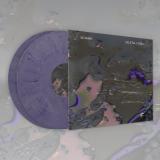
Mining the rich seam between transcendental escapism and crushing physical pressure, Sciama delivers his first album for Samurai Music. Exploring an energetic pitch between half-time and full-tilt 170, the London-based producer sculpts brooding soundscapes of sheer peaks and deep pits, driven by unrelenting but light-footed forward motion and an imposing strain of sound design. As Sciama, Michael Watters has been marking out his exacting sound since 2019 with an assured run of albums on ASC's Auxiliary label. His second EP for Samurai — the Wave Interaction 12" released earlier this year — pointed to his current area of focus inspired by the teachings of electronic music pioneer Daphne Oram. Contemplating the relationship between precise electronic frequencies and human perception, Celetal Form now delivers the full findings of his exploration. Oram coined the term 'celetal' in her 1972 book An Individual Note of Music, Sound and Electronics, trying to sum up a connection between the celestial and electrical. It's this spiritual dimension contained within sound waves Watters is concerned with, and the shape of the music on Celetal Form follows suit. In an opening statement of abyssal ambience, 'Overload Into Silence' establishes an atmosphere that endures throughout the album. Caught between steely textures, vaporous reverb tails and subtle harmonic interactions, the glacial shift of the many layers under Watters' control reveals an intense amount of detail at play even before drums and bass come into play. From there on in, the intensity ramps up from one heavyweight stepper to the next. There is agile, brittle top-end percussion at work on the likes of 'Induced Resonance' and 'Consuming Pulse', perhaps the most closely connected to D&B, while 'Rational Echoes' and 'Scanning Waveband' deal in urgency and techno-coded tension. A half-time roll guides the huge kick drum undulations of 'No Panacea', and 'Celetal Emergence' opens up into more spacious surroundings to let the subtle microtonal inflections of the synth tones set a curious mood. The two 'Intermodulation' tracks bring Watters' exacting approach into sharp focus, pushing the drums back and foregrounding alien frequencies that coalesce into unfamiliar yet strangely uplifting forms. Throughout Celetal Form this uncanny sensation charges the music with a power that reaches beyond its immediate, surface level impact. This intentional reflection on Oram's visionary thinking charges the current sound of Sciama with energetic intrigue that stands apart and invites a mindful, maybe even spiritual, engagement.
The item is already on it's way to us and is expected to be shipped from 02.10.2026.
This VA release brings together four producers who share a common language: hypnosis, movement, and an obsessive attention to sound design. Across two sides of vinyl, the record moves through different shades of deep and mental techno, held together by a sense of restraint and clarity rather than force.
Na Nich opens the A-side with a mental yet groove-driven piece, where impeccable sound quality meets a clean, deliberate design. LFO-driven elements float underneath the surface, almost speaking, giving the track a voice of its own without ever breaking its hypnotic hold.
Forest On Stasys follows with a tribal and deep approach that still hits with weight. Shakers and layered percussion drive the movement forward, building a rhythmic body that feels both organic and controlled.
On the B-side, Translate stays true to a purely mental identity: repeating LFOs and speaking tones that fold in on themselves, always kept clean and precise, letting the repetition do the work.
Save Your Atoll & Gabriele Santucci close the record with a deep, tribal-leaning cut full of groove and motion. Bongos, shakers, and background percussion build a danceable hypnosis, where every element serves the movement.
Four tracks, four voices, one shared sense of direction — a record built for the floor, but never at the expense of detail.
The item is already on it's way to us and is expected to be shipped from 06.10.2026.
Marcal has emerged as one of the most distinctive voices of a new generation of techno producers, combining rhythmic precision with an instinct for detail, tension and movement. On Four Small Escapes, he delivers four tracks built around subtle shifts and carefully placed moments of surprise, where intricate sound design and groove remain in constant dialogue. Opening with Smoke from Respawn, Marcal immediately establishes the record's character. Syncopated rhythms, intricate percussion work and subtle sound design details unfold within a streamlined framework, creating a groove that feels both spacious and forward-moving. Wooden rimshots and glassy textures interact across an open arrangement, giving the track a fluid and trippy quality. Arapuca shifts into darker territory while maintaining the same sense of control. Organic percussion, rolling low-end momentum and sharply placed accents continuously reshape the groove, creating a track that feels alive through movement rather than dramatic intervention. On Ultimamente, Marcal introduces one of the record's most immersive moments. Fleeting sonic details appear and disappear throughout the arrangement, while a carefully integrated vocal element adds depth and emotional weight without disrupting the flow. The result is a track that invites complete immersion while remaining firmly focused on the dancefloor. Closing the EP, The Surprise Test delivers its most direct statement. Rough and driving without leaning into industrial aesthetics, the track is powered by rolling energy, syncopated claps and a series of subtle electronic details that continuously animate its surface. The contrast between rawness and precision gives the record a powerful closing moment. Across all four tracks, Four Small Escapes highlights Marcal's ability to create tension through detail rather than excess. Reduced yet expressive, the EP balances functionality with a strong sense of character, allowing small gestures and unexpected shifts to leave a lasting impact.
On Stock and ready to ship

Keen listeners who have dug below the surface of Oren Ambarchi"s triple-digit discography know that alongside hypnotic minimalism, veins of irreverent and joyously wayward exploration run deep. Cooked is something of a landmark in Oren"s work, bringing this gloriously cuckoo sensibility right into the heart of his most high-profile solo work. Carrying on the grand Ambarchi tradition of meticulously constructed all-star studio jams (which reached new heights with Shebang), Cooked brings together collaborators from Australia, Germany, Japan and Sweden for two side-long epics where the foot keeps tapping even as the mind boggles. Cooked is a long way from the spacious, light-dappled grooves of Ghosted, but Oren"s Swedish bandmates play starring roles here, with Johan Berthling"s double bass anchoring both sides, and drummer Andreas Werliin lending his delicate touch to the second piece, "Sleight of Hand". Beginning with glistening layers of electric 12-string guitar, "Sleight of Hand" takes some key cues from electric Miles touchstones like "Feio" or his epic take on David Crosby"s "Guinnevere", with Berthling"s sparse basslines punctuating an almost weightless cornucopia of shifting detail, glimmering with subtle contributions from Michiko Ogawa on sho and James Rushford on a panoply of acoustic keyboards. Suddenly, everything is overwhelmed by a knotty, hyper-complex "solo" from Marcus Pal on digital synthesis, teleporting us to an alternate history where Allan Holdsworth traded the SynthAxe for Xenakis" UPIC. Building with additional drums and percussion from Will Guthrie to a peak of sizzling intensity, the music then goes sideways into a gently surreal coda, where some distinctly Zawinul-esque chords and Fredrik Rasten"s guitar float over a sprightly rhythm box, the avian inventions of Swedish virtuoso whistler Isak Hedtjärn wafting atop the sunlit stew.
expected to be published on 16.10.2026
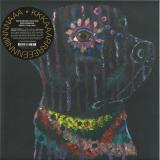
The legendary Charlemagne Palestine returns to Black Truffle with KKKAAARRREEENNNIIINNNAAA, capturing a 2025 performance in London alongside two close collaborators of recent years, multi-instrumentalist Daniel O’Sullivan and guitarist Oren Ambarchi. While perhaps still best known for the ecstatic piano clouds of his ‘strumming music’ performances, Palestine’s life-long search for what he calls the ‘golden sound’ has taken in an enormous variety of methods of sound production. Now stretching back an incredible six decades, his exploration of continuous sound forms has led him to mega-instruments from the carillon bells of the Saint Thomas Episcopal Church to the synthesizer armada of the Moog Sound Lab, with stops along the way at many of Europe’s grandest church organs. Just as important, though, has been Palestine’s practice as a singer, beginning with his childhood experience of sacred Jewish music and growing through his studies of Indian and Javanese musical traditions in the 1970s.
KKKAAARRREEENNNIIINNNAAA reimagines a key work showcasing Palestine’s voice, the haunting ‘magic song’ Karenina for falsetto singing and harmonium, recorded in Paris in March 1997 to honour the spirit of Palestine’s recently departed black labrador. In this trio version, which Palestine describes as the ‘karaoke’ version, O’Sullivan controls three cassette machines playing the original recording, their slow drift out of phase creating complex patterns of delays and ricochets as the recorded voice chants the syllables of Karenina’s name and other trance words. Beginning with a held organ tone that gradually expands to fill out the frequency spectrum, the piece soon grows into a dense psychedelic mass, as Palestine’s electric organs and the echoing pre-recorded voices are joined by Ambarchi’s swirling Leslie guitar tones and O’Sullivan’s viola, synthesizer and additional vocals. Atop it all sits Palestine’s live voice, in an extraordinary performance of keening, shamanic intensity, sometimes delivered in melodic unison with his keyboard playing.
Though clearly a work of Palestine’s design that sits squarely within his oeuvre, Ambarchi and O’Sullivan are far from simple accompanists on KKKAAARRREEENNNIIINNNAAA. As the elements of the teeming, emotionally charged stew writhe and twist, different elements come momentarily to the surface, O’Sullivan’s spaced-out viola taking the lead in moments that recall Kosugi’s Catch Wave, Ambarchi’s gliding chords and signature stuttering tones enriching the details of many of the quieter episodes. Throughout all its transformations, the music is buoyed up by a sacred aura, as Palestine intones his hypnotic prayer for the soul of his departed pet. Arriving emblazoned with a striking labrador painting by O’Sullivan on the cover, KKKAAARRREEENNNIIINNNAAA is an essential slice of modern ritual music.
On Stock and ready to ship
KKYV10 is a four-track EP by Bulgarian producer Loopdeville, currently based in Spain. The release explores a flexible space between minimal, breakbeat and house, shaped by groove-led structures, textured sampling and a slightly twisted, off-centre energy. Built to move through different moments — daytime light, peak pressure, late fade. The EP opens with "The Bizz", a track built around jazzy elements, vocal cuts and a jackin low-end. Its warm, rolling groove sets a natural tone for the record, balancing playfulness with reflections. "Shmuck Norris" follows with a heavier, more direct approach. Driven by raw drums and a rolling bassline, the track leans into a big-beat aesthetic while maintaining a stripped structure. On "Rashford", the EP shifts into a breakbeat framework. The track carries a deeper, more introspective mood, with subtle background movement adding acid tension beneath it’s surface. The closing track, "Septimo", draws from UK-influenced minimal with garage elements. Focused on sub frequencies it is designed for systems that favour depth and clarity in low parts. Together, the four tracks form a cohesive yet varied release, reflecting Loopdeville’s recognisable sense of tension and detail while staying totally aligned with Kooky’s sonic direction.
expected to be published on 23.10.2026

BATTISTINO, the artistic alias of Marco Battistini, is an Italian musician, songwriter, producer and DJ. His project is rooted in the meeting point between Italo Disco, French Electro, late-’70s Disco Music and Italian pop culture, reinterpreted through a contemporary vision that avoids nostalgia in favor of a distinctive sonic identity. His main influences include the aesthetic vision of Daft Punk, the musical freedom of Daniele Baldelli’s Cosmic Sound, the international disco movement of the late 1970s, and the golden era of Italian Italo Disco, with a special admiration for Righeira. His productions combine driving synth grooves, pulsating basslines and immediate melodies. Gritty electronic drums, saturated synthesizers and subtle harmonic distortion deliberately break away from the polished sound traditionally associated with classic Italo Disco. The result is a more physical and textured sonic palette that preserves the melodic elegance at the heart of the project. BATTISTINO’s visual identity follows the same philosophy. Elegant, reserved and almost bureaucratic, he prefers to remain behind the scenes rather than at the center of attention. More than a performer, he acts as the curator of a sonic archive, where every track represents a fragment of a larger story.
“Il Segreto” is the opening chapter of a conceptual trilogy inspired by an affair that was never revealed, set on the Italian Riviera in the early 1980s. Rather than telling the story itself, the project explores what remains: silence, forgotten details, invisible traces and memories suspended in time. Music, visual design and imagery all become chapters of the same narrative. Every release is a new file, every track a recovered document, every production another fragment of a story that will never be fully disclosed. BATTISTINO doesn’t tell stories. He preserves them. And, from time to time, he allows part of them to surface.
The 12″ includes a N.O.I.A. Remix!
expected to be published on 30.10.2026

Highscore is one of the newest-and quite sensational-discoveries in funk of the 1980s out of Germany. Two tracks Breakin' Out and Girls So Fine, both recorded about 40 years ago and shelved ever since, are finally receiving a long-overdue 12" release.
Label founder DJ Scientist tells the story of how the tracks were uncovered:
"Several years ago, while researching the Crea label-after we had already licensed 'You're Not The One For Me' by Peter Patzer-I also wanted to find out more about another band on the label: Nuages, who had released the stunning jazz-funk/fusion album Cumulus.
Interestingly, a Discogs user had uploaded a hand written promo letter from one of the band members along with the LP. In it, drummer Mike Bach mentioned plans for a second album, as well as a single featuring a 'coloured singer'-which caught my attention. (A note on language: the original letter from 1985 uses the term 'coloured.' We've chosen to quote it directly as a historical document, but want to be clear that this reflects the terminology of the era and not language we would use today.)
Digging deeper, more information was found on Bach's own website, where a project called 'High Score' was mentioned. I immediately got in touch and asked if the recordings from that project still existed. Unfortunately, Bach couldn't locate any of the material at the time.
Years passed before we reconnected, when we featured 'Strange Weekend' by Nuages on our recent yacht rock compilation. I still had the Highscore project in mind and asked again. Once more, Mike had to deny-but he made another effort and reached out to former collaborators. A few weeks later, guitarist and composer Hermann Behrens discovered cassette tapes containing tracks from the Highscore project. I couldn't wait to hear them…"
To go back a bit: Nuages were a jazz-rock band from Bremerhaven, originally formed by guitarist Joachim "Fussy" Fuß in 1982. The lineup included Mike Bach (drums and percussion), Klaus Hinners (bass), and Frank Fischer (keyboards). In 1984, John Dillard, a U.S. GI stationed in Germany, joined Nuages for several live performances as a soul singer.
Around 1985/1986, Dillard and Bach then teamed up with Hermann Behrens with a new focus on electro funk and disco: Highscore was born.
When the three demo recordings were finally sent to us, they immediately blew us away. Breakin' Out stood out as an incredible electro-funk boogie gem-exactly what we had been looking for. What's more, it didn't sound like a rough demo at all, Breakin Out was a well-arranged and almost perfectly recorded track, driven by fresh, vibrant synths, drum machines and guitar. The cassette mix wasn't entirely final, but the remaining details could be refined during mastering.
The B-side, Girl So Fine, impressed just as much-equally strong and just as captivating as the A-side. Our reaction was immediate: this had to be released without delay!
Most importantly, there are a few more recordings from Highscore. However, these only exist as multi-track studio reels, which currently cannot be transferred. In the best case, more material from the band may surface soon-hopefully without another long wait.
The 12" release Breakin' Out / Girl So Fine" comes with a newly designed picture sleeve, featuring an original photo of the band members, including background singer Ruben Hopkins who does not appear on these two recordings.
The vinyl edition is limited to 400 copies.
On Stock and ready to ship
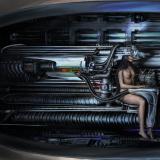
DIVA AS TECHNOLOGY
Arca announces the details of her highly anticipated new studio album, XXXXX, arriving via XL Recordings. Five years after the twice GRAMMY-nominated KiCk i and subsequent KICK pentalogy, the Venezuelan-born musician, producer, vocalist, and visual artist returns with her first full-length album since concluding one of the most ambitious chapters in contemporary music.
If the KICK era expanded Arca's universe outward, XXXXX turns inward and fractures it apart. Across 16 tracks, the album excavates vastly different emotional landscapes to deliver a body of work that is darker, more aggressive, more experimental, and unwilling to settle into fixed form. Initially conceived as a mixtape before revealing itself as an album, XXXXX embraces contradiction as a core methodology. In the spirit of her previous mixtapes @@@@@ (2020)—released as a 62-minute single—and &&&&& (2013), XXXXX thrives on raw exploration and instinct. It arrives as a deliberate interruption of expectation.
“It seems playful, also mischievous, to interrupt that autopilot,” says Arca.
The album's striking artwork depicts Arca as a biomechanical entity, accompanied by two owls—symbols of protection and the underworld in Greek mythology. Like the music itself, the imagery inhabits a space between worlds where transformation is both terrifying and liberatory. Suspended between posthuman augmentation and raw emotion, XXXXX exposes the mainframe. It is a record born from uncertainty, contradiction, instinct, and surrender—a becoming-machine that continues Arca's lifelong project of redefining what it means to be human both in, and against, the machine.
For Arca, rebirth has never been a metaphor, but a practice. She continues to exist in multiple states simultaneously, collapsing boundaries between human and machine, high and low culture, and experimental noise and pop music. Following her first-ever painting exhibition at London’s ICA earlier this year, XXXXX arrives as the latest transmission from a continuously evolving creative process. Over the last year, Arca has remained prolific: unveiling the double-sided single "Puta" / "Sola"; remixing tracks for Addison Rae, Robyn, and Hikaru Utada; collaborating with Tokischa on “Chama”; and contributing production to Madonna’s CONFESSIONS II. She walked the runways and made appearances at major international fashion weeks, while also composing the original motion picture soundtrack for Stillz’s film, Barrio Triste.
Now, after years of transformation beneath the surface, her next musical evolution reveals itself.
expected to be published on 13.11.2026

2026 Repress
Moving Pressure 03 lands as Rene Wise's third release on his imprint. With a refined approach to rhythm and restraint, the artist once again distills techno to its purest form: hypnotic, percussive, and propulsive. Across four tracks and in line with the label's essence, MP03 thrives on movement-low-end mastery meets tightly coiled grooves, while textural elements shift and evolve with subtle precision.
A1 'Relax' sets the foundation with a mighty sub-base, rolling forward with effortless force. Chopped-up claps ricochet through the mix, while a funky, disembodied vocal repeats a single command: "relax". Then comes 'Chomp Chomp', a denser offering in Wise's sensorial arsenal. Layered with gritty textures, his signature percussion builds a soundscape that is both tactile and weightless, evoking a kinetic dream state where groove and space are in constant conversation. On the flip, 'Cave' plunges into murkier terrain. Swathed in fog and sinister atmospherics, it unfolds through an eerie blend of sci-fi surrealism and grounded physicality. Bleeps hover like distant signals, their sharpness softened by a cavernous, smothering embrace. It's a study in tension-hypnotic and unsettling in equal measure. Closing the release is 'Deep Under', a track that embodies its name with subterranean mystique. The soundscape is rich with detail, an ecosystem of sonic fragments shifting beneath the surface. It's immersive yet elusive, like catching glimpses of something just out of reach-a mirage that flickers between the tangible and the ethereal.
This is minimalism with intent, built for deep immersion. Less, here, is infinitely more.
On Stock and ready to ship

Still compelled by the space they first opened, Gūsū returns with a second release, “Inhabiting Me”. What began as a shared approach, sprouted from intuition, has grown denser and more defined, holding on to that same fragility and openness. The duo continues to befriend with contrast, friction and proximity, shaping a language that inhabits their uncommon ground.
Vintage drum machines, tape delays and bass guitar widen the sonic ground, adding pulse, grain and instability, while the guzheng holds its place in full clarity. Each sound source becomes each other’s ornament, forming to gesture the next currents.
What emerges is less a fixed composition than a shifting form: precise in detail, impossible to contain. Listeners who have experienced Gūsū’s live performances will recognise this rare quality: a music of great sensitivity that expands with quiet force, drawing them inward rather than confronting them directly. The sound fades, re-enters, and leaves behind the trace of a lighthearted heaviness, echoing back in fragments, reappearing in memory with altered weight and colour.
Time bends inward and tones return altered. Between repetition and resonance, a tensile form begins to emerge. Neither nostalgic nor futuristic, neither static nor loose. Gūsū does not merge its materials into one smooth surface; it lets them stand close enough to sharpen one another.
Gūsū is a transcultural music project born from the confluence of two distinct artistic voices: Xueyan Chen and Nicolas Balmer. Together, they create a complex dialogue of sound that bridges the ancient and the modern, exploring the liminal spaces between tradition and experimentation. Gūsū’s inception was serendipitous, sparked by a shared stage in late 2022. What began as spontaneous improvisations has since evolved into a profound collaboration. The duo has performed under various monikers, finding their ultimate identity in the name Gūsū, a nod to both heritage and transformation.
On Stock and ready to ship
Following the exploratory framework of Closer Now, Everlasting Flame sees Bartosz Kruczyński aka Earth Trax moving further into introspection, embracing a more experimental language that drifts between ambient abstraction and rhythm-driven forms.
The album unfolds through cold, shimmering atmospheres and submerged low-end structures, navigating a subtle tension between melancholy and propulsion. Its sonic palette remains fluid, shifting between hazy ambient passages, dub-inflected textures and more fractured, bass-driven moments, while maintaining a strong sense of cohesion throughout.
A defining element of the record lies in its contrasts: low, brooding pads and diffused beats are set against piercing high-end details, distant vocal fragments and flashes of raw, distorted intensity. This interplay creates a sound world that feels at once fragile and forceful, intimate yet expansive, with a persistent sense of longing running beneath the surface.
With Everlasting Flame, Earth Trax continues to move beyond strictly club-oriented structures, shaping a body of work that exists in a liminal space between functionality and free-form expression — immersive, textural and emotionally resonant. A record that lingers in the in-between, where rhythm dissolves into atmosphere and emotion takes the lead.
On Stock and ready to ship

2026 Repress
With his first full techno album ANFS returns to the label in full form.
Delivering a cohesive, introspective piece of work shaped by tight sound design and an intuitive sense of flow. The music is minimal yet expressive, exploring a detailed palette of textures, subtle groove manipulations and low end pressure that sits gently beneath the surface. A work of art that sounds like nothing else out there at the moment. It's a focused and forward- thinking piece of music creation that shows artistic maturity, profound inspiration and masterful execution.
This item has not yet been released. You can pre-order the product now.

The moment the instantly recognizable intertwined guitar passage on the title track to the Eagles' Hotel California begins, the record's genius becomes obvious all over again. Ranked the 118th Greatest Album of All Time by Rolling Stone, certified by RIAA as the third best-selling LP in history, and considered the foundation on which the Golden State's mid-‘70s music scene was built, the 1976 landmark is a music staple immune to shifts in trends, eras, and styles. Fearlessly addressing the chaos and consequences of American life, its songs remain strikingly prescient and gain creedence with each passing day.
Mastered from the original analogue master tapes, pressed on MoFi SuperVinyl, and limited to 17,500 numbered copies, Mobile Fidelity's UltraDisc One-Step 180g 45RPM 2LP vinyl box set ensures you will want to permanently check into and never leave this particular Hotel California. Up to the herculean task of standing head and shoulders above all prior reissues, this collectible edition plays with extreme clarity, organic richness, tube-like warmth, massive dynamics, and microscopic levels of detail. You'll be able to practically smell the colitas and feel the breeze in your hair. Songs come across with an epic sweep and feature immersive, front-to-back soundstages that allow the music unprecedented air, roominess, and separation. As for the noise floor? It's basically as invisible as the spirits that waft in the corridors of the unforgettable title song.
Aesthetically, the premium packaging and presentation of the UD1S Hotel California pressing befit its esteemed status. Housed in a deluxe box, it features gorgeous foil-stamped jackets and faithful-to-the-original graphics that illuminate the splendour of the recording. From every angle, this UD1S reissue exists as a curatorial artefact meant to be preserved, touched, and examined. It is made for discerning listeners that prize sound quality and production, and who desire to fully immerse themselves in the art – and everything involved with the album, from the renowned cover art to the meticulous finishes.
Indeed, the opportunity to zero in on all the particulars of the 26-million-selling Eagles record dubbed "a legitimate rock masterpiece" by vaunted Los Angeles Times scribe Robert Hilburn has never been better. A global phenomenon that marked the band debut of guitarist-singer Joe Walsh, Hotel California continues to resonate and connect with listeners of all generations taken by its narrative depth, stark directness, picturesque melodies, daring majesty, and ardent emotionalism. Adorned with a breathtaking exterior photograph of the Beverly Hills Hotel that serves as the simultaneously haunting and alluring cover art, and rounded out by a rear-cover shot of the Lido Hotel lobby that reinforces a notion that teeters between permanence and transience, Hotel California is brilliantly tied to a specific place that functions as a universally understood metaphor for the American Dream.
Confronting the darker undercurrents and oft-ignored constructs attached to that romantic notion, the record's songs revolve around a host of shared themes: excess, mobility, stability, illusion, fame, destruction, and idealism included. Notably, Hotel California appeared at a crucial junction in American history: During the country's bicentennial and amid escalating controversies related to the Vietnam War, energy crisis, and governmental corruption. That the Eagles manage to channel such cultural, social, and economical matters into a cohesive, stately, big-picture statement is alone a stupendous feat. That the album's reach, boldness, vitality, accessibility, and understated intensity have never waned make it a marvel.
Reflecting on Hotel California 40 years after its original release, and indirectly explaining its enduring appeal and increasing relevance, singer-songwriter Don Henley confirmed the record pertains to the "loss of innocence, the cost of naiveté...the difficulties of balancing loving relationships and work, trying to square the conflicting relationship between business and art; the corruption in politics, the fading away of the Sixties dream of ‘peace, love and understanding.'"
It can be argued that Henley and company squarely hit on and drove home those ideas in the surreal title track, chart-topping "Life in the Fast Lane," and grand "The Last Resort" alone. But that would miss the forest for the trees. Experienced as an unbroken whole, complete with the pristinely shot imagery and physical grooves, Hotel California unfolds like a geography-conscious saga by James Michener and plays like colour-saturated movie shot on 70mm film by Martin Scorsese. It's about our collective and individual decisions – and the shape of our past, present, and future. And, just like that conjured by our imaginations, Hotel California continues to take on a life of its own.
More About Mobile Fidelity UltraDisc One-Step and Why It Is Superior
Mobile Fidelity Sound Lab's UltraDisc One-Step (UD1S) technique bypasses generational losses inherent to the traditional three-step plating process by removing two steps: the production of father and mother plates, which are created to yield numerous stampers from each lacquer that is cut. For UD1S plating, stampers (also called "converts") are made directly from the lacquers. Since each lacquer yields only one stamper, multiple lacquers need to be cut. Mobile Fidelity's UD1S process produces a final LP with the lowest-possible noise floor. The removal of two steps of the plating process also reveals musical details and dynamics that would otherwise be lost due to the standard multi-step process. With UD1S, every aspect of vinyl production is optimized to produce the best-sounding vinyl album available today.
MoFi SuperVinyl
Developed by NEOTECH and RTI, MoFi SuperVinyl is the most exacting-to-specification vinyl compound ever devised. Analogue lovers have never seen (or heard) anything like it. Extraordinarily expensive and extremely painstaking to produce, the special proprietary compound addresses two specific areas of improvement: noise floor reduction and enhanced groove definition. The vinyl composition features a new carbonless dye (hold the disc up to the light and see) and produces the world's quietest surfaces. This high-definition formula also allows for the creation of cleaner grooves that are indistinguishable from the original lacquer. MoFi SuperVinyl provides the closest approximation of what the label's engineers hear in the mastering lab.
This item has not yet been released. You can pre-order the product now.

There was nothing in contemporary music like Chris Isaak’s Heart Shaped World when it hit shelves in June 1989. More than three decades later, the singer-songwriter’s third album still sounds unique — and claims a backstory nearly as fascinating as the retro-leaning material and standout performances that propelled it to sales of more than 2.5 million copies. Home to the Top 10 smash “Wicked Game,” the set remains a masterful mood piece that invites you to pour a late-night drink, sit in a dimmed room, and relish Isaak’s elegant albeit raw ruminations on love, relationships, and questionable decisions.
Sourced from the original master tapes, pressed at Fidelity Record Pressing, strictly limited to 3,000 numbered copies, and featuring the bonus track “Diddley Daddy,” Mobile Fidelity's UltraDisc One-Step 180g 45RPM 2LP box set of Heart Shaped World unearths the staggering inner details, saturated tones, and brilliant atmospherics of the crisp production. It brings you up close and personal with Isaak’s spectacular singing — impeccably controlled, tense, brooding, steamy, smoldering, haunted — situated amidst stripped-down backdrops that allow every note to fully bloom and decay.
While Isaak’s ever-steady baritone remains the anchor, the contributions of his trusty backing band, the aptly named Silvertone, come across with just as much cool, command, and realism. The indispensable playing of guitarist James Calvin Wilsey particularly emerges with superb clarity and dimensionality. The character of his 1965 Fender Stratocaster, shivering twang of his spring-coiled fills, and his signature use of reverb, delay, and vibrato seamlessly match Isaak's patient deliveries and the band’s unhurried rhythms. Experienced on UD1S with ultra-black backgrounds and a nearly invisible noise floor, Heart Shaped World is in every regard a demonstration disc.
The premium packaging of this UD1S pressing befits its elevated status. Housed in a deluxe slipcase, it features foil-stamped jackets and faithful-to-the-original graphics. Aurally and visually, this reissue is for discerning listeners who desire to immerse themselves in everything involved with the album, not the least of which is the cover art depicting a lost-in-thought Isaak staring ahead and sitting in what appears to be an efficiency apartment. The image epitomizes the record’s lonesome temperaments and pensive themes.
Of course, if not for director David Lynch hand-picking two cuts from Heart Shaped World for his 1990 film Wild at Heart, the record would’ve probably suffered the same fate as Isaak’s prior efforts and gone unnoticed by the mainstream. Despite receiving raves from outlets such as NME, Chicago Tribune, and Rolling Stone upon its original release, the album stalled in the lower quadrants of the Billboard charts and, after a few weeks, dropped off.
Cue the ear of Lee Chesnut. Then the music director for a large Atlanta radio station, Chesnut heard the instrumental version of “Wicked Game” on Lynch’s soundtrack and started airing the album rendition at all hours of the day. Aided by a sensual video featuring Isaak and supermodel Helena Christensen, the song found its way into the public consciousness by early ‘91 and helped make Isaak a most unlikely mainstream star in an era where his techniques had little to nothing in common with popular tastes.
Despite its vintage vibes and shared DNA with legends such as Roy Orbison, Chet Baker, and Glen Campbell, Heart Shaped World transcends nostalgia, rockabilly, and throwback tropes. For all the melodrama and sadness at hand, Isaak’s gorgeously transparent singing dives deep underneath emotional surfaces. He mines subtleties that indicate his feelings go beyond heartbreak and anguish, and occasionally suggest frustration, menace, and anger. You can hear it in his quivering falsetto, and the slow and methodical ways he allows delicate whispers to break into shadowy phrasing that crosses over to the darker sides of romance and desire.
That approach bolsters the title track, which suggests calm yet moves on ominous currents — its simmering pace and snare-drum snappiness foreshadowing Isaak raising the volume and urgency during the coda. The southwestern-tinged “Wrong to Love You” plays with similar concepts of hesitation, unease, and discord, Isaak careful never to fully erupt and give anything away. His poised deliveries offer a master class in the art of insinuation and hurt on “Nothing’s Changed,” sent up with a wordless backing chorus and crackling guitar lines straight out of a Memphis blues joint.
Heart Shaped World further boosts its merit via its abundant stylistic variations, from the upbeat country-and-western trot of “I’m Not Waiting” and Spanish acoustic shimmer of the jazz-based ballad “Blue Spanish Sky” to the swinging horn-accompanied grooves of “Don’t Make Me Love You” and desert smokiness of the understated “Kings of the Highway.” On the latter, Isaak comes across as resigned and absolute. His singing and pain worm their way into your soul, and echo akin to the way the music prepares to strike when you least expect.
“Trouble going 'round,” Isaak croons right as the album begins. “Trouble going down.” Damn straight.
This item has not yet been released. You can pre-order the product now.

Selekt Wax returns with its second vinyl offering, shifting the lens from introspection toward motion. Where its predecessor explored stillness and space, Varginha 96 leans into rhythm with a more fluid, tactile energy.
Loopedeville works within a minimal framework but pushes it toward something more animated. Groove takes the lead, while detail reveals itself gradually. The result is playful but controlled, built for movement while still carrying depth beneath the surface.
Inspired by the 1996 Varginha incident in Brazil, the record carries a subtle sense of the otherworldly. Not in a literal sense, but in texture. Unfamiliar tones, slightly off center moments, and elements that feel just outside of reach.
Etched on the sleeve, a poem sets the tone:
the analog moment is now
but, how? release
free form feelings finding
new places in yourself
a sort of synthesis
of interpretations
crash & collide
into the infinite groove of reality
but, is anything really real?
A1 – Varginha 96
A breakbeat driven opener centered on a looping vocal from the Varginha ‘96 incident. Off kilter synth textures circle the groove, giving it a subtle, otherworldly feel. Simple on the surface, with depth that reveals itself over time.
A2 – Varginha 96 (Ohm Hourani Remix)
Ohm takes it into a more stripped back, hypnotic space. Centered around the same vocal, the track locks into repetition and feel. Hazy, controlled, and built for late hours.
B1 – Thunders in Paradise
A driving groove built on dusty drums and a tightly controlled rhythm. It holds a steady pulse, with understated details and shifting textures giving it quiet depth.
B2 – Never Enough
A fluid, late night groove shaped by Loopedeville’s signature swing. Less driving than the previous cut, but still locked in, with warm tones and an easy bounce that carries through.
Order now. Collecting orders for repress.
High-definition world building collides with incisive physical urgency around 170 BPM as Pianeti Sintetici makes his first appearance on Samurai Music. Davide Perrone's vivid production style found a more downtempo outlet on last year's release for Samurai sub label Saibai, but he pivots naturally towards the weightier presence of the Exoverse with a richly rendered suite of sonic systems teeming with life and pockmarked with mystery. The spacious drums that lead on 'Agilus' have an acoustic, in-the-room quality that instantly grounds the track before the myriad layers of synthesis start spiralling skywards, pitting twinkling pads against rapid, undulating acid wielded with assured control. By way of contrast 'Mimoide' burrows downwards, using needlepoint marks to puncture the brooding beds of sound looming in the middle distance. At the same time, Perrone weaves lithe, rubbery shapes across the foreground of the mix for a three-dimensional expression you can almost reach out and touch. Opening up a B side tipped towards a mellower pace, 'Living Plasma' leans into a 4/4 meditation as a vessel for another distinctive tapestry of modulating sound design from Perrone's seemingly infinite sonic resources. 'Exoverse' edges towards a more melodic standpoint with its teased flutters of arpeggio that sneak in and out of the mix and a harmonic dimension to the atmospheric layers that shape out the size of the track. Across all four pieces, the sheer detail at play in the Pianeti Sintetici universe is mind-boggling. By rights it should be a busy, stress-inducing experience, but Perrone's gift lies in the ability to take a macro view on these incredibly complex creations, zooming out by boiling the parts down into a symbiotic whole that feels patient and considered. The reward for the listener comes from taking the time to zoom in and marvel at every micro detail writhing across the surface.
On Stock and ready to ship

ICONYC steps into new territory with Traffk, a spellbinding EP from UVITA, Twiins, and Motip White. Built around two deeply immersive compositions, Traffik operates as a threshold rather than a destination — a carefully measured passage into unfamiliar territory where tension is curated, expectations are subverted, and every detail feels deliberately withheld until the right moment.
At the center lies the title track, “Traffik,” a commanding convergence of three distinct creative voices distilled into a singular, unsettling vision. Suspended between austere minimalism and intricate design, the piece unfolds with a forceful rhythmic backbone that plunges into subterranean depths. Twisting brass motifs flicker and bend like fractured light across polished surfaces, creating an atmosphere that is both tactile and elusive. As the groove locks into a hypnotic oscillation, a spectral vocal presence emerges, injecting a sense of weight and foreboding before the track fractures inward, collapsing into a violent release that ejects us from its vortex with uncompromising intensity.
On our B-side, UVITA and Twiins reconvene for “Lucy Tried For It,” a continuation that trades overt drama for a slow-burning psychological pull. Anchored by a prowling low-frequency current and a relentless percussive drive, the track draws us deeper through carefully placed sonic detonations that expand its spatial dimension. Gradually, malfunctioning mechanical textures and distant, almost feral cries seep into the framework, setting the stage for an introspective spoken-word moment that nudges the piece further into the subconscious. As fragmented melodic elements begin to surface, “Lucy Tried For It” reaches a moment of suspended reflection before surging forward once more, closing the EP on an emotionally charged and resolute note.
On Stock and ready to ship
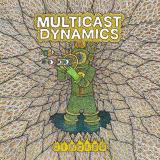
Several years after the release of ‘Metamorphosis’ (with Sid Hille), Multicast Dynamics (Samuel van Dijk) reemerges on Astral Industries with ‘Circles’ - an enchanting two-part work venturing into deep unconscious realms. Sonic landscapes unfold in a sequence of hidden spaces and intimate revelations, featuring detailed sound design and rich thematic content.
Circle One initiates the process, opening gently with glassy drones and the patter of distant voices. A faint light shimmers through swirling pools of liquid memories and melting forms. The atmosphere builds, and everything is engulfed in the act of transfiguration.
Passing through the threshold, Circle Two traverses further into cavernous territories. Boundless drifting soon becomes a gravitational pull toward something deeper. Submitted to the powerful undercurrent, incoming primordial pulsations signal a quest that reaches its fated culmination.
Perhaps the revelation of something long-lost, entering the Circle eludes to that which on the surface remains hidden, yet its rediscovery inevitable.
On Stock and ready to ship
The legacy of wipE′out′′ has transcended time and cemented itself as a true transgenerational phenomenon. Launched in 1995, it didn’t just revolutionise the gaming industry, it created a bridge between the gaming ecosystem and the raver community. Its futuristic aesthetics and forward-thinking sound left a mark not only on mainstream audiences but also on the most demanding corners of the underground.
Decades later, the game’s impact is still alive. The release in 2023 of The Zero Gravity Soundtrack on Lapsus Records proved once again that wipE′out′′’s accompanying audio will go down in history as much more than just an anti-gravity racing game soundtrack.
This is why we decided to go deeper into the slipstream and build the second volume you’re now holding in your hands. Drawn from the original archives of Tim Wright, aka CoLD SToRAGE, this new collection surfaces unreleased cuts, pieces that couldn’t fit on the first edition, and a suite of self-authored ambient reworks that translate pure velocity into wide-screen atmospherics engineered for the long straights, the drone of airbrakes, the blue hour between checkpoints. It also reconnects the circuit, gathering selections and variants tied to later chapters of the saga — wipE′out′′ HD and wipE′out′′ Pure — plus alternative mixes that, until now, only existed in the Sega Saturn dimension of the franchise.
Finally, the material takes a leap into the future in the hands of four remixers especially chosen for this release: Tim Reaper, SHERELLE, Mantra, and NikNak, who collectively forge links between CoLD SToRAGE’s pioneering musical vision, the sound world of the game, and the contemporary breakbeats and drum & bass vanguard.
Expect the DNA you remember — accelerated breaks, trance-vector synths, jungle influences, sub-bass rumbling neatly beneath the craft’s hull, and at times even echoes of classic hardstyle — now revealed with new angles and air. The previously unheard material carries the same aerodynamic design sense that made these tracks feel faster than the track map itself, while the ambient versions open the field of view with melodies hovering at the lip of overdrive. Without a doubt, here you’ll find a strong sense of nostalgia. But this isn’t just nostalgia; it’s also proof that this sound world continues to evolve when you ease off the throttle.
For the faithful — crate-digging ravers, speed-run obsessives, and design nerds — this is an essential expansion pack: compiling rarities, restoring context, and reframing the emotional core of wipE′out′′ for late nights and early mornings alike. Bridging memory and momentum, club and console, rush and afterglow. Strap in.
Detailed tracklist, with annotations by Tim Wright aka CoLD SToRAGE
· Scratch Pad 1: “This track was composed using incomplete tracks that were developed around the time of the first wipE′out′′. It’s so long because it was used for a marathon-length Psygnosis promotional video.”
· Messij Received: “Messij was a firm favourite with wipE′out′′ fans, so it made sense that there’d be more where that came from — this was one of those re-workings.”
· God’s Gift: “I was always very fond of Erasure’s track Love to Hate You with the canned crowd FX sounds. God’s Gift was a tongue-in-cheek reference to how some musicians think they are just that. This was way before I even played live as CoLD SToRAGE.”
· Tentative: “I wasn’t sure about introducing some wacky beats and distorted sounds into one of the tracks, because it was kinda heading away from the other tracks, hence Tentative — but it turned out OK.”
· Canada 2048: “When wipE′out′′ 2048 was launched I decided to re-make Canada as a kind of tribute, but in a slightly new-tech, laid-back way, using Propellerhead Reason and all software synths.”
· Wiped Out: “Based on a few riffs from a MIDI file unused at the time of the original wipE′out′′ game compositions, this featured on my debut album MELT.”
· Body in Motion (Body Plus Mix): “A more trippy interpretation of Body in Motion that featured on non PlayStation versions of the game e.g. Sega Saturn.”
· Onyx (“Dark Side of the Moon”): “Onyx was my sole contribution to wipE′out′′ Pure on the Sony PSP handheld gaming console. This version was something I developed in a darker style, that eventually erupts into a crescendo.”
· Messij Received (WSTWGBE Mix): “Like I say, Messij was a hit with most wipE′out′′ fans, so when I was asked to compose more music for non-PlayStation versions, I adapted this tune into a parallel-universe version for PC and Sega Saturn. By the way, WSTWGBE refers to Who Said This Was Going To Be Easy?”
· Canada (Drunken Ausländer Mix): “In early 2018 I released a fresh album called Ch'illout′′, a re-working of many of my wipE′out′′ tracks in an ambient, Sunday-morning vibe style — it was a few years’ work, here and there.”
· Tentative (Woffenfum Mix): “Another chilled re-working of one of my wipE′out′′ tracks, the mix named with a nod to a good friend of mine, Carl Woffenden — someone who I've worked with for many years in the games industry.”
· Messij (Bobbing Boat Mix): “A nice cheesy computer blip-blop start belies its deep and upbeat chilled-out melodic finale.”
· Body in Motion (Timeless Techno Mix): “Another classic track given the chilled-out vibe mix, as featured originally on my Ch'illout′′ album. This one’s a really trippy, deep-space take on the original.”
· DOH-T (AM / FM Mix): “The idea with this chilled-out mix was to imagine all the melodic parts of this varied track being broadcast on terrestrial radio, so each theme drifts in and out through the radio static.”
· ’95 Future Echoes: “Originally developed as a companion album for wipE′out′′ HD, this track actually has its roots in a tiny loop of a song that never progressed to anything special back in the mid-’90s when I was composing for the original game.”
· Turbine: “Also from my wipE′out′′ HD album, it leans heavily into the upbeat, uplifting tunes from the original game, but also steals a bit of vibe and energy from The Prodigy, with those distorted flute sounds.”
· Pencil Neck: “This excerpt from my wipE′out′′ HD album features lots of sounds centre-stage and forward from Propellerhead Reason’s Subtractor virtual synth. I learned to love this more than my JD-800!”
· Messij 2005 (New Science Mix): “Yet another take on the track that still raises a smile, this time through a mix of samples from the original and Propellerhead Reason — the ‘new science’ when compared to an Amiga 1200 running Bars and Pipes.”
On Stock and ready to ship
Don’t Trust The Snippets – Play The Full Track Before Buying A Record is a finely tuned four-track compilation from NOREPRESS Records, exploring a broad emotional and rhythmic spectrum — from atmospheric breaks to dub-infused tech house. Each piece invites deep listening, rewarding full attention rather than surface impressions.
A1. Osman Oz & SUBLIMINAL. – Johto opens with a beautifully crafted breaks track — rich in ambient layers and cinematic depth, setting a contemplative tone. A2. Pat Jensenn – Heaven Tapes follows with crisp percussion and hypnotic melodies, shifting the mood into uplifting, forward-driving territory. The young Argentinian producer blends instinct and elegance in equal measure.
On the flip, B1. Genning & Kirill Matveev – Orbiter lifts off with bounce and finesse — tight, articulate, and designed for that moment when the dancefloor begins to bloom. B2. Neptuna, also by Genning & Matveev, closes the record with sensual dub textures and refined detail — balancing movement and stillness in perfect harmony.
Led by visionary Kirill Matveev, with strong contributions from Genning, Pat Jensenn, and the always-excellent Osman Oz & SUBLIMINAL, NRP005 serves as a reminder: the full track always tells the real story.
NOREPRESS is a division of MixCult Records
On Stock and ready to ship

Making his long-awaited return to Spatial, JLM Productions serves up another sizzling andvaried concoction of atmospheric breakbeat goodness.
A1 - Unraveling
Opening with a blissful, playful melody which fades in and out of effects and padwork,Unravelling shows off an insanely crisp 2-step break at its core - definitely suited for thedancefloor with a buoyant bassline rumbling beneath the waves. The track leaps furtherinto life with JLM adding some additional drums to elevate the breaks further still, all withserene, harmonious melodies dancing around in the mix.
A2 - Forced Perspective
A purposeful melody opens Forced Perspective as JLM Productions unleashes a stellarblend of atmospheric bliss with a unique epic urgency. Sci-fi synthwork surrounds anenergetic selection of drums edited with trademark clarity as layers upon layers of synthintertwine dynamic patterns with ease. This is a great example of JLM's expansive suite ofinfluences combining to create a deliciously detailed and unique whole.
AA1 - Surface Scan
Light cymbals commence a DJ-friendly intro to the second track, Surface Scan. Bothrousing and deep, smooth padwork leads into a drop which brings with it long, whooshingmelodic synths and crunchy stacked breakbeats. As the atmosphere develops, JLM addsin a bunch of effects and subtle, sumptuous sci-fi synthwork, strings and more to completeanother masterpiece from a true pillar of "old school brand new" methodology.
AA2 - Mixed Motive
Straight into a serving of subdued breaks perfect for the intro, JLM rounds off this stunningEP with Mixed Motive. This is a track which explores the atmospheric drum & basslandscape in style. Our creatively-edited breaks soon evolve into a crescendo of joyousdrum patterns with an old 720-style stabby melody punctuating the mix while deep &melodic basslines jostle below, adding dense texture to a stunning piece of music.
Words by Chris Hayes (Spatial / Red Mist)
On Stock and ready to ship

From the depths of Greyscale’s acclaimed Mood Series, a new chapter rises to the surface: Deemkeyne – Ending Dynasty.
Across four immersive cuts, Deemkeyne sculpts a sound world rooted in the foundations of dub techno yet unafraid to push into fresh territories. Each track is built with raw textures and spatial awareness, weaving hypnotic patterns that echo through space like sonic architecture. Sub-bass pulses anchor the body while hazy chords and shifting atmospheres guide the mind into a deeper state.
This is dub techno and house at its most essential- music for true heads who understand the beauty in restraint, the subtle power of repetition, and the art of detail. Whether in the intimacy of a late-night set or the solitude of a headphone journey, Ending Dynasty unfolds with timeless weight and precision.
Pressed with care and presented on vinyl for the first time, this release is not just another record, it’s an invitation to step inside Deemkeyne’s world of shadows, echoes, and infinite space. A must-have addition to the shelves of anyone dedicated to the underground continuum.
On Stock and ready to ship
2025 Repress
“In stark contrast to the stress-makingly staccato assault of your average 'ardcore rave, Telepathic Fish was a wombeldelic sound-and-light bath"
Simon Reynolds (Energy Flash: A Journey Through Rave Music And Dance Culture)
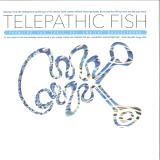
The first-ever illustrated compendium recounting the seminal underground South London ambient party that surfaced at the axis through which the likes of Ninja Tune, Warp and Rising High flowed. Telepathic Fish shared fertile waters with Megatripolis and The Big Chill, moving the early 90s London back room chill-out space into the kaleidoscopic spotlight.
Documenting the sights and sounds of South London’s seminal Telepathic Fish ambient parties. Hosted by Chantal Passamonte (aka Mira Calix - RIP), David Vallade, Mario Aguera and Kevin Foakes (aka DJ Food) - collectively named Openmind. With the help of Mixmaster Morris (The Irresistible Force) and Matt Black (Coldcut), they put on some of the earliest chill out events in London.
Rooted deep in the heart of the electronic underground they started DJing and decorating house parties or squats with mind-blowing installations and wholly idiosyncratic design, hosting the likes of Aphex Twin, Andrea Parker and Tony Morley (The Leaf Label). Within a year they were playing VIP after shows for the likes of Orbital and illegal New Year’s gatherings at the disused Roundhouse whilst guesting on Coldcut’s Solid Steel radio show on London’s KISS FM.
Whilst collaborations with legendary club nights such as Megatripolis saw them share bills with Autechre, Higher Intelligence Agency, Scanner and Global Communication, they also created their own ambient fanzine - Mindfood – to document the scene evolving around them. A 20-page history of their parties is included in the release, richly illustrated with personal photos, artwork and memorabilia from their adventures between 1992-95. The gatefold sleeve also features their Telepathic Fish logo, mirroring an original T-shirt design they sold in Ambient Soho, a record shop three of the four worked in at different times.
The selections featured here are all personal favourites that were played at the Telepathic Fish parties during the 90s. Picked and arranged by Mario, David and Kevin who combed their collections for key pieces they associate with the time and Chantal’s music tastes. Over a hundred tracks were selected, totalling nearly 11 hours of playing time, before being whittled down to the essentials by the trio, forming a snapshot of their world back in the day.
KEY POINTS:
* Features long deleted and hard to find tracks by Caustic Window (Richard D. James aka Aphex Twin), Tranquility Bass, Spacetime Continuum and Global Communication (Mark Pritchard and Tom Middleton).
• Pressed on DJ friendly double black vinyl
• Includes A 20-page history of their parties is included in the release, richly illustrated with unseen personal photos, artwork and memorabilia from the Telepathic Fish crew’s adventures between 1992-95, as well as detailed liner notes courtesy of founding members Mario Ageura and Kevin Foakes.
• Cover includes horizontal obi sticker with quote from Simon Reynolds' book Energy Flash: A Journey Through Rave Music And Dance Culture, describing the Telepathic Fish parties' place in the dance music landscape.
• Lacquer cut by Beau Thomas at Ten Eight Seven Mastering
On Stock and ready to ship

Interactions is a new vinyl imprint based in Mallorca, emerging from an event series dedicated to connection, collaboration, and the exchange of sound. What began as intimate gatherings with handpicked artists now evolves into a label, extending its ethos from the booth to the studio. With a focus on minimal house aesthetics and a detailed approach, Interactions aims to highlight the subtle edges of groove-driven electronic music through artist exchange and collaboration.
The debut release comes from Veruh, an artist whose refined productions strike a balance between rhythmic detail and emotional restraint. The EP’s title track, Eurivor, is an atmospheric roller built on intricate FX and fleeting vocal snippets — minimal but with character, playful yet anchored by a persistent groove made for the club.
On the remix front, Sepp delivers a peak-time tech-house rework. A defining force in the minimal-tech scene, his version is a tight, rolling burner packed with late-night tension and summer-floor energy.
The B-side shifts into broken-beat territory: Abil Revis & Olab bring emotion to the surface, pushing the vocals forward in a remix made for after-hours sessions, where subtlety, mood, and movement take over. Finally, For·at craft a stomping reinterpretation — minimalist yet forceful, teeming with fractured rhythms and deep pressure.
Eurivor marks a confident first step for Interactions — a label grounded in collaboration, rooted in minimalism, and dedicated to the quiet magic that happens when artists connect.
On Stock and ready to ship

With a steely sound matching fathoms-deep echo chambers with metallic textures and precision drums, Sciama arrives on Samurai Music to press into the inspiring hinterland between techno and drum & bass.
Sciama is the production alias for Michael Watters, a producer who since 2019 has carved out a formidable reputation across a stellar run of releases on ASC's Auxiliary label. While his music references UK bass, transcendental techno and industrial, the end result is a taut, focused journey through fractured, weighty rhythms and vast, ranging atmospherics tilted towards the darkness.
Between Veils is testament to Watters' refined production, steeped in intensely detailed and layered sound design in constant fluid motion, whether locked to the grid or shifting across the surface of the track like grayscale snow drifts. Noise becomes a subtle tool in his hands, capable of delicacy as much as abrasion, and discord evokes a haunting beauty if you listen past the clangorous overtones he elicits from his pads.
For all the writhing, artful sonics, there is still ample weight in the Sciama sound to hold court over a sound system. 'Figures In Mist' rests on a constant half time cycle underpinned by monolithic bass pulses and 'Ghost Trail' finds deadly energy in the faintest flicker of double-time hats above the slow march of a 4/4 kick clocking around 85BPM. Restraint is paramount, even in the fuller rhythm section that drives 'Anima Trace', creating tension through what isn't sequenced as much as what is. 'Veil Of Mirrors' has an especially punchy kick propelling the cavernous echos and ripples that shape out yet another vivid soundscape, but at all times Watters keeps a tight grip on his arrangement to keep the energy simmering just below boiling point.
Moving well beyond the boundaries of any specific genre, Between Veils winds upas a strong, independent statement on the meeting point between broad influences and clear intentions - a formidable addition to Samurai Music's explorations beyond drum & bass and Sciama's steadily evolving, singular style.
On Stock and ready to ship

Introducing the inaugural release from "Vorm", "Vorm Series: One," a compelling compilation showcasing five tracks from a lineup of esteemed and emerging producers. This release marks the beginning for the young record label "Vorm", setting a high standard with its diverse and dynamic sounds.
From the producer and "Newrhythmic Records" founder, "Joton", comes "Neon Dystopia." This opener track of the release plunges into a hard hitting soundscape, blending pulsating basslines with highly pitched atmo surfaces. "Mineral" by Kon Janson dives into a mineral-rich sonic experience, where intricate rhythms meet hypnotic textures. This subterranean grooves is exactly the addition that the A-side needs and rounds off the whole thing as powerfully as possible.
"Ricardo Garduno" delivers "They're Between Us." This starter track on the B-side is a dark, spacious force of cavernous beats and atmospheres, perfect for those moments of peak-time intensity. Founder "Maasym" presents "Raeder," a sophisticated blend of a industrial trippy synth line and highly dense effective elements.
The track evolves with mechanical precision, emphasizing and focusing on the minimalist effects, percussions and drums. Closing out the release is Berlin-based rising producer & live artist "Peryl" with "Melting Room." This track is a melting pot of raw-high energy and experimental tones, pushing boundaries with its innovative, detailed sound design.
On Stock and ready to ship

In October 1974, the first number of “L'Indépendant du Jazz”, a small self-produced magazine DIY -before punk supposedly invented the concept- was launched by Jef Gilson, Gérard Terronès, Jean-Jacques Pussiau and a few other specialists of a different kind of jazz in France, it looked at the already long career of Jef Gilson and in detail at the album with saxophonist Philippe Maté:
“The ‘Workshop’ is, with Philippe Maté (alto-sax), an undeniable success. Maté is genuinely ‘the’ most inventive French saxophonist since Michel Portal burst onto the jazz scene (who has also worked with Jef Gilson on both “Enfin” and “Gaveau”).”
Even though the author of the article is a mysterious I.H. Dubiniou, and it is difficult to know if it is a real person or a pseudonym used by one of the merry bunch, it is also tempting to hear it as what Jef Gilson really thought about his new discovery. Even more so as the two men would work together over a long period, as Maté became one of the key figures of Gilson’s Europamerica orchestra up until the 1980s.
Philippe Maté had started to make a name for himself with the Acting Trio when they released an album on the BYG label in 1969, and he was also one of the regular sidemen for the Saravah studios (he can notably be heard on albums by Higelin, Fontaine or his cult duo album with Daniel Vallancien).
The album was recorded on 4 February 1972, at the Foyer de Montorgueuil, where Gilson had set up his studio, with more or less the same team found on “La Marche Dans Le Désert” by Sahib Shihab + Gilson Unit (recorded ten days later). This was drummer Jean-Claude Pourtier and pianist Pierre Moret (regular Gilson accomplices since “Le Massacre Du Printemps”), alongside Maurice Bouhana and Bruno Di Gioa on various percussions and/or wind instruments. On bass is Didier Levallet, of the now mythical Perception, (Jean-François Catoire would replace him with Shihab) and Philippe Maté who took top billing, rather than the American saxophonist afterwards. The two albums are however quite different. This “Workshop” is more abrasive, more free. Made up of two long improvisations each of over 22mn, “L'Œil” on side A and “Vision” on side B (Gilson specialists would recognise the nod to one of his albums from the 60s), the album plunges you into the depths, attempting to drown you in electronic waves, dragging you back to the surface by the collar, giving you a good shakedown, before showing you the light, leaving you breathless on the shore after 46mn of the most intense music French has to offer. “An undeniable success”, they said. (by Jérôme "Kalcha" Simonneau)
On Stock and ready to ship

Spanish producer Notzing joins Alpenglühen with Vermiström, a four-track EP exploring the deeper edges of experimental dance music.
Over the past few years, Notzing has established himself as one of the most compelling voices in Spain's underground techno scene. His sound is stripped back yet immersive, built from hypnotic drones, stretched loops, and subtle rhythmic developments that gradually pull the listener into a trance-like state.
With Vermiström, each of the four tracks unfolds organically, evolving with patience and precision. Intricate, unconventional rhythms intertwine with long-form sequences and richly processed textures, creating a constantly shifting sonic landscape.
What truly defines this EP, however, is its profound sense of depth and its unmistakable dub aesthetic. Every element occupies its own carefully crafted space: textured atmospheres, meticulously sculpted percussion, and syncopated sequences that seem to exist at two different tempos simultaneously. Creative use of delays and spatial effects subtly references the language of Jamaican dub, while an exceptional level of sound design and mixing gives the record remarkable clarity and dynamic range.
Rather than revealing everything at once, Vermiström unfolds gradually. Each listen brings new details to the surface, as subtle shifts in texture, rhythm and space slowly reshape the music from within.
Order now and we will order the item for you at our supplier.

“Ruins are the style of our future cities, future cities are themselves ruins.” - Izosaki Arata
A note from Lawrence English: Nostalgia is not an ideology, though in this moment, we could be mistaken for thinking it might be just that. Over the past years, the idea of nostalgia has been filtered through various political and technological lenses and has become a tool used for forgetting, rather than remembering. Instead of embracing histories’ complexities and inconsistencies, this version of nostalgia seeks only singular recollection. This contemporary phenomenon of nostalgia has become a methodology at best, and a weapon at worst, used to erode the past and project forward a collapsed and unimaginably sanitised version of things, places, and ways of being from former times. It’s this projection that sees it playing a mounting role in a social pathology associated with reducing the imagined possibilities of future.
The Rest Is My Ghost is a record that interrogates the manifestations of this reductive futuring and celebrates those that have tried (and failed), and those who continue to push back against decayed and revisionist positions. It’s a record that considers the weaponisation of nostalgia for the purposes of cloaking possible futures.
In recent times, I’ve proposed a term for this weaponised use of nostalgia, something I have called Acid Nostalgia. I offer it as a shorthand to describe the de-contouring of the future through a corrosive fixation on a flatten rendering of the preceding times. It is, in part, a certain type of lazy cultural scripting where tropes of the past are presented in the absolute, as empty pictorials; photocopies without any original from which to draw actual meaning, or useful detail.
Acid Nostalgia describes an increasingly common political projection of nostalgia that exists without any subjective connection to the memory surrounding and contained within it. Like acid poured onto a surface, this use of nostalgia seeks to erodes and smooth out the complexity and texture of lived connection and longing, which has until recently guided contemplations of nostalgia. Acid Nostalgia instead erases the texture of histories and de-contours the past, and in doing so dematerialises the horizon of possibility, which by its very nature marks the beginning point for any (and all) imaginable futures. Acid Nostalgia is a dreamless screen, where uncertainty, restlessness and aspiration are subjected to corrosion, breaking down and neutralising the wellspring of futures which are birthed from within the ambiguously charged, complex and at times chaotic atmospheres of the present.
The Rest Is My Ghost is not however some universal reading of these things and happenings. Rather it draws its breath from a very personal pathway carved through my own fraught experiences of nostalgia and framed through a disparate collage of chance encounters, situations, places and provocations. It takes oblique notes from civic and architectural references such as Japan’s Metabolist movement, Hong Kong’s ‘one line sky’ and Los Angeles’s vanished Sodium Vapour lights. It interpolates texts – factual and fictional – by authors such as Franco Berardi, Kate Crawford, JG Ballard, Katsuhiro Otomo, Mark Fisher and Alexei Yurchak who have each so wonderfully sought to rupture the familiarity of now, and push us towards other ways of imaging ourselves, our surroundings and our very ways of being in this world.
I also owe a debt of thanks to Adam Curtis in helping launch what has become this edition. It was his provocation, in a conversation we shared about an overwhelming and profound sense of uncertainty around being able to predict the immediate future and how to respond to that, which sparked the earliest inklings of this edition.
The Rest Is My Ghost is ultimately a record about the promise of constructions and connections to come, material, social and political. It's a record that accepts the fragility of failure as a source of ultimate potential, and a position from which the deepest freedom of imagination might be sought and summoned forth to conjure even the most unimaginable, (but) possible futures.
Order now and we will order the item for you at our supplier.

Lockhart is a new melodic rock/AOR band from Canada, fusing synthesizer-fueled eighties arena rock with classic hard rock. The trio consists of Devon Kerr (vocals, guitars, keyboards), Jason Junop (bass) and Fabio Alessandrini (drums). Jason is best known for his work in Cauldron and Goat Horn. Devon’s main band is Axxion, and Fabio plays or has played in Bonfire, Enforcer, Annihilator, Hardline and many others. Lockhart issued their debut EP »No Chance« in 2022, followed by the single “City Pulse” in 2025. The band has signed with High Roller Records, and their first full-length album »City Pulse« is now ready to be unleashed to the public. It's hard to describe the specific sound of Lockhart in all its details but on »City Pulse« you will certainly hear a lot of Journey, Boston, Toto, Foreigner, REO Speedwagon, and maybe even some Starcastle. “The influences are endless,” comments the vocalist, guitarist and keyboard player Devon Kerr, “and they go deep. I appreciate the comparisons. These bands are monumental. Lockhart has a sound of its own though. Bands that existed during the times you mentioned definitely provide influence! However, if you look past the surface (overdriven guitars and old synthesizers), you’ll hear influences from 50s doo wop, legends like Brian Wilson, and straight up choral music, too.” Compositions such as “The Dose That Made You Poison”, “Under Fire”, “Before The Fall’” or “Together As One” are very well constructed and flawlessly performed. “For me, songwriting is a deliberate process,” explains Kerr. “I set out a time and carve out the songs. Lyrics are written last. Once the song is ready, it undergoes hours of polishing to mold the perfect choir parts, guitar leads, and so on. Everything is very deliberate and carefully selected. Nothing was written by accident.” You can clearly hear that on »City Pulse«. With their melodic, at times even poppy approach Lockhart may stand out a bit on High Roller Records. Devon Kerr: “Our music has so many elements that traditional metal fans value, but with something very different, too. Something that might be new for some of the High Roller Records fanbase. I mean for those unsure, we’ve got Nick from Municipal Waste shredding guitar leads on ‘You Wouldn’t Know Love’, and Ian from Cauldron on ‘Can’t Shake It’ …”
expected to be published on 17.07.2026

After a few years quietly holed up in the studio, patiently dialing the details, Modal Citizen surfaces with a debut EP showcasing his spin on the golden era of Tech House.
Built on shuffling drums, warm low-ends and a handful of cheeky melodic hooks that seem to appear out of nowhere and refuse to leave. Heads-down gear with just enough mischief for the late hours and a fine-tuned system.
No fuss, no fireworks – just straight grooves that do the business.
You’re gonna be humming those melodies all night long, trust us.
Play & play & play baby!
Order now and we will order the item for you at our supplier.

For nearly four decades, since its founding during the mid 1980s, the Belgian imprint, Sub Rosa, has continuously plumbed the depths of numerous, radical creative histories, assembling a catalog of releases that has almost no equivalent, while remaining nearly impossible to nail down. That said, for most of its run, Sub Rosa has been primarily recognized for its rigorous explorations of the lesser explored shadows of experimental sound practice (sound-art, sound-poetry, early electronic and electroacoustic music, free-improvisation, etc.), delivering a remarkable body of artifacts that have collectively helped to rewrite history in their wake. While it's always been impossible to anticipate where the label might take us next, threading their catalog are plenty of releases that throw further wrenches in the cogs, expanding our understanding of what they pursue, as in the case of a handful of titles, appearing as early as the 1980s, dedicated to ethnographic field-recordings from various parts of the world. Among the most striking and celebrated of these was 2017's Ethiopian Urban And Tribal Music: Mindanoo Mistiru / Gold From Wax, comprising an astounding body of recordings made by Ragnar Johnson and Ralph Harrisson in Ethiopia during 1971, reissuing material originally released by Lyrichord the following year. Now, Sub Rosa returns to the incredible work embarked upon by the pair and captured on that same trip with Ethiopian Musics 1971, comprising the recordings originally released by Ocora shortly after their completion, expanded in this edition to include an entire disc of never before released music. Widely regarded as some of the most important field-recordings ever made of indigenous Ethiopian folk music (as captivating and intoxicating as they are revelatory: providing insights into the roots of the country's singular traditions of popular music and jazz that have come to be celebrated the world over), this incredible collection is issued by Sub Rosa in a beautifully produced 2LP edition, complemented by a four page insert providing detailed descriptions of each song, as well as notes by the ethnomusicologists and recordists, as well as a 2CD edition, with a twelve page booklet. Insanely good and absolutely essential for any fan of field-recording, ethnomusicology, the music of Ethiopia, or the label's mission at large. Once again, Sub Rosa has defied our expectations and delivered a remarkably important intervention in the history of recorded sound.
Located in the Horn of Africa region of East Africa, few cultures are distinctly singular, while being so diverse (containing 80 distinct ethnic groups who speak 70 languages and 200 dialects) as that of Ethiopia. The home to some of the oldest surviving sects of Judaism, Christianity, and Islam (each contributing important aspects of its collective cultural body), particularly the country's culinary and musical traditions have become celebrated the world over, and (generally speaking) feel entirely independent of those of its neighbors. Given this, it's unsurprising that, during the summer of 1971, the young ethnographer, Ragnar Johnson, accompanied by Ralph Harrisson, traveled to Ethiopia to begin his brief career as a field recording ethnomusicologist, capturing material on reels of magnetic tape that would be subsequently released across three LPs for Lyrichord and Ocora, respectively, coming to form a cornerstone of documentation and study of the country's many indigenous musical traditions, as well as providing wide, global access to them for the first time. While Johnson's recording career was relatively brief, ending toward the end of the decade when he began to focus more on teaching in UK universities, with a focus on the anthropology of art and social anthropology, his impact on the field was lasting. Between 1971 and 1979, in addition to those he made in Ethiopia, he made hugely significant recordings in Yemen (also issued by Lyrichord before being reissued by Sub Rosa) and Papua New Guinea, which were originally released by David Toop's Quartz Publications to wide celebration, before being revisited by Ideologic Organ in 2023.
While it's worth noting that commercial releases of ethnomusicological recordings by labels like Folkways, Lyrichord, and Ocora were still in their relatively early days when he entered the field, Johnson's recordings quickly stood apart for their vivid qualities and clarity of space, allowing them to stand the test of time. As he later stated: "I used a Uher Report L stereo tape recorder, BASF quarter inch tapes at a recording speed of seven and a half inches per second with two directional microphones mounted to record an isosceles triangle of stereo sound," he reveals. "The location of the microphones and musicians was critical. The musicians were fully informed of all aspects of the recording process."
Johnson's recordings are extremely vivid, there is a clear sense of space and the cries of the flutes exist across the entire stereo field. It's a reflection of Johnson's skill as a field recordist that his recordings continue to be reissued over forty years later. "I used a Uher Report L stereo tape recorder, BASF quarter inch tapes at a recording speed of seven and a half inches per second with two directional microphones mounted to record an isosceles triangle of stereo sound," he reveals. "The location of the microphones and musicians was critical. The musicians were fully informed of all aspects of the recording process… I used to enjoy being in the moment and hearing something wonderful despite the stress of the vigilance required to ensure that the recordings were accomplished according to plan. The responsibility is to record and document the music as effectively as possible so that it has been preserved for posterity. It is better to actually record music than to sit in a seminar room debating the ethics of recording music." It is this very ethos and sense of clarity that can be encountered across the length of Ethiopian Musics 1971.
For the sake of clarity, the two LPs of material that comprise Ethiopian Musics 1971 should be regarded as a single body of recordings alongside those made in Ethiopia by Ragnar Johnson and Ralph Harrisson during the summer of 1971 (previously issued by Lyrichord and reissued by Sub Rosa), and as two that have, until now, remained historically distinct. The first LP gathers that material released by Ocora during the early 1970s on Musiques Ethiopiennes, while the second comprises (as far as we can tell) twelve never before issued recordings, expanding the journey and making this the definitive edition of the release with its incredible total of 23 recordings of songs, allowing it ever greater scope to achieve the recordists' modus operandi of capturing the broadest and most diverse cross section of Ethiopia's many musical cultures, ranging from different forms of urban music captured in Addis Ababa, documenting largely orally transmitted idioms within which lyrical content is given greater emphasis than the instrumental components (played on masenko fiddles, craar and bagana lyres, washint flutes and kabaro drums), to folk idioms hailing from the Danakil desert and the border regions with Sudan and Kenya. There are songs sung and played in bars, divination chants, laments, dances, Christian songs, and Amharic sung poetry, to only begin to scratch the surface.
Ethiopian Musics 1971 is one of those rare albums where each musical moment is pure, intoxicating gold, while also being greater through the sum of its parts. There are the many songs, forming a rich tapestry of remarkable range across the respective two LPs/CDs (moments that wondrously flirt with sonic abstraction; hypnotic rhythms; pulsing chant; melodies that, in structural arrangement and tonal combination, help us reframe how such a thing might be understood, and a great deal more), each imbued with a remarkable directness and emotive sensibility, and there is the stunning quality of these recordings themselves, transporting each sound to our ears as though we intimately share its creator's space, while being imbued with the pure heart and remarkable spirit with which they were made. As we said before, it's little wonder, once heard, why these recordings and this music feels as fresh and relevant (enduring more than 50 years) today as when they were made. Once again, Sub Rosa has raised the bar with this essential addition to the incredible work that Ragnar Johnson and Ralph Harrisson did back in Ethiopia during 1971, radically expanding our access to the sounds that they captured with these stunning, beautifully produced 2LP and 2CD editions. Absolutely engrossing from the first sounding to the last, this one can't be missed.
expected to be published on 26.06.2026
Originally released in 2008 on Ezekiel Honig’s own Anticipate Recordings, Surfaces of a Broken Marching Band finds the artist refining a compositional language rooted in the methodologies of musique concrete, ambient, and beat research. Working from a palette of environmental recordings, instrumental fragments, and soft electronic treatments, Honig pushes the source material into an array of sympathetic forms ranging from pillow-soft, lowercase ambient to diffuse downtempo and minimal house. For its reissue on Keplar, the album has been remastered by Kassian Troyer (D&M), bringing a new clarity to its intricate, low-lit architectures.
Throughout the record, serving almost as audiographic guideposts, are faint but insistent gestures toward propulsion, an abiding and recurrent 4/4 pulse that guides the music laterally and instantiates a slow negotiation between its various elements. This music invites close listening precisely by not revealing itself all at once, allowing small collisions of timbre and subtle shifts in emphasis to carry the weight. The traces of lived environments that remain embedded in the mix - distant crowds, sounds of transit, the indistinct acoustics of interiors in flux - expand the frame without breaking its intimacy, creating a potent dislocation between the nearness of the sound and the scale of its sources.
Rather than foregrounding any single voice, this is music that distributes attention equally across its materials, allowing background details to assert their presence as much as melody or rhythm. Honig presents listeners with an astute practice that’s concerned less with building from the ground up than with uncovering what happens when disparate textures and structures are brought into close contact with one another. (Alex Cobb, 2026)
expected to be published on 19.06.2026
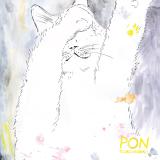
Pon is Tujiko Noriko’s sixth album for Editions Mego and a further extension of her already significant body of work as both a solo and collaborative artist. Dedicated to her cat who she adopted as an infant and passed away due an accident having been born deaf, Pon is imbued with abstraction, tenderness and a deep emotional resonance.
Noriko’s palette of electronics, romantic melodies and surprising sonic details are all fully present here, and like her last full length, 2023’s Crépuscule this is an epic work, released as a 2LP by Editions Mego alongside a Japanese CD release.
The unmistakable hue of Japan hovers throughout this emotional rich landscape. Subtle field recordings and fragile, abstract motifs drift through the album, all cloaked in a warmth and humanity that only Noriko seems able to conjure.
Pon moves effortlessly between the childlike and the obscure. There are moments of deceptive simplicity where unexpected elements suddenly surface — strange voices emerge on Boku Wa Obaka, Knife of Yonder is a standout: a startling ten-minute unfolding that begins with a warm, almost Eno-esque drift before launching into a soaring mid-section and finally landing somewhere unexpectedly blues-adjacent.
Kikoeru Pon is brimming with childlike wonder — a heartfelt ballad that dissolves into domestic field recordings, including sounds of the feline for whom both the album and track are named. A quietly devastating ending that brings the personal nature of the record into sharp focus.
There is a deep sense of the human in the way Noriko embraces technology. This is far from cold abstraction; rather, Ponfeels like a colourful photo album, documenting Noriko’s inner world and instincts with remarkable intimacy. Hovering in liminal states between pop, ambient and abstraction, this is a deeply affective and moving release that reveals new surprises with each listen.
The emotional range of Noriko’s latest offering inspires hope in a world in disarray. It is both gentle and epic and one which we feel embodies the work of an artist fully at the height of her powers.
Order now and we will order the item for you at our supplier.

With this album, Heleen Van Haegenborgh returns to her roots as a pianist.
In recent years, she has primarily composed works on commission for a diverse range of ensembles, from recorders to foghorns.
On this solo album, her entire journey of musical encounters and compositions comes together subtly.
Van Haegenborgh doesn't think in terms of stories or boxes, but rather in colours, energy, and texture - without drifting into the abstract.
She remains true to her personal inside piano world, including the use of wires she has been experimenting with since 2008. These are given a place here as fully-fledged musical elements, communicating on different levels, in various contexts and forms.
The electronics sometimes become completely one with the piano, but often follow an entirely different path: at times calm, subtle and refined; at other times nervous and under the surface. Always within specific atmospheres and with precise timing.
Van Haegenborgh took charge of every detail from start to finish - electronics, composition, and performance.
Order now and we will order the item for you at our supplier.

2026 Repress
It’s rare that a certain sound is entirely an artist’s own. Although undeniably a stew of impeccable influences – from blues to folk to Latin to dusty funk, soul and hip-hop – one cannot hear a Tommy Guerrero song without immediately recognising it as his - and his only.
The cult skater from San Francisco is globally renowned as one of the original members of the legendary “Bones Brigade” team. And as an accomplished multi-instrumentalist, his laid-back soul is beloved by all who’ve basked in its blissful glow.
There’s something elemental about this music that really stirs the soul. Strikingly beautiful and instantly addictive, it’s a kind of funk-fuelled, melody-driven, groove-based magic. There’s a serenity and heart in the playing that radiates warmth and splendour, as if crafted for endless sunsets. His albums that surfaced on Mo Wax at the turn of the century have been treasured since their release and it’s two of his most vital LPs that we’re honoured to reintroduce.
The originals were quietly pressed on to a single piece of vinyl so we’ve worked closely with Tommy this year to bring you these fresh, limited editions. They have been lovingly remastered, cut nice and loud on to heavyweight double vinyl and presented in deluxe gatefold jackets.
Soul Food Taqueria continued Guerrero’s guitar soul but represented a step forward with its polished production and greater complexity of instrumentation. Denied the promotion it deserved upon release, it flew under the radar. It is now the most wanted record of his wondrous back catalogue.
Guerrero’s atmospheric touch and subtle guitar provide lush, glimmering pieces of musical texture. Within his spacious compositions, uniquely arranged instruments flourish alongside each other to create a languid soundtrack for halcyon days.
As ever, the diversity on display is beguiling. From bossa nova, samba and cumbia rhythms to understated folk, funk and soul grooves, this is another exotic set of mellow gold; perfectly represented by ESPO’s memorable artwork. Furthermore, the title’s hybridity reflects the intoxicating sweep of stylistic flavours served up, reminding us that, however tricky it is to categorise Guerrero’s special blend, it’s always a pleasure to indulge in something so creative and adventurous.
Dubby, bass-heavy instrumentals give way to moody folk-soul – witness “It Gets Heavy”, featuring melancholic vocals from Gresham Taylor – whilst “Thank You MK” is a gentle ode to the tropics, featuring ethereal instrumentation, bright bass and warm, jazzy guitars. The second half in particular contains a number of stunning ambient tracks – check “Lost Unfound”, “Another Brother Gone” and “Broken Blood” - built around minimalist, laid-back grooves and detailed guitar orchestrations which wouldn’t be out of place on the latest Jonny Nash release.
Guerrero closes this flawless set with a moment of true beauty. Restrained and graceful, “Falling Awake” is a pared back piece containing meditative guitar melodies set against melancholic piano arrangements. It brings proceedings to the most peaceful close. Seductively good, it reminds you just how great simplicity can sound.
Order now and we will order the item for you at our supplier.
Release 75. Reptant’s third. The reptilian overlord surfaces only once every 25 – right on the jubilee, without fail.
Combining menace and kitsch the way only the Rotterdam greats do so effortlessly, he comes in smooth af on the opening cut. Mainframe-tapping machine funk, almost sounding like the Antipodean lovechild of Kraftwerk and Egyptian Lover.
From there, laced with spite and insectoid detail. Noirish cybernetics delivered with genuine vigour, all across a triple-pronged strike of electro excellence. Properly aerodynamic.
Not a tribute to a classic period – rather, a continuation of what the genre’s forebears built. A tried and tested formula that never loses bite, truly heralding Reptant as a standard bearer for electro in the modern era.
The cold-blooded one, right on schedule.
Order now and we will order the item for you at our supplier.

Niagara return to Discrepant with Buxtehude, a new work bending the legacy of Dietrich Buxtehude into their own fractured, electro-organic language.
Rather than a tribute, Buxtehude feels like an abstract dialogue with the Baroque composer’s sense of structure and flow—reimagined through Niagara’s raw synth work, off-grid rhythms and subtly warped melodic cycles. The trio let the music grow from the inside out: patterns expand and contract, harmonies tilt slightly off their axis, and small details accumulate until each piece reveals its own internal gravity.
There’s a clarity to Buxtehude that feels carved rather than composed. Tracks move with a quiet insistence, like mechanical organisms finding coherence through repetition and drift. Melodic fragments surface briefly, disappear, then return transformed, lending the album a strange balance between austerity and warmth.
With Buxtehude, Niagara continue to refine their unmistakable approach—playful yet rigorous, minimal yet full of life— remaining entirely their own.
expected to be published on 17.04.2026
