Cerca:small town boys

Generi
Tutto
  • 1
various - safe in my garden (2x12")
  • A1: Always You - The Sundowners
  • A2: Move With The Dawn - Mark Eric
  • A3: She - Tommy James & The Shondells
  • A4: A Famous Myth - The Groop
  • A5: Dreamin' In The Shade (Down In L.a.) - Brewer & Shipley
  • A6: I Don't Think I Know Her - Tee & Cara
  • B1: Knock On Wood - Harpers Bizarre
  • B2: The Visit (She Was Here) - The Cyrkle
  • B3: I See It Now - Fargo
  • B4: Summer Sound - Best Of Friends
  • B5: A Moment Of Being With You - The Critters
  • B6: Blight - The Millennium
  • C1: Jill - Gary Lewis & The Playboys
  • C2: I Can See Only You – Roger Nichols & The Small Circle Of Friends
  • C3: Little Dreams - The New Wave
  • C4: My Brother Woody - The Free Design
  • C5: Christina's World - Nancy Priddy
  • C6: The Ark - Chad & Jeremy
  • D1: Creators Of Rain - Smokey & His Sister
  • D2: How Can I Stop Loving You - The Eighth Day
  • D3: Love Is A Rainy Sunday - Love Generation
  • D4: Springtime Meadows - The Sunshine Company
  • D5: The Word Is Love - Thomas & Richard Frost
  • D6: Prairie Grey - New Colony Six

Peace and love in late 60s America did not come without parallel feelings of fear and confusion about the social situation – specifically about Vietnam. “Safe In My Garden” is the latest Ace compilation in an acclaimed series compiled by Bob Stanley – it’s a companion piece to the much-praised “State Of The Union (The American Dream In Crisis 1967 – 1973)” Ace CDCHD 1533/XXQLP2 057 2018).

The music on “Safe In My Garden” is harmony-laden, beautifully produced soft rock. Sunshine pop, even - a melodic, innovative style of American music that grew in the mid-60s out of the folk and surf scenes, exemplified by the Beach Boys and the Mamas and Papas. You will hear orchestral arrangements, and soft boy-girl vocals. But it wasn’t made in isolation from what was going on in the outside world. There are clouds and minor chords, plenty of melancholy in those harmonies.

“Safe In My Garden” includes songs of escape (Mark Eric’s ‘Move With The Dawn’, the Groop’s ‘A Famous Myth’), loss (the Eighth Day’s ‘How Can I Stop Loving You’, the New Colony Six’s ‘Prairie Grey’), dreamscapes (Tommy James and the Shondells’ ‘She’, Nancy Priddy’s ‘Christina’s World’), rebirth (Smokey and his Sister’s ‘Creators Of Rain’), a simpler world (the Free Design’s ‘My Brother Woody’) and a philosophically sounder future (Chad & Jeremy’s ‘The Ark’, Best of Friends’ ‘Summer Sound’).

It contains some surprisingly dark messages paired with beautiful melodies, as well as songs of hope. Thousands of young musicians in cities, suburbs and small towns across the States from the mid to late 60s spent their mornings hiding from the mailman, dreading the draft. This is the Sound of Young America in the late 60s, keeping its fingers crossed.

pre-ordina ora31.10.2025

dovrebbe essere pubblicato su 31.10.2025


Last In: 2026 years ago
Trp - Warlord

Trp

Warlord

12inchLPSUB155
SIDEONEDUMMY RECORDINGS
08.08.2025

Wild and untamed Swedish teenage heavy metal from 1981-1985. Includes their ultra rare single plus previously unreleased studio recordings. The album includes a booklet with interviews and photos documenting TRP’s wild stage shows and the local Swedish hard rock youth gangs of the 1980s. Blood splattered vinyl - limited edition of 600 copies worldwide.

The teenage boys that formed TRP came together in the small town of Fjälkinge outside of Kristianstad in southern Sweden back in 1981. In 1982 they recorded and released their legendary after single. They immediately became very popular with the local hard rock you gang’s attracting wild and rowdy crowds.

TRP performed wild and loud shows gilded by the bands furious use of pyrotechnics, smoke bombs, leather, studs and gallons of fake blood.

Their stage show combined with their music got the band banned in Sweden and it was said that they were obscene and promoted satanism.

The band didn’t let that stop them and instead they went into a studio and recorded several tracks with their new lead guitarist. However, these amazing recordings were never released...until now that is. Then in 1985 TRP performed their last show. Their final stand was heavy metal mayhem supreme and the whole stage went up in flames.

“I had welded a guitar slide with one end closed and filled it with chimney test smoke, then I screwed it to the top of the neck of the bass. It burned constantly for two songs, but the effect was cool. We spat blood, as usual, and Peter just kept firing off bombs like crazy. He managed to shoot one right up into Fredrik’s ass during a guitar solo…”

pre-ordina ora08.08.2025

dovrebbe essere pubblicato su 08.08.2025


Last In: 2026 years ago
Tobias Bernstrup - 27

Tobias Bernstrup

27

12inchDE-169
Dark Entries
24.06.2025

2025 Repress

Tobias Bernstrup is a contemporary musician and video artist born 1970 in Gothenburg, Sweden. He received an MFA from Royal College University of Fine Arts Stockholm in 1998. Using the visual language of pop culture, video games, sci-fi, classicism and gothic noir, he has created a stage persona with notorious live performances. Dressed in elaborate costumes of skin-tight rubber suits and fetish gear, Tobias' external appearance is androgynous. He raises questions about representation of identity, the body and physical space in both virtual and non-virtual realities. Between 1997 and 1998 he self-released two limited CD-R EPs. In 2002 his debut album 'Re-Animate Me' was released by Tonight Records followed by two limited 12' singles for the song 27' and the Italian version Ventisette'.
.
27' is a 5-song EP collecting 4 different mixes of the title track plus one unreleased song from the 'Re-Animate Me' recording sessions. The material on this EP is closely connected with the world of computer games which Bernstrup also inhabits. Bernstrup's music is influenced by 1980s Italo disco and synth pop, reminiscent of Kraftwerk, Depeche Mode and Ken Lazlo. On the A-side is the original mix at 115 bpm followed by the Lazer Mix set to an faster beat and additional arpeggiations and heavier bass drum beats. Lyrically the song tells the story of a good looking 27-year old boy from a small town searching for love with any man who can spoil him. On the B-side are both the vocal and instrumental of Ventisette', the Italian translation of the song 27.' Both versions of Ventisette' are stripped back compared to the A-side but keep the melodies in tact. Also released for the first time ever is the demo Dirty Money' a Pet Shop Boys influenced song about male prostitutes ready for a night out working the streets.

All songs have been remastered for vinyl by George Horn at Fantasy Studios. For the jacket Eloise Leigh transformed the original portrait of Tobias into a Warhol-like painted polaroid with a striking likeness to Liza Minelli with blue eye shadow and red lipstick. Each copy includes a photo postcard with lyrics and notes. I would rather create alternative routes to experiencing and understanding the world, understanding what it means to be human today,' says Bernstrup. We are more artificial than we want to admit.'

In stock dal01.04.2026


Last In: 31 days ago
Wildhoney - Sleep Through It
  • 1: Fall In
  • 2: Molly
  • 3: Owe You Nothing
  • 4: Sleep Through It
  • 5: Seventeen
  • 6: Maybe You're Crazy
  • 7: Tea Leaves
  • 8: Fsa
  • 9: Super Stupid
  • 10: Boys From Out Of Town

Deranged Records and Forward! Records will release Wildhoney's first LP, Sleep Through It. The group formed in late 2011, aiming to write pop songs with the energy and malcontent of hardcore punk, but without its entrenched masculinity. The five-piece has since become one of the loudest—and sweetest—bands in its hometown of Baltimore. Sleep Through It expands on two excellent 7-inches and one cassette EP, drawing influences from '60s girl groups, '80s post punk, indie pop, and shoegaze. New songs like first single "Fall In" showcase just how well Wildhoney combines wall-of-sound power with delicate passages and gorgeous vocal melodies. Older songs such as "Super Stupid" and "Seventeen" return on the LP, newly realized and sounding better than ever. Throughout the album, the group's blasts of distortion and use of dense textures are balanced with beautiful pop tunes and chiming guitar work. The swirl of noise surrounding singer Lauren Shusterich's voice is not unlike the best of the Cocteau Twins, or even Deerhunter, especially on the soaring title track. Sleep Through It was recorded at Beat Babies Studio in Woodstock, Md., with Chris Freeland (Lower Dens, Wye Oak). The album is Wildhoney's first with synthesizers and features liberal amp and pedal experimentation. The recording process was intense and fast, cramming lots of work into a small amount of time. That hectic schedule is impossible to hear on the LP, which unravels at its own dreamy pace.

pre-ordina ora16.05.2025

dovrebbe essere pubblicato su 16.05.2025


Last In: 2026 years ago
Rodeo Boys - Junior

Rodeo Boys

Junior

12inchLPDGC309
Don Giovanni
25.04.2025

Rodeo Boys is what happens when the Miller High Life gets legs and starts walking around on its own. A rippin’ 4-piece from Lansing, MI is for queers and steers alike. Rodeo Boys shows up at your town, rolls up their sleeves, and gets to work to deliver their blue collar alt sound straight to your ears. They have been ripping rock n’ roll gigs since they formed in 2019 and After releasing their 2023 Album “Home Movies” on Don Giovanni Records, they have been steadily grinding away touring the US. They bring the nostalgia, twang, and punk rock rage of growing up in a small town to a city near you! This is how the Midwest was won.

pre-ordina ora25.04.2025

dovrebbe essere pubblicato su 25.04.2025


Last In: 2026 years ago
BLAZE FOLEY - COLD, COLD WORLD

Captures Blaze Foley and his working band-the Beaver Valley Boys-on their first Texas studio recordings dating from 1979 and 1980. Blaze and the band-anchored by the reknowned Gurf Morlix-are at the top of their form. Cold, Cold World includes 17 Foley songs from his well-known classics to six songs that appear on a Foley recording for the first time.

pre-ordina ora28.03.2025

dovrebbe essere pubblicato su 28.03.2025


Last In: 2026 years ago
ENEMA & GEJONTE - Beromd Electronic LP

Lennon & McCartney. Simon & Garfunkel. Ralf & Florian. Enema & GeJonte. The inventors of modern pop music as we know it. Joining forces in 1988, Orebro duo Kai Parviainen and Jonas Ohlsson put out four cassettes and a split album with Frak under the Enema & GeJonte guise, all teeming with clever and funny electronic pop songs. The sound? Imagine Duet Emmo jamming out with the Residents on a wheat field on Narkeslatten. Or picture early Severed Heads covering lost Philemon Arthur & The Dung tapes. Kai pushes his Sequential Circuits Pro-One synthesizer to its limits while Jonas makes discerning observations on everyday life in a Swedish small town. Mostly sung in Swedish, sometimes in English, but always with a touch of sweet naivety and innocence on par with lo-fi punk/pop geniuses Dan Treacy and Daniel Johnston. Typical song subjects: A friendly game of five-a-side football. The joy of rising at the crack of dawn to get on with the tasks of the day. A bus journey to Odensbacken to savour a semla at a local cafe and some small talk with the gas station manager. All delivered with a playfulness and ecstasy more commonly found on the records with Swedish Christian music Kai so devotedly collects than in contemporary industrial or electronic music. When Jonas moved to Amsterdam in 1996 the boys ceased making music together, leaving behind a treasure trove of unreleased material, some of which appeared on a couple of cassettes in the 00's. But the best stuff has remained buried until now. How dada pop gems like ''Joxa med trasan'' and ''Underground'' could dwell in obscurity for thirty-ish years beggars belief. Other standout tracks on this compilation: ''Plan 714 till NYC'', a wonderful waltz time instrumental performed in the vein of a drunken Bob Hund, and the En Halvkokt I Folie style cut up experiments of ''Gasten Harry''. So get ready for a glorious blast from the past, as the Swedish pioneers of the hypnotic groove cordially invite you to a sonic journey as adventurous and memorable as a trip on the lansbuss to Odensbacken. Get on board, grab a seat and enjoy the ride. Liverpool. New York City. Dusseldorf. Orebro. // Ulf Osterstrom

pre-ordina ora11.11.2024

dovrebbe essere pubblicato su 11.11.2024


Last In: 2026 years ago
Boys Wonder - Question Everything LP
  • 1: Goodbye Jimmy Dean
  • 2: Submarine
  • 3: Song Of Sixpence
  • 4: Platform Boots
  • 5: Hot Rod
  • 6: Soho Sunday Morning
  • 7: Shine On Me
  • 8: Elvis 75
  • 9: I'm Alright Jack
  • 10: Come On Love
  • 11: Now What Earthman
  • 12: I've Never Been To Mayfair
  • 13: Lady Hangover
  • 14: Ten Million Ton Headache
  • 15: We All Hate Honesty
  • 16: Tomorrow
  • 17: Stop It
  • 18: Hey Mister
  • 19: Hello Angels
  • 20: Baby It's No Joke
  • 21: Never Steal Anything Small
  • 22: Viva Boyswonder

Imagine a late-1980s British band who ignored the prevailing chest-beating roots rock and jangly indie, and opted instead for terrace chant pop choruses, lyrical wit and a high-fashion boot-boy image: Queen meets the Sex Pistols. But wait ... the band actually existed and quite possibly invented Britpop. Reviled by the press at the time, Boy Wonder's recently discovered recordings now sound remarkably prescient: Blur's London; the Sladeier side of Oasis; Supergrass' sense of fun; and the arched eyebrow of Pulp. Never previously available, Question Everything is a revelation.

pre-ordina ora01.11.2024

dovrebbe essere pubblicato su 01.11.2024


Last In: 2026 years ago
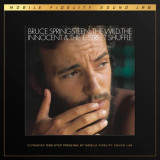
Bruce Springsteen - The Wild, The Innocent & The E Street Shuffle LP

Released only eight months after his exhilarating debut, Bruce Springsteen's The Wild, the Innocent & the E Street Shuffle contains rousing dispatches from the boardwalk, the street, the beach, and the bedroom. It explodes with energy, dares to dream, teases with humour, crackles with tragedy, clings to hope, and overflows with discovery, youthfulness, and personality. It features an unforgettable cast of characters — corner boys, teenage hustlers, doomed lovers, jazz men, junk men, factory girls, fortune tellers, alley cats, pimps, escorts, and more — illuminated by vivid colour, breathtaking detail, and poetic action.

Musically, the heartfelt 1973 record is inhabited by sympathetic vignettes and cinematic arrangements steeped in rock 'n' roll, soul, jazz, and R&B. It finds the New Jersey native looking beyond the parameters of his preceding record and seeking to move on from environments he knows well (and chronicles here) by rushing headlong toward unknown territories, adventures, and people. Underpinned by the singer-guitarist's ambitious poetic enterprise and will to succeed, The Wild, the Innocent & the E Street Shuffle is the album on which Springsteen becomes the Boss.

Mastered on Mobile Fidelity's renowned mastering system, pressed at RTI on MoFi SuperVinyl, and strictly limited to 7,500 numbered copies, Mobile Fidelity's UltraDisc One-Step 180g 33RPM LP set is the definitive-sounding version of Springsteen's sophomore record. Benefitting from SuperVinyl’s nearly non-existent noise floor, superb groove definition, and dead-quiet surfaces, The Wild, the Innocent & the E Street Shuffle plays with a clarity, energy, presence, and openness that complement the expressiveness, dynamics, and scope of the seven restless songs that comprise a work Rolling Stone ranked the 345th Greatest Album of All Time.

Beyond the audiophile sonics that practically place you behind the console at 914 Sound Studios — listen to the separation between the instruments, natural decay of the notes, interplay within the widescreen soundstaging, and nothing-to-lose youthfulness of Springsteen’s voice — this reissue takes seriously this record’s influential merit by presenting it in packaging that underlines its status. Tucked in a beautiful slipcase, the LP is housed in a special foil-stamped jacket with faithful-to-the-original graphics. This reissue is made for listeners who prize sound quality and who want to engage themselves in everything involved with the invigorating set that busted Springsteen loose from the club circuit and landed him on the radio

Determined to liberate anyone within earshot and unafraid to come on strong, The Wild, the Innocent & the E Street Shuffle serves as the debut of the E Street Band — not only heard but seen for the first time by most of the public courtesy of the back-cover photograph. This is where saxophonist Clarence Clemons, organist-accordionist Danny Federici, and pianist David Sancious step out of the shadows — and drummer Vini Lopez and bassist Garry Tallent again stoke a fiery rhythmic engine that helps drive the untamed, reimagined big-band swing of “Kitty’s Back,” breathless R&B thrust of “Rosalita (Come Out Tonight),” and carefree dance steps of the funky “The E Street Shuffle.”

Of course, the main attraction remains a then-24-year-old visionary on the precipice of becoming a sensation and turning a then-bloated rock scene on its head. Recorded over three months while Springsteen and company were busy touring his debut LP, The Wild, the Innocent & the E Street Shuffle reflects the high-octane approach the vocalist embraced onstage and drifts away from the label-dictated acoustic-based frameworks of his debut. The set also witnesses Springsteen deepening his observational skills, with narratives such as the romantically tinged “4th of July, Asbury Park (Sandy)” and redemptive epic “Incident on 57th Street” mirroring changes taking place in the singer’s own life, small towns, and America at large.

A thrilling collision of memories, reflections, and composites — Sandy, Rosalita, and the latter’s parents are all based on actual people Springsteen knew, as is the community depicted in the opening track — the aptly titled The Wild, the Innocent & the E Street Shuffle resonates decades on due to its truths, authenticity, and spirit. Those characteristics — as well as the fact that many of its lengthy songs come on as the equivalent of sweaty, feverish soul revue that won’t stop until you’ve been exhausted — also explain how this now-iconic album triumphed over the reservations of industry “experts” that both demanded Springsteen re-record it and instructed deejays not to play it.


Yet there’d be no stopping a record that saw the past, present, and future, a band whose will would not be denied, and a phenomenon who was born to run. A never-ending invitation to act real cool and stay up all night, The Wild, the Innocent & the E Street Shuffle always feels alright.

pre-ordina ora31.05.2024

dovrebbe essere pubblicato su 31.05.2024


Last In: 2026 years ago
Red Rum Club - Western Approaches LP

Western Approaches, a fitting title for a band who's spent much of the last two years living their American dream, however you'll find its origins are a lot closer to home.

An old World War II Naval base in Liverpool city centre shares the same name and it's no coincidence. The album was conceived on the docks, a new location for the band and again much closer to home for the boys.

It seems the further afar they play the tighter their grip on their roots become, playing their biggest headline show to date in Bootle a small town in North Liverpool where some of the lads grew up.

pre-ordina ora23.02.2024

dovrebbe essere pubblicato su 23.02.2024


Last In: 2026 years ago
Various - Disco Discharge Presents Box Of Sin (4x12")
 
24
disponibile anche

Box 2


The influence that 80s gay nightlife had on electronic music, pop music in general and the evolution of clubbing for
subsequent generations is pretty much incalculable. In spite of the shadow of AIDs and reactionary political and media
forces both at home and in the USA, the period 1980 – 1990 bore witness to a dazzling explosion of dance music that
artfully drew a line from the peak of late-70s disco to the emergence of house and its 90s glory days. The art of the
12” single, the thrill of the remix, the rise of the superclub, the electronic spark of chart pop, the challenging of gender
barriers… all had their origin in the gay clubs. It’s not unreasonable to make the claim that by the end of the 80s,
virtually ALL chart pop music sounded like it had its origins on the dancefloors of Heaven nightclub!
Over 4LPs and 24 tracks, ‘Box Of Sin’ strives to tell the story of that decade, and to tease apart the strands of 80s gay
clubbing to show a period of unrivalled creativity and disco diversity. Via the box’s themed discs it shows how highenergy became house, how gender-bending synth bands took over the pop charts, how pop stars the whole world
over found a route to fame via the gay clubs, and how the era’s biggest producers aimed their masterworks purely at
the dancefloor. High energy, deep house, Eurobeat, synthpop, divas, acid house… all combine to paint a picture of a
rich and vibrant lifestyle. Along the way, ‘Box Of Sin’ unearths some overlooked gems rarely compiled today:
meanwhile some of the decade’s biggest names in club music gather to get into the picture – from Whitney Houston
to Dead Or Alive, Bananarama to Bronski Beat, Aretha Franklin to Inner City.
Based on the actual club charts at the time and with a stunning design package inspired by the small ads section of
80s gay press, ‘ Box Of Sin’ comes fully annotated and with an introduction by renowned gay author Paul Burston.
Throughout, it’s illustrated with photography documenting 80s gay clubbers in action, provided for Demon by The
Bishopsgate Institute, the UK’s LGBTQ+ archive. The project also resurrects the much-loved brand ‘Disco Discharge’, a
recognisable hallmark of quality among collectors and aficionados of club music heritage.

non in magazzino

Ordina ora e ordineremo l'articolo per te presso il nostro fornitore.


Last In: 11 months ago
Lee Tracy & Isaac Manning - Is it What You Want

As the sun sets on a quaint East Nashville house, a young man bares a piece of his soul. Facing the camera, sporting a silky suit jacket/shirt/slacks/fingerless gloves ensemble that announces "singer" before he's even opened his mouth, Lee Tracy Johnson settles onto his stage, the front yard. He sways to the dirge-like drum machine pulse of a synth-soaked slow jam, extends his arms as if gaining his balance, and croons in affecting, fragile earnest, "I need your love… oh baby…"

Dogs in the yard next door begin barking. A mysterious cardboard robot figure, beamed in from galaxies unknown and affixed to a tree, is less vocal. Lee doesn't acknowledge either's presence. He's busy feeling it, arms and hands gesticulating. His voice rises in falsetto over the now-quiet dogs, over the ambient noise from the street that seeps into the handheld camcorder's microphone, over the recording of his own voice played back from a boombox off-camera. After six minutes the single, continuous shot ends. In this intimate creative universe there are no re-takes. There are many more music videos to shoot, and as Lee later puts it, "The first time you do it is actually the best. Because you can never get that again. You expressing yourself from within."

"I Need Your Love" dates from a lost heyday. From some time in the '80s or early '90s, when Lee Tracy (as he was known in performance) and his music partner/producer/manager Isaac Manning committed hours upon hours of their sonic and visual ideas to tape. Embracing drum machines and synthesizers – electronics that made their personal futurism palpable – they recorded exclusively at home, live in a room into a simple cassette deck. Soul, funk, electro and new wave informed their songs, yet Lee and Isaac eschewed the confinement of conventional categories and genres, preferring to let experimentation guide them.

"Anytime somebody put out a new record they had the same instruments or the same sound," explains Isaac. "So I basically wanted to find something that's really gonna stand out away from all of the rest of 'em." Their ethos meant that every idea they came up with was at least worth trying: echoed out half-rapped exhortations over frantic techno-style beats, gospel synth soul, modal electro-funk, oddball pop reinterpretations, emo AOR balladry, nods to Prince and the Fat Boys, or arrangements that might collapse mid-song into a mess of arcade game-ish blips before rallying to reach the finish line. All of it conjoined by consistent tape hiss, and most vitally, Lee's chameleonic voice, which managed to wildly shape shift and still evoke something sincere – whether toggling between falsetto and tenor exalting Jesus's return, or punctuating a melismatic romantic adlib with a succinct, "We all know how it feels to be alone."

"People think we went to a studio," says Isaac derisively. "We never went to no studio. We didn't have the money to go to no studio! We did this stuff at home. I shot videos in my front yard with whatever we could to get things together." Sometimes Isaac would just put on an instrumental record, be it "Planet Rock" or "Don't Cry For Me Argentina" (from Evita), press "record," and let Lee improvise over it, yielding peculiar love songs, would-be patriotic anthems, or Elvis Presley or Marilyn Monroe tributes. Technical limitations and a lack of professional polish never dissuaded them. They believed they were onto something.

"That struggle," Isaac says, "made that sound sound good to me."

In the parlance of modern music criticism Lee and Isaac's dizzying DIY efforts would inevitably be described as "outsider." But "outsider" carries the burden of untold additional layers of meaning if you're Black and from the South, creating on a budget, and trying to get someone, anyone within the country music capital of the world to take your vision seriously. "What category should we put it in?" Isaac asks rhetorically. "I don't know. All I know is feeling. I ain't gonna name it nothing. It's music. If it grabs your soul and touch your heart that's what it basically is supposed to do."

=

Born in 1963, the baby boy of nine siblings, Lee Tracy spent his earliest years living amidst the shotgun houses on Nashville's south side. "We was poor, man!" he says, recalling the outhouse his family used for a bathroom and the blocks of ice they kept in the kitchen to chill perishables. "But I actually don't think I really realized I was in poverty until I got grown and started thinking about it." Lee's mom worked at the Holiday Inn; his dad did whatever he had to do, from selling fruit from a horse drawn cart to bootlegging. "We didn't have much," Lee continues, "but my mother and my father got us the things we needed, the clothes on our back." By the end of the decade with the city's urban renewal programs razing entire neighborhoods to accommodate construction of the Interstate, the family moved to Edgehill Projects. Lee remembers music and art as a constant source of inspiration for he and his brothers and sisters – especially after seeing the Jackson 5 perform on Ed Sullivan. "As a small child I just knew that was what I wanted to do."

His older brother Don began musically mentoring him, introducing Lee to a variety of instruments and sounds. "He would never play one particular type of music, like R&B," says Lee. "I was surrounded by jazz, hard rock and roll, easy listening, gospel, reggae, country music; I mean I was a sponge absorbing all of that." Lee taught himself to play drums by beating on cardboard boxes, gaining a rep around the way for his timekeeping, and his singing voice. Emulating his favorites, Earth Wind & Fire and Cameo, he formed groups with other kids with era-evocative band names like Concept and TNT Connection, and emerged as the leader of disciplined rehearsals. "I made them practice," says Lee. "We practiced and practiced and practiced. Because I wanted that perfection." By high school the most accomplished of these bands would take top prize in a prominent local talent show. It was a big moment for Lee, and he felt ready to take things to the next level. But his band-mates had other ideas.

"I don't know what happened," he says, still miffed at the memory. "It must have blew they mind after we won and people started showing notice, because it's like everybody quit! I was like, where the hell did everybody go?" Lee had always made a point of interrogating prospective musicians about their intentions before joining his groups: were they really serious or just looking for a way to pick up girls? Now he understood even more the importance of finding a collaborator just as committed to the music as he was.

=

Isaac Manning had spent much of his life immersed in music and the arts – singing in the church choir with his family on Nashville's north side, writing, painting, dancing, and working various gigs within the entertainment industry. After serving in the armed forces, in the early '70s he ran The Teenage Place, a music and performance venue that catered to the local youth. But he was forced out of town when word of one of his recreational routines created a stir beyond the safe haven of his bohemian circles.

"I was growing marijuana," Isaac explains. "It wasn't no business, I was smoking it myself… I would put marijuana in scrambled eggs, cornbread and stuff." His weed use originated as a form of self-medication to combat severe tooth pain. But when he began sharing it with some of the other young people he hung out with, some of who just so happened to be the kids of Nashville politicians, the cops came calling. "When I got busted," he remembers, "they were talking about how they were gonna get rid of me because they didn't want me saying nothing about they children because of the politics and stuff. So I got my family, took two raggedy cars, and left Nashville and went to Vegas."

Out in the desert, Isaac happened to meet Chubby Checker of "The Twist" fame while the singer was gigging at The Flamingo. Impressed by Isaac's zeal, Checker invited him to go on the road with him as his tour manager/roadie/valet. The experience gave Isaac a window into a part of the entertainment world he'd never encountered – a glimpse of what a true pop act's audience looked like. "Chubby Checker, none of his shows were played for Black folks," he remembers. "All his gigs were done at high-class white people areas." Returning home after a few years with Chubby, Isaac was properly motivated to make it in Music City. He began writing songs and scouting around Nashville for local talent anywhere he could find it with an expressed goal: "Find someone who can deliver your songs the way you want 'em delivered and make people feel what you want them to feel."

One day while walking through Edgehill Projects Isaac heard someone playing the drums in a way that made him stop and take notice. "The music was so tight, just the drums made me feel like, oh I'm-a find this person," he recalls. "So I circled through the projects until I found who it was.

"That's how I met him – Lee Tracy. When I found him and he started singing and stuff, I said, ohhh, this is somebody different."

=

Theirs was a true complementary partnership: young Lee possessed the raw talent, the older Isaac the belief. "He's really the only one besides my brother and my family that really seen the potential in me," says Lee. "He made me see that I could do it."

Isaac long being a night owl, his house also made for a fertile collaborative environment – a space where there always seemed to be a new piece of his visual art on display: paintings, illustrations, and dolls and figures (including an enigmatic cardboard robot). Lee and Issac would hang out together and talk, listen to music, conjure ideas, and smoke the herb Isaac had resumed growing in his yard. "It got to where I could trust him, he could trust me," Isaac says of their bond. They also worked together for hours on drawings, spreading larges rolls of paper on the walls and sketching faces with abstract patterns and imagery: alien-like beings, tri-horned horse heads, inverted Janus-like characters where one visage blurred into the other.

Soon it became apparent that they didn't need other collaborators; self-sufficiency was the natural way forward. At Isaac's behest Lee, already fed up with dealing with band musicians, began playing around with a poly-sonic Yamaha keyboard at the local music store. "It had everything on it – trumpet, bass, drums, organ," remembers Lee. "And that's when I started recording my own stuff."

The technology afforded Lee the flexibility and independence he craved, setting him on a path other bedroom musicians and producers around the world were simultaneously following through the '80s into the early '90s. Saving up money from day jobs, he eventually supplemented the Yamaha Isaac had gotten him with Roland and Casio drum machines and a Moog. Lee was living in an apartment in Hillside at that point caring for his dad, who'd been partially paralyzed since early in life. In the evenings up in his second floor room, the music put him in a zone where he could tune out everything and lose himself in his ideas.

"Oh I loved it," he recalls. "I would really experiment with the instruments and use a lot of different sound effects. I was looking for something nobody else had. I wanted something totally different. And once I found the sound I was looking for, I would just smoke me a good joint and just let it go, hit the record button." More potent a creative stimulant than even Isaac's weed was the holistic flow and spontaneity of recording. Between sessions at Isaac's place and Lee's apartment, their volume of output quickly ballooned.

"We was always recording," says Lee. "That's why we have so much music. Even when I went to Isaac's and we start creating, I get home, my mind is racing, I gotta start creating, creating, creating. I remember there were times when I took a 90-minute tape from front to back and just filled it up."

"We never practiced," says Isaac. "See, that was just so odd about the whole thing. I could relate to him, and tell him about the songs I had ideas for and everything and stuff. And then he would bring it back or whatever, and we'd get together and put it down." Once the taskmaster hell bent on rehearsing, Lee had flipped a full 180. Perfection was no longer an aspiration, but the enemy of inspiration.

"I seen where practicing and practicing got me," says Lee. "A lot of musicians you get to playing and they gotta stop, they have to analyze the music. But while you analyzing you losing a lot of the greatness of what you creating. Stop analyzing what you play, just play! And it'll all take shape."

=

"I hope you understood the beginning of the record because this was invented from a dream I had today… (You tell me, I'll tell you, we'll figure it out together)" – Lee Tracy and Isaac Manning, "Hope You Understand"

Lee lets loose a maniacal cackle when he acknowledges that the material that he and Isaac recorded was by anyone's estimation pretty out there. It's the same laugh that commences "Hope You Understand" – a chaotic transmission that encapsulates the duality at the heart of their music: a stated desire to reach people and a compulsion to go as leftfield as they saw fit.

"We just did it," says Lee. "We cut the music on and cut loose. I don't sit around and write. I do it by listening, get a feeling, play the music, and the lyrics and stuff just come out of me."

The approach proved adaptable to interpreting other artists' material. While recording a cover of Whitney Houston's pop ballad "Saving All My Love For You," Lee played Whitney's version in his headphones as he laid down his own vocals – partially following the lyrics, partially using them as a departure point. The end result is barely recognizable compared with the original, Lee and Isaac having switched up the time signature and reinvented the melody along the way towards morphing a slick mainstream radio standard into something that sounds solely their own.

"I really used that song to get me started," says Lee. "Then I said, well I need something else, something is missing. Something just came over me. That's when I came up with 'Is It What You Want.'"

The song would become the centerpiece of Lee and Isaac's repertoire. Pushed along by a percolating metronomic Rhythm King style beat somewhere between a military march and a samba, "Is It What You Want" finds Lee pleading the sincerity of his commitment to a potential love interest embellished by vocal tics and hiccups subtlely reminiscent of his childhood hero MJ. Absent chord changes, only synth riffs gliding in and out like apparitions, the song achieves a lingering lo-fi power that leaves you feeling like it's still playing, somewhere, even after the fade out.

"I don't know, it's like a real spiritual song," Lee reflects. "But it's not just spiritual. To me the more I listen to it it's like about everything that you do in your everyday life, period. Is it what you want? Do you want a car or you don't want a car? Do you want Jesus or do you want the Devil? It's basically asking you the question. Can't nobody answer the question but you yourself."

In 1989 Lee won a lawsuit stemming from injuries sustained from a fight he'd gotten into. He took part of the settlement money and with Isaac pressed up "Saving All My Love For You" b/w "Is It What You Want" as a 45 single. Isaac christened the label One Chance Records. "Because that's all we wanted," he says with a laugh, "one chance."

Isaac sent the record out to radio stations and major labels, hoping for it to make enough noise to get picked up nationally. But the response he and Lee were hoping for never materialized. According to Isaac the closest the single got to getting played on the radio is when a disk jock from a local station made a highly unusual announcement on air: "The dude said on the radio, 107.5 – 'We are not gonna play 'Is It What You Want.' We cracked up! Wow, that's deep.

"It was a whole racist thing that was going on," he reflects. "So we just looked over and kept on going. That was it. That was about the way it goes… If you were Black and you were living in Nashville and stuff, that's the way you got treated." Isaac already knew as much from all the times he'd brought he and Lee's tapes (even their cache of country music tunes) over to Music Row to try to drum up interest to no avail.

"Isaac, he really worked his ass off," says Lee. "He probably been to every record place down on Music Row." Nashville's famed recording and music business corridor wasn't but a few blocks from where Lee grew up. Close enough, he remembers, for him to ride his bike along its back alleys and stumble upon the occasional random treasure, like a discarded box of harmonicas. Getting in through the front door, however, still felt a world away.

"I just don't think at the time our music fell into a category for them," he concedes. "It was before its time."

=

Lee stopped making music some time in the latter part of the '90s, around the time his mom passed away and life became increasingly tough to manage. "When my mother died I had a nervous breakdown," he says, "So I shut down for a long time. I was in such a sadness frame of mind. That's why nobody seen me. I had just disappeared off the map." He fell out of touch with Isaac, and in an indication of just how bad things had gotten for him, lost track of all the recordings they'd made together. Music became a distant memory.

Fortunately, Isaac kept the faith. In a self-published collection of his poetry – paeans to some of his favorite entertainment and public figures entitled Friends and Dick Clark – he'd written that he believed "music has a life of its own." But his prescience and presence of mind were truly manifested in the fact that he kept an archive of he and Lee's work. As perfectly imperfect as "Is It What You Want" now sounds in a post-Personal Space world, Lee and Isaac's lone official release was in fact just a taste. The bulk of the Is It What You Want album is culled from the pair's essentially unheard home recordings – complete songs, half-realized experiments, Isaac's blue monologues and pronouncements et al – compiled, mixed and programmed in the loose and impulsive creative spirit of their regular get-togethers from decades ago. The rest of us, it seems, may have finally caught up to them.

On the prospect of at long last reaching a wider audience, Isaac says simply, "I been trying for a long time, it feels good." Ever the survivor, he adds, "The only way I know how to make it to the top is to keep climbing. If one leg break on the ladder, hey, you gotta fix it and keep on going… That's where I be at. I'll kill death to make it out there."

For Lee it all feels akin to a personal resurrection: "It's like I was in a tomb and the tomb was opened and I'm back… Man, it feels so great. I feel like I'm gonna jump out of my skin." Success at this stage of his life, he realizes, probably means something different than what it did back when he was singing and dancing in Isaac's front yard. "What I really mean by 'making it,'" he explains isn't just the music being heard but, "the story being told."

Occasionally Lee will pull up "Is It What You Want" on YouTube on his phone, put on his headphones, and listen. He remembers the first time he heard his recorded voice. How surreal it was, how he thought to himself, "Is that really me?" What would he say to that younger version of himself now?

"I would probably tell myself, hang in there, don't give up. Keep striving for the goal. And everything will work out."

Despite what's printed on the record label, sometimes you do get more than one chance.

non in magazzino

Ordina ora e ordineremo l'articolo per te presso il nostro fornitore.


Last In: 3 years ago
Lee Tracy & Isaac Manning - Is it What You Want LP

As the sun sets on a quaint East Nashville house, a young man bares a piece of his soul. Facing the camera, sporting a silky suit jacket/shirt/slacks/fingerless gloves ensemble that announces "singer" before he's even opened his mouth, Lee Tracy Johnson settles onto his stage, the front yard. He sways to the dirge-like drum machine pulse of a synth-soaked slow jam, extends his arms as if gaining his balance, and croons in affecting, fragile earnest, "I need your love… oh baby…"

Dogs in the yard next door begin barking. A mysterious cardboard robot figure, beamed in from galaxies unknown and affixed to a tree, is less vocal. Lee doesn't acknowledge either's presence. He's busy feeling it, arms and hands gesticulating. His voice rises in falsetto over the now-quiet dogs, over the ambient noise from the street that seeps into the handheld camcorder's microphone, over the recording of his own voice played back from a boombox off-camera. After six minutes the single, continuous shot ends. In this intimate creative universe there are no re-takes. There are many more music videos to shoot, and as Lee later puts it, "The first time you do it is actually the best. Because you can never get that again. You expressing yourself from within."

"I Need Your Love" dates from a lost heyday. From some time in the '80s or early '90s, when Lee Tracy (as he was known in performance) and his music partner/producer/manager Isaac Manning committed hours upon hours of their sonic and visual ideas to tape. Embracing drum machines and synthesizers – electronics that made their personal futurism palpable – they recorded exclusively at home, live in a room into a simple cassette deck. Soul, funk, electro and new wave informed their songs, yet Lee and Isaac eschewed the confinement of conventional categories and genres, preferring to let experimentation guide them.

"Anytime somebody put out a new record they had the same instruments or the same sound," explains Isaac. "So I basically wanted to find something that's really gonna stand out away from all of the rest of 'em." Their ethos meant that every idea they came up with was at least worth trying: echoed out half-rapped exhortations over frantic techno-style beats, gospel synth soul, modal electro-funk, oddball pop reinterpretations, emo AOR balladry, nods to Prince and the Fat Boys, or arrangements that might collapse mid-song into a mess of arcade game-ish blips before rallying to reach the finish line. All of it conjoined by consistent tape hiss, and most vitally, Lee's chameleonic voice, which managed to wildly shape shift and still evoke something sincere – whether toggling between falsetto and tenor exalting Jesus's return, or punctuating a melismatic romantic adlib with a succinct, "We all know how it feels to be alone."

"People think we went to a studio," says Isaac derisively. "We never went to no studio. We didn't have the money to go to no studio! We did this stuff at home. I shot videos in my front yard with whatever we could to get things together." Sometimes Isaac would just put on an instrumental record, be it "Planet Rock" or "Don't Cry For Me Argentina" (from Evita), press "record," and let Lee improvise over it, yielding peculiar love songs, would-be patriotic anthems, or Elvis Presley or Marilyn Monroe tributes. Technical limitations and a lack of professional polish never dissuaded them. They believed they were onto something.

"That struggle," Isaac says, "made that sound sound good to me."

In the parlance of modern music criticism Lee and Isaac's dizzying DIY efforts would inevitably be described as "outsider." But "outsider" carries the burden of untold additional layers of meaning if you're Black and from the South, creating on a budget, and trying to get someone, anyone within the country music capital of the world to take your vision seriously. "What category should we put it in?" Isaac asks rhetorically. "I don't know. All I know is feeling. I ain't gonna name it nothing. It's music. If it grabs your soul and touch your heart that's what it basically is supposed to do."

=

Born in 1963, the baby boy of nine siblings, Lee Tracy spent his earliest years living amidst the shotgun houses on Nashville's south side. "We was poor, man!" he says, recalling the outhouse his family used for a bathroom and the blocks of ice they kept in the kitchen to chill perishables. "But I actually don't think I really realized I was in poverty until I got grown and started thinking about it." Lee's mom worked at the Holiday Inn; his dad did whatever he had to do, from selling fruit from a horse drawn cart to bootlegging. "We didn't have much," Lee continues, "but my mother and my father got us the things we needed, the clothes on our back." By the end of the decade with the city's urban renewal programs razing entire neighborhoods to accommodate construction of the Interstate, the family moved to Edgehill Projects. Lee remembers music and art as a constant source of inspiration for he and his brothers and sisters – especially after seeing the Jackson 5 perform on Ed Sullivan. "As a small child I just knew that was what I wanted to do."

His older brother Don began musically mentoring him, introducing Lee to a variety of instruments and sounds. "He would never play one particular type of music, like R&B," says Lee. "I was surrounded by jazz, hard rock and roll, easy listening, gospel, reggae, country music; I mean I was a sponge absorbing all of that." Lee taught himself to play drums by beating on cardboard boxes, gaining a rep around the way for his timekeeping, and his singing voice. Emulating his favorites, Earth Wind & Fire and Cameo, he formed groups with other kids with era-evocative band names like Concept and TNT Connection, and emerged as the leader of disciplined rehearsals. "I made them practice," says Lee. "We practiced and practiced and practiced. Because I wanted that perfection." By high school the most accomplished of these bands would take top prize in a prominent local talent show. It was a big moment for Lee, and he felt ready to take things to the next level. But his band-mates had other ideas.

"I don't know what happened," he says, still miffed at the memory. "It must have blew they mind after we won and people started showing notice, because it's like everybody quit! I was like, where the hell did everybody go?" Lee had always made a point of interrogating prospective musicians about their intentions before joining his groups: were they really serious or just looking for a way to pick up girls? Now he understood even more the importance of finding a collaborator just as committed to the music as he was.

=

Isaac Manning had spent much of his life immersed in music and the arts – singing in the church choir with his family on Nashville's north side, writing, painting, dancing, and working various gigs within the entertainment industry. After serving in the armed forces, in the early '70s he ran The Teenage Place, a music and performance venue that catered to the local youth. But he was forced out of town when word of one of his recreational routines created a stir beyond the safe haven of his bohemian circles.

"I was growing marijuana," Isaac explains. "It wasn't no business, I was smoking it myself… I would put marijuana in scrambled eggs, cornbread and stuff." His weed use originated as a form of self-medication to combat severe tooth pain. But when he began sharing it with some of the other young people he hung out with, some of who just so happened to be the kids of Nashville politicians, the cops came calling. "When I got busted," he remembers, "they were talking about how they were gonna get rid of me because they didn't want me saying nothing about they children because of the politics and stuff. So I got my family, took two raggedy cars, and left Nashville and went to Vegas."

Out in the desert, Isaac happened to meet Chubby Checker of "The Twist" fame while the singer was gigging at The Flamingo. Impressed by Isaac's zeal, Checker invited him to go on the road with him as his tour manager/roadie/valet. The experience gave Isaac a window into a part of the entertainment world he'd never encountered – a glimpse of what a true pop act's audience looked like. "Chubby Checker, none of his shows were played for Black folks," he remembers. "All his gigs were done at high-class white people areas." Returning home after a few years with Chubby, Isaac was properly motivated to make it in Music City. He began writing songs and scouting around Nashville for local talent anywhere he could find it with an expressed goal: "Find someone who can deliver your songs the way you want 'em delivered and make people feel what you want them to feel."

One day while walking through Edgehill Projects Isaac heard someone playing the drums in a way that made him stop and take notice. "The music was so tight, just the drums made me feel like, oh I'm-a find this person," he recalls. "So I circled through the projects until I found who it was.

"That's how I met him – Lee Tracy. When I found him and he started singing and stuff, I said, ohhh, this is somebody different."

=

Theirs was a true complementary partnership: young Lee possessed the raw talent, the older Isaac the belief. "He's really the only one besides my brother and my family that really seen the potential in me," says Lee. "He made me see that I could do it."

Isaac long being a night owl, his house also made for a fertile collaborative environment – a space where there always seemed to be a new piece of his visual art on display: paintings, illustrations, and dolls and figures (including an enigmatic cardboard robot). Lee and Issac would hang out together and talk, listen to music, conjure ideas, and smoke the herb Isaac had resumed growing in his yard. "It got to where I could trust him, he could trust me," Isaac says of their bond. They also worked together for hours on drawings, spreading larges rolls of paper on the walls and sketching faces with abstract patterns and imagery: alien-like beings, tri-horned horse heads, inverted Janus-like characters where one visage blurred into the other.

Soon it became apparent that they didn't need other collaborators; self-sufficiency was the natural way forward. At Isaac's behest Lee, already fed up with dealing with band musicians, began playing around with a poly-sonic Yamaha keyboard at the local music store. "It had everything on it – trumpet, bass, drums, organ," remembers Lee. "And that's when I started recording my own stuff."

The technology afforded Lee the flexibility and independence he craved, setting him on a path other bedroom musicians and producers around the world were simultaneously following through the '80s into the early '90s. Saving up money from day jobs, he eventually supplemented the Yamaha Isaac had gotten him with Roland and Casio drum machines and a Moog. Lee was living in an apartment in Hillside at that point caring for his dad, who'd been partially paralyzed since early in life. In the evenings up in his second floor room, the music put him in a zone where he could tune out everything and lose himself in his ideas.

"Oh I loved it," he recalls. "I would really experiment with the instruments and use a lot of different sound effects. I was looking for something nobody else had. I wanted something totally different. And once I found the sound I was looking for, I would just smoke me a good joint and just let it go, hit the record button." More potent a creative stimulant than even Isaac's weed was the holistic flow and spontaneity of recording. Between sessions at Isaac's place and Lee's apartment, their volume of output quickly ballooned.

"We was always recording," says Lee. "That's why we have so much music. Even when I went to Isaac's and we start creating, I get home, my mind is racing, I gotta start creating, creating, creating. I remember there were times when I took a 90-minute tape from front to back and just filled it up."

"We never practiced," says Isaac. "See, that was just so odd about the whole thing. I could relate to him, and tell him about the songs I had ideas for and everything and stuff. And then he would bring it back or whatever, and we'd get together and put it down." Once the taskmaster hell bent on rehearsing, Lee had flipped a full 180. Perfection was no longer an aspiration, but the enemy of inspiration.

"I seen where practicing and practicing got me," says Lee. "A lot of musicians you get to playing and they gotta stop, they have to analyze the music. But while you analyzing you losing a lot of the greatness of what you creating. Stop analyzing what you play, just play! And it'll all take shape."

=

"I hope you understood the beginning of the record because this was invented from a dream I had today… (You tell me, I'll tell you, we'll figure it out together)" – Lee Tracy and Isaac Manning, "Hope You Understand"

Lee lets loose a maniacal cackle when he acknowledges that the material that he and Isaac recorded was by anyone's estimation pretty out there. It's the same laugh that commences "Hope You Understand" – a chaotic transmission that encapsulates the duality at the heart of their music: a stated desire to reach people and a compulsion to go as leftfield as they saw fit.

"We just did it," says Lee. "We cut the music on and cut loose. I don't sit around and write. I do it by listening, get a feeling, play the music, and the lyrics and stuff just come out of me."

The approach proved adaptable to interpreting other artists' material. While recording a cover of Whitney Houston's pop ballad "Saving All My Love For You," Lee played Whitney's version in his headphones as he laid down his own vocals – partially following the lyrics, partially using them as a departure point. The end result is barely recognizable compared with the original, Lee and Isaac having switched up the time signature and reinvented the melody along the way towards morphing a slick mainstream radio standard into something that sounds solely their own.

"I really used that song to get me started," says Lee. "Then I said, well I need something else, something is missing. Something just came over me. That's when I came up with 'Is It What You Want.'"

The song would become the centerpiece of Lee and Isaac's repertoire. Pushed along by a percolating metronomic Rhythm King style beat somewhere between a military march and a samba, "Is It What You Want" finds Lee pleading the sincerity of his commitment to a potential love interest embellished by vocal tics and hiccups subtlely reminiscent of his childhood hero MJ. Absent chord changes, only synth riffs gliding in and out like apparitions, the song achieves a lingering lo-fi power that leaves you feeling like it's still playing, somewhere, even after the fade out.

"I don't know, it's like a real spiritual song," Lee reflects. "But it's not just spiritual. To me the more I listen to it it's like about everything that you do in your everyday life, period. Is it what you want? Do you want a car or you don't want a car? Do you want Jesus or do you want the Devil? It's basically asking you the question. Can't nobody answer the question but you yourself."

In 1989 Lee won a lawsuit stemming from injuries sustained from a fight he'd gotten into. He took part of the settlement money and with Isaac pressed up "Saving All My Love For You" b/w "Is It What You Want" as a 45 single. Isaac christened the label One Chance Records. "Because that's all we wanted," he says with a laugh, "one chance."

Isaac sent the record out to radio stations and major labels, hoping for it to make enough noise to get picked up nationally. But the response he and Lee were hoping for never materialized. According to Isaac the closest the single got to getting played on the radio is when a disk jock from a local station made a highly unusual announcement on air: "The dude said on the radio, 107.5 – 'We are not gonna play 'Is It What You Want.' We cracked up! Wow, that's deep.

"It was a whole racist thing that was going on," he reflects. "So we just looked over and kept on going. That was it. That was about the way it goes… If you were Black and you were living in Nashville and stuff, that's the way you got treated." Isaac already knew as much from all the times he'd brought he and Lee's tapes (even their cache of country music tunes) over to Music Row to try to drum up interest to no avail.

"Isaac, he really worked his ass off," says Lee. "He probably been to every record place down on Music Row." Nashville's famed recording and music business corridor wasn't but a few blocks from where Lee grew up. Close enough, he remembers, for him to ride his bike along its back alleys and stumble upon the occasional random treasure, like a discarded box of harmonicas. Getting in through the front door, however, still felt a world away.

"I just don't think at the time our music fell into a category for them," he concedes. "It was before its time."

=

Lee stopped making music some time in the latter part of the '90s, around the time his mom passed away and life became increasingly tough to manage. "When my mother died I had a nervous breakdown," he says, "So I shut down for a long time. I was in such a sadness frame of mind. That's why nobody seen me. I had just disappeared off the map." He fell out of touch with Isaac, and in an indication of just how bad things had gotten for him, lost track of all the recordings they'd made together. Music became a distant memory.

Fortunately, Isaac kept the faith. In a self-published collection of his poetry – paeans to some of his favorite entertainment and public figures entitled Friends and Dick Clark – he'd written that he believed "music has a life of its own." But his prescience and presence of mind were truly manifested in the fact that he kept an archive of he and Lee's work. As perfectly imperfect as "Is It What You Want" now sounds in a post-Personal Space world, Lee and Isaac's lone official release was in fact just a taste. The bulk of the Is It What You Want album is culled from the pair's essentially unheard home recordings – complete songs, half-realized experiments, Isaac's blue monologues and pronouncements et al – compiled, mixed and programmed in the loose and impulsive creative spirit of their regular get-togethers from decades ago. The rest of us, it seems, may have finally caught up to them.

On the prospect of at long last reaching a wider audience, Isaac says simply, "I been trying for a long time, it feels good." Ever the survivor, he adds, "The only way I know how to make it to the top is to keep climbing. If one leg break on the ladder, hey, you gotta fix it and keep on going… That's where I be at. I'll kill death to make it out there."

For Lee it all feels akin to a personal resurrection: "It's like I was in a tomb and the tomb was opened and I'm back… Man, it feels so great. I feel like I'm gonna jump out of my skin." Success at this stage of his life, he realizes, probably means something different than what it did back when he was singing and dancing in Isaac's front yard. "What I really mean by 'making it,'" he explains isn't just the music being heard but, "the story being told."

Occasionally Lee will pull up "Is It What You Want" on YouTube on his phone, put on his headphones, and listen. He remembers the first time he heard his recorded voice. How surreal it was, how he thought to himself, "Is that really me?" What would he say to that younger version of himself now?

"I would probably tell myself, hang in there, don't give up. Keep striving for the goal. And everything will work out."

Despite what's printed on the record label, sometimes you do get more than one chance.

non in magazzino

Ordina ora e ordineremo l'articolo per te presso il nostro fornitore.


Last In: 3 years ago
Ugly Duckling - Moving At Breakneck Speed LP 2x12"

Old-School-Hip-Hop how it has to be! Creamy soul samples and sing-along choruses. With this release we celebrate 2 things: our (Lonestar’s) 20th anniversary (yes, we’re old!) and the 10th anniversary of this excellent album. It was originally released only in a small edition on vinyl done by the band. Now it gets a proper re-release with an exclusive-coloured version. But it’s limited to only 300 copies. So be fast or regret it later! "Party people hold onto your hats!" Ugly Duckling presents their fifth full-length album Moving at Breakneck Speed. After more than a decade in the music business, Young Einstein, Andy Cooper and Dizzy Dustin are well accustomed to the recording process. For their latest LP, the boys dug deep into their bag of tricks to create what they feel is their most dynamic and complete release to date. Moving at Breakneck Speed is an exciting and musically exotic adventure story that has our desperate heroes circling the globe to outrun an evil gang of super-criminals determined to put an end to UD once and for all. The record is made up of 14 power packed tracks that showcase Ugly Duckling’s classic production sound as well as the flavourful and humorously soulful vocal styles of Dizzy and Andy. “By the time you work on your fifth record, you ought to know how to do it, right?” asks Andy, “I think we put all of the pieces together to make a really, really good album”. We've made a habit of finding talented artists to create our artwork and this album is certainly no exception. This time around we enlisted the help of Justin Ridge. A native of smoggy Southern California, Justin has enjoyed making silly drawings and directing on animated shows like Avatar: The Last Airbender, Star Wars: Clone Wars, The Cleveland Show, and most recently Black Dynamite: The Animated Series. You can see more of his stuff on his website at justinridgeart. It has been a pleasure working with Justin on this venture and look forward to seeing what the future has in store for this very gifted animator. Also contributing his talents to this album is photographer Noel J. Hadley. We have Noel to thank for the awesome photos that you see displayed throughout the site. Noel's specialty is actually wedding photos, but he was kind enough to join us on a fun-filled afternoon in Los Angeles to capture the theme images for the new album. He was also along for the ride during the filming of the Elevation video, set to be released later this year. You can check out photos from the video shoot on Noel's blog. In addition, there are a number of people who donated their time and effort to help bring this album to life. Comedian TJ Miller can be seen in the Elevation video, a combination live-action/cartoon which will be animated by Justin Ridge. We would also like to thank Andy Carpenter, Jon St. James, Josh Barlow, Josh Fischel, Victor, Dago, Tamika, Tiko, Hiroko, Missy, Brian, Ashley-Dominique, Clout, and the entire Tru Beatz Crew for their contributions. You are all valued members of the UD family. Track listing: Keep Movin’; Momentum; $100 Weekend; Elevation; I Wonder Where She Is Now; One Horse Town; Anything Can Happen (In The Big City); How It Used To Be; Einstein Got A Monkey; Run For The Light; Sprint!; The Homecoming; The Breakneck Theme; Endless Summer

pre-ordina ora16.09.2022

dovrebbe essere pubblicato su 16.09.2022


Last In: 2026 years ago
V**gra Boys - Cave World (TAPE)

V**Gra Boys

Cave World (TAPE)

CassetteYR0164CASS
YEAR0001
11.07.2022

Stockholm post-punk band V**gra Boys (**= "ia" because spam FILTERS) are announcing a new album Cave World due out July 8th via YEAR0001 Produced by past collaborators Pelle Gunnerfeldt (The Hives, The Knife, etc.) and DJ Haydn, the album is inspired by current events, and aims to tear through the insanity and confusion the world currently finds itself in. Like sin- eaters if sins had to be ingested from a very small spoon, V**gra Boys have consumed the utterly incomprehensible chaos of our era and distilled it into the 12 immaculate tracks that make up Cave World.

As 2021’s Welfare Jazz was earning rave reviews from the likes of Pitchfork, NPR, GQ, NME, Stereogum, Fader, and more, Viagra Boys were in the midst of rerecording what would become their followup. After putting together an entire album at the legendary Silence Studio in the town of Koppom, the band decided they could push harder. "We let it marinate for a while and then rerecorded absolutely everything," Murphy explains. S

ome of the music made it through to what would become Cave World, but replacing the lyrics. In that iterative process,
Murphy found himself returning time and again to a misconception with deeper roots: the idea that humanity is moving forward. After watching a video late one evening about a theory that suggests evolution involved trading in some cognitive
abilities for others, Murphy began stewing on the fact that the result was mass shootings and science denial. "I just wrote down, 'Who is the true ape?'" he says.

"People look down at apes as primitive life forms, but we're just this horrible, lazy society killing each other and starting wars, while they’re able to love and feel.
Does that make them the true ape or us?"

pre-ordina ora11.07.2022

dovrebbe essere pubblicato su 11.07.2022


Last In: 2026 years ago
Kapingbdi - Born In The Night LP

Kapingbdi came together in Liberia, West Africa, during the late 1970’s and had their own unique style. This six to seven-piece band played original compositions in a vibrant mix of African Rhythms, Soul, Spiritual Jazz, Funk and Rock. Led by Kojo Samuels on sax, flute and vocals “Born in The Night” presents the essential tracks from their rare studio LPs produced between 1978-1981. The work has been carefully edited and remastered in 2019 for vinyl LP and a 6-Page Digipack CD, which includes two additional recordings. Kapingbdi toured through Europe and the U.S. and were the only Afro funk band to ever come out of Liberia.

Kapingbdi hail from Liberia, West Africa and have their own imitable style. They effortlessly combine traditional African music in a modern mix of Jazz, Funk, Soul and Rock. The band is a fusion of the old and the new.

The word "Kapingbdi" is taken from the Sierra Leone language Mende and means "born in the night". Kojo Samuels was given the name by his Latin teacher whilst attending high school in Freetown, They often meet and debate at night in the city and soon after Kojo is called Kapingbdi. The name serves as a description of his origin. Born In Lagos, Nigeria in 1943. The son of slave children. His mother from Nigeria and father from Sierra Leone who moved the family to Liberia, during the 1950’s.

Kojo has played music for as long as he can remember. He starts with the harmonica and later becomes a drummer and percussionist in his first band at school. During his art studies 1965-1972, he tours Germany and works as an art teacher in the USA. His band Kapingbdi is reorganized five times and consists of up to seven musicians. In a VW-Bulli he drives the group from concert to concert and if the drummer fails, he jumps in himself. Between 1978 and 1981 three Kapingbdi LPs are produced for the independent label Trikont, recorded in Hamburg and Munich. During this creative period, the band plays at festivals in Africa and Europe. In 1984, the band tours the United States and shortly after, they came to an end.

At their best, Kapingbdi would rouse the audience with original compositions like "Human Rights", justice for all, especially for South Africans, and "You Go Go You Go Come". The officials and employees in the government departments have no time for the common man, for any questions such as job search, scholarship or similar, he receives the answer "go, come back tomorrow" and the same thing the following day. Or "Now Is The Time For Cry For Love." Now it is time to scream for love and finally, time for humanity and justice. Despite immense difficulties, the musicians consciously live and work in Africa and are at home in Liberia.

On April 12, 1980, ordinary soldiers and non-commissioned officers organize a coup against the government. This is an attempt to put an end to a policy of exploitation of the Liberian people. Whilst efforts to eradicate poverty, lawlessness and illiteracy are obvious throughout the country, Liberia is still Americanized to a high degree. This is evident, as the radio programs of that time almost exclusively played American disco music. Under these conditions, the people seek a reconnection to their folk music, and Kapingbdi were aware of this. Kojo tried many times to come together with traditional Liberian musicians. This passion takes him north of the country. Meeting and playing with the old hornblowers and playing music on traditional instruments, such as the elephant tusk.

Kapingbdi make high quality tape copies of their own vinyl LPs and patiently try to displace all unauthorized tapes from the domestic "market". Nevertheless, it is hard to make a living through music in Liberia. Kapingbdi, is now celebrated. The radio plays are in abundance, but royalties are not forthcoming. Their musical link is the feeling of Afrobeat and Highlife, which is found in each of the many Kapingbdi pieces. They embody Jazz, which is understood to be the most refined example of black music outside of Africa. In Liberia, Jazz is virtually impossible to hear. Bright shining names such as John Coltrane, Charlie Parker or Miles Davis were widely unknown. Thus, the Black Jazz, including its Back-To-Africa movement of the 60’s and 70‘s, passes by without leaving a trace in Africa itself.

Kojo's claim at the time, was to make African music with the depth, sensitivity and the freedom of the technical level of Jazz. This makes Kapingbdi the torchbeares. The underpaid prophets in small Liberia. It is the passion with which the founder of the band continues to work on their music for years. Tirelessly, stimulating and encouraging his fellow musicians. This is ultimately responsible for the success of Kapingbdi in Liberia itself. The local audience seems to listen to the band in fascinated astonishment. One wonders about the ability to develop as demonstrated by Kapingbdi on the basis of their music. It is African and unusually jazzy, danceable and better than the American disco music heard on the radio.

Rather than chase the money and the job opportunities in Europe, Kapingbdi are firmly rooted in Africa. The musicians live in Monrovia, the capital of Liberia, at the Kabingbdi workshop, located in the Congotown area on the eastern edge of the sprawling city. Kojo works here as a sculptor, painter, batik artist and musician. The sales revenue that his activities generate, gives him the opportunity to support the development of African Jazz music. The highest percentage of funds are from Germany and Kojo’s work ethic is “to work on your own thing“. The stance taken aims to support the welfare of Liberians and Africans. The other musicians of the group live in a second house that is nearby.

For the sake of consistency, Kapingbdi is a full-time band. However, the revenue, from all of the sources, could not keep them afloat. Equally, as important to the group are Kojos's knowledge of traditional African music and his sculpting skills. His knowledge is shared with others at the afternoon workshops. It is here that they discuss new lyrics, engage in political debate and the self-imposed task of improving conditions in Africa. At times the debate became heated, especially during rehearsals. This was regarded as good and integrative, sowing the seeds of innitiative to keep the band together.

From 1980 to 1985 Kojo also opened and ran the club "Panjebota", located on the grounds of the U.S. Consulate in Monrovia. Almost every evening Kapingbdi perform the song "Wrong Curfew Walk", whose lyrics lament the killing of citizens during the curfew imposed by the Liberian government. When the head of state Samuel Doe hears the song, he behaves agressively and forces Kojo to close the "Panjebota". Kojo had already moved on. Soonafter he meets Fela Kuti at the Africa-Festival and plays concerts in Germany with Cecil Taylor's workshop band.

Kapingbdi is for thinking, dreaming, dancing. What they sing about is what they have experienced. Kojo Samuels is 76 years old today and still follows his vocation as a critical musician, artist and activist.

Ekkehart Fleischhammer / Sonorama 2019 (with the help of original press sheets and the memories of Kojo Samuels)

non in magazzino

Ordina ora e ordineremo l'articolo per te presso il nostro fornitore.


Last In: 4 years ago
MAISIE PETERS - You Signed Up For This

Maisie Peters

You Signed Up For This

12inch0190296743566
Atlantic
27.08.2021

Maisie Peters treated fans to their first taste of ‘You Signed Up For This’ earlier this year with ‘John Hughes Movie’. The track soared to No. 1 on iTunes the weekend of release, was playlisted across BBC Radio 1 and 2, and has been streamed over 11.5 million times globally to date.

Revered for her songwriting, Maisie has spent the past three years honing her craft in sessions across London, LA and Nashville, creating songs for ‘You Signed Up For This’ alongside the likes of Ed Sheeran, Steve Mac, Fred again.., Johnny McDaid, Miranda Cooper, and producers Joe Rubel (Tom Grennan, Benjamin Francis Leftwich), Afterhrs (Niall Horan, GRACEY), Rob Milton (Easy Life, Holly Humberstone) and Brad Ellis (Jorja Smith, Little Mix).

Impressively, ‘You Signed Up For This’ is Maisie’s second full length release in the space of three months, as she recently became one of the youngest musicians in history to write and curate a soundtrack for the second season of Apple TV+ Original Series, ‘Trying’, at only 20 years old. Written in just two months last winter, the stunning body of work includes duets with her friends and favourites, including Griff, James Bay and Bear’s Den.

With her knack for transforming everyday experiences in to vividly written diary-style songs, ‘You Signed Up For This’ is both Maisie’s coming of age story and a love letter to girlhood; penned with the wit, charm and quiet confidence that has seen her ascend from busking on the streets of Brighton, to recently making her US TV debut on The Late Late Show with James Corden. Transporting us directly in to her world as she navigates from small town teenager to adulthood, there’s a universal sense of familiarity and nostalgia as she shares memories of blossoming relationships (‘Outdoor Pool’, ‘My Elvis Song’), being played (‘Boys’, ‘Volcano’), heartbreak (‘Tough Act’, ‘Villain’), and first holidays with her twin sister (‘Brooklyn’).

pre-ordina ora27.08.2021

dovrebbe essere pubblicato su 27.08.2021


Last In: 2026 years ago
Various - Eddie Piller Presents More of The Mod Revival 2x12"
  • A1: The Nips - Gabrielle
  • A2: Dolly Mixture - New Look Baby
  • A3: The Blades- Revelations Of Heartbreak
  • A4: The Crooks - Modern Boys
  • A5: Inspiral Carpets - Saturn 5
  • A6: The Users - Kicks In Style
  • A7: Untamed Youth - Untamed Youth
  • B1: Les Elite - Get A Job
  • B2: The Gents - The Faker
  • B3: The Name - Fuck Art Let’s Dance
  • B4: The Scene - Something That You Said
  • B5: The Killermeters - Why Should It Happen To Me
  • B6: The Accidents - Blood Spattered With Guitars
  • C1: The Fixations - No Way Out
  • C2: The Leepers - Paint A Day
  • C3: The Variations - Fight Back
  • C4: The Same - Movements
  • C5: The Kick - Stuck On The Edge Of A Blade
  • C6: Daggermen - Ivor The Engine Driver
  • C7: New Hearts - Only A Fool
  • D1: The Long Ryders - Looking For Lewis And Clark
  • D2: Ocean Colour Scene - The Day We Caught The Train
  • D3: Nine Below Zero - Pack Fair & Square
  • D4: The Jolt - I Can’t Wait
  • D7: The Moment - Sticks & Stones
  • D5: The Inmates - Dirty Water
  • D6: Scarlet Party - 101 Dam-Nations

In 1979 as a 15-year-old Eddie Piller was perfectly placed to be at the epicentre of the Mod revival. An inquisitive passion
for music, a family connection to Mod royalty The Small Faces, and an attitude that saw him travelling his home city, then
the country and then the world to take in the sounds that were emerging. In the years since, Piller has been a legendary
figure within the music industry setting up and continuing to own the ground-breaking Acid Jazz label, signing multiplatinum artists such as Jamiroquai and The Brand New Heavies collaborating on compilations with Martin Freeman and as
an award winning broadcaster even setting up his own Totally Wired Radio station. In The Mod Revival he looks back at the
movement that set him on his way.
• Mod is a sixties youth movement original built on sharp clothes, American soul music and nights on the town, that has never
really died. The originals added young British groups to their likes and then moved on, but their influence echoed on
through the 1970s in Northern Soul clubs, and in the sixties influenced bands of the pub rock era. When punk arrived, it was
supposed to sweep away the past, but instead the Sex Pistols were covering the Small Faces. The Clash brought in Mod DJ
Guy Stevens to produce London’s Calling, The Buzzcocks sounded closer to the Hollies than The Ramones and in The Jam’s
Paul Weller there was a musical and sartorial nod to the past of The Who, The Beatles and pop art arrows.
• Weller had spent the 1970s becoming obsessed by mod and saw punk as having a similar youthful energy to the era he had
missed by being born a decade too late. For others Weller’s style proved an inspiration, and as the Jam broke through in late
1978, they saw a wave of bands follow in their wake, and they themselves influenced others to form their own groups. But
there were other things. In bleak late 70s Britain the glorious optimism of the 1960s looked bright and shiny, and as it was
only a decade or so in the past, it was easy to pick up original records, clothes and books for pennies, and as you bought
these you met other like-minded souls who did the same. For those a little too young for punk, it was a community of gigs,
scooters, clothes, bands and records, and for many it developed on through.
• Eddie never stopped being a mod and has a unique perspective having now lived through four decades of being intimately
involved in the music that has emerged from the mod scene. In this part two double vinyl edition (Part 1 and its CD
equivalent reached #14 in the UK compilations charts) Ed guides us through some of his favourite music from the scene. He
guides us through a plethora of bands whose influences include The Who, The Kinks and the Jam, to sixties soul and R&B,
those with an eye on psychedelia. The records have a vitality and a certain stylish swagger to them, that marks them out as
mod. In the deluxe booklet, Piller has written a 5000 word note describing what it meant to him and has granted access to
his own scrapbooksfrom his many years of gig-going from which pages and memorabilia are reproduced.
• Eddie Piller’s Mod Revival is a personal appraisal from the founder of The Modcast, on what the mod explosion of the late
70s and 80s means to him…

pre-ordina ora23.07.2021

dovrebbe essere pubblicato su 23.07.2021


Last In: 2026 years ago
DWART - Taipei Disco

Dwart

Taipei Disco

12inchZAM002EP
Holuzam
08.08.2018

The music on this EP was conceived in China, between 1989 and 1993. The original tracks were mixed to DAT in real time, in a small neighbour-proof studio inside my apartment in Macau, a 19th floor with a view to the hurricanes. There's a small, unexpected or improbable story behind each track, some little magic fused with the local atmosphere, certainly guaranteeing their lasting authenticity 25 years later.

TAIPEI DISCO
Late 80s Guangzhou was an exotic city where the traditional past coexisted in harmony with the present and even already with the future.
I'd rather spend my weekends in Guangzhou than diving into Hong Kong consumerism - as most ex-pats in Macau did. I took a cab at the border and travelled 150 Km through chaotic roads with family and friends until reaching the hot, humid, mega South China metropolis.
We ate on street joints in the evenings, went on to a karaoke bar and ended up at Taipei Disco, the only proper club in town. All the others were inside hotels and played generic music or they were seedy, sleazy, smoky cabarets.
Taipei Disco used to be a cinema and played cantonese pop music and anglo-saxon pop/rock (that was new). The spacious dance floor was generously lighted, the atmosphere was airy and modern. Boys and girls were in the habit of dancing in pairs, one in front of the other, observing a respectful yet sensual distance. When the girl took a few steps back, the boy went along and vice versa. With legs and feet (more than the upper bodies) synchronized with the music, they never exceeded in extroversion. Cool.
I always carried a MicroComposer and a portable DAT recorder in my travels through China and weekends in Canton. Any spontaneous musical idea was imediately recorded and memorized. The MicroComposer allowed multitrack recording, which was very handy on the road. Based on the emphatic choreography of Taipei Disco's dancers, i started to compose a rhythm track while sitting at a table, with headphones, listening to Cantopop in the background. As if by magic - not a rare occasion in music - everything began fitting together. Odd as it may seem, the track ended up sounding more germanic (Kraftwerkian) than Cantonese pop.

The story ends in a circle: the cantonese DJ at Taipei Disco, whom i used to ask to play certain records, wanted to play my music at the disco when it was basically only just a rhythm track and little else. From a cupboard under his set up he took out a battered keyboard (unrecognizable brand) and invited me to play over the track with the available sounds on the keyboard. The circle was complete, with Cantonese clubbers happily dancing forwards and backwards, as if it were another Cantopop hit.
I didn't get payed but the house offered us free ice cream cups in which little Portuguese flags were sticked.
The track would be finished later, in studio, with vocoder strings ensemble and synth solos.

TAIPEI DISCO (LIVE)
The live version of 'Taipei Disco' was recorded during a live set at the China Pop venue, in Macau, 1993. China Pop was a rock club built in the ample space of an old fishing warehouse, located in the labyrinthic Inner Harbour area. It was decorated with large Mao Zedong and Cultural Revolution posters and memorabilia and had a unique atmosphere, fusing Pop Art with film noir. We began our performance at 1AM, pretty early for Macau's nightlife standards. We were lucky. An audience showed up. And in Macau there were always several friends among the audience, which tranformed a musical performance into a relaxed party.
The atmosphere was particularly surreal on that night. The front row was dominated by French Crazy Horse dancers, a sort of Oriental Moulin Rouge. The girls had finished their last performance of the evening at the Crazy Horse and were still energized from their show. During our performance, right in front of us and perfectly synched, we could hear the famous irreverent screams of can-can dancers. You always had to expect the unexpected in Macau.

RED MAMBO (IMPROMPTU)
I was familiar with the Portuguese-speaking African countries well before having lived in China. I found myself returning several times to one in particular, always attracted by its magic and very distinct, identitary culture and music: Cape Verde.
During the early years of DWART a lot of the inspiration for drum machine rhythms (Roland's TR series) came from African music, especially from new musical trends that gained full autonomy with Cape Verde's independence from Portugal, as was the case with funaná.
I had the privilege of having known and befriended some of the greatest Capeverdian composers, musicians and singers during the 70s and 80s, such as Bana, Luís Morais, Cesária Évora, Paulino Vieira, Chico Serra, Tito Paris, and historical bands such as Bulimundo (ambassadors of funaná) and Os Tubarões (great innovators of morna, coladera and funaná, with the sonic impact of an afro-beat big band).
When Luís Filipe de Barros began playing Os Tubarões for the first time on Portuguese radio, that was the turning point for African music in Portugal. The 'Tabanca' album was so widely heard and talked about that it quickly got a Portuguese release through one of the big labels of the time.
The mystic of this band from the Santiago Island would reach the East. Os Tubarões played to a packed room in Macau in 1992, and after the bombastic gig we arranged a dinner and party at my place.
We ate and drank generously and the moment came for a jam session at the small studio on the 19th floor. Because Os Tubarões didn't all fit in the studio, we recorded an impromptu with only three of the musicians: Tótó Silva (electric guitar), Mário Russo Bettencourt (bass) and Zeca Couto (piano). And there we were improvising without barriers, suddenly detached from cultural roots, labels and constraints, a truly unique moment. The track is now being released exactly as it was recorded, imbued with the real communion between the musicians. And it could only be titled 'Red Mambo'. I wish to dedicate it to the memory of Ildo Lobo and Jaime do Rosário, founders of Os Tubarões, sadly and too soon departed from the land of music.

non in magazzino

Ordina ora e ordineremo l'articolo per te presso il nostro fornitore.


Last In: 7 years ago
Arnaud Rebotini - 120 Bpm - Original Soundtrack Lp

World excluding FR. Blackstrobe Records under exclusive licence to Because Music . LP with Printed Inner Sleeves. House music broke through in 1987, at the same time when AIDS arrived in France with the first contamination peak in gay and drug addict circles. In 1989, the founders of Act-Up Paris knew that both the fight against AIDS and triumphant house music should be joined together.

House music broke through in 1987, at the same time when AIDS arrived in France with the first contamination peak in gay and drug addict circles. In 1989, the founders of Act-Up Paris knew that both the fight against AIDS and triumphant house music should be joined together. From 1992 to 1995, the period covered by '120 BPM", house reached its most beautiful plateau even though techno was becoming dominant. '120 BPM' is a get-together moment through clubbing, this moment where fears are forgotten by dancing with one's friends, what we called 'the chosen family' at Act-Up. Boys and girls dancing in a club where the walls cannot be seen, flooded with simple light. This is their activist recess. Arnaud Rebotini, composing the soundtrack of Robin Campillo's previous film, 'Eastern Boys", is a recognized DJ, a composer and a kind man, which is for me the most important quality. Here, his work is marked by restraint of his love for house and after techno. I believe he deliberately withdrew himself in relation to the film's power and the AIDS theme. He accompanies and supports the image on the screen and even his remix of Small Town Boy by Bronski Beat is in a process marked by respect and almost intimidation (even if I would have

non in magazzino

Ordina ora e ordineremo l'articolo per te presso il nostro fornitore.


Last In: 8 years ago
  • 1
Articoli per pagina:
N/ABPM
Vinyl