Cerca:roger raspail

Generi
Tutto
  • 1
LUC-HUBERT SEJOR - MIZIK FILAMONIK: SPIRITUAL SOUND

180 G. BLACK VINYL WITH LINER NOTES IN CREOLE, FRENCH, ENGLISH

Originally released in 1979, "Spiritual Sound" lives up to its name, a soaring, triumphant album, six tracks of spirit magic from Guadeloupe.

Telluric, intense, terribly alive, the gwoka drums of Guadeloupe carry the identity of a painful and fervent island. Marked forever by the crime of slavery, Guadeloupe's créolité cherishes the ka drums and their natural environment: the low-pitched boula drum with male goatskin, the high-pitched soloist makè drum with female goatskin, the chacha, ti bwa, triangle, calabash and other percussion instruments that surround them, and the voices - the fiery, proud, timbred, urgent voices of the gwoka.


This album is also a legend for its voices: in his then dazzling youth, singer Lukuber Séjor was one of the first gwoka artists to largely feminize the chorus of répondè, who converse with his text delivered in a straight and powerful voice.

And everything here sets new standards. In 1979, Mizik Filamonik - Spiritual Sound proclaimed a spiritual patriotism of ferocious intensity. The album by Lukuber Séjor - whose spelling alone is a battle - sets out to give Guadeloupe the intangible weapons of self-respect and self-knowledge, through a singular practice of traditional music.

The genesis of gwoka music is less straightforward than one might imagine... The drums performed the servile task of accompanying the work of slaves in the fields and during the “corvées” imposed by the administration, before being freely practiced by the common people after the abolition of 1848. At the heart of the conviviality of the Guadeloupeans furthest from the cities - geographically and socially - the gwoka drums come out for carnival, funeral wakes and neighborhood celebrations, but also during strikes, fits of anger and armed vigils of the riots and revolts that have punctuated the island's history. For generations, governors of the colony and then the prefects of the overseas department of Guadeloupe have been viewing the gwoka as a potential for turbulence and a threat to public order.

But as the Beatlesmania, “chanson engagée” and rock revolutions unfolded in Europe, young people turned to the drums of mizik a vié nèg (“bad negro music”, in Creole), which Guadeloupeans had learned to despise by following the “assimilation” process advocated by the school system and most of the political class. At the end of the sixties, in a Guadeloupe mourning the deadly repression of the May 1967 social movement, they played traditional music, refusing to wrap it up in tourist prettiness and madras folk costumes. Instinctively, they played a rough and contemporary gwoka, led by the incendiary Guy Konkèt. This was the era of decisive 45 rpm records such as Robert Loyson's Kann a la richès, which brought to light the fieriest words of union rallies.

At his home in Sainte-Anne, Lukuber Séjor played with flautist Olivier Vamur and his brother Claude Vamur, who cobbled together a drum kit from tin crockery and became, a few years later, the most influential drummer in Kassav'.

These were the years of the Bumidom program, when young Guadeloupeans were encouraged to emigrate to mainland France. At the age of twenty, Lukuber Séjor embarked on the liner Irpinia, disembarking at Le Havre and taking the train to the Gare Saint-Lazare - the route taken by thousands of young West Indians who went on to study or looked for work, all the while trying to maintain a link with their homeland. In this case, it's at the Antony university residence, where Lukuber played the drum and participated in a thousand gwoka updates and aggiornamentos, while exile reinforced the need for a spiritual link with the native land.

In 1978, Guy Konkèt played at the Salle Wagram, a historic event for West Indian music. After serving as répondè - i.e. backing vocalist - on one of his home-recorded albums, Lukuber joined his live band. Little by little, he became one of the key artists on a circuit parallel to French show business. At a student party in Caen, he met a young woman from Martinique who, at the time, was more motivated by her ambitions as a visual artist than by her vocation as a musician. Her name was Jocelyne Béroard and, a few years before she plunged into the Kassav' adventure and became the greatest West Indian singer of her generation, she designed the cover of Lukuber Séjor's LP.

This ambition was obvious and imposed its will. A more or less regular band was formed, with Roger Raspail, Rudy Mompière and Éric Danquin on ka drums, Claude Vamur on ti bwa, Olivier Vamur and Françoise Lancréot on flutes and Annick Noël on keyboards. Lukuber Séjor is set on wanting to extend the gwoka palette to other instruments, as the jazz-rock revolution opens a thousand new doors. Annick Noël will play a wide range of timbres and textures on electric piano and synthesizer. Another novelty: the répondè are two men and two women, Roger Raspail, Olivier Vamur, Françoise Lancréot and Maryann Mathéus ...

Mizik Filamonik - Spiritual Sound is a self-production in which the singer and leader sank all his savings, allowing him no more than a single day in the studio. The first side is more of a musical manifesto, with the first two tracks, Éritage and Penn é plézi, being instrumentals. The third, Son, forcefully celebrates the need for Guadeloupeans to connect with the gwoka. In fact, Jocelyne Béroard's cover shows a tambouyé in the shadow of a cloudy sky, against which a radiant sun is rising and whose light will soon flood the entire landscape. The silhouette and face of this man strongly evoke the immense Vélo, master of the ka, rejected at the time on the fringes of society.

The second side of the LP is surprising. Formally, three tracks are explicitly linked like the three parts of a triptych. Primyé voyaj evokes the appalling tribulation of Africans deported as slaves to Guadeloupe; dézyèm voyaj speaks of the Bumidom program and the economic, political and social forces driving young Guadeloupeans towards the mirage of prosperity in France; twazyèm voyaj closes the cycle with the emigrants' return from Europe after years away from their island...

This gwoka, obsessed with the need to save Guadeloupe spiritually, appeals far beyond the politicized audience. Mizik Filamonik - Spiritual Sound instantly became a classic, although Lukuber Séjor never really made a career for himself as a musician.

After all, the album was released in 1980, with no promotional resources in France or Guadeloupe - and therefore no concerts. The thirty-two-year-old author, composer and performer made his own third trip back to Guadeloupe. He set up a small woodworking business, which he lost in Hurricane Hugo in 1989. His other activity, teaching in a medical-educational institute, became the core of his professional life. He continued to be an active campaigner - a campaigner for the Creole language, a campaigner for the reawakening of identity, a campaigner for special education, a campaigner for a thousand causes that he ignited with his generous and perceptive enthusiasm, such as the defense of breadfruit fries...

The echoes of his 1979 album have not died down. Of course, the use of Penn é plézi as the theme tune for Radio Guadeloupe's funeral notices from 1980 to 1992 kept him in the collective memory, but he continues to sing and compose sporadically, as with his all-female

vocal group Vwapoulouéka... Still convinced that music is a means of liberating the spirit, he continues the journey of a young man eager to deploy the power of Creole music and language.

Bertrand Dicale

In Stock

Disponibile in Stock e pronto per la spedizione

Laurent Bardainne & Tigre D'Eau Douce - Hymne Au Soleil LP 2x12"

2024 repress.

French saxophonist Laurent Bardainne summons the spirit of astral jazz on heavy-grooving album, 'Hymne au Soleil'

A dreamlike, cinematic excursion to the outer reaches of the solar system and the inner workings of the soul, Laurent Bardainne returns to Heavenly Sweetness with his Tigre d'Eau Douce group for a second album of genre- agnostic jazzfunk.Building on critically acclaimed 2020 album 'Love Is Everywhere', 'Hymne au Soleil' sizzles with Arnaud Roulin's Hammond organ licks, in-the-pocket bass work from Sylvain Daniel, and shuffling drum and percussion interplay from Philippe Gleizes and Roger Raspail, pinning Bardainne's soaring saxophone lines to the mast like a flag in the wind.

The 11- track album represents a consolidation of Bardainne's vision as a consummate jazz saxophonist, having made his name collaborating with the likes of Pharrell Williams and Cassius, afrobeat legend Tony Allen and co- founding Tigersushi electro outfit Poni Hoax.
That eclectic experience comes to the fore on 'Hymne au Soleil', which is named after a piece by trailblazing French composer Lili Boulanger. Beginning with the lilting, late-night smoker "Oh Yeah", which recalls the mellow funk of Khruangbin, the album rolls through a rich musical landscape, whether in the Motown-era soul breakdowns of "Adieu My Lord" or the roaring, dance floor- ready "Hymne au Soleil", that draw parallels with the high-octane sound of UK jazz outfit The Comet Is Coming..

non in magazzino

Ordina ora e ordineremo l'articolo per te presso il nostro fornitore.


Last In: 14 months ago
Fabriano Fuzion - Cosmik Sindinka

" I used to live in rue de Clignancourt, and remember as a kid going to the 14th of July West Indian ball organized by my father rue André Del Sartre in Montmartre every year. There I would meet, among others, saxophonist Robert Mavounzy. Sticking to the area, my older brother had a band and often played at the famous venue La Cigale, where even Henri Salvador joined him for a jam from time to time."Since childhood Serge Fabriano bathed in music, to-ing and fro-ing between his native Guadeloupe and Paris where he grew up. He attended the music conservatory, learnt how to play bass, met and played with many musicians and was ultimately angling for a career as a music teacher. But Serge had wanderlust; he lived to meet new people and was passionate about travel.Thus, it was in a squat located rue de Flandres in the 19th district of Paris that Serge Fabriano met by chance zarb player Djamchid Chemirami, one of Iran's greatest percussionists, who invited him to the Arts Festival of Shiraz-Persepolis. After a month-long motorcycle journey, he and his guitar teacher, Roger Bénichou, arrived in Tehran. Sadly their guitars didn't survive the journey. It was there that he met, among others, Woody Shaw, Max Roach and his wife Abbey Lincoln. Serge also formed a friendship with saxophonist Gary Bartz and stayed on a month playing with the cream of the musicians who'd attended to the Festival.During the mid-70's, he alternated between teaching classes and live gigs, and performed in Germany with a funk band comprised of ex-GIs from the US Army. He also met the members of Chick Corea's group, Return to Forever, and especially Stanley Clarke who became a great source of inspiration to him.From 1978 onwards, Serge Fabriano put aside teaching and devoted more time to music. He became a musician's musician, doing studio recordings with rock bands. He also played with members of the Caribbean diaspora, which included the great drummer Marcel Lollia (known as Velo), Patrick Jean-Marie, Guy Conquette, Winston Berkley, Mino CineluDuring the "Ayatollah Comédie" musical comedy tour organized by the Journal Liberation, Serge met actor Pierre Clémenti (Il Gattopardo, Belle De Jour, The Conformist). This was a game-changer : "I was trying to record my first record. Clémenti suggested the Studio Beaubourg in Paris. "The group Fabriano Fuzion - Fabriano Unit Zion - was born.The band brought together some of the Caribbean's most inspired musicians: Martinican-born Mario Canonge on the piano (his first appearance on an album), Alain-Jean Marie on the synthesizer, Edouard and Pierre Labor on saxophones, Claude Vamur (Kassav ') on the drums, singer/percussionists Marie-Reine Lamoureux and Marie-Céline Lafontaine, percussionists Roger Raspail, Sully Cally and Hector Ficadière (Tumblack, Vent Levé) on Ka percussions.It is precisely the Gwo Ka - this ancestral 'root' music deeply embedded in the heart of the Guadeloupe musician - which constitutes the rhythmic backbone of this first opus. The Gwo Ka, the jazz, the poetry and the spiritual vibe are gathered here to form a splendid album; one of the true masterpieces to emerge from the French West Indies.Rarely will a band have borne its name so well than Fabriano Fuzion - its music is a multiple and collective work in which each element brings its identity and its richness, conferring to this major work a truly fusional dimension.

non in magazzino

Ordina ora e ordineremo l'articolo per te presso il nostro fornitore.


Last In: 6 years ago
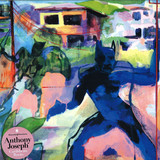
Anthony Joseph - Caribbean Roots

Strut team up for the first time with respected French label Heavenly Sweetness for the brand new album by the inspired poet, novelist and musician, Anthony Joseph.The Caribbean is an influence that runs through Joseph's discography, obliquely or headon, suggested or on full display. It resonates on each of his albums, from the furious trance of 'Bird Head Son' to the more polished 'Time'. On 'Caribbean Roots', he has now decided to turn a guiding thread and a reference point into a communications cable - a powerful bond that makes light of distance and braves the seas to link his island to that of his friends in the Caribbean arc, dancing to the strains of tumbélé and mendé only a few miles
from Port of Spain where people live it up to rapso and soca beats. Caribbean Roots' represents a return to his roots for Anthony Joseph, who has always remained true to a powerful, deep-seated sense of his Caribbean identity. Having started
out as a joint project with the outstanding percussionist Roger Raspail (Cesaria Evora, Papa Wemba, Kassav), 'Caribbean Roots' swiftly grew into a creative force incorporating
the rhythms, sounds and vibes that rock the Caribbean from San Fernando, Scarborough, Kingston and Les Abymes to Port-au-Prince and Havana. Backed by a band made up
of a blend of local musicians, the album attempts to unite the different islands into a single entity whilst ensuring that the identity of each is in no way diluted by the mix instead creating a richer and stronger alloy. The saxophones of Shabaka Hutchings (The
Heliocentrics) and Jason Yarde, the trumpet of Yvon Guillard (Magma), the bass of Mike Clinton (Salif Keita) and the trombone of Pierre Chabrèle (Creole Jazz Orchestra) all combine to form a group of Caribbean All Stars to which Andy Narrell, the master of the steel pans, brings ringing drum beats. The album features bursts of catchy rhythms and slow percussive riff progressions, as on a film soundtrack, incandescent voodoo funk and rhythmic high-speed frenzies shot through with free-jazz sax. This reunion of the Caribbean diaspora was never meant to come up with a formula divisible into eleven separate tracks - its goal was to explore and discover new sounds. And all of this under Anthony Joseph's guidance, as he spins his lyrical blend of afro-futurism and surrealism, commemorating the Caribbean people's sometimes violent resistance to colonialism. Anthony Joseph, one moment a chronicler reciting his text against a background of simple percussion, the next a storyteller possessed by the power of a hypnotic bassline, then an adventurer chanting among mangroves where the rhythm section and the brass have created an impenetrable thicket. At turns, an MC too, strutting to a fat, throbbing groove in vocal tandem with Sly Johnson or David Rudder to pay tribute to Mighty Sparrow, the undisputed and indisputable king of calypso

non in magazzino

Ordina ora e ordineremo l'articolo per te presso il nostro fornitore.


Last In: 3 years ago
  • 1
Articoli per pagina:
N/ABPM
Vinyl