Suche:papa wemba

Styles
Alle
  • 1
MAURICE POTO DOUDONGO - THE LOST ALBUM

Unearthed from the Crammed Discs vaults after nearly four decades (Originally recorded in 1987), a hidden gem finally sees the light. Maurice Poto Doudongo’s The Lost Album arrives on vinyl for the first time—limited to 500 copies, with printed inner sleeve featuring release notes and photographs.

Back in the hazy margins of late-’80s Brussels, where boundary-blurring sounds were seeping through the cracks of pop music, a young autodidact named Maurice Poto Doudongo was crafting music that didn’t quite belong to any scene. Born in Kinshasa and growing up in Belgium, Maurice was a sonic nomad—raised on Franco, Miriam Makeba, and Tabu Ley Rochereau, transfixed by James Brown and Prince, and shaped by the fertile collision between African music and experimental electronics occurring all around him.

Leaving school at 16 to concentrate on music full-time, he began recording on borrowed 4-tracks, using cardboard boxes for percussion, and absorbing whatever sounds the airwaves served him: “Music has no frontier,” he says. “You take what you like. Prince, Fela, Papa Wemba—there is no contradiction. It’s all part of the sound.”

The result? A record that’s equal parts analog drum machine funk, homegrown Afro-pop futurism, and new wave R&B-informed synth poetry. Marc Hollander, founder of Crammed Discs, met Maurice through his friend and associate, musician/producer Vincent Kenis and quickly recognized the spark. The two began working in earnest, preparing tracks intended for a full-length release that, for reasons lost to time and memory, never materialized—until now.

Marc remembers: “The album was never completely finished. “Bolingo” was the only track that came out on a Crammed compilation at that time… and the rest sat on the shelf for decades until we started opening the Crammed vaults.”

Maurice recalls the session as being, “like an unstoppable current”. Listening now, the Lost Album feels both of its time and well beyond it. While tracks like “Momo” sound not a million miles away from the slinky and sophisticated Balearic pop ambience of Wally Badarou’s Echoes album, "Passport Train" shakes itself loose of any genre boundaries, veering into free-form Afro-electronica and tough electronic rhythm. Others pulse with a sweet and soulful groove that suggests dance floors dreamed of but never reached.

In decades hence, Maurice never left music, and the music never left him. Now working mainly as an arranger, he describes his job as being like that of a musical psychologist: “Someone comes to me with their sound, and before anything I have to understand their mind and heart,” he explains. That same intuitive fluency can be heard across this entire album—music that listens before it speaks, that absorbs before it asserts.

This reissue is more than a remastering. It’s a second breath. Sourced from cassette roughs and 24-track demos, carefully restored with Maurice’s blessing, and released as a complete album on vinyl for the very first time, The Lost Album isn’t lost anymore.

It just took nearly 40 years to find its way to you. - Editions de Lux

Auf Lager

Bei uns am Lager und sofort versandfertig

MIND - For Peace Remixes

Mind

For Peace Remixes

12inchCOMET125
Comet Records
01.10.2024

Jean-Phi Dary's much-anticipated *MIND* project gets its first release with the *For Peace Remixes EP*. The record is set for release on September 20, 2024, via Comet Records. Featuring the extraordinary talents of French producer *I:Cube*, who brings his extensive expertise in the electronic scene to reinterpret Dary's original MIND compositions in his own unique way.
The record opens with a masterful blend of rhythmic precision and electronic depth, infused with Dary's signature style with a mindful, meditative quality. This 3-tracker delivers a dynamic and immersive experience with *I:Cube* signature rhythmic excellence and sharp focus on dance floor ready grooves.

Jean-Phi Dary, a producer and keyboardist with deep roots in Paris, London, West Africa, the Caribbean, and the United States, has crafted his debut project MIND to serve as a culmination of his musical journey. With sounds inspired by legends such as Herbie Hancock, Wally Badarou, and Brian Eno - Dary's work is bedded deeply in the modern modular synth culture and enriched by his collaborations with renowned artists like Tony Allen, Papa Wemba, and Jeff Mills - who Jean-Phi is currently collaborating with on "Tomorrow Comes The Harvest" with their album Evolution out last year, soon to be followed by a worldwide tour in 2024!
His innovative use of technology and analog instruments, combined with the unique contributions of I:Cube make the *For Peace Remixes* a notable release.

*Artist Quote* "I had the opportunity to use magnificent samples of the voices of singers from the Maroni River in French Guiana on certain tracks, these voices of the Bushinengé people reconnect me to my Guyanese and neg-maroon origins, my mother was born on the river and my father grew up in the Amazon region..”

Auf Lager

Bei uns am Lager und sofort versandfertig

Various - Rumba Rules - Original Motion Picture Soundtrack

The official soundtrack of the 2021 'Rumba Rules, New genealogies' documentary movie by Congolese artist Sammy Baloji and Quebec filmmaker David Nadeau-Bernatchez. A deep dive into Kinshasa’s vibrant Rumba scene, including remastered classics by Brigade Sarbati, Werrason, Papa Wemba, Franco & le Tout Puissant O.K. Jazz

Rumba Rules, New genealogies is about contemporary rumba in Kinshasa, but this music has deep historical roots nevertheless. Born in the interstices of the colonial world and thriving during the three decades of the Mobutu era in Zaïre, Congolese rumba has been iconic and popular all over Africa for decades. The roots of Rumba are even deeper, and the many paths it evokes trigger the imagination. The story goes that this music came with the migration of the ‘Kumba’ drum and dance in previous centuries, African slaves having carried it all around the Americas and giving birth to Cuban ’Rumba’, Colombian ‘Kumbia’ and many others. With its varied rhythms, guitars and horns, through LPs and radio stations, Rumba came back to (re)conquer Africa throughout the 20th century, paving the way for new practices. One could say this music is a sort of palimpsest, a memory in itself of Atlantic migrations and histories.

Rumba is nowadays discussed all around the world, igniting many debates among the Congolese diaspora. Being the constant talk of the town sometimes overloads public debate, and many people get tired of this broken record. Thus, over the last decade, enterprising producers have worked hard to promote Kinshasa’s musical diversity and tried to emulate new sounds to reach worldwide attention. But Kin’ locals and urban dwellers will not be fooled : new shoots cannot hide the forest. Despite some difficulties to innovate, despite the pastoralist sermons and the diaspora fighters pushing for concert cancelations, rumba is still at the core of the Congo today. Talented artists such as Fally Ipupa, Ferré Gola, Brigade Sarbati and others are leading the fifth generation, and the religious world has also proven to be a nurturing environment for the cultural and economic dynamism of this music.

Focusing on the music of Brigade Sarbati and his Orchestra, this record offers a deep dive into Kinshasa’s rumba scene. Halfway between professional studios and Zoom H4 field recordings, the rumba herein is about today’s youth: dense, full of energy and breakdowns, insights and name-dropping. The cavacha rhythm, the solo and bass guitar’s playing style, the singing style and numerous dedications all resonate with the history of Rumba. In an era where digital sound is taking over, it is interesting to highlight the instrumental and live performance compositions of this music. Digital technology is indeed used during the recording and mixing phases, but Congolese rumba still relies strongly on instrumental playing. There is all that but also, many other things to hear on this record… It’s time to let it be. A big thanks to Étienne Tron for making it possible: it is on his initiative and through his patience that this album is in your hands today. (David Nadeau-Bernatchez, december 2021)

Auf Lager

Bei uns am Lager und sofort versandfertig

Lutchiana Mobulu - Eki Bis 7"

Lutchiana Mobulu

Eki Bis 7"

7"-VinylHC78
HOT CASA
03.07.2023

Reissue of one of the Ultimate Soukous banger !

Originally recorded in 1992 in Paris , « Eki Bis « is a party classic. The chorus « 100 % 100% » became a common expression all over the world helped by the hypnotic guitars of the maestros Diblo Dibala and Rigo Star and a smashing uptempo electro acoustic drum beat.

Le Cobra de Sundama is a famous singer from Kinshasa (Democratic Republic of Congo ) who composed more than 12 albums backed by great band such as Empire Bakuba , and was considered as The voice like Kofi Olomide or Papa Wemba mixing lingala and French street expressions.

After many concerts and tours allover the continent , he finally settled in Angola . The B side features a Dj / radio edit with the addition of few electro synths . Produced in Paris by the great producer Jacky Toto and now officially licensed.

Remastered by The Carvery and pressed on limited 500 Deluxe vinyl copies

nicht am Lager

Bestelle jetzt und wir bestellen den Artikel für dich beim Lieferanten.


Last In: vor 3 Monaten
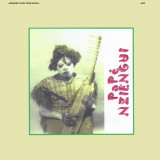
Papé Nziengui et son Groupe - Kadi Yombo LP 2x12"

Kadi Yombo, published in 1989, is the most successful album in the quest for a fusion between tradition and modernity in Bwiti harp music of the Tsogho people of Gabon. Combining beating rattles with a layer of synthesizers, Papé Nziengui blends in a contrapuntal dialogue characteristic of harp playing: male song in appeal and female choir in response, male voice of the musical arc and rhythms of female worship. But above all it’s Tsogho ritual music and modern studio orchestration. The result is an initiatory itinerary of 10 musical pieces which are all milestones likely to be simultaneously listened to, danced, meditated on, and soon acclaimed. In the years since, Nziengui has traveled he world from Lagos to Paris, from Tokyo to Cordoba, from Brussels to Mexico City to become a true icon, the emblem of Gabonese music.

Like Bob Dylan, "electrifying" folk and Bob Marley mixing rock with reggae, some purists have criticized Nziengui for having distorted the music of harp by imposing a cross with modern instruments. They even went so far as to claim that Nziengui was just an average harpist covering his shortcomings with stunts that were only good for impressing neophytes; like playing a harp placed upside down behind his back or playing two or three harps simultaneously. Sincere convictions or venomous defamations, in any case, Nziengui never gave in to such attacks, imposing himself on the contrary to pay homage to the elders (Yves Mouenga, Jean Honoré Miabé, Vickoss Ekondo) while instructing the maximum of young people. He is thus the promoter of many young talents, the most prominent of which is certainly his nephew Jean Pierre Mingongué. In a conservative society where the sacred is confused with secrecy, exposing the mysteries of Bwiti in broad daylight can be punished by exclusion or even execution.

Papé Nziengui has always claimed that he faces such risks because he never felt enslaved to a community that governs his life, that regulates his conduct, that has a right of censorship over his activities. Like Ravi Shankar, the famous sitarist, Papé Nziengui is a man of rupture but also of openness, a transmitter of culture. As proof, he has established himself in Libreville, Gabo’s capital, as the main harpist for sessions and concerts, accompanying the greatest national artists (Akendengué, Rompavè, Annie-Flore Batchiellilys, Les Champs sur la Lowé, etc.) as well as foreign artists (Papa Wemba, Manu Dibango, Kassav', Toups Bebey, etc.). In 1988, he was the first harpist to release an album in the form of a cassette produced by the French Cultural Center (Papé Nziengui, Chants et Musiques Tsogho). At the same time, he created his own group (Bovenga), combining traditional music instruments (musical bow, drums, various percussion instruments, etc.) in the framework of a true national orchestra, which gave the first concert and the first tours of a traditional music that was both modern and dynamic, thus "democratizing" the harp, to the dismay of certain purists.

On the other hand, in modern music, dominated by the logic of profit or even commercialism, artistic creation must often be adjusted for a specific audience based on reason rather than heart. But instead of allowing himself to be distorted, Papé Nziengui has always tried to produce music that is not a caricature, worthy in its expression as in its content, of the sacredness and transcendence of the music of the Origins. This is what makes Nziengui not only the musician, but the man someone whose age hasn’t altered any of his freshness or authenticity

vorbestellen08.04.2022

erscheint voraussichtlich am 08.04.2022

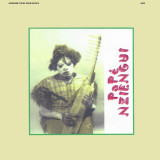
Papé Nziengui et son Groupe - Kadi Yombo LP

Kadi Yombo, published in 1989, is the most successful album in the quest for a fusion between tradition and modernity in Bwiti harp music of the Tsogho people of Gabon. Combining beating rattles with a layer of synthesizers, Papé Nziengui blends in a contrapuntal dialogue characteristic of harp playing: male song in appeal and female choir in response, male voice of the musical arc and rhythms of female worship. But above all it’s Tsogho ritual music and modern studio orchestration. The result is an initiatory itinerary of 10 musical pieces which are all milestones likely to be simultaneously listened to, danced, meditated on, and soon acclaimed. In the years since, Nziengui has traveled he world from Lagos to Paris, from Tokyo to Cordoba, from Brussels to Mexico City to become a true icon, the emblem of Gabonese music.

Like Bob Dylan, "electrifying" folk and Bob Marley mixing rock with reggae, some purists have criticized Nziengui for having distorted the music of harp by imposing a cross with modern instruments. They even went so far as to claim that Nziengui was just an average harpist covering his shortcomings with stunts that were only good for impressing neophytes; like playing a harp placed upside down behind his back or playing two or three harps simultaneously. Sincere convictions or venomous defamations, in any case, Nziengui never gave in to such attacks, imposing himself on the contrary to pay homage to the elders (Yves Mouenga, Jean Honoré Miabé, Vickoss Ekondo) while instructing the maximum of young people. He is thus the promoter of many young talents, the most prominent of which is certainly his nephew Jean Pierre Mingongué. In a conservative society where the sacred is confused with secrecy, exposing the mysteries of Bwiti in broad daylight can be punished by exclusion or even execution.

Papé Nziengui has always claimed that he faces such risks because he never felt enslaved to a community that governs his life, that regulates his conduct, that has a right of censorship over his activities. Like Ravi Shankar, the famous sitarist, Papé Nziengui is a man of rupture but also of openness, a transmitter of culture. As proof, he has established himself in Libreville, Gabo’s capital, as the main harpist for sessions and concerts, accompanying the greatest national artists (Akendengué, Rompavè, Annie-Flore Batchiellilys, Les Champs sur la Lowé, etc.) as well as foreign artists (Papa Wemba, Manu Dibango, Kassav', Toups Bebey, etc.). In 1988, he was the first harpist to release an album in the form of a cassette produced by the French Cultural Center (Papé Nziengui, Chants et Musiques Tsogho). At the same time, he created his own group (Bovenga), combining traditional music instruments (musical bow, drums, various percussion instruments, etc.) in the framework of a true national orchestra, which gave the first concert and the first tours of a traditional music that was both modern and dynamic, thus "democratizing" the harp, to the dismay of certain purists.

On the other hand, in modern music, dominated by the logic of profit or even commercialism, artistic creation must often be adjusted for a specific audience based on reason rather than heart. But instead of allowing himself to be distorted, Papé Nziengui has always tried to produce music that is not a caricature, worthy in its expression as in its content, of the sacredness and transcendence of the music of the Origins. This is what makes Nziengui not only the musician, but the man someone whose age hasn’t altered any of his freshness or authenticity

vorbestellen08.04.2022

erscheint voraussichtlich am 08.04.2022

Papé Nziengui et son Groupe - Kadi Yombo LP

Kadi Yombo, published in 1989, is the most successful album in the quest for a fusion between tradition and modernity in Bwiti harp music of the Tsogho people of Gabon. Combining beating rattles with a layer of synthesizers, Papé Nziengui blends in a contrapuntal dialogue characteristic of harp playing: male song in appeal and female choir in response, male voice of the musical arc and rhythms of female worship. But above all it’s Tsogho ritual music and modern studio orchestration. The result is an initiatory itinerary of 10 musical pieces which are all milestones likely to be simultaneously listened to, danced, meditated on, and soon acclaimed. In the years since, Nziengui has traveled he world from Lagos to Paris, from Tokyo to Cordoba, from Brussels to Mexico City to become a true icon, the emblem of Gabonese music.

Like Bob Dylan, "electrifying" folk and Bob Marley mixing rock with reggae, some purists have criticized Nziengui for having distorted the music of harp by imposing a cross with modern instruments. They even went so far as to claim that Nziengui was just an average harpist covering his shortcomings with stunts that were only good for impressing neophytes; like playing a harp placed upside down behind his back or playing two or three harps simultaneously. Sincere convictions or venomous defamations, in any case, Nziengui never gave in to such attacks, imposing himself on the contrary to pay homage to the elders (Yves Mouenga, Jean Honoré Miabé, Vickoss Ekondo) while instructing the maximum of young people. He is thus the promoter of many young talents, the most prominent of which is certainly his nephew Jean Pierre Mingongué. In a conservative society where the sacred is confused with secrecy, exposing the mysteries of Bwiti in broad daylight can be punished by exclusion or even execution.

Papé Nziengui has always claimed that he faces such risks because he never felt enslaved to a community that governs his life, that regulates his conduct, that has a right of censorship over his activities. Like Ravi Shankar, the famous sitarist, Papé Nziengui is a man of rupture but also of openness, a transmitter of culture. As proof, he has established himself in Libreville, Gabo’s capital, as the main harpist for sessions and concerts, accompanying the greatest national artists (Akendengué, Rompavè, Annie-Flore Batchiellilys, Les Champs sur la Lowé, etc.) as well as foreign artists (Papa Wemba, Manu Dibango, Kassav', Toups Bebey, etc.). In 1988, he was the first harpist to release an album in the form of a cassette produced by the French Cultural Center (Papé Nziengui, Chants et Musiques Tsogho). At the same time, he created his own group (Bovenga), combining traditional music instruments (musical bow, drums, various percussion instruments, etc.) in the framework of a true national orchestra, which gave the first concert and the first tours of a traditional music that was both modern and dynamic, thus "democratizing" the harp, to the dismay of certain purists.

On the other hand, in modern music, dominated by the logic of profit or even commercialism, artistic creation must often be adjusted for a specific audience based on reason rather than heart. But instead of allowing himself to be distorted, Papé Nziengui has always tried to produce music that is not a caricature, worthy in its expression as in its content, of the sacredness and transcendence of the music of the Origins. This is what makes Nziengui not only the musician, but the man someone whose age hasn’t altered any of his freshness or authenticity

vorbestellen08.04.2022

erscheint voraussichtlich am 08.04.2022

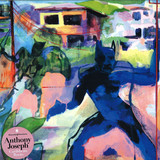
Anthony Joseph - Caribbean Roots

Strut team up for the first time with respected French label Heavenly Sweetness for the brand new album by the inspired poet, novelist and musician, Anthony Joseph.The Caribbean is an influence that runs through Joseph's discography, obliquely or headon, suggested or on full display. It resonates on each of his albums, from the furious trance of 'Bird Head Son' to the more polished 'Time'. On 'Caribbean Roots', he has now decided to turn a guiding thread and a reference point into a communications cable - a powerful bond that makes light of distance and braves the seas to link his island to that of his friends in the Caribbean arc, dancing to the strains of tumbélé and mendé only a few miles
from Port of Spain where people live it up to rapso and soca beats. Caribbean Roots' represents a return to his roots for Anthony Joseph, who has always remained true to a powerful, deep-seated sense of his Caribbean identity. Having started
out as a joint project with the outstanding percussionist Roger Raspail (Cesaria Evora, Papa Wemba, Kassav), 'Caribbean Roots' swiftly grew into a creative force incorporating
the rhythms, sounds and vibes that rock the Caribbean from San Fernando, Scarborough, Kingston and Les Abymes to Port-au-Prince and Havana. Backed by a band made up
of a blend of local musicians, the album attempts to unite the different islands into a single entity whilst ensuring that the identity of each is in no way diluted by the mix instead creating a richer and stronger alloy. The saxophones of Shabaka Hutchings (The
Heliocentrics) and Jason Yarde, the trumpet of Yvon Guillard (Magma), the bass of Mike Clinton (Salif Keita) and the trombone of Pierre Chabrèle (Creole Jazz Orchestra) all combine to form a group of Caribbean All Stars to which Andy Narrell, the master of the steel pans, brings ringing drum beats. The album features bursts of catchy rhythms and slow percussive riff progressions, as on a film soundtrack, incandescent voodoo funk and rhythmic high-speed frenzies shot through with free-jazz sax. This reunion of the Caribbean diaspora was never meant to come up with a formula divisible into eleven separate tracks - its goal was to explore and discover new sounds. And all of this under Anthony Joseph's guidance, as he spins his lyrical blend of afro-futurism and surrealism, commemorating the Caribbean people's sometimes violent resistance to colonialism. Anthony Joseph, one moment a chronicler reciting his text against a background of simple percussion, the next a storyteller possessed by the power of a hypnotic bassline, then an adventurer chanting among mangroves where the rhythm section and the brass have created an impenetrable thicket. At turns, an MC too, strutting to a fat, throbbing groove in vocal tandem with Sly Johnson or David Rudder to pay tribute to Mighty Sparrow, the undisputed and indisputable king of calypso

nicht am Lager

Bestelle jetzt und wir bestellen den Artikel für dich beim Lieferanten.


Last In: vor 3 Jahren
  • 1
Artikel pro Seite:
N/ABPM
Vinyl