Search:now this is congo

Styles
All
  • 1
M’BAMINA - AFRICAN ROLL

Gatefold Sleeve

M’Bamina – African Roll (1975)
The story of an album born between Africa, Italy, and the nightclub culture of the 1970s
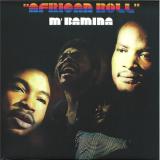
In the heart of 1970s Italy — a country undergoing profound social change and a music scene just beginning to open itself to distant sounds and cultures — an extraordinary, almost improbable story took shape. It is the story of a group of young African musicians who found their way to Europe, of a Turin nightclub that became a crossroads for communities and experimenters, and of an album which, released in small numbers and largely unnoticed at the time, is now considered a rare jewel of Afro-fusion.
The band called themselves M’Bamina — an ensemble of musicians from Congo, Cameroon, and Benin, who arrived in Italy in the early Seventies. Settling between northern Italy and the Pavia area, they began performing in small clubs and community events, bringing with them a vibrant rhythmic heritage: African polyrhythms, call-and-response vocals, funk-infused bass lines, and Caribbean or Afro-Latin colours absorbed along their musical journeys. Their raw, contagious energy on stage quickly drew attention.
Meanwhile, in Turin, another story was unfolding. There was a venue becoming almost legendary: Voom Voom, one of the city’s liveliest nightclubs, run by Ivo Lunardi. The club attracted an eclectic crowd — students, artists, foreigners, night owls — and Lunardi quickly understood that the dancefloor wasn’t just a place for music, but a melting pot for a new kind of cultural energy. Out of this vibrant atmosphere came his idea: to turn the club’s name into a small independent record label, Voom Voom Music, capable of capturing the spirit of those years and giving voice to unconventional projects.

When Lunardi heard M’Bamina, he immediately sensed that this was the sound he had been searching for: fresh, different from anything circulating in Italy at the time, and capable of blending African tradition with funk and European sensibility. He brought them into the studio.
Production was handled by Lunardi along with Christian Carbaza Michel, while the engineering was entrusted to Danilo Pennone, a young sound technician with a sharp, intuitive ear.
The recording sessions — held in Turin in 1975 — produced a remarkably warm and direct sound. The music feels almost live: grooves rooted in African tradition, but open to funk-rock structures and modern arrangements. It is a natural fusion, never forced. Tracks move between tribal rhythms, funk basslines, light electric guitars, congas and Afro-Latin percussion, with call-and-response vocals and melodies that echo both Congolese tradition and the lineage of Latin jazz. Not by chance, one of the album’s most striking tracks, Watchiwara, reinterprets a Latin standard through M’Bamina’s own rhythmic language.

The album was titled African Roll — a name that was already a statement of intention. It is African music that “rolls,” that moves, adapts, transforms within a new geographic and cultural setting. It is not strictly Afrobeat, nor Congolese rumba, nor Western funk: it is a spontaneous, hybrid blend, shaped more by lived experience than by any calculated aesthetic program.
When African Roll was released, the world around it barely noticed. Distribution was limited, and 1970s Italy had yet to develop a cultural framework for receiving such music. The national music press rarely paid attention to African or “world” productions. The album slipped into silence — though the band’s own story did not.

M’Bamina continued performing across Europe and Africa, even sharing a stage in Cameroon with none other than Manu Dibango. By the late Seventies, they moved to Paris, signed with Fiesta/Decca, and recorded a second LP, Experimental (1978). Meanwhile, the peculiar record they had made in Turin began to resurface quietly among vinyl collectors, Afro-funk enthusiasts, and DJs hunting for forgotten grooves.
That is when the album’s fate began to shift.

Over the decades, African Roll emerged as an almost unique document: a snapshot of an intercultural Italy before the word “intercultural” even existed, a fragment of migrant history, a spontaneous experiment in musical fusion born far from major industry circuits but rich in authenticity. Original copies began commanding high prices on the collector’s market, and the album became recognized as one of the hidden classics of European Afro-fusion from the 1970s.
Today, more than fifty years later, this reissue finally restores visibility and dignity to a project that deserves to be heard, studied, and celebrated. It is not simply an album: it is the testimony of a rare cultural encounter, born in an Italy unaware of how fertile such exchanges would one day become.

It is the story of a visionary producer, an extraordinary band, and a fleeting moment in which music, migration, and nightlife came together to create something genuinely new.
African Roll is — now more than ever — the sound of a bridge: between continents, between eras, between cultures. A record that, after rolling far and wide, has finally come home.

In Stock

On Stock and ready to ship

Various - I-ROBOTS PRESENTS: TURIN DANCEFLOOR EXPRESS, THE AGE OF VOOM VOOM MUSIC LP 2x12"

Daniele Baldelli
"A pleasant surprise to find in this release various atmospheres and sounds that have always been part of my DJing. It even made me rediscover M’Bamina, whom I used to play back in 1974 at the Tabù Club in Cattolica.
There are afro vibes as well, with Black Line – Myele, which is featured on one of my Cosmic tapes, and Nowhere by the Stratosferic Band recalls a track I used to play at the Baia degli Angeli…
Excellent work!"

Voom Voom Music was an independent Italian record label based in Turin, founded and managed by record producer Ivo Lunardi (Turin, December 6, 1940 – December 9, 2010). A pivotal figure in the Piedmont music scene, Lunardi was active both as a DJ and as the owner of several disco clubs.

The label operated for several years in the latter half of the 1970s, releasing mainly productions connected to the Italian dance and pop scene.
Since 2016, the original master tapes from the Voom Voom Music catalog have been owned by Gianluca Pandullo (I-Robots), a close friend of Ivo and Luca Lunardi. Through his labels Opilec Music and Turin Dancefloor Express, Pandullo oversees their preservation and historical enhancement.

The artistic direction of Voom Voom Music was marked by a distinct sonic identity — eclectic yet visionary. The Turin-based label founded by Ivo Lunardi embraced a sound that blended disco, pop, and rock influences, interwoven with African American grooves in a pioneering, international perspective.

Voom Voom Music was among the first Italian labels to introduce this kind of musical language in the country. A prime example is the Italian edition of the debut album by B.T. Express, Do It ('Til You're Satisfied), released in LP, 8-Track Cartridge, cassette, and 7" single formats.
The label’s productions clearly reflected the influence of black and funk music, as evidenced by the references and inspirations running through its catalogue. The track “Lady Pick-Up”, for instance, includes direct nods to “Do It Good” by KC & The Sunshine Band and Manu Dibango’s iconic “Soul Makossa”, revealing a musically refined and contemporary sensibility.

Among the label’s most representative works is Splash (1977) by the Stratosferic Band, a project conceived by Luigi Venegoni — producer, songwriter, and guitarist of Arti e Mestieri. Venegoni’s artistic journey spanned from progressive rock to space and Italo disco. The album artwork was designed by Piero D’Amore (1944 - 2022), a charismatic and multifaceted figure of Turin’s art scene (one of his works was even acquired by the MoMA in New York).
The record includes a disco reinterpretation of Van Morrison’s classic “Gloria”, and “Splashdown”, a track fusing the disco-rock energy of Rockets and Space. In contrast, “Nowhere” revisits the 1975 single by Hokis Pokis, a soul/disco band from Nassau County (New York), transforming it into a vibrant disco-funk number.

Another significant expression of the label’s catalogue is the afro-rock sound of M’Bamina, an Italo-Congolese group whose rhythmic energy and dialogue between African percussion and Western funk evoke the style of international formations such as Osibisa — themselves linked to a rich artistic history in Italy.

In Stock

On Stock and ready to ship

ROLD LEBO - Dansez Osier (Otierakwo Danse) (LP)

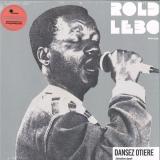
We’re proud to present the first-ever official reissue of Rold Lebo - "Dansez Otiere" — a folk-jazz treasure from 1986, originally released in the Republic of Congo on vinyl and cassette (self-released on small quantities). This vinyl gem revives the energy and elegance of a rare record, now brought back into the light — a timeless work, finally restored to its full glory.

This album alternates between the call to celebrate the ancestral homeland and cultural identity and poignant ballads about love, exile and homesickness. It is a work that is both intimate and cosmic. Finally restored to its full glory, it returns on vinyl for the first time since its initial release.

This is an essential restoration — a sophisticated synthesis of Congolese Folk-Jazz, subtle soul, and deeply introspective rhythms. Recorded in the 80s, the album channels a timeless spirit, exploring multilingual themes of ancestral identity, the melancholy of exile and the delicate games of love.

Rold Lebo’s music is a profound emotional capsule — once overlooked, now revived for a new generation of listeners eager to explore the sophisticated sounds and resonant stories of the Republic of Congo.

In Stock

On Stock and ready to ship

R.M.K. - Steel Waves LP

R.M.K.

Steel Waves LP

12inchODDEVEN052B
Odd Even
14.01.2026

Repress due to the high demand! Unbelievable deep and driving techno sound of the first hour. this 4 tracker from R.M.K. shows where techno should be. in the here and now, without exaggeration, without bling bling and without polarization. R.M.K. utilises his knowledge and past experiences, which include regularly playing at Berghain and Tresor in Berlin, as well as fabric in London, to develop his individual sound. During his more than 20 year career in music, he has formed friendships and worked in partnership with other respected artists such as Trevino (Marcus Intalex), Jamie Anderson, Robert Owens, Goldie and Nastia. Although the focus is always on the very heart of the most raucous of raves, R.M.K never shies away from groove and funk. This is conveyed in a Live Show that utilises classic hardware from the golden age of UK Rave.

In Stock

On Stock and ready to ship

Wally Badarou - Simple Things (LP)

Wally Badarou is a synth pioneer and musical polymath. But rarely does he sing over his sumptuous tracks. The 6 songs that comprise new record Simple Things finally realise Wally's vision for select backing tracks from his beloved Colors Of Silence.

The tracks were originally developed back in 2001 for the release of the original CD; here, Wally has “simply" added overdubs and vocals to their mastered mixes with some discerning edits. Simply put, Simple Things is another slice of simply stunning Wally Badarou genius.

Simple Things has been decades in the making. Indeed, Wally struggled not only with the idea of singing these wonderful songs himself but singing them in English and writing his own lyrics, while wrestling with the sensational backing tracks, which themselves seemed to have taken on a life of their own.

As Wally explained to us: "In addition to the instrumental artist I have been known as, so far, there has always been a singer who simply was not sure he was, up until now. Even though “Back To Scales Tonight”, my very first album, was, indeed, a song album."

Opener "It Couldn't Be You" embellishes the uptempo groove of soca-funk gem "The Lights Of Kinshasa". As Wally explained to us, it's about “a simple love story somewhere, one rainy night, under the lights of Kinshasa. A woman, a man, online dating, quite usual in our times. Then they meet, almost missing each other." The guide vocal Wally had laid for Colors Of Silence - with an organ sound - seemed striving for words in Linguala, a Congolese language he could not speak. Therefore the decision to do it himself was not an easy one, for it had to be in English to fit his singing. We think it turned out pretty good!

"You Can't Hide Always" vocalises Wally's deep concerns set to the propulsive "Smiles By The Millions": "Populism, ostracism, radicalism, ethics and values all turned upside down worldwide, are they all inevitably exacerbated by our social networks? It could all melt down one day, like a house of cards in the ocean of fake news and false prophecies”. Wally wanted to keep the track as bare as possible but, inevitably, the backing vocals and the synth-brass arrive ultimately to present a welcome 70s flavour, with no snare-drum added.

The bright and breezy "We'll Make It Again" adds vocals to "Where Were We", a tropical, reggae-tinged bounce through the islands. Here's Waly: "Where were we when we last said: "I love you"? Simple words to express something quite common, but never quite simple to deal with. A simple song about the resilience of the broken hearts.” The reggae came from it being conceived when Wally was scoring for “Third World Cop”, a 1999 Jamaican action movie.

"Walk Straight Ahead" provides Wally's gorgeous, contemplative and idiosyncratic vocals to the deep serenity of Colors Of Silence highlight, "Amber Whispers". It's a gliding, divine, mini melodic masterpiece. It'll make you swoon in its extreme beauty. As Wally describes, "it started as just whispers, sweet amber whispers. Then the colour turned darker, as darker skies seemed to fall upon us while the whole world keeps on walking ahead, straight ahead, regardless of the blatant warnings, feeling much too comfortable in conformity. Initially, the verses were to be spoken only. I realised they could be sung all the while, without overshadowing the ethereal atmosphere." Amen.

The serene, celestial "Painting My Life Blue" presents the vocal version of "Days To Wonder". Says Wally, "how does it feel when your second half is gone after decades of riding life together? Past the temporary loss of your bearings, you come to realise you've been blind to the essential, and suddenly you can see...For this most intimate song of mine, I had tried to come up with a melody on top of the existing backing track, long before realising the melody was in the keyboard part already. It just needed to be properly mixed with it."

The profoundly emotional "Just Two Lovers" works up the formerly-too-brief and glorious "Crystal Falls" into a much fuller masterpiece and features acoustic guitar sparkle before fully glistening with some gentle head-nod percussion. Waly explains further: "Dear little green men, please tell me, what is it about us that makes you want to come and visit us so often (contrary to Fermi's assertion)? And here is the reply I believe I heard them sing: "You've got the key you've been searching for: Love”. I reverted to the initial backing track I had made around 1985, which already bore the melody, and which I added acoustic guitars to, before singing it." An astounding closer.

A synth specialist, there can be few artists more under-appreciated given their vast influence than Wally Badarou. His solo work practically defined the sound of the Balearic DJs of the 1980s, and thus the more sophisticated sound of dance culture thereafter. He was one of the Compass Point All Stars (with Sly and Robbie, Barry Reynolds, Mikey Chung and Uziah "Sticky" Thompson), the in-house recording team of Compass Point Studios responsible for a series of albums in the 1980s recorded by Grace Jones, Tom Tom Club, Mick Jagger, Black Uhuru, Gwen Guthrie, Jimmy Cliff and Gregory Isaacs. Badarou's keyboard playing could also be heard on albums by Robert Palmer, Marianne Faithfull, Herbie Hancock, M (Pop Muzik), Talking Heads, Manu Dibango and Miriam Makeba. He also produced Fela Kuti. Phew!

When we asked Wally about the significance of this collection's title, he explained: "These are "Simple things” that everyday’s life seems to build upon. The simplest are the harder to describe, but when satisfactorily described i.e. with simple words, they are the more genuine and authentic to express and share. I’ve immersed myself in other classic song lyrics, something I hardly did before, just to appreciate the genius behind the simple words they were made of, and had a great time studying how powerful they were in expressing complex ideas such as love."

Recording was twofold: first, most of the backing tracks were recorded in 2001, in Wally's studio in Normandy, mostly using hardware synths and Yamaha digital consoles. Then, he fine-tuned the melodies and wrote the lyrics in late 2023, then added some overdubs and sang them all during summer 2024. States Wally, "Digital Performer was and remains the DAW I’ve been using throughout, ever since the 80s."

Wally's sophisticated synth textures and expressive keyboard runs are so full of character, so full of life, that this work of art transcends any easy genre categorisation. Meticulously remastered and cut by both Simon Francis and Cicely Balston respectively, it has been pressed to the highest possibly quality at Record Industry in Holland. Sometimes, the simple things are the most extraordinary.

In Stock

On Stock and ready to ship

Various - Afrikano Vol 2 EP

Samosa Records quickly follows up the first volume of Afrikano treats with Volume 2; a veritable melting pot of Afro beats and rhythms packed in to an exceptional four tracker.

Kicking the EP off on the A-side is Vincent Galgo and J’ngolo. This hypnotic Afro sizzler takes full advantage of the effortless bass, congo beats, African horns and (subtle) funky guitar. Add the mesmerising chanting and you have a perfect ‘Bunny Chow’ of a tune that will tantalise the tastebuds for a long time after the music has stopped. Second helpings? Why not?

A2 unleashes ‘Zaire’ by the supremely talented Matalo! Dark and broody beats take centre stage with this one, as you’re slowly enveloped in a ritual you never knew you were part of but now you can’t help sway with the rest of the worshippers. ‘Zaire’ is one of those rare tracks that you feel could create fire if you let it. With sweeping synths, tribal chanting and a detached sense of being, this monster lives under your bed and waits for lights out. Beware!

On the B-side Leslie Lello ups the tempo with ‘Alcyone’. Solid, punchy bass, driving guitar and gorgeous piano riff and vocal combine with a synth lead you absolutely need in your life. The track morphs and transforms into a full-on (almost housey) stomper; nailing its tribal colours to the mast with intent. A real beast of a tune.

Closing this superbly diverse EP is label boss De Gama and ‘E.T.A’. You know De Gama doesn’t mess about. You know De Gama wants to hit you with all he has and with ‘E.T.A’ he unleashes his ‘inner Chief. Indigenous beats pound, roll and build up to a Ramkie guitar infused chorus that’s as joyful, uplifting and inspiring as the dawn itself. A genuine, incredible slice of Afrikano from a master of the genre.

Afrikano Vol. 2 proves once again that Samosa Records know this genre like no other label out there. If this isn’t in your record box on release day, then we simply can’t be friends.

In Stock

On Stock and ready to ship

Various - Rumba Rules - Original Motion Picture Soundtrack

The official soundtrack of the 2021 'Rumba Rules, New genealogies' documentary movie by Congolese artist Sammy Baloji and Quebec filmmaker David Nadeau-Bernatchez. A deep dive into Kinshasa’s vibrant Rumba scene, including remastered classics by Brigade Sarbati, Werrason, Papa Wemba, Franco & le Tout Puissant O.K. Jazz

Rumba Rules, New genealogies is about contemporary rumba in Kinshasa, but this music has deep historical roots nevertheless. Born in the interstices of the colonial world and thriving during the three decades of the Mobutu era in Zaïre, Congolese rumba has been iconic and popular all over Africa for decades. The roots of Rumba are even deeper, and the many paths it evokes trigger the imagination. The story goes that this music came with the migration of the ‘Kumba’ drum and dance in previous centuries, African slaves having carried it all around the Americas and giving birth to Cuban ’Rumba’, Colombian ‘Kumbia’ and many others. With its varied rhythms, guitars and horns, through LPs and radio stations, Rumba came back to (re)conquer Africa throughout the 20th century, paving the way for new practices. One could say this music is a sort of palimpsest, a memory in itself of Atlantic migrations and histories.

Rumba is nowadays discussed all around the world, igniting many debates among the Congolese diaspora. Being the constant talk of the town sometimes overloads public debate, and many people get tired of this broken record. Thus, over the last decade, enterprising producers have worked hard to promote Kinshasa’s musical diversity and tried to emulate new sounds to reach worldwide attention. But Kin’ locals and urban dwellers will not be fooled : new shoots cannot hide the forest. Despite some difficulties to innovate, despite the pastoralist sermons and the diaspora fighters pushing for concert cancelations, rumba is still at the core of the Congo today. Talented artists such as Fally Ipupa, Ferré Gola, Brigade Sarbati and others are leading the fifth generation, and the religious world has also proven to be a nurturing environment for the cultural and economic dynamism of this music.

Focusing on the music of Brigade Sarbati and his Orchestra, this record offers a deep dive into Kinshasa’s rumba scene. Halfway between professional studios and Zoom H4 field recordings, the rumba herein is about today’s youth: dense, full of energy and breakdowns, insights and name-dropping. The cavacha rhythm, the solo and bass guitar’s playing style, the singing style and numerous dedications all resonate with the history of Rumba. In an era where digital sound is taking over, it is interesting to highlight the instrumental and live performance compositions of this music. Digital technology is indeed used during the recording and mixing phases, but Congolese rumba still relies strongly on instrumental playing. There is all that but also, many other things to hear on this record… It’s time to let it be. A big thanks to Étienne Tron for making it possible: it is on his initiative and through his patience that this album is in your hands today. (David Nadeau-Bernatchez, december 2021)

In Stock

On Stock and ready to ship

Jackie Mittoo - Rides On LP
  • A1: Jah Jah Harmony
  • A2: Natty Congo Rides On
  • A3: Soulful Times
  • A4: Jumping Up
  • A5: Freedom Smile
  • A6: Taking You Somewhere
  • B1: Nanny Skank
  • B2: Look At Life
  • B3: Hard Times
  • B4: Pray To Play
  • B5: Too Bad Bull
  • B6: No Get Dub Over

Jackie Mittoo, organ and piano maestro, was also one of the founding members of Jamaica's top session band The Skatalites. Musical arranger for Studio One he provided the backbone to so many of Jamaica's finest tunes. The invention of Ska music and the sounds that rode through the Rocksteady and Reggae period all carry his stamp. Whether it be in his various incarnations, the aforementioned Skatalites, The Soul Brothers, Soul Vendors and the Sound Dimension or under his own name, his distinctive organ and piano sound and musical arrangements have all played a major part in Jamaica's musical history.

Jackie Mittoo (born 1948, Kingston, Jamaica) began playing musical instruments at a very early age. Taught piano by his grandmother he was performing live by the age of 10 and recording by the age of 15. Two Kingston bands that he played with the Rivals and the Sheiks brought him to the attention of Studio One's founder Coxsone Dodd. Who at the time was putting a group of musicians together to be his studio band. Impressed by his skills on both the organ and the piano, Jackie was asked to join in what would become Jamaica's foremost band The Skatalites. The fellow band members were Lloyd Brevett (bass), Lloyd Knibbs (drums), Don Drummond (trombone), Tommy McCook, Roland Alphonso and Lester Sterling (Sax), Johnny Moore (trumpet), Jah Jerry (guitar) and Mr Mittoo (piano). This line up ruled the Jamaican scene between 1964 - 1965 as well as inventing the Ska sound, they also performed the backing duties for the other top labels of the time including Duke Reid's Treasure Isle and Justin Yap's Top Deck label.

1965 saw The Skatalites disband and Jackie Mittoo move on to his next musical project The Soul Brothers. Formed with fellow Skatalite Roland Alphonso, this band would back all the hits coming out of Studio One for the next three years with Jackie Mittoo working as band leader and musical arranger. Around this time Jackie also had his own single released, a Ska underground classic called 'Got My Bugaloo'. Rare, as it also features Jackie in the unusual role for him, as lead singer!!!!.

1966 saw the Ska sound evolve into Rocksteady, again with Jackie's band at the helm, and his first hit single the Rocksteady cut 'Ram Jam'. The success of which would lead to a solo career and album releases under his own name such as 'Now', 'Macka Fat', 'Evening Time', 'In London' and 'Keep on Dancing', to name but a few. In1967 the hits at Studio One were still flowing when The Soul Brothers morphed into The Soul Venders and began backing such luminaries as Ken Boothe, Alton Ellis, Delroy Wilson, The Heptones, The Cables, The Wailers and many other of the labels solo artists.

By 1968 Jamaican music was ready for another change and Rocksteady rolled into a slower groove soon to be called Reggae. Jackie Mittoo would be at the forefront with his latest band The Sound Dimension. A line up that included Leroy Sibbles (bass), Roland Alphonso and Cedric Brooks (saxophone), Eric Frater and Ernest Ranglin (guitar) and Bunny Williams (drums). Being the house band at Studio One they backed all the leading names of the time, John Holt, Horace Andy and Alton Ellis, all of Studio One's output carried his sound.

Jackie Mittoo emigrated in the late 60's to Canada, but travelled to Jamaica and London to record with many of the big new names, who were trying to redress Studio One's supremacy and needed his magic touch. Such Producers as Bunny Lee used Jackie Mittoo on many of his sessions, Sugar Minott among others were always glad of his services.

We have captured some fine 1970's cuts that feature Jackies numerous talents, showing his ability to embellish tracks with a feel that few could better, Musical arranger, band leader all round studio ace. We hope you enjoy the set and I'm sure you'll agree with us Jackie Mittoo does indeed Ride On.........

pre-order now13.02.2026

expected to be published on 13.02.2026

Various - Dolores: Salsa & Guaracha From 70's French West Indies

In Guadeloupe, many people think that jazz and ka music are like a ring and a finger. To some extent, the same could be said about so called Latin music and the music played in the French West Indies.

Both aesthetics were born in the Caribbean and bear so many connections that they can easily be considered cousins. In constant dialogue, there are lots of examples of their fruitful alliance and have been for a while. The English country dance that used to be practiced in European lounges came to be called kadrille in Martinique and contradanza in Cuba. They both featured additional percussion instruments inherited from the transatlantic deportation. Drawing from shared feelings about the same traumatized identity – later to be creolized – it would be hard not to assume that they were meant to inspire each other. The golden age of the orchestras that graced the Pigalle nights during the interwar period further proves the point. As soon as the 1930s, Havana-born Don Barreto naturally mixed danzón and biguine music in a combo based at Melody's Bar. In the following decade, Félix Valvert, a conductor who was born and raised in Basse-Terre in Guadelupe, also worked wonders in Montparnasse with La Coupole, which was an orchestra made up of eclectic musicians. Afro- Caribbean performers of various origins were often hired on rhythm and brass sections in jazz bands, which used to enliven the typical French balls of the capital. In the 1930s and onwards, Rico’s Creole Band was one of them.


Martinican violinist-clarinettist Ernest Léardée, who would become the king of biguine music as well as the main figure of French Uncle Ben's TV commercials (a dark stigma of post-colonial stereotypes), had musicians from the whole Caribbean sphere play at his Bal Blomet – and they all enchanted "ces Zazous-là" (according the words of Léardée's biguine-calypso piece). In les Antilles (French for French West Indies), music history started to speed up in the 1950s, when trade expanded and radio stations grew bigger. The Guadelupean and Martiniquais youth tuned in their old galena radio sets to South American and Caribbean music. As for the women traders, les pacotilleuses, they bought and sold goods across different islands (the "passing of items through various hands" was thought to be most pleasurable) and brought back countless sounds in their luggage. Such was the case of Madame Balthazar, who once returned from Puerto Rico with the first 45rpm and 33rpm to ever enter Martinique.

Out of this adventure was created the famous Martinican label La Maison des Merengues, a music business she opened and undertook with her husband and which proved to be a major landmark. At the end of the 1950s, in Puerto Rico, Marius Cultier competed in the Piano International Contest playing a version of Monk's Round 'Midnight. He won the first prize and this distinction foreshadowed everything that was to come. Cultier, the heretic Monk of jazz, was quickly praised for writing superb melodies, always tinged with a twist that conferred a unique sound to his music. It didn't take long for the gifted self-taught musician to get to play with Los Cubanos, making a name for himself thanks to his impressive maestria on merengues.

The rest is history. Besides, in the late 1950s, Frantz Charles-Denis, born into the upper middle class in Saint-Pierre and better known by his first name Francisco, went back home after working at La Cabane Cubaine – a club located rue Fontaine where he had caught the Latin fever. Francisco's music was therefore heavily marked by his Cuban cousins' influence, which gave the combos he led a specific style and also led to renewal. Things were swinging hard in La Savane, located in the main square in Fort-de-France. He set up the Shango club close by and tested out the biguine lélé there, a new music formula spiced up with Latin rhythms. Soon afterwards, fate had him fly to Puerto Rico and Venezuela.

As for percussionist Henri Guédon (percussions were only a part of his many talents), he was born in Fort-de-France in May 22nd 1944, the day marking the celebration of the abolition of slavery. As an old man, he could remember that in " his father's Teppaz, a lot of hectic 6/8 music was constantly playing...". In the opening lines of his Lettre à Dizzy, a small illustrated collection of writings published by Del Arco, he highlighted the huge impact that cubop had on him as a teenage boy, around 1960. He eventually turned out to be the lider maximo in La Contesta, a big band steeped in Latin jazz. He was also the one who originated the word zouk to describe music which brought the sound of the New York barrio to Paris. It was the culmination of a journey that started in Sainte-Marie: "a mythical place for bélé, the equivalent of Cuban guaguancó". In the early 1960s, the tertiary economy developed to the detriment of agriculture. Yet rural life was where roots music emerged in Martinique and in Guadeloupe.

Record companies played a major part in the process of Latin versions sweeping across the islands – before reaching everywhere else. Producer Célini, boss of the great Aux Ondes label, and Marcel Mavounzy, both the head of Émeraude records - a firm which was founded in 1953 - as well as the brother of famous saxophonist Robert Mavounzy, were big names to bear in mind. Although there were many of them - all of whom are featured on this record - Henri Debs was definitely the major figure in the recording adventure. He proved to be so influential that he even got compared to Berry Gordy. In the mid 1950s, when he acquired his first Teppaz, he worked on his first compositions: a bolero and a chachacha. Then, he became the one man who made people discover Caribbean music, from calypso to merengue. He was among the first ones to rush out to San Juan, Puerto Rico, to buy records and distribute them through a store run by one of his brothers in Fort-de-France. He had members of the Fania All Star come and perform there, which he was madly proud about. He was also the first one to pay attention to Haitian music, such as compas direct and various other rhythms which would soon flood the market. As a result, many of the combos hitting his legendary studio would end up boosted by widespread "Afro-Latin" rhythms. However, he never denied his identity: gwo ka drums were given a major role, although they were instruments which had long been banned from the "official" music spheres. The present selection bears witness to such a creative swarming. Here are fourteen tracks of untimely yet unprecedented cross-fertilization: all types of music rooted in the Creole archipelago have found their way, whatsoever, to the tracklisting. Whether originating from the city or being more rural, they all go back to what Edouard Glissant, in an interview about the place of West Indian music in the Afro-American scope, called "the trace of singing, the one which got erased by slavery." "It is so in jazz, but also in reggae, calypso, biguine, salsa... This trace also manifests through the drums, whether Guadelupean, Dominican, Jamaican or Cuban... None of them being quite the same. They all point to the idea of a trace, seeking it out and connecting to each other through it. This is the hallmark of the African diaspora: its ability to create something new, in relation to itself, out of a trace. It may be the memory of a rhythm, the crafting of a drum, a means of expression which doesn't resort to an old language but to the modalities of it." The opening track features one of the emblematic orchestras of this aesthetic identity, criscrossing many music types from the archipelago. The 1974 Ray Barretto guajira – Ray Barretto was a major New York drummer influenced by Charlie Parker and Chano Pozzo – is magnificently performed by Malavoi, a legendary Fayolais group (i.e from Fort-de-France). Additionally, the compilation ends on a piece by Los Martiniqueños de Francisco. It symbolically closes the circle as it is a genuine potomitan of Martinique culture which also functions as a tireless campaigner for Afro-Caribbean music. Practicing the danmyé rounds (a kind of capoeiria) to the rhythm of the bèlè drum, it delivers a terrific Caterete, a kind of champeta of Afro- Colombian obedience which was originally composed by Colombian Fabián Ramón Veloz Fernández for the group Wgenda Kenya. The icing on the cake is Brazilian Marku Ribas, who found refuge in Martinique in the early 1970s, bringing his singing to the last trance-inducing track. These two "versions" convey the whole tone of a selection composed of rarities and classics of the tropicalized genre, swarming with tonic accents and convoluted rhythms. It is the sort of cocktail that the West Indians never failed to spice up with their own ingredients. For instance, the Los Caraïbes cover of Dónde, a famous Cuban theme composed by producer Ernesto Duarte Brito, has a typical violin and features renowned Martinique singer Joby Valente and his piquant voice.


The track used to be – or so we think – their only existing 45rpm. The meaningful Amor en chachachá by L'Ensemble Tropicana, a band which included Haitian musicians among whom was composer and leader Michel Desgrotte, also recalls how Latin music was pervasive in the tropics in the mid-1960s. They were the ones keeping people dancing at Le Cocoteraie in Guadelupe and La Bananeraie in Martinique. Around the same time, another "foreign" band, Congolese Freddy Mars N'Kounkou's Ryco Jazz, achieved some success on both islands by covering Latin jazz classics – such as their adaptation of Wachi Wara, a "soul sauce" by Dizzy Gillespie and Chano Pozo whose interweaving of strings and percussions can have anyone hit the dancefloor. How can you resist Dap Pinian indeed, a powerful guaguancó by Eugene Balthazar, performed by the Tropicana Orchestra and published by the Martinique-founded La Maison des Merengues? It also acts as a symbol of the maelstrom at work. Going by the name Paco et L'orchestre Cachunga, Roger Jaffory used to play guaguancó too: his Fania-inspired Oye mi consejo is one example of his style. Baila!!!!! Dancing was also one of the Kings' focus points. Oriza is a Puerto Rican bomba and a "classic" originally composed by Nuevayorquino trumpeter Ernie Agosto, which reserves major space for brasses, giving it a special sheen.

Emerging from the New York barrios crucible was also La Perfecta, a Martinique group originating from Trinidad, whose name directly references the totemic Eddie Palmieri figure as well as his own band, also called La Perfecta. Here they borrow Toumbadora from Colombian producer and composer Efraín Lancheros and interpret it by emphasizing percussions, which set fire to the track even more than the wind instruments. The same goes for Martinique's Super Jaguars, who use Tatalibaba – a composition by Cuban guitarist Florencio "Picolo" Santana which was made famous by Celia Cruz & La Sonora Matencera – as a pretext for sending their cadences into a frenzy. In a more typically salsa vein, the Super Combo, a famous Guadelupean orchestra from Pointe-Noire that was formed around the Desplan family and had Roger Plonquitte and Elie Bianay on board, adapt Serana, a theme by Roberto Angleró Pepín, a Puerto Rican composer, singer and musician also known for his song Soy Boricua. Here again, their vision comes close to surpassing the original. In the 1970s, L'Ensemble Abricot provided a handful of tracks of different syles, hence reaching the pinnacle of the art of achieving variety and giving pleasure. They played boleros, biguines, compas direct, guaguancó and even a good old boogaloo - the type they wanted to keep close to their hearts for ever, "pour toujours", as they sang along together in one of their songs. Léon Bertide's Martinican ensemble excelled at the boogaloo which had been composed by Puerto Rican saxophonist Hector Santos for the legendary El Gran Combo.


Three years later, in 1972, Henri Guédon, with the help of Paul Rosine on the vibraphone, tackled the Bilongo made famous by Eddie Palmieri. Such a classic!!!!! And so were the Aiglons, the band from Guadelupe: choosing to execute Pensando en tí, a composition by Dominican Aniceto Batista, on a cooler tempo than the original, they noticeably used a wonderfully (un)tuned keyboard in place of the accordion. On the high-value collectible single – the first one released by Les Aiglons under the Duli Disc label – there is a sticker classifying the track under the generic name "Afro". Now that is what we call a symbol. Jacques Denis
out of Stock

Order now and we will order the item for you at our supplier.


Last In: 69 days ago
Les Nkenda - Le Cercle Biblique Evangelique C.B.E LP

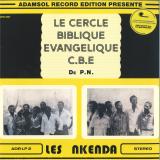
We’re proud to present the first-ever official reissue of Les Nkenda — a rare and genre-blending spiritual gem from 1982, originally released in the Republic of Congo by the Cercle Biblique Évangélique (C.B.E.) of Pointe-Noire and produced by Adam Julien Koubemba on the small Adamsol Record Edition label. Pressed in extremely limited quantities and virtually impossible to find for decades, Les Nkenda has become a “holy grail” among collectors of African music. Fully remastered from the original tapes, it returns on vinyl for the first time since its initial release. More than a reissue, this is a revelation — a powerful fusion of gospel, psychedelic groove, folk, soulful funk, and Afro-Latin rhythms. Recorded in Pointe-Noire, the album channels the raw spirit of 1980s Congo with vibrant multilingual vocals and rich, polyrhythmic textures. Both hypnotic and deeply emotional, Les Nkenda is music made without compromise — once lost, now revived for a new generation of collectors, diggers, and seekers of the extraordinary.

out of Stock

Order now and we will order the item for you at our supplier.


Last In: 8 months ago
Raúl Monsalve y Los Forajidos - SOL LP

Raúl Monsalve y Los Forajidos welcome listeners to a new day with SOL, their groundbreaking second album for Olindo Records. Venezuelan rhythms and traditional songs blend with spiritual jazz, psychedelic funk, and Afrobeat, delivering an exhilarating, boundary-pushing experience.
Led by Venezuelan bassist Raúl Monsalve, the group gained international acclaim with Bichos (2020), praised for its Afrobeat influences from legends like Fela Kuti and Orlando Julius, alongside Afro-Venezuelan rhythms. Featuring Luzmira Zerpa (Family Atlantica) and Betsayda Machado, the album earned praise from The Wire, Songlines, Gilles Peterson, and others, with airplay on BBC 6 Music, NTS, and Worldwide FM. This success brought performances at Super Sonic Jazz Festival and Shambala Festival.
SOL marks a leap forward for Los Forajidos, evolving from a studio project into a cohesive ensemble. Monsalve, now contributing bass, vocals, and percussion, is joined by vocalist Lya Bonilla, keyboardist Edgar Bonilla, flautist/guitarist Nando Guerrero, saxophonist Andrés Vela, drummer Mario Orsinet, and percussionist Yves Prud’homme.
The album features contributions from producer Nick Woodmansey (Emanative), singer Carlos Talez, mixing by Malcolm Catto (The Heliocentrics), percussionist Gustavo Ovalles, and Congolese guitarist Kiala Nzavotunga.
Drawing from Venezuelan traditions while embracing modern influences like George Clinton, Herbie Hancock’s Mwandishi, Jeff Parker, and Nyege Nyege Tapes, SOL bridges cultural heritage and forward-thinking artistry.

out of Stock

Order now and we will order the item for you at our supplier.


Last In: 14 months ago
MUSHAPATA - SABA-SABA FIGHTING

Mushapata

SABA-SABA FIGHTING

12inchAKUMS1002
AKUPHONE
20.10.2024

« A Fantastic mixture of Brakka, Reggae & Afrobeat Recorded between 1980 and 1984 from the underground Afropean boxer Mushapata »

“Saba-Saba Fighting” or fighting for peace, is the message that Mushapata, a legend of the African reggae underground scene in Paris with an extraordinary destiny, has fought for all his life.

Born in Bukavu, a city nowadays located in the Democratic Republic of Congo at the border with Burundi, Mushapata arrived in France at the end of the 1970s to pursue his career as a boxer. A few years later, revolted by the professional sports industry, he became a personal protection agent on the advice of his manager. He escorted many celebrities among whom Bob Marley during his legendary French tour of 1980. This encounter awakened the musician hidden behind the boxing champion. Mushapata had stepped out of the ring but he kept fighting with music, lyrics and his band Saba-Saba Fighting.

Ignored by the record labels of the time, his first self-produced recordings reveal a rough mix of lo-fi reggae, afrobeat rhythms accompanied by a brass section close to Free jazz. The nonchalant sounding voices of Mushapata and Tshayi complete this explosive cocktail and carry, in Swahili language, the Pan-African ideas of Lumumba and other great figures of African-American struggles.

This maxi single, conceived as a mini-compilation tribute, includes 4 titles from the first two albums recorded between 1980 and 1984. Limited edition!

pre-order now20.10.2024

expected to be published on 20.10.2024

Various - Kampire Presents: A Dancefloor in Ndola 2x12"

Strut introduces a pioneering new compilation 'A Dancefloor In Ndola,' curated by revered East African DJ, Kampire. This release marks an evolution in Strut's approach to compilations, showcasing emerging DJ talent from across the world and embracing an innovative approach to musical discovery from the next wave of selectors. Forging her reputation through memorable sets for the Nyege Nyege Festival in Uganda over the last decade, Kampire now tours worldwide and is celebrated for her brilliantly curated sets spanning the full range of African music styles from the ‘70s and ‘80s to the present day.

Although born in Kenya to Ugandan parents, Kampire spent her formative years in Ndola, Zambia. ‘A Dancefloor In Ndola’ is inspired by artists and songs that formed part of her soundtrack during that time. “It is important for me to continually reference Africa’s own musical history,” she explains. “At 17, I didn’t pick up on my Dad’s music but now I love and collect those records. I’m constantly referencing them in my music sets today. I love that feeling of shared nostalgia where people recognise a song they haven’t heard in a long time. It is a touchstone for me when I’m playing.”

The compilation flows through different East African and South African genres from Congolese rumba and soukous to 1980s township bubblegum and the rich guitar-led sounds of Zambian kalindula. “There are styles of music on the compilation which are often considered unsophisticated from rural areas. I and other contemporary African artists and DJs draw inspiration from them; it is part of what makes us ourselves.” Kampire also shines the spotlight on many incredible women in African music from the ‘80s, including Congolese legends like Pembey Sheiro, Feza Shamamba and Princesse Mansia M’bila to V-Mash and Di Groovy Girls from South Africa.

‘A Dancefloor In Ndola’ is released on 2LP and CD and features exclusive new edits by Kampire alongside personal liner notes tracing her links to the music. Cover artwork montage is by Canon Rumanzi and vinyl restoration / mastering by The Carvery
Debut compilation by one of East Africa’s leading new generation DJs, Kampire.
Mix of African classics and rarities spanning 1970s – 1990s from Congolese soukous, South African bubblegum and Zambian kalindula.
Shining the spotlight on women in African music Pembey Sheiro, Feza Shamamba and Princesse Mandisa M’bila.
Exclusive cover artwork collage by Canon Rumanzi.
Worldwide DJ dates supporting release during Summer and Autumn 2024.

out of Stock

Order now and we will order the item for you at our supplier.


Last In: 19 months ago
RATIGAN ERA - ERA LP

Ratigan Era

ERA LP

12inchHKLP49
Hakuna Kulala
26.03.2024

FRN Dancehall might have emerged in Jamaica, but over the last few decades the popular genre's tendrils have stretched out across the globe. In Kampala, Ratigan Era is adding a distinct Ugandan twist to dancehall, fusing it with East African humor and hyper-melodic afrobeats elements imported from Ghana and Nigeria. The versatile MC grew up listening to Jamaican music like Vybz Kartel, Busy Signal and Mavado - in his hometown of Kawempe there was almost no way to avoid it - and it blurred into the background, blending with local church music, US hip-hop and radio pop. He developed this diverse range of influences into a completely unique Afro-dancehall flow that simmers between Luganda, patois, Spanish and English, reflecting the melting pot of cultures and dialects that characterizes contemporary Africa. Ratigan broke out with a memorable feature on Pallaso's Ugandan hit 'Nsaba', a track that echoed throughout the country booming from nightclubs, motorcycle loudspeakers or from convenience stores. Now he's assembled his first album "Era", a furiously inventive interweaving of rubbery vocals and memorable chants backed by futuristic beats from Hakuna Kulala's most boundary-pushing producers. Congolese producer Chrisman takes the reins on 'Gorilla Attack', providing a downtempo groove that echoes recent Jamaican chop deployments from breakthrough artists like Skillibeng and Skeng. For his part, Ratigan ducks and dives between Chrisman's gqom-inspired low end womps and corrosive synths, commanding attention with his smart, dextrous flow and tongue-twisting lyrics.The Modern Institute and Golden Teacher's Richard McMaster handles 'Top Strike Force' leaving space in his wiry, minimal beats for Ratigan to flit between anthemic repetitions and ice-cold AutoTuned wails. On stand-out track 'Badman Style', Ratigan's guttural patois is measured against a dizzy trap-dancehall hybrid beat from HHY & The Kampala Unit's Jonathan Uliel Saldanha, aka Lithium Beats, while on the surreal 'Drop it Down', Japanese mad scientist Scotch Rolex brings out Ratigan's cheeky sense of humor with toytown bleeps and laser zaps. MC Yallah collaborator Debmaster appears on 'Gan Dem', meeting Ratigan's double-time raps with soundsystem destroying rolling subs, and veteran US noisemaker Kush Aurora sprinkles magic dust on 'Cool and Deadly', galvanizing the link between global bass mutations, Jamaica and East Africa.And despite the grab-bag of producers and inspirations, "Ratigan" is a strikingly coherent listening experience that accurately snapshots Kampala's colorful froth of sounds and phrases. Ratigan's outsized personality is welcoming and captivating, providing the sights, sounds and smells of the city with a frenetic rhythm that's as intimate and local as it is far-reaching. It might just be the future we so desperately need.

out of Stock

Order now and we will order the item for you at our supplier.


Last In: 15 months ago
TONN3RR3 X BIKAY3 - IT'S A BOMB LP

For a long time, the music of Congo-born Bony Bikaye had to be sought in the purgatory of "world music", where diamonds in the rough cohabited with bland nightmares of white dudes who froze rumba like fish sticks. Worse, they did put it on the menu, when so many longed to move on. Take Bikaye, who grew up listening to modern european music, digs Krautrock, struggles with tradition, obviously looking for trouble in the genre. In Brussels, he recorded a few albums with CY1 (Loizillon/Micheli), and brilliant defectors from Aksak Maboul, produced by Hector Zazou. Now it's up to french trio TONN3RR3 to take up the torch and build this project that proudly brags: "It's a bomb". Thought up at home by Guillaume Gilles (compo/keyboards), the album was finished at One Two Pass It studio, with Olivier Viadero and Gae"lle Salomon on percussion, Yoann Dubaud (machines & bass) and Guillaume Loizillon (synth of CY1 fame, and matchmaker of this affair). It's a deeply musical record, crafted by no-attitude reference players with nothing left to prove, and you can hear it. Floats well above the fray. "Keba na butu", beware. Indeed : beyond the simple pleasures of soukouss, or the rumba guitar riff that spins like a merry-go-round that skipped technical inspection, lie lush orchestrations. Freestyle, synthetic : something old, something new, something what-the- fuck-is-that-now. There's straight, there's syncopated, there's 808 and knee-jerk inducing bass patterns_with a vision. BIKAY3 plays his voice more than ever. His crazy vibrato has improved like hard liquor over the years. In "Zela" and "Balobi" in particular, he puts it to good use with flamboyant, Screamin' Jay Hawkins-style antics. He can also resort to pure storytelling : "La fore^t et les dieux", is a French-spoken excursion into the wild, moving along in grasslands of synths and percussion with TONN3RR3. A tale of gods and spirits, plain and simple. Nicole Mitchell brings the occasional flute in "Akei" for this trip in the bush of ghosts where lingala and kikongo rub with English and French. They saved "It's a bomb" for the end, a bastardized rumba, with rimshots that slap like a cool hand on willing skin. We're living in a golden age of reissues coming out in droves and satisfying our desire to catch up on our neighbors' musical heritage, but let's not miss the boat : it's now or never to listen to the music of the living. - Halory Goerger

pre-order now01.03.2024

expected to be published on 01.03.2024

Studio 1 - Roots Vol. 1

Studio 1

Roots Vol. 1

12inchSJRLP056
Soul Jazz Records
01.02.2024

This is the new 20th anniversary edition of one of Soul Jazz Records’ classic Studio One releases, now available as a one-off special blue vinyl very limited-edition pressing (2000 copies worldwide). 


Studio One Roots set the standard for Soul Jazz Records’ long-standing series of Studio One collections and features many of the classic artists from Clement 'Sir Coxsone’ Dodd’s mighty roster of reggae. This album includes Freddie McGregor, Willie Williams, Cornell Campbell, Alton Ellis, Devon Russell alongside some of the defining crack-session men groups of Jamaican reggae history – The Sound Dimension, Brentford All-Stars, The Skatalites, New Establishment and more. As ever the album is filled with a mixture of
seminal cuts and super-rarities from the vast vaults of 13 Brentford Road. 
Stand-out tracks include Alton Ellis’s Blackish White, a surreal and powerful Afro-centric dream, Count Ossie Nyabinghi and Rastafarian drummers genre-defying interpretation of Booker
T and The MGs ‘Meditation’, Willie Williams awe-inspiring versioning of the Skatalites seminal Rastafari anthem Addis Ababa and many, many more.
 This album has been fully digitally remastered, analog cut and packaged complete with the following: Original sleevenotes by Lloyd Bradley (author of When Reggae Was King),
compiled by Mark Ainley (Hones Jons), high-quality Soul Jazz mastering, wicked images of Count Ossie and the Mystic Revelation of Rastafari on the cover, and a rare image of Clement Dodd and musicians inside the studio at Studio One on the full colour inner
sleeves.
 “The music of this compilation is of a rare, rare beauty and is essential to anyone's reggae collection” All Music

pre-order now01.02.2024

expected to be published on 01.02.2024

Various - Mawimbi Vol.2 LP

Various

Mawimbi Vol.2 LP

12inchMWB023
Mawimbi
04.12.2023

Purple Color Vinyl

We are really proud to introduce a new release on Mawimbi Records: "Mawimbi, Vol. 2”. Its title is a nod to “Mawimbi, Vol. 1”, which was the inaugural release of our record label back in 2015. A new compilation, at last, after a decade of music activism and a handful of EPs and albums which have helped unearth some of today’s talents from the new global music scene (Onipa, Loya, Afriquoi, Raz & Afla). It stays true to the driving principles of our artistic direction: support upcoming artists, e ncourage the breaking down of musical frontiers, help make happen new encounters between electronic music and so-called “afro” music. While these encounters can now be witnessed anywhere in pop music’s current zeitgeist, from Beyoncé to South African’s vibrant amapiano scene, we think there’s still plenty to explore.

“Mawimbi, Vol. 2” truly feels like the culmination of a long path for our record label. Because it includes artists who have been actively contributing to the Mawimbi adventure over the years, and also because it’s another convincing testimony of the fruitfulness of this musical intuition we have so heartily been defending for the last decade. Indeed, the 8 tracks of “Mawimbi, Vol. 2” resist all the usual labels. They sound like they stem more from human encounters and artistic dialogues launched in the moment than attempts to be associated with any music scene in particular. Each of the 8 pieces of this compilation presents in a unique way the search for this cross-pollinating sound.

The compilation opens with a really engaging rework of James Stewart’s classic track “Cotonou” by Lyon-based tropical music enthusiasts Voilaaa, who took Peter Solo’s voodoo soul lines on a trip across the Black Atlantic beginning with a horn-heavy cuban cha-cha-cha before falling into a savory triple time dance. As tireless sonic adventurers, Amsterdam-based duo Umoja have brought back a handful of hits from their numerous trips to Kenya meeting with local benga musicians. “Avana Va” is one of their compelling tunes, featuring Kenyan musician and producer Sidney Simila. This urge to collaborate with musicians from across the African continent is also to be found in Village Cuts’ ever expanding discography. On “Sentima”, they showcase their trademark London funky sound, introducing us to the talents of Congolese guitarist and singer Kissangwa.

Afriquoi’s 2020 hit “Ndeko Solo” is presented in a brand new shape, sprinkled with some French Touch flavours. “Djansa”, by Toulouse-based producers Mr. Boom, rides a distinct South African-inspired groove, while inviting us to a nighttime dance by the Balearic sea. On “Silent Runner”, French producer and musician Ozferti moulds his own musical galaxy where East African scales meet cutting edge global club beats. With “Nabi Kumi”, Anglo-Ghanaian duo Raz & Afla delivers their deepest piece, once again inducing a state of trance with a triple-time beat and an hypnotic kora loop. Closing the compilation, “It's Holy” is a unique collaboration between Tom Excell (Onipa, Nubiyan Twist, David Walters) and Dizraeli, one of the most interesting voices in British rap, which by making connections between broken beat, jazz and african music, illustrates the precious mixture of musical aesthetics that make up the current UK musical landscape.

out of Stock

Order now and we will order the item for you at our supplier.


Last In: 6 months ago
KID CONGO POWERS & THE NEAR DEATH EXPERIENCE - LIVE IN ST. KILDA

Fans of the innovations and originality that sprang from the L.A. underground of the late 1970s and ’80s often ask, “What’s Paul B. Cutler been up to?” A vital participant in the Los Angeles music scene of that period as bandleader, songwriter, musician and producer, Cutler’s work—in particular his guitar playing— with The Consumers, 45 Grave, Vox Pop and The Dream Syndicate is still admired by fans and an influence on anyone interested in that period and the styles that developed from it. In 2014, “Ryan Adams contacted me and wanted to form a band. He loved 45 Grave, he wanted to do some goth / punk, whatever you want to call it. That’s right up my alley. He’s amazingly talented and inspiring to work with. We did that for a while, and I wrote a bunch of songs.” Enthused about his new material, Cutler continued recording songs with just his signature electric guitar style and vocals. As this was developing, another vet of the early L.A. scene—Brad Laner of Medicine and Savage Republic—got in touch with Cutler. Soon Laner was mixing, co-producing, playing keyboards as well as adding the rhythm section. The overall process took some time, with songwriting beginning in 2014. When reflecting on the music that comprises Les Fleurs, “To me, and it does not sound like it, but because of the philosophy I had while producing it, it’s punk. I come from the original punk, before it was a genre. Before it was a ‘sound.’ When I got to LA in 1977 there were about twenty, maybe thirty bands and they all sounded very different. The Screamers, The Deadbeats, so many different takes on what music could be. There was no chance for commercial success so we all just did what we wanted. I never stopped. So philosophically I consider this punk rock, made in its original spirit although nobody would recognize it as such. I am a punk to this day.” So that, dear reader, is the basic story. Now it’s up to you to see what you recognize in Paul B. Cutler’s Les Fleurs.

pre-order now28.04.2023

expected to be published on 28.04.2023

Spain - World of Blue

Spain

World of Blue

12inchSHIMMY2013LPC2
Joyful Noise Recordings
30.10.2022

Moody Blue Vinyl. RIYL: Codeine, Mazzy Star, Bedhead, Red House Painters, Low & American Music Club. Previously unreleased 16-track recordings that predates Spain’s 1995's landmark “The Blue Moods Of Spain". Includes original studio version of "World Of Blue" featuring Petra Haden on violin. Re-mixed and re-imagined by Kramer for Shimmy-Disc. The LP “World of Blue” features Merlo Podlewski on guitar. I first met Merlo in 1994. My sister Rachel Haden, who had been working with him at the Rhino Records store in Westwood, knew I was looking for a new guitarist for my band, and introduced us. Merlo is one of those guitarists whose playing is so smooth and effortless he makes anyone feel like they can play. He had an instinctual grasp of harmony and theory, which brought a great counterpoint to the technical knowledge and finesse of lead guitarist Ken. Spain played their first official L.A. gig with Merlo at a club called Pan, which shortly thereafter changed its name to Spaceland. We opened for Beck and That Dog. We played at Spaceland a lot and at other small clubs and coffee joints like the Troy Cafe (owned by Beck’s mom), Congo Square Coffee House in Santa Monica, Alligator Lounge, and others. At a certain point that year we were ready to record our first 7” single, and I reserved some time at Poop Alley. Poop Alley didn’t seem like the ideal recording setting. The walls and floors were made of concrete, and there was no soundproofing. The mixing board was in a loft up this steep staircase with no guard rails. But it worked somehow. On the particular day we recorded basics there was a rain storm which you can clearly hear in the background. The ceiling was so high there almost wasn’t a ceiling. A steep curving staircase with no guardrail led up to a loft area where the console was located, and next to it, on a custom-built, guardrail-less ledge, a queen-sized bed where Tom slept. I paid for the session with weed I grew in my closet. We set up and it started raining. Tom put a microphone outside. After tracking was finished, Petra came over and overdubbed violin. There was a cushioned area where I remember sitting during mixdown. We stayed good friends with Tom. We recorded a couple more songs with him the following year. Tom recorded lots of bands at Poop Alley. My sisters’ band That Dog, Beck, the Rentals, Rod Poole, Tom’s band Waldo the Dog Faced Boy, and many others. There were parties in the alley. There would be a keg of beer. Everyone was well-behaved. The most dangerous it got was when Kenny asked Beck if he was a Scientologist. I remember laughter and happiness the most from those parties. Not long afterwards Tom shut down the studio. Luckily for us, the tapes still exist. On those tapes are five songs, all of which are represented here. “I Lied” and “Her Used-To-Been” were released on the 7”, the remaining three have never been released before now. I can’t remember who I sent copies of the 7” to but shortly after it came out I got a call from an A&R executive at Geffen inviting me to their offices to talk. “I love your songs,” I remember him saying to me, “but my boss David Geffen won’t let me sign you because he doesn’t know how to market you.” Eventually a label that did want to sign us got in touch with me. Restless Records, they had decent distribution, so I said to myself, “Why not?”. This eventually led to the recording that produced our debut LP “Blue Moods of Spain”. Track listing: A1. Her Used-To-Been A2. Phone Machine A3. I Lied B1. Dreaming of Love B2. World of Blue

pre-order now30.10.2022

expected to be published on 30.10.2022

DJ Dextrous AKA King Of The Jungle - Charged

When you talk about the origins of jungle music, DJ Dextrous is most definitely cited as a name that helped define the genre. His tracks were always on heavy rotation on the mighty Kool FM and every Jungle/DnB radio station across the country. Dextrous VIP dubplate specials were weapons in the record bags of Micky Finn, DJ Ron, Kenny Ken and his old mate from school DJ Hype!

The 1994 Jungle anthem Charged was released on the ground-breaking Suburban Base Records imprint as part of a ‘King Of The Jungle’ Trilogy. Now updated for 2022 Charged gets a couple of fresh licks from two modern day jungle specialists, backed up with original and VIP exclusive versions, all packaged on a beautiful 12” vinyl picture disc.

First up are the mighty Serial Killaz who’ve taken the original track and applied their trademark, award winning sound which has seen them releasing on Congo Natty, Philly Blunt, Souped Up and their own self-titled Serial Killaz label.

Next up is AKAS who’s recent Old Skool New Skool track on DeVice spend almost 3 months in the Beatport Top 10!! AKAS keeps things jungle for his Charged remix but tweaks the elements and pushes the genre to have the maximum impact on any dancefloor across clubs or festivals.

On the flip is an original unreleased VIP dubplate version, sourced from the archives or Da Kings Of The Jungle studio DAT recordings, which DJ Dextrous was playing in his sets exclusively.
Finally we have the classic original mix of Charged which has been beautifully remastered from the original source recording to make this picture disc release sound as good as it possibly can.
This is an extremely limited pressing & will never be re-issued so we’d advise jungle aficionados, both new & old, to buy on sight!!

out of Stock

Order now and we will order the item for you at our supplier.


Last In: 46 days ago
Various - Crossroads Kenya: East African Benga and Rumba, 1980-1985

This compilation collects a number of 7" singles produced by Audio Productions Ltd. in Kenya's capital Nairobi in the first half of the 1980s and released on the Wendo, Lulus, Mlima and APL imprints. The bands featured on this release are the New Gatanga Boys, Ruwengo Bros Band, Banana Hill Band and Les Victoria 'C' Kings from Kenya, Les Moto Moto and Orch Les Volcano from Tanzania (the latter being led here by Charles Ray Kasembe after the death of the legendary Mbaraka Mwinshehe). The closing track is by Orch Zaituken Band, whose name is a contraction of the countries its members came from: Zaire (now Democratic Republic of the Congo), Tanzania, Uganda and Kenya. The group is emblematic of the Kenyan capital's role as a magnet for East African musicians seeking to earn a living by recording and playing live in the 1970s and 1980s.

No Wahala Sounds are proud to bring you this latest collection of rare 45s from the golden era of benga and rumba, which have never been released outside Kenya before.

out of Stock

Order now and we will order the item for you at our supplier.


Last In: 3 years ago
ETRAN DE L'AIR - AGADEZ LP

Etran De L'air

AGADEZ LP

12inchSSSSLP68
Sahel sounds
04.03.2022

Etran de L'Aïr (or "stars of the Aïr region") welcomes you to Agadez, the capital city of Saharan rock. Playing for over 25 years, Etran has emerged as stars of the local wedding circuit. Beloved for their dynamic repertoire of hypnotic solos and sun schlazed melodies, Etran stakes out a place for Agadez guitar music. Playing a sound that invokes the desert metropolis, Agadez celebrates the sounds of all the dynamism of a hometown wedding. Etran is a family band composed of brothers and cousins, all born and raised in the small neighborhood of Abalane, just in the shadow of the grand mosque. Sons of nomadic families that settled here in the 1970s fleeing the droughts, they all grew up in Agadez. The band was formed in 1995 when current band leader Moussa "Abindi" Ibra was only 9 years old. "We only had one acoustic guitar," he explains, "and for percussion, we hit a calabash with a sandal." Over the decades, the band painstakingly pieced together gear to form their band and built an audience by playing everywhere, for everyone. "It was difficult. We would walk to gigs by foot, lugging all our equipment, carrying a small PA and guitars on our backs, 25 kilometers into the bush, to play for free_ there's nowhere in Agadez we haven't played." Whereas other Tuareg guitarists look to Western rock, Etran de L'Aïr play in a pan-African style that is emblematic of their hometown, citing a myriad of cultural influences, from Northern Malian blues, Hausa bar bands, to Congolese Soukous. It's perhaps this quality that makes them so beloved in Agadez. "We play for the Tuareg, the Toubou, the Zarma, the Hausa," Abindi explains. "When you invite us, we come and play." Their music is rooted in celebration, and invokes the exuberance of an Agadez wedding, with an overwhelming abundance of guitars, as simultaneous solos playfully pass over one another with a restrained precision, forceful yet never overindulgent.

out of Stock

Order now and we will order the item for you at our supplier.


Last In: 3 years ago
Kapingbdi - Born In The Night LP

Kapingbdi came together in Liberia, West Africa, during the late 1970’s and had their own unique style. This six to seven-piece band played original compositions in a vibrant mix of African Rhythms, Soul, Spiritual Jazz, Funk and Rock. Led by Kojo Samuels on sax, flute and vocals “Born in The Night” presents the essential tracks from their rare studio LPs produced between 1978-1981. The work has been carefully edited and remastered in 2019 for vinyl LP and a 6-Page Digipack CD, which includes two additional recordings. Kapingbdi toured through Europe and the U.S. and were the only Afro funk band to ever come out of Liberia.

Kapingbdi hail from Liberia, West Africa and have their own imitable style. They effortlessly combine traditional African music in a modern mix of Jazz, Funk, Soul and Rock. The band is a fusion of the old and the new.

The word "Kapingbdi" is taken from the Sierra Leone language Mende and means "born in the night". Kojo Samuels was given the name by his Latin teacher whilst attending high school in Freetown, They often meet and debate at night in the city and soon after Kojo is called Kapingbdi. The name serves as a description of his origin. Born In Lagos, Nigeria in 1943. The son of slave children. His mother from Nigeria and father from Sierra Leone who moved the family to Liberia, during the 1950’s.

Kojo has played music for as long as he can remember. He starts with the harmonica and later becomes a drummer and percussionist in his first band at school. During his art studies 1965-1972, he tours Germany and works as an art teacher in the USA. His band Kapingbdi is reorganized five times and consists of up to seven musicians. In a VW-Bulli he drives the group from concert to concert and if the drummer fails, he jumps in himself. Between 1978 and 1981 three Kapingbdi LPs are produced for the independent label Trikont, recorded in Hamburg and Munich. During this creative period, the band plays at festivals in Africa and Europe. In 1984, the band tours the United States and shortly after, they came to an end.

At their best, Kapingbdi would rouse the audience with original compositions like "Human Rights", justice for all, especially for South Africans, and "You Go Go You Go Come". The officials and employees in the government departments have no time for the common man, for any questions such as job search, scholarship or similar, he receives the answer "go, come back tomorrow" and the same thing the following day. Or "Now Is The Time For Cry For Love." Now it is time to scream for love and finally, time for humanity and justice. Despite immense difficulties, the musicians consciously live and work in Africa and are at home in Liberia.

On April 12, 1980, ordinary soldiers and non-commissioned officers organize a coup against the government. This is an attempt to put an end to a policy of exploitation of the Liberian people. Whilst efforts to eradicate poverty, lawlessness and illiteracy are obvious throughout the country, Liberia is still Americanized to a high degree. This is evident, as the radio programs of that time almost exclusively played American disco music. Under these conditions, the people seek a reconnection to their folk music, and Kapingbdi were aware of this. Kojo tried many times to come together with traditional Liberian musicians. This passion takes him north of the country. Meeting and playing with the old hornblowers and playing music on traditional instruments, such as the elephant tusk.

Kapingbdi make high quality tape copies of their own vinyl LPs and patiently try to displace all unauthorized tapes from the domestic "market". Nevertheless, it is hard to make a living through music in Liberia. Kapingbdi, is now celebrated. The radio plays are in abundance, but royalties are not forthcoming. Their musical link is the feeling of Afrobeat and Highlife, which is found in each of the many Kapingbdi pieces. They embody Jazz, which is understood to be the most refined example of black music outside of Africa. In Liberia, Jazz is virtually impossible to hear. Bright shining names such as John Coltrane, Charlie Parker or Miles Davis were widely unknown. Thus, the Black Jazz, including its Back-To-Africa movement of the 60’s and 70‘s, passes by without leaving a trace in Africa itself.

Kojo's claim at the time, was to make African music with the depth, sensitivity and the freedom of the technical level of Jazz. This makes Kapingbdi the torchbeares. The underpaid prophets in small Liberia. It is the passion with which the founder of the band continues to work on their music for years. Tirelessly, stimulating and encouraging his fellow musicians. This is ultimately responsible for the success of Kapingbdi in Liberia itself. The local audience seems to listen to the band in fascinated astonishment. One wonders about the ability to develop as demonstrated by Kapingbdi on the basis of their music. It is African and unusually jazzy, danceable and better than the American disco music heard on the radio.

Rather than chase the money and the job opportunities in Europe, Kapingbdi are firmly rooted in Africa. The musicians live in Monrovia, the capital of Liberia, at the Kabingbdi workshop, located in the Congotown area on the eastern edge of the sprawling city. Kojo works here as a sculptor, painter, batik artist and musician. The sales revenue that his activities generate, gives him the opportunity to support the development of African Jazz music. The highest percentage of funds are from Germany and Kojo’s work ethic is “to work on your own thing“. The stance taken aims to support the welfare of Liberians and Africans. The other musicians of the group live in a second house that is nearby.

For the sake of consistency, Kapingbdi is a full-time band. However, the revenue, from all of the sources, could not keep them afloat. Equally, as important to the group are Kojos's knowledge of traditional African music and his sculpting skills. His knowledge is shared with others at the afternoon workshops. It is here that they discuss new lyrics, engage in political debate and the self-imposed task of improving conditions in Africa. At times the debate became heated, especially during rehearsals. This was regarded as good and integrative, sowing the seeds of innitiative to keep the band together.

From 1980 to 1985 Kojo also opened and ran the club "Panjebota", located on the grounds of the U.S. Consulate in Monrovia. Almost every evening Kapingbdi perform the song "Wrong Curfew Walk", whose lyrics lament the killing of citizens during the curfew imposed by the Liberian government. When the head of state Samuel Doe hears the song, he behaves agressively and forces Kojo to close the "Panjebota". Kojo had already moved on. Soonafter he meets Fela Kuti at the Africa-Festival and plays concerts in Germany with Cecil Taylor's workshop band.

Kapingbdi is for thinking, dreaming, dancing. What they sing about is what they have experienced. Kojo Samuels is 76 years old today and still follows his vocation as a critical musician, artist and activist.

Ekkehart Fleischhammer / Sonorama 2019 (with the help of original press sheets and the memories of Kojo Samuels)

out of Stock

Order now and we will order the item for you at our supplier.


Last In: 4 years ago
KASAI ALLSTARS - BLACK ANTS ALWAYS FLY TOGETHER, ONE BANGLE MAKES NO SOU

This 4th full-length album by the legendary Congolese collective marks a new milestone in their already rich history, as the band have incorporated their own approach to electronic music into their new compositions. The album was produced by guitarist Mopero Mupemba, who also wrote about half of the songs. Mopero also took care of the often intricate programming, which is perfectly adapted to Kasai Allstars' peculiar rhythmic patterns drawn from traditional trance and ritual music. The album features Kasai Allstars mainstays such as vocalist Muambuyi (whose voice and personality inspired the making of multi-awarded feature film Félicité), vocalist and electric likembe player Kabongo, powerful singer Mi Amor, and instrumentalists Tandjolo and Bayila. Wonderful young vocalist Bijou makes a notable first appearance on several tracks. As is well-known by now, Kasai Allstars was born from the reunion of five bands, all from the Kasai region, but originating from five different ethnic groups whose diverse musical traditions were thought to be incompatible until these musicians decided to pool their resources and work together, an inspiring example of collaboration transcending ethnic and language barriers. Ever since the debut release in 2008, Kasai Allstars' music struck the imagination of music lovers and artists worldwide. They're particularly admired by avant-indie rock, electronic & hip hop musicians and media, who consider it as a kind of "primal rock", an accidental blend of trance and avant-garde. They're admired by artists such as Saul Williams, Questlove and Björk, have engaged in live collaborations with Deerhoof, Juana Molina and Konono Nd1, and have had their tracks remixed by the likes of Animal Collective, Deerhoof, Aksak Maboul, Jolie Holland, Shackleton and more.

pre-order now07.05.2021

expected to be published on 07.05.2021

Los Jaivas - Los Jaivas (Aka El Volantin)

Vinyl reissue of the now classic 1971 album. Produced by Transamericas in collaboration

with the band from original master tapes, in a fully analog process at recording studios in María Pinto

(Chile), London and Haarlem (Holland).

Los Jaivas (“El Volantín”) is the first LP by Chilean rock band Los Jaivas, one of South America's biggest names in the fusion of folk roots and psychedelia during the 1970s. Los Jaivas were born in the city of Viña del Mar, with their five members determined to guide their initial sound through improvisation and experimentation, «trusting that in time a language would emerge that would give us our identity», in their own words.

This debut album (popularly known as El Volantín - The Kite -, because of its cover illustration) combined the free-flow of extended electrical pieces with more conventional three-minute songs filled with references to Chile's popular culture and the musicians’ own upbringing. Theirs was a solitary path, not just for the band but also for the beginnings of Chilean rock. Los Jaivas blazed a trail that was rich in musical references, with ideas inspired by Jimi Hendrix, the Congolese Missa Luba, Argentinian folk (Atahualpa Yupanqui, Ariel Ramírez), South American avant-garde composers (Ginastera, Villa-Lobos, Violeta Parra), the experimentation of pianist Henry Cowell, Caribbean rhythms and Miles Davis’ trumpet re-inventions.

out of Stock

Order now and we will order the item for you at our supplier.


Last In: 5 years ago
PURA VIDA - PRAYING FOR THE ANGELS

"Lost Ark Music" proudly present to you another labour of passion "Praying for the Angels" by Pura Vida. 'The heart of the Last Ark' is beating on the riddim of the drums" ... Play it loud!

"Crawling" is about Puraman's personal struggle in life (...) trying to blend a stepping, jazzy reggae groove with some psychedelic stuff, Pieter De Naegel & Mathieu Vilain provide some "Last Ark Fyah Horns". "Song to Bob" is Puraman's tribute to Bob Marley, with a haunting Bassline provide by Aston "Familyman" Barrett, Orginal Wailer (...) His son Aston Barrett Junior hits the drums like Lightening!

"When the right time come" was recorded in an oldschool fashion, Recording the riddim in one take (...) Puraman on Vocals and Guitar, Boris Perck on the bass, Xan Albrecht on the drums, Wouter Rosseel on Lead Guitar. Bos Debusscher provides a wicked synthline!
Are you ready?

"Pretty Stranger I wrote this song for you... You shurely look like danger but that's what I like about you". Pura Vida goes Psychedelic Rock (...) "Les Eaux Sauvages" is a Love-Song with the Wonderfull voice of Nina "Vitalia" Schelfthout!

"O sopro de Inae" features the warm voice of Alessandra De Queiroz...Straight from Brazil she came to the Mare Altar forest under the guidance of Maarten Rosa in search for the "Arka Perdida".
This song has Portugese Lyrics, praying for the Spirits of Iemanja and Inae (...) The Spirits of the Ocean! "Find a way Home" is a Soultune features Alessandra De Queiroz!

The Title Track "Praying for the Angels" is another combination of Puraman & Alessandra's voice. In a Sixties Psychedelic Spirit (...) Singing about the Lost Souls dwelling the streets of the Ancient City! It was recorded on Puraman's Birthday (...)

"And the lights of the city, drive them crazy. And there's nowhere to run (...) And they're praying, hear them praying for the Angels...".

"Blessings from the Last Ark" features the amazing voices of Roydel "Ashanti Roy" Johnson, Derrick "Watty" Burnett & Kenroy "Tallash" Fyffe from 'The Congos'. Ashanti Roy provides the Bassline and Percussion. Watty & Tallash provide extra magic percussion. Puraman on Vocals, Melodica & Guitar. Pieter De Naegel & Mathieu Vilain play humble and bright on this Deep Roots Tune. Blessings from the Ark. Beyond Time & Space (...)

"Ancestor Spirit Dance" is an Afrobeat inspired tune features the voice of Puraman's Great-Grand-Mother Mathilde Spruytte, who
was a local folk singer.

out of Stock

Order now and we will order the item for you at our supplier.


Last In: 5 years ago
Myele Manzanza - A Love Requited - The Remixes

Following on from Myele Manzanza's acclaimed 2019 jazz album, 'A Love Requited', we have a 2020 addendum to that project; an EP of remixes by a set of diverse musicians from all corners of the globe.

Detroit legend Theo Parrish starts off the proceedings. Theo & Myele have previously worked together on various projects over the years, such as with live outfit, The Unit, whilst Myele's 'Surgery Session' of Theo's track 'Moonlight' was picked up by The Vinyl Factory last Summer as well. On his remix of 'Itaru's Phone Booth', Theo maintains the tempo & structure of the original track, whilst tempering the horns and adding some spaced-out keys & a little low end theory to the equation, making this a flip seasoned with Theo's unique flavour.

Mark de Clive-Lowe follows with the most uptempo track on the EP, a delightful bruk refix of 'Big Deal'. Fellow New Zealander, regular collaborator (notably on Manzanza's sophomore album 'OnePointOne') and hugely respected musician in his own right, MdCL delivers a hefty groove direct for the clubs; heavy drums & sci-fi synths lead the way atop of the original's powerhouse horns, switching up with some MAW-esque 4/4 tribal business to close out.

Cardiff's finest, Earl Jeffers & Don Leisure, aka First Word label-mates Darkhouse Family, kick off the flipside with their take on the appropriately titled 'Family Dynamics'. Fresh from their solo & combined projects (producing for Kamaal Williams, running house label Melange, and creating beat-tapes like Halal Cool J & Shaboo), the duo turn out some punchy boom-bap vibes which pulsate throughout the track, accompanied by some sweet vocal hooks, transposing the original into a plucky heads-down neo-soul tinged stomper.

Borrowed CS is another New Zealand artist that's been bubbling away in the underground NZ electronic scene for several years now, as a DJ and a musician. He ends this selection of remixes, taking the original jazz components of 'Pencarrow' and transforming it into a synth-boogie lead piece of brooding broken beat - a 'Clear Path Depiction' even.

Released on Worldwide Award-winning UK label, First Word Records, the original album was also co-produced by another antipodean label-mate, Ross McHenry, who released a new album recently.

The son of a Congolese master percussionist, Myele Manzanza's roots in jazz and African rhythm are well established. Adding his long-time influences of hip hop and dance music into the mix, this EP exemplifies his approach to fusion, and his persona as an ever-evolving artist, drummer & composer. Since his days as part of Electric Wire Hustle, he had his debut release on BBE, has released three solo albums, and done tours & collabs with folks like Jordan Rakei, Miguel Atwood-Ferguson, Recloose & Amp Fiddler. Since moving to London from New Zealand late last year, he has already shared stages with Hiatus Kaiyote, The Bad Plus & Alfa Mist, rocked The Jazz Cafe & Ronnie Scott's, and ably demonstrated his DJ side-hustle chops at stations like Soho Radio, Worldwide FM & NTS, as well as behind the decks in a few danceries across the capital, and behind his drum kit daily.

Already hard at work on brand new material, expect to catch Myele Manzanza live at various shows & festivals across the UK & Europe this coming Summer.

'A Love Requited - The Remixes' is available on 12" vinyl & all digital outlets from March 6th 2020.

out of Stock

Order now and we will order the item for you at our supplier.


Last In: 5 years ago
Léve Léve - Sao Tomé & Principe sounds 70s-80s

"The two Portuguese-speaking African islands of Sao Tomé & Principe, located in the Gulf of Guinea, created an unique music called Puxa : a refined mixture of various musical components from both sides of the Atlantic Ocean. A blend of Semba, Merengue, Kompas, Soukouss, Coladeira patterns, often pushing forward with a voodoo-like energy, solid bass lines, delicate melodies and backing harmonies of the rich Sao Tomean melodic traditions. Very first compilation focusing on the golden age of these island’s sounds, the 16 tracks selected will surely set fire on all dance floors !

Léve-Léve is the first ever compilation devoted to music from São Tome and Principe, two small islands situated off the coast of Gabon in central Africa. The album unravels a story of liberation where the music of Africa, Europe and the Americas unify with a carefree spirit personified by a phrase the islanders use all the time: “léve, léve” (“take it easy”). With echoes of Angolan semba and merengue, of Brazilian afoxê, of coladeira from Cape Verde and dance music from the Caribbean, it is a sound fiercely proud of its island heritage, sung in local dialects and using distinctive local rhythms.

On this record you can hear the cultural and social history of São Tome and Principe, and how live music represented its beating heart. Once known as the “Chocolate Islands” (remarkably, these two tiny islands were the largest cocoa producers in the world, though now this title acts as a reminder of its colonial past), through the years leading up to independence from Portugal, music would be a fundamental voice of liberation and conviviality. Os Úntués were one of the first groups to make an impression, releasing a couple of 7 inches in Angola – the litmus test of success for any of the islands’ groups. They united unique rhythms and dances like socopé, puita and dança-congo – borne from the islands’ largely slave-descendant population – with the sound of pop music beamed in on the radio from Europe, even adding in a little bit of soukous and Brazilian instrumentation. Their main rivals were Conjunto Mindelo, who fused São Toméan rhythms with rebita, an Angolan style, to create high energy puxa, a truly original island rhythm.

From the mid-1970s, coinciding with independence from Portugal in 1975, the islands’ groups featured an even stronger African influence and nowhere was that more apparent than with Africa Negra. They would listen to the latest records from Gabon, Zaire and Cameroon, taking inspiration and trying out phrasing from the greats of Central African guitar playing, developing a devoted fan base off the islands, as well as on. A score of other bands would follow a similar musical path, with a few getting their dues overseas in Angola, Cape Verde, Portugal and across Africa.

Os Leonenses (led by the iconic Pedro Lima), Conjunto Sangazuza, Sum Alvarinho and Conjunto Ecuador were just some of the other bands that formed a lively home-grown music scene that lit up the islands’ bars and open-air shows from the 1950s through to the mid-90s. Regardless of class or age, they were responsible for keeping the population entertained come the weekend, with Sunday matinee shows the highlight of the week, the music not stopping from midday until midnight.

As a Portuguese island colony that was for many years populated with slaves brought from Africa, São Tome and Principe has much in common with other Lusophone countries and boasts a richly complex and idiosyncratic musical DNA. Whilst the musical tapestries of Angola and Cape Verde are well known, São Tome and Principe’s secrets were assigned to the islanders themselves. Until now."

out of Stock

Order now and we will order the item for you at our supplier.


Last In: 6 years ago
Various - Rocket Girl 20

Various

Rocket Girl 20

BooksRGIRL120
ROCKET GIRL
01.03.2019

Book/ Cd/ 7''/ Flexi

There are still precious few women at the helm of record labels, let alone Indian women, but Vinita stands out as a proud anomaly... a champion of the underdog, an underdog herself, a surrogate mother to unsung musicians, a relentless workerbee, a fan, a carer, a catalyst...' (Richard Milward, from the Rocket Girl 20 book)

2018 marked the 20th anniversary of Rocket Girl, one of the most eclectic and resilient small independent labels in the UK, steered single-handedly by Vinita Joshi. To celebrate this milestone, in March 2019 Rocket Girl will release a very special collection of music and literature, comprising a 16-track CD compilation of Vinita's artists past and present, a collectable 7' and flexi disc, exclusive Anthony Ausgang print, full 20 track download, plus a strikingly illustrated 70-page hardback book uncovering the history of the label.

Based on extensive interviews with Vinita, with contributions from many of her bands (Füxa, God is an Astronaut, Coldharbourstores, Pieter Nooten), the book's text is written by Faber author and long-time Rocket Girl supporter Richard Milward. Beginning with Vinita's formative years in Rugby in the 1970s and 1980s, the story covers not only the eventful history of Rocket Girl but also Vinita's teenage initiation into the music industry: managing The Telescopes, founding Ché with Nick Allport out of the ashes of Cheree, before finally going it alone and setting up her own label in 1998. It is both an inspiring and bittersweet tale. Vinita's staying power alone in such a challenging industry is worthy of its own tribute: she has built a record label on her own terms from scratch, she has overcome the loss of loved ones, survived a breakdown at the height of her label's popularity, and all in all her immense love of music, her strength and positivity in the face of adversity blazes throughout the book. Along the way we learn of the hits (and why Kurt Heasley's vocal cords seemed to be malfunctioning during the Lilys' Top of the Pops appearance), the near-misses (including a never-before-seen letter from Richey Edwards of the Manic Street Preachers), the triumph of Vinita's first self-released LP A Tribute to Spacemen 3, her heartbreak losing Jason DiEmilio of The Azusa Plane in 2006, plus sad revelations concerning Television Personalities' Daniel Treacy's condition following his brain trauma in 2011...

Regular Rocket Girl designer Xiaofei Zhang has been given access to Vinita's vast collection of personal photographs, letters, flyers, press clippings and other keepsakes, arranging these alongside the text to give the book the feel of a technicolour scrapbook, a vivid chronicle of indie music past, present and future.

As Milward writes: 'The artists Vinita has worked with over the years are undisputed luminaries of alternative music, and stand up to any major indie label's roster: Spacemen 3, The Telescopes, Bark Psychosis, Disco Inferno, Lilys, Low, Bardo Pond, Mogwai, Cocteau Twins' Robin Guthrie, My Bloody Valentine's Kevin Shields, Patti Smith, Jonathan Richman, Television Personalities, to name just a handful.' Likewise, the artists featured on the accompanying CD compilation reveal just how far-ranging Vinita's taste is, and how loyal her bands have been to her over the years. The disc opens with a special 'Rocket mix' of Silver Apples' 'Susie' - the band that adorned the A-side of rgirl1, the label's first 7'. From here, there are cuts from Rocket Girl stalwarts like Füxa and Bell Gardens, as well as tracks contributed by friends and supporters of the label, such as Andrew Weatherall and Mogwai. Arguably the most notable track (certainly the most poignant) is the Television Personalities' 'All Coming Back', one of just a few unreleased songs recorded before Treacy's accident, and released here with Daniel's sister's blessing.

Vinita began her career selling Loop/Telescopes flexi discs on New Year's Eve 1988 and, in homage to this bygone format, she has included a 7' flexi (featuring 'Fight For Work', an outtake from Mogwai's most recent LP, Every Country's Sun) as well as a standard 7' bringing together rare tracks from two Philadelphia bands she has championed since their formation: Bardo Pond and The Azusa Plane. The three discs are housed in pockets found in the book's inside covers, and there are yet more gifts: an exclusive print by Anthony Ausgang (the instantly recognisable artist behind MGMT's Congratulations and Füxa's Electric Sound of Summer covers), plus a free download code for all tracks featured across the various formats of the collection.

Vinita's story is anything but ordinary, and this extraordinary collection is the most fitting tribute to the label's legacy so far: a treasure trove of rare tracks and unheard stories for Rocket Girl devotees, a comprehensive introduction to the label for the uninitiated, and both an inspirational chronicle and cautionary tale for anybody interested in the history of British independent music in the past thirty years...

pre-order now01.03.2019

expected to be published on 01.03.2019

Elaine Kibaro - Fajrann

Elaine Kibaro

Fajrann

7"-VinylERC067
Emotional Rescue
02.11.2018

Emotional Rescue returns to the music of Elaine Kibaro with a special 7" single to accompany the Pour L'Amour album collection (ERC066). Here then are two bonus versions of songs from the LP with a unique Arabic recording of her "hit" Aurore and also, the previously unreleased on vinyl instrumental version of her balearic / boogie jam, Ne Doute Pas.

Having moved from Tunisia to France at the age of 13, Kibaro's duel sensibility has long been apparent in her music and performance. The early success of her debut 7" De L'autre Cote Du Miroir in 1977, was soon followed by her most 'successful' song in Aurore, first released as a 7" in 1978, before appearing again as 9 minute extended version on the 1979 Miroirs LP.

In the same year she recorded a special 7" single on the little known World Music label. Singing the lyrics in Arabic - renamed here to its true translation - much else remained the same. The music of the original, the spoken intro soon gives way to what is essentially a leftfield disco groove, with building strings, funky bass and some late archetypal 70s Euro drumming. Atop this the vocals are delivered in Kibaro's ubiquitous chanson delivery, her heartfelt singing, the congos breakdown and then chorus, as the songs builds, all lead to head-nodding smiles all round.

With this is Ne Doute Pas. A stand out from Pour L'Amour, the vocal version appeared in 1989 as a single and on the now sought after, Kiroel album. This instrumental simply let's the music shine. A Linn rise and fall bassline, soft, layered keys and mode horns are run and rerun in a catchy, incessant flow like a PWL demo. The 10 years between the 2 tracks is apparent in the instrumentation but the link between the two - Kibaro herself - is clear and worth enjoying for that.

out of Stock

Order now and we will order the item for you at our supplier.


Last In: 6 years ago
Mad Professor Meets Jah9 - In The Midst Of The Storm

"In The Midst Of The Storm" brings together two exceptional talents and two generations of reggae musicians. Jah9's previous release "9" was critically heralded as one of the most re-freshing reggae albums of 2016. And now, fans will get the fully de-constructed, dubwise version of the album with nine newly recorded dub sessions from the legendary dub master, Mad Professor. He's renown for hundreds of productions with the who's who of jamaican veteran artist like i.e. Lee Perry, U-Roy, The Congos, Horace Andy, and did also great dub re-mixes for Massive Attack, Sade, Depeche Mode, Grace Jones and many more. This release marks the first Mad Professor title with VP Records as well as the first commercial recording of Mad Professor and Jah9 together. The press and media coverage will include interviews with Mad Professor and Jah9. The great original cover illustration is by artist Richard Nattoo!

out of Stock

Order now and we will order the item for you at our supplier.


Last In: 7 years ago
Kalbata & Mixmonster - Congo Beat The Drum

The world of roots reggae & dancehall has been fully awoken to the fantastic analogue sounds of Kalbata & Mixmonsters' music - and even Rob Da Bank, Robert Elms, & Toddla T and The Wire magazine have supported and enthusiastically raved about their brand new yet wonderfully old school music.

And now - in time for summer festivals and carnivals, the floor shaking, speaker rattling track Congo Beat The Drum featuring Major Mackerel gets the 12 inch single treatment. The pounding drums and the larynx busting vocal performance from the Jamaican veteran is an unstoppable, unforgettable and frankly mesmerising experience!

Released alongside the original (and an instrumental version of stand out album track Out Of Road) is an amazing remix by Kahn - the Bristol based producer, renowned dubstepper, remixer, member of the Sureskank Collective - who with this remix displays his mastery of blending all kinds of styles, and injects his remix with some of his favourite influences - including Middle Eastern music scales - which ensures his reworking of Congo Beat The Drum is fresh, original and inspiring.

This single will be one of the sound system hits of summer 2014!

out of Stock

Order now and we will order the item for you at our supplier.


Last In: 11 years ago
Kosme - April Moon

Kosme

April Moon

12inchTHEMA037
Thema
28.11.2013

With France's long-fallow club scene back in international resurgence as Paris storms back into fighting form, Europe now has found a new source for yet-unheard music. It was a long time brewing, but names like Concrete, Katapult, Zadig, and Society of Silence, have begun to appear in the international clubbing circuit, and the growth is not limited to the capital. Further south in Lyon, a city quickly gaining its own renown for busy club parties booking bigger names, there exists a smaller circle of energetic operators whose name is also spreading rapidly and whose recent accomplishments include Nuites Sonores, Boilerroom and more. Spearheaded by Kosme, a DJ and producer of quickly increasing notice, the provincial powerhouse has already turned heads throughout France as Kosmo's Caramelo Records was snapped up by legendary Parisian distributor Syncrophone; he has a new label set to launch in 2014. It is with this background in mind that THEMA proudly offers Kosme's international debut, the 'April Moon' EP.

Kosme comes to the table with six tracks of low-slung Detroit-referencing house music laced with extra grit. 'Fondamental' rides shuffling hats and a building acid line to dramatic heights. 'Ever Shake My Mind' is slower and dirtier yet, with crushed hats and a bottom-lurking bass between Theo Parrish-esque drum-machine-down-the-stairs breakdowns. After an interlude, 'Mothafunka' resumes the beatdown with a talkover house track that escalates uncontrollably in intensity as drums shuffle before breaking down in congos & pads. 'Deep Function' dials down to sexier sounds with sultry vocal samples and sampled hiss, but it doesn't lose the drum kink. Finally the digital bonus 'A Thought for Yvonne' is the most subdued and skeletal of all with echoed drums and a lonely bassline tumbling over each other in slow motion.

Following the explosion of new sounds from the capital, it is no surprise to find the movement spreading, and THEMA arrives first with the freshest France has to offer.

out of Stock

Order now and we will order the item for you at our supplier.


Last In: 3 years ago
  • 1
Items per Page:
N/ABPM
Vinyl