Search:jan johnson

Styles
All
Dennis Bovell - cLOUD mUsIc (LP)

A heavyweight library record delivered straight from the Gods; truly, we are all blessed: Dubmaster Dennis Bovell presents cLOUD mUsIc. A miraculous set of loose limbed, slinky funk-forward dub on the A-Side with totally blunted, spaced out trippiness on the grooving versions gracing the flipside.

A pioneer of dub and progenitor of lovers rock, genius producer-arranger Dennis 'Blackbeard' Bovell's prolific and eclectic career encompasses a huge range of music: from dub poetry to lovers rock, afro-beat to post-punk, disco to pop and beyond.

His production work encompasses such diverse figures as Ryuichi Sakamoto, The Slits, Fela Kuti, Linton Kwesi Johnson, The Pop Group, Janet Kay, Saada Bonaire, Orange Juice, Golden Teacher, I Roy, Maximum Joy, Steel Pulse and more.

cLOUD mUsIc features 8 new, deep, never-heard heaters, initially created for upstart UK library label FOLD. Dennis had written some music under the influence of Cloud-watching and presented it to FOLD with a view to them presenting it as Library Music to be utilised by anyone interested in having music for incidentals, films, TV and advertising etc.

cLOUD mUsIc represents Dennis expressing himself freely and inviting others to join and express themselves. As Dennis explains: "Library music is what makes the difference between creating for specific reasons and creating for your own individual enjoyment. cLOUD mUsIc was created whenever I felt the urge to create music that I wanted to, with no pressure. It was recorded at various times and in various studios around the world with various musicians’ assistance. Much sonic indulgence with many different recording devices."

Who doesn't like the sound of that?

In Stock

On Stock and ready to ship

James Din A4 - Never Look Back

here may still be electronic music artists in this age of overflow and convenience who follow their own artistic vision regardless of what attention it might bring, if any. With an output that shows individualism, ideas and a signature sound. An ongoing creative process, uncompromising and adventurous, even eccentric, with results of consistent quality and determination. Dennis Busch aka James Din A4 is an archetypical example for this type of artist. He flooded the scene with releases in the 00s with numerous monikers, mostly on his own Esel imprint, and they were all great. On the outside you had his singular artworks (he is also a very accomplished collage artist) and quirkily humorous titles, and on the inside you had his music, also seemingly informed by a collage approach (only with samples), managing to sound focussed and out of focus, often at the same time. If you listen to a James Din A4 track it probably is simultaneously playful and disciplined. Anything can happen, and a lot if it actually does.

For quite some years, music releases by James Din A 4 were scarce. Jan Jelinek, an ardent fan, re-interpreted some of his favourites from the vast back catalogue as an album in 2014, then ten years later the album „Ins Licht“ appeared, and it quite nonchalantly continued what seemed to have stopped, right on the same level of greatness. And now we know that it still continues, as the label Live At Robert Johnson releases the new album „Never Look Back“. Its title should not be taken too literally, as all the trademarks of his musical legacy are perfectly intact. You will find the light and air that seems to seep through the sounds, the frisky structural details, the jolly melodies, the subtle deepness, the minimalistic yet not too strict grooves.

But do not be mistaken, this album is not looking back too much, of course. After all, this is music that is still evolving. Let’s hope for more glimpses of James Din A4‘s special and spacious world, they are ever
needed.

In Stock

On Stock and ready to ship

Lauer - Law High

Lauer

Law High

12inchWTF001
Way To France
15.12.2023

The first outing of the new label Way to France records, born in Leipzig and raised in Cologne (including an extra long puberty), comes from none other than Robert Johnson legend Lauer.
The title track Law High heads straight for peak time in classic Lauer style between synth-pop, wave and house. Extraordinary DJ Charlie from Berlin transforms Law High into an analog-sounding EBM-Italo stomper with her first remix ever.

On B1 Lauer shows his other side with Enso: Techno Soul in the melody-man manner. Enso got the remix treatment from Leipzig's highly talented Janthe, who (another remix premiere) pulls off a modern, froggy, timeless version that's playable on any occasion. WTF Records headquarter is more than proud (and happy) to have so much talent on their versatile catalog number 001.

In Stock

On Stock and ready to ship

Tyneham House - Tyneham House LP

Back in 2011 when I was tentatively looking for a second release for my fledging record label Clay Pipe Music, I stumbled upon a mysterious MySpace page by a group called ‘Tyneham House’, the page was decorated with artwork by Rena Gardiner (who was unknown to me at that time) and the music was an otherworldly mix of field recordings, Mellotron and acoustic guitar. It turned out that Tyneham was promised to Glen Johnson’s Second Language label, so I offered to do the artwork, and in January 2012 the two labels co-released it on tape and CD in a cardboard box with a handmade booklet of my illustrations.

In 2016 Clay Pipe reissued it on 10” vinyl, in an edition of just 300, which has since become sort after. The new 2023 pressing is on blue and transparent marbled vinyl, with a reverse board cover and inner sleeve, and the booklet of illustrations has been given a complete redesign. Frances Castle 2023

The pastoral, wistful yet ineffably disquieting music of Tyneham House is made by artists who wish to remain anonymous here, save for their eponymous title. The musicians are happy, however, to let it be known that these recordings have been around for some years (many of them complied from old cassettes) and that they take inspiration from the 1960s/’70s/’80s work of the Children’s Film Foundation – a body who really ought to have made a film about this mysterious West Country curio. At least now we have its endlessly poignant soundtrack.

The small village of Tyneham, on the beautiful Isle of Purbeck, in Dorset, was once a thriving little community – that is until the British Government requisitioned it for training manoeuvres and other ‘strategic purposes’ in the run up to WWII. This was supposed to be a temporary measure, but the area remained in military possession long after hostilities had ceased, causing distress among former inhabitants, many of whom were farmed out to prefabs in nearby Wareham and Swanage.

Tyneham was characterised by its red telephone box, a tiny parade of shops – Post Office Row – and a grand country pile which stood about half a mile away from the village: Tyneham House. The army removed the building’s oak panelling and ornate decorative details and promptly set about using it for target practice. So great was the shame expressed locally about the damage inflicted upon one of Dorset’s grandest houses that the powers that be decided to grow a copse around the remains of the structure to give the impression that it was no longer there. Despite this, a substantial part of the structure remains intact, including its Saxon hall.

Land access around Tyneham was opened up in the 1970s, but admission to the house remains strictly verboten. Those who’ve been found around the premises, especially anyone wielding a camera, have felt the full weight of military trespass law. Tyneham today is regarded as a nature reserve by some – as a national embarrassment by others. It’s still a political hot potato, in Dorset at least.

In Stock

On Stock and ready to ship

John Rocca - I Want It To Be Real EP

(Late Nite Tuff Guy & Farley 'Jackmaster' Funk Remixes)

An ‘80s dance classic from the legend John Rocca, gets a fresh new take from Aussie edit king Late Nite Tuff Guy alongside a remastered reissue of Chicago house royalty Farley 'Jackmaster' Funk’s 1987 Hot House Piano Remix.

The main man behind jazz funk favourites, Freeez, John Rocca took to the studio in ’84 and whipped up an electro-fied steamer in the form of ‘I Want It To Be Real’. Tantalizing synthwork, beefed up basslines, gated snares and pure ‘80s vocals, it’s a melting pot of influences with a catchiness that caused a serious stir.

This special double header of remixes kicks off with a brand new mix from Late Nite Tuff Guy. He builds up the brilliance with masterful effect, keeping the vocal in the back pocket till the final frontier whilst adding in some buttery new synth magic and deft filtering to the mix.

On the flip, Chicago house don Farley 'Jackmaster' Funk’s 1987 remix homes in on those blissful piano and vocal stabs for a dubbed out ‘Hot House Piano Mix’. Spiritual keys laid down with passion that will be sure to get any dancefloor hot under the collar.

DJ Feedback:

OPTIMO/ JD TWITCH
Nice! The Farley mix is an all time classic. Lovely version from LNTG.

GERD JANSON
I have love for this.

GRAEME PARK/ THE HACIENDA
I vividly remember playing this record the day it was released while working at Selectadisc in Nottingham like it was yesterday. I played it the same night at The Garage club not long after I started DJing there. It brings back some great memories and this superb remix is just wonderful. Its made me get all bleary eyed and tingly. Absolutely tremendous stuff.

AXEL BOMAN
Love this

KAI ALCE / NDATL
This is a HOT EDIT from Late Nite Tuff Guy!

A LOVE FROM OUTER SPACE/ SEAN JOHNSON
Killer - love it

NORM TALLEY
I love this!

CROSSTOWN REBELS
Nice one!!

JACQUES RENAULT / LETS PLAY HOUSE
LOVE the classic Farley piano mix and the LNTG version is a fun take too!

OSUNLADE/ YORUBA
LOVE THIS!!

DANIELE BALDELLI
Love this classic, and now more love for both new remixes

DANNY TENNAGLIA
I really like this remix

DANNY KRIVIT/ BODY & SOUL
Nice

DJ KEMIT/ ARRESTED DEVELOPMENT
An incredible beefed up edit of an international dance floor classic. 10/10

HELENA STAR / NTS
Amazing record, those chords!!

LOUISE CHEN/ NTS
I’d love to play this.

ERIC DUNCAN/ RUB N TUG
This ones cool.

MAKE A DANCE / BEN
Yes yes yes pease love the original so much.

HOT TODDY/ CRAZY P
The Farley mix is a total winner which is a new one on me, LNTG mix is pretty tasty also

TERRY FARLEY
Yes please. A big early House lesson for me BITD

SUB CLUB HARRI
Realy diigin this.

GROOVE ARMADA / TOM FINDLAY
Love this, production is so good!

In Stock

On Stock and ready to ship

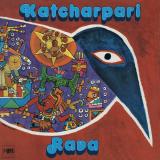
Enrico Rava - Katcharpari (feat. Bruce Johnson, John Abercrombie & Chip White) LP
  • 01: Bunny&Apos;S Pie (Feat. Bruce Johnson, John Abercrombie &Amp; Chip White)
  • 02: Trial N. 5 (Feat. Bruce Johnson, John Abercrombie &Amp; Chip White)
  • 03: Dimenticare Stanca (Feat. Bruce Johnson, John Abercrombie &Amp; Chip White)
  • 04: Katcharpari (Feat. Bruce Johnson, John Abercrombie &Amp; Chip White)
  • 05: Fluid Connection (Feat. Bruce Johnson, John Abercrombie &Amp; Chip White)
  • 06: Cheerin&Apos; Cherry (Feat. Bruce Johnson, John Abercrombie &Amp; Chip White)
  • 07: Peace (Feat. Bruce Johnson, John Abercrombie &Amp; Chip White)

The breakthrough album. Enrico Rava's second solo record, recorded in Milan in January 1973 and released on the German BASF label, is nothing less than a cornerstone of Italian jazz-rock - the record that caught Manfred Eicher's attention and opened the doors to ECM. Rava himself has called it his breakthrough, and history proved him right.

The lineup is killer: John Abercrombie on guitar, Bruce Johnson on bass, Chip White on drums. Four musicians operating at the absolute peak of early seventies fusion energy - electric, cosmopolitan, burning with that particular fire that only existed in that brief window when jazz met rock and nobody knew the rules yet. Abercrombie, already on his way to becoming one of the most distinctive voices in electric jazz guitar, delivers some of his most ferocious early work here. White's drumming is relentless, pushing the music forward with an intensity that never lets up.

If Miles' Bitches Brew-era speaks to you, if Ian Carr's Nucleus gets you moving, if you know Sun Ra's Lanquidity and Don Cherry's Relativity Suite by heart - this is essential listening. Rava's vision was already fully formed: South American rhythms, Mediterranean warmth, free jazz ferocity, rock power - all flowing together without borders or categories. By the early seventies, Rava had absorbed everything - the New Thing, the European free scene, the electric revolution coming out of Miles' studio - and forged something entirely his own.

The seven tracks cover serious ground. "Bunny's Pie" introduces the music with an almost cosmic atmosphere of suspense, hovering in that liminal space before it trails off into the up-tempo vibrant frenzy of "Trial N. 5" - Abercrombie and Rava trading swirling solos at full intensity, the rhythm section locked in tight. "Dimenticare Stanca" moves from Rava's expressive balladic intro into pure funk, guitar and trumpet steering over the rhythmic drive with absolute confidence. The title track carries the lyrical feel and cadence of an Incan-Peruvian folksong - that cosmopolitan spirit made audible. "Fluid Connection" rides a funky bass riff into fusion heaven, with standout trumpet and guitar solos that build and release with perfect tension. "Cheerin' Cherry" pays homage to the great Don Cherry - Rava's spiritual mentor and fellow traveler in world music - exploring a North African soundscape that points toward the global jazz to come. Johnson's "Peace" closes the album with a minute and a half of serene, blissful calm - a moment of stillness after the storm.

This audiophile reissue - cut from the original masters, pressed by Pallas in Germany on 180gm vinyl, housed in a thick laminated hand-glued gatefold - does full justice to an album that remains a collector's holy grail.

Don't sleep on this one. Limited Edition.

pre-order now20.03.2026

expected to be published on 20.03.2026

Jonah Parzen-Johnson - Imagine Giving Up

Brooklyn based baritone saxophonist Jonah Parzen-Johnson presents his new work "Imagine Giving Up" on Helsinki's We Jazz Records. The album, to be released on 17th January of 2020 sees Parzen-Johnson move into new domains of sound as he uncovers newfound energy and pulse in his music.

In addition to the sonically rich analog synth elements that accompany his earlier solo saxophone work, Jonah has layered heavily sound designed samples of his own saxophone to create truly one of a kind percussive snaps, reverberant basses, and warbling leads. At it's core, the music remains deeply devoted to almost vocal sounding melodic lines and patiently developed compositional ideas.

A compact set of 6 originals, "Imagine Giving Up" is Jonah Parzen-Johnson's most ambitious album yet. While taking a step away from the previous world of "ambient jazz", his new music stems from the use of drone-like sounds for baritone saxophone, a style which is uniquely his own. Electronics are blended in for good measure, creating a coherent vision of abstract jazz with depth. As with all of Parzen-Johnson's releases, the music comes with a deeper narrative which he will continually explore in live performance.

The manifesto for the album reads as follows: "Only a few people can really start over. Everyone else is left to struggle down the path they were assigned. The option to give up, to choose your own path, is power, and, hopefully, a call to action: take a risk to help someone." "Imagine Giving Up" by Jonah Parzen-Johnson, will be available via 'We Jazz Records' on violet and black vinyl versions, CD and digitally.

out of Stock

Order now and we will order the item for you at our supplier.


Last In: 6 years ago
Barry Adamson - SCALA!!! (Original Music By Barry Adamson) LP
  • A1: Scala!!! (Opening Title)
  • A2: Timelines
  • A3: Scala Posters (Mondo Bongo)
  • A4: As Steve Woolley Sees It
  • A5: Babs Johnson Is Divine
  • A6: Iggy And Lou And Mick Rock Too
  • A7: Latex Gloves
  • A8: Acid Celluloid
  • A9: Scala Cats
  • A10: Sodom And Tomorrow
  • A11: Barry's Iranian Embassy Blues
  • B1: Spandau Politics
  • B2: Another All Nighter
  • B3: One Of Us / Sticky Floors Atmos
  • B4: Pink Narcissus
  • B5: Black Leather Lovers
  • B6: Back To The Cats
  • B7: Jane's Day Out In Court
  • B8: King's Cross Skyline
  • B9: The Party's Over
  • B10: Scala!!! (End Title)
  • B11: Scalarama (Outtake)

Barry Adamsons Original-Soundtrack versetzt uns in die Unterwelt des nächtlichen Londons – ein lebhafter Soundtrack zum Underground-Kino und zur kulturellen Rebellion.


Barry Adamson, Gründungsmitglied von Magazine und Nick Cave and the Bad Seeds sowie gefeierter Solokünstler und Komponist, kehrt mit dem Soundtrack zu „SCALA!!!“ zurück, dem vielgelobten Dokumentarfilm über die Geschichte des berüchtigtsten Independent-Kinos Londons. Adamson, bekannt für seine Filmarbeiten, darunter Kooperationen mit David Lynch, bringt seine charakteristische Mischung aus Noir, Jazz, Funk und Atmosphäre in eine Filmmusik ein, die ebenso bewegend ist wie das Scala selbst.


Das Album fängt den Geist des Kinos ein: lange Nächte, klebrige Böden, schäbige Underground-Vorführungen und die berauschende Welt subversiver Kunst. In den 22 Titeln zaubert Adamson Stimmungen, die von grüblerisch und cineastisch bis verspielt und chaotisch reichen und die wilde Programmgestaltung und kulturelle Rebellion widerspiegeln, für die das Scala stand.


Der Film unter der Regie von Jane Giles und Ali Catterall erzählt die Geschichte des legendären Repertoirekinos King's Cross (1978–1993). Mit Interviews mit Mitarbeitern, Stammgästen und Ikonen wie John Waters, Mark Moore, Mary Harron, Isaac Julien und Ben Wheatley sowie seltenem Archivmaterial feiert er einen Ort, der zu einem Schmelztiegel für Gegenkultur, Sexploitation, Horror, Kung-Fu, LGBTQ+-Kino, Live-Musik und Kult-Doppelvorstellungen wurde.


Barry Adamson’s original score plunges us into the underworld of late-night London - a vivid soundtrack to underground cinema and cultural rebellion, available on vinyl and CD via Mute.


Barry Adamson, original member of Magazine and Nick Cave and the Bad Seeds, and a celebrated solo artist and composer, returns with the soundtrack to SCALA!!!, the acclaimed documentary chronicling the history of London’s most infamous independent cinema. Known for his film work, including collaborations with David Lynch, Adamson brings his trademark blend of noir, jazz, funk and atmosphere to a score that’s as evocative as the Scala itself.


The album captures the cinema’s spirit: late nights, sticky floors, sleazy underground screenings, and the intoxicating world of subversive art. Across its 22 tracks, Adamson conjures moods that shift from brooding and cinematic to playful and chaotic, echoing the wild programming and cultural rebellion the Scala embodied.


The film, directed by Jane Giles and Ali Catterall, tells the story of the legendary King’s Cross repertory cinema (1978–1993). Featuring interviews with staff, regulars and icons including John Waters, Mark Moore, Mary Harron, Isaac Julien and Ben Wheatley, alongside rare archival footage it celebrates a venue that became a crucible for counterculture, sexploitation, horror, kung-fu, LGBTQ+ cinema, live music, and cult double bills.

pre-order now16.01.2026

expected to be published on 16.01.2026

DRAB MAJESTY - AN OBJECT IN MOTION
  • Vanity (Feat. Rachel Goswell)
  • Cape Perpetua
  • The Skin And The Glove
  • Yield To Force

The latest EP from Drab Majesty marks the start of a stirring new chapter in the band's majestic legacy. Written during a 2021 retreat to the remote coastal Oregon town of Yachats, Deb Demure leaned into the neo-psychedelic resonance of a uniquely bowl-shaped 12-string Ovation acoustic/electric guitar. After early morning hikes in the rain, Deb would record ambient guitar experiments the rest of the day, tapping into "flow states," letting the sound lead the way. These sessions were then refined or recreated, and later elevated further with key collaborations by Rachel Goswell (Slowdive), Justin Meldal-Johnson (Beck, M83, Air), and Ben Greenberg (Uniform, Circular Ruin Studio). An Object In Motion is true to its title, capturing the chrysalis moment of an artist evolving, reborn and untethered, silhouetted against an open horizon."Cape Perpetua" kicks off the collection's divergent palette: sparkling acoustic finger-picking refracted through delay, equal parts raga and reverie. Melodies and moods congeal and dissipate, at the threshold of rustic American primitivism, brooding neo-folk, and pastoral melancholia. "The Skin And The Glove" deploys jangle to different effect - baggy, soaring, grey-skied kaleidoscopic pop in the spirit of Stone Roses, Primal Scream, and The Glove. Rachel Goswell lends her iconic freefall voice to The Cure-esque ballad, "Vanity," infusing poetic gravity to the doomed refrain: "If the valve breaks / then the earth quakes / and history finds a way / to put you in your place.""Yield To Force", the closing track of the EP, may be the most anomalous offering of the set. A 15-minute instrumental odyssey of cyclical strings, ominous slide guitar, and simmering synthesizer, the piece sways and spirals like a long zoom into distant storm clouds. Demure finesses the guitar with a restless but regal grandeur, unfolding a panorama of peaks, shadows, and plateaus. It's music both intuitive and prophetic, tracing the slow swing of pendulums across an endless plain. Taken as a whole, An Object In Motion presents a showcase of potential futures from Drab's evolving domain, their sound poised to bloom at the precipice of transformation.

pre-order now11.07.2025

expected to be published on 11.07.2025

VARIOUS ARTISTS - Get It! (Rsd 2021)

Various Artists

Get It! (Rsd 2021)

2x12inchTUF2LP0904
Tuff City
20.06.2025
  • A1: The Honey Drippers– Impeach The President
  • A2: Eddie Bo– If It's Good To You (It's Good For You)
  • A3: The Gaturs– Gatur Bait
  • A4: Johnson* & The Lucky Hearts– Get It
  • A5: Sonny Jones– Sissy Walk
  • B1: Mary Jane Hooper– Don't Change Nothing
  • B2: Herbie Thompson– Keep On Stepping
  • B3: The Black Nasty*– Party On 4Th Street
  • B4: Lynn Day– Bit Off More (Than I Can Chew)
  • B5: Ike Turner & The Kings Of Rhythm*– Funky Mule
  • C1: Billy The Baron & His Smokin Challengers*– Communications Is Where It's At
  • C2: City Council Ltd.– When You Git Through Wit It Put It Back
  • C3: Bobo Mr. Soul– H.l.i.c
  • C4: The Chosen Few (8)– We Are The Chosen Few
  • C5: Georgianna Mccoy & The Classetts– I've Got To Space
  • D1: Johnny Mae Matthews*– My Momma Didn't Lie
  • D2: Glenda Dove– It's Gotta Be Something Else
  • D3: City Council Ltd.– You Got It All, Ain't No More
  • D4: Dennis Lee & Notables– Funky Penguin
  • D5: James Black– There's A Storm In The Gulf
pre-order now20.06.2025

expected to be published on 20.06.2025

Rick James - Collected LP 2x12"

Rick James

Collected LP 2x12"

2x12inchMOVLP3771
Music On Vinyl
30.05.2025
  • You And I
  • Mary Jane
  • High On Your Love Suite
  • Bustin' Out (On Funk)
  • Love Gun
  • Come Into My Life - Part 1
  • Big Time
  • Give It To Me Baby
  • Super Freak
  • Ghetto Life
  • Dance Wit Me - Part 1
  • She Blew My Mind (69 Times)
  • Hard To Get
  • Standing On The Top Feat. The Tempations
  • Cold Blooded
  • U Bring The Freak Out
  • Ebony Eyes Feat. Smokey Robinson
  • 17:
  • You Turn Me On
  • Glow
  • Can't Stop
  • Spend The Night With Me
  • Sweet And Sexy Thing
  • Loosey's Rap Feat. Roxanne Shante
  • In The Ghetto - Busta Rhymes Feat. Rick James

Singer James Ambrose Johnson, born on February 1, 1948, in Buffalo, New York, fled to Toronto, Canada, to avoid the draft. There, he started The Mynah Birds, a rhythm & blues band and changed his name to Rick James. In 1966, Neil Young joined the band, but their journey ended when James was exposed as a draft dodger and jailed. After serving his time, Rick James joined several bands, including The Great White Cane, and developed his unique funk style. In 1978, Motown signed him to their Gordy Records, releasing his debut solo album Come And Get It! featuring the hits “You and I” and “Mary Jane.” The album climbed to number 13 on the U.S. charts. Rick released multiple successful albums, such as Bustin’ Out Of L Seven and Fire It Up, with hits like “High On Your Love Suite' and “Bustin’ Out (On Funk).” His 1981 album Street Songs marked his internationally breakthrough, blending funk, rock, and new wave. It produced hits like “Ghetto Life,” the massive “Give It To Me Baby,” and “Super Freak,” earning gold records and Grammy nominations.

His follow-up albums included Throwin’ Down, featuring “Dance Wit’ Me” and "Standing On The Top" with The Temptations, and Cold Blooded, with “Ebony Eyes”a collaboration with Smokey Robinson. Furthermore Rick wrote and produced “Party All The Time” for Eddie Murphy, reaching number 2 on the Billboard charts. Also included on this Collected album are the hits “Glow”, “Loosey’s Rap” featuring the queen of hip hop Roxanne Shanté and his collaboration with Busta Rhymes of “In The Ghetto”

Rick James Collected includes most of his hits and early songs and the 2LP, is available on black vinyl and includes liner notes.

pre-order now30.05.2025

expected to be published on 30.05.2025

Tony Johnson - Pixel Dreams EP

Tony Johnson--the electrifying new alter ego of multi-talented artist Toon Janssens. Under this moniker, he delves deep into the world of acid and electronic soundscapes, capturing the raw energy of the early days. Get ready to be transported into a hypnotic realm of cosmic atmospheres.

out of Stock

Order now and we will order the item for you at our supplier.


Last In: 11 months ago
Joe Satriani, Eric Johnson & Steve Vai - G3: Reunion Live LP 4x12"
also available

4x12"


Die Original-Besetzung des G3-Tourkonzepts kehrt mit "Reunion Live" zurück, das am 31. Januar 2025 weltweit bei earMUSIC erscheint. Das Album fängt die Gitarrenmagie von Joe Satriani, Eric Johnson und Steve Vai auf ihrer ausverkauften US-Tour 2024 ein. Dieses elektrisierende Wiedersehen zeigt die drei Ikonen, die sich erstmals 1996 zusammenschlossen, und zeigt wegweisende Performances, die G3 defi niert.

pre-order now31.01.2025

expected to be published on 31.01.2025

Joe Satriani, Eric Johnson & Steve Vai - G3: Reunion Live LP 4x12"

Die Original-Besetzung des G3-Tourkonzepts kehrt mit "Reunion Live" zurück, das am 31. Januar 2025 weltweit bei earMUSIC erscheint. Das Album fängt die Gitarrenmagie von Joe Satriani, Eric Johnson und Steve Vai auf ihrer ausverkauften US-Tour 2024 ein. Dieses elektrisierende Wiedersehen zeigt die drei Ikonen, die sich erstmals 1996 zusammenschlossen, und zeigt wegweisende Performances, die G3 defi niert.

pre-order now31.01.2025

expected to be published on 31.01.2025

Matt Berry - Heard Noises MC (TAPE)
also available

Blue Vinyl


Following the huge acclaim of Matt Berry’s 2021 album The Blue Elephant (“A sonic odyssey” – Uncut) – as well as last year’s one-off album of library music collaboration with the KPM label (“another string to Berry’s impressive bow” – Prog magazine) – we present Heard Noises, Matt’s eighth studio album with Acid Jazz, out 24 January.

We’re hugely excited to offer a beautiful label-exclusive gatefold edition on Psychedelic Swirl colour vinyl, alongside the standard version Sky Blue LP, as well as corresponding soft-pack CD and retro Cassette.

Out now, lead single ‘I Gotta Limit’ finds Matt trading lines with Kitty Liv (Kitty, Daisy and Lewis) as a man after a second chance with a woman impatient with his pleading. With a song structure inspired by Sly Stone, in a little over three minutes ‘I Gotta Limit’ crams in a plethora of musical ideas on an instantly catchy song which is part Northern Soul, part psych.

In contrast to The Blue Elephant’s dizzying trip through an idiosyncratic love of British Psych, Freakbeat, Acid Rock and late ‘60s pop, Heard Noises finds Matt heading for a looser, Californian psychedelia through his love of the trippier sounds of space pop and rock, and his ear for an eerie, haunting melody.

Once again, the album is testament to Matt’s exceptional musicianship, production skills and songwriting prowess. Almost every instrument is played by Matt including guitars, bass, a variety of keyboards (acoustic and Wurlitzer pianos), synthesizers and organs (including Moogs, Vox, Farfisa, Gibson, Eminent organs) and Mellotron.

He is joined by long-time collaborator, neo-progressive drummer Craig Blundell, and guests including Pokerface’s Natasha Lyonne and back with Matt is The Shins/Fruit Bats’ Eric D. Johnson (acoustic guitar, autoharp and backing vocals on ‘Why On Fire?’, ‘To Live For What Once Was’ and ‘Snakes That Slide’), Phil Scraggs (lap steel guitar on ‘To Live For What Once Was’ and ‘Snakes That Slide’), Rosie McDermott (vocals on ‘Sky High’) and the S. Club 60s Choir (featuring Matt’s mum).

In many ways Heard Noises could be considered the perfect distillation of the extraordinary breadth of musical ideas across Matt’s albums to date.

pre-order now24.01.2025

expected to be published on 24.01.2025

Sympathy Pain - Swan Dive

"Sympathy Pain is an unusual animal, as their collective backgrounds come from hardcore, drone, and experimental pop in Salt Lake City, Utah. Sympathy Pain began as Skyler Hitchcox’s gloomy drone project which was later joined by Casey Hansen (of Cult Leader) to explore and expand the sullen space that the project initially carved out. Sympathy Pain is rounded out by Chaz Prymek (Lake Mary) and Nora Price. The deep connections to Salt Lake City’s underground well of experimental music have deep entanglements. Sympathy Pain has emerged from those entanglements with a clear eyed thesis, transmuting the often oppressive cultural climate of Utah through a personal veil of heavy sorrow.

Swan Dive is the product of years of excavating that space into a cavern, yielding their self-described “emo)))” (a nod to the preeminent doom/drone band Sunn) while still holding onto the submerged soundscapes that began as the core of the project. The album is expansive — a winding ride that travels from minimalism, to claustrophobic ambient, to triumphant passages that all underscore its forlorn undercurrent.

Originally released in January of 2024 as a CD by The Ghost is Clear and cassette by Diabolical Records, Swan Dive finally finds a new life on vinyl - reissued by the Cincinnati, OH record label Whited Sepulchre Records.

Tracked with Wes Johnson at Archive Recordings in SLC, UT and mixed/mastered by longtime friend and co-conspirator Ben Young, the album features a haunting guest spot by Madeline Johnston of Midwife on “Heaven + Hell” to close out the album."

pre-order now15.11.2024

expected to be published on 15.11.2024

Various - Lifesaver 5 Compilation - Tell Me Something Good - 25 Years of Famous When Dead  LP 5x12"
 
31

In the heart of Offenbach, where the city's pulse synchronizes with the beat of the night, stands the illustrious Robert Johnson Club. For a quarter of a century, it has stood as a bastion of sonic exploration, a sanctuary for those who seek solace in the rhythm, and a beacon of inspiration for the global electronic music community. As it proudly raises its glass to toast 25 years of unrivaled musical excellence, the echoes of countless memories reverberate through its storied halls. To honor this landmark anniversary, „Live at Robert Johnson“ presents a kinda like masters blueprint of sound: "Tell Me Something Good - 25 Years of Famous When Dead!" This compilation, aptly named after the club's mantra, serves not only as a celebration of its rich history but also as a testament to the enduring legacy of the artists who have graced its stage. Crafted with meticulous attention to detail, each track on the compilation is a sonic journey unto itself—a symphony of beats and melodies that weave together to tell the story of Robert Johnson's evolution over the past quarter-century. From the pulsating rhythms of underground techno to the ethereal melodies of deep house, the compilation encapsulates the club's eclectic spirit and unwavering commitment to pushing the boundaries of electronic music. But beyond the music lies something deeper—an intangible energy that permeates every aspect of Robert Johnson's existence. It's the sense of camaraderie that binds together the club's patrons and artists alike, the shared experience of losing oneself in the music, and the profound sense of belonging that transcends language and culture. As the compilation reverberates through the speakers, it serves as a rallying cry—a call to arms for all who have ever felt the transformative power of music. It's a reminder that, even in the darkest of times, there is beauty to be found in the simple act of coming together and losing oneself in the rhythm of the night. So let us raise our voices in celebration of Robert Johnson Club and the indelible mark it has left on the world of electronic music. Here's to 25 years of passion, of creativity, and of "something good" that will echo through the ages for generations to come.

out of Stock

Order now and we will order the item for you at our supplier.


Last In: 18 months ago
I-robots Ÿ Turin Dancefloor Express Ÿ Present - Captain Torkive Flying Saucers To Krypton

Warehouse Find!

As I-Robots launches a new compilation series that celebrates the roots and influences of Italo disco in Turin and the Piedmont region, the Opilec Music boss also offers up various singles from it with some special remixes and edits. After an EP from Johnson Righeira last summer comes the latest one featuring the legendary Captain Torkive and two of his tracks as well as some special versions by I-Robots. Captain Torkive is Daniele Torchio, an Italian artist active in the late seventies & early eighties who got his nickname from a love of UFOs and space, in fact the titles here are inspired by the Superman DC Comics classic.
He has worked with the likes of Valero Liboni and all the material here is officially licensed from Ponzo Records master tapes. His tracks here are some of the most rare 7" Italo space disco tunes from Turin's rich history and feature synthesizers and electronic effects that he made himself, as well as guitars and keys he also played. Up first comes the I-Robots 1979 Reconstruction of Flying Saucers To Krypton which marries both tunes into a lush retro space odyssey that shimmers and rockets through the cosmos with live drums and jangling bass. Rounding off the A side is 1979 original version of Krypton' which is just as dazzling and spaced out with layers of synths and arps all sounding squelchy beneath some robot vocals. Kicking off the B side is the I-Robots 1979 Space Reconstruction of Flying Saucers To Krypton that strips some of the layers and keeps one lead synth line and some ascending spaceship sounds, as well as a lovably loose groove that really stomps along with real character. Last but not least is the original 1979 version of Flying Saucers, a cosmic tune with sci-fi sounds and melodies shooting about above big disco grooves with the keys and synths that carries you away to another galaxy. This is another essential package from Opliec Music that shines a light on an artist and era that deserves all the attention it can get.

out of Stock

Order now and we will order the item for you at our supplier.


Last In: 5 years ago
Robb Johnson - Pennypot Lane LP

I needed to do some recording to cheer myself up. The studio I usually use was booked all month, but before the disasters of Brexit & Covid I’d met pianist Yves Meerschaut in Gent, and he’d shown me his recording studio, Room 13, and that did have a couple of days free in January… I decided to make a record of old songs that other people have liked, and / or that I play differently now, and / or that haven’t appeared on vinyl before. So, here, there’s: “Pennypot Lane”, a fox song that people like, “Winter Turns to Spring” that was Tony Benn’s favourite song, “The Blue Sea Says Yes”, a song about how the sea welcomes us all, heroic or fragile, equally in our mortality (something like that anyway) , that I had forgotten about till people started saying how much they liked it, “More Than Enough”, that Roy Bailey and Martin Simpson have kindly rescued from the obscurity of its previous appearance on a CD in 1992, “Babbecombe at the Closing of the Day”, a song about going to Babbecombe model village, “At the Siege of Madrid” which quite a few people like, but is one of those songs that always somehow eludes a definitive performance, “A True History of Couscous”, a song I like that is more or a less fictionalized autobiography, and lastly.. “You Don’t Have to Say Goodbye”. This is a song from my first CD; Thames Valley folk-stalwart Terry Silver used to enjoy performing it so that afterwards he could shock audiences who’d been happily singing along to it by revealing it had been written by that dreadful lefty Robb Johnson, It’s also, more recently, a song our son Arvin likes very much too, and he graces this version with his characteristically modest tasteful Spanish guitar playing. He also nagged me into doing the artwork for the cover. Three of these songs are lucky enough to have Yves’s breathtaking, exquisite piano playing embellishing them, and Sian Allen gifts “Madrid” some beautiful trumpet accompaniment too. But primarily, for good or ill, it’s mainly me with an acoustic guitar. Robb Johnson, May 24. “in my view one of the best songwriters this country has produced in many a year… the appellation National Treasure is often over-used, but in Robb’s case it is entirely appropriate (St Edith’s Folk) // “an English original”, (Robin Denselow, the Guardian) // “a national treasure” (Mike Harding) // “one of this country’s most important songwriters (no argument!)

pre-order now25.07.2024

expected to be published on 25.07.2024

CHRIS  COHEN - PAINT A ROOM LP

Chris Cohen

PAINT A ROOM LP

12inchHARLP173
Hardly Art
12.07.2024

Chris Cohen was always a quiet kid. In fact, this introversion was one reason he began playing music as a toddler-to communicate without speaking, to identify with others without the direct representation of words. It has worked, too, with Cohen's terrific stint in the mighty Deerhoof and his own captivating art-rock act The Curtains, preceding production and session work for the likes of Weyes Blood, Kurt Vile, Le Ren, and Marina Allen. Somewhere along that long way, Cohen started writing lyrics. He found that, though it didn't come naturally, the process offered a new sense of self-discovery and reckoning, a way to see himself and the world from unexpected angles. His three twilit albums of casually complicated pop during the last decade radiated these epiphanies: handling family strife, navigating advancing age, and understanding social woes. But Cohen has never had as much to sing so directly as he does on Paint a Room, his first album in five years and his debut for Hardly Art. If Cohen's meanings have previously lurked inside the tessellated musical layers he built alone, they are newly clear and resonant here, animated and underscored for the first time by a band playing in real time. There is the endless miasma of state violence on the subversively melodious opener "Damage," the existential exhaustion of modernity on the horn-traced jangle "Laughing": this is Cohen communicating with friends not only through his deep understanding of groove, harmony, and hook but also with his listeners through songs that croon of our uneasy little era. On Paint a Room, Cohen's music feels like a warm spring breeze, easy to love and gentle to feel. But it's often carrying something heavy, as if blowing in from some unseen storm cloud. Paint a Room both reckons with reality and conjures an alternate one, where nighttime walks and a neighbor's wind chimes offer endless escapes for the imagination, space for the mind to roam. Sublime and sun-lit, these 10 songs consider dreamy new ways out of old predicaments, clearly stating the problem and dancing and singing their way somewhere new. Paint a Room features Jeff Parker contributing the fluttering horn arrangement on "Damage," and Parker collaborator Josh Johnson (who produced Meshell Ndegeocello's Grammy-Award-winning album The Omnichord Real Book) supplying flute, sax, and clarinet arrangements throughout the record.

pre-order now12.07.2024

expected to be published on 12.07.2024

Twelve Cubic Feet - Straight Out The Fridge LP

“Suddenly it’s ok to be a square” - Twelve Cubic Feet, a clear case of a band which should have been bigger than The Beatles but, for some malignant reason, became a blurry footnote in the history of underground music. Formed from the ashes of Exhibit A in the Spring of 1981, the band disappeared leaving no trace shortly after 1983. During their brief existence they released a series of stickers, a monthly newsletter, two cassette tapes and their incomparable ‘Straight Out Of The Fridge 10”, which was at the very top of our dream records to release since we started Sealed Records. Twelve Cubic Feet released this perfect 22 minute 7 track album in 1982 on Namedrop Records (home to Doof, Philip Johnson and Cold War and ran by Philip Johnson and 12CF guitarist Paul Platypus). It is a glorious scratchy DIY indie pop gem with a post punk spirit. The sound is naive and fragile yet very addictive. Based around jangly clean guitars, drums that are on the edge of falling apart, haunting keyboards and a female vocalist that has a knack for a golden pop hook. Hard not to fall in love with. It’s beautiful with a ragged charm that deserves to be heard by the masses. Anarcho Indie pop anyone?? The band played a lot of the anarcho punk haunts of the early 80’s - Autonomy Centre in Wapping, Centro Iberico and London Music Collective and were equally heralded by punks (Andy Martin from The Apostles released one of their tapes) and the DIY music crowd. The line up changed after the 10” and they recorded a Joe Foster produced demo and fell in with Alan McGee's Communication Club crowd. Twelve Cubic Feet burned bright for just a handful of years and now it’s time to burn bright again. Hopefully this reissue will help them reverse one of their sticker statements “today we’re nobodies but tomorrow you’ll know who we are”. This reissue comes with the 16 page booklet that came with the original 10". Twelve Cubic Feet feature members who did time in bands such as Khmer Rouge, The Reflections, Solid Space, Doof and What Is Oil? Amongst others. For fans of the Marine Girls, Girls at our Best, Hornsey At War, Swell Maps and Postcard Records

pre-order now05.05.2024

expected to be published on 05.05.2024

The Humble Bee & Offthesky - Here In, Absence

Here In, Absence" ("Here, In Absence" for the book) is the result of the dialogue between the Finnish photographer Mikael Siirilä and the music artists The Humble Bee & Offthesky initiated by IIKKI, between March 2023 and January 2024.

After a first release in 2019 on IIKKI ("All Other Voices Gone, Only Yours Remains"), a second one in 2020 on LAAPS ("We Were The Hum Of Dreams"), Craig Tattersall (The Humble Bee) and Jason Corder (Offthesky) come back with a third stunning out-of-time beauty, paired with the Mikael Siirilä photography works.

Craig Tattersall is a former member of The Remote Viewer and Famous Boyfriend bandmate Andrew Johnson. Tattersall's music can be found these days more often under his alias The Humble Bee; as a founder member of The Boats; and in his collaborative works with the likes of Bill Seaman in The Seaman And The Tattered Sail. He has run the wonderful label Cotton Goods from 2008 to 2015 and since 2009 he has recorded 16 solo albums on his moniker The Humble Bee and almost the same under his name on some collaborations.

Jason Corder is experimental-ambient multimedia artist based in Denver, CO. He has been producing music, video art, audio software, and the occasional interactive sound sculpture, for over 20 years. He teaches private courses on generative music and occasionally lectures on various sound design topics at Denver University. He currently is the Audio Director at the Denver based videogame studio Dire Wolf. Over the years, he has worked with labels such as Home Normal, 12k's term, Facture, LAAPS and more. Over the years he has performed at Mutek, Decibel, Communikey and other festivals, sharing the bill with likeminded artists Pole, Matmos, William Basinski, and more.

Mikael Siirilä: "I am a darkroom artist (b. 1978) based in Helsinki, Finland. My small individual photographs examine the themes of absence, presence and outsiderhood. My characters appear immersed in their inner worlds and moments of being: simultaneously absent and intensely present. The pictures also reveal the outsider’s gaze, lost in observation and reflection. My pictures are true observations captured with minimal interaction with the subjects. Their origin is in the act of looking, and they feel causally connected to the world. The craft of printmaking is inseparable from my artistic expression. I work solely with black & white film and the darkroom. The slow, contemplative process lends the pictures a calmness. I make physical pictures I want to stare at, feel and become lost in. Again and again."

Fine Art Book, Ltd. to 500 copies:
Hardcover book printed on Munken Lynx 150g/m2 // 80 pages, 18cm x 24cm, 51 photos // Logo and slot embossed // Selective UV varnish // Visible seam and cutting cover pages // Hand-numbered, hand-stamped.

out of Stock

Order now and we will order the item for you at our supplier.


Last In: 2 years ago
Cedar Walton - Mobius

Cedar Walton

Mobius

12inchBEWITH150LP
Be With Records
22.04.2024

Don't judge a book by its cover. Judge a record by its cover.

And, perhaps, its title.

Cedar Walton's Mobius is as outrageously, disorientatingly brilliant as the stunning jacket design, featuring the legendary jazz pianist morphing into a mobius strip, set against a beautiful sky filled with cumulus clouds. A proper jazz-funk fusion slapfest, Mobius is a stellar electric set from - essentially - one *hell* of a SUPERBAND.

Yes, in addition to Walton's Fender Rhodes wizardry, Mobius is elevated by Ryo Kawasaki's stinging electric guitar, pristinely clear vocals by Adrienne Albert and Lani Groves, rootsy percussion by Ray Mantilla and Omar Clay, alto and baritone from Charles Davis, trumpet from Roy Burrowes, Gordon Edwards on bass and Frank Foster's tenor sax. Oh and did we mention STEVE GADD ON DRUMS?!?!

Gem after gem of looping, bliss-inducing gold, it's an incredibly revelatory album. It presents a thrilling synthesis of R&B, funk, blues and hard bop (with a hint of rock), all driven by an idiosyncratic electronic keyboard. Walton, a giant in the jazz world, got quite the workout every time he played, from piano to arp synthesizer to clarinet to electric piano to mini-moog and back again.

Mobius was Cedar Walton's debut for RCA in 1975. The versatile artist confirmed his abilities as a player, composer, interpreter and arranger with this stunning record, and his own bright compositions offered a springboard for the improvisations of the different soloists. Coltrane's "Blue Trane" is the first classic to be given the funkafied Mobius treatment, Ryo Kawasaki let loose all over neck-snapping Gadd-drum gold before the horns take a fiery turn and subsequently give way to Cedar's virtuosity. A sparkling b-boy break version of Thelonious Monk's "Off Minor" (featuring an absolutely *fire* solo from Walton) really sets proceedings alight. Of the three original pieces, the shuffling, percussive power of "Soho" is just absolutely mind bending Latin-influenced jazzy soul whilst the mellow vibes of "The Maestro" bring elegant, sumptuous soul. And then there's the effortlessly funky "Road Island Red". Just too, too good.

Cedar Walton was born in Dallas, Texas, on January 17, 1934 and began his professional career in 1959 when he began touring for several years with the J.J. Johnson Quintet. He later joined the Art Farmer-Benny Golson Jazztet and then Art Blakey's Jazz Messengers. Pretty solid credentials, right? While based in New York City, Cedar played with such luminaries as Donald Byrd, Eddie Harris, Blue Mitchell, Kenny Dorham, Lee Morgan, Freddie Hubbard, Jimmy Heath and Milt Jackson. Without question, he was one of the most complete and gifted musicians of his time and Mobius provides proof of that. The fresh, danceable tracks, all firmly rooted in the living tradition of blues and gospel, are skilfully presented by a master who enjoyed keeping abreast of contemporary tastes and was always keen to renew his language.

As the album notes state: “Mobius, which is the theoretical shape of the infinite universe, makes use of the most modern recording techniques and synthesizers. We mastered and mixed so that it’s hotter than the competition, which should help radio play and in-store demonstration.” Indeed. Mobius is really gorgeous mid-70s fusion, ranging from the funky to the ecstatic. It's an absolute MONSTER that will completely blow you away; and, yes, it's as wild and hypnotic as the cover. The audio for Mobius has been carefully remastered by Be With regular Simon Francis, ensuring it sounds better than ever. Cicely Balston's expert skills have made sure nothing is lost in the cut whilst the records have been pressed to the highest possible standard at Record Industry in Holland. The original, iconic sleeve has been restored here at Be With HQ as the finishing touch to this long overdue re-issue.

out of Stock

Order now and we will order the item for you at our supplier.


Last In: 2 years ago
Sly5thAve - Liberation LP 2x12"

Der in Brooklyn ansässige Komponist, Arrangeur, Produzent und Multiinstrumentalist Sly5thAve präsentiert "Liberation", eine 2LP mit Auswahl von Originalkompositionen und Reorchestrierungen, die die Schönheit und Gewandtheit der Jazzmusik feiern. Feat. MonoNeon, Roberto Verástegui, Robert “Sput” Searight, Nate Werth.

Liberation" ist das neue Album des Produzenten, Komponisten, Arrangeurs und Multiinstrumentalisten Sly5thAve. Sly5thAve überwand kreative Schwierigkeiten und konzentrierte sich darauf, sich selbst treu zu bleiben, und fühlte sich nach der Fertigstellung des Titeltracks "Liberation" befreit - ein Gefühl, das den Titel des Albums prägte.
Liberation" entstand aus einem Demo, das vor fünf Jahren während Sly5thAves erstem Versuch, das Album zu konzipieren, entstanden war, und ist inspiriert von geliebten Blaxploitation-Filmsoundtracks und ikonischen Künstlern wie Curtis Mayfield, Willie Hutch, Herbie Hancock, Gordon Parks & J. J Johnson.

Der Grammy-Preisträger Sylvester Uzoma Onyejiaka II alias Sly5thAve ist bekannt für seine ausgefeilten Kompositionen. Sein Sound ist geprägt von seinem Glauben an Hip-Hop und seinem tiefen Verständnis von Soul, R&B und Jazz. Er hat eine große Anhängerschaft im Underground und wurde von berühmten Musikern wie Jarobi White (A Tribe Called Quest), Dr. Dre, Questlove und The Roots sowie dem Schauspieler Martin Freeman unterstützt.
Großen Respekt hat er sich durch seine Arbeit mit einer Reihe von hochkarätigen Musikern erworben, darunter Prince (als Mitglied der New Power Generation Band), Stevie Wonder, Gladys Knight, das Dave Brubeck Quartet, Taylor Swift, Janelle Monae, Freddie Gibbs und Quantic. Sly5thAve ist als Mitglied von Ghost Note, Quantic und mit seinem eigenen Nebenprojekt IGBO auf Tournee gegangen und hat Alfa Mist auf seiner Nordamerikatournee unterstützt.

Vor allem seine orchestrale Hommage an Dr. Dre, "The Invisible Man", erntete viel Lob und Aufmerksamkeit und wurde sogar von Dr. Dre selbst bewundert.

pre-order now19.04.2024

expected to be published on 19.04.2024

Purely Fizzycal - Make a Move

Freestyle comes correct again with a killer slice of 1987 UK Street Soul from Purely Fizzycal, originally issued on the duo's own Pure Impact Productions label.

North Londoner Trish Langley met South Londoner Ash Kamat initially in the the mid 1980s on Tin Pan Alley, while Ash was working at Rod Argent's keyboard shop and running UK soul-focussed zine Soul Trade, and the quickly began working together. Handling the programming and production, Ash says his inspiration came from a mixture of London pirate radio sounds and the US-based sounds of Kashief, Jimmy Jam & Terry Lewis etc. While Trisha's vocals and melodies were influenced by growing up listening to her parents reggae records, plus her brother's taste for the likes of Brothers Johnson, Maze, Isley Brothers, and a little lovers rock such as Janet Kay - which, together with Ash's raw drum machine sounds, bears all the hallmarks for this uniquely UK take on soul.credits

out of Stock

Order now and we will order the item for you at our supplier.


Last In: 19 months ago
The Humble Bee & Offthesky - Here In, Absence

Here In, Absence" ("Here, In Absence" for the book) is the result of the dialogue between the Finnish photographer Mikael Siirilä and the music artists The Humble Bee & Offthesky initiated by IIKKI, between March 2023 and January 2024.

After a first release in 2019 on IIKKI ("All Other Voices Gone, Only Yours Remains"), a second one in 2020 on LAAPS ("We Were The Hum Of Dreams"), Craig Tattersall (The Humble Bee) and Jason Corder (Offthesky) come back with a third stunning out-of-time beauty, paired with the Mikael Siirilä photography works.

Craig Tattersall is a former member of The Remote Viewer and Famous Boyfriend bandmate Andrew Johnson. Tattersall's music can be found these days more often under his alias The Humble Bee; as a founder member of The Boats; and in his collaborative works with the likes of Bill Seaman in The Seaman And The Tattered Sail. He has run the wonderful label Cotton Goods from 2008 to 2015 and since 2009 he has recorded 16 solo albums on his moniker The Humble Bee and almost the same under his name on some collaborations.

Jason Corder is experimental-ambient multimedia artist based in Denver, CO. He has been producing music, video art, audio software, and the occasional interactive sound sculpture, for over 20 years. He teaches private courses on generative music and occasionally lectures on various sound design topics at Denver University. He currently is the Audio Director at the Denver based videogame studio Dire Wolf. Over the years, he has worked with labels such as Home Normal, 12k's term, Facture, LAAPS and more. Over the years he has performed at Mutek, Decibel, Communikey and other festivals, sharing the bill with likeminded artists Pole, Matmos, William Basinski, and more.

Mikael Siirilä: "I am a darkroom artist (b. 1978) based in Helsinki, Finland. My small individual photographs examine the themes of absence, presence and outsiderhood. My characters appear immersed in their inner worlds and moments of being: simultaneously absent and intensely present. The pictures also reveal the outsider’s gaze, lost in observation and reflection. My pictures are true observations captured with minimal interaction with the subjects. Their origin is in the act of looking, and they feel causally connected to the world. The craft of printmaking is inseparable from my artistic expression. I work solely with black & white film and the darkroom. The slow, contemplative process lends the pictures a calmness. I make physical pictures I want to stare at, feel and become lost in. Again and again."

Fine Art Book, Ltd. to 500 copies:
Hardcover book printed on Munken Lynx 150g/m2 // 80 pages, 18cm x 24cm, 51 photos // Logo and slot embossed // Selective UV varnish // Visible seam and cutting cover pages // Hand-numbered, hand-stamped.

pre-order now01.03.2024

expected to be published on 01.03.2024

Nick Dunston - Skultura

Skultura is Nick Dunston’s follow-up to the critically acclaimed Spider Season, which was released in July 2022. On Spider Season, Martin Johnson of Jazz Times said “Dunston is a sonic revolutionary in many ways, not the least of which is the instrumentation of his bands.”Spider Season also received glowing reviews from Pitchfork Magazine, TheWire, and New York City Jazz Record. While Skultura is an entirely new band,(featuring Cansu Tanrıkulu on voice/effects/electronics, Mariá Portugal on drums, Liz Kosack on synthesizer, and Eldar Tsalikov on alto saxophone/clarinet), fans of Dunston will find much to admire, and hear a compositional, improvisational, and notably, production style that is becoming uniquely his own. The repertoire of original music on Skultura ranges from spontaneous electro-acoustic ensemble exchanges, to carefully sculpted tone poems that meditate on the manipulated sample-based sides of the quintet. Composition, improvisation, and performance are no longer the only elements at playin Dunston’s recorded work. On Skultura, he continuously shapes the music with various sound-manipulation techniques to create an album that is meticulous as it is visceral. To quote Jacob Garchik’s liner notes, the ‘work is made of continuous waves of inspiration and creation, strata of improvisations made permanent, each layer related to the one below, or not’. Skultura is revered in Europe and the U.S., and will be co-released on the Berlin-based record label Fun In The Church, and the American tape cassette label Tripticks Tapes. Upcoming European performances in the Fall 2023 include Wels Unlimited Festival in Austria, and the Jazz Exzess concert series in Berlin.

pre-order now06.10.2023

expected to be published on 06.10.2023

DRAB MAJESTY - AN OBJECT IN MOTION

The latest EP from Drab Majesty marks the start of a stirring new chapter in the band's majestic legacy. Written during a 2021 retreat to the remote coastal Oregon town of Yachats, Deb Demure leaned into the neo- psychedelic resonance of a uniquely bowl - shaped 12 -string Ovation acoustic/electric guitar. After early morning hikes in the rain, Deb would record ambient guitar experiments the rest of the day, tapping into "flow states," letting the sound lead the way. These sessions were then refined or recreated, and later elevated further with key collaborations by Rachel Goswell (Slowdive), Justin Meldal Johnson (Beck, M83, Air), and Ben Greenberg (Uniform, Circular Ruin Studio). An Object In Motion is true to its title, capturing the chrysalis moment of an artist evolving, reborn and untet hered, silhouetted against an open horizon. "Cape Perpetua" kicks off the collection's divergent palette: sparkling acoustic fingerpicking refracted through delay, equal parts raga and reverie. Melodies and moods congeal and dissipate, at the threshold of rustic American primitivism, brooding neo-folk, and pastoral melancholia. "The Skin And The Glove" deploys jangle to different effect baggy, soaring, grey skied kaleidoscopic pop in the spirit of Stone Roses, Primal Scream, and The Glove. Rachel Goswell lends her iconic freefall voice to The Cure - esque ballad, "Vanity," infusing poetic gravity to the doomed refrain: "If the valve breaks / then the earth quakes / and history finds a way / to put you in your place." "Yield To Force", the closing track of the EP, may be the most anomalous offering of the set. A 15 minute instrumental odyssey of cyclical strings, ominous slide guitar, and simmering synthesizer, the piece sways and spirals like a long zoom into distant storm clouds. Demure finesses the guitar with a restless but regal grandeur, unfolding a panorama of peaks, shadows, and plateaus. It's music both intuitive and prophetic, tracing the slow swing of pendulums across an endless plain. Taken as a whole, An Object In Motion presents a showcase of potential futures from Drab's evolving domain, their sound poised to bloom at the precipice of transformation.

out of Stock

Order now and we will order the item for you at our supplier.


Last In: 2 years ago
DRAB MAJESTY - AN OBJECT IN MOTION

The latest EP from Drab Majesty marks the start of a stirring new chapter in the band's majestic legacy. Written during a 2021 retreat to the remote coastal Oregon town of Yachats, Deb Demure leaned into the neo- psychedelic resonance of a uniquely bowl - shaped 12 -string Ovation acoustic/electric guitar. After early morning hikes in the rain, Deb would record ambient guitar experiments the rest of the day, tapping into "flow states," letting the sound lead the way. These sessions were then refined or recreated, and later elevated further with key collaborations by Rachel Goswell (Slowdive), Justin Meldal Johnson (Beck, M83, Air), and Ben Greenberg (Uniform, Circular Ruin Studio). An Object In Motion is true to its title, capturing the chrysalis moment of an artist evolving, reborn and untet hered, silhouetted against an open horizon. "Cape Perpetua" kicks off the collection's divergent palette: sparkling acoustic fingerpicking refracted through delay, equal parts raga and reverie. Melodies and moods congeal and dissipate, at the threshold of rustic American primitivism, brooding neo-folk, and pastoral melancholia. "The Skin And The Glove" deploys jangle to different effect baggy, soaring, grey skied kaleidoscopic pop in the spirit of Stone Roses, Primal Scream, and The Glove. Rachel Goswell lends her iconic freefall voice to The Cure - esque ballad, "Vanity," infusing poetic gravity to the doomed refrain: "If the valve breaks / then the earth quakes / and history finds a way / to put you in your place." "Yield To Force", the closing track of the EP, may be the most anomalous offering of the set. A 15 minute instrumental odyssey of cyclical strings, ominous slide guitar, and simmering synthesizer, the piece sways and spirals like a long zoom into distant storm clouds. Demure finesses the guitar with a restless but regal grandeur, unfolding a panorama of peaks, shadows, and plateaus. It's music both intuitive and prophetic, tracing the slow swing of pendulums across an endless plain. Taken as a whole, An Object In Motion presents a showcase of potential futures from Drab's evolving domain, their sound poised to bloom at the precipice of transformation.

pre-order now25.08.2023

expected to be published on 25.08.2023

COME - NEAR LIFE EXPERIENCE

Come

NEAR LIFE EXPERIENCE

12inchFIRELP695
Fire Records
02.06.2023

Originally released in 1996, Come's third album 'Near Life Experience' was the sound of a band heading into new territory, refining their dense mix of hypnotic noise-rock, blues and rock'n'roll song-writing. Lovingly remastered, this new version features three incredible bonus tracks 'Prize', 'Strike', 'Hurricane II' stemming from the same era, additional liner notes and photographs. After Come's seminal 1994 release 'Don't Ask Don't Tell', bassist Sean O'Brien and drummer Arthur Johnson left the band to pursue other careers. Remaining members Chris Brokaw and Thalia Zedek recorded Near Life Experience with two different rhythm sections: one half of the album was recorded with drummer Mac McNeilly of the Jesus Lizard and Bundy K. Brown of Tortoise and Gastr Del Sol, the other half recorded with Kevin Coultas and Tara Jane O'Neil of Rodan and The Sonora Pine. Other contributors to the album included Edward Yazijian from Kustomized and Jeff Goddard from Karate, both rock bands hailing from Boston, MA. The title of the album resulted from "a slip of the tongue, as Zedek states, she "was telling someone she had had a 'near life experience,' but meant to say near death experience. Chris [Brokaw] was cracking up at the imagery of that. Thus, the phrase was chosen as the album's title. "Near-Life Experience is heavier, and at the same time prettier, than Come has ever sounded." CMJ New Music Monthly. "Come is a re-energized, even more powerful band than they used to be, and Near Life Experience is their most concise and affecting release yet." All Music. Zedek and Brokaw might have compensated the loss of band members by recruiting new blood but the reward was huge, 'Near Life Experience' is Come's most cinematic, diverse and accessible album.

pre-order now02.06.2023

expected to be published on 02.06.2023

Eric Clapton - The Complete Reprise Studio Albums – Vol 2 (10x12

Eric Clapton’s studio albums for Reprise Records are among the most beloved of the guitarist’s storied career and the focus of a new series of limited-edition, vinyl-only boxed sets. The first instalment, The Complete Reprise Studio Albums – Volume I, is available now The 180-gram, 12-LP set features Clapton’s first six studio albums for Reprise (Money and Cigarettes, Behind the Sun, August, Journeyman, From the Cradle, and Pilgrim) along with an additional LP of rarities from the era. The second instalment, coming in January, features 10 LPs that cover all five albums Clapton recorded for Reprise between 2001 and 2010, plus an LP exclusive to the collection that includes rarities from the same time.

The Complete Reprise Studio Albums – Volume II will be available on January 13, 2023. The set contains newly remastered versions of five studio albums pressed on 180-gram vinyl: Reptile (2001), Me & Mr. Johnson (2004), Sessions For Robert J (2004), Back Home (2005), and Clapton (2010). All the albums will be released as double-LPs except Sessions For Robert J, which makes its vinyl debut in the collection as a single LP.

Rarities (2001-2010), the collection’s final LP, brings together eight hard-to-find recordings from this prolific era in Clapton’s recording career. Highlights include the B-side “Johnny Guitar” and the Japanese-only bonus track, “Losing Hand.” “Midnight Hour Blues,” another rarity, was released in 2010 as a bonus track for Clapton.
VOLUME II covers a nine-year period that starts in 2001 with Reptile, Clapton’s 14th solo studio album. It reached #5 on the albums chart in the U.S. and sold more than 2.5 million copies worldwide. Two singles from the album – “Superman Inside” and “Reptile” – were nominated for Grammy Awards, with the latter winning for Best Pop Instrumental Performance.

Clapton returned in 2004 with Me and Mr. Johnson, an album of cover songs originally written and recorded by Delta-bluesman Robert Johnson, a trailblazing artist who profoundly influenced Clapton. Packed with passionate performances, the record sold more than two million copies worldwide and was nominated for a Grammy Award. The album is presented as a double-LP in the new collection and features an etching of the album cover on the final side.
Also in 2004, Clapton released Session for Robert J, a companion piece to Me and Mr. Johnson. The album captures acoustic and electric performances by Clapton and his band in Dallas and England as they rehearsed and recorded songs for Me and Mr. Johnson. The album, which makes its vinyl debut in this collection, includes fantastic versions of “Terraplane Blues” and “Sweet Home Chicago.”
Clapton’s hot streak continued in 2005 with Back Home, his 17th studio album. Certified gold in the U.S., the record featured guest performances by Vince Gill, John Mayer, Robert Randolph, Billy Preston, and Steve Winwood. On the album, Clapton paid tribute to his close friend George Harrison with a cover of Harrison’s 1979 song “Love Comes To Everyone.” Back Home won the 2006 Grammy Award for Best Engineered Album, Non-Classical.
Clapton is the final studio album on Volume II. It debuted in 2010 and peaked on the album charts at #6 in the U.S. and #7 in the U.K. Once again, Clapton was joined in the studio by an all-star group of guest musicians that includes Derek Trucks, Wynton Marsalis, Allen Toussaint, and J.J. Cale. On the album, Clapton mixed Tin Pan Alley standards and New Orleans jazz with new songs like “Run Back To Your Side,” which was nominated for a Grammy Award in 2011.
The Complete Reprise Studio Albums Vinyl Box Set - Volume 2 track listing
Reptile

• Reptile
• Got You On My Mind
• Travelin’ Light
• Believe In Life
• Come Back Baby
• Broken Down
• Find Myself 5:15
• I Ain’t Gonna Stand For It
• I Want A Little Girl
• Second Nature
• Don't Let Me Be Lonely Tonight
• Modern Girl
• Superman Inside
• Son & Sylvia

Me & Mr Johnson (3-sided Album)
• When You Got A Good Friend
• Little Queen OF Spades
• They're Red Hot
• Me And The Devil Blues
• Traveling Riverside Blues
• Last Fair Deal Gone Down
• Stop Breakin' Down Blues
• Milkcow's Calf Blues
• Kind Hearted Woman Blues
• Come On In My Kitchen
• If I Had Possession Over Judgement Day
• Love In Vain
• 32-20 Blues
• Hell Hound On My Trail

Sessions For Robert J
• Sweet Home Chicago
• Milkcow's Calf Blues
• Terraplane Blues
• If I Had Possession Over Judgement Day
• Stop Breakin' Down Blues
• Little Queen Of Spades
• Traveling Riverside Blues
• Me And The Devil Blues
• From Four Until Late
• Kind Hearted Woman Blues
• Ramblin' On My Mind

Back Home
• So Tired
• Say What You Will
• I'm Going Left
• Love Don't Love Nobody
• Revolution
• Love Comes To Everyone
• Lost And Found
• Piece Of My Heart
• One Day
• One Track Mind
• Run Home To Me
• Back Home
Clapton
• Travelin' Alone
• Rocking Chair
• River Runs Deep
• Judgement Day
• How Deep Is The Ocean
• My Very Good Friend The Milkman
• Can't Hold Out Much Longer
• That's No Way To Get Along
• Everything Will Be Alright
• Diamonds Made From Rain
• When Somebody Thinks You're Wonderful
• Hard Time Blues
• Run Back To Your Side
• Autumn Leaves

Rarities Vol 2
• Johnny Guitar
• Midnight Hour Blues
• You Better Watch Yourself
• Traveling Riverside Blues
• Little Queen Of Spades
• Take A Little Walk With Me
• Losing Hand
• I Was Fooled

pre-order now13.01.2023

expected to be published on 13.01.2023

Lee Tracy & Isaac Manning - Is it What You Want

As the sun sets on a quaint East Nashville house, a young man bares a piece of his soul. Facing the camera, sporting a silky suit jacket/shirt/slacks/fingerless gloves ensemble that announces "singer" before he's even opened his mouth, Lee Tracy Johnson settles onto his stage, the front yard. He sways to the dirge-like drum machine pulse of a synth-soaked slow jam, extends his arms as if gaining his balance, and croons in affecting, fragile earnest, "I need your love… oh baby…"

Dogs in the yard next door begin barking. A mysterious cardboard robot figure, beamed in from galaxies unknown and affixed to a tree, is less vocal. Lee doesn't acknowledge either's presence. He's busy feeling it, arms and hands gesticulating. His voice rises in falsetto over the now-quiet dogs, over the ambient noise from the street that seeps into the handheld camcorder's microphone, over the recording of his own voice played back from a boombox off-camera. After six minutes the single, continuous shot ends. In this intimate creative universe there are no re-takes. There are many more music videos to shoot, and as Lee later puts it, "The first time you do it is actually the best. Because you can never get that again. You expressing yourself from within."

"I Need Your Love" dates from a lost heyday. From some time in the '80s or early '90s, when Lee Tracy (as he was known in performance) and his music partner/producer/manager Isaac Manning committed hours upon hours of their sonic and visual ideas to tape. Embracing drum machines and synthesizers – electronics that made their personal futurism palpable – they recorded exclusively at home, live in a room into a simple cassette deck. Soul, funk, electro and new wave informed their songs, yet Lee and Isaac eschewed the confinement of conventional categories and genres, preferring to let experimentation guide them.

"Anytime somebody put out a new record they had the same instruments or the same sound," explains Isaac. "So I basically wanted to find something that's really gonna stand out away from all of the rest of 'em." Their ethos meant that every idea they came up with was at least worth trying: echoed out half-rapped exhortations over frantic techno-style beats, gospel synth soul, modal electro-funk, oddball pop reinterpretations, emo AOR balladry, nods to Prince and the Fat Boys, or arrangements that might collapse mid-song into a mess of arcade game-ish blips before rallying to reach the finish line. All of it conjoined by consistent tape hiss, and most vitally, Lee's chameleonic voice, which managed to wildly shape shift and still evoke something sincere – whether toggling between falsetto and tenor exalting Jesus's return, or punctuating a melismatic romantic adlib with a succinct, "We all know how it feels to be alone."

"People think we went to a studio," says Isaac derisively. "We never went to no studio. We didn't have the money to go to no studio! We did this stuff at home. I shot videos in my front yard with whatever we could to get things together." Sometimes Isaac would just put on an instrumental record, be it "Planet Rock" or "Don't Cry For Me Argentina" (from Evita), press "record," and let Lee improvise over it, yielding peculiar love songs, would-be patriotic anthems, or Elvis Presley or Marilyn Monroe tributes. Technical limitations and a lack of professional polish never dissuaded them. They believed they were onto something.

"That struggle," Isaac says, "made that sound sound good to me."

In the parlance of modern music criticism Lee and Isaac's dizzying DIY efforts would inevitably be described as "outsider." But "outsider" carries the burden of untold additional layers of meaning if you're Black and from the South, creating on a budget, and trying to get someone, anyone within the country music capital of the world to take your vision seriously. "What category should we put it in?" Isaac asks rhetorically. "I don't know. All I know is feeling. I ain't gonna name it nothing. It's music. If it grabs your soul and touch your heart that's what it basically is supposed to do."

=

Born in 1963, the baby boy of nine siblings, Lee Tracy spent his earliest years living amidst the shotgun houses on Nashville's south side. "We was poor, man!" he says, recalling the outhouse his family used for a bathroom and the blocks of ice they kept in the kitchen to chill perishables. "But I actually don't think I really realized I was in poverty until I got grown and started thinking about it." Lee's mom worked at the Holiday Inn; his dad did whatever he had to do, from selling fruit from a horse drawn cart to bootlegging. "We didn't have much," Lee continues, "but my mother and my father got us the things we needed, the clothes on our back." By the end of the decade with the city's urban renewal programs razing entire neighborhoods to accommodate construction of the Interstate, the family moved to Edgehill Projects. Lee remembers music and art as a constant source of inspiration for he and his brothers and sisters – especially after seeing the Jackson 5 perform on Ed Sullivan. "As a small child I just knew that was what I wanted to do."

His older brother Don began musically mentoring him, introducing Lee to a variety of instruments and sounds. "He would never play one particular type of music, like R&B," says Lee. "I was surrounded by jazz, hard rock and roll, easy listening, gospel, reggae, country music; I mean I was a sponge absorbing all of that." Lee taught himself to play drums by beating on cardboard boxes, gaining a rep around the way for his timekeeping, and his singing voice. Emulating his favorites, Earth Wind & Fire and Cameo, he formed groups with other kids with era-evocative band names like Concept and TNT Connection, and emerged as the leader of disciplined rehearsals. "I made them practice," says Lee. "We practiced and practiced and practiced. Because I wanted that perfection." By high school the most accomplished of these bands would take top prize in a prominent local talent show. It was a big moment for Lee, and he felt ready to take things to the next level. But his band-mates had other ideas.

"I don't know what happened," he says, still miffed at the memory. "It must have blew they mind after we won and people started showing notice, because it's like everybody quit! I was like, where the hell did everybody go?" Lee had always made a point of interrogating prospective musicians about their intentions before joining his groups: were they really serious or just looking for a way to pick up girls? Now he understood even more the importance of finding a collaborator just as committed to the music as he was.

=

Isaac Manning had spent much of his life immersed in music and the arts – singing in the church choir with his family on Nashville's north side, writing, painting, dancing, and working various gigs within the entertainment industry. After serving in the armed forces, in the early '70s he ran The Teenage Place, a music and performance venue that catered to the local youth. But he was forced out of town when word of one of his recreational routines created a stir beyond the safe haven of his bohemian circles.

"I was growing marijuana," Isaac explains. "It wasn't no business, I was smoking it myself… I would put marijuana in scrambled eggs, cornbread and stuff." His weed use originated as a form of self-medication to combat severe tooth pain. But when he began sharing it with some of the other young people he hung out with, some of who just so happened to be the kids of Nashville politicians, the cops came calling. "When I got busted," he remembers, "they were talking about how they were gonna get rid of me because they didn't want me saying nothing about they children because of the politics and stuff. So I got my family, took two raggedy cars, and left Nashville and went to Vegas."

Out in the desert, Isaac happened to meet Chubby Checker of "The Twist" fame while the singer was gigging at The Flamingo. Impressed by Isaac's zeal, Checker invited him to go on the road with him as his tour manager/roadie/valet. The experience gave Isaac a window into a part of the entertainment world he'd never encountered – a glimpse of what a true pop act's audience looked like. "Chubby Checker, none of his shows were played for Black folks," he remembers. "All his gigs were done at high-class white people areas." Returning home after a few years with Chubby, Isaac was properly motivated to make it in Music City. He began writing songs and scouting around Nashville for local talent anywhere he could find it with an expressed goal: "Find someone who can deliver your songs the way you want 'em delivered and make people feel what you want them to feel."

One day while walking through Edgehill Projects Isaac heard someone playing the drums in a way that made him stop and take notice. "The music was so tight, just the drums made me feel like, oh I'm-a find this person," he recalls. "So I circled through the projects until I found who it was.

"That's how I met him – Lee Tracy. When I found him and he started singing and stuff, I said, ohhh, this is somebody different."

=

Theirs was a true complementary partnership: young Lee possessed the raw talent, the older Isaac the belief. "He's really the only one besides my brother and my family that really seen the potential in me," says Lee. "He made me see that I could do it."

Isaac long being a night owl, his house also made for a fertile collaborative environment – a space where there always seemed to be a new piece of his visual art on display: paintings, illustrations, and dolls and figures (including an enigmatic cardboard robot). Lee and Issac would hang out together and talk, listen to music, conjure ideas, and smoke the herb Isaac had resumed growing in his yard. "It got to where I could trust him, he could trust me," Isaac says of their bond. They also worked together for hours on drawings, spreading larges rolls of paper on the walls and sketching faces with abstract patterns and imagery: alien-like beings, tri-horned horse heads, inverted Janus-like characters where one visage blurred into the other.

Soon it became apparent that they didn't need other collaborators; self-sufficiency was the natural way forward. At Isaac's behest Lee, already fed up with dealing with band musicians, began playing around with a poly-sonic Yamaha keyboard at the local music store. "It had everything on it – trumpet, bass, drums, organ," remembers Lee. "And that's when I started recording my own stuff."

The technology afforded Lee the flexibility and independence he craved, setting him on a path other bedroom musicians and producers around the world were simultaneously following through the '80s into the early '90s. Saving up money from day jobs, he eventually supplemented the Yamaha Isaac had gotten him with Roland and Casio drum machines and a Moog. Lee was living in an apartment in Hillside at that point caring for his dad, who'd been partially paralyzed since early in life. In the evenings up in his second floor room, the music put him in a zone where he could tune out everything and lose himself in his ideas.

"Oh I loved it," he recalls. "I would really experiment with the instruments and use a lot of different sound effects. I was looking for something nobody else had. I wanted something totally different. And once I found the sound I was looking for, I would just smoke me a good joint and just let it go, hit the record button." More potent a creative stimulant than even Isaac's weed was the holistic flow and spontaneity of recording. Between sessions at Isaac's place and Lee's apartment, their volume of output quickly ballooned.

"We was always recording," says Lee. "That's why we have so much music. Even when I went to Isaac's and we start creating, I get home, my mind is racing, I gotta start creating, creating, creating. I remember there were times when I took a 90-minute tape from front to back and just filled it up."

"We never practiced," says Isaac. "See, that was just so odd about the whole thing. I could relate to him, and tell him about the songs I had ideas for and everything and stuff. And then he would bring it back or whatever, and we'd get together and put it down." Once the taskmaster hell bent on rehearsing, Lee had flipped a full 180. Perfection was no longer an aspiration, but the enemy of inspiration.

"I seen where practicing and practicing got me," says Lee. "A lot of musicians you get to playing and they gotta stop, they have to analyze the music. But while you analyzing you losing a lot of the greatness of what you creating. Stop analyzing what you play, just play! And it'll all take shape."

=

"I hope you understood the beginning of the record because this was invented from a dream I had today… (You tell me, I'll tell you, we'll figure it out together)" – Lee Tracy and Isaac Manning, "Hope You Understand"

Lee lets loose a maniacal cackle when he acknowledges that the material that he and Isaac recorded was by anyone's estimation pretty out there. It's the same laugh that commences "Hope You Understand" – a chaotic transmission that encapsulates the duality at the heart of their music: a stated desire to reach people and a compulsion to go as leftfield as they saw fit.

"We just did it," says Lee. "We cut the music on and cut loose. I don't sit around and write. I do it by listening, get a feeling, play the music, and the lyrics and stuff just come out of me."

The approach proved adaptable to interpreting other artists' material. While recording a cover of Whitney Houston's pop ballad "Saving All My Love For You," Lee played Whitney's version in his headphones as he laid down his own vocals – partially following the lyrics, partially using them as a departure point. The end result is barely recognizable compared with the original, Lee and Isaac having switched up the time signature and reinvented the melody along the way towards morphing a slick mainstream radio standard into something that sounds solely their own.

"I really used that song to get me started," says Lee. "Then I said, well I need something else, something is missing. Something just came over me. That's when I came up with 'Is It What You Want.'"

The song would become the centerpiece of Lee and Isaac's repertoire. Pushed along by a percolating metronomic Rhythm King style beat somewhere between a military march and a samba, "Is It What You Want" finds Lee pleading the sincerity of his commitment to a potential love interest embellished by vocal tics and hiccups subtlely reminiscent of his childhood hero MJ. Absent chord changes, only synth riffs gliding in and out like apparitions, the song achieves a lingering lo-fi power that leaves you feeling like it's still playing, somewhere, even after the fade out.

"I don't know, it's like a real spiritual song," Lee reflects. "But it's not just spiritual. To me the more I listen to it it's like about everything that you do in your everyday life, period. Is it what you want? Do you want a car or you don't want a car? Do you want Jesus or do you want the Devil? It's basically asking you the question. Can't nobody answer the question but you yourself."

In 1989 Lee won a lawsuit stemming from injuries sustained from a fight he'd gotten into. He took part of the settlement money and with Isaac pressed up "Saving All My Love For You" b/w "Is It What You Want" as a 45 single. Isaac christened the label One Chance Records. "Because that's all we wanted," he says with a laugh, "one chance."

Isaac sent the record out to radio stations and major labels, hoping for it to make enough noise to get picked up nationally. But the response he and Lee were hoping for never materialized. According to Isaac the closest the single got to getting played on the radio is when a disk jock from a local station made a highly unusual announcement on air: "The dude said on the radio, 107.5 – 'We are not gonna play 'Is It What You Want.' We cracked up! Wow, that's deep.

"It was a whole racist thing that was going on," he reflects. "So we just looked over and kept on going. That was it. That was about the way it goes… If you were Black and you were living in Nashville and stuff, that's the way you got treated." Isaac already knew as much from all the times he'd brought he and Lee's tapes (even their cache of country music tunes) over to Music Row to try to drum up interest to no avail.

"Isaac, he really worked his ass off," says Lee. "He probably been to every record place down on Music Row." Nashville's famed recording and music business corridor wasn't but a few blocks from where Lee grew up. Close enough, he remembers, for him to ride his bike along its back alleys and stumble upon the occasional random treasure, like a discarded box of harmonicas. Getting in through the front door, however, still felt a world away.

"I just don't think at the time our music fell into a category for them," he concedes. "It was before its time."

=

Lee stopped making music some time in the latter part of the '90s, around the time his mom passed away and life became increasingly tough to manage. "When my mother died I had a nervous breakdown," he says, "So I shut down for a long time. I was in such a sadness frame of mind. That's why nobody seen me. I had just disappeared off the map." He fell out of touch with Isaac, and in an indication of just how bad things had gotten for him, lost track of all the recordings they'd made together. Music became a distant memory.

Fortunately, Isaac kept the faith. In a self-published collection of his poetry – paeans to some of his favorite entertainment and public figures entitled Friends and Dick Clark – he'd written that he believed "music has a life of its own." But his prescience and presence of mind were truly manifested in the fact that he kept an archive of he and Lee's work. As perfectly imperfect as "Is It What You Want" now sounds in a post-Personal Space world, Lee and Isaac's lone official release was in fact just a taste. The bulk of the Is It What You Want album is culled from the pair's essentially unheard home recordings – complete songs, half-realized experiments, Isaac's blue monologues and pronouncements et al – compiled, mixed and programmed in the loose and impulsive creative spirit of their regular get-togethers from decades ago. The rest of us, it seems, may have finally caught up to them.

On the prospect of at long last reaching a wider audience, Isaac says simply, "I been trying for a long time, it feels good." Ever the survivor, he adds, "The only way I know how to make it to the top is to keep climbing. If one leg break on the ladder, hey, you gotta fix it and keep on going… That's where I be at. I'll kill death to make it out there."

For Lee it all feels akin to a personal resurrection: "It's like I was in a tomb and the tomb was opened and I'm back… Man, it feels so great. I feel like I'm gonna jump out of my skin." Success at this stage of his life, he realizes, probably means something different than what it did back when he was singing and dancing in Isaac's front yard. "What I really mean by 'making it,'" he explains isn't just the music being heard but, "the story being told."

Occasionally Lee will pull up "Is It What You Want" on YouTube on his phone, put on his headphones, and listen. He remembers the first time he heard his recorded voice. How surreal it was, how he thought to himself, "Is that really me?" What would he say to that younger version of himself now?

"I would probably tell myself, hang in there, don't give up. Keep striving for the goal. And everything will work out."

Despite what's printed on the record label, sometimes you do get more than one chance.

out of Stock

Order now and we will order the item for you at our supplier.


Last In: 3 years ago
LUCID LUCIA - EVER-CHANGING LIGHT LP

Following the release of their critically acclaimed self-titled debut EP in 2021, Antwerp's Lucid Lucia are set to release their debut album 'Ever-changing Light' on the 7th October via the groove-obsessed Belgian tastemaker label, Sdban Ultra.

Searching to unwrap the mystery that is a human life, across nine tracks of jazz and space funk-infused grooves, Lucid Lucia look to the sound of Herbie's 'Head Hunters' and Miles' acid funk of the mid-70s for inspiration.

'Ever-changing Light' is a mind-expanding celebration centered on freedom and rhythm. Free-spirited saxes, futuristic-sounding keys, monstrous bass lines and shifting drum beats unite, resulting in an uplifting and joyous celebration of jazz, funk and groove. From the loose, laidback stylings of 'Mumpsimus' and the jazz-funk odyssey that is 'Pigeons' to the sonic wonders of 'Reminiscence' and urgent flow of 'Quanked', Lucid Lucia is a marvelous journey of luminous sounds and vibrant rhythms. Elsewhere, the warped aesthetics of 'Oneironauts' and improv 'Pukti part 1' showcase a tight rhythm section, inventive horns, funky keys and guitar while the spiritual magnum opus 'Voor Pieter A.' is a magical example of the virtuosity of Lucid Lucia.

Born from the ashes of fusion outfit BRZZVLL, Lucid Lucia were founded by saxophonist Vincent Brijs, a household name in Antwerp and the Belgian jazz scene. Former winners of the Jong Jazztalent Gent, BRZZVLL released their debut album 'Days of Thunder, Days of Grace' in 2008 and would go on to release five more albums including teaming up with Trinidad-born poet, novelist and musician Anthony Joseph on the 2014 critically acclaimed album 'Engines' and with hip-hop MC, writer and producer Amir Sulaiman on the 2016 album 'First Let's Dance'. The 2017 album 'Waiho', the band's first instumental album and final album received glowing praise from numerous tastemakers including UNCUT magazine, The Line of Best Fit, XLR8R and Record Collector magazine.

To the present day and Lucid Lucia marks a brighter, clearer sound for the sextet. Consisting of Vincent Brijs: saxophones and EWI, Bart Borremans: saxophones, Stijn Cools: drums, Dries Laheye: bass, Dries Verhulst: guitar, Jan Willems: keys and James Williams: drums and percussion, they have honed their skills performing with numerous artists from home and around the world including Ursula Rucker, Joseph Bowie (Defunkt), Amir Sulaiman, Anthony Joseph, Zena Edwards, Ayanna Witter Johnson, Baloji, Mo & Grazz, Kain the Poet (The Last Poets), Marie Daulne, Dizzy Madjeku, Ida Nielsen and many others.

out of Stock

Order now and we will order the item for you at our supplier.


Last In: 3 years ago
Lee Tracy & Isaac Manning - Is it What You Want LP

As the sun sets on a quaint East Nashville house, a young man bares a piece of his soul. Facing the camera, sporting a silky suit jacket/shirt/slacks/fingerless gloves ensemble that announces "singer" before he's even opened his mouth, Lee Tracy Johnson settles onto his stage, the front yard. He sways to the dirge-like drum machine pulse of a synth-soaked slow jam, extends his arms as if gaining his balance, and croons in affecting, fragile earnest, "I need your love… oh baby…"

Dogs in the yard next door begin barking. A mysterious cardboard robot figure, beamed in from galaxies unknown and affixed to a tree, is less vocal. Lee doesn't acknowledge either's presence. He's busy feeling it, arms and hands gesticulating. His voice rises in falsetto over the now-quiet dogs, over the ambient noise from the street that seeps into the handheld camcorder's microphone, over the recording of his own voice played back from a boombox off-camera. After six minutes the single, continuous shot ends. In this intimate creative universe there are no re-takes. There are many more music videos to shoot, and as Lee later puts it, "The first time you do it is actually the best. Because you can never get that again. You expressing yourself from within."

"I Need Your Love" dates from a lost heyday. From some time in the '80s or early '90s, when Lee Tracy (as he was known in performance) and his music partner/producer/manager Isaac Manning committed hours upon hours of their sonic and visual ideas to tape. Embracing drum machines and synthesizers – electronics that made their personal futurism palpable – they recorded exclusively at home, live in a room into a simple cassette deck. Soul, funk, electro and new wave informed their songs, yet Lee and Isaac eschewed the confinement of conventional categories and genres, preferring to let experimentation guide them.

"Anytime somebody put out a new record they had the same instruments or the same sound," explains Isaac. "So I basically wanted to find something that's really gonna stand out away from all of the rest of 'em." Their ethos meant that every idea they came up with was at least worth trying: echoed out half-rapped exhortations over frantic techno-style beats, gospel synth soul, modal electro-funk, oddball pop reinterpretations, emo AOR balladry, nods to Prince and the Fat Boys, or arrangements that might collapse mid-song into a mess of arcade game-ish blips before rallying to reach the finish line. All of it conjoined by consistent tape hiss, and most vitally, Lee's chameleonic voice, which managed to wildly shape shift and still evoke something sincere – whether toggling between falsetto and tenor exalting Jesus's return, or punctuating a melismatic romantic adlib with a succinct, "We all know how it feels to be alone."

"People think we went to a studio," says Isaac derisively. "We never went to no studio. We didn't have the money to go to no studio! We did this stuff at home. I shot videos in my front yard with whatever we could to get things together." Sometimes Isaac would just put on an instrumental record, be it "Planet Rock" or "Don't Cry For Me Argentina" (from Evita), press "record," and let Lee improvise over it, yielding peculiar love songs, would-be patriotic anthems, or Elvis Presley or Marilyn Monroe tributes. Technical limitations and a lack of professional polish never dissuaded them. They believed they were onto something.

"That struggle," Isaac says, "made that sound sound good to me."

In the parlance of modern music criticism Lee and Isaac's dizzying DIY efforts would inevitably be described as "outsider." But "outsider" carries the burden of untold additional layers of meaning if you're Black and from the South, creating on a budget, and trying to get someone, anyone within the country music capital of the world to take your vision seriously. "What category should we put it in?" Isaac asks rhetorically. "I don't know. All I know is feeling. I ain't gonna name it nothing. It's music. If it grabs your soul and touch your heart that's what it basically is supposed to do."

=

Born in 1963, the baby boy of nine siblings, Lee Tracy spent his earliest years living amidst the shotgun houses on Nashville's south side. "We was poor, man!" he says, recalling the outhouse his family used for a bathroom and the blocks of ice they kept in the kitchen to chill perishables. "But I actually don't think I really realized I was in poverty until I got grown and started thinking about it." Lee's mom worked at the Holiday Inn; his dad did whatever he had to do, from selling fruit from a horse drawn cart to bootlegging. "We didn't have much," Lee continues, "but my mother and my father got us the things we needed, the clothes on our back." By the end of the decade with the city's urban renewal programs razing entire neighborhoods to accommodate construction of the Interstate, the family moved to Edgehill Projects. Lee remembers music and art as a constant source of inspiration for he and his brothers and sisters – especially after seeing the Jackson 5 perform on Ed Sullivan. "As a small child I just knew that was what I wanted to do."

His older brother Don began musically mentoring him, introducing Lee to a variety of instruments and sounds. "He would never play one particular type of music, like R&B," says Lee. "I was surrounded by jazz, hard rock and roll, easy listening, gospel, reggae, country music; I mean I was a sponge absorbing all of that." Lee taught himself to play drums by beating on cardboard boxes, gaining a rep around the way for his timekeeping, and his singing voice. Emulating his favorites, Earth Wind & Fire and Cameo, he formed groups with other kids with era-evocative band names like Concept and TNT Connection, and emerged as the leader of disciplined rehearsals. "I made them practice," says Lee. "We practiced and practiced and practiced. Because I wanted that perfection." By high school the most accomplished of these bands would take top prize in a prominent local talent show. It was a big moment for Lee, and he felt ready to take things to the next level. But his band-mates had other ideas.

"I don't know what happened," he says, still miffed at the memory. "It must have blew they mind after we won and people started showing notice, because it's like everybody quit! I was like, where the hell did everybody go?" Lee had always made a point of interrogating prospective musicians about their intentions before joining his groups: were they really serious or just looking for a way to pick up girls? Now he understood even more the importance of finding a collaborator just as committed to the music as he was.

=

Isaac Manning had spent much of his life immersed in music and the arts – singing in the church choir with his family on Nashville's north side, writing, painting, dancing, and working various gigs within the entertainment industry. After serving in the armed forces, in the early '70s he ran The Teenage Place, a music and performance venue that catered to the local youth. But he was forced out of town when word of one of his recreational routines created a stir beyond the safe haven of his bohemian circles.

"I was growing marijuana," Isaac explains. "It wasn't no business, I was smoking it myself… I would put marijuana in scrambled eggs, cornbread and stuff." His weed use originated as a form of self-medication to combat severe tooth pain. But when he began sharing it with some of the other young people he hung out with, some of who just so happened to be the kids of Nashville politicians, the cops came calling. "When I got busted," he remembers, "they were talking about how they were gonna get rid of me because they didn't want me saying nothing about they children because of the politics and stuff. So I got my family, took two raggedy cars, and left Nashville and went to Vegas."

Out in the desert, Isaac happened to meet Chubby Checker of "The Twist" fame while the singer was gigging at The Flamingo. Impressed by Isaac's zeal, Checker invited him to go on the road with him as his tour manager/roadie/valet. The experience gave Isaac a window into a part of the entertainment world he'd never encountered – a glimpse of what a true pop act's audience looked like. "Chubby Checker, none of his shows were played for Black folks," he remembers. "All his gigs were done at high-class white people areas." Returning home after a few years with Chubby, Isaac was properly motivated to make it in Music City. He began writing songs and scouting around Nashville for local talent anywhere he could find it with an expressed goal: "Find someone who can deliver your songs the way you want 'em delivered and make people feel what you want them to feel."

One day while walking through Edgehill Projects Isaac heard someone playing the drums in a way that made him stop and take notice. "The music was so tight, just the drums made me feel like, oh I'm-a find this person," he recalls. "So I circled through the projects until I found who it was.

"That's how I met him – Lee Tracy. When I found him and he started singing and stuff, I said, ohhh, this is somebody different."

=

Theirs was a true complementary partnership: young Lee possessed the raw talent, the older Isaac the belief. "He's really the only one besides my brother and my family that really seen the potential in me," says Lee. "He made me see that I could do it."

Isaac long being a night owl, his house also made for a fertile collaborative environment – a space where there always seemed to be a new piece of his visual art on display: paintings, illustrations, and dolls and figures (including an enigmatic cardboard robot). Lee and Issac would hang out together and talk, listen to music, conjure ideas, and smoke the herb Isaac had resumed growing in his yard. "It got to where I could trust him, he could trust me," Isaac says of their bond. They also worked together for hours on drawings, spreading larges rolls of paper on the walls and sketching faces with abstract patterns and imagery: alien-like beings, tri-horned horse heads, inverted Janus-like characters where one visage blurred into the other.

Soon it became apparent that they didn't need other collaborators; self-sufficiency was the natural way forward. At Isaac's behest Lee, already fed up with dealing with band musicians, began playing around with a poly-sonic Yamaha keyboard at the local music store. "It had everything on it – trumpet, bass, drums, organ," remembers Lee. "And that's when I started recording my own stuff."

The technology afforded Lee the flexibility and independence he craved, setting him on a path other bedroom musicians and producers around the world were simultaneously following through the '80s into the early '90s. Saving up money from day jobs, he eventually supplemented the Yamaha Isaac had gotten him with Roland and Casio drum machines and a Moog. Lee was living in an apartment in Hillside at that point caring for his dad, who'd been partially paralyzed since early in life. In the evenings up in his second floor room, the music put him in a zone where he could tune out everything and lose himself in his ideas.

"Oh I loved it," he recalls. "I would really experiment with the instruments and use a lot of different sound effects. I was looking for something nobody else had. I wanted something totally different. And once I found the sound I was looking for, I would just smoke me a good joint and just let it go, hit the record button." More potent a creative stimulant than even Isaac's weed was the holistic flow and spontaneity of recording. Between sessions at Isaac's place and Lee's apartment, their volume of output quickly ballooned.

"We was always recording," says Lee. "That's why we have so much music. Even when I went to Isaac's and we start creating, I get home, my mind is racing, I gotta start creating, creating, creating. I remember there were times when I took a 90-minute tape from front to back and just filled it up."

"We never practiced," says Isaac. "See, that was just so odd about the whole thing. I could relate to him, and tell him about the songs I had ideas for and everything and stuff. And then he would bring it back or whatever, and we'd get together and put it down." Once the taskmaster hell bent on rehearsing, Lee had flipped a full 180. Perfection was no longer an aspiration, but the enemy of inspiration.

"I seen where practicing and practicing got me," says Lee. "A lot of musicians you get to playing and they gotta stop, they have to analyze the music. But while you analyzing you losing a lot of the greatness of what you creating. Stop analyzing what you play, just play! And it'll all take shape."

=

"I hope you understood the beginning of the record because this was invented from a dream I had today… (You tell me, I'll tell you, we'll figure it out together)" – Lee Tracy and Isaac Manning, "Hope You Understand"

Lee lets loose a maniacal cackle when he acknowledges that the material that he and Isaac recorded was by anyone's estimation pretty out there. It's the same laugh that commences "Hope You Understand" – a chaotic transmission that encapsulates the duality at the heart of their music: a stated desire to reach people and a compulsion to go as leftfield as they saw fit.

"We just did it," says Lee. "We cut the music on and cut loose. I don't sit around and write. I do it by listening, get a feeling, play the music, and the lyrics and stuff just come out of me."

The approach proved adaptable to interpreting other artists' material. While recording a cover of Whitney Houston's pop ballad "Saving All My Love For You," Lee played Whitney's version in his headphones as he laid down his own vocals – partially following the lyrics, partially using them as a departure point. The end result is barely recognizable compared with the original, Lee and Isaac having switched up the time signature and reinvented the melody along the way towards morphing a slick mainstream radio standard into something that sounds solely their own.

"I really used that song to get me started," says Lee. "Then I said, well I need something else, something is missing. Something just came over me. That's when I came up with 'Is It What You Want.'"

The song would become the centerpiece of Lee and Isaac's repertoire. Pushed along by a percolating metronomic Rhythm King style beat somewhere between a military march and a samba, "Is It What You Want" finds Lee pleading the sincerity of his commitment to a potential love interest embellished by vocal tics and hiccups subtlely reminiscent of his childhood hero MJ. Absent chord changes, only synth riffs gliding in and out like apparitions, the song achieves a lingering lo-fi power that leaves you feeling like it's still playing, somewhere, even after the fade out.

"I don't know, it's like a real spiritual song," Lee reflects. "But it's not just spiritual. To me the more I listen to it it's like about everything that you do in your everyday life, period. Is it what you want? Do you want a car or you don't want a car? Do you want Jesus or do you want the Devil? It's basically asking you the question. Can't nobody answer the question but you yourself."

In 1989 Lee won a lawsuit stemming from injuries sustained from a fight he'd gotten into. He took part of the settlement money and with Isaac pressed up "Saving All My Love For You" b/w "Is It What You Want" as a 45 single. Isaac christened the label One Chance Records. "Because that's all we wanted," he says with a laugh, "one chance."

Isaac sent the record out to radio stations and major labels, hoping for it to make enough noise to get picked up nationally. But the response he and Lee were hoping for never materialized. According to Isaac the closest the single got to getting played on the radio is when a disk jock from a local station made a highly unusual announcement on air: "The dude said on the radio, 107.5 – 'We are not gonna play 'Is It What You Want.' We cracked up! Wow, that's deep.

"It was a whole racist thing that was going on," he reflects. "So we just looked over and kept on going. That was it. That was about the way it goes… If you were Black and you were living in Nashville and stuff, that's the way you got treated." Isaac already knew as much from all the times he'd brought he and Lee's tapes (even their cache of country music tunes) over to Music Row to try to drum up interest to no avail.

"Isaac, he really worked his ass off," says Lee. "He probably been to every record place down on Music Row." Nashville's famed recording and music business corridor wasn't but a few blocks from where Lee grew up. Close enough, he remembers, for him to ride his bike along its back alleys and stumble upon the occasional random treasure, like a discarded box of harmonicas. Getting in through the front door, however, still felt a world away.

"I just don't think at the time our music fell into a category for them," he concedes. "It was before its time."

=

Lee stopped making music some time in the latter part of the '90s, around the time his mom passed away and life became increasingly tough to manage. "When my mother died I had a nervous breakdown," he says, "So I shut down for a long time. I was in such a sadness frame of mind. That's why nobody seen me. I had just disappeared off the map." He fell out of touch with Isaac, and in an indication of just how bad things had gotten for him, lost track of all the recordings they'd made together. Music became a distant memory.

Fortunately, Isaac kept the faith. In a self-published collection of his poetry – paeans to some of his favorite entertainment and public figures entitled Friends and Dick Clark – he'd written that he believed "music has a life of its own." But his prescience and presence of mind were truly manifested in the fact that he kept an archive of he and Lee's work. As perfectly imperfect as "Is It What You Want" now sounds in a post-Personal Space world, Lee and Isaac's lone official release was in fact just a taste. The bulk of the Is It What You Want album is culled from the pair's essentially unheard home recordings – complete songs, half-realized experiments, Isaac's blue monologues and pronouncements et al – compiled, mixed and programmed in the loose and impulsive creative spirit of their regular get-togethers from decades ago. The rest of us, it seems, may have finally caught up to them.

On the prospect of at long last reaching a wider audience, Isaac says simply, "I been trying for a long time, it feels good." Ever the survivor, he adds, "The only way I know how to make it to the top is to keep climbing. If one leg break on the ladder, hey, you gotta fix it and keep on going… That's where I be at. I'll kill death to make it out there."

For Lee it all feels akin to a personal resurrection: "It's like I was in a tomb and the tomb was opened and I'm back… Man, it feels so great. I feel like I'm gonna jump out of my skin." Success at this stage of his life, he realizes, probably means something different than what it did back when he was singing and dancing in Isaac's front yard. "What I really mean by 'making it,'" he explains isn't just the music being heard but, "the story being told."

Occasionally Lee will pull up "Is It What You Want" on YouTube on his phone, put on his headphones, and listen. He remembers the first time he heard his recorded voice. How surreal it was, how he thought to himself, "Is that really me?" What would he say to that younger version of himself now?

"I would probably tell myself, hang in there, don't give up. Keep striving for the goal. And everything will work out."

Despite what's printed on the record label, sometimes you do get more than one chance.

out of Stock

Order now and we will order the item for you at our supplier.


Last In: 3 years ago
Jack Mcduff - Live At Parnell's (3x12")

Jazz organist ‘Brother’ Jack McDuff (born Eugene McDuffy in 1926 September 17, 1926 – January 23, 2001) was second only to the infamous Jimmy Smith in terms of fame and the impact he made with the King of keyboard instruments - the Hammond B-3 Organ. Self-taught on the organ, he recorded with Willis Jackson & Roland Kirk in the late ’50s and early ’60s, cutting high calibre souljazz dates for Prestige Records, and later Argo / Cadet. Blue Note and Verve Records. McDuff can also take the credit for launching the career of a particularly gifted young jazz guitarist when he recruited George Benson to his own quartet, which resulted in Benson's first solo deal in the mid 1960’s.

‘Live At Parnells’ is made up of 15 tracks selected from a week-long engagement in June 1982, featuring Danny Wollinski on sax, guitarist Henry Johnson and Garrick King on the drums. Stylistically, Jack and his group cover a lot of ground, especially for an organ quartet – from beautifully old school funky, gritty blues with tracks like Walkin’ The Dog & Blues 1 & 8, jazz standards like April In Paris, and A Night In Tunisia through to some frenetic and distinctly edgy fast paced jazz fusion type numbers - Make It Good and Untitled D Minor - and this reflects how Jack's ears were open to the newer, freer sounds that had developed in jazz and reflected in some of his recordings as ‘The Heatin’ System’ – as several tracks have modal and fusion touches that sound remarkably current. Soul Bank’s Greg Boraman explains the 23 year old back story to how this amazing release of previously unreleased music by a bona fide jazz legend came about.

“I first heard these live recordings in 1999, when I came across Scott Hawthorn’s ’s jazz organ website, where he had made available his personal recordings of Jack and his band playing at Parnell’s in Seattle in 1982. It was amazing to have this music to check out – despite the obvious shortcomings with the condition of the recordings themselves”.

pre-order now02.09.2022

expected to be published on 02.09.2022

LIMEY AND THE YANKS - LOVE CAN'T BE A ONE WAY DEAL / GUARANTEED LOV

Highlights: Limey and the Yanks' A-side 'Love Can't Be A One Way Deal' is a garage song with a sound pitched somewhere between the Beau Brummels and the Beach Boys. 'Guaranteed Love', on the flipside, is an outstanding bluesy number with a stinging fuzz guitar, a concise harp solo and a rousing Bo Diddley-fied groove that has made its way to various compilations since the early 80s and now gets reissued for the first time on a 7" single. This release includes notes by Mike Stax (Ugly Things Magazine) Details: In California in the mid-sixties, with the British Invasion raging, having an authentic Englishman as the lead singer of your band was an ace in the hole that gave you an edge over the competition. Such was the case with Limey & the Yanks a quintet from Buena Park in Southern California's Orange County. Limey was young Steve Cook, and his Yanks by 1965 were guitarists Gregg DeLorto and Tim Gunne, bass player Bob Batman and drummer Wes Hunsinger. With his blonde Keith Relf-style hair, Steve was a striking front man who fortunately also possessed a decent voice, and with his father managing the group they were soon making waves throughout the area. A victory at a Battle of the Bands at the Hollywood Palladium put them on the map in Los Angeles, attracting the attention of producer Gary Paxton. By this time Wally Downing had joined on lead guitar, replacing Gregg DeLorto who had defected to the Spats. Paxton produced their debut single in late 1965, and it was released in January of the following year on his Starburst label. Paxton's business partner in Starburst was Lloyd Johnson, and the single's A-side was written by Lloyd's son Ken, who also recorded for Starburst with his group Ken & the Forth sic Dimension. Paxton had already produced a version of 'Love Can't Be A One Way Deal,' a couple of years earlier with the Rev-Lons, a girl group from Bakersfield, but the version by Limey & the Yanks took a completely different approach, turning it into a lovelorn garage number with a sound pitched somewhere between the Beau Brummels and the Beach Boys, with bright harmonies, mournful harmonica and a melodic twangy guitar solo. Swinging on a guitar hook based on Bobby Parker's 'Watch Your Step,' 'Guaranteed Love,' took a bluesier approach with a confident Limey vocal, stinging fuzz guitar, a concise harp solo and a rousing Bo Diddley-fied groove. The single was not a hit, but it added heft to the group's growing reputation. A second single, 'Out of Sight, Out of Mind,' was released in October, but it would be the group's last, although they did continue, through several lineup changes, into 1967. Limey's legacy lives on_
out of Stock

Order now and we will order the item for you at our supplier.


Last In: 3 years ago
Tim Heidecker - High School

Produced by Heidecker, Drew Erickson, Eric D. Johnson and Mac DeMarco, High School sees Heidecker emerging as an increasingly playful and poignant story teller, infusing childhood tales with new gravity. In conjunction, he announces Tim Heidecker Live! Featuring Tim Heidecker and The Very Good Band, his first two-act tour of comedy and music. Since 2016, Tim Heidecker has chronicled the annals of adulthood on a series of supreme singer-songwriter albums. The crushing devastation of divorce and the existential malaise of middle-age, the minutiae of home ownership and the ritual of family vacation, child rearing and global warming: Heidecker has handled it all with humor and heart. But, there’s one pivotal lodestar of human development he has yet to mine that’s right, High School. First single “Buddy” is a composite of a few woebegone friends, which finds Heidecker reminiscing on the familiar tragedy of the adolescent stoner, manifesting the destiny of undiagnosed depression and parents who didn’t care much. The song itself is a jangly delight, but it’s hard not to mourn for “Buddy,” then re-count whatever blessings you may have. After initial and fruitful sessions with Jonathan Rado, Heidecker started recording tunes with DeMarco and Erickson, who had also worked on 2020’s collaboration with Weyes Blood, Fear of Death. At DeMarco’s studio, they added drum machines and synths and sidewinding solos to Heidecker’s big strummed chords. Johnson (Bonny Light Horseman, Fruit Bats) helped Heidecker finesse the tunes even more, making the music as rich as the feelings. Kurt Vile contributed to one song, as well. Through all those sessions, it slowly became clear: Heidecker was writing not only about the adventures and misadventures of life as a Pennsylvania teen in the early ’90s, but also how it felt to lose a juvenile sense of mystery and possibility as an adult. He was writing about high school and, really, the way it helped shape everything else. Back at Pennsylvania’s Allentown Central Catholic High School, Heidecker dreamed of making it with one of his many rock bands — Time and Other Things, Shaggy’s Beltbuckle, and (incredibly) The Pulsating Libidos. Two years shy of his graduating class’ 30th anniversary, Heidecker admits he had little of substance to say when he was 17, like all but the rarest of precocious minds. In college, though, he found the friends with whom he built his comedy career, largely apart from music and without much thought for his time back at Central Catholic. He was focused on his future. It is fitting, then, that as Heidecker has become such a delightful singer-songwriter and collaborator, he returns to the first scene of his time as a musician. Maybe he’s right — he didn’t have anything to say or sing about life back then. But across the earnest and amusing High School, he finds plenty to say about those weird and wonderful and ordinary times.

pre-order now08.07.2022

expected to be published on 08.07.2022

Eric Clapton - Unplugged LP 2x12"

Eric Clapton

Unplugged LP 2x12"

2x12inch821797202022
Sony Music
10.06.2022

Strictly limited to 10,000 numbered copies, pressed on MoFi SuperVinyl at RTI, and mastered from the original master tapes, Mobile Fidelity's ultra-hi-fi UltraDisc One-Step 180g 45RPM 2LP collector's edition enhances the blockbuster work for today – and the ages to come. Surpassing the sonics of any prior version, it peels away any remaining limitations to provide a transparent, lively, ultra-nuanced presentation of a record that won six Grammy Awards – including prizes for Album of the Year, Best Male Rock Vocal Performance, and Best Rock Song. The expanse and depth of the soundstage, fullness of tones, natural snap and extension of the guitar strings, realistic rise and decay of individual notes, and roll of Clapton's vocals all attain demonstration-grade levels.

Housed in a deluxe box, the UD1S Unplugged pressing features special foil-stamped jackets and faithful-to-the-original graphics that illuminate the splendor of the recording and the reissue's premium quality. No expense has been spared. Aurally and visually, this UD1S reissue exists as a curatorial artifact meant to be preserved, touched, and examined. It is made for discerning listeners that prize sound quality and production, and who desire to fully immerse themselves in the art – and everything involved with the album, from the images to the finishes.

Truly, everything about Unplugged matters. Having sold more than 10 million copies in the U.S. and more than 26 million copies worldwide, the 1992 work resonates with listeners of all generations and speaks a universal language. Recorded for MTV before a very small audience on January 16, 1992, the 14-track set became the signpost for future acoustic-based endeavours that witnessed artists of all stripes re-examining their catalogues and, in many instances, as Clapton does here, placing familiar originals in fresh contexts and unveiling spirited versions of cover material. Needless to say, Clapton's session turned MTV's series into can't-miss programming for which the likes of Rod Stewart, Tony Bennett, Nirvana, Pearl Jam, and more would soon participate.

Kicking off his performance with a spirited instrumental to establish the mood, Clapton immediately wades into the style that originally caught his attention as a British teenager in the early 1960s: American blues. Backed by a superb band that includes guitarist Andy Fairweather Low, pianist Chuck Leavell, bassist Nathan East, and drummer Steve Ferrone, Slowhand delivers a rhythmic, toe-tapping rendition of Bo Diddley's "Before You Accuse Me" that announces he's come to reconnect with his muse. What follows over the course of nearly the next hour stirs the heart, shakes the soul, moves the mind, and invigorates the senses.

Of course, there's no talking about Unplugged without keying in on "Tears in Heaven," the striking ballad Clapton penned about the death of his four-year-old son. More emotional, direct, spare, and healing than the studio version released a year prior, it crackles with an intimacy, maturity, poignancy, honesty, sweetness, and integrity that inform the entire concert. Indeed, how Clapton frames other favorites here – transforming "Layla" into a relaxed, comfortable stroll and ruminating on the seasoned ripples flowing throughout "Old Love," for example – indicate both a creative rebirth and gleeful acceptance of the next phase of his career.

And that very direction (two of Clapton's next three albums would be all-blues projects) is what really makes Unplugged so indispensable. Equivalent in mastery if not in volume to the output that earned him his "God" nickname, interpretations of Jesse Fuller's "San Francisco Bay Blues" (complete with kazoo!), Big Bill Broonzy's "Hey Hey," Robert Johnson's "Walkin' Blues" and "Malted Milk," and Muddy Waters' "Rollin' & Tumblin'" showcase a learned professor in his element and all the wheels turning.

In every regard, Clapton's Unplugged session was appointment listening when it came out in August 1992. With the arrival of MoFi's UD1S pressing, that sensation is more urgent than before.

More About Mobile Fidelity UltraDisc One-Step and Why It Is Superior

Instead of utilizing the industry-standard three-step lacquer process, Mobile Fidelity Sound Lab's new UltraDisc One-Step (UD1S) uses only one step, bypassing two processes of generational loss. While three-step processing is designed for optimum yield and efficiency, UD1S is created for the ultimate in sound quality. Just as Mobile Fidelity pioneered the UHQR (Ultra High-Quality Record) with JVC in the 1980s, UD1S again represents another state-of-the-art advance in the record-manufacturing process. MFSL engineers begin with the original master tapes and meticulously cut a set of lacquers. These lacquers are used to create a very fragile, pristine UD1S stamper called a "convert." Delicate "converts" are then formed into the actual record stampers, producing a final product that literally and figuratively brings you closer to the music. By skipping the additional steps of pulling another positive and an additional negative, as done in the three-step process used in standard pressings, UD1S produces a final LP with the lowest noise floor possible today. The removal of the additional two steps of generational loss in the plating process reveals tremendous amounts of extra musical detail and dynamics, which are otherwise lost due to the standard copying process. The exclusive nature of these very limited pressings guarantees that every UD1S pressing serves as an immaculate replica of the lacquer sourced directly from the original master tape. Every conceivable aspect of vinyl production is optimized to produce the most perfect record album available today.

MoFi SuperVinyl

Developed by NEOTECH and RTI, MoFi SuperVinyl is the most exacting-to-specification vinyl compound ever devised. Analog lovers have never seen (or heard) anything like it. Extraordinarily expensive and extremely painstaking to produce, the special proprietary compound addresses two specific areas of improvement: noise floor reduction and enhanced groove definition. The vinyl composition features a new carbonless dye (hold the disc up to the light and see) and produces the world's quietest surfaces. This high-definition formula also allows for the creation of cleaner grooves that are indistinguishable from the original lacquer. MoFi SuperVinyl provides the closest approximation of what the label's engineers hear in the mastering lab.


SACD


Mastered from the original master tapes, Mobile Fidelity's numbered hybrid SACD enhances the blockbuster work for today – and the ages to come. Peeling away remaining sonic limitations to provide a transparent, lively, ultra-nuanced presentation of a record that won six Grammy Awards (including prizes for Album of the Year, Best Male Rock Vocal Performance, and Best Rock Song), it places Clapton and company in your room. The expanse and depth of the soundstage, fullness of tones, natural snap and extension of the guitar strings, realistic rise and decay of individual notes, and roll of Clapton's vocals all attain demonstration-grade levels. A perennial audiophile favourite, Unplugged now tosses its hat into the ring as a demonstration disc.

pre-order now10.06.2022

expected to be published on 10.06.2022

MORBY, KEVIN - THIS IS A PHOTOGRAPH LP

"This Is A Photograph", MORBYs siebtes Album, ist ein Loblied auf die Americana, das Leben und Tod und Blut auf der Leinwand zum Ausdruck bringt. Der kreativ gestärkte Songwriter hat es geschafft, seine besten Songs, seine besten Gesangsleistungen, seine prägnantesten Texte und seine üppigsten Arrangements auf "This Is A Photograph" zu vereinen. Dies ist zweifellos sein bisheriges Hauptwerk. Die Geschichte beginnt im Januar 2020, als MORBY im Keller seines Elternhauses in Kansas City geistesabwesend in einer Kiste mit alten Familienfotos blättert. Nur Stunden zuvor war sein Vater bei einem Familienessen vor seinen Augen zusammengebrochen und musste ins Krankenhaus gebracht werden. In dieser Nacht spürte MORBY noch immer den Schock und die Angst, die ihm in den Knochen steckten. Also sah er sich die Bilder an, bis ihm eines davon ins Auge sprang: sein Vater als junger Mann, stolz und stark und voller Selbstvertrauen, der mit freiem Oberkörper auf einer Wiese posiert. "In the photo he looks young and full of confidence, puffing his chest out at the camera as if he were looking for a fight," erklärt MORBY. "It was not lost on me that this was the same chest, just hours before, I had seen the ambulance put a stethoscope against as he lay on the kitchen floor of my sisters house." Während sein Vater wieder zu Kräften kam, grübelte er über diese Gedanken nach. Und dann machte er sich auf den Weg nach Memphis. Er zog in das Peabody Hotel und verbrachte seine Tage damit, den Träumern, die er bewunderte, Tribut zu zollen und sich vor ihnen zu verneigen; er ging hinunter zum Ufer des Mississippi, zu der Stelle, an der JEFF BUCKLEY sein Ende fand. Er schlenderte durch das Viertel, in dem JAY REATARD seinen letzten Tag verbrachte, und fuhr dann am Stax-Zelt vorbei, um seine Stimmung kurz aufzuheitern. Dann fuhr er an Graceland vorbei, bevor er den Highway 61 überquerte und die Geister zu sich rufen ließ, um seine eigenen Träume zu gestalten. Abends kehrte er in sein Zimmer zurück und hielt seine Ideen auf einem behelfsmäßigen Aufnahmegerät fest, das nur aus seiner Gitarre und einem Mikrofon bestand. Die schwermütigen Songs, die zu all dem passen, was er gesehen hatte, sprudelten nur so aus ihm heraus. Wiederum leitete Sam Cohen (der "Singing Saw" und "Oh My God" produziert hatte) das Projekt. Sie begannen in Cohens Studio im Bundesstaat New York, das sich noch im Bau befand, zusammen mit dem Schlagzeuger Nick Kinsey, und arbeiteten langsam an den Songs, da die Reise der Aufnahme der Start-Stopp-Qualität von 2021 selbst entsprach, mit magischen Momenten, die in die prekären Navigationen eingestreut waren. Mit der Zeit füllte sich die Besetzung. Der ehemalige Tournee-Pianist Oliver Hill sowie seine Mutter Meg und seine Schwester Charlotte sorgten für die Streicher. Die Tourneeleute Cochemea Gastelum (Saxophon), Jared Samuel (Orgel) und Alecia Chakour (Gesang, Tamburin) stießen zu den Sessions hinzu, ebenso wie Eric Johnson (Banjo). Und neue Mitstreiter*innen wie Schlagzeuger Josh Jaeger (Schlagzeug, Perkussion), Brandee Younger (Harfe), Makaya McCraven (Schlagzeug), Cassandra Jenkins (Gesang) und sogar Tim Heidecker und Alia Shawkat (die schrägen Lacher auf "Rock Bottom") fügten sich in das entstehende Bild ein. Und passenderweise fanden die letzten Sessions live in Memphis in Sam Philips Recording Co. statt, das von seinem Sohn Jerry Philips geleitet wird und das Erbe des ursprünglichen Sun Records Studios fortführt.

pre-order now13.05.2022

expected to be published on 13.05.2022

Items per Page:
N/ABPM
Vinyl