Jamaican Recordings News

King Tubby - The Roots Of Dub

“Tubby did three original dub albums, ‘Dub From The Roots’. ‘The Roots of Dub’ and the third is ‘Brass Rockers’ with Tommy McCook ‘pon the flying cymbals. Where he mixed it with the horn going in and out in a dub way and one named ‘Shalom Dub’ you can call Tubby’s too because he mixed the versions as they were off forty fives’’

Bunny ‘Striker’ Lee

King Tubby and Producer Bunny ‘Striker’ Lee are intertwined in the birth of Dub Music. After discovering a mistake that made a ‘serious joke’ (more of which later...) they went on to release the first pressings of this new musical genre namely ‘Dub Music’. Tubby’s vast knowledge of electronics and Bunny’s vast catalogue of rhythms would lay the foundations of what today is taken as a standard... the Remix / Version cuts to an existing vocal tune.

Osbourne ‘King Tubby’ Ruddock was born in Kingston, Jamaica on 28th January 1941 and grew up in the High Holborn Street area of downtown Kingston. He studied electronics at Kingston’s National Technical College and also on two correspondence courses from the U.S.A... When he had qualified Tubby began repairing radios and other electrical appliances in a shack in the back yard of his mother’s home. His work in the early days included winding transformers and building amplifiers for Kingston’s Sound Systems. Tubby built his first Sound System in 1957 playing jazz and Rhythm & Blues at local weddings and birthday parties. His reputation as a man who knew and understood both electronics and music grew steadily and as the sixties drew to a close. Tubby
purchased his own basic two track equipment. He installed this alongside his dub cutting machine, a home-made mixing console, and his impressive collection of jazz albums in the back bedroom of his home at 18 Dromilly Avenue which he christened his music room.

Tubby and Striker were at Treasure Isle Studio’s one day while Ruddy from Spanish Town was working with the engineer Byron Smith....

“Tubby and myself was talking when Ruddy was cutting some dub but Smithy (engineer) made a mistake through we were talking and forgot to put in the voice. It was two track recording in those days. Ruddy said ‘No Man! Make it stay! and so they cut the rhythm. When I went over to Ruddy’s that Saturday night a dance was in progress and when they played the vocal to the tune... then he said we’re going to play ‘Part Two’. They never called it ‘Version’..and then he played the rhythm track. The song was a catchy song and everybody started to sing along and the deejay started to toast so everything went down well. On Monday morning I went up and I said ‘Tubbs the mistake we made was a serious joke.It mash up Spanish Town! The people went wild. So you have to start to do that now ‘cause when the man put on the ‘Part Two’ everyone start singing this song. It played about twenty times. I said you try Tubbs!’...Well the next Saturday night now when Tubby strung up down the farm U Roy said he’s going to play ‘Part Two’ but Tubby did it different now. He started with the voice then dropped it out and let the rhythm run and then he brought in the voice in the middle and from there Tubby started to get really popular.’’
Bunny ‘Striker’ Lee

Dynamic Sounds upgraded to sixteen track recording in 1972 and Tubby purchased, again with the help of a deal brokered by Bunny Lee. The old four track equipment and the MCI console from their Studio B. The four tracks now gave him far wider scope to work with and he began to create a new musical form where the bass and drum parts were brought up while the faders allowed Tubby to ease the vocal and rhythm in and out of the mix. It was only a matter of time before Tubby’s dub plate experiments began to make it on to vinyl and the first ever long-playing King Tubby releases would feature a collection of his mixes to a selection of Strikers rhythms. So please sit back and enjoy this historic set of sounds. Lovingly restored and with a few extra gems added to the CD Editions. These releases were the first to carry the name of King Tubby and the first to credit the great musicians that contributed so much to the rhythms that made these albums possible.

out of Stock

Order now and we will order the item for you at our supplier.


Last In: 34 days ago
NINEY THE OBSERVER - Soul Syndicate Dub Classics LP

Reggae music in many ways reminds us of America’s Motown records. The music comes out of its stable fast and furious we tend to know the songs, the artists, the
studio but who? are the players. The unsung heroes that in many cases, cut most of our favourite tracks One such band this applies to in the Reggae field is the Soul Syndicate Band.

Each Jamaican record producer would have their favourite set of musicians they would use, availability permitting. Although several musicians crossed over into different named bands. For example, a set of players working with Producer Bunny 'Striker' Lee would go under the guise of The Aggrovators. The same group working with Producer Joe Gibbs would work under the name The Professionals. Soul Syndicate were the band of choice for Producer Niney the Observer, who used them for his own recordings and when you put that aside the other artists Niney produced, Dennis Brown, Max Romeo, Michael Rose, I Roy, The Ethiopians, Barry Brown, Gregory Issacs and Freddie McGregor.  To name a few and not necessary all, you begin to see the amount of material this set of musicians played on.

Built around the rhythm section of Calton 'Santa' Davis and George 'Fully' Fullwood, drums and bass respectfully. They were usually accompanied by Earl 'Chinna' Smith, Tony Chin on guitars, Keith Sterling, Gladstone 'Gladdy' Anderstone, Bernard 'Touter' Harvey, organ/keyboards and Noel 'Skully' Simms, percussion. Niney's tracks tended to be rhythm heavy and thus Sound System favourites.But when brass was needed/called for ,this was provided by the likes of Tommy McCook, Bobby Ellis, Felix ' Deadley Headley' Bennett. Niney not having a studio of his own at the time used most of Kingston's studios, again availability and money providing. But most of these cuts
selected for this release were cut at Channel 1 and a few exceptions at Randy's Studio 17 and at Joe Gibbs studio at Burns Avenue.

Niney also worked closely with King Tubby on his dub plates, so tracks after the recording sessions were taken to King Tubbys for reconstruction and sometimes
re-voicing over an existing rhythm. These were then used as version sides to the vocal cuts, but most importantly used to nice up the dances, being played out on King Tubbys Hometown Hi-Fi Sound System. We have pulled together a selection of such dub plate specials cut by the Soul Syndicate band for this release. Dub sides that emphasise how well the band worked together, and with Niney at the reigns and the added bonus of some Tubby magic sprinkled on top. Please see our Niney the Observer at King Tubbys 1973-1975 (JRO11) for further examples of this work.

We at Jamaican Recordings hope we are not alone in saluting the musicians, that played such a big part in producing many of our favourite Reggae Sounds. Having released titles by The Revolutionaries (JR003), The Aggrovators (JR005), Sly and Robbie (JR006), we are now pleased to release a selection of rare Dub cuts by another one of Jamaica's finest, the Soul Syndicate band to our catalogue...

Respect Jah Floyd.

out of Stock

Order now and we will order the item for you at our supplier.


Last In: 34 days ago
Jackie Mittoo - Rides On LP
  • A1: Jah Jah Harmony
  • A2: Natty Congo Rides On
  • A3: Soulful Times
  • A4: Jumping Up
  • A5: Freedom Smile
  • A6: Taking You Somewhere
  • B1: Nanny Skank
  • B2: Look At Life
  • B3: Hard Times
  • B4: Pray To Play
  • B5: Too Bad Bull
  • B6: No Get Dub Over

Jackie Mittoo, organ and piano maestro, was also one of the founding members of Jamaica's top session band The Skatalites. Musical arranger for Studio One he provided the backbone to so many of Jamaica's finest tunes. The invention of Ska music and the sounds that rode through the Rocksteady and Reggae period all carry his stamp. Whether it be in his various incarnations, the aforementioned Skatalites, The Soul Brothers, Soul Vendors and the Sound Dimension or under his own name, his distinctive organ and piano sound and musical arrangements have all played a major part in Jamaica's musical history.

Jackie Mittoo (born 1948, Kingston, Jamaica) began playing musical instruments at a very early age. Taught piano by his grandmother he was performing live by the age of 10 and recording by the age of 15. Two Kingston bands that he played with the Rivals and the Sheiks brought him to the attention of Studio One's founder Coxsone Dodd. Who at the time was putting a group of musicians together to be his studio band. Impressed by his skills on both the organ and the piano, Jackie was asked to join in what would become Jamaica's foremost band The Skatalites. The fellow band members were Lloyd Brevett (bass), Lloyd Knibbs (drums), Don Drummond (trombone), Tommy McCook, Roland Alphonso and Lester Sterling (Sax), Johnny Moore (trumpet), Jah Jerry (guitar) and Mr Mittoo (piano). This line up ruled the Jamaican scene between 1964 - 1965 as well as inventing the Ska sound, they also performed the backing duties for the other top labels of the time including Duke Reid's Treasure Isle and Justin Yap's Top Deck label.

1965 saw The Skatalites disband and Jackie Mittoo move on to his next musical project The Soul Brothers. Formed with fellow Skatalite Roland Alphonso, this band would back all the hits coming out of Studio One for the next three years with Jackie Mittoo working as band leader and musical arranger. Around this time Jackie also had his own single released, a Ska underground classic called 'Got My Bugaloo'. Rare, as it also features Jackie in the unusual role for him, as lead singer!!!!.

1966 saw the Ska sound evolve into Rocksteady, again with Jackie's band at the helm, and his first hit single the Rocksteady cut 'Ram Jam'. The success of which would lead to a solo career and album releases under his own name such as 'Now', 'Macka Fat', 'Evening Time', 'In London' and 'Keep on Dancing', to name but a few. In1967 the hits at Studio One were still flowing when The Soul Brothers morphed into The Soul Venders and began backing such luminaries as Ken Boothe, Alton Ellis, Delroy Wilson, The Heptones, The Cables, The Wailers and many other of the labels solo artists.

By 1968 Jamaican music was ready for another change and Rocksteady rolled into a slower groove soon to be called Reggae. Jackie Mittoo would be at the forefront with his latest band The Sound Dimension. A line up that included Leroy Sibbles (bass), Roland Alphonso and Cedric Brooks (saxophone), Eric Frater and Ernest Ranglin (guitar) and Bunny Williams (drums). Being the house band at Studio One they backed all the leading names of the time, John Holt, Horace Andy and Alton Ellis, all of Studio One's output carried his sound.

Jackie Mittoo emigrated in the late 60's to Canada, but travelled to Jamaica and London to record with many of the big new names, who were trying to redress Studio One's supremacy and needed his magic touch. Such Producers as Bunny Lee used Jackie Mittoo on many of his sessions, Sugar Minott among others were always glad of his services.

We have captured some fine 1970's cuts that feature Jackies numerous talents, showing his ability to embellish tracks with a feel that few could better, Musical arranger, band leader all round studio ace. We hope you enjoy the set and I'm sure you'll agree with us Jackie Mittoo does indeed Ride On.........

pre-order now13.02.2026

expected to be published on 13.02.2026


Last In: 2026 years ago
Various - Justice Dub

The productions of producer Bunny'Striker'Lee were so extensive in the early to mid 1970's that labels were created just to handle his ever expanding output...
Three labels that came about during this time when Dub was King,were Jackpot,Justice and Attack.
Here we look at the Jackpot label and have compiled a collection of some of its finest dub cuts..
Jackpot records was formed in the early 70's as a subsidiary of Trojan Records to handle the Hitmaker from Jamaica Bunny'Striker'Lee
We have gathered here what we think are some of the best dubcuts from this label and era..
Hope you enjoy the set......

In Stock

On Stock and ready to ship

Jamaican Recordings Allstars - Rude Boy Shuffle (7")

‘The Jamaican Recordings Allstars’ have gone back to the Reggae heydays of 1968 / 1969 as a strong influence on their snappy instrumental track. The flash points of Harry J Allstars ‘The Liquidator’ and Dave and Ansell Collins ‘Double Barrel’ come to mind. No reggae 7” single would be the same without its version b-side, so please flip the single over for part two where the beat is pulled up to the fore. Hope you enjoy rocking to this future classic !!!!

In Stock

On Stock and ready to ship

Lee Perry Vs Bunny Striker Lee - Dub Soundclash

2025 Repress

What Two Great Producers Other Then Lee Perry And Bunny Lee Would Be Best Suited For A Dub Soundclash.
Both Producers Were Integral At The Birth Of Dub Music And Would Share Many Rhythms And Sessions, Their Musical Paths Would Cross All Through Their Careers.
It Was In Fact Bunny Lee's Rhythm That Provided The Back Drop To Lee Perry's 'shocks Of Mighty Cut.
Jobs Were Passed From One To The Other, Bunny Lee Taking Over Lee Perry's Position At Wirl Records.
Yes Two Producers Whose Paths Always Seemed To Cross As It Does With This Release.
We Have Selected Some Of Lee Perry's Rhythms, Side One Of This Set, Against Some Bunny Lee Rhythm On Side Two.you Can Hear The Distinctive Sound Of Lee Perry's Black Ark Studio With His Echo-plex Giving His Trademark Whirling Sound Against Bunny Lee's Rhythms Cut At Many Different Studios.
The Winner Of The Soundclash We Will Leave That Decision Up To You The Listener.....
But In This Dub Session There Is No Loser...
All Killer ..no Filler...enjoy...

out of Stock

Order now and we will order the item for you at our supplier.


Last In: 3 months ago
Sound System - Dub Plate Specials 1975-1979

The Sound Systems of Jamaica were always the people's radio station.
Tunes were tried and tested in the lion's den of the dance to see which songs rose to the top and became the most popular.
This was the litmus test and the first step to a tracks commercial release to capitalise its hotness on the circuit.
Then the Dub/Version hit big in Jamaica in the early to mid 70's this was also the case and many times the version cut of a track would even prove more popular than its vocal counterpart.
We have compiled some great 70's dub plates that rocked the Sound Systems in fine style...
Hope you enjoy the set....

out of Stock

Order now and we will order the item for you at our supplier.


Last In: 3 months ago
Scientist - Watch This Dubbing At Tuff Gong

2025 Repress

When people think of Tough Gong they usually think of Bob Marley and rightly so, as he was nicknamed and often called Tough Gong and from this his early releases which came out on the Tough Gong label. But Tough Gong was also the name of a recording complex named after Bob Marley hat included a top level recording studio, pressing plant and distribution centre that would allow reggae music to carry on many years after his sad and too early demise.

Bob Marley had take over the former residence of Island Records boss Chris Blackwell the Island House, 56 Hope Road around 1974. Just before the 'Smile Jamaica' concert on 03rd December the same year the house was ambushed by gunmen. Bob's manager Don Taylor was hit 5 times AND Bob was shot in the arm and his wife Rita Marley was hit in the head by a stray bullet. How no one was fatally injured is staggering. Immediately after the concert Bob Marley started his self imposed exile from Jamaica, settling in London, England. This would lead to the aptly named exodus album being recorded there in the summer of 1977. It would not be until the 'One Love' peace concert in Kingston's national arena on the 22nd April 1978 that would see Bob's return to the island. Marley felt is was important to show his commitment to the people of Jamaica and on his return to 56 Hope Road he began construction of his own recording studio with the help of music mogul Tommy Cowen. Unfortunately Bob Marley's short life would end on the 11th May 1981 from cancer which originated form a football injury. His passing would lead to 56 Hope Road being turned into a museum to the legend of reggae music.

A new location would have to be found to carry on Bob's work which was 220 Marcus Garvey Drive, Kingston 11. The buyer would be Rita Marley and the Tough Gong International Organisation.

Engineers working at the new facility included Errol Browne who had worked at Treasure Isle studios and Hopeton Overton Browne known as 'Scientist', named by the great producer Bunny 'Striker' Lee who worked with him previously at King Tubbie's and Channel One's studios described his ground breaking style as being like that of a scientist.

We focus for this release on the work carried out by the great Scientist on the songs of the Black Solidarity Label run by Ossie Thomas (aka Joe The Boss) recorded at Tough Gong studios. One of the foremost recording, pressing and distribution facilities on the Jamaican island set up from the work of Bob Marley to carry forward reggae music. Hope you enjoy this set......

In Stock

On Stock and ready to ship

King Tubby And The Aggrovators - Shalom Dub
 
16

2024 Reissue

“Tubby did three original dub albums, ‘Dub From The Roots’. ‘The Roots of Dub’ and the third is ‘Brass Rockers’ with Tommy McCook ‘pon the flying cymbals. Where he mixed it with the horn going in and out in a dub way and one named ‘Shalom Dub’ you can call Tubby’s too because he mixed the versions as they were off forty fives’’
Bunny ‘Striker‘ Lee

King Tubby and Producer Bunny ‘Striker’ Lee are intertwined in the birth of Dub Music. After discovering a mistake that made a ‘serious joke’ ( more of which later...) they went on to release the first pressings of this new musical genre namely ‘Dub Music’. Tubby’s vast knowledge of electronics and Bunny’s vast catalogue of rhythms would lay the foundations of what today is taken as a standard... the Remix / Version cuts to an existing vocal tune.

Osbourne ‘King Tubby’ Ruddock was born in Kingston, Jamaica on 28th January 1941 and grew up in the High Holborn Street area of downtown Kingston. He studied electronics at Kingston’s National Technical College and also on two correspondence courses from the U.S.A... When he had qualified Tubby began repairing radios and other electrical appliances in a shack in the back yard of his mother’s home. His work in the early days included winding transformers and building amplifiers for Kingston’s Sound Systems. Tubby built his first Sound System in 1957 playing jazz and Rhythm & Blues at local weddings and birthday parties. His reputation as a man who knew and understood both electronics and music grew steadily and as the sixties drew to a close. Tubby purchased his own basic two track equipment. He installed this alongside his dub cutting machine, a home made mixing console and his impressive collection of Jazz albums in the back bedroom of his home at 18 Dromilly Avenue which he christened his music room.

Tubby and Striker were at Treasure Isle Studio’s one day while Ruddy from Spanish Town was working with the engineer Byron Smith....

“Tubby and myself was talking when Ruddy was cutting some dub but Smithy (engineer) made a mistake through we were talking and forgot to put in the voice. It was two track recording in those days. Ruddy said ‘No Man! Make it stay! and so they cut the rhythm. When I went over to Ruddy’s that Saturday night a dance was in progress and when they played the vocal to the tune... then he said we’re going to play ‘Part Two’. They never called it ‘Version’..and then he played the rhythm track. The song was a catchy song and everybody started to sing along and the deejay started to toast so everything went down well. On Monday morning I went up and I said ‘Tubbs the mistake we made was a serious joke.It mash up Spanish Town! The people went wild. So you have to start to do that now ‘cause when the man put on the ‘Part Two’ everyone start singing this song. It played about twenty times. I said you try Tubbs!’...Well the next Saturday night now when Tubby strung up down the farm U Roy said he’s going to play ‘Part Two’ but Tubby did it different now. He started with the voice then dropped it out and let the rhythm run and then he brought in the voice in the middle and from there Tubby started to get really popular.’’
Bunny ‘Striker’ Lee

Dynamic Sounds upgraded to sixteen track recording in 1972 and Tubby purchased, again with the help of a deal brokered by Bunny Lee. The old four track equipment and the MCI console from their Studio B. The four tracks now gave him far wider scope to work with and he began to create a new musical form where the bass and drum parts were brought up while the faders allowed Tubby to ease the vocal and rhythm in and out of the mix. It was only a matter of time before Tubby’s dub plate experiments began to make it on to vinyl and the first ever long playing King Tubby releases would feature a collection of his mixes to a selection of Strikers rhythms. So please sit back and enjoy this historic set of sounds. Lovingly restored and with a few extra gems added to the CD Editions. These releases were the first to carry the name of King Tubby and the first to credit the great musicians that contributed so much to the rhythms that made these albums possible.

out of Stock

Order now and we will order the item for you at our supplier.


Last In: 5 months ago
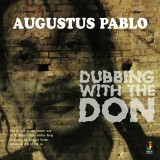
Augustus Pablo - Dubbing With The Don
  • A1: Skank On Dub
  • A2: Way Out Rockers
  • A3: Pablo's Express
  • A4: Pablo's Happy Feeling
  • A5: Soldier Man Dub
  • A6: Well Frozen Dub
  • A7: Sweet Cassava Dub
  • B1: Talking Dub
  • B2: Pablo's Connection
  • B3: Skanking With Pablo
  • B4: Pablo's Delight
  • B5: Death Trap Dub
  • B6: Rockers Downtown
  • B7: New Train Dub

2024 Repress
If anyone in the reggae circles could be described as having their own sound it would have to be Mr Augustus Pablo, born Horace Swaby 1954 St Andrew Jamaica. He took the humble melodica a wind blown mouth keyboard and made it shine.

His musical journey started one sunny day in 1969. Walking into Herman Chin- loy's Aquarius Records shop and on playing his melodica so impressed its owner that he was taken off to Randy's Studio 17, the very next day to cut his first record 'Iggy Iggy'. But it was his second tune under the guidance of Clive Chin again cut at Randy's, the seminal 'Java ' that put the young Augustus Pablo on the map. Clive Chin continued his work producing Pablo's debut album 'THIS IS AUGUSTUS PABLO' . An instrumental affair on which the neo-mystical ''Far East'' sound synonymous with Pablo's work emerged.

Having worked with most of the top producers of the time,Lee Perry,Keith Hudson, Bunny Lee, Augustus decided to set up his own label "Rockers", named after his brothers sound system. Where many of his tunes would first be heard.The label came to define a new and exciting chapter in reggae history.Even when versioning acknowledged classic Studio One rhythms there was a precious maturity and depth to Pablo's productions that kept him at the top throughout the late 1970s and into the 1980s. His 'King Tubby meets the Rockers Uptown' set which featured some of these rhythms reworked; Swing EasySkanking Easy, Frozen SoulFrozen Dub, stands as one of the true dub classic albums of any reggae education.

This set of dubs are taken from his classic 70's period.All rare dubs straight from the masters. You may have heard the tune, but not these versions. So sit back and enjoy the Original Rocker..... STILL SOUNDS SWEET.

RESPECT....JAH FLOYD.

pre-order now17.10.2025

expected to be published on 17.10.2025


Last In: 2026 years ago
King Tubby - Lost Treasures LP

Born Osborne Ruddock in Kingston in 1941, he grew up around High Holborn Street in Kingston, before moving to the new Waterhouse district in 1955. His electronic genius grew from working and fixing radios and TV sets. A natural progression led to working with amplifiers, and starting his own sound system, 'Tubby's Home Town Hi-Fi'. A very competitive games i the late 60's. You were as good as the EXCLUSIVE records you played.
Tubby discovered during his time cutting discs for Duke Reid's Treasure Isle set up, that by dropping vocals/instruments in and out of the backing tracks, you could invent new versions of existing old tunes. These early versions tried and tested on his sound system went down so well that he invested in a four track mixing console with delay echo effects, sliders and phasing units and so began King Tubby's 'Studio Of Dub' at 18 Drummlie Avenue, Kinston 11 , Jamaica...His Home.....
This is where all the producers would bring their tracks for Tubby to put his magic over. Most tracks that came out in Jamaica from here on in would carry a 'Version' on it's B- Side more than likely a Tubby Dub.
One of the producers who used him the most was Bunny Striker Lee, who's labels Jackpot, Justice and Attack all carried Tubby's mixes/versions on their flip sides.
Our collection here, all taken from original master tapes you might have heard the tracks before but not these versions....Lost in the vaults till now. So sit back and enjoy the dub master at work.

RESPECT.... JAH FLOYD

Track 1 CHERRY'S DUB
We start off with a very early version of Eric Donaldson's 'Cherry O Baby'.
This version was recorded at Dynamic Sounds, in 1971 and has remained lost on master tape until now.

Track 2 FRENEMY DUB
This classic rhythm known as 'Mad Mad World' and 'Crying in the Ghetto' both voiced by Winston Jarret
got worked on by Tubby as an exclusive mix for his sound system. Released here for the first time featuring
the late, great Jacob Miller on dubbed vocal.

Track 3 FALLING FOR DUB
A version here of Cornell Campbell's 'My Whole World is Falling Down' Tubby in fine form.

Track 4 DUB ON THE STREET AGAIN
Yes my friend The Street Again finds Cornell Campbell's vocal dubbed King Tubby Style Nice Rockers drums from Sly Dunbar.


Track 5 DECEIVING THE DUB
Sly and Robbie dubbing up Delroy Wilson's ' So Long Jenny' with King Tubby at the boards

out of Stock

Order now and we will order the item for you at our supplier.


Last In: 19 months ago
Various - Ska From The Vaults Of Wirl Records
  • 1: Chinatown-The Skatalites
  • 2: The Reburial-The Skatalites
  • 3: South China Sea-Johnny Moore
  • 4: Determination-Roland Alphonso
  • 5: Love In The Afternoon-Don Drummond
  • 6: Confucius-The Skatalites
  • 7: Live Wire-The Skatalites
  • 8: Ska-Boo-Da-Ba-The Skatalites
  • 9: A Shot In The Dark-The Skatalites
  • 10: El Pussycat-The Skatalites
  • 11: Ska-Ra-Van-The Skatalites
  • 12: Smiling-The Skatalites
  • 13: Ringo Rides-The Skatalites
  • 14: Vc 10-Roland Alphonso

Ska was the name given to the music that came out of Jamaica between 1961/66.Based on the American R&B and Doo Wop records that the Sound Systems in Kingston Town used to play.But the American records style started to mellow out while the Jamaicans preferred a more upbeat sound.So the Sound System boss's became record producers to cater for this demand.Sir 'Coxonne'Dodd and Duke Reid led the way putting the top musicians on the island in the studio to make music,its subtle twist that had an emphasis placed on the offbeat made the music unmistakably Jamaican.
W.I.R.L Records(West India Records Limited) was set up by the Jamaican politician Edward Seaga in the late 1950's.He had supervised the recording of an album of Ethnic Jamaican music and needed an outlet for its eventual release.In 1962 the year of Jamaican Independence ,Seaga became a member of Parliament, representing the Jamaican Labour Party and then decided to sell the label to Bryon Lee,the sale led to a name change from W.I.R.L to Dynamic Sounds.
We have compiled some of the best SCORCHING SKA SOUNDS that came out of W.I.R.L vaults...and it still sounds as fresh today as the day it was recorded...hope you enjoy the set

pre-order now10.10.2025

expected to be published on 10.10.2025


Last In: 2026 years ago
Various - Rocksteady Taking Over Orange Street 1966-1968

Rocksteady took over Orange Street ,Kingston, Jamaica around 1966,the same time that an extreme heat wave hit the Jamaican Island.
Some say the previous jerky Ska Rhythms proved too strenuous of an activity to partake in during the all night Sound Systems.
So it proved a winning formula to slow the beat down to a more leisurely pace.

Whatever the reasons were this two year period that ran until 1968 would see some of the power escape from the big three producers,Clement 'Coxonne 'Dodd,Prince Buster and Duke Reid...who up to that period ruled the airwaves. It was time to make room for a new wave of up and coming producers that also had something to offer the people.

So sit back and enjoy some Rocksteady straight from the dances of Jamaica...Hope you enjoy the set...............

out of Stock

Order now and we will order the item for you at our supplier.


Last In: 62 days ago
Scientist - At The Controls Of Dub - Rare Dubs 1979 – 1980

Scientist's name will be found on many dub releases in peoples record collections.His connection to King Tubby's studio is inseparable and many say when the dub end of Reggae music had fallen on quieter times it was Scientist with his often stripped back style and at other times, wild off the wall remixes that breathed life back into the dub cannon.

Scientist (born Overton Brownie,1960, Jamaica) was in many ways King Tubby's apprentice. Having helped his own father out repairing televisions and such like, he would help Tubby on winding transformer coils, that the amps of the day all needed. His interest in recording grew as he watched the many sessions taking place at Tubby's Dromilly Avenue Studio, learning the ropes as the musicians came and went. His first break happened when King Jammy (then Prince Jammy) was too tired to work on a session booked for producer Errol 'Don' Mais. Scientist engineered the session to every one’s bewilderment and great satisfaction.

His first hit would be a mix of Barrington Levy's 'Collie Weed' and his reputation built on the many versions he cut at Tubby's where he would become the engineer of choice. His pared down mixing style suited the new Dancehall reggae sound that came at the tail end of the 1970's and rolled into the 1980's. Such was his stature that albums were now sold with his name on their jacket, 'Scientist Vs Prince Jammy, 'Scientist meets The Space Invaders' to name but two.

His time at King Tubby's was followed as chief engineer working for the Hookim Brothers at the mighty Channel 1 Studio's and on many of top producer Henry 'Junjo' Lawes tracks, that were hit after hit at the time.

We have compiled some tuff tracks from the late 70's / early 80's just before everything went digital. Some great dub versions to some killer tracks that rocked the dancehalls around this golden time.The mighty Tristan Palmer whose killer cuts 'BadBoys','Stop Spreading Rumours','Eveready' and 'The Greatest Lover’ alongside Michael Palmer's debut release 'Mr Landlord' and Robert Trench's 'Mr Babylon'. The songs stand back-to-back with Tony Tuff's timeless 'Never Trouble Trouble' and the biblical Rod Taylor's 'The Lord is My Light'. Sammy Dread's 'Wah Dah Wah' and the always respectful Dennis Brown's 'Time and Place' all benefited a touch of magic from The Scientist and his laboratory of effects.

Hope you enjoy the set.....

out of Stock

Order now and we will order the item for you at our supplier.


Last In: 5 months ago
TAPPA ZUKIE - HORNS UP - DUBBING WITH HORNS

Tappa Zukie is not only one of Jamaica’s greatest DJ’s, is also a much respected producer and arranger. Looking back through his master tapes we have found a lost release that due to being a worldwide recording artist and the pressures that this carries, it has stayed on his musical shelf and been passed over... until now.

When rhythm was King way back in the 1970’s, the predominant feature of the final mix down would in most cases be the drums and bass. Bringing drums and bass to the fore, the other instruments that create the tunes mood would take a back seat in the mix. With such fine musicians in the horn sections as Vin Gordon, Deadly ‘Headley’ Bennett and the unstoppable Tommy McCook, it sometimes felt, their services if nothing else were slightly underused.

So one way of rectifying this situation was one that Tappa himself instigated, putting a release together by picking some of his favourite productions that carried classic horn lines alongside those tightly recorded rhythms. Pushing those horn lines up in the mix and so making a feature of some of those touches that although added some colour to the original cut, laid back in the mix to the more Sound System friendly drum and bass cut.

When looking at the music with this approach, some of the other influences that were also in Tappa’s mind can be noticed more. Maybe it’s a Jazzier / Bluesy feel shining through. A strange thing happens that almost takes the song down the avenue of a soundtrack album. An unreleased film score to accompany an unreleased film.

So sit back and enjoy a lost release that time and place did not find time to see the light of day. As the opening track testifies and in the immortal words of Mr Tappa Zukie himself.. “Your Musical Daddy is back... Horns Up !!!!”

out of Stock

Order now and we will order the item for you at our supplier.


Last In: 11 months ago
SLY & ROBBIE - MEET BUNNY LEE AT DUB STATION
  • A1: Dub Takeover
  • A2: Nobodies Dub
  • A3: A Dub Tribulation
  • A4: Liquidator Dub
  • A5: African Dub Child ( Part 1)
  • A6: None Shall Escape The House Of Dub
  • B1: Legalise The Dub
  • B2: Satta Massa Dub
  • B3: A Bad Way To Dub
  • B4: Dub To The Roots
  • B5: Zion Gates Of Dub

Sly Dunbar and Robbie Shakespeare or Sly and Robbie as they are affectionately known are the drum and bass backbone of Reggae Music, they have played on, produced, invented, reinvented more records then many of their contemporaries put together.

Sly Dunbar born Lowell Charles Dunbar on 10 May 1952, Kingston, Jamaica, drummed his first session for Mr Lee Perry which included a Jamaican hit ,a track called 'Night Doctor', before moving on to the group Skin, Flesh & Bones who had a residency at Kingston's famous 'Tit for Tat' club. This band would evolve into the Channel One house band The Revolutionaries where Sly named after his fondness of the band Sly and the Family Stone would begin to play alongside a bass player who would become his long standing partner in music, namely one Robbie Shakespeare.

Robbie Shakespeare born 27 September 1953, Kingston, Jamaica, had worked his way through session bands including the legendary Aggrovators before uniting with Sly Dunbar in The Revolutionaries. Both musicians had worked with other respective bass / drum players including such figures as Lloyd Parks bass, Carlton 'Santa' Davis drums, but everything seemed to fall into place when they worked together.

They also both had a quest to push the boundaries of reggae music, which they would do throughout their careers, over many sessions to numerous to mention. But highlights would include the groundbreaking Mighty Diamonds 1976 set 'Right Time' with its fresh rockers rhythms which lead the way in the 1970's. Also their work with the bands Culture and Black Uhuru the later of which they toured extensively with, spreading the reggae vibes across Europe and America. Not to forget to mention their Taxi label / productions which are always inventitive whether its in the reggae field or outside where their playing / production skills are much in demand.

The third piece of this jigsaw is the mighty Mr Bunny 'Striker' Lee who brought these legends together. Born Edward O'Sullivan Lee 23 August 1941, he must be one of reggae's most underrated producers. Leading the way in the 1970's especially in the dub field and being one of the early exponents of a King Tubby remix ,which would see nearly all his 7'' releases carrying a Tubby reworking on its flip side. Bunny started his musical career in 1962 working for Duke Reid's Treasure Isle label and soon moved into the world of production gaining his first hit in 1967 with 'Musical Field' by Roy Shirley for the WIRL label. The 1970's was a very productive time for Bunny Lee and saw the launch of his LEE'S label which was producing hits in Jamaica. Not having a studio of his own and renting studio time from the existing establishments like Randy's Studio 17 and Channel One he had to have a crack team of session players to carry out this task, fast and efficiently. This happened firstly under the guise of THE AGGROVATORS see The Aggrovators dubbing it studio 1 style JRCD005 and then with the group of musicians THE REVOLUTIONARIES[ see The Revolutionaries at Channel 1 dub plate specials JRCDOO3]. It’s here in the latter of these groups that Bunny matched Sly and Robbie together for the first time and it’s this match made in heaven that these tracks on this release are culled from. Sessions that Bunny Lee produced with Sly and Robbie during this magical 70's period. These rare dubs are taken from the original master tapes, you may have heard the tune before but not these versions. So sit back and enjoy Reggae Musical History in the making....

out of Stock

Order now and we will order the item for you at our supplier.


Last In: 16 months ago
THE AGGROVATORS - DUBBING IT STUDIO 1 STYLE

2024 Repress
The Aggrovators were one of Jamaica’s finest session bands, many of the tracks you know and love from the 70’s Reggae scene probably featured this group of musicians in some shape or form.
The band were put together by Bunny’Striker’Lee , one of Jamaica’s formidable producers, who with no studio of his own had to rely on buying studio time from the existing establishments, such as Randy’s Studio or Channel 1.
The updating of Studio 1 classic’s which in some cases were reworkings of American R&B tunes was common practice. The rhythms were much loved favourites and with the added incentive that the musicians knew the tracks inside out.
This set of dubs are straight from the master tapes of such sessions orchestrated by the man Bunny Lee himself, no one knew better…you can’t keep a good tune down never mind a great one..
So sit back and enjoy The Aggrovators in fine Studio 1 style….RESPECT

out of Stock

Order now and we will order the item for you at our supplier.


Last In: 6 years ago
King Tubby - Dub Mix Up

King Tubby the Dub Master, who's output was as prolific as it is sought after, and who's presence is surely missed. We would like to take you on another dub excursion. This time through some essential cuts made for the Producer / DJ Tappa Zukie. King Tubby always added something a little special to the tracks he worked on. Producers would often bring their already recorded tracks to his home studio at 18 Drummlie Avenue in the Kingston district of Waterhouse. The backing tracks which were laid at various other studios around Kingston. Like Channel 1and Randy's Studio 17, would then be voiced/Re-voiced at King Tubby's. Tubby and his team which included Prince Jammy and Philip Smart would be left to create the version cut.

Having listened to the track it would be striped back to the bone of bass and drums and rebuilt. Sprinkling his magic over the track by dropping the bass in and out, adding echo and emphasising various elements of the song. In some cases, dubbing the cut into something unrecognisable from its original sound.

The tracks would be aired on Tubby's Hometown Hi-Fi Sound System. Which acted much like a pre-release for the record to gauge the crowd’s reaction, before the tracks would be unleased on the public. We think we have sourced another fine collection of Tubby Cuts see also King Tubby's Lost Treasures JR001, comprising of work with Mr Tappa Zukie. Lost cuts to some of his own tracks like 'First Street Rock', alongside productions he undertook with the great Prince Allah, Junior Ross and the Spears. Also, the much-overlooked vocal group Knowledge. Some great rhythms, some great tracks, worked over by the greatest dub mixer of them all. Hope you enjoy the set as much as we have compiling it...

Respect Jah Floyd.

out of Stock

Order now and we will order the item for you at our supplier.


Last In: 10 years ago
Bunny Lee + King Tubby - Brass Rockers LP

repress !

“Tubby did three original dub albums, ‘Dub From The Roots’. ‘The Roots of Dub’ and the third is ‘Brass Rockers’ with Tommy McCook ‘pon the flying cymbals. Where he mixed it with the horn going in and out in a dub way and one named ‘Shalom Dub’ you can call Tubby’s too because he mixed the versions as they were off forty fives’’
Bunny ‘Striker‘ Lee

King Tubby and Producer Bunny ‘Striker’ Lee are intertwined in the birth of Dub Music. After discovering a mistake that made a ‘serious joke’ ( more of which later...) they went on to release the first pressings of this new musical genre namely ‘Dub Music’. Tubby’s vast knowledge of electronics and Bunny’s vast catalogue of rhythms would lay the foundations of what today is taken as a standard... the Remix / Version cuts to an existing vocal tune.

Osbourne ‘King Tubby’ Ruddock was born in Kingston, Jamaica on 28th January 1941 and grew up in the High Holborn Street area of downtown Kingston. He studied electronics at Kingston’s National Technical College and also on two correspondence courses from the U.S.A... When he had qualified Tubby began repairing radios and other electrical appliances in a shack in the back yard of his mother’s home. His work in the early days included winding transformers and building amplifiers for Kingston’s Sound Systems. Tubby built his first Sound System in 1957 playing jazz and Rhythm & Blues at local weddings and birthday parties. His reputation as a man who knew and understood both electronics and music grew steadily and as the sixties drew to a close. Tubby purchased his own basic two track equipment. He installed this alongside his dub cutting machine, a home made mixing console and his impressive collection of Jazz albums in the back bedroom of his home at 18 Dromilly Avenue which he christened his music room.

Tubby and Striker were at Treasure Isle Studio’s one day while Ruddy from Spanish Town was working with the engineer Byron Smith....

“Tubby and myself was talking when Ruddy was cutting some dub but Smithy (engineer) made a mistake through we were talking and forgot to put in the voice. It was two track recording in those days. Ruddy said ‘No Man! Make it stay! and so they cut the rhythm. When I went over to Ruddy’s that Saturday night a dance was in progress and when they played the vocal to the tune... then he said we’re going to play ‘Part Two’. They never called it ‘Version’..and then he played the rhythm track. The song was a catchy song and everybody started to sing along and the deejay started to toast so everything went down well. On Monday morning I went up and I said ‘Tubbs the mistake we made was a serious joke.It mash up Spanish Town! The people went wild. So you have to start to do that now ‘cause when the man put on the ‘Part Two’ everyone start singing this song. It played about twenty times. I said you try Tubbs!’...Well the next Saturday night now when Tubby strung up down the farm U Roy said he’s going to play ‘Part Two’ but Tubby did it different now. He started with the voice then dropped it out and let the rhythm run and then he brought in the voice in the middle and from there Tubby started to get really popular.’’
Bunny ‘Striker’ Lee

Dynamic Sounds upgraded to sixteen track recording in 1972 and Tubby purchased, again with the help of a deal brokered by Bunny Lee. The old four track equipment and the MCI console from their Studio B. The four tracks now gave him far wider scope to work with and he began to create a new musical form where the bass and drum parts were brought up while the faders allowed Tubby to ease the vocal and rhythm in and out of the mix. It was only a matter of time before Tubby’s dub plate experiments began to make it on to vinyl and the first ever long playing King Tubby releases would feature a collection of his mixes to a selection of Strikers rhythms. So please sit back and enjoy this historic set of sounds. Lovingly restored and with a few extra gems added to the CD Editions. These releases were the first to carry the name of King Tubby and the first to credit the great musicians that contributed so much to the rhythms that made these albums possible.

out of Stock

Order now and we will order the item for you at our supplier.


Last In: 18 months ago
Horace Andy - Dub Box – Rare Dubs 1973-1976
  • A1: Why Oh Why Dub
  • A2: Dub Larking
  • A3: Zion Dub
  • A4: Dub Money
  • A5: A True Dub
  • A6: Dub Guidance
  • B1: Dub Say Who
  • B2: Dub On My Mind
  • B3: Love Of A Dub Band
  • B4: Use This Dub
  • B5: Dub Letter
  • B6: Dub Angel

Horace Andy a.k.a.Sleepy must process one of the sweetest and most distinctive voices in reggae music. 1951 in Kingston Jamaica. He cut his first track in 1966 for producer George ‘Phil’ Pratt, a tune called ‘Black Man’s Country’. But it was four years later his star really began to shine when he joined the stable of Clement ‘Coxsone’ Dodd’s Studio One. It was Coxsone Dodd who renamed him Andy after another of his leading artists Bob Andy, such was his belief in Horace’s writing talent and singing abilities. Still only twenty years of age Horace used his falsetto talent to the fore and cut some impressive tracks at 13 Brentford Road, Studio One’s headquarters. Such reggae standards as ’Skylarking’, ‘Just Say Who’, ‘Love of a Women’ and ‘Something on my Mind’ to name but a few. The early 1970’s saw Horace due to political reasons move on to work with producer Bunny Lee, a move that suited his talents and beliefs, Horace being an early advocate to the Rastafarian faith.The tracks which he cut with Bunny, which we concentrate on here gave his songs a rootsy feel. The rhythms often cut at Channel ONE and Randy’s Studio17 and finalised at King Tubby’s, provided a fine backbone for Horace to recut some of his earlier classics, along side his newer songs also to become reggae standards. Like ‘Money Money’, ‘Zion Gate’ the great ‘You are my Angel’ and a version of The Heptones ‘My Guiding Star’. The power of these recordings were such that the earlier tracks like ‘Skylarking’ became hits a second time around.Proving that the ‘you can’t keep a good tune down’ mantra was alive and kicking… …A golden time for Horace and Reggae music in general… Horace would go on to work with other producers like Everton Da Silva in 1977 creating the ‘In the Light’ album and the New York based Lloyd ‘Wackies’ Barnes in the 1980’s for his ‘Dancehall Style’ recordings. Most recently his work with Massive Attack has brought his majestic voice full circle and back into the arena once more. Those ‘Massive’ recordings and this dub collection here seem to fit side by side. Horace’s distinctive vocal riding over the rhythms adding a magic as only he can .....

RESPECT JAH FLOYD.

out of Stock

Order now and we will order the item for you at our supplier.


Last In: 21 months ago
Lee Perry - 'Skanking With The Upsetter “Rare Dubs 1971- 1974”

Mr Lee Perry who in no uncertain terms defines the words musical genius, recorded some of the most inspiring, soulful, funny and weird / wild reggae music ever put down on tape. Working through all the manifestations of reggae from Ska to Roots and Dub, where his ground breaking 1973 ‘Blackboard Jungle’ LP, set the standards, he was an innovator. If this was not enough his recordings of THE WAILERS, many believe to be their finest work. Born Rainford Hugh Perry, 28 March 1936, Hanover, Jamaica. He began his career at the grand age of 16, working for Clement ‘Coxone’ Dodd’s sound system, rising quickly to the position of record scout and organising recording sessions during his 3 year period 1963-1966. Restlessness and unsatisfied with credit he felt due to him he moved on to work with Producers J.J. Johnson and Clancy Eccles, the later of which would help him set up his ‘Upsetter’ label in 1968,which would see his first of many recordings telling the injustices done to him by previous employees. ‘The Upsetter’ track itself pointed at Mr Dodd but reflected back to Perry when he inherited it as a nick name along side many others during the coarse of his career, including ‘Scratch’, again taken from one of his recordings ‘Chicken Scratch’ recorded in 1965/1966. Perry’s work in 1968 with producer Joe Gibbs was fruitful and resulted in many successfulreleases, but again lack of credit and itchy feet, it was time to move on. But not without leaving his trademark recording summing up his feelings at the time ‘People Funny Boy’ this time aimed at Mr Gibbs. Still not having a studio of his own, Perry recorded at the various Kingston establishments of the time, Randy’s Studio 17 on North Parade, Dynamics on Bell Road and Harry J’s on Roosevelt Avenue where the bulk of the aforementioned recordings with The Wailers were carried out. During this time and the years that followed Perry has built up a vast catalogue of backing tracks / instrumentals, he had cut over a 100 releases on his ‘Upsetter’ label alone. A library of music that he has an uncanny knack of reutilising to work into something new when put against a new song / singer. This collection of rare and unreleased dubs stems from his 1971-1974 period. We can here on tracks like ‘Perry’s Jump Up’ Ska-ish up tempo chopping guitar cuts leading through to organ laden tracks like ‘Roots Rock Dub’. The sound moving to a slowed down rhythm on ‘Perry in Dub’ which would predominate his sound, when in mid 1974 he’d open his own studio at his home in the Washington Gardens district of Kingston. We hope this selection of lost treasures will add to the jigsaw that makes Mr Perry’s output now spanning over 5 decades so remarkable.
RESPECT.... JAH FLOYD.

out of Stock

Order now and we will order the item for you at our supplier.


Last In: 22 months ago
Aquarius Sounds - Dubbing At Aquarius Studios 1977-1979

Record Producer/ DJ / Record Plugger and Record Shop Owner Herman Chin-Lay operated out of his Aquarius Record shop at Half Way Three ,Kingston ,Jamaica.
It is from this base that he started his recording studio where he not only put out the first ever Dub album 'Aquarius Dub' but was also responsible for naming future artist Horace Swaby.
By allowing him to use his exotic fictitious working name 'Augustus Pablo' for his own recording career.
Although called 'Aquarius Dub' the tacks that make up this album were cut at Dynamic Sounds, Harry J's and Randy's Studio 17.
It was not long after this release that Herman opened the first ever twenty four track studio Aquarius Studios.
We have compiled this set of Dub tracks that were worked on at Aquarius studio's itself.
Using the legendary studio for some of the recordings and/or it's mixing and voicing facilites.
Hope you enjoy the set...Dubbing at Aquarius Sounds...

out of Stock

Order now and we will order the item for you at our supplier.


Last In: 2 years ago
Johnny Clarke - I Don't Want To Be A Rude Boy

From the very successful Jamaican Recordings 7'' Singles Club, here is the 23rd release
An under promoted Johnny Clarke classic advising against the rude boy badness that hit Kingston,Jamaica in the 1970's backed with its original King Tubby version

out of Stock

Order now and we will order the item for you at our supplier.


Last In: 2 years ago
Items per Page:
N/ABPM
Vinyl