Cerca:harada

Generi
Tutto
  • 1
TOMOYO HARADA - I Could Be Free
  • A1: Love Rocket
  • A2: I Could Be Free
  • A3: You Are Yours
  • A4: Listening To The Rain
  • A5: Romance
  • A6: Love
  • A7: Circle Of Friends
  • B1: Are You Happy?
  • B2: Parade
  • B3: Vacation
  • B4: Navy Blue
  • B5: Embracing The Burning Sun
  • B6: Let's Take It Easy

Tomoyo Harada x Tore Johansson's "I Could Be Free," a shining monument in the history of '90s J-Pop, is finally being reissued on vinyl!
JUDGMENT! RECORDS Vinyl Odyssey: Part I

Produced by Swedish virtuoso Tore Johansson, this album is renowned as the pinnacle of Tomoyo Harada's "Swedish Pop Trilogy."
This delicate worldview has been meticulously recreated on vinyl by the new label, JUDGMENT! RECORDS, headed by acclaimed record designer
Koki Hanawa, with a unique aesthetic and meticulous attention to detail. The meticulous binding, featuring an E-style trifold cover, enhances the album's
appeal both visually and aurally.

pre-ordina ora21.11.2025

dovrebbe essere pubblicato su 21.11.2025


Last In: 2026 years ago
TOMOYO HARADA - Music & Me
  • A1: Cruel Park
  • A2: Colorful City
  • A3: You And Me
  • A4: Are You There?
  • A5: I Will
  • A6: Wonderful Life
  • B1: The House Of The Linden Tree
  • B2: Cynthia
  • B3: Aie
  • B4: Nostalgia
  • B5: Gardenia Hill
  • B6: The Girl Who Leapt Through Time

Tomoyo Harada's crystalline masterpiece, "music & me," finally reissued on vinyl.
JUDGMENT! RECORDS Vinyl Odyssey: Part II

In 2007, Tomoyo Harada's album "music & me," produced by Goro Ito, was released to commemorate her 25th anniversary since her debut.

This album, which combines an acoustic vibe with a soft, limpid vocals, continues to garner overwhelming support from fans even 18 years after its release.

Her self-covers, "Cynthia" and "The Girl Who Leapt Through Time," are masterful bossa nova arrangements that resonate with her roots and maturity,

making them truly exceptional works to be enjoyed on vinyl. To maximize their appeal, the new label "JUDGMENT! RECORDS," headed by acclaimed record

designer Koki Hanawa, has released the album on vinyl with his unique aesthetic and craftsmanship.

The meticulous binding, featuring an A-type semi-double cover, recreates the album's worldview both aurally and visually.

■ Participating Artists: Keiichi Suzuki, Yukihiro Takahashi, Masakatsu Takagi, Taeko Onuki, Kiseru, Yuji Oniki, etc

pre-ordina ora21.11.2025

dovrebbe essere pubblicato su 21.11.2025


Last In: 2026 years ago
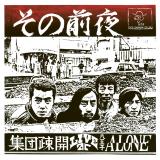
Shūdan Sokai - Live At 八王子 Alone

First time reissue of JP free jazz rarity, pre-Seikatsu Kōjyō Iinkai group.

The single album self-released by the quartet Shūdan Sokai in 1977 is one of the most vital documents of mid-seventies Japanese free jazz, documenting Tokyo’s free scene at the precise moment when it began to shift to a handful of tiny venues on the western fringes of the city. In Free Jazz in Japan, Teruto Soejima identifies the extant venue Aketa no Mise in Nishi-Ogikubo as the pioneer of this decamping from the centre: a cramped basement beneath a rice shop, seating just 20 people. Musician-run, operated on a shoestring, these spaces offered a vital site for community, creativity, and a small measure of financial independence — “even though it was in a basement, in spirit it was a loft.”

Among the most active of the new venues was Alone in Hachiōji, nearly an hour from Shinjuku, in a district shaped by universities, lower rents, and a thriving counterculture. Originally opened in 1973 as a jazu kissa, Alone was unusually spacious and equipped with a stage, grand piano, and drum kit. Around 1974, Junji Mori and Yasuhiro Sakakibara began working there, booking free jazz players on weekends and establishing the venue as a crucial hub. Mori recalls early appearances by figures including Kazutoki Umezu, Toshinori Kondo, and others who would define the scene.

In early 1976, Umezu and pianist Yoriyuki Harada — recently returned from New York’s loft jazz environment, where they had played with musicians such as David Murray and William Parker — formed Shūdan Sokai with Mori and drummer Takashi Kikuchi. The name, meaning “mass evacuation,” pointed to their self-chosen exile in Hachiōji. With Alone as their home base, the quartet developed a music characterized by an infectious sense of enjoyment and a willingness to integrate free jazz with elements of song structure. Harada switched between piano and bass; the group experimented with rap-like vocal pieces, jabbering nursery rhymes over bass rhythms.

They returned to Alone on December 24 to record Sono zen’ya (Eve), releasing it on their own Des Chonboo Records, partially funded by advertisements from local businesses printed on the rear cover. The closing “Ballad for Seshiru,” dedicated to Harada’s newborn son, unfolds over a delicate piano melody that moves into emphatic chords as intertwining alto lines rise and spiral.

Alone closed in September 1977, and Shūdan Sokai soon dissolved, later morphing into the expanded Seikatsu Kōjyō Iinkai Orchestra. What remains is a recording rooted in a specific place and moment: a fiercely independent scene sustained by small rooms, close listening, and collective commitment.

pre-ordina ora10.04.2026

dovrebbe essere pubblicato su 10.04.2026


Last In: 2026 years ago
MASAO YAGI - MASAO YAGI PLAYS THELONIOUS MONK (1960)LP

Masao Yagi’s memorable first leader date, by a musician active since the dawn of Japanese jazz and also known as a devoted Monk scholar. This album features Monk’s compositions throughout, including classics such as "’Round Midnight", "Straight, No Chaser", and "Blue Monk".

Masao Yagi (p)
Sadao Watanabe (as)
Akira Nakano (tp)
Masanaga Harada (b)
Teiichi Tabata (dr)

pre-ordina ora22.05.2026

dovrebbe essere pubblicato su 22.05.2026


Last In: 2026 years ago
VARIOUS - Diggin Japanese Aor Selected By Muro LP 2x12"

EU/UK Exclusive

Japanese pressing

From Universal Music's vast catalogue, the essence of Japanese AOR, all tracks are selected and played in Muro's mix cd 'Diggin' Japanese AOR' released in 2017 and now released on 2LP.

This includes some of hidden gems such as Maki Asakawa's 'American Night', Yoshio Harada and more from the late 80's to early 90's - the golden time of Japanese AOR.

pre-ordina ora30.01.2026

dovrebbe essere pubblicato su 30.01.2026


Last In: 2026 years ago
AKIRA MIYAZAWA - Yamame  LP

AKIRA MIYAZAWA

Yamame LP

12inchNAS-2168
KING RECORD
16.01.2026
  • A1: Yamame
  • A2: Memories Through Thick Glasses
  • A3: Fly Casting
  • A4: Like Someone In Love
  • B1: Out Of Nowhere
  • B2: Le Crepuscule Embaume
  • B3: Like Sonny

'Yamame' (the Japanese name for a kind of freshwater salmon) was recorded in 1962 and was Miyazawa’s first album, but the sharpness and avant-garde modernity of the music creates a completely timeless quality. Miyazawa is one of a group of musicians who laid the foundation of the Japanese jazz scene. He wanted to express his cultural heritage by doing something he felt “only someone Japanese” could do, and so he dedicated himself to a pursuit of “Japanese jazz”. Incidentally, the album was originally simply titled “Akira Miyazawa”, but perhaps due to the impression the cover art and the track titles made, it was reissued in 1977 as “Yamame”, and has gone by that title ever since. This is an historic masterpiece of Japanese jazz.

Tenor Saxophone – Akira Miyazawa
Alto Saxophone, Flute – Sadao Watanabe (tracks: B1 to B3)
Baritone Saxophone, Clarinet – Tadayuki Harada (tracks: B1 to B3)
Trombone – Mitsuhiko Matsumoto (tracks: B1 to B3), Yasuhiro Tomoto (tracks: B1 to B3)
Trumpet – Akira Nakano (tracks: B1 to B3)
Piano – Masahiko Sato
Bass – Masanaga Harada
Bass Trombone – Takeshi Aoki (tracks: B1 to B3)
Drums – Kanji Harada, Takeshi Inomata
Supervised By – Jiro Kubota

pre-ordina ora16.01.2026

dovrebbe essere pubblicato su 16.01.2026


Last In: 2026 years ago
TETSU YAMAUCHI - Tetsu

TETSU YAMAUCHI

Tetsu

12inchCOJA-9558
NIPPON COLUMBIA JAPAN
14.11.2025

Yamauchi Tetsu (Bass, Guitar, Vocal) / Eleanor Barooshian (Vocal) / Narita Masaru (Vocal) / Pipi Shibata (Guitar) / Ohno Katsuo (Keyboards) / Harada Hiroomi (Drums, Percussions) / Tsunoda Hiro
(Drums, Percussions) / Charlie (Percussions)

Strong groove and sharp guitar sound
Yamauchi Tetsu's first solo album recorded in Japan while still in Free
Yamauchi Tetsu, who became the bassist for the British band Free after playing for Mickey Curtis & Samurai, recorded his first solo album during a temporary return to Japan in 1972.
This is a full album with plenty to listen to, including the edgy guitars on "Wiki Wiki," the groovy funk rock on "First Time," "How To Cook," and "Orange Dog," and Eleanor's languid vocals
on "Alexander Stone," "Why," and "Baby Blue." Reissued with remastering by Makoto Kubota.

Commentary: Shinichi Ogawa
Remastering: Makoto Kubota

pre-ordina ora14.11.2025

dovrebbe essere pubblicato su 14.11.2025


Last In: 2026 years ago
YO SEGAWA - Pierrot

Yo Segawa

Pierrot

12inchCOJA-9557
NIPPON COLUMBIA JAPAN
07.11.2025
  • A1: This Is How I Feel
  • A2: A Fun Sunday
  • A3: Why Were We Born?
  • A4: That Can't Be Good
  • A5: A Long Night
  • A6: Blistering Chatter
  • A7: The White Room Where You Were <Bonus Track>
  • B1: Pierrot
  • B2: Bloom!! Old Man
  • B3: Time Flows - Goodbye Baby
  • B4: A Worn-Out Goldfish

Segawa Hiroshi (vocals, guitar) / Ishima Hideki (guitar) / Harada Hiroomi (drums) / Nomura Mitsuro (drums) / Kozuki Jun (drums) / Yamauchi Tetsu (bass) / Ohno Katsuo (keyboards)

Segawa Hiroshi's solo album, pursuing country rock and southern rock in Japanese
A treasure of Japanese rock, bringing together members of Flower Travellin' Band, Samurai, and PYG
After the GS boom subsided and New Rock was in full swing, Segawa Hiroshi was one of the few bands pursuing country rock and southern rock in Japanese, while most bands were aiming for British rock.
The album "Pierrot," one of the culminations of this endeavor, was produced with the help of a lineup of representative Japanese new rock artists, including Ishihama Hideki and Kozuki Jun from
Flower Travellin' Band, Yamauchi Tetsu and Harada Yushin from Samurai, and Ohno Katsuo from PYG.
The album has been reissued with the additional recording of the single "The White Room Where You Were," released the year after "Pierrot," and remastered by Kubota Makoto.

Commentary: Ogawa Shinichi
Remastering: Kubota Makoto

pre-ordina ora07.11.2025

dovrebbe essere pubblicato su 07.11.2025


Last In: 2026 years ago
HIROSHI SEGAWA - PIERROT (1972)

While most Japanese bands in the early ’70s were chasing British rock trends, Hiroshi Segawa took a bold, singular path—crafting country rock and Southern rock, sung entirely in Japanese. His masterpiece Pierrot stands as a rare and beautiful outlier, brought to life by a dream team of legendary musicians from Japan’s New Rock scene: Hideki Ishima and Jun Kozuki (Flower Travellin’ Band), Tetsu Yamauchi (Samurai), Yuushin Harada, and Katsuo Ohno (PYG).

Now lovingly reissued with a fresh remaster by Makoto Kubota, this edition also includes the haunting single “Kimi ga Ita Shiroi Heya”, originally released the year after Pierrot. A must-have for fans of Japanese rock history, obscure country rock gems, and boundary-breaking musical vision.

pre-ordina ora08.08.2025

dovrebbe essere pubblicato su 08.08.2025


Last In: 2026 years ago
Snowy White - The Situation LP 2x12"

Endlich erscheint das gefeierte 2019er Album als luxuriöse Doppel-LP!
Auf den 12 Tracks von 'The Situation' das zusammen mit seinen langjährigen Freunden und Wegbegleitern Kuma Harada, Walter Latupeirissa (beide Bass) Max Middleton (Keys), Juan van Emmerloot und Jeff Allen (beide Drums) entstand, erleben wir den Bluesmeister einmal mehr in Höchstform.

Der muntere Opener und Namensgeber des Albums lädt verheißungsvoll ein. In seinem unnachahmlich zurückhaltenden, "understated" Stil beleuchtet Snowy auf den folgenden Tracks unterschiedlichste Lebenslagen, stets untermalt und kommentiert von seinem markanten Gitarrenspiel. Das Ergebnis ist ein reifes, in sich schlüssiges und immens zufriedenstellendes Album.
Das erstmalig auf Vinyl erscheinende Album kommt als 180Gr. Doppel-LP mit Lyric-Sheet, wattierten Innenhüllen und markantem Spotlack-Effekt im Artwork, bei dem das Hauptelement herausgestellt wird. Die edle LP-Version ist streng limitiert auf 500 Stck.

Die Presse schrieb zum CD-Release:
Rock Hard 7.5/10: "Auf "The Situation" (Snowy White/Soulfood) begeistert der passionierte Les-Paul-Spieler einmal mehr mit einem wunderbaren Solo-Ton, aus seiner rauen, zerbrechlich wirkenden Stimme spricht darüber hinaus die pure Lebensweisheit. Geschmackvolles Blues-Album von einem Mann, der nichts mehr beweisen muss, es aber trotzdem tut."

Guitar 4.5/5: "…zwölf fantastische und lebhafte groovende Nummern…"

Good Times: "Starke Refrains, eingängige Melodien, reichlich Energie…"

Jazz Thing: "…eine Menge guter, von einer gewiss auch altersbedingten Nachdenklichkeit geprägter Songs. Sehr schön."

Break Out: "Eine Platte in die man ganz tief versinken kann."

Rocks 8.5/10: "White führt ein exzellentes Bluesrock-Dream-Team an…"

Classic Rock 7/10: "Eleganter Soft- und Bluesrock…"

eclipsed 8/10: "Grandiose Musik für ruhige Momente, die durch die warme und organische Einspielung gewinnt."

Legacy 12/15: "Auf jeden Fall ist Snowy & Co. ein hochwertiges Genre-Album gelungen, dessen zusätzlicher Reiz es ist, eben über die Grenzen dieses Stils hinauszuwachsen!"

pre-ordina ora23.08.2024

dovrebbe essere pubblicato su 23.08.2024


Last In: 2026 years ago
ARI TSUGI - SIMULTANEITY

The word Simultaneity is a technical term from the theory of Special Relativity representing two distinct events happening at the same time. This fluidity is embodied in the musical exploration of Ari Tsugi. Comprised of mostly self-taught musicians, the soundscape is a unique melting pot of UK Jazz scenes and the raw energy that comes from psychedelic rock. Produced and mixed by Glasgow-based musician Sam Bancroft (Starsky-Rae) alongside engineer-producer Villus Vilo Jokubaitis, the album features offerings from Liam Shorthall and India Blue (Azamiah) alongside the original Ari Tsugi trio -Clement Gaud, Joe Weisberg and Mashu Harada - with keys from Angus MacDonald being added later down the line.

pre-ordina ora05.07.2024

dovrebbe essere pubblicato su 05.07.2024


Last In: 2026 years ago
HIROMASA SUZUKI + JIRO INAGAKI AND BIG SOUL MEDIA - BY THE RED STREAM (NEW EDITION)

The sound that swallows jazz rock, mode jazz, and free jazz is serious and profound.

A magnificent concept album that will remain in the history of Japanese jazz with the theme of global anti-war and peace

Hiromasa Suzuki, a rare pianist/composer/arranger who showed his skills in the groups of Terumasa Hino and Akira Ishikawa. Collaborating with Big Soul Media, led by Jiro Inagaki, one of the best jazz rock groups of our time, this work is unusual for a Japanese jazz work, and the concept is based on the theme of “global anti-war and peace.”

The sound that swallows jazz rock, mode jazz, and free jazz is serious and solid, but at the same time, it is full of overwhelming dynamism.

Suzuki’s ability to manage a big band and create a masterpiece sound is also splendid, and Big Soul Media, which listened to Suzuki’s intentions and responded to his request, is also splendid.

Both Suzuki and Inagaki’s activities in the jazz-rock era are at their peak, and this work is also important in that it captures the overlap.

text by Yusuke Ogawa (universounds/Deep Jazz Reality)

Composition/Arrangement/Conductor: Hiromasa Suzuki
Performed by Jiro Inagaki and Big Soul Media
Jiro Inagaki (S.Sax, T.Sax)
Shigeo Suzuki (A.Sax)
Tadayuki Harada (B.Sax)
Takehisa Suzuki (Trumpet)
Tetsuo Fushimi (Trumpet)
Takeshi Nomura (Trumpet)
Shigemichi Domoto (Trombone)
Tadataka Nakazawa (Trombone)
Kazuo Usui (Trombone)
Tsunehide Matsuki (Guitar)
Masaru Imada (Piano, Organ)
Hiromasa Suzuki (Piano, Organ)
Yasuo Arakawa (Bass) / Gen Ishimatsu (Drums)

non in magazzino

Ordina ora e ordineremo l'articolo per te presso il nostro fornitore.


Last In: 2 years ago
TALKING SPIRITS - HANDS LP

Formerly known as James Lascelles’ Quartet, Talking Spirits present a unique blend of world jazz. These highly respected London based session musicians - with a very mixed repertoire - have touched audiences wherever they play. The quartet mixes up world music, folk, jazz and Anglo/Caribbean grooves, inspired by influences from all over the world.

They have honed their skills over the decades working with some of the biggest names in music, including Frank Zappa, Joan Armatrading, Lee ‘Scratch’ Perry, L Shankar, Ginger Baker, Jeff Beck, Steve Winwood, Incognito, Van Morrison, Billy Ocean, Mick Taylor and Steve Harley & Cockney Rebel.

The new Talking Spirits album ‘Hands’ will be released on Zephyrus Records early June. Tracks feature regular band members James Lascelles (various keys and percussion), Tim Herniman and former bandmates from the legendary Breakfast Band Richard Bailey (drums and percussion) and Kuma Harada (bass and guitar). Guests appearances by Tony Maronie on congas, Didier Malherbe (once of “Gong”) on duduk and sax, and the wonderful Mongolian group Andaunion, for whom James specially wrote Grasslands to feature the haunting morinhuur (horse-hair fiddle) and hoomei or overtone singing.

non in magazzino

Ordina ora e ordineremo l'articolo per te presso il nostro fornitore.


Last In: 2 years ago
Seikatsu Kojyo Iinkai - Seikatsu Kojyo Iinkai

Ferocious JP / US free jazz bomb. A rare meeting between the NYC free jazz scene and the Japanese free music scene. Old-style Gatefold LP, with rare photographs & liner notes by Alan Cummings.

Following hot on the heels of the first, mid-sixties generation of Japanese free jazz players like Kaoru Abe, Masayuki Takayanagi, Yōsuke Yamashita, Motoharu Yoshizawa, etc., an exciting second wave of younger players began to emerge in the seventies. Two of its leading members were the saxophonist Kazutoki Umezu and multi-instrumentalist Yoriyuki Harada. Both were post-war babies and immigrants to the city, Umezu from Sendai in the north and Harada from Shimane in the west. They first met as students in the clarinet department at the Kunitachi College of Music, a well-known conservatory in western Tokyo. Harada was already securing sideman gigs on bass with professional jazz groups and was active in student politics, making good use of his connections to set up jazz concerts on campus. It was around this time that the two began to play together in an improvised duo, with Umezu on clarinet and bass clarinet and Harada on piano. They also experimented with graphic scores and prepared piano.

These experiments eventually led to the creation of a trio, with a high-school student called Tetsuya Morimura on drums, that they decided to name Seikatsu Kōjyō Iinkai (Lifestyle Improvement Committee) in joking reference to the Marxist discourse of the student radicals of the time. Around 1973, Umezu and Harada decided to call it a day and go their separate ways. Umezu began playing with the Toshinori Kondo Unit and Harada with the Tadashi Yoshida Quintet. In 1974 Harada formed his own trio and began to play at jazz coffeehouses across Japan.

Then, in September 1974 Umezu travelled alone to New York, where he set about building connections with the loft jazz scene in the city. It was a fortuitous moment to arrive in New York. Rents were cheap in the Lower East Side, possibilities for squatting existed, so many musicians and artists had moved to the area. Umezu soon became known on the scene as Kappo and he started to make connections with some of the young musicians like David Murray, Arthur Blythe, and Oliver Lake. He recalls making the rounds of the lofts every evening, checking out the performances, and getting the chance to sit in with many groups including Juma Sultan’s Aboriginal Music Society and trumpeter Ted Daniel’s orchestra.

Things were going so well that Umezu wrote to Harada and invited him to come to New York. He accepted and arrived in the city in July 1975. Harada and Umezu took the opportunity to resume their artistic collaboration. Their first concert together in over two years took place on July 20th at another loft, Sunrise Studios at 122 2nd Avenue. Umezu remembers Sunrise as an unusually sunny loft with the rarest of things, a grand piano. He invited along Ahmed Abdullah, a trumpeter he had got to know while playing with Ted Daniel. Abdullah led his own group and was a long-term Sun Ra sideman. William Parker, one of the key figures in the loft jazz scene of the period, was on bass. Abdullah also brought along Rashid Sinan on drums. Sinan drummed in Abdullah’s units throughout the seventies, but he had also played on Frank Lowe’s immortal Black Beings album and collaborated with Arthur Doyle, playing on Doyle’s Alabama Feeling album. By all accounts the evening was a huge success, with speed and dynamism of Harada’s piano playing gaining him lots of support.

Since they had managed to save some money from their day jobs, Umezu and Harada decided to set up a recording session with the same line-up on August 11 at Studio We, where there was a well-equipped studio on the third floor. Umezu recalls the session as follows, Of course, we recorded our performances in one take, with zero retakes as far as I remember. On all the tracks we recorded, we moved as one unit, sharp and fast. That was the nature of Lifestyle Improvement Committee, New York Branch.

Umezu and Harada would later become known for the elements of parody and entertainment that they brought to their music, a freewheeling blend of pastiche, humour and on-stage performativity that paralleled the approaches of the Art Ensemble, Sun Ra, and Holland’s ICP. But here, on their first recordings, the humour element is not yet present. Instead, there is a febrile sense of joy in creation and connection. On the Umezu-penned “Kim”, for example, Harada opens the piece with a speedy exploration of the full-range of the keyboard, hitting hard on the bass keys to create a rhythmic bed out of which patterns begin to emerge. Umezu enters at a much slower pace, longer held notes that at first float weightlessly over the urgency of the piano before they begin in splinter and accelerate. When Parker and Sinan kick in, it’s a rollicking tempo with Parker plucking deep and hard and the left-handed Sinan skittering hard across the topside of his kit. Abdullah kicks in a glorious solo twelve minutes in, bright and breathy at once. The piece slows and grows more spacious towards the end, giving Parker a chance to showcase some arco work that shades beautifully into the air against Abdullah’s trumpet.

pre-ordina ora06.05.2022

dovrebbe essere pubblicato su 06.05.2022


Last In: 2026 years ago
Eddie Suzuki - High Tide

Eddie Suzuki

High Tide

12inchAGS-053
Aloha Got Soul
19.11.2021

Enterprising composer and musician Eddie Suzuki made his own path throughout his lifetime. Born on October 4, 1929, Suzuki worked as a young shoeshiner in 1940s Honolulu, saving enough money to take piano lessons. In high school, he lead a big band orchestra of 16, and sometimes up to 40 members. By the age of 18, he owned a piano shop that pivoted to become Honolulu’s top guitar store.

For Eddie Suzuki, music always came first. In 1973, after performing and composing songs for many years, Eddie Suzuki and his group, New Hawaii, recorded the now impossibly rare album, High Tide.

The LP is “not a rock-out”, local music journalist Wayne Harada ruminated in a 1973 review. “Rather, it’s one man’s vision — and version — of the now Hawaii.” A seasoned mix of psych, Hawaiian, and pop sensibilities, the music on High Tide gave the listener a look into Eddie’s singular vision celebrating the sights and sounds (and spirit) of Hawaii.

Eddie Suzuki’s New Hawaii:
Laurence Harada, guitar
John Schulmeister, bass
Gary Fittro, drums
Nani Kuaiwa, vocals
Eddie Suzuki, vocals, Hammond organ, Arp synthesizer.

"A beautiful album celebrating Hawaii’s warmth and spirit. The personal story here is that I reached out for a license just 1 week too late — Eddie Suzuki had died the week prior to my initial phone call. It took a couple years until I was able to connect with his son and get his permission to reissue Eddie's music." – Roger Bong, Aloha Got Soul

pre-ordina ora19.11.2021

dovrebbe essere pubblicato su 19.11.2021


Last In: 2026 years ago
  • 1
Articoli per pagina:
N/ABPM
Vinyl