
out of Stock
Order now and we will order the item for you at our supplier.
Last In: 2 years ago
Order now and we will order the item for you at our supplier.

The moment the instantly recognizable intertwined guitar passage on the title track to the Eagles' Hotel California begins, the record's genius becomes obvious all over again. Ranked the 118th Greatest Album of All Time by Rolling Stone, certified by RIAA as the third best-selling LP in history, and considered the foundation on which the Golden State's mid-‘70s music scene was built, the 1976 landmark is a music staple immune to shifts in trends, eras, and styles. Fearlessly addressing the chaos and consequences of American life, its songs remain strikingly prescient and gain creedence with each passing day.
Mastered from the original analogue master tapes, pressed on MoFi SuperVinyl, and limited to 17,500 numbered copies, Mobile Fidelity's UltraDisc One-Step 180g 45RPM 2LP vinyl box set ensures you will want to permanently check into and never leave this particular Hotel California. Up to the herculean task of standing head and shoulders above all prior reissues, this collectible edition plays with extreme clarity, organic richness, tube-like warmth, massive dynamics, and microscopic levels of detail. You'll be able to practically smell the colitas and feel the breeze in your hair. Songs come across with an epic sweep and feature immersive, front-to-back soundstages that allow the music unprecedented air, roominess, and separation. As for the noise floor? It's basically as invisible as the spirits that waft in the corridors of the unforgettable title song.
Aesthetically, the premium packaging and presentation of the UD1S Hotel California pressing befit its esteemed status. Housed in a deluxe box, it features gorgeous foil-stamped jackets and faithful-to-the-original graphics that illuminate the splendour of the recording. From every angle, this UD1S reissue exists as a curatorial artefact meant to be preserved, touched, and examined. It is made for discerning listeners that prize sound quality and production, and who desire to fully immerse themselves in the art – and everything involved with the album, from the renowned cover art to the meticulous finishes.
Indeed, the opportunity to zero in on all the particulars of the 26-million-selling Eagles record dubbed "a legitimate rock masterpiece" by vaunted Los Angeles Times scribe Robert Hilburn has never been better. A global phenomenon that marked the band debut of guitarist-singer Joe Walsh, Hotel California continues to resonate and connect with listeners of all generations taken by its narrative depth, stark directness, picturesque melodies, daring majesty, and ardent emotionalism. Adorned with a breathtaking exterior photograph of the Beverly Hills Hotel that serves as the simultaneously haunting and alluring cover art, and rounded out by a rear-cover shot of the Lido Hotel lobby that reinforces a notion that teeters between permanence and transience, Hotel California is brilliantly tied to a specific place that functions as a universally understood metaphor for the American Dream.
Confronting the darker undercurrents and oft-ignored constructs attached to that romantic notion, the record's songs revolve around a host of shared themes: excess, mobility, stability, illusion, fame, destruction, and idealism included. Notably, Hotel California appeared at a crucial junction in American history: During the country's bicentennial and amid escalating controversies related to the Vietnam War, energy crisis, and governmental corruption. That the Eagles manage to channel such cultural, social, and economical matters into a cohesive, stately, big-picture statement is alone a stupendous feat. That the album's reach, boldness, vitality, accessibility, and understated intensity have never waned make it a marvel.
Reflecting on Hotel California 40 years after its original release, and indirectly explaining its enduring appeal and increasing relevance, singer-songwriter Don Henley confirmed the record pertains to the "loss of innocence, the cost of naiveté...the difficulties of balancing loving relationships and work, trying to square the conflicting relationship between business and art; the corruption in politics, the fading away of the Sixties dream of ‘peace, love and understanding.'"
It can be argued that Henley and company squarely hit on and drove home those ideas in the surreal title track, chart-topping "Life in the Fast Lane," and grand "The Last Resort" alone. But that would miss the forest for the trees. Experienced as an unbroken whole, complete with the pristinely shot imagery and physical grooves, Hotel California unfolds like a geography-conscious saga by James Michener and plays like colour-saturated movie shot on 70mm film by Martin Scorsese. It's about our collective and individual decisions – and the shape of our past, present, and future. And, just like that conjured by our imaginations, Hotel California continues to take on a life of its own.
More About Mobile Fidelity UltraDisc One-Step and Why It Is Superior
Mobile Fidelity Sound Lab's UltraDisc One-Step (UD1S) technique bypasses generational losses inherent to the traditional three-step plating process by removing two steps: the production of father and mother plates, which are created to yield numerous stampers from each lacquer that is cut. For UD1S plating, stampers (also called "converts") are made directly from the lacquers. Since each lacquer yields only one stamper, multiple lacquers need to be cut. Mobile Fidelity's UD1S process produces a final LP with the lowest-possible noise floor. The removal of two steps of the plating process also reveals musical details and dynamics that would otherwise be lost due to the standard multi-step process. With UD1S, every aspect of vinyl production is optimized to produce the best-sounding vinyl album available today.
MoFi SuperVinyl
Developed by NEOTECH and RTI, MoFi SuperVinyl is the most exacting-to-specification vinyl compound ever devised. Analogue lovers have never seen (or heard) anything like it. Extraordinarily expensive and extremely painstaking to produce, the special proprietary compound addresses two specific areas of improvement: noise floor reduction and enhanced groove definition. The vinyl composition features a new carbonless dye (hold the disc up to the light and see) and produces the world's quietest surfaces. This high-definition formula also allows for the creation of cleaner grooves that are indistinguishable from the original lacquer. MoFi SuperVinyl provides the closest approximation of what the label's engineers hear in the mastering lab.
This item has not yet been released. You can pre-order the product now.

For two decades, Gun Outfit has been a band defined less by genre than by continuity, patience, and a commitment to making music that reflects their lived experience.
Formed in Olympia, Washington in 2006 but long since rooted in Los Angeles, the group has evolved from a raw duo into a quietly formidable five-piece, their sound growing from scrappy post-punk beginnings into something spacious yet intimate, and always underpinned by an experimental edge.
On Process & Reality, Gun Outfit return with their most ambitious and immersive work to-date, a sprawling 80-minute double album shaped by time, environment, and philosophy. Recorded over the course of a single month in the late summer of 2020, on an 80-acre ranch in Pine Flat, California, while a massive forest fire burned less than ten miles away, the seeds of these songs were stark and strange.
Its title, Process & Reality, draws from the central work of philosopher Alfred North Whitehead, whose philosophy places intuition, experience, creativity, and relationality at the center of existence.
The band’s current lineup reflects both longevity and openness. Sharp and Keith remain the band’s primary architects, joined by longtime drummer Daniel Swire, multi-instrumentalist Henry Barnes, and bassist Kayla Cohen. Additional collaborators include Chris Cohen, Warren Lee, and Danny Sasaki all of whom add further depth, leaving subtle fingerprints across the album.
Musically, the album expands the band’s palette without abandoning its core sensibility. Dulcimer, autoharp, sitar, melodica, keyboards, homemade electronics, and a wide range of acoustic and electric textures appear throughout. The sound is mellow yet expansive, songs move between fragility and hefty atmospheric passages.
Influences surface obliquely rather than overtly. Elements of reggae and dub inform the production’s spatial sensibility. Echoes of long-form European jam bands coexist with sharp post-punk. British folk traditions, American country, and classic West Coast songwriting drift in and out of focus; the band is never afraid to lead or follow.
On Stock and ready to ship

Gap Mangione's monumentally influential Diana In The Autumn Wind. AKA BEWITH200LP. And, without question, Be With's White Whale.
They said it could never be done. And with good reason.
We've spent the past 12 years trying to license this legendary 1968 recording from Gap and, after much work, it's finally here. Remarkably, this is the first ever vinyl reissue of Gap Mangione's Diana In The Autumn Wind, produced with the full and extensive participation of Gap. An exceedingly rare album, it's been coveted by funk, soul, jazz and hip-hop sample fiends for decades.
It's unarguably *the* most sought after album for J Dilla / Madlib sample collectors. It has also been brilliantly sampled by A Tribe Called Quest, Large Professor, Ghostface Killah, Kendrick Lamar and Talib Kweli.
But this record is so much more than a sample-spotters curio. It's solid gold throughout. Bursting with killer funky-jazz grooves and tracks adorned with warm electric piano, the release is notable for featuring some extremely significant players at the very outset of their careers; Tony Levin, at 21, whose superb playing on both acoustic and electric bass was the harmonic mainstay of the trio and Steve Gadd, at 23, one of the greatest drummers of his generation.
With acceptable copies of this holy grail changing hands for $400, to call this reissue "much-needed" underplays just how vital it is. Gap's story is told in his words alongside rare photos across a sumptuously designed 2-page insert and, to augment this deluxe edition further, its all wrapped up in a beautiful, no-expense-spared luxury tip-on sleeve, as per the original hens-teeth release. And, while we're talking packaging, just take a look at that cover - a work of art in and of itself.
The tracks are short but complex, with that extraordinary rhythm section backing the beautiful piano, organ and electric piano work of Gap. It's like the best ever library funk breaks record you never heard - but all your favourite golden age rap producers were all over it, long ago. It's a stunning blend of the vibrant, driving music of the Gap Mangione Trio coupled with the sensitive composition and superb orchestration of Gap's legendary brother, Chuck Mangione, who helmed an amalgam of seemingly disparate elements – rock, big band jazz, solo improvisation and "classical" music - into a spectacularly cohesive whole that has aged wonderfully well. As Gap himself notes in the liners, "with this group I was able to explore and add new and exciting elements from rock, Brazilian and then-current pop music."
Opener "Boy With Toys" triumphantly swaggers out the gate, all big band horns, flutes and dextrous organ work. The synthesis of everything going on is nothing short of stunning. When one wise YouTube commentator called this tune "old school superhero music", Gap agreed. Rap luminaries did, too, amongst them Talib Kweli, who rapped over DJ Scratch's chopped up intro for "Shock Body" on his Quality album back in 2002.
You've barely recovered from that incredibly affecting opener when you get hit over the head with the exquisite title-track. And now you see how two of the greatest beats of all time emerged from one single track produced nearly 50 years earlier. Unforgettably utilised by Dilla for Slum Village's heartbreakingly good "Fall In Love" and then Madlib for his "Official" beat for Dilla to rap over, on the Jaylib record. Regardless of the records it went on to spawn, this is just a staggering tune in its own right. Be beguiled by the flutes and the flutter tonguing, the counter-melody from the trombones, the soprano sax solo. All of it. Simply beautiful.
The questing organ and horn workout "Long Hair Soulful" deserves a lot more attention, overshadowed somewhat by the opening two monsters but no less fantastic. It swings, it grooves and Gadd and Levin truly cook. Up next, Gap's wonderfully percussive, mellifluously piano-heavy cover of "Yesterday" by some fellas called The Beatles. It's a subtly arresting gem. "The XIth Commandment" is damn fine, with thick, gorgeous electric piano and snappy drum work underpinning chaotic soundtracky horns. To close out the side, "St. Thomas" showcases the "fourth" member of the Gap Mangione Trio, conga drummer Dhui Mandingo. Having performed with the Trio since 1965, Dhui‘s African-based and jazz-latin-influenced style amazed listeners and its way to hear why.
Opening the B-Side, standard "You're Nobody Till Somebody Loves You" breezes along in the late-night jazz club fashion before things get super deep with the outstanding and - up to now - un-sampled "Pond With Swans". It's simply heavenly, and how its moody, melancholic intro has yet to be pilfered is anybody's guess. It oscillates between gentle, sombre movements and bombastic grooves, equally hypnotic and joyous. The rendition of "You Are My Sunshine" is yet another showcase for Gap's virtuoso playing and Gadd's mastery of the pocket. Indeed Gadd's drumming on "Free Again" is nothing short of neck-SNAPPING! Ghostface took it for not one but two "Iron's Theme" tracks across his seminal Supreme Clientele. It's got that Galt MacDermot "Coffee Cold" feel. Suuuuuper cool. The frantic "Dream On Little Dreamer" hurtles along and must've surely had the whole room absolutely swinging from the chandeliers back in Rochester in the late 60s. The album closes with the magnificent Graduate Medley, featuring memorable renditions of "Scarborough Fair", "The Sounds of Silence" and "Mrs. Robinson". The warm electric piano lines of the former were sampled by The Ummah (Dilla again!) for Tribe's "Pad & Pen" from their reappraised final album, The Love Movement, as well as by Large Professor on his much-loved "The LP (For My People)".
Under the watchful eye - and extremely attentive ears - of Gap Mangione himself, the audio for Diana In The Autumn Wind has been carefully remastered by Be With regular Simon Francis, with a few much needed tweaks here and there, according to the artist's wishes. At the prestigious Abbey Road Studios, Cicely Balston's expert skills have made sure nothing is lost in the cut whilst the records have been pressed to the highest possible standard at the always stellar Record Industry in Holland. The artwork restoration has taken place here at Be With HQ and has that drop-dead gorgeous cover artwork popping like new. Buy on sight!
On Stock and ready to ship

With a clutch of EPs under his belt spanning a wealth of pallets, Henzo narrows the focus on his debut studio album “The Poems We Write For Ourselves” - a culmination of persistent iterations over several years, distilling his sonic milieu into something that feels decidedly his own. The album proper is coupled with a debut live performance which reinterprets the tracks and splices them with omitted material from the time of writing - recorded in full in the intimate confines of Manchester’s growingly infamous Stage and Radio basement. Honing his craft in the shadows of Lancashire, Poems is an expansive reflection of the producer’s time spent away committing to the scope of an LP.
A thread of stratified sound design weaves throughout the record, but with a discerning dancefloor proclivity mostly prevalent. Cold opener “Noggin” riffs on noughties Raster-Noton a la Byetone rebuilt with fractal tear out DnB, with closer “Indulgence” following suit on a puckered plod of Dub Techno ambience. More club-focussed moments come in the form of “Rustica Slump” and “Blue Will...”, the former’s sickly sweet vocals resolved by the latter’s stoic UKG/Techno rudeness. “A Bouquet of Clumsy Words” channels mechanical shuffle with a stripped back 2/4 pulse whilst maintaining a firmly FWD>>energy alongside “Plant Your Roots In Me” on a similar vector - swapping out a straight kick pattern for a bludgeoning 808 assault on an early Hessle-indebted tip.
“Take Stock, Touch Grass” harks to golden era ClekClekBoom and Night Slugs with a bare bones kick and vocal motif, updating the formula with a tweaking lead line that places it firmly in the contemporary space. “Swell:Shrink” sings from the same sheet with a shrieking, space age wobble doing the heavy lifting, knocking the pace back to a shoulder-lean swagger on a slow fast conundrum Henzo has shown his flair for on previous releases.
The outliers to Henzo’s more known approach, “Worm Grunting” with Belfast’s Emby, an amalgamation of halfest time DnB and illest mannered Road Rap, plus “The Rest Is The Mess You Leave”, a starkly anti-retro Ghettotek endeavour, give grounds to the LP. Clearly rooted in the comfortable universe of the dancefloor, these tracks expand the producer’s realm into loftier heights as he graduates into long play land.
On Stock and ready to ship

Strut introduces the highly anticipated third volume in the Disques Debs International series, diving deeper into the archives of one of the greatest French Caribbean labels, Disques Debs, based in Guadeloupe. Founded by the visionary Henri Debs in the late ‘50s, the label and studio operated for over 50 years, releasing more than 300 7” singles and 200 LPs, making it a cornerstone of Caribbean music history.
By the dawn of the 1980s, Henri Debs had already established himself as a prolific producer, with a record of releases unmatched in Guadeloupe and Martinique. From its humble beginnings with a 2-track tape machine in the back of a clothes shop, Disques Debs evolved into a powerhouse, boasting a state- of-the-art studio in downtown Pointe-à-Pitre, retail shops for records and musical instruments in Guadeloupe, Martinique, and Paris, a nightclub in Gosier, and international distribution deals reaching Europe, the U.S., and South America.
Disques Debs played a pivotal role in shaping modern Caribbean music. The label bridged traditional genres like biguine and gwoka with contemporary styles like cadence, compas, and zouk, the latter becoming a global phenomenon in the 1980s with contributions from iconic acts like Kassav’ and Zouk Machine. The period also saw Disques Debs champion a new generation of artists while maintaining ties with legendary figures from earlier decades.
Volume 3 in this series spotlights one of the label’s most dynamic and influential periods as it expanded its global reach during the 1980s. Across 2 LPs, the release features a curated selection of tracks from the Disques Debs circle, highlighting both emerging talents and established artists who defined the era.
This collection not only celebrates Henri Debs’ unmatched legacy but also offers a snapshot of Caribbean music’s golden age, cementing Disques Debs as a cultural institution.
On Stock and ready to ship

So strong was EPMD’s epochal debut album ‘Strictly Business’ that it spawned three all-time classic singles, providing part of the soundtrack to, arguably, the height of the original Golden Age. When discussing the landmark artists of that era – Public Enemy, Boogie Down Productions, Eric B & Rakim – the duo of Erick Sermon and Parrish Smith are certainly in the conversation. And when it comes to all-time duos, they might be at the head of the table.
The original release of ‘I’m Housin’ came in 1989, and the only previous 7” release was confined to the UK – it now fetches sky-high prices. Hence this reissue couldn’t be more timely, showcasing just how fresh E Double E and PMD sound over even the most rudimentary but feverishly catchy of beats.
That was their genius – trading ‘slow flow’ punchlines over deceptively simple backings – and that’s exactly what you get here. The loop of Aretha Franklin’s indelible 1971 gem ‘Rock Steady’ does all the heavy lifting musically, the only adornment a brief vocal snippet taken from their own ‘It’s My thing’ – EPMD is a world premiere.
At a time when sampling was still in its infancy, and before producers started to pride themselves on obscurity, and on chopping up samples creatively, this was the approach of many a hip-hop song, and rap was none the poorer for it. When you have voices as distinctive and strong as EPMD, less is more.
On Stock and ready to ship
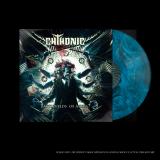
CHTHONIC's award-winning 2018 album Battlefields of Asura reissued on vinyl in September via Svart Records CHTHONIC is a Taiwanese metal band formed in Taipei in 1995, with the members nowadays split between Helsinki and Taipei. Their 2018 album Battlefields of Asura is an award-winning release. With this album, CHTHONIC won their second Golden Melody Awards, Taiwan’s equivalent of the Grammy Awards. CHTHONIC's lyrics are inspired by Taiwanese mythology, folk stories, and history, while its music incorporates elements of traditional Taiwanese folk music, enka, and the sorrowful melodies of Taiwanese opera. These are accompanied by traditional instruments such as the hena and koto. Also integral to CHTHONIC's sound are elements of symphonic black metal and melodic death metal, along with intense riffs and solos. Critics have attempted to categorize CHTHONIC as death metal, folk metal, or black metal, but the band has opted for the simpler label of metal. They've performed at many major festivals around the world, including Fuji Rock and Summer Sonic in Japan, Ozzfest in the US, Download in the UK, and Wacken Open Air in Germany, as well as having toured extensively across Europe, North America, and Asia over the years. Prior to this album, CHTHONIC was signed to Spinefarm Records / Universal Music Group, under which they released three albums and toured internationally. After their 2014 European tour, the band decided to slow down, and vocalist Freddy Lim began his political career. He was elected to Taiwan's Parliament in 2016 and re-elected in 2020. During his tenure, he pushed for LGBTQ rights and gender equality, helping Taiwan become the first Asian country to legalize same-sex marriage, along with advocating for Indigenous rights and other human rights issues..
expected to be published on 25.09.2026
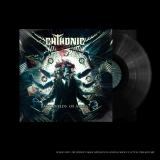
CHTHONIC's award-winning 2018 album Battlefields of Asura reissued on vinyl in September via Svart Records CHTHONIC is a Taiwanese metal band formed in Taipei in 1995, with the members nowadays split between Helsinki and Taipei. Their 2018 album Battlefields of Asura is an award-winning release. With this album, CHTHONIC won their second Golden Melody Awards, Taiwan’s equivalent of the Grammy Awards. CHTHONIC's lyrics are inspired by Taiwanese mythology, folk stories, and history, while its music incorporates elements of traditional Taiwanese folk music, enka, and the sorrowful melodies of Taiwanese opera. These are accompanied by traditional instruments such as the hena and koto. Also integral to CHTHONIC's sound are elements of symphonic black metal and melodic death metal, along with intense riffs and solos. Critics have attempted to categorize CHTHONIC as death metal, folk metal, or black metal, but the band has opted for the simpler label of metal. They've performed at many major festivals around the world, including Fuji Rock and Summer Sonic in Japan, Ozzfest in the US, Download in the UK, and Wacken Open Air in Germany, as well as having toured extensively across Europe, North America, and Asia over the years. Prior to this album, CHTHONIC was signed to Spinefarm Records / Universal Music Group, under which they released three albums and toured internationally. After their 2014 European tour, the band decided to slow down, and vocalist Freddy Lim began his political career. He was elected to Taiwan's Parliament in 2016 and re-elected in 2020. During his tenure, he pushed for LGBTQ rights and gender equality, helping Taiwan become the first Asian country to legalize same-sex marriage, along with advocating for Indigenous rights and other human rights issues..
expected to be published on 25.09.2026

Tape
When Leon Michels and El Michels Affair released their rst record, Sounding Out The City, in 2005, it was hard to guess what was next for Michels and his then-introduced, now-patented "cinematic soul" sound. Now, four EMA studio albums and scores of tribute and remix projects later - all while producing for some of the biggest names in the industry - Michels has trademarked his sound, with each project taking audiences somewhere new and pushing the boundaries of what he is known for. The man is a river, not a lake and this time he takes his golden touch into the realm of hip-hop laying down a musical bed for one of the greatest to ever rhyme into a microphone: Black Thought of The Roots crew. Releasing on Big Crown Records, the LP is called Glorious Game and it is a remarkable debut partnership in more ways than one. Michels provides his bottom-heavy, soul-tinged production for Black Thought who gives us some of the more personal and transparent verses we've ever heard from him. Michels and Black Thought have been in each other's orbit for a while now. The two first met in the 2000s when Thought was first getting familiar with the contemporary soul scene. "Out of that whole world, Menahan Street Band was probably my favorite," recalling the funk and soul group Michels was a founding member of back in 2007. Fast forward a few years and musicians from that collective - Dave Guy on trumpet and Ian Hendrickson-Smith on sax - are now full time players with The Roots. This connection eventually led Leon and Thought to doing a few fundraising events around NYC and Philly together. "Before long, Black Thought was coming around the studio and would jam with us from time to time," Michels explains. "Then, fast forward to 2020 and COVID lockdowns, he just hit me up out of the blue, wanting me to send him stuff to write to. We both were looking to stay busy" Being that Black Thought is the co-founder and emcee for, hands down, the best live-band group in hip-hop. Michels took a decidedly different approach to this project and instead of sending recorded tracks of live compositions, he pulled out the sampler and sampled himself and some records from his collection. "I'm a big fan of soul music," as if Michels has to remind us. "And part of hip-hop's appeal to me has always been the sample-based production" For Glorious Game, Michels would make wholly composed and recorded soul songs in his studio, sample himself, then chop and/or loop up his sounds and create instrumentals for Black Thought. On some tracks he took a more traditional hip-hop approach, starting from samples of other people's music but then adding live instrumentation on top. But for the most part, it's him reinterpreting his own compositions into something new. The result is an organic feel of loop-based tracks that breathe and uctuate enough for Black Thought to ex on. "What I write about is determined by the equation of the producer's energy and my energy," Black Thought says. "It's about where we meet." So armed with Michels sampled and re-sampled soul cinematics, Black Thought rhymes through personal memories.
Order now and we will order the item for you at our supplier.

Lifeforce is the 1985 sci-fi horror cult film directed by Tobe Hooper, responsible for the 1974 horror classic The Texas Chain Saw Massacre. Based on Colin Wilson's 1976 novel The Space Vampires, the film is about the remnants of a race of intergalactic vampires who are brought to London, where they soon begin to infect its population.
Legendary composer Henry Mancini has soundtracked this apocalyptic descent into chaos. He is widely regarded as one of the greatest composers in film history exemplified by his impressive trophy wall: he won four Oscars, a Golden Globe, and twenty Grammy Awards, plus a posthumous Grammy Lifetime Achievement Award. He is most famous for "Moon River" performed by Audrey Hepburn in Breakfast at Tiffany's and of course The Pink Panther.
James Horner was first asked to compose the score, but Mancini was brought in instead and crafted a piece of music both bombastic and ambient (and sometimes even atonal), employing the London Symphony Orchestra. Sit back and feel the fear...
The soundtrack of Lifeforce is available as a limited edition of 500 individually numbered copies on purple marble vinyl, and includes a 4-page booklet containing an alternate cover, film stills, and a fold-out movie poster replica.
expected to be published on 19.06.2026
Following the tradition of Derek Bailey, Henry Kaiser and Sonny Sharrock albums on Celluloid Records, the label is releasing this abstract and mysterious instrumental album, made under a cryptic name:AA in Reverse, by nqthqn. Recorded shortly afterlast year"s Ghostbox Cowboy, released on Tailnia Records out of China, this new effort digs deeper into what critics describe as buzzards circling the half-dead body of Harry Dean Stanton in Paris, Texas. The project curiously explores what it might be like to create no-wave abstract guitar music by a campfire, as inaugurated by Arto Lindsay, Loren Connors or John Fahey. AA in Reverse was recorded and engineered by David Akerman (Robin Hitchcock, Dead Farmers) at Golden Retriever Studios (Parcels, Cate Le Bon, Courtney Barnett) in Marrickville. nqthqn will be touring Japan this April.
expected to be published on 29.05.2026

April Records proudly presents the new album from Stockholm Stockholm-based bassist and composer Jon Henriksson - a confident and flexible statement that deepens his place within contemporary Scandinavian jazz. Following the success of his 2023 debut Harmonia which placed second in Orkesterjournalen s Golden Album " readers " poll, Henriksson returns with music that foregrounds collective interplay, shifting forms, and a strong compositional voice. Born in Gothenburg and now active across Sweden and Europe, Henriksson has collaborated and toured with artists including Lars Jansson, Hakan Broström, Erik Söderlind, Klas Lindquist, Jonas Kullhammar and Christina von Bülow. Alongside leading his own ensembles, he remains a soughtsought-after bassist in a wide range of projects, balancing a deep connection to the jazz tradition with a modern, exploratory approach. Shapeshifter is built around a core quartet of tenor saxophone, piano, double bass and drums, expanded with guitar on three tracks and trombone on two. The album moves fluidly between contrasting moods, from forceful and driving to reflective and restrained, with each piece shaped by the musicians " intuition and responsiveness. The title reflects Henriksson s compositional philosophy: allowing roles, textures, and forms to evolve as the music unfolds.The ensemble brings together long long-standing musical relationships. Pianist Rasmus Sorensen and Henriksson have collaborated since their studies at Skurups Folkhögskola (Henriksson is a longstanding member of Sorensen s own trio), while drummer Jonas Bäckman forms part of a well well-established rhythm section partnership with the bassist across numerous projects including the Britta Virves Trio. Saxophonist Karl Karl-Martin Almqvist, a member of the Danish Radio Big Band, completes the quartet, with guitarist Pelle von Bülow and trombonist Rasmus Holm joining the session shortly before recording to expand the album s sonic palette where the music called for it. Originally conceived as a quartet album, Shapeshifter took its final shape in the lead lead-up to recording as additional instrumental colours were introduced organically. The piece Toninho , a tribute to Brazilian guitarist and composer Toninho Horta, features acoustic guitar and subtle wordless vocals, reflecting melodic influences that sit naturally within the album s contemporary jazz framework. Across the record, space, pacing, and interaction remain central. Rather than forcing constant motion, the music allows ideas to develop with clarity and intent, resulting in an album that highlights Henriksson s growing assurance as a composer and bandleader, while keeping the collective at its core.
expected to be published on 27.03.2026

600% Dynamite is the critically acclaimed Soul Jazz Records compilation series of Jamaican music, praised for its eclectic selection of upbeat reggae, ska, soul, rocksteady, dancehall, funk and dub satisfying both connoisseurs and newcomers alike.Originally released in 2003 this album has been out of print for nearly 20 years making it one of the most-collectible of Soul Jazz Records" Dynamite! Series. This is the first ever Color Vinyl edition of this classic album.Party classics and non-stop reggae anthems such as Tenor Saw"s "Golden Hen", The Uniques "Queen Majesty", Johnny Osbourne"s "Buddy Bye" and many more, 600% Dynamite is an addictive mix of well-known classics and rarities.Classic artists such as Dennis Brown, Johnny Osbourne, I Roy, Yabby You and Tenor Saw which feature alongside classic and rare tracks by lesser known artists such as Tall T and The Touchers, Prince Mohammed and more.
expected to be published on 20.02.2026

expected to be published on 19.12.2025

STANDFIRST Titanic, the project spearheaded by Mabe Fratti and Hector Tosta (aka I. la Católica), return with a sumptuous and life-affirming new album.
In her sensational 1929 biography Tiger Woman, dancer and socialite Betty May claimed her ‘coster’s eye’ meant she liked to wear as many colours as possible. “Colours to me are like children to a loving mother. Each is my favourite, yet I can never bring myself to deny the others by preferring one.” May’s bold and inclusive strategy is one that manages to transfer itself, almost a century later, to Hagen, the new record by Titanic.
Many will know Titanic as the Mexico City-based brainchild of cellist and singer Mabe Fratti and multiinstrumentalist Hector Tosta who is now operating under the pseudonym, I. la Católica, (taken, rather unusually, from the name of the street the pair live on). With Hagen, and their previous release, Vidrio, (2023), the pair are creating a distinctive signature sound in modern alternative pop music. Nobody else sounds quite like them. Both records have an open hearted nature and simple, winning melodies that play off against a taste for drama, spectacular orchestration and a feeling of otherworldly mystery. Hagen is the more ambitious, sometimes more mystical effort. From the opening handclaps of ‘Lágrima del Sol’, (a wonderfully uptempo playground chant translating as a tear from the sun but, surely, not referencing the brand of pineapple wine?), the record dances its way through various mid-to-late-eighties inspirations, lush and widescreen passages of melancholy and vertiginous contrasts.
Mystery is often found in the simple but slightly odd song titles. English translations of various track titles give, ‘you swallowed the gum’, ‘leak’, ‘a tear from the sun’, ‘raising the trophy’ ‘digging dimensions’, ‘the owner’, ‘the decapitated hen’ and ‘the trap is exposed’. All denote striking images, metaphysical hints and emotional cues or simple, even childlike actions. Though Fratti and Tosta don’t reveal its provenance, the album’s title could even be a crafty play on words: the listener would be forgiven in thinking the moments of brash contrast and eyebrow raising theatricalism in the music constitute a musical nod to German punk chanteuse, Nina Hagen.
On Hagen, singer and cellist Mabe Fratti once again displays her brilliant knack of speaking to us directly. There is never the suspicion of her playing to the gallery, and the directness of many of the lyrics don’t allow it. Parallel to this, Fratti has an almost magical ability to give Hector Tosta’s melodies, and her and Tosta’s lyrics ones imbued with an insight and meaning that feels otherworldly. Tosta admitted it was “pretty wild to hear Mabe take the interpretations to a different place” and the listener can pick up on the delight Fratti takes in (literally) adding a voice to the many narratives.
Two examples can be shown here: ‘Gotera’ (Leak) uses harsh slashes of cello and tough, gunfire-like guitars and drums and multiple vocal lines that could be acting as a Greek chorus. They play off brilliantly against Fratti’s soft, slightly baleful vocal take that delivers lyrics such as: ‘nobody knows where the leak is / but I know where it is / they fight in front of the door and / nobody can go in’. With ‘La Gallina Degollada’ the somewhat blithe melody melody line, sung with what could be sarcastic brio by Fratti, plays against an itchting rhythm and rasping guitar part. The punch comes when you see that the song is about a chicken that has been decapitated and read lyrics such as: ‘I already saw it, it moved, the decapitated chicken’ / ‘could it be that I'm broken’ and ‘Two people hurt each other by thinking that they no longer agree’/ ‘Hours pass and the chicken represents what scares me’.
There may be death and fights to deal with, but there is also a quality of chirpy self-reliance about Hagen that is a key part of its nature. Like Betty May and her colourful outfits, Hagen’s sound often revels in its own sense of richness. Throughout, the record delivers vaulting string sections or glutinous guitar squeals that could, like the powerful, driving ‘Escarbo Dimensiones’ (Digging Dimensions) have come directly from a glossy 1980s TV series. Fratti sees this “glam sound” developed by Tosta on the aforementioned track and ‘Te Tragaste el Chicle’ (You Swallowed The Gum), as moments that were truly “revealing” for the album as a whole during its making.
What else? The thud and thump of ‘La Trampa Sale’ (The Trap is Exposed), and its sudden change of tempo and mood betrays a monstrously ambitious piece of music, the players almost greedily creating the sounds. Other moments are heart wrenching: ‘Libra’ ends on a poppy chord switch that cleverly ramps up the emotion inherent in the music’s notation. You could almost imagine a teenager in a bedroom forty years ago, rewinding the track over and over on a small, cheap cassette player, unable to get enough of that sugarsweet switch. Elsewhere, Oneohtrix Point Never adds stardust and an unearthly sense of space on the changeable, slightly moody meditation, ‘Pájaro de Fuego’ (Firebird). The record ends with ‘Alzando el Trofeo’ (Lifting the Trophy), a track that could soundtrack a state wedding, what with its beautiful cascading piano parts, a sugary vocal and short triumphal guitar riffs that add a rich patina to the overall sound. Fratti: “When I doubled those vocals on ‘Alzando el Trofeo’ I felt there was an epiphany happening, right at that moment.”
Making a good record is a team game. Tosta and Fratti recall seeing Randall from Circular Ruin Studios in NYC “tweak the drums in ‘Libra’ to make that amazing effect of the gated reverb”, or the shaping of ‘Gotera’, “when (recording engineer) Nate Salon added some synths to the track.” Drummer Eli Keszler, “an amazing and versatile player” had the songs down pat in a couple of days” and, according to Tosta, Oneohtrix Point Never “just came to one of the sessions and we hung out, and after all the recordings he and Nate were together in some studio and out of nowhere they sent us some beautiful tracks for ‘Pájaro de Fuego’! Fratti concurs. “He decided that he wanted to record because he was listening to the record (Nate works closely with him) and he really liked it! It was a total honour, indeed!”
Bedazzled by the playing, the skyscraping ambition in the arrangements and the giddy moments of contrast thrown up by Hagen, we could allow ourselves a brief moment of flippancy and state that Titanic’s new record is Yacht Rock meets Aeschylus, full-on. It’s also worth speculating that, in this hyper-sensitive, intemperate age, Titanic’s music has the power, however fleetingly, to heal hurts. Hagen is a brilliant showcase for a fresh and enriching form of pop music: displaying a magpie eye for what glints and plundering what has gone before.
Like Vidrio, Hagen was partially and additionally recorded at Fratti and Tosta’s house, aka Tinho Studios in Mexico City, as well as Golden Girl Studios & Circular Ruin Studios in New York City. Mixing was done by Santiago Parra in Pedro y el Lobo Studios, Mexico City and mastered by Rafael Anton Irisarri at Black Knoll Studios, New York City. The recording engineer was Nate Salon.
Hagen featured Mabe Fratti on cello, vocals & backing vocals, I. la Católica on guitar, keyboards, prepared piano, bass & backing vocals, drums by Eli Keszler and synths in ‘Pájaro de Fuego’ from Daniel Lopatin and Nate Salon.
All compositions on Hagen are written by I. la Católica, except ‘Escarbo Dimensiones’ & ‘Pájaro de Fuego’, which were composed by I. la Católica and Mabe Fratti. The record was produced by I. la Católica and co-produced by Nate Salon & Mabe Fratti. And all lyrics are by I. la Católica except ‘Escarbo Dimensiones’, ‘Gotera’, ‘Gallina degollada’ & ‘Pájaro de Fuego’, which were written by I. la Católica & Mabe Fratti.
Order now and we will order the item for you at our supplier.

STANDFIRST Titanic, the project spearheaded by Mabe Fratti and Hector Tosta (aka I. la Católica), return with a sumptuous and life-affirming new album.
In her sensational 1929 biography Tiger Woman, dancer and socialite Betty May claimed her ‘coster’s eye’ meant she liked to wear as many colours as possible. “Colours to me are like children to a loving mother. Each is my favourite, yet I can never bring myself to deny the others by preferring one.” May’s bold and inclusive strategy is one that manages to transfer itself, almost a century later, to Hagen, the new record by Titanic.
Many will know Titanic as the Mexico City-based brainchild of cellist and singer Mabe Fratti and multiinstrumentalist Hector Tosta who is now operating under the pseudonym, I. la Católica, (taken, rather unusually, from the name of the street the pair live on). With Hagen, and their previous release, Vidrio, (2023), the pair are creating a distinctive signature sound in modern alternative pop music. Nobody else sounds quite like them. Both records have an open hearted nature and simple, winning melodies that play off against a taste for drama, spectacular orchestration and a feeling of otherworldly mystery. Hagen is the more ambitious, sometimes more mystical effort. From the opening handclaps of ‘Lágrima del Sol’, (a wonderfully uptempo playground chant translating as a tear from the sun but, surely, not referencing the brand of pineapple wine?), the record dances its way through various mid-to-late-eighties inspirations, lush and widescreen passages of melancholy and vertiginous contrasts.
Mystery is often found in the simple but slightly odd song titles. English translations of various track titles give, ‘you swallowed the gum’, ‘leak’, ‘a tear from the sun’, ‘raising the trophy’ ‘digging dimensions’, ‘the owner’, ‘the decapitated hen’ and ‘the trap is exposed’. All denote striking images, metaphysical hints and emotional cues or simple, even childlike actions. Though Fratti and Tosta don’t reveal its provenance, the album’s title could even be a crafty play on words: the listener would be forgiven in thinking the moments of brash contrast and eyebrow raising theatricalism in the music constitute a musical nod to German punk chanteuse, Nina Hagen.
On Hagen, singer and cellist Mabe Fratti once again displays her brilliant knack of speaking to us directly. There is never the suspicion of her playing to the gallery, and the directness of many of the lyrics don’t allow it. Parallel to this, Fratti has an almost magical ability to give Hector Tosta’s melodies, and her and Tosta’s lyrics ones imbued with an insight and meaning that feels otherworldly. Tosta admitted it was “pretty wild to hear Mabe take the interpretations to a different place” and the listener can pick up on the delight Fratti takes in (literally) adding a voice to the many narratives.
Two examples can be shown here: ‘Gotera’ (Leak) uses harsh slashes of cello and tough, gunfire-like guitars and drums and multiple vocal lines that could be acting as a Greek chorus. They play off brilliantly against Fratti’s soft, slightly baleful vocal take that delivers lyrics such as: ‘nobody knows where the leak is / but I know where it is / they fight in front of the door and / nobody can go in’. With ‘La Gallina Degollada’ the somewhat blithe melody melody line, sung with what could be sarcastic brio by Fratti, plays against an itchting rhythm and rasping guitar part. The punch comes when you see that the song is about a chicken that has been decapitated and read lyrics such as: ‘I already saw it, it moved, the decapitated chicken’ / ‘could it be that I'm broken’ and ‘Two people hurt each other by thinking that they no longer agree’/ ‘Hours pass and the chicken represents what scares me’.
There may be death and fights to deal with, but there is also a quality of chirpy self-reliance about Hagen that is a key part of its nature. Like Betty May and her colourful outfits, Hagen’s sound often revels in its own sense of richness. Throughout, the record delivers vaulting string sections or glutinous guitar squeals that could, like the powerful, driving ‘Escarbo Dimensiones’ (Digging Dimensions) have come directly from a glossy 1980s TV series. Fratti sees this “glam sound” developed by Tosta on the aforementioned track and ‘Te Tragaste el Chicle’ (You Swallowed The Gum), as moments that were truly “revealing” for the album as a whole during its making.
What else? The thud and thump of ‘La Trampa Sale’ (The Trap is Exposed), and its sudden change of tempo and mood betrays a monstrously ambitious piece of music, the players almost greedily creating the sounds. Other moments are heart wrenching: ‘Libra’ ends on a poppy chord switch that cleverly ramps up the emotion inherent in the music’s notation. You could almost imagine a teenager in a bedroom forty years ago, rewinding the track over and over on a small, cheap cassette player, unable to get enough of that sugarsweet switch. Elsewhere, Oneohtrix Point Never adds stardust and an unearthly sense of space on the changeable, slightly moody meditation, ‘Pájaro de Fuego’ (Firebird). The record ends with ‘Alzando el Trofeo’ (Lifting the Trophy), a track that could soundtrack a state wedding, what with its beautiful cascading piano parts, a sugary vocal and short triumphal guitar riffs that add a rich patina to the overall sound. Fratti: “When I doubled those vocals on ‘Alzando el Trofeo’ I felt there was an epiphany happening, right at that moment.”
Making a good record is a team game. Tosta and Fratti recall seeing Randall from Circular Ruin Studios in NYC “tweak the drums in ‘Libra’ to make that amazing effect of the gated reverb”, or the shaping of ‘Gotera’, “when (recording engineer) Nate Salon added some synths to the track.” Drummer Eli Keszler, “an amazing and versatile player” had the songs down pat in a couple of days” and, according to Tosta, Oneohtrix Point Never “just came to one of the sessions and we hung out, and after all the recordings he and Nate were together in some studio and out of nowhere they sent us some beautiful tracks for ‘Pájaro de Fuego’! Fratti concurs. “He decided that he wanted to record because he was listening to the record (Nate works closely with him) and he really liked it! It was a total honour, indeed!”
Bedazzled by the playing, the skyscraping ambition in the arrangements and the giddy moments of contrast thrown up by Hagen, we could allow ourselves a brief moment of flippancy and state that Titanic’s new record is Yacht Rock meets Aeschylus, full-on. It’s also worth speculating that, in this hyper-sensitive, intemperate age, Titanic’s music has the power, however fleetingly, to heal hurts. Hagen is a brilliant showcase for a fresh and enriching form of pop music: displaying a magpie eye for what glints and plundering what has gone before.
Like Vidrio, Hagen was partially and additionally recorded at Fratti and Tosta’s house, aka Tinho Studios in Mexico City, as well as Golden Girl Studios & Circular Ruin Studios in New York City. Mixing was done by Santiago Parra in Pedro y el Lobo Studios, Mexico City and mastered by Rafael Anton Irisarri at Black Knoll Studios, New York City. The recording engineer was Nate Salon.
Hagen featured Mabe Fratti on cello, vocals & backing vocals, I. la Católica on guitar, keyboards, prepared piano, bass & backing vocals, drums by Eli Keszler and synths in ‘Pájaro de Fuego’ from Daniel Lopatin and Nate Salon.
All compositions on Hagen are written by I. la Católica, except ‘Escarbo Dimensiones’ & ‘Pájaro de Fuego’, which were composed by I. la Católica and Mabe Fratti. The record was produced by I. la Católica and co-produced by Nate Salon & Mabe Fratti. And all lyrics are by I. la Católica except ‘Escarbo Dimensiones’, ‘Gotera’, ‘Gallina degollada’ & ‘Pájaro de Fuego’, which were written by I. la Católica & Mabe Fratti.
Order now and we will order the item for you at our supplier.

Wenn Sie von Hillsborough, North Carolina, auf der 1-85 nach Norden fahren und die Ausfahrt zur 58 East nehmen, erreichen Sie in fünfzehn Minuten Diamond Grove, ein kleines, nicht eingemeindetes Gebiet im Brunswick County, Virginia, am Meherrin River. Für die meisten Besucher gibt es dort nicht viel zu sehen - für Lebensmittel müssen Sie nach Lawrenceville und für Baumaterial nach South Hill fahren. Doch versteckt in diesem Fleckchen Virginia-Piedmont liegen die Überreste einer Milchfarm aus den 1740er Jahren, deren Haupthaus ein wunderschönes altes Gebäude mit zwei Etagen ist, das noch immer mit Seilbetten und allem Drum und Dran ausgestattet ist. Wenn man heute dorthin fährt, hört man in der Ferne Geräusche von jemandem, der in den vermieteten Nebengebäuden Sojabohnen und Baumwolle verarbeitet, von landwirtschaftlichen Reifen, die über Schotterstraßen knirschen, von quakenden Fröschen und von singenden Meisen: chick-a-dee, chick-a-dee. Aber wenn Sie zufällig im September 2023 vorbeigekommen sind, konnten Sie vielleicht Fiddle-Melodien hören, die von den Kiefern widerhallen, BBS-Geräusche in leeren Räumen und die Klänge von Weirs, die ihr zweites Album und ihr Debüt bei Dear Life Records aufnahmen: Diamond Grove. Weirs ist ein experimentelles Kollektiv, das aus der Musikszene im Zentrum von North Carolina hervorgegangen ist und zu gleichen Teilen aus Oldtime-Folk und DIY-Noise besteht. Die Auftritte von Weirs sind hierarchielos und umfassen zwischen zwei und zwölf Personen. Im September 2023 reisten neun von ihnen die US-58 hinauf, um sich im Wohn- und Esszimmer des Hauptgebäudes einer Milchfarm einzufinden, die noch immer im Besitz der Familie des Bandmitglieds und Organisators Oliver Child-Lanning ist, deren Verwandte seit Jahrhunderten dort leben. Die Besetzung von Weirs - weder endgültig noch besonders wertvoll - umfasst Child-Lanning, Justin Morris und Libby Rodenbough (seine Mitstreiter bei Sluice); Evan Morgan, Courtney Werner und Mike DeVito von Magic Tuber Stringband; sowie die treuen Andy McLeod, Alli Rogers und Oriana Messer, die bis tief in die Spätsommernächte spielten. Das Ergebnis sind die neun Tracks von Diamond Grove, aufgenommen mit einer provisorischen Signalkette, die aus geliehenem Equipment der gesamten Community zusammengestellt wurde. Das Weirs-Projekt begann als Tape-Experimente mit traditionellen Melodien, die Child-Lanning im Winter 2019 unter dem Namen Pluviöse aufgenommen hatte. Daraus entstand das erste Weirs-Album Prepare to Meet God, das im Juli 2020 in Eigenregie veröffentlicht wurde und eine Zusammenarbeit zwischen Child-Lanning und Morris während der COVID-Pandemie war. Die seltsamen Umstände dieses Debüts - eine gemeinschaftliche Tradition von Live-Songs, die isoliert voneinander aufgenommen wurden - werden durch Diamond Grove aufgehoben, ein Album, das in der unwiederholbaren Konvergenz von Menschen, Ort und Zeit verwurzelt ist. Auf dem neuen Album setzen Weirs ihre Suche nach dem besten Weg fort, sogenannte ,traditionelle" Musik weiterzuentwickeln, zu bewahren und zu befreien. Sie sind Songfänger, die Melodien sammeln, die kurz vor dem Vergessen stehen. Ihr wildes, Jahrhunderte umspannendes Repertoire klingt wie eine avantgardistische Jam-Session - eine Art Real Book für eine Szene, die sich mit Porch Jams, Big Blood, Amps for Christ und Jean Ritchie auskennt. Weirs fangen Songs ein, deren Interpretationskanon noch offen genug ist, um neben denen zu stehen, die sie zuvor gesungen haben, aber niemals über ihnen. Dies sind keine Versuche, definitive Versionen zu schaffen. Die Aufnahmen auf Diamond Grove fühlen sich eher wie Besuche als wie Überarbeitungen an. Und die Frage, die Weirs auf diesem Album stellen, ist nicht, wie sie einfach die Tradition ihrer Vorfahren fortsetzen können, sondern wie traditionelle Musik heute klingen könnte. Für Weirs könnte die Geschichte dieser Tradition weniger aus dem Folk-Revival stammen als aus der Musique concrète, weniger aus makellosen alten Meisteraufnahmen als aus etwas wie The Shadow Ring, wenn diese aus dem evangelikalen Süden kämen. Wenn man ,(A Still, Small Voice)" hört, spürt man, wie die Kraft der Hymne etwas Gleichwertigem weicht: den Dielen, dem Knistern des Feuers, dem Zubereiten und Essen von Mahlzeiten. Diese Spannung zwischen Bewahrung und Verfall ist das innere Leuchten von Diamond Grove. Nehmen wir ,Doxology l": Die Melodie von ,Old Hundred", einer Hymne aus der Sacred-Harp-Tradition, wird in MIDI umgewandelt, über iPhone-Lautsprecher abgespielt und in der Septemberluft neu aufgenommen. Für manche Revivalisten mag diese Hymne, gesungen mit der ganzen Pracht gefälschter Auto-Tune-Stimmen, blasphemisch klingen. Aber Ohren, die beispielsweise auf die Hyperpop-Produktionen der letzten Jahrzehnte eingestellt sind, werden sofort die spannungsgeladene Schönheit des digital verfremdeten Shape-Note-Gesangs verstehen. Dieselbe Spannung belebt ,l Want to Die Easy". Weirs' Version basiert auf der Aufnahme von A Golden Ring of Gospel, die in der Folkways-Sammlung Sharon Mountain Harmony verewigt ist. Die Melodien, Texte und Strukturen sind weitgehend unverändert geblieben. Aber die ,reine" Klarheit der Stimmen der frühen Aufnahme ist verschwunden. An ihre Stelle tritt der distanzierte Klang des Silos der Milchfarm, in dem Weirs ihre Version aufgenommen hat, dessen natürlicher Nachhall von zwei Sekunden die ursprüngliche Nähe ersetzt. Auf diese Weise wird der Klang des Aufnahmeortes selbst zu einem Teil der traditionellen Darbietung. Das Herzstück von Diamond Grove ist Weirs' Interpretation von ,Lord Bateman", einer Melodie, die Jean Ritchie als ,große Ballade" bezeichnete: Sie wurde gespielt, wenn die Arbeit getan war und der Tanzabend zu Ende war. Es ist ein Lied aus dem 18. Jahrhundert - so alt wie die Diamond Grove Farm - über einen gefangenen Abenteurer, der laut Nic Jones den Geist eines Errol-Flynn-Films verkörpert. Wie viele großartige und oft a cappella gesungene Interpretationen steht auch bei diesem ,Lord Bateman" die Stimme im Vordergrund und unterstreicht die Bedeutung des Geschichtenerzählens für das Zusammenkommen der Kinder. Neu ist hier der immense Bordun, der die Erzählung in ein unaufhörliches Gewebe elementarer Kräfte verwandelt. Es ist ein verschwommenes Murmeln kollektiver Saiten, das den Kanon von Ritchie und June Tabor ebenso bereichert wie Pelt's Ayahuasca oder Henry Flynt's Hillbilly Tape Music. Obwohl Diamond Grove nicht explizit von der alten Milchfarm handelt, auf der es aufgenommen wurde, kann es nicht umhin, ihr zu ähneln. Alte englische Balladen wie ,Lord Bateman" und ,Lord Randall" ergießen sich über Felder, die einst von der britischen Krone ,vergeben" wurden. Tragische Lieder wie ,Edward" taumeln über Tuscarora-Pfade und Baumwollfelder nach dem Bürgerkrieg. Hymnen wie ,Everlasting l" und ,Everlasting Il" fangen das Mondlicht ein, das seit Lord Bacons Rebellion durch doppelt gehängte Fenster fällt. Und die Nachtvögel trillern noch immer, und die Pflüge pflügen noch immer eine unkomponierte Musik, die darauf wartet, von zufälligen Ohren entdeckt zu werden. Diamond Grove ist in dieser Hinsicht Geschichte. Es ist ein Ort. Es ist Zeit. Es ist das Einfangen von Liedern, Lebendigkeit, Tonbandmanipulation. Wie der niedrige Damm, den das Wort ,Weir" andeutet, ist es eine Verteidigung gegen die Strömung. Es ist eine Verteidigung regionaler Lexika gegen massenproduzierte Umgangssprachen; eine Verteidigung gegen den Glauben, dass wir einfach zu einer einfacheren Zeit zurückkehren können; eine Verteidigung gegen die Vorstellung, dass Volksmusik ,rein" bleiben muss; eine Verteidigung gegen die Behauptung, dass ein Traum von der Zukunft, der in verlorenen Geschichten schlummert, unwiederbringlich verloren ist. Gegen all das verteidigt Diamond Grove traditionelle Musik, indem es sie so klingen lässt, wie die Komplexität der heutigen Zeit - weil es weiß, dass solche Musik und all die Geschichten, die in ihr stecken, auch in Zukunft eine Rolle spielen werden.
expected to be published on 03.10.2025

Vom "Klassik-Star der Gen Z" zum Pianisten der Stunde: Louis Philippson "My Way"Nur sieben Monate nach seinem Debüt "Exposition" beleuchtet "My Way" die rasante Entwicklung des jungen Pianisten, Social-Media-Stars und Moderators Louis Philippson vom "Klassik-Star der Gen Z" (Süddeutsche Zeitung) zu einem der Pianisten der Stunde. Vom britischen Sender Classic FM wurde Louis als einziger deutscher Künstler in die "Top 30 artists under 30 in 2025" aufgenommen, während BR-Klassik erklärte: "mit Louis Philippson hat die klassische Musik einen neuen Rockstar gefunden." Auch auf den 12 restlos ausverkauften Konzerten seiner Debüt-Tour im Mai 2025 und bei den Arena Shows der "Night of the Proms" im Winter 2024 begeisterte er tausende Menschen für die Klassik auf seine eigene Weise. Daran knüpft Louis Philippson mit seinem Album "My Way" an. Aufgenommen mit dem MDR Sinfonieorchester unter der Leitung von Dirigent Ben Palmer, verbindet es neue Originalkompositionen mit neuen Bearbeitungen bekannter Themen aus der Klassik oder Filmmusik für Solo Piano sowie Piano und Orchester. Zu den neuen Werken zählen unter anderem der virale Hit "Beethoven Virus" für Klavier und Orchester, "Show Waltz" für Klavier und Orchester, "Supernova" für Klavier, Sopran und Orchester, sowie mehrere Solostücke für Klavier. Unter den neu interpretierten Klassikern finden sich das mitreißende Medley "Dancing Bee" für Klavier und Orchester, "Cornfield Chase" für Klavier und kleines Ensemble, sowie eine Bearbeitung von Themen aus den Vierjahreszeiten mit dem Titel "Vivaldi Storm". Key Dates: • 6th June: German public broadcaster MDR broadcasting a studio concert featuring the MDR Radio Symphony Orchestra (reach 1 Mio)Pre-oder start and 1. Single "Für Elise"• 23rd July: German public broadcaster ARD "3nach9" talk show (reach 1 Mio)• 11th Sept: German public broadcaster TV gala ARD Deutscher Radiopreis - 2 performances live (reach 1 Mio +)• 12th Sept: German public broadcaster TV gala MDR Goldene Henne - Performance (reach 2 Mio)Album Release • September: pitch for ClassicFM Gala London • 26th Sept. German public broadcaster MDR Riverboat Talkshow (reach 2 Mio)• October - November: Concerts in GSA in venues up to 3,000 cap (e.g. Hamburg CCH / München Prinzregententheater / Düsseldorf Tonhalle etc.)• 6th Dec: German public broadcaster ARD charity show Ein Herz für Kinder (reach 3 Mio)• Dec: concert at Royal Albert Hall London • Spring 2026: Europa-Tour mit Konzerten in Paris, Benelux, Polen, Spanien usw.In the making: documentary about his life similar to Anastasia Kobekina
expected to be published on 12.09.2025

In Guadeloupe, many people think that jazz and ka music are like a ring and a finger. To some extent, the same could be said about so called Latin music and the music played in the French West Indies.
Both aesthetics were born in the Caribbean and bear so many connections that they can easily be considered cousins. In constant dialogue, there are lots of examples of their fruitful alliance and have been for a while. The English country dance that used to be practiced in European lounges came to be called kadrille in Martinique and contradanza in Cuba. They both featured additional percussion instruments inherited from the transatlantic deportation. Drawing from shared feelings about the same traumatized identity – later to be creolized – it would be hard not to assume that they were meant to inspire each other. The golden age of the orchestras that graced the Pigalle nights during the interwar period further proves the point. As soon as the 1930s, Havana-born Don Barreto naturally mixed danzón and biguine music in a combo based at Melody's Bar. In the following decade, Félix Valvert, a conductor who was born and raised in Basse-Terre in Guadelupe, also worked wonders in Montparnasse with La Coupole, which was an orchestra made up of eclectic musicians. Afro- Caribbean performers of various origins were often hired on rhythm and brass sections in jazz bands, which used to enliven the typical French balls of the capital. In the 1930s and onwards, Rico’s Creole Band was one of them.
Martinican violinist-clarinettist Ernest Léardée, who would become the king of biguine music as well as the main figure of French Uncle Ben's TV commercials (a dark stigma of post-colonial stereotypes), had musicians from the whole Caribbean sphere play at his Bal Blomet – and they all enchanted "ces Zazous-là" (according the words of Léardée's biguine-calypso piece). In les Antilles (French for French West Indies), music history started to speed up in the 1950s, when trade expanded and radio stations grew bigger. The Guadelupean and Martiniquais youth tuned in their old galena radio sets to South American and Caribbean music. As for the women traders, les pacotilleuses, they bought and sold goods across different islands (the "passing of items through various hands" was thought to be most pleasurable) and brought back countless sounds in their luggage. Such was the case of Madame Balthazar, who once returned from Puerto Rico with the first 45rpm and 33rpm to ever enter Martinique.
Out of this adventure was created the famous Martinican label La Maison des Merengues, a music business she opened and undertook with her husband and which proved to be a major landmark. At the end of the 1950s, in Puerto Rico, Marius Cultier competed in the Piano International Contest playing a version of Monk's Round 'Midnight. He won the first prize and this distinction foreshadowed everything that was to come. Cultier, the heretic Monk of jazz, was quickly praised for writing superb melodies, always tinged with a twist that conferred a unique sound to his music. It didn't take long for the gifted self-taught musician to get to play with Los Cubanos, making a name for himself thanks to his impressive maestria on merengues.
The rest is history. Besides, in the late 1950s, Frantz Charles-Denis, born into the upper middle class in Saint-Pierre and better known by his first name Francisco, went back home after working at La Cabane Cubaine – a club located rue Fontaine where he had caught the Latin fever. Francisco's music was therefore heavily marked by his Cuban cousins' influence, which gave the combos he led a specific style and also led to renewal. Things were swinging hard in La Savane, located in the main square in Fort-de-France. He set up the Shango club close by and tested out the biguine lélé there, a new music formula spiced up with Latin rhythms. Soon afterwards, fate had him fly to Puerto Rico and Venezuela.
As for percussionist Henri Guédon (percussions were only a part of his many talents), he was born in Fort-de-France in May 22nd 1944, the day marking the celebration of the abolition of slavery. As an old man, he could remember that in " his father's Teppaz, a lot of hectic 6/8 music was constantly playing...". In the opening lines of his Lettre à Dizzy, a small illustrated collection of writings published by Del Arco, he highlighted the huge impact that cubop had on him as a teenage boy, around 1960. He eventually turned out to be the lider maximo in La Contesta, a big band steeped in Latin jazz. He was also the one who originated the word zouk to describe music which brought the sound of the New York barrio to Paris. It was the culmination of a journey that started in Sainte-Marie: "a mythical place for bélé, the equivalent of Cuban guaguancó". In the early 1960s, the tertiary economy developed to the detriment of agriculture. Yet rural life was where roots music emerged in Martinique and in Guadeloupe.
Record companies played a major part in the process of Latin versions sweeping across the islands – before reaching everywhere else. Producer Célini, boss of the great Aux Ondes label, and Marcel Mavounzy, both the head of Émeraude records - a firm which was founded in 1953 - as well as the brother of famous saxophonist Robert Mavounzy, were big names to bear in mind. Although there were many of them - all of whom are featured on this record - Henri Debs was definitely the major figure in the recording adventure. He proved to be so influential that he even got compared to Berry Gordy. In the mid 1950s, when he acquired his first Teppaz, he worked on his first compositions: a bolero and a chachacha. Then, he became the one man who made people discover Caribbean music, from calypso to merengue. He was among the first ones to rush out to San Juan, Puerto Rico, to buy records and distribute them through a store run by one of his brothers in Fort-de-France. He had members of the Fania All Star come and perform there, which he was madly proud about. He was also the first one to pay attention to Haitian music, such as compas direct and various other rhythms which would soon flood the market. As a result, many of the combos hitting his legendary studio would end up boosted by widespread "Afro-Latin" rhythms. However, he never denied his identity: gwo ka drums were given a major role, although they were instruments which had long been banned from the "official" music spheres. The present selection bears witness to such a creative swarming. Here are fourteen tracks of untimely yet unprecedented cross-fertilization: all types of music rooted in the Creole archipelago have found their way, whatsoever, to the tracklisting. Whether originating from the city or being more rural, they all go back to what Edouard Glissant, in an interview about the place of West Indian music in the Afro-American scope, called "the trace of singing, the one which got erased by slavery." "It is so in jazz, but also in reggae, calypso, biguine, salsa... This trace also manifests through the drums, whether Guadelupean, Dominican, Jamaican or Cuban... None of them being quite the same. They all point to the idea of a trace, seeking it out and connecting to each other through it. This is the hallmark of the African diaspora: its ability to create something new, in relation to itself, out of a trace. It may be the memory of a rhythm, the crafting of a drum, a means of expression which doesn't resort to an old language but to the modalities of it." The opening track features one of the emblematic orchestras of this aesthetic identity, criscrossing many music types from the archipelago. The 1974 Ray Barretto guajira – Ray Barretto was a major New York drummer influenced by Charlie Parker and Chano Pozzo – is magnificently performed by Malavoi, a legendary Fayolais group (i.e from Fort-de-France). Additionally, the compilation ends on a piece by Los Martiniqueños de Francisco. It symbolically closes the circle as it is a genuine potomitan of Martinique culture which also functions as a tireless campaigner for Afro-Caribbean music. Practicing the danmyé rounds (a kind of capoeiria) to the rhythm of the bèlè drum, it delivers a terrific Caterete, a kind of champeta of Afro- Colombian obedience which was originally composed by Colombian Fabián Ramón Veloz Fernández for the group Wgenda Kenya. The icing on the cake is Brazilian Marku Ribas, who found refuge in Martinique in the early 1970s, bringing his singing to the last trance-inducing track. These two "versions" convey the whole tone of a selection composed of rarities and classics of the tropicalized genre, swarming with tonic accents and convoluted rhythms. It is the sort of cocktail that the West Indians never failed to spice up with their own ingredients. For instance, the Los Caraïbes cover of Dónde, a famous Cuban theme composed by producer Ernesto Duarte Brito, has a typical violin and features renowned Martinique singer Joby Valente and his piquant voice.
The track used to be – or so we think – their only existing 45rpm. The meaningful Amor en chachachá by L'Ensemble Tropicana, a band which included Haitian musicians among whom was composer and leader Michel Desgrotte, also recalls how Latin music was pervasive in the tropics in the mid-1960s. They were the ones keeping people dancing at Le Cocoteraie in Guadelupe and La Bananeraie in Martinique. Around the same time, another "foreign" band, Congolese Freddy Mars N'Kounkou's Ryco Jazz, achieved some success on both islands by covering Latin jazz classics – such as their adaptation of Wachi Wara, a "soul sauce" by Dizzy Gillespie and Chano Pozo whose interweaving of strings and percussions can have anyone hit the dancefloor. How can you resist Dap Pinian indeed, a powerful guaguancó by Eugene Balthazar, performed by the Tropicana Orchestra and published by the Martinique-founded La Maison des Merengues? It also acts as a symbol of the maelstrom at work. Going by the name Paco et L'orchestre Cachunga, Roger Jaffory used to play guaguancó too: his Fania-inspired Oye mi consejo is one example of his style. Baila!!!!! Dancing was also one of the Kings' focus points. Oriza is a Puerto Rican bomba and a "classic" originally composed by Nuevayorquino trumpeter Ernie Agosto, which reserves major space for brasses, giving it a special sheen.
Emerging from the New York barrios crucible was also La Perfecta, a Martinique group originating from Trinidad, whose name directly references the totemic Eddie Palmieri figure as well as his own band, also called La Perfecta. Here they borrow Toumbadora from Colombian producer and composer Efraín Lancheros and interpret it by emphasizing percussions, which set fire to the track even more than the wind instruments. The same goes for Martinique's Super Jaguars, who use Tatalibaba – a composition by Cuban guitarist Florencio "Picolo" Santana which was made famous by Celia Cruz & La Sonora Matencera – as a pretext for sending their cadences into a frenzy. In a more typically salsa vein, the Super Combo, a famous Guadelupean orchestra from Pointe-Noire that was formed around the Desplan family and had Roger Plonquitte and Elie Bianay on board, adapt Serana, a theme by Roberto Angleró Pepín, a Puerto Rican composer, singer and musician also known for his song Soy Boricua. Here again, their vision comes close to surpassing the original. In the 1970s, L'Ensemble Abricot provided a handful of tracks of different syles, hence reaching the pinnacle of the art of achieving variety and giving pleasure. They played boleros, biguines, compas direct, guaguancó and even a good old boogaloo - the type they wanted to keep close to their hearts for ever, "pour toujours", as they sang along together in one of their songs. Léon Bertide's Martinican ensemble excelled at the boogaloo which had been composed by Puerto Rican saxophonist Hector Santos for the legendary El Gran Combo.
Three years later, in 1972, Henri Guédon, with the help of Paul Rosine on the vibraphone, tackled the Bilongo made famous by Eddie Palmieri. Such a classic!!!!! And so were the Aiglons, the band from Guadelupe: choosing to execute Pensando en tí, a composition by Dominican Aniceto Batista, on a cooler tempo than the original, they noticeably used a wonderfully (un)tuned keyboard in place of the accordion. On the high-value collectible single – the first one released by Les Aiglons under the Duli Disc label – there is a sticker classifying the track under the generic name "Afro". Now that is what we call a symbol. Jacques Denis
Order now and we will order the item for you at our supplier.

Delving into the Great American Songbook of Howe Gelb, Sandworms is a new collection that rephrases and rephases the legacy of Giant Sand acrossgenerations. This release offers bold reinterpretations from Water From Your Eyes, Deradoorian, Jesca Hoop & John Parish, Lily Konigsberg, Holiday Ghosts, Ella Raphael, Monde UFO, The Golden Dregs, and Gently Tender. The ever-present Giant Sand and their one-man cerebral traveller, Howe Gelb, are anchored by a reputation for idiosyncratic storytelling. A "natural storyteller," Gelb's multifarious musical delivery adds an enduring sense of wonder as he extols the virtues of happenstance. This collection celebrates the esoteric and singular journey Giant Sand have taken, through alt-country, jazz, lo-fi experiments, and beyond, while their legacy is reimagined here by a new generation of artists paying tribute to their lasting influence. Brooklyn duo Water From Your Eyes, known for their stoner humour, fatalistic undercurrents, and art-pop flair, bring a delicate balance of punk riffing and dream-pop escapism to Warm Storm, first heard on Giant Sand's Ramp (1991). Whitney K takes on Happenstance (from 1994's Glum), unravelling its existential puzzles with a whispering baritone that recalls the hushed intensity of Leonard Cohen. Drifting further into orbit, Angel Deradoorian reinterprets Center Of The Universe, the title track from the band's 1992 album, transforming its desert-fried rock into a spaced-out Sun Ra-paced drama. Elsewhere, Yer Ropes, a jaw-dropping highlight from Glum, is taken on by The Golden Dregs, blurring sentimentality and relationship mismanagement into something truly strange and moving. A special collection for both long-time fans and the newly curious, Sandworms: The Songs of Howe Gelb and Giant Sand is released via Fire Records and includes liner notes from Dave Henderson (Mojo).
expected to be published on 15.08.2025

A sequel to the 2001 series Blue Planet, it took 4 years to complete this seven part new exploration of the underwater worlds, with 125 expeditions across
39 countries and 6000 hours of underwater filming. The series was broadcast on BBC One on 29 October 2017 with viewing figures exceeding 10m and
its exposure of plastic pollution in our oceans has started a global conversation about reducing plastic waste, now more relevant than ever.
With over 120 soundtracks to his credit which have grossed 24 billion dollars at the box office, Hans Zimmer has been honoured with many accolades:
an Academy Award, two Golden Globes, three Grammys, an American Music Award, a Tony Award and The Henry Mancini Award for Lifetime Achievement.
His Academy Award nomination for Interstellar marked his 10th Oscar nomination.
The composition is completed by Jacob Shea and David Fleming from Emmy and BAFTA nominated Bleeding Fingers Music. Bleeding Fingers has created
original music for productions including the Fox’s The Simpsons, BBC’s Planet Earth II, National Geographic’s Princess Diana In Her Own Words, NBC’s hit
Little Big Shots, Sony’s Snatch (TV), Amazon’s American Playboy, AMC’s The Making Of The Mob, Netflix original Roman Empire and History Channel’s Mountain Men.
expected to be published on 11.07.2025

Mit ,Backstage" hat Jay-Jay bereits sein 15. Album veröffentlicht, und seine Inspiration wird ständig erneuert. Hier finden wir die grundlegenden Elemente seines musikalischen Universums: Jazz, Triphop, Pop und sogar einen Hauch von Easy Listening. Die erste Single ,How Long Do You Think We're Gonna Last?" bietet einen köstlichen Soul-Sound, der auf den ersten 14 Alben von Jay-Jay nicht zu hören war. Auf ,Backstage" singt Jay-Jay zum ersten Mal in seiner Diskografie einen Song komplett auf Französisch, der Rimbaud gewidmet ist. Der Text stammt von dem französischen Schriftsteller Renaud Santa Maria. Schließlich liefert Jay-Jay eine persönliche Version von ,Lujon", dem Kultsong zum 100. Geburtstag des Komponisten Henry Mancini. Aufgenommen in Stockholm im Winter 2024, wurde das Album in Paris von Alex Gopher (Air, Phoenix, Bob Sinclar...) gemastert. Für JJJ-Hardcore-Fans: In der Auflage von 1000 LPs gibt es 20 goldene Tickets zu gewinnen, die nach dem Zufallsprinzip verteilt werden. Die goldenen Tickets berechtigen zu einer VIP-Einladung zu einem beliebigen Jay-Jay Johanson-Konzert + Backstage-Treff mit Jay-Jay Johanson. Die CD-Version hat indes zwei Bonustracks aufzuweisen.
Order now and we will order the item for you at our supplier.
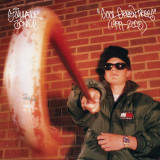
"Chasing the funky symphonies that filled my head and my dreams..."
December 25th, 2023 - an Instagram post. Stimulator Jones shared half a dozen FIRE tracks from his beat tape archive. We were immediately drawn to the rough hewn boom bap.
"I'd release that", Rob commented.
Hours of material was shared and the result is this: Cool Green Trees (1999-2005). A collection of beats and loops Stimulator Jones created between the ages of 14-20 at home in his basement, bedroom and computer room in Roanoke, Virginia.
You will not believe the profound soulful genius contained within these naive schoolboy melodies.
December 25th, 1998 - 25 years ago to the day and his much-coveted Yamaha SU10 sampler was finally bestowed upon young Stimmy AKA Sam Lunsford: "I immediately hooked up a CD Walkman to the input jack and looped the beginning two bars of Grover Washington Jr.'s "Mercy Mercy Me". I don't know what exactly was so thrilling about hearing two measures of music repeating over and over but it was so infectious and hypnotizing and enthralling to me. I'll never forget that ecstatic rush of making my first loop - an uncontrollable, gleeful smile plastered all over my face." When you hear the pocket breakbeat symphonies featured here on Cool Green Trees, you'll feel the same sense of frisson.
In the wake of his Stones Throw breakthrough - Exotic Worlds & Master Treasures - Stimulator Jones was pegged by many as a 90s throwback artist. However, he literally IS a 90s artist. He's been recording music most of his life and he's now 40. He created the bulk of Cool Green Trees as a teenager. Everything before 2004 was recorded when Sam was still in school. He was in 8th grade when he made the 1999 tracks - he didn't even have his learner's permit. This album is a snapshot of a young man in a simpler time. Things were still mysterious back then and he was flying blind, relying on his ears and having to figure things out for himself: "I had no road map for becoming a beatmaker. I have been collecting music since I was a kid, I am a lifelong digger and seeker of cool and interesting sounds. I was there in the golden age of Hip Hop, and while I may have been a suburban white kid in Roanoke, Virginia, I was tuned in and I bought so many classic albums when they came out. I was attracted to Hip Hop because of the musical and poetic quality. I was hypnotized by the rhythms, partially because I was a drummer. I didn't brag about collecting my breakbeat records or making beats - it was something I did in isolation. It wasn't something I generally wanted to bring attention to and it didn't really score me any cool points. I certainly wasn't flexing on social media about it."
Hell, he can do that now!
Opener "Pharoah Jones" was inspired by Yesterday's New Quintet and Madlib's ability to capture that classic 70s sound whilst playing all the instruments. Sam created this one stoned afternoon by laying down a 2 bar loop and a shaker loop on his Yamaha SU700 sampler. He hung a microphone from the ceiling and played his Yamaha Stage Custom drum kit over the top before adding ender Rhodes and playing his dad's Selmer tenor sax through an Electro Harmonix Memory Man echo pedal. Yes! Up next, "Ghost Gospel" utilises a dope loop from a gospel record and adds some soul-funk drums overtop, whilst working that filter knob. Says Sam: "The loop reminded me of something Ghostface would rap over. The sample was in 3/4 waltz time but I flipped it for a 4/4 groove, a technique I picked up from RZA. "Ill Feeling" uses sped-up pieces from a dusty old funk record and putting them over a classic NOLA drum loop; gain chopping up a slow, bluesy 3/4 time signature and bending it to a 4/4 groove. Classy shit. "Capital Punishment" features drums tapped in live, inspired by MF Doom's Special Herbs series. "Do Not Adjust" consists loops found on a compilation of 70s French music at Happy's Flea Market, a classic Roanoke digging spot.
The sublime, evocative title track, "Cool Green Trees" was created when Sam was still living at home. He dumped samples off his SU10 into the family desktop and arranged them in a demo version of Pro Tools: "This track was sort of my ode to the DJ Shadow style of sample based production. Super spacey, slow, and moody. The heavily filtered drums were inspired by Alec Empire's 'Low on Ice' album. I later added some scratches and sounds from a Spider Man storybook record." "Chill Scratch" snags the final bit of a bossanova record and pairs it with a drum loop before adding experimental scratching run through an Electro Harmonix Memory Man echo pedal. "Poisonous Fumes" was made using a sampler, mixer and a turntable; a kind of mixtape beat collage with added scratches and sounds from various records. Using dialogue from superhero records was a nod to Madlib. "Welcome Aboard The Starship" is dark, downtempo trip-hop with a spooky bent. Sam paired a slow, hard drum loop with a guitar sample grabbed off a psychedelic rock record. To finish, he added various backwards sounds and weird atmospheric effects and a little scratching. Swoon.
Side B opens with "Keep On Runnin", made on a borrowed Roland SP202 sampler. Having always loved the sound of the Lo-Fi filter on those machines, reminiscent of the Emu SP1200, Sam always imagined Del or another of the Hieroglyphics crew rapping over this beat. You can certainly hear why. "Sounds Impossible" sees Sam experimenting with layering multiple kick samples at different volumes to create patterns similar to those heard by Showbiz and Lord Finesse during their God-level 1995 period. "Painted Faces" was made by chopping up a REDACTED record which he had gotten from Happy's Flea Market and paired it with a REDACTED drum loop. By the time Sam recorded "The Knew Style", he had acquired a shitty old 1960s portable turntable off eBay. It didn't function properly when he bought it but his brother opened it up, cleaned it out and got it working: "I remember he told me that there was a bunch of sand inside of it when he opened it up, as if its previous owner had taken it to the beach. I would take that turntable on my Happy's Flea Market digs so I could preview records...that's how I found this loop."
"Chicken Wing Blues Sauce" loops up a classic blues joint and pairs it with some REDACTED drums. A bit of filtering and arranging et voilà! "Kool Breeze", from 1999, is one of Sam's oldest surviving beats, as is "Sexx Bullets". The Roots sampled the same record, leaving Sam frustrated yet vindicated. "Soul Child" was an early SU10 creation, looping a dusty old Soul Children 45 and pairing it with 70s rock drum loops to great effect. "Take Off Runnin" was another loop found digging with a portable turntable. Paired with some boom bap drums it makes for a hypnotic head-nod groove. "Centurian" was intended to be a little beat interlude a la Pete Rock. The sample is from a sun-dappled soft-psych record and it's paired with a Robin Trower drum loop that just happens to fit perfectly. Sometimes you slap things together kind of haphazardly and magic happens. "Bozack" was the first beat Sam made using Pro Tools, his first foray into using chopped sounds instead of loops, an exciting new world. "Church" is beat interlude using a Phil Upchurch loop with the "Long Red" drums - a favourite break of Dilla et al. Sam was really on a tear in late 2004, probably because he was unemployed and phoneless and able to just make beats all day. He made "Splash One" on a borrowed Yamaha SU700 and again was experimenting with tapping the drums in live with his fingers, instead of using a loop or sequenced pattern. Channeling 9th Wonder, Sam used a water splash sound effect from a Batman record as a percussive element, hence the title (also a 13th Floor Elevators reference). The main loop is a backwards portion of one of his favourite Roy Ayers songs.
"Hank" is another fun little beat interlude thing, created on a borrowed Roland SP202 sampler with the fantastic Lo-Fi effect that resembled the Emu SP1200 at a fraction of the price. "73 goatee", from 99, is another of his oldest surviving beats, created in his bedroom with his Yamaha SU10 and his brother's Vestax MR-300 4-track recorder: "This one will always feel special. I can remember having a feeling all the way back then on the night that I created it that this was a solid beat with a catchy loop. There was something in the Fender Rhodes melody that resonated with me emotionally, and I had never heard a producer sample that portion before. I felt like I had found my own unique sound, my own unique loop. It came from an Ahmad Jamal '73. I actually even recorded myself rapping and scratching over this beat way back then, I still have that version in all its imperfect sloppy glory."
Sam explains just how much these tracks mean to him: "They all have immense historical and sentimental value and I'm proud of them. These beats come from an innocent, simple time when I was just figuring out how to craft these sounds. They're something very personal to me. They are the initial part of a journey that I really was taking *alone*. There was no YouTube. I couldn't Google shit. I didn't even know any other beatmakers, producers or DJs in my town that could teach me anything. It was always just me, alone, in a room with some equipment - chasing the funky symphonies that filled my head and my dreams. What I was doing wasn't cool. Most of my peers thought I was a weirdo and couldn't care less. Creating these sounds was an anti-social endeavour. In a sense, I felt like it was me against the world, and all I had to instruct and assist me were the recordings produced by my heroes - RZA, DJ Premier, Erick Sermon, Beatminerz, Showbiz, Diamond D, Beatnuts, Prince Paul, The Bomb Squad, Pete Rock, Q-Tip, E-Swift, Mista Lawnge, DJ Shadow, Cut Chemist, Peanut Butter Wolf, El-P and so many more...I dedicate this collection to them, and to my older brother Joe who has always been a musical and technical guiding light for me.
This was a time before every kid was a self-described producer and beatmaker, before everyone had a DAW, before Kanye and "chipmunk soul", before Red Bull beat battles, before there was any social media beyond chat rooms and AOL Instant Messenger, before Soundcloud, before SP-404 mania, before lo-fi beats to study to, before Splice, before targeted ads for MIDI chord packs, etc. In 99 when I told people that I had a sampler and made beats I was mostly met with bewildered confusion and indifference. Kids and adults alike would wonder why I got this weird machine for Christmas instead of something worthwhile like a Playstation or a mountain bike or even a guitar for that matter because at least that could be used to make "real music". Back then, sampling was still not widely respected as an art form - it was seen as lazy, talentless and unoriginal at best and outright criminal theft at worst. I had gotten respect for playing drums and guitar and things of that nature but this was a step in the wrong direction in the eyes of many."
The cover photo is a picture of Sam standing on his back porch in the latter part of 1998, just before he got his first sampler. He was 13 years old, in 8th grade. His dad took the picture with his 35mm film camera: "I actually wanted to be pointing my dad's .22 pistol at the camera lens but he wouldn't let me. He gave me an old walking cane to use instead. The Tommy Hilfiger puffer jacket came from the lost and found at William Fleming High School where my mom worked as a secretary. I was thrilled when she brought it home because we never spent money on expensive name brand clothing like that - we were for the most part strictly a sale rack, bargain bin, thrift store, yard sale, flea market kind of family when it came to clothes. My watch is some cheap off-brand fake gold department store watch." Mastering for this vinyl edition was overseen by Be With regular Simon Francis and it was cut by the esteemed Cicely Balston at Abbey Road Studios to be pressed in the Netherlands by Record Industry.
Order now and we will order the item for you at our supplier.

Lost Tapes Showcase; released on 6th October 2023, was short in the making, when Marcus I visited the Bakery Studio, Manchester for 1 week in June 2017 to voice the album. The album was then lost to the Bakery vaults for a long 6 years! It is a international collaboration with Marcus I hailing from Spain, bringing his lyrics and vocal styles to the UK with additional over-dubs (backing vocals and Kette drum) laid down at Golden Hen Studios in Madrid. Working together before the visit, Marcus I sent Al Breadwinner 4 acoustic guitar demos which he then built into rhythm tracks ready for voicing. The other 2 tracks were preexisting rhythm tracks from the Breadwinners archive that just seemed to fit the lyrics Marcus I had written.
expected to be published on 13.06.2025
DESCRIPTION
Having endured no less than three long-players and a brace of singles featuring the caterwauling of Messrs Hampshire and Childish, the Milkshakes’ audience figured it might be time for an instrumental outing. In response the group gave them just that. But this was to be no run-of-the-mill effort – no Dick Dale-esque surf marathons or Shadowsy twangers are apparent here. These tunes are more ‘rhythm-and-mood’-based compositions; occasionally leaning more towards the Link Wray end of the spectrum – as you would probably expect. This IVth album (hence the name) was recorded in 1983 at Oakwood Studios – as were all previous releases – but this was the first in their new facilities in a converted church near Canterbury, which opened up a whole new golden vista of shimmering, silvery sounds in atmospheric conditions. Of course, the Milkshakes were having none of that. We suggest you plonk the wax on your gramophone and let whatever happens happens. Hasty bananas.
expected to be published on 13.06.2025

The Ibex Band, with Giovanni Rico and Selam Woldemariam at the creative helm, provided the musical backbone for legends like Aster Aweke, Girma Beyene, Tilahun Gessesse, Mulatu Astatke, and Mahmoud Ahmed, including the iconic album Ere Mela Mela, shaping modern Ethiopian music as we know it today. This 1976 album (Ge’ez Year 1968) played a pivotal role in that legacy and has now resurfaced to set the record straight.
There’s a tendency to talk about the seventies as a golden age of Ethiopian music. There are good reasons for that, and just as good reasons against it. However, the notion of a golden past privileges the role of Western explorers and suggests that the pinnacle of Ethiopia’s musical culture is something only a foreigner can appreciate and unearth. It downplays the complexities of Ethiopia’s culture and history, creating an artificial divide between then and now. And it underestimates the constantly evolving sound that has followed.
The legendary musical outfit The Ibex Band, later metamorphosed into The Roha Band, has played a central role in defining the sound of many of the greatest stars on the music scene of Ethiopia from the mid-seventies onwards–but their golden output has never really waned. The story of the origins of the band that provided the musical backbone for greats such as Aster Aweke, Girma Beyene, Tilahun Gessesse, backing the solo career of group member Mahmoud Ahmed as well as backing Mulatu Astatke and many others has yet to be properly told.
Two misconceptions plague the image of Ethiopian music, one is that the music is pure because it is, by some notion, unexploited, the other is that it is all traditional. To begin with, a combination of political changes between the late sixties and the mid-nineties created an environment where only the most dedicated and skilled musicians struggled on and pursued a musical career against fierce odds. The whole Ibex Band, with Giovanni Rico and Selam “Selamino” Seyoum Woldermarian at the creative helm, are arguably the origo of the vibrant scene in the mid-seventies, and the said pair are foremost responsible for not only navigating the band through troubled times, but also modernizing the 6/8 chickchicka rhythm to a contemporary form. Giovanni laid the rhythmic foundation with heavy looped basslines that reinvented traditional melodies as dance music, and with Selamino’s innovative guitar work they influenced scores of musicians from Abegaz Kibrework Shiota to Henock Temesgen. Even Giovanni’s Fender bass and Selamino’s Gibson guitar inspired younger musicians in their choice of instruments. Not only in choice of instruments but also in sound–even as the digital revolution hit Ethiopian music, a lot of popular music still took its cue from the masters from Ibex and Roha.
Ibex emerged out of the ashes of the sixties group the Soul Echos band, adding Giovanni and Selamino to their ranks and taking their cues from a slew of influences, such as Motown and The Beatles, fused with traditional music. A tighter-knit unit than most bands at the time – Ibex has remained six to seven members throughout their whole career, compared to many bands that were as large as fifteen or sixteen men strong when Ibex set out. Their playing has been viciously focused, economical yet heavy. Just a year before the recording sessions of the album in your hands, Giovanni and Selamino made a contribution to the popular musical lexicon of Ethiopia that was simply defining the popular sound: their arrangement and recording of bandmate Mahmoud Ahmed’s solo effort and real commercial breakthrough tune and eponymous album, Ere Mela Mela, from 1975.
Selamino has never limited himself to being an adroit lead guitarist, but has always been a scholar of history, and as such he has probably contributed as much to modern Ethiopian music with his guitar playing and compositions as with a deepened understanding of modern or contemporary – Zemenawi – Ethiopian music. Selamino’s contributions serve as a metaphor for those of the whole band, at one and the same time creating and defining a new, danceable and updated sound anchored in Giovanni’s bass, whilst also elevating the broader scene through their support for others on the scene and on top of that, increasing the understanding of the music.
There is an understandable desire to romanticize the musical heyday Ibex and Roha were at the forefront of, because so much of the output is sorrowfully hard to come by. Ibex creativity was nothing short of ridiculously fierce compared to many of their Western contemporaries. Based on their sheer recorded output alone they could have usurped the title “hardest working in show business” from James Brown, recording more than 250 albums or 2500 songs in the seventies and eighties. Some only surface as cassettes today, others were never given full LP release, and some are simply impossible to find today. In the light of that, it’s nothing short of a miracle that the recording Stereo Instrumental Music from 1976 (Ge’ez Year 1968) has resurfaced. Unearthed in perfect condition on a chrome cassette, this is musical history comes alive–to set the future straight. Stereo Instrumental Music was recorded in collaboration with Karl-Gustav Lundgren, a Swedish national working for the Radio Voice of the Gospel. It took two sessions at the Ras Hotel ballroom in Addis Ababa. The Ibex Band was the first band in Ethiopia to employ a four-track recorder for their recording (the first available in the country, lent by Karl-Gustav). Later the same week, Giovanni and Selamino realized that, lengthwise, the recorded material fell short of what they wished for, so they recorded four more tracks in one more session on a single-track recorder. The Ras Hotel and Ghion Hotel, where the Ibex Band held musical residencies were to Ethiopia in general and Addis Ababa in particular what Motown was to the USA and Detroit a few years earlier – a hotbed of musical creativity and showmanship.
The most astonishing thing about Ethiopian music of the last half century is how tradition and modernity are intertwined. Because of this feature, it’s kind of hard to tell when there ever was or when we are in a “golden age”. So much of music from the past has been criminally neglected, but because of the hardships in the past, it would be an oversimplification to say that said past was a golden age. Probably, the golden age is what we are approaching, because for the first time both the past and future are accessible, and the monumental contributions from before can lay a firm foundation for a thriving music scene today. The Ibex Band stands firmly in the past, present and the future. That, if anything, is golden.
The detailed history of Stereo Instrumental Music is in many ways unique. To begin with, it couldn’t have been recorded earlier (there were no four-track recorders available) and it really couldn’t have been recorded afterwards either, at least not in the years directly following, because of the toll the musical scene took from the unfavorable political climate that followed when the nascent Derg regime and rival groups tried to assert themselves, the musical equipment lent from The Voice of Gospel Radio simply disappeared from Ethiopia when the radio station folded in 1977. Karl-Gustav Lundgren,
the Swedish foreign national who assisted during the recording, worked with the Ethiopian Evangelical Church Mekane Yesus at the time, recalls how they only had about fifteen minutes to get the microphones in place for the recording as to not alert neither the management at Ras Hotel nor the authorities and most importantly, to complete the recording before the curfew came into effect at midnight. In leaping to the opportunity to use previously unavailable equipment to push their sound forward and improvising to meet the logistical challenges, the Ibex Band displayed the very avant-gardism and adaptability that explains their longevity as a band through the years. The recording of Stereo Instrumental Music is from a given time in history, but it sounds as beyond time.
Much of the energy that burst out of the scene that Stereo Instrumental Music came out of dissipated or got sidetracked during the societal changes Ethiopia went through in the 1970s and 80s. Whilst leaders might have professed to be revolutionary, the work ethic of the Ibex Band can truly be described as that. They never called it quits, but adapted, toured extensively abroad in Africa, Europe, and the Middle East, and found ways to work even in the face of the curfew that curtailed a lot of musical life. They even played major arenas in the nineteen eighties, despite said curfew and restrictions. The whole extent of their legacy has never been told, but their music speaks louder than words, so therefore… tune in to the Ibex Band’s Stereo Instrumental Music.
Order now and we will order the item for you at our supplier.

Scientist's name will be found on many dub releases in peoples record collections.His connection to King Tubby's studio is inseparable and many say when the dub end of Reggae music had fallen on quieter times it was Scientist with his often stripped back style and at other times, wild off the wall remixes that breathed life back into the dub cannon.
Scientist (born Overton Brownie,1960, Jamaica) was in many ways King Tubby's apprentice. Having helped his own father out repairing televisions and such like, he would help Tubby on winding transformer coils, that the amps of the day all needed. His interest in recording grew as he watched the many sessions taking place at Tubby's Dromilly Avenue Studio, learning the ropes as the musicians came and went. His first break happened when King Jammy (then Prince Jammy) was too tired to work on a session booked for producer Errol 'Don' Mais. Scientist engineered the session to every one’s bewilderment and great satisfaction.
His first hit would be a mix of Barrington Levy's 'Collie Weed' and his reputation built on the many versions he cut at Tubby's where he would become the engineer of choice. His pared down mixing style suited the new Dancehall reggae sound that came at the tail end of the 1970's and rolled into the 1980's. Such was his stature that albums were now sold with his name on their jacket, 'Scientist Vs Prince Jammy, 'Scientist meets The Space Invaders' to name but two.
His time at King Tubby's was followed as chief engineer working for the Hookim Brothers at the mighty Channel 1 Studio's and on many of top producer Henry 'Junjo' Lawes tracks, that were hit after hit at the time.
We have compiled some tuff tracks from the late 70's / early 80's just before everything went digital. Some great dub versions to some killer tracks that rocked the dancehalls around this golden time.The mighty Tristan Palmer whose killer cuts 'BadBoys','Stop Spreading Rumours','Eveready' and 'The Greatest Lover’ alongside Michael Palmer's debut release 'Mr Landlord' and Robert Trench's 'Mr Babylon'. The songs stand back-to-back with Tony Tuff's timeless 'Never Trouble Trouble' and the biblical Rod Taylor's 'The Lord is My Light'. Sammy Dread's 'Wah Dah Wah' and the always respectful Dennis Brown's 'Time and Place' all benefited a touch of magic from The Scientist and his laboratory of effects.
Hope you enjoy the set.....
Order now and we will order the item for you at our supplier.

■ Die Nits sind eine niederländische Art-Pop-Rockgruppe, die 1974 in Amsterdam
gegründet wurde. Ihr musikalischer Stil hat sich im Laufe der Jahre ebenso geändert wie
ihre Besetzung, aber die Kernmitglieder sind der Leadsänger und Texter Henk Hofstede,
Robert-Jan Stips an den Keyboards (der mit Supersister, Gruppo Sportivo, The Golden
Earring zusammengearbeitet hat) und Rob Kloet am Schlagzeug.
Im Jahr 2024 feiert die Band ihr 50-jähriges Jubiläum mit einer Europatournee und
brandneuer Musik. Sechs frisch geschriebene Tracks sind auf der Mini-Album "Tree
House Fire" enthalten, wobei das zentrale Thema der Songs das Feuer ist, das das
Amsterdamer Studio der Band im Jahr 2022 vollständig zerstört hat. Diese
10-Zoll-Schallplatte ist als limitierte Edition von 500 einzeln nummerierten Copies auf
Flamino Coloured Vinyl erhältlich und enthält ein 4-seitiges Booklet.
expected to be published on 28.02.2025

Denmark"s leading outlet for jazz April Records presents their first debut of 2025 from a brand new quintet of some of the country"s most well known and respected young musicians - collectively called Oh People. Inspired by the works of Duke Ellington in the 20"s and combining them with sounds that came to life over half a Century later with a palpable sense of joy and love, "Part-Time Elegance" is set to release on January 17th on April Records. Exploring the idioms and tropes of the golden age of jazz, the record is built from deep pocket swing, lovesick ballads, percolating latin grooves, and upbeat melodies that can"t help but bring a smile to one"s face. With undertones of contentment and playfulness, each song evokes a sound and style of some of the 20th"s Century"s greatest jazz composers before evolving into passages of animated improvisation from Denmark"s finest new-generation soloists. Anyone who has been keeping up to date with Denmark"s prolific scene will recognize the members of "Oh People" from their solo projects and contributions to many of the nation"s leading jazz innovations. Jonas Due"s trumpet can be heard in the DR Big Band, and popular modern outfit OTOOTO. Andreas Toftemark cut his teeth working and learning as a musician in New York, before returning to Denmark to establish himself with two releases under his own name, receive the prestigious Bent Jædig Prize, and become one of the country"s busiest artists. Casper Christensen"s deep roots in the jazz tradition and Brazilian, coupled with the warm, acoustic sound of his guitar have seen him perform with the likes of Nana Rashid, Jesper Lodval and his own quartet. Lasse Morck has released three albums under his own name, drawing on South American musical traditions as well as literature and mythology. Henrik Holst has spent over a decade contributing his talents to Danish outfits like the Kathrine Windfeld Big Band and Jeppe Zacho Quintet, as well as international jazz legends Mike Stern, Gilad Hekselman and Immanuel Wilkins.
expected to be published on 31.01.2025

Mit dem Begleitalbum "Best of Jethro Tull Redux" lässt sich das Erlebnis von "Aqualung Redux" noch erweitern und vertiefen. Mit beiden Werken zollen Magnetic Eye Records gemeinsam mit zahlreichen Freunden der britischen Rocklegende JETHRO TULL und ihrem Meilenstein-Album "Aqualung" aus dem Jahr 1971 respektvollen Tribut. Auf "Best of Jethro Tull Redux" bieten weitere spannende Künstler ihre Neuinterpretationen aus dem ebenso einzigartigen wie umfangreichen Gesamtwerk der Briten an.
JETHRO TULL sind musikalische Riesen mit einem einzigartigen Sound - oder besser gesagt Sounds, die im Kanon der Rockmusik unvergleichbar geblieben sind. Die 1967 in Blackpool, Lancashire, von dem Schotten Ian Anderson gegründete Band hat im Laufe ihrer jahrzehntelangen Karriere immer wieder stilistische Veränderungen und Imagewechsel durch- und überlebt. Vor allem die charakteristische Stimme ihres Frontmanns und die Einbeziehung der Querflöte als wesentliches Instrument haben JETHRO TULL dennoch mit einem unverkennbaren klanglichen Fingerabdruck versehen.
JETHRO TULL haben von Anfang an die Grenzen der Rockmusik neu vermessen. Durch die Einführung von Elementen aus der klassischen Musik, des Jazz sowie der traditionellen Musik haben die Briten zahlreiche Impulse gegeben, weshalb sie zunächst dem Art Rock zugerechnet wurden und mittlerweile unter anderem zum Progressive Rock zählen. Die britische Legende schaffte den Spagat zwischen Kunst, Breitenwirkung und kommerziellem Erfolg stets mit nur scheinbarer Leichtigkeit. Dazu trug auch die herausragende Bühnenpräsenz von Frontmann Ian Anderson bei, dessen theatralischen Auftritte sogar mit denen seines Zeitgenossen, dem legendären britischen Sänger Arthur Brown, konkurrierten.
Die Magnetic Eye Redux- Reihe lässt ausgewählte Künstler handverlesene klassische Alben aus der Geschichte des Rock und Metal komplett neu interpretieren und respektvoll in das neue Jahrtausend übertragen. Bisher hat das Label solche Meilensteine wie PINK FLOYDs "The Wall", HELMETs "Meantime", BLACK SABBATHs "Vol. 4", JIMMY HENDRIX' "Electric Ladyland", "Dirt" von ALICE IN CHAINS, AC/DCs "Back in Black" und den SOUNDGARDEN-Klassiker "Superunknown" in Redux-Versionen veröffentlicht. Unter vielen anderen haben sich solch herausragende Künstler wie MATT PIKE, PALLBEARER, THE MELVINS, ALL THEM WITCHES, KHEMMIS, ASG, ZAKK WYLDE, MARK LANEGAN, SCOTT REEDER an diversen Redux-Projekten beteiligt.
expected to be published on 06.12.2024

Mit dem Begleitalbum "Best of Jethro Tull Redux" lässt sich das Erlebnis von "Aqualung Redux" noch erweitern und vertiefen. Mit beiden Werken zollen Magnetic Eye Records gemeinsam mit zahlreichen Freunden der britischen Rocklegende JETHRO TULL und ihrem Meilenstein-Album "Aqualung" aus dem Jahr 1971 respektvollen Tribut. Auf "Best of Jethro Tull Redux" bieten weitere spannende Künstler ihre Neuinterpretationen aus dem ebenso einzigartigen wie umfangreichen Gesamtwerk der Briten an.
JETHRO TULL sind musikalische Riesen mit einem einzigartigen Sound - oder besser gesagt Sounds, die im Kanon der Rockmusik unvergleichbar geblieben sind. Die 1967 in Blackpool, Lancashire, von dem Schotten Ian Anderson gegründete Band hat im Laufe ihrer jahrzehntelangen Karriere immer wieder stilistische Veränderungen und Imagewechsel durch- und überlebt. Vor allem die charakteristische Stimme ihres Frontmanns und die Einbeziehung der Querflöte als wesentliches Instrument haben JETHRO TULL dennoch mit einem unverkennbaren klanglichen Fingerabdruck versehen.
JETHRO TULL haben von Anfang an die Grenzen der Rockmusik neu vermessen. Durch die Einführung von Elementen aus der klassischen Musik, des Jazz sowie der traditionellen Musik haben die Briten zahlreiche Impulse gegeben, weshalb sie zunächst dem Art Rock zugerechnet wurden und mittlerweile unter anderem zum Progressive Rock zählen. Die britische Legende schaffte den Spagat zwischen Kunst, Breitenwirkung und kommerziellem Erfolg stets mit nur scheinbarer Leichtigkeit. Dazu trug auch die herausragende Bühnenpräsenz von Frontmann Ian Anderson bei, dessen theatralischen Auftritte sogar mit denen seines Zeitgenossen, dem legendären britischen Sänger Arthur Brown, konkurrierten.
Die Magnetic Eye Redux- Reihe lässt ausgewählte Künstler handverlesene klassische Alben aus der Geschichte des Rock und Metal komplett neu interpretieren und respektvoll in das neue Jahrtausend übertragen. Bisher hat das Label solche Meilensteine wie PINK FLOYDs "The Wall", HELMETs "Meantime", BLACK SABBATHs "Vol. 4", JIMMY HENDRIX' "Electric Ladyland", "Dirt" von ALICE IN CHAINS, AC/DCs "Back in Black" und den SOUNDGARDEN-Klassiker "Superunknown" in Redux-Versionen veröffentlicht. Unter vielen anderen haben sich solch herausragende Künstler wie MATT PIKE, PALLBEARER, THE MELVINS, ALL THEM WITCHES, KHEMMIS, ASG, ZAKK WYLDE, MARK LANEGAN, SCOTT REEDER an diversen Redux-Projekten beteiligt.
expected to be published on 06.12.2024
Auf seinem neuen Album "Golden Age" bewegt sich der aus Brooklyn stammende, in New Orleans lebende Gitarrist und Grammy-nominierte Produzent Gitkin zwischen Surf, Psychedelia und Worldbeat-Einflüssen aus Lateinamerika, Nordafrika und Nahost. Gitkin ist Frontmann der Soulband The Pimps of Joytime aus New Orleans, seine Produktionscredits reichen von Corey Henry & The Treme Funktet über Bernard Purdy bis zu Cyril Neville und Cedric Burnside, für dessen Album "Benton County Relic" er bei den 61. Grammy Awards mit einer Nominierung für das "Beste Traditionelle Bluesalbum" geehrt wurde.
Order now and we will order the item for you at our supplier.

The Lost Record is the underground rock 'n’ roll exploitation sci-fi film of this time. Starring Pauline Jorry andf eaturing appearances and contributions from Henry Rollins, Emmett Kelly, Michelle Mae, Paul Zone, Howie Pyro, Kid Congo, Crush, Automatic Band and scores of other underground notables, The Lost Record—directed and produced by Ian F. Svenonius and Alexandra Cabral—is a film set in a murky indeterminate future / past world where one record, The #1 Record, holds sway over society. In this world The #1 Record is unavoidable and ubiquitous; pumped out nonstop on the airwaves, intercom, and television with its irresistible and infectious message of totalitarian consumer control. The status quo is challenged when a protagonist—played by Pauline Jorry—a worker on an art assembly line, stumbles on another record at a junk-shop which is neglected, lost, and unplayed. Called The Lost Record, it suggests another way to live; another set of values. Enchanted, she begins to play it for others, much to the consternation of the authorities. Can / will it challenge the #1 Record? And what will happen if it succeeds? Based conceptually on the Escape-ism song of the same name, the soundtrack features a beautiful original score by Alex Minoff (of Golden, Extra Golden and Weird War fame) plus music by Emmett Kelly, Escape-ism, The Make Up, plus sound blurbs from this singularly poignant, funny, and affecting film which has won citationsand & notices at Belgrade's Kinoskop festival, Indie Lisboa, and the Chicago Underground Film Festival among others.
expected to be published on 18.10.2024

Colemine's reissue imprint Remined is back with another one! Delving deeper in the rare California soul/funk scene from the past, this one is a two-sided burner from The San Fransisco TKO's! A super rare 45 from the Golden Soul label, the A-side is a funky midtempo instrumental aptly named for the band's Herm Henry. But the bside is the true gem, a killer raw and super sweet rendition of The Miracles' "Ohh Baby Baby". Funky a-side. Super sweet b-side. Can't miss. Limited press, get 'em while they're hot!
expected to be published on 11.10.2024
The Concealed Club Manifesto project pays homage to the mid 2000s underground UK club music scene, an era of music which acts as well of inspiration and creativity for the Nouveau Monica, and has no doubt helped shaped his sound. For the French producer, the UK club scene holds a special allure and mystique, especially since he observed this phenomenon from afar, and was idealized as one of the most “pivotal” moments in underground club culture, making it seem intangible, hence concealed. Nouveau Monica’s sound palette is deeply rooted in the UK scene, which he combines with his own personal musical background. This mid 2000s UK club sound is what the producer defines as his “Golden Era” and the genres created during that time are the building blocks of the Concealed Club Manifesto EP.
“See the Light” closes the EP as a triptyque. First with the OG version, cut out to be the straightforward, grimy, clean, and uncluttered bass track the producer always seeks for when going for the uncompromisingly strong raw material.
The second version conducted by Nouveau Monica as an alternate 4/4 version of the same title, harmonizes the repetitive chopped vocals with a technically syncopated drum loop designed for a new mental perspective, an after-hours sensation that blurs the line between euphoria and melancholy.
The last iteration of “See The Light” comes from none other than Hodge himself. A club tailored cut with a heavy groove, pattered with percussive elements, followed by sun drenched melody and sweltering pads that unleash into a a bellowing bass track, perfectly suited for peak sunset hours at a day rave an unforgiving Soundsystem.
Order now and we will order the item for you at our supplier.

In the early 1990s, before the era of social media dominance, skateboarding culture found its voice through magazines and VHS video releases, notably from brands like Santa Cruz and Powell Peralta. These videos not only shaped the skateboarding world but also influenced creativity across various industries worldwide.
In 1988 and 1989, two groundbreaking videos, "Shackle Me Not" and "Hokus Pokus," emerged from the fledgling skateboard company: H-Street, unleashed a seismic shift in street skateboarding. These videos are revered as iconic masterpieces, celebrated for their innovative skateboarding sequences and unforgettable soundtracks.
“What’s particularly interesting about Hokus Pokus was its soundtrack, largely comprised of demo cassettes, unsigned artists, and bands with loose ties to the brand. Some of the songs were goofy, others almost anthemic, and few sounded of their time. Perhaps it was the repetition or the fact that Matt Hensley could have skated to the sounds of a broken oven and it would have been iconic, but the songs in Hokus Pokus became a secret handshake for the hardcore—people who really gave a shit about skateboarding’s culture not just the act”.
Artless / Anthony Pappalardo
“When we were filming for Shackle Me Not we were still a brand new company and hardly anybody knew who we were and it was so brand new. I was so busy skating and I noticed there was like a movement in skateboarding, you could feel there was a change in the way, in the tide, not just white H-Street but with every company. I think that video, the H-Street video was saw raw, with the crazy music, and you know, just the wackiness of all of it, I think that feeling went out into the world, and kids everywhere understood you don’t need to live 20mn away from Del Mar to actually be part of what’s happening. I think that just opened up the world of skateboarding to more people”
Matt Hensley – Pro skater and Floggin Molly band member.
Fast forward 35 years, and H-Street, in collaboration with Paris (France) based label Stereo Ronin Records, embarks on a momentous project to release special edition vinyl soundtracks from these seminal videos. This exclusive release features meticulously remastered tracks, including new versions and previously unreleased gems on vinyl, making it a treasure trove for any skateboarding enthusiast.
Curated from bands like Kirk & The Jerks, Sub Society, Wonderful Broken Thing, Voluntários da Pátria and The Cry, representing the golden era of skateboarding music, this album promises an unparalleled experience for fans of Punk Rock, Indy Rock, and of course, skateboarding.
Working alongside RTM Studio in Paris, Stereo Ronin Records has undertaken a remastering journey, ensuring that this vinyl edition delivers a truly unique sonic experience, capturing the essence of a bygone era while resonating with contemporary audiences.
Order now and we will order the item for you at our supplier.

Blood Smoke Vinyl. The Instrumental version of the underground classic El Michels Affair & Black Thought collaborative album Glorious Game When Leon Michels and El Michels Affair released their rst record, Sounding Out The City, in 2005, it was hard to guess what was next for Michels and his then-introduced, now-patented "cinematic soul" sound. Now, four EMA studio albums and scores of tribute and remix projects later_all while producing for some of the biggest names in the industry_Michels has trademarked his sound, with each project taking audiences somewhere new and pushing the boundaries of what he is known for. The man is a river, not a lake and this time he takes his golden touch into the realm of hip-hop laying down a musical bed for one of the greatest to ever rhyme into a microphone: Black Thought of The Roots crew. Releasing on Big Crown Records, the LP is called Glorious Game and it is a remarkable debut partnership in more ways than one. Michels provides his bottom-heavy, soul-tinged production for Black Thought who gives us some of the more personal and transparent verses we've ever heard from him. Michels and Black Thought have been in each other's orbit for a while now. The two rst met in the 2000s when Thought was rst getting familiar with the contemporary soul scene. "Out of that whole world, Menahan Street Band was probably my favorite," recalling the funk and soul group Michels was a founding member of back in 2007. Fast forward a few years and musicians from that collective_Dave Guy on trumpet and Ian Hendrickson-Smith on sax _are now full time players with The Roots. This connection eventually led Leon and Thought to doing a few fundraising events around NYC and Philly together. "Before long, Black Thought was coming around the studio and would jam with us from time to time," Michels explains. "Then, fast forward to 2020 and COVID lockdowns, he just hit me up out of the blue, wanting me to send him stuff to write to. We both were looking to stay busy." Being that Black Thought is the co-founder and emcee for, hands down, the best live-band group in hip-hop. Michels took a decidedly different approach to this project and instead of sending recorded tracks of live compositions, he pulled out the sampler and sampled himself and some records from his collection. "I'm a big fan of soul music," as if Michels has to remind us. "And part of hip-hop's appeal to me has always been the sample-based production" For Glorious Game, Michels would make wholly composed and recorded soul songs in his studio, sample himself, then chop and/or loop up his sounds and create instrumentals for Black Thought. On some tracks he took a more traditional hip-hop approach, starting from samples of other people's music but then adding live instrumentation on top. But for the most
Order now and we will order the item for you at our supplier.

Coming out on September 6th on Sharptone Records, Sundiver is Boston Manor’s fifth album and one that represents a glimmering dawn for the Blackpool five-piece. Grown from a seedbed of optimism and sobriety, the LP celebrates new beginnings, second chances and rebirth. With two members recently stepping into fatherhood, hope is baked into every note. “Datura came out of these really dark few years over the hangover of the pandemic,” Henry reflects. “I'd been struggling a lot with drinking and not taking care of myself and bad mental health and stuff. We wanted Sundiver to be the next morning of the following day.” He explains that it feels good this time round to write through the lens of positivity. “The themes began to emerge, of rebirth, spring, dawn, sunshine and then other elements just started to fit into that.” It was during the making of Sundiver that Henry found out he was going to be a dad. This album is a significant one for the band. Originally coming out of the emo and pop punk scene, they’ve explored sonics and genres throughout their career, taken risks and achieved more than they could ever had dreamed of. They’ve grown up as Boston Manor – their lives and the world changing around them. They’re now taking stock, at a crossroads of the band they were and the band they could be.
While writing the album, they revisited the bands that shaped them in the late 90s and early 00s. “I was listening to the music I loved when I was a teenager and I just thought, why don't we make music like our favourite bands?”, guitarist Mike Cuniff remembers with a smile. “So we brought our interests to the table that way. Y2K kind of vibe. There are elements of Deftones, there are elements of Portishead in there, some Garbage, The Cardigans.” He laughs and adds NSYNC to the list of inspirations. From this cocktail of classics comes a dynamic and ambitious record, rich with depth, groove and more hooks than Peter Pan’s nightmares. Lyrics that foxtrot from parallel universes to personal growth, vivid dreamscapes to raw grief. Individually they’re single strokes full of meaning and magic. Together they’re a landscape.
Container (out Feb 15th) is the first single and it’s them at their best – impassioned and infectious. “This song is about the stagnancy of life creeping up on you & how that can bring about change.,” Henry explains, citing Ocean Song by US band Daughters as an inspiration.
The concept of the butterfly effect is present on Sundiver – how small actions can lead to big changes. This is no clearer than on their second single, Sliding Doors (out April 5th). It has the golden sound of late 90s Lollapalooza rock – think Smashing Pumpkins - rebooted with crisp 2024 production and a potent heaviness. In the lyrics Henry wonders, what if?, pondering on what could be. The idea that there are infinite versions of you whose lives splinter off in different directions at every decision you make. That there’s another you out there somewhere right now reading this sentence, and another me writing it. “So much is down to chance and circumstance,” Henry says. “You might catch that train and your life totally changes. Or you might miss it and things stay the way they are.”
Heat Me Up (out May 30th) is defiant and victorious, the audio equivalent of quitting your shit job and driving into the hot summer sun with a head full of dreams. “The lyrics are about love and gratitude,” Henry shares. “Another theme on the record is just appreciating what you have. It’s about not taking for granted the things that you've been afforded.”
There was some natural magic in the creation of Sundiver. They worked with their usual producer, Larry Hibbitt, and engineer, Alex O’Donovan, but instead of recording in London again they ended up in the green pastures of Welwyn Garden City. “Because Larry lives out in the countryside now, it was a way different environment and way different experience recording this time,” Mike remembers. “That contributed a lot to the brighter sound of the record.” The daily barbecues they had during their recording sessions imbued the process with harmony – five old friends spending quality time together and making quality music.
However, the album is by no means one-note. Birthing this new world they’ve created wasn’t without it’s pain, and that can be heard in the heavier moments on Sundiver. What Is Taken Will Never Be Lost is the most-stripped back on the album, a slow rock number seasoned with the downtempo Portishead influence. The heartfelt lyrics are Henry’s way of processing the loss of his grandfather, who died in a hospice last year(?). “It was just fucking horrible. It was always cold when I went there and they were always trying to get rid of me. The song title, What Was Taken Can Ever Be Lost, is the idea of his memory fading at the time because of dementia.” Henry goes onto explain that shoeboxes of photographs, diaries and a legacy is what he’s left behind. “He lived a really rich life and it has really impacted me and my father. His legacy is etched into the fabric of history in a very small way.” This song continues the connection between his grandfather and the band, as his painted face is emblazoned on the cover of the very first Boston Manor EP, Driftwood. As well as emotionally heavy themes, there’s heaviness in the music of Sundiver too. The closing song, Oil In My Blood, descends into an intense shoegaze outro with Debbie Gough from Heriot screaming hellfire. It’s in moments like this that the band show us aggression and fury can be as much a part of positive change as quiet introspection. The last lyrics of the song, “It resets and starts again,” leaves us in contemplation as the final chord rings out.
Touring the US, Europe and Japan over the years makes for an impressive CV, but if you know anything about Boston Manor you’ll know that they’re all about their hometown. Their choice to work with Blackpool-based photographer Nick Barkworth is testament to that. They’ve been working with him since the pandemic. “He captures Blackpool in a light that really reflects the weirdness and quirkiness of the town,” Henry says.” He's got a really good way of presenting that.” For the Sundiver cover, Nick photographed a 30ft tall abstract glass sculpture made by the local artist John Ditchfield. A striking and bewitching monolith that’s familiar to them but unusual to most people. “It has such kind of a gravity and power to it,” Henry describes the sculpture which stands in a field just outside of the seaside town. “It reminds me of either an explosion or a star or a supernova. To me it represents new life, power and radiance.” Boston Manor have got a knack for that - connecting the otherworldly and the everyday, the stars and the streets.
They’re a band known for using their music to make bigger statements about society. This time round they’re harnessing the uplifting power of music, and the communion it creates, as an antidote to the daily doom and isolation. “It seems like absolute chaos out there at the moment,” Henry says. “You’ve got Gaza and Israel, you've got Russia, you've got the fact that 40% of the world is going to have an election this year and increasingly most governments are leaning very far to the Right. The internet is dividing everybody, people are getting poorer and more desperate. It's really, really scary.” They considered trying to tackle the weight of it all in their music. “We could’ve written Welcome to the Neighbourhood on steroids, where it's just absolute darkness and misery”. He’s referring to their 2018 concept album that deals with class, inequality and the bleaker side of Blackpool. “But I think it's really important to write something that people can be immersed in and find some sort of solace in. Somewhere they can escape to from the modern day pressures and everything that’s going on. We’re all in this together.”
expected to be published on 06.09.2024

Past collaborators of Decosimo include indie/folk artists Jake Xerxes Fussell, Wye Oak, and Hiss Golden Messenger. Past collaborators of Schrey include experimental/sound artists Alvin Lucier, Gordon Mumma and Yasunao Tone. In April 2021, Joseph Decosimo, Luke Richardson, and Cleek Schrey three of the most compelling interpreters in the American traditional music scene gathered at a cabin in Tennessee to explore their collective repertoire of Old-time fiddle and banjo tunes, gleaned from visits with older players, field recordings, and vintage 78s. Working with fiddle, hardanger d’amore (a fiddle with sympathetic strings), banjos, and a 19th-century pump organ, the trio captured both the sonic details of their instruments and a generous musical interplay rooted in a dozen years of collaboration. Their debut album, Beehive Cathedral, presents resonant, thoughtful, and expansive explorations of Appalachian and American music. The results showcase deep Details study and enveloping, exhilarating performances. A rich vein of stories and relationships to people and places underpin Beehive Cathedral. Much of the album draws on Decosimo’s experiences learning the music of Tennessee’s Cumberland Plateau, where he grew up and worked as a folklorist. A key source of inspiration was fiddler Clyde Davenport (1921-2020), “Clyde was a social and musical trickster who knew hundreds of old tunes and had an uncanny ability to recall each piece in exquisite detail,” says Decosimo. “During my visits, he’d play breathtaking local pieces from his father Will, who was born in 1868. His father had learned some of them from a neighbor who was born in 1829.” "This record expresses some of what we hear in Southern traditional music: the ring of the strings, the buzz of the tunings, the hum of the organ,” explains Schrey. Spending time listening to old recordings and imagining how those sounds were made has made the trio keenly interested in the relationship between physical motion and sound in their source material. The result is a dense layering of sounds and interaction. Of this sonic interplay, Irish fiddle luminary Martin Hayes observes, “The sound of a beehive conveys the idea of a unified harmonious soundscape which is how this recording sounds. Beehive Cathedral is a sonic delight, a beautiful blend of Old-time soundscapes and more. This is a hypnotic recording that is grounded, subtle and refined
expected to be published on 05.07.2024
