Search:funky variation

Styles
All
  • 1
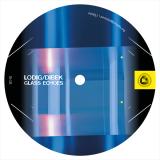
Dibek, Lodig - Glass Echoes

Dibek, Lodig

Glass Echoes

12inchPOM52
Pomelo Records
26.06.2026

Lodig / Dibek re-emerge with a new 12”, expertly delivering that analogue machine funk.
On the A-side, Glass Echoes, features two cuts between techno and electro, navigating between darkness and light, rawness and polished brilliance.
Neon Drive comes in two variations on the flip – dark and extra funky electro driven by conversing baselines, followed by a dubbed-out version designed for those moody late-night moments.

pre-order now26.06.2026

expected to be published on 26.06.2026

THE SOUTHSIDE SOUND SURGEONS - Calling All Dancers / Follow Me (To The Party) (7")

Flying into the new year with the return of The Southside Surgeons - the production team of WeeG & Si Cheeba on the “Echo-Labs” sub label (for collaborations in the Echo Chamber) - with another double header of clubwise 45 action

The A Side “Calling All Dancers” drops a Cosmic-Afro-Boogie sound laced with funky breaks - coming on like Dexter Wansel -vs- Manu Dibango - with a mid 1970s club feel and subtle up to date production.

It certainly lives up to its name, as a rallying call for people to hit the dancefloor, when it’s recently been aired on Test Press up and down the country !

The flipside “Follow Me…” takes you to a late 1970s Brasilian Block Party with a variation on a familiar bass line, cut up with brass stabs and old school rap vocals. It’s proving to be a great party starter with its head-nodding groove and funky chants.

In Stock

On Stock and ready to ship

Gary Beck - Upside Criminal EP

Gary Beck returns to Mutual Rytm as he unveils a selection of impactful cuts across his debut 12'' on the label, 'Upside Criminal'.

Bek Audio boss and Glasgow techno mainstay Gary Beck has long been a key figure in the scene with a unique sound that has shaped a vast discography. One of the genre's best, with appearances across iconic institutions and collaborations with legendary talents, he is a definitive talent. Returning to SHDW's Mutual Rytm imprint, his new EP lands following his recent appearance on the label's 'Federation Of Rytm III' VA, with the tracks on the package proving as go-to favourites for the label boss over recent months.

''Mutual Rytm has been nothing short of inspirational to me over the last years. I've been playing almost
everything from the label, as the tracks really suited what I was selecting in my DJ sets. The high-quality output really got my juices going to create something for the label, and I was delighted when Marco liked what I sent. This EP signals exactly where I am musically. I'm an absolute sucker for tracks with relentless groovy energy and little breaks, so it felt like a perfect fit. Tracks from the EP have been an absolute joy to play in my sets recently,
and I'm so excited to deliver this EP on my current favourite label, Mutual Rytm.'' - Gary Beck.

The powerful 'Upside Criminal' kicks off with hammering drums and pounding hits that create an inescapable wall of sound that will dominate dance floors of any size. There is more loopy energy to 'Sambana' with its ever more jagged synth stabs and fizzing drum textures while 'Pepper Track' is a futuristic techno workout with rattling snares and mutant synth details peeling off the straight-up groove. 'Rejected' is built around trapped vocal fragments that swirl about the mix to a disorientating effect as the high-speed drums and sheet metal synths race onwards, 'while
Ghost' closes out with a subtle sense of uplifting celebration from the synths that rise up through rusty, rickety techno grooves. Digital Bonus 'Variation 6.1' offers another searing and funky techno stomp, once again providing an extra gem for digital purchasers.

In Stock

On Stock and ready to ship

Littlelake - Fang Song EP

Littlelake

Fang Song EP

12inchBROMBERT005
Brombért Records
20.09.2024

Dear Friends,
Can you relax while maintaining a stable structure? The principle of “fang song” in Chinese martial art Taijiquan embodies this balance, where heaviness sinks downward and lightness rises through a vertical axis from heavy rooted feet to head.

As a dedicated Taijiquan practitioner, Littlelake applies this concept in his new EP, featuring four tracks rooted by a distinctive bass heaviness while giving a playful lightness to the overlying sound elements.

The opening track "Tonight's the night" immediately makes clear what is meant: a light-footed 2-step beat dances over weighty bass variations and playful vocal cuts set the tone.

“Passing by” is no more and no less than a true monster speed garage warper blending all the best elements of its genre.
Coming with funky tribal breaks, skillful sample manipulations, and a warm, soulful string foundation, “Watch Your Mouth” defies genre classification—it's in a class of its own.

With "Lost", Littlelake once again proves his ability to create extraordinary dancefloor moments. A jackin' 909 and shimmering dub sounds contrast with a dark Reese bassline, creating a captivatingly ambivalent mood. Don't miss this one.

P.S.: physical release comes with handcrafted, screen printed artwork by fabulous graphic artist Zatina Kessl.

In Stock

On Stock and ready to ship

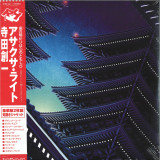
SOICHI TERADA - ASAKUSA LIGHT 2x12"

Repress.

Back in 2015, Japanese DIY house pioneer Soichi Terada stepped back into the limelight courtesy of Rush Hour's 'Sounds From The Far East', a Hunee curated retrospective of material first released on his own Far East Recording label in the 1990s and early 2000s. Buoyed by the positive response and renewed interest in his work, Terada went back into studio to record his first new album of house music for over 25 years, Asakusa Light.

Developed over 18 months, Terada tried to recreate the mental and physical processes that led to the creation of his acclaimed earlier work. Those familiar with Terada’s celebrated, dancefloor-focused sound of the 1990s – a vibrant, atmospheric, and emotive take on deep house powered by the twin attractions of groove and melody – will find much to enjoy on Asakusa Light.

“I tried to recall my feelings 30 years ago, but when I tried it, I found it super difficult,” he explains. “I didn’t even know what I thought about myself five years ago, and the mental metabolic cycle seems to be faster than I thought. I tried different methods, including digging up my old MIDI data and composing by remembering old experiences. With the help of Rush Hour, I found some of the light from my heart that I had 30 years ago. I nicknamed the light I found in my heart, ‘Asakusa Light’.”

Produced using the very same synthesizers and drum machines that powered his 1990s work, the album is a joyous, colourful and life-affirming collection of timeless house music that not only recalls Terada’s own impeccable back catalogue, but also that of similarly celebrated contemporaries such as the Burrell Brothers or Ben Cenac (Dream 2 Science, Sha-Lor).

Terada, who has spent much of the last two decades writing video game music, has always had a gift for combining warm, undulating synthesizer basslines and perfectly programmed machine drums with stirring chords, smile-inducing melodies and mellow musical flourishes. It’s this immersive, sun-kissed and tuneful trademark style that takes centre stage on Asakusa Light, an album for the ages.

The set begins with the alien-sounding chords, soft-touch percussion and dawn-friendly warmth of ‘Silent Chord’ and ends on a high via the bouncing string stabs, starlight chords and thickset grooves of ‘Blinker’; in between, you’ll find a deluge of effortlessly feelgood music that’s the aural equivalent of a dopamine rush at sunrise.

There are subtle variations aplenty throughout the album – see the 8-bit lead lines and pulsing electronic textures of ‘Takusambient’, the vintage Tony Humphries flex of ‘Diving Into Minds’ and the effortlessly funky ‘Marimbau’ – but it’s the uniquely atmospheric, vivid and tactile nature of Terada’s loved-up sound that resonates. After well over 30 years in house music, the light in his heart is shining brighter than ever.

In Stock

On Stock and ready to ship

Tripmastaz - Partying With Illusions

Tripmastaz is back, this time drenched in Summery, laid-back Sunday vibes. The main title, appropriately named 'Sunday Mix 1,' is steeped in rich organ arrangements, deep vocals, and funky bass stabs, the kind of combination one wishes on a laid-back Sunday afternoon. The subtle percussive variations and the thorough but discreet synth work fill up the sonic space with an infectious swag - which is even more evident on 'Mix # 3.1.'

And whereas the main title, "Sunday," relies on a more laid-back approach, the flip-side 'Puppi Luv' literally flips the gears to a scenario where the groove is the focal point, and everything is playful - but strangely hypnotic. "Partying With Illusions" is a lush, uplifting record that finds Tripmastaz once again showcasing his skills as an outstanding music producer.

In Stock

On Stock and ready to ship

Ricardo Villalobos & Oren Ambarchi - Hubris Variation

RE-RELEASE OF THE RECORD ORIGINALLY RELEASED ON 2016-11-18!

Oren Ambarchi's recent Editions Mego release Hubris gets the remix treatment courtesy of electronic music legend Ricardo Villalobos.
Villalobos expertly tranforms Ambarchi's layered web of countless sustained and pulsating palm-muted guitars into a funky, mesmerising and propulsive long-form piece.
key selling points:
- Electronic music legend Ricardo Villalobos remixes Oren Ambarchi
- Original track by Oren Ambarchi taken from the album HUBRIS (Editions Mego EMEGO 227)
-. Villalobos expertly tranforms Ambarchi's layered web of countless sustained and pulsating palm-muted guitars into a funky, mesmerising and propulsive long-form piece.
- Photograph by Estelle Hanania - Sculptures by Daniel Druet - Design by Stephen O'Malley
- Vinyl cut by Rashad Becker at Dubplates & Mastering

In Stock

On Stock and ready to ship

Various - ECHOES OF ITALY - ARTISTS IN WONDERLAND – EARLY 90S HOUSE VIBES VOL.1 LP 2x12"

Volume 1 of this expertly curated project of 90s Italian House - put together by Don Carlos.

If Paradise was half as nice… by Fabio De Luca.

Googling “paradise house”, the first results to pop up are an endless list of European b&b’s with whitewashed lime façades, all of them promising “…an unmatched travel experience a few steps from the sea”. Next, a little further down, are the institutional websites of a few select semi-luxury retirement homes (no photos shown, but lots of stock images of smiling nurses with reassuring looks). To find the “paradise house” we’re after, we have to scroll even further down. Much further down.

It feels like yesterday, and at the same time it seems like a million years ago. The Eighties had just ended, and it was still unclear what to expect from the Nineties. Mobile phones that were not the size of a briefcase and did not cost as much as a car? A frightening economic crisis? The guitar-rock revival?! Certainly, the best place to observe that moment of transition was the dancefloor. Truly epochal transformations were happening there. From America, within a short distance one from the other, two revolutionary new musical styles had arrived: the first one sounded a bit like an “on a budget” version of the best Seventies disco-music – Philly sound made with a set of piano-bar keyboards! – the other was even more sparse, futuristic and extraterrestrial. It was a music with a quite distinct “physical” component, which at the same time, to be fully grasped, seemed to call for the knotty theories of certain French post-modern philosophers: Gilles Deleuze, Félix Guattari, Paul Virilio... Both those genres – we would learn shortly after – were born in the black communities of Chicago and Detroit, although listening to those vinyl 12” (often wrapped in generic white covers, and with little indication in the label) you could not easily guess whether behind them there was a black boy from somewhere in the Usa, or a girl from Berlin, or a pale kid from a Cornish coastal town.

Quickly, similar sounds began to show up from all corners of Europe. A thousand variations of the same intuition: leaner, less lean, happier, slightly less intoxicated, more broken, slower, faster, much faster... Boom! From the dancefloors – the London ones at least, whose chronicles we eagerly read every month in the pages of The Face and i-D – came tales of a new generation of clubbers who had completely stopped “dressing up” to go dancing; of hot tempered hooligans bursting into tears and hugging everyone under the strobe lights as the notes of Strings of Life rose up through the fumes of dry ice (certain “smiling” pills were also involved, sure). At this point, however, we must move on to Switzerland.

In Switzerland, in the quiet and diligent town of Lugano, between the 1980s and 1990s there was a club called “Morandi”. Its hot night was on Wednesdays, when the audience also came from Milan, Como, Varese and Zurich. Legend goes that, one night, none less than Prince and Sheila E were spotted hiding among the sofas, on a day-off of the Italian dates of the Nude Tour… The Wednesday resident and superstar was an Italian dj with an exotic name: Don Carlos. The soundtrack he devised was a mixture of Chicago, Detroit, the most progressive R&B and certain forgotten classics of old disco music: practically, what the Paradise Garage in New York might have sounded like had it not closed in 1987. In between, Don Carlos also managed to squeeze in some tracks he had worked on in his studio on Lago Maggiore. One in particular: a track that was rather slow compared to the BPM in fashion at the time, but which was a perfect bridge between house and R&B. The title was Alone: Don Carlos would explain years later that it had to be intended both in the English meaning of “by itself” and like the Italian word meaning “halo”. That wasn’t the only double entendre about the song, anyway. Its own very deep nature was, indeed, double. On the one hand, Alone was built around an angelic keyboard pattern and a romantic piano riff that took you straight to heaven; on the other, it showcased enough electronic squelches (plus a sax part that sounded like it had been dissolved by acid rain) to pigeonhole the tune into the “junk modernity” section, aka the hallmark of all the most innovative sounds of the time: music that sounded like it was hand-crafted from the scraps of glittering overground pop.

No one knows who was the first to call it “paradise house”, nor when it happened. Alternative definitions on the same topic one happened to hear included “ambient house”, “dream house”, “Mediterranean progressive”… but of course none were as good (and alluring) as “paradise house”. What is certain is that such inclination for sounds that were in equal measure angelic and neurotic, romantic and unaffective, quickly became the trademark of the second generation of Italian house. Music that seemed shyly equidistant from all the rhythmic and electronic revolutions that had happened up to that moment (“Music perfectly adept at going nowhere slowly” as noted by English journalist Craig McLean in a legendary field report for Blah Blah Blah magazine). Music that to a inattentive ear might have sounded as anonymous as a snapshot of a random group of passers-by at 10AM in the centre of any major city, but perfectly described the (slow) awakening in the real world after the universal love binge of the so-called Second Summer of Love.

For a brief but unforgettable season, in Italy “paradise house” was the official soundtrack of interminable weekends spent inside the car, darting from one club to another, cutting the peninsula from North to centre, from East to West coast in pursuit of the latest after-hours disco, trading kilometres per hour with beats per minute: practically, a new New Year’s Eve every Friday and Saturday night. This too was no small transformation, as well as a shock for an adult Italy that was encountering for the first time – thanks to its sons and daughters – the wild side of industrial modernity. The clubbers of the so-called “fuoriorario” scene were the balls gone mad in the pinball machine most feared by newspapers, magazines and TV pundits. What they did each and every weekend, apart from going crazy to the sound of the current white labels, was linking distant geographical points and non-places (thank you Marc Augé!) – old dance halls, farmhouses and business centres – transformed for one night into house music heaven. As Marco D’Eramo wrote in his 1995 essay on Chicago, Il maiale e il grattacielo: “Four-wheeled capitalism distorts our age-old image of the city, it allows the suburbs to be connected to each other, whereas before they were connected only by the centre (…) It makes possible a metropolitan area without a metropolis, without a city centre, without downtown. The periphery is no longer a periphery of any centre, but is self-centred”.

“Paradise house” perfectly understood all of this and turned it into a sort of cyber-blues that didn’t even need words, and unexpectedly brought back a drop of melancholic (post?)-humanity within a world that by then – as we would wholly realise in the decades to come – was fully inhuman and heartless. A world where we were all alone, and surrounded by a sinister yellowish halo, like a neon at the end of its life cycle. But, for one night at least, happy.

out of Stock

Order now and we will order the item for you at our supplier.


Last In: 25 days ago
Miles Davis - E.S.P.  LP 2x12"

A landmark recording and masterful symphony of performance, composition, and execution, Miles Davis' E.S.P. established the template jazz would follow for the following decade. The 1965 record splits the gap between accessible hard-bop and the cutting-edge approach Davis increasingly pursued into the 1970s. Adventurous, sophisticated, and yet altogether cohesive, E.S.P. stands out not only due to its elastic compositions but via its chemistry, interplay, and feeling attained by the instrumentalists. The first album Davis' classic second quintet made together, it's also very arguably the group's best. Never before has the effort been experienced in such transformational sound.

Pressed at RTI, this 180g 45RPM 2LP set of E.S.P. renders the music's dynamics, pitch, colors, and textures with lifelike realism and proper scale. Reference-caliber separation, wall-to-wall soundstages, and distinct images magnify the intensity and beauty of Davis and Co.'s creations. Whether it's the distinctive snap of Tony Williams' drum sticks against the snare head, air moving through Davis' trumpet, acoustic thrum of Ron Carter's bass, or upper register of Herbie Hancock's piano, the sound is better than you'd even hear in the most intimate jazz clubs. Prepare to be swayed on every level.

For many, E.S.P. looms among the decade's best albums if only because of the significance of Davis' line-up. While Hancock, Williams, and Carter are holdovers that began playing with one another on 1963's Seven Steps to Heaven, Wayne Shorter functions as the secret weapon and key addition responsible for this ensemble hitting a new peak. Indeed, the saxophonist helped pen two of the seven compositions here – notably, E.S.P. is entirely comprised originals and clocked in as one of the longest-running jazz LPs issued at the time – and, more importantly, grants Davis the confidence and leeway necessary for the eruption of enigma, steadiness, and tension.

As he did with John Coltrane year earlier, Davis hangs back and picks his moments to solo, with Shorter stepping up to supply the churn. Their bandmates respond in kind, itching to take off into new stratospheres all the while keeping their improvisations grounded and connected to the piece at hand. Guided by Davis' visions and inspired by current boundary-pushing works by the likes of Ornette Coleman, Cecil Taylor, and Coltrane, the magnificent results spark with variation, harmony, emotion, energy, and brilliant movement.

Interlocking lines drive "Little One," alternating rhythms pulse through the funky "Eighty-One," melodies soar on the balladic "Iris," the aptly titled "Mood" broods over minor-key structures, and "Agitation" – goosed by a two-minute percussive introduction by Williams – delivers on its promise. No record – and no group of musicians – have ever balanced coherent themes and exploratory playing in better fashion than Davis' quintet on E.S.P. It's the avant-garde record even jazz traditionalists love, and essential on every level.

pre-order now31.05.2024

expected to be published on 31.05.2024

VARIOUS - THE BELGIAN SOUNDTRACK : A MUSICAL CONNECTION OF BELGIUM WITH CINEMA (1961 – 1976) LP

Sdban Records, the renowned independent groove & jazz label behind Funky Chicken, Hip Holland Hip, and Discophilia Belgica, is thrilled to announce the upcoming release of its latest compilation album, "The Belgian Soundtrack: A Musical Connection of Belgium with Cinema." Packed with the finest soundtracks boasting an unmistakable Belgian connection, this compilation takes listeners on a captivating journey through a collection of cinematic hidden gems from the early sixties to the late seventies.

Curated by the passionate duo Robin Broos and Tom 'Pélé' Peeters, known for their profound appreciation of obscure soundtracks, "The Belgian Soundtrack" showcases the exceptional talents of both local and internationally acclaimed composers and musicians. From obscure finds composed by lesser-known artists to Hollywood scores performed by world-renowned musicians, this compilation offers a vibrant blend of tracks, including the occasional contribution from renowned international artists who have lent their musical prowess to Belgian films.

"The Belgian Soundtrack" came into being as a serendipitous adventure. Former film journalist Jan Temmerman reached out to us one day, offering a treasure trove of vintage soundtrack albums discovered in his attic," recounts Robin Broos. "With 650 long players, mostly unheard of titles, we embarked on an extraordinary quest-to listen to every single one of them, totaling a staggering 29,250 minutes. It was like watching the original Star Wars trilogy 78 times!"

What started as a quest soon evolved into an intriguing investigation fueled by curiosity. Along the way, Broos and Peeters unearthed dozens of treasures, delved into the backgrounds of obscure composers and musicians, and witnessed an array of enigmatic films. "We encountered an abundance of (un)necessary nudity that we never could have imagined existed," Tom Peeters laughs. The outcome of their explorations is "The Belgian Soundtrack," a meticulously curated collection of funky, melodic, and uplifting tracks, each crafted exclusively for the silver screen and boasting an unexpected Belgian connection.

out of Stock

Order now and we will order the item for you at our supplier.


Last In: 2 years ago
ROBERT HOOD & FEMI KUTI - VARIATIONS LP

Robert Hood's techno and Femi Kuti's Afrobeat intertwine in a new form where jazz-grooves reign supreme. For the fourth season of La Compagnie des Indes & Sourdoreille "Variations" live series of creations for France TV, the duo were united around the singer and producer James Brown, performing a tribute to the legendary Godfather of Soul who passed away in 2006. This "Variations" album is the live recording of this unique collaboration and performance, capturing a very special moment in time.

The evening witnessed a meeting of two icons in their own genres: one with synths and drum machines, the other on saxophone: Robert Hood and Femi Kuti embody excellence in their respective fields and the pair combined to make something truly unique, soulful, funky and spontaneous. Recorded in one 30+ minute take, "Variations" is embellished by Femi's exquisitely free-flowing yet restrained saxophone, whilst Hood anchors the groove with layers of pads and kicks with the long-time mastery of a true DJ.

Alongside Jeff Mills and Mad Mike, Hood is one of the original members of Detroit techno group Underground Resistance. His style is characterised by minimalist and experimental tones with an assertive groove. Throughout the '90s, he helped pave the way for techno to flourish - giving birth to minimal techno with his seminal album "Minimal Nation". Since then, he has been consistently forwarding electronic music culture with ground-breaking productions, sensational performances and his M-Plant label.

Alongside him, Femi Kuti takes on every musical style with his saxophone, which he plays with a virtuoso touch: pop, soul, electronic music and Afrobeat, of which he is one of the leading exponents. The son of Afrobeat singer and political activist Fela Kuti, he has inherited his father's zeal for both music and activism, where he continues to highlight the plight of most Nigerians living conditions in the oil rich state.

With "Variations" the duo capture an explosive combination on a special night in Paris 4 years ago, November 2019, filmed at the ADP Group headquarters (Paris Aéroport - Charles de Gaulle (CDG) - Roissy).

"It is so amazing when a vision comes to fruition. I enjoyed collaborating with the legendary Femi Kuti for this special project." Robert Hood

out of Stock

Order now and we will order the item for you at our supplier.


Last In: 17 days ago
Art Ensemble of Chicago - Les Stances a Sophie LP

As the legendary Art Ensemble of Chicago celebrates its 50th anniversary, Soul Jazz Records are releasing a new fully re-mastered edition of the group's seminal album 'Les Stances à Sophie' (1970), which features the great singer Fontella Bass on the opening track 'Theme de Yoyo', a stunning 9-min opus that continues to startle and compel new audiences today.
Drawing upon the mutual soul and funk background of Bass and her then husband Lester Bowie with all the power of the Art Ensemble of Chicago's collective musicianship on board, 'Theme de Yoyo' is powerfully funky, soulful and free at the same time, a classic fusion of black music styles.

out of Stock

Order now and we will order the item for you at our supplier.


Last In: 7 years ago
JP Sunshine & Guim - Toc De Breaks

Following on from the well-received release of Toc De Breaks earlier this year, Spanish duo JP Sunshine and Guim return with a full collaborative EP, Toc De Jaume, released on Steel City Dance Discs.

Coordinating a masterful blend of funk-infused instrumentals, melodic breakbeats and acid-tinged basslines, Toc De Jaume is unique in its character, which bears its defining traits from its two creators, JP Sunshine and Guim, whose partnership is nothing newfound, yet, in light of this EP, feels as fresh as ever.

Toc De Jaime contains a vast variation of sounds within its entirety, from the funky, acid dripped breakbeat of La Fiesta, which was released earlier this year, to tracks like JP Sunshine’s I Want To Stay, released in 2020, which offer a more melodic, feelgood aspect to this EP, and the sound of both artists as a whole.

Through Toc De Jaime, JP Sunshine and Guim present an EP that feels like an ode to the sounds of their shared native homeland; sounds which the duo manipulate and rework within the confines of an electronic dance music context, resulting in a perfect marriage of diverse sounds.

out of Stock

Order now and we will order the item for you at our supplier.


Last In: 2 years ago
Various - In Order To Dance 4.0 (Reissue) LP 3x12"

First released back in the fall of 1989, the In Order To Dance album was a compilation LP that pulled together tracks from a
select band of electronic producers, pushing the boundaries of the house and electronic music that was in its infancy stage.
Released on the R&S Records label, the IOTD series would become pivotal in the development of the electronic music scene
at large.
The world of music is a constant shape shifting, trend moving behemoth. Style may come and go (and come back around
again), stars are made, stars can fall. But the ethos behind In Order To Dance remains the same as it ever has, with a fierce
independent spirit, and a pledge to bring forward the next generation of young artists and their music. And so, here we arrive
at a new collection, fresh for 2023, and just in time for the labels 40th anniversary year, and with the ardent A&R’ing of label
founder Renaat Vandepapeliere, a selection of new tunes is assembled to reinforce the strength and power to be found within
music.
Across thirteen tracks, a squad of refreshingly contemporary producers from around the globe are brought together under the
In Order To Dance banner. Ushering the series into a new era, new variations on the electronic genre and fresh ideas are
fused into a delightfully engaging collection of tracks. There’s deep breakbeats courtesy of UK producer Dharma, smooth and
dubby live action from Saytek and complex bass heavy rhythms from Vromm. There’s esoteric electronics from Hyphen, epic
piano driven deep house from Dino Lenny and swinging jazzy breaks from Nphonix & Matrika. Paul Roux’s melancholic
‘Bapteme’ unfurls waves of deft pianos and guitar swirls over taunt beats, and a driving electro tone is set on Acidulant’s
contribution. Intoxicating rave tropes and hefty breaks come courtesy of Pascal Nuzzo and Adam Antine delivers a wall of
sound anchored by shuffling, funky beats on ‘Sortavala’.
And to accompany the new wave of In Order To Dance, a series of music videos have been produced. Acclaimed artists and
video directors, including Alessandro Amaducci, Ben Marlowe and Gala Mirissa, have all stamped their digital artistic
visions onto these stunning compositions, synching audio and visual for a multi-sensory experience!
‘In Order To Dance 4.0’ by Various Artists is available on R&S Records from 14th April 2023 on 3LP vinyl, download &
streaming services.

out of Stock

Order now and we will order the item for you at our supplier.


Last In: 3 months ago
Gerardo Frisina - Joyful Sound LP 2x12"

Anticipated by the "Soul Drum" 12" EP (SCEP507, 2022), Gerardo Frisina's new double record "Joyful Sound" represents as usual another step forward inside his indefinite travel towards new musical paths. A journey made of wisely distilled notes, bright and sometimes mysterious atmospheres, harmonies that wander through shadows, silences, lights. A chameleonic Gerardo enchants with every release, mixing jazz, Latin, Afro-Cuban sounds, oriental fragrances, electronic beats, tribal percussions, funky variations and, dulcis in fundo, elegant symphonic arrangements with refined mastery.

out of Stock

Order now and we will order the item for you at our supplier.


Last In: 2 years ago
INGREDIENT - Untitled

Ingredient is the elegant collaboration of Toronto poets, composers, producers and dear friends Ian Daniel Kehoe and Luka Kuplowsky. Their self-titled release is an enigmatic electronic avant-pop record attuned to the micro and macro perspectives of the natural world. Ingredient is an album whose lyrics are more poem than lyric, and whose songs exist in a merger of house music, philosophically-minded lyricism and contemporary R&B. One might recall electronic and art-pop luminaries such as Yukihiro Takahashi, The Blue Nile, and Arthur Russell, or connect it to contemporaries like Nite Jewel, Westerman and Blood Orange. A distinct world of dance, of questions, of secrecy and ultimate softness.

Eight years of friendship forges strange telepathy.

In the summer of 2020, Ian Daniel Kehoe was entrenched in a new feeling of heaviness; psychosomatic symptoms had started to proliferate; stress made new pores across the body, bending sensitivity into pain. His days were met with confusion, detachment, sleeplessness and pain without causation. Disfigured, he felt that what had been central and centering was blown out to the periphery of things. In a moment of self-preservation he reached out to his dear friend Luka Kuplowsky to make an album together. For Kehoe, it was an instinctual grasp for the anchoring truthfulness of deep friendship and the potential for a dedicated creative collaboration. Kuplowsky’s presence was light, supportful and curious, eager to explore musically the sounds they were mutually drawn to: house music, ambient pop, dub. The duality between Kuplowsky and Kehoe – between the Aflight and the Unmoored – is a portrait of a friendship whose exchanges came easy and produced an outpouring of song. Creation and therapy crisscross. In email correspondence that catalogs their process of collaboration, affection abounds: “feels bare without the Luka Licks”, or “Love you so much”, or “Kinda just overwhelmed with deadliness coming in at all angles.” When their voices first come in together on “Wolf,” that harmony arrives in a dramatic avant-pop sound that is bold and wondrous.

Kuplowsky and Kehoe both arrive at Ingredient as established artists whose works are committed to language’s propensity to provoke and mystify. Kuplowsky’s 2020 album Stardust is an idiosyncratic and otherworldly blend of pop and jazz romanticism grounded by Cohen-esque vocals and a stirring philosophical curiosity. Kehoe’s entrance into the new decade has hatched four records of pop experimentation, most recently 2022’s Yes Very So, a euphoric and bold album of poetic synth-pop and meditative ambient instrumentals. Kuplowsky and Kehoe’s union as Ingredient is a beautiful and unusual chemistry that integrates their distinct approaches while bringing forth a newness: a sound that alternates between cinematic technicolor and dubbed out fogginess; a lyricism that exchanges their lucid and clear poetics for a playful and obtuse verse. The album intuitively taps into the opposing emotional states of Kuplowsky and Kehoe during the conception of the record, contrasting the buoyancy of trumpeting keyboards (“Resurface”), angelic synthesized voices (“Come”), and rolling bass (“Photo”) with the record’s underlying darkness of whirring buzzsaw textures (“Transmission”), whooping sirens (“Wolf”) and murky ambience (“Illumination”). Lyrically, this duality arises in the record’s flux between openness (“Variation”, “Raindrop”) and existential dread (“Wolf”). “Illumination” most clearly crystalizes this opposition, reconciling the verses’ neurotic yearning for enlightenment with the chorus’ liberating doctrine of negation: “no more devotion… no more delusion”. Amidst the gradations of light and dark, Kuplowsky and Kehoe trade indelible, lush melodies as though their voices are made of a substance that melts easily one into the other. The harmony of poetry, sound, and texture cuts through your brain fog like a wet diamond.

Ingredient’s self-titled record was assembled by Kuplowsky and Kehoe over the course of six months in a home studio they frequented daily. Amidst synthesizers and drum machines they composed, re-composed, and workshopped a wide array of music, ultimately focusing on a set of eight songs that lived in a shared musical and philosophical world. Recording days often ended in basketball games at a local court or a rooftop commune over a pot of tulsi tea and a crossword puzzle. Kuplowsky brought in the Blue Cliff Record – the classic anthology of Chan Buddhism – whose inscrutable and sublime insights remained constant throughout the recording process as an activator of reorientation and reflection. While Kehoe was frequently rendered physically immobile by bouts of anxiety, a patience and mutual caring governed the pace of their creation; rest, stretching and meditation became equally important as the act of arrangement. Invited into their intimate circle of composition was Thom Gill, whose heavenly voice uplifts “Variation” and “Raindrop,” and Karen Ng, whose alto sax simmers and dances around the funky strut of “Raindrop.”

The lyrics on Ingredient reflect the persistence of change, the infinite variability of nature where randomness and divergence are no accidents. In Daoism, duality, in the form of Yin and Yang, is not contradictory as it is in Western idealist philosophy, but rather composes the eternal and lived paradox of our changeless-changing universe: changeless because all is change, and changing because the dynamism of the Dao makes each moment transformational. Kuplowsky and Kehoe refract this way of seeing the world, as in Variation: “Variation in the natural world / there it is.” Ingredient is an experience of the manifold ways of saying there it is of the transformational world, and there it is, unfolding. Elsewhere, change and ephemerality is addressed through the record’s preoccupation with non-human perspectives, reorienting the listener to the wolf, the mouse, the emerald frog, the centipede, the bird, the fly in the lamp. The album cover visualizes this fascination with the striking image of a reddish-orange frog atop a defamiliarized landscape of dark green leaves. Mirroring the exploratory process of the record’s collaboration, the frog also signals the amphibian’s natural inclination to leap into boundless potential. Kuplowsky and Kehoe’s lyrics manifest philosopher and ecologist Timothy Morton’s concept of “the mesh,” drawing attention to the “vast, entangled web” of interconnectedness that connects all life forms and interweaving the songwriters’ shared wonder into the Animal’s unknowability. As Luka narrates in the breakdown of the dance-floor ready “Photo,” “the closer we observe things, the further they retreat into abstraction.” In Ingredient’s ecosystem, perception is a reversible fractal where the world’s minutest details mirror the shape of the cosmos.

According to the Dao, the path to healing starts by reorienting perception away from the self and toward the self’s subsumption in Totality. For Kehoe, collaborating with Kuplowsky became the reorientation necessary for the self-preservation he was seeking, opening up a shared creative practice to navigate and soften the complexity of his psychological shattering. The album begins with Kuplowsky intoning “colossal faith” which bounces around the stereo field in a cloud of echo, and it is the enormity of “faith” that centers both Kuplowsky and Kehoe’s collaboration and their inquisitiveness in the vast mysteries of our very being. Truth in Ingredient is not an essential nugget, but a bending of the light – it is the equivocal entanglement of how we are in nature as nature, but with a plea or prayer under our breath that marks our felt distance from what we are a part of: “carry me towards the mountains of my birth / returning to the nest / the silence of the earth.”

pre-order now15.11.2022

expected to be published on 15.11.2022

Kim Kemi - Only Smoke EP

Copenhagens own dj legend and veteran producer KIM KEMI releases another jacking and euphoric banger- ONLY SMOKE - his stylish and subtle sound design and varied arrangement take hints of Robert Hoods minimal riffs and flesh out a full funky arrangement taking us on that classic luxurious sonic journey. Pres play and trigger the
smoke machine - or the soap bubbles.
Martinez ́s remix is a more electro affair that could blend well with classic Underground Resistance releases. Watch out for the acid topline. Martinez is a Swedish electronic music producer and DJ, currently based in Copenhagen. Martinez kick started his carrier
in 2000 with his "Laidback Grooves EP" on the notorious Chicago based Deep-House label Guidance Recordings.
Asmus Odsats remix of SMOKE KILLS is taking the track in a more broken but funky IDM territory, breaking the track down adding avantgarde dub details over the stuttering beat.
Asmus Odsat is a former resident at Culture Box and co-founder of Ritual Malmö as well as the BULK club night releases via. FALK DISKS, the club focused sub-label of FALK (Fuck Art Lets Kill) with his ‘Ecstatic Half Truth’ EP, is played by Courtesy - even in her BBC Radio 1 show mix.
An added bonus to these 3 unique remixes is Kim Kemis beautiful
Tropical Tucan, a perfect opening track fusing sensual chilly Detroit pads and jacking understated beats into a growing glowing mind-state that is worthy of a Carl Craig spin - let it ride - don't miss the climax - you will end up looping it. An essential tool. Enjoy!

out of Stock

Order now and we will order the item for you at our supplier.


Last In: 3 years ago
JULIAN Y SU COMBO - ENYERE KUMBARA / INS ROCK

With arrangements and piano by Alfredo Linares, this is a thrilling double-sider sought after by collectors and DJs because of the funky dancefloor cuts 'Enyere Kumbara' (covered by Quantic a few years back) and 'INS-Rock'. Proper Afroantillano party business melting Cuban, Nuyorican and Colombian tropical traditions. First time reissue on 7" vinyl. Julián y su Combo was founded in 1962 by left-handed guitarist Julián Angulo Ponce, who was originally from Guapi, Cauca, Colombia and made his name in Cali and Buenaventura, signing initially with Bogotá's Sello Vergara in 1966. During a 20-year period Julián y su Combo released eight records (with several band name variations). Angulo was part of the first generation of artists from the Colombian Pacific who migrated to Bogotá in the 1970s, and his combo enjoyed popularity in his adopted city as well as in Medellín and Mexico. The band also travelled to Venezuela and the US. Angulo described his sound as Afroantillano, combining Cuban, New York Latin and Puerto Rican elements with Colombia's own tropical traditions. The combo's arrangements were distinguished by the bandleader's funky, jazzy electric guitar work (Angulo played without changing the order of the strings), a hot rhythm section and the potent brass line-up of two saxophones and a trumpet (much like Cortijo y su Combo). At that time Alfredo Linares was musical director at INS and this album -the first one Julián Angulo recorded for the label- bears his influence in the funky 'Mambo Rock' sections (breaks and handclaps galore!) and hot Cuban and Latin jazz piano styles that also graced his own records.

out of Stock

Order now and we will order the item for you at our supplier.


Last In: 3 years ago
DJ Overdose - Powers Of Ten EP

Like meeting an old friend again, Dalmata Daniel welcomes DJ Overdose back to their catalog. Six years ago the infamous Dutchman's '05 Poly 800 Loop' EP was released, which served as a powerful launch to Dalmata Daniel, opening the first chapter in their story. Later in 2019, a split release with Sematic4 was also a highlight in the life of the label; and now, 3 years later, DJ Overdose checks in with the 'Powers of Ten EP' with a J. Mono remix, available both in digital and vinyl format, the latter having 2 bonus tracks.

The distinct, crunchy sound of DJ Overdose, bearing aspects of old school hip-hop-infused sampling and contemporary analog vibes creates the perfect blend of both worlds. 'Garden of Lust' opens up the adventure with a combo of warm basslines and solid drum-programming. This initial track feeds us these cardinal elements as the bread and butter they are: subtle variations and fine spices do appear here and there as the track goes along, but the key, beating pulse in 'Garden of Lust' brings massive hits stable as a sledgehammer in the hands of a blacksmith.

'Feed The Beats' elevates the game to cinematic territories: its majestic string-like central melody makes me alert and ablaze, making me feel like I'm in a late 80s L.A. setting facing malevolent zombie-aliens in my Wayfarer shades. Blasting beats and Carpenterian coolness all over the place, while the spooky bassline just keeps sneaking up on me endlessly.

If you are wondering when's the best time of the year to bring out your boombox at last, then this is your lucky day: with 'BOB', the first bonus track on the vinyl, we can experience some roarin' bassdrums, snappy snares, MCs with the speed of light and all that jazz. The low-bit sampling and vinyl scratching come and kick you right in the face so hard that it becomes pretty obvious you'll can't help but start some serious beatbox battles in your bathtub with your rubber duck.

A feverish groove in the prime time of a funky bash, in the haze of a sensual rave-up: that's all one really wants when going for a Saturday night out. We definitely get this and much more from 'Room 714', another vinyl-only bonus track. A berserk voice and ethereal chords guide us through this mysterious track, but while we are busy trying to impress our crushes on the dance floor, things around us are slowly getting very, very freaky, maybe a bit way too freaky.

As wobbly and jolly as it gets, our Dutch friend ends his session with 'Ðr ¡v€ M€ ¢r@z¥', a vocoder-heavy disco banger, full of merry vocal FX and smart rhythmic glitches as he completes his flight. To close the EP, our local hero, J. Mono delivers an insane remix of 'Ðr ¡v€ M€ ¢r@z¥': one can clearly imagine how he grabs and turns the BPM knob all the way up, fires up some arpeggios on his mighty synths and casts a complete reimagination of the original track.

out of Stock

Order now and we will order the item for you at our supplier.


Last In: 3 months ago
Sammy Burdson - Background Action

C-L-A-S-S-I-C library breaks and beats set of super-heavyweight espionage-funk.

One of two Be With forays into the archives of revered British library institution Conroy, we present one of our favourites on the label - the super in-demand Background Action from Sammy Burdson, originally released in 1975. Rare and sought-after for many years now, this is one of those cult library LPs that rarely turns up on even the deepest dig.

Sammy Burdson was one of the many, many aliases of the mighty Austrian composer, arranger and conductor, Gerhard Narholz. Founder of adored library label Sonoton in 1965, and a classically trained composer, his work runs from easy listening through pop, jazz and electronic, to avant-garde.

Background Action’s first side is all Blaxploitation wah-wah, funky clav and heavy, heavy drums. It’s top-quality takes on the sort of hard-knocking psychedelic sleuth-funk that the library labels gave us in spades. However, we think the real killers are over on side B. Styles upon styles upon styles is what we have. The trio of swish “Water Pollution” variations are pure gold. The two-part mid-tempo b-boy drumathon “News Background” is nothing short of epic whilst the sensational “Kabul Trip A” and “Kabul Trip B” are two different takes on some tough funk, street jazz style with some dope organ, bass and drum sounds. In short, this is a must for both DJs and producers.

The British library label with those instantly recognisable “orangey-red” sleeves, Conroy began releasing production music in 1965. A sub-label of Berry Music Co, its catalogue typified the library industry’s strange mixture of tradition and experimentation from the start. Conroy’s early releases included work by big band stalwarts like Eddie Warner as well as early electronic recordings by the likes of Belgian experimental pioneer Arséne Souffriau. With Berry Music Co working as a distribution partner to the German library label Sonoton, it was through the Conroy that a great deal of German library music found its way into the UK market.

Conroy stopped putting out new music in the 1980s, but its history and its catalogue offer an excellent window into the trends and eccentricities of a highly unique industry at the height of its international appeal.

This re-issue of Background Action has been mastered for vinyl by Be With regular Simon Francis from audio from the original tapes. Richard Robinson has handled reproducing the iconic, hypnotic original Conroy sleeve. Essential.

out of Stock

Order now and we will order the item for you at our supplier.


Last In: 3 years ago
Manfredo Fest - Brazilian Dorian Dream (1976)

Legally blind from birth, Brazilian keyboard player, composer and bandleader Manfredo Fest learnt to read music in braille and began studying classical music at a young age. By 17 he had fallen in love with jazz (particularly the music of fellow blind pianist George Shearing) before becoming swept up in Rio's emergent bossa nova movement in the sixties. Moving to the States in 1967 where he would go on to work with fellow countryman Sergio Mendes, Fest recorded and self-released Brazilian Dorian Dream in 1976, enlisting Thomas Kini (bass), Alejo Poveda (drums, percussion) and Roberta Davis (vocals).

Like a turbo-powered, intergalactic elevator ride, Brazilian Dorian Dream builds on the principle of the modal diatonic scales of the Dorian mode, with influences of Brazilian rhythms, North American jazz and funk, and music of the European baroque and romantic era. The coming together of these intergenerational and intercontinental styles coupled with Fest's visionary use of the Fender Rhodes, Clavinet, Arp and Moog synthesizers (plus a whole load of effects units), makes for an album light years ahead of its time.

The miraculous wordless vocals of American jazz singer Roberta Davis are nailed so tightly alongside Manfredo's keys and mind-bending synths that it sounds almost alien. On the album's liner notes, Fest preaches Davis' ability highlighting how hard it is to sing such precise intervals so accurately. One of the tracks on which the vocals shine brightest is space funk stepper "Jungle Cat", which features hard funky drums, freaky synth lines and expert Rhodes comping. The track builds up and up before releasing into the unmistakable scat melody in the chorus.

A few years after releasing Brazilian Dorian Dream, Fest recorded and released his Manifestations album in 1979, featuring 'Jungle Kitten'': a new dancefloor focused variation on "Jungle Cat". At around 140 BPM 'Jungle Kitten' was possibly deemed too fast for statside dance floors, which explains why it never got a US 12" release. But the track became something of an underground hit at jazz dance clubs and all-dayers across the UK in the 80s and as a result it has probably become Fest's most well known track since.

out of Stock

Order now and we will order the item for you at our supplier.


Last In: 4 years ago
ZIAD RAHBANI - ZIAD RAHBANI

Ziad Rahbani

ZIAD RAHBANI

12inchWWSLP44
WeWantSounds
07.05.2021

Ziad Rahbani’s cult album, “Bennesbeh Labokra...Chou?” originally
released in Lebanon only and mixing arabic music with Jazz, Bossa Nova and other western influences, is hailed as an absolute classic.
The album is the soundtrack to his eponymous play and has been highly soughtafter by DJs and collectors around the world. Curated by Lebanese-born music
expert Mario Choueiry from Institut du Monde Arabe in Paris, the album is
reissued on vinyl for the first time since 1978, featuring original gatefold sleeve,
remastered audio and a 2 page insert with a new introduction by Choueiry.
“Bennesbeh Labokra... Chou?” is a skilful blend of Arabic music and Bossa-nova
- “First Introduction” - the recurring theme of the album, groove - the funky
beat of “Second Introduction” and the jazz vibe of “Variation’s 3 and 4.” It’s also
interesting to hear an early version of “Al Bosta” which would grace Fairuz’s
1979 album “Wahdon” in a faster, funkier version.
With a knack for cinematic orchestrations reminiscent of Lalo Schifrin, Ziad
Rahbani also brings more complex arrangements to the album on such tracks
as “Variation 5” making the album such a rich listening. Undoubtedly one of
the most important albums recorded in the Middle East

pre-order now07.05.2021

expected to be published on 07.05.2021

Sydney Joe Qualls - So Sexy!

Sydney Joe Qualls

So Sexy!

12inchDEMREC605
Demon Records
31.07.2020

Sydney Joe Qualls is a Southern born soul singer who was heavily influenced by Al Green and Sam Dees but had a sound and quality of his own. He signed to Dakar Records to release his debut album with a variation on the spelling of his first name. ‘So Sexy’ is one of the great soul albums released in 1979 on Chi-Sound recordings, where he masterfully sings 8 soul numbers including the cult classic ‘I Don’t Do This’. Reissued on 140g classic black vinyl with original artwork and printed inner sleeve.

out of Stock

Order now and we will order the item for you at our supplier.


Last In: 5 years ago
Roadtrip Beat Bronco Organ Trio - Roadtrip

It's album release time for this Madrid-based soul/jazz organ trio who have been burning up stages and festivals throughout 2019 and who have already had a successful single out on Rocafort Records. Beat Bronco Organ Trio have not rewritten the Hammond musical handbook, but they do what it says on the tin rather splendidly – a Road Trip that grooves, swings and sashays around the familiar but much loved funky jazz theme.

Although it's impossible to listen to the album without summoning up the ghosts of Jimmies McGriff & Smith and the like, nearly all tracks here are originals and shout out personality, verve and respectful homage to the tradition. Featuring the usual leitmotifs: Shaftish film sountrack, lo-fi lounger, gospel-tinged toe-tapper, the hip shaker and much wah-wah frenesi, there's nothing not to like if the genre is your bag.

The steaming horn section on "Hard Play" thickens the sauce à la JBs and the Meters, aided along by a unique orchestra of handclaps. Vocalist and guitarist Alberto Palacios Anaut storms in with "Hey Hey", an old Dave Bartholomew classic from New Orleans, just to remind us where Fats Domino and Ray Charles got it all from. Chip Wickham makes two welcome appearances on flute, adding an extra jazzy touch to "Squirtly" and "Electro Pi" – the latter a fabulous trippy, spacious head-nodder that demands in our opinion some kind of a wigged out drum'n'bass remix. Every track is clearly dominated by variations on the vintage keyboard, be it Hammond, Clavinet or Minimoog; all roads lead to that sexy, sacred sound.

Spain is already prominent on the modern-day Funk map thanks to groups like The Sweet Vandals, Speak Low and Mighty Vamp – and it comes as no surprise that our hero trio featured at various times in all these bands. Gabri Casanova (keys), Lucas de Mulder (guitar, percussion) and Antonio "Pax" Alvarez (drums, percussion) have been busy reviving the funk gospel for some time now. Road Trip is an elegant culmination of their efforts in keeping alive a revered and timeless tradition that still today serves as a reference to where all the good stuff came from: The Church!

out of Stock

Order now and we will order the item for you at our supplier.


Last In: 6 years ago
Clark - Kiri Variations

Clark

Kiri Variations

12inchTHROT002LP
Throttle Records
30.07.2019

On July 26th the top-ranking leftfield star Clark will release ‘Kiri Variations’, via his own label Throttle Records – and as always, he has musically metamorphosized into something fresh and new.

This album of plaintive beauty, eerie wyrd arcadian horror and childlike outsider music epitomises his constant ability to flip-the-script and coherently organise an abundance of new ideas.

Mysterious and morbidly beautiful pieces driven by piano, harpsichord, clarinet, strings, electronics and voice are interspersed with fabulously unusual and highly original curveballs:

Odd-in-a-brilliant-way, the faux naïve ‘Kiri’s Glee’, evokes traveling minstrels of yore accidentally eating the wrong ‘shrooms, and ‘Coffin Knocker’ has diffracted psych feel, like David Axelrod’s work with the Electric Prunes, but chopped, screwed and scorched.

‘Forebode Knocker’ is darkly funky, like the kind of lost diggers’ nugget unearthed and sampled by RZA, whilst the sonically-perfect ‘Primary Pluck’ unfurls exquisitely, swaying slowly ever forward like a funeral march.

‘Cannibal Homecoming’ is nothing short of Clark’s most song-based composition ever, featuring augmented human voice as evident elsewhere and also a fully-fledged vocal sung by him.

‘Kiri Variations’ started life as the score to the BAFTA-nominated TV program ‘Kiri’, but only a small (and highly effective) portion of the music recorded was used – intentionally sparingly – by director Euros Lyn. That first incarnation has since grown and morphed intosomething entirely of its own being; a proper artist album.

“In addition to my usual methods of controlled randomness and tangential ideas, the TV commission was a prominent spark for new approaches. It’s a great balancing contrast with the solipsistic studio album”, Clark explains.

The record allows simplicity and playfulness to shine through: “It’s a skeleton of an album, reduced to bare essentials, although it started out rather dense - the thing that takes time is making it succinct."explains Clark. “Certain parts are also what you could call anti muso – for example the recorder on ‘Kiri’s Glee’ is totally out of tune – but it sounds so colourful. I can’t resist the primary paint of acoustic instruments; it’s an antidote to frictionless digital music.

out of Stock

Order now and we will order the item for you at our supplier.


Last In: 6 years ago
Chebran - French Boogie 1981-1985
 
6

This is France in the Mitterrand years: fashions fleet as fast as governments. In the early eighties, the happy-go-lucky gather the nectar of each and every new release.
Believing in a bright future for videotex, and loosened up by the sexy talks broadcasted on the budding pirate radios, the new generation dreams of dance floors and holiday clubs. French Boogie, which preserves the spirit of these years of boodle and bunkum, is the ideal soundtrack to their dreams.

What the web now refers to as French Boogie is some synthetic funk reflecting the spirit of those days when nothing was impossible, or so it seemed. Its syncopated flow heralded the dawning of French rap. Often considered as some kind of post-disco, inspired as much by black music as by new wave, this carefree pop music with bawdy lyrics indulged in simple pleasures: holidays, swank and sun were recurrent themes. Totally in tune with its time, it incidentally glorified luxury, success, and a certain consumerism embodied, for instance, in Bernard Tapie.

In popular clubs such as La Main Bleue in Montreuil, or L'Echappatoire in Clichy-sous-Bois - where Micky Milan could be seen behind the decks - an enthusiastic audience discovered this new sonic wave, influenced as much by French pop as by Sugar Hill Gang or Kurtis Blow. The artists who first launched the movement engaged in it wholeheartedly, but as often the case with new music trends in France, humour and casualness quickly became a decoy to impose a new style. This explosive mixture, in which startling and typically Frenchy French lyrics go along New-York-style tunes, is sometimes reminiscent of the kinky comedies directed by Max Pécas or Claude Zidi. On this prolific scene, partly originating from the Jewish community, everybody was looking for success, trying to hit the jackpot with what was to hand. Famous media personalities, one-hit wonders or John Does in quest of fame, all had a go at French Boogie - more or less successfully. Apart from « Vacances j'oublie tout » by Elégance, « Un fait divers et rien de plus » by Le Club, or « Chacun fait ce qui lui plaît » by Chagrin d'amour (produced by Patrick Bruel), very few songs became hits: the story of funk in France is that of a half-baked robbery.

In this myriad of new musicians, the very young François Feldman and Phil Barney pioneered a fresh and hybrid style. Other well-known artists like Gérard Blanc from Martin Circus (Attaché Case), Richard de Bordeaux (Ich), or Jean-Pierre Massiera (Anisette, Pirate Scratch Band, Mandrake, Scratch Man...) added an eccentric touch to this sound-wave, making it often entertaining, and sometimes showy.

Capture d'écran 2015-10-26 à 12.55.43Singers like Agathe (the author of 'La Fourmi' and of the hit song 'Je ne veux pas rentrer chez moi seule') were far more than just window dressing. They even tried to give an ironic and subversive twist to this rather harmless genre. The very vindictive rebel Gérard Vincent shared in this spirit, but as a whole, French Boogie became associated with nonchalance and sauciness. Thus, Stéphane Collaro, Gérard Jugnot, Alain Gillot Pétré and other TV clowns would clumsily contribute to this French variation on funky sounds. In a few but intense years, French Boogie gave all the tips to party with style.

If some hits made it possible for the happy few to get a real house under truly exotic palm trees, the wave actually ebbed away very quickly, leaving quite a few musicians stranded on the shore. Whether they were sincerely motivated, or simply opportunistic, they had failed. In 1984, French Boogie was already breathless, and got merged with other genres: on the one hand, rap and breakdance adapted its flow to a more urban world, especially with Sydney's show, H.I.P.H.O.P, and Dee Nasty's broadcasts on Radio Nova; on the other, italo, new beat and house began to rule over dance floors, even more strongly asserting the will to develop music for clubs.

Squeezed in between the age of disco and that of modern electronic music, French Boogie was a transitional phase, but it remains an amazingly refreshing testimony to the intermingling of pop and underground cultures. The genre was hastily categorized as anecdotal in spite of its pioneering synthetic groove and matchless bass lines. An attentive ear will discover the poetry of the ephemeral beyond the eccentricities of the genre, as well as a certain unexpected avant-gardism. At the origin of major music trends, always cheerful and catchy, French Boogie is what you need to party.

out of Stock

Order now and we will order the item for you at our supplier.


Last In: 10 years ago
Aoki Takamasa - Rv8

Aoki Takamasa

Rv8

12inchR-N148 VINYL
Raster
10.06.2013

with RV8, the osaka-based producer and musician AOKI takamasa continues his long-
term project that focuses on the modulation of rhythms and grooves. it began with his frst ep
‚rhythm variations' in 2009, released as part three of the unun-series. besides his collaboration
with raster-noton, he released records on several labels like commmons, progressive form
and op.disc, produced remixes for well-known musicians like ryuichi sakamoto or yoshihiro
hanno and played performances at, for example, elektra/montreal and club transmediale/
berlin, all in all making him a renowned producer in japan and beyond.
starting with a frework of bleeps and bops, already the very frst minutes of his new
record reveal aoki's preference for vibrating beats and likewise his playful approach to music,
generating a sound that is aiming at the dance foor.
like the frst ones, almost all tracks of the record are characterized by a constant modulation
of chords and lines that sometimes appears somehow hyperactive, but nevertheless results
in a natural fow that perfectly refects AOKI's laid-back attitude combined with his will to
produce danceable and funky music.
the fuent arrangement is only interrupted by the third track which forms a caesura by
being more reduced and slower. in contrast to this, the following tracks present a faster
tempo and an increased intensity; and whereas the frst tracks refect downbeat and r'n'b
infuences due to their broken beats and chunky sound, the later songs are characterized by
a more sleek and technoid style, incorporating dribbling basses, clappy sounding snares and
modulated voice snippets.
although all of the musical components are constantly broken down, modulated, and
rearranged, the overall sound of the record is dense and compact, featuring a groove made
up of numerous elements that are complexly intertwined. the eight tracks of the record ft
seamlessly together and create a composition that nearly functions like a dj set.
the album was mastered by yoshinori sunahara. needless to say that RV8 will be released
as cd and lp.
[A] a1 | rhythm variation 02 [B] a2 | rhythm variation 04 [C] a3 | rhythm variation 05 [D] b1 | rhythm variation 06 [E] b2 | rhythm variation 07

out of Stock

Order now and we will order the item for you at our supplier.


Last In: 5 years ago
  • 1
Items per Page:
N/ABPM
Vinyl