Search:edgar varese

Styles
All
  • 1
Tod Dockstader - Aerial 2 LP 2x12"

Tod Dockstader's Aerial series, an electronic/drone masterpiece, is cherished among fans of the artist's work and this second volume is available in an audiophile quality double LP edition.

Tod Dockstader's Aerial series is sourced from his life long passion for shortwave radio. Dockstader collected over 90 hours of recordings, made at night, and comprised of cross signals and fragments plucked from the atmosphere.

Opening with airwave drones, Dockstader gradually allows elements to slowly come and go, summoning an ominous atmosphere of ethereal cloud clouds. Malignant placidity continues, giving the feeling of eavesdropping upon late-night audio activity not unlike discovering number stations while sweeping the dials. These sounds pull you in as their density and rhythms come and go.
Backward voices, deep echoing choruses of conversations flowing under the surface, ocean sounds, pulsing electro-rhythms, all seem to be created via the collaging of many hours of source recordings. A masterwork of collage and juxtaposition by an overlooked pioneer of American electronic music.

Artwork by John Brien (Imprec) is inspired by the propagation of shortwave radio signals throughout the earth's atmosphere.

"This return of Dockstader is something to cherish, not just because his output has been so limited and scarce but because what we do have is so intriguing, persuasive and cliche-free; the music of an inspired explorer who trails in nobody's slipstream." The Wire

"One of the great figures of musique concrete composition." Dusted

The Aerial project

I've written before of my interest in shortwave radio, in the notes to the Quatermass CD. Also, in the notes to the Omniphony CD (which has my first "Aerial" mix, "Past Prelude," in it), I mentioned "The Aerial Etudes," which was my working title for what became the three CDs you have. And, at the end of an interview with Chris Cutler (which can be found in the "Unofficial TD Website"), the piece I mentioned I was starting to work on at the time became Aerial.) When I was very young, people got most of their entertainment from radio. They called it "playing the radio," as if it were a musical instrument. That's what I've tried to do in this piece. About this time, a few people encouraged me to look into using a computer for this work.

I'd never used one, but I saw it would allow me to keep my mixes digital - no more transfer losses. So, at the end of 2001, I got a computer and an editing program for it, and spent what seemed a long time learning it. I began selecting mixes and loading them into the computer in late March, 2002. Out of the 580, I selected 90 "best" mixes - eventually reduced to 59, the ones on the CDs. Finally, in assembling the CDs, I followed David Myers' suggestion to allow each piece to flow into the next - making a continuous journey to the end. Tod Dockstader, 14 september 2003

About Tod Dockstader: Dockstader moved to New York in 1958 and became a self-taught sound engineer and sound effects specialist and apprenticed as a recording engineer at Gotham Recording Studios. It was around this time that he started to use his off-work hours to experiment with mixing and manipulating sounds on magnetic tape (musique concrète). By 1960 he had amassed enough material to assemble his first record Eight Electronic Pieces which was released on the Folkways label in 1961 (this would later be used in the soundtrack of Fellini’s Satyricon). The last of the eight pieces was later re-worked into his first stereo piece. In 1961 he applied to use the facilities at the Columbia-Princeton Electronic Music Center and was denied access by Vladimir Ussachevsky. Ussachevsky’s official reason was the “overstrained” scheduling of the studios, although many suspect that Dockstader’s lack of academic training was a factor in the decision. He continued to create music throughout the first half of the 60s, working principally with tape manipulation effects. His last piece at Gotham was Four Telemetry Tapes in 1965, after which he left to work as an audio-visual designer on the Air Canada Pavillion at Montreal’s Expo ‘67. It was around this time in 1966 that some of Dockstader’s pieces were released on three Owl L.P.s, and his work became known to a larger audience. He achieved modest recognition and radio play alongside the likes of Karlheinz Stockhausen, Edgard Varèse, and John Cage.

In Stock

On Stock and ready to ship

Los Angeles Philharmonic, Zubin Mehta - Varèse: Arcana; Intégrales; Ionisation [Decca Pure Analogue]

Los Angeles Philharmonic, Zubin Mehta

Varèse: Arcana; Intégrales; Ionisation [Decca Pure Analogue]

12inch4871605
Decca Records
08.05.2026

Zubin Mehtas klanglich spektakuläres Album mit Orchesterwerken von Edgar Varèse aus dem Jahr 1971,
aufgenommen mit dem Los Angeles Philharmonic, wurde von Gramophone für sein „virtuoses Spiel“ und
seine „vorbildliche Aufnahme“ gelobt. Mehta wird dieses Jahr 90 Jahre alt, und diese Aufnahme – mit
ihrem beeindruckenden Artwork – erinnert uns an Mehta in seiner besten Zeit, dynamisch und mit jugendlichem Verve, als er, auch wegen der atemberaubenden Aufnahmen, die Decca in LA produziert hat,
die internationale Bühne eroberte.
Die neue audiophile Vinyl-Reihe DECCA PURE ANALOGUE präsentiert legendäre Aufnahmen aus den
Archiven von Decca und Philips in einer völlig neuen Klangqualität. Die renommierten Emil Berliner Studios haben diese in 100 % analoger Qualität (AAA) mit speziell für diese Reihe entwickelten Technologien
neu gemastert.
Jede Veröffentlichung der Serie wird auf 180 g schweren Virgin-Vinyl-Schallplatten gepresst und in einer
luxuriösen Gatefold-Edition präsentiert, mit Original-Artwork und Liner Notes, zusätzlichen Fotos und
Faksimiles der Bandboxen und Aufnahmedokumentation. Darüber hinaus enthält jede handnummerierte
Limited Edition neue Liner Notes, in denen die Geschichte der Aufnahme sowie der technische Prozess der
Neu-Veröffentlichung detailliert beschrieben werden.

pre-order now08.05.2026

expected to be published on 08.05.2026

Doris Dennison - Earth Interval

The discovery of Doris Dennison's score represents a genuine musicological breakthrough—what once would have been "a tree falling in the woods" thirty years ago now holds the potential to render "a thunderous clap in our minds." While researching Anna Halprin's lesser-known collaborators, scholar Tom Welsh uncovered the archives of AA Leath, one of Halprin's principal dancers. Buried within these materials was Dennison's handwritten score for Earth Interval, dated May 1956. Born in Saskatchewan, Canada, in 1908, and raised near Seattle, Dennison (1908-2009) encountered John Cage while teaching Dalcroze eurythmics at the Cornish College of the Arts. She joined Cage's earliest percussion quartet—alongside Margaret Jansen, the composer and his wife Xenia—in the group widely regarded as having performed the first complete concert of percussion music in the United States. This historic December 1938 concert was followed by tours and the landmark May 1941 performance at the California Club, comprising Cage and Lou Harrison's Double Music, the premiere of Cage's Third Construction, and Harrison's 13th Simfony.

As Bradford Bailey observes in his extensive liner notes, Earth Interval demonstrates "an extraordinary balance of elements that imbues the piece with a sense of clarity, directness, and constraint that is both distinct and ahead of its time." The work's most remarkable innovation lies in its approach to extended techniques, particularly Dennison's notation for the central movement: "In 2nd movement, 1st player lowers + raises a gong into a tub of water while beating." This technique, absorbed from Cage's experimental vocabulary, generates what Bailey describes as "fields of acoustic abstraction that bend and warp time through sustained resonances, beat, and space." The temporal sophistication of these manipulations anticipated Karlheinz Stockhausen's Mikrophonie I (1964) and Annea Lockwood's water-based sound investigations by over a decade. After joining Mills College as dance accompanist, Dennison maintained crucial connections to the Bay Area's experimental scene, collaborating with figures like Merce Cunningham and programming Cage's music throughout the 1950s.

Comprising three movements—Land Form, Air Tide, and Earth Play—Earth Interval is scored for recorder, drums, gongs, maracas, muted gongs, and bowl gongs. In total, the piece is just under eight minutes: "a fleeting glimmer of moment in time, a life spent at the cutting edge, and a singular creative vision that packs a powerful punch." When viewed in historical context, placed in contrast to roughly contemporaneous avant-garde percussion works by Cage, Harrison, Louis Thomas Hardin (Moondog), and Harry Partch, or important precursors like Edgard Varèse's Ionisation (1931) and Henry Cowell's Ostinato Pianissimo (1934), it's clear that Dennison was following her own path. Earth Interval is not derivative. It is a precursor to what was yet to come, alluding to developments of avant-garde and experimental music that wouldn't begin to appear on the cultural landscape until the 1970s and '80s, with the emergence of Post-Minimalism and more idiosyncratic artists and ensembles like Midori Takada, Ros Bandt, Peter Giger, Frank Perry, Christopher Tree, Michael Ranta, Gamelan Son of Lion, and Niagara.

This recording by Chicago's Third Coast Percussion, captured in March 2022, represents the first complete documentation of this pioneering work. The ensemble's interpretation reveals the piece's remarkable contemporaneity while maintaining its historical specificity. Where Cage, Harrison, and Partch employed "self-consciously off-kilter polyrhythms," Dennison's rhythmic sensibility anticipates minimalist developments by nearly a decade, yet integrates "forceful rests, as well as sharp shifts in sonic character, tempo, and meter, that break the momentum and breathe a sense of life into the piece's structure." This positions her work closer to Post-Minimalism decades before its emergence. The architectural approach demonstrates Dennison's understanding that "the composer almost entirely disappears" in favor of phenomenological listening experience, creating what might be called an egoless music that places its realities and meaning entirely in the ear of the beholder. The present recording, realized by Chicago's distinguished Third Coast Percussion ensemble, represents a significant achievement in experimental music scholarship and performance practice. As specialists in the Cage tradition and contemporary percussion repertoire, Third Coast Percussion approached Earth Interval with the historical sensitivity and technical precision required to illuminate Dennison's subtle compositional innovations. The March 2022 recording sessions, engineered by Colin Campbell, capture both the work's intimate chamber music qualities and its bold exploration of extended techniques. The ensemble's interpretation reveals the piece's remarkable contemporaneity—its ability to speak directly to current musical concerns while maintaining its historical specificity.

This recording serves multiple scholarly functions: it provides the first complete documentation of Dennison's compositional voice, offers insight into the broader network of experimental music practitioners surrounding Cage and Harrison, and demonstrates the sophisticated level of compositional thinking that was occurring within the Bay Area's dance-music collaborations of the 1950s. The work's emphasis on phenomenological listening—what might be called an "egoless" approach to musical experience—places it within a lineage of American experimental music that prioritizes perceptual process over compositional personality. The work's original obscurity—limited to AA Leath's performances at venues like the 1957 Pacific Coast Arts Festival at Reed College—paradoxically allowed it to remain "entirely on its own terms," free from the constraints of historical categorization. Drawing on Jacques Derrida's Archive Fever, the argument emerges that "the archive can acknowledge, celebrate, and resurrect" overlooked voices, transforming our understanding of experimental music history. The present Blume edition, featuring Third Coast Percussion's authoritative interpretation, includes a lavishly illustrated 16-page booklet designed by Bruno Stucchi / dinamomilano, containing complete scholarly apparatus, historical photographs, and detailed production notes. This recording enables "cross-temporal intersectionality," allowing Dennison to "belong to a newly formed and more dynamic understanding of the present and past," demonstrating how forgotten voices can reshape entire historical narratives when given proper scholarly attention and performance advocacy.

pre-order now01.08.2025

expected to be published on 01.08.2025

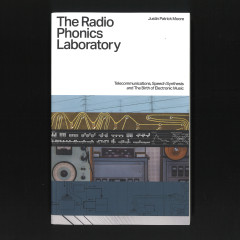
Justin Moore - The Radio Phonics Laboratory - Telecommunications, Speech Synthesis, and the Birth of Electronic Mus

The Radio Phonics Laboratory by Justin Patrick Moore is the story of how electronic music came to be, told through the lens of the telecommunications scientists and composers who helped give birth to the bleeps and blips that have captured the imagination of musicians and dedicated listeners around the world.

Featuring the likes of Leon Theremin, Hedy Lamarr, Max Matthews, Hal 9000, Robert Moog, Wendy Carlos, Claude Shannon, Halim El-Dabh, Pierre Schaeffer, Pierre Henry, Francois Bayle, Karlheinz Stockhausen, Vladimir Ussachevsky, Milton Babbitt, Daphne Oram, Delia Derbyshire, Edgar Varese & Laurie Spiegel.

Quotes
“From telegraphy to the airwaves, by way of Hedy Lamarr and Doctor Who, listening to Hal 9000 sing to us whilst a Clockwork Orange unravels the past and present, Moore spirits us on an expansive trip across the twentieth century of sonic discovery. The joys of electrical discovery are unravelled page by page.”
Robin Rimbaud aka Scanner

“Embark on an odyssey through the harmonious realms of Justin Patrick Moore’s Radio Phonics Laboratory echoing the resonances of innovation and discovery. Witness the mesmerising fusion of telecommunications and musical evolution as it weaves a sonic tapestry, a testament to the boundless creativity within the electronic realm. A compelling pilgrimage for those attuned to the avant-garde rhythms of technological alchemy.”
Nigel Ayers (Nocturnal Emissions)

“In this captivating exploration of electronic music, Justin Patrick Moore unveils its evolution as guided by telecommunication technology, spotlighting the enigmatic laboratories of early experimenters who shaped the sound of 20th century music. A must-read for electronic musicians & sound artists alike—this book will undoubtedly find a prominent place on their bookshelves.”
Kim Cascone

out of Stock

Order now and we will order the item for you at our supplier.


Last In: 12 months ago
SARAH BELLE REID - MASS

Sarah Belle Reid

MASS

12inchAC-062
Aurora Central
22.03.2024

Canadian performer and composer Sarah Belle Reid’s 2021 acclaimed album, first time on vinyl, expanded with two new incredible songs, remastered featuring new artwork. From distant ocean song to the clang and howl of a murky forgotten memory, MASS is a dreamlike collage of shrill shrieks, gasps, corroded brass choirs, and melting modular synth soundscapes, all heard through a mist of hiss and noise. Fused with equal parts spastic improvisation, shrouded ritual, and meticulous arrangement, it presents a sonic topography at once tongue-in-cheek, sensitive, and nightmarish. With discordant chorales and angular trumpet improvisations churning in an ever-evolving wash of whispers and howls, MASS is a collection of three hazy, harsh, and frightful sound worlds. With tracks meandering between aggressive rhythms, eerie ambiances, and abrasive cut-up electronic textures, MASS draws inspiration from early tape music, horror film soundtracks, and grindcore. It was assembled between listening to extended doses of Else Marie Pade, Daphne Oram, Eliane Radigue, the Locust, Edgard Varèse, Maryanne Amacher, Dick Raaijmakers, Naked City, Mr. Bungle, and Thomas Ankersmit, bringing a little bit of all of them along with it. MASS was recorded and mixed over the course of three weeks in January–February 2021 while in the midst of a cross-country move. Recorded entirely in short-term housing away from her studio (and most of her instruments), Reid relied exclusively on her voice, trumpet, flugelhorn, household objects, and Make Noise's Strega semi-modular synthesizer for all sound materials. Original sound materials were recorded loosely and independently with little to no overdubbing, instead relying on meticulous editing and processing in the manner of classic tape music.

pre-order now22.03.2024

expected to be published on 22.03.2024

SARAH BELLE REID - MASS

Sarah Belle Reid

MASS

12inchAC-062G
Aurora Central
22.03.2024

Canadian performer and composer Sarah Belle Reid’s 2021 acclaimed album, first time on vinyl, expanded with two new incredible songs, remastered featuring new artwork. From distant ocean song to the clang and howl of a murky forgotten memory, MASS is a dreamlike collage of shrill shrieks, gasps, corroded brass choirs, and melting modular synth soundscapes, all heard through a mist of hiss and noise. Fused with equal parts spastic improvisation, shrouded ritual, and meticulous arrangement, it presents a sonic topography at once tongue-in-cheek, sensitive, and nightmarish. With discordant chorales and angular trumpet improvisations churning in an ever-evolving wash of whispers and howls, MASS is a collection of three hazy, harsh, and frightful sound worlds. With tracks meandering between aggressive rhythms, eerie ambiances, and abrasive cut-up electronic textures, MASS draws inspiration from early tape music, horror film soundtracks, and grindcore. It was assembled between listening to extended doses of Else Marie Pade, Daphne Oram, Eliane Radigue, the Locust, Edgard Varèse, Maryanne Amacher, Dick Raaijmakers, Naked City, Mr. Bungle, and Thomas Ankersmit, bringing a little bit of all of them along with it. MASS was recorded and mixed over the course of three weeks in January–February 2021 while in the midst of a cross-country move. Recorded entirely in short-term housing away from her studio (and most of her instruments), Reid relied exclusively on her voice, trumpet, flugelhorn, household objects, and Make Noise's Strega semi-modular synthesizer for all sound materials. Original sound materials were recorded loosely and independently with little to no overdubbing, instead relying on meticulous editing and processing in the manner of classic tape music.

pre-order now22.03.2024

expected to be published on 22.03.2024

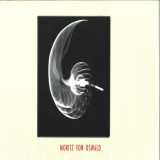
Moritz von Oswald - Silencio LP 2x12"

Moritz Von Oswald

Silencio LP 2x12"

2x12inchTRESOR339LP
Tresor
10.11.2023

What are the differences and similarities between human and artificial sound, between oscillations generated by vocal cords and synthesizer voices, voltage amplified by speakers? On Silencio, his latest album for Tresor Records, Moritz von Oswald works with a 16-voice choir to explore this concept.
Drawing from the ensemble works of long-standing inspirations Edgard Varèse, György Ligeti and Iannis Xenakis, von Oswald and Vocalconsort Berlin delve into the space between sounds, creating a deeply textured collection that shifts between light & ethereal and
dark & dissonant.
As masterfully demonstrated in the early work of von Oswald and Mark Ernestus’ influential Basic Channel project, repetition and reduction are key elements here, much in the tradition of techno and minimalism. The vast dynamism of the human voice adds to the
profound weight of electronics while offering up a rhythmic source and sonic noise palette unexplored in von Oswald’s repertoire. In Silencio, von Oswald dredges a dank murk, pulling clouds over a distant pulse. It hangs, ready to take on new forms.
The compositions were written in von Oswald’s Berlin studio on classic synthesizers, such as the EMS VCS3 & AKS, Prophet V, Oberheim 4-Voice and the Moog Model 15. These abstract recordings were transcribed to sheet music for choir by Berlin-based Finnish composer and pianist, Jarkko Riihimäki and performed by Vocalconsort Berlin in Ölberg church in the city’s Kreuzberg district, only few metres down the road from where Dubplates & Mastering and Hard Wax opened their doors for music enthusiasts for many years so long. The recordings of the choral versions were then incorporated into the synthesized parts of the album and brought into anew electronic context; in Silencio, the focus is not on using one means to imitate the other, but to sonically discuss the tensions and harmonies between the two worlds and create a dialogue between them.
The relationship between von Oswald and Tresor Records goes back thirty years, all the way to Blake Baxter’s Dream Sequence in 1991 - which von Oswald engineered alongside Thomas Fehlmann. The collaboration with Fehlmann lived on, seeing the duo team up as 3MB with Eddie Fowlkes or Juan Atkins. More recently, the Detroit-Berlin connection continued as Juan Atkins & Moritz von Oswald present Borderland.
For von Oswald, Tresor Records and also the participating guest musicians of the choir, this release brings together audiences from other musical areas, cross-pollinating; Silencio is an album that stands for itself beyond the musical genre boundaries.

out of Stock

Order now and we will order the item for you at our supplier.


Last In: 12 months ago
OSMO LINDEMAN - ELECTRONIC WORKS LP

Includes a CD featuring all tracks from the compilation

Osmo Lindeman is one of the main developers of electronic music in Finland.He was active in Europe, USA and Finland from 50s to end of 70s.In the beginning Osmo Lindeman studied and worked as a modern classical composer. During the 1960s he shifted making electronic music only at his home studio.

Lindeman is a Finnish hybrid of Monty Norman, Krzysztof Penderecki and Edgar Varèse
There is no album of his electronic work before this.

pre-order now30.10.2023

expected to be published on 30.10.2023

Tangerine Dream - Three O’Clock High OST

Three O’Clock High war eine unkonventionelle Interpretation einer Highschool-Komödie der 80er Jahre.
Der Film, bei dem Phil Joanou (U2’s Rattle and Hum, State of Grace, Final Analysis) stilvoll Regie führte,
erinnert mehr an Scorsese als an John Hughes und zeigt Casey Siemaszko in der Hauptrolle als Streber,
der sich nach der Schule mit einem psychopathischen Tyrannen (gespielt von Richard Tyson) herumschlagen muss. Der Film wurde auf Heimvideos zum Kulthit, wozu auch die stimmungsvolle, dynamische und
pulsierende Musik der deutschen Synthpop-Legenden Tangerine Dream (Sorcerer, Thief, Risky Business)
beitrug.
Regisseur Joanou wollte die Band unbedingt für den Film engagieren und war überglücklich, als sie zusagten:
”Die Berliner Sessions mit Edgar Froese und Paul Haslinger waren ein wahr gewordener (Tangerine-)Traum”,
schreibt er in den neuen Linernotes zu dieser Veröffentlichung. ”In ihrem Studio direkt an der Berliner
Mauer arbeiteten wir mehrere Wochen lang an jedem einzelnen Stück... Was sie einem Keyboard, aber
auch Gitarren, Bass und Schlagzeug entlocken konnten, war einfach unglaublich. Ich war wie weggeblasen.”
Die 15 Tracks von Tangerine Dream werden durch zusätzliche Musik von Sylvester Levay (als die Filmemacher
mehr Cues brauchten und es sich nicht leisten konnten, nach Berlin zurückzukehren) und den bekannten
Song von Jim Walker, ”Something to Remember Me By”, ergänzt.

pre-order now27.01.2023

expected to be published on 27.01.2023

AQUASERGE - THE POSSIBILITY OF A NEW WORK FOR AQUASERGE

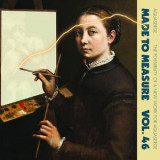
Die französische Avant-Rock-Band Aquaserge ließ schon immer Genregrenzen verschwimmen. Für die Ausgabe 46 der "Made To Measure"-Reihe widmet sie sich auf The Possibility Of A New Work For Aquaserge der zeitgenössischen klassischen Musik ab Mitte des 20. Jahrhunderts: Giacinto Scelsi (1905-1988), György Ligeti (1923-2006), Edgard Varèse (1883-1965) und Morton Feldman (1926-1987). Inspiriert von den unterschiedlichen Ansätzen der vier Komponisten in puncto Dynamik, Klangtextur und Länge der Stücke oder genauer gesagt, Scelsis Forschung über Klangfarbe und Schwingungen, Ligetis Cluster, Varèses melodischer Kubismus und Feldmans graphische Notation, ging die Band das Album intuitiv wie auch methodisch in einem auf neun Musiker*innen erweiterten Line-Up an. Das Album enthält zum einen drei langsame, ausgedehnt-weitläufige Stücke, in denen die Klangfarben der Instrumente miteinander zu einer klanglichen Materie verschmelzen. Diese Materie ist gleichzeitig immobil und mobil, wie in einigen Ligeti- oder Scelsi-Werken. Dagegen enthalten die Hommagen der Band an Varèse und Feldman Momente des Ausbruchs und wilder Improvisation. Diese von Aquaserge geschriebenen Kompositionen, werden mit raren Stücken von Edgard Varèse, eines davon auf Basis eines Gedichts von Verlaine. sowie von Morton Feldman mit einem Rilke-Text komplettiert, und zeigen das Gespür der Band für Melodien.

pre-order now15.10.2021

expected to be published on 15.10.2021

Frank Zappa - ZAPPA (Original Motion Picture Soundtrack)

With unfettered access to the Zappa Trust and all archival footage, ZAPPA explores the private life behind the mammoth musical career that never shied away from the political turbulence of its time. Alex Winter’s (Bill & Ted’s movie franchises, The Lost Boys) assembly features appearances by Frank’s widow Gail Zappa and several of Frank’s musical collaborators including Mike Keneally, Ian Underwood, Steve Vai, Pamela Des Barres, Bunk Gardner, David Harrington, Scott Thunes, Ruth Underwood, Ray White and others. The soundtrack is a perfect complement to the film available as a limited edition 5-LP 180-gram vinyl set for the Zappa completist. Showcasing 69 total songs, there are 12 previously unreleased recordings from the Zappa archive along with his 1978 Saturday Night Live performance; 24 additional Zappa songs from his extensive catalog spanning four decades; songs from Zappa’s labels Straight / Bizarre Records like “No Longer Umpire” by Alice Cooper and “The Captain’s Fat Theresa Shoes” by The GTO’s; 2 classical compositions by Edgard Varese and Igor Stravinsky; and 26 Original Score cues newly composed by John Frizzell for the documentary – all of which give the universe a sonic exploration into the musical brilliance of Frank Zappa. A 2LP edition on 180-gram clear vinyl will also be available, collecting together eight of the unreleased recordings from the Zappa archive, the SNL performance and 13 recordings from Zappa’s extensive recording career.

pre-order now07.05.2021

expected to be published on 07.05.2021

Frank Zappa - ZAPPA (Original Motion Picture Soundtrack)

With unfettered access to the Zappa Trust and all archival footage, ZAPPA explores the private life behind the mammoth musical career that never shied away from the political turbulence of its time. Alex Winter’s (Bill & Ted’s movie franchises, The Lost Boys) assembly features appearances by Frank’s widow Gail Zappa and several of Frank’s musical collaborators including Mike Keneally, Ian Underwood, Steve Vai, Pamela Des Barres, Bunk Gardner, David Harrington, Scott Thunes, Ruth Underwood, Ray White and others. The soundtrack is a perfect complement to the film available as a limited edition 5-LP 180-gram vinyl set for the Zappa completist. Showcasing 69 total songs, there are 12 previously unreleased recordings from the Zappa archive along with his 1978 Saturday Night Live performance; 24 additional Zappa songs from his extensive catalog spanning four decades; songs from Zappa’s labels Straight / Bizarre Records like “No Longer Umpire” by Alice Cooper and “The Captain’s Fat Theresa Shoes” by The GTO’s; 2 classical compositions by Edgard Varese and Igor Stravinsky; and 26 Original Score cues newly composed by John Frizzell for the documentary – all of which give the universe a sonic exploration into the musical brilliance of Frank Zappa. A 2LP edition on 180-gram clear vinyl will also be available, collecting together eight of the unreleased recordings from the Zappa archive, the SNL performance and 13 recordings from Zappa’s extensive recording career.

pre-order now07.05.2021

expected to be published on 07.05.2021

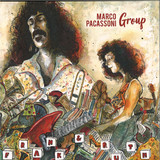
Marco Pacassoni Group - Frank & Ruth - A Vibes And Marimba Tribute To Frank Zappa

I cannot exactly remember when the idea of this album was born in my mind. What I am sure of is that I always wanted to complete such a project, which was to realize the dream of a vibraphone and marimba tribute to the music of my favorite musician composer, Frank Zappa. I met Marco Pacassoni about six years ago. I called him because we were looking for a vibraphonist for a tour with the artist Bungaro. We immediately developed a real friendship and when I told him about my idea and my fascination with Ruth Underwood, explaining that for me the best Zappa albums were the ones on which she played, he admitted that he knew only a part of that music, but that he would love to learn more. So I began to feed him tunes to listen to, sharing with him an imaginary track list. When Marco decided to really go for it (about two years ago), his first statement was that it was impossible not to include Peaches en Regalia and The Black Page on the album. That made me very happy because those are two of my favorites, and there was no better way to acknowledge the technical challenges behind this adventure. Marco studied Ionisation by Edgard Varese when he was in Conservatorio Rossini of Pesaro, even before he graduated in percussion at Berklee. It was strange for me that he could know more about Varese than about Zappa! I liked his idea of playing The Black Page alone at the marimba, just adding the beat, as if hearing the footsteps of an imaginary listener turning around. Who could it be My very first wish was to include Pink Napkins with Zappa's guitar solo played at the vibraphone.

out of Stock

Order now and we will order the item for you at our supplier.


Last In: 7 years ago
  • 1
Items per Page:
N/ABPM
Vinyl