Buscar:carl kennedy

Estilos
Todo
  • 1
Various - Tchic Tchic: French Bossa Nova 1963-1974  Colored Edition LP 2x12"
  • A1: Les Masques - Il Faut Tenir (1969)
  • A2: Isabelle Aubret - Casa Forte (1971)
  • A3: Christianne Legrand - Hlm Et Ciné Roman (1972)
  • A4: Jean Constantin - Pas Tant D'chichi Ponpon (1972)
  • A5: Billy Nencioli & Baden Powell - Si Rien Ne Va (1969)
  • B1-: Marpessa Dawn - Le Petit Cuica (1963)
  • B2: Jean-Pierre Sabar - Vai Vai (1974)
  • B3: Sophia Loren - De Jour En Jour (1963)
  • B4: Isabelle - Jusqu’à La Tombée Du Jour (1969)
  • B5: Sylvia Fels - Corto Maltesse (1974)
  • C1: Frank Gérard - Comme Une Samba (1972)
  • C2: Ann Sorel - La Poupée Des Favellas (1971)
  • C3: Charles Level - Un Enfant Café Au Lait (1971)
  • C4: Andrea Parisy - Les Mains Qui Font Du Bien (1970)
  • C5: Audrey Arno - Quand Jean-Paul Rentrera (1969)
  • C6: Aldo Frank - T’as Vu Ce Printemps (1970)
  • D1: Christianne Legrand - Cent Mille Poissons Dans Ton Filet (1972)
  • D2: Clarinha - Lemenja (1970)
  • D3: Hit Parade Des Enfants - Aquarela (1976)
  • D4: Jean-Pierre Lang - Tendresse (1965)
  • D5: Magalie Noël - Une Énorme Samba (1970)
  • D6: Françoise Legrand - La Lune

Ever since the late 1950s bossa-nova revolution, Brazil’s influence on French music has been undeniable. Pierre Barouh, Georges Moustaki and a vast array of lesser known artists, all made the Musica Popular Brasileira (MPB) an axis of promotion at the service of a cool and metaphysical, modern and mixed Brazilian lifestyle. Some were seduced by the poetic languors of the bossa, some were looking for fun, and others just loved the American hybridization of jazz-bossa, jazz-samba.


What is bossa nova? One of its creators, Joao Gilberto said: "Its style, cadence, everything is samba. At the very start, we didn't call it bossa nova, we sang a little samba made up of a single note - Samba de uma nota so .... The discussion around the origins of bossa nova is therefore useless”. It is nevertheless useful to remember that these magnificent Brazilian songs, which the guitarist describes as samba, were shifted and balanced around improbable chords. "I like things that lean, the in-betweens that limp with grace," said Pierre Barrouh, quoting Jean Cocteau.


With emotion, arrangements for violin and supple guitar licks, bossa nova rapidly changed. A transformation that can be heard in the Tchic, tchic, French Bossa Nova 1963-1974 compilation, the result of a cultural reappropriation, which traveled through the United States and supplemented itself in France.

A musical revolution that has remained significant, bossa nova was born in Rio. From 1956 to 1961, Brazil lived through its golden years. In five years, the country had invented its modernist style. Elected president in 1956, Juscelino Kubitschek de Oliveira, an elegant man with a broad forehead, brandished a promising slogan: "Fifty years of progress in five years". He quickly got to work. Not worried about increasing debt, he launched the project for a new federal capital, Brasilia, designed by the communist architect Oscar Niemeyer. Volkswagen opened state-of-the-art factories and created the “fusquinha”, the Beetle. In Rio, the Vespa made its first appearance. The Arpoador Surf Club crew run into the “girl” from Ipanema, Helô Pinheiro - the tanned garota ("chick"), between a flower and mermaid, who at 17 walked by the Veloso bar, where the fiery author and composer, Tom Jobim and Vinicius de Moraes, were getting drunk on whiskey. From then on, bossa symbolized cool.

In 1958, Joao Gilberto recorded Chega de Saudade, which the directors of Philips denied, calling it "music for fagots". The marketing director, who believed in it, secretly pressed 3000 78-inch vinyls and distributed them at schools around Rio, creating a tidal wave.

American jazzmen then took over. In particular, trumpeter Dizzy Gillespie and guitarist Charlie Byrd. In November 1962, the Brazilian Ministry of Foreign Affairs funded a "Bossa-Nova" concert at Carnegie Hall in New York, inviting the genre’s pioneers. Unprepared, the show soon turned to disaster. But the troupe was invited to the White House by Jackie Kennedy. The first lady loved "the new beat" and in particular Maria Ninguem, a song by Carlos Lyra, later covered by Brigitte Bardot.

In Brazil, the 1964 military coup quickly ended this euphoria. The destructive atmosphere that ensued pushed many Brazilian musicians to leave, if not to exile. Thus, Tom Jobim, Sergio Mendes and Joao Gilberto arrived to the United States. In New York, Joao Gilberto met saxophonist Stan Getz. At the time, he was married to the Bahianese Astrud Weinert Gilberto, who had a German father. She had never sung before, but she knew how to speak English. Getz therefore asked her to replace her husband on The Girl From Ipanema. The Getz/Gilberto record with Tom Jobim on piano, was released in March 1964. Phil Ramone, the "pope of pop" was in charge of sound.

Bossa nova arrived in Paris through the classic “guitar-voice” channel (Pierre Barouh, Baden Powell, Moustaki…) But France loved jazz and Paris had already welcomed its American contributors. All these good people were to pass through Saint-Germain-des-Prés. The cabaret l'Escale became the Mecca of Latin American sound where one could find Pierre Barrouh and his friends, such as the Camara Trio, samba-jazz aces, whose only record was published by the Saravah label. With a band strangely called Les Masques (a band that included Nicole Croisille and Pierre Vassiliu, among others), the Camara Trio recorded an interesting Brazilian Sound, including the track Il faut tenir which is present on this tasty compilation of rarities.

Other enlightened musicians can also be found on the compilation, such as Jean-Pierre Sabar (songwriter for Hardy, Auffray, Leforestier ...) and the French pop rock organist Balthazar. In 1975, Sabar recorded Aurinkoinen Musiikkimatka on a Finnish label, which featured the crazy Vai, Vai, included on this record. We are now following the footsteps of Brazilian electronic musicians such as Sergio Mendes, Eumir Deodato or Marcos Valle who created funk and disco sounds on their keyboards and synthesizers. A style that influenced Véronique Sanson when she wrote Jusqu’à la Tombée de la nuit in 1969 for Isabelle de Funès, the niece of Louis and a great friend of Michel Berger - Sanson did end up singing this track on her 1992 Sans Regret record.


The pinnacle of exoticism and travel, Sylvia Fels’ Corto Maltese includes bongos, sea mist and ocean sounds. The title was taken from Jacky Chalard’s concept album written in 1974, Je suis vivant, mais j’ai peur (I am alive, but I am scared), based on Gilbert Deflez’s science fiction novel.


However, bossa nova extended the scope of popularity. "In the 1970s, I was a fan of Sergio Mendes, Getz / Gilberto. I fell in love with this music that I knew because I had been an orchestral singer, " explained Isabelle Aubret, who in 1971 delivered a composite record of covers by the very funky Jorge Ben, Orfeu Negro, Tom Jobim, Vinicius de Morais and Jean Ferrat. "I recorded this album for Meys Records in Paris, far from Brazil, with wonderful musicians, François Raubert, Roland Vincent, Alain Goraguer...". The latter wrote the arrangements for Casa Forte, a very percussive title borrowed from Edu Lobo, one of the initiators of the bossa who spent time in California. "Jazz and bossa came together and produced very rhythmic music. I love singing, it allows me to dream, to have fun, to feel a high on stage, and these songs brought me joy, made me swing, my singing felt like a dance.”


The world tours of French singers and their desire for the tropics, often brought them to Rio with its hills, forests, caipirinhas and tanned bodies. There are surprises though, like this Iemenja (Iemenja is the goddess of the sea in the Afro-Brazilian candomblé religion). Not unlike the composer and musician Jean-Pierre Lang, based in Sao Paulo, Claire Chevalier taught Brazil to Brazil. In 1970, the singer and painter published a 45-inch vinyl, Mon mari et mes amants (My husband and my lovers), under the improbable pseudonym of Clarinha (little Claire). She was then living in Rio, with her husband, Joël Leibovitz, who founded a band called Azimuth, and who owned a record label specialized in "sambas enredos" songs for samba school parades.


For its B side, she asked Pierre Perret to come up with lyrics for a song composed by Carlos Imperial: "Oh goddess of the sea, o goddess Iemenja, I bring a white rose to adorn your long hair ..." . "Perret came to see us, and we had fun, remembers Joël Leibovitz. We wrote Lemenja for fun, we recorded it at the Havaí studio, behind the Central do Brasil the central station. Erlon Chaves, the arranger who worked with Elis Regina, joined us" adding his share of Afro-Brazilian percussions and funky brass to the mix.

There is a common misunderstanding in Franco-Brazilian history: that bossa, admittedly hedonistic, is perceived as funny, even though the poets who wrote the texts are often philosophizing on the human condition. Its French interpreters pull it towards a carnival inspired universe, far removed from its fundamental essence. Thus, Jean Constantin covered the famous Samba da minha terra, an ode to the art of samba written by the classic Bahian composer Dorival Caymmi, renaming it with the enticing title of Pas tant de tchi tchi pompon: "On your pier there is no tchi tchi / when you arch your back, you know everything is alright ”(lyrics by Gérard Calvi). This expedited bossa aims for the absurd, but retains a certain elegance.

Indeed, Jean Constantin was not an idiot, the rather large man had a huge mustache and liked fantasy, (Les pantoufles à papa, Le pacha, inspired by cha-cha-cha-cha, salsa and jazz) but he was also the lyricist of Mon manège à moi interpreted by Edith Piaf, the composer of Mon Truc en plume by Zizi Jeanmaire and the soundtrack of François Truffaut’s 400 Blows. Le Poulpe, published in 1970, from which this bossa is extract, was arranged by Jean-Claude Vannier, an accomplice of Serge Gainsbourg’s Melody Nelson. In short: "There is enough of samba / By looking at the parasol / Because my poor cabeza / Is going to die in the sun".

Even the American actress Marpessa Down, who was at the heart of the bossa nova revolution with her role as Euridyce in Marcel Camus’ film Orfeu Negro, winner of the 1959 Cannes Palme d'or, fed the clichée with Je voudrais parler au petit cuica - "Tell me how you manage to always make people want to dance / It's true, I must admit that I cannot resist your magic" - in consequence, once can hear the cuica, a little drum inherited from the Bantu.


But bossa nova had many angles. Societal, of course, pushing actresses who were symbols of women's liberation like Brigitte Bardot, Jeanne Moreau, or Sophia Loren to engage in the exercise of accelerated bossa. In February of 1963, Sophia Loren made a record in French in Rome, Je ne t'aime plus, featuring the song De jour en jour, a bossa written by two Italians, Armando Trovajoli and Tino Fornai, which was released a little later by Barclay. Bossa accompanied the 1960s, a decade of moral liberation. Ann Sorel, who interpreted La Poupée des favellas, caused a sensation with L’amour à plusieurs, a provocative song written by Frédéric Bottom and Jean-Claude Vannier. As for the actress Andrea Parisy, she displayed her bourgeois cheekiness in Marcel Carné's Les Tricheurs before interpreting Les mains qui font du bien. And Magalie Noël, the friend of Boris Vian, who sung Johnny fais-moi mal, was hired to sing Une énorme Samba, composed by Alain Goraguer (arranger to Gainsbourg, Bobby Lapointe and Jean Ferrat) with lyrics by Frédéric Botton.

But in the end, of what wood is bossa nova made of? The answer is given by Christianne Legrand, daughter of Raymond the conductor, and sister to Michel the composer: "With me, with jà" - jà means "immediately" in Portuguese. In 1972, the singer, an expert in vocal jazz and a member of the Double Six, published Le Brésil de Christianne Legrand. Two songs included on the Tchic Tchic compilation that demonstrate how bossa, jazz, funk, rock, etc. work like a swiss army knife: the music is used to denounce broken systems, or miracles, HLM et ciné roman, Cent mille poissons dans ton filet, two songs from the O Cafona soundtrack, a successful telenovela broadcast, at the time in black and white, on TV Globo. The first was adapted in French by the fighter and friend of the Legrand tribe, Agnès Varda. The second is content with a play on words, jostling them into a summer fun.


Véronique Mortaigne

Reservar17.04.2026

debe ser publicado en 17.04.2026


Ültimo hace: 2026 Años
Joe Bonamassa - B.B. King's Blues Summit 100 (LP 3x12")
  • A1: Paying The Cost To Be The Boss (Ft. Christone "Kingfish" Ingram)
  • A2: Don't Answer The Door (Ft. Marcus King)
  • A3: To Know You Is To Love You (Ft. Michael Mcdonald, Susan Tedeschi, Derek Trucks)
  • A4: Let The Good Times Roll (Ft. Kenny Wayne Shepherd, Noah Hunt)
  • A5: Sweet Little Angel (Ft. Buddy Guy)
  • B1: When It All Comes Down (I'll Still Be Around) (Ft. Larry Mccray)
  • B2: When Love Comes To Town (Ft. Slash, Shemekia Copeland, Myles Kennedy)
  • B3: The Thrill Is Gone
  • B4: Watch Yourself (Ft. Jimmie Vaughan)
  • B5: Why I Sing The Blues (Ft. Bobby Rush)
  • C1: Sweet Sixteen (Ft. Jimmy Hall, Larry Carlton)
  • C2: Don't You Want A Man Like Me (Ft. Larkin Poe)
  • C3: I'll Survive (Ft. Keb' Mo')
  • C4: Heartbreaker (Ft. Trombone Shorty, Eric Gales)
  • C5: There Must Be A Better World Somewhere (Ft. George Benson)
  • D1: Chains And Things (Ft. Gary Clark Jr.)
  • D2: How Blue Can You Get (Ft. Warren Haynes)
  • D3: You Upset Me Baby (Ft. Chris Cain)
  • D4: Ghetto Woman (Ft. Ivan Neville)
  • D5: Night Life (Ft. Paul Rodgers)
  • E1: Ain't Nobody Home (Ft. Jade Macrae, Robben Ford)
  • E2: Bad Case Of Love (Ft. Joanne Shaw Taylor)
  • E3: Never Make A Move Too Soon (Ft. Dion)
  • E4: Three O'clock Blues (Ft. Marc Broussard)
  • E5: Think It Over (Ft. Train, Chris Buck)
  • F1: It's My Own Fault (Ft. Kim Wilson)
  • F2: Every Day I Have The Blues (Ft. D.k. Harrell)
  • F3: Please Accept My Love (Ft. John Németh)
  • F4: So Excited (Ft. Aloe Blacc)
  • F5: When My Heart Beats Like A Hammer (Ft. Dannielle De Andrea)
  • F6: Playin' With My Friends

180 Gramm schweres, schwarzes 3-fach-Vinyl im Klappcover mit 20-seitigem Booklet und Download-Karte

Reservar03.02.2026

debe ser publicado en 03.02.2026


Ültimo hace: 2026 Años
Jello Biafra and The Guantanamo School of Medicine - Enhanced Methods of Questioning LP
  • 1: Dot Com Monte Carlo
  • 2: The Cells That Will Not Die
  • 3: Victory Stinks
  • 4: Invasion Of The Mind Snatchers
  • 5: Miracle Penis Highway
También disponible

Blue Vinyl


Jello Biafra and the Guantanamo School of Medicine are at it again! Hot on the heels of their debut full-length The Audacity of Hype, the group—featuring Ralph Spight (Victims Family, Freak Accident, Hellworms), Jon Weiss (Sharkbait, Horsey), Billy Gould (Faith No More) and Kimo Ball (Freak Accident, Carneyball Johnson, Mol Triffid, Griddle)—roars back with five unreleased rippers. CD and download versions include “Metamorphosis Exploration on Deviation Street,” a transmogrified 18-minute cover of the Deviants’ classic. The band’s twin guitar attack retains some of the space punk overtones and spy-music-on-meth chaos of Dead Kennedys, while adding a healthy dose of Detroit-style proto-punk, flavoured with Weiss’s industrial excursions into metal percussion. This is Biafra’s first full-time band since Dead Kennedys broke up in 1986, and the depth and breadth of his musical chops and lyrical triumphs are on full display on these ferocious tracks

Reservar16.05.2025

debe ser publicado en 16.05.2025


Ültimo hace: 2026 Años
Jello Biafra and The Guantanamo School of Medicine - Enhanced Methods of Questioning LP

Jello Biafra and the Guantanamo School of Medicine are at it again! Hot on the heels of their debut full-length The Audacity of Hype, the group—featuring Ralph Spight (Victims Family, Freak Accident, Hellworms), Jon Weiss (Sharkbait, Horsey), Billy Gould (Faith No More) and Kimo Ball (Freak Accident, Carneyball Johnson, Mol Triffid, Griddle)—roars back with five unreleased rippers. CD and download versions include “Metamorphosis Exploration on Deviation Street,” a transmogrified 18-minute cover of the Deviants’ classic. The band’s twin guitar attack retains some of the space punk overtones and spy-music-on-meth chaos of Dead Kennedys, while adding a healthy dose of Detroit-style proto-punk, flavoured with Weiss’s industrial excursions into metal percussion. This is Biafra’s first full-time band since Dead Kennedys broke up in 1986, and the depth and breadth of his musical chops and lyrical triumphs are on full display on these ferocious tracks

Reservar16.05.2025

debe ser publicado en 16.05.2025


Ültimo hace: 2026 Años
Santana - Let The Guitar Play

Santana

Let The Guitar Play

12inchLPCND33391IE
Candid Records
15.01.2025
  • Radio Version Feat. Darryl Dmc Mcdaniels
  • Soul Radio Version Feat. Darryl Dmc Mcdaniels
  • 70: S Version

For more than five decades Carlos Santana has been the visionary force behind artistry that transcends musical genres and generational, cultural, and geographical boundaries. To date, Santana has won ten GRAMMY Awards and three Latin GRAMMY Awards, received the Billboard Century Award, is a member of the Rock and Roll Hall of Fame, received the Billboard Latin Music Awards’ Lifetime Achievement honor, is the recipient of the Kennedy Center Honors Award, and has been cited by Rolling Stone as #11 on their list of the “100 Greatest Guitarists of All Time.” Teaming up with producers Lino Nicolosi, Nicolosi Team, and Narada Michael Walden (Whitney Houston, Mariah Carey), Santana presents three distinct versions of his composition “Let The Guitar Play” - The Radio Version, The Soul Radio Version, and The 70's Version. The first two feature Run DMC's Darryl McDaniels who delivers a poetic rap over an EDM-style drum beat, serving as a dynamic catalyst for Santana to intricately weave his signature guitar magic. This limited edition three song 12” is pressed on tie-dye vinyl. This is a 2024 Black Friday Record Store Day release.

Reservar15.01.2025

debe ser publicado en 15.01.2025


Ültimo hace: 2026 Años
JENNIFER CASTLE - Camelot

Camelot, the legendary seat of King Arthur's court in Early Middle Ages Britain, was probably not a real place. A corruption of the name of a real Romano-Briton city, the word "Camelot" accumulated symbolic, mythic resonances over centuries, until achieving its present usage as a near-synonym of "utopia." In the mid-20th century alone, Camelot inspired an explosion of representations and appropriations, among them the violent, affectless Arthurian court of Robert Bresson's 1974 film Lancelot du Lac and the absurdist iteration of Monty Python's 1975 Holy Grail, both of which feature armored knights erupting into fountains of blood; the mystical Welsh world of novelist John Cowper Powys's profoundly weird 1951 novel Porius, with its Roman cults, wizards and witches, and wanton giants; and the nationalist nostalgia of President John F. Kennedy's White House. Unsurprisingly there are fewer Camelots in more recent memory. Camelot, Canadian songwriter Jennifer Castle's extraordinary, moving 2024 chronicle of the artist in early middle age, charts a realer, more rooted, and more metaphorical place than the fabled Camelot of the Early Middle Ages (or its myriad depictions), but it too is a space more psychic than physical. In Castle's Camelot, the fantastic interpenetrates the mundane, and the Grail, if there is one, distills everyday experience into art and art into faith, subliming terrestrial concerns into sublime celestial prayers to Mother Nature, and to the unfolding process of perfecting imperfection in one's own nature. Co-produced by Jennifer and longtime collaborator Jeff McMurrich, her seventh record is at once her most monumental and unguarded to date, demonstrating a mastery of rendering her verse and melodies alike with crisply poignant economy. For all their pointedly plainspoken lyrical detail and exhilarating full-band musical flourishes, these songs sound inevitable, eternal as morning devotions. "Back in Camelot," she sings on the lilting, vulnerable title track, "I really learned a lot / circles in the crops and / sky-high geometry." The album opens with a candid admission of sleeping "in the unfinished basement," an embarrassing joke that comes true. But the dreamer is redeemed by dreaming, setting sail in her airborne bed above "sirens and desert deities." If she questions her own agency_whether she is "wishing stones were standing" or just "pissing in the wind"_it does not diminish the ineffable existential jolt of such signs and wonders. This abiding tension between belief and doubt, magic and pragmatism, self and other, sacred and profane, and even, arguably, paganism and monotheism, suffuses these ten songs, which limn an interior landscape shot through with sunstriped shadows of "multi-felt dimensions" both mystical and quotidian. The epic scale and transport of "Camelot," with its swooning strings, gives way dramatically to "Some Friends," an acoustic-guitar-and-vocals meditation in miniature on Janus-faced friends and the lunar and solar temperatures of their promises_"bright and beaming verses" versus hot curses_which recalls her minimalist last album, 2020's achingly intimate Monarch Season. (In a symmetrical sequencing gesture, the penultimate track, the incantatory "Earthsong," bookends the central six with a similarly spare solo performance and coiled chord progression, this time an ambiguous appeal to _ a wounded lover? a wounded saint? our wounded planet?) Those whom "Trust" accuses of treacherous oaths spit through "gilded and golden tooth"_cynics, critics, hypocrites, gurus, scientists, doctors, lovers, government, the so-called entertainment industry_sow uncertainty that can infect the artist, as in "Louis": "What's that dance / and can it be done? What's that song / and can it be sung?" Answering affirmatively are "Lucky #8," an irrepressible ode to dancing as a bulwark against the "tidal pools of pain" and the "theory of collapse," and "Full Moon in Leo," which finds the narrator dancing around the house with a broom, wearing nothing but her underwear and "big hair." But the central question remains: who can we trust, and at what cost faith, in art or angels or otherwise? Castle's confidence in her collaborators is the cornerstone of Camelot. Carl Didur (piano and keys), Evan Cartwright (drums and percussion), and steadfast sideman Mike Smith (bass) comprise a rhythm section of exquisite delicacy and depth. This fundamental trio anchors the airiness of regular backing vocalists Victoria Cheong and Isla Craig and frames the guitars of Castle, McMurrich, and Paul Mortimer (and on "Lucky #8," special guest Cass McCombs). Reprising his decennial role on Castle's beloved 2014 Pink City, Owen Pallett arranged the strings for Estonia's FAMES Skopje Studio Orchestra. On the ravishing country-soul ballad "Blowing Kisses"_Pallett's crowning achievement here, which can be heard in its entirety in the penultimate episode of the third season of FX's The Bear_Jennifer contemplates time and presence, love and prayer_and how songwriting and poetry both manifest and limit all four dimensions: "No words to fumble with / I'm not a beggar to language any longer." Such rare moments of speechlessness_"I'm so fucking honoured," she bluntly proclaims_suggest a state "only a god could come up with." (If Camelot affirms Castle as one of the great song-poets of her generation, she is not immune to the despairing linguistic beggary that plagues all writers.) Camelot evinces a thoroughgoing faith not only in the natural world_including human bodies, which can, miraculously, dance and swim and bleed and embrace and birth_but also in our interpretations of and interventions in it: the "charts and diagrams" of "Lucky #8," a daydreamt billboard on Fairfax Ave. in LA in "Full Moon in Leo," the bloody invocations of the organ-stained "Mary Miracle," and all manner of water worship, rivers in particular. (Notably, Jennifer has worked as a farmer and a doula.) The album ends with "Fractal Canyon"'s repeated, exalted insistence that she's "not alone here." But where is here? The word "utopia" itself constitutes a pun, indicating in its ambiguous first syllable both the Greek "eutopia," or "good-place"_the facet most remembered today_and "outopia," or "no-place," a negative, impossible geography of the mind. Utopia, like its metonym Camelot, is imaginary. Or as fellow Canadian songwriter Neil Young once sang, "Everyone knows this is nowhere." "Can you see how I'd be tempted," Castle asks out of nowhere, held in the mystery, "to pretend I'm not alone and let the memory bend?"

Reservar01.11.2024

debe ser publicado en 01.11.2024


Ültimo hace: 2026 Años
Jennifer Castle - Camelot	LP

. For Fans Of: The Weather Station, Weyes Blood, Adrianne Lenker, Phoebe Bridgers, Joan Shelley, Lana Del Rey, Cass McCombs, Angel Olsen & Neil Young. Camelot, the legendary seat of King Arthur’s court in Early Middle Ages Britain, was probably not a real place. A corruption of the name of a real Romano-Briton city, the word “Camelot” accumulated symbolic, mythic resonances over centuries, until achieving its present usage as a near-synonym of “utopia.” In the mid-20th century alone, Camelot inspired an explosion of representations and appropriations, among them the violent, affectless Arthurian court of Robert Bresson’s 1974 film Lancelot du Lac and the absurdist iteration of Monty Python’s 1975 Holy Grail, both of which feature armoured knights erupting into fountains of blood; the mystical Welsh world of novelist John Cowper Powys’s profoundly weird 1951 novel Porius, with its Roman cults, wizards and witches, and wanton giants; and the nationalist nostalgia of President John F. Kennedy’s White House. Unsurprisingly there are fewer Camelots in more recent memory. Camelot, Canadian songwriter Jennifer Castle’s extraordinary, moving 2024 chronicle of the artist in early middle age, charts a realer, more rooted, and more metaphorical place than the fabled Camelot of the Early Middle Ages (or its myriad depictions), but it too is a space more psychic than physical. In Castle’s Camelot, the fantastic interpenetrates the mundane, and the Grail, if there is one, distills everyday experience into art and art into faith, subliming terrestrial concerns into sublime celestial prayers to Mother Nature, and to the unfolding process of perfecting imperfection in one’s own nature. Co-produced by Jennifer and longtime collaborator Jeff McMurrich, her seventh record is at once her most monumental and unguarded to date, demonstrating a mastery of rendering her verse and melodies alike with crisply poignant economy. For all their pointedly plainspoken lyrical detail and exhilarating full-band musical flourishes, these songs sound inevitable, eternal as morning devotions. “Back in Camelot,” she sings on the lilting, vulnerable title track, “I really learned a lot / circles in the crops and / sky-high geometry.” The album opens with a candid admission of sleeping “in the unfinished basement,” an embarrassing joke that comes true. But the dreamer is redeemed by dreaming, setting sail in her airborne bed above “sirens and desert deities.” If she questions her own agency whether she is “wishing stones were standing” or just “pissing in the wind” it does not diminish the ineffable existential jolt of such signs and wonders. This abiding tension between belief and doubt, magic and pragmatism, self and other, sacred and profane, and even, arguably, paganism and monotheism, suffuses these ten songs, which limn an interior landscape shot through with sunstriped shadows of “multi-felt dimensions” both mystical and quotidian. The epic scale and transport of “Camelot,” with its swooning strings, gives way dramatically to “Some Friends,” an acoustic-guitar-and-vocals meditation in miniature on Janus-faced friends and the lunar and solar temperatures of their promises—“bright and beaming verses” versus hot curses which recalls her minimalist last album, 2020’s achingly intimate Monarch Season. (In a symmetrical sequencing gesture, the penultimate track, the incantatory “Earthsong,” bookends the central six with a similarly spare solo performance and coiled chord progression, this time an ambiguous appeal to … a wounded lover? a wounded saint? our wounded planet?). Those whom “Trust” accuses of treacherous oaths spit through “gilded and golden tooth” cynics, critics, hypocrites, gurus, scientists, doctors, lovers, government, the so-called entertainment industry sow uncertainty that can infect the artist, as in “Louis”: “What’s that dance / and can it be done? What’s that song / and can it be sung?” Answering affirmatively are “Lucky #8,” an irrepressible ode to dancing as a bulwark against the “tidal pools of pain” and the “theory of collapse,” and “Full Moon in Leo,” which finds the narrator dancing around the house with a broom, wearing nothing but her underwear and “big hair.” But the central question remains: who can we trust, and at what cost faith, in art or angels or otherwise? Castle’s confidence in her collaborators is the cornerstone of Camelot. Carl Didur (piano and keys), Evan Cartwright (drums and percussion), and steadfast sideman Mike Smith (bass) comprise a rhythm section of exquisite delicacy and depth. This fundamental trio anchors the airiness of regular backing vocalists Victoria Cheong and Isla Craig and frames the guitars of Castle, McMurrich, and Paul Mortimer (and on “Lucky #8,” special guest Cass McCombs). Reprising his decennial role on Castle’s beloved 2014 Pink City, Owen Pallett arranged the strings for Estonia’s FAMES Skopje Studio Orchestra. On the ravishing country-soul ballad “Blowing Kisses” Pallett’s crowning achievement here, which can be heard in its entirety in the penultimate episode of the third season of FX’s The Bear Jennifer contemplates time and presence, love and prayer and how songwriting and poetry both manifest and limit all four dimensions: “No words to fumble with / I’m not a beggar to language any longer.” Such rare moments of speechlessness “I’m so fucking honoured,” she bluntly proclaims suggest a state “only a god could come up with.” (If Camelot affirms Castle as one of the great song-poets of her generation, she is not immune to the despairing linguistic beggary that plagues all writers.) Camelot evinces a thoroughgoing faith not only in the natural world including human bodies, which can, miraculously, dance and swim and bleed and embrace and birth but also in our interpretations of and interventions in it: the “charts and diagrams” of “Lucky #8,” a daydreamt billboard on Fairfax Ave. in LA in “Full Moon in Leo,” the bloody invocations of the organ-stained “Mary Miracle,” and all manner of water worship, rivers in particular. (Notably, Jennifer has worked as a farmer and a doula.) The album ends with “Fractal Canyon”s repeated, exalted insistence that she’s “not alone here.” But where is here? The word “utopia” itself constitutes a pun, indicating in its ambiguous first syllable both the Greek “eutopia,” or “good-place” the facet most remembered today and “outopia,” or “no-place,” a negative, impossible geography of the mind. Utopia, like its metonym Camelot, is imaginary

Reservar01.11.2024

debe ser publicado en 01.11.2024


Ültimo hace: 2026 Años
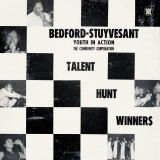
VARIOUS - YIA TALENT HUNT WINNERS
  • Reverend Horace Tyler - Intro 00:35
  • The Thrillers Band - The Thrillers Band Theme 03:12
  • Carla & The Carlettes - Love Makes A Woman 04:06
  • The Channels 4 - I Wish It Would Rain 03:13
  • Sharon Seabrook & The Starlettes - Come & Get These Memories 03:03
  • The United Souls - I Want To Be Sweeter To You (Than I Was Yesterday) 03:08
  • The Destinations - Cowboys To Girls 03:11
  • Carla & The Carlettes - Grooving 03:00
  • The Channels 4 - Cross My Heart 03:30
  • The United Souls - The Way You Do The Things You Do 02:39
  • The Starlettes - Dry Your Eyes 02:13

Big Crown Records is proud to present the reissue of one of Brooklyn’s most sought after “holy grail” soul records, YIA Talent Hunt Winners. Youth in Action, Inc. (YIA) was formed in 1963 when the Central Brooklyn Coordinating Council received a grant to develop a youth services program in the Bedford-Stuyvesant community. It was originally organized to identify and address the social problems that were leading to the high crime rate in Bed-Stuy. Recently the Smithsonian Museum of African American History released an archive of footage filmed by a community activist, which shows the real-world effects of the group’s efforts: young people engaged in sports, the arts, and other activities to better themselves and their world. The appearances by Jackie and Bobby Kennedy point to the group's relationship to the Great Society programs of President Lyndon B. Johnson. What there is no mention of in either the NMAAHC’s collection of YIA materials nor in the Brooklyn Public Library’s also extensive collection is this talent show and the record that came to be because of it.
Local vocal groups chose tunes to cover from the era (1964 - 1968) ranging from The Rascals to The Intruders, from The O’Jays to Billy Stewart. All of these groups were backed by a local act called The Thrillers Band. The winners of the talent contest were then invited into the studio to record their versions which would be pressed up on this record and given away to local radio and TV stations. The hope of the whole thing was that this would help the young groups get discovered by producers and record labels and start their professional music careers. The intro to the album is Reverend Horace Tyler congratulating the winners and asking them “to just remember, when you reach the top and become our big stars of tomorrow, don’t forget YIA”.
What this album may lack in fidelity and production it more than makes up for in charm. The engineers at the recording sessions pump in pre recorded applause and screaming to give the it the feel of the day of the contest while the young groups sing their hearts out, clearly giving their all. From today’s perspective, soul music fans will lose it over the choices of covers on this record and the killer, raw, innocent performances of them by these local Brooklyn groups. The Channels 4, Carla & The Carlettes, The United Souls, Sharon Seabrook & The Starlettes, and The Destinations all won that day and got to take place in this record. It makes you wonder, and even pine for the performances of the groups who didn’t make the cut, even if just to find out what tunes they covered, or better yet, were their original songs written by some of them for this contest?
It is with great pleasure that we make this available to the public again. This is a truly rare record, and an awesome piece of New York History.

Reservar10.10.2024

debe ser publicado en 10.10.2024


Ültimo hace: 2026 Años
Jean-Jacques Milteau - Key To The Highway LP

J.J.Milteau gathers around him some talented accomplices, Michael Robinson, Mike Andersen, Harrison Kennedy, Carlton Moody, under the guidance of Johan Dalgaard... to surf on a soundtrack soaked with blues and all the music he has been programming for over twenty years in his show "Bon Temps Rouler". "My whole life has been determined by the purchase of my first harmonica when I was fifteen. For me, it really was The Key To The Highway ...

Reservar12.04.2024

debe ser publicado en 12.04.2024


Ültimo hace: 2026 Años
Weekend Recovery - Esoteric LP

Weekend Recovery are back with a brand-new album ‘Esoteric’. Mixing equal measures of in-yer-face vox, overdriven guitars and straight-talking lyrics, it’s this mix that’s seeing the Sheffield indie-pop trio into editorial playlists on Apple, Deezer and YouTube alongside shows at Kendal Calling, Bingley Weekender and sell out dates including Corporation Sheffield. The first cuts from the record ‘Chemtrails’ and ‘No Guts All The Glory’ hit the airwaves with a bang, amassing plays on BBC Radio 1 Introducing (Gemma Bradley, Nels Hylton), BBC 6 Music (Steve Lamacq, Chris Hawkins, Fresh on the Net), Radio X (John Kennedy), Kerrang! Radio (Johnny Doom), Amazing Radio (Charlie Ashcroft, Shell Zenner, Frankie Francis), Absolute Radio (Frank Skinner), Planet Rock (Wyatt Wendels), BBC Sheffield (Christian Carlisle, Ellie Colton), BBC York (Jericho Keys), RTE 2 Ireland and as far as KEXP, Seattle and national USA station Sirius XM (Rodney Bingenheimer). The latest single ‘No Saint’ features Joel Arthur from local bandmates Hydeout and represents the harder edge in their third studio album.

Reservar13.06.2023

debe ser publicado en 13.06.2023


Ültimo hace: 2026 Años
Adam Lambert - High Drama

Adam Lambert war schon immer bestechend gut darin, die Songs anderer Künstler und Künstlerinnen zu interpretieren – von seinen Anfängen bei „American Idol“ über seinen Auftritt bei den Kennedy Centre Honours 2018, wo er Cher mit seiner fast zärtlichen Version ihres Megahits „Believe“ zu Tränen rührte, bis hin zu seiner Rolle als aktueller Sänger von Queen.

Nun geht der Grammy-nominierte Künstler konsequent den nächsten Schritt und kündigt ein ganzes Album ausgesuchter Coversongs an. „High Drama“ erscheint am 24. Februar 2023 und markiert zugleich sein Debüt bei Warner Music. Schon jetzt gibt es zwei Songs daraus zu hören: „Ordinary World“, eine kraftvolle, atmosphärische Balladenversion des Duran-Duran-Hits von 1993, sowie Lamberts wunderschöne Interpretation des Noël-Coward-Klassikers „Mad About The Boy“ aus den 1930er-Jahren. Fans des Musikers werden wissen: Er performte den Song kürzlich bereits im Rahmen der BBC-Show „Strictly Come Dancing“ (siehe unten). Außerdem wird Lamberts Version auch in dem kommenden Film „Mad About The Boy — The Noel Coward Story“ über das Leben des Noël Coward zu hören sein, der kommendes Jahr in die Kinos kommt.

„High Drama“ – der Titel des neuen Albums ist natürlich nicht von ungefähr gewählt, denn der US-Amerikaner liebt die große Geste. Und wir erleben ihn hier mehr denn je als einen Künstler, der sich in seiner eigenen Haut wohlfühlt, der voll und ganz er selbst ist – und jede Minute davon auskostet.

Bei seinem neuen Album übernahm Adam Lambert auch die Rolle des ausführenden Produzenten, die Songs selbst wurden produziert von Tommy English (Kacy Musgraves, Carly Rae Jepsen), Andrew Wells (Halsey, OneRepublic), George Moore und Mark Crew. „High Drama“ nimmt uns mit auf eine Reise durch die moderne Musik, von Klassikern wie Ann Peebles' „I Can't Stand The Rain“ und Bonnie Tylers „Holding Out For A Hero“ bis hin zu Hits jüngeren Datums wie Billie Eilishs „Getting Older“ – hier in einer Glam-inspirierten Version – und einer rockigen Interpretation von Lana Del Reys „West Coast“. Gemeinsam haben alle Songs, dass sie sich durch Adam Lamberts unvergleichliches Gesangstalent auszeichnen.

Aktuell arbeitet Lambert übrigens auch an seinem eigenen Musical, bei dem sich auf eigene Songs von ihm und eine Starbesetzung freuen kann.

Reservar24.02.2023

debe ser publicado en 24.02.2023


Ültimo hace: 2026 Años
Only The Family - Only The Family - Lil Durk Presents: Loyal Bros 2x12"
 
21

With a moving album cover paying homage to fallen comrades King Von and Nuski, Lil Durk and Only The Family release their fourth OTF label compilation album, Loyal Bros. Alternating between hard-hitting street anthems and emotional ballads, the 23-track tape sees new music from Lil Durk, posthumous appearances from King Von, and contributions from OTF signees Booka600, Memo600, Timo, Doodie Lo, JusBlow600, THF Zoo, and C3. In addition to OTF’s stacked roster, the project features several high profile collaborators, such as Lil Uzi Vert, Tee Grizzley, Foogiano, Big30, EST Gee, Slimelife Shawty, & more. On the heels of an already impressive year, Only The Family makes a strong statement that they're here to stay for years to come.

No en stock

Haga su pedido ahora y le encargaremos el artículo en nuestro proveedor.


Ültimo hace: 3 Años
Various - Reggae Power LP

Various

Reggae Power LP

12inchMOVLP3180C
Music On Vinyl
17.11.2022

By the close of the Sixties, record retailer and jukebox businessman Karl ‘J.J.’ Johnson was firmly established as one of Jamaica’s leading record producers, having released a string of best-selling rock steady and proto-reggae 45s by such noted local acts as Lee ‘Scratch’ Perry, the Rulers, Carl Dawkins, the Kingstonians and the Ethiopians. Early in 1969, Trojan Records released an album containing a dozen of Johnson’s latest recordings in the new reggae style. Entitled Reggae Power, the LP was dominated by regular hit-makers the Ethiopians.

Reggae Power is available as a limited edition of 1000 individually numbered copies on orange coloured vinyl.

No en stock

Haga su pedido ahora y le encargaremos el artículo en nuestro proveedor.


Ültimo hace: 3 Años
THE ETHIOPIANS - REGGAE POWER

The Ethiopians were one of Jamaica’s most popular bands during the late ska, rocksteady and early reggae periods. The much loved harmony group began working with the legendary producer Carl ‘Sir J.J.’ Johnson after a series of successful ska and rocksteady hits. This collaboration resulted in some of the biggest reggae hits of the late Sixties and early Seventies. Most notable hits were “Everything Crash”, “What A Fire”, “Feel The Spirit”, “Hong Kong Flu” and “Woman Capture Man”, which are all included on their 1969 debut album Reggae Power. The album cover features a photo of future Carry On Girls-actress Pauline Peart.

Reservar04.02.2022

debe ser publicado en 04.02.2022


Ültimo hace: 2026 Años
Blood Orange - Negro Swan 2x12"

Producer, multi-instrumentalist, composer, songwriter and vocalist Devonté Hynes returns with his fourth album as Blood Orange, Negro Swan, released on Domino on August 24, 2018.

Raised in England, Hynes started out as a teenage punk in the UK band Test Icicles before releasing two orchestral acoustic pop records as Lightspeed Champion. In 2011, he released Coastal Grooves, the first of three solo albums under the moniker Blood Orange. His last album, Freetown Sound, was released to critical acclaim in 2016, and saw Hynes defined as one of the foremost musical voices of his time, receiving comparisons to the likes of Kendrick Lamar and D'Angelo for his own searing and soothing personal document of life as a black man in America. He has collaborated with Solange Knowles, Skepta, fka twigs, Carly Rae Jepsen, A$AP Rocky, Charlotte Gainsbourg, Blondie, and many other artists, and was recently one of four artists invited to the Kennedy Center to perform alongside Philip Glass. In addition to his production work, he scored the film Palo Alto, directed by Gia Coppola.

Negro Swan was written and produced by Hynes. Says Hynes:

'My newest album is an exploration into my own and many types of black depression, an honest look at the corners of black existence, and the ongoing anxieties of queer/people of color. A reach back into childhood and modern traumas, and the things we do to get through it all. The underlying thread through each piece on the album is the idea of HOPE, and the lights we can try to turn on within ourselves with a hopefully positive outcome of helping others out of their darkness.'

No en stock

Haga su pedido ahora y le encargaremos el artículo en nuestro proveedor.


Ültimo hace: 5 Años
  • 1
Artículos por página
N/ABPM
Vinyl