Search:bobby brazil

Styles
All
  • 1
Various - NICOLA CONTE PRESENTS VIAGGIO

Blue note / Schema / Far Out recordings artist shares a new compilation of golden age italian library music.

Following his acclaimed five-part Viagem compilation series celebrating Brazil's forgotten bossa nova and samba jazz, Far Out, Blue Note and Schema recording artist and international DJ Nicola Conte turns his curatorial attention homeward with Viaggio, an extraordinary exploration of Italy's library music renaissance 1970-79.

The 12-track compilation spotlights the remarkable creative explosion that occurred during the seventies: when some of the greatest yet most historically overlooked composers, including Amedeo Tommasi, Alessandro Alessandroni and Max Rocci, were composing and recording huge amounts of original music for film and television libraries.

Unlike commercial releases designed for mass consumption, library music was created specifically to accompany images on screen. This meant creative freedom for composers who imagined scenarios, feelings and worlds to soundtrack. Pressed in limited quantities, these recordings were distributed only to internal circles of music supervisors, journalists, and television professionals – making them virtually invisible to the general public for decades.

"This is a journey through a largely forgotten world," explains Conte. "While major jazz recording opportunities were scarce, an incredible network of small labels owned by publishing companies – often created by the composers themselves – began to flourish. This created an open space where musicians could express more experimental and free thinking sounds."

At the heart of Viaggio stands Amedeo Tommasi, the sophisticated jazz pianist who emerged in 1960 backing international stars like Chet Baker, Bobby Jaspar, and Jacques Pelzer. Tommasi was among Italy's earliest artists to introduce Black US modal jazz influences, and when traditional recording opportunities dwindled, he pivoted to soundtrack and library music, helping define a distinctly Italian sound that bridged experimental jazz with the emerging possibilities afforded by developments in synthesizer and recording technologies.

The compilation features rare gems from small label outputs, namely the Cenacolo and Rotary label catalogs. Tommasi's contemporaries include the great Alessandro Alessandroni and his vocalist wife Giulia De Mutiis (Kema), Stefano Torrosi (under the alias Farlocco - meaning fake/phony), and Belgian composer Joël Vandroogenbroeck. The recordings capture the technological evolution of the era as beguiling synthesis often combines with global influences spanning Brazilian rhythms, jazz-funk explorations, and Middle Eastern scales.

"You can hear both the haunting melodies and sun-kissed atmospheres so typical of Italian culture from that era," Conte observes. "Some of these albums could have been proper artist releases, while others were specifically designed for accompanying images on screen, yet all were crafted with exploratory creativity that still resonates powerfully today."

In Stock

On Stock and ready to ship

Various - Tchic Tchic: French Bossa Nova 1963-1974  Colored Edition LP 2x12"
  • A1: Les Masques - Il Faut Tenir (1969)
  • A2: Isabelle Aubret - Casa Forte (1971)
  • A3: Christianne Legrand - Hlm Et Ciné Roman (1972)
  • A4: Jean Constantin - Pas Tant D'chichi Ponpon (1972)
  • A5: Billy Nencioli & Baden Powell - Si Rien Ne Va (1969)
  • B1-: Marpessa Dawn - Le Petit Cuica (1963)
  • B2: Jean-Pierre Sabar - Vai Vai (1974)
  • B3: Sophia Loren - De Jour En Jour (1963)
  • B4: Isabelle - Jusqu’à La Tombée Du Jour (1969)
  • B5: Sylvia Fels - Corto Maltesse (1974)
  • C1: Frank Gérard - Comme Une Samba (1972)
  • C2: Ann Sorel - La Poupée Des Favellas (1971)
  • C3: Charles Level - Un Enfant Café Au Lait (1971)
  • C4: Andrea Parisy - Les Mains Qui Font Du Bien (1970)
  • C5: Audrey Arno - Quand Jean-Paul Rentrera (1969)
  • C6: Aldo Frank - T’as Vu Ce Printemps (1970)
  • D1: Christianne Legrand - Cent Mille Poissons Dans Ton Filet (1972)
  • D2: Clarinha - Lemenja (1970)
  • D3: Hit Parade Des Enfants - Aquarela (1976)
  • D4: Jean-Pierre Lang - Tendresse (1965)
  • D5: Magalie Noël - Une Énorme Samba (1970)
  • D6: Françoise Legrand - La Lune

Ever since the late 1950s bossa-nova revolution, Brazil’s influence on French music has been undeniable. Pierre Barouh, Georges Moustaki and a vast array of lesser known artists, all made the Musica Popular Brasileira (MPB) an axis of promotion at the service of a cool and metaphysical, modern and mixed Brazilian lifestyle. Some were seduced by the poetic languors of the bossa, some were looking for fun, and others just loved the American hybridization of jazz-bossa, jazz-samba.


What is bossa nova? One of its creators, Joao Gilberto said: "Its style, cadence, everything is samba. At the very start, we didn't call it bossa nova, we sang a little samba made up of a single note - Samba de uma nota so .... The discussion around the origins of bossa nova is therefore useless”. It is nevertheless useful to remember that these magnificent Brazilian songs, which the guitarist describes as samba, were shifted and balanced around improbable chords. "I like things that lean, the in-betweens that limp with grace," said Pierre Barrouh, quoting Jean Cocteau.


With emotion, arrangements for violin and supple guitar licks, bossa nova rapidly changed. A transformation that can be heard in the Tchic, tchic, French Bossa Nova 1963-1974 compilation, the result of a cultural reappropriation, which traveled through the United States and supplemented itself in France.

A musical revolution that has remained significant, bossa nova was born in Rio. From 1956 to 1961, Brazil lived through its golden years. In five years, the country had invented its modernist style. Elected president in 1956, Juscelino Kubitschek de Oliveira, an elegant man with a broad forehead, brandished a promising slogan: "Fifty years of progress in five years". He quickly got to work. Not worried about increasing debt, he launched the project for a new federal capital, Brasilia, designed by the communist architect Oscar Niemeyer. Volkswagen opened state-of-the-art factories and created the “fusquinha”, the Beetle. In Rio, the Vespa made its first appearance. The Arpoador Surf Club crew run into the “girl” from Ipanema, Helô Pinheiro - the tanned garota ("chick"), between a flower and mermaid, who at 17 walked by the Veloso bar, where the fiery author and composer, Tom Jobim and Vinicius de Moraes, were getting drunk on whiskey. From then on, bossa symbolized cool.

In 1958, Joao Gilberto recorded Chega de Saudade, which the directors of Philips denied, calling it "music for fagots". The marketing director, who believed in it, secretly pressed 3000 78-inch vinyls and distributed them at schools around Rio, creating a tidal wave.

American jazzmen then took over. In particular, trumpeter Dizzy Gillespie and guitarist Charlie Byrd. In November 1962, the Brazilian Ministry of Foreign Affairs funded a "Bossa-Nova" concert at Carnegie Hall in New York, inviting the genre’s pioneers. Unprepared, the show soon turned to disaster. But the troupe was invited to the White House by Jackie Kennedy. The first lady loved "the new beat" and in particular Maria Ninguem, a song by Carlos Lyra, later covered by Brigitte Bardot.

In Brazil, the 1964 military coup quickly ended this euphoria. The destructive atmosphere that ensued pushed many Brazilian musicians to leave, if not to exile. Thus, Tom Jobim, Sergio Mendes and Joao Gilberto arrived to the United States. In New York, Joao Gilberto met saxophonist Stan Getz. At the time, he was married to the Bahianese Astrud Weinert Gilberto, who had a German father. She had never sung before, but she knew how to speak English. Getz therefore asked her to replace her husband on The Girl From Ipanema. The Getz/Gilberto record with Tom Jobim on piano, was released in March 1964. Phil Ramone, the "pope of pop" was in charge of sound.

Bossa nova arrived in Paris through the classic “guitar-voice” channel (Pierre Barouh, Baden Powell, Moustaki…) But France loved jazz and Paris had already welcomed its American contributors. All these good people were to pass through Saint-Germain-des-Prés. The cabaret l'Escale became the Mecca of Latin American sound where one could find Pierre Barrouh and his friends, such as the Camara Trio, samba-jazz aces, whose only record was published by the Saravah label. With a band strangely called Les Masques (a band that included Nicole Croisille and Pierre Vassiliu, among others), the Camara Trio recorded an interesting Brazilian Sound, including the track Il faut tenir which is present on this tasty compilation of rarities.

Other enlightened musicians can also be found on the compilation, such as Jean-Pierre Sabar (songwriter for Hardy, Auffray, Leforestier ...) and the French pop rock organist Balthazar. In 1975, Sabar recorded Aurinkoinen Musiikkimatka on a Finnish label, which featured the crazy Vai, Vai, included on this record. We are now following the footsteps of Brazilian electronic musicians such as Sergio Mendes, Eumir Deodato or Marcos Valle who created funk and disco sounds on their keyboards and synthesizers. A style that influenced Véronique Sanson when she wrote Jusqu’à la Tombée de la nuit in 1969 for Isabelle de Funès, the niece of Louis and a great friend of Michel Berger - Sanson did end up singing this track on her 1992 Sans Regret record.


The pinnacle of exoticism and travel, Sylvia Fels’ Corto Maltese includes bongos, sea mist and ocean sounds. The title was taken from Jacky Chalard’s concept album written in 1974, Je suis vivant, mais j’ai peur (I am alive, but I am scared), based on Gilbert Deflez’s science fiction novel.


However, bossa nova extended the scope of popularity. "In the 1970s, I was a fan of Sergio Mendes, Getz / Gilberto. I fell in love with this music that I knew because I had been an orchestral singer, " explained Isabelle Aubret, who in 1971 delivered a composite record of covers by the very funky Jorge Ben, Orfeu Negro, Tom Jobim, Vinicius de Morais and Jean Ferrat. "I recorded this album for Meys Records in Paris, far from Brazil, with wonderful musicians, François Raubert, Roland Vincent, Alain Goraguer...". The latter wrote the arrangements for Casa Forte, a very percussive title borrowed from Edu Lobo, one of the initiators of the bossa who spent time in California. "Jazz and bossa came together and produced very rhythmic music. I love singing, it allows me to dream, to have fun, to feel a high on stage, and these songs brought me joy, made me swing, my singing felt like a dance.”


The world tours of French singers and their desire for the tropics, often brought them to Rio with its hills, forests, caipirinhas and tanned bodies. There are surprises though, like this Iemenja (Iemenja is the goddess of the sea in the Afro-Brazilian candomblé religion). Not unlike the composer and musician Jean-Pierre Lang, based in Sao Paulo, Claire Chevalier taught Brazil to Brazil. In 1970, the singer and painter published a 45-inch vinyl, Mon mari et mes amants (My husband and my lovers), under the improbable pseudonym of Clarinha (little Claire). She was then living in Rio, with her husband, Joël Leibovitz, who founded a band called Azimuth, and who owned a record label specialized in "sambas enredos" songs for samba school parades.


For its B side, she asked Pierre Perret to come up with lyrics for a song composed by Carlos Imperial: "Oh goddess of the sea, o goddess Iemenja, I bring a white rose to adorn your long hair ..." . "Perret came to see us, and we had fun, remembers Joël Leibovitz. We wrote Lemenja for fun, we recorded it at the Havaí studio, behind the Central do Brasil the central station. Erlon Chaves, the arranger who worked with Elis Regina, joined us" adding his share of Afro-Brazilian percussions and funky brass to the mix.

There is a common misunderstanding in Franco-Brazilian history: that bossa, admittedly hedonistic, is perceived as funny, even though the poets who wrote the texts are often philosophizing on the human condition. Its French interpreters pull it towards a carnival inspired universe, far removed from its fundamental essence. Thus, Jean Constantin covered the famous Samba da minha terra, an ode to the art of samba written by the classic Bahian composer Dorival Caymmi, renaming it with the enticing title of Pas tant de tchi tchi pompon: "On your pier there is no tchi tchi / when you arch your back, you know everything is alright ”(lyrics by Gérard Calvi). This expedited bossa aims for the absurd, but retains a certain elegance.

Indeed, Jean Constantin was not an idiot, the rather large man had a huge mustache and liked fantasy, (Les pantoufles à papa, Le pacha, inspired by cha-cha-cha-cha, salsa and jazz) but he was also the lyricist of Mon manège à moi interpreted by Edith Piaf, the composer of Mon Truc en plume by Zizi Jeanmaire and the soundtrack of François Truffaut’s 400 Blows. Le Poulpe, published in 1970, from which this bossa is extract, was arranged by Jean-Claude Vannier, an accomplice of Serge Gainsbourg’s Melody Nelson. In short: "There is enough of samba / By looking at the parasol / Because my poor cabeza / Is going to die in the sun".

Even the American actress Marpessa Down, who was at the heart of the bossa nova revolution with her role as Euridyce in Marcel Camus’ film Orfeu Negro, winner of the 1959 Cannes Palme d'or, fed the clichée with Je voudrais parler au petit cuica - "Tell me how you manage to always make people want to dance / It's true, I must admit that I cannot resist your magic" - in consequence, once can hear the cuica, a little drum inherited from the Bantu.


But bossa nova had many angles. Societal, of course, pushing actresses who were symbols of women's liberation like Brigitte Bardot, Jeanne Moreau, or Sophia Loren to engage in the exercise of accelerated bossa. In February of 1963, Sophia Loren made a record in French in Rome, Je ne t'aime plus, featuring the song De jour en jour, a bossa written by two Italians, Armando Trovajoli and Tino Fornai, which was released a little later by Barclay. Bossa accompanied the 1960s, a decade of moral liberation. Ann Sorel, who interpreted La Poupée des favellas, caused a sensation with L’amour à plusieurs, a provocative song written by Frédéric Bottom and Jean-Claude Vannier. As for the actress Andrea Parisy, she displayed her bourgeois cheekiness in Marcel Carné's Les Tricheurs before interpreting Les mains qui font du bien. And Magalie Noël, the friend of Boris Vian, who sung Johnny fais-moi mal, was hired to sing Une énorme Samba, composed by Alain Goraguer (arranger to Gainsbourg, Bobby Lapointe and Jean Ferrat) with lyrics by Frédéric Botton.

But in the end, of what wood is bossa nova made of? The answer is given by Christianne Legrand, daughter of Raymond the conductor, and sister to Michel the composer: "With me, with jà" - jà means "immediately" in Portuguese. In 1972, the singer, an expert in vocal jazz and a member of the Double Six, published Le Brésil de Christianne Legrand. Two songs included on the Tchic Tchic compilation that demonstrate how bossa, jazz, funk, rock, etc. work like a swiss army knife: the music is used to denounce broken systems, or miracles, HLM et ciné roman, Cent mille poissons dans ton filet, two songs from the O Cafona soundtrack, a successful telenovela broadcast, at the time in black and white, on TV Globo. The first was adapted in French by the fighter and friend of the Legrand tribe, Agnès Varda. The second is content with a play on words, jostling them into a summer fun.


Véronique Mortaigne

pre-order now17.04.2026

expected to be published on 17.04.2026

BOBBY MONTEZ - Viva!

Bobby Montez

Viva!

12inch637010
Descarga
06.06.2025
  • Guajira Josephina
  • My
  • Tremendo Cha-Cha
  • Garden Of Allah
  • Jungle Stars
  • Brazilian
  • But Heaven Knows
  • Holiday In Havana
  • Titoro
pre-order now06.06.2025

expected to be published on 06.06.2025

Felinto - Utopia Milhão (Cassette)

Felinto

Utopia Milhão (Cassette)

CassetteGLOSSYBOKEH01
Glossy Mistakes
06.12.2024

Mischievous festa punk meets astral steppas, kalaedoscopic free ambient meets harsh noise, scattered amen breaks with IDM and free jazz trumpets meets the earthly plod of digidub. It can only be Felinto from Sao Paulo.
UTOPIA MILHÃO honors the life forces that allow us to transform the darkness where dreams reside. The album brings a new moment of intimacy for Felinto's musical expression flowing through dirty, raw, dense and brilliant dub fractals, ready to transform unexpectedly into a new shape then another, and another, and another... featuring collaborations with magical people: Sarine (Deafkids), Douglas Leal (Deafkids), Guizado (Afrobombas), Sandra X, Paula Rebellato (Rakta), Lorena Hollander, Yao Bobby, Kiko Dinucci, Paulo Papaleo, Cint Murphy, Rodrigo Lima.
Felinto is a political agitator and musician at the heart of the São Paulo underground - a movement that confronts the various effects of the capitalist system of racial, sexual, ,,,,, and 22222 lawand material oppression.

His provocations range from yoga for children and parenting studies (SACYOGA), theatre (PROJETO CRIOULOS and PROJETO JAMES BALDWIN), web series highlighting the black presence in electronic music in São Paulo (MODULAÇÃO PRETA), reflective groups on gender violence and masculinities, occupation of public spaces for political art q(Coletivo Sistema Negro), artistic curatorship (Residência SOMSOCOSMOS) and studies with sound as a tool in conflict mediation practices. Felinto composes for film, theatre and immersive installations such as MEGACITIES presented at the National Gallery of Victoria, Canada in 2023.

He is currently researching - as part of a masters project in clinical psychology - the collectivised dream realities of black people. A field of action that contemporary anthropology, psychoanalysis and psychology call ONIROPOLITICA.

His interest in affinity groups, autonomous networks of micro-political articulation and penal abolitionism led him to the questions: what do black people dream about within the permanent context of civil war and state violence (like the one in Brazil)? How does this experience create dreams and how does the dream affect the construction of identities beyond the boundaries established by the capitalist unconscious?

pre-order now06.12.2024

expected to be published on 06.12.2024

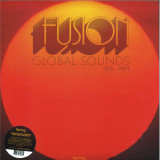
Various - Fusion Global Sounds Vol.2

Favorite Recordings comes back with the 2nd edition of its compilation series: Fusion Global Sounds. 8 rare and hidden tracks produced between 1976 and 1984 in various parts of the world. As a fine collector of Jazz-Funk and Fusion for many years, Charles Maurice cooked another fine selection of forgotten Fusion Jazz productions, this time driven by a common Brazilian influence.

On this 2nd edition, recordings come from Brazil, Philippines, Netherlands, Poland, and US, all again from underrated artists mostly unknown from the masses. You'll find here the best elements of the Fusion genre: fine vocal arrangements, catchy Fender Rhodes and synthesizers, irresistible basslines, and classy horns section, altogether bringing a unique groove infused with Brazilian flavors.

The compilation starts with Lerma dela Cruz, a quite occult songstress from Philippines. “Free” was part of a very rare compilation titled “Tropical Jazz Fusion”, released in 1983 on A&W Horizon label (also home of Boy Katindig). With its blowing Samba / Jazz-Funk vibes, it was an obvious match to open this collection. The following song could only enhance this ambience, since that of Brazilian saxophonist, Nivaldo Ornelas, present on this opus with 2 titles taken from his album A Tarde (1983). On “Cactus”, Nivaldo is supported on keyboards by his friend Marcos Resende, both also known for their album on the MPBC series released by Phonogram-Polygram between 1978 and 1981, which has clearly been an inspiration for Charles Maurice in building this second edition.

We could continue telling stories and details about the others great tracks included in Fusion Global Sounds Vol.2, but we believe that the best way is to listen to it and pursue your trip through Fusion Jazz combined with Brazilian styles, including surprising stopover in Poland, or Netherlands.

out of Stock

Order now and we will order the item for you at our supplier.


Last In: 2 years ago
Julien Lourau - Crianças ⏤ The Music of Wayne Shorter LP

“A piece of music never truly comes to An end. Revisiting a theme illustrates this idea that life goes on.” These are the words of Wayne Shorter, uttered in 2018 upon the release of Emanon, his final opus. On this record, the octogenarian uses dusky hues to shade in the passions of his youth - drawing and science-fiction, as well as the causes he has defended all his life - the fight against ecological upheaval and structural racism. This sentiment did not fail to resonate with Julien Lourau, who has reached a stage in life where he has begun to look back over certain pages written by the man he has always considered one of the masters of his trade. Five years later, this Parisian native has also chosen to revisit his glory days, offering reworked versions of specific tracks composed by his titular elder throughout the 80s. “When I play this music, I find myself back in my teenage bedroom. These are my standards, and they remind me of autumn in Rambouillet.” At that time, after practising his scales, Julien would also play Dungeons & dragons, and immerse himself in SF as well as heroic fantasy - epic influences which are not without a certain connection to the dreamworlds Shorter conjured up, as another fan of landscapes beyond the grasp of reality.

This album features four themes taken from Atlantis, which came out in 1985, and two from Joy Ryder, released three years later. To these, he has added a composition penned at around the same time for Sportin’ Life, the penultimate LP by Weather Report. This is rounded off by a tune taken

from Native Dancer, the record which, ten years earlier, in 1975, brought together this saxophonist who learnt his trade alongside Art Blakey, before joining Miles’ second quintet, and Brazilian Milton Nascimento.

“Between Native Dancer and Atlantis, Shorter did not release anything under his own name, but he took the time and care to really perfect his writing. Upon his return, he injected a very Brazilian form of subtlety into his compositions, especially rhythmically. And from a harmonic point of view, these themes are extremely sophisticated, and reveal truly singular colours. In fact, he decided to display the score as if it constituted the liner notes of Atlantis.”

Julien Lourau is a fan of every Wayne Shorter era, from his Blue Note days, where Mr Gone defined the bases of a truly unique repertoire, all the way to his final quartet - a reference like no other. He decided to focus on this “highly electric” period, which is not necessarily Shorter’s best known, nor his most widely appreciated - despite being a unanimous reference, Shorter has nonetheless never had a direct descendent. In Lourau’s line of sight there lies a desire to focus on typically South American tonic accents which characterise this repertoire, twinned with the ambition to switch up their actual sound “by attempting to open up onto a production highly influenced by eighties fusion". However, he admits that modifying the structures of these most unique of worlds constituted a fresh challenge. “There’s this labyrinthine harmonic system where you’ve no idea how it holds together, but where it’s actually impossible to touch the slightest element without the whole edifice wavering. It is in fact a very difficult thing to achieve!”

In order to successfully transcribe all this creativity free of obstacles, Julien Lourau once again called upon the help of Mathieu Debordes. From January 2023 onwards, Mathieu endeavoured to break down all the musical elements, on paper, before creating any actual music. The record was therefore constructed on the faith of these scores, without necessarily transiting through a creative residency - just two live gigs, to make sure the setup worked. Besides Mathieu Debordes and his synthesisers, Julien Lourau has assembled an ad hoc team by his side. On the bass, according to the track, we can hear erstwhile companion Sylvain Daniel or a new acolyte on the fretless bass, Joan Eche Puig.

Stéphane Edouard, on percussion, even dives headfirst into an unlikely proto-rap of sorts, on Pearl On The Half Shell (where, on the original version, Bobby McFerrin adjusted his interventions in a rather madcap style). Aesthete and drummer Jim Hart as well as pianist Leo Jassef also figure on this release - both were present on previous project devoted to label

CTI. “At sixteen, I wanted to sound like Michael Brecker rather than Ben Webster - that was equated with modernity in those days”, adds Julien with a smile, as for him, all this rings out a little like a logical next step, a joyful immersion into the fountain of youth. And if, for this record, he plays the soprano more than ever, the saxophone Shorter set in his sights on, he never tries to replicate an unattainable ideal note by note. What would be the point?

“Wayne Shorter is not just a saxophonist’s saxophonist. In fact, I don’t know a single person who has risen to challenge of his solos. I have not done it myself either, but on the other hand, I have retained a lot of his phraseology. His way of approaching the instrument reveals a more evanescent language, a work on colour and shape. Keeping this in mind has allowed me to gravitate towards certain elements, that in hindsight, I find echoes of in my work, even in Groove Gang.” Shorter etches out these phrases, creating a groove within which Lourau had traced subtle punctuation, managing, from a highly written base, to create fresh apertures, promises of a great escape. Emblematic of this standpoint, his regal version of Ponte de Areia, originally a wonderful dialogue between Milton Nascimento and Wayne Shorter. Here, the Frenchman takes liberties with the original melodies, without ever growing distant from the original spirit, extending one section with delicacy, offering a rubato development and then a groove “like a little suite”. Julien Lourau also renews with an accomplice from last century, Magic Malik, who lends his high-pitched vocals to the track. Though they had not recorded together for more than twenty years, the two of them got on as if they had only ceased collaborating yesterday, everything flowed naturally. The track was wrapped up in just one take, much like other themes, such as opener Who Goes There where the flautist deploys smooth, enchanted and smoky wisps.

Fundamentally, reflecting of the sleeve which features a child playing with a ball, image that could symbolise the sun just as much as the moon, Julien Lourau manages to translate the ambiguous candour which characterizes Shorter’s work - solar and crepuscular at the same time, that of a visionary and poet definitively situated outside of all chronology, but with whom Julien shares surprising and ‘timely’ coincidences. Shorter was born August 25, 1933, the same day as Julien’s father, “if we take time zones into account”, and who died on Lourau’s birthday, March 2, 2023. Should we take this as a random fact? Or could we not see here the sign of a destiny connecting the agnostic Frenchman to the man who, as a fervent Buddhist, believed in the transmission of his spiritual flow ?

pre-order now10.11.2023

expected to be published on 10.11.2023

Oscar Peterson - Motions & Emotions

Reissue of Oscar Peterson's 1969 album 'Motions & Emotions' pressed
on blue vinyl
On 'Motions & Emotions' Oscar Peterson presents jazz versions of popular pieces
from pop, easy listening and classic songwriters, as the quartet of long- time
companions are washed in rich orchestral colours. Arranged and conducted by a
magician of the guild, the great Claus Ogerman, who had previously worked for
Tom Jobim. The Brazilian is also represented with his standard "Wave", in which
the orchestra builds a luminous tropical backdrop for Peterson's fantastically
dragged phrasing. Peterson and Ogerman pay tribute to another great orchestra
leader, Henry Mancini, in "Sally's Tomato" with feather- light trilling brilliance.
Jimmy Webb's "By The Time I Get To Phoenix" experiences a metamorphosis
almost into the classical - Ogerman opens infinite sound spaces here with the
distantly indulging strings. Bobby Gentrys "Ode To Billy Joe" cleverly abducts
Countryfolk into Bigband Jazz by means of fiery keyboard playing.
Finally the hits: from soul comes Bobby Hebb's "Sunny", whose theme the pianist
here cleverly harmonises out to then decorate it bluesy in dialogue with the wind
instruments. Burt Bacharach's "This Guy's In Love With You" shines with a
leisurely late night mood and a pompous finale. Yesterday" is provided with a
sparkling bossa substructure, while the second Beatles homage "Eleanor Rigby"
oscillates between loose groove, deep melancholy and swing. Peterson plus
quartet plus orchestra: Enthusiastic detail work also in the popular sector.
"The question about favourite albums is basically not an easy one, except in my
case, because Motions & Emotions by Oscar Peterson is actually my absolute
favourite album. I think Motions & Emotions might even be the perfect
instrumental album." - Till Brönner (German Jazz trumpeter and professor)

pre-order now04.03.2022

expected to be published on 04.03.2022

Oscar Peterson - Motions & Emotions

Reissue of Oscar Peterson's 1969 album 'Motions & Emotions' pressed
on blue vinyl
On 'Motions & Emotions' Oscar Peterson presents jazz versions of popular pieces
from pop, easy listening and classic songwriters, as the quartet of long- time
companions are washed in rich orchestral colours. Arranged and conducted by a
magician of the guild, the great Claus Ogerman, who had previously worked for
Tom Jobim. The Brazilian is also represented with his standard "Wave", in which
the orchestra builds a luminous tropical backdrop for Peterson's fantastically
dragged phrasing. Peterson and Ogerman pay tribute to another great orchestra
leader, Henry Mancini, in "Sally's Tomato" with feather- light trilling brilliance.
Jimmy Webb's "By The Time I Get To Phoenix" experiences a metamorphosis
almost into the classical - Ogerman opens infinite sound spaces here with the
distantly indulging strings. Bobby Gentrys "Ode To Billy Joe" cleverly abducts
Countryfolk into Bigband Jazz by means of fiery keyboard playing.
Finally the hits: from soul comes Bobby Hebb's "Sunny", whose theme the pianist
here cleverly harmonises out to then decorate it bluesy in dialogue with the wind
instruments. Burt Bacharach's "This Guy's In Love With You" shines with a
leisurely late night mood and a pompous finale. Yesterday" is provided with a
sparkling bossa substructure, while the second Beatles homage "Eleanor Rigby"
oscillates between loose groove, deep melancholy and swing. Peterson plus
quartet plus orchestra: Enthusiastic detail work also in the popular sector.
"The question about favourite albums is basically not an easy one, except in my
case, because Motions & Emotions by Oscar Peterson is actually my absolute
favourite album. I think Motions & Emotions might even be the perfect
instrumental album." - Till Brönner (German Jazz trumpeter and professor)

pre-order now04.03.2022

expected to be published on 04.03.2022

Floating Points - Late Night Tales: Floating Points 2x12"
 
17

Floating Points' personal collection of global soul, ambient, jazz and folk treasures form the latest in the warmly revered Late Night Tales series.

Sam Shepherd aka Floating Points' music taste is notoriously tricky to define, ranging from ethereal classical at one end to coruscating techno at the other, united only in a firm belief in the transcendental power of music to move hearts, minds and - yes - feet. Similarly, his production career has ranged from early experiments in dance music with breakout records such as the 'Shadows EP' and collaborating with legendary Gnawa master Mahmoud Guinia to his expansive album 'Elaenia', which met with critical acclaim upon its release in 2015.

This Late Night Tales excursion into the depths of the evening reflects his broad tastes. The globally-travelled producer has collected untold treasures on his travels from dusty stores in Brazil to market stalls near his hometown. There's the gorgeous 'Via Làctea', culled from Carlos Walker's debut album, Abu Talib's (Bobby Wright) plaintive 'Blood Of An American' and Robert Vanderbilt's gospel reworking of Manchild's 'Especially For You'. Raw soul and feeling oozing from each song's pores.

At the other end of the music scale are the modernists, such as Québécoise Kara-Lis Coverdale who weighs in with the indelible 'Moments In Love', Kaitlyn Aurelia Smith whose 'Milk' is an exercise in tranquility, while Sarah Davachi's meditative mix-opener offers respite from a weary world.

We have some exclusive tracks for Late Night Tales; alongside Davachi's offerings there is also Toshimaru Nakamura's 'Nimb #59', as well as the now traditional cover version. hepherd delved into his childhood
memory for this one, a track taken from the first album his parents bought him, Kenny Wheeler's 'Music For Large & Small Ensembles': Sam offers up his interpretation of 'Opening Part 1'. Wheeler also contributes horns to Azimuth
track The Tunnel, written and performed by Norma Winstone and John Taylor who, coincidentally, are the parents of Floating Points' drummer Leo Taylor. Closing the album, Lauren Laverne reads the suitably nocturnal poem 'Ah! Why, Because The Dazzling Sun' by Emily Brontë.

'I tried to find music that reflects the stillness of night. And because my musical interests lie all over the place, it's quite difficult to distil that notion down to just a few songs. I was quite keen to have some electronic music in there but I also really wanted to have some soul music mixed in, so I had to try and find a pathway between all of this different music.' - Sam Shepherd (Floating Points) March 2019

out of Stock

Order now and we will order the item for you at our supplier.


Last In: 2 years ago
  • 1
Items per Page:
N/ABPM
Vinyl