Suche:african rock

Styles
Alle
Various - Astral Daze: Psychedelic South African Rock 1968-1972

This collection brings together rarities from well-known artists like Abstract Truth, Suck, Otis Waygood, Freedom's Children, John & Philipa Cooper, McCully Workshop and Hawk, as well as lesser known acts like Buzzard, The Fireflies, The Idiots, Tidal Wave, and The Invaders. Although the South African rock movement of the late sixties and early seventies was not a major commercial success, its participants heralded an exciting new age in South African rock and started a movement aimed at changing the musical tastes of fans in a spectacular way. Stadium concerts became the vehicle for feeding the youth with heavier rock sounds, and behind studio glass were producers like Clive Calder, Billy Forrest, Graham Beggs and Selwyn Miller who acted as change agents to transform conventional pop into heavier 4 to 5 minute songs. The movement's struggle for recognition through airplay remained unanswered and only the true fans of rock knew about their existence. Licensed by the Fresh Music label in South Africa and available on vinyl for the first time, complete with insert and liner notes.

nicht am Lager

Bestelle jetzt und wir bestellen den Artikel für dich beim Lieferanten.


Last In: vor 7 Jahren
ORCHESTRA GOLD - AFRICAN PSYCHEDELIC ROCK

Fantastic Oakland, California-based ensemble ORCHESTRA GOLD offers up a kaleidoscope of sound deeply rooted in the Malian tradition while introducing a genre-bending nod to the future through their rare and artful fusion of African Psychedelic Rock. Spearheaded by the dynamic MARIAM DIAKITE, whose raw and hypnotic vocal stylings deliver heartfelt and thought-provoking lyrics in the highly symbolic Bambara language. While paying homage to Malian musical traditions, this fierce new sound is supported by heavy swinging rhythms, a funky fresh brass section and cosmic guitar licks.

vorbestellen07.10.2022

erscheint voraussichtlich am 07.10.2022


Last In: vor 2026 Jahren
Bob Marley - Sun Is Shining

Bob Marley

Sun Is Shining

3x12inchNOT3LP232
Not Now Music
20.12.2016
 
36

Before Bob Marley came on the scene, many in Britain dismissed reggae as either the stuff of one-hit wonders or skinhead
dance music. Now it is recognised as influential style, which has not only sold millions of records worldwide but had a major effect on the mainstream. But only a few of his fans realise the man's recording career was as lengthy as it was: though he died aged just 36 in 1981, he'd been active in the studio since 1962 onwards.Despite some of the tracks featured here would be re-recorded on later albums, these 'prototypes' exhibit a rough-hewn, soulful feeling. We all knew his music was timeless, this was but further proof.

nicht am Lager

Bestelle jetzt und wir bestellen den Artikel für dich beim Lieferanten.


Last In: vor 5 Jahren
Bob Marley - Rasta Revolution

Originally released on Trojan in 1974, it was essentially a re-release of the Soul Rebels LP from 1970, with a few extra tracks. This historic release marked Bob Marley & the Wailers first collaboration with Lee Perry and the true beginning of their musical and spiritual commitment to Rastafari. This is Bob Marley and the original Wailers (Peter Tosh & Bunny Wailer) long before they became international reggae superstars with Island. The tracks found here redefined reggae music, tracks like "Soul Rebel," "Duppy Conqueror," "Small Axe" never sounded better.

nicht am Lager

Bestelle jetzt und wir bestellen den Artikel für dich beim Lieferanten.


Last In: vor 8 Jahren
The Gaslight - Hard Times Are Coming, Hard Times Are Her (7")
 
1

The earliest foundations of the Detroit Harmony group ‘The Gaslight’ came when future lead singer Oliver “Butch” Cheatham via an introduction by his sister Jackie joined a group known as ‘The Young Sirs’ who recorded, “There’s Something The Matter (With Your Heart/African Love” for Magic City during 1969. The group included Oliver’s future brother -in-law Allen Cocker (Jackie’s future husband).

Oliver and Allen went on to form a new vocal quartet with Curtis “Kippy” Anderson and Michael Eatmon. Under the group name of ‘The Gaslight’ they signed to Uptight Productions Incorporated, a local production company founded by local businessmen Marvin Figgins and Arnold Wright. The Gaslight were the only vocal harmony group signed to Uptight Productions and as such, it was they who made the most recordings across two label imprints Grand Junction and Black Rock. The Gaslight’s first single “I Can’t Tell A Lie/Here’s Missing You” was released on Grand Junction (GJ1001) in 1970, For the groups second single Figgin’s placed them under the guidance of legendary producer/songwriter, the late George McGregor under whom they recording “Drifting Away/If You See Her” Grand Junction (GJ1002) released in 1971 For their next release Figgin’s switched the group to his Black Rock label to record “Out Of My Hand/I’m Only A Man” Black Rock (2002) under the pseudonym of Butch & The Newport’s With “Butch” being Oliver’s nickname. A later, second release of “I’m Only A Man” but with a different flip side “I’m Gonna Get You” came out on Grand Junction (GJ1100) in 1973 with the performing artist credits reverting back to ‘The Gaslight’.

Upon leaving Uptight Production’s the group found a new home when George McCregor took them to a new fledgling label T.E.A.I (an abbreviation for “Tellin’ Everybody About It”) owned by ‘The Dramatics’ Road Manager Charles Underwood. ‘The Gaslight’s’ first and only release for T.E.A.I, was the mellifluous 1975 double sider “Just Because Of You/It’s Just Like Magic”. Underwood had precured a working relationship with Polydor Records who picked the release up for national distribution three months later. As good as the record was due to poor promotion it failed to make any notable noise and eventually sank with the group soon after breaking up.

During Soul Junction’s later dealings with the late Oliver Cheatham, respected UK Collector Andy Rix mentioned he owned a three track acetate containing the two mentioned T.E.A.I/Polydor tracks plus a third unissued dance track “Hard Times” which through a licensing deal with Charles Underwood Soul Junction now present to you on a three track 45, released under its full title “Hard Times Are Coming, Hard Times Are Here” backed with a previously unissued mix of “Just Because Of You” alongside the issued 45 version of “It’s Just Like Magic”.

vorbestellen27.03.2026

erscheint voraussichtlich am 27.03.2026


Last In: vor 2026 Jahren
Gigi - Illuminated Audio (2x12")

180g Heavy double vinyl LP with liner notes by Tyran Grillo. Limited Japanese Obi for the first pressing. Original artwork by Russell Mills and photography by Jean-Baptiste Mondino.

The third Time Capsule is a body of dub reinterpretations by celebrated producer Bill Laswell of Ethiopian singer Gigi. Curated by Tokyo record collector, music researcher and seasoned reissue supervisor Ken Hidaka, it is the first time Illuminated Audio is pressed to vinyl after its CD release in 2003.

Ejigayehu Shibabaw was born in 1974 in Chagni, northwestern Ethiopia and by pursuing a career as a singer, went against her father’s strict, traditional gender roles. As Gigi, she embraced the same musical freedom she had strived for in her personal life, incorporating the Ethiopian church, funk, hip-hop, West and South African music into her work. She first settled in Nairobi, then Addis Ababa, where she quickly established herself as one of the city’s leading singers. A move to San Francisco in 1998 led to a long and fruitful creative partnership with bassist and producer Bill Laswell.

Around the same time, Chris Blackwell had stepped away from Island Records to start the art house film company and label Palm Pictures. He took an interest in Gigi and together with Laswell, pulled together an all-star cast of musicians for her self-titled US debut album, including Herbie Hancock, Pharoah Sanders and Wayne Shorter. It won international critical acclaim, not just for its musicianship but for making Gigi a “defining voice for the Ethiopian expatriate community”, as journalist Tyran Grillo praises in his Time Capsule liner notes. From the nation-defining 1896 victory over Italian invaders to the quiet revolutionaries who wear simple shemma garments, Grillo believes the themes in Gigi make it “a shower of sunlight on her homeland for those ignorant of its struggles.”

After its success, Blackwell encouraged them to go back into the studio to rethink the album and Illuminated Audio was born. “Anyone can make a voice sound worldly”, Grillo remarks, “but rare are those who can make one sound inner-worldly.” Gigi was clear with Laswell to give her vocals a minor role “because it’s already been done.” Instead her Amharic verse is fleeting, exhaling through the textures like ghostly fragments; soaring yet muted. Yet the album is still titled under her name, an assertion by Laswell of her central role in the album’s creation. Not only was it a fully endorsed project by Gigi, but she would be present throughout its development, giving feedback on half-finished ideas as Laswell played them back in the studio. “It works perfectly”, she reflected after the album’s release. “We wanted to capture the whole spirit of each track, and Bill’s remixes create a different music language that really puts you in a pleasant place”.

This new vocabulary takes its lead from a technical approach that Laswell had been perfecting during a furtive creative period at the turn of the millennium. Much like his ambient interpretations of Miles Davis (Panthalassa, 1998), Bob Marley (Dreams of Freedom, 1997), and Carlos Santana (Divine Light, 2001), Laswell approached Illuminated Audio by returning to the original multitrack masters. Gigi wasn’t just reworked, but recomposed into an expansive lattice of instruments, submerged in a watery ambience of dub and trance undercurrents.

Sonically, this new language that Gigi refers to, is manifested by the original album’s more understated parts being pushed to the fore. Explaining his contrasting methods, Laswell saw Gigi as being “put together in a way that fits”. Contrastingly, in Illuminated Audio, “a lot of things that I featured in the remix weren’t as audible in the original.” Instrumentation laying near-dormant, deep in the mix, are brought to the fore: the acid rock guitar and Wayne Shorter’s saxophone on ‘Tew Ante Sew’, Graham Haynes’ flugelhorn on ‘Nafekeñ’, Laswell’s bass on ‘Kahn’, the melodica in Mengedegna or the floating synths and talking drums in ‘Gud Fella’.

Brought to his attention by mentor DJ Nori, Hidaka describes Illuminated Audio as a “masterful sonic exploration into ethereal ambience and dub” and made sure this reissue also contained a full remaster to give its “deep musicality” much better dynamics and density in the overall sound. Hidaka admits that Laswell's music “is sometimes so out-there, it is often misunderstood” and, indeed, to dub album non-believers this might seem like a prolific producer imposing himself on another artist’s work; eternally developing rearrangements that never quite get to its destination. But that’s missing its true power and triumph. This is more than the reissue of a remix, but “a wholly unique musical entity”, as Hidaka describes. Illuminated Audio refers to the illuminated manuscripts that comprise the major part of Ethiopian art and its new compositions stand in proud solitude as a rare body of reworks that both informs and enhances their originals.

vorbestellen27.03.2026

erscheint voraussichtlich am 27.03.2026


Last In: vor 2026 Jahren
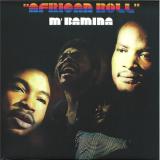
M’BAMINA - AFRICAN ROLL

Gatefold Sleeve

M’Bamina – African Roll (1975)
The story of an album born between Africa, Italy, and the nightclub culture of the 1970s
In the heart of 1970s Italy — a country undergoing profound social change and a music scene just beginning to open itself to distant sounds and cultures — an extraordinary, almost improbable story took shape. It is the story of a group of young African musicians who found their way to Europe, of a Turin nightclub that became a crossroads for communities and experimenters, and of an album which, released in small numbers and largely unnoticed at the time, is now considered a rare jewel of Afro-fusion.
The band called themselves M’Bamina — an ensemble of musicians from Congo, Cameroon, and Benin, who arrived in Italy in the early Seventies. Settling between northern Italy and the Pavia area, they began performing in small clubs and community events, bringing with them a vibrant rhythmic heritage: African polyrhythms, call-and-response vocals, funk-infused bass lines, and Caribbean or Afro-Latin colours absorbed along their musical journeys. Their raw, contagious energy on stage quickly drew attention.
Meanwhile, in Turin, another story was unfolding. There was a venue becoming almost legendary: Voom Voom, one of the city’s liveliest nightclubs, run by Ivo Lunardi. The club attracted an eclectic crowd — students, artists, foreigners, night owls — and Lunardi quickly understood that the dancefloor wasn’t just a place for music, but a melting pot for a new kind of cultural energy. Out of this vibrant atmosphere came his idea: to turn the club’s name into a small independent record label, Voom Voom Music, capable of capturing the spirit of those years and giving voice to unconventional projects.

When Lunardi heard M’Bamina, he immediately sensed that this was the sound he had been searching for: fresh, different from anything circulating in Italy at the time, and capable of blending African tradition with funk and European sensibility. He brought them into the studio.
Production was handled by Lunardi along with Christian Carbaza Michel, while the engineering was entrusted to Danilo Pennone, a young sound technician with a sharp, intuitive ear.
The recording sessions — held in Turin in 1975 — produced a remarkably warm and direct sound. The music feels almost live: grooves rooted in African tradition, but open to funk-rock structures and modern arrangements. It is a natural fusion, never forced. Tracks move between tribal rhythms, funk basslines, light electric guitars, congas and Afro-Latin percussion, with call-and-response vocals and melodies that echo both Congolese tradition and the lineage of Latin jazz. Not by chance, one of the album’s most striking tracks, Watchiwara, reinterprets a Latin standard through M’Bamina’s own rhythmic language.

The album was titled African Roll — a name that was already a statement of intention. It is African music that “rolls,” that moves, adapts, transforms within a new geographic and cultural setting. It is not strictly Afrobeat, nor Congolese rumba, nor Western funk: it is a spontaneous, hybrid blend, shaped more by lived experience than by any calculated aesthetic program.
When African Roll was released, the world around it barely noticed. Distribution was limited, and 1970s Italy had yet to develop a cultural framework for receiving such music. The national music press rarely paid attention to African or “world” productions. The album slipped into silence — though the band’s own story did not.

M’Bamina continued performing across Europe and Africa, even sharing a stage in Cameroon with none other than Manu Dibango. By the late Seventies, they moved to Paris, signed with Fiesta/Decca, and recorded a second LP, Experimental (1978). Meanwhile, the peculiar record they had made in Turin began to resurface quietly among vinyl collectors, Afro-funk enthusiasts, and DJs hunting for forgotten grooves.
That is when the album’s fate began to shift.

Over the decades, African Roll emerged as an almost unique document: a snapshot of an intercultural Italy before the word “intercultural” even existed, a fragment of migrant history, a spontaneous experiment in musical fusion born far from major industry circuits but rich in authenticity. Original copies began commanding high prices on the collector’s market, and the album became recognized as one of the hidden classics of European Afro-fusion from the 1970s.
Today, more than fifty years later, this reissue finally restores visibility and dignity to a project that deserves to be heard, studied, and celebrated. It is not simply an album: it is the testimony of a rare cultural encounter, born in an Italy unaware of how fertile such exchanges would one day become.

It is the story of a visionary producer, an extraordinary band, and a fleeting moment in which music, migration, and nightlife came together to create something genuinely new.
African Roll is — now more than ever — the sound of a bridge: between continents, between eras, between cultures. A record that, after rolling far and wide, has finally come home.

Auf Lager

Bei uns am Lager und sofort versandfertig

Various - I-ROBOTS PRESENTS: TURIN DANCEFLOOR EXPRESS, THE AGE OF VOOM VOOM MUSIC LP 2x12"

Daniele Baldelli
"A pleasant surprise to find in this release various atmospheres and sounds that have always been part of my DJing. It even made me rediscover M’Bamina, whom I used to play back in 1974 at the Tabù Club in Cattolica.
There are afro vibes as well, with Black Line – Myele, which is featured on one of my Cosmic tapes, and Nowhere by the Stratosferic Band recalls a track I used to play at the Baia degli Angeli…
Excellent work!"

Voom Voom Music was an independent Italian record label based in Turin, founded and managed by record producer Ivo Lunardi (Turin, December 6, 1940 – December 9, 2010). A pivotal figure in the Piedmont music scene, Lunardi was active both as a DJ and as the owner of several disco clubs.

The label operated for several years in the latter half of the 1970s, releasing mainly productions connected to the Italian dance and pop scene.
Since 2016, the original master tapes from the Voom Voom Music catalog have been owned by Gianluca Pandullo (I-Robots), a close friend of Ivo and Luca Lunardi. Through his labels Opilec Music and Turin Dancefloor Express, Pandullo oversees their preservation and historical enhancement.

The artistic direction of Voom Voom Music was marked by a distinct sonic identity — eclectic yet visionary. The Turin-based label founded by Ivo Lunardi embraced a sound that blended disco, pop, and rock influences, interwoven with African American grooves in a pioneering, international perspective.

Voom Voom Music was among the first Italian labels to introduce this kind of musical language in the country. A prime example is the Italian edition of the debut album by B.T. Express, Do It ('Til You're Satisfied), released in LP, 8-Track Cartridge, cassette, and 7" single formats.
The label’s productions clearly reflected the influence of black and funk music, as evidenced by the references and inspirations running through its catalogue. The track “Lady Pick-Up”, for instance, includes direct nods to “Do It Good” by KC & The Sunshine Band and Manu Dibango’s iconic “Soul Makossa”, revealing a musically refined and contemporary sensibility.

Among the label’s most representative works is Splash (1977) by the Stratosferic Band, a project conceived by Luigi Venegoni — producer, songwriter, and guitarist of Arti e Mestieri. Venegoni’s artistic journey spanned from progressive rock to space and Italo disco. The album artwork was designed by Piero D’Amore (1944 - 2022), a charismatic and multifaceted figure of Turin’s art scene (one of his works was even acquired by the MoMA in New York).
The record includes a disco reinterpretation of Van Morrison’s classic “Gloria”, and “Splashdown”, a track fusing the disco-rock energy of Rockets and Space. In contrast, “Nowhere” revisits the 1975 single by Hokis Pokis, a soul/disco band from Nassau County (New York), transforming it into a vibrant disco-funk number.

Another significant expression of the label’s catalogue is the afro-rock sound of M’Bamina, an Italo-Congolese group whose rhythmic energy and dialogue between African percussion and Western funk evoke the style of international formations such as Osibisa — themselves linked to a rich artistic history in Italy.

Auf Lager

Bei uns am Lager und sofort versandfertig

BNNYHUNNA - PSALM FUNK LP

BNNYHUNNA

PSALM FUNK LP

12inchSDBANULP48
SDBAN ULTRA
10.04.2026

On Psalm Funk, Bnnyhunna deepens the artistic language he first articulated on his celebrated debut Echoes of a Prayer. Rather than retracing familiar ground, the Amsterdam-based composer and producer expands his palette, allowing rhythm and space to carry as much narrative weight as harmony and lyricism.

While Echoes of a Prayer felt personal and devoted, Psalm Funk opens things up. Gospel harmonies stay central to his music, but now they are energized by smooth funk rhythms and heightened by the flexibility of jazz improvisation. Bnnyhunna moves between styles effortlessly, in a way that nothing seems borrowed, but everything feels lived in.

At the center of the record is an understanding of space. Silence acts not as an absence but as a structure. Breath, restraint, and patience shape the music just as much as basslines and backbeats. This awareness of dynamics allows the album to grow without losing its focus. It signifies a subtle but important change in Bnnyhunna as an artist, moving from inward reflection to forward momentum, from prayer as personal dialogue to prayer as a physical expression. The clarity, discipline, and emotional depth that marked his debut remain, now directed into something more rhythmically confident and spiritually uplifting.

Fusing gospel, funk, jazz, and African rhythmic traditions, Psalm Funk serves as both a meditation and an outpouring. It invites deep thought while demanding a physical response.

The album includes collaborations with American saxophonist Braxton Cook, trumpeter Sheila Maurice-Grey of Kokoroko, 3DDY, and Reggie Dartey, among others. The singles "Sorry Not Sorry" and "Waiting For You" have already hinted at the project's range, while the latest single, "The Heart Part 2," further expands on the album's dynamic and emotional scope.

To celebrate the release, Bnnyhunna will tour the Netherlands in April, with performances in Amsterdam, Rotterdam, and Nijmegen before heading to the UK for a show at The Great Escape.

Released in October 2024, Bnnyhunna's debut album Echoes of a Prayer was created as a dialogue with God, a personal call expressed through sound. The record resonated both with fans and media, gaining support from platforms like 3voor12, Rolling Stone Africa, and Afromixx. It reached the airwaves of BBC Radio 1 in the UK, KEXP in the US, J-Wave in Japan, and 3FM in the Netherlands, and landed in playlists such as BUTTER, Morning Rhythm, and Vanguard.

In 2025, Echoes of a Prayer earned the Edison Pop award for Soul/R&B/Funk and received Grammy consideration for Best Alternative Jazz Album. On stage, Bnnyhunna established his presence with performances at festivals such as Lowlands, Couleur Cafe, Brick Lane Jazz Festival, Dour, and Super Sonic Jazz, as well as his first tour in Japan.


Upcoming live shows:
10/04/26 - BIRD, Rotterdam (NL)
11/04/26 - Doornroosje, Nijmegen (NL)
12/04/26 - Tolhuistuin, Amsterdam (NL)
13/05/26 - The Great Escape, Brighton (UK)

vorbestellen10.04.2026

erscheint voraussichtlich am 10.04.2026


Last In: vor 2026 Jahren
Marion Brown - Awofofora

First time reissue of JP / US free jazz rarity.

The 1970s were Marion Brown’s most searching decade, a period during which he sought to move beyond the free jazz of the previous era and find more personal approaches to structuring improvisation and composition. After leaving New York for Europe in 1967, Brown began reshaping his music into what he described as “a more deliberate kind of music that had more structure to it,” pacing it so that moods and modes could develop over time. Albums such as In Sommerhausen, Afternoon of a Georgia Faun, Geechee Recollections, and Sweet Earth Flying trace this evolution: rhythmic structures moved to the foreground, harmony receded, and composition became a matter of orchestrating interlocking rhythmic parts as one would polyphonic lines.

Released in 1976, Awofofora is an overlooked but crucial entry in that sequence. At the time, its use of funk and reggae beats, electric guitars, and grooves drawn from contemporary Black popular music led some to misread it as a jazz-rock detour. In retrospect, it is entirely consistent with Brown’s methodology. As he admired in the Art Ensemble of Chicago, the stimulus comes from within the community. Here Brown filters Afro-Caribbean rhythms and funk through his own sensibility, abstracting their structural qualities rather than adopting surface style.

“La Placita,” making its first recorded appearance, layers distinct rhythmic phrases in a manner reminiscent of African drum ensembles, over which Brown and trumpeter Ambrose Jackson spin extended improvisations. The standard “Flamingo” is reshaped through diasporic rhythm and lyrical soloing, while “Pepi’s Tempo” and “Mangoes” harness crisp funk and reggae grooves to generate what Brown called a “manifestation of community” through collective improvisation. Even the overdubbed solo feature “And Then They Danced” reflects his structural thinking, ingeniously re-voicing a duet composition for two alto saxophones performed by one player.

This was the only recording by a short-lived band that briefly polarized audiences during festival appearances in 1976. Yet Brown consistently sought unity across change: different sounds, same principles — rhythm as structure, melody as architecture, collective improvisation, and above all, the primacy of tone. Awofofora stands not as a departure, but as a vivid synthesis of the elements he had been refining since the late 1960s, its grooves and golden alto lines conveying a sound drawn, in his words, “from life and from the world of experience.”

vorbestellen10.04.2026

erscheint voraussichtlich am 10.04.2026


Last In: vor 2026 Jahren
Gap Mangione - Diana In The Autumn Wind (LP)

Gap Mangione's monumentally influential Diana In The Autumn Wind. AKA BEWITH200LP. And, without question, Be With's White Whale.

They said it could never be done. And with good reason.

We've spent the past 12 years trying to license this legendary 1968 recording from Gap and, after much work, it's finally here. Remarkably, this is the first ever vinyl reissue of Gap Mangione's Diana In The Autumn Wind, produced with the full and extensive participation of Gap. An exceedingly rare album, it's been coveted by funk, soul, jazz and hip-hop sample fiends for decades.

It's unarguably *the* most sought after album for J Dilla / Madlib sample collectors. It has also been brilliantly sampled by A Tribe Called Quest, Large Professor, Ghostface Killah, Kendrick Lamar and Talib Kweli.

But this record is so much more than a sample-spotters curio. It's solid gold throughout. Bursting with killer funky-jazz grooves and tracks adorned with warm electric piano, the release is notable for featuring some extremely significant players at the very outset of their careers; Tony Levin, at 21, whose superb playing on both acoustic and electric bass was the harmonic mainstay of the trio and Steve Gadd, at 23, one of the greatest drummers of his generation.

With acceptable copies of this holy grail changing hands for $400, to call this reissue "much-needed" underplays just how vital it is. Gap's story is told in his words alongside rare photos across a sumptuously designed 2-page insert and, to augment this deluxe edition further, its all wrapped up in a beautiful, no-expense-spared luxury tip-on sleeve, as per the original hens-teeth release. And, while we're talking packaging, just take a look at that cover - a work of art in and of itself.

The tracks are short but complex, with that extraordinary rhythm section backing the beautiful piano, organ and electric piano work of Gap. It's like the best ever library funk breaks record you never heard - but all your favourite golden age rap producers were all over it, long ago. It's a stunning blend of the vibrant, driving music of the Gap Mangione Trio coupled with the sensitive composition and superb orchestration of Gap's legendary brother, Chuck Mangione, who helmed an amalgam of seemingly disparate elements – rock, big band jazz, solo improvisation and "classical" music - into a spectacularly cohesive whole that has aged wonderfully well. As Gap himself notes in the liners, "with this group I was able to explore and add new and exciting elements from rock, Brazilian and then-current pop music."

Opener "Boy With Toys" triumphantly swaggers out the gate, all big band horns, flutes and dextrous organ work. The synthesis of everything going on is nothing short of stunning. When one wise YouTube commentator called this tune "old school superhero music", Gap agreed. Rap luminaries did, too, amongst them Talib Kweli, who rapped over DJ Scratch's chopped up intro for "Shock Body" on his Quality album back in 2002.

You've barely recovered from that incredibly affecting opener when you get hit over the head with the exquisite title-track. And now you see how two of the greatest beats of all time emerged from one single track produced nearly 50 years earlier. Unforgettably utilised by Dilla for Slum Village's heartbreakingly good "Fall In Love" and then Madlib for his "Official" beat for Dilla to rap over, on the Jaylib record. Regardless of the records it went on to spawn, this is just a staggering tune in its own right. Be beguiled by the flutes and the flutter tonguing, the counter-melody from the trombones, the soprano sax solo. All of it. Simply beautiful.

The questing organ and horn workout "Long Hair Soulful" deserves a lot more attention, overshadowed somewhat by the opening two monsters but no less fantastic. It swings, it grooves and Gadd and Levin truly cook. Up next, Gap's wonderfully percussive, mellifluously piano-heavy cover of "Yesterday" by some fellas called The Beatles. It's a subtly arresting gem. "The XIth Commandment" is damn fine, with thick, gorgeous electric piano and snappy drum work underpinning chaotic soundtracky horns. To close out the side, "St. Thomas" showcases the "fourth" member of the Gap Mangione Trio, conga drummer Dhui Mandingo. Having performed with the Trio since 1965, Dhui‘s African-based and jazz-latin-influenced style amazed listeners and its way to hear why.

Opening the B-Side, standard "You're Nobody Till Somebody Loves You" breezes along in the late-night jazz club fashion before things get super deep with the outstanding and - up to now - un-sampled "Pond With Swans". It's simply heavenly, and how its moody, melancholic intro has yet to be pilfered is anybody's guess. It oscillates between gentle, sombre movements and bombastic grooves, equally hypnotic and joyous. The rendition of "You Are My Sunshine" is yet another showcase for Gap's virtuoso playing and Gadd's mastery of the pocket. Indeed Gadd's drumming on "Free Again" is nothing short of neck-SNAPPING! Ghostface took it for not one but two "Iron's Theme" tracks across his seminal Supreme Clientele. It's got that Galt MacDermot "Coffee Cold" feel. Suuuuuper cool. The frantic "Dream On Little Dreamer" hurtles along and must've surely had the whole room absolutely swinging from the chandeliers back in Rochester in the late 60s. The album closes with the magnificent Graduate Medley, featuring memorable renditions of "Scarborough Fair", "The Sounds of Silence" and "Mrs. Robinson". The warm electric piano lines of the former were sampled by The Ummah (Dilla again!) for Tribe's "Pad & Pen" from their reappraised final album, The Love Movement, as well as by Large Professor on his much-loved "The LP (For My People)".

Under the watchful eye - and extremely attentive ears - of Gap Mangione himself, the audio for Diana In The Autumn Wind has been carefully remastered by Be With regular Simon Francis, with a few much needed tweaks here and there, according to the artist's wishes. At the prestigious Abbey Road Studios, Cicely Balston's expert skills have made sure nothing is lost in the cut whilst the records have been pressed to the highest possible standard at the always stellar Record Industry in Holland. The artwork restoration has taken place here at Be With HQ and has that drop-dead gorgeous cover artwork popping like new. Buy on sight!

vorbestellen01.05.2026

erscheint voraussichtlich am 01.05.2026


Last In: vor 2026 Jahren
Various - Bridges Towards Open Spaces:  Circadian Rhythms 1967-2025 (2x12")
  • A1: Kuniyuki Takahashi - Asia
  • A2: Brian Eno, Moebius, Roedelius - The Belldog
  • A3: Anchorsong - Windmills
  • A4: Monde Ufo - Vallee
  • B1: Mariah - Sokokara
  • B2: Mytron, Zongamin - 08932168
  • B3: Liquid Liquid - Scraper
  • B4: Five Green Moons - Spider Dub
  • C1: Fun Boy Three - Faith, Hope & Charity
  • C2: Meat Beat Manifesto - Drop
  • C3: African Head Charge - Orderliness, Godliness, Discipline And Dignity
  • C4: Cristina - You Rented A Space
  • C5: The Cramps - Garbageman
  • D1: The Durutti Column - Sketches For Summer
  • D2: The Third Bardo - I’m Five Years Ahead Of My Time
  • D3: Sordid Sound System - Inanna
  • D4: Daniel Avery - Drone Logic
  • D5: Spectrum - True Love Will Find You In The End

Two Piers proudly announces the upcoming release of Bridges Towards Open Spaces: Circadian Rhythms 1967–2025.

This new collection brings together a wide range of artists and styles, weaving immersive sonic landscapes that explore a connection between natural cycles and the rhythms within.

Featuring artists such as Brian Eno, Moebius, Roedelius, Meat Beat Manifesto, Fun Boy Three, Daniel Avery, and Spectrum, the compilation moves fluidly between shimmering ambient textures and raw, straight-ahead garage rock.

Bridges Towards Open Spaces: Circadian Rhythms 1967–2025 follows in the footsteps of Two Piers acclaimed previous releases, Night Train: Transcontinental Landscapes 1968–2019 and Music for the Stars: Celestial Music 1960–1979, continuing the label’s exploration of expansive, time-spanning musical journeys.

“I wanted once again to shape a compilation around a time period, this collection is a nod to my days behind the counter of a record shop, the people I met and the styles of music that was played and I was introduced to. Some are from that time, some are of the style/feeling, that I can associate & with the friends I met there; from the early shift to the late shifts as the tempo rose throughout the day and the neons of London started to buzz”

The album will be available on Limited Vinyl and CD in May, arriving just in time for the longer, warmer days and the shifting light of the Seasons Sun.

vorbestellen22.05.2026

erscheint voraussichtlich am 22.05.2026


Last In: vor 2026 Jahren
Various - Bridges Towards Open Spaces:  Circadian Rhythms 1967-2025 (2x12")

Two Piers proudly announces the upcoming release of Bridges Towards Open Spaces: Circadian Rhythms 1967–2025.

This new collection brings together a wide range of artists and styles, weaving immersive sonic landscapes that explore a connection between natural cycles and the rhythms within.

Featuring artists such as Brian Eno, Moebius, Roedelius, Meat Beat Manifesto, Fun Boy Three, Daniel Avery, and Spectrum, the compilation moves fluidly between shimmering ambient textures and raw, straight-ahead garage rock.

Bridges Towards Open Spaces: Circadian Rhythms 1967–2025 follows in the footsteps of Two Piers acclaimed previous releases, Night Train: Transcontinental Landscapes 1968–2019 and Music for the Stars: Celestial Music 1960–1979, continuing the label’s exploration of expansive, time-spanning musical journeys.

“I wanted once again to shape a compilation around a time period, this collection is a nod to my days behind the counter of a record shop, the people I met and the styles of music that was played and I was introduced to. Some are from that time, some are of the style/feeling, that I can associate & with the friends I met there; from the early shift to the late shifts as the tempo rose throughout the day and the neons of London started to buzz”

The album will be available on Limited Vinyl and CD in May, arriving just in time for the longer, warmer days and the shifting light of the Seasons Sun.

vorbestellen22.05.2026

erscheint voraussichtlich am 22.05.2026


Last In: vor 2026 Jahren
Gaudi & The Brixton Heights Orchestra - Am I The Same Man?

Brixton Heights Records proudly presents the brand new single ‘Am I the Same Man?’, a soulful roots-reggae gem featuring a heavyweight all-star lineup including: Mafia & Fluxy on drum and bass respectively, the Ital Horns on brass, Gussie Clarke on mastering and Gaudi on falsetto vocals + BVs, dub mixing, piano and co-production alongside The Brixton Heights Orchestra.

Drawing inspiration from the timeless instrumental groove ‘Soulful Strut’ by Young-Holt Unlimited, the track channels vintage soul through a deep lovers-rock lens. A fresh and earnest reinterpretation of Barbara Acklin’s 1968 classic ‘Am I the Same Girl?’, this version flips the narrative with an adaptation on the lyrics voiced by none other than Gaudi singing in falsetto, resulting with a smooth, dub-infused love song that combines classic soul and international reggae into a modern masterpiece.
Gaudi is not stranger to falsetto-singing and backing vocals, in fact he has lent his distinctive vocal talent to albums by reggae giants such as Steel Pulse, Horace Andy, Lee “Scratch” Perry, Don Letts, Johnny Clarke, Mad Professor, Hollie Cook, Michael Rose, Creation Rebel, Africa Unite, Awa Fall, African Head Charge, Lion D & Capleton.

Mixed and co-produced by Gaudi at his Metatron Studio in London UK and mastered by Gussie Clarke at Anchor Studios in Kingston Jamaica, ‘Am I the Same Man?’ is more than a cover version, it’s a heartfelt transformation that captures the emotional core of the original song while creating a whole new vibe that speaks to today’s lovers and soul seekers alike.

The B-side presents a meticulously crafted dub version by Gaudi, produced exclusively with analogue equipment and vintage studio hardware. The mix brings forward the intricacies of the original instrumentation and enhances the lyrical elements through spacious delays and warm, analogue textures. Last but not least, in order to maintain the highest level of authenticity and an organic sonic texture, all recordings were done at 432Hz, tuned to resonate naturally.

Syphax - 70s Kabyle Disco

For its first vinyl release, Shakshouka Records proudly presents the first ever reissue of the Algerian Kabyle band Syphax, a 7-inch featuring two irresistible disco gems that set the dancefloor alight while channeling a kaleidoscope of psychedelic textures and North African Amazigh spirit.


Born in exile on the outskirts of Paris, Syphax fused psychedelic rock, funk, and North African rhythms with the lyricism of Amazigh poetry and the rebellious energy of the 1970s. This record pairs the celebratory "Thamghra" meaning "party" in Amazigh and originally featured on their long-forgotten LP, with the disco-infused "Skate Dance," released years before skate culture spread across the globe and a testament to the band's cutting edge.


Remastered by Nick Robbins and compiled by Cheb Mimo, this reissue restores the bold sound of Syphax: a voice of diaspora, freedom, and boundless creativity.

Auf Lager

Bei uns am Lager und sofort versandfertig

Underground Resistance - Nation 2 Nation

2025 Repress

“UR wonders” What happens to jazz if combined with the current electronic sound tools used to make Detroit techno now?
What might Jazz sound like if the inspirational pioneers of fusion ie; Return to Forever, Astral Pirates or Weather Report had access to the music production technology available now or in the future?
The artform called Jazz was a unique reflection of “The African American experience here in the United States.Unfortunately by the 90″s it had been compromised by major record companies and made “smoother” for mainstream consumption and more profits.
Born in America’s rural black south Rock & Roll had suffered the same fate years earlier. Original artists eventually replaced by well studied clones and corporate mega profits!! Also happening the original artform of jazz appeared to be caught, processed & throughly EXPLAINED by people who sought to intellectualize “struggle & human emotion” into mere words and then benefit immensely financially by being authorities on the subject.
Hmm sound familiar?

As you watch the current intellectual colonization of the urban inner city African American art forms house music, hip-hop, Jungle & Detroit techno get studied, bent, twisted renamed and turned into EDM profit formulas.

There stands records like Nation 2 Nation that defy these definitions and inspire the next generation of Pioneers who continue the undefined exploration of Jazz like Derek Jamerson, Jon Dixon, Raphael Merriweathers, Desean Jones, Timeline, Galaxy 2 Galaxy, Raphael Statin & Ian Finkelstein. Mother to daughter, Father to son,

Nation 2 Nation a work inspired and that inspired what’s next.

Auf Lager

Bei uns am Lager und sofort versandfertig

REDNILO - REDNILO

Rednilo

REDNILO

12inchIRM2534
Irma Records
17.09.2025

RedNilo is an Italian-Moroccan duo composed of Reda Zine and Danilo Mineo, two musicians based in Bologna linked by a deep passion
for world music, particularly African music. Their ongoing and tireless musical exploration has led them to collaborate for over a decade
on numerous artistic and recording projects. Their new album, eponymously titled RedNilo, features six tracks characterized by a sound
reminiscent of Gnawa, Hassani, Tuareg, and experimental rock. The psychedelic, raspy riffs of the electric guitar, the repetitive rhythms
of the percussion, and the rhythmic-melodic lines of the guembri represent and evoke their journey. The resulting sound material is the
culmination of their journey and their encounters with masters, artists, griots, artisans, and instrument makers in the Draa Valley in
southeastern Morocco, bringing together the two musicians' urban and experimental backgrounds and souls. The album's artwork was
designed by Moroccan artist Aali Wica, initiator and mentor of their spiritual and artistic journey to the southern African continent,
across the long black snake.
Réda Zine, a musician and documentary filmmaker born in 1977 in Casablanca, launched his musical career in the 1990s, contributing
to L'Boulevard, Africa's largest independent festival. Raised in the Casablanca medina, he was introduced to Gnawa music by various
Maallems. After studying at the Paris 3 Sorbonne University, he founded Café Mira, a project that has performed at several international
events.
From 2011 to 2014, Zine was artistic director for Creative Commons (Middle East and North Africa), where he won the #CC10 Korea
award in 2012 with the project "It will be Wonderful," which brought together musicians from over 12 countries. He has also been
involved in exhibitions on music and censorship, participating in events in major cities such as Paris, Buenos Aires, and Seoul. In Italy,
he continued his musical research with the Hardonik project and was part of the Afrobeat group Voodoo Sound Club, recording the
album Mamy Wata. Zine collaborates with artists such as Seun Kuti and has initiated educational activities related to Gnawa music,
contributing to initiatives such as the African Symphony Laboratory for improvisers. He is the co-founder of Fawda, a Gnawa-based
project, and is part of the Gnawa Rumi collective, which explores the music of the Moroccan diaspora in Italy. He directed the documentary "The Long Road to the Hall of Fame" about Public Enemy, which won an award at the Pan African Film Festival in 2015.
Danilo Mineo graduated as a national educator from the AMMnationalscholl music academy in Milan, with a thesis entitled "Afro-Cuban
Music and the Rhythm Section." Over the years, he has attended workshops and masterclasses with international artists and masters
of percussion and drums, including Horacio El Negro Hernandez, Airto Moreira, Trilok Gurtu, Luis Agudo, Arto Tuncboyaciyan, Dudu
Tucci, Dom Famularo, Karl Potter, Rodney Barreto, and Eno Zangoun, exploring the rhythmic language of various musical genres and
styles.
In addition to publishing several educational manuals for percussionists, music critics consider him a versatile percussionist, active in
various musical productions and recordings: Mop Mop, Fawda, Guglielmo Pagnozzi "Voodoo Sound Club," Fabrizio Puglisi "Guantanamo," Panaemiliana, The Mixtapers, and many others, with whom he has performed at numerous national and international music festivals (in Europe and Africa). As a percussionist and side man he has recorded numerous albums and collaborated with Italian and
international artists including: Giancarlo Schiaffini, Gianluca Petrella, Roy Paci, Roberto Freak Antoni, Famoudou Konate, Melaku Belay, Baba Sissoko, Kalifa Kone, Jamal Ouassini, Deda, Dj Lugi, Bioshi.

Auf Lager

Bei uns am Lager und sofort versandfertig

Billy Woods - Today, I Wrote Nothing LP
 
24

When billy woods released Today, I Wrote Nothing ten years ago, it was an unexpected departure from a rapper who was just starting to make waves in the indie rap scene. After spending the earlier part of his career in the wilderness, woods had managed to crawl out of obscurity with the minor success of 2012’s History Will Absolve Me. Dour Candy, 2013’s collaboration with underground legend Blockhead drew accolades, which only increased with Armand Hammer’s debut Race Music.

Then, woods dropped out of sight for two years before returning with Today, I Wrote Nothing, a record that deviated significantly from what had come before. Where Dour Candy had been concise and focused, TIWN was a sprawling 24 tracks. Where History Will Absolve Me was anchored by hard-hitting beats, anthemic songs, and a couple high powered features, TIWN was comprised of short vignettes, quietly eclectic production, and the only guests were his Backwoodz label-mates. Only one video was released; the claustrophobic “Flatlands”, shot on a shoestring budget in a Brooklyn housing project. Reviewers didn’t know quite what to make of the record, and in many cases, neither did fans.

As is often the case for woods’ albums, many perspectives shifted as the years passed. Listeners came to see the sad, quiet beauty of Today, I Wrote Nothing; a road trip album that doubles as a meditation on life’s journeys and death’s hiding places. The album’s power is in it’s intimacy, it’s insistence on holding your hand through the darkness. Now, TIWN is considered one of the more unique and vital records in woods catalogue. The dynamic woods created with TIWN vis-a-vis History Will Absolve Me and Dour Candy is one that would come to define his ouerve; constant experimentation, a refusal to be pigeonholed, and an unwavering search for the emotional heart of his subject. For us at Backwoodz, being able to repress this album on it’s ten year anniversary is especially sweet, because we remember how long it took us to sell that original run of 500. To everyone who copped one of those and helped us keep the lights on, this is for you too, we couldn’t have gotten here otherwise.

Auf Lager

Bei uns am Lager und sofort versandfertig

Francis Bebey - The Africa Seven Edits

Francis Bebey was a visionary who explored the intersection of African traditions and global music long before it became a global trend. Born in Cameroon, Bebey's sound was an eclectic blend of his rich cultural heritage and his deep exploration of modern music, spanning genres from traditional folk and jazz to funk and electronic experimentation. As an artist, Bebey was ahead of his time, using his unique voice and instruments to forge new paths for African music to be heard worldwide. His legacy is not just in the music he created but in the way he opened doors for the global recognition of African artists, influencing generations of musicians, producers, and fans alike.

This release marks an exciting moment, as we introduce remixes of bebeys iconic productions by contemporary electronic producers, giving new life through creative re imaginings.

Tracks:

Le Grand Soleil De Dieu (Psychemagik Remix): The UK-based musical duo are known for their eclectic blend of electronic music, psychedelic rock and mystical global sounds. Formed by Danny McLewin and Tommy McLewin, the duo has carved out a unique niche within the global music scene though their intricate arrangements. Their Remixes and Collaborations have been with artists like Fleetwood Mac, Tame Impala, and Hercules & Love Affair. Their psychedelic dub remix has otherworldly qualities, with dreamy atmospheres and bouncing baselines throughout this brilliant opening track.

Guinee (Turbotito Edit): The Berlin-based DJ and producer known for his infectious blend of house, disco, and funk. With a knack for smooth, groovy beats and a deep love for melody, Turbotito's music brings a fresh, energetic vibe to the dance floor. On this track, he effortlessly re-imagines and elevates the world of Guinee to match his signature sound. A combination of a great pulsing base line, ethereal vocals and bird sound effects incorporated into the percussion makes this track an absolute stand out.

Agatha (Voilaaa Remix): Bruno "Patchworks" Hovart from Lyon is the brains behind the Voilaaa project. Fusing soulful grooves, funk, and disco with an unmistakable French touch, Voilaaa creates infectious, feel-good rhythms that blend classic and contemporary influences. In this track we find the first big hook of the album vocally, coupled with Bebey's lively humour in spoken French on top of joyous instrumentation. The smooth vocals, catchy melodies, and vibrant arrangements, bring a fresh energy to the original hit track - a brilliant homage.

Forest Nativity (Red Axes Edit): Red Axes are a dynamic electronic music duo from Tel Aviv, blending disco, house, and psychedelic influences into infectious, genre-defying tracks. Known for their unique sound, warm analog textures, and hypnotic rhythms, Niv Arzi and Dori Simao craft music that moves both the body and the mind. Forest Nativity arrives as a full circle closer, incorporating some of the most authentic African instruments such as a Balafon, an instrument similar to a xylophone and a Djembe, a hand drum central to many West African traditions. The 7 minute track is guaranteed to take you on a fascinating journey through Bebey's culture and livelihood.

Auf Lager

Bei uns am Lager und sofort versandfertig

Mother Tongue - Mother Tongue

Mother Tongue

Mother Tongue

12inchMR42
Makkum
Release unknown
  • 1: Djangaloma Dara
  • 2: Duk Kawe
  • 3: É Nah
  • 4: Déglul Kadu Rab Yi
  • 5: Kër Gi
  • 6: Kang

'A Senegalese Griot singer, an Amsterdam improviser and a Puerto Rican jazz drummer find each other on an open playground, a stage built for improvisation, an old cinema now used for minute made story telling.
'Equipped with an m'bira, a xalam, a drum kit, a voice, percussion, house hold tools and an electric clavichord on 220 volt, they sit down and take off: Wrrrrrraaang!
'Singer and percussionist Mola Sylla is in many ways a musical explorer. Born and raised in Dakar, Senegal, he grew up in the tradition of the griots. Griots play conveying stories – sometimes decorated with music, theater and dance – which all play an important role in West African culture. His rhythm and melodic compositions differ from the western agreed schedules and provide surprising twists.
'Puerto Rican drummer Frank Rosaly has been involved in the improvised and experimental music scenes since 2001 when he became an integral part of Chicago's musical fabric, navigating a fine line between the vibrant improvised music, experimental, rock and jazz communities.
'Oscar Jan Hoogland is the sound of Amsterdam in person. He is an instant composer and inventor of his own instrument by joining a clavichord, a keyboard instrument from the 17th century, to 220 Volt electricity. As the last student of the late pianist, composer and improvisor Misha Mengelberg he tears like a tornado through the Amsterdam jazz and impro scene.
'Together they are Mother Tongue.'

vorbestellen

Der Artikel ist noch nicht erschienen. Du kannst den Artikel jetzt vorbestellen, dieser ist nach Wareneingang für dich versandbereit.


Last In: vor 2026 Jahren
VARIOUS - ARCHIPELAGO - COSMIC FUSION GEMS FROM FRANCE (1978-1988)

Isle of Jura teams up with French digger Switch Groove on the next compilation titled ‘Archipelago – Cosmic Fusion Gems from France (1978-1988)’.

Switch Groove explains the concept “When I seriously began to search for and collect records, I was mostly interested in sounds from african-american, afro-latin and UK contemporary scenes. Sounds from distant territories, faraway from my native Massif Central, a highland region in the middle of France. The grass is always greener, I guess however, as I was digging in fleamarkets in the early sunday morning light, as well as spending regular sessions in second hands record shops, I began to discover hidden treasures, underground gems and side-projects of an unknown French musical repertoire.

French music is often reduced to its most famous musical forms, characters and signatures : French songwriting and voices, 60s yéyé, prog rock concept albums and soundtrack explorations, 80’s indie rock scene or more recently electronic French touch. All these sounds have a common feature : a geographical link, forged on mainland French territory, following the contour of the so-called Hexagone, the border that shapes the grounds for an homogeneous cultural expression. But beyond this showcase lie more complex, hybrid and global French productions. From French Caribbean Antilles to Parisian suburbs - especially during the ‘Sono Mondiale’ era -, in French areas outside urban cultural centers, musicians have created fusion and cosmic musical expressions. As the mid-seventies meant a greater freedom to make and record music, a wider use of electronic instruments like synthesizers and drum machines helped to deliver some magical projects you could only find lost in the middle of cheap records during a sunny record digging session. I selected these tracks, in an attempt to shape an ARCHIPELAGO that highlights significative contributions of African diasporas and ultramarine territories into French musical borders. It is the map of a land I have gradually drawn, thanks to deep listening of amazing cosmic and fusion tunes. I hope you enjoy the journey.”

Auf Lager

Bei uns am Lager und sofort versandfertig

LUC-HUBERT SEJOR - MIZIK FILAMONIK: SPIRITUAL SOUND

180 G. BLACK VINYL WITH LINER NOTES IN CREOLE, FRENCH, ENGLISH

Originally released in 1979, "Spiritual Sound" lives up to its name, a soaring, triumphant album, six tracks of spirit magic from Guadeloupe.

Telluric, intense, terribly alive, the gwoka drums of Guadeloupe carry the identity of a painful and fervent island. Marked forever by the crime of slavery, Guadeloupe's créolité cherishes the ka drums and their natural environment: the low-pitched boula drum with male goatskin, the high-pitched soloist makè drum with female goatskin, the chacha, ti bwa, triangle, calabash and other percussion instruments that surround them, and the voices - the fiery, proud, timbred, urgent voices of the gwoka.


This album is also a legend for its voices: in his then dazzling youth, singer Lukuber Séjor was one of the first gwoka artists to largely feminize the chorus of répondè, who converse with his text delivered in a straight and powerful voice.

And everything here sets new standards. In 1979, Mizik Filamonik - Spiritual Sound proclaimed a spiritual patriotism of ferocious intensity. The album by Lukuber Séjor - whose spelling alone is a battle - sets out to give Guadeloupe the intangible weapons of self-respect and self-knowledge, through a singular practice of traditional music.

The genesis of gwoka music is less straightforward than one might imagine... The drums performed the servile task of accompanying the work of slaves in the fields and during the “corvées” imposed by the administration, before being freely practiced by the common people after the abolition of 1848. At the heart of the conviviality of the Guadeloupeans furthest from the cities - geographically and socially - the gwoka drums come out for carnival, funeral wakes and neighborhood celebrations, but also during strikes, fits of anger and armed vigils of the riots and revolts that have punctuated the island's history. For generations, governors of the colony and then the prefects of the overseas department of Guadeloupe have been viewing the gwoka as a potential for turbulence and a threat to public order.

But as the Beatlesmania, “chanson engagée” and rock revolutions unfolded in Europe, young people turned to the drums of mizik a vié nèg (“bad negro music”, in Creole), which Guadeloupeans had learned to despise by following the “assimilation” process advocated by the school system and most of the political class. At the end of the sixties, in a Guadeloupe mourning the deadly repression of the May 1967 social movement, they played traditional music, refusing to wrap it up in tourist prettiness and madras folk costumes. Instinctively, they played a rough and contemporary gwoka, led by the incendiary Guy Konkèt. This was the era of decisive 45 rpm records such as Robert Loyson's Kann a la richès, which brought to light the fieriest words of union rallies.

At his home in Sainte-Anne, Lukuber Séjor played with flautist Olivier Vamur and his brother Claude Vamur, who cobbled together a drum kit from tin crockery and became, a few years later, the most influential drummer in Kassav'.

These were the years of the Bumidom program, when young Guadeloupeans were encouraged to emigrate to mainland France. At the age of twenty, Lukuber Séjor embarked on the liner Irpinia, disembarking at Le Havre and taking the train to the Gare Saint-Lazare - the route taken by thousands of young West Indians who went on to study or looked for work, all the while trying to maintain a link with their homeland. In this case, it's at the Antony university residence, where Lukuber played the drum and participated in a thousand gwoka updates and aggiornamentos, while exile reinforced the need for a spiritual link with the native land.

In 1978, Guy Konkèt played at the Salle Wagram, a historic event for West Indian music. After serving as répondè - i.e. backing vocalist - on one of his home-recorded albums, Lukuber joined his live band. Little by little, he became one of the key artists on a circuit parallel to French show business. At a student party in Caen, he met a young woman from Martinique who, at the time, was more motivated by her ambitions as a visual artist than by her vocation as a musician. Her name was Jocelyne Béroard and, a few years before she plunged into the Kassav' adventure and became the greatest West Indian singer of her generation, she designed the cover of Lukuber Séjor's LP.

This ambition was obvious and imposed its will. A more or less regular band was formed, with Roger Raspail, Rudy Mompière and Éric Danquin on ka drums, Claude Vamur on ti bwa, Olivier Vamur and Françoise Lancréot on flutes and Annick Noël on keyboards. Lukuber Séjor is set on wanting to extend the gwoka palette to other instruments, as the jazz-rock revolution opens a thousand new doors. Annick Noël will play a wide range of timbres and textures on electric piano and synthesizer. Another novelty: the répondè are two men and two women, Roger Raspail, Olivier Vamur, Françoise Lancréot and Maryann Mathéus ...

Mizik Filamonik - Spiritual Sound is a self-production in which the singer and leader sank all his savings, allowing him no more than a single day in the studio. The first side is more of a musical manifesto, with the first two tracks, Éritage and Penn é plézi, being instrumentals. The third, Son, forcefully celebrates the need for Guadeloupeans to connect with the gwoka. In fact, Jocelyne Béroard's cover shows a tambouyé in the shadow of a cloudy sky, against which a radiant sun is rising and whose light will soon flood the entire landscape. The silhouette and face of this man strongly evoke the immense Vélo, master of the ka, rejected at the time on the fringes of society.

The second side of the LP is surprising. Formally, three tracks are explicitly linked like the three parts of a triptych. Primyé voyaj evokes the appalling tribulation of Africans deported as slaves to Guadeloupe; dézyèm voyaj speaks of the Bumidom program and the economic, political and social forces driving young Guadeloupeans towards the mirage of prosperity in France; twazyèm voyaj closes the cycle with the emigrants' return from Europe after years away from their island...

This gwoka, obsessed with the need to save Guadeloupe spiritually, appeals far beyond the politicized audience. Mizik Filamonik - Spiritual Sound instantly became a classic, although Lukuber Séjor never really made a career for himself as a musician.

After all, the album was released in 1980, with no promotional resources in France or Guadeloupe - and therefore no concerts. The thirty-two-year-old author, composer and performer made his own third trip back to Guadeloupe. He set up a small woodworking business, which he lost in Hurricane Hugo in 1989. His other activity, teaching in a medical-educational institute, became the core of his professional life. He continued to be an active campaigner - a campaigner for the Creole language, a campaigner for the reawakening of identity, a campaigner for special education, a campaigner for a thousand causes that he ignited with his generous and perceptive enthusiasm, such as the defense of breadfruit fries...

The echoes of his 1979 album have not died down. Of course, the use of Penn é plézi as the theme tune for Radio Guadeloupe's funeral notices from 1980 to 1992 kept him in the collective memory, but he continues to sing and compose sporadically, as with his all-female

vocal group Vwapoulouéka... Still convinced that music is a means of liberating the spirit, he continues the journey of a young man eager to deploy the power of Creole music and language.

Bertrand Dicale

Auf Lager

Bei uns am Lager und sofort versandfertig

MARKENO - DOCK LOWN LP

Markeno

DOCK LOWN LP

12inchRN021
RANDOM NUMBERS
29.04.2025

We all remember with mixed feelings the past two years of domestic isolation: a temporary anomaly in which the world had to adjust to a new routine, a new rhythm. In these daunting yet precious circumstances, Italian producer Markeno has found his rhythm back, dusting off old records and re-approaching his past musical love affairs that he believed to be long forgotten. Here, in the fertile limbo that connects past and future, “Dock lown (exploring)” is born: a 3-tracker release with a chameleonic nature and an undeniable groove, in which Markeno is able to tactfully combine different genres such as indie, post-rock, African mu- sic, electro and funk.

In the contemporary music scene, overly saturated with catchy melodies and seductive lyrics, it is refreshing to encounter a composition like “Fase 01”, which starts from a purely percussive structure. Just when the ear is settled and well inserted into the tangle of drums, here comes the melodic twist, no less than at the fourth minute, injecting an unexpected groove and chalking out the contours of a track with multiple personalities: a little esoteric, a little synth-wave, quirky and badass. The temperature rises with “Zona Ros- sa”, in which the electro hint sketched in “Fase 01” becomes more pronounced, opening the doors to a dense psychedelic scenario. A shamanic loop accompanies the electric bass and escorts us through the smoke of the bonfire, veils swayed by the wind and colored lights that sparkle in the night. The ritualistic humming of ‘’Zona Rossa”’ is still hearable, floating in the rarefied atmosphere, while the last track “Limbo” makes its entrance and confirms once again the poliedric but congruous essence of this release, whose percussive attitude lures you in and whose hypnotic and groovy body makes you stay. At least for one more dance.

Sara Berton

Auf Lager

Bei uns am Lager und sofort versandfertig

Various - Midnight In Tokyo Vol.2

Various

Midnight In Tokyo Vol.2

2x12inchSTUDIOMULE6LP
Studio Mule
07.02.2025

2025 Repress

Midnight In Tokyo 2, the second installment to the compilation series that rounds up hidden gems by Japanese artists that's perfect for listening at night in Tokyo, is here. This time the collection brings together some tasty electric jazz fusion from the '80s , compiled by Dubby, the man behind the online record store Ondas.

The compilation begins with "Hikobae," a dark and slow cosmic jazz by saxophonist Genji Sawai, followed by "Danza Lucumi," an odd Caribbean-style jam by Today's Latin Project, a band fronted by Tadaaki Misago of Tokyo Cuban Boys, with arrangements by Yasuaki Shimizu. "On The Coast" is a soulful and mellow vocal track arranged by Ryuichi Sakamoto, from guitarist Shigeru Suzuki's album White Heat, and fusion boogie cut "In The Hot City" is by Mr. Theodore, which was a one-off project by a mysterious artist.

The melancholic soul jazz number "So Long America" is the title track from the album Yasunori Soryo released in '82, following a stint in America with the band Brown Rice. "Twisty" is a tropical reggae tune from the album Samba Kathy, an underrated classic by Jugando which was released on Trash, a sublabel of one of Japan's finest jazz labels, Trio. "Samarkand" is an electric Latin jazz jam that sounds like something Miles Davis and Santana could have played on, performed by a Latin funk band from Fussa. "Imagery" is a primal African fusion track by Katsutoshi Morizono, a member of the prog rock band Yoninbayashi.

"Windmill" is the most acoustic sounding tune on this compilation, a breezy Brazilian affair with a Hermeto Pascoal feel. "Mystery Of Asian Port" is by the band Parachute, which consisted of Japa-nese fusion giants like Akira Inoue, Tatsuo Hayashi and Masaki Matsubara. The cosmic jazz record sounds like something Daniele Baldelli would play in his sets. "Bay Sky Provincetown 1977" is a classic Japanese fusion tune by guitarist Yuji Toriyama.

The set also features the mellow but danceable "Heatwave" by keyboardist Keiichi Oku, featuring a female vocalist (which some have identified as Rie Ida), and last but not least, closing out the 13 track compilation is "Day Dream At The Bob's Beach," a wonderful urban fusion with a beautiful vibraphone melody, from the Japanese fusion classic album that was a one-off project by studio musicians

Auf Lager

Bei uns am Lager und sofort versandfertig

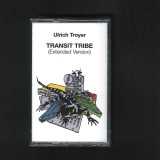
Ulrich Troyer - Transit Tribe MC (TAPE)

Ulrich Troyer has been producing music now solidly for over twenty years within a largely genre free framework, but whilst navigating forms such as avant-garde, techno, leftfield, field recording, electronica, glitch and ambient it is the aesthetics of dub that guide his creative direction. Not really recognisable in an orthodox form as remixed versions of roots reggae songs but in the way sonics are manipulated with space, the application and layering of delay, reverb and echo that fixes his output well within the scope of what might be called futurist dub.

The nearest comparisons to his new album TRANSIT TRIBE can only be established by a synthesis of some of the more adventurous explorations in modern music such as African Head Charge, Jon Hassell, Pole (Stefan Betke), Bill Laswell or even Miles Davis; featuring a diverse selection of artists and friends not only from Vienna and environs but also from around the world, sounds are not so much fused but allowed to float along the continuous flowing tide of warm waves of bass.

Rather than to allow the names of Ulrich Troyer's collaborators be merely listed in the album credits, what they bring to this joyful affair needs to be outlined, albeit briefly: Co-producer credits go to Osman Murat Ertel from Istanbul, who employed a variation on the old foolproof Nick Lowe method for checking out the impact quality of his own sound productions by playing tracks through his car sound system speakers!

Murat is a member of the electro-psych-folk group Baba Zula where he plays electric saz, oscillators and theremin and played a key part in the creative development of the album. Mamadou Diabate, the balafon master originally from Burkina Faso and now resident in Vienna, has developed his own unique technique of playing solos that replicate the sound of three instruments playing in unison; however the multi-talented Mamadou is engaged here on singing and playing the talking drum. From South Tyrol Reinhilde Gamper is a member of the experimental trio Greifer who are bringing the sound of the zither into the twenty-first century using new playing techniques and electronic gadgets. Susanna Gartmayer is an Austrian composer and bass clarinetist specialising in improv and multimedia sound research. Diggory Kenrick has been engaged with creating new dub fusions and also re-energising classic rocksteady and roots reggae classics, renowned for his interventions on flute. Didi Kern is an electronic dance musician and drummer from Vienna with a focus on free improvised music. Hamidou Koita, a singer and multi-instrumentalist, is from a traditional Griot family in Burkina Faso but now resident in Vienna and a regular musical partner of Mamadou Diabate playing drums and calabash. Austrian Lukas Lauermann is both a studio and live musician playing cello, also working on electronic sound design and writing string arrangements. He has recorded extensively and appeared on stage with both Mark Lanegan and Hans-Joachim Roedelius. Martin Mallaun is a Tyrol-born specialist in both the development of the zither in modern music and also as a researcher in the effects of climate change on the vegetation of Alpine ecosystems. Mystica Tribe is the musical alias of Tokyo-based dub/techno producer Taka (Takafumi) Noda. He collaborated with Vienna's own Vegetable Orchestra on 2020's "Transplants (Mystica Tribe Version)". After studying classical percussion Flip Philipp is now a jazz vibraphone player and member of the Vienna Symphony Orchestra. Wolfgang Pfistermüller is a member of the Vienna Trombone Quartet and the developer of the incredible bass-trombone Aurora with its uniquely warm and resonant sound. Roger Robinson is a renowned British poet, winner of many contemporary poetry prizes and member of the experimental music group King Midas Sound. Kwame Yeboah is a Ghanaian born UK based keyboard wizard who tours regularly with Yusuf / Cat Stevens, Ms. Dynamite and Pat Thomas.

So contained on the album is an astonishing mix of musicians and instruments: sounds of cowbells recorded in the South Tyrolean alps processed by modular synthesizers and heavy analogue bass synths combined with instruments such as zither, bass-zither, electro saz, flute, talking drum, trombone, cello, vibraphone, marimba, djembe, contra-alto clarinet, melodica, Farfisa - all bound together by organic live-drums and dub effects.

Liner notes by Steve Barker

Auf Lager

Bei uns am Lager und sofort versandfertig

Various - Archeo 10 Years Anniversary - Volume 1

As the tenth candle flickers atop the torta alla panna, Archeo Recordings play the Uno reverse card, breaking with tradition to give us a gift in celebration of its birthday: the first in a series of exquisite EPs on which the label's favourite contemporaries pay homage to past masters. Each re-polished gem is plucked either directly from the beatific back catalogue of the fine Florentine label or is at least Archeo-adjacent, perhaps a sign of future wonders to come. Like a musical version of Janus, who can be found at the heart of Bertoldo di Giovanni's frieze in the Medici villa, Archeo Recordings will continue to look forwards and backwards to provide sublime sounds for us all.
Pepe Maina officially joined the Archeo family in 2019 with the much-needed reissue of his 1979 masterpiece Scerizza (AR015), but his astounding music has been a constant companion to label head Manu for much longer. An inter-dimensional, multi-instrumental maverick, Maina weaves the frayed edges of prog rock, new age, organic jazz and global minimalism into a shimmering tapestry all of his own. The results are spread across fifty years and almost as many albums, largely self-released and always absolutely untarnished by commercial concerns.
Based in a small village in the hills of Brianza, just north of Milan, Maina translates the beauty of his surroundings into transformative tone poems, and the folkloric fusion of "The Infinite", originally released on his 2014 CD Tales From The Hill, is the perfect example of his practice. It opens with a recitation of Giacomo Leopardi's 1825s poem "L'Infinito" by famed Italian actor Vittorio Gassman. A leading figure in the romantic movement, Leopardi explores the idea of time and space within the natural world, and the peace that comes with an appreciation of the immensity of eternity. Manu, longtime digger and now a burgeoning producer, expands upon the original with tribal percussion, chirping electronics and a spheric bassline, folding Maina's elegant strings and gossamer pads into a new arrangement suited for a slow dance under the stars.
Unless you had a well-trained ear tuned to Italy's avant-jazz scene, chances are your first encounter with innovative flautist Roberto Aglieri came via the 2017 Archeo reissue of hisalmost untraceable LP Ragapadani (AR011). It's a true testament to Manu's digging credentials that he snatched this masterpiece out of the esoteric atmosphere and brought it attention it so richly deserved. A delicate union of digital synthesis and versatile flute - be it soft and silvery or
brilliant and clear - the 1987 album was a shapeshifting masterpiece, replaying scenes from Virgil, Verdi, Visconti and Pasolini with a neon glow. Quintessentially Italian, but uncanny and previously unimagined - Penthouse and Portico perhaps. Powered by a percolating prototechno sequence, cascading keys, hallucinogenic vocal snippets and a variety of tonal timbres from Roberto's reed, "Danza N. 1" long deserved the praise reserved for Jean-Luc Ponty's pinnacle, so many thanks to Manu for our collective introduction. The tall task of reinterpreting this particular paragon falls to Perugian polymath Daniele Tomassini AKA Feel Fly, whose peerless skills as both producer and musician have delighted DJs and dancers alike. Hot on the heels of his diverse and definitive remixes of Tony Esposito for AR027, Daniele delivers a radical rework of "Danza N. 1" perfect for both day rave sunshine and full moon party alike. Enhanced by snapping breaks and a rattling kick, the bassline gurgle emerges as a progressive powerhouse, laying the foundation for the trilling flute and circular keys to cast a psychedelic spell. As the slow-Goa revival picks up pace, this one is way ahead of the pack.
Archeo take us all the way back to the start of its story here - well almost. Though it bore the stamp AR001 (2015), this Radio Band reissue actually hit shelves months after Tony Esposito's "Je-Na' / Pagaia"; a false start perhaps but a true classic all the same. Radio Band were a group of DJs from Florence who all sailed the airways of Radio Fantasy in 1984 and whose one and only release was this super groovy slice of Italo-boogie. Following the example of Milanese DJs Band of Jocks but far surpassing their formulaic funk fizzle, Radio Band employed an intergalactic bassline, cosmic keys and that undeniably Italian style of rapping to deliver a sophisticated party-starter which even found its way to disco deity Ron Hardy. Back to the here and now, and if you've found yourself pumping an ecstatic fist to a supercharged Italian epic of late, chances are its from the mind of the mysterious Radiomarc. Operating on the ascendent Popcorn Groove imprint, this shadowy figure steers his country's lost classics into peaktime territories, finding a sweet spot between late Italo-disco, early Italo-house and contemporary cool. Pushing the tempo with a club-ready 4/4, setting the sequencer to stun and supplementing the original melodies with a series of synth riffs, the mystery producer send this one into orbit. Radio Band - Radio Rap - Radiomarc, the circle is complete.
Few have done more to develop cross-cultural musical exchange than Futuro Antico. A collaborative venture from musician, archeologist and ethnomusicologist Walter Maioli, keyboardist and tonal theoretician Riccardo Sinigaglia and multi-disciplinary artist and composer Gabin Dabiré, Futuro Antico formed in Milan in 1979, combining ancient international folkloric traditions with otherworldly electronics. The result is an arresting melange of Mediterranean, African and Asian instrumentation, mimicked by esoteric synth tones and hypnotic minimalism, which the group perfected on their acclaimed 1990 LP Dai Primitivi All'Elettronica. The meditative and transportive "Pan Tuning" belongs to their largely overlooked 2005 CD only release Intonazioni Archetipe, and has been amongst Manu's most loved tracks from the first moment he heard it. Who else is better placed to reshape this evocative opus into an immersive, transcendental dance floor journey than label favourites Mushrooms Project? The duo sows the original elements into a sprawling fifteen minute fusion of séance and science, at times propulsive with a ritualist rhythm of tuned percussion and crunching drum machine at others drifting off into ethereal ambience. Mushrooms Project continue to push the boundaries of the Afro-cosmic style, and this remix marks a new zenith.

Auf Lager

Bei uns am Lager und sofort versandfertig

Ulrich Troyer - TRANSIT TRIBE

Ulrich Troyer has been producing music now solidly for over twenty years within a largely genre free framework, but whilst navigating forms such as avant-garde, techno, leftfield, field recording, electronica, glitch and ambient it is the aesthetics of dub that guide his creative direction. Not really recognisable in an orthodox form as remixed versions of roots reggae songs but in the way sonics are manipulated with space, the application and layering of delay, reverb and echo that fixes his output well within the scope of what might be called futurist dub.

The nearest comparisons to his new album TRANSIT TRIBE can only be established by a synthesis of some of the more adventurous explorations in modern music such as African Head Charge, Jon Hassell, Pole (Stefan Betke), Bill Laswell or even Miles Davis; featuring a diverse selection of artists and friends not only from Vienna and environs but also from around the world, sounds are not so much fused but allowed to float along the continuous flowing tide of warm waves of bass.

Rather than to allow the names of Ulrich Troyer's collaborators be merely listed in the album credits, what they bring to this joyful affair needs to be outlined, albeit briefly: Co-producer credits go to Osman Murat Ertel from Istanbul, who employed a variation on the old foolproof Nick Lowe method for checking out the impact quality of his own sound productions by playing tracks through his car sound system speakers!

Murat is a member of the electro-psych-folk group Baba Zula where he plays electric saz, oscillators and theremin and played a key part in the creative development of the album. Mamadou Diabate, the balafon master originally from Burkina Faso and now resident in Vienna, has developed his own unique technique of playing solos that replicate the sound of three instruments playing in unison; however the multi-talented Mamadou is engaged here on singing and playing the talking drum. From South Tyrol Reinhilde Gamper is a member of the experimental trio Greifer who are bringing the sound of the zither into the twenty-first century using new playing techniques and electronic gadgets. Susanna Gartmayer is an Austrian composer and bass clarinetist specialising in improv and multimedia sound research. Diggory Kenrick has been engaged with creating new dub fusions and also re-energising classic rocksteady and roots reggae classics, renowned for his interventions on flute. Didi Kern is an electronic dance musician and drummer from Vienna with a focus on free improvised music. Hamidou Koita, a singer and multi-instrumentalist, is from a traditional Griot family in Burkina Faso but now resident in Vienna and a regular musical partner of Mamadou Diabate playing drums and calabash. Austrian Lukas Lauermann is both a studio and live musician playing cello, also working on electronic sound design and writing string arrangements. He has recorded extensively and appeared on stage with both Mark Lanegan and Hans-Joachim Roedelius. Martin Mallaun is a Tyrol-born specialist in both the development of the zither in modern music and also as a researcher in the effects of climate change on the vegetation of Alpine ecosystems. After studying classical percussion Flip Philipp is now a jazz vibraphone player and member of the Vienna Symphony Orchestra. Wolfgang Pfistermüller is a member of the Vienna Trombone Quartet and the developer of the incredible bass-trombone Aurora with its uniquely warm and resonant sound. Roger Robinson is a renowned British poet, winner of many contemporary poetry prizes and member of the experimental music group King Midas Sound. Kwame Yeboah is a Ghanaian born UK based keyboard wizard who tours regularly with Yusuf / Cat Stevens, Ms. Dynamite and Pat Thomas.

So contained on the album is an astonishing mix of musicians and instruments: sounds of cowbells recorded in the South Tyrolean alps processed by modular synthesizers and heavy analogue bass synths combined with instruments such as zither, bass-zither, electro saz, flute, talking drum, trombone, cello, marimba, djembe, contra-alto clarinet, Farfisa - all bound together by organic live-drums and dub effects.

Auf Lager

Bei uns am Lager und sofort versandfertig

Various - TONY THORPE PRESENT POST PUNK THEORY - ALPHA LP 2x12"

(incl 40p fanzine written by Matt Annis with photographs by Simon Pyke and Ian Brodie) Postpunk Theory is a meticulously curated compilation by the legendary Tony Thorpe, known for his work with The Moody Boys, 400 Blows, and The KLF. These classic tracks were played at parties by Thorpe at the time, making them his personal classics. The compilation features 16 rare and sought-after tracks from the post-punk era, including works by Mark Stewart and The Maffia, Basement 5, 23 Skidoo and more.


Defining post-punk is no easy task. While punk was defined by a raw, rebellious simplicity, post-punk (1978-1986) expanded into a diverse array of sounds and ideas. It maintained punk's independent spirit but embraced experimentation, incorporating influences from various musical and cultural traditions, resulting in a movement far more eclectic and fragmented than its predecessor.

At its core, post-punk broke away from traditional rock structures, blending genres like industrial, goth, and punk-funk with emerging dance music cultures. This era's spirit of innovation and defiance against musical norms continues to inspire, making post-punk a pivotal moment in music history that defies easy categorization.

Tony Thorpe presents Postpunk Theory - Alpha ? is a meticulously curated compilation by the legendary Tony Thorpe, known for his work with The Moody Boys, 400 Blows, and The KLF. These classic tracks were played at parties by Thorpe at the time, making them his personal classics. The compilation features 16 rare and sought-after tracks from the post-punk era, including works by Mark Stewart and The Maffia, Basement 5, 23 Skidoo, African Headcharge, and more.

Growing up in a vibrant musical environment in South London, Thorpe was deeply influenced by the eclectic sounds around him, from jazz-funk to Brit-Funk, and later, the post-punk records he discovered. As Thorpe recalls, "Post-punk was a mishmash of different cultures and ideas. Out of post-punk came dance music culture. That period was the most creative time because the culture was in its experimental phase." This compilation captures that innovative spirit, offering a glimpse into the era that shaped Thorpe's musical journey.

The album comes as a limited 2xLP set, accompanied by an extensive 40-page fanzine. The fanzine, written by Matt Annis (Join The Future), dives deep into the post-punk movement, offering insight and context enriched with striking photographs by Simon Pyke and Ian Brodie.

Auf Lager

Bei uns am Lager und sofort versandfertig

MERIDIAN BROTHERS - MI LATINOAMERICA SUFRE LP

Bogotá-based Colombian composer Eblis Álvarez, known as Meridian Brothers, has been concocting a unique blend of psychedelic sounds since 1998. With his latest project, "Mi Latinoamérica Sufre," Álvarez explores the untapped potential of the electric guitar in a tropical Latin context. Drawing inspiration from African highlife and soukous traditions, Álvarez crafts a fearless sonic experiment infused with invention, playfulness, and emotion. Unlike typical tropical guitar records, this album eschews distortion and clichés, opting for a pure, clean approach. Through intricate compositions blending cumbia, champeta, soukous, Brazilian tropicalia, and underground psychedelic rock, Álvarez pays homage to the golden era of Congolese rumba, Ghanaian highlife, and Nigerian afrobeat.

"Mi Latinoamérica Sufre" delves into the ego trip, presenting a humorous yet introspective journey of self-discovery and identity. The central character, Junior Maximiliano the Third, navigates through the complexities of self-discovery using psychedelic substances, political philosophy, and folklore. As he grapples with nostalgia, paranoia, and shared suffering, Álvarez showcases his vocal prowess, creating a sonic theater of the mind. Accompanied by visual narratives from Colombian artist Mateo Rivano, the album portrays various psychological states of disorientation, self-pity, enlightenment, and optimism. "Mi Latinoamérica Sufre" emerges as a worthy and innovative addition to the concept album tradition, offering a distinctive blend of bitter-sweet flavors inspired by Latinoamérica.

Auf Lager

Bei uns am Lager und sofort versandfertig

Voilaaa - C'est tout LP 2x12"

Voilaaa

C'est tout LP 2x12"

2x12inchFVR194LP
Favorite
01.10.2024

For almost 10 years and with 3 albums on the clock, Voilaaa has established itself with a unique style, reviving African rhythms and atmospheres in the colors of Disco dancefloors and Funky arrangements, all often accompanied by lyrics and vocals tinged with humor and commitment.

As a result, the Afro-Tropical adventure launched by producer Bruno “Patchworks” Hovart today leaves behind a host of hits (“On te l’avait dit”, “Spies Are Watching Me”, “Ben Bene La”, …), as well as trips around the globe and as many gigs and festivals, but also and above all numerous and lasting collaborations with singers like Lass, Pat Kalla, Sir Jean, Ayuune Sule, Rama Traore, or Fouley Badiaga, the latter which also marks its great return on two tracks of the album.

With C'est tout, Voilaaa returns to us without revisiting this unstoppable recipe, while seasoning things with a more Latin and Caribbean inspiration, brought back in Bruno Hovart's suitcases after several stays in South America in recent years. Introduced last spring with the release of a first maxi single, this new opus once again delivers hit after hit.

As on the already famous “Faché” alongside Pat Kalla, which displays all the classic assets of Voilaaa’s sound: punchy Afrobeat horns, woozy chords and crunchy clavinet licks rising above a low-slung, hypnotic, dub disco-meets-Afro-boogie groove. The rest of the album is not to be outdone with a total of 14 wild tracks entirely composed by an unstoppable Bruno Hovart.

Two exceptions confirm the rule, a beautiful interpretation of the song "Love and Death" by Ebo Taylor, where Voilaaa's Afro skills perfectly melt with Angolan and Brazilian vapors, beamed by Joao Selva's lovely vocals; as well as a magical cover of “Too Young to Die”, transporting Jamiroquai to the crossroads of Africa and the Antilles, carried by the superb vocal performance of singer Olivya (Dowdelin) for a first collaboration.

Well, Voilaaa is back as its best, “that’s all” (C’est tout).

Auf Lager

Bei uns am Lager und sofort versandfertig

THE WITCH - KUOMBOKA LP

THE WITCH

KUOMBOKA LP

12inchSF16
Sharp Flat
12.09.2024

Sourced from the analog master tapes for the first time, Sharp-Flat presents the WITCH disco albums as you've never heard them before in sleeves that replicate the original album artwork.

Over the course of the 1970s, WITCH delivered an impressive run of garage, rock and prog releases. By 1980, the band was ready to embrace the exciting dance sounds of a new era. Shuffling their lineup and relocating to Zimbabwe, they undertook their mythical transformation into an African R&B, soul and funk powerhouse. With access to a state of the art recording studio in Harare, WITCH produced two exquisite recordings during their disco years.

A full-throttle boogie outing, Kuomboka was issued in 1984 and features rising star Patrick Chisembele stepping in on lead vocals. Despite the album's modern vision for African pop, its title refers to a traditional migration ceremony practiced by the Lozi people of the Zambezi floodplains. The album documents a seasoned ensemble with an ambitious vision and is considered the group's sonic masterpiece.

Auf Lager

Bei uns am Lager und sofort versandfertig

GUTS - Estrellas Remixes (2x12")

" In 2022, Guts brought together his musical family for his ‘Estrellas’ album. An ambitious project that brought together musicians from: Franc, Cuba and various African countries. For a journey that was as rich artistically as it was humanly. The list of superlatives was almost endless, "Formidable", "incredible", "unforgettable" and "magical" all thrown into the pot, during these magical moments in the Dakar studio. From the seventeen tracks heard on the original album, three have been entrusted to the expert and inventive hands of four producers, who have come up with new interpretations bringing Africa and the Caribbean together for a modern dancefloor.

‘Por Que Ou Ka Fe Sa’ (Poirier Remix)
From his studio in Montreal, Canadian Poirier has opted for a strong groove and relentless bass drum to keep out intruders, putting vocalists David Walters and Brenda Navarrete in a rhythmic cocoon. Accompanied in a slightly moody bassline that adds some driving muscle to the track. The hooky guitar line eventually gives way to the saxophone that emerges from the mix to parade around the front line. The original electric piano is replaced by a synth pad that loops and spins driving the track to its conclusion.

‘Por Que Ou Ka Fe Sa’ (David Walters Remix)
Before recording this track, David Walters and Brenda Navarette didn't even know each other. So in the magic of the moment that brought them together is a genuine and sincere artistic bond. It is no longer Guts but David who is at the musical helm, and before they too can savour the connection between the two artists, the dancers will have to pass through an overheated corridor where a Caribbean rhythm resonates with percussion. Digital and woodwind swirl and clash until the vocal encounter with the artists. It's a moment of respite that's as suspended as it is life-saving, because the exit is also via the famous corridor.

‘San Lazaro’ (Bosq Remix)
On Bosq’s mix, he’s opted to maintain things focused on the dancefloor, keeping the percussion persistent for the unleashed bodies of the dancers to smile. It's once again the walking bass line rises to the forefront of the groove, softening the shocks of the relentless kick drum. Roberto Valdes's timeless piano has disappeared, while guitars float and add to the atmosphere. The track is no longer awash in cigar smoke. Under Akemis's powerful vocals the low ceiling has disappeared, and the open roof is more a brass-lit spectacle. That doesn't make things any less overheated though, this one is sweaty until the end.

‘Medewui’ (Captain Planet Remix)
Captain Planet brings the dancer’s attention to the Afrobeat flavored jam that rocked the original, highlighting the Pat Kalla & Assane Mboup duet. Despite the track remaining mid tempo, laying back is no longer the order of the day as this mix really develops. The drums are more present jolting along with the organ in the first half. Once all the storytellers have taken their microphones, the rhythmic beats are doubled and the track is carried towards a frenzy of Afro-Latin dancing. Fired up by the brass and percussion, it’s this almost switch up that takes hold of the second part of the tune, with some righteous authority and relentless piano and trumpet."

Auf Lager

Bei uns am Lager und sofort versandfertig

JJ Whitefield & Forced Meditation - The Infinity of Nothingness LP

Having plied his trade around the world for more than three decades, German guitarist, bandleader and musical explorer Jan Whitefield has always instilled in his craft a natural aesthetic of authenticity, a key component which has seen him amass a sizeable and varied catalogue of material which has remained timeless where some of his contemporaries have faded away.

In the early 90s, as various UK bands were signed up by sizeable labels and enjoyed even mainstream chart success in the Acid Jazz and rare groove boom, Jan and his brother Max formed the Poets Of Rhythm, self-releasing their own uncompromisingly hard-edged take on 70s street funk on the then completely unfashionable 7" single format, forerunning the Deep Funk scene by almost a decade. 30 years on, in spite of a legion of retro-focused bands having followed in their wake, few have yet to come close to matching the energy and spirit of those early Poets 45s.

Since then, Jan has applied himself to all manner of new incarnations and innovative side-projects, releasing further funk surveys as the Whitefield Brothers before leading his own band under the pseudonym Karl Hector, with releases on labels such as Stones Throw, Daptone, Ninja Tune, Mo'Wax, Strut and more. An avid music lover, explorer and record collector extraordinaire, Whitefield's music has effortlessly absorbed his expanding interests along the way, particularly drawing influence from Ethiopian Jazz and West African funk and highlife, as well as Kraut-rock and ambient via his Rodinia alter-ego.

More recently, Whitefield has begun to venture into the astral planes of what's now commonly referred to as 'spiritual jazz', and this is very much where we find him manifesting on 'The Infinity Of Nothingness'. A set of mature, delicate and meditative orchestrations, like much of Whitefield's best work the album is studiously true to its key influences - and in this instance the twin figureheads of Sun Ra and Pharoah Sanders are particularly preeminent - but also completely avoids falling into a trap of mere tribute or facsimile. With subtle yet diverse accents of Hip Hop, Library and the Avant Garde appearing wholly unobtrusively, the album is unified by a marked trance-like feel, beginning with the sparse, processional opener 'Nothingness' through to the 3 part 'Infinity Suite' of 'Time', 'Space' and 'Energy'.

As he did as a schoolboy with the Poets of Rhythm, with 'The Infinity Of Nothingness' Whitefield achieves that exceptionally rare feat of creating music that is not only worthy of sitting alongside that of his overarching influences, but will also stand up with it against the tests of time.

Auf Lager

Bei uns am Lager und sofort versandfertig

Various - AfroMagic Vol.2 – Hypnotic Grooves & Ecstatic Moves LP

"Deep Dancefloor Jams of African Disco, Funk, Boogie, Reggae & Proto Electro Music 1977-1986reggWhen a passionate DJ and crate digger intuitively selects music for a DJ compilation, without artistic compromise and without the burden of trends, AfroMagic vol.1 emerges from the depths of his soul. Herewith we present the new favorite phonomancer’s tool for all the DJs who experience the dance floor as a sanctuary and a source of freedom and love.

The most fundamental thing that defines African music is that it was created for dancing. In African dance, there is often no clear distinction between ritual celebration and social recreational entertainment – one can seemlessly merge with the other. Because dance and rhythm have more power than gesture and more richness than words, and because they express the deepest experiences of human beings, dance is in itself a complete and self-sufficient language. It is truly an expression of life with all of its emotions – joy, love, sadness and hope – without which there is no African music and dance. For the African people, dance and music are integral parts of the body and soul, thus depicting the expression of life, current emotional states, visions or dreams. Through hypnotic repetitive music and dance, people communicate with each other and with the souls of the dead, the animals, the plants, the stars, the Gods… They free the body and the spirit through ecstatic states, reaching a healing sense of freedom, happiness, and satisfaction.

Throughout history, this transcendental perception of rhythm and dance originating from Africa, influenced popular music worldwide, thus creating new living and breathing forms of musical genres – freeing them from their industrial mold. Funk, disco, soul, boogie, reggae, dancefloor jazz etc., developed in parallel all over the world. It is foolish to perpetually discuss where they originated from and who were the creators of all these fiery dance floor genres – being obvious that they directly or indirectly originate from the African continent and its people who were as well, over the centuries, influenced by disturbing socio-cultural factors of colonialism. However, no one can enslave the soul. The seeds of free and uninhibited dance and rhythm, true to their original form, initially first sprouted onto the USA’s fertile fields of clubbing and popular music while later evolving in other parts of the world.

The disco funk club culture manifested itself as a phenomenal explosion of artists and grooves in the second half of the 70s in the USA. Shortly it spread around the world continually reigning over charts in its various forms – to this day. Clubs emerged where the DJ is an almighty shaman and the dancers are a tribe united under one roof. This urban ritual had and still has a single goal: togetherness, freedom, and love. Clubs have evolved into temples where we free ourselves from the burden of a consumerist lifestyle and suppressed emotions – a place where we receive love and give love – to be who we really are.

Disco funk clubbing was such an influential global phenomenon that its influence can be observed in various other genres from the disco funk era i.e. progressive rock, which mutated by layering complex rock arrangements with a disco funk groove resulting in hybrids, highly sought by today’s diggers, producers and collectors. The profit-hungry music industry of the 80s very quickly commercialized the original disco funk sound by amputating of its original Afro groove to be able to easily ‘sell’ it globally. So, the original disco funk groove became underground again, and it has remained so until this day. Today, for a DJ to unearth that ravishing groove that will lead the dancers to the stars, he must dig passionately like a true musical archaeologist in search of that groove that picks you up after just a few initial beats. That groove which forces the atoms in your body to vibrate, that groove which unites the body and releases the burden.

The AfroMagic compilation series is created as a tool for real DJs who stick to the aesthetics and essence of clubbing.

This continuation of the Afromagic compilation by DJ Borovich was created in a private jam session which served as an escape route from intense and complex love problems.

Unconsciously driven by intuition and emotion and following a live mix tape framework where many tunes are arranged instantaneously, Borovich narrates his story with a strong rhythm that cuts loose even the most blocked off energy nodes and restores happiness to the spirit and the body.

The musical experience of the groove is completed by the lyrics of the songs, which symbolically give DJ Borovich universal answers to his questions arising from questioning the boundaries, nuances and other forms of love.

When considering that Borovich’s selection was created to facilitate an escape from the burdens of reality through rhythm and dance, we can be sure that Afromagic Vol. 2 will have a 100% uplifting, energized and spaced-out effect on the listeners.

The intro to A1, “Feeling Happy” by the Apostles, introduces us to an experienced and slow, cool and irregularly tight groove containing a confidently sung chorus that instantly gives a sense of freedom and hints at the remainder of Afromagic Vol. 2: “I’m gonna feel happy, ´cause I know I’m gonna be myself.” After the anthemic song mantra of the Apostles, Aigbe Lebarty uncompromisingly continues with a dirty disco rhythm. Acidified by accented synths that elevate it to shamanic levels and held together by a female tribal choir, we embark on an uncompromising ritual disco journey. Without a moment to take a breather the prog funk band Mighty Flames and their Road Man launch a highly vicious and raw, thick funk groove spiced with acid synths and dirty RnR breaks, raising the bar for the A side. Jimi Hendrix himself would surely praise it given the ultimate freedom and virtuosity in the solo sections. With the last tune on A side DJ Borovich decides to burn the floor with Geraldo Pino’s psychedelic, acid furious groove and lyrics which describe this HEAVY part of love problems: “The way she walk, the way she talk, the way she does a funky dances, she is really really heavy – that woman”.

While the A side represents a compact intoxicating afro groove machine that separates us from reality and lifts us up to the stars in over 23 minutes, the B side is a treasure trove of proto sub-genres gems. This selection represents the mission of the Afromagic: to find singular events in African recorded discography of popular music from the 70s and 80s that give evidence to the birth of new modern genres on the Dark Continent even before they emerged in the U.S.A. or Europe. The beginnings of electronic music influenced genres are represented back to back with 80s synth jazzy pop, all painted in African colours.

The B side opens big with Jake Sollo and a huge reggae blues number singing about the humiliation of a man – goosebumps guaranteed! “You think I’m nobody that’s why, you don’t know the way for me, I’m somebody I know, I found myself at last”. Adolf Ahanotu then enters the scene with a hard sliding tackle at B2 and an exotic rare disco funk dancefloor napalm. A ‘Sensation’ that would ignite even the coldest of introverts. While we approach the end of the compilation the narrative revolves again and takes a different turn. No less and no more than to the proto-electro that Baad John Cross serves us in “Give Me Some Lovin´”. The fat and repetitive broken electro synth groove, championing many early 90s electro tracks, is presented here without hesitation and with constant tension accompanied by a mantric chorus “Gimme some, gimme some, gimme some looooovin’, EVERBODY!!!”. Finally, we’re guided to the end of Afromagic Vol. 2 by Eji Oyevole’s 80s synth pop style presented in an authentic afro manner, giving us a glimpse at yet another released Afromagic edition, as well as giving an answer to DJ Borovich’s love problems. A smoothly broken electronic rhythm resembling electrified highlife sounds, carried on the wings of a virtuoso dreamy saxophone on top of which Eji presents the most intimate parts of himself. Finalizing the track with a symbolic chorus, on the surface referring to the dancefloor and simply having fun, but in actuality referring to the skill and happiness of living: “I´m a dancer, I can dance”. So, get up and dance among the stars with DJ Borovich and Afromagic.

Auf Lager

Bei uns am Lager und sofort versandfertig

Unknown - Main Title / One Way Glass

Main Title (The Taking Of The Pelham One Two Three) (Edit) by David Shire b/w One Way Glass (Edit) by Manfred Mann Chapter Three | Galaxy Sound Company, Solo 500 — SOLO500-502 | I am excited to share a sneak peek test pressing of the third & latest entry in @galaxy_sound_company’s Solo 500 series, which digs deep in the jazz-funk crates for killer breaks ya need in yo bag.

Side A is an edit of the jazz-funk intro track “Main Title” from the original soundtrack of 1974 gritty subway hijack film The Taking Of The Pelham One Two Three. The soundtrack with its funk, jazzy score has been a well that hip-hop artists have repeatedly drawn from. Most notably, “Krazy Kings Too” by Company Flow, “Suprize Packidge” by Mix Master Mike, & “I’m Set” by Goodie Mob.

Side B is a subtle edit of “One Way Glass” by Manfred Mann Chapter Three, which is taken from their self-titled 1969 LP. Manfred Mann Chapter Three were a British experimental jazz rock band, 1969 to 1970, founded by South African keyboard player Manfred Mann & long-time partner Mike Hugg, both former members of the group Manfred Mann. The track was sampled by many, most notably by The Prodigy for their 2009 track “Stand Up” & on “Headbanger” by Krafty Kuts in 2011.

Auf Lager

Bei uns am Lager und sofort versandfertig

Bacao Rhythm & Steel Band - BRSB LP

Steel Drum covers of Drake, Snoop Dogg & Dr Dre, Claudja Barry, The Game & 50 Cent, A$AP Rocky, Stranger Things Theme, and more. Bacao Rhythm & Steel Band, the mysterious steel pan outfi­t hailing from Hamburg, Germany have amassed a cult following around the globe. With a slew of classic 7”s and three critically acclaimed full length albums, they set a high bar for themselves, one they clearly intend on pushing even higher with this new offering. On their fourth album BRSB, Bacao are back with more of the same, but more of the same with them is inherently different. Covering songs that span genres and range from mega hits to underground album cuts, they make them their own with their unique approach to the traditional steel pans of Trinidad and Tobago. While part of the allure of a new Bacao Rhythm & Steel Band album is ­finding out what covers they do it is equally intriguing to see what original tunes they cooked upland this record is foul of standout originals. The album opener, “In The Crosshairs” is a rough and tough mid-tempo head nodder while both “Grilled” & “Treasure Quest” pick up the tempo with heavy African Funk in‑fluences on both. Bacao goes deep with “Hazy Memories”, a bass heavy slow burner that walks a line between hypnotic and hype. All these originals stand as testament that the term “cover band” is a shoe that could never fi­t Bacao. However, in the tradition of steel pan music, they do a heavy amount of covers. This time around there is a big West Coast Hip Hop influence with covers of Game & 50 Cent’s “How We Do”, Dr Dre & Snoop Dogg’s “Nuthin But A G Thang”, and Tupac’s “Got My Mind Made Up” all of which take on new energy and lend themselves to the BRSB steel treatment. Bacao puts another certifi­ed dance‑floor fil­ler on their resume with their cover of Claudja Barry’s uber Disco classic “Love For The Sake Of Love” which they flip into a dubbed-out affair aptly changing even the title to “Love For The Sake Of Dub”. Pulling from the contemporary smash hit section of Hip Hop they cover Drake’s “Hotline Bling” and “Love$ick” by Mura Masa & A$AP Rocky. Then they go very unexpected with “Stranger Things Theme” where they take the synth heavy theme song to the hit show and give it a more hypnotizing tone than the original. By the time BRSB is through, Bacao has taken the listener on a journey spanning a myriad of energies, tempos, and moods while keeping it all under one umbrella. For all that, these songs are alive, and they will be taken out of the context of this album and sewn into the fabric of DJ sets around the globe for many years to come. Bacao Rhythm & Steel Band continues building their legacy and pushing the boundaries of steel pan music forward with another rock solid musical offering. Enjoy

Auf Lager

Bei uns am Lager und sofort versandfertig

WITCH - MOVIN' ON LP

Witch

MOVIN' ON LP

12inchSF15
Sharp Flat
11.03.2024

Sourced from the analog master tapes for the first time, Sharp-Flat presents the WITCH disco albums as you've never heard them before in sleeves that replicate the original album artwork.

Over the course of the 1970s, WITCH delivered an impressive run of garage, rock and prog releases. By 1980, the band was ready for a new chapter. Shuffling their lineup and relocating to Zimbabwe, they undertook their mythical transformation into an African R&B, soul and funk powerhouse. With access to a state of the art recording studio in Harare, WITCH produced two exquisite albums from 1980 to 1984.

With crisp beats, funky bass, swirling synths and tight horns, 1980's Movin' On was a sharp departure from the group's Zamrock roots and made no bones about the fact that the WITCH was ready to embrace the sound and spirit of a new decade. Trading lead vocals with founding member Chris Mbewe are newcomers Christine Jackson and Stanford Tembo, making for a well rounded set that combines dance floor burners with mid-tempo boogie grooves. A carefully crafted, great sounding album from a seasoned ensemble, Movin' On is an African pop classic.

Auf Lager

Bei uns am Lager und sofort versandfertig

Yoanson & Karamie / Prof Jah Pinpin 4tet - African Leaders / The Final Bird (Le temps d’une vie)

New Parisian label, Disques Messager, presents its new and second release. As its name suggests, the label has a simple leitmotiv: to place itself among the best messengers for rarities and sought-after gems of the international rare groove. A mission which began like fire last year with a 7inch reissue release including two Brazilian Disco bangers by Cristina Camargo. For this second efforts, the label doesn’t deviate from the artistic and quality path taken, however also making quite a U-turn, this time presenting 2 underrated kind of musical UFO, both from the French scene.
Not many info can be found about Yoanson & Karamie, two young artists from the French African diaspora, who randomly met with Nessim Saroussi and his label Ness Music in the late 80s. Nessim himself doesn’t remind much about the 2 guys, except that he quickly offered to produce them, which resulted in their only EP release, Kalimba (1988). Part of this EP, “African Leaders” is a stunning track melting Afro-Tropical percussions, Disco bass, Early-Electro beats and Leftfield vocals in a way that could remind of Doctor L or Arthur Russel productions.
On the contrary, Philippe de Lacroix-Herpin (aka Prof Jah Pinpin) has a long musical career started in the mid-70s and became a renowned saxophonist playing and recording for many famous French acts such as Jean-Jacques Goldman, Alain Chamfort, FFF, or even rap band NTM. In 1994, he moved definitely to the Reunion Island where he quickly launched the Prof Jah Pinpin 4tet, in his own words willing to play “free/funk/jazz/rock/tropical” music… Quite a vast and large musical tag, but which immediately make sense when listening to the surprising “The Final Bird” track. Only released as CD in 1996, this instrumental production has indeed a unique sound and flavor mixing all kinds of elements together (even samples of Weather Report).
Well as you can understand, words are not the best way to describe these 2 hidden treasures, so we strongly recommend the spinning to make your own view!

Auf Lager

Bei uns am Lager und sofort versandfertig

RUFFY & TUFFY - IF THE 3RD WORLD WAR IS A MUST

Earl Lindo production from 1984... TIP!

Teenage twins Ruffy & Tuffy deliver an apocalyptic slab of synth drenched Rub a Dub with what could be the first use of Vocoder in Reggae for 1982’s If The 3rd World War Is A Must. This release draws from both the original 12” and the master tapes combining the best vocal cut and dub versions.

Though not prolific musicians, many may recognize the twins sparring in matching red Pony track suits in Ted Bafaloukos’ iconic 1978 film Rockers. Ahead of its time in almost every way, the lyrics dealing with global war and the nefarious use of technology, sadly seem as relevant now as they did in 1982 though some of the actors may have changed. Surrounded by elite reggae musicians from childhood it was nothing unusual for the brothers to be in the presence of elders like Gregory Isaacs, Burning Spear, Augustus Pablo, Jacob Miller and especially Bob Marley at recording sessions and in daily life.

If The 3rd World War was their first venture into the studio as solo artists in 1982 first at Channel One and then Tuff Gong where Wailers alumni Earl Wire Lindo and Tyrone Downie (keys and Vocoder) laid down their space age additions to the track creating a genre bending Reggae /Electro/ Dub concoction that still sounds fresh 41 years later. Wire Lindo & the twins took the mastertapes to Texas based mechanical engineer and producer Stephen “Iya” James who ran Marcus Garvey Records and the label African Unity Productions in the unlikely Reggae hub of Austin Texas. The track was not released until two years later in 1984 as a 12” which had a run of only 500 copies and is no easy find these days.

Auf Lager

Bei uns am Lager und sofort versandfertig

Artikel pro Seite:
N/ABPM
Vinyl