Africa Seven News

  • 1
Francis Bebey - The Africa Seven Edits

Francis Bebey was a visionary who explored the intersection of African traditions and global music long before it became a global trend. Born in Cameroon, Bebey's sound was an eclectic blend of his rich cultural heritage and his deep exploration of modern music, spanning genres from traditional folk and jazz to funk and electronic experimentation. As an artist, Bebey was ahead of his time, using his unique voice and instruments to forge new paths for African music to be heard worldwide. His legacy is not just in the music he created but in the way he opened doors for the global recognition of African artists, influencing generations of musicians, producers, and fans alike.

This release marks an exciting moment, as we introduce remixes of bebeys iconic productions by contemporary electronic producers, giving new life through creative re imaginings.

Tracks:

Le Grand Soleil De Dieu (Psychemagik Remix): The UK-based musical duo are known for their eclectic blend of electronic music, psychedelic rock and mystical global sounds. Formed by Danny McLewin and Tommy McLewin, the duo has carved out a unique niche within the global music scene though their intricate arrangements. Their Remixes and Collaborations have been with artists like Fleetwood Mac, Tame Impala, and Hercules & Love Affair. Their psychedelic dub remix has otherworldly qualities, with dreamy atmospheres and bouncing baselines throughout this brilliant opening track.

Guinee (Turbotito Edit): The Berlin-based DJ and producer known for his infectious blend of house, disco, and funk. With a knack for smooth, groovy beats and a deep love for melody, Turbotito's music brings a fresh, energetic vibe to the dance floor. On this track, he effortlessly re-imagines and elevates the world of Guinee to match his signature sound. A combination of a great pulsing base line, ethereal vocals and bird sound effects incorporated into the percussion makes this track an absolute stand out.

Agatha (Voilaaa Remix): Bruno "Patchworks" Hovart from Lyon is the brains behind the Voilaaa project. Fusing soulful grooves, funk, and disco with an unmistakable French touch, Voilaaa creates infectious, feel-good rhythms that blend classic and contemporary influences. In this track we find the first big hook of the album vocally, coupled with Bebey's lively humour in spoken French on top of joyous instrumentation. The smooth vocals, catchy melodies, and vibrant arrangements, bring a fresh energy to the original hit track - a brilliant homage.

Forest Nativity (Red Axes Edit): Red Axes are a dynamic electronic music duo from Tel Aviv, blending disco, house, and psychedelic influences into infectious, genre-defying tracks. Known for their unique sound, warm analog textures, and hypnotic rhythms, Niv Arzi and Dori Simao craft music that moves both the body and the mind. Forest Nativity arrives as a full circle closer, incorporating some of the most authentic African instruments such as a Balafon, an instrument similar to a xylophone and a Djembe, a hand drum central to many West African traditions. The 7 minute track is guaranteed to take you on a fascinating journey through Bebey's culture and livelihood.

Auf Lager

Bei uns am Lager und sofort versandfertig

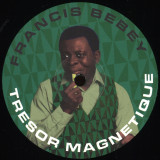
Francis Bebey - Tresor Magnetique LP 2x12"

"Trésor Magnétique" ist eine Zusammenstellung unveröffentlichter Tracks und vernachlässigter Schätze aus dem Vermächtnis des legendären, kamerunisch-französischen Musikers/Schriftstellers Francis Bebey. Sorgfältig digitalisiert in den Abbey Road Studios, strahlen sie eine Klarheit und Dringlichkeit aus, die den Jahrzehnten seit ihrer Entstehung bis zur Jetztzeit trotzt. "Trésor Magnétique" ist keine verstaubte Retrospektive, sondern ein lebendiger, atmender Dialog mit der Gegenwart und der perfekte Einstieg in eine umfangreiche Diskografie, die sich fliessend zwischen tanzbarem Afro-Funk, folkloristischen Gesängen, politisch aufgeladenen Kommentaren und schimmernden elektronischen Erkundungen bewegt. Francis Bebey war seiner Zeit nicht nur voraus – er prägte seine eigene Zeit. Wir entdecken hier nicht nur verlorene Artefakte, sondern werden mit Ideen konfrontiert, die heute noch radikal und relevant sind.

Auf Lager

Bei uns am Lager und sofort versandfertig

The Last Poets & Tony Allen feat. Egypt 80 - Africanism LP

"This is the time that we, who have benefitted from the Last Poets shouldbe able to say, 'it's the Last Poets. It's them we should be honouring, because we did not honour them for so many years_"

KRS One wasn't just addressing the hip hop fraternity when he uttered
those words by way of introducing the video for Invocation - a poem
written thirty years ago, around the time of the Last Poets' last significant comeback. He was speaking to everyone who's been affected by the word, sound and power issuing from the most revolutionary poetry ever witnessed, and that the Last Poets had introduced to the world outside of Harlem at the dawn of the seventies.

In 2018 the two remaining Last Poets, Abiodun Oyewole and Umar Bin
Hassan, embarked on another memorable return with an album -
Understand What Black Is - that earned favourable comparison with theirseminal works of the past, whilst showcasing their undimmed passion andlyrical brilliance in an entirely new setting - that of reggae music. Trackslike Rain Of Terror ("America is a terrorist") and How Many Bullets demonstrated that they'd lost none of their fire or anger, and their essential raison d'etre remained the same.

"The Last Poets' mission was to pull the people out of the rubble o f their lives," wrote their biographer Kim Green. "They knew, deep down that poetry could save the people - that if black people could see and hear themselves and their struggles through the spoken word, they would be moved to change."

Several years later and the follow-up is now with us. The project started when Tony Allen, the Nigerian master drummer whose unique polyrhythms had driven much of Fela Kuti's best work, dropped by Prince Fatty's Brighton studio and laid down a selection of drum patterns to die for. That was back in 2019, but then the pandemic struck. Once it had passed, the label booked a studio in Brooklyn, where the two Poets voiced four tracks apiece and breathed fresh energy, fire and outrage into some of the most enduring landmarks of their career. Abiodun, who was one of the original Last Poets who'd gathered in East Harlem's Mount Morris Park to celebrate Malcolm X's birthday in May 1968, chose four poems that first appeared on the group's 1970 debut album, called simply The Last Poets. He'd written When The Revolution Comes aged twenty, whilst living in Jamaica, Queens. "We were getting ready for a revolution," he told Green. "There wasn't any question about whether there was going to be one or not. The truth was many of us still saw ourselves as "niggers" and slaves. This was a mindset that had to change if there was ever to be Black Power." He and writer Amiri Baraka were deep in conversation one day when Baraka became distracted by a pretty girl walking by. "You're a gash man," Abiodun told him. The poem inspired by that incident, Gash Man, is revisited on the new album, and exposes the heartless nature of sexual acts shorn of intimacy or affection. "Instead of the vagina being the entrance to heaven," he says, "it too often becomes a gash, an injury, a wound_" Two Little Boys meanwhile, was inspired after seeing two young boys aged around 11 or 12 "stuffing chicken and cornbread down their tasteless mouths, trying to revive shrinking lungs and a wasted mind." They'd walked into Sylvia's soul food restaurant in Harlem, ordered big meals, then bolted them down and run out the door. No one chased after them, knowing that they probably hadn't eaten in days. Fifty years later and children are still going hungry in major cities across America and elsewhere. Abiodun's poem hasn't lost any relevance at all, and neither has New York, New York, The Big Apple. "Although this was written in 1968, New York hasn't changed a bit," he admits, except "today, people just mistake her sickness for fashion." Umar is originally from Akron, Ohio, but had arrived in Harlem in early 1969 after seeing Abiodun and the other Last Poets at a Black Arts Festival in Cleveland. That's where he first witnessed what Amiri Baraka once called "the rhythmic animation of word, poem, image as word- music" - a creative force that redefined the concept of performance poetry and stripped it bare until it became a howl of rage, hurt and anger, saved from destruction by mockery and love for humanity. When Umar's father, who was a musician, was jailed for armed robbery he took to the streets from an early age where he shined shoes and raised whatever money he could to help feed his eight brothers and sisters. By the time he saw the Last Poets he'd joined the Black United Front and was ready to join the struggle. Once in Harlem, Abiodun asked him what he'd learnt in the few weeks since he'd got there. "Niggers are scared of revolution," Umar replied. "Write it down" urged Abiodun. That poem still gives off searing heat more than fifty years later. In Umar's own words, "it became a prayer, a call to arms, a spiritual pond to bathe and cleanse in because niggers are not just vile and disgusting and shiftless. Niggers are human beings lost in someone else's system of values and morals." And there you have it. It's not just race or religion that hold us back, but an economic system that keeps millions in poverty and living in fear - a system born from political choice and that's now become so entrenched, so bloated on its own success that it's put mankind in mortal danger. It was many black people's acceptance of the status quo that inspired Just Because, which like Niggers Are Scared Of Revolution, was included on that seminal first album. Along with their revolutionary rhetoric, it was the Last Poets' use of the "n word" that proved so shocking, but it would be wrong to suggest that they reclaimed it, since it never belonged to black people in the first place. There's never any hiding place when it comes to the Last Poets. They use words like weapons, and that force all who listen to decide who they are and where they stand. Umar's two remaining tracks find him revisiting poems first unleashed on the Poets' second album This Is Madness! Abiodun had left for North Carolina by then where he became more deeply enmeshed in revolutionary activities and spent almost four years in jail for armed robbery after attempting to seize funds related to the Klu Klux Klan. Meanwhile, the 21 year old Umar was squatting in Brooklyn and had developed close ties with the Dar-ul Islam Movement. A longing for purity and time-honoured spiritual values underpins Related to What, whilst This Is Madness is a call for freedom "by any means necessary," and that paints a feverish landscape peopled by prominent black leaders but that quickly descends into chaos. "All my dreams have been turned into psychedelic nightmares," he wails, over a groove now powered by Tony Allen's ferocious drumming. Those sessions lasted just two days, and we can only imagine the atmosphere in that room as the hip hop godfathers exchanged the conga drums of Harlem for the explosive sounds of authentic Afrobeat. Once they'd finished, the recordings and momentum returned to Prince Fatty's studio, since relocated from Brighton to SE London. This was stage three of the project, and who better to fill out the rhythm tracks than two key musicians from Seun Anikulapo Kuti's band Egypt 80? Enter guitarist Akinola Adio Oyebola and bassist Kunle Justice, who upon hearing Allen's trademark grooves exclaimed, "oh, the Father_ we are home!" Such joy and enthusiasm resulted in the perfect fusion of Nigerian Afrobeat and revolutionary poetry, but the vision for the album wasn't yet complete. He wanted to create a new kind of soundscape - one that reunited the Poets with the progressive jazz movement they'd once shared with musicians like Sun Ra and Pharoah Sanders. It was at that point they recruited exciting jazz talents based in the UK like Joe Armon Jones from Mercury Prize winners Ezra Collective, also widely acclaimed producer/remixer and keyboard player Kaidi Tatham, who's been likened to Herbie Hancock, and British jazz legend Courtney Pine, whose genius on the saxophone and influence on the UK's now vibrant jazz scene is beyond question. The instrumental tracks on Africanism are in many ways as revelatory and exciting as the Last Poets' own. It's important to remember that the kaleidoscope of styles and influences we're presented with here aren't the result of sampling but were played "live" by musicians responding to sounds made by other musicians. That's where the magic comes from, aided by Prince Fatty's peerless mixing which allows us to hear everything with such clarity. Music fans today have grown accustomed to listening to all kinds of different genres. Their tastes have never been so broad or all- encompassing, and so the music on this new Last Poets' album is as groundbreaking as their lyrics, and perfectly suited to the era that we're now living in. John Masouri
vorbestellen06.12.2024

erscheint voraussichtlich am 06.12.2024

Various - Afro Exotique 2 - Further Adventures In The Leftfield, Africa 1975-87

After "Afro Exotique - Adventures In The Leftfield, Africa 1972-88" was enthusiastically embraced by heads, collectors and core Africa Seven enthusiasts alike, we dived back down into the vaults, and hope we've come up with another volume of listenable esoterica from roughly the same period.

"The Quest", courtesy of fleeting 1978 leftfield supergroup Afro Cult Foundation (featuring Joni Haastrup, Remi Kabaka and friends) sets the tone-bar high and sideways, with 4.50 mins of atmospheric, effected solo piano drift to get things started.

Congolese ensemble band "Orchestre Lipua Lipua" introduces gently lilting Soukous with 1977's, "Distingue", before BG and Fibre's "Thanks and Praises" introduces some wobbly, Moog tinged Lagos reggae shuffle to proceedings.

Akwassa's 1974 funker "I Don't Want Nobody" peels off into a Hammond / wah wah / moog mini odyssey half way through, before Tongolese chanteuse Akofa Akoussah's stirring "Ramer San Rame" introduces emotional charge into proceedings.

Francis Bebey's "La Condition Masculine" (1976) is a centre piece of the album, with it's skippy drum machine rhythm and spoken world vocal, but we'll admit, we probably wouldn't have used it if we'd read a translation of that vocal first.

Benis Cletin's "Jungle Magic" (1979) acid funk intro then gives way to a blatant, and at times slightly unhinged homage to the all conquering (at the time) "I Feel Love", Sorry Bamba's "M'Bife Je T'Aime" keeps the leftfield funk groove rolling, before the mournful, immersive croon of Gregoire Lawani's "Elle M'a Mordu La Langue" brings proceedings to a reflective close.

nicht am Lager

Bestelle jetzt und wir bestellen den Artikel für dich beim Lieferanten.


Last In: vor 2 Jahren
Various - Reggae Africa (Roots & Culture 1972-1981)

On 18th April, 1980, after decades of anti colonial struggle, the Zimbabweian flag was finally raised at midnight at the Rufaro Stadium in Harare. Not long after, the words "Ladies and Gentlemen, Bob Marley and The Wailers!" rang out, and Zimbabwe's independent future began.

In the years that followed, Africa was to produce it's own reggae superstars, as the likes of Alpha Blondy, Majek Fashek and Lucky Dube swept across the continent and beyond, and there's no doubting Bob Marley's explosive impact on this particular narrative.

Marley's unswerving commitment to liberation and unity ranged from the sweeping spiritual sentiments of iconic hits such One Love and Redemption Song to the galvanising, focused tone of 1979's 'Zimbabwe', and his status as global superstar ensured that his (self funded) part in the countries' epochal celebrations meant that the history of reggae in Africa would always be viewed through the prism of his influence ( Wiki/African Reggae : "In 1980, world-famous Jamaican reggae musician Bob Marley performed in Harare, Zimbabwe, and that concert is often credited as marking the beginning of reggae in Africa")

But in fact, the recorded history of reggae produced in Africa stretches back over a decade before Marley's arrival on the continent, and showcases broad pan - diasporic interflows between the Carribean and Africa, with the UK and the US communities playing influential supporting roles, all helping shape the evolution and development of the genre in Africa from late 60's inception to Marley's arrival in 1980, and then well beyond.

Reggae Africa : Roots and Culture, 1972 - 1981 tries to capture a sense of that evolution, starting in 1972 as Mebussa's ultra rare 'Good Bye Friends' effortlessly captures triangular, transatlantic cultural interflows, with the short lived Nigerian group's bitter sweet chords echoing classic US soul, but laid over a gritty, skanking Jimmy Cliff - esque proto reggae rhythm.

Trying to work out the precise provenance of Black Reggae's 'Darling I'm So Proud of You' (1975) isn't easy, but involves Paris based / African focused label Fiesta, some proper OG co-branding exercise with Bols Brandy ( "Bols Brandy presents Black Reggae") - and deeply infectious, lilting Rocksteady.

By 1976, glorious Nigerian sister duo Lijadu Sisters are echoing the chunky roots of a Dennis Brown or U Roy on 'Bobby', and in 1977, bespoke Nigerian drummer Georges Happi is introing 'Hello Friends' with the soon to be universal signature reggae tom roll intro, before veering leftfield with snatches of spoken Afro - English vocal in between the hooky choruses.

Nigerian giant Chrissy Essien's 'I'll Be You Man' (1979) combines floaty Lovers vibes with catchy ska shuffle, and in the same year, Cameroonian afro-funk/disco heavyweight Pasteur Lappe' drifts seamlessly into skanking, Lovers infected reggae on 'Babbette D.O. ( Rastawoman )' (before a sprawling electric guitar solo reminds us how unselfconsiously eclectic so much African music of the era was.)

And finally bookending the compilation, in chronological terms, fellow Cameroonian Tala AM also swaps his funk and soul for the rootsy and infectious 'Hop Sy Trong' (1981), again highlighting the diverse and eclectic approach to this timeless Carribean musical genre taken by African musicians in the years before that Bob Marley year zero event in Zimbabwe.

nicht am Lager

Bestelle jetzt und wir bestellen den Artikel für dich beim Lieferanten.


Last In: vor 4 Jahren
Jo Bisso, Sookie & Venise - African Disco Experimentals (1974 to 1978)

Cameroonian Joe Bisso's earliest musical influences didn't come primarily from his homeland, but more from the neighbouring Congo, where the kind of early 60's Congolese Rumba played by the likes of Franco / TP Ok Jazz, and Tabu Ley Rochereau was establishing itself as a musical force in the region.

Alongside this exuberant, swinging, jazz influenced sound, the growing impact of the all conquering US soul titans became inescapable, and sprinkled with a bit of Johnny Halliday & Co's smooth chanson over the top, we get a snapshot of where Jo Bisso and friends post school musical experimentation was headed in the late 60's.

As that decade drew to a close, the single minded Bisso headed off to France to begin his quest for the future, and by 1972 could afford the journey to the US that he'd long dreamed of.

Enrollment at the Berkeley School of Music in Boston soon lead to a new band coming together, and by 1974 the all conquering, multi faceted approach that marks Bisso's musical career, meant he'd written, produced and sung on his debut single for the mighty Decca Records. 'Flying To The Land Of Soul' drew heavily from James Brown's propulsive dancefloor funk, whilst wearing it's African colours loud and proud via 'African Express' chants, and drums front and centre.

At the same time, Bisso and friends had started to immerse themselves in the fast emerging disco sound pulsing outwards from Downtown NYC into the Boston nightclubs, and by the time his debut album 'Dance To It' was released on France's influential Le Disques Esperance in 1976, it was the driving, 4/4 floor power of disco that was to define Bisso's sound on that, and the following two albums.

Whilst Bisso's immersion in Disco was based around it's energy and musicality (rather than any associated hedonism), 'African Disco Experimentals (1974 to 1978)' paints a picture of an artist dedicated to the underground club side of the scene, rather than focused exclusively on the fast emerging pop potential of the sound at the time.

The album's tone is set by 3.20 mins of building, tribal percussion and rolling rhythms of the opener 'Love Beat', a 'strictly dancefloor' approach mirrored in the near 11 mins of 'Love Somebody', building from soulful keys to deep bass funk, extended percussion breaks, joyous squelchy Moog licks, breathy vocals and more (interesting footnote : Bisso is credited as Producer / Writer / Arranger, but 'Recorded by' is attributed to Joe Chiccarelli, better known in recent years for his work with The White Stripes, Shins, and Broken Social Scene.)

Still clocking in at a healthy 6 mins plus, "The Mystery With Me" (1978) makes a nod towards more radio friendly waters with it's hooky, floaty choruses and tight structures (a then 22 year old Arthur Baker is credited as sole writer on Discogs - Bisso himself doesn't seemed convinced by this idea, but that's another story...)

'Let's Keep it Together' (1977) loops the song title over a slower groove, with free form electric guitar licks adding new textures, whilst 'Disco Madonna' (1976) showcases Bisso at his most playful, combining spoken word Hispanic vocals, rattling percussion and more of the always welcome Moog, switching up keys at the end for an unselfconsciously camp finale.

And if anything sums up the ambition of Bisso's work in the field at the time, 'Play Me' (1978) can lay claim to being the magnum opus. It's presented here as a continuous 16 minute extravaganza (as opposed to the 4 parts it came in originally) : lush strings, hypnotic vocal sections, irresistible basslines, crisp drums, the odd Barry White style interjection, disco moans, the occasional nod to a chorus vocal. None of it seeming in much of a hurry to go anywhere in particular, choosing instead to joyfully revel in the expansiveness of the form.

nicht am Lager

Bestelle jetzt und wir bestellen den Artikel für dich beim Lieferanten.


Last In: vor 2 Jahren
Various - Africa Airways Six (Mile High Funk 1974 - 1981)

Once more we're ready to take flight on Africa Airways, for this sixth journey we're taking you above 5280 feet and laying on the funk.

The flight opens with the punchy horns, afro rhythms & groovy bass of Eko Roosevelt's "Ndolo Embe Mulema". Keeping the tempo high we usher in fellow Cameroonians JM Tim & Foty for another punch of brass with the funky "More And More (Ye-Male)". We stay in Cameroon with Ngalle Jojo, here he lays down another funktastic bass heavy stomper with "Ngigna Loko". Jude Bondeze hails from Bangui, Central African Republic and is probably best known for his more traditional Tene Sango album... but his debut 1981 release saw him in a very funky mood indeed!

Next up, Nigerian Vicky Edimo gets his thumb out and lays down some glorious slabs of deep funk... along with a rather splendid bass solo! JK Mandengue played bass off & on for the British Afrobeat band "Osibisa", playing on the uber funky "Super Fly TNT" Motion Picture Soundtrack album.. Certainly putting him on a path to the Wahahwah'tastic "Kosa Mba" taken from his 1979 self-titled album.

Slow percussive classic raw street funk from Nigeria's Akwassa, who's line up is the same as "Heads Funk Band", are up next. Another outing for Vicky Edimo on this 1978 beauty from Mike Kounou. Also on guitar duties for Mike Kounou is Francois Amadou Corea, who's funky chops can be heard on "Ngigna Loko" & "Njonjo Mukambe".

Hi-Octane funk from Airto Fogo, percussion, rhodes & horns aplenty on this 1974 instrumental cut "Black Soul". As we prepare to start our decent Francois Misse Ngoh drops in some filth with this 1980 bass face monster "Njonjo Mukambe"... head nodding isn't essential, but it's best to brace yourself for impact.

Your next Africa Airways departure will be ready for boarding soon,
so keep your passports at the ready!

nicht am Lager

Bestelle jetzt und wir bestellen den Artikel für dich beim Lieferanten.


Last In: vor 4 Jahren
Various - Africa Airways Five (Brace Brace Boogie 1976 - 1982)

It's that time again. The skies are calling and its time to board our trusty jet for the 5th outing of Africa Seven's premiere class compilation Africa Airways. For volume 5 its time to brace yourselves for 10 slices of Afro boogie goodness.

We up the boogie time groove with The Black Bells Group (the first band of lead singer Sidney 'Patrick Duteil' who went on to become the godfather of French hip-hop and a well know TV presenter. Here the groove is swinging... the perfect opener. Next up is German-based Cameroonian musician and cousin of Manu Dibango, Charly Kingson with this bass-synth boogie stomper. Big brass and jazzy trumpets add layers of sparkle too.

Next its time for some highlife inspired boogie from Ghanian Gyedu Blay Amboley. Highlife fused with reggae, disco, boogie and jazz just as the lyrics say.

Next we pair up with Africa Seven friend Eko once more under his Dikalo guise. The Cameroonian master musician is on fine form with his heavy brass and deep percussion with a driving afro boogie groove. To round off Side A its off to Cameroon again to groove with Jean 'Mekongo President'. Think Bernard 'Chic' Edwards on the bass with some African style and you can see it's the bottom end groove and afrobeat drums that power this gem along.

We open the second side slowly and purposefully with the highly sought after 'French Girl' from Fotso. Drippy bass synth grooves and a wondrous percussion and drum shuffle pair with piano riffs to make this a unique sounding track. Our friend Tala AM is next with the foot-stomping 'Sugar Lump'. JK Mandengue is next with most definitely the catchiest chorus you will hear today. Nigerian Jide Obe gets synth and clavinet rich with his doe to sensible dating advice 'Too Young'. We close off the album with a track from label good friend Jo Bisso under his Mulamba guise. Sounding like a long lost TV theme from a late night TV show circa 1977. Let's get down and boogie with the brand new dance in town folks... the Dashiki.

Until Volume Six takes flight it is time to unbuckle those seat belts folks.

nicht am Lager

Bestelle jetzt und wir bestellen den Artikel für dich beim Lieferanten.


Last In: vor 7 Jahren
Momo Joseph - War For Ground (Édition spéciale)

Africa Seven's next installment returns to Cameroon with a special edition version of Momo Joseph's in-demand LP, "War For Ground", with three extra tracks. Momo may be better known for his work as an actor, having featured in such titles as "La Haine" (1995) and "The African" (1983), but his small foray into music is definitely memorable as he lays it out in true Afro-Boogie style. Apart from two singles, "War For Ground" represents Momo's only other body of work, and only studio album which was self-released in 1983. With this "Edition Speciale" reissue we provide you all the originals from "War For Ground" remastered alongside his party-time classic "Cameroon Airline", "Love Africa Soul" and his lesser known tack "Oh Momo".

The A-side starts with "Africain", which also featured on our compilation "Africa Airways Four". Glistening synth lines work it out over the top of romantic guitars, while the continual and hypnotic vocal chant of "Africa" tells you exactly where this music is coming from and what it means. The tempo creeps up a bit with "N'Gon Le Bek" which again takes advantage of driving guitar lines, this time facing off with the horn section. The last cut on the A-Side is "Out Side No Fine", which flows great after the previous two, keeping up the same aesthetic with a bit more of a tropical feel to it.

The B-side kicks off with the title track "War For Ground". In this one Momo starts off rather melancholic before things end more triumphantly with the backing vocals and horn section again providing much of the driving force. The final two tracks on this record make up the "Edition Speciale" element of this reissue. "Love Africa Soul", taken from Momo's 1980 single of the same name, at first seems to be one of the more straight forward disco led tracks on this release until an ecstatic synth line breaks things up in a forward thinking break down before a trademark Momo groove kicks back in. The other track featured on that single was"Cameroun Airlines", a bonafied afro-disco classic. Next we delved into the vault and unearthed a recording session for "Oh Momo", this never released version of the track reflects a slightly different side of the signer, with a more afrobeat feel.

This "Edition Speciale" version of "War For Ground" offers a thorough observation of Momo Joseph's work as a musician and looks to help shine a light on Momo's career and musical genius.

nicht am Lager

Bestelle jetzt und wir bestellen den Artikel für dich beim Lieferanten.


Last In: vor 7 Jahren
Afro National - African Experimentals (1972-1979)

The Afro National Band Was Formed In Freetown, Sierra Leone In 1972. Their Inspirational Leader, Sulay Abu Bakarr Accompanied By His Wife Patricia And Ayo Roy Macauley Split From The Sabanoh Jazz Band To Form Their New Group. They Skillfully Merged Highlife And Jazz Sounds With A Deep Knowledge Of West African Sounds. Growing To Become One Of The Premiere Bands To Emerge From Sierra Leone They Not Only Defined The Sound Of The Country For A Generation But Also Crafted Some Of The Country's Most Popular And Memorable Songs (for Example Sonjo Which Is Included On This Collection).

The Band Toured Extensively Throughout Africa And Europe In The 70s (working With The Giant Of Sierra Leone Music Akie Deen In The Process). Towards The End Of The 70s The Band Departed Sierra Leone, Sulay And His Wife Moving To Maryland In The Us And Other Members Moving To London.

Our Collection Focuses On Possibly Not The Best Known Songs Of The Band But The Tracks Which Have The Rhythms To Move The Dance Floor. We Open With The Foot Tapping "jokenge" And Its Driving Shuffle Beat, Swirling Organ And Percussive Guitar Lines. "push Am Forward" Takes A Afro-psychadelic Turn With Its Hypnotic Rhythms And Driving Distorted Guitar. "mr Who You Be" Is A Cover Of The Fela Kuti Track, Doing It Fine Justice. "gowa" Highlights The Vocal Prowess Of The Band, As Dose The Ever Popular "sonjo" (the Version Featured Here Is A Rare Alternate Recording).

"money Palava" Opens Up Side Two With Its Infectious Highlife Beat And Hooky Vocals. "money Nor Bataya" Highlights The Bands First Use Of Synthesizers. "mother In Law" Sweeps Up Back To Free Town 1973 With Its Clever Vocal. "set My Soul On Fire" Is A Bonus Track Which Brings In The International Flavour Of The Band.

The Afro National Band Continues In Various Guises To This Day, With Sulay And Patricia Acting As The Proud And Talismanic Figures For A Whole Generation Of Sierra Leonean Music.

nicht am Lager

Bestelle jetzt und wir bestellen den Artikel für dich beim Lieferanten.


Last In: vor 4 Jahren
J. M. Tim And Foty - African Funk Experimentals (1977-1979)

Tim (aka Jean Marie Tiam)and the sadly departed Maurice Foty who died in 2011. The musical cousins hails from Bafoussam in Cameroon. Their signature vocal harmony sound may be the first thing you hear, however they also have produced a host of funkiest African funk around. They sing in their native language Ngomâlah, as well as Duala and English.

We start the album off slowly with the scene-setting and largely instrumental "Douala By Night". Tight guitar and choppy clavi drive this song along. The groove is so deep even Missy Elliot couldn't resist a cheeky sample. "Funky Bafoussam" carries on the theme and expands it to include a kick-ass horn section. "More And More" is next and here the vocals burst forth over this up tempo punchy pop-funk track. With "Love Is Light" the pair show their versatility with a smooth English-sung soul ballad.

The hopelessly upbeat "Aie" is next with its earworm keyboard riff, slice guitar and catchy falsetto vocal. "Not So Bad" brings on the boogie. "I Love Yaounde" is a smooth swinging boogie-ballad with a killer chorus hook. "Eda" is a hit from early in their career. We close of the comp with the disco funk of "Funky Boogie Love" and synth grooves of "Eya Mba".

The songs on the comp represent only a 2 year period but some of the finest from the duo. These days Tim keeps the Tim and Foty flame alive. He currently lives between France and Cameroon. A musical flame that most definitely is burning bright.

nicht am Lager

Bestelle jetzt und wir bestellen den Artikel für dich beim Lieferanten.


Last In: vor 8 Jahren
Eko - Funky Disco Music

Eko

Funky Disco Music

12inchASVN052
Africa Seven
12.02.2018

The latest vinyl slice from FBNM sees us head to the depths of central Africa via Paris to track down a feast of rare seventies afro funky jams from Cameroonian master musician EKO. We've brought FBNM favourite Riccio along for the journey too, who has provided us with a fantastic Rerub coaxing out some modern dancefloor sensibilities and production sparkle.

Eko Roosevelt Louis has had a music career spanning over forty years, born the grandson of a Kribi tribal chief, his musical persuasion beginning humbly with his village's local church before his formal education at the Senegal conservatoire and Paris' École Normale de Musique. EKO made a number of jazz funk and disco records in the mid seventies during a stint recording and touring in and around France before returning to Cameroon to take over his grandfather's tribal chieftaincy, a role he still holds today! Alongside this position of office EKO has continued to work with music, performing, teaching and even leading Cameroon's national orchestra!

The tracks we have selected for reissue are all taken from EKO's third album, Funky Disco Music which was recorded in Paris and released on his own Dragon Phenix imprint. Sung in a combination of English and EKO's native tongue we've lined up a real excursion in feel good afro-jazz, funk and soul made purely for dancing feet and boogying butts!

All tracks have been officially licensed and lovingly remastered for this special release by Andreas (Lupo) Lubich (CALYX Berlin), packaged alongside Riccio's sympathetic work in the cutting room on 12" vinyl with a special interview with Eko Roosevelt Louis himself!

nicht am Lager

Bestelle jetzt und wir bestellen den Artikel für dich beim Lieferanten.


Last In: vor 5 Jahren
Various - Africa Airways Four (disco Funk Touchdown - 1976 - 1983)

It's just over 3 years since we launched the Africa Seven label in Paris and London. Our first release back then (Airways One) is still our best seller and had to be repressed 4 times so far. Forty or so releases later it is time to take to the clouds again. Being the unimaginative bunch we are, the fourth installment of our African sky filled musical cornucopia is called African Airways Four (Disco Funk Touchdown - 1976 - 1983). This time around all tunes have the Disco flavour. As ever it's all about the music... the skies are wide and funky and the air is filled with musical goodness. Your flight is about to leave.

Your flight opens with a punchy disco funk assault from Paris based Cameroonian Tala AM. Here with his drive bass and guitar funk riff 1981 stomper "Get Up Tchmassi". Next up and staying with the Cameroonian connection is Eko with "Bowaa Mba Ngebe". The lyrics talk of accomplishing the things in life for your family and yourself. The sweeping strings and gloriously uplifting music matching the sentiments of the words perfectly. Uta Bella began singing in the 60's and by the time disco hit in the 70's she was already established a singer in her native Cameroon, here the locked on groove of "Nassa Nassa" is a perfect snapshot of the sound and the African disco times.

Charly Kingson (cousin of Manu Dibango) is next with his "Nimele Bolo". Recorded in Germany with the cream of Munich's session musicians the bass synth is out in force on this one. Punchy brass, rock solid grooves and jazzy Rhodes add all the right ingredients for a fine disco synth excursion. Next is the musical heavyweight from Cameroon cousin Manu with his 1978 Disco, jazz funk masterpiece "Sun Explosion".

Side two opens with a blast of Elvis Kemayo and his piano and guitar funk bomb "Biram". Next Momo Joseph gives us "Africain". Best known in France as an actor, this disco funk groover was released on his self pressed LP "War For Ground" in 1983. A true gem indeed. Nigerian, ex Funkees member Jake Sollo is next with "Tinni Yanana". Recorded in the UK in 83 its slick and smooth with a hint of "at the car wash" groove. Pierre Didy Tchakounte follows on with his soul funk 'golden years' style groover "Soul Magabe". Produced by one of our favourite Parisian producers Slim Pezin. We close off our journey with the tribal chant disco-funk special from the Monstars "Funny Saga".

Ladies and Gentleman, we have landed at your destination, please remain seated until the aircraft has reached the terminal. We look forward to welcoming you aboard Africa Airways again soon.

nicht am Lager

Bestelle jetzt und wir bestellen den Artikel für dich beim Lieferanten.


Last In: vor 4 Jahren
Manu Dibango - Ceddo

Manu Dibango

Ceddo

12inchASVN043
Africa Seven
03.06.2017

For our second release we brought back to life African movie soundtrack "Ceddo" - composed by one of our favourite African artists, Manu Dibango. 6 tracks full of Funk. With a great story behind.... now it's getting a full vinyl re-issue!

"The film takes place during the 17th century : period of slave-trading and of the introduction of Christianity and Islam in West Africa. The adherents of these religions all desired and hoped to pack their buildings, mosques or churches,by whatever means necessary. Arms and alcohol began to appear, as well as shoddy godds --- gadgets from another era. Anyone with a rifle tracked down and trated men, women and children. Man became money. After having converted the royal family and government dignitaries, the Imam encounters the refusal of the "Ceddo". For the Ceddo, adhering to Islam or to Catholicism would mean renouncing African spiritualism, giving up being themselves. To accomplish his goals, the Imam usurps the throne with the complicity of the dignitaries --- similar to the coups d'Etat of our days. Combining spiritual and temporal power, the Imam reduces the recalcitrant to slavery in exchange for rifles. He obliges the others by force of arms to accept Islam. Ceddo is a film of reflexion, birnging together bits and pieces of facts and authentic events that took place in a period spanning the centuries up to the present day."

nicht am Lager

Bestelle jetzt und wir bestellen den Artikel für dich beim Lieferanten.


Last In: vor 4 Jahren
Ekambi Brillant - African Funk Experimentals (1975-1982)

Ekambi Brillant was born in the village of Dibombari in Cameroon in 1948. In 1962 he attended school in Yaounde and learned his musical craft. In 1971 he heads off to the big city lights of Douala. Here he finds himself in a French TV, music competition hosted at "Le Domino" nightclub. It is here where he brushes shoulders with other Cameroonian music legends such Manu Dibango and Francis Bebey.

The music contest win gives him the break he needs and in 1972 and with the support of fellow troubadour JK Mandengue he finds himself with a record deal with Phonogram and his first hits in France.

Its in 1975 where we pick up this merry tale. Because it is in 1975 when things start to get a bit funky. Which is just how we like it here at Africa Seven. In partnership with French producer, guitarist and all around hero, Slim Pezin he creates the "Africa Oumba" album. He goes on in the two subsequent years to record the Soul Castle and Djambo's Djambo's albums also with Slim.

Our compilation focuses on the funkier end of Ekambi's music drawn mainly from the 1975 to 1978 period. Things open up with our theme tune "Africa Africa" (of course). It's tribal twisted psych funk is the perfect start to any album. We then move to "Aboki" possibly Ekambi's finest dance floor filler. Next it's the choppy disco strings and slap bass of "Nyambe" and the swirling African swing of "N'Kondo" and the pulsing chop-funk "Ekila".

The flip side starts off with "Soul Castle" an ordinary day tale for our hero. "Massoma" and its funk boogie get things bopping next up before "Machine Ma Bwindea" gives us some punchy brass and low slung funk grooves. "Mother Africa" shows us the songwriting power of Ekambi while also managing to have one of the funkiest flange basslines we have heard in a good while. Things close off with swing-time of "Lambo Lena".

Ekambi Brillant would go on to become one of the big name legends of Cameroonian music with nearly 20 albums to his name. He has contributed to the emergence of several Cameroonian artists such as Marthe Zambo, Valery Lobe, Aladji Toure and Africans. He now spends his time in Cameroon and Washington DC. Ekambi, we salute you sir.

nicht am Lager

Bestelle jetzt und wir bestellen den Artikel für dich beim Lieferanten.


Last In: vor 4 Jahren
  • 1
Artikel pro Seite:
N/ABPM
Vinyl
