
pre-ordina ora
Questo articolo non è stato ancora rilasciato. È possibile pre-ordinare il prodotto ora.
Questo articolo non è stato ancora rilasciato. È possibile pre-ordinare il prodotto ora.

dovrebbe essere pubblicato su 02.05.2025

The Acid Anonymous Archives arrives with their third release and features the well known track from the AA01 record by DX and Dave. This record continues in the archives series and brings a brand new, previous unreleased track to the vinyl. The old DAT-tapes are remastered and brought available to everyone!
dovrebbe essere pubblicato su 30.04.2025

dovrebbe essere pubblicato su 28.06.2024

Acid Anonymous, renowned and pioneering in the Dutch freeparty scene, established their reputation with records on their own label. Rediscovering the original DAT tapes after over 20 years, Acid Anonymous is making their comeback! This release includes the legendary track from Diex and introduces an unreleased collaboration with Andre. Remastered and re-released, this production from Acid Anonymous is one of our proudest achievements this year. Stay tuned for more exciting releases to come!
dovrebbe essere pubblicato su 26.06.2024

Ordina ora e ordineremo l'articolo per te presso il nostro fornitore.
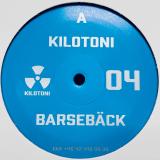
Entering the abandoned warehouse full of haze and blinded by the strobe lights, you feel the rush when the bass kicks in. You have no idea if the year is 1996 or 2026, but it doesn't matter as long as you are alive.
Indeed, another batch of forgotten and previously unreleased radioactive acid techno has surfaced on the anonymous, vinyl-only Kilotoni imprint — possibly their strongest release so far.
A1 The peak of acid techno is perhaps found in its most stripped-down form. As the bass line throbs your breath out, you try to chase the kick drum in a game of hide-and-seek until complete exhaustion. It's something you play after the copies of Betty Ford and Sync In start to melt during a nuclear reactor accident.
A2 A ravey or hard-techno-oriented approach is applied to the acid techno formula here. The squelching, pulse-width-modulated synth makes for an eerie yet irresistible call to the dance floor. The snare rolls might just be your guilty pleasure.
B1 The flip side opens with funkier techno that the Voyager probes could bump to in outer space a million years from now. A wild acid line is accompanied by playful chords and beats. Detroit influences meet Nordic melancholy.
B2 The kick drum keeps pounding its way through while a lonely TB-303 is traveling in its own space and time. Influenced perhaps by the Midwest acid techno style, this could be a mid-90s DAT-tape lost inside the transatlantic postal system on its way to the Analog Records USA headquarters.
Disponibile in Stock e pronto per la spedizione

When SW. AKA, Stefan Wust, first established SUED in 2011, their compelling, cosmic and anonymous material struck a rare chord, emanating far beyond the freeform Berlin underground in which it was written. Unknowingly, Los Angelean Oliver Bristow had
established a parallel musical universe, founding the hyper-specific label Acid Test, inviting pioneering artists such as Donato Dozzy, Tin Man and Pepe Bradock to indulge in glorious interpretations of 303 control. Without compromise, these were records that quietly
reinvigorated electronic music.
Some years later, a new label, SWOB, unites Wust and Bristow in a very different landscape. And while it would be easy to transform the purity and integrity of this special alchemy into something like nostalgia, yearning for an alternative culture before
influencers and against algorithms, SWOB endeavours to find inspiration in arguably tougher truths.
“By the mid-90s, the techno scene had already reached a breaking point”, recalls Wust.
“Today, the scene is so highly professionalized that it barely resembles what was once called the "underground. But "underground" was never more than the simple reality that music circulated on cassettes among friends or that dubplates were played at illegal
parties... The consequence of today’s professionalization is the death of the original movement.”
Still, no one can kill an idea. Here, inspired by the “Outside Tekno” or “Outkast Techno” that emerged to subvert even back in the day, SWOB are proud to introduce the tekkNOthing trilogy, a new project from SW. beginning on cassette and culminating later
on vinyl. Some years in development, tekkNOthing first began to take shape during the 2020 global pandemic, when ‘the underground’ quickly began to mean something radically different once again.
“I noticed how everything was accelerating while simultaneously spinning in circles – existing in a kind of creative limbo on a global scale”, recalls Wust. “And that’s where true freedom lies: for artists – in any sense – to consciously engage with this necessity. In
other words, irrationality or nonsense can eventually generate meaning.” While hardly capitulating to the contemporary hammering of techno’s most recent developments, tekkNOthing’s first chapter quickly establishes a frenetic pace; tracks like ‘nuclearFALLoutX’ and ‘paslolESmess’ interlock and unfold at a tempo removed from that typically associated with SW. while ‘euroBSS’ and ‘viscousHEAT’ successfully experiment with a more guttural palette, veering far into a rejuvenating and previously uncharted leftfield.
A resolutely human endeavour, the music of SW. is nonetheless written and recorded in the looming shadow of AI, whose free-form adoption of pop culture, hip-hop and techno reminds Wust of “when photography emerged in the 19th century... painting was no
longer bound to naturalism. Similarly, music today is no longer bound to fixed standards – through AI, it can become truly free.”
If not in competition, than taking inspiration from this landscape of new opportunity, tekkNOthing diversifies further with eight unpredictable tracks across part II, taking in stuttering machine-funk on ‘crAMPDUNK’, a freeform organ jam via ‘sonicENdo’ and the
inexplicable piston-percussive, post-punk exotica heard on ‘poorTENOOR#a#01’ DJs with dual cassette decks skills might even find function in the more overtly floor-focused ‘DU ¨NEhowSE#1takeÄ’ or ‘lookLOOK’.
The times may have changed, but the promise remains simple; more music, more freedom.
Disponibile in Stock e pronto per la spedizione

Googling “paradise house”, the first results to pop up are an endless list of European b&b’s with whitewashed lime façades, all of them promising “…an unmatched travel experience a few steps from the sea”. Next, a little further down, are the institutional websites of a few select semi-luxury retirement homes (no photos shown, but lots of stock images of smiling nurses with reassuring looks). To find the “paradise house” we’re after, we have to scroll even further down. Much further down.
It feels like yesterday, and at the same time it seems like a million years ago. The Eighties had just ended, and it was still unclear what to expect from the Nineties. Mobile phones that were not the size of a briefcase and did not cost as much as a car? A frightening economic crisis? The guitar-rock revival?! Certainly, the best place to observe that moment of transition was the dancefloor. Truly epochal transformations were happening there. From America, within a short distance one from the other, two revolutionary new musical styles had arrived: the first one sounded a bit like an “on a budget” version of the best Seventies disco-music – Philly sound made with a set of piano-bar keyboards! – the other was even more sparse, futuristic and extraterrestrial. It was a music with a quite distinct “physical” component, which at the same time, to be fully grasped, seemed to call for the knotty theories of certain French post-modern philosophers: Gilles Deleuze, Félix Guattari, Paul Virilio... Both those genres – we would learn shortly after – were born in the black communities of Chicago and Detroit, although listening to those vinyl 12” (often wrapped in generic white covers, and with little indication in the label) you could not easily guess whether behind them there was a black boy from somewhere in the Usa, or a girl from Berlin, or a pale kid from a Cornish coastal town.
Quickly, similar sounds began to show up from all corners of Europe. A thousand variations of the same intuition: leaner, less lean, happier, slightly less intoxicated, more broken, slower, faster, much faster... Boom! From the dancefloors – the London ones at least, whose chronicles we eagerly read every month in the pages of The Face and i-D – came tales of a new generation of clubbers who had completely stopped “dressing up” to go dancing; of hot tempered hooligans bursting into tears and hugging everyone under the strobe lights as the notes of Strings of Life rose up through the fumes of dry ice (certain “smiling” pills were also involved, sure). At this point, however, we must move on to Switzerland.
In Switzerland, in the quiet and diligent town of Lugano, between the 1980s and 1990s there was a club called “Morandi”. Its hot night was on Wednesdays, when the audience also came from Milan, Como, Varese and Zurich. Legend goes that, one night, none less than Prince and Sheila E were spotted hiding among the sofas, on a day-off of the Italian dates of the Nude Tour… The Wednesday resident and superstar was an Italian dj with an exotic name: Don Carlos. The soundtrack he devised was a mixture of Chicago, Detroit, the most progressive R&B and certain forgotten classics of old disco music: practically, what the Paradise Garage in New York might have sounded like had it not closed in 1987. In between, Don Carlos also managed to squeeze in some tracks he had worked on in his studio on Lago Maggiore. One in particular: a track that was rather slow compared to the BPM in fashion at the time, but which was a perfect bridge between house and R&B. The title was Alone: Don Carlos would explain years later that it had to be intended both in the English meaning of “by itself” and like the Italian word meaning “halo”. That wasn’t the only double entendre about the song, anyway. Its own very deep nature was, indeed, double. On the one hand, Alone was built around an angelic keyboard pattern and a romantic piano riff that took you straight to heaven; on the other, it showcased enough electronic squelches (plus a sax part that sounded like it had been dissolved by acid rain) to pigeonhole the tune into the “junk modernity” section, aka the hallmark of all the most innovative sounds of the time: music that sounded like it was hand-crafted from the scraps of glittering overground pop.
No one knows who was the first to call it “paradise house”, nor when it happened. Alternative definitions on the same topic one happened to hear included “ambient house”, “dream house”, “Mediterranean progressive”… but of course none were as good (and alluring) as “paradise house”. What is certain is that such inclination for sounds that were in equal measure angelic and neurotic, romantic and unaffective, quickly became the trademark of the second generation of Italian house. Music that seemed shyly equidistant from all the rhythmic and electronic revolutions that had happened up to that moment (“Music perfectly adept at going nowhere slowly” as noted by English journalist Craig McLean in a legendary field report for Blah Blah Blah magazine). Music that to a inattentive ear might have sounded as anonymous as a snapshot of a random group of passers-by at 10AM in the centre of any major city, but perfectly described the (slow) awakening in the real world after the universal love binge of the so-called Second Summer of Love.
For a brief but unforgettable season, in Italy “paradise house” was the official soundtrack of interminable weekends spent inside the car, darting from one club to another, cutting the peninsula from North to centre, from East to West coast in pursuit of the latest after-hours disco, trading kilometres per hour with beats per minute: practically, a new New Year’s Eve every Friday and Saturday night. This too was no small transformation, as well as a shock for an adult Italy that was encountering for the first time – thanks to its sons and daughters – the wild side of industrial modernity. The clubbers of the so-called “fuoriorario” scene were the balls gone mad in the pinball machine most feared by newspapers, magazines and TV pundits. What they did each and every weekend, apart from going crazy to the sound of the current white labels, was linking distant geographical points and non-places (thank you Marc Augé!) – old dance halls, farmhouses and business centres – transformed for one night into house music heaven. As Marco D’Eramo wrote in his 1995 essay on Chicago, Il maiale e il grattacielo: “Four-wheeled capitalism distorts our age-old image of the city, it allows the suburbs to be connected to each other, whereas before they were connected only by the centre (…) It makes possible a metropolitan area without a metropolis, without a city centre, without downtown. The periphery is no longer a periphery of any centre, but is self-centred”.
“Paradise house” perfectly understood all of this and turned it into a sort of cyber-blues that didn’t even need words, and unexpectedly brought back a drop of melancholic (post?)-humanity within a world that by then – as we would wholly realise in the decades to come – was fully inhuman and heartless. A world where we were all alone, and surrounded by a sinister yellowish halo, like a neon at the end of its life cycle. But, for one night at least, happy."
Disponibile in Stock e pronto per la spedizione

Disponibile in Stock e pronto per la spedizione

Ulterior Motives launch their main label with a single from DJ Persuasion, featuring a Liftin’ Spirits remix from Ant Miles. The label, which is helmed by DJ and producer Noah Tucker, began life in 2021 with an anonymous edit of a much-loved underground hip hop gem. Two further 12”s in the white label series followed along similar lines, joining the dots between jungle, footwork and r’n’b in UM style. Since then, they have also launched their cassette series with a Metrist mix covering golden era tech step and d’n’b.
DJ Persuasion is principally known for A History Of Hardcore, a series of ten mixes covering ’88-’98 which appeared across a number of platforms between 2015 and 2020. Certain entries in the series appeared on cassette via The Trilogy Tapes, Blackest Ever Black (Id Mud) and Tape Echo. Persuasion also hosted the NTS Demon Poetry show (now the Drum Poetry show) for some years, and contributed In Focus sessions covering the work of Dillinja and LTJ Bukem, alongside Dev:Null.
Jameela EP covers four contrasting, but also concentric areas of the hardcore continuum, featuring a remix from Liftin’ Spirits aka Ant Miles of Origin Unknown. The title track rolls out at bleeding edge jungle hardcore tempo, taking in a mixture of familiar and unfamiliar references. Liftin’ Spirits contributes a standout remix which reframes Jameela as a drum’n’bass epic, opening with a panoramic intro and a quaking bass drop, then building to soaring strings. Robin Gets Revenge is an audial intervention into one of the last remaining unsolved mysteries in acid house, and a stomping 89’-’90 style jammer to boot. The B2 finds Jameela in a slower guise, offering something for after the club and the warm up.
Disponibile in Stock e pronto per la spedizione

Tooflie is back with a new exploration of regional sound from all over theglobe by the anonymous crew of edits lovers. The five different, but equallyimpressive, cuts on the fourth installment are deep dives into the soniccarnival of Brazilian favelas through the skillful reinterpretations by hiddentalents. The A2 track 'CBACA' bolsters the signature baile funk raw energywith hard house rhythms and acidic melodic patterns. Stepping between thefunkier side of electro and polyrhythmic panache, MWR - 'man withrefrigerator' is tailored to take the dancefloor to a new level. The openingtrack starts with a minimalistic yet paunchy breakbeat groove on 'PDNCA' and continues the deepness through the heavy and raw low-endextravaganza on 'RTK'. Bringing the vinyl to a close, 'LAPA' goes full-throttleon haunting arpeggios and leaves things on a blissful note.
Disponibile in Stock e pronto per la spedizione

April 2024 sees the launch of the Stratasonic imprint with the four-track ‘Accidental Effects’ by ANiML, a collaborative guise for the members of the collective behind the label.
Stratasonic is a new label founded by a German/Canadian collective operating out of LA whose roots dig deep into electronic music. By collaborating with artists new and legendary they’ll push the boundaries of the traditional music space into visual arts, video, events, digital and beyond. The collective’s philosophy is to reimagine the music, masters, and methods of the past in a modern context, exposing the world to the stuff they like. Here to inaugurate the label is ANIML, the project whose members will remain anonymous is inspired by the classic era of vinyl and analogue production with hints of 90’s nostalgia.
Title-cut ‘Accidental Effects’ leads the EP and lays down twitchy bass grooves, crisp, crunchy breaks and an amalgamation of hip hop vocals all dynamically pieced together and processed to create a raw, fluid dance floorworkout. ‘Mementos’ follows next and veers into a more immersive, cinematic electronica realm via subtly unfurling synth textures, murky bass swells, bumpy breaks, squelchy acid lines and hypnotic brass licks.
Opening the flip-side is ‘Day Dreaming’, shifting focus back to a raw off-kilter rhythm at its foundation while haunting synth lines ebb and flow amongst hooky vocal chants and bubbling echoes. ‘Formulaic Appeal’ then concludes the original material, a three minute ambient darkwave excursion through brooding analogue bass drones, heavily reverberated atmospherics and a ticking clock like percussive effect.
Disponibile in Stock e pronto per la spedizione

For Sofia Kourtesis, joy is a living practice. It"s evident in her effervescent stage presence and bombastic sets, which confidently traverse through house, electro-pop and melodic techno. The Peruvian DJ and producer has forged a vibrant and illustrious career that has taken her to all corners of the globe. Kourtesis"s debut DJ-Kicks mix is a potent blend of the beautiful, complex emotional soup that has made her connect so deeply with her fans.
Ordina ora e ordineremo l'articolo per te presso il nostro fornitore.
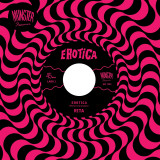
Two killer tracks of erotic psychedelia with a jazzy twist and touches of acid rock by the French cabaret star Rita and Chilean rock pioneers Aguaturbia. A perfect soundtrack to an imaginary sexploitation film, half-way between the classic sound of library records and a progressive and hypnotic musical journey driven by fuzzy guitars. French actress, model, dancer and singer Rita Cadillac, local star at well-known Parisian cabarets like Crazy Horse or Folies Bergère, recorded several 45s in the 1960s. In 1969, and most likely following the success of the Welsh band Man (from whom they "took inspiration" when recorded this 'Erotica'), released this song that could have easily worked as the perfect soundtrack for a sexploitation movie. Rita's sensual voice is wrapped in a piece of background music that could have been taken from a classic library record from the KPM, Chappell or Montparnasse 2000 catalogues. Hammond-driven prog jazzy passages, subtle fuzzy guitar solos and a contagious bassline all delivered by some anonymous studio band accompanied by Rita's provocative whispers and moans. This 7"-only rarity has been compiled many times over the years, but we thought it would be nice to have it reissued in its original format. What better than another song in a similar vein and identical title, 'Erotica' by Chilean rock pioneers Aguaturbia, to complete this single? Denise's alluring vocals dance harmoniously with Carlos' electrifying guitar loaded with fuzz and wah wah effects, building up a progressive and hypnotic musical journey. This song was included in their much sought-after debut LP and we present it here again as the perfect accompaniment to the sensual Rita.
dovrebbe essere pubblicato su 28.03.2025

The sound is a captivating fusion of hazy style and raw dance floor energy, effortlessly moving between acid, dark, ebm, and emotionally vulnerable moments. ISTHEWAY celebrates 10 years of indipendence with 3 new records. DO IT YRSELF is the manifesto of all these years as well as the name of this 3 Eps series. The 10 tracks of this project are spread over 3 discs and this is 1/3. Every track represents one letter of the manifesto ISTHEWAY born in Verona, Italy ten years ago from the DIY mind of Shinoby. Releases includes remixers like DMX Krew,Hypnobeat (JDB+Helena Hauff), Unit Moebius Anonymous, Madteo, Samo DJ + Tzusing, Jamal Moss,Mgun, The Analogue Cops, Frak.
Ordina ora e ordineremo l'articolo per te presso il nostro fornitore.

Our debut single with Senpolya was born out of desire to create some modern Russian pop infused with references to the 80s dance music. While making 80s-inspired tunes is popular nowadays, this decade means different things to different people: be it A-ha and Modern Talking or African boogie and Chicago house. But we ended up making neither one nor the other.
The crowd who contributed to this release is absolutely legendary. Each time I listen to it and think of them, a new dimension opens up in my mind, adding up some deeper layers of context Ive immersed myself in over the past few years.
An italian producer and bass player Marco Boccamazzo created the first remix. By adding bass guitar and strings, he took the track back by another ten years.
DJ Popinjay, an alter ego of a tropical disco master who wishes to remain anonymous, provided the second rework.
The third remix or more like an essentially an entirely new track, comes from Sonestrose, a duo consisting of Andrey Algorithmic, an art director of Moscow Powerhouse, and Alexander Basian, the studio's sound engineer.
Ignat Akimov, also known as DJ Pecan and an art director of Esthetic Joys Embassy, crafted the fourth hallucinogenic remix, which spans from acid house with Indian drums to cool jazz sound.
Lipelis and Scruscru help me in making some key decisions about the tracks structure, arrangement, and mixing.
Ilya Varankin made a photo of us (on film!) and Nikita Demin designed the cover picture inspired by Daptone Records.
At last, I want to thank my wife, Masha Dostoewskaya, without whose love and patience I wouldn't have been able to see this project to an end.
Ordina ora e ordineremo l'articolo per te presso il nostro fornitore.

Volume 1 of this expertly curated project of 90s Italian House - put together by Don Carlos.
If Paradise was half as nice… by Fabio De Luca.
Googling “paradise house”, the first results to pop up are an endless list of European b&b’s with whitewashed lime façades, all of them promising “…an unmatched travel experience a few steps from the sea”. Next, a little further down, are the institutional websites of a few select semi-luxury retirement homes (no photos shown, but lots of stock images of smiling nurses with reassuring looks). To find the “paradise house” we’re after, we have to scroll even further down. Much further down.
It feels like yesterday, and at the same time it seems like a million years ago. The Eighties had just ended, and it was still unclear what to expect from the Nineties. Mobile phones that were not the size of a briefcase and did not cost as much as a car? A frightening economic crisis? The guitar-rock revival?! Certainly, the best place to observe that moment of transition was the dancefloor. Truly epochal transformations were happening there. From America, within a short distance one from the other, two revolutionary new musical styles had arrived: the first one sounded a bit like an “on a budget” version of the best Seventies disco-music – Philly sound made with a set of piano-bar keyboards! – the other was even more sparse, futuristic and extraterrestrial. It was a music with a quite distinct “physical” component, which at the same time, to be fully grasped, seemed to call for the knotty theories of certain French post-modern philosophers: Gilles Deleuze, Félix Guattari, Paul Virilio... Both those genres – we would learn shortly after – were born in the black communities of Chicago and Detroit, although listening to those vinyl 12” (often wrapped in generic white covers, and with little indication in the label) you could not easily guess whether behind them there was a black boy from somewhere in the Usa, or a girl from Berlin, or a pale kid from a Cornish coastal town.
Quickly, similar sounds began to show up from all corners of Europe. A thousand variations of the same intuition: leaner, less lean, happier, slightly less intoxicated, more broken, slower, faster, much faster... Boom! From the dancefloors – the London ones at least, whose chronicles we eagerly read every month in the pages of The Face and i-D – came tales of a new generation of clubbers who had completely stopped “dressing up” to go dancing; of hot tempered hooligans bursting into tears and hugging everyone under the strobe lights as the notes of Strings of Life rose up through the fumes of dry ice (certain “smiling” pills were also involved, sure). At this point, however, we must move on to Switzerland.
In Switzerland, in the quiet and diligent town of Lugano, between the 1980s and 1990s there was a club called “Morandi”. Its hot night was on Wednesdays, when the audience also came from Milan, Como, Varese and Zurich. Legend goes that, one night, none less than Prince and Sheila E were spotted hiding among the sofas, on a day-off of the Italian dates of the Nude Tour… The Wednesday resident and superstar was an Italian dj with an exotic name: Don Carlos. The soundtrack he devised was a mixture of Chicago, Detroit, the most progressive R&B and certain forgotten classics of old disco music: practically, what the Paradise Garage in New York might have sounded like had it not closed in 1987. In between, Don Carlos also managed to squeeze in some tracks he had worked on in his studio on Lago Maggiore. One in particular: a track that was rather slow compared to the BPM in fashion at the time, but which was a perfect bridge between house and R&B. The title was Alone: Don Carlos would explain years later that it had to be intended both in the English meaning of “by itself” and like the Italian word meaning “halo”. That wasn’t the only double entendre about the song, anyway. Its own very deep nature was, indeed, double. On the one hand, Alone was built around an angelic keyboard pattern and a romantic piano riff that took you straight to heaven; on the other, it showcased enough electronic squelches (plus a sax part that sounded like it had been dissolved by acid rain) to pigeonhole the tune into the “junk modernity” section, aka the hallmark of all the most innovative sounds of the time: music that sounded like it was hand-crafted from the scraps of glittering overground pop.
No one knows who was the first to call it “paradise house”, nor when it happened. Alternative definitions on the same topic one happened to hear included “ambient house”, “dream house”, “Mediterranean progressive”… but of course none were as good (and alluring) as “paradise house”. What is certain is that such inclination for sounds that were in equal measure angelic and neurotic, romantic and unaffective, quickly became the trademark of the second generation of Italian house. Music that seemed shyly equidistant from all the rhythmic and electronic revolutions that had happened up to that moment (“Music perfectly adept at going nowhere slowly” as noted by English journalist Craig McLean in a legendary field report for Blah Blah Blah magazine). Music that to a inattentive ear might have sounded as anonymous as a snapshot of a random group of passers-by at 10AM in the centre of any major city, but perfectly described the (slow) awakening in the real world after the universal love binge of the so-called Second Summer of Love.
For a brief but unforgettable season, in Italy “paradise house” was the official soundtrack of interminable weekends spent inside the car, darting from one club to another, cutting the peninsula from North to centre, from East to West coast in pursuit of the latest after-hours disco, trading kilometres per hour with beats per minute: practically, a new New Year’s Eve every Friday and Saturday night. This too was no small transformation, as well as a shock for an adult Italy that was encountering for the first time – thanks to its sons and daughters – the wild side of industrial modernity. The clubbers of the so-called “fuoriorario” scene were the balls gone mad in the pinball machine most feared by newspapers, magazines and TV pundits. What they did each and every weekend, apart from going crazy to the sound of the current white labels, was linking distant geographical points and non-places (thank you Marc Augé!) – old dance halls, farmhouses and business centres – transformed for one night into house music heaven. As Marco D’Eramo wrote in his 1995 essay on Chicago, Il maiale e il grattacielo: “Four-wheeled capitalism distorts our age-old image of the city, it allows the suburbs to be connected to each other, whereas before they were connected only by the centre (…) It makes possible a metropolitan area without a metropolis, without a city centre, without downtown. The periphery is no longer a periphery of any centre, but is self-centred”.
“Paradise house” perfectly understood all of this and turned it into a sort of cyber-blues that didn’t even need words, and unexpectedly brought back a drop of melancholic (post?)-humanity within a world that by then – as we would wholly realise in the decades to come – was fully inhuman and heartless. A world where we were all alone, and surrounded by a sinister yellowish halo, like a neon at the end of its life cycle. But, for one night at least, happy.
Ordina ora e ordineremo l'articolo per te presso il nostro fornitore.

First official vinyl reissue of this sought-after psychedelic folk-rock / Americana / SSW album from 1976.
Major Arcana was a group led by counter-culture Milwaukee icon JIM Spencer, featuring a revolving cast of musicians / collaborators. The core of the band was Jim Spencer (guitar, vocals); Randall Dubis (electric guitar); Michael Burdecki (bass, slide guitar) and Jim Kitchen (percussion, harmonica). They were helped in the studio by some friends / musicians like Sigmund Snopek III and Barry Patton among many others.
Released on Jim Spencer’s own private label (A Major Label, home also to Anonymous of “Inside The Shadow” fame), the album opens with the terrific psych-folk of “Western Wind” and closes with an acid-folk rendition of “Greensleeves”. In between, you’ll also find some blues rock, SSW ballads, jazzy bits…
File next to groups like Pearls Before Swine or Bermuda Triangle.
dovrebbe essere pubblicato su 01.03.2024

INTRODUCING OAKS23, FROM HAVEN'S LABEL BOSS KEEPSAKES. AFTER YEARS OF PLAYING HIS RECORDS, I AM PROUD TO INTRODUCE THIS SPECIAL RELEASE FROM HIM. IT DIVERGES FROM HIS USUAL INDUSTRIAL CONTEXT AND BRINGING IT MORE TO THE OAKS STYLE, SURE WEAPON FOR DISC-JOCKEYS.
EXPLORING NEW DIMENSIONS TO HIS SOUNDS WITH A FOCUS ON FUNK AND GROOVE, SPRINKLES OF EUPHORIA, ZANY ACID AND HIS USUAL DARK ATMOSPHERES.
Ordina ora e ordineremo l'articolo per te presso il nostro fornitore.

Fly Me To The Sun is a breathtaking German library gem from the hallowed Coloursound label. Originally out in 1983 it features two Polish composers, Andrzej Marko and André Mikola. If outré synth-funk is your thing, you need this record.
Almost blindingly luminous with positive vibes and radiant optimism, Fly Me to the Sun is a collection of funky, sun-dappled compositions for synthesizer and live instruments like drums, bass and guitar. A dope blend of beatbox driven future jazz and electro pop.
The wonderfully sleaze-adjacent opener "Dhamma" includes some grandiose piano chords amid floating ambient sounds a la Steve Hillage with slick drums entering the fray at a languid pace. "Circulation" sounds like Bowie ran into Chaz Jankel during an extended stay in Los Angeles, the Thin White Duke emerging out of a studio at 6am, bleary-eyed and clutching this filthy, bleepy instrumental of sonic smut. "Magic Scenery" is as delicate and astounding as the title suggests, a deep ambient movement conjuring halcyon images of rolling fields with abundant fauna and flora; acid-tinged visions of intense colour and natural beauty. Cool, slo-mo breaks adorn the strutting melancholy of “Longing for Tomorrow” and “Nocturnal Flowers” to close out Side A.
Skip the title track, which opens up Side B, and head straight to “Birth of a Butterfly” for a slice of creeping digi-dub-soul niceness. This should've been front and centre of that Personal Space compilation a decade ago. Raising both the tempo and the temperature, “Riding on a Sunbeam” continues in the mesmerising cosmic funk style before "Osmosis", one of the clear stand-outs, presents a fine vintage synth solo over a mellow funky rubberband beat. The closing track, "Solar Heating", warms things up with slapped bass and bold drum machine beats and the synth lends Sci-Fi vibes to the dark dub-funk-reggae rhythm.
As David Hollander, in Unusual Sounds: The Hidden History of Library Music, states, Coloursound was "founded in 1979 by composer, music lawyer, and vibraphonist Gunter Greffenius. A Munich-based library with a reputation for releasing innovative and ambitious music, it catered largely to the market for experimental sounds, its first release was 1980’s Biomechanoid, an abstract synthesizer excursion by Joel Vandroogenbroeck, of the pioneering kosmische band Brainticket. The record — complete with imposing, anonymous title and unearthly H.R. Giger cover art — set the tone for the label’s progressive leanings. The label’s catalogue stands as a tribute to the unfettered creative license that libraries were able to provide to forward-thinking musicians who, frustrated by the whims and constraints of the commercial scene, found complete freedom in the world of production music."
As with all our library music re-issues, the audio for Fly Me To The Sun comes from the original analogue tapes and has been remastered for vinyl by Be With regular Simon Francis. Richard Robinson has brought the original Coloursound sleeve back to life in all its metallic silver glory.
Ordina ora e ordineremo l'articolo per te presso il nostro fornitore.

Heads have been after Otakar Olšaník and Jan Martiš's Advanced Process for a long time. That's because "coincidentally-cosmic disco" packed with spaced-out, smacky-synth dynamite tends to become sought-after. Originally slipping out on the mighty Coloursound in 1986, the label described the sound as "contemporary synthesizer underscores played by computers; depicting future technologies in today's process." If they'd just added "acid-drenched", they'd have been closer to nailing it.
The A-Side is totally beatless. It's also totally perfect. "Atomic Plant 1" is a pulsing synth epic and could've easily soundtracked a stylish 80s thriller such as Thief or To Live And Die In LA. It's a narcotically enhanced meeting between John Carpenter and Steve "Lovelock" Moore. "Atomic Plant 2" adds extra squelch and proper early computer synth squiggles. This stuff is addictive and truly ace. The 3 part "Fusion Point" showcases a dramatic and insistent industrial mood via a gripping sequencer pattern mixed with effects and accents. Menacing and magnificent. The trio of "Nuclear Radiation" tracks veer majestically from a hypnotic sequencer pattern with a heavy dramatic tune to hectic patterns without much of a tune, managing nevertheless to maintain a hold on the listener.
The drums enter proceedings on Side B and they're absolutely outstanding. Coming on like a slicker, heavier Johnny Jewel production, 20 years before Italians Do It Better, "Regulators 1" marries the smoothest head-nod beat you can wish for, with a murky mechanical rhythm and phasing effects. After the stunning beatless version ("Regulators 2") the suuuupppper slo-mo "Data Load" sounds like its wading through the heaviest K-Hole and is all the more thrilling for it. "Modem" is a brief and breezy funky bass and synth squiggle wonder, of the beatless variety. "Robot Masters", would you believe, actually sounds like something those Daft Parisians would've sampled on Discovery, over 15 years later. An uptempo, optimistic track with a real strut; propulsive rhythms with dramatic synths, what can only be described as "very-80s sounds" and digi-handclaps. The breathless "Digiheart" double bill rounds things out, one with a dynamic driving rhythm and more slick-as-hell beats and the other without drums. Mental, brilliant and completely essential.
As David Hollander, in Unusual Sounds: The Hidden History of Library Music, states, Coloursound was "founded in 1979 by composer, music lawyer, and vibraphonist Gunter Greffenius. A Munich-based library with a reputation for releasing innovative and ambitious music, it catered largely to the market for experimental sounds, its first release was 1980’s Biomechanoid, an abstract synthesizer excursion by Joel Vandroogenbroeck, of the pioneering kosmische band Brainticket. The record — complete with imposing, anonymous title and unearthly H.R. Giger cover art — set the tone for the label’s progressive leanings. The label’s catalogue stands as a tribute to the unfettered creative license that libraries were able to provide to forward-thinking musicians who, frustrated by the whims and constraints of the commercial scene, found complete freedom in the world of production music."
As with all our library music re-issues, the audio for Advanced Process comes from the original analogue tapes and has been remastered for vinyl by Be With regular Simon Francis. Richard Robinson has brought the original Coloursound sleeve back to life in all its metallic silver glory.
Ordina ora e ordineremo l'articolo per te presso il nostro fornitore.

Tape
Welcome to Carsharing Tapes. Welcome to the future.
With "DIURNAL TIDES: First Wave" we're proud to present not only the first release of our new imprint for classic electronic music mixtape culture but also the first ever official gathering of two long standing figures which both have been relentlessly and continuously contributing to the German underground scene for more than two decades now.
And these two are: baze.djunkiii and THE D3VI7.
baze.djunkiii, Hamburg-born and based, officially entered the electronic music scene as a DJ back in 1997 from an angle of being an enthusiastic raver, launched his very own label Intrauterin Recordings in 1999 and - apart from becoming an 24/7 networker, knowledge hub, music blogger etc. - evolved into one of the most versatile underground DJs and purveyor of original DJ culture around whose journey on the decks has taken him all over Germany as well as to Greece and the United States and to countless hours of air time on a plethora of underground radio stations as well.
THE D3VI7, on the other hand, remains an elusive figure. Deeply rooted in electronic music production and the hell'ish jungle of circuit board wiring as well as DAW madness THE D3VI7 is a moniker created by one of the most active, yet probably most underrated figures on the release circuit, a nom de guerre which serves the sole purpose of being able to operate anonymously without any confirmation bias being attached to other musical guises which might, or might have not, been used previously and in earlier stages of a long lasting involvement in music. And btw - this is the first time ever THE D3VI7 agreed to provide an official DJ mix for a mixtape release.
With baze.djunkiii's mix opening the roughly hour long journey of "DIURNAL TIDES: First Wave" on the A-side we're getting a prime example of what original DJ culture is all about as he's taking us on a fascinating journey from deepest underground Electro to screaming, spiralling Acid madness and beyond, digging up most underground vinyl cuts and making proper use of his extensive collection of rare 7" releases - a format that has been criminally overlooked by many DJs but provides a treasure trove of goodness as this mix easily proves.
Turning the tape THE D3VI7 does what THE D3VI7 does best on the flip: Being a force. A dark one. Forging a pounding, most relentless stream of hammering Techno tunes to take out unsuspecting punters on heaving dancefloors one by one THE D3VI7 provides a high octane selection of peak time excess that either thrills or kills - an ode to the power of raw and unpolished Techno madness in its purest form. A power that cannot be contested. Ever.
Ordina ora e ordineremo l'articolo per te presso il nostro fornitore.

“Passing Signals” is the Suction Records label debut of The Jaffa Kid, aka UK producer Daniel Pringle. Over the past few years, The Jaffa Kid has been building up a strong following amongst braindance/d’n’b/acid heads, with killer releases on labels like 030303, Altered Sense, Utter, and his 2 standout “anonymous” WH03 and WH09 EPs on the Withhold label series.
From the melody-drenched 303 acid of “Olyqu” and “Xom”, to the Bochum Welt-style electro vibes of “Ief” and “Tropet”, it was clearly just a matter of time before The Jaffa Kid appeared on Suction. With these 8 carefully curated tracks, Suction Records delivers 8 tracks of timeless melodic electronics, and surely the most solid The Jaffa Kid release to date, in our books!
Available digitally, and on limited vinyl LP in a reverse board jacket — includes a Bandcamp download card inside.
Ordina ora e ordineremo l'articolo per te presso il nostro fornitore.

Kristian is a new anonymous project on Figure Music, exploring a different kind of sound that is based on subtly nuanced live jams and oriented towards a slightly more raw house and dubby-related style.
Opener Doubtful makes a strong first impression as Kristian weaves together lush, cheerful chords with a tight yet rolling bass momentum, carrying the track forward effortlessly. In stark contrast, Dry Dub is groove reduced to its bare essence. A straight-up drum track made of
sparse elements that confidently unfold their subliminal power over time.
The flip holds cuts that really want to spring to life. Swirly, dubbed-out sounds create a colorful and dynamic palette, rapidly changing in movement and direction. Insider riffs on heavily animated, filtered synth action, while closing track Worthiness goes deep and spacey, oozing with warm machine charm, squelching acid, and bubbly bass.
Ordina ora e ordineremo l'articolo per te presso il nostro fornitore.

Ordina ora e ordineremo l'articolo per te presso il nostro fornitore.
With a back catalogue that spans half a dozen studio LPs as Boom Bip,
plus another two as one half of electronic pop duo Neon Neon, Bryan
Hollon has already made a name for himself as a Mercury prizenominated producer and multi-instrumentalist
Equally impressive are the credits to Warpaint drummer Stella Mozgawa's name;
she's contributed percussion to albums by Kurt Vile, Cate le Bon, Courtney
Barnett, Sharon Van Etten, and Kim Gordon, among others. But as improvisational
techno duo Belief, the pair make music that harkens back to '90s acts like LFO
and 808 State – artists that indelibly, but near-anonymously, altered club and rave
culture, mostly identifiable by clean, bold logos on 12" sleeves. Without being
derivative of the era, they add their own instincts and experiences to grace the
musical universe with new answers to the question: What Would Mark Bell Do?
Hollon met Mozgawa just after she joined Warpaint, when Boom Bip shared a
rehearsal space in Echo Park with the band. The two quickly bonded over a love
of early Warp Records, drum breaks, acid house, and Y2K- era rave flyers. They
swapped playlists and ideas when Mozgawa played drums for Neon Neon's 2013
West Coast tour, but due to busy schedules, it would be another three years
before they packed every piece of gear they collectively owned into Eric
Wareheim's Absolutely Studios for an initial jam session. Instinctively playing to
each other's strengths and whims – and recording the session to build on later –
allowed Mozgawa to explore a style of music she'd long considered a dark art,
and pushed Hollon, known for his meticulous planning in previous work, to be
more spontaneous.
It was all in good fun – early shows billed the pair as 'Beef' with a comedic wink
to its pulsating minimalism. But as the two began committing themselves to
finalizing and recording more soulful, enigmatic tracks, the reverent nature of
what they were doing began to emerge: while Belief pays homage to the pioneers
of techno, the project is born out of an oddly divine foresight Mozgawa and
Hollon share, the synergy of two devout tastemakers building a shrine to inner
peace and outward pleasure
dovrebbe essere pubblicato su 05.08.2022

Repress
Obscure techno cuts from the southside of Rotterdam. Paling Trax presents its first output featuring 5 acid-ghetto-lo-fi influences tracks - typical gritty & raw in-your-face Rotterdam paling sounds. While the artist try to remain anonymous rumours say that Rotterdam-based producer Lenson (Self Reflektion) is involved in this project... Volendam, waar lech dat dan
Ordina ora e ordineremo l'articolo per te presso il nostro fornitore.

After a brilliant response to Pedro Vian’s debut Album “Beautiful Things You Left Us For Memories” towards the end of 2016, we shared “BTYLUFM Remixed,” an EP that showcases five remixes from Eric Copeland, a frequent collaborator of Animal Collective; the Swedish producer Peder Mannerfelt; two from the exceptional musician and DJ Tevo Howard and Escapismo, an anonymous project of which we cannot detail any information.
Ordina ora e ordineremo l'articolo per te presso il nostro fornitore.

Open minded EP opening on a 145 BPM kicker, straight solid and heavy in da bass from Spered... Then comes Ludien with his mental light speed kicks hiding a secret little melodies full of beauty and nostagly... The flip opens with Ito and a solid mental crucher, loud basses and hypnotic hardcore kick. Kebrat finally comes with a broken 165 BPM hardtek tune. Hardfloor loudness ! Fat ! With anonymous style.
Ordina ora e ordineremo l'articolo per te presso il nostro fornitore.

Tesseract 1 is the first remix EP taken from debut album “Corpus Hypercubus” by JESUSLOVESACID, the figure head behind Vitalik Recordings. The music from the album was described as “IDM with a Balearic twist” by Resident Advisor and was picked up by a wide range of selectors. Tesseract 1 employs some heavy hitters on remix duties, Mathew Jonson and brother Nathan Jonson team up under their Midnight Operator moniker for a high octane acid techno workout, the production is immense as you would expect from the duo and they have managed to retain the ethereal chords of the original track (which also features on the EP) whilst producing a peak time dance floor weapon. Appleblim takes things into dreamier territory with a pitched down breakbeat remix of “Philosophy”, a sublime ode to blissed out hardcore, it’s an enthralling dub masterpiece, another instant classic to add to the collection. Finally there is the anonymous “Wax Works Edit” a dub acid edit aimed squarely at the floor, rounding first vinyl 12” from the JESUSLOVESACID project.
Ordina ora e ordineremo l'articolo per te presso il nostro fornitore.

Ordina ora e ordineremo l'articolo per te presso il nostro fornitore.

For the first release of 2019, the ever-consistent Play It Say It turns to an established producer who is launching an anonymous new alias. The music speaks of someone with a love of raw, analogue sounding house and techno with machine made soul.
First out of the blocks is the brilliant and adventuring 'Don't Believe The Hype'. Built around expertly programmed drums that remain restless throughout, it has dynamic synths and acid twitches, moments of serenity and chord-based optimism all stitched in along the way. It's the sort of expansive, cinematic track that envelops the whole club and oozes class and production know how.
On the flip, 'One Night Forever' is a totally different but equally unique proposition: it has fizzing synth lines bringing a dystopian feel to dark bass and razor sharp hi hats. Broken drums amp up the energy levels, and the warped synths pump the party. This is a busy, urgent cut of fantastically realised future music that brings plenty of freshness to the dance floor.
Whoever this artist is, they have a genuinely unique perspective and more than enough skills to realise their bold and brave new ideas.
Ordina ora e ordineremo l'articolo per te presso il nostro fornitore.

Beware of the blazing sun when she's orange and transparent.
Overwhelmed with the ecstacy of flight, Icarus soared into the sky like a bird, or rather a god. Drawn by desire for the heavens, he ascended higher and higher towards the sun. When the heat melted the wax on his wings, he fell from the sky and vanished into the dark blue ocean, where feathers, still today, ride the waves of the Icarian Sea. Aimed at dancefloors in sleazy bathhouses, seedy basements and soiled warehouses, Icarus Traxx' first offering takes us back to the mythical days of anonymous, muscular power house. Delivering no less than three takes of 'Commandment' (plus two acapellas), the 12 inch, starring the enigmatic voices of Jesse B. Simple and Charlotte B. Good, supplies a choice cut for every disc jockey.
'Jack 88 Tape Mix' starts things off with a vigorous kick, prosperous strings and the spirited voice of Jesse B. Simple. The oracle proclaims celebration times. Addicted to Jesse's vocal delivery The acapella will guide you through your most ecstatic moments.
The lights go out on 'Get Your Life' just before it wakes you up with a slap to the face. Again, it's Jesse in the vocal booth, groaning his mantra to 'dance, jack and get your life to this' on a bed of erratic kicks, jittery acid and vexed rave stabs.
On the flipside, the celestial Charlotte B. Good glides into the room. Her sensual Spanish stanza gracefully inhabits 'Spanish Fly Reprise', made for horny, high as a kite early mornings. Charlotte alerts you that your time to snatch up your one true love on the dancefloor has nearly expired.. Like a siren, she lures you into her universe with sweet lamenting whispers. Better think twice before you follow.
Ordina ora e ordineremo l'articolo per te presso il nostro fornitore.

LP There's been an air of hypnagogic mystery surrounding Acid Test's sublabel Avenue 66 from the start. Joey Anderson's oblique, Prince-inspired incantation "Above The Cherry Moon" set the tone for a label that's sound that has found beauty in the furthest recesses of the dance floor, in the murkiest decay of kick drums and rave stabs. Fitting then, that the first album on the imprint comes from Trux, an artist who has chosen to reveal nearly nothing about themselves. Following a cult classic mini-LP for Office Recordings, "Orbiter" bears out the anonymous producer as a master of liminal, conceptual dance music. "Orbiter's" ten tracks have a vaporous, shape-shifting quality, threatening to topple over into full-on kick drum bliss or vanish into ambience. Opener, "With It," moves from heady ambient rush to skeletal piano, while "Blinko" and "Roy's Garage" spell out a hazy memoriam for the UK continuum. Forlorn pianos ring out amongst the field recordings, excitable toms and jungle bass all softened in the enveloping gauze. "Orbiter" positions Trux as an unknown auteur who puts evocative world of tone and echo into dizzying motion, content to watch from the wings.
Ordina ora e ordineremo l'articolo per te presso il nostro fornitore.

It's already been two years since Leonardo Martelli's debut with the four-tracker Menti Singole. He has since been following the direction he took with this first release, at a rather slow path, releasing a lone and haunted mini-album, Previsto, in the meantime. With Menti Singole Vol.2, Martelli establishes a picture of his music, an update of his aspirations in the feminine.
.
Sparse, clear-cut and slightly nerve-racking, Micaella opens the record with the precision of a neurosurgeon. The song can be seen in many ways as a good introduction to the music of the Italian musician - past and probably future. Ethereal string machines balance the nagging acid leitmotiv: as often with Martelli's music, there's something going on in the background, some anonymous forces operating off-screen.
We can make the same assessment with Alice, the most obviously desperate tune on the record: the sad synth melody comes in as if it was trying to fill an emotional void, but the supposedly reassuring sentence is not complete, notes are missing. On Laura - just like with Alice - Martelli keeps on playing with the potential of abstraction of rap samples, a process we're familiar with since Previsto.
Sofia gives a particularly striking example of this weird game he likes to play as Biggie Smalls' words get progressively eviscerated from their meaning. Backed by bare percussive samples (a numerical metronome, copyright-free digital ersatz of percussions), Sofia depicts - without any artifice - despair in a post-industrial world, where everything has lost any sense of materiality - while Previsto was still set in a industrial world of steaming factories. Disarmingly simple, Menti Singole Vol.2 offers electronic mourning music at its most elegant.
Ordina ora e ordineremo l'articolo per te presso il nostro fornitore.

Turning into the home stretch, Figure hands the penultimate release of its SPC-series to an anonymous yet auspicious talent.On his first output under the UBX127 guise, the producer reveals his wares, combining classic bleep techno with just the right dose of acid. The four driving tracks thrive on their distinct synth-modulations, each scurrying atop a firm groundwork of brooding basses. Apparent analogue sequencing pervades the whole EP, infusing it with a feeling of constant motion and liveliness.
Ordina ora e ordineremo l'articolo per te presso il nostro fornitore.
