
In Stock
Disponibile in Stock e pronto per la spedizione
Disponibile in Stock e pronto per la spedizione

Steve Moore reprises his beloved Lovelock guise by presenting his unique riff on the library breaks genre. Business And Pleasure contains grimy groove and sleazy, funk-laden lounge music.
This vinyl release is hyper-limited, with just 500 pressed for the world.
The LP is ushered in by the spacey synth-funk of the sleazy, woozy title track. This is that serious slo-mo cosmic-balearic head-nod shit. Laidback bass, heavy funk with dreamy synth and electric guitars. An outstanding opener. Up next, the dynamic, swaggering "Last Call" is a sophisticated, elegant stroll - sweeping, mellow strings, a smooth bassline and gorgeous percussion with urgent keys and swelling synths.
"Slinky Strut" is another spaced-out, sleazy funk groove with jazz rock by way of a heavy, heavy guitar riff, mellotron and bass breakdowns which build to brass crescendos. Gigantic. "First Class" closes out the side, and, like classic Hawkshaw / Bennett noir, it's got that mysterious and murky stretched out sleuth / detective soul with a great bassline and percussive elements, with swelling strings, ace synths and smooth Rhodes piano melodies entering the mix halfway through. Dramatic guitars and groovy percussion add extra intrigue. It's 7 minutes of funk!
Side B opens with the stretched-out psychedelic funk and jazz groove of "Stank 49". It takes its sweet time to unfurl, creating enormous - almost sensual - anticipation for the ensuing beauty but, as it does, we're left beguiled and straight-up hypnotised. Heaven-sent synth flourishes and a laidback bassline over smooth drums cement its simple, vivacious grace. "Dangerous Man" is that creeping crime funk we all love; heavy bass and fuzzy guitar riffs, mellow strings and sumptuous piano/synths. It's irresistible, it's ominous and it's pretty gargantuan. It's basically like an El-P hip-hop instrumental. We need to get some rappers over this stuff, stat!
"Stinkbug" is a dazzling and funky groove-fuelled jazz-rock workout with fizzing synth riffs joined by full percussion and drum breaks, building with strings to a strong swagger. Vigour! To close out this remarkable set, the breezy "Win Or Lose" is laidback soul-inflected funk, utilising urgent, skipping drums and galloping basslines. Just stunning.
This collection was written and recorded in Spring and Summer of ’24. Everything was tracked at Steve's home studio in Albany, NY except the drums and percussion, which were recorded by Jeff Gretz at his space in NYC. The whole collection is basically a rhythm section feature, so Steve's Rickenbacker 4003 and Fender Jazz Bass play very prominently. The bass guitar serves as lead instrument in a lot of these tracks. Also, lots of Rhodes and stringers (Solina, Logan etc) and guitar (Strat and Les Paul). He even dusted off my sax for this one, which he doesn’t do as often as he’d like!
This type of groove-oriented library music has been a steady part of Steve's diet since the late 90’s. In heavy rotation while writing this collection were the following classics: “Time Signals” by Klaus Weiss, “Tilsley Orchestral No. 10” by Reg Tilsley, and “Heavy Truckin’” by Simon Haseley. “Voyage” by Brian Bennett was also a big one.
Lovelock started as a dedicated Italo-disco project, but over the years Steve expanded it to include anything directly informed by the commercial/pop side of the music of his childhood (70s/80s). Writing and recording this album was, like a lot of Steve's music these days, basically a test to see whether or not he could do it.
The song titles, like the music, are meant to be evocative yet vague. But there is a bit of a travel theme. Steve imagined this record being the soundtrack to a sleazy salesman’s business trip. The kind of guy who, when asked if he’s traveling for business or pleasure, responds “both.” Beyond the traveling salesman comparison, the title directly relates to the creation of this album. This was something he wanted to do just for his own enjoyment. Yet, like our sleazy salesman, he still found a way to get paid.
The album’s cover was designed by Chris Stevenson, with no little direction from Steve. He knew that he wanted to go with something photography-based for this cover so, in true DIY/cheapskate spirit, Steve started by looking through his own photos. He found the cover image on his phone, taken through an almost empty bottle of beer, and it clicked. The whole album has a very boozy vibe (especially with titles like “Last Call”) so this shot seemed appropriate. We, hic, agree.
Mastering for this vinyl edition was overseen by Be With regular Simon Francis, and it was cut by the esteemed Cicely Balston at Abbey Road Studios to be pressed in the Netherlands by Record Industry.
Disponibile in Stock e pronto per la spedizione
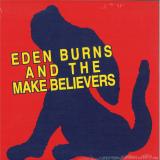
Eden Burns releasing his debut Album titled „Eden Burns & The Makebelievers“. The dance musics prophet, notorious for his ingenious string of club tracks (if you don’t follow —> check the „Big Beat Manifesto“), is gifting the world with yet another, cult creating musical
adventure. Ecstatic beats, melodies that cast a spell on you, if there ever was something to truly, blindly believe in: it’s the power of music? Be Free, set foot into the garden of Eden. All apples are to be bitten, the snakes venom is mildly hallucinogenic. Get your eyes opened for everything that is true enough and beyond. Bless.
Disponibile in Stock e pronto per la spedizione

Slow Motion Records founder Franz Scala announces the infectious, ground-moving LP 'Cafe Futuro', a follow-up to his highly acclaimed debut ‘Mondo Della Notte’. Homage to the influential Neukolln bar and meeting point for Italo and Cosmic disco heads, 'Cafe Futuro' builds upon a bold and innovative sound, showcasing fellow creators and genre-defining artists, solidifying the Italo Aficionados sound, synonymous with the pioneering greats.
Disponibile in Stock e pronto per la spedizione

Slow Motion Records founder Franz Scala announces the infectious, ground-moving LP 'Cafe Futuro', a follow-up to his highly acclaimed debut ‘Mondo Della Notte’. Homage to the influential Neukolln bar and meeting point for Italo and Cosmic disco heads, 'Cafe Futuro' builds upon a bold and innovative sound, showcasing fellow creators and genre-defining artists, solidifying the Italo Aficionados sound, synonymous with the pioneering greats.
Disponibile in Stock e pronto per la spedizione
“Oh my God! Super dope!” - DJ Qbert (Invisibl Skratch Piklz)
Kid Ginseng’s 3rd in a series of sample-delic electro 12»s embracing the sound of the diskette between 8-16 bit sound influenced by DJ Di’jital, Arabian Prince, and the LA X-men which consisted of Unknown DJ and DJ Slip. The whole LA Techno Hop label is a massive influence. Of course compatible with a Detroit electro set. Kid Ginseng is an individual.
Disponibile in Stock e pronto per la spedizione

Parallax explores the shifting boundary between human intuition and algorithmic logic, a space where two perspectives converge and blur until the center is lost. Composed through a hybrid system of voltage-controlled hardware and digital manipulation, the five tracks apply FM synthesis, granular processing, and bit-level degradation to rigid electro structures. Sequences are shaped by modulation instability and clock drift, gradually disrupting pattern integrity and simulating a loss of systemic control. Precise yet disrupted grooves hint at a deeper malfunction, as if something is corrupting the system from within. Parallax is the gap between the human who creates and the algorithm that imitates.
Disponibile in Stock e pronto per la spedizione

Norman Connors' Mr. C is a masterclass in sophisticated modern funk and boogie-infused soul that was way ahead of its time. Originally released in 1981, the album finds the renowned jazz drummer/producer at a creative crossroads, boldly diving deep into street-level boogie-funk without losing his soulful, jazzy touch. What once might have puzzled jazz purists now delights soul/funk aficionados; it has quietly become a cult favourite and now, nearly 45 years later, Mr. C sounds fresher than ever. Brimming with infectious heavy funk, lush arrangements and soul-stirring performances, it's an album that flirts with perfection, ensuring its enduring significance in the boogie/jazz-funk-soul canon.
From its opening moments, Mr. C makes one thing clear: this is Norman Connors at his funkiest. The majority of the album is a straight-up party: think dancefloor-ready beats complemented by punchy horn riffs and slick early-80s boogie vibes. There’s heavy use of synths and drum-machines, demonstrating Connors' gleeful embrace of contemporary funk trends. Each track shines in uniquely thrilling fashion, showcasing Connors’ versatility and happy knack for blending genres whilst crafting unforgettable melodies.
Irresistible thumper “She’s Gone” opens the album with a dyno-Rhodes electric piano groove and a seriously thick boogie-funk rhythm. Lush string accents and horn stabs weave through the funky bassline, while the vocals (handled by a young Beau Williams) soar with gospel-tinged emotion. Over four decades later, it endures as a masterpiece. Living up to its name, the shimmering “Party Town” brings deep Electro-Funk Energy by layering bubbling synth bass and shiny lead synth lines. The groove is downright addictive, a brisk, brass-kissed jam that implores you to move. Up next, the sophisticated funk of “Keep Doin’ It” is a low-slung post-disco glider, propelled by a sleek vibe, leaning into the late-night boogie sound. Funky guitar, tight drumming (with Connors’ jazz-honed chops in the pocket) and smooth vocals urge you to “keep doin'” whatever it is that's working. “Stay with Me” works a bit of island flavour into the mix, riding a thick Caribbean groove complete with tropical percussion and an upbeat tempo that could almost be calypsoul. The fusion of Caribbean rhythm elements into an R&B context demonstrates Connors’ willingness to experiment with global sounds while keeping things soulful and danceable.
Side B opens with the sassy funk-deluxe workout, "Anyway You Want" dripping with that soulful strut. Bringing a real quiet storm swagger, “Sing a Love Song” slows the tempo ever so slightly into a sexy, swaying jazz-funk gem, featuring a young Glenn Jones on lead vocals. The arrangement is elegant, built on warm keys and an undeniable groove. The celestial “Love’s In Your Corner” is all about soulful uplift. Featuring the legendary Jean Carn's powerhouse vocals soaring over a brass-kissed driving funk, it's an R&B burner. The refined, jazzy instrumental “Mr. C” is a slinky, smooth, funk-filled mid-tempo groove, with sax and warm keys gliding effortlessly. Connors combines jazzy arrangements into the post-disco/boogie framework one last time, and the result is sublime. It’s sophisticated and cool and, as a finale, “Mr. C” wraps up the album in classy style.
On release, Mr. C flew under the radar but time has been exceptionally kind to this record. DJs, collectors and soul connoisseurs alike have since rediscovered its magic. As ever, this crucial reissue has been lovingly remastered by Simon Francis, cut by engineer of the year Cicely Balston at Abbey Road Studios and pressed to perfection by Record Industry in Holland. Norman Connors was something truly extra. He was a visionary. And Mr. C is proof.
Disponibile in Stock e pronto per la spedizione

The duo Spill Gold blends drums, synths and vocals into a sonic journey that invites listeners to explore realms of energy exchange. Nina de Jong on drums and Rosa Ronsdorf on vocals and synths joined forces in a collaboration that transcends genres. The music of Spill Gold serves as a woven tapestry of (unheard) voices, inviting you to lean in. The result is a fusion of psychedelic echoes, danceable rhythms, and intricate percussive layers. Their newest album is a result of a need for hope that longs for an anti-anthropocentric and non-patriarchal world. The duo's compositions navigate through cyclical patterns, echoing snakes biting their own skin, volcano's starting to errupt, witches fingers that crumble towers and birds of steel and feather. They invite you into a world where the concept of 'the first' or 'the best' fades away and to join them on their musical journey with no clear beginning or end.
Disponibile in Stock e pronto per la spedizione

For the seventh installment of his Hardspace series, Len Faki selects three standout tracks from his personal vault - polishing them up with signature flair for maximum impact.
The A-side features a powerhouse mix of Jimmy Edgar´s Strike. Len Faki brings extra drive and spatial depth to the mix: sizzling hi-hats pan sharply across a tight stereo field, vocal chops flicker in and out, and the groove is stripped, slick, and forceful. A subtle reverb treatment adds atmosphere without compromising punch.
On the B-side, Faki dives into Robert Armani's 1994 album Right to Silence, revisiting two Chicago-style jacking tracks that are nodding to the Dance Mania era.
Up rides on a fierce hi-hat shuffle and a pounding stomp, centered around a bold vocal loop that captures the rough, battle-cry attitude of classic Chicago jack tracks. Faki's edit sharpens the angles and tightens the structure, giving the track even more bite.
Road Tour originally leaned on a harsh, detuned lead synth. Len´s Hardspace version removes the abrasive top line and lets the looping arp take center stage, which subtly shifts in tone and pans across the stereo field. The groove doesn't push forward so much as it sways side to side, creating a warped sense of motion. A pitched-up vocal sample-half command, half tease-injects just the right dose of jack attitude.
HS007 channels the raw, functional energy of vintage Chicago trax through Faki's modern lens - respectful to its roots, but fully tuned for today's sound systems.
Disponibile in Stock e pronto per la spedizione

From a 4x5m room stacked with vinyl, ashtrays, magazine drafts, and semifunctional synths, Stompin n Risin rises again—reincarnated but not revised.
Originally a spontaneous ritual from the days of blunted dreaming and one-eyeopen ambition, this track first snuck into the world under a different name (Jacobite Fool, courtesy of those tasteful Belgians at International Feel) and went on to become a cult curio. Now, it’s back—rebuilt with the very same machines that once hummed beside the mattress, but still left to run wild like they used to.
The rest of the EP stays close to that spirit: music as lived experience, jammed with friends, lovers, and ex-boyfriends (literally). Lucy’s Electricity is a shimmering daydream, born from a jam with Daniele Labbate, recharged by a whirlwind wedding, and soundtracked by a bittersweet guitar line courtesy of the groom’s bride’s ex. A track for walking into churches—or out of time entirely. A personal favorite of the artist, and maybe the only funeral anthem with this much static joy.
One takes things inward—made with the Moog One for open-air yoga sessions during the era of no-dancing-but-still-dreaming. It’s a sun-dappled, slow-motion dancefloor where breath and bass align. Love 2 Love closes the circle: an unearthed jam with long-time collaborator and platonic supermodel Hanne Uekermann, revived from hard drive purgatory and infused with new life. A love song to the music, the moments, and the friendship behind it.
This record isn’t just a collection of tracks. It’s a lived-in photo album, a soft pulse through oceanic memory, a reminder that all sound comes from life, and maybe all life comes from sound.
Disponibile in Stock e pronto per la spedizione

Synaptic Cliffs is committed to discovering unknown and unreleased music in the future, testing it in the past, and selling it in the present. This is the only way to ensure that art is timeless. The recordings on this cassette, however, were purchased in 2073 from a beautiful woman named pdqb at the Marché aux Puces in Paris for only 0.0000000000000000001 Bitcoin, but on the condition that all the material is distributed on one cassette, namely exactly as described hereinafter: The short tracks from the years 1984 to 1989 are on the A-side, and one of these recordings must be supplemented with vocals by Max Müller, the singer of the infamous Berlin band Mutter. On the B-side, there will be a binaural 16.7-tone music composition from the year 2047. Furthermore, all recordings must be mastered by Mike Grinser. Last but not least, only high-quality chrome tape may be used for production. In August 2027, the music magazine Melody Maker, which will be published again from 2026, will write: " ' Vor dem Punkt ist nach dem Punkt' is a surprisingly singular work with a creative force of near-unprecedented degree. It is one of the most beautiful and best-sounding post-punk albums of the last 40 years, and it is certainly the main reason why we are currently experiencing a huge comeback of post-punk, shoegaze, and goth rock."
Disponibile in Stock e pronto per la spedizione

Opening the EP is ‘Synapse’, a murky dub-tinged techno excursion employing choppy bass stabs, subtly unfurling stab sequences, textural synth tones and a robust rhythm section. ‘Amygdala’ follows and leans into deeper realms with ethereal pads, twitchy acid bass and crisp organic percussion. Opening the B-side is ‘Receptor’, retaining a similarly hypnotic aesthetic via a dynamic bass groove, billowing atmospherics and stripped down drums. Title-cut. ‘Lucid Dreams’ then concludes the EP on a more cinematic tip, bringing bright celestial pads, delicate synth melodies and oscillating bass to the forefront, all underpinned by a raw, reduced and swing drum groove.
Order now. Collecting orders for repress.

At the start of the 1980’s X-Plode’s dad had a second-hand colour TV business in Bolton, Lancashire where he would buy, sell, repair and trade TVs. He would come back home with all kinds of things he had traded for a TV but the most memorable, to a 10 year old kid at that time, were the keyboards. He use to watch his dad play songs from the 1960’s on these keyboards and when his dad had gone out, Lee X-Plode would sneak on them and start messing about, experimenting with the drum programs and fiddling with the buttons, trying out ideas. He had to move fast though because these keyboards didn’t stay in the house for long as his dad would trade them again for something else; one time that was an old analogue echo chamber, which Lee also messed about with when his dad was out. That echo chamber was a revelation to Lee and opened up the possibilities of what was possible with sound. So by the time Lee was 16, he decided he wanted his own keyboard and started saving. When his 17th birthday came around he had saved up £200 and visited his local Argos where he bought himself a Yamaha PSS 680, an FM synthesizer with memory banks and a basic drum machine incorporated. ‘It was shit quality like, but I didn’t mind. I just wanted it for the programmable drum machine, the synth and the memory banks that came with it” Lee recalls. The year was 1987 and by this time in Lee’s life he was into reggae and hip hop, the latter he first embraced in 1983 by the way of breakdancing and listening to electro, so all he wanted to do when he got his gear was make reggae and electro sounding beats. Recalling his youth and the fun he had with the echo chamber, the next edition to his home set up was to acquire one of those, which he did via a mate of his. But by the time he got his minimal set up sorted in 1988, his musical tastes had changed. House music had landed here in UK and this was Lee’s new passion, so from that point on wards he started experimenting, trying to nail a decent house groove. ‘I wanted 808 sounds, but I didn’t know what one was!’ Lee explains.
Around late 1990 or early 1991, Lee started to improve upon his set up, purchasing an Atari STE, a Cheetah MS6 , a 6 voice polyphonic/multi-timbre analogue rack mounted synth that linked up to his Yamaha – “It wasn’t a great bit of kit, I kept getting electric shocks from it. Eventually it just blew up!” Lee had acquired a cracked copy of Cubase on floppy disk from his local computer game shop but struggled with it. “It was so complicated to understand and took me ages to get used to it. I was stoned a lot back then and I just couldn’t concentrate on anything for long” Lee laughs, continuing “I also picked up a 4 channel sampler/sequencer which plugged into the side of the Atari and that’s when I first started sampling, I think this would have been late 1991. I had the Simon Harris ‘Breaks, Beats and Scratches’ vinyl that he put out on Music for Life which were a godsend back then. I was also sampling a lot from cassette tapes, especially reggae. I would also record the Stu Allan show on Key 103FM, one of the main stations broadcasting out of Manchester. He would do a 3 hour show with hip hop and house, and then hardcore house came along. Eventually he dropped the hip hop altogether and it was just house and hardcore. I recorded the shows onto cassette most weeks and started to learn more about how house and hardcore was put together by listening to those shows.”
Disponibile in Stock e pronto per la spedizione

Colemine Records is excited to put out their first 45 with The Charities, a sweet-soul band out of sunny California. The group's sound is a melting pot of cultures, exhibiting a mix of soul, r&b, rock, and funk. The A-side of this 45, 'Fatal Attraction,' explores just that. In some relationships, the very qualities that draw you in can also lead to your destruction. She's captivating_beautiful, intelligent, and charming_but beneath the surface, she's narcissistic and self-centered, with no regard for the pain she causes. When you're lost in the intensity of love, it's easy to overlook these darker traits. But when the time comes for her to move on, she'll strike without hesitation, delivering a blow that cuts deep. Her words, sharp as a knife, tear through your heart with cold precision. As you bleed out, she offers nothing but a final, indifferent goodbye...."It's Not Our Time," on the B, tells the story of two lovers who find themselves at a crossroads, torn apart by the struggles they face in this chapter of their lives. Perhaps in the future, they'll rekindle their love and spark a new flame_one that burns even brighter then before. It's a bittersweet goodbye, with the belief that the distance and time apart will only strengthen their bond when the moment is right.The tracks are produced by Anthony Masino and were recorded at Penrose Recordings in Riverside, CA.
Disponibile in Stock e pronto per la spedizione

Synaptic Cliffs is committed to discovering unknown and unreleased music in the future, testing it in the past, and selling it in the present. This is the only way to ensure that art is timeless. The recordings on this cassette, however, were purchased in 2073 from a beautiful woman named pdqb at the Marché aux Puces in Paris for only 0.0000000000000000001 Bitcoin, but on the condition that all the material is distributed on one cassette, namely exactly as described hereinafter: The short tracks from the years 1984 to 1989 are on the A-side, and one of these recordings must be supplemented with vocals by Max Müller, the singer of the infamous Berlin band Mutter. On the B-side, there will be a binaural 16.7-tone music composition from the year 2047. Furthermore, all recordings must be mastered by Mike Grinser. Last but not least, only high-quality chrome tape may be used for production. In August 2027, the music magazine Melody Maker, which will be published again from 2026, will write: " ' Vor dem Punkt ist nach dem Punkt' is a surprisingly singular work with a creative force of near-unprecedented degree. It is one of the most beautiful and best-sounding post-punk albums of the last 40 years, and it is certainly the main reason why we are currently experiencing a huge comeback of post-punk, shoegaze, and goth rock."
Disponibile in Stock e pronto per la spedizione

The single release from Jimi Tenor's second thematic album on Timmion Records offers two very different moods. "Summer of Synesthesia" takes us back to those dreamy summer days, a natural overpour of sensations mixing together, sounds becoming colors before turning into flavors. Synthesizers grow into delicate layers over Cold Diamond & Mink's rhythm, and when your heart can hardly bear the beauty of it all, Tenor's soft lyric places the cherry on top. "Tsicroxe" on the flipside couldn't be more different, kicking into gear with a demonic organ arpeggio that sounds like you've just been dropped into a Dario Argento scene. Even though the familiar funk from Cold Diamond & Mink eases the dread a bit, when Tenor busts in with the eerie flute solo, the ritual closes in on its conclusion.
The contents of the backwards vocal bits at the end shall be saved for your turntable so make sure to rewind that track, selector! Also Available From Jimi Tenor & Cold Diamond & Mink: Is There Love In Outer Space? 7", Gaia Sunset 7", Is There Love In Outer Space? LP / CD. The single takes listeners on a sonic journey: “Summer of Synesthesia” flows with warm, dreamlike beauty, while “Tsicroxe” dives into intense, mysterious depths, showcasing Tenor’s dynamic range. Blending synth layers with Cold Diamond & Mink’s classic funk rhythms, both tracks bring elements of 70s soundtrack-style tension and ethereal soul, appealing to fans of both cosmic grooves and suspenseful soundscapes. Tenor’s layered synthesizers, haunting flute, and even backward vocal elements add a captivating texture, making “Summer of Synesthesia” b/w “Tsicroxe” a must-have for fans of genre-blending, atmospheric music.
Disponibile in Stock e pronto per la spedizione

Since launching her own club night, “Motivation,” back in 2018, B.AI has played a key role in bringing the underground’s club sounds to her home country, China. While introducing some of the scene's most exciting artists to her local audiences, she emerged as one to look out for as well: first as a DJ and quickly thereafter as a producer. Her original takes – a sensitive, highly personal approach to melody and a knack for playing with expectations – crystallized in a slew of A+ releases and a couple of international tours. This trajectory, shaped by taking matters into her own hands and self-empowerment, now sees a logical next step, with the inception of a label that will also operate under the “Motivation” banner and features her own “Hope” EP as its first release.
Sparkling mallets, with synth-pop quality catchiness, open the title track. Rather than further evolving, their two-bar arrangement gets looped over and again, serving as the foundation for a slick FM bass rhythm and a variety of hooks. Although these incline to the bright, the overall vibe is melancholic. In vintage B.AI style, the aptly titled “Hope” is more ambiguous than its patches suggest. Similarly, the vocal this type of palette would call for ultimately comes in the form of aloof, covert musings. A bit buried in the mix, they are most efficient – just like the tension that keeps brooding underneath the surface.
“Murderbot Diaries 1991” turbocharges four-to-the-floor synthetic drums with an arpeggiated rolling bass. The blue note melody on top feels sequenced via a pocket calculator, and the dissonant, electroclash-reminiscent stabs that follow might sound even more angular. The tune is frantic, sinister – and perhaps above all tongue in cheek. It reaches fever pitch with the arrival of a tubular bell theme between the two breaks.
“Once”’s slomo cutoff modulation on the 16th note mid-bass instantly creates a sultry atmosphere that meshes greatly with the pastel cool of the gently delayed DX7 leads. The energy drifts between effortless control and uncertain outcome. These contrasts are amplified as the drums alternate amidst moderation and beat-repeat rendered havoc.
On “Only We Know,” a progressive sine lead lays out the central motif. Yet as briskly as it appears, it makes way for detuned, gliding square waves taking on the same theme. This outlines the track’s structure: as slightly morphed repetitions keep getting introduced almost haphazardly, a dreamlike, mesmerizing ambience unfolds. Techy drum rhythms and a 101-type bass make sure everything stays fuelled. Within the ingenious tapestry of melodies and new twists, it never loses touch with the dance floor. It illustrates B.AI’s club savvy neatly and is therefore a perfect closer for this EP.
Disponibile in Stock e pronto per la spedizione

1. Watermelon Man
This track version actually came from an improvisation that Allesandro IIona (Keys) made on a live show at RonnieScott's at the start of the year. I think we were were having some issues with one of the monitors on stage and it juststarted making this beeping sound. Then I remember Alleh just came in with that piano riffat the start and the rest was history. This one of thefirst tracks we recorded for the EP and I'm super pleased with how this one turned out. Afterseeing Herbie Hancock live for thefirst time the year before, this felt like the perfect tribute to him!
2. Mandible
The majority of the writing on this album was done at my studio space in Hither Green, where I am every tuesday! I usethis space to record but mainly a space to develop my art. So this EP all came from a few sessions there. We all haveour own creative things going on so it was really great to collaborate as a band and trash out some ideas we had.Mandible is one of my favourite tracks on the EP. It's very simple but leaves us a lot of space to explore some more freeimprovisation. I think in some of my previous recorded music I was more focused on creating well crafted music withgreat melodies and harmony. Whereas here there's a bit more focus on playing as a group and being more explorative inimprovisation. We also didn't have a melody for this track until a week before the recording! Sometimes it just takes awhile tofind that melody or it might just pop into your head one day.
3. Slum
This is a tune that was actually written by myself in 2017/18. Round about that time, I had been playing at a jam night ata warehouse unit in Limehouse called Unit 31. The night was ran by Pianist Raffy Bushman and Drummer Sam Michnikand was focused on hiphop and Jazz fusion. We would usually play a set of instrumental music before it opened up forvocalists and other instrumentalists to come and jam. It was a great place to try out new ideas, so I wrote this tune for itbut we never recorded it. It was really nice to revisit this tune and get it recorded properly at 'That SoundStudios' (Seven Sisters). This track is all about dynamics and a slow build throughout. Descending to more chaos at theend!
4. Red Pistachio
For thefirst two sessions we wrote with a different bass player to Edmondo Cicchetti who is on the recordings. A greatbass player and friend of mine Tom Driessler. This track started kinda exactly how it starts on the record, with that basshook. I'm very influenced by Christian Scott Atunde Adjuah and his melodic writing. Particularly on his album 'StretchMusic'. So this felt really inspired by that album. The chords don't really move around too much until the solo sectionwhere it becomes more like a blues. Then Allesandro get's a bit more loose at the end with the descending sequence.
5. Jerome arrived Late
Quite simply we started writing this tune before Jerome (Drums) arrived late. In the recording session we were a bitundecided about what to do in the solo section. We tried out a few different options before we eventually landed onfeaturing Gabriele Pribetti on Sax. I'm really into his solo on this as it's rhythmically and dynamically really exciting. As Imixed the record it was also a great solo to mess with and run through lots of different plug-ins. There's some weirddelays and phasing going on that and I added some octaves too in places.
Disponibile in Stock e pronto per la spedizione

Disponibile in Stock e pronto per la spedizione

Disponibile in Stock e pronto per la spedizione

Parsley Sounds was the glorious debut album for Mo Wax by Parsley Sound. The album was one of the iconic label’s final releases before it closed in 2003 and locating a clean copy has been extremely tricky of late, unless you're flush enough to drop 150 notes on it. Mercifully, the Be With reissue, put together with invaluable assistance from the group, should remedy this situation. It's a lo-fi, bass-heavy, blunted beat treat, warped with heat haze and dreamy soft-psych and has been criminally under-heard for far too long.
As with most cult-like records, Parsley Sounds has many influential fans, far and wide. From Four Tet and Caribou to NTS's modern day breakfast hero Flo Dill, its reputation has only grown in stature. At the time, the notoriously hard-to-please Pitchfork garlanded it with a scarcely achievable 8.8 whilst, just recently, the Numero Group's Rob Sevier described it as a "visionary bit of proto-Salvia Palth (or Steve Lacy)" via a Ghostly International missive.
Parsley Sound comprised super-talented duo Preston Mead and Dan Sargassa. They released an early single (the perfect "Twilight Mushrooms", featured here) on Warp Records as Slum, before signing to Mo Wax. Hidden behind a wall of sound - fuzzy layers of beats, bleeps and symphonic synths - they were convinced they made mainstream pop music. And, in many respects, Parsley Sounds really is a beautiful pop album. It overflows with memorable, gorgeous melodies and inspired songcraft. As the contemporaneous Pitchfork review correctly had it: "Parsley Sounds is one of those rare records that manage to sound modest while frequently pushing the sonic envelope."
Killer opener "Ease Yourself And Glide" is a thing of aching, soft-psych, wonky beat-beauty. A melodic masterpiece, part Crosby, Stills & Nash, part proto-Koushik, it presents a melancholy falsetto, surging bass and blunted lead guitar. As it climaxes, gorgeous strings are ushered in to see us out. Sublime. "Twilight Mushrooms" is up next and it's an acid-drenched, strung-out acoustic-led campfire wonder. Amid layers of tape-hiss and beautiful, sun-dappled strings, its understated vocal track provides a haze of wistful innocence.
The breezy "Spring's Near" is a krautrock-inspired chiming instrumental of heavenly excellence, its warm, skipping, motorik groove and dreamy synths completely infectious. Another total highlight, the technicolour "Yo Yo" initially presents itself as a more abstract, bleepy offering but as it organically swells into ever more beautiful places, with the addition of a choppy insistent drum loop, flute bursts, horns and sweeping strings, it puts one in mind of early Manitoba and Four Tet releases. Shimmering, blissed-out greatness.
The celestial harmonies and glistening harps of the wonderfully beatless, serenely sullen "Ocean House" are very much in conversation with late-60s meditative psych whilst, closing out Side A, the jaw-dropping, lushly experimental effort "Find The Heat" comes on like Arthur Russell meets Brian Wilson. Yep, *that* good.
Side B opens with the warped, bleepy "Stevie", a brief but beautifully wonky, soulful and intricate instrumental. The more upfront vocals that propel the fuzzy "Platonic Rate" have a refreshing swagger to them, the heavy bass and neck-snapping in-the-red beats too much for any system to deal with whilst the guitars and strings have a sweeping, cinematic feel which just beguiles. The slow, urbane soul of "Candlemice" will stop you in your tracks, no matter what you're doing. It carries a delicate sadness, as does much of the album in that classic "down lifting" style we so love here at Be With.
The fuzzing, buzzing "Templechurchmansions" is a searing, soulful dubwise detonation. Heavily stoned with slow-burning jazzy snatches and a tense, moody atmosphere, it's a Tricky-adjacent gem. The album rounds out brilliantly with the ominous instrumental "Neon Breeze" before giving way to the propulsive, almost incongruous punk-funk / disco-dub of secret "untitled" track "Caution", a scratchy, smacked-out groove-fuelled workout with a female vocal dripping with 'tude. Just sensational.
Under the watchful eye - and attentive ears! - of Parsley Sound themselves, the audio for Parsley Sounds has been carefully mastered by Be With regular Simon Francis, with a few much needed tweaks here and there, according to the artist's wishes. Cicely Balston's expert skills have made sure nothing is lost in the cut whilst the records have been pressed to the highest possible standard at the always stellar Record Industry in Holland.
Preston and Dan always thought the colours on the first vinyl pressing looked a bit "washed out" vis-a-vis the original artwork which was way more vibrant. We feel we've got it popping back to the original intention with the restoration work here at Be With HQ. So with the audio and artwork now approaching completeness after 20 years, this long overdue re-issue could be considered its definitive vinyl release.
Disponibile in Stock e pronto per la spedizione
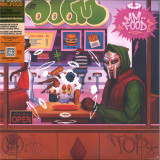
Das 2004 erschienene MM..FOOD von MF DOOM wird inzwischen als Hip-Hop Klassiker-Album voller einfallsreicher Produktion, brillanter Wortspiele und einzigartiger Themen gewürdigt. Gefeiert für seine nahtlose Mischung aus Humor, Witz und sozialem Kommentar, entführt das Album den Hörer in eine bizarre Welt voller Lebensmittel-Metaphern und zeichnet ein bitter-komödiantisches Porträt eines Lebens, das von Laster, Gewalt und Eifersucht verdorben ist. Ein brillantes und damals neuartiges Konzept, das DOOM viel Raum zur Erkundung der Themen des Albums gab. Im Verlauf von MM..FOOD bettet DOOM komplexe Ideen in scheinbar einfache Erzählungen ein. Der Album-Opener "Beef Rapp" ist eine vielschichtige Metapher, die den Hörer an die Gefahren erinnert, die mit der Verherrlichung von Konflikten verbunden sind, insbesondere im Rap. "Hoe Cakes" leiht sich seinen Namen von den süßen, mit heißem Wasser gefüllten Maismehlfladen, die er als Symbol benutzt, um über Genuss und Exzess zu reimen. Mit dem von Madlib produzierten "One Beer" setzt DOOM das Motiv fort, um Schichten von Tiefe über Eskapismus und Ego zu falten, während das populäre "Rapp Snitch Knishes" die Verkaufsdiskriminierung und widersprüchlichen Verhaltensweisen einiger Rapper kritisiert. Insgesamt ist MM..FOOD sowohl ein sozialer Kommentar als auch ein Stück Gesellschaftssatire, das MF DOOMs Fähigkeit unter Beweis stellt, ernste Themen mit seinem einzigartigen, verspielten lyrischen Stil zu verbinden. Zur Feier des 20-jährigen Jubiläums des Albums wurde MM..FOOD mit einem komplett neuen Artwork von Sam Rodriguez neu verpackt!
Disponibile in Stock e pronto per la spedizione

Belt drive DJ turntable with USB interface and recording software, silver
Built-in USB port and phono preamplifier, for a high-quality and convenient digitization of analog vinyl records
Plug & play: no driver installation required, unit is identified automatically
Sampling rates of 44.1 kHz and 48 kHz in stereo, resolution: 16 bits
Incl. software for recording and editing
2 speeds, pitch control ±10 %
Large start/stop button
Strobe lamp for exact speed adjustment
Adjustable anti-skating
Shock-absorbing feet
Switchable phono/line output
Delivery includes removable acryl dust cover, pick-up system, RCA and USB cable
USB 1.1 support
Suitable for Windows XP, Vista, 7, 8, 10 and Mac OS X
the device can be connected via USB to the PC
Power supply: 115/230 V AC, 50/60 Hz
Power consumption: 8.00 W
Protection class: Protection class II
Power connection: Fixed Power supply cord with Euro plug
Frequency range: 20 - 20000 Hz
Drive type: Belt Drive
Brushless DC motor
Drive: Start time: 1 sec.
Stop time: 1 sec.
Speed change time: <1s 1khz 5cm/sec
Wow and flutter: <0.25 % WRMS
Rumble: 50 dB DIN B
Speed: 33 RPM, 45 RPM
Tonearm: S-shape with Cardan''s suspension
Length: 220
Overhang: 10 mm
stylus pressure: 3-4 g
output level: phono 1.5-3.6 mV/ 1 kHz 5 cm/sec
line 90-216 mV/ 1 kHz 5 cm/sec
Color: Silver
Connections: Output: line/phono via Stereo RCA
Output: via USB B (W) mounting version
Pitchrange: ±10%
USB port: 1 x USB 1.1, Typ B
Material: Plastic
PC connect: via USB
Width: 45 cm
Height: 14.5 cm
Depth: 36 cm
Weight: 3.90 kg
Turntable platter
Material: Plastic
Diameter: 33 cm
Disponibile in Stock e pronto per la spedizione

Belt drive DJ turntable with USB interface and recording software, black
Built-in USB port and phono preamplifier, for a high-quality and convenient digitization of analog vinyl records Plug & play: no driver installation required, unit is identified automatically
Sampling rates of 44.1 kHz and 48 kHz in stereo, resolution: 16 bits
Incl. software for recording and editing
2 speeds, pitch control ±10 %
Large start/stop button
Strobe lamp for exact speed adjustment
Adjustable anti-skating
Shock-absorbing feet
Switchable phono/line output
Delivery includes removable acryl dust cover, pick-up system, RCA and USB cable
USB 1.1 support
Suitable for Windows XP, Vista,7, 8, 10 and Mac OS X
the device can be connected via USB to the PC
Power supply: 115/230 V AC, 50/60 Hz
Power consumption: 8.00 W
Protection class: Protection class II
Power connection: Fixed Power supply cord with Euro plug
Frequency range: 20 - 20000 Hz
Drive type: Belt Drive
Brushless DC motor
Drive: Start time: 1 sec.
Stop time: 1 sec.
Speed change time: <1s 1khz 5cm/sec
Wow and flutter: <0.25 % WRMS
Rumble: 50 dB DIN B
Speed: 33 RPM, 45 RPM
Tonearm: S-shape with Cardan''s suspension
Length: 220
Overhang: 10 mm
stylus pressure: 3-4 g
output level: phono 1.5-3.6 mV/ 1 kHz 5 cm/sec
line 90-216 mV/ 1 kHz 5 cm/sec
Color: Black
Connections: Output: line/phono via Stereo RCA
Output: via USB B (W) mounting version
Pitchrange: ±10%
USB port: USB 1.1, Typ B
Material: Plastic
PC connect: via USB
Width: 45 cm
Height: 14.5 cm
Depth: 36 cm
Weight: 3.95 kg
Turntable platter
Material: Plastic
Diameter: 33 cm
Disponibile in Stock e pronto per la spedizione

It is 1983 and you've just stepped into your Ford Capri with your girlfriend Julie. You live in Harlow, but in your head you're really somewhere near Salou in Spain, next to your yacht. But the thing you really love is soul and they play nothing but at Sups in Loughton. OK, so It's not 1983 at all. It's 2014, but listening to this electrofied soul, will put you back in the zone. Tom Findlay, one half of Grammy-nominated Groove Armada, has put this collection together: a stamp of authenticity in itself. Tom has also put a few of these through the edit wringer, reworking many of the tunes for maximum towelling sockability.
You'll probably recognise a few tunes. There's Mtume's incredible 'Juicy Fruit', still sounding advanced and modern, while 'I Specialize In Love, mixed by disco legend Tee Scott, is even older yet sounds equally perky.
The 1980s was a period that was pretty much owned by Minneapolis thanks to Prince and former cohorts Jam & Lewis and the latter weigh in with a pair of killer productions, Thelma Houston's 'You Used To Hold Me So Tight' and Alexander O'Neal's 'What's Missing'. And since this is Late Night Tales, there is always our exclusive cover version, this time done by Findlay and Tim Hutton's Sugardaddy, who've delivered an ace version of 'Don't Look Any Further'.
Grab yourself a bar stool, order a cocktail, take a sip and make believe you're lying on a shagpile carpet with the soul star of your dreams.
Bill Brewster
Automatic Soul, like my previously compiled Late Night Tales Music For Pleasure, is based very much on a sound. It's a sound that I feel has been overlooked: 80s R&B-infused music, with drum machines, synths and invariably brilliant vocals. It's formed the bedrock of my rare groove sets for all the years I've played. It's not the most fashionable, but to me it's the perfect marriage of technology and soul, hence the title for this album, Automatic Soul. There are plenty of songs I could have included, and no doubt some that I shouldn't, but I've tried to represent what's best to me from this era. It's not a classic Late Night Tales. It's a pretty personal journey, which I hope some of you might be willing to share... Tom Findlay Groove Armada September 2014.
Disponibile in Stock e pronto per la spedizione

shipping to EU only!
Xone:96. The long-awaited follow-up to a genuine club classic.
A new, uncompromising analogue DJ mixer, destined to be the heart of your creativity, Xone:96 takes the legendary soul of the acclaimed Xone:92 and redelivers it, enhanced, and with state-of-the-art digital connectivity.
It’s all here. The huge, detailed, space-shaking analogue sound that only Xone delivers. A refined, precision 4-band EQ. Unrivalled dual Xone:VCF filters with CRUNCH harmonic distortion. And a dual 32-bit USB soundcard (24 Channels @ 96kHz) with Traktor Scratch certification right out of the box.
Xone:96 lets you connect your whole rig, from laptops and turntables, to pedals, synths and drum machines.
Two dedicated FX sends, four stereo input channels (with 4-Band EQ), two stereo input channels with all new 3-Band Parametric EQ + two auxiliary stereo return channels. And a separate master insert for your outboard hardware.
Explore new possibilities with a familiar layout of beautifully tactile controls. And rely on the industrial build quality that exceeds the demands of relentless back-to-back performances, night after night.
Xone96: You mixed. We listened.
Features:
• Type Analogue
• Channels 6 + 2
• EQ
o Channel 1-4, 4-Band EQ
o Channel A-B, 3-Band Parametric EQ
• USB Soundcards Dual 24 Channel (12 in / 12 out)
o Hi-Speed USB2.0 / Mac Class Compliant
o 32bit / 96kHz
o MIDI over USB
• Line Inputs 4 x RCA (CH 1-4)
o 4 x 1/4″ TRS (CH A-D) Mono/Stereo
• Phono Inputs 4 x RCA (CH 1-4)
o LN/PH Switch for DVS
• USB Inputs 6 x USB (CH 1-4 + CH A – CH B)
• Mic Input 2 x XLR
• Master Output 1 x XLR (Balanced)
• Master 2 Output 1 x 1/4″ TRS (Balanced)
• Booth Output 1 x 1/4″ TRS (Balanced)
• Record Output 1 x RCA (Un-balanced)
• Master Insert 1 x 1/4″ TRS
• MIDI Out 1 x 5-Pin DIN
• Send/Return I/O
o 2 x 1/4″ TRS Send
o 4 x 1/4″ TRS Return
o 1 x LN/Hi-Z Switch (SND1/RTNA)
o Filter 2 x VCF Filter
o HPF / BPF / LPF
o Adjustable Frequency & Resonance
o Assignable CH 1-4 + CH A-B
o CRUNCH (Controlled Harmonic Signal Distortion)
• X-Link 1 x RJ45
• Headphones 2 x 1/4″
o 2 x 3.5mm
o Split Cue Monitoring
• Channel Faders 60mm VCA / Replaceable
• Chanel Meters 9 Segment LED
• Channel Fader Curve 3 Types
• X-Fader InnoFADER / 45mm VCA / Replaceable
• X-Fader Curve 3 Types
• Earth Ground Terminals x 2
• Headroom 20dB
• AC Mains
o 100 to 240V
o AC 50/60Hz
o Consumption 45W max
o Mains Adaptor 3 pin IEC socket
• Height 109mm / 4.3″
• Width 336mm / 13.25″
• Depth 410mm / 16.2″
• Weight 7kg / 15.4 lbs.
Disponibile in Stock e pronto per la spedizione
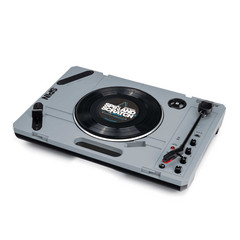
Features
Portable turntable for vinyl lovers & scratch artists
Mobile fun with your turntable, anywhere you go
Outstanding for mobile scratching and cutting
Out of the box: comes with 7'' scratch vinyl, pre-installed 45-mm-crossfader & cartridge, integrated speaker, Bluetooth audio receiver, USB recording function, slipmat, and dust cover
High-grade 7''-scratch-record: professionally recorded samples for scratching and beats for juggling
Bluetooth audio streaming: wireless streaming of music or beats to the device
Smart USB recording: direct recording of scratches & cuts to USB in MP3 format
Can also be used for digitizing vinyl
Integrated speaker on the turntable's left
3 selectable speeds (33 1/3, 45 & 78 rpm)
Extremely stable tone arm with transport lock
Cartridge with excellent tracking features
Precise 45-mm-crossfader with two-rail glide technology
Crossfader can be installed on preferred side (both-way)
Two headphones connections for listening and monitoring
AUX input facilitates connection of several turntables (daisy chain)
Easy battery charging via USB PSU or USB power bank (sold separately)
Installed start/stop button
Precise speed adjustment via pitch control with +/-20 %
Tone control to adjust low frequencies by +/- 10 dB
Volume control for AUX input and master/headphones
Power LED indicates the turntable's operational status
7'' record puck adaptor with holder
Anti-skip rubber feet for secure stand
Especially sturdy and portable shape factor with optional battery operation
Additional protection thanks to dust cover; can be transported via carrying handle when closed
Locking of dust cover for safe transport
Can be operated with regular USB PSU (5 V, 2 A), USB power bank or batteries (sold separately)
Batteries can be inserted into battery compartment on the device's bottom 2x Li-Ion 18650 (sold separately)
Incl. 7'' scratch vinyl, pre-installed cartridge, slipmat, dust cover, puck adapter, USB cable, instruction manual and Super Spin Duck Looper app
Technical Data
Belt drive
Inputs: AUX 3.5 mm stereo, Bluetooth audio
Outputs: master RCA, USB (USB-A), headphones 3.5/6.3 mm stereo
Recording format: MP3 with 192 kbit/s
Recording quality: 16 bit / 44.1 kHz
Battery type: 2x Li-Ion 18650 (batteries sold separately)
Power supply: 5 V, 2 A micro USB (PSU sold separately)
Dimensions: 370 x 95 x 260 mm
Weight: 2 kg
Disponibile in Stock e pronto per la spedizione

The latest offering from Astral Black comes in the form of the 'Metropolis N' LP, courtesy of Queens, New York's number premier importer/exporter of Jungle & D&B, NIGELTHREETIMES. Having initially garnered a name for themselves as one of New York City's most versatile club DJ's, with the release of their 'Call Of The Void; project in 2020 Nigel also began to build a reputation as a producer in their own right. Resulting in residencies on Rinse FM & The Lot Radio, radio support from the likes of Tom Ravenscroft & Uniiqu3 and press support from Resident Advisor, OkayPLAYER & Mixmag – amplifying their talents throughout New York City and beyond.
With 'Metropolis N' NIGELTHREETIMES distills their eclectic influences through the lens of rolling 160bpm breaks – taking in Jazz, 8-bit game soundtrakcs, science fiction & jump up D&B. Starting off the LP with the rhodes tinged double header of 'TSQ MELTDOWN' & 'EARLY MORNING FROM 103RD STREET', the latter featuring some of the best double bass work heard on a jungle track since 'Brown Paper Bag'. Elsewhere, on 'ROAD2RAILS' and 'PHANTOM SHORES', the producer ditches the instrumentation in favour of oscillated square waves, dubbed out vocal FX & 8-bit melodies, without ever losing site of the projects underlying sense of optimism. On the album closer 'INTERNATIONAL SPACE STATION', 3X manages to bring together the influences heard throughout the project, tying together a muted rhodes chords, squarewave basslines, flutters of alien melodies and finely tuned, slices breakbeats into a 5 minute symphony.
The consistency and exacting production skills heard throughout the offering elevate this project from another drop in the digital ocean to a landmark opus, from a producer carrying the torch for this timeless sound and making the project worthy of a spot alongside some of the classics this genre has produced.
'Metropolis N' is available Oct 13th on digital and limited edition vinyl via Astral Black.
Disponibile in Stock e pronto per la spedizione

Expanding an ever-evolving discography of cutting edge minimal house and techno, Modeight adds another brilliant release to the fold. This time beamed in from Spain-based groover Loopdeville.
People familiar with his work on Bodyparts, Rotate and his own imprint Delooped, will certainly be excited to wrap their ears around this freshly minted three-tracker. Opening with the low-slung, breakbeat jam 'Incase', Loopdeville injects his characteristic funk and fun-loving vocal flair into the A-side cut. Creating an irresistible dancefloor destroyer.
On the B-side, we begin with the swooning tones of 'Cleansing'. Lacing airy atmospherics and tonal key strokes over a seductive bassline roll. Finally B2's 'The Bounce' is every bit as elastic as its title suggests. With a buoyant breakbeat rhythm underpinning stuttered vocals, and ghostly tonal dissonances. Back with the fire once more, Loopdeville has found the perfect platform on Modeight for his enigmatic.
Disponibile in Stock e pronto per la spedizione

Perugia producer, synth collector and linchpin of the underground scene Feel Fly pokes his head above the trenches to deliver a consummate four track EP Mediterranean Dreams - Part 1.
Onironauta rolls up all the best bits of spaced-out disco and italo house into an expansive dancefloor soundtrack that would sound equally at home in a Den Haag squat as by an Ibizan hillside pool. Sounding in turns both futuristic and nostalgic, it sets the tone for the dream-like timezone in which this EP resides.
Meanwhile slowed-down 303 chugger Grace In Space sounds perfect for Room 2 - that is, if the room is on an orbiting space station and someone adjusted the gravity settings. The track concludes the side with timeless balearic drift and a dash of kosmiche afro percussion sprinkled on top.
Flip the 12” over and the title track Mediterranean Dreams seeps through, with more than a slight nod to the summer of ‘88, like a faded photograph. The revolving chord progression and melodic synth phrases that weave through the groove fit together sweeter than the cogs in a swiss watch.
EP closer Becalmed rounds proceedings out in fine cosmic disco style, firing more 16th note lasers through the dry ice than KITT, as melancholic pads float over the rhythm section like a négligée. It’s a stylish way to sign off a collection of tracks that are equal parts fond memory, hopeful optimism, and hazy dance-fuelled hedonism.
Disponibile in Stock e pronto per la spedizione

13 Jahre nach seinem letzten Longplayer "Drukqs" (2001) veröffentlicht Aphex Twin sein mit Spannung erwartetes neues Album "Syro", das mit einer fantasievollen Outdoor- und Online-Teaserkampagne häppchenweise kommuniziert wird. Musikalisch bietet der Aphex Twin elektronische Abstraktion in Perfektion. Glasklarer, präziser Sound, technisch auf dem neuesten Niveau, teils superfunky, immer hochintensiv. Es folgt dem Überraschungsrelease des bislang unveröffentlichten Albums "Caustic Window", das dieses Jahr Millionen von Klicks und über 100.000 US-Dollar per Crowdfunding und Auktion einsammeln konnte.
Disponibile in Stock e pronto per la spedizione
dovrebbe essere pubblicato su 30.05.2026

REPRESS ON SILVER VINYL . COMES WITH 24”x24” POSTER + DOWNLOAD CARD + GATEFOLD JACKET.
On The Beths’ album Expert In A Dying Field, Elizabeth Stokes’ songwriting positions her somewhere between being a novelist and a documentarian. The songs collected here are autobiographical, but they’re also character sketches of relationships – platonic, familial, romantic – and more importantly, their aftermaths. The shapes and ghosts left in absences. The question that hangs in the air: what do you do with how intimately versed you’ve become in a person, once they’re gone from your life?
The third LP from the New Zealand quartet houses 12 jewels of tight, guitar-heavy songs that worm their way into your head, an incandescent collision of power-pop and skuzz. With Expert, The Beths wanted to make an album meant to be experienced live, for both the listeners and themselves. They wanted it to be fun -- to hear, to play -- in spite of the prickling anxiety throughout the lyrics, the fear of change and struggle to cope.
Most of Expert was recorded at guitarist Jonathan Pearce’s studio on Karangahape Road in Tāmaki Makaurau, Aotearoa (Auckland, New Zealand) -- and sometimes in the building's cavernous stairwell at 1am -- toward the end of 2021, until they were interrupted by a four-month national lockdown. They traded notes remotely for months, songwriting from afar and fleshing out the arrangements alone, the first time they’d written together in such a way. The following February, The Beths left the country for the first time in more than two years to tour across the US, and simultaneously finish mixing the album on the road. That latter half felt more collaborative, with everyone on-hand to trade notes in real time, until it all culminated in a chaotic three-day studio mad-dash in Los Angeles. There, Expert finally became the record they were hearing in their heads.
Expert is an extension of the same skuzzy palette the band has built across their catalog, pop hooks embedded in incisive indie rock. The album’s title track “Expert In A Dying Field” introduces the thesis for the record: “How does it feel to be an expert in a dying field? How do you know it’s over when you can’t let go?” Stokes asks. “Love is learned over time ‘til you’re an expert in a dying field.”
The rest is a capsule of The Beths’ most electrifying and exciting output, a sonic spectrum: “Your Side” is a forlorn and sincere love song, emotive; while “Silence is Golden,” with its propulsive drum line and stop-start staccato of a guitar line winding up and down, is one of the band’s sharpest and most driving. “When You Know You Know” skews a bit groovier, pure pop and a natural addition to the band’s live set. “Knees Deep” was written last minute, but yields one of the best guitar lines on Expert. There’s a certain chaos across the 12 tracks, the palpable joy of playing music with long-time friends colliding with the raw nerves of pain.
Stokes strings it all together through her singular songwriting lens, earnest and self-effacing, zeroing in on the granules of doubt and how they snowball. Did I do the wrong thing? Or did you? And are we still good people at the end of it? She isn’t interested in villains, but instead interested in just telling the story. That insecurity and thoughtfulness, translated into universality and understanding, has been the guiding light of The Beths’ output since 2016. In the face of pain, there’s no dwelling on internal anguish - instead, through The Beths’ music, our shortcomings are met with acceptance. And Expert In A Dying Field is the most tactile that tenderness has been.
dovrebbe essere pubblicato su 15.05.2026
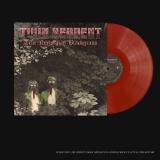
“Weird, rowdy and just a little bit black metal” – TWIN SERPENT’s sophomore album out in May via Svart Records Facilitating country influences and the energy of punk, Twin Serpent is a noisy but cute outsider band that manages to blur genre boundaries. Inspired by the likes of The Taxpayers and 16 Horsepower, this crust-country band applies lo-fi black metal aesthetics without having to bathe in blood. Songs about love, betrayal and defiance are delivered with acoustic to amp-wall dynamics, duelling vocal harmonies, shrieking solos and distorted banjos. The debut album Feels Like Heaven, North Of Hell (2022, Loyal Blood Records) was described by the press as genre-defying and compared to bands like GY!BE and Tom Waits. The sophomore TRUE NORWEGIAN BLACKGRASS turns the volume to twelve and the trainbeat races down the tracks at a derailing speed. Covering topics on windmill resistance, porn industry and post-Trump America accompanied by playful country punk with a twinkle in the eye, laced with cosmic and occult undertones. “We’re super happy to finally unbox our sophomore weirdo rocker! And we’re specially stoked to do so on the amazing Svart Records! This particularly hits home with Timo who was born in Finland.
There’s even a song in Finnish on the album, which came out great! The artwork is amazing and everything is there for a reason. We recorded it during the year of the serpent at Piir studio, just a 5-minute walk from our home in Svartlamon, Trondheim, NO. Vebjørn Svanberg Numme aka the wizard technician did an amazing job capturing the essence of the Twins during a hot summer week. 12 songs about love, betrayal and black holes with country licks, rock’n’roll kicks and heaps of punk attitude is the result and we’re super proud to present the first tease from it! We’ve kept things close to home as our resident artist Hanna and designer Tony did the cover art! It’s weird, rowdy and just a little bit black metal", comments the band on the new album. With a slew of sold out shows in their hometown of Trondheim, the band is delighted to spread their cosmic gospel to the people! Twin Serpent goes hard with in-your-face attitude and fits in barn dances as well as punk festivals!
dovrebbe essere pubblicato su 08.05.2026

“Weird, rowdy and just a little bit black metal” – TWIN SERPENT’s sophomore album out in May via Svart Records Facilitating country influences and the energy of punk, Twin Serpent is a noisy but cute outsider band that manages to blur genre boundaries. Inspired by the likes of The Taxpayers and 16 Horsepower, this crust-country band applies lo-fi black metal aesthetics without having to bathe in blood. Songs about love, betrayal and defiance are delivered with acoustic to amp-wall dynamics, duelling vocal harmonies, shrieking solos and distorted banjos. The debut album Feels Like Heaven, North Of Hell (2022, Loyal Blood Records) was described by the press as genre-defying and compared to bands like GY!BE and Tom Waits. The sophomore TRUE NORWEGIAN BLACKGRASS turns the volume to twelve and the trainbeat races down the tracks at a derailing speed. Covering topics on windmill resistance, porn industry and post-Trump America accompanied by playful country punk with a twinkle in the eye, laced with cosmic and occult undertones. “We’re super happy to finally unbox our sophomore weirdo rocker! And we’re specially stoked to do so on the amazing Svart Records! This particularly hits home with Timo who was born in Finland.
There’s even a song in Finnish on the album, which came out great! The artwork is amazing and everything is there for a reason. We recorded it during the year of the serpent at Piir studio, just a 5-minute walk from our home in Svartlamon, Trondheim, NO. Vebjørn Svanberg Numme aka the wizard technician did an amazing job capturing the essence of the Twins during a hot summer week. 12 songs about love, betrayal and black holes with country licks, rock’n’roll kicks and heaps of punk attitude is the result and we’re super proud to present the first tease from it! We’ve kept things close to home as our resident artist Hanna and designer Tony did the cover art! It’s weird, rowdy and just a little bit black metal", comments the band on the new album. With a slew of sold out shows in their hometown of Trondheim, the band is delighted to spread their cosmic gospel to the people! Twin Serpent goes hard with in-your-face attitude and fits in barn dances as well as punk festivals!
dovrebbe essere pubblicato su 08.05.2026

UILTY RAZORS, BONA FIDE PUNKS.
Writings on the topic that go off in all directions, mind-numbing lectures given by academics, and testimonies, most of them heavily doctored, from those who “lived through that era”: so many people today fantasize about the early days of punk in our country… This blessed moment when no one had yet thought of flaunting a ridiculous green mohawk, taking Sid Vicious as a hero, or – even worse – making the so-called alternative scene both festive and boorish. There was no such thing in 1976 or 1977, when it wasn’t easy to get hold of the first 45s by the Pistols or the Clash. Few people were aware of what was happening on the fringes of the fringes at the time. Malcolm McLaren was virtually unknown, and having short hair made you seem strange. Who knew then that rock music, which had taken a very bad turn since the early 1970s, would once again become an essential element of liberation? That, thanks to short and fast songs, it would once again rediscover that primitive, social side that was so hated by older generations? Who knew that, besides a few loners who read the music press (it was even better if they read it in English) and frequented the right record stores? Many of these formed bands, because it was impossible to do otherwise. We quickly went from listening to the Velvet Underground to trying to play the Stooges’ intros. It’s a somewhat collective story, even though there weren’t many people to start it.
The Guilty Razors were among those who took part in this initial upheaval in Paris. They were far from being the worst. They had something special and even released a single that was well above the national average. They also had enough songs to fill an album, the one you’re holding. In everyone’s opinion, they were definitely not among the punk impostors that followed in their wake. They were, at least, genuine and credible.
Guilty Razors, Parisian punk band (1975-1978). To understand something about their somewhat linear but very energetic sound, we might need to talk about the context in which it was born and, more broadly, recall the boredom (a theme that would become capital in punk songs) coupled with the desire to blow everything off, which were the basis for the formation of bands playing a rejuvenated rock music ; about the passion for a few records by the Kinks or the early Who, by the Stooges, by the Velvet mostly, which set you apart from the crowd.
And of course, we should remember this new wave, which was promoted by a few articles in the specialized press and some cutting-edge record stores, coming from New York or London, whose small but powerful influence could be felt in Paris and in a handful of isolated places in the provinces, lulled to sleep by so many appalling things, from Tangerine Dream to President Giscard d’Estaing...
In 1975-76, French music was, as almost always, in a sorry state ; it was still dominated by Johnny Hallyday and Sylvie Vartan. Local rock music was also rather bleak, apart from Bijou and Little Bob who tried to revive this small scene with poorly sound-engineered gigs played to almost no one.
In the working class suburbs at the time, it was mainly hard rock music played to 11 that helped people forget about their gruelling shifts at the factory. Here and there, on the outskirts of major cities, you still could find a few rockers with sideburns wearing black armbands since the death of Gene Vincent, but it wasn’t a proper mass movement, just a source of real danger to anyone they came across who wasn't like them. In August 1976, a festival unlike any other took place in Mont-de-Marsan – the First European Punk Festival as the poster said – with almost as many people on stage as in the audience. Yet, on that day, a quasi historical event happened, when, under the blazing afternoon sun, a band of unknowns called The Damned made an unprecedented noise in the arena, reminiscent of the chaotic Stooges in their early adolescence. They were the first genuine punk band to perform in our country: from then on, anything was possible, almost anything seemed permissible.
It makes sense that the four+1 members of Guilty Razors, who initially amplified acoustic guitars with crappy tape recorder microphones, would adopt punk music (pronounced paink in French) naturally and instinctively, since it combines liberating noise with speed of execution and – crucially – a very healthy sense of rebellion (the protesters of May 1968 proclaimed, and it was even a slogan, that they weren’t against old people, but against what had made them grow old. In the mid-1970s, it seemed normal and obvious that old people should now ALSO be targeted!!!).
At the time, the desire to fight back, and break down authority and apathy, was either red or black, often taking the form of leafleting, tumultuous general assemblies in the schoolyard, and massive or shabby demonstrations, most of the time overflowing with an exciting vitality that sometimes turned into fights with the riot police. Indeed, soon after the end of the Vietnam War and following Pinochet’s coup in Chile, all over France, Trotskyist and anarcho-libertarian fervour was firmly entrenched among parts of the educated youth population, who were equally rebellious and troublemakers whenever they had the chance. It should also be noted that when the single "Anarchy in the UK" was first heard, even though not many of us had access to it, both the title and its explosive sound immediately resonated with some of those troublemakers crying out for ANARCHY!!! Meanwhile, the left-wing majority still equated punks with reckless young neo-Nazis. Of course, the widely circulated photos in the mainstream press of Siouxsie Sioux with her swastikas didn’t necessarily help to win over the theorists of the Great Revolution. It took Joe Strummer to introduce The Clash as an anti-racist, anti-fascist and anti-ignorance band for the rejection of old-school revolutionaries to fade a little.
The Lycée Jean-Baptiste Say at Porte d’Auteuil, despite being located in the very posh and very exclusive 16th arrondissement of Paris, didn’t escape these "committed" upheavals, which doubled as the perfect outlet for the less timid members of this generation.
“Back then, politics were fun,” says Tristam Nada, who studied there and went on to become Guilty Razors’ frontman. “Jean-Baptiste was the leftist high-school in the neighbourhood. When the far right guys from the GUD came down there, the Communist League guys from elsewhere helped us fight them off.”
Anything that could challenge authority was fair game and of course, strikes for just about any reason would lead to increasingly frequent truancy (with a definitive farewell to education that would soon follow). Tristam Nada spent his 10th and 11th unfinished grades with José Perez, who had come from Spain, where his father, a janitor, had been sentenced to death by Franco. “José steered my tastes towards solid acts such as The Who. Like most teenagers, I had previously absorbed just about everything that came my way, from Yes to Led Zeppelin to Genesis. I was exploring… And then one day, he told me that he and his brother Carlos wanted to start a rock band.” The Perez brothers already played guitar. “Of course, they were Spanish!”, jokes their singer. “Then, somewhat reluctantly, José took up the bass and we were soon joined by Jano – who called himself Jano Homicid – who took up the rhythm guitar.” Several drummers would later join this core of not easily intimidated young guys who didn’t let adversity get the better of them.
The first rehearsals of the newly named Guilty Razors took place in the bedroom of a Perez aunt. There, the three rookies tried to cover a few standards, songs that often were an integral part of their lives. During a first, short gig, in front of a bewildered audience of tough old-school rockers, they launched into a clunky version of the Velvet Underground's “Heroin”. Challenge or recklessness? A bit of both, probably… And then, step by step, their limited repertoire expanded as they decided to write their own songs, sung in a not always very accurate or academic English, but who cared about proper grammar or the right vocabulary, since what truly mattered was to make the words sound as good as possible while playing very, very fast music? And spitting out those words in a language that left no doubt as to what it conveyed mattered as well.
Trying their hand a the kind of rock music disliked by most of the neighbourhood, making noise, being fiercely provocative: they still belonged to a tiny clique who, at this very moment, had chosen to impose this difference. And there were very few places in France or elsewhere, where one could witness the first stirrings of something that wasn’t a trend yet, let alone a movement.
In the provinces, in late 1976 or early 1977, there couldn’t be more than thirty record stores that were a bit more discerning than average, where you could hear this new kind of short-haired rock music called “punk”. The old clientele, who previously had no problem coming in to buy the latest McCartney or Aerosmith LP, now felt a little less comfortable there…
In Paris, these enlightened places were quite rare and often located nex to what would become the Forum des Halles, a big shopping mall. Between three aging sex workers, a couple of second-hand clothes shops, sellers of hippie paraphernalia and small fashion designers, the good word was loudly spread in two pioneering places – propagators of what was still only a new underground movement. Historically, the first one was the Open Market, a kind of poorly, but tastefully stocked cave. Speakers blasted out the sound of sixties garage bands from the Nuggets compilation (a crucial reference for José Perez) or the badly dressed English kids of Eddie and the Hot Rods. This black-painted den was opened a few years earlier by Marc Zermati, a character who wasn’t always in a sunny disposition, but always quite radical in his (good) choices and his opinions. He founded the independent label Skydog and was one of the promoters of the Mont-de-Marsan punk festivals. Not far from there was Harry Cover, another store more in tune with the new New York scene, which was amply covered in the house fanzine, Rock News (even though it was in it that the photos of the Sex Pistols were first published in France).
It was a favorite hang-out of the Perez brothers and Tristam Nada, as the latter explained. “It’s at Harry Cover’s that we first heard the Pistols and Clash’s 45s, and after that, we decided to start writing our first songs. If they could do it, so could we!”
The sonic shocks that were “Anarchy in the UK”, “White Riot” or the Buzzcocks’s EP, “Spiral Scratch” – which Guilty Razors' sound is reminiscent of – were soon to be amplified by an unparalleled visual shock. In April 1977, right after the release of their first LP, The Clash performed at the Palais des Glaces in Paris, during a punk night organised by Marc Zermati. For many who were there, it was the gig of a lifetime…
Of course, Guilty Razors and Tristam were in the audience: “That concert was fabulous… We Parisian punks were almost all dressed in black and white, with white shirts, skinny leather ties, bikers jackets or light jackets, etc. The Clash, on the other hand, wore colourful clothes. Well, the next day, at the Gibus, you’d spot everyone who had been at this concert, but they weren’t wearing anything black, they were all wearing colours.”
It makes sense to mention the Gibus club, as Guilty Razors often played there (sometimes in front of a hostile audience). It was also the only place in Paris that regularly scheduled new Parisian or Anglo-Saxon acts, such as Generation X, Siouxsie and the Banshees, the Slits, and Johnny Thunders who would become a kind of messed-up mascot for the venue. A little later, in 1978, the Rose Bonbon – formerly the Nashville – also attracted nightly owls in search of electric thrills… In 1977, the iconic but not necessarily excellent Asphalt Jungle often played at the Gibus, sometimes sharing the bill with Metal Urbain, the only band whose aura would later transcend the French borders (“I saw them as the French Sex Pistols,” said Geoff Travis, head of their British label Rough Trade). Already established in this small scene, Metal Urbain helped the young and restless Guilty Razors who had just arrived. Guitarist for Metal Urbain Hermann Schwartz remembers it: “They were younger than us, we were a bit like their mentors even if it’s too strong a word… At least they were credible. We thought they were good, and they had good songs which reminded of the Buzzcocks that I liked a lot. But at some point, they started hanging out with the Hells Angels. That’s when we stopped following them.”
The break-up was mutual, since, Guilty Razors, for their part, were shocked when they saw a fringe element of the audience at Metal Urbain concerts who repeatedly shouted “Sieg Heil” and gave Nazi salutes. These provocations, even still minor (the bulk of the skinhead crowd would later make their presence felt during concerts), weren’t really to the liking of the Perez brothers, whose anti-fascist convictions were firmly rooted. Some things are non-negotiable.
A few months earlier (in July 1978), Guilty Razors had nevertheless opened very successfully for Metal Urbain at the Bus Palladium, a more traditonally old-school rock night-club. But, as was sometimes the case back then, the night turned into a mass brawl when suburban rockers came to “beat up punks”.
Back then, Parisian nights weren’t always sweet and serene.
So, after opening as best as they could for The Jam (their sound having been ruined by the PA system), our local heroes were – once again – met outside by a horde of greasers out to get them. “Thankfully,” says Tristam, “we were with our roadies, motorless bikers who acted as a protective barrier. We were chased in the neighbouring streets and the whole thing ended in front of a bar, with the owner coming out with a rifle…”
Although Tristam and the Perez brothers narrowly escaped various, potentially bloody, incidents, they weren’t completely innocent of wrongdoing either. They still find amusing their mugging of two strangers in the street for example (“We were broke and we simply wanted to buy tickets for the Heartbreakers concert that night,” says Tristam). It so happened that their victims were two key figures in the rock business at the time: radio presenter Alain Manneval and music publisher Philippe Constantin. They filed a complaint and sought monetary compensation, but somehow the band’s manager, the skilful but very controversial Alexis, managed to get the complaint withdrawn and Guilty Razors ended up signing with Constantin with a substantial advance.
They also signed with Polydor and the label released in 1978 their only three-track 45, featuring “I Don't Wanna be A Rich”, “Hurts and Noises” and “Provocate” (songs that exuded perpetual rebellion and an unquenchable desire for “class” confrontation). It was a very good record, but due to a lack of promotion (radio stations didn’t play French artists singing in English), it didn’t sell very well. Only 800 copies were allegedly sold and the rest of the stock was pulped… Initially, the three tracks were to be included on a LP that never came to be, since they were dropped by Polydor (“Let’s say we sometimes caused a ruckus in their offices!” laughs Tristam.) In order to perfect the long-awaited LP, the band recorded demos of other tracks. There was a cover of Pink Floyd's “Lucifer Sam” from the Syd Barrett era – proof of an enduring love for the sixties’ greats –, “Wake Up” a hangover tale and “Bad Heart” about the Baader-Meinhof gang, whose actions had a profound impact on the era and on a generation seeking extreme dissent... On the album you’re now discovering, you can also hear five previously unreleased tracks recorded a bit later during an extended and freezing stay in Madrid, in a makeshift studio with the invaluable help of a drummer also acting as sound engineer. He was both an enthusiastic old hippie and a proper whizz at sound engineering. Here too, certain influences from the fifties and sixties (Link Wray, the Troggs) are more than obvious in the band’s music.
Shortly after a final stormy and rather barbaric (on the audience’s side) “Punk night” at the Olympia in June 1978, Tristam left the band ; his bandmates continued without him for a short while.
But like most pioneering punk bands of the era, Guilty Razors eventually split up for good after three years (besides once in Spain, they’d only played in Paris). The reason for ceasing business activities were more or less the same for everyone: there were no venues outside one’s small circuit to play this kind of rock music, which was still frightening, unknown, or of little interest to most people. The chances of recording an LP were virtually null, since major labels were only signing unoriginal but reassuring sub-Téléphone clones, and the smaller ones were only interested in progressive rock or French chanson for youth clubs. And what about self-production? No one in our small safety-pinned world had thought about it yet. There wasn’t enough money to embark on that sort of venture anyway.
So yes, the early days of punk in France were truly No Future!
Ordina ora e ordineremo l'articolo per te presso il nostro fornitore.

Analog Fingerprints Vol. 0 is a compilation bringing together the early 2000s works of Marco Passarani under his Analog Fingerprints alias, collecting key tracks originally released on Rome’s Plasmek and Pigna labels.
For Numbers, the story starts long before the label itself. In their formative years, digging in Glasgow’s Rubadub, Passarani’s records felt like dispatches from a future city. Releases on his own Nature Records and on labels such as Generator and Interr-Ference Communications were mind blowing: rooted in Detroit techno, Chicago house and electro, yet pushing somewhere new. Much like fellow travellers Autechre, who would remix him in 2001, Passarani’s music balanced machine funk with restless experimentation.
Information was scarce, and you would hear these records first on the dancefloor or at listening stations in shops like Rubadub. Print fanzines like Ear and early web outposts such as Forcefield offered only fragments. But there was a palpable axis forming between Detroit techno and a new European wave of record labels including Skam, Rephlex, Clone, Viewlexx and Nature itself. It was the sound that defined Saturday nights at Rubadub’s ‘69’ parties in Paisley, just outside of Glasgow.
Passarani’s records, in particular, were instrumental in bringing together the future Numbers co-founders. Richard had already booked him pre-Numbers; meanwhile Calum (Spencer) and Jack (Jackmaster), then 16/17 year olds working alternate Saturdays in Rubadub, were so enamoured with the Roman sound that they travelled to Rome for the Bitz Festival in 2003 to seek out Passarani and Lory D at their source.
The first Analog Fingerprints release landed as a 12” on Plasmek in 2001, following the fractured, IDM-leaning 6 Katun material. For Passarani, the project marked a recalibration. A DJ first and foremost, he had moved into production via early computer setups, from a Commodore Amiga through primitive PC audio, Cubase and Logic, later experimenting with Ableton. The IDM scene had offered a playground for trial and error, but there was always a tension between abstraction and the dancefloor. Analog Fingerprints became the bridge: still intelligent, but with more dance than distance. After years of broken beats and complex arrangements, he wanted directness without surrendering identity.
Working closely with Francesco de Bellis and Mario Pierro in the Pigneto district, the trio formed Pigna as a vehicle for reclaiming a more accessible dance sound, deliberately steering away from the minimal wave beginning to dominate Europe. Sessions were fast, instinctive, often stretching late into the night with friends dropping by. It was a studio as social space, production as collective energy.
“In that constant search for balance, Analog Fingerprints was my way of expressing something closer to the classic dance floor. The track 'Tribute' - a tribute to my favourite early Detroit techno track of all time, 'First Bass' by Separate Minds - came after I realised I had almost lost my connection with the dance floor. The simplest step was to take inspiration from early Chicago and Detroit and twist it in our Roman ‘Pigna’ way. My goal was to create more accessible dancefloor tracks by mixing my unconscious Italo roots with my teenage love for that early US sound, ensuring the result was as far as possible from the minimal sound that was starting to dominate everywhere.” - Marco Passarani
Technically, the Analog Fingerprints tracks span a transitional era: Roland TR-909, SH-101 and Alpha Juno hardware met early software experiments. A Novation Drumstation rack stood in for the unattainable TR-808, syncing with TB-303 and TR-606. Yet the true secret weapon was Jeskola Buzz, a tracker-style modular environment that allowed step-by-step parameter control and strange melodic constructions, later exported into the audio sequencer. Even the lead on ‘Tribute’ came from an early PPG Wave-style plugin. It was hybrid thinking at a moment when digital tools still felt unstable but full of possibility for technologists like Passarani.
Behind the music sat Finalfrontier, a loose Roman collective orbiting Nature and Plasmek. Distribution and production were intertwined; importing obscure records into Italy built connections with like-minded outsiders across Europe and the US. Expensive phone bills and fax machines forged an “electronix network” that linked Rome to Clone, Viewlexx, Skam, Rephlex, Rubadub and Detroit’s Underground Resistance. There was a shared sense of survival and resistance, of operating against commercial systems.
Passarani recalls “The first time I found a sheet of paper inside an Underground Resistance 12” with info about upcoming releases... and a huge picture of Spock on the back. Imagine that: you love the music, you love Star Trek, and there’s someone on the other side of the ocean sharing those same values and sounds. It was the perfect match. We even gave our original company the suffix ‘Finalfrontier’: that says it all.”
Feedback in that era arrived physically: distributor faxes, conversations with visiting DJs, the experience of playing abroad and meeting kids who had connected with the records. Glasgow became a key node in a scattered outlier network. Passarani personally brought the first two Nature releases to Fat Cat in London, playing them in-store. Shortly after, a fax arrived from Rubadub in Glasgow requesting copies.
“I still remember that phone buzz and the fax paper slowly sliding out, with someone I didn’t know saying they wanted 75 copies of Nature 001. Or like the time we got a fax from the Rephlex crew just saying, “Hello Nature Records, Keep up the good work.” That was how we knew the message was getting through. It was a fantastic feeling; just one piece of thermal fax paper as an analog notification - the mood for the entire week would change.” - Passarani
The connection to Glasgow has since stretched across generations. As Passarani reflects, links often fracture as scenes renew themselves, but in Glasgow something different happened. New and old mixed seamlessly. There was a visible trust in what came before, and a willingness to carry it forward rather than discard it. Observed from Rome, it was deeply encouraging.
Analog Fingerprints Vol. 0 captures that moment of exchange: Rome to Glasgow, Detroit to Europe, experiment to dancefloor. It documents an artist recalibrating his sound and a network of scenes discovering one another in real time, connected by vinyl, faxes and shared intent.

Hardcore thrash punks VITAMIN X return with a new album in 2026 via Svart Records Amsterdam’s hardcore legends Vitamin X are back with their seventh album Ride The Apocalypse, the band’s most intense and ambitious album to date — released by Svart Records in March 2026. Mastered by Joel Grind (Toxic Holocaust, Municipal Waste) and featuring apocalyptic artwork by Andrei Bouzikov (Municipal Waste), the record delivers 16 tracks of pure mayhem: faster, harder, and heavier than anything the band has done before. Everyone who’s heard the early mixes agree — this is the strongest Vitamin X album yet. For over two decades, Vitamin X has been one of the most explosive and influential forces in crossover hardcore punk. Emerging alongside the early wave of modern crossover and thrash-revival bands like Municipal Waste and Wolfbrigade, Vitamin X carved out a sound that is unmistakably their own: ultra-fast, razor-tight, socio-political, fun, and always completely unhinged. They’ve released albums on iconic labels such as Southern Lord, Havoc, and Tankcrimes, and worked with legends like Steve Albini, John Baizley (Baroness) and J Mascis (Dinosaur Jr.). Their video About to Crack reached millions of views. The band has played over a thousand shows worldwide and appeared at festivals such as Hellfest, Maryland Deathfest, EXIT, and Obscene Extreme. With Ride The Apocalypse arriving in March 2026, Vitamin X enters a new chapter — sharper, faster, and more devastating than ever.
dovrebbe essere pubblicato su 13.03.2026

Hardcore thrash punks VITAMIN X return with a new album in 2026 via Svart Records Amsterdam’s hardcore legends Vitamin X are back with their seventh album Ride The Apocalypse, the band’s most intense and ambitious album to date — released by Svart Records in March 2026. Mastered by Joel Grind (Toxic Holocaust, Municipal Waste) and featuring apocalyptic artwork by Andrei Bouzikov (Municipal Waste), the record delivers 16 tracks of pure mayhem: faster, harder, and heavier than anything the band has done before. Everyone who’s heard the early mixes agree — this is the strongest Vitamin X album yet. For over two decades, Vitamin X has been one of the most explosive and influential forces in crossover hardcore punk. Emerging alongside the early wave of modern crossover and thrash-revival bands like Municipal Waste and Wolfbrigade, Vitamin X carved out a sound that is unmistakably their own: ultra-fast, razor-tight, socio-political, fun, and always completely unhinged. They’ve released albums on iconic labels such as Southern Lord, Havoc, and Tankcrimes, and worked with legends like Steve Albini, John Baizley (Baroness) and J Mascis (Dinosaur Jr.). Their video About to Crack reached millions of views. The band has played over a thousand shows worldwide and appeared at festivals such as Hellfest, Maryland Deathfest, EXIT, and Obscene Extreme. With Ride The Apocalypse arriving in March 2026, Vitamin X enters a new chapter — sharper, faster, and more devastating than ever.
dovrebbe essere pubblicato su 13.03.2026
